




Abstract
This article examines how ordinary people in the Poltava oblast (Central Ukraine) commemorated the Russia-Ukraine war during the 2014–2021 period (prior to Russia’s full-scale invasion of Ukraine in February 2022). Focusing on physical commemorative objects constructed by ordinary people, this article investigates the commemorative activity of ordinary people in Central Ukraine who are ‘activated’ to carry out commemorative work by this turbulent and emotionally charged event in Ukraine’s recent history and seek to project their individual, private memories into the public arena. This article’s central argument is that ordinary people in Central Ukraine actively exercise their agency in the area of commemoration, to ensure the memory of the Russia-Ukraine war is present in the commemorative landscape, playing an important role in public meaning-making. Thus, by utilising different types of visual language, ordinary people narrate soldiers’ sacrifice in the name of the nation, presenting Ukraine’s response to Russia’s aggression as a righteous and noble struggle. Through linking this event to other periods of Ukraine’s history, they create plotlines of Ukraine’s centuries-long struggle for sovereignty and self-determination. Therefore, ordinary people contribute to the construction of narratives about history and the identity of the Ukrainian nation. This article is an empirical contribution to the body of knowledge on the commemorative activity of ordinary people as social memory actors, and it also contributes to the knowledge of how ongoing violent conflicts are commemorated.
Introduction
When societies are in the midst of crisis and conflict, what is the role of ordinary people in the concurrent commemoration of extreme political experiences such as mass protests, state violence and war? In 2014–2021 (prior to Russia’s full-scale invasion in 2022), the Russia-Ukraine war led to more than 13,000 casualties in total (Radio Free Europe/Radio Liberty, 2021) including more than 4,000 battle and non-battle military casualties on the Ukrainian side (as of 2021). This led to a range of commemorative initiatives, particularly at the grassroots level. Through analysing ordinary people’s designs of commemorative objects and exploring their meaning-making activity, this article answers the following research questions: What visual language do ordinary people use to narrate their memory of the Russia-Ukraine war? What commemorative narratives are created using this visual language? This article’s central argument is that ordinary people in Central Ukraine actively exercise their agency in the area of commemoration to ensure the memory of the Russia-Ukraine war is present in the commemorative landscape, playing an important role in public meaning-making.
My article demonstrates that by utilising different types of visual language, ordinary people narrate soldiers’ sacrifice in the name of the nation, presenting Ukraine’s response as a righteous and noble struggle. Through linking this event to other periods of Ukraine’s history, they create plotlines of Ukraine’s centuries-long struggle for sovereignty and self-determination. Therefore, ordinary people contribute to the construction of narratives about history and the identity of the Ukrainian nation.
During my investigation, carried out during the fieldwork in the Poltava oblast, I identified cases where ordinary people were involved in the construction (whether completed or not) of commemorative objects dedicated to the soldiers killed in the Russia-Ukraine war between 2014 and 2021. Based on this analysis, three distinctive categories of ordinary people are identified: relatives of the killed soldiers, veterans of the Russia-Ukraine war and activists. The term ‘activists’ is used here to describe a relatively diverse category of citizens who neither lost a loved one during the Russia-Ukraine war nor took part in combat operations but who nevertheless are actively involved in the commemoration of these two events. The context in which the analysed commemorative activity takes place also introduces certain challenges. The Russia-Ukraine war brought many changes to the Ukrainian society. Within the 2014–2021 period, many citizens felt the need to do something outside their ‘quotidian’ lives: either through joining the volunteer battalions that went to fight in Eastern Ukraine or through providing aid to the Ukrainian army and the civilians who fled the combat area. This led to the creation of various new civil society groups: from large organisations that are very visible to the public to smaller, often local-level groups. From the beginning to the end of this research, the author has been assessing every research subject individually and making decisions on whether they are distanced enough from established civil society groups to be classed as ‘ordinary people’. This process, naturally, required making informed judgements, which were subjective to a certain degree.
The decision of ordinary people to step beyond their usual everyday lives and become actively involved in certain activities (be this via protests, volunteering or something else) draws the attention of many scholars, 1 who emphasise that it is important to examine the process of activation of ordinary citizens. This article examines the commemorative activity of those ordinary people who were not involved in the area of commemoration before the Russia-Ukraine war; their commemorative activity started as a response to this dramatic event – in other words, the war ‘activated’ them. Consequently, it is important to stress that the present article does not cover ordinary people in general; it focuses specifically on those who have become memory actors.
Most literature on the commemoration of violent conflicts focuses on narratives produced by state authorities in a top-down process. Scholars such as Jay Winter (2014), James Young (1993), Alex King (1998) and John Bodnar (1996) have made important contributions to discussions of the role played by ordinary citizens in the commemoration of violent conflict, particularly in Western countries. Still, there remains a significant gap in knowledge about how conflicts are commemorated by ordinary citizens in the post-Soviet space. Furthermore, currently, academic literature tends to study war commemoration in a polarised fashion, focusing either on the political project of the nation-state or on the commemorative activity of social memory actors (Ashplant et al., 2000: 8). Accordingly, commemoration of war is either presented as a politically motivated activity undertaken by the state, concentrating on the narratives of ‘noble sacrifice’ of ‘dying for your country’ and thereby seeking to legitimise the nation-state and the power of the elites (Ashplant et al., 2000: 7). Or it is looked at as a project undertaken by social memory actors, focused on collective mourning, and as a human response to the death and suffering associated with violent conflict (Ashplant et al., 2000: 8). In this article, I address the gap left by this polarised approach and provide an integrated account of the narratives produced by ordinary people through their commemoration of a violent conflict.
In this article, I utilise the concept of ‘commemorative narratives’ as defined by Vered Vinitzky-Seroussi, namely:
selective accounts with beginnings and endings, constructed to create meanings, interpret reality, organize events in time, establish coherency and continuity, construct identities, enable social action, and to construct the world and its moral and social order for its audience (Vinitzky-Seroussi, 2002: 34).
Commemorative narratives can be delivered via a range of media, including national calendars, films and documentaries, ceremonies, rituals and educational practices. This thesis focuses on physical commemorative objects, such as monuments and commemorative stands. My analysis of their design is guided by the framework provided by Gill Abousnnouga and David Machin (Abousnnouga and Machin, 2010). Specifically, these scholars emphasise that for a successful analysis of the visual language of memorials, it is important to consider the wider historical, political and social context in which they were produced. In addition, Abousnnouga and Machin suggest a model for analysing different characteristics that can be visually apprehended, including the style and design, poses and facial expressions, gaze (as a means to engage the audience), size and raise, materials and form. My analysis of the symbols used to commemorate violent conflict is underpinned by the theoretical conceptualisations of the use of symbols in war memorials proposed by Alex King (1998) and Jon Davies (1992). Finally, the theoretical works of Eviatar Zerubavel (1996, 2004) are employed to explore the potential of certain visual elements to produce meaning-making historical narratives. This article also draws on academic literature on the history and culture of Ukraine, to examine the key symbolism of the analysed visual elements.
The structure of the article is guided by eight different, often interlinked, types of commemorative narratives produced by ordinary people. These narratives became evident as I was analysing and looking for patterns within the main corpus of my primary data, namely the interviews and direct observations of commemorative objects collected during my fieldwork in the Poltava oblast in 2018 and 2019. Secondary data obtained from open information sources, such as newspaper articles and public Internet discussions, supported my classificatory system, as did the wider socio-political context of memorial production drawn on to support analysis of these data.
Through their design, memorials to a violent conflict can reflect how a particular conflict is perceived and characterised by the memory actors. For example, Jay Winter shows how different WWI memorials narrate a large-scale tragedy, calling for it to never happen again (Winter, 2014); Scott W. Palmer (2009) demonstrates how, through the use of certain visual elements, the Soviet memorials to the Great Patriotic War narrate a righteous struggle resulting in victory over Nazism. Scholars also discuss how designs of memorials can tell us about conflicts that are not perceived by society as a ‘victorious’, ‘righteous’ or ‘heroic’ struggle. Thus, Robin Wagner-Pacifici and Barry Schwartz (1991) demonstrate how the Vietnam Memorial in Washington D.C. delivers the idea of an ambiguous war, and Natalia Danilova states (Danilova, 2015) that memorials in Russia reflect that the Soviet-Afghan war is commonly perceived as an unpopular and unheroic campaign. Narratives about conflict take a variety of forms, depending on the power relations between different state and non-state memory actors (Ashplant et al., 2000: 17; Vinitzky-Seroussi, 2002: 46).
My analysis of the visual language of the memorials to the Russia-Ukraine war in the Poltava oblast showed that certain visual elements were used as a result of ordinary people’s need to process their private experiences of grief or trauma. The visual language of mourning often includes either inscriptions about loss of life or religious and culturally recognisable symbols of grief (such as candles, white doves, a crying woman, red poppies), or both. However, other commemorative narratives can be seen in the Poltava oblast. Ordinary citizens also use certain visual elements to present the violent events of the Russia-Ukraine war in a particular light and to define the events’ characteristics. In what follows, I analyse in turn four types of narrative produced as a result of this activity, which can be categorised in terms of divine support; just and noble struggle; Cossack references and more general Ukrainian historical references.
Narrating a struggle that is supported by God
Many commemorative objects observed during my fieldwork use images and inscriptions that make references to God and His support of the struggle, which is a way of representing the struggle as righteous and divinely ordained. This section analyses two commemorative objects that make such references, that is, in Zinkiv and Hradyzk (Figures 1 and 2).
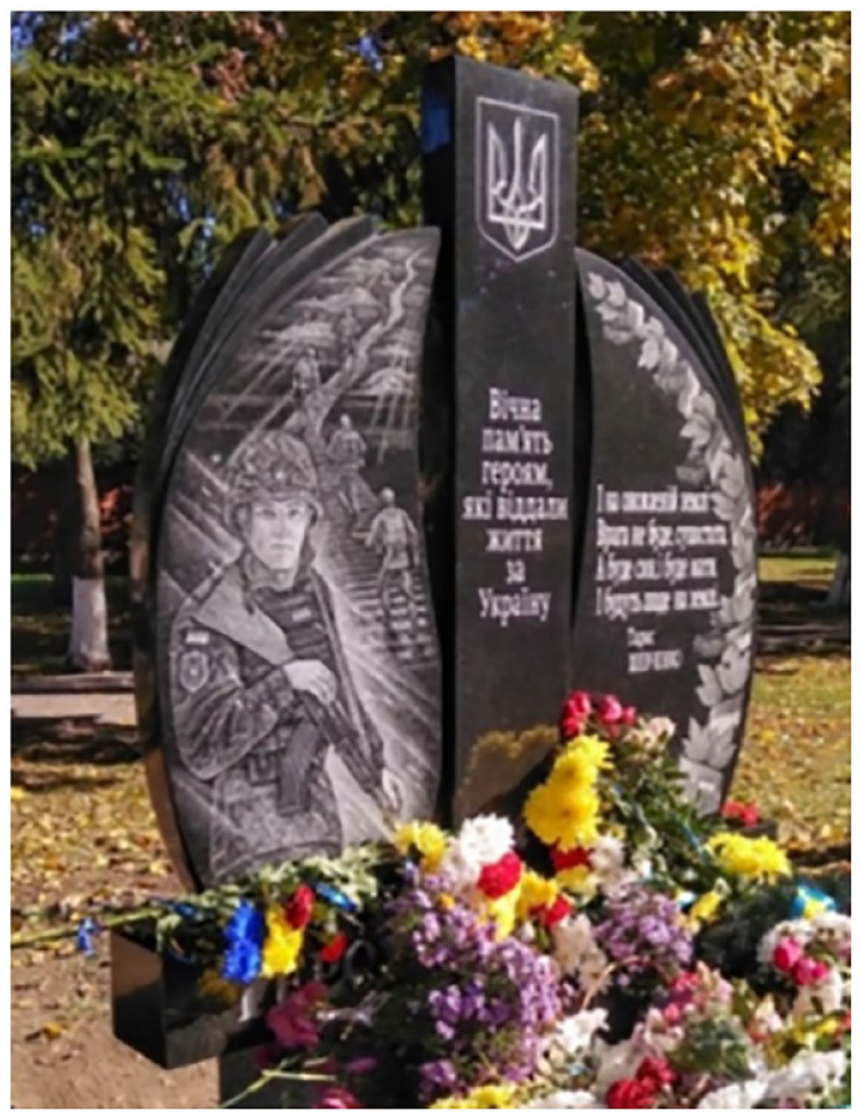
Memorial to the Russia-Ukraine war in Zinkiv (2018).
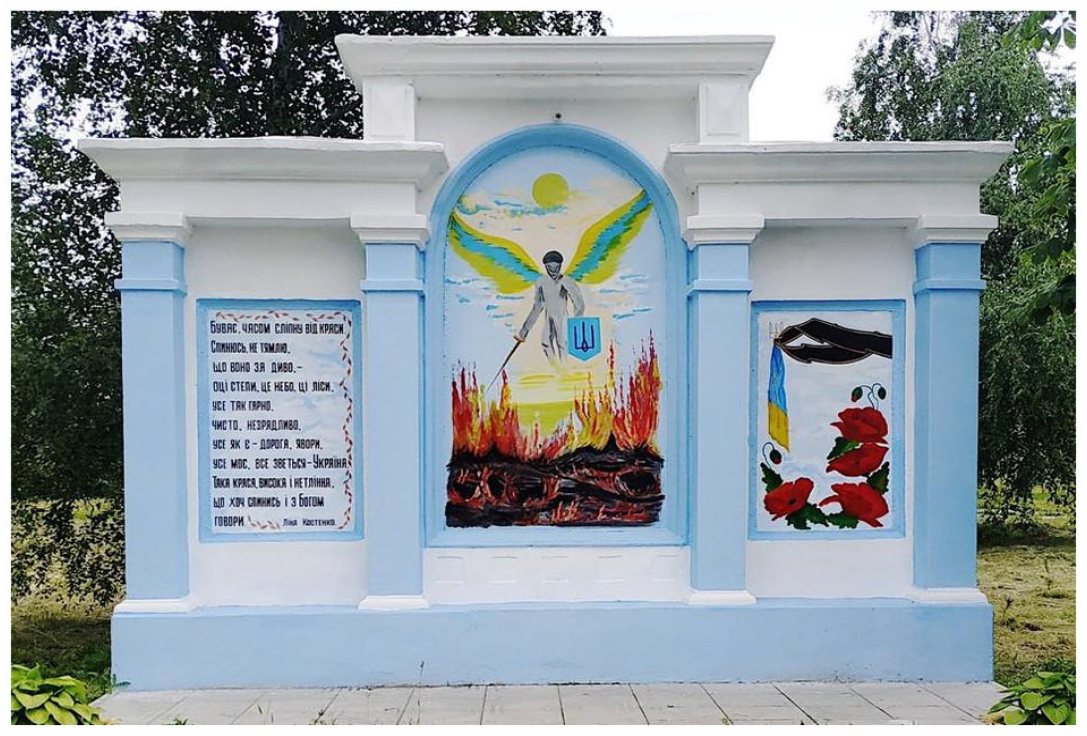
Commemorative stand to the Heavenly Hundred and the Russia-Ukraine war in Hradyzk (2019).
The construction of a memorial that was built in the town of Zinkiv in 2018 (Figure 1) was initiated by a group of veterans. One of them, a male in his late 30s, explained in an interview 2 that the design was a result of cooperation between the veterans and the local authorities. The officials chose to inscribe a poem that conveyed the idea of hope for peace in Ukraine while the veterans insisted that the central inscription read ‘Eternal memory to heroes who gave their lives for Ukraine’, with a large carved image to the left. The latter depicts soldiers displaying Ukrainian military insignia walking up a stairway to the sky, welcomed with bright rays of light. 3 This memorial clearly expresses the idea that the soldiers who died in the Russia-Ukraine war go to heaven, which in turn indicates that their struggle is approved of and supported by God.
The Zinkiv memorials present the military activity of the Ukrainian soldiers as a struggle supported by God: Thus, He gives them eternal rest in heaven. The use of this narrative can also be seen in the poetry on the temporary memorial to the Heavenly Hundred in Poltava 4 and in the commemorative stand in Hradyzk 5 (see Figure 2, showing an angel-like warrior, symbolising both the protesters and the soldiers). The use of religious symbols to define the characteristics of the commemorated event is discussed by Jay Winter, who writes that religious symbols can deliver the idea of ‘a conflict of the children of light against the children of darkness’ (2014: 80). This is precisely the idea expressed on the Hradyzk monument, where the authors/people have employed the idea of a battle of light against darkness to define the characteristics of the Euromaidan and the Russia-Ukraine war. This produces a narrative of a righteous struggle of the protesters and the soldiers fighting on the front line.
Narrating a just and noble struggle
Another way of valorising the struggle has been to draw on military iconography. Accordingly, the use of images such as firearms, bullets, armoured vehicles and battle settings goes beyond simply evoking the soldiers’ recent battlefield experiences. The manner in which these are combined with accompanying inscriptions can generate value judgements about the soldiers’ actions. One particularly notable practice is that of using swords in the memorials to the Russia-Ukraine war. The following section will analyse two memorials in which they feature, in Myrhorod and Kremenchuk (Figures 3 and 4).
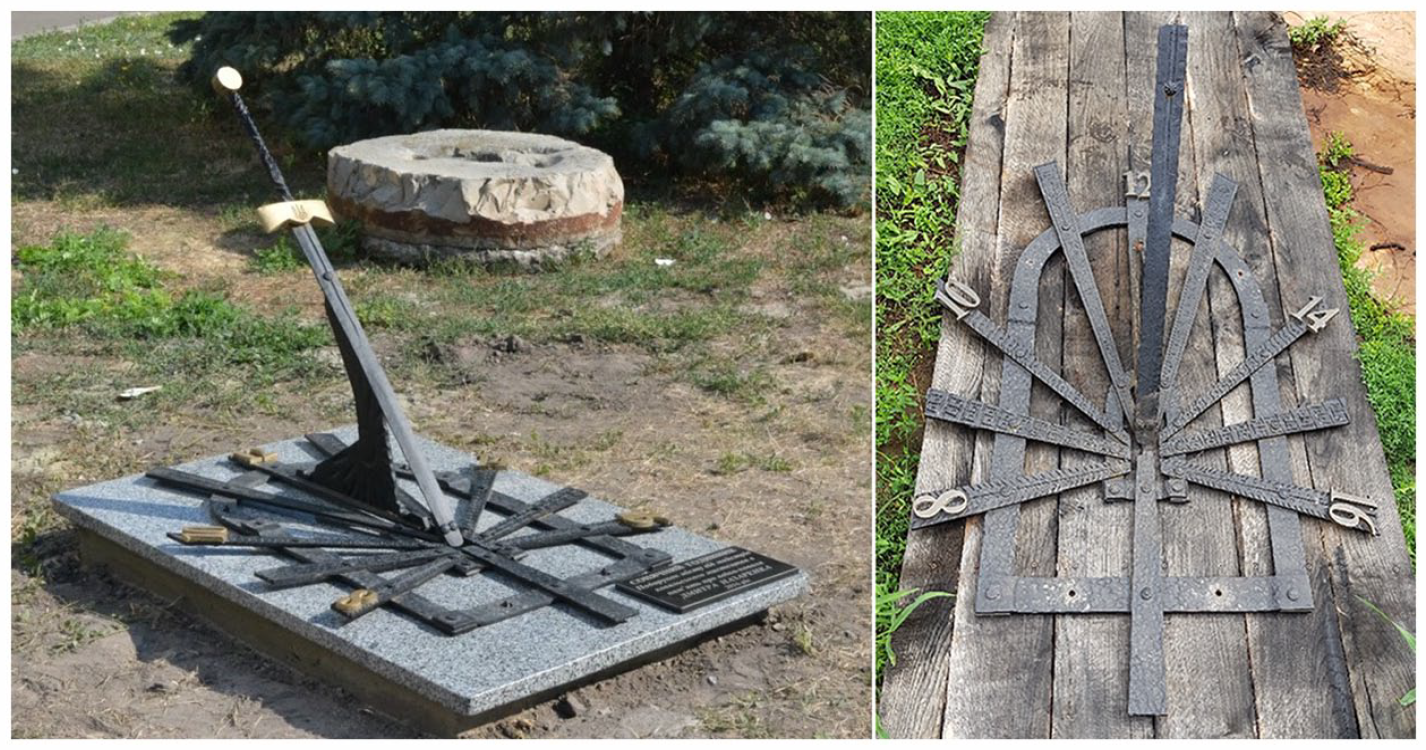
Memorial to the Russia-Ukraine war in Myrhorod (2016). The image on the right shows its state after it was vandalised by unidentified persons.
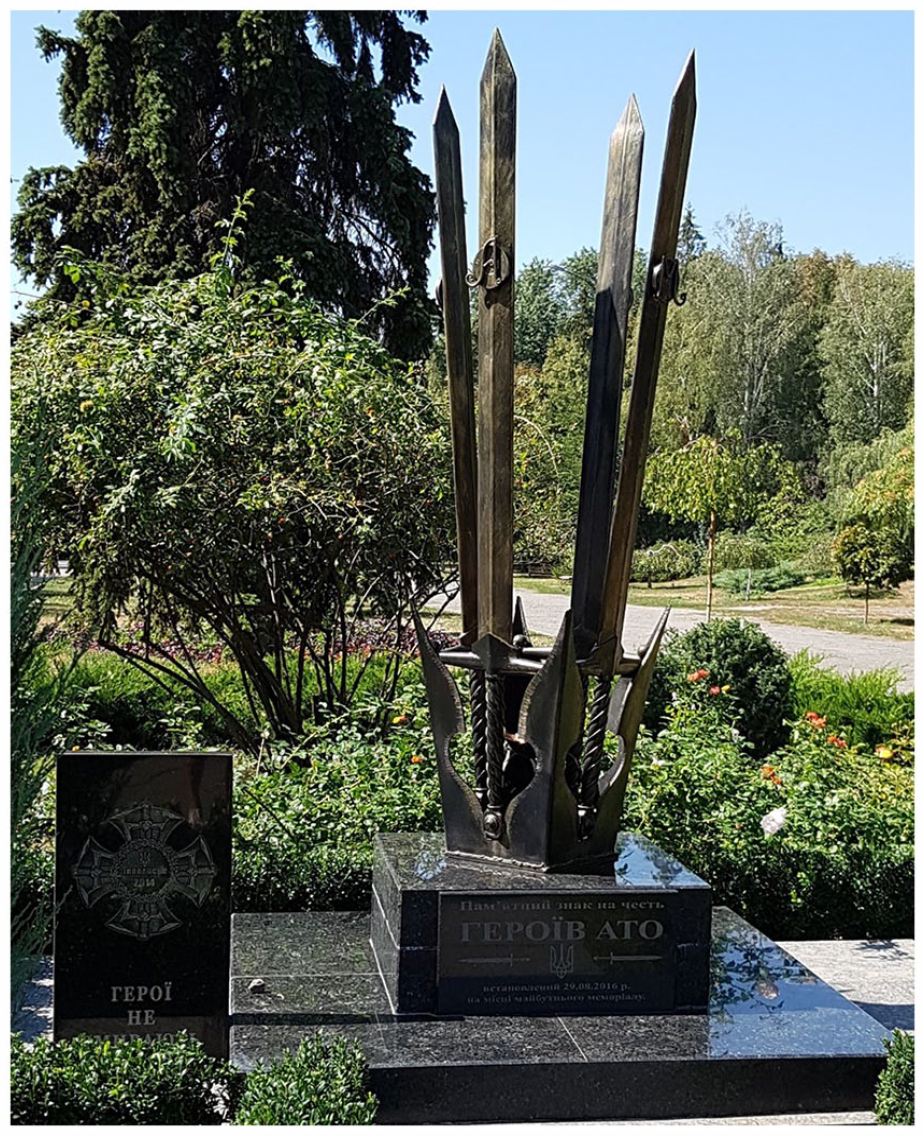
Memorial to the Russia-Ukraine war in Kremenchuk (2016).
The topic of the symbolism of swords in present-day Ukraine is challenging. Unlike the poetry of Taras Shevchenko, which has a known source and is substantially researched, it is difficult to conclusively identify what has prompted ordinary people to use swords on the memorials they erect. A range of sword symbolism can be found in contemporary Ukrainian culture and iconography. For example, a Scythian sword is the key topic of the song The Sword of Ares 6 which became popular among Ukrainian soldiers after the onset of the war in 2014. In 2017, when the Ministry of Defence of Ukraine approved the new Ukrainian military insignia and symbols, it devised a number of striking emblems (Skorohod, 2018). A symbol of an owl piercing a map of Russia with a sword began to be used by the Military Intelligence Service. The Armoured Forces were conferred a symbol featuring a knight’s glove, referring (Ministry of Defence of Ukraine, 2018) to the victorious fight of a Volhynian 7 prince over the Grand Duchy of Moscow in 1514, which in turn evokes the period when some ancestors of present-day Ukrainians wore suits of armour and used swords. Another image used after 2014 in relation to the Ukrainian soldiers, 8 and for their commemoration, 9 that later became popular was that of the archangel Michael, the sword-bearing patron of the Ukrainian Cossacks (Karpov, 2016: 20). Swords are a common feature on many Soviet WWII memorials; according to John Garrard and Carol Garrard, they convey the Biblical idea (albeit secularised in the Soviet context) of ‘Live by the sword, die by the sword’ (1993: 17). While the range of symbolic meanings conveyed by this usage of swords in Ukraine’s present-day culture can be clarified with reference to academic literature on Ukrainian mythology and iconography, it is also essential to determine how ordinary citizens, as memory actors, understand this symbolism. Hence, questions were posed during interviews.
In 2015, a group of local blacksmiths in Myrhorod revived the annual festival of blacksmithing craftsmanship that had been initiated by their colleague, the well-known blacksmith Petro Fedoryaka.
10
When Fedoryaka died in the Russia-Ukraine war in 2014, his family and colleagues decided to continue his legacy. Since then, every year, they use the festival as a chance to produce a metal sundial dedicated to one Ukrainian blacksmith who has died in the war. This started an engaging commemorative tradition: Festival visitors can see the blacksmiths at work producing a commemorative object from red-hot metal. Although the first sundials mainly symbolised the sun, time and light,
11
in 2016, the blacksmiths created a sundial displaying war-related symbolism (Figure 3). This object features a sword-shaped gnomon
12
that points downwards and rests on a metal shield marked out with clock digits. The makers explained the sword symbolism in the following way:
This smith, this person finished his battle and stuck his sword into the ground, like a knight bringing his career to an end. Upward-pointing swords symbolise readiness to fight, but downward-pointing swords mean the person is not ready to fight or cannot fight anymore. This smith can no longer fight (TV Ltava, 2017).
Scholarly literature indicates that swords in commemorative objects are commonly associated with noble, knightly combat and chivalry (Goebel, 2009). I suggest that even though the viewers do not know the exact intended symbolism of the sword on the sundial, they can still interpret it as a military symbol, a weapon, and connect it to the idea of a valiant fight. Arguably, the role of the sun in the functioning of the sundial in combination with the sword amplifies the righteousness of the commemorated soldier’s actions.
The above-described sundial does not announce what this soldier fought for: This part of the story is left open to the audience’s interpretation. However, the sundial serves as a useful starting point for analysing similar objects, and specifically the symbolism of swords pointing downwards or upwards, which, as mentioned earlier, symbolise, respectively, the end of the battle or peace or readiness to fight. Such meanings are on display in the Soviet Great Patriotic War memorials created by Yevgeny Vuchetich in Berlin and Volgograd (The Motherland Calls and the Let Us Beat Swords into Ploughshares memorials) (Riabov, 2017: 30). In the well-known 62-metre-high Motherland Monument in Kyiv, a sword is held aloft by a woman, who thereby shows her readiness to protect the city. Writing about the history of Ukraine’s military symbols, Viktor Karpov suggests that the aforementioned interpretation of downwards- and upwards-pointing swords is deeply rooted in Ukraine’s history (2016: 124). However, swords can convey other meanings, for example, on the emblem of the Military Intelligence Service of Ukraine, the owl carrying a downwards-pointing sword over a map means defence and not the end of a battle.
To turn away from official usage and back to grassroots memory actors’ deployment of sword imagery, in Kremenchuk, a group of veterans constructed a memorial in 2016 to commemorate their comrades who died in the Russia-Ukraine war with a design that includes four large swords. These denote the four military sectors in Eastern Ukraine where the Kremenchuk soldiers fought (Figure 4). The swords emerge from a metal crown symbolising a trident (the coat of arms of Ukraine) (Kremenchuk Today, 2016). The design of the memorial was jointly devised by the veterans and local blacksmiths. One of the participants explained that the veterans did not want to use downwards-pointing swords and instead insisted that the swords pointed upwards, ‘to show that we are ready to protect Ukraine from any aggression’. 13 The initiators of this project tried to add a therapeutic element to the production process: They invited other veterans to strike the red-hot metal with hammers, and thus to ‘work through their memories’. 14 Furthermore, large rocket shells and other metal military objects from the front line were melted and used in the creation of the four swords, which ‘locked the memories into the memorial forever’. 15 Such therapeutic procedures call to mind the major problems veterans have with their mental health in war-affected Ukraine. One of the interviewed veterans shared that the community of veterans 16 has a strong and urgent need to commemorate their fellow soldiers, and they want to enable grieving families and friends to have a place to visit to think about their loved ones. 17 During my fieldwork, several interviewees began discussing memorials only to soon move on to tell me about the psychological traumas which they or their friends had suffered as a result of the war. However, in Kremenchuk, it is not trauma that is the main theme of the visual language on show to the audience, but rather defence. Specifically, it conveys a narrative about the soldiers’ readiness to defend their country, with the swords demonstrating that such activity is valiant.
When analysing the use of medieval and modern weapons in WWII memorials in Germany and other European countries, George Mosse suggests that the use of medieval weapons was driven by a desire to mask the horror of mechanical warfare (1991: 101). In addition, he notes that ‘Dying by the sword . . . was to die by the hand of man, and only a fight which took place in single combat was truly heroic’ (Mosse, 1991: 101). At the same time, he notes that it is common for medieval and modern weapons to coexist within the same commemorative culture (Mosse, 1991: 102). This can be seen in the Poltava oblast: a modern soldier leaning mournfully on a sword in Hadiach (Figure 5) stands in the same pose as a soldier leaning on a modern automatic rifle depicted in Kotelva (Figure 6). 18 Overall, it is modern weapons that are used in the Poltava oblast’s commemorative repertoire, particularly on gravestones. As a result of this, the harshness of mechanical warfare is not removed from the commemorative objects and is instead used purposefully, as a part of narrating sacrifice for the nation and the need for recognition. Currently, there are no unified and commonly agreed ‘narrative tools’ (Wertsch, 2008: 139) to narrate the Russia-Ukraine war, and instead ordinary citizens search for the most suitable design to bring one or another narrative into foreground.
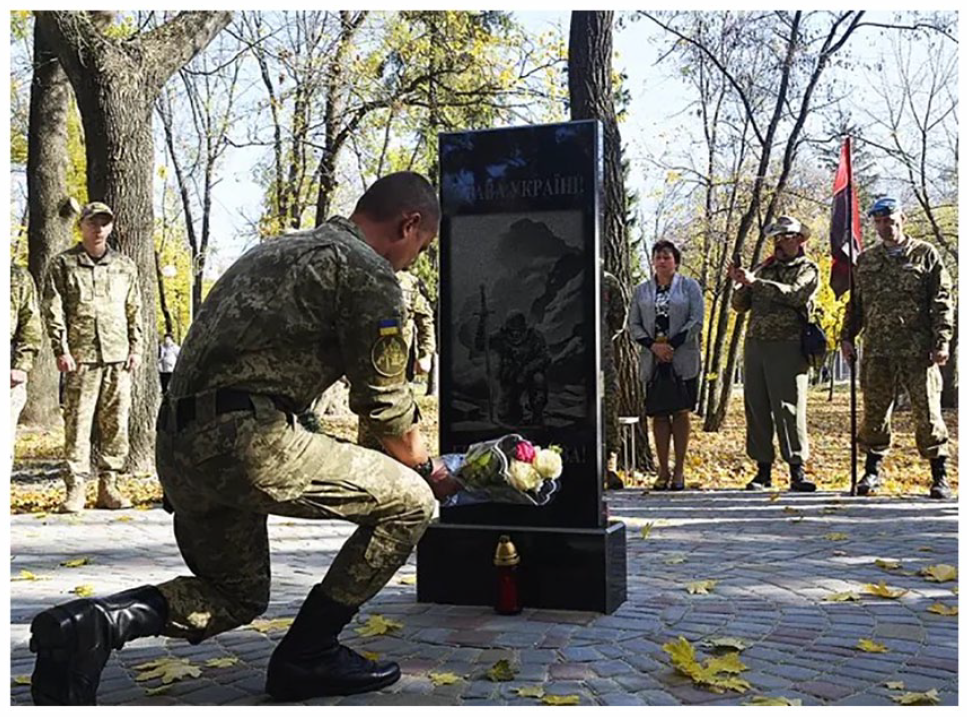
Memorial to the Russia-Ukraine war in Hadiach (2019).
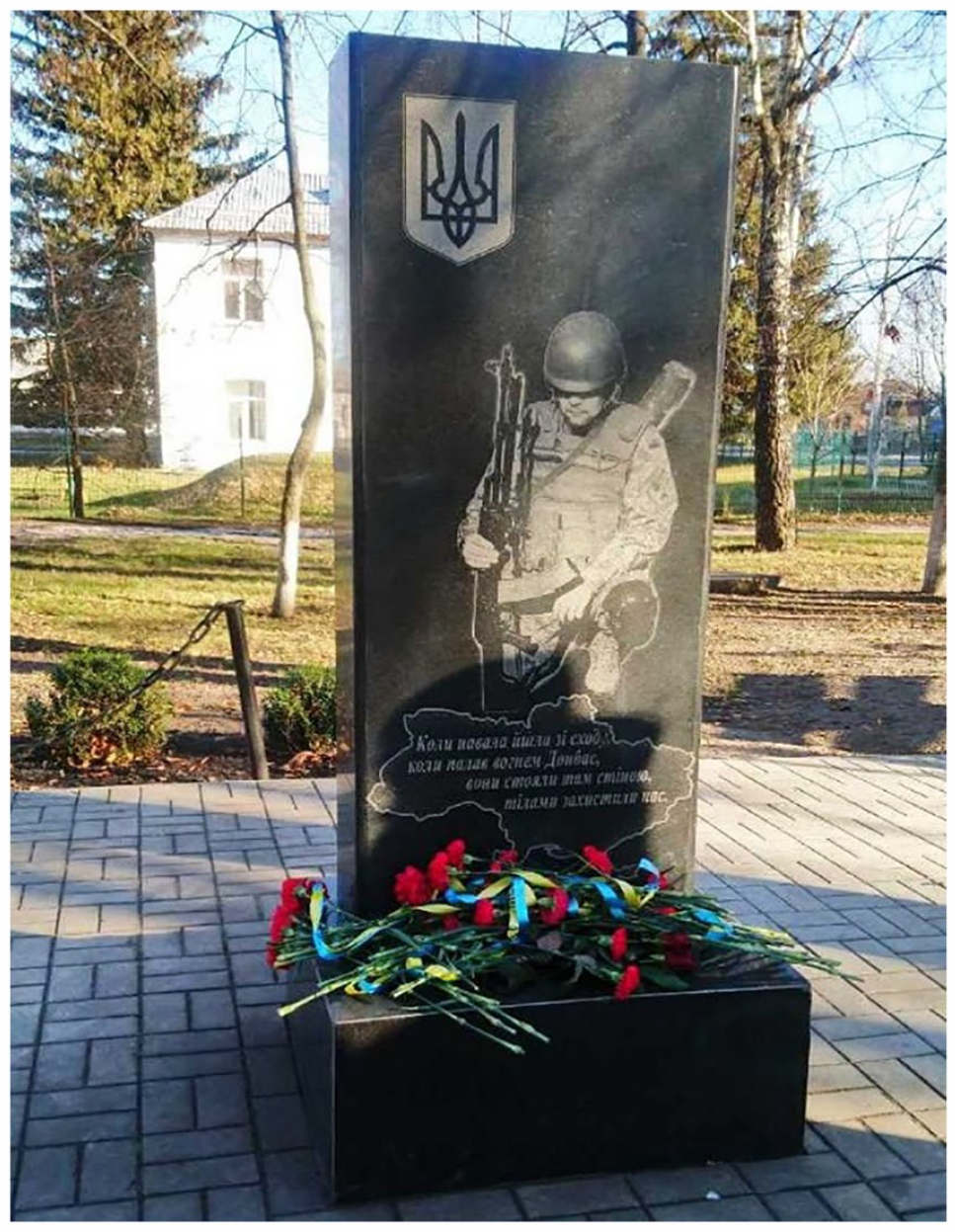
Memorial to the Russia-Ukraine war in Kotelva (2019).
It is worth noting, as we come to an end of this discussion of how ordinary people manage to portray a struggle as just and noble, that not only is there as yet no established narrative repertoire for portraying the Russia-Ukraine war but that the enemy is practically never portrayed: Attention is overwhelmingly on the valiant defenders of Ukraine. According to Nico Carpentier, war discourses commonly have a dichotomised nature based on the ‘key binary opposition of good and evil’, (2015: 3) structuring the identity of ‘Self’ and ‘Enemy’ through a range of characteristics, including ‘just/unjust, innocent/guilty, rational/irrational, civilised/barbaric’, ‘heroic/cowardly’ (2015: 3). In addition to the Self and the Enemy, Carpentier also suggests the discursive position of the Victim, which ‘may range from abstract notions, such as world peace or world security, to more concrete notions, such as a people, a minority, or another nation’ (2015: 4). He explains sometimes the position of the Victim can be combined with the Self (when, e.g. the Enemy attacks the Self) (Carpentier, 2015: 4). Applying Carpentier’s conceptualisation to the analysed memorials reveals not only what is present in the visual language but also what is missing. Specifically, out of the identified 22 commemorative objects in the Poltava oblast that were designed by ordinary people, only two specify the enemy. The memorial in Lubny (Figure 7) states that the soldiers ‘died fighting against the armed aggression of the Russian Federation’, and the memorial sign in Kotelva (Figure 8) states that the soldiers protected Ukraine from ‘invaders from the East’. The narrative in these two cases is one of Ukrainians as protectors against the aggression of Russia. Except for these two cases, ordinary citizens in the Poltava oblast primarily seek to interpret the actions of Ukrainian soldiers, who are not pictured as victims, but rather as fighters ready to defend their country.
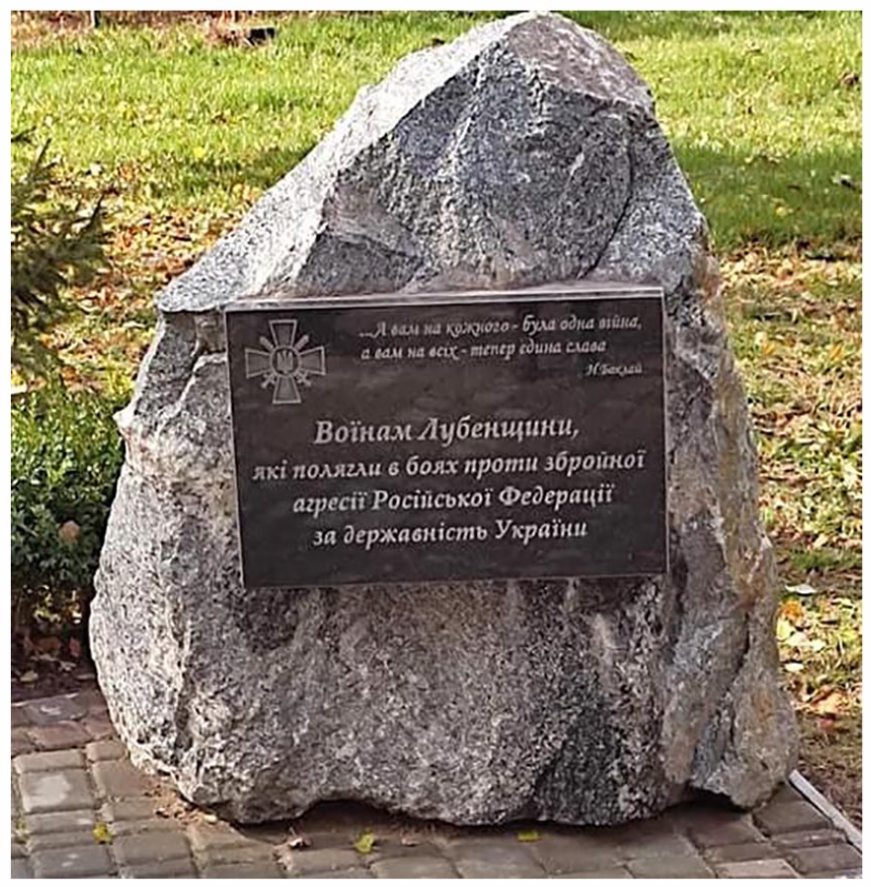
Plaque near the memorial to the Russia-Ukraine war in Lubny (2018).
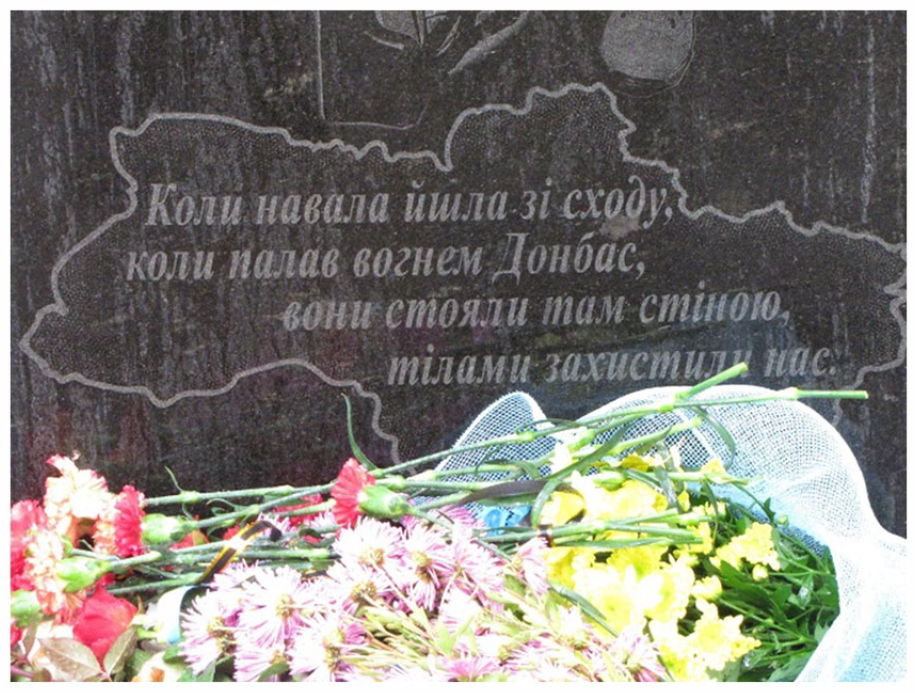
Inscription on the memorial to the Russia-Ukraine war in Kotelva (2017).
Linking to the Cossack era
The visual language pertaining to history that is deployed by ordinary people in the objects they have designed and devised extends far beyond that of ancient weaponry. Allusion is made to numerous periods in the history of Ukraine. The most frequently observed of these is that of the Cossack past, specifically, the Cossacks of the semi-autonomous polity of the Zaporozhian Sich, 19 in the sixteenth to eighteenth centuries, and the Cossack state of Hetmanate in Central Ukraine, in the seventeenth to eighteenth centuries. Most, if not all, of the territory of the present-day Poltava oblast, was part of the Hetmanate, and the Poltava Regiment was one of its 10 territorial-administrative subdivisions. Nowadays, Cossack symbols can be seen in different commemorative objects in the oblast. This section analyses a memorial in Lubny (Figure 9) and a memorial plaque in Reshetylivka (Figure 10).
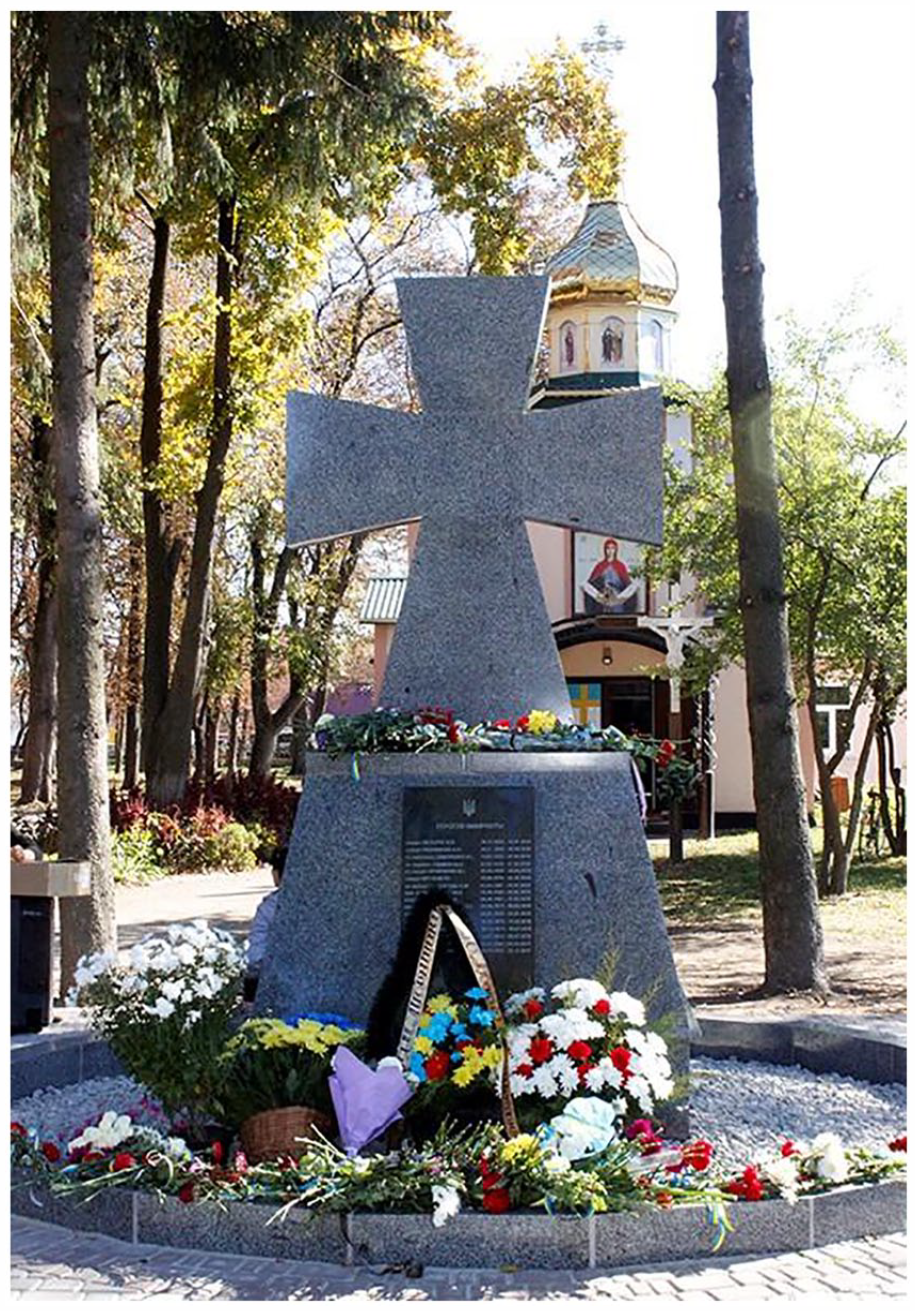
Memorial to the Russia-Ukraine war in Lubny (2018).
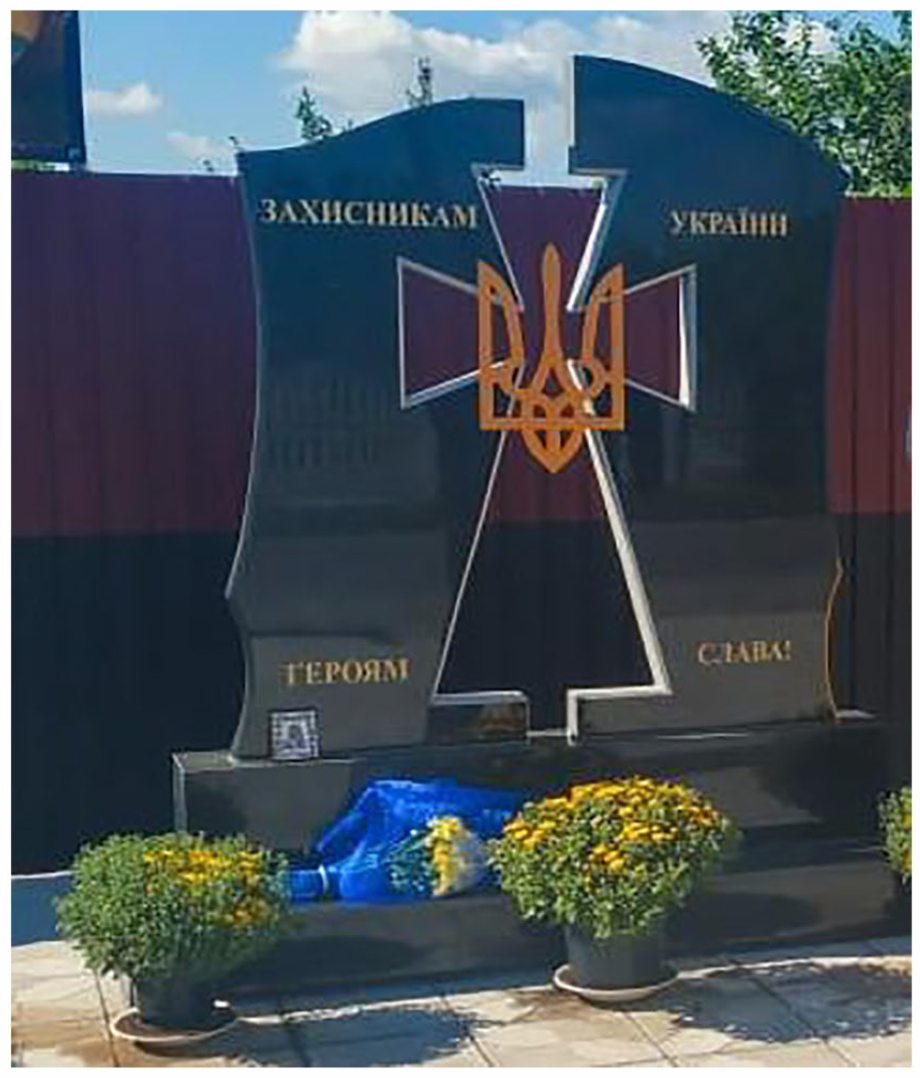
Memorial to the Russia-Ukraine war in Reshetylivka (2021).
In Lubny, the memorial to the soldiers who died in the Russia-Ukraine war was unveiled in October 2018 (Figure 9). The memorial was initiated by a local priest of a Christian church (Orthodox Church of Ukraine) who was driven by private grief as his son died in the Russia-Ukraine war. The local authorities funded this project and wanted to place the memorial in a central location. However, the initiator felt that it would be most appropriate to place the memorial near the church, so that locals could remember the soldiers killed when they come to pray. 20 The proximity of the church increases the mournful tone of official commemorative ceremonies now regularly held near the memorial. At the same time, the visual language of the memorial includes narratives besides grief. The memorial is built in the shape of a Cossack cross, 21 which was suggested by the priest. The characteristic shape of this cross is easily recognised by Ukrainians and immediately associated with the Cossack era. In the past, Cossack crosses were used to mark the graves of Cossack fighters, and in modern-day Ukraine, they are used to commemorate famous Ukrainians and are featured on different military symbols. Elsewhere in the Poltava oblast, it is possible to see other examples of Cossack crosses being used by ordinary citizens to commemorate the Russia-Ukraine war: either as the main design feature (Reshetylivka, Figure 10) 22 or a supplementary element (Kremenchuk, Figure 4).
Some other references to the Cossack era take the form of verbal text, as in the example from Reshetylivka. In 2015, staff and students from a local school created a memorial plaque in memory of Mykola Zakarliuka who had studied at this school and died on the front line. The text selected by the initiators reads, ‘He had a Cossack surname, and he died as a Cossack . . . He died in battle, protecting the territorial integrity and independence of Ukraine’ (Figure 11). The black plaque with a solemn portrait of the soldier clearly speaks of the felt sadness over the loss of this young life.
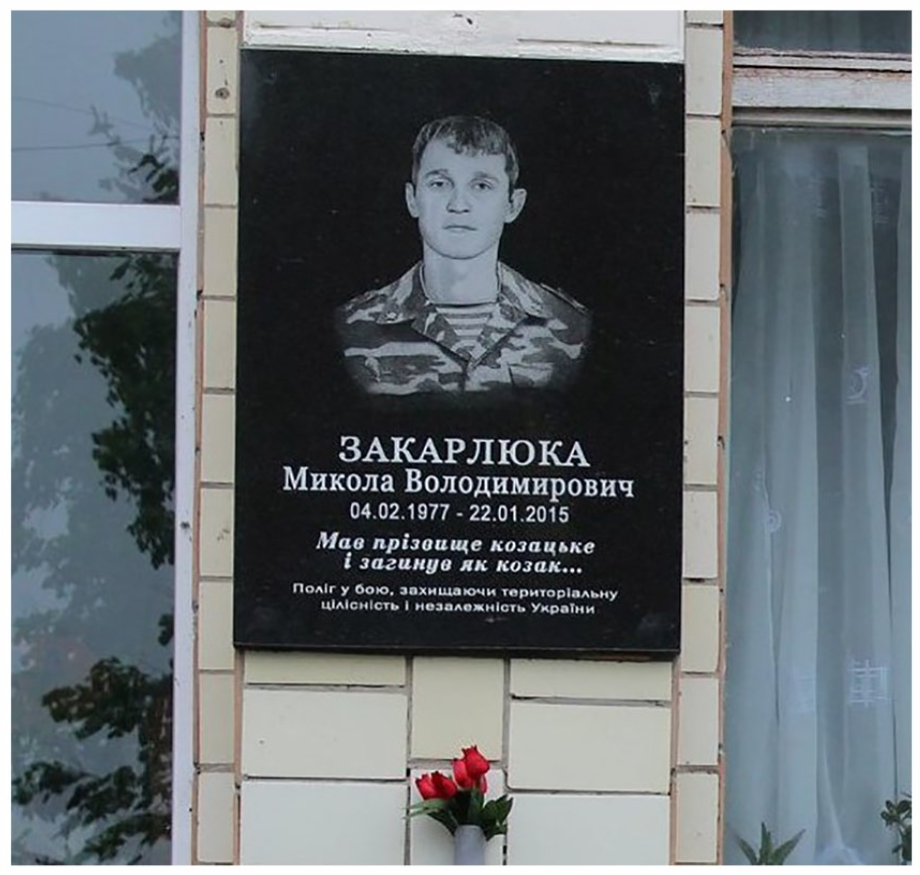
Memorial plaque to a fallen soldier of the Russia-Ukraine war in Reshetylivka (2015).
Both the characteristic shape of the cross in Lubny and the text on the plaque in Reshetylivka conveyed an idea of dying as a Cossack. Its most immediate meaning is provided by the symbolism of Cossacks as being brave, fearless and noble fighters, an interpretation shared by many Ukrainians. By using symbolism referring to Cossacks, the visual language in these two examples presents the commemorated individuals as brave soldiers. To see whether this visual language can be made to yield an interpretation of the conflict itself, it is helpful to employ the conceptualisation of the social shape of the past used by Eviatar Zerubavel. According to Zerubavel, the ‘social meaning of [ ] past events is essentially a function of the way they are structurally positioned in our minds vis-à-vis other events’ (2004: 7). What the cases in Lubny and Reshetylivka demonstrate is that ordinary citizens are trying to explain the meaning of the current conflict through linking it to other armed struggles in Ukraine’s history. As part of this process, they create ‘plotlines’ (Zerubavel, 2004: 13) which help ‘mentally string past events into coherent, culturally meaningful historical narratives’ (Zerubavel, 2004: 7). The symbolic linking of the Russia-Ukraine war to the armed struggles of the Cossacks in the sixteenth to eighteenth centuries creates a plotline of Ukraine’s history. Specifically, Ukraine is presented as an entity that has been rightfully fighting for its self-determination and sovereignty for many centuries.
Such an approach provides meaning to the current war: The conflict is not an unprecedented occurrence but is deeply rooted in history and is a continuation of previous struggles. Several interviews support this interpretation of the analysed visual language: several memory actors (veterans, families of the killed and activists) maintained that the soldiers were continuing the work carried out by their ancestors. Thus, when the initiators of a memorial stand to the Ukrainian soldiers in Poltava were asked about their decision to paint red poppies on it, they explained that they saw it as a symbol of the Cossacks and used it ‘because we all, as well as our Poltava soldiers, are Cossacks’. 23 Some interviewees mention their genealogical trees, showing their direct descent from Cossacks; others refer to the people in the Poltava oblast and Ukraine in general as of ‘Cossack origin’ (kozatskogo rodu). Periods of Cossack military history are not, however, the only factor to which they make reference.
Linking to other historical periods
A historical linking of the Russia-Ukraine war to past conflict struggles in Ukraine’s history has been undertaken since the onset of the Russia-Ukraine war in 2014, by both grassroots memory actors and state authorities, with each group influencing the other, and neither operating in a vacuum. This can be evidenced by the aforementioned introduction of the military insignia in 2017, which symbolically connected the present-day Ukrainian army to a whole range of historical events, spanning centuries: from Daniel of Galicia in the thirteenth century and the Grand Duchy of Lithuania’s battles in the sixteenth century to the Battle of Kruty in 1918. In 2015, Defender of Ukraine Day was established in Ukraine, symbolically linking (Liubarets, 2016: 205) present-day Ukrainian soldiers to the Cossack era and the Ukrainian Insurgent Army (UPA). 24 Data collected during my fieldwork in the Poltava oblast indicates that when ordinary citizens are narrating the historical meaning of the Russia-Ukraine war in commemorative objects, they use the Cossack era as their main point of reference. However, there are some instances when they link to other historical periods. This can be seen in a planned memorial in Reshetylivka and a memorial in Opishnia (Figure 13).
In 2018, a group of activists in Reshetylivka decided to initiate the construction of a memorial 25 to the Ukrainian heroes who died in the Ukrainian War of Independence (1917–1921). During the organisational meeting and also during a public discussion with the local residents on Facebook, it was decided to build a memorial not to one event but to ‘all fighters for Ukraine’, which would cover the Ukrainian War of Independence, the Heavenly Hundred, the Russia-Ukraine War 26 and ‘all other heroes who have died for Ukraine’. 27 As a part of the public discussion on Facebook, local residents suggested design ideas for the memorial. One design included an artwork showing a modern-day Ukrainian soldier, solemnly looking at a grave. Behind the soldier, there are three ghost-like figures: a Cossack, a Kyivan Rus’ soldier and a UPA soldier (Figure 12). The artwork was devised by the Ukrainian artist Oleksiy Bondarenko and was also used in a commemorative project in Kherson (Antypenko, 2016). This project in Reshetylivka is still in progress, and its design is still being discussed. This case demonstrates that ordinary people have created a historical narrative that links several historical periods into one continuous story of Ukraine’s struggles.
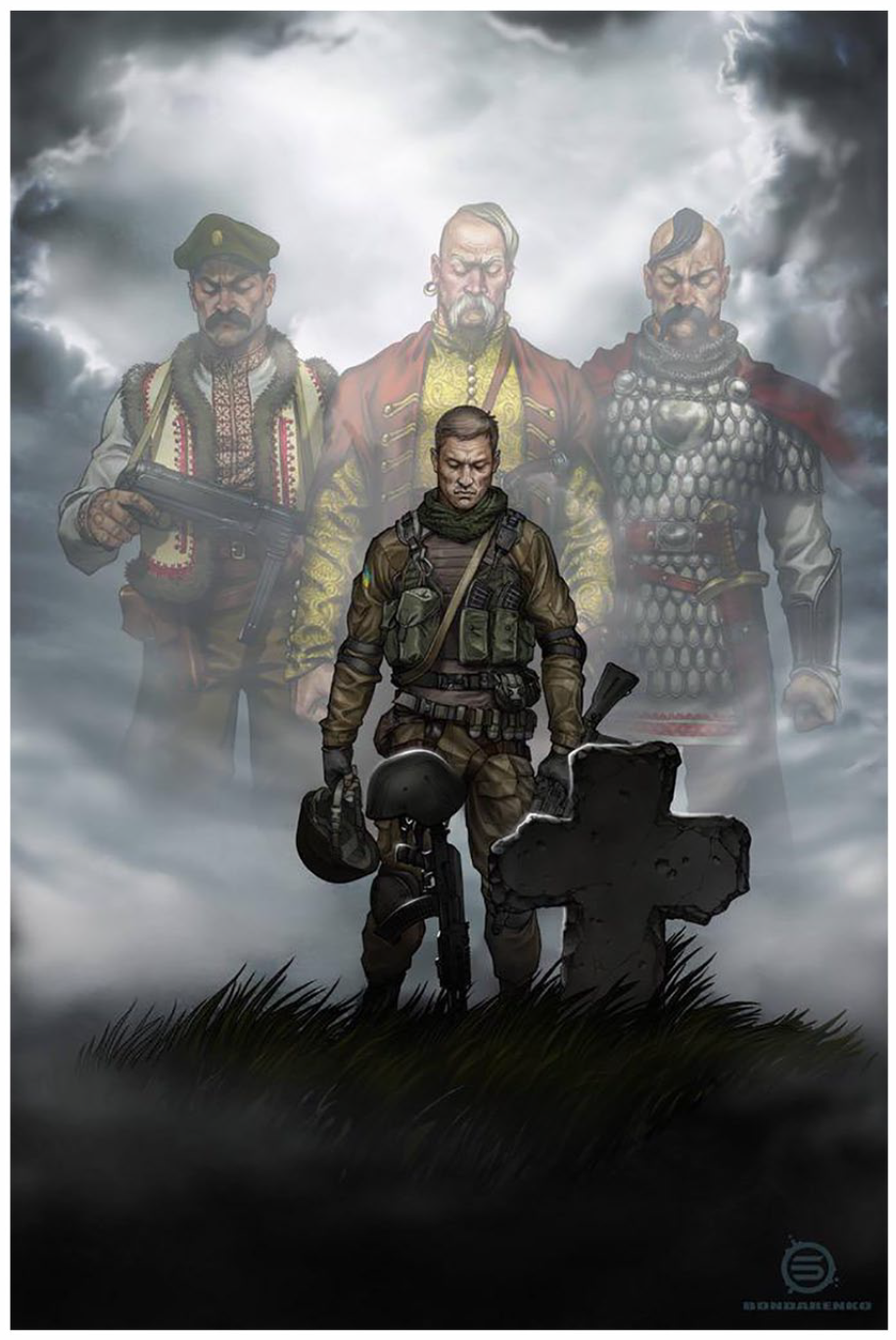
Artwork (unnamed) by Oleksiy Bondarenko.
In 2019, a memorial to the soldiers who had died in the Russia-Ukraine war was unveiled in Opishnia (Figure 13). Designed by local veterans and activists, it consists of a large rectangular structure from which the shape of an armed soldier has been hewn. The memorial speaks about the loss of life: Small images of white birds on the upper left are used to symbolise life and death, and the soldier’s cut-out shape shows that the killed fighters are now ‘missing in our lives’. 28 The stone structure has two equally sized parts: The left side is made of red granite, and the right side of black granite. Together, unmistakably, they look like a red-and-black flag. Such flags are currently associated with the Right Seсtor party and the UPA. When asked about the symbolism of these colours, the main initiator, a woman in her 40s, limited her answer to ‘this is a symbol of the defenders of Ukraine’. The use of red-and-black flags in the Poltava oblast demands careful examination. While the UPA symbols are commonly found in Western Ukraine, in Central Ukraine, people are significantly less comfortable with their use. When analysing the geopolitics of how the UPA is remembered in Ukraine, Serhii Plokhii (2018) notes ‘The Center [Central Ukraine], which had no direct exposure to living memory of the UPA, has been slow to accept the relevant historical mythology as part of its own narrative’. For example, for several years, the residents of Poltava (2019) have had heated debates on the unauthorised use of a red-and-black flag on the monument to the Battle of Poltava. In 2019, the oblast councillors voted against the proposition to use a red-and-black flag in official commemorative events (Zmist, 2018), and when the local authorities of Novi Sanzhary decided to use this flag for official commemorations of the Euromaidan, the media presented it as a ‘first of its kind’ and an unusual phenomenon (Novi Sanzhary Village Council, 2018). When explaining their decision, the Novi Sanzhary authorities said a red-and-black flag is ‘a symbol that independence is born through struggle’, which resonates with the interpretation provided by the memory actors in Opishnia and Reshetylivka.
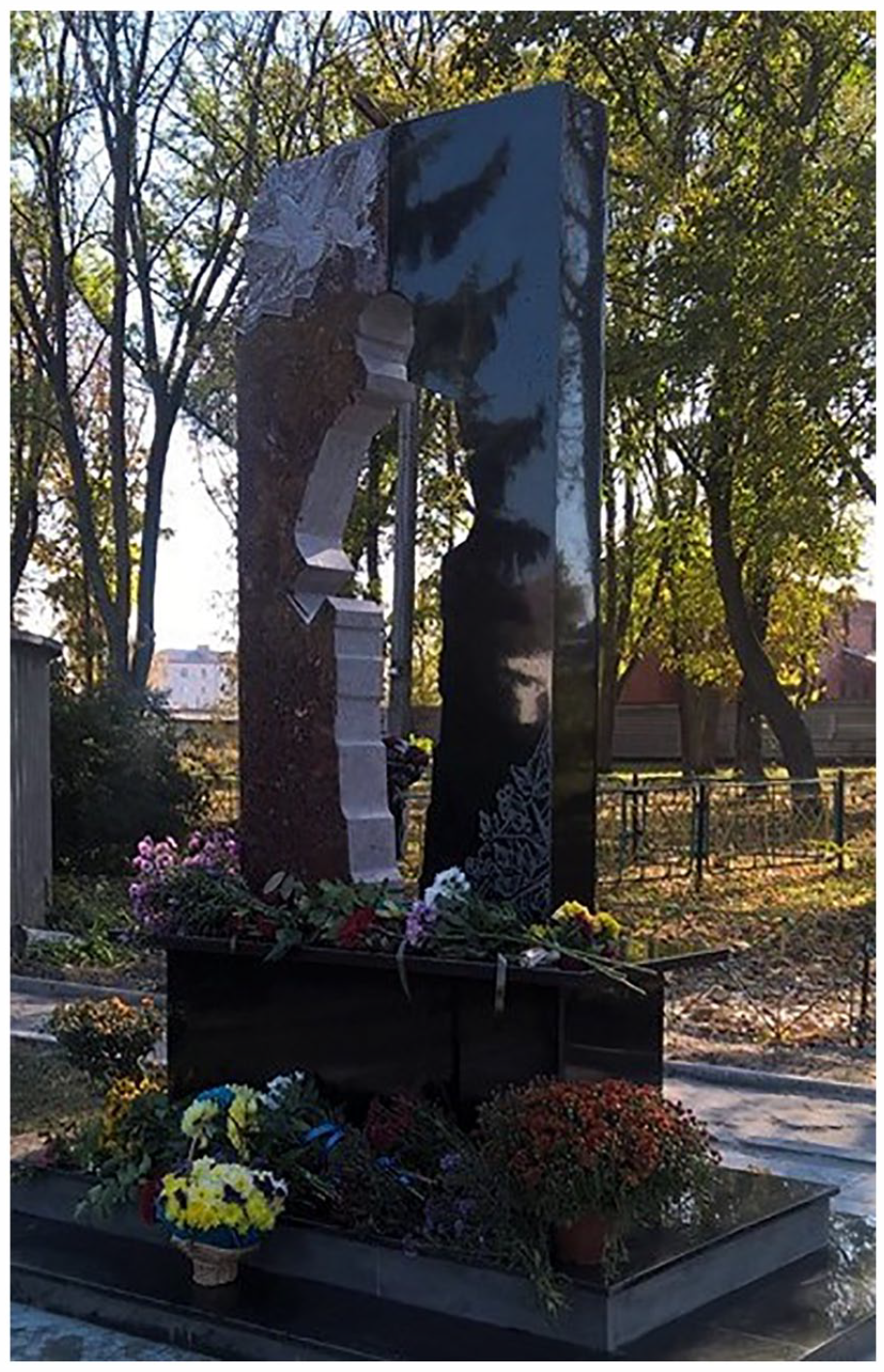
Memorial to the Russia-Ukraine war in Opishnia (2019).
Andrii Portnov Portnov (2016) and Serhy Yekelchyk (2015: 107) note that during the Euromaidan, the symbol of UPA underwent a process of transformation and acquired a new set of meanings. According to Portnov (2016), two factors played a role in this: Ukrainians’ rejection of being portrayed by Russia as ‘fascists’ and ‘banderovites’ and a lack of knowledge about the activity of the UPA. Yekelchyk explains that ‘in the course of the EuroMaidan Revolution, the image of Bandera acquired new meaning as a symbol of resistance to the corrupt, Russian-sponsored regime, quite apart from the historical Bandera’s role as a purveyor of exclusivist ethno-nationalism’ (2015: 107). After the Euromaidan, when the Right Sector formed frontline military units, the use of a red-and-black flag as a symbol of resistance became even stronger. The analysed cases in Opishnia and Reshetylivka demonstrate that when linking the current conflict to different Ukrainian historical periods, ordinary people tend to use historical references that are more commonly acceptable in Central Ukraine, but they have also started to introduce the memory of the UPA as a symbol of resistance.
Conclusion
This article shows that ordinary people in the Poltava oblast often narrate the Russia-Ukraine war as a righteous, noble struggle. These narratives are devised using religious images and inscriptions that testify to God’s support for their activity as well as swords which symbolise chivalrous and valiant combat. Furthermore, the analysed cases demonstrate that ordinary citizens seek to construct meaning from the commemorated violent events. As part of this process, they commonly use references to other periods of Ukraine’s history, especially the Cossack era and, in some cases, also that of the UPA. Consequently, the meaning of the contemporary conflicts is derived from placing them into a plotline of Ukraine’s centuries-long struggle for sovereignty and self-determination. This also indicates a regional character of commemoration: Central Ukraine in general, and the Poltava oblast in particular, has a strong memory of the Cossack past. It now serves as a rich reserve of symbols utilised to narrate the present-day violent events. The regional character of commemoration is also observed in the use of references to the UPA. Its symbols are not widely present in the oblast; however, in some instances, grassroots memory actors use a transformed version of the UPA symbol (seen as ‘defenders of Ukraine’) to narrate the struggle of the Ukrainian soldiers in Eastern Ukraine.
The visual language used for commemoration of the Russia-Ukraine war has not yet taken a definite form. Ordinary people are still contemplating the most appropriate way to commemorate these two events, and their choice of design usually depends on the specific narrative they want to bring to the fore. Crucially, although the majority of academic works on war commemoration expects grassroots memory actors to predominantly narrate their grief and trauma, this article demonstrates that the narratives created by ordinary people are not limited to the need to mourn the loss of life. Instead, ordinary people carry out a nation-building activity by adding the Russia-Ukraine war to a plotline of Ukraine’s centuries-long history and by presenting this event as formative for the Ukrainian nation.