



Abstract
Biochemistry lab classes help students connect theory to real-world applications and develop practical, collaborative, and higher-order thinking skills. However, many students are unprepared, spending class time on protocols and equipment instead of higher-order learning. To improve preparation, digital gamified modules were created to replace traditional laboratory workbooks for a second-year biochemistry course (n = 149), using constructivist theories and gamification to enhance participation and learning. These modules provided a logical sequence of information and activities. Student engagement and perceptions were positive, finding the modules impactful, enjoyable and effective for lab preparation. Staff noted improved student attitudes, elevated performance, and fewer equipment breakages compared to previous cohorts. Insights from the module design and feedback will guide future technology-enhanced preparations for complex workplace environments. This study aimed to determine whether replacing paper pre-lab workbooks with interactive, gamified digital modules would improve second-year biochemistry students’ readiness, engagement, and in-lab performance.
Keywords
Introduction
Biochemistry is a core subject that is considered essential to Health professional programs such as medicine, dentistry, and nursing as well as science, medical science, and biomedical science programs, because it explains how living organisms work at a molecular level (Appling et al., 2016). Traditional biology/ chemistry teaching is conducted through didactic lectures supported by textbook readings and practical laboratory sessions (Faulconer et al., 2018), and for many years, technology has been used for students to access learning materials and complete assessments (Wu et al., 2021). More recently, technology has been used to enable students’ learning by, for example, supporting inquiry-based learning for laboratory simulations and games (Pyatt & Sims, 2012; Srisawasdi & Panjaburee, 2019), the visualization of molecules using augmented reality (Mazzuco et al., 2022), enhancing academic skills and confidence (Harris-Reeves et al., 2024), and facilitating knowledge application to solve authentic, real-world problems (Wu et al., 2021).
Laboratory classes translate theory into practice but impose heavy cognitive demands: students must master unfamiliar apparatus, comply with safety rules, collaborate, gather data and finish on time (Seery et al., 2019). Given the hazards involved (Alaimo et al., 2010), Agustian and Seery (2017) stress that pre-lab tasks should reduce cognitive load. Well-designed preparation is therefore critical, ensuring students can work safely and spend their mental energy on learning, not just coping.
Students who are well-prepared for laboratory class have a greater understanding of the underlying theoretical basis of the planned experiments and have reported enhanced experiences during the chemistry laboratory class (Johnstone et al., 1994; Rollnick et al., 2001). Completing preparation tasks prior to undertaking laboratory classes has a direct positive relational link to the attainment of practical skills and the development of a critical mind (Jolley et al., 2016). Makransky et al. (2016) provide an explanation for these associations, suggesting that students who are prepared for laboratory class with the basic skills and knowledge, can direct their intellectual attention away from practical issues and towards higher level activities such as problem solving and learning. While both researchers and educators are cognisant of the benefits of preparing for classes (Loveys & Riggs, 2019; Pastushenko et al., 2018; Pulukuri & Abrams, 2021), many have noted that students often fail to participate in timely preparatory work prior to attending laboratory class (Jones & Edwards, 2010; Pogacnik & Cigić, 2006). If students are already weak in theoretical knowledge, a failure to adequately prepare may result in them not comprehending the aim of laboratory experiments or the underlying concepts, and these students may simply follow the laboratory instructions in a cookbook approach, without understanding what they are doing (Pogacnik & Cigić, 2006).
Preparatory resources for laboratory classes have been shown to be effective, however, stimulating students to interact with these resources has been problematic. For example, students who engaged with preparatory online laboratory simulations with problem solving exercises performed better on the final exam, yet only 62% of students completed the exercises (Yeung et al., 2005). Dalgarno et al. (2009) introduced a virtual laboratory experience targeting distance education students, to help them to prepare for the laboratory. Of the students who used the resources, more than half (57%) indicated it was a valuable preparatory tool and most (68%) said they would recommend it to future students; however, fewer than one third of the cohort used the resources. Thus, even when resources are perceived as being effective towards preparation, they must also entice students to engage.
Newmann (1992) defined engagement as “the student's psychological investment in and effort directed towards learning, understanding, or mastering the knowledge, skills, or crafts that academic work is intended to promote” (p. 12). It spans behavior, emotion, and cognition (Fredricks et al., 2004). In chemistry labs, even a small assessment weighting or mandatory hurdle (e.g., graded quizzes or video-based questions) consistently motivated students to complete pre-lab work and boost their sense of readiness (Altowaiji et al., 2021; Cann, 2016; Jolley et al., 2016).
According to Johnstone and Al-Shuaili (2001), the development of learning resources requires careful planning so that they are both appealing and effective in preparing students for the laboratory. However, provision of such resources does not always guarantee adequate student preparation. Academic observations of students’ performance in the laboratory component of a second-year biochemistry course (subject) at [Griffith University] showed that students frequently needed to repeat experiments and failed to complete the experiments within the allocated time. As a result, the expected learning outcomes were not being met, and this suggested that students’ interactions with the pre-laboratory resources did not sufficiently prepare them for a successful laboratory experience. The preparatory resources for the laboratory classes included textbook readings, laboratory manual instructions, videos, and equipment instructions. Students were also required to complete graded, paper-based questions prior to attending the laboratory class. Academic staff review of the resources confirmed that the required content was present. The review also questioned whether the format of the resources was successful in promoting student interest, and was appropriate for meaningful, and constructive use by students. This uncertainty inspired the teaching staff to reflect and review alternate modes for resource design to enhance student interest and engagement. This review resulted in the design and development of a new, integrated, online module design for students’ laboratory preparation.
The integrated design required the development and preparatory activities for each laboratory class to be part of the broader laboratory learning design (Reid & Shah, 2007); thus, covering all aspects of the laboratory class, including theory, aims, methods, calculations, data analysis (Scarborough et al., 2022) and wider-world context. The preparatory activities were also designed with consideration of constructivist learning theories. Alt (2018) describes three tenets of a constructivist learning environment.
Constructivist Tenet 1. Constructivist task: Learners are involved in learning to learn. They should be active in their learning, and their learning experiences should be authentic with consideration of the context and complexity of learning tasks, and student's prior knowledge.
Constructivist Tenet 2. Teacher-student interaction: The focus of learner control moves from external stimulus provided by the teacher to the student's internal self-regulatory processes.
Constructivist Tenet 3. Social activity: External social factors including dialogue and alternate viewpoints, are supported by interaction between and collaboration among students. Individual characteristics such as self-regulation, metacognition, learning strategies and emotion, are all influential on learning.
A constructivist environment can facilitate higher-order thinking, and the development of skills such as problem-solving, research, and reflection (Gazi, 2009). While many studies have examined different approaches to the design and implementation of laboratory preparatory resources for biology/ chemistry laboratory classes, no examples have been identified which have explicitly used constructivist learning theories to guide the design and implementation of pre-laboratory modules to consolidate preparatory resources into a logical sequence with laboratory and employability context. Furthermore, few of the previous studies evaluated students’ perceptions of the value of pre-laboratory activities on their laboratory experience, students’ experiences using such preparatory activities, student engagement, or measured the time taken by students to complete their preparation for the laboratory classes.
The aim of this research was two-fold; firstly, to develop engaging laboratory preparation modules, guided by constructivist learning theories using an online learning environment, and to implement them in a second-level biochemistry course. Secondly, we aimed to evaluate students’ engagement with the modules, their experiences using the modules, and the staff perceptions of the effectiveness of the modules towards preparation for laboratory classes. These aims addressed the following research questions:
What are students’ perceptions and experiences of engaging with online pre-laboratory modules for biochemistry class? What are the staffs’ perceptions of the effectiveness of the online pre-laboratory modules towards preparing students for laboratory classes?
Methods
Context & Participants
This study employed a mixed-methods design conducted over an approximate 13-week semester within a second-year undergraduate Structural Biochemistry course in 2019 at [Griffith University], Australia, following a pilot study conducted in 2018. The study cohort consisted of 149 participants out of 204 enrolled students. The intervention involved replacing traditional paper-based pre-laboratory workbooks with five interactive, gamified online modules, developed using Articulate Storyline. Data collection tools included embedded module analytics (e.g., participation rates, number of attempts, time on task), end-of-module surveys assessing student perceptions, and informal staff observations of student preparedness and lab performance.
Students enrolled in Structural Biochemistry represent multiple undergraduate programs including Medical Science, Medical Laboratory Science, Biomedical Science, Nutrition and Dietetics, Science, and Health Science. In 2019, approximately 74% of students were domestic (the status of 20% of students was not known) and 91% were continuing students at [Griffith University]. In this cohort, 96% of students identified as English speakers, with one third also speaking another language at home. Approximately 11% of this cohort were attempting this course, Structural Biochemistry, for the second time.
The Structural Biochemistry course included 5 laboratory sessions which previously encompassed the students completing a physical Laboratory Workbook prior to entry that contained theory and laboratory protocols. These workbooks were not preparing the students adequately and majority of the time, not being completed at all. Hence an engaging, online prelab oratory module relevant to each laboratory session, was designed to increase engagement and learning.
Pre-Laboratory Module Design and Development
Instructional Design
Each online pre-laboratory module unified the existing preparatory elements for one laboratory class (textbook readings, laboratory manual, video resources, equipment instructions, questions) into one, interactive gamified resource. The module design incorporated features of constructivist learning environments with consideration of the online mode of delivery (Archambault et al., 2022; Donkin et al., 2022; Huang, 2002; Keengwe et al., 2013), and was further guided by the recommendations put forward by Agustian and Seery (2017) regarding preparing students for learning in a complex environment. These design considerations included scaffolding by providing information to students prior to the laboratory class, embedding support within the modules, including whole-of-experiment foci and considering the affective domain (Agustian & Seery, 2017). Affective considerations were towards incorporating gamification elements such as storytelling, feedback, leveling up, hidden earned bonuses and adaptive systems (Lavoué et al., 2019; Nah et al., 2014) to promote engagement and positive emotions, and the inclusion of human qualities and social factors (Olasina, 2018). Thus, the modules aimed to: stimulate prior knowledge (Tenet 1); to facilitate active construction of theoretical and laboratory knowledge (Tenet 1); and to be authentic (Tenet 1), showing the connections between the module learning tasks and both the upcoming laboratory tasks and future professional activities. The gamified modules were learner-centered, requiring the student to be active and make decisions when interacting with the online interface (Tenet 2). Acknowledging that social interactions are important in the learning process, the modules included laboratory demonstration videos created by the teaching staff to describe and demonstrate safe and efficient laboratory work practices (Tenet 2). To elicit a sense of fun and for additional (Tenet 3), cartoon avatars were incorporated as the virtual “professional hosts”. Relevant examples in industry and therapeutic research were linked to demonstrate career readiness with real-life outcomes of understanding and performing chemistry laboratory sessions.
The authors at [Griffith University] developed a gamified “3-door design” for the pre-laboratory modules (Figure 1A):
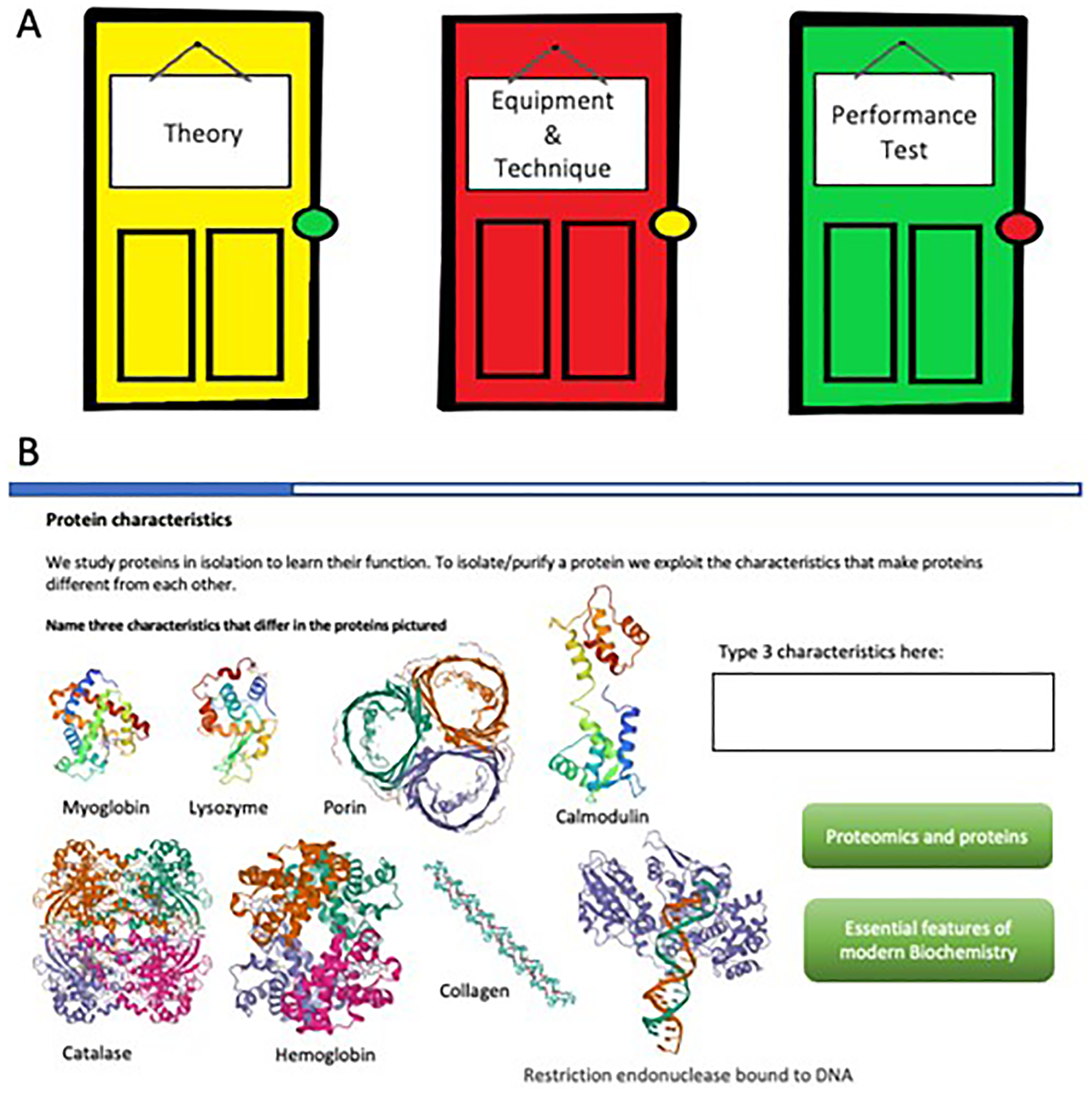
Interactive features of the pre-laboratory modules. A. Entrance showing doors for students to select and enter. B. Short-answer response activity from the Ion Chromatography pre-laboratory module.
Door 1. The Theory component explicitly integrated core biochemistry theory supporting the laboratory session and linked the experiment's relevance to real world applications and employment that is “what” and “why”. Door 1 was designed to develop and/or revise the relevant theoretical content, to promote student interest and motivation for engaging in experiments with employability messaging. These learning activities included conversational text from the virtual “professional guide”, informative text, images, short videos, and formative self-check questions of varying formats offering immediate feedback.
Door 2. Equipment and Technique familiarized students to the local laboratory layout, experimental procedures, and equipment, that is, “how”, “when”, and “where”. For some modules, data, or data trends that students could expect to observe in the laboratory class, as well as data analyses and descriptions of how the experiments linked to the core chemical theory were included. Door 2 learning activities included image labeling, multiple choice questions, drag and drops, hotspot popups and videos (Figure 1B). These gamified and interactive activities were designed to allow students to become familiar with the laboratory process that they would perform during the laboratory class, familiarity with the equipment they would use, and the analysis and interpretation of data. The importance and relevance of potential hazards, risk, and safe-work practices were included within this door, and this familiarization allows students to visualize themselves completing the tasks safely, and aimed to reduce risk, uncertainty, and anxiety of the unknown.
Door 3. The final component was the Performance Test, which assessed the learning outcomes using 10 multiple choice questions. Students needed to score 100% to complete the module. The Door 3 content was designed to allow students to evaluate their knowledge and understanding of the module, to support mastery of the module content. Wrong answers automatically redirected the student to the relevant material to review before they could attempt the question again.
Each of modules 1–5 followed a similar basic structure (Figure 2) and contained: welcome, link to the laboratory workbook, scenario information, aims, learning outcomes, theoretical background information, real life applications and relevancy, safety advice, equipment identification, protocols and techniques, interactive activities, optional YouTube links and knowledge consolidation questions. Question formats used in the modules included multiple answer, fill-in-the-blank, matching, short answer, and multiple choice. Several modules contained links to optional further reading in the form of journal articles, aimed to engage more academically confident students. The content of the modules highlighted commonly observed errors about certain concepts and processes (e.g., the misconception that during gel filtration chromatography small proteins elute faster than large proteins, and in sodium dodecyl-sulfate polyacrylamide gel electrophoresis (SDS-PAGE) large proteins run faster than small proteins). Scientific explanations for these misconceptions (for example in gel filtration, small proteins enter the porous beads and therefore take longer to elute than large protein, whereas in SDS-PAGE smaller proteins migrate faster due to less resistance from the gel matrix) were included. Resources were provided to target both the advanced learners and those with less prior knowledge. Each module finished with the user experience feedback survey that encouraged students to reflect on their preparedness and experiences using the module.
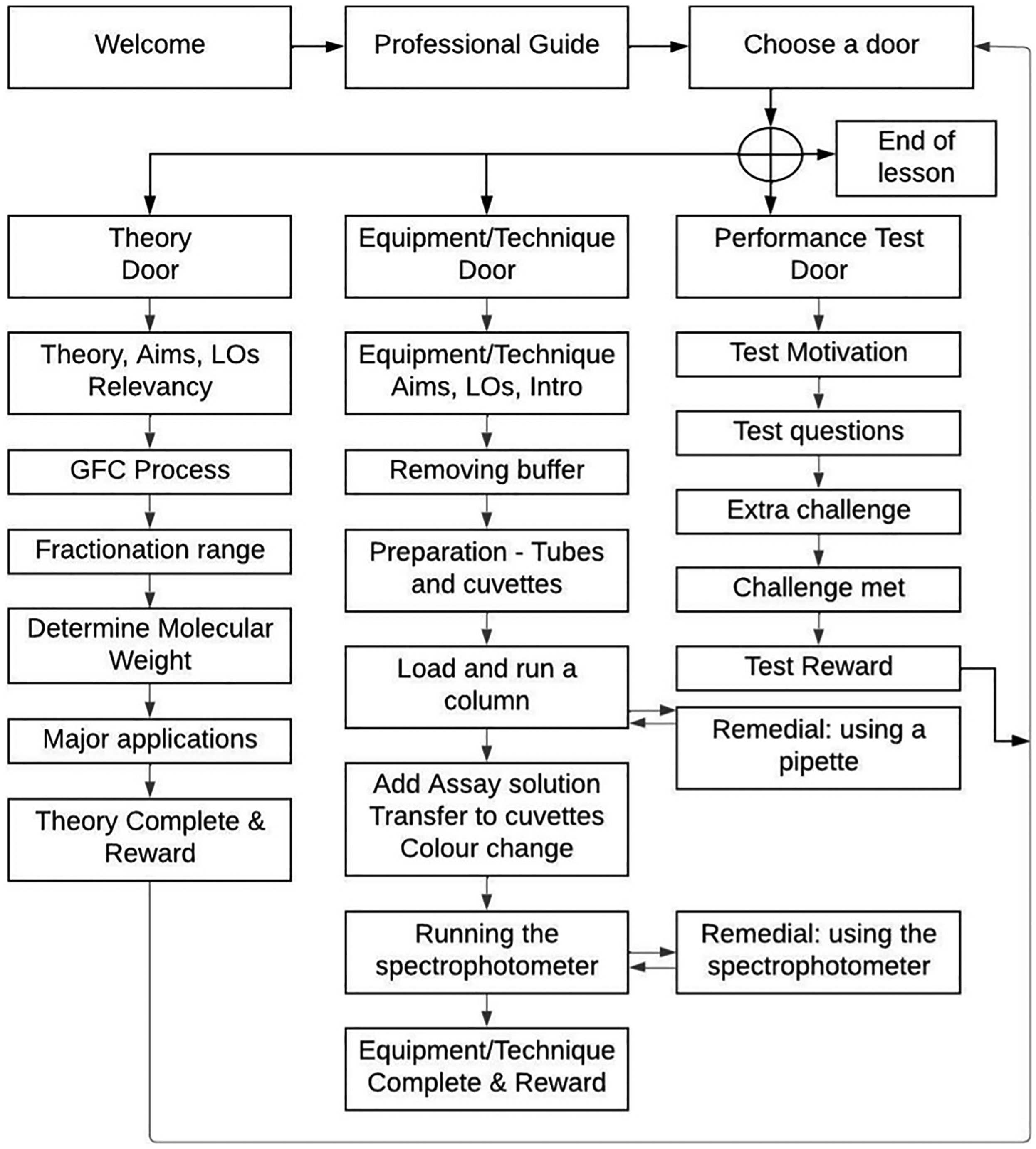
Example of the module steps and interactive components (example based on Module 3: Gel filtration chromatography (GFC); LOs—learning outcomes; Intro—Introduction).
All the modules were self-paced, allowed unlimited attempts, and allowed unrestricted time for completion. Each module contained adaptive pathways including links to additional information, optional hints to help students answer questions, and supportive feedback was provided for incorrect answers to questions in the performance test (Door 3). In addition, during the performance test, if a question was answered incorrectly, the student was redirected back to the related content until the question was answered correctly. This ensured they earned full marks on the performance test to have completed the pre-laboratory work.
A total of six modules were created. The first (Module 0: How-to) was designed to familiarize students with how to access and interact with the modules in the online learning platform and was completed in class. Each of the remaining five modules was linked to a specific laboratory class.
Student Contribution to Module Development
Feedback from the pilot module deployed in 2018 was examined by the research team, and where appropriate, implemented into the development of future modules. Such additions included: time-for-completion approximations and cumulative scores for the formative activities completed within the Door 1 and 2 activities. Other modifications included: removing automated pop-ups, increasing the image size, and increasing the quality of feedback to include information about the question concept. Incorrect responses received information explaining why the answer choice was wrong. Some requests put forward by students were not implemented as they conflicted with intentional design features. For example, some students requested removal of the requirement to achieve 100% on the Door 3 quiz for the module to be deemed “complete”. However, this aspect was both a deliberate design strategy and was also viewed favorably by many of the students; thus, the feature was retained.
Upon engagement with the modules by the 2019 cohort, modifications were made to the existing modules. Student feedback communicated to the Structural Biochemistry academic staff, either verbally or via email, was used to make in situ adjustments to the modules during the semester. Such real-time alterations included: amending errors, restoring broken links, and adding a progress bar so that students could monitor their progression through the module and predict their completion time.
Design and Instruments
This project used a mixed-methods approach to analyse data, using both qualitative (feedback, focus groups and open-ended questions) and quantitative (Likert scale responses) data collection methods. Data was collected from Smart Sparrow analytics including attempts, end-of-module surveys, university implemented Student Experience of Course (SEC) surveys, and student and staff focus groups. Smart Sparrow analytics presented data on student interactions with the modules. Data collected from end-of-module surveys captured students’ perceptions of and experiences with each module immediately after module completion. Student focus groups were used to capture students’ perceptions of and experiences with all the modules collectively, including the preparatory value of the modules as students had completed each of the laboratory classes after the respective modules. Staff focus groups explored the cohort behavior while in laboratory classes, as compared to previous cohorts.
At the end of each module, an end-of-module survey was incorporated into the Smart Sparrow platform. Each end-of-module survey included three closed statements using a 5-point Likert scale response option (strongly agree to strongly disagree). These statements were about students’: perceived preparedness for the associated laboratory session; perceived learning effectiveness of the pre-laboratory module compared to reading text in the laboratory manual; and whether more pre-laboratory modules should be developed. The end-of-module surveys also included four open-ended question prompts asking about: suggestions for new topics; positive feedback; negative feedback; and what was interesting about the modules. These prompts incorporated De Bono's Plus-Minus-Interesting strategy to foster student critical thinking when offering feedback (Gregory & Kuzmich, 2007).
Each year, the University provides an avenue for students to evaluate their courses via a SEC survey. This survey was designed and implemented by the University across all courses. Of these evaluations for Structural Biochemistry, two statements were relevant to the present study: “The course engaged me in learning” and “Overall, I am satisfied with the quality of this course”. Students responded to the statements using a 5-point Likert scale response option (strongly agree to strongly disagree).
After the semester, all students and staff were invited via email to participate in focus groups on the pre-laboratory modules. Six students agreed to participate (note: most students had already started the next semester of study at this time which may have influenced the acceptance rate of this invitation). Six staff, including one lecturer, four tutors and one scientific officer agreed to participate in the staff focus group. The student focus group lasted for 57 min. Due to scheduling challenges, the staff focus groups were held across three sessions, each lasting approximately 50 min. All focus groups were held in a classroom on-campus and were facilitated by an independent staff member who was not involved in the course teaching. The student focus group was concentrated on exploring the students’ perceptions about the pre-laboratory modules. The session centered around the following questions:
What value did the modules provide in comparison to the other approaches you used to study within the course? What factors influenced your engagement with the modules?
The staff focus groups concentrated on staff observations of and interactions with students in laboratory classes in cohorts before and after the pre-laboratory modules were introduced. These sessions centered around the following questions:
Can you give your perceptions of any significant changes resulting from the change to the format of the pre-laboratory lessons? Can you describe any differences in the laboratory classes between this year and last year?
The audio of each focus group was recorded and from each recording a full transcript was prepared manually.
Data Analysis
Quantitative measures of number of attempts, time-on-task, and agreement with closed questions in the end-of-module surveys are summarized descriptively. Likert responses on the SEC surveys were recoded with numbers where “strongly agree” = 5, “agree” = 4 etc. and then summarized descriptively.
Thematic analyses were conducted on the student and staff focus group data, and the data collected in response to the end-of-module survey prompts. This process was guided by the methods described by Maguire and Delahunt (2017) based on Braun and Clarke's six-phase framework (2006). The responses were examined by all authors and preliminary codes were developed. Two authors (author# and author#) independently coded each comment. The agreement between coders was high (Cohen's Kappa = 0.83). Discrepancies were resolved by discussion between these two authors, themes were identified, and consensus reached by discussion. Student and staff comments that most clearly articulated and represented the major themes were chosen to represent that theme.
Compliance with Ethical Standards
This research was approved by the [Griffith University] Human Research Ethics Committee, Ref No: [2019/398]. Informed consent was obtained from all individual participants included in the study.
Results
Of the 204 students enrolled in Structural Biochemistry, 149 students, representing all programs included in the course cohort, consented for their module data and end-of-module survey responses to be included in the study.
Smart Sparrow System Analytics
Module analytics were retrieved from the Smart Sparrow system and included the time taken for each student attempt. The number of attempts and total time engaging with the modules were calculated for each student.
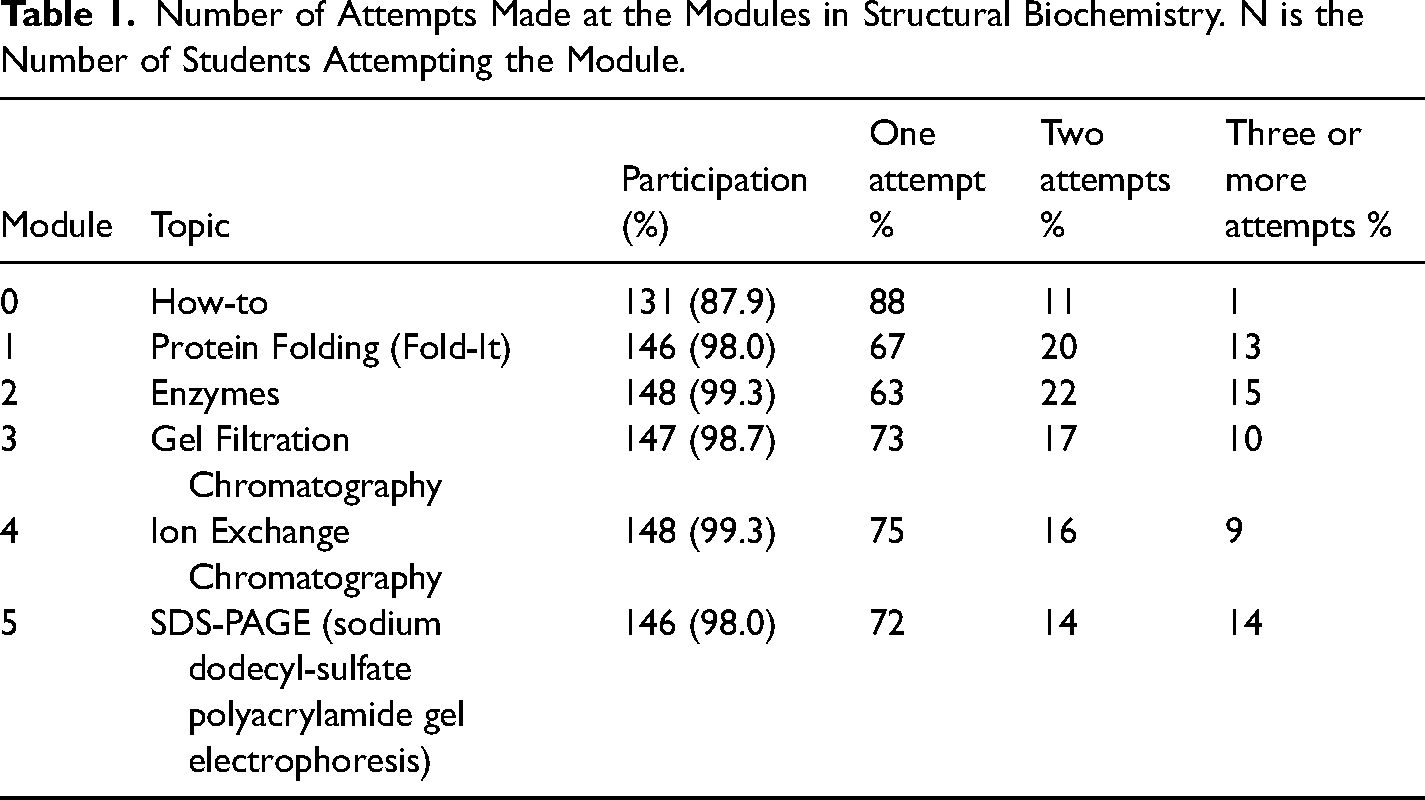
Out of the 149 students, 88% attempted the introductory workshop (Module 0) and over 98% of students attempted each of the five pre-laboratory modules (Modules 1–5; Table 1). The majority of students completed each module in a single attempt, with completion on the first try ranging from 63% (Enzymes) to 88% (How-to), indicating that most students were able to engage effectively with the material on their first try. Notably, several modules showed moderate rates of reattempts, suggesting appropriate challenge levels.
Number of Attempts Made at the Modules in Structural Biochemistry. N is the Number of Students Attempting the Module.
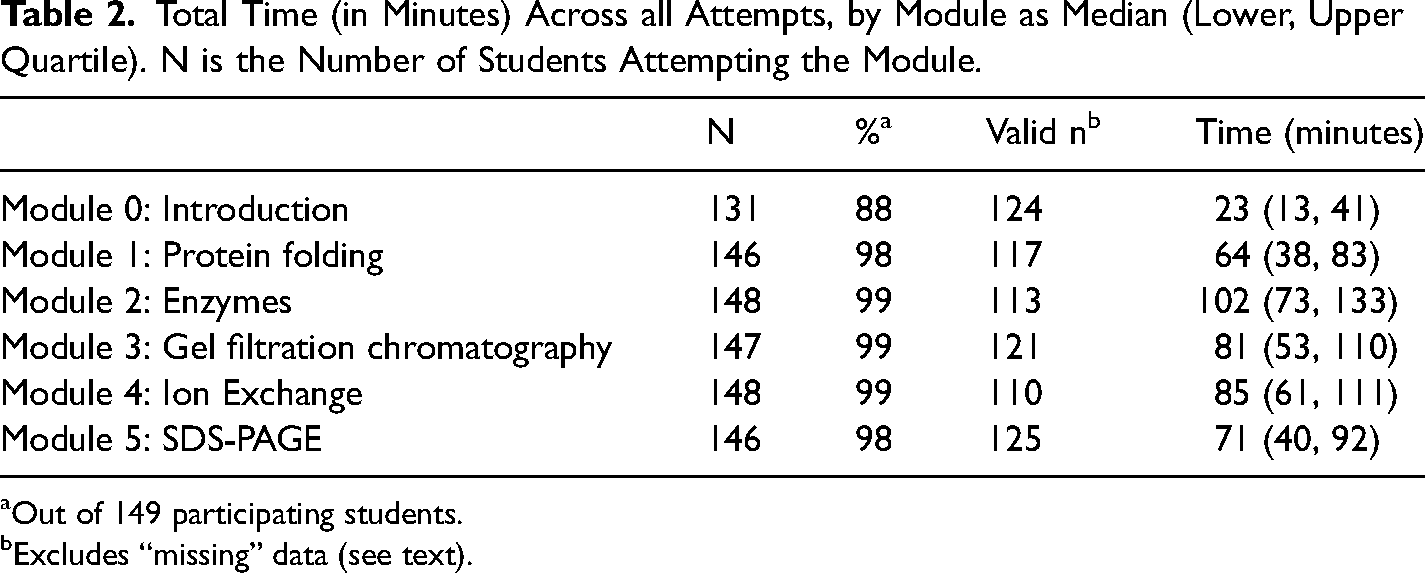
The total time students spent interacting with the modules was calculated across all attempts, with the median time spent on each module greater than one hour (Table 2). Module 2 (Enzymes) recorded the longest attempt times, with one quarter of students spending longer than 2 h completing the module. If the recorded time was greater than 180 min, the time was considered “missing” as the module interface may have been left open and unattended.
Total Time (in Minutes) Across all Attempts, by Module as Median (Lower, Upper Quartile). N is the Number of Students Attempting the Module.
Out of 149 participating students.
Excludes “missing” data (see text).
Time investment reflected the module complexity. Modules with more complex concepts or interactive components (e.g., Enzymes and Ion Exchange Chromatography) had the longest median completion times: Protein Folding (FoldIt) required less time than expected. Despite its spatial problem-solving nature, Protein Folding had a median time of 64 min, lower than the enzyme and chromatography modules. This was probably due to engagement with the FoldIt game interface.
SDS-PAGE was among the quickest despite high attempts. It had a relatively short median time but was among the top for students attempting the module three or more times. This suggests students may have made repeated, shorter attempts, possibly due to the assessment structure or specific challenge points. The introduction module (How to) was very brief. It had the lowest median time consistent with its overview/tutorial nature and not content intensive.
End-of-Module Surveys
Student feedback across the four pre-laboratory modules demonstrated strong overall support for the digital learning approach. Most students completed the end-of-module surveys; however, participation dropped from 93% in the first module to 77% in the last module (Table 3). For each module, more than 88% of students agreed or strongly agreed that after completing the pre-laboratory module, they felt well prepared for the laboratory class. More than 84% of students agreed or strongly agreed that they learnt more from the pre-laboratory modules than from reading text in the laboratory manual. Most students (75–85%) indicated that they would like more modules to be created. A technical error for closed questions occurred in module 4. The answer “strongly disagree” was preselected and could not be changed by the students, hence that data was not included (see Table 3).
Summary of Structural Biochemistry End-of-Module Survey Responses for Four pre-Laboratory Modules. a
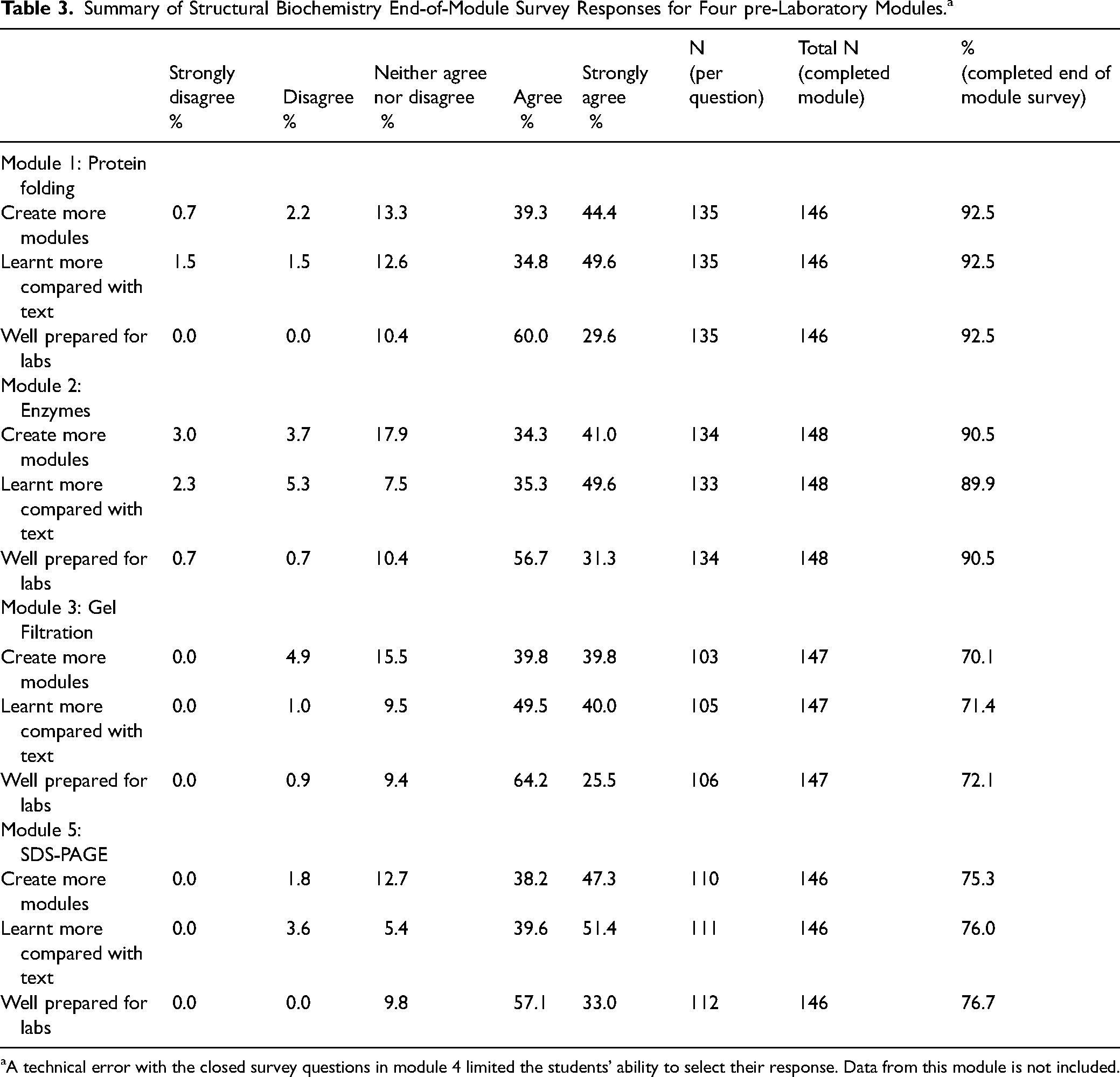
A technical error with the closed survey questions in module 4 limited the students’ ability to select their response. Data from this module is not included.
The end-of-module surveys also allowed for open-ended responses after each of the Likert scale questions, and in response to three prompts. Students consistently reported learning more from the modules than from text-based resources, with strong agreement in Modules 1 (84.4%), 2 (84.8%), and 5 (90.0%). Additionally, 83.7% of students in Module 1, 75.3% in Module 2, and 85.4% in Module 5 agreed or strongly agreed that more modules should be developed, highlighting the perceived value and effectiveness of this interactive learning strategy.
What was Positive About the Module?
In response to the prompt “What was positive about the module?” there were 361 comments by 98 unique students across the five modules. The top four themes were about: the content (14%); positive emotions (14%); preparation (14%); and active learning (13%) (Figure 3). Students commented on various aspects of the content, such as its clear presentation, organization, and informative value. ‘Concepts are explained at a basic level which I love so I understand what is going on from the start.’ ‘Very Informative and well structured. This really helped me build on each concept individually before moving onto the next.’ ‘It was an enjoyable task that maintained engagement to further learning experiences …’ ‘Fun and engaging, simply explained. For the first time I actually understand what … I’m doing.’ Learning and understanding exactly what we will be doing in the lab so we can concentrate on performing the experiments accurately instead of hastily reading through notes and not really understand what the experiment is for (as experienced with pretty much every other chemistry lab I have attended thus far).
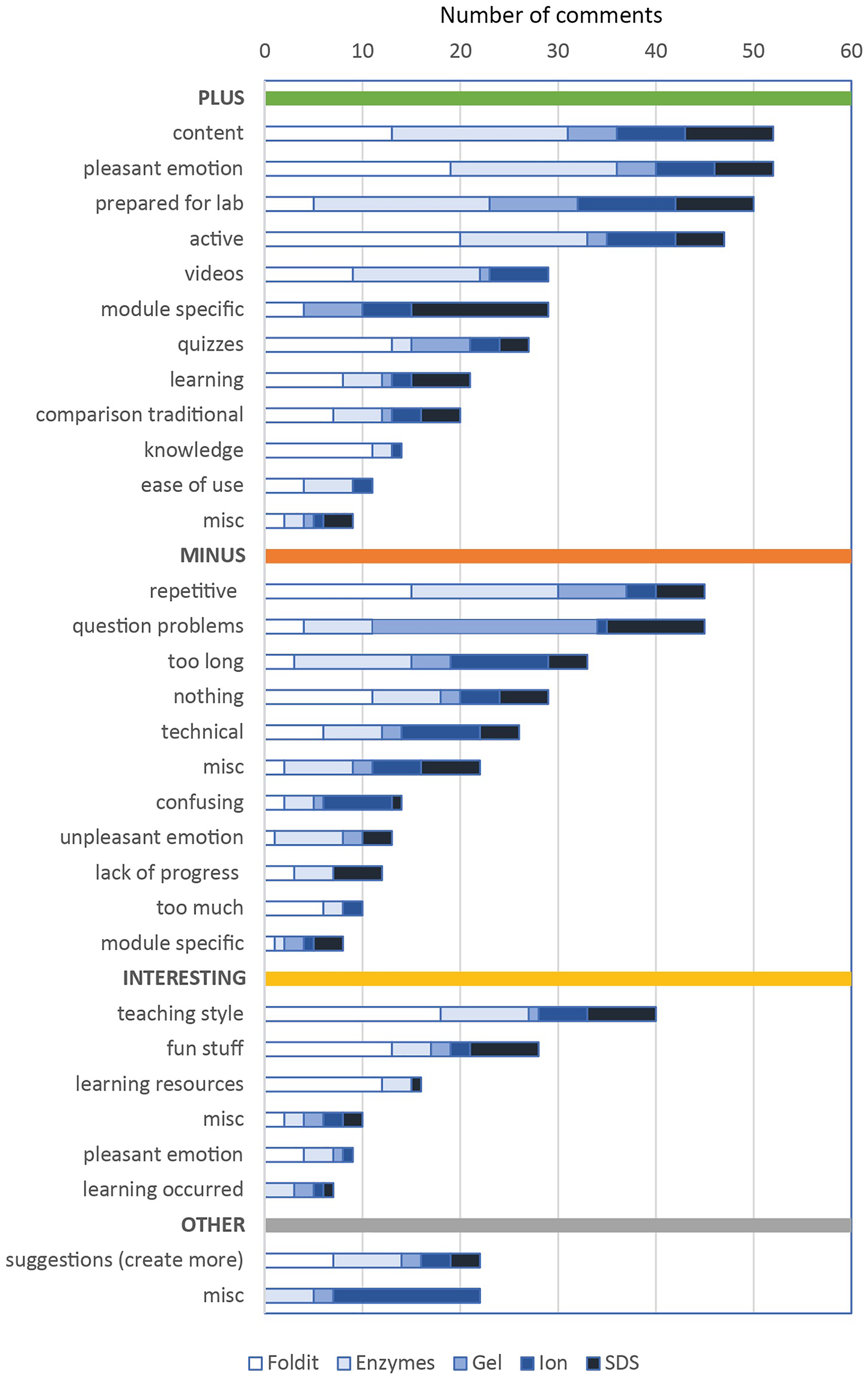
Structural Biochemistry students’ written responses to prompts in the end-of-module surveys.
What was Negative About the Module?
In response to the question “What was negative about the module?” there were 257 responses by 91 unique students across the 5 modules. The most common themes were that there was too much repetition in having to restart the entire module due to submitting an incorrect answer (18%), and about technical issues with specific question types (18%). These two issues combined to create a frustrating experience for some students. For example: Kicking me back to the beginning for getting an answer wrong, despite being correct with a slight spelling mistake. Just informing me that I had made a spelling mistake and giving me one chance to fix it would have been much better, and would have allowed for less frustration as a result of the quiz. It has a few bugs where the options wouldn't load and I clicked next and then [it] said I got the answer wrong.
What was Interesting About the Module?
Across the five modules, there were 110 comments by 60 unique students. Thirty-six percent of these comments stated that the teaching style was interesting: “It was a new interesting way to learn, which I hope to do more of in the future.” and “That I got to interact and learn the content in an alternate method”. Twenty-six percent of comments were about the cartoon character hosts and other aspects students found to be enjoyable such as “There was a main plot/story which involved [cartoon characters] during the process of my learning.” An additional 15% of comments stated that the additional resources and tips were interesting.
There were nine comments stating that the engagement or enjoyment of engaging was interesting, and another 7 comments where students found that learning had occurred was interesting: ‘How something as complex as this became more accessible, interactive and interesting.’ ‘The interactive nature I enjoyed to my surprise!’ ‘Everything, biochemistry is amazing.’
Student Experience of Course Survey
We looked at the response to statements about engagement in learning and satisfaction with the course quality. A one-way ANOVA for each satisfaction question found that the satisfaction in 2019 was significantly higher than the previous years (F = 43.6, p < 0.0001; F = 68.5, p < 0.0001 respectively for engagement and overall satisfaction questions) (Table 4). In addition, a higher percentage of students responded to the survey compared to the previous two years.
Student Responses in Student Experience of Course Surveys for Structural Biochemistry.
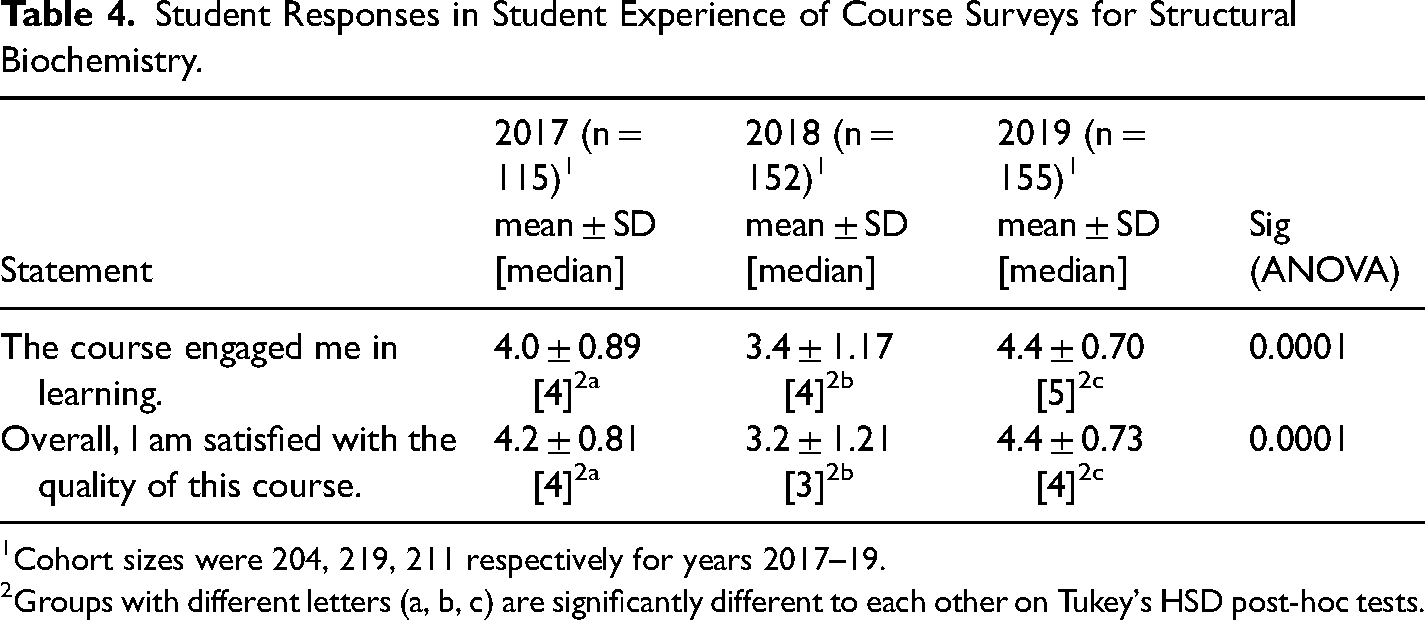
Cohort sizes were 204, 219, 211 respectively for years 2017–19.
Groups with different letters (a, b, c) are significantly different to each other on Tukey's HSD post-hoc tests.
Focus Groups
Student participants felt the pre-laboratory modules were more effective in helping them prepare for the laboratory classes compared to using more traditional resources: “So we really had to learn what exactly we were going to do rather than just read the lab manual and kind of waste our time until we got in the lab and then figure out the lab.” This was linked with the building of relevant knowledge and positive emotions “It's the first time I understood chemistry lab!” The efficacy of the pre-laboratory modules was, in part, attributed to the way in which the modules were presented by the course staff “… it was made by the actual coordinators as well, so we could see the actual lab that we were going to work in and the actual equipment as well.” and “Maybe it is something to do with psychologically how human beings learn aurally from others, but stuff sticks better, I don’t know what it is.”
Students commented on other positive features of the pre-laboratory modules noting that they were self-paced and available for multiple viewings “It's just really good and it's a ‘go to’ I can go back to revise if I missed anything.”, “It gave me context on why we were doing the experiments.” and “… it had questions that really were application based.” Another advantage of learning by using the pre-laboratory modules was time efficiency: “… if you make a mistake with the [Smart Sparrow] its easily recoverable but in the lab it takes time to clean up and then start again.” Students found the modules had other uses in addition to preparing for the laboratory classes such as summarizing key concepts for the end of semester exams: “Also studying for the final lab exam, you can just go back into [Smart Sparrow] again to revisit that technique so that was also very helpful.”
Students commented on several factors that influenced their engagement with the modules. The marks associated with the Door 3 quiz were appreciated as the semester progressed “You have to visit it for the quizzes so that was revision within the term itself rather than all at the end.” and “I did really well in those quizzes that it made that final exam a little bit less stressful.” Also, after the first laboratory experiences when students had completed the pre-laboratory module, the students recognized the benefits of engaging with the modules “It was probably one of the more enjoyable labs for my first and second year just because I was really organized and knew what I was doing.”
Students noted there were a few technical errors with the modules: “They were often well addressed once they were identified so I have no complaints there, but some fine tuning needed to happen occasionally.” And some noted that it was possible to cheat “I guess the only Achilles heel to the whole thing is if one would take a photo of the answer… …I could forward the pictures so they could quickly get it done because they were going to be late for the lab …”. However, they also acknowledged the value of completing the modules themselves: “I think you were at a real disadvantage if you didn’t do the Smart Sparrow work for the lab”. While appreciating the advantages of the pre-laboratory modules, the staff who created the modules were vital to their success. Students valued the personal connection with the teaching staff: “It doesn’t have to be everything shiny and exciting, doing a [Kahoot] or something like that, it's really just the level of passion and interest and engagement with Students and that can be just standing in front and giving a lecture.”
Staff members described the pre-laboratory modules as a positive addition to the curriculum. Compared to previous years, students acted with more confidence within the laboratory classes and were more involved with the experiments: “They were … more focussed on what they were doing, and I think they were a lot more interested in the task.” Staff noted that students seemed to know what to expect in the task; and their experimental techniques and results were more accurate. Staff also reported that students asked fewer instructional questions and more higher-level questions “… they came out with all these interesting content-based questions”. There was more of a focus on “what (the students) were actually learning” rather than on just “… getting through the lab”.
Overall, compared to previous years, the laboratory experiences were superior for staff and were perceived to be more positive for the students: In past years we’d always have the same mistakes time and time again. This year there was less breakage, less reagent [used], they weren’t all repeating the experiment a second time, and they weren’t stressed.
Discussion
A series of interactive laboratory preparation modules was developed and implemented in a second-level biochemistry course aiming to consolidate all sources of preparatory material and to increase students’ preparation for laboratory classes. The modules were designed to increase students’ theoretical knowledge related to the laboratory experiments and familiarize them with the experimental processes, equipment, safety, and data. Most students perceived the modules to be effective for their learning and reported that after completing the pre-laboratory module, that they then felt prepared for the corresponding laboratory class. Staff observed a positive change in student's confidence in the laboratory classes; students made fewer mistakes, took less time to complete the experiments, and were more intellectually engaged with the interpretation of the data.
Despite research strongly supporting the positive links between preparation, deeper learning, and success in the laboratory (Makransky et al., 2016), student interaction with preparation activities is often low in effort or involves activities that students perceive as being ineffective (Jones & Edwards, 2010; Pogacnik & Cigić, 2006). While completion of the modules in the present study was requisite to enter the laboratory, students recognized several features of the modules that encouraged further interactions. For example, after completing the first module, most students indicated that they felt prepared for the laboratory. These feelings may have been reinforced when they were completing the laboratory experiments as they reported having the confidence to work out what to do, and the time and knowledge to understand the data more deeply. Such experiences were likely to strengthen students’ trust in the teaching staff and their belief that future engagement with preparatory work would be of benefit to them. Whittle and Bickerdike (2015) describe this as students “develop(ing) the habit of preparing appropriately for laboratory classes” (p. 148) or learning how to learn (Alt, 2016). Sustained attention to learning tasks, with “internal reward” supports a change in the ownership of learning from that of external teacher, to the learners own self-regulation (Tenet 2; Alt, 2016)
In our study, students commented that the relevance and authenticity of the content was also important in promoting their participation, for example, the videos of the local teaching laboratory, their teaching staff, as well as the “real-life” examples such as drug development, health, medicine, and industry connections. These features may have helped the students feel more comfortable and relaxed about the upcoming class, knowing that they were more familiar with what the equipment looked like and how to use it (Altowaiji et al., 2021). In addition, they understood the links between the activities that they were going to perform in class and their future careers; thus, they genuinely wanted to engage, rather than use it as a box-ticking exercise (Tenet 1; Alt, 2016). Students also commented on the social aspect of learning using the modules with many noting the humor of the professional hosts, and others highlighting the social learning process: “I know it's a lot of work for you guys, but this is an exceptional tool for learning”.
Behavioral engagement has been examined by time spent on learning events (Bråten et al., 2021; Philp & Duchesne, 2016). In the present study, students’ behavioral engagement, as evaluated by time spent interacting with the modules, was quite varied, with median times ranging from 64 min in Module 1 to 102 min in Module 2. This variation is partly due to each module being unique in content, that is, each module contained a different number of videos, readings, and activities. The modules were also self-paced, meaning that students could proceed through the module activities as quickly or slowly as required. As such, variability in time taken to complete the modules was expected. In addition, students who answered one or more questions incorrectly in the Door 3 quiz, were directed back to the content to review, prior to attempting the quiz again. Thus, some students may have completed the module with one attempt at the quiz, while others may have required numerous attempts (and so longer engagement time). Evaluating the time taken to complete any task is challenging because there is no reliable way to check actual attention to task, especially for online tasks (see below). We note that the length of time on task in this study is supported by comments made by students, yet we acknowledge that it is not possible to draw strong conclusions about behavioral engagement based on median or maximum engagement time. Some students commented on the (long) time it took to complete the laboratory preparation. Academic staff may feel that spending up to 110 min preparing for a laboratory class is acceptable (Pogacnik & Cigić, 2006); however, for students who do not routinely prepare for laboratory class, or who need to muster the motivation to complete this work independently, this amount of time may seem to be excessive and as such, may have induced some negative emotions.
Cognitive engagement requires students to exert mental effort to comprehend the concepts and may include self-regulation and metacognitive behaviors (Corno & Mandinach, 1983; Richardson & Newby, 2006). There are different strategies for measuring cognitive engagement which span the range from simple self-report scales to observations, interviews, eye-tracking and physiological measures such as electrodermal activity (Li, 2021). In the present study, as students were already spending considerable time interacting with and completing the modules, cognitive engagement can be considered through the lens of how prepared they felt for the laboratory classes. Nearly all students (88–90%) agreed or strongly agreed that they felt prepared for the laboratory classes. Many students specifically commented that the reason they felt more prepared was because of the detailed guides, videos, and demonstrations which were more engaging than a traditional text. Many students explicitly commented on using the quizzes and modules, with descriptors like “active/interactive/engaging learning’, and occasional comments that they were ‘forced to understand”.
Emotional engagement of the pre-laboratory modules was evaluated by examining student responses to the end-of-module surveys. Emotions such as enjoyment, hope, pride, relief, and interest are thought to be important for learning (Pekrun et al., 2002; Pekrun & Stephens, 2010; Rowe et al., 2015; Silvia, 2006, 2008). In the present study many students reported experiencing positive emotions such as fun, enjoyment and engaged when interacting with the modules. Rowe et al. (2015) reported that students who felt joy or happiness when learning also felt enhanced feelings of self-efficacy. It is possible that upon completion of a module, students may have experienced enhanced self-efficacy, and this may have carried forward to the upcoming laboratory class, i.e., “I could complete the module; therefore, I will be able to complete the activities in the laboratory class”. This may partly explain the reported feelings of being well prepared for the upcoming laboratory class.
In the present study, approximately 90% of students indicated that after they had completed a module, they felt prepared for the corresponding laboratory class. After they had completed the laboratory classes, students confirmed that they were prepared. After class, students expressed their enjoyment of the classes because, as one student stated, “…I was really organized and knew what I was doing.” While students felt prepared for class, staff noticed changes in students’ performance during laboratory classes when compared to previous cohorts. Teaching staff reported that the students entered the laboratory with more confidence, attempted the laboratory activities with less hesitation, took less time to work through the practical experiments, and spent more time focused on analysing, visualizing, and interpreting the data. Similar to Pogacnik and Cigić (2006), less thoughtless questions were asked; instead, there was a greater number of higher-order questions posed to teaching staff. These differences in students’ performance in the laboratory class were behaviors suggestive of students who were prepared and understood what they were doing, and who were engaging in higher order learning activities.
The data presented here offers strong empirical support for increased engagement with the integrated, constructivist-aligned pre-laboratory modules. As noted in previous literature, student engagement with preparation tasks is often limited (Dalgarno et al., 2009; Yeung et al., 2005); however, our modules achieved consistently high participation rates (≥98% across five of six modules, Table 2), demonstrating a significant improvement over previous studies. This is particularly notable given that prior studies reported participation rates as low as 30–60% even when students recognized the value of preparatory resources. Furthermore, a substantial proportion of students undertook multiple attempts at module completion (up to 15% in the Enzymes module; Table 3), reflecting behavioral engagement and persistence (Fredricks et al., 2004; Newmann, 1992). Median time-on-task data further supports cognitive investment in the learning process. Importantly, student perceptions of the value of the modules were overwhelmingly positive: over 84% of students in Modules 1, 2, and 5 agreed they learnt more compared to text, and over 87% felt well prepared for the lab (Table 3). These findings are in line with research indicating that pre-lab preparation enhances understanding and lab performance (Jolley et al., 2016; Makransky et al., 2016), and demonstrate that our scaffolded digital modules succeeded not only in conveying content, but also in driving meaningful engagement—behaviourally, emotionally, and cognitively.
Limitations
The interpretation and practical application of the principles that guided the module design and production are applicable to the wider teaching community, even if trialed on one course. While students may have shared their module answers for the purpose of cheating, we rely on both student conversations around amusing or informative components of the online lessons, and watching other students act confidently in the laboratory, to inspire all students to want to fully engage with the preparatory content. We also believe that after students have interacted with the first few modules, their experiences in the corresponding laboratory class would support future participation in preparation activities; however, this requires further research.
Future Research
Whilst the curriculum design used in this study was successful in preparing students for laboratory classes, it does not solve the overarching question of why students do not prepare. Zimmerman (2002) commented that novices do not think about an upcoming task in advance. To develop academic self-regulatory skills, learners must think about what they are doing to learn by examining the learning tactics they employed, the success of these tactics, and then using this information to plan for upcoming learning (Winne, 2022). Wu et al. (2021) proposed that examination of self-regulatory skills in combination with technology-enhanced learning was an area that required further investigation. We suggest that future studies examine the use of reflective and planning techniques to reinforce students’ positive experiences with laboratory preparation modules and laboratory class. The combination of academic self-regulatory skill development with technology-enhanced learning may help to address the “preparation problem”. These online modules have now been redeployed using the Articulate 360 suite and the approach has been implemented in more courses to measure its reliability.
Summary and Conclusions
The design and implementation of comprehensive online pre-laboratory modules guided by constructivist theories was effective in developing more knowledgeable and confident students who were well prepared for laboratory classes. Most students enjoyed engaging with the modules due to their highly interactive, social, and humorous design, and students perceived the modules to be effective for their learning. Staff observed a positive change in student's confidence and intellectual interactions in the classes. We suggest that if this type of intervention is introduced early in students’ programs together with reflective and planning practices, it may stimulate students’ genuine desire for interaction and preparation. This practice may, in turn, heighten the quality of the learning experience and promote the building of academic self-regulatory skills.
Footnotes
Consent to Participate
Written informed consent was obtained from all individual participants included in the study.
Consent for Publication
Written informed consent was obtained from all individual participants to publish included quotes.
Author Contributions
Barbara J. Hadley: Project design, module creation, data collection and analysis, article preparation, editing and review. Nicole B. Reinke: Data review, coding and analysis, literature review, article preparation, editing and review. Helen M. Massa: Project design, thematic analyses, data review, data coding, article preparation and editing. Mary Kynn: Data review, coding and analysis, statistical analyses, article preparation, editing and review. Mary-Ann Shuker: Project design, module creation, data coding, literature review, article preparation and editing. Kim Cartwright: Project design, data review, data coding, literature review, article preparation, editing and review. Yuri Banens: Project initiation and design. Jennifer C. Wilson: Project initiation and design, module creation, data collection and analysis, and article preparation.
Declaration of Conflicting Interests
The authors declared no potential conflicts of interest with respect to the research, authorship, and/or publication of this article.
Ethical Considerations
This research was approved by the [Griffith University] Human Research Ethics Committee, Ref No: [2019/398].
Funding
The authors received no financial support for the research, authorship, and/or publication of this article.
