



Abstract
The digital food environment is relevant for public health, as it shapes food access, promotion, and consumption. However, evidence on how different socioeconomic groups engage with this environment is limited. This study aimed to compare how adults from high- and low-socioeconomic status (SES) neighborhoods in Santiago, Chile, interact with the digital food environment. This qualitative, cross-sectional study conducted 11 focus groups with 78 adults from high- and low-SES neighborhoods. Data were analyzed using inductive reflexive thematic analysis. Two themes and 6 subthemes emerged. (1) Digital food environment as a space of access, consumption, and social differentiation: SES shaped the nature of digital food engagement. High-SES participants described routine use of online platforms to purchase meals and groceries, including healthier options. Low-SES participants engaged sporadically, driven by promotions and support from younger relatives. (2) Digital food environment as a communicative and affective space of influence: Participants reported exposure to unhealthy food advertising. High-SES individuals demonstrated greater awareness of targeted marketing and employed strategies to avoid ads. In contrast, low-SES participants tend to adopt a passive stance, valuing online information for economic reasons. Motivations also diverged: high-SES adults sought content related to self-care and healthy eating, whereas low-SES adults looked mainly for discounts or cheaper options. These findings highlight the interaction with the digital food environment is widespread among adults, showing disparities by SES. Findings underscore the need for targeted policies, including regulating digital marketing, promoting digital literacy, reducing socioeconomic disparities, and fostering healthier digital food environments.
Keywords
Introduction
The World Obesity Atlas 2025 estimates that the prevalence of overweight and obesity will affect nearly 50% of the adult population by 2030. 1 In Latin America, Chile is the country with the highest prevalence of obesity: 42% of its adult population is obese, and this number is expected to continue rising. 1 This phenomenon is driven, among other factors, by the growing presence of obesogenic food environments. Such environments facilitate access to unhealthy foods and meals in large quantities, at affordable prices, and in multiple locations, 2 exacerbating the risks associated with obesity.3,4
The expansion of digital technologies has added a new layer to contemporary food environments. The increasing use of digital media, urbanization, and the transformations brought about by the COVID-19 pandemic have reshaped how people access, purchase, and receive information about food. These changes have amplified exposure of low nutritional quality products, and extended into digital platforms, the same marketing and availability patterns that characterize physical food environments.5,6,7 This emerging set of interactions has been conceptualized as the digital food environments, defined as those online settings that facilitate the access, promotion, and purchase of food through digital channels. 8 Digitalization of the food domain shows that that people now interact simultaneously with physical and digital food environments, generating dynamics in which both types of environments provide feedback and mutually reinforce each other. 9 However, this rapid shift has not been accompanied by sufficient critical examination, particularly with regard to the growth of large technology platforms and food delivery apps, their algorithms, and the potential for these systems to reproduce or deepen existing socioeconomic (SE) inequalities.
Recent studies have documented the potential impact of the digital food environment on food preferences, purchasing decisions, and consumption habits, associating it with less healthy dietary patterns.8,9 Specifically, it has been observed that digital channels promote and sell a higher proportion of energy-dense foods and beverages through strategies such as visual and cultural appeal, promotions, discounts, emotional branding, and the use of celebrities.10 -13 Evidence also links exposure to home food delivery services and digital advertising with higher obesity risk in adults. 14 Influencer marketing for children promotes unhealthy foods and fast food, 15 increasing caloric intake. 16 It has also been suggested that the main users of this digital environment are young people with a high SE and educational level, 11 which could indicate inequalities in how people interact with these environments. Despite growing evidence of its negative health impacts, the emerging field of the food environment has not been accompanied by adequate regulatory frameworks, allowing digital marketing and commercial practices to expand largely unchecked. Existing regulatory tools appear limited in their ability to respond to the dynamic, complex, and rapidly evolving nature of the digital food environment. 17 This regulatory gap reinforces the influence of food and technology industries, constrains institutional capacity to protect population health, and may exacerbate existing SE inequities.
Additionally, most available evidence has focused on high-income countries and observational studies, which often describe the digitalization of various dimensions of the food environment. 9 Latin America is experiencing a rapidly expanding digital food marketplace, 18 but regional evidence remains limited. A few exploratory studies in Brazil and Mexico suggest similar trends, including increased access and high exposure to online marketing of unhealthy foods.19 -22 In Chile, research on food environments has primarily focused on physical and policy dimensions, such as food availability and front-of-package labeling. 23 However, to date, only 1 study has characterized the use of online food purchasing and sales platforms, suggesting their influence on eating patterns. 24 Additionally, no studies have compared how adults from different SES in Latin America perceive and interact with digital food environments, or how these interactions may reinforce or mitigate existing inequalities. It is essential to generate qualitative evidence on these issues, especially in contexts marked by inequality, where research on physical food environments has already shown a disadvantage for more vulnerable populations. 25
In this context, the objective of the present study is to compare the interactions with the digital food environment between participants from 2 Chilean neighborhoods, representing a high and a low SES. We seek to characterize the digital environment and understand the possible differences in food access and in the dynamics with this environment. By doing so, the study contributes to a deeper understanding of how the elements of the digital food environment influence eating behaviors and other aspects of health, particularly in populations with inequitable access.
Methods
Study Design
This study is part of a larger mixed-methods project that seeks to understand the practices and interactions of various actors within food environments in Chile. 26 The present article draws on a specific component of the qualitative phase, focusing on the digital food environment. This phase sought to provide an in-depth, interpretive exploration of a phenomenon that remains understudied in Chile, examining how people perceive, make sense of, and navigate digital food spaces. A qualitative design was selected because it enables the identification of meanings, motivations, and contextual dynamics that are not easily captured through quantitative methods, particularly those related to how SE conditions shape digital food practices. The Consolidated Criteria for Reporting Qualitative Research (COREQ) were used for reporting this study 27 (see Supplemental Material).
Participants
The participants were adults residing in 2 urban neighborhoods of the Metropolitan Region of Santiago, Chile. These neighborhoods were purposively selected to represent contrasting levels of multidimensional poverty, an index that considers variables such as education, health, employment, housing, and social cohesion. 28 Specifically, 1 neighborhood with a high level of multidimensional poverty (meaning a low SES) and 1 with a low level of multidimensional poverty (high SES) were chosen. 29 In the neighborhood with a high level, 18.7% of its population lived in multidimensional poverty; in the low-level, 5.2% of its population lived in multidimensional poverty. 30 The neighborhoods were selected out of convenience, as the research team had pre-established relationships and community networks through previous projects in these specific locations. These existing networks significantly facilitated participant recruitment and participation in the study activities.
Participants included were over 18 years of age, of Chilean or foreign nationality, and were in charge of some food purchasing for their households. This last inclusion criterion was informed by the preceding quantitative phase of the broader project, which applied the Chilean adaptation of the Perceived Nutrition Environment Measures Survey (NEMS-P) instrument and sought to ensure that participants had concrete mobility within and interaction with the food environments defined by the Chilean model. Additionally, unlike the original NEMS-P, 31 which typically targets the primary shopper and can skew samples toward women, we intentionally broadened the eligibility to include individuals who share food-related responsibilities. This adjustment was designed to enhance gender representation while maintaining experiential relevance in discussions of food environments.
The study excluded people who did not speak Spanish, who had lived in the country for less than 5 years, who had a disability that prevented them from carrying out the project activities, or who followed a very restrictive diet (due to illness or by choice), which could alter their relationship with food environments.
No statistical sample size or power calculation was performed, as this was an exploratory qualitative study. The number of participants was determined a priori, seeking diversity of perspectives across SE contexts. Convenience sampling was conducted using 2 recruitment strategies. Initially, participants from the previous phase of the project who had completed the NEMS-P for Chile (NEMS-P-Ch) 32 and met the inclusion criteria were contacted by telephone or email. Approximately 150 individuals provided their contact information and expressed interest in further participation. Each study activity was planned to include a minimum of 6 participants. However, some contacts were invalid or unreachable, while others declined due to time constraints or lack of interest.
Because the required number of participants for each activity was not reached, a second recruitment strategy was implemented. Community members and local leaders from both neighborhoods assisted the research team by identifying and inviting additional residents who met the inclusion criteria through face-to-face contact. Regardless of the recruitment method, a few confirmed participants failed to attend on the scheduled day without providing specific reasons.
Data Collection
Information was collected through focus groups, a technique that facilitates guided and open discussion of specific topics in small, homogeneous groups. 33 This method was selected because it facilitates dialog, interaction, and the co-construction of meanings, 34 characteristics well-suited to exploring shared digital food practices. A total of 11 focus groups were conducted: 6 in the high-SES neighborhood and 5 in the low-SES neighborhood. A sixth focus group was conducted in the high-SES neighborhood to compensate for the low participation in one of the previous sessions.
The 11 focus groups were held between June and August 2024 in community spaces, such as schools and community centers, located in each neighborhood. A total of 78 people participated, with 4 to 11 people attending each focus group. There were no non-participants present during the focus group. Other characteristics of the participant population by neighborhood are found in Table 1.
General Characteristics of Participants, Per Neighborhood.

To guide the discussion, a semi-structured question guide (see Supplemental Material) was developed based on the analysis of the project’s previous stages, including a literature review and the application of the NEMS-P-Ch survey. This guide was previously validated in a pilot focus group that included 8 participants with characteristics similar to those of the final sample. The topic of the digital food environment was not addressed through a predefined definition, but rather explored as part of discussions about the various food environments within the Chilean model. For example, we asked them about online food purchases. Participants were encouraged to describe their use of food-related applications, websites, and social media. In some groups, this topic emerged spontaneously, while in others, it was intentionally prompted by the moderator.
A professional anthropologist moderated all focus groups in Spanish. She is a female Chilean anthropologist with experience in the technique. Additionally, 1 or 2 research assistants (anthropologists or a psychologist) supported each session by taking detailed field notes to capture group dynamics and nonverbal interactions, complementing the audio recordings. Participants had no prior relationship with the fieldwork team before data collection. At the beginning of each focus group, the anthropologist moderating the session introduced herself by name and profession, and any other team member present did the same. This procedure aimed to ensure transparency, rapport, and participant comfort during the discussion.
Each focus group lasted an average of 90 min, was audio-recorded, and later transcribed.
Although theoretical saturation of the data was sought, this criterion was not fully achieved. Given that the study is part of a larger project and research topic, 26 the digital food environment may have been underrepresented. However, the number of focus groups conducted was considered sufficient to capture an adequate diversity of perspectives for the specific objectives of this analysis. 35
Data Analysis
The transcribed focus groups were reviewed by a member of the research team to ensure the accuracy of the information. All personal information of the participants was anonymized before the analysis began. Data analysis was carried out following the inductive thematic analysis methodology of Braun and Clarke, consistent with an interpretivist orientation aimed at understanding participants’ perceptions and experiences 36 Two researchers with experience in qualitative methodologies, who did not participate in the data collection, familiarized themselves with the transcripts and independently generated initial codes. For this stage, each researcher analyzed half of the focus groups so that together they covered all the documents. The codes were created inductively, derived exclusively from the information collected in the focus groups. 37 After reviewing and discussing these codes, a joint codebook was developed that guided a new round of coding applied by both researchers to all documents. This evolving list of codes (codebook) was treated as a flexible, living document that supported analytic dialog. In line with the principles of reflexive thematic analysis 36 new codes could be created when relevant elements emerged that were not included in the initial list of codes. Three team researchers discussed and organized the codes into categories to construct the main themes and subthemes related to the digital food environment. Thematic development was recursive and interpretive, guided by the researchers’ reflexive engagement with the data and their perspectives. Themes were iteratively reviewed, defined, and named to capture shared meanings about participants’ interactions with the digital food environment. Atlas.ti software (version 24; Cleverbridge GmbH) was used to organize the information.
Following theme development, a comparative analysis explored differences and similarities between neighborhoods of contrasting SES. A contrast matrix was used to map how each theme and subtheme manifested across contexts. Descriptive counts of theme mentions were incorporated only to illustrate contextual emphasis—not to quantify importance—enhancing interpretive depth in understanding SES-based differences. 38 Each theme and subtheme is exemplified through quotes, identifying the focus group, the type of participants, and the neighborhood.
Although concise, the final structure was the result of an iterative and interpretive process consistent with Braun and Clarke’s reflexive thematic analysis. 36 The themes and subthemes captured central organizing concepts that reflected shared meanings across participants’ narratives. Rather than aiming for data fragmentation, the analysis sought conceptual depth, interpretive coherence, and a balance between thematic richness and clarity. This structure was therefore considered adequate to represent the complexity and diversity of participants’ experiences within the digital food environment.
Reflexivity and Positionality
The research team comprised academics from public health, nutrition, anthropology, and psychology, most of whom were affiliated with a major university located in a low SES area of Santiago. A fieldwork team comprising 4 professionals—3 social anthropologists and 1 psychologist—conducted data collection. Although the institutional context provided proximity to diverse social realities, the team remained aware that disciplinary and academic identities could shape interactions and interpretations.
Prior to data collection, the anthropologists and the psychologist participated in joint training sessions, which helped establish rapport and a shared understanding of the study’s aims and procedures. While the fieldwork researchers were new to the communities involved, all participants received a clear explanation of the study objectives, the names and roles of team members, and the voluntary nature of participation before signing the informed consent and receiving a personal copy of it.
The development of the focus group guide reflected the team’s transdisciplinary composition, integrating theoretical models of the food environment with sociocultural and policy perspectives. The guide was iteratively refined using insights from previous quantitative phases of the broader project, a literature review, and a pilot test of the questions, to ensure theoretical coherence and contextual relevance.
To minimize power asymmetries and social desirability bias, all focus groups were moderated by anthropologists rather than health professionals, fostering open and non-judgmental dialog. A psychologist attended sessions in the low-SES neighborhood to provide support when mental health issues arose. During the analysis, 2 researchers (PMC, NGC) independently revisited and re-coded transcripts related to the digital food environment, engaging in reflexive discussions to enhance interpretive consistency and reduce potential bias.
Results
Two overarching themes and 6 subthemes were identified through an iterative and reflexive process. Each theme represents a shared pattern of meaning that captures how participants understood and experienced the digital food environment. The subthemes further unpack the nuances and tensions within these broader meanings, illustrating how digital interactions are shaped by SE context, everyday practices, and perceptions of food.
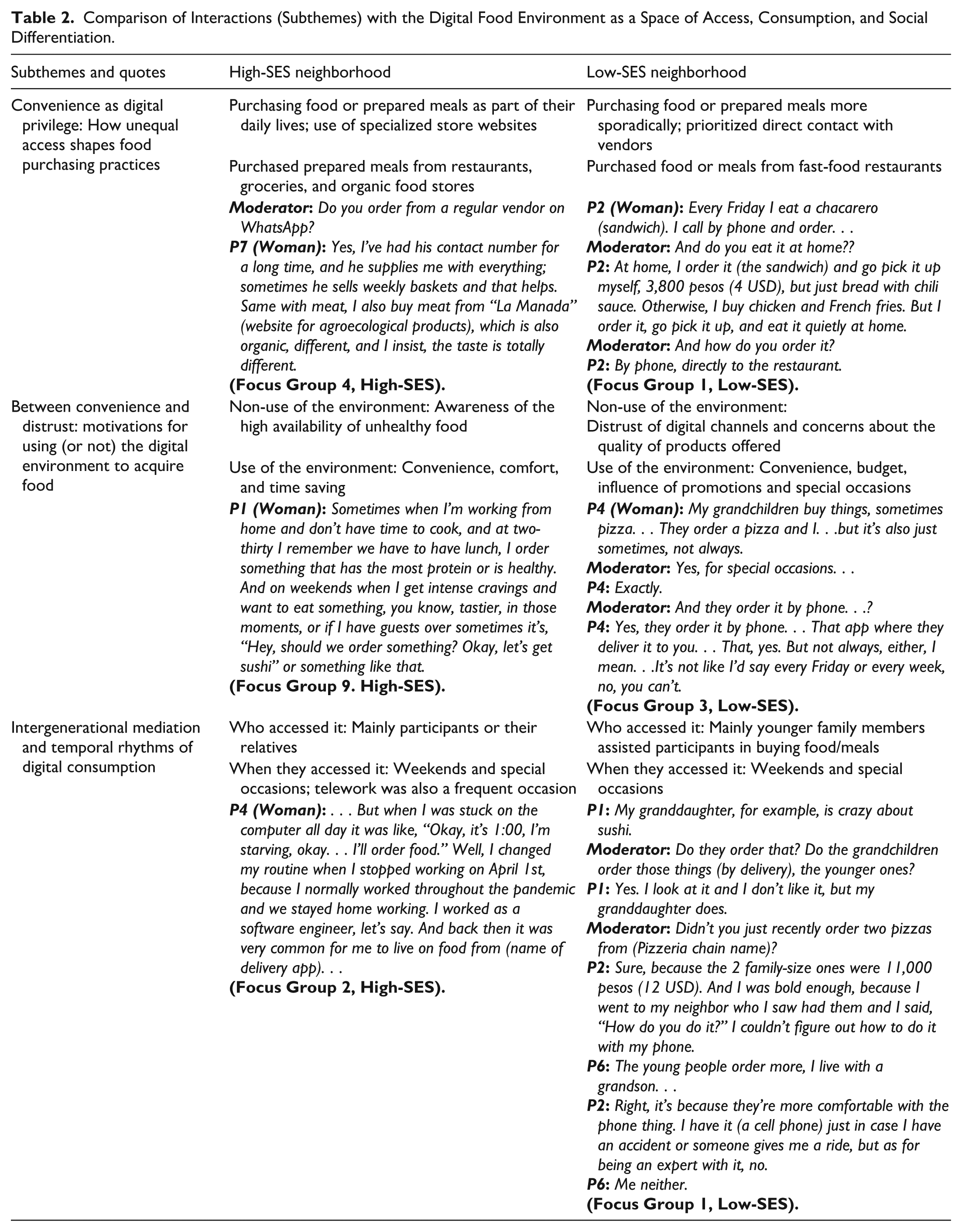
This theme explores how participants make sense of the digital food environment as a channel for acquiring food and prepared meals, highlighting the deep intertwining of digital access with SES, material infrastructure, and daily routines. Beyond simple differences in use, participants’ narratives reveal how convenience, familiarity, and trust act as boundary markers of digital participation, shaping who can fully engage with digital platforms and under what conditions. These boundaries not only regulate access but also shape the meanings attributed to digital consumption, thereby reinforcing broader patterns of SE differentiation (Table 2).
Comparison of Interactions (Subthemes) with the Digital Food Environment as a Space of Access, Consumption, and Social Differentiation.
Convenience as Digital Privilege: How Unequal Access Shapes Food Purchasing Practices
Participants’ accounts illustrated that digital engagement with food purchasing is not equally distributed but mediated by access to technology, financial resources, and digital literacy. While high-SES participants described online shopping as an extension of their everyday routines, low-SES participants experienced it as an occasional or constrained practice. Thus, the digital food environment operates as both an enabler and an exclusionary space, revealing how SE privileges manifest in the routine integration of digital channels, while resource constraints limit participation to sporadic or exceptional moments, reinforcing existing inequalities in food access.
The participants indicated that their interaction with the digital food environment was mostly focused on purchasing food or prepared meals. While this was a common practice in both neighborhoods, a more marked tendency to use this environment to acquire food was evident in the high-SES neighborhood. For these participants, the digital food environment is perceived as a natural extension of traditional purchasing channels. In contrast, for low-SES participants, digital access to food is a less established practice and is used more sporadically. Participants reported using different digital channels to make purchases, including mobile applications that sell food and beverages, supermarket apps, and food store websites. Although the use of mobile apps to acquire food was predominant in both neighborhoods, participants from the low-SES also prioritized direct contact with vendors or stores through calls or instant messaging. In contrast, in the higher-SES neighborhood, the use of specialized store websites for purchasing specific foods, such as meats and organic products, was prominent.
Regardless of their neighborhood, participants who stated buying in the digital environment reported mostly buying unhealthy prepared meals, such as pizzas, hamburgers, and fried sushi, which they primarily purchase from large fast-food chains. Among the few healthier alternatives acquired, they mentioned vegetable fajitas, non-fried sushi, ramen, and gohan. Only participants in the high-SES neighborhood mentioned the purchase of healthy foods for the home, such as groceries, frozen meats, and organic vegetables.
Between Convenience and Distrust: Motivations for Using (Or Not Using) the Digital Environment to Acquire Food
Participants’ motivations for using or avoiding digital food channels reflected competing meanings of value, trust, and self-control. For high-SES participants, convenience and time-saving were framed as rational strategies to manage busy lives, whereas low-SES participants approached digital consumption as a temporary indulgence or celebrations. Distrust toward digital transactions and concerns about food quality emerged as moral and emotional boundaries, particularly among low-SES participants, revealing how economic position intersects with perceptions of risk, responsibility, and self-regulation.
The motivations for using the digital environment to acquire food differ notably between the neighborhoods. In the high-SES neighborhood, the main motivation is convenience, comfort, and the time saved. Participants in this group value the convenience of receiving prepared food or supermarket products without having to travel, especially when they are tired or have limited time to cook. This convenience extends to online supermarket shopping, seen as a way to save time and avoid buying unnecessary items, which can happen when shopping in person. For participants from low-SES neighborhoods, using this environment to acquire food is less about convenience and more about responding to the influence of promotions, their budget, and special occasions. They view it as a luxury reserved for celebrations or weekends, unlike in high-SES neighborhoods, where it is a daily practice.
It is worth noting that in both neighborhoods, only one participant mentioned the influence of food on mood and feelings of happiness as a reason for purchasing.
Among the higher-SES participants who reported not interacting with the digital environment for food access, they affirmed this decision was based on a greater awareness of the high availability of unhealthy food and the influence that promotions have on their purchasing and consumption decisions. In contrast, people from the lower-SES neighborhood who do not buy food in this environment do so because they distrust digital channels and the quality of the products offered, preferring to buy in physical stores to verify the quality of the food and have the chance to choose.
Intergenerational Mediation and Temporal Rhythms of Digital Consumption
Interactions with digital platforms were often mediated by younger family members, who acted as digital intermediaries for older adults. These dynamics illustrate how digital food practices are not merely individual decisions, but rather negotiated processes embedded in family relationships. Temporal patterns—such as weekends, special occasions, or pandemic periods—further reveal how digital consumption aligns with collective social rhythms, showing that engagement is structured by broader cultural and familiar routines rather than spontaneous individual choices.
Regarding the process of buying food in the digital environment, participants described who does it, and when. In both neighborhoods—although to a greater extent in the low-SES neighborhood—young members of the family (adolescent children or grandchildren) are the ones who interact the most with digital channels for these purposes. These younger members often act as intermediaries between older adults and digital platforms, guiding or facilitating food purchases through these channels.
In the high-SES neighborhood, some female participants also noted that it is their partners who encourage and make digital food purchases.
In both neighborhoods, weekends and special occasions were mentioned as key times for interacting with the digital environment. The COVID-19 pandemic was specifically highlighted as a period when participants started engaging more with digital platforms for food purchases. Additionally, in the high-SES neighborhood, individuals who worked from home during the pandemic (and at other times) also preferred using this environment to buy prepared meals. Among these participants, single-person households often view food delivery as more cost-effective than cooking, likely reflecting cost-benefit considerations shaped by telework. This behavior persists for some participants today.
These narratives suggest that the digital food environment reproduces offline inequalities, reinforcing the social stratification of food access through digital infrastructures.
This theme examines how participants perceive and emotionally react to the digital dissemination of food-related information and advertising. The digital food environment emerges not only as a marketplace but also as an arena of persuasion, aspiration, and self-definition. Participants’ discourses reveal how SE position shapes both critical awareness of and vulnerability to algorithmic influence, mediating the ways they resist, adapt to, or internalize food-related digital content (Table 3).
Comparison of Interactions (Subthemes) with the Digital Food Environment as a Communicative and Affective Space of Influence.

Responses to Digital Food Advertising: Critical Awareness and Algorithmic Vulnerability
High-SES participants demonstrated a critical awareness of targeted marketing, describing digital advertising as both manipulative and manageable. In contrast, low-SES participants often interpreted it as an overwhelming presence—an unavoidable “bombardment.” These contrasting responses reflect how different levels of digital literacy and SE conditions intersect to differentiated capacities for resistance or susceptibility to algorithmic persuasion.
Participants reported constantly interacting with the digital food environment, especially through the food-related advertising they receive. In the high-SES neighborhood, the digital environment is a communicative space that, while ubiquitous and often intrusive, is processed with a critical awareness of its intentions. Participants demonstrate a high level of digital literacy regarding food marketing, as they acknowledge the power of algorithms and targeted advertising.
Among participants from the low-SES neighborhood, exposure to digital advertising is high, but the response is more passive and oriented toward immediate utility. Information is valued for the potential savings it makes rather than its content. However, digital advertising is often perceived as an intrusive element on social media. Unlike participants from the high-SES neighborhood, who have a more analytical perception of algorithms, those from the low-SES neighborhood perceive it as a simple “bombardment” (or overload) to which they pay little attention. The critical awareness and the analytical approach of high-SES participants indicate a greater ability to resist manipulative marketing and make informed food choices. In contrast, the passive acceptance of digital marketing by low-SES participants is reflected in their behavior of buying food based on promotions or lower cost.
Although no major differences are identified in the type of marketing that participants receive based on their neighborhood, it is the higher-SES participants who employ strategies to avoid this advertising, such as ignoring messages, blocking notifications, and deleting ads immediately. While participants from both SE groups mentioned that they tend to ignore advertisements, those from low-SES neighborhoods did not describe using any specific measures to block or prevent exposure to them.
When asked about the effect of digital advertising, most participants, regardless of their SES, reported that it influenced their desire for the food advertised, especially when there were tempting offers or promotions, encouraging purchase and modifying their eating habits. At the same time, other participants indicated that the advertising had no effect on their purchasing or consumption habits, as they ignored or overlooked it. Only the high-SES participants reported that the advertising generated negative feelings such as rejection, anger, and annoyance.
Navigating Digital Food Information Between Self-Care and Economic Survival
Participants engaged with digital food content to balance aspirations for health and well-being with the constraints of affordability. For high-SES participants, searching for recipes or nutritional information symbolized self-care and autonomy. This engagement reflects how digital information is appropriated as a resource for cultivating health identities and exercising agency. When participants search for information in this environment, their motivation is centered on health and self-care. Social networks and websites are used as tools to improve their diet.
For low-SES participants, digital information primarily functioned as a survival resource, serving as a tool for finding promotions or discounts. This pattern reveals how digital engagement is intertwined with class-based notions of responsibility and constraint. Their main motivation for interacting with digital food information was the search for deals and promotions, although participants also reported using digital platforms to access information such as recipes. In this context, digital practices were framed less as forms of empowerment and more as strategies of adaptation to SE conditions, underscoring how class position shapes the meanings attributed to online food information. While high-SES participants demonstrated a greater capacity to selectively engage with content perceived as beneficial, low-SES participants prioritized immediacy, affordability, and practical convenience.
Finally, to a lesser extent, the search for information is related to accessing sources of information on healthy eating, learning different recipes, or following various personalities on social media to achieve better health. The latter was mainly seen in the high-SES neighborhood. The primary access channels are YouTube, web pages, and Instagram, available in both neighborhoods.
Exposure to digital food advertising was a cross-cutting trend, regardless of the participants’ SES. The participants indicate that advertising appears even when accessing other sites unrelated to food, such as digital games.
Pervasive Persuasion and Everyday Resistance
Participants’ descriptions of marketing strategies—ranging from color and typography to discounts and algorithmic targeting—show that digital advertising permeates daily life. However, participants are not passive consumers: they decode, reinterpret, and sometimes reject persuasive messages. This subtheme highlights how digital advertising constructs moral and emotional tensions between desire, resistance, and self-regulation, situating everyday food practices within broader struggles over agency and influence. In this sense, the digital food environment functions simultaneously as a site of persuasion and of moral positioning, where participants negotiate their identities as responsible or indulgent consumers.
The main platforms through which people receive food advertising are social networks: Facebook, Instagram, and WhatsApp. Participants from the high-SES neighborhood also reported receiving advertising and promotions through other channels, such as banking apps and personal email.
As for the foods promoted, most participants highlighted the extensive advertising of unhealthy foods and meals, which is not the case for fresher and healthier options. Among the marketing strategies they reported receiving most often are promotions and discounts, such as “buy one, get one free” offers, discounts for buying on specific days of the week, free shipping, and discounts for using certain bank cards.
The participants (especially those from the high-SES neighborhood) also described other techniques that brands use to encourage food sales, such as typography, colors, and eye-catching images of food. They also point out that they are aware that digital channels utilize algorithms to reach consumers through various means. Participants describe feeling “flooded,” “overloaded,” or “hunted” by digital advertising, especially by unhealthy food options, which makes it difficult for them to adopt healthier eating habits.
Moreover, the participants described their perception of food advertising in traditional media such as television and radio, or in physical food retail stores, which amplifies the effect of digital advertising, to the extent of a “bombardment of ads.”
Overall, these findings reveal how the digital food environment operates simultaneously as a site of persuasion and self-positioning, where individuals negotiate agency, desire, and moral responsibility in relation to food.
Discussion
In this study, we compared interactions with the digital food environment among adults living in 2 neighborhoods in Santiago, characterized by high and low SES. Our findings show that engagement with the digital food environment is widespread; however, the meanings attributed to it and the ways in which people interact with it differ substantially according to SE context. These differences reflect not only inequalities in technological access, but also divergent motivations for use, distinct social meanings and perceptions of the digital environment, and varied implications for eating practices. These findings are consistent with and expand upon the academic literature, which recognizes the digital food environment as a socially co-produced augmented space 17 that simultaneously offers opportunities and barriers to nutritional health. 9 Our results extend this evidence by demonstrating that SES shapes not only access, but also how opportunities and barriers are experienced, interpreted, and negotiated in everyday life, thereby influencing how the digital environment ultimately reinforces or helps mitigate existing social inequalities in diet and health.
Purchasing food through digital channels emerged as a widespread yet socially differentiated practice, primarily involving unhealthy prepared meals. While international evidence has documented the growth of digital food purchasing 39 and predominance of low-nutritional-quality meals,40,41 our findings show that SES conditions the extent to which these trends are adopted in everyday life. High-SES participants utilized these channels more frequently, often from a structurally advantageous position, with greater economic resources, better technological access, and established digital literacy. These resources facilitated everyday navigation and turned digital purchasing into an extension of already established consumption practices. Low-SES participants interacted less frequently and sporadically, possibly due to structural constraints, such as greater exposure to economic risk and limited digital skills, resulting in a defensive use of the digital environment, where online purchasing is not integrated into everyday life. Distrust in transactions and concerns about product quality further limited engagement among low-SES participants, reinforcing preferences for in-person selection. This aligns with previous findings from low-income individuals, who reported dissatisfaction with online purchasing due to reduced autonomy in selecting fresh foods and doubts about quality. 42 This evidence may explain why the digital purchase of fresh foods was not reported among low-SES participants. In the high-SES group, individuals abstained from the digital food environment due to a critical awareness of the persuasive intentions of these platforms, reflecting deliberate self-regulation that is likely associated with higher educational and cultural resources. This distinction highlights how digital engagement is shaped by factors beyond access or convenience, such as perceptions of risk, distrust, and moral or emotional evaluations across different SES groups.
The results suggest that the digital food environment may favor access to food options of low nutritional value, which could reinforce unhealthy dietary patterns in both groups. However, differences emerged regarding access to healthier options. Only participants belonging to the high-SES neighborhood reported purchasing fresh and healthy foods, a pattern that likely reflects structural disparities in the availability of healthy options across neighborhoods. Recent evidence shows that areas with greater SE advantage have broader access to healthy food retailers in digital platforms, while disadvantaged areas rely more heavily on local physical outlets with limited online availability of fresh food. 43 Our findings are consistent with international studies, which point out that wealthier neighborhoods tend to have more diverse digital food offerings, whereas low-income and peripheral areas often face insufficient online provision of healthy foods.6,44 -46 Such constraints help explain the differences in the purchasing patterns observed in our study, as participants in low-SES appear structurally limited to digital platforms dominated by fast-food options. In this sense, the unequal availability of healthy digital food retailers may represent an emerging mechanism through which the digital environment reinforces existing SE inequalities in diet, a dynamic consistent with research showing that higher-income households purchase more fresh foods while lower-income groups rely more heavily on apps offering fast food. 47 Additionally, participants from the lower SES showed greater reluctance to use digital platforms, preferring direct contact with the products and vendors to ensure trust, quality, and product freshness, concerns that have been described as relevant barriers to online food purchasing, 48 and are not typically reported among higher-SES groups. 11
This study also identified that it is the younger members, such as children and grandchildren, play a central role in encouraging or carrying out digital food purchases, acting as mediators between the digital food environment and older family members. While previous research shows that younger individuals interact more frequently with the digital platforms for food purchasing, 49 our findings extend this evidence by conceptualizing intergenerational mediation as a relational process through which digital skills, preferences, and decision-making power are negotiated within households, especially in low SE contexts. Younger members act as “digital brokers,” shaping what is purchased and how platforms are used. Our results suggest that this mediation also redistributes decision-making power within the household, giving younger members greater influence over digital food choices, a dynamic that may be partially explained by lower digital literacy among older adults, which may be further accentuated in disadvantaged SE contexts. 50 The frequent interaction of young people with digital devices may shape household food decisions in ways that privilege their own preferences, often oriented toward foods of lower nutritional quality. 51 These findings suggest that digital mediation is not neutral and may have unintended implications for household food practices, warranting further research into its longer-term nutritional and social implications.
Another central element of our results was the high exposure to digital food marketing, regardless of SES, and mainly of unhealthy food options. Although most research has focused on children, 9 the broader evidence consistently shows that foods advertised in digital environments correspond to unhealthy and ultra-processed options, 51 aligning with what our participants described. Prior research also indicates that such marketing can influence the purchasing and consumption of the promoted products. 52 A recent study has further identified that lower SE groups report greater exposure to digital food advertising than the higher SES groups, suggesting potential SE disparities in digital marketing reach. 14 Although our study did not observe differences of this nature, this finding highlights an important area for further.
Although participants from the low-SES recognize this advertising overload, it was predominantly those from the higher-SES neighborhood who reported more critical awareness and negative feelings toward excessive advertising, which encouraged them to implement strategies to avoid it, such as blocking or deleting notifications. This pattern may reflect higher levels of digital literacy, which enables individuals with greater SE advantage to better understand algorithmic operations and identify persuasive techniques embedded in digital marketing. Studies on the subject have proposed that individuals with high education and income tend to adopt a more critical attitude toward digital advertising and are less likely to be influenced by promotional content. 53 This capacity to recognize and actively manage exposure to digital marketing can be understood as a form of agency within the digital environment, through which individuals selectively engage with or disengage from persuasive content in order to protect their food practices and well-being. 54 On the contrary, low-SES participants tended to engage more passively and instrumentally, often using digital channels to search for discounts or promotions, thereby increasing their reliance on -and exposure to- the same advertising ecosystems that target them. In contexts marked by SE constraints and limited access to healthy alternatives, this instrumental use may intensify their exposure and heighten vulnerability to unhealthy food promotion. These divergent responses highlight potential inequalities in cognitive and structural resources available to cope with digital persuasion and point to the need for research that explores how digital marketing affects food purchasing and eating behaviors across different SE groups.
Complementing the previous findings, participants reported being exposed to different digital food marketing strategies (such as the use of promotions and eye-catching visual techniques) and receiving advertising through different media, such as applications, emails and social media. Rather than operating in isolation, these strategies function cumulatively, contributing to participants’ perceptions of being “overwhelmed” or “hunted” by advertising, particularly of unhealthy foods. This sense of saturation reflects the pervasive and immersive nature of contemporary digital food marketing, which is further intensified by its convergence with advertising in traditional media, such as television and outdoor advertising. Similarly, previous studies document how digital platforms use multiple digital media 55 and strategies simultaneously, leveraging audience segmentation, message personalization, and interactive features to enhance engagement and connection with the brand, thereby expanding its reach and impact. 12 From this perspective, the digital food environment can be understood as a continuous marketing ecosystem rather than a set of individual advertising exposures. In line with Granheim et al’s observation of an intensified and largely involuntary exposure to digital food content, 54 our participants described a persistent sense of exposure to food marketing, reinforcing the characterization of the digital food environment as a cumulative marketing ecosystem.
In our study, this constant exposure may exacerbate existing vulnerabilities, particularly among lower-SES participants with limited digital literacy or economic flexibility. Such conditions may reduce individuals’ capacity to filter, resist, or disengage from persuasive messaging, increasing susceptibility to unhealthy food promotion. A recent review also highlights that the use of multiple marketing formats increases the likelihood of higher consumption of advertised foods, justifying the expansion of research and regulation on the impact of marketing and new digital strategies on eating behaviors. 52
Finally, a few participants of this study reported interacting with the digital food environment to access information about food, emphasizing that this environment is not only a space for acquiring food, but it also functions as a source of information on food and nutrition. Importantly, this engagement was socially patterned. While the motivations for interacting with digital food information among participants with higher SES were geared toward improving nutrition and self-care, participants with lower SES focused on the immediate convenience, such as searching for promotions and accessible recipes. This distinction illustrates how digital engagement is intertwined with structural and class-based differences in resources and capacities to select beneficial content. A recent review reveals that participation in digital health information is inherently multifactorial and follows social patterns, suggesting that SES and social context are determining factors in digital literacy. 56 Nutritional information in the digital context extends far beyond simple access, as people can also create and share content, as well as access it through different platforms. 57 This reflects the broader role of the digital food environment as a space of continuous information flows, where both material food and knowledge circulate, shaping social practices, personal decisions, and individual identities. 17 A more comprehensive characterization of the digital environment, including the activities that occur within it and the elements that comprise it, will enable a better understanding of the dynamics that influence food choices, providing the necessary information to design more effective interventions.
This study has some limitations. First, the data were drawn from a larger project focused on people’s interactions with food environments, based on the Chilean model, which did not specifically address the digital food environment. Second, the study used convenience sampling, based on participants’ accessibility and willingness to participate. While this facilitated data collection, it limits the representativeness and generalizability of the findings, potentially introducing selection bias. In addition, the sample included only adults, with a considerable proportion over 40 years old, and excluded adolescents, who are among the most frequent users of digital platforms and therefore more exposed to the digital food environment. Third, theoretical saturation was not explicitly sought for the topic of the digital food environment, and the number of focus groups was determined by the objectives of the larger project rather than by the emergence of new themes specific to the digital context. This may have limited the identification of relevant perspectives and meanings regarding this topic. Future research could expand the sample to capture additional nuances within each SE group. Fourth, the research was conducted in only 2 urban neighborhoods of Santiago, which limits geographical representativeness. Findings may not reflect experiences in other urban areas or in rural contexts, where SE, cultural, and infrastructural differences could impact interactions with the digital food environment. Finally, other sociodemographic variables, such as gender or educational level, were not considered in the analysis, which may further limit the depth of interpretation. Taken together, these limitations should be considered when interpreting the findings and assessing their generalizability.
Our results identify priority areas with policy implications for strengthening the digital food environment in Chile and Latin America.
Firstly, it is essential to invest in digital literacy programs, especially for adults and socio-economically disadvantaged groups, so that they can confidently navigate online food shopping platforms, assess product quality, and make informed decisions. Recent evidence shows that digital literacy involves not only technical skills but also information processing, communication, and effective use, dimensions in which lower-SES groups commonly face greater barriers. 58 Integrating these components can enhance users’ capacity to evaluate food-related information and reduce inequalities in digital engagement. A pilot intervention in Chile demonstrated the feasibility and relevance of this type of training for consumers, sellers, and food producers (particularly the small ones). 59 A policy along these lines could be implemented by central and local governments, consumer protection institutions, entities representing small producers, and in partnership with universities.
Secondly, food marketing regulations should be explicitly extended to the digital environments. These regulations should make nutritional labeling and warning messages mandatory for the sale of food via digital channels and should prohibit digital marketing aimed at children under 18 (as is the case with restrictions in other media in Chile) for products with high levels of nutrients that are harmful to health, in line with the calls made by organizations such as UNICEF 60 and the WHO. 61 While no country has yet implemented a comprehensive regulatory framework for the digital food environment, some jurisdictions, such England and the European Union, have introduced specific regulations targeting online food delivery platforms, demonstrating both the feasibility of such regulations and the substantial scope for further policy development. 62 Strengthening digital regulations would contribute to the progressive improvement of the healthfulness of the digital ecosystem. This policy should be at least regional, covering Latin America, in order to facilitate its implementation and enforcement, with intergovernmental cooperation being key to their feasibility. 60
Finally, it is essential to implement measures that mitigate SE inequalities in access to healthy foods through digital means. In this regard, to improve the availability and visibility of healthy options on digital platforms, financial incentives, such as subsidies, should be applied to improve supply and encourage demand for this type of food, making it more affordable, consistently available, and accessible. This is even more important if their advertising is permitted, unlike that of unhealthy foods, which would be prohibited or restricted.63,64 These proposals can contribute to healthier and more equitable food environments, including in the digital sphere.
Conclusion
The results of the present study reveal that interaction with the digital food environment is a widespread practice among adults, but it is shaped by the SE context, influencing both motivations and food choices. To our knowledge, this is the first qualitative study to compare interactions with the digital food environment between adults of high and low SES, highlighting its dual role as a space for food acquisition and social differentiation, as well as a communicative and affective space of influence. High-SES adults interact with digital platforms due to convenience, time saving, and access to a wider variety of healthier foods, whereas low-SES adults rely on promotions and discounts, and show reluctance to purchase fresh products due to concerns about quality and trust. The results also highlight intergenerational dynamics, where younger household members serve as mediators of digital interactions.
These findings underscore the need for policies that address SE inequalities in the digital food environment. Proposed measures include digital literacy programs to promote informed food choices, regulation of digital food marketing, including transparency in nutritional information and limitations on persuasive strategies, and financial incentives to encourage the online purchase of fresh and healthy foods among vulnerable populations. By integrating these measures, policymakers can foster more equitable digital food environments, ultimately contributing to healthier diets and reducing SE disparities in nutrition.
Future research should explore the evolution and impact of digital platforms on shaping dietary habits, including qualitative studies to understand users’ perceptions of the digital food environment and how these perceptions relate to objective measures of food access and purchasing patterns.
Supplemental Material
sj-pdf-1-inq-10.1177_00469580261418650 – Supplemental material for Exploring Socioeconomic Disparities in Adults’ Interactions with the Digital Food Environment: A Qualitative Study
Supplemental material, sj-pdf-1-inq-10.1177_00469580261418650 for Exploring Socioeconomic Disparities in Adults’ Interactions with the Digital Food Environment: A Qualitative Study by Paulina Molina Carrasco, Natalia Gómez San Carlos, Lorena Rodríguez Osiac, Daniel Egaña Rojas, Carolina Franch Maggiolo and Patricia Gálvez Espinoza in INQUIRY: The Journal of Health Care Organization, Provision, and Financing
Footnotes
Acknowledgements
The authors acknowledge the financial support of ANID and Colansa. The authors also thank the adult members of the community who participated in the focus groups.

Ethical Considerations
The protocol of the project was accepted in January 2023 and funded on June 1, 2023. Ethical approval was obtained on May 27, 2023, from the Ethics Committee of the College of Medicine, Universidad de Chile (#013-2023). Before starting the focus groups, informed consent was obtained from all participants. For this, the activity, their rights, and obligations were explained to them. Additionally, participants received a financial compensation of approximately US $10 (10 000 Chilean pesos) for transportation and time. All participant data were anonymized.
Consent to Participate
Written informed consent was obtained from all participants before the beginning of the focus group, after explaining the activity in which they would be participating and their rights and duties.
Authors’ Contributions
PGE, LRO, CFM, and DER contributed to the conceptualization of the study, methodology design, and funding acquisition. PGE was responsible for project administration and supervision. PMC and NGC conducted the formal analysis and wrote the original draft. PGE and DER were also responsible for manuscript writing, reviewing, and editing.
Funding
The authors disclosed receipt of the following financial support for the research, authorship, and/or publication of this article: This work was supported by the National Agency of Research and Development (ANID), Chile, and its Fondecyt Program (grant # 1230545). Additionally, this work was supported by the Latin American and Caribbean Nutrition and Health Community of Practice (Comunidad Latinoamérica y Caribe Nutrición y Salud), Colansa.
Declaration of Conflicting Interests
The authors declared no potential conflicts of interest with respect to the research, authorship, and/or publication of this article.
References
Supplementary Material
Please find the following supplemental material available below.
For Open Access articles published under a Creative Commons License, all supplemental material carries the same license as the article it is associated with.
For non-Open Access articles published, all supplemental material carries a non-exclusive license, and permission requests for re-use of supplemental material or any part of supplemental material shall be sent directly to the copyright owner as specified in the copyright notice associated with the article.
