




Abstract
In the face of a rapidly aging population and the increasing demand for elderly care, the adoption of artificial intelligence (AI) in healthcare products has emerged as a promising solution to enhance service delivery. This paper investigates the behavioral evolution of multiple stakeholders—namely, government entities, AI healthcare enterprises, and medical professionals—in the adoption process of AI-enabled elderly care products. By employing an evolutionary game theory model, we analyze the stability strategies of these stakeholders under varying initial conditions. Our findings reveal that government subsidies and regulatory measures play a crucial role in promoting the adoption of these technologies, while the attitudes of enterprises and medical professionals are significantly influenced by perceived costs and benefits. Simulation analyses were conducted using MATLAB 2019a to validate the model, providing insights into optimizing stakeholder engagement and enhancing the adoption of AI in elderly care. We propose actionable recommendations for policymakers and industry leaders to foster the integration of AI into elderly care services, addressing critical challenges and leveraging opportunities in this evolving landscape.
Keywords
Based on the perspective of the dynamic evolutionary game, in this paper, a model is constructed for simulating the stability strategies of 3 subjects (the government, AI medical and health care enterprises, and the doctors) under different initial willingness levels.
In the development of artificial intelligence (AI) information technologies context, promoting the wide adoption of AI medical and health care products is posing an urgent problem.
Countermeasures and suggestions are proposed on how to effectively strengthen the role AI medical and health care products and services play in solving the aging problem from the perspectives of the government, enterprises, and doctors.
Introduction
The rapid global demographic shift towards an aging population has intensified the need for innovative solutions in elderly care. According to the United Nations’ “World Population Prospects: The 2021 Revision,” the global population aged 65 and above is projected to surpass 1.5 billion by 2025, representing 16% of the total population. This demographic trend presents significant challenges, particularly in the areas of healthcare and social support systems. In China, these challenges are exacerbated by a declining fertility rate and a rapidly aging population, putting immense pressure on the nation’s pension and healthcare infrastructures.
In response to these challenges, the integration of artificial intelligence (AI) into healthcare, particularly in the development of AI-enabled elderly care products, has gained significant attention. These technologies offer the potential to enhance the quality of life for the elderly by providing more efficient and personalized care. The Chinese government, recognizing the importance of this integration, has implemented the “Action Plan for the Development of the Smart Health and Elderly Care Industry (2021-2025).” This plan emphasizes the development of an innovative industrial ecosystem that leverages AI and other advanced technologies to address the pressing needs of elderly care.Despite the potential benefits, the adoption of AI in elderly care is not without challenges. High development costs, concerns about data security and privacy, and the complexities associated with clinical efficacy pose significant barriers. Additionally, the adoption process is influenced by the behaviors and interactions of multiple stakeholders, including government entities, AI enterprises, and medical professionals.1 -3 While previous studies have explored the role of AI in healthcare, there is a notable gap in the literature regarding the dynamic interactions among these stakeholders and how these interactions influence the adoption of AI-enabled elderly care products.
This study seeks to address this gap by developing a comprehensive understanding of the behavioral evolution of these stakeholders within the context of AI adoption in elderly care. The study employs an evolutionary game theory approach to model the strategic interactions among government entities, AI healthcare enterprises, and medical professionals. By analyzing these interactions, the study aims to uncover the factors that significantly impact the willingness of medical professionals to adopt AI technologies, thereby offering insights into the conditions necessary for widespread adoption.The timeliness of this research is underscored by the ongoing global push towards digital innovation in response to challenges such as the aging population and the increasing prevalence of chronic diseases among the elderly. The COVID-19 pandemic has further accelerated the adoption of digital technologies in healthcare, highlighting the critical need for robust and scalable solutions that can withstand future public health crises. This study differentiates itself from previous research by focusing on the evolutionary dynamics of stakeholder behavior rather than solely on the technological aspects of AI adoption. By doing so, it provides a more holistic view of the factors influencing the successful integration of AI into elderly care.
Related Literature
Opportunities and Benefits for Older Adults
Recent research has increasingly highlighted the benefits of AI and telehealth for older adults. These benefits include improved access to healthcare, enhanced management of chronic conditions, increased convenience, and overall better health outcomes. As the adoption of these technologies continues to grow, it is crucial to understand the specific advantages they offer to older populations, particularly in the context of the COVID-19 pandemic, which has accelerated the need for remote healthcare solutions.Its main advantages are:
Increased accessibility and convenience
Cheung et al 4 examined older adults’ perceptions of telehealth services and found that such services significantly enhance accessibility to healthcare by reducing the need for physical travel. This study aligns with Peek et al, 5 who identified factors influencing the acceptance of aging-in-place technologies, highlighting the importance of convenience in technology adoption. Greenhalgh et al 6 provided insights into the rapid shift to video consultations during the COVID-19 pandemic, further supporting the role of telehealth in maintaining healthcare access amidst restrictions.
Enhanced health monitoring and management
Dicianno et al 7 emphasized the benefits of mobile health technologies and smart home applications in continuous health monitoring and personalized health management. Their findings are supported by Husnain et al, 8 who discussed the predictive capabilities of wearable technologies in monitoring medical events. Bonoto et al 9 reinforced the effectiveness of mobile health interventions in managing chronic conditions such as diabetes and promoting physical activity, respectively.
Improved independence and quality of life
Kim and Lee 10 explored the role of smart devices in managing chronic diseases, finding that these devices contribute to improved independence and quality of life among older adults. Sintonen and Immonen 11 identified critical factors influencing the adoption of telecare services, which enhance older adults’ ability to live independently. Barbosa Neves et al 12 demonstrated how digital technologies can enhance social connectedness and support among older adults, reducing loneliness and improving overall well-being.
The reviewed literature strongly supports the positive impact of AI and telehealth on older adults’ health and well-being. These technologies have proven effective in providing accessible, convenient, and personalized healthcare solutions, which are particularly valuable for managing chronic conditions and improving overall health outcomes. However, barriers such as digital literacy and access need to be addressed to ensure equitable benefits across the older adult population. Continued research and targeted interventions are essential to fully realize the potential of these technologies in enhancing the quality of life for older adults.
Barriers for Older Adults
Many older adults may have limited experience with digital technologies,leading to challenges in adopting telehealth and AI tools.
Technological literacy and usability issues
Barnard et al 13 highlighted the challenges older adults face in learning and using new technologies, such as perceived difficulties and usability issues. Lee et al 14 developed the Older Adult Technology Acceptance Model (OATAM) to understand factors influencing older adults’ use of consumer technology, emphasizing the need for user-friendly designs. Vaportzis et al 15 also stressed the importance of early user involvement and iterative testing to enhance technology adoption among older adults.
Privacy and security concerns
Satariano et al 16 discussed the privacy and security concerns associated with health technologies, which can be significant barriers to adoption. Berridge et al 17 examined the ethical implications of surveillance technologies in nursing homes, highlighting the need for robust privacy protections. de Veer et al 18 and Moreno et al 19 further explored the determinants of e-health adoption and the importance of addressing privacy and security issues to gain older adults’ trust.
Cost and economic factors
Peek et al 20 and Robinson et al 21 reviewed the economic factors influencing the adoption of assistive technologies among older adults. Moreira et al. 22 discussed the cost implications of telehealth services and clinical decision support systems, stressing the need for affordable solutions. Gell et al 23 investigated technology use patterns among older adults with disabilities, underscoring the economic barriers to technology adoption.
The literature highlights that while telehealth and AI technologies offer significant opportunities for older adults, including improved accessibility, health monitoring, and independence, several barriers must be addressed. These include technological literacy, privacy and security concerns, and economic factors. Addressing these barriers through user-centered design, robust privacy protections, and affordable solutions can enhance the adoption and utilization of these technologies by older adults.
This paper differs from existing studies mainly in the following 3 aspects.
First, in this paper, the adoption of intelligent medical and health care products by doctors in elderly care fields is considered. A 3-party evolutionary game model among the government, intelligent medical care enterprises, and doctors is constructed. The strategic stability of game parties, the effects of various factors on strategy selection, and, in particular, the strategies used by doctors adopting intelligent medical and health care products are analyzed. Secondly, in this paper, stability analysis on the pure and hybrid strategies of replicator dynamics systems is performed using the Lyapunov indirect method, thus obtaining the combination of evolutionary stability strategies under different conditions. Finally, simulation analysis is conducted using MATLAB 2019a to validate the effectiveness of model analysis under different initial conditions. Based on the conclusions of this analysis, countermeasures and suggestions are offered regarding the perfection of the supervision mechanism by the government, the active operations of intelligent medical and health care products by enterprises, and the adoption of intelligent medical and health care products by doctors.
Modeling Assumptions and Construction
Government support is key to guaranteeing the successful launch of intelligent medical and health care products. The active operations of enterprises constitute the premise for ensuring the quality of intelligent medical and health care products. The adoption of intelligent medical and health care products by doctors is the goal to be achieved by the leap in elderly care services. The logical structure of the constructed 3-party evolutionary game model for the adoption of intelligent medical and health care products is shown in Figure 1.

Logical relationship underlying the 3-party evolutionary game model.
Model Assumptions
The following assumptions underly the construction of the game model, and are used to analyze the strategic and equilibrium point stability of game parties and the effects of various factors on strategy selection:
Assumption 1: In the game model for the adoption of intelligent medical and health care products by doctors, x, y, and z denote government departments, AI medical care enterprises, and doctors, respectively. All 3 parties are output subjects with bounded rationality. Strategy selection employs a gradual tendency towards a stable optimal strategy over time.
Assumption 2: There are 2 strategic spaces for the attitudes of government elderly care departments towards AI medical and health care products:
Assumption 3: The attitudes of AI medical care enterprises towards intelligent medical and health care products include:
Assumption 4: Doctors’ attitudes towards intelligent medical and health care products can be characterized as:
Assumption 5: In the stage of the initial game among the government, AI medical care enterprises, and doctors, if the government “supports” the use of intelligent medical and health care products, it will select
The payoff matrix considering the 3-party game among the government, enterprises, and doctors is shown in Table 1.
Profit and Loss Indexes of Stakeholders.

Solving the Evolutionary Game Model
Replicator dynamics equation and equilibrium point analysis

Equilibrium points can be obtained from

Among these 14 equilibrium points,
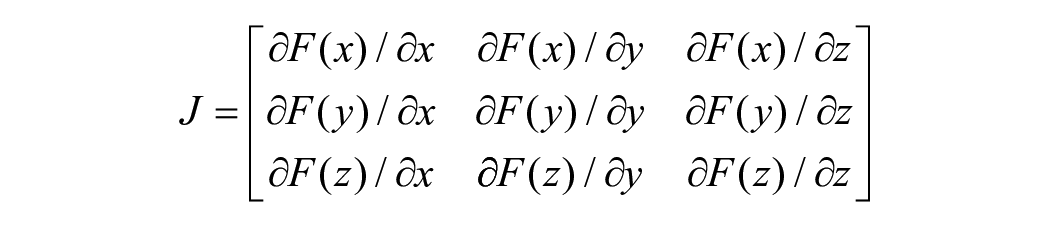
where

The eigenvalues of this Jacobian matrix corresponding to
Analysis of Equilibrium Points.

Scenario 1: Government departments tend to be non-supportive, AI medical care enterprises tend to engage in passive operations, and doctors tend towards adoption. In this scenario, the equilibrium point
Scenario 2: Government departments tend to be supportive, AI medical care enterprises tend to engage in passive operations, and doctors tend towards non-adoption. In this scenario, the equilibrium point
Scenario 3: Government departments tend to be non-supportive, AI medical care enterprises tend to engage in active operations, and doctors tend towards non-adoption. In this scenario, the equilibrium point
Scenario 4: Government departments tend to be non-supportive, AI medical care enterprises tend to engage in passive operations, and doctors tend towards adoption. In this scenario, the equilibrium point
Scenario 5: Government departments tend to be supportive, AI medical care enterprises tend to engage in active operations, and doctors tend towards non-adoption. In this scenario, the equilibrium point
Scenario 6: Government departments tend to be supportive, AI medical care enterprises tend to engage in passive operations, and doctors tend towards adoption. In this scenario, the equilibrium point
Scenario 7: Government departments tend to be non-supportive, AI medical care enterprises tend to engage in active operations, and doctors tend towards adoption. In this scenario, the equilibrium point
Scenario 8: Government departments tend to be supportive, AI medical care enterprises tend to engage in active operations, and doctors tend towards adoption. In this scenario, the equilibrium point
Parameter Settings
Initial values are assigned to the parameters in the payoff matrix based on the attitude of the government towards intelligent elderly care, as well as the attitudes of intelligent medical and health care enterprises and doctors towards intelligent medical and health care products, as shown in Table 3.
Parameter Assignments.

The construction of a system of factors influencing the adoption of intelligent medical and health care products by doctors is a project considering multiple influencing subjects. The adoption and popularization of AI medical and health care products cannot be accomplished by doctors alone. It also relies on the co-participation of the government and intelligent medical and health care enterprises. MATLAB 2019a software is used to analyze the evolutionary trajectories of the stability strategies taken by the 3 subjects (ie, the government, AI medical and health care enterprises, and doctors) based on the replicator dynamics equations for the evolutionary game among influencing subjects. The strategies taken by influencing subjects under various scenarios are visualized. Progressive evolutionary trajectories are used to further clarify the evolutionary processes of influencing subjects under different levels of initial willingness. In the schematic diagram of evolutionary trajectories, the
Simulation Analysis of Evolutionary Game Among 3 Subjects
Simulation analysis of the evolutionary game behavior of the government’s attitude
Based on the simulation assignments of government departments, in this paper, the effects of parameter such as

Effects of the government’s attitude on the behavior strategies of game subjects: (a) simulation analysis of the effect of changed
As shown in the partially enlarged drawing in Figure 2d, with increasing
The next step is to study the effect of governmental subsidies on the adoption behavior strategy of doctors. As shown in Figure 2e and h, with increasing
With the continuous progress of AI technologies, the notion of intelligent medical and health care products and services is being embraced by more and more doctors and patients. As the central government constantly adjusts the indexes and modes by which the performance of local governments is appraised, local government officials have clearer responsibilities to conduct new-type technological innovation. Productive innovation ability is also gradually shifting from the central to the local level, as shown in Figure 2g. As a result, it is difficult to sustain the traditional extensive development model, and local government officials must stress the innovation and development of new technologies to realize their political ambitions. This is certainly a complex process that must be constantly adjusted based on realities under governmental guidance and enterprise cooperation. Therefore, with increasing
Simulation Analysis of the Evolutionary Game Behavior of AI Enterprises’ Attitudes
The next step is to identify how AI enterprises’ attitudes affect the behavioral strategies of participatory subjects. As clearly shown in Figure 3a, with increasing
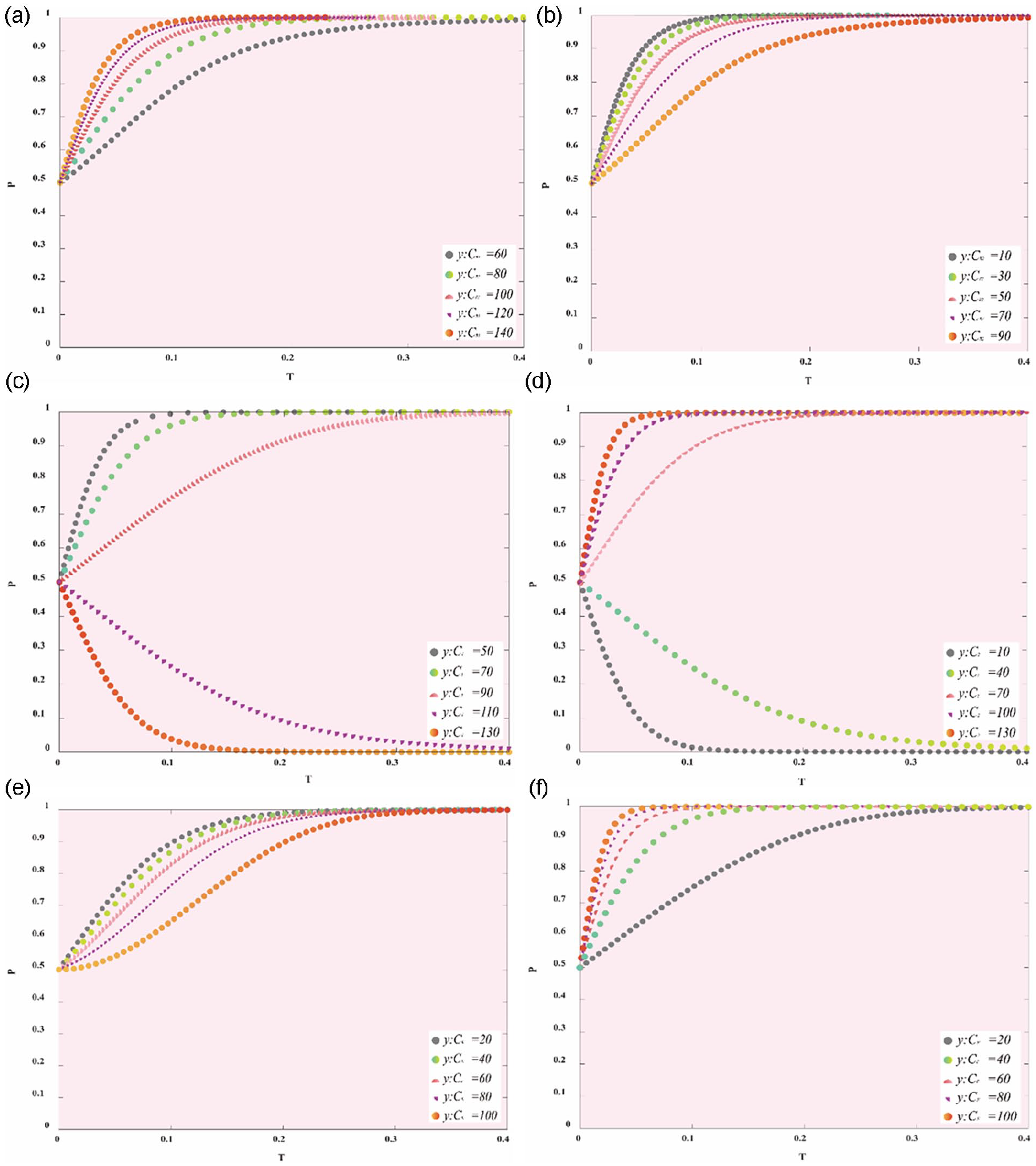
Effects of enterprise behaviors on the behavior strategies of game subjects: (a) simulation analysis of the effect of changed
To explore how the change in the attitude of intelligent medical care enterprises towards operations affects their return, the maximum assignments of
As shown in Figure 3f, other conditions being equal, the greater the return gained in the form of social reputation, the higher the evolutionary rate (ie, convergence rate) of the enterprise. This is mainly because enterprises provide products and services for society, and a high social reputation helps them attract more doctors and patients and in turn, brings more returns. Currently, the medical market faces fierce homogeneous competition, and the main competitors include Overseas Doctor You, IBM Watson, Tencent Miying, and ET Medical Brain. The reputation of a product is, to a very large extent, an extension of the business philosophy of its manufacturer. This explains why many “time-honored brands” still seize considerable market shares. If an enterprise engages in active operations and becomes involved in the decision-making processes of doctors and patients, the enterprise not only reduces the chance of being eliminated, but also creates tax revenue for the government, thus aligning its interests with the interests of the government in certain aspects. Intelligent medical care enterprises of this type tend to be recognized by the government and succeed in promoting their brand image. Therefore, with increasing
Simulation Analysis of the Evolutionary Game Behavior of Doctors’ Attitudes
Other conditions being equal, if the attitude of AI medical care enterprises shifts from active operations to passive operations, the threshold of
Other conditions being equal, when the attitude of the government shifts from support to non-support, the threshold of
When AI medical care enterprises engage in active operations, the change in the attitude of doctors toward products can be seen from a comparison between Figure 4e and f. Other conditions being equal, the threshold of

Effects of doctors’ behavior on the behavioral strategies of game subjects: (a) simulation analysis of the effect of changed
When the government does not support the use of AI medical and health care products and doctors refuse to adopt them, the compensation offered by the government to doctors is shown in Figure 4g. With increasing
Conclusions
Scientific Contributions and Novelty
This study presents a pioneering approach to understanding the behavioral evolution of multiple stakeholders in the adoption of AI-based elderly care products through the lens of evolutionary game theory. By constructing a 3-party evolutionary game model involving government departments, AI medical care enterprises, and doctors, the research offers a novel framework for analyzing the stability of strategic interactions among these key players. This approach provides a deeper understanding of the dynamics influencing the adoption of AI medical and healthcare products, which is critical in addressing the aging population crisis. The use of MATLAB 2019a for simulation analysis adds a quantitative dimension that enhances the robustness of the findings.
Implications to Theory and Practice
The implications of this study extend both to theoretical advancements and practical applications:The study contributes to the body of knowledge on evolutionary game theory by applying it in the context of AI healthcare product adoption. It bridges the gap in existing literature by focusing on doctors’ adoption behavior, a factor often overlooked in previous studies that primarily concentrated on patient and hospital perspectives. The identification of 8 evolutionary stability strategies (ESS) offers a comprehensive understanding of how different parameters affect the strategic decisions of stakeholders. 24
The findings of this study have significant implications for policymakers, AI medical enterprises, and healthcare practitioners. For policymakers, the study highlights the importance of financial incentives and regulatory frameworks in encouraging the adoption of AI healthcare products. AI enterprises can benefit from understanding the critical role that doctors’ trust and adoption behavior play in the successful deployment of these products. Healthcare practitioners, particularly doctors, can leverage this understanding to better navigate the integration of AI technologies into their practice, ultimately improving patient outcomes.
Key Lessons Learned
Governmental support, particularly in the form of subsidies and policy guidance, is crucial for the widespread adoption of AI medical products. This support not only influences the behavior of AI enterprises but also significantly impacts doctors’ willingness to adopt these technologies.
The attitude of AI enterprises towards active or passive operations greatly affects the adoption of their products. Active operations, characterized by ongoing R&D, training, and support, lead to higher adoption rates among doctors. In contrast, passive operations can result in substandard products and lower adoption rates.
The costs and benefits perceived by doctors play a pivotal role in their decision to adopt AI medical products. Reducing perceived risks and providing adequate training are essential for increasing adoption rates.
Limitations of the Research
While this study provides valuable insights, it has certain limitations that should be acknowledged:The evolutionary game model used in this study is based on several assumptions, such as bounded rationality and fixed payoff matrices, which may not fully capture the complexity of real-world scenarios. Future research could explore more dynamic models that account for changing preferences and external shocks.The study focuses on the adoption behavior of doctors and does not extensively explore the perspectives of patients and other healthcare providers. Future studies could broaden the scope to include these stakeholders, providing a more holistic view of the adoption process.The use of MATLAB 2019a for simulation, while powerful, has certain limitations in terms of scalability and real-time analysis. Future research could employ more advanced simulation tools or real-world data to validate the findings.
This study offers a significant contribution to the understanding of the adoption of AI medical and healthcare products, particularly in the context of elderly care. The findings underscore the importance of governmental support, the role of AI enterprises in ensuring product quality, and the critical influence of doctors’ adoption behavior. By addressing these factors, stakeholders can effectively promote the integration of AI technologies in healthcare, thereby improving the quality of care for the aging population. Future research should continue to build on these insights, exploring new models and broader perspectives to enhance the adoption and implementation of AI in healthcare.
Footnotes
Acknowledgements
We would like to thank Mogo Edit for their assistance with polish language in this research.
Author Contributions
Conceptualization, J.Y.; methodology, J.Y. and X.W.; writing—original draft preparation, J.Y. and X.W.; writing—review and editing, J.Y. and X.W. All authors have read and agreed to the published version of the manuscript.
Data Availability Statement
The data that support the findings of this study are available from simulation upon reasonable institutional request.
Declaration of Conflicting Interests
The author(s) declared no potential conflicts of interest with respect to the research, authorship, and/or publication of this article.
Funding
The author(s) disclosed receipt of the following financial support for the research, authorship, and/or publication of this article: This paper was supported by Scientific Research Foundation for High-level Talents of Anhui University of Science and Technology (ID: 2024yjrc18).
Ethical Statement
The data in this study comes from simulation data and does not involve personal or animal experiments. This study does not involve ethical issues.
Informed Consent/Patient Consent
Not applicable
