



Abstract
Probiotics offer a variety of health benefits for the digestive system, atopic eczema, and immune system. Future healthcare providers should know more about probiotics to advise their patients and the general public appropriately. The purpose of the study was to evaluate health science students’ knowledge, attitudes, and practices (KAP) on the use of probiotics in various health conditions. A cross-sectional study was conducted among health college students using a self-administered online questionnaire. The study participants were selected using the convenience sample approach. statistical package for social science (SPSS) software was used to analyze the data. The Kruskal–Wallis test and Mann–Whitney test were used to assess the statistical differences between sociodemographic data in knowledge, attitude, and practice variables. Of the 517 respondents, 56.3.0% of health science students had moderate knowledge of probiotics. More than one-third had positive attitudes, and 53.4.2% had positive practices. There was a significant difference in knowledge (P < .001), practice score (P < .001), and attitude score (P < .001) among different demographic data. Less than half of students said that their curricula did not include any information on probiotics. In addition, the majority of students agreed that probiotics were helpful for gastrointestinal health (87.3%), followed by immune health (73%), ulcerative colitis (61.9%), and irritable bowel (59.6%). The most information resources for probiotics were media (64%), and friends (60.7%). Health science students in Saudi had a fair level of knowledge of probiotics. Probiotics education in health science school curricula might increase students’ understanding of the topic and improve probiotic prescribing in the future.
A probiotic is a food or supplement containing live microbes intended to maintain the “good” bacteria in the body.
Health care students’ knowledge of probiotics and their health effects will influence their capacity to offer accurate and useful nutrition recommendations to their patients and may influence their future prescription practices.
These results should motivate students to read more about scientific research to frame a more unbiased opinion about the usage of probiotics for their future patients’ health. In addition, students had moderate knowledge, positive attitudes while attitudes, which further suggest needs education.
Introduction
A probiotic is a food or supplement containing live microbes intended to maintain or improve the “good” bacteria (the natural micro-flora) in the body.1,2 Prebiotics are foods (usually high in fiber) that serve as food for the bacteria of the human microflora. Prebiotics are used to improve the balance of these microbes.1,2 When probiotics are provided in sufficient proportions, impart a health benefit to the host. 3 Probiotics have been known as beneficial for health for more than a century, Élie Metchnikoff, who worked with the immune system and gut microbiota, won the Nobel Prize in Medicine in 1908. 4 These health advantages result from probiotics’ capacity to regulate the immune system of the host through the digestive tract, primarily by inducing the epithelial cells’ defensive reactions against a variety of pathogens.1,5 A probiotic has been shown to prevent and improve the course of allergic disorders like atopic dermatitis and allergic rhinitis in children, as well as digestive disorders like Clostridium difficile-associated diarrhea and some inflammatory bowel disorders in adults. Digestive disorders include acute, nosocomial, and antibiotic-associated diarrhea.5,6 Probiotics may also be useful as coadjutants in the treatment of metabolic diseases such as type 2 diabetes, obesity, metabolic syndrome, and nonalcoholic fatty liver disease.5
Numerous research demonstrated the effectiveness of probiotics such as lactic acid bacteria (LAB), bifidobacteria, and the bacteria Bifidobacterium infantis, B. longum, B. lactis, Escherichia coli, Saccharomyces cerevisiae, S. boulardii, S. lactis. 7 Lactobacillus acidophilus, L. casei, L. paracasei, L. rhamnosus, L. delbrueckii subsp. bulgaricus, L. brevis, L. johnsonii, L. plantarum, and L. fermentum are the most popular Lactobacillus strains used as probiotic products. 1 Currently, probiotics can be obtained in infant formula, functional foods and drinks, pharmaceuticals, nutritional supplements, and other non-oral probiotics.1,8 Probiotic characteristics have also been detected in various Saudi foods, including drink fermented milk, and pickles.
Probiotics are available on the market in the form of pharmacological formulations as well as functional foods. 9 They are used as nutritional supplements to treat problems of the general gastrointestinal tract (GIT) or in clinical settings to prevent antibiotic-related diarrhea. 9 although the availability of a wide range of probiotic products in the market and the wealth of evidence produced over the past ten years demonstrating the benefits of probiotics for health, the use of these supplements is not as widespread as that of other supplements. This may be due to consumers’ lack of knowledge and the lack of health-related professionals who serve as sources of public health information. 10 Moreover, healthcare providers’ knowledge of probiotics is directly related to the choice and outcome of the treatment used. 9 Any therapy or treatment outcome will be directly influenced by the healthcare providers’ knowledge. Additionally, it has been discovered that information provided by HCPs to patients is positively and significantly correlated with the adoption of dietary practices and a decreased risk of chronic diseases linked to nutrition. 1 Medical science students’ knowledge of probiotics and their health effects will influence their capacity to offer accurate and useful nutrition recommendations to their patients and may influence their future prescription practices as future healthcare professionals. Clinicians’ knowledge about probiotic availability and clinical effects is at least partially reflected by their exposure through the school years. It makes sense to assume that the knowledge gap is a reflection of the medical school curriculum’s deficiencies. 11 Several studies from different parts of the world such as India, Nigeria, Poland, and the US were found to evaluate the knowledge and attitude of medical science students (i.e., students of medicine, nursing, dentistry, and pharmacy) regarding probiotics.12 -16 Three studies from Jordan, Iran, and Oman specifically addressed the Middle East.9,11,17 The results of these studies revealed that medical students had low to moderate levels of knowledge and that students need further education programs on probiotics. In addition, a study in Saudi Arabia reported that healthcare providers had inadequate knowledge of probiotics.18,19 To our knowledge, no study or survey has been carried out in Saudi Arabia to assess the knowledge, attitude, and practice of health science students about probiotics. Because of this, this study was the first of its kind to look into and present these findings. It aims to determine the knowledge level of health science students about probiotics used for health. The results of this study can be used to establish a baseline picture of probiotics teaching in Saudi’s health sciences curricula and degree programs. Advanced researchers looking to examine the use of probiotics in the prevention or treatment of illnesses may also find it useful.
Methods
A cross-sectional observational study was carried out among health science students in the Kingdom of Saudi Arabia. To collect the data, a convenience sample strategy was used from July 2022 to September 2022. The knowledge, attitude, and practice of health science students about the use of probiotics at Saudi University were evaluated using a self-administered online questionnaire. Each students read the study’s purpose, (there was a sentence before beginning the questionnaires in the google form). The students have the right to withdraw from the study at any time during the study. Students from Saudi who are currently enrolled in a program leading to a degree in an area of the health sciences are eligible to participate in this study. Students who were enrolled in foundational, diploma or postgraduate studies and healthcare professionals and international students were not included in the study. The students who responded to the questionnaires were considered as an informed consent.
Sample Size
Similar to many studies the sample size was calculated using online calculator namely Raosoft (Available from the http://www.raosoft.com/samplesize.html).20-22 The sample size for the given study was calculated by assuming the population size of (n = 20 000) total health care students, who are currently pursuing their courses at king Saud university at 5% margin of error (ME) and 95% confidence intervals (CI), the required sample size for this study was calculated to be 377. To account for nonresponse and reduce any data collection error, the projected sample size was further raised. Thus, n = 550 was chosen as the final sample size for this study.
The questionnaire used in the present study was an online survey. At the time of this study, there was no validated questionnaire to assess Saudi students’ knowledge, attitudes, and practices regarding probiotics as a result, the authors adopted the questionnaire from previous studies on probiotics.1,8,22 The final questionnaire consisted of 4 sections and a total of forty questions. The first section related to sociodemographic data included gender, age, and colleges type. The second section comprised multiple-choice, closed-ended, and checkbox questions to assess the knowledge about probiotics. There were 9 questions in all in this section. If all the correct responses were selected, all checkbox questions received a score of 1. The maximum score for knowledge questions was 9. There were three categories for knowledge levels: good, fair, and poor. It was classified as good if the respondent’s overall score was greater than 75%, fair if it was between 50 and 75%, and poor if it was less than 50% of the maximum score. 1
Section four included 6 good attitude items that used a five-point Likert scale to measure the attitude of students towards probiotics (5 = strongly agree, 4 = agree, 3 = neutral, 2 = disagree, 1 = strongly disagree). Although in poor attitudes the scores were reversed (strongly agree = 1, agree = 2, neutral = 3, disagree = 4, strongly disagree = 5). Therefore, the maximum score on the aptitude test was 30 scores. Positive attitude scores were considered as total score ≥ mean and negative attitude scores as total score < mean (1). In the final section, there were a total of 9 multiple-choice and closed-ended questions made up of good practice items. Except for the “frequency of probiotics supplement ingestion” question, each positive response received a score of 1, and a score of 0 for a negative response. The results for that question were (had not consumed = 0, every 3-4 weeks = 1, every 1-3 weeks = 2, every 2-6 days = 3, and daily = 4) If respondents chose an answer other than “have not consumed” for the question about the “most frequently consumed type of probiotic products,” they would receive 1 mark. Thus, the maximum score for the practice question score was 12. Good practice scores were considered as total score ≥ median and Poor practice scores as total score median. 1
After the initial draft of the questionnaires it was subjected to pilot study to check the content and face validity and suitability of the questionnaires in the current population. The pilot study was conducted among randomly selected students (n = 30). The reliability was determined using Cronbach alpha value of 0.81 indicated that questionnaires reliable and valid to carry out the study
Data Analysis
For analysis, all the data were imported into the SPSS version 28 spreadsheet. All of the descriptive data was presented in numerical form, including means, median, frequencies, and percentages. The data should have been presented in tables. Using the Kolmogorov-Smirnov test, the data were examined for normality and all were determined to be non-normally distributed. Therefore, Kruskal–Wallis test and Mann–Whitney test was used to assess the statistical differences between sociodemographic data, attitude, and variables. While Chi-square was used to assess the differences between Knowledge and practice levels with demographic variables. All tests employed in this study required a P-value < .05 to be deemed statistically significant.
Results
In this survey, there 292 (56.5%) male respondents and 225 (43.5%) female respondents. The majority of respondents (31.7%) were from pharmacy college, followed by nurse college (29.8%), medicine college (25.0%), and dentist college (13.5%) (Table 1).
Frequency of Demographic Data (n = 517).

Knowledge of Probiotics
About 56% of students knew the definition of probiotics question: “probiotics are live microorganisms” (Figure 1). No one answered all options about bacterial species used for probiotics correctly. Respondents were required to select a species from a list of microorganisms that they believed to have probiotic strains. Of the five options, the most bacterial species that can be utilized for probiotics production were Escherichia coli (89.6%), followed by Lactobacillus acidophilus (57.4%), Lactobacillus rhamnosus (45.8%), Mycobacterium avium (44.9%) and Bifidobacterium bifidum (26.12%). All of the above-mentioned species except the Mycobacterium avium have several probiotic strains (Figure 2). Most of the respondents (66.9%) believe probiotics can improve the protection of the mucous lining of the digestive system. On the contrary, a small percentage (16.6%) did not believe the balance of the normal bacteria found in the digestive tract can be disturbed by probiotics.

Definitions of probiotics.

Knowledge of students of microorganisms that may have probiotic strains.
About two-thirds of students revealed that probiotics can increase the production of anti-inflammatory cytokines and antibodies. In addition, about two-thirds of students agreed that probiotics have different benefits based on the microbial species (Table 2). In addition, in this study, no one answered all options about examples of used for probiotics correctly. majority of respondents (86.7%) reported milk as an example of a probiotic product followed by yogurt (80.9%), cheese (70%), and fermented foods (56.3%) for more details on examples of probiotics see Table 3.
Knowledge of Health College Students About Probiotics.

Example of probiotics products (n = 517).

Table 4 illustrates the sociodemographic differences in probiotic knowledge. Males and females had significantly different probiotic knowledge scores (6.6 ± 1.5; 5.5 ± 1.2) (median = 7 and 5, respectively). Males scored much higher on knowledge tests than females (P < .001). The knowledge scores among the four age groups varied significantly (P < .001). The results, however, revealed that the age group of 25 to 26 years old (mean = 7.5) recorded higher than other groups in the knowledge test. Between the colleges, there was a significant knowledge score difference (P < .001). The mean knowledge score for dentist students (Median = 6) is higher than that of the other students studying health sciences.
Difference Between Sociodemographic on Knowledge Score.
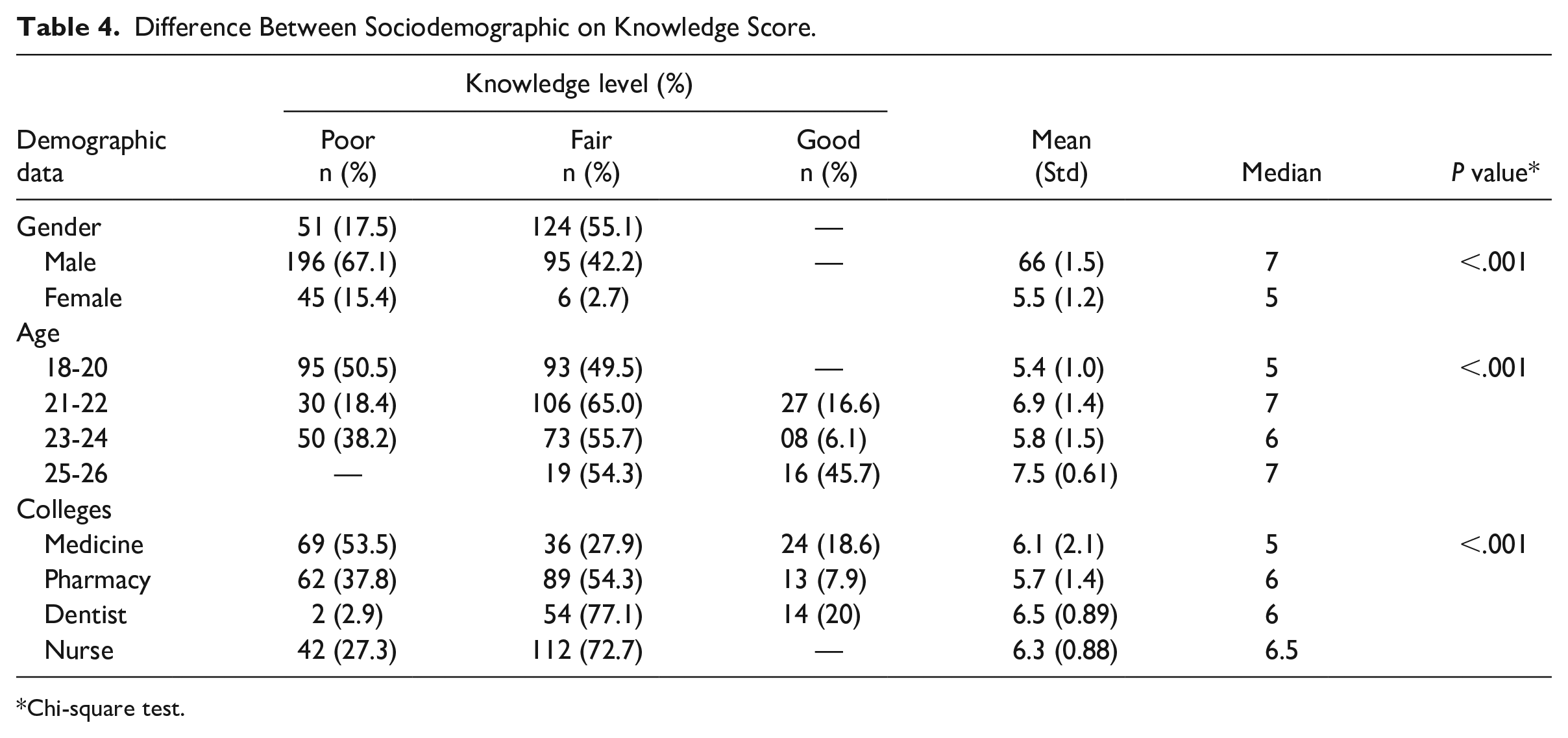
Chi-square test.
Knowledge of Students on Health Conditions of Probiotics Benefits
The benefits of probiotics were assessed as shown in Table 5. The majority of students agreed that probiotics were helpful for gastrointestinal health (87.3%), followed by immune health (73%), ulcerative colitis (61.9%), and irritable bowel (59.6%) (Table 4). The comparison between health students’ demographic data given in Table 6 showed a significant difference (P = .05). For example, dentists recorded the highest mean score (31.7 ± 7.0; median 35) compared to other students (P = .001).
Health Conditions for Health Science Students Consider Probiotics Beneficial.

Differences in Health Conditions Benefits Scores of Students Considering Their Demographic Data.

Mann Whitney U test.
Kruskal-Wallis test.
Attitude About Probiotics
In this study, more than two-thirds of respondents (63.2%) reported a positive attitude toward probiotics. About 47% of respondents strongly agreed, and 43 % agreed that ingesting probiotics may benefit one’s health. Nearly 70% (strongly agreed and agreed) thought that probiotics may be an alternative strategy to avoid digestive system symptoms related to pathogenic infections. More than half of respondents (strongly agreed and agreed) stated that probiotics could be used as another option in treating gastrointestinal problems. Less than half of respondents (43.8%) believed that antibiotic side effects could be avoided with probiotics. About 37% of respondents agreed that they could recommend probiotics for their patients in the future. Additionally, more than two third of respondents (agree and strongly agree) that they wish to learn more about probiotics (Table 7). Moreover, this study found a statistically significant difference in the age group of students. Students who were over 25 years of age had the highest mean score (P = .001). also, there were significant differences between students’ majors, where the nurse had more scores than other students (P < .001) as presented in Table 8.
Health Science Students’ Attitude of Probiotics.

Differences in Attitude Scores of Students Considering Their Demographic Data.

Mann Whitney U test
Kruskal-Wallis test
Practice of Probiotics
More than half of the students showed positive practice with probiotics used. The majority of students (82.6%) have consumed probiotics. Among those who consumed probiotics, most of them used every 2 to 6 weeks (30.2%), followed by every 1 to 3 weeks (29.8%) and every 3 to 4 weeks (157%) as presented in the figure. About 57% of respondents claimed to have looked for additional information on probiotics in other places. Nearly 42% of respondents had advised their family to use probiotics. Around 38% of respondents claimed to use probiotic products to void digestive problems. To strengthen the immune system, 40.2% of students have consumed probiotics for this reason. About 37% of respondents reported that they used probiotics in the last months to prevent the side effects of antibiotics (Table 9). The most common probiotics consumed by students were yogurt (82.4.1%), followed by regular yogurt (66.3%), Greek yogurt (55.9%) Actinia (42.4%), and kefir (9.3) (Tables 10 and 11).
Health Science Students’ Practice of Probiotics.
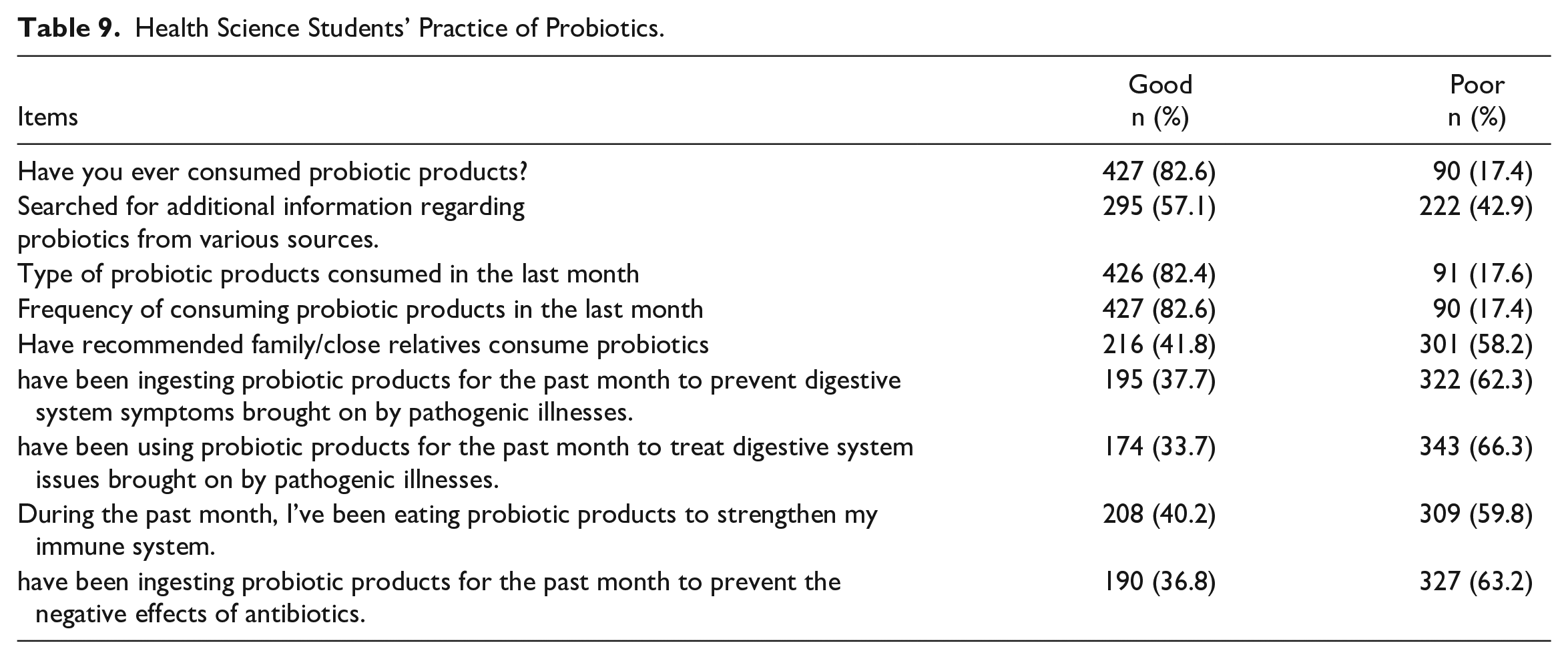
Frequency of Consumption of Probiotic Products During the Past Month.
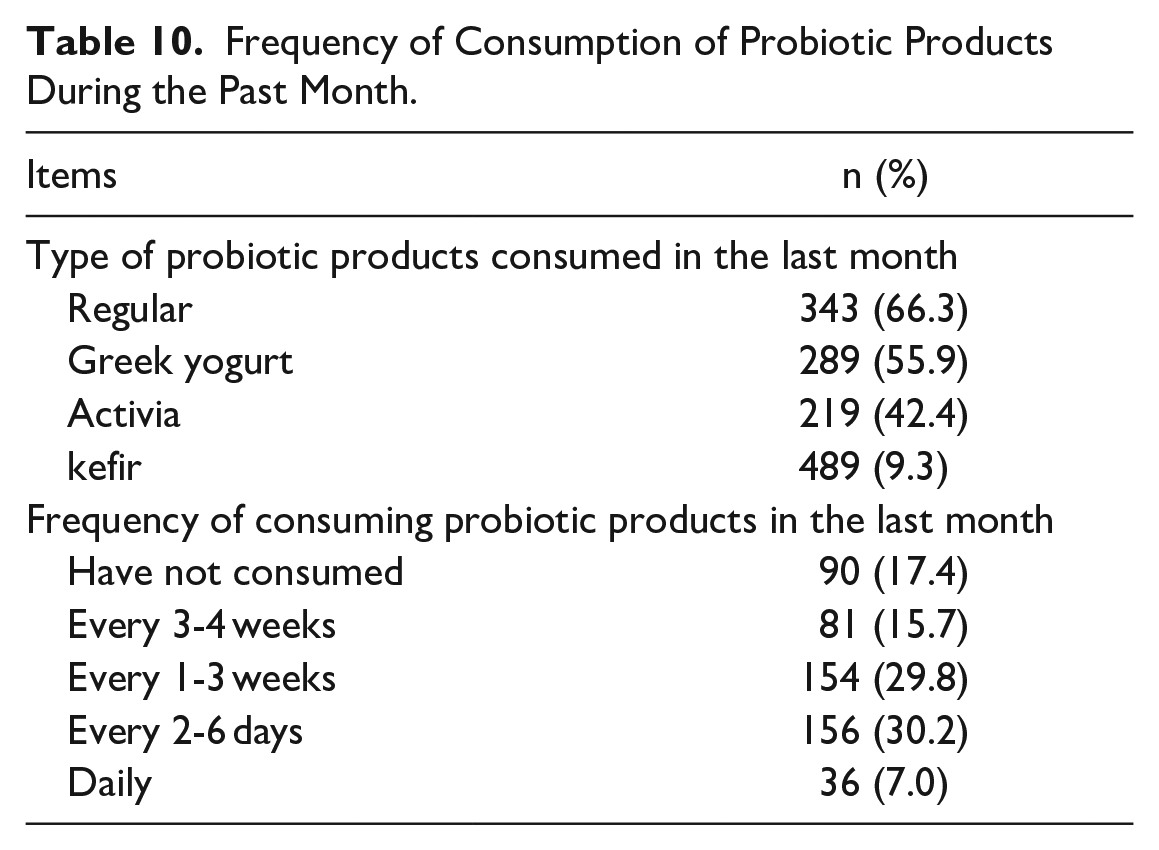
Difference Between Sociodemographic on Practice Score.

Chi-square test.
The major sources of information regarding probiotics were media (64%), followed by friends (60%) and lecturers (45.3%). Detailed information was given in Figure 3.

Sources information about probiotics.
Discussion
This research focuses on probiotic knowledge, attitudes, and behaviors. This study suggests that there is a considerable gap in the use of probiotics. It is a widespread belief that knowledge influences how people approach prevention. 23 According to this study, 56.3% of students had moderate understanding of probiotics, while only 9.9% had high knowledge. The findings are comparable to those of an Iranian study on medical students, in which 43.1 and 50.7% of respondents had acceptable and good understanding of probiotics, respectively. 24 Another study carried out in Indonesia among health science students found that only 9.2% of students had good knowledge. 1 It was lower than the results of a study conducted in Indonesia, 1 in which 90.8% of students answered correctly. Our study reported that about 56% of students answered correctly that probiotics are live microorganisms. However, there were notable similar results in the reports from Saudi Arabia that revealed that 57.7% of healthcare practitioners knew the definition of probiotics. 18 While, our finding was better than those of a study conducted in Jordan, where 54.3% of students knew the definition of probiotics. 11 This inadequate knowledge of health science students about probiotics was evident in a study from Oman. The researchers reported that when asked if they knew enough about probiotics, 89.3% of medical students and 95% of dentist students said “No.” 9 The authors noted that this outcome might be a result of the medical school curriculum. Less than 20% of the students stated that probiotics were included in their medical school curriculum, indicating a lack of probiotics instruction. 9 In addition, no one of the students answered all items regarding bacteria species for probiotics correctly. A similar result was reported by Rahman et al. 1 These could occur because the items were more precise or because the respondents had forgotten about the subject at the time of the study. Although the students knew the correct definition of probiotics, it may also imply that they lacked the necessary knowledge
The knowledge score was statistically different among health student groups (P < .001), where dentist students were the highest (6.5) among the students. The previous study done by Rahmah et al. 1 reported no significant difference in knowledge scores among the health students including medical, midwifery pharmacy, and nursing about probiotics. The current study found that the majority of students agreed that probiotics were helpful for gastrointestinal health (87.3%), followed by immune health (73%), ulcerative colitis (75.6%), ulcerative colitis (61.9%), and irritable bowel (59.6%(. This is consistent with the kinds of literature, consuming probiotics has several positive impacts, including improved gut health, irritable bowel disease, allergy, cholesterol, and cancer. 25 Our study is the first study to assess the knowledge of Saudi health students about probiotics. Therefore, this result is not completely comparable but might reflect a study carried out in Saudi Arabia among healthcare professionals to assess their knowledge about probiotics. It revealed that Probiotics were perceived as having no negative effects on health (64.0%), being helpful for IBS and gut health (42.6 and 32.4%, respectively), and not being helpful for obesity (24.9%), allergies (28.5%), or heart disease (36.3%). 19
This study assessed the attitude of students toward probiotics. In this study, an attitude refers to how one feels about and has preconceived notions about using and recommending probiotics. this study reported that 63.2% of students reported a positive attitude. Our finding was better than those of a study conducted in Indonesia, where 52.9% of students had positive attitude. 1 However, nurse students had the highest mean score for attitude (15.5) than other students (P < .001). Rahmah et al found no significant difference in the attitude scores according to student majors. However, about 62% of students were interested in learning more about probiotics. These results suggest that there is more information regarding probiotics and their use that the students want to know or other reasons they would like to know about them, and this may be a recommendation for additional research. In this study, more than one-third of students (37.2%) agreed that they would suggest probiotics in the future to prevent or treat the digestive problem. This finding was in similar lines to a study evaluating the attitude of health students in Indonesia that showed 37.5% of students would advise patients to use probiotics. 1 However, this outcome conflicts with research from the neighboring country Oman reported that 63.5% of medical and dental students stated that they had recommended probiotics to others. 29 These results should motivate students to read more about scientific research to form a more unbiased opinion about the usage of probiotics for their future patients’ health.
The present study assessed the practice of health students towards probiotics. More than half of the students (53.4%) had positive responses. This result shows that there may be more factors that influence how one uses probiotics, which may be examined in future research. In the current study, the majority of students (82.6%) have consumed probiotic products. About one-third of students consume probiotics every 2 to 6 days during the last month and 7% of them used them daily. In addition, fermented milk (84.1%), and yogurt (66.3) are the most commonly consumed probiotics products. This result is lower than the results of a study conducted by Rahmah et al. 1 among health college students in which probiotics were ingested by 98.8% of students but only 14.9% of students consumed it daily, especially fermented foods. Another study was carried out by Pradito et al. 26 at Jabodetabek college students. It was found that 62.1% of the students consumed probiotics only 9.5% of them used them daily. Notably, our study revealed that 40.2% of students consumed probiotics products to enhance immune symptoms, prevent digestive system symptoms due to infections (37.7%), and prevent the side effect of antibiotics (36.8%). These outcomes may be explained by the fact that probiotic supplements are frequently used in clinical settings to treat diarrhea brought on by antibiotics, acute diarrhea, and irritable bowel syndrome.27,28 This outcome would suggest that most students wanted to maintain and improve their digestive health by consuming probiotics. These findings demonstrate how many healthcare providers recognize the advantages of probiotics for the digestive system. Students studying health sciences should be better aware of this information so they may use and promote probiotics with more assurance to prevent and treat stomach issues. 1 Less than half of students said that their curricula did not include any information on probiotics. Additionally, the most informative resources for probiotics were media (64%), and friends (60.7%). A study on health college students reported that the media was the most frequent source of probiotics worldwide.1,11,29 Future healthcare professionals’ knowledge and awareness will likely increase as a result of including probiotics in their coursework, which will also help them to solidify their skills with reliable information. 11
Limitations of Study
This cross-sectional study sought to establish if sociodemographic factors are related to knowledge, attitude, and practice variables rather than to investigate the external factors that affect health science students’ health behaviors and views regarding probiotics. Therefore, based on the data we gathered from respondents, it is inappropriate to draw inferences about causal relationships and likely mechanisms behind the results of our study. To solve these difficulties, additional research is required. Additionally, the results of this study could not be generalizable because a convenience sample strategy was adopted. Additional research is required to support the findings of future research. Here are some recommendations for the upcoming projects: A cross-sectional study can be carried out in other regional and private universities to improve the accuracy and dependability of research focusing on the aspects of knowledge, attitude, and practice of probiotics benefits Self-questionnaire administered via paper survey under supervision can reduce the possibility of response bias, survey fraud, and data errors.
Conclusion
The majority of responders had a fair level of knowledge, positive attitude, and good practice of probiotics for health. Here are some recommendations for upcoming projects. A cross-sectional study can be carried out in other regional and private universities to improve the accuracy and dependability of research focusing on the aspects of knowledge, attitude, and practice of probiotics benefits. Self-questionnaire administered via paper survey under supervision can reduce the possibility of response bias, survey fraud, and data errors.
Footnotes
Acknowledgements
The authors of this study extend their appreciation to Researchers Supporting Project (Project number RSP-2024/81), King Saud University, Saudi Arabia.
Declaration of Conflicting Interests
The author(s) declared no potential conflicts of interest with respect to the research, authorship, and/or publication of this article.
Funding
The author(s) disclosed receipt of the following financial support for the research, authorship, and/or publication of this article: This study was funded by the King Saud university Researchers Supporting Project (Project number RSP-2024/81).
Ethical Approval and Consent
This study exempted from ethical approval, although informed consent was obtained from the participant before carrying out the study
