



Abstract
In order to provide quality and cost-effective health care, hospitals have used a variety of organizational models. Chain hospitals are one type of organization and service delivery model. Based on the diversity, multiplicity, and ambiguous nature of concepts related to chain hospitals, this study is an attempt to explain the concepts and components of such hospitals. Five main databases were searched for this purpose. Scopus, PubMed, WOS, ProQuest, and Wiley library databases were accessed from inception to September 2022. English-language studies describing chain hospital models were included. Two independent authors screened full-text papers, and data were extracted using a self-designed form. A thematic analysis was used to identify key components of the chain hospitals. A total of 38 papers from 8472 documents met the inclusion criteria and were included in the study. Among the selected studies, there were 23 quantitative studies, 6 qualitative studies, 5 mixed studies, 3 review studies, and 1 gray report. A review of the results revealed 55 different definitions of chain hospitals, as well as 6 main components and 16 subcomponents. Among the extracted components, 60% were related to the organization dimension, 15% to governance, 9% to decision rights, 8% to policies and procedures, and 4% to service delivery. In order to launch a multihospital system involving chain hospitals in a country, it is necessary first to define the concept of this hospital. The study’s findings should be used by policymakers and officials in each country before implementing an inter-hospital cooperation system (MHS, chain hospital, etc.). Future researchers may also find inspiration in the study’s findings and focus on these hospitals’ establishment, effectiveness, and financial effects.
Over the past 30 years, hospitals that are part of multi-hospital systems operate have made a significant contribution to the changes in the hospital industry, and currently more than 60% of hospitals are members of a multi-hospital system. According to an analysis of hospital integration history, hospitals have used many titles to combine their operations in the past. Considering that one of the global super trends in health systems is achieving efficiency Thus, a correct understanding of chain hospital concepts, dimensions, and characteristics is very important
This review revealed a wide range of definitions on how to collaborate between hospitals. According to the present study, each type of interhospital cooperation, including chain hospitals, has dimensions in its definitions. In this study, the dimensions are presented in the form of a primary framework that provides guidance for providing a definition within a specific framework for any type of consolidation collaboration.
To create and launch a multi-hospital system including chain hospitals in a country, it is first necessary to carefully examine the concept of this hospital and reach a single definition of it. It is recommended that before implementing an inter-hospital cooperation system (MHS, chain hospital, etc.), policy makers and officials in each country use the study’s findings to comprehend and define the type of hospital.
Background
Hospitals play a crucial role in providing healthcare services, and their ability to provide quality services and create a positive image is essential for their survival and success. 1 To improve hospital performance, various management and operating models have been developed and evaluated globally. One approach that has gained popularity in recent years is the integration of hospitals, the formation of hospital groups, and the establishment of network hospitals, particularly in the United States and European nations.2,3
According to this approach, integration occurs when one hospital is absorbed by another, and the creation of a new institution by one or more hospitals is viewed as a sort of alliance. 4 Over the past 30 years, hospitals that are part of multi-hospital systems operate have made a significant contribution to the changes in the hospital industry, and currently more than 60% of hospitals are members of a multi-hospital system. 5 Since 2009, integration and ownership of activities have increased in this industry, and many believe the industry is preparing for further integration. 6
A comprehensive review of hospital integration history shows that hospitals have used various titles to combine their operations in the past. Among these, chain hospitals have gained increasing attention in recent years 7 Chain hospitals are healthcare organizations that operate multiple facilities at different locations, often under a unified brand or management structure. The emergence of chain hospitals has been driven by a variety of factors, including the need for cost-effective healthcare delivery, the demand for high-quality and coordinated care, and the desire to improve patient outcomes and experiences8 -10
In recent years, the concept of chain hospitals has gained increasing attention in the healthcare industry. However, there is still a lack of consensus on the principles and definitions that underpin the concept of chain hospitals. Therefore, the primary objective of this study is to clarify the concept of chain hospitals and provide an accurate description of its various components. Our aim is to develop a clear understanding of the concept, which would help healthcare professionals make informed decisions when it comes to managing and integrating healthcare services across different hospitals.
Methods
As mentioned earlier, in recent years, the concept of chain hospitals has become increasingly popular in the healthcare industry. However, there is still some ambiguity surrounding what exactly constitutes a chain hospital. To gain a better understanding of this concept, it is crucial to comprehend its fundamental principles, definitions, and characteristics. As such, this scoping review followed the framework with the 5 mandatory stages developed by Arksey and O’Malley in 2005 11 and further developed by Levac et al in 2010. 12 The stages included 1 : identifying the research question, 2 identifying relevant studies, 3 selecting studies, 4 charting and collating the data, and 5 summarizing and reporting the results. The authors followed these stages to ensure a systematic and coherent process. The manuscript preparation followed the PRISMA-Scr (Preferred Reporting Items for Systematic Reviews and Meta-Analyses Extension for Scoping Reviews) by Tricco et al. 13 This reporting guideline was used to ensure the transparent and comprehensive reporting of the review results.
Step 1—Identifying the Research Questions
The primary focus of this research is to explore the dimensions of chain hospital definitions within the healthcare industry. The study aims to address the following questions:
(a) What are the various concepts and definitions associated with chain hospitals?
(b) What are the dimensions related to the comprehensive definition of chain hospitals?
Step 2—Identify Relevant Literature
The search strategy followed the guidelines outlined in the Joanna Briggs Institute Manual for Evidence Synthesis. 14 Initially, the research team discussed and determined the relevant terms and keywords to be used in the main search across various databases, including PubMed, Scopus, Web of Knowledge, ProQuest, and Wiley Library. Additionally, the reference lists of included studies were screened, and referenced articles were evaluated based on predefined inclusion and exclusion criteria.
The electronic database search was performed on July 1, 2021, using a combination of search terms such as “Hospital chain,” “Hospital Network,” “Multi-hospital system,” “Hospital consortium,” “Holding Company,” “Corporate Model,” “Local hospital systems,” “hospital consolidation,” and “Merger hospitals.” These search terms were restricted to appear in the abstract, title, or keyword fields but were expanded using indexing terms like Medical Subject Headings (MeSH) and Emtree. The complete search strategy is provided in the Supplemental Appendix file.
In addition to the online database research, gray literature sources such as the Health Care Management Information Consortium (HMIC), International Hospital Federation (IHF), websites of the World Health Organization (WHO), and other international organizations were searched through institutional websites and the Google search engine.
Step 3—Study Selection and Eligibility Criteria
In the first step, the identified citations were uploaded to the literature management program Endnote X9, and duplicates were removed. In the second step, 2 reviewers (SG and AA) decided whether an article is eligible for full-text screening by independently assessing the title and abstract. In a third step, the full-text screening of the included articles and assessment against the exclusion criteria was conducted by the same 2 reviewers. In this third step, the reasons for excluding studies were captured.
Disagreements between the 2 reviewers during the screening process were resolved through discussion. If necessary, a third person (MJ) resolved emerging conflicts. In case of missing data, the reviewers contacted the authors of the included papers. Table 1 shows the inclusion and exclusion criteria
Inclusion and Exclusion Criteria.

To enhance the study’s credibility and reproducibility, the
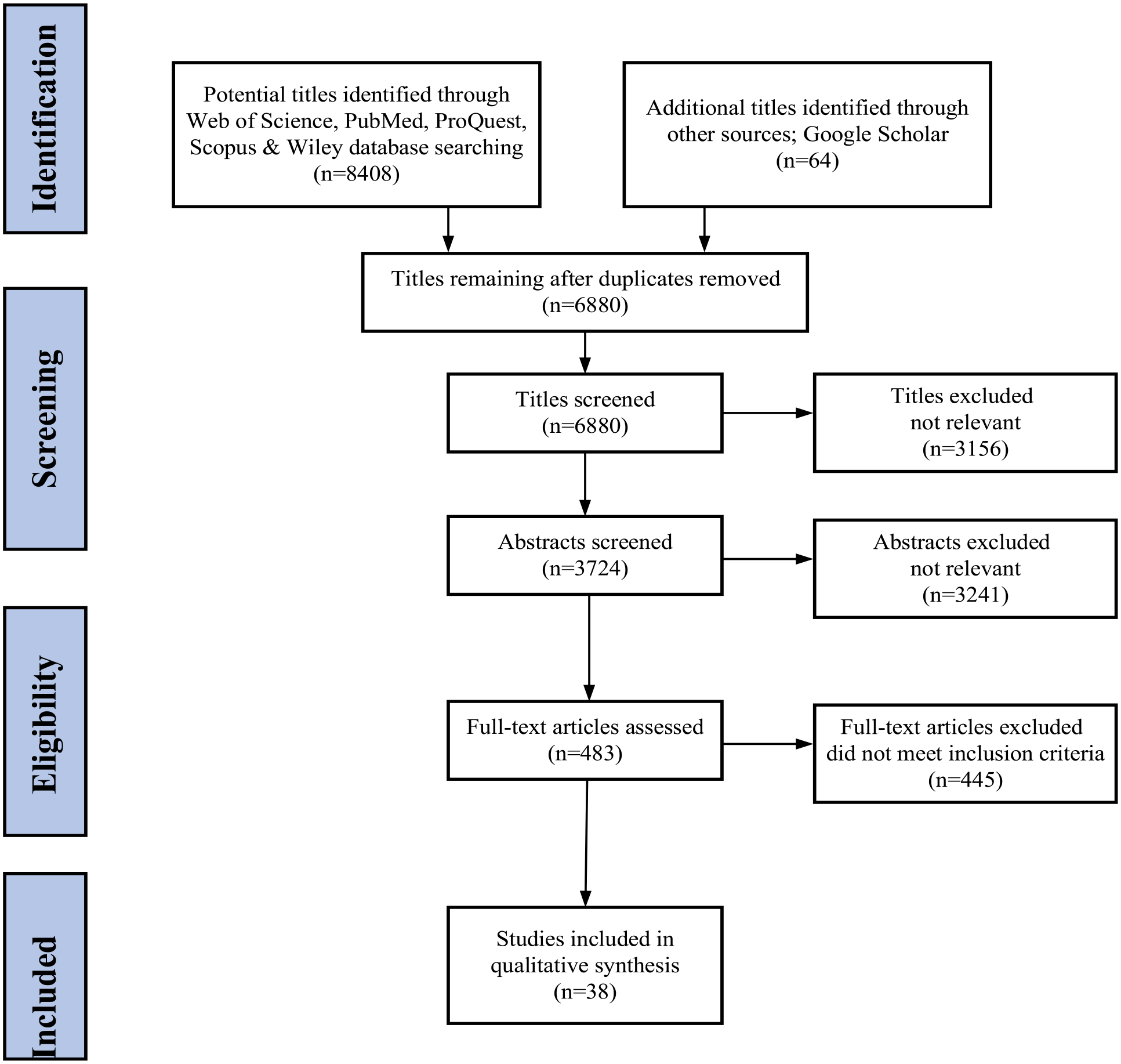
The process of review and selection of articles.
Step 4—Charting the Data
To ensure unified and consistent data extraction, a researcher-made data extraction form was developed using Excel 2019 software. The form included items such as author, publication year, country, study objective, study design, chain hospitals definition, component, and dimensions, implementation strategies and main outcomes. Initially, data from 5 papers were extracted as a pilot for the form, and any issues or ambiguities were resolved by the research team. A final data extraction form was agreed upon by all authors. The information was extracted independently from the included documents by 2 researchers (AA, SG), and any ambiguous cases were resolved by consulting the research team. The details of how the various data extraction fields were implemented are provided in Supplemental Table 1.
Step 5—Collating, Summarizing, and Reporting the Results
The fifth stage included 3 distinct steps as follows:
(1) The analysis of review findings, which involved both a descriptive numerical summary analysis and a qualitative thematic analysis.
(2) The evaluation of the findings and the extraction of an outcome that aligns with the research question. These results were reported in a narrative manner.
(3) The interpretation and discussion of the findings in relation to further research questions, practical implications, and policy considerations. In addition to the narrative reporting, tables and figures were utilized to provide a structured overview of the key findings.
To ensure systematic reporting of the results, the PRISMA-Scr 13 was employed. A list of various definitions was presented in the final report based on various subgroups, and these definitions were then organized into related groups according to the defined characteristics and features (ownership, cooperation level, and independence).
Results
About 1592 studies were excluded from the current study because they appeared in multiple databases and other information sources, out of the 8472 articles that were retrieved. According to the inclusion and exclusion criteria of the research, 3156 articles in the title review, 3241 articles in the abstract review, and 455 articles in the full text review were excluded, and finally 38 articles that met the inclusion and exclusion criteria were included in the study. Among the selected studies, there were 23 quantitative studies, 6 qualitative studies, 5 mixed studies, 3 review studies, and 1 gray report. The process of review and selection of articles is shown in Figure 1 and the research design of the studies are shown in Figure 2.

Research design of the included studies.
To illustrate the geographical distribution of hospital collaboration studies, the map below demonstrates that a majority of the studies included in this review were conducted in high-income countries such as the United States, England, South Korea, Italy, and Belgium (Figure 3).

Geographical distribution of the included studies.
In response to the research question, Table 2 presents a comprehensive range of integrated hospitals within the health industry. Additionally, it highlights the main definition, key components, and dimensions associated with each hospital. These types include multi-hospital systems (MHS), hospital networks (HN), hospital chains (HCH), local multi-hospital systems (LMS), hospital mergers, hospital consolidation, hospital systems, clusters, contract management, parent holding company model, association hospitals, corporate model, group hospitals, hospital consortiums, leasing arrangements, system membership, and more.
Definition and Main Dimensions of Kinds of integrated hospitals.

After extracting all possible definitions from different modes of hospital cooperation, the codes related to the constituent components of the definitions of chain hospitals and other types of cooperation were compiled into 200 primary codes after cleaning. These codes were then categorized into 16 sub-components and 6 main components (Figure 4). The resulting dimensions form a primary framework that can provide guidance in defining any type of consolidation collaboration, including chain hospitals, network hospitals, multi-hospital systems, and similar types of mergers. This framework provides a specific guide for defining consolidation collaborations, which can be useful for healthcare organizations seeking to better understand the different modes of hospital cooperation.
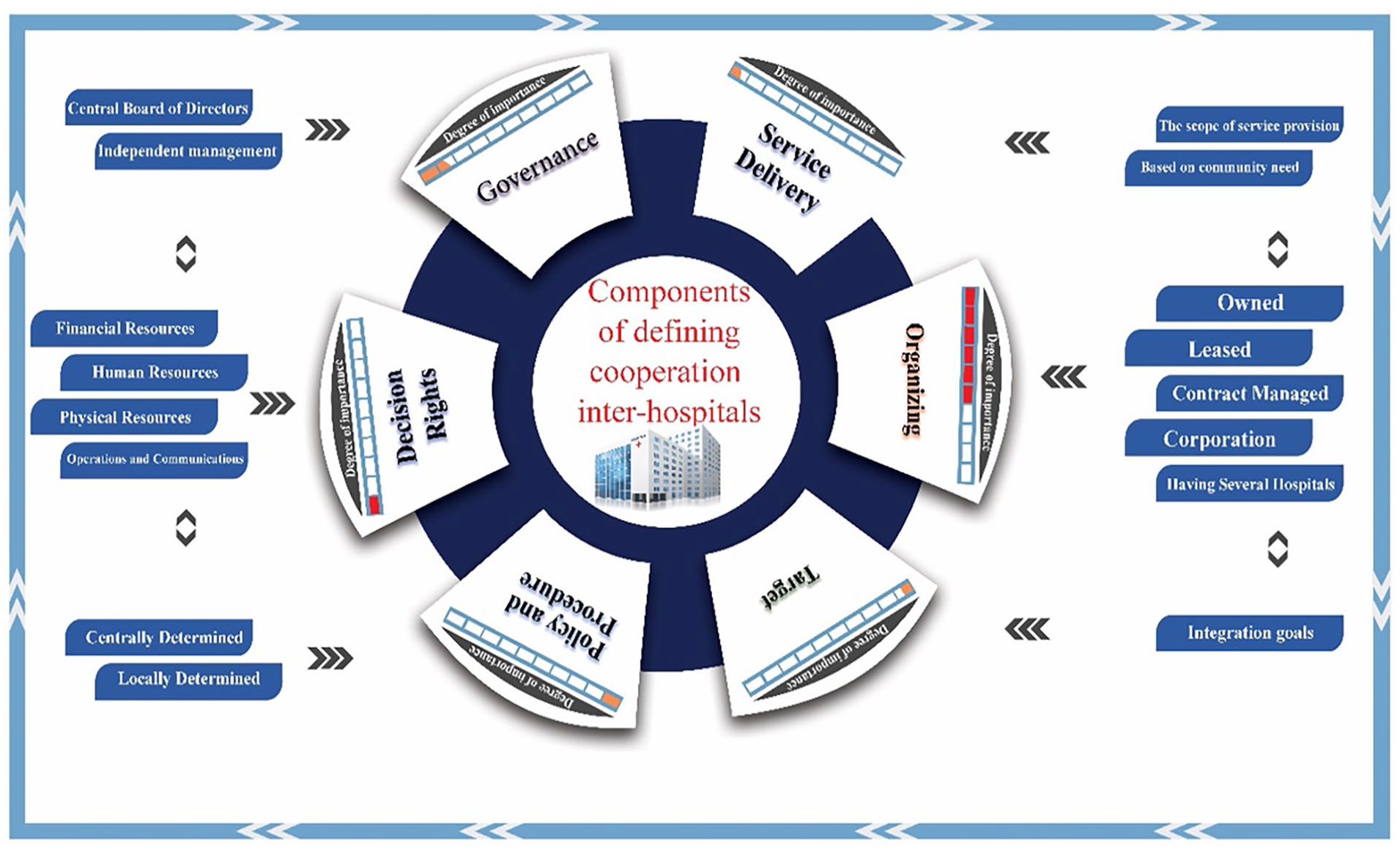
The model for providing a single definition for the collective activity of hospitals.
The model shows the 6 identified components with their respective sub-components, along with the level of importance of each dimension according to the number of times it was repeated in the studies, as a percentage. The dimension of organizing, which makes up 60% of the extracted codes, is one of the most significant dimensions in this model. Other dimensions, in order of importance, include governance (15%), decision rights (9%), policy and procedure (8%), service delivery (4%), and having a target (4%).
The review result provides an in-depth and comprehensive analysis of the literature on hospital collaboration, highlighting the key components and essential dimensions involved in various types of consolidation collaborations. The findings can be immensely useful as a valuable resource for defining and understanding different modes of hospital cooperation, including chain hospitals, network hospitals, multi-hospital systems, and similar types of mergers.
Discussion
The current study was conducted in order to explain the concept of chain hospitals and determine the elements of a complete definition of an inter-hospital collaboration. A total of 55 definitions were found from all the articles that were analyzed; the Multi-Hospital System definition was the one that was used the most (22 times), and the first definition of Chain Hospital was published in 1984 and examined the chain ownership of numerous hospitals. 40
The findings show that Barrett initially defined hospital collaboration under the title “Multi-Hospital System” in 1979. 15 Studies reveal that this sort of hospital collaboration has been carried out for a specific goal and to centralize some policies, strategies, and main activities and that it has been discussed in 22 cases of the definitions given. 17
According to Morlock et al, a multihospital system consists of “two or more hospitals, owned, leased, contract managed, or sponsored by a separate administrative entity.” This definition excludes hospitals that participate only in shared services organizations, networks, or other less formal multi-institutional collaborations. 25 Audi et al also stated that, in a given year, these hospitals have system identifiers that retain the same identifier as another hospital. 7 As we can see from the results, MHSs and the other types of hospitals mentioned—chain, network, and others—are not all the same sorts of hospital partnerships MHSs are one of the various types of hospital partnerships. Especially in the type of organization and ownership of hospitals, integration goals, implementation procedures and policies, etc. Accordingly, to obtain a comprehensive definition of MHS, emphasis should be placed on its fundamental components. The important components gleaned from MHS different definitions were the quantity of cooperating hospitals, the nature of ownership and cooperation between hospitals, the degree of autonomy and functional power of each hospital individually, the procedures and policies for carrying out activities, and the existence of a common identifier for hospital cooperation.
There is another type of cooperation between hospitals called Chain Hospitals, a dedicated hospital chain is defined as 3 or more hospitals that are owned and run by an investment business, and it was first proposed by Mullner and Hadley in 1984. 40 In other studies, chain and system hospitals were defined as 2 or more hospitals managed or owned by a central organization (public or private) which operating within the constraints established by the chain leadership.41,42 Having a number of hospitals under joint ownership or management (with a specific brand), central strategic direction (having a goal), having decision-making responsibility within specific frameworks and having distinctive features such as group headquarters, standard governance, protocols and procedures, and centralized back office functions (such as human resources, finance, procurement, legal, media, communication and public relations) are important components for this definition. These hospitals differ from MHSs and other types of hospital collaborations by common ownership, having centralized governance for all hospitals, and operating under a same brand.
According to John Hy’s research, the network consists of many single-unit hospitals joining with a larger organization (typically educational), whose primary function is to offer coordinated programs and services. 21 Other studies also classify Hospital Network as a “group of hospitals, physicians, and other health care providers, managed care organizations, insurers, and communities, work together, coordinate and deliver a broad spectrum of health care services to their community.”38,39 Coordination between health service providers and having a common goal to provide a wide range of health services to the community members were the main components of the definition. These types of hospitals pursue a common goal together and are different from MHSs, Chains and other types in this way that after achieving these goals, the continuation of cooperation will depend on the opinion of the group.
The results of the studies show that there are several definitions for a collaborative cooperation between hospitals, and there are many components that may be used to effectively express this sort of cooperation. In the studies, it was discovered that there are several definitions of collaborative cooperation between hospitals, and that many components can be used to express this type of cooperation effectively, and finally, using the definitions contained in the primary themes (200 themes), 6 main components and 16 sub-components were then extracted to provide a thorough description of hospital collaboration.
The organization-related dimension is the first and most significant one to be found; it accounted for nearly 60% of the extracted themes, which highlights how crucial it is for establishing a thorough definition of chain hospitals or any other kind of hospital collaboration. The studies of Mullner and Hadley, 40 McDermott, 41 and Baxter et al 42 have pointed to the personal ownership of a person or entity regarding chain hospitals. Also, in most of the studies that have provided a definition of MHSs, they have mentioned 3 types of ownership (through lease agreement, management agreement, corporate cooperation) as organizational methods.7,15,20,22,34,43
In the literature on MHSs, there are several governance models, including the “parent holding company” model, in which governing bodies exist at both organizational levels (at the system and individual levels), and the “corporate model,” in which only one broad system (the board of directors in company level) have been identified. In addition, a number of systems, particularly investors such as large hospital chains, have a system-level governing board and advisory boards for each member hospital. The trustees of these kinds of local hospitals have a substantial interest in how policies are codified at the corporate and local hospital levels, regardless of who owns the physical assets. 25 In this regard, identifying the governance of the organization is the second crucial factor in this regard; this governance denotes the type of management, organization administration, legal and full responsibility of assets, important decisions, and authority in the organization. Studies have shown that chain hospitals have a particular form of central governance, where important decisions and legal responsibility are under the control of the central governing board.40 -42 Networks, on the other hand, typically work together to achieve a common goal, with each hospital will have its own legal authority and responsibilities independently.35,38,39 And in the case of MHSs, depending on the type of organization, they use each of the governance methods.15,20,43 In light of what was said, the type of governance on the system will directly influence the type of organizing.
The reasons for hospital collaboration are different, various factors, such as financial pressure (for instance, joint exploitation of common services, such as human resource management departments), governmental regulations, sharing of scarce human resources, and delivering integrated patient-centered care, all contribute to hospital collaboration. 45 Additionally, a chain of hospitals can produce efficiencies that can be used to more effectively apply to future acquisitions by centralizing services and concentrating on support functions like information technology, personnel resources, finance, payroll, communications, public relations, media, etc. 42 In this regard, the third component regarding the right to make decisions in organizations was stated. Based on this, one of the fundamental aims of establishing a chain of hospitals is the efficiency principle, which has been seriously emphasized by the WHO and one of the current trends in the world is to run hospitals in an efficient way.
The governing boards’ role is to establish the organizational objectives, choose the major policy directions, and take final responsibility for the performance of management and quality. 25 The next component focuses on identifying the current policy and procedures in hospitals. Essentially, it aims to create unity of procedure and define hospitals’ independence.
In the context of a chain hospital, the adoption of Industry 4.0 and lean concepts holds significant potential for addressing the financial challenges and enhancing the quality of care. Ilangakoon et al show that, by implementing Industry 4.0 technologies such as IoT (Internet of Things), big data analytics, and artificial intelligence, chain hospitals can achieve centralized monitoring and analysis of patient data, inventory management, and equipment maintenance across their network. 51
The final component that defines chain hospitals is the presence of a shared goal among member hospitals. In the complex and interconnected network of chain hospitals, effective knowledge management plays a crucial role in facilitating seamless information exchange, collaboration, and continuous improvement across all facilities within the chain. A scoping review conducted by Karsikas et al 52 emphasized the importance of knowledge sharing and collaboration among healthcare professionals within chain hospitals, further reinforcing this point. Given that chain hospitals consist of multiple facilities operating under the same chain, it becomes imperative to harness and leverage the collective expertise and experience of medical staff across different locations. This is where effective knowledge management practices come into play. By implementing such practices, chain hospitals can tap into a vast pool of knowledge, thereby enabling faster problem-solving, promoting innovation, and facilitating learning from successful interventions.
Conclusion and Practical Implications
The study’s conclusion emphasizes the importance of carefully examining the concept of multi-hospital systems, such as chain hospitals, before their creation and launch. It highlights that hospital collaborations and partnerships have taken various forms throughout history, leading to the emergence of different types of hospitals. The findings indicate that collaboration among hospitals can result in higher quality and efficiency due to the utilization of economies of scale and shared resources.
Based on the study, several practical implications can be drawn for healthcare practitioners, policymakers, and administrators:
1- Enhanced understanding of chain hospitals: The study provides a comprehensive overview of the concepts and components associated with chain hospitals. This understanding can assist healthcare practitioners and administrators in gaining insights into the organizational structure and functioning of chain hospitals.
2- Development of inter-hospital cooperation systems: Policymakers and officials can utilize the study’s findings to establish effective inter-hospital cooperation systems, such as multihospital systems or chain hospitals. By defining the concept of chain hospitals and identifying their key components, policymakers can make informed decisions and design collaboration strategies that optimize healthcare delivery.
3- Improved governance and decision-making: The study identifies governance and decision rights as significant components of chain hospitals. Practitioners and administrators can utilize this information to enhance governance structures and decision-making processes within their own healthcare organizations. By adopting effective governance mechanisms and clarifying decision rights, hospitals can streamline operations and improve overall performance.
4- Policy and procedure refinement: The study highlights the importance of policies and procedures within chain hospitals. Healthcare practitioners and administrators can leverage the study’s insights to review and refine existing policies and procedures to align with the characteristics and requirements of chain hospitals. This can contribute to standardized practices, improved coordination, and more efficient service delivery.
5- Inspiration for future research: The study suggests that future researchers can focus on various aspects related to chain hospitals, including their establishment, effectiveness, and financial effects. Practitioners and researchers interested in this area can explore these research gaps to further expand knowledge and contribute to evidence-based practices in the field of chain hospitals.
In conclusion, the study’s findings provide valuable insights for policymakers, healthcare practitioners, and administrators involved in establishing and managing multi-hospital systems like chain hospitals. By considering these practical implications, stakeholders can make informed decisions, enhance collaboration, optimize governance, refine policies and procedures, and contribute to the advancement of research in this field.
Limitation
There are several limitations to this study that should be noted. Firstly, the study only considered English-language studies, which may have resulted in the exclusion of relevant studies published in other languages. Secondly, the search was limited to 5 main databases, and relevant studies published in other sources may not have been included. Thirdly, the framework used in the study was based on the authors’ interpretation of the data, and other researchers may interpret the components of chain hospitals differently. Finally, the study did not assess the effectiveness or impact of chain hospitals, and the findings should be interpreted in light of the limitations of the study.
Supplemental Material
sj-docx-1-inq-10.1177_00469580231193856 – Supplemental material for Chain Hospitals in the Health Industry: A Scoping Review of Principles and Definitions
Supplemental material, sj-docx-1-inq-10.1177_00469580231193856 for Chain Hospitals in the Health Industry: A Scoping Review of Principles and Definitions by Amin Aghili, Mehdi Jafari, Salime Goharinezhad, Hamid Pourasghari and Masoud Abolhallaje in INQUIRY: The Journal of Health Care Organization, Provision, and Financing
Footnotes
Acknowledgements
We are very grateful to Dr. Samira Soleimanpour and Dr. Nadia Saniee for their supervision in searching databases. Also, we thank the anonymous reviewers for their thorough and deep review of the paper, which led to a much improved version.
Author Contributions
AA and SG contributed to the conceptualization, methodology, literature search, data extraction, data analysis, and writing of the original draft preparation. HP, MA, and MJ were involved in interpreting the data and developing the manuscript intellectually. MJ provided supervision and project administration and contributed to the writing, review, and editing of the manuscript. All authors have reviewed and approved the final version of the manuscript.
Declaration of Conflicting Interests
The author(s) declared no potential conflicts of interest with respect to the research, authorship, and/or publication of this article.
Funding
The author(s) received no financial support for the research, authorship, and/or publication of this article.

Supplemental Material
Supplemental material for this article is available online.
References
Supplementary Material
Please find the following supplemental material available below.
For Open Access articles published under a Creative Commons License, all supplemental material carries the same license as the article it is associated with.
For non-Open Access articles published, all supplemental material carries a non-exclusive license, and permission requests for re-use of supplemental material or any part of supplemental material shall be sent directly to the copyright owner as specified in the copyright notice associated with the article.
