




Abstract
Smartphones are the principal instrument for internet access among adolescents and pre-adolescents in many industrialized countries. However, research on the long-term correlates of age at first access to these devices concerning life outcomes is scarce. This study contributes to the literature by collecting data from 3,247 Italian students in grade 10. Through OLS and logistic regressions, we investigate socio-demographics’ role in predicting the age of first smartphone access and the associations between the age of access and selected life outcomes. The moderating effect of socio-demographics on such relationships is also investigated through multiple-interaction models. Results suggest that females and students from less-educated families are more likely to receive smartphones earlier. Early smartphone access is negatively associated with adolescents’ well-functioning. Finally, deferring access reduces the gender gap in language proficiency, digital skills and life satisfaction.
Keywords
Introduction
In the second decade of the 21st century, the smartphone became the first means of internet access for adolescents and pre-adolescents in many industrialized countries (Mascheroni & Ólafsson, 2016). In Italy, where the current study is set, it was reported that in 2020 over 80% of 9- to 16-year-olds who accessed the internet daily did so from their smartphones (Smahel et al., 2020), whereas in 2010 this figure was only 5% (Livingstone et al., 2011). Such a substantial change in the use of digital media led to a debate about the dangers and opportunities of smartphone use for younger children. Sherry Turkle’s (2011, 2016) two books, for example, describe the solitude of hyper-connected young people; Manfred Spitzer’s (2012) Digital Dementia shows the neuro-psychological risks of online life; iGen by Twenge (2017) instead interprets the data on the decrease in adolescent well-being in relation to the arrival of mobile media. More optimistic publications have been equally successful. Jordan Shapiro’s (2019) book, for instance, advises against strict control of the use of new technology by minors, emphasizing the potential for a future global community. In this complex and at times contradictory framework, parents have found themselves facing unprecedented choices both in terms of giving their children smartphones and how to manage them in their daily lives. The question asked most often is: at what age should I give my child a smartphone? Experts—whether pediatricians, psychologists, education specialists, or social scientists specialized in communication—tend not to give clear answers to this question, and it is generally left to parents to establish when their children are capable of autonomously managing a media device. Indeed, little evidence has been published on the drivers of the age of smartphone acquisition or on the short- and long-term consequences of early ownership: while some studies have found a negative relationship between early access and school performance or well-being (Dempsey et al., 2019; Gerosa & Gui, 2023; Jaalouk & Boumosleh, 2018), other research shows that early owners have higher information and communications technology (ICT) self-efficacy (Li et al., 2023).
This study is intended to help understand the role that age of first smartphone access plays in the lives of adolescents. We first investigate how socio-demographic characteristics predict the age of access on a sample of more than three thousand Italian high school students and whether this is robustly associated with various life outcomes measured later in adolescence (when they are in grade 10). Moreover, we analyze the relationships between age of smartphone access and life outcomes, looking at the potential moderation effects of students’ socio-demographic characteristics.
Smartphone Use and Life Outcomes
Empirical evidence has been produced on the relationship between the amount of smartphone use and subjective well-being, educational performance, and other important indicators of social and physiological functioning in young people. Indeed, it has been observed that heavy smartphone use is linked to poorer sleep quality (Christensen et al., 2016; Hughes & Burke, 2018), lower concentration levels (I. Kim, Kim, et al., 2019; Kushlev et al., 2016), and worse interpersonal relations and life satisfaction (M. H. Kim, Min, et al., 2019; Mahapatra, 2019; Rotondi et al., 2017). Moreover, an increasing number of studies report that the amount of time students spend on their smartphones is negatively correlated with learning and achievement (Amez & Baert, 2020; Felisoni & Godoi, 2018; Gerosa et al., 2022). Prohibiting the use of smartphones at school seems to improve school performance, especially among students with the greatest difficulties (Beland & Murphy, 2016). However, these results vary depending on the context, with some countries such as Sweden showing no positive effects of this policy (Kessel et al., 2020).
The literature also presents mixed evidence for socio-demographic gaps in the impact of intense smartphone use. Gender differences have been observed, with girls spending more time on their smartphones and being more at risk of problematic use (Busch & McCarthy, 2021; Gui et al., 2023). Ethnic origins matter for digital competences as well as active and problematic smartphone use, although—at least in the Italian context—part of the effect can be explained by parents’ guidance on smartphone use (Vitullo et al., 2021). The effect of socioeconomic background on the extent to which adolescents are online is not consistent (Suter et al., 2018; Wang & Xing, 2018), but parental education is a relevant predictor for smartphone mediation strategies and home device management (Livingstone et al., 2017).
Digital devices and online activity can also have positive consequences on young users’ everyday experiences. The pedagogical and media education literature has turned the spotlight to the learning and relational opportunities provided by smartphones and their use by adolescents (Bachmair, 2015; Pachler et al., 2010). This posits the idea that rather than focusing on the danger of smartphones as such, it is important to focus on the way these devices are managed personally, at school and in the family. Indeed, some studies have demonstrated that when they are used for teaching with clear educational objectives, mobile internet tools may be a valid support for learning in various school subjects (Haßler et al., 2016; Sung et al., 2016; Zheng et al., 2016). Media sociology has also focused less on the dangers of early smartphone use and more on how people use them (Vincent & Haddon, 2017). Finally, in recent years some studies have downplayed concerns about the harmful effects of digital tools on young people’s well-being, at least with respect to the mere amount of internet use. The use of digital media seems indeed to be negatively linked to well-being, but only marginally (Przybylski & Weinstein, 2017, 2019). However, direct investigations on the use of smartphones are still missing, and their long-term repercussions are mostly unknown.
Age of Smartphone Access or Ownership and Life Outcomes
Turning to the potential effects of the age of first smartphone access on well-being, evidence is scarce. A small number of studies have focused on the relationship between smartphone ownership and measures of adolescents’ well-being, either from a cross-sectional or longitudinal perspective, and results are mixed. A Swiss study of 12- to 17-year-old adolescents observed that smartphone ownership is associated with increased electronic media use in bed compared to regular mobile phones and also with later bedtimes, although not directly with other indicators such as sleep quality or depressive symptoms (Lemola et al., 2015). Similarly, two longitudinal studies on the same group of Irish adolescents, interviewed first at age 9 and then at 13, have found that early smartphone ownership negatively impacts future academic and psycho-social well-being. Students who reported owning a smartphone at the age of 9 scored lower in math and reading than those who acquired it later in life (Dempsey et al., 2019). Additionally, early smartphone ownership appears to negatively impact self-assessed problematic behavior and intellectual abilities, though only among female respondents (Dempsey et al., 2020). However, more recent studies among US adolescents report no significant associations. Among 9- to 15-year-olds, mobile phone ownership does not seem to be contextually associated with well-being indicators such as school achievement or psychological distress, although 90% of the sampled students reported at least one perceived technology-related impairment (George et al., 2020). At the same time, no difference was registered in another study observing intense versus modest technology use and poor mental health symptoms (Jensen et al., 2019). Finally, a recent 5-year study performed on a sample of US children from low-income immigrant families highlighted that smartphone ownership, acquisition, and their interaction have no significant association with well-being indicators such as school performance, depressive symptoms, or sleep disruptions (Sun et al., 2023).
Among the available studies, investigations of the relation between early smartphone ownership and adolescents’ digital technology use are rather scarce. Two descriptive studies on Turkish university students observed that those who started using the internet at a younger age showed higher levels of internet addiction (Orsal et al., 2013) and of problematic smartphone use (Sahin et al., 2013). One more recent study investigates the correlation between problematic smartphone use and age at first smartphone access among a sample of Lebanese university students and finds that younger age at first use is associated with problematic use, but, interestingly, this association disappeared when controlling for usage habits (Jaalouk & Boumosleh, 2018). Considering the impact that new media has on adolescents’ lives, it is crucial to focus on digital competences in the early years of life to understand the extent to which such skills are self-taught or require intervention. In particular, given the pervasiveness of connection that these devices allow, it is relevant to observe whether having independent access to a smartphone from a very young age represents an advantage or a hurdle in terms of future digital well-being (Büchi, 2020; Gui et al., 2023).
Research Questions
This study focuses on three stages of analysis of the individual and socio-demographic characteristics most closely related to early or late ownership and its associations with a series of outcomes related to students’ well-functioning and well-being.
RQ1. Does the age of first smartphone ownership vary according to individuals’ socio-demographic characteristics?
First, we try to understand how socio-demographic characteristics are related to the time at which children receive their first smartphone. To do this, we consider adolescents’ gender, ethnic origins, and parents’ educational level. In previous studies on adolescents’ media use, these characteristics have been found to be associated with wellbeing-related outcomes such as problematic smartphone use (Extremera et al., 2019) and acquisition of digital skills (Gui et al., 2023; Wang & Xing, 2018). Generally, the use of smartphones is more pervasive and detrimental among girls (Extremera et al., 2019), individuals from ethnic minorities (Mendoza Pérez & Morgade Salgado, 2020), and with lower socio-economic background (Wang & Xing, 2018), thus we could expect a similar socio-demographic gradient in the age of first smartphone receipt. Indeed, the first studies in this area suggest the relevance of these same characteristics for describing early adopters (i.e., Dempsey et al., 2019, 2020).
RQ2. Is the age of first smartphone ownership related to school performance, digital competences, problematic smartphone use, capital-enhancing smartphone use, and personal well-being later in adolescence?
Second, we explore whether and how age at first smartphone ownership is related to future life outcomes. Here we aim at clarifying whether early access to smartphones is more beneficial for adolescents in terms of their well-being compared to delayed acquisition, or vice versa. We consider two outcomes in line with previous literature—academic achievement and life satisfaction—as an indicator of subjective general well-being. Additionally, we are especially interested in the relationship between age of smartphone acquisition and digital well-being, defined as “a state where subjective wellbeing is maintained in an environment characterized by digital communication overabundance” (Gui et al., 2017, p. 166). Therefore, we include multiple indicators relative to digital skills and media use.
RQ3. Does the relationship between age of first smartphone ownership and the selected life outcomes vary across individual socio-demographic characteristics?
Third, we explore how socio-demographic characteristics interact with these relationships. Our main interest here is to understand who among those receiving smartphones earlier or later benefits or suffers the most according to each life outcome. To explore this research question, we draw on previous evidence of different effects of smartphone use across various social groups, which shows, for example, that girls are more at risk of problematic smartphone use but also benefit more from mobile media education (Gui et al., 2023).
Data and Methods
Data
The analyses are based on data gathered during the second survey wave of the Digital Well-Being—Schools project (hereinafter DWB-S), carried out in May 2018 on all grade 10 students in 18 upper secondary schools in northern Italy (Gui et al., 2018, 2023). The questionnaire was administered using the Computer Assisted Web Interviewing (CAWI) method in the schools’ IT laboratories, under the supervision of external observers appointed by the research group. The survey involved a total of 3,285 students and gathered detailed information on their socio-demographic characteristics, digital competence, attitudes toward digital technologies, smartphone access, and daily usage habits. Additional information on students’ performances on standardized tests were retrieved from the Italian National Institute for the Evaluation of the School System (INVALSI). Since 2007, INVALSI has been tasked by the Ministry of Education with assessing students’ achievement at the national level. The assessment is conducted every year on the whole population of students at various stages of education, including grade 10. Students’ scores on standardized tests conducted in May 2018 were retrieved from INVALSI and linked to the DWB-S survey data at the individual level, with merging rates of 89.5% for language proficiency and 89.1% for math.
The analyses presented in this report were mainly carried out on the 3,247 respondents who stated that they owned a personal smartphone at the time of the interview, that is, 98.8% of the DWB-S overall sample. The only exception is students’ achievement in school disciplines, which was investigated only on the above-mentioned subsamples of those successfully linked with INVALSI data. Table 1 offers a detailed description of their individual, socio-demographic, and school-related characteristics by sample membership.
Descriptive Statistics of Student Population and Samples at Each Stage of the Data Preparation Process.
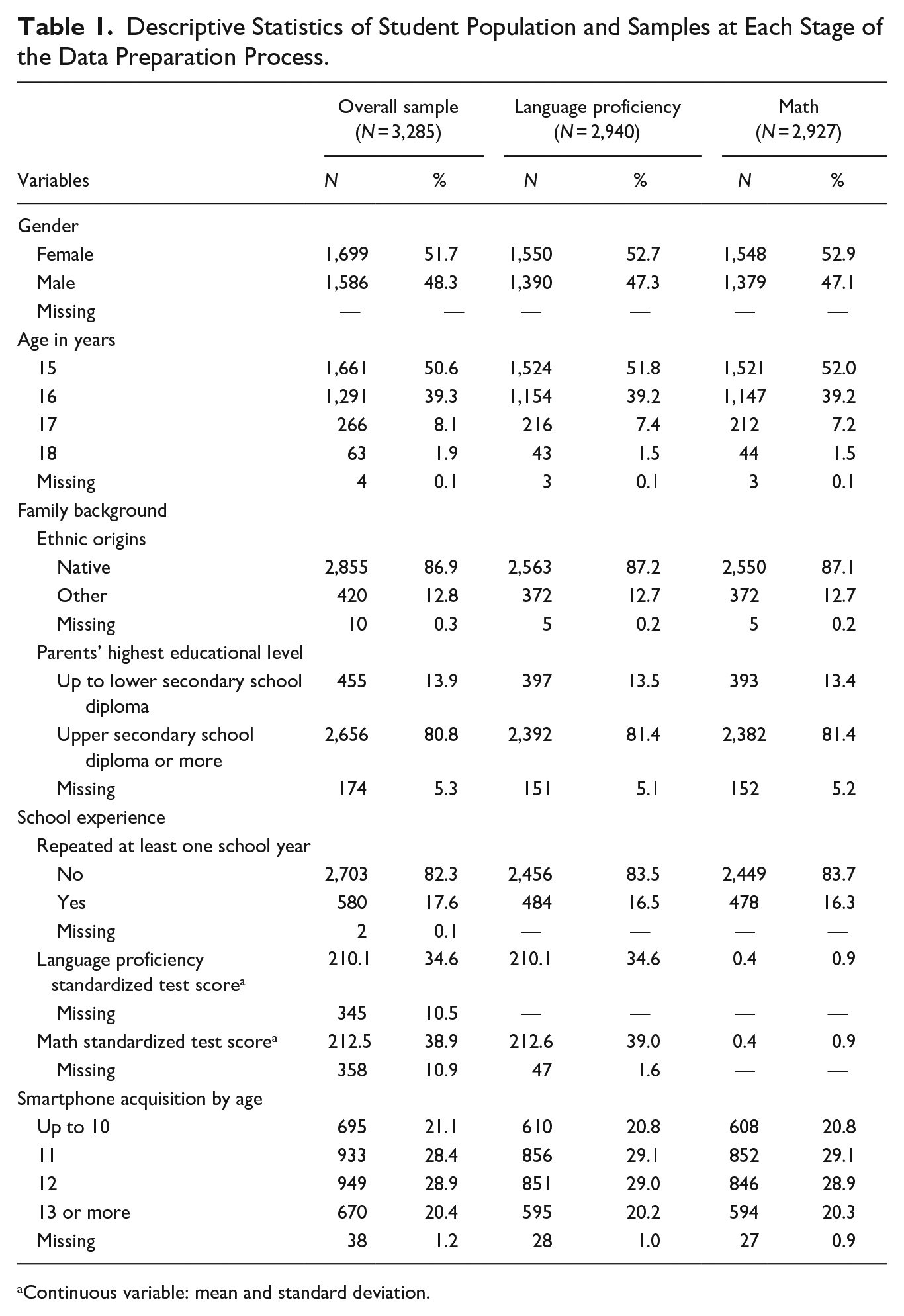
Continuous variable: mean and standard deviation.
The overall sample is well balanced between female and male respondents, and the majority are of native Italian ethnic origin and did not repeat the last school year. The age of smartphone acquisition is normally distributed across the four response options, with a larger frequency in the middle categories of 11 and 12 years old. The subsamples of respondents with available scores for language proficiency and math maintain the patterns observed for the main sample without substantial deviations, allowing us to conclude that the missing information is randomly distributed.
Variables
Age of smartphone acquisition was measured asking respondents to self-report the age in years they received their first smartphone and recording it in four categories, namely “up to 10,” “11,” “12,” or “13 or more.” The idea behind this was to better account for the actual distribution of the age of smartphone access in the cohort of students who answered the DWB-S questionnaire at grade 10. Analyzing data collected in 2014 on a representative sample of Italian adolescents—approximately 5 years before the DWB-S survey on students aged 15 and over, Mascheroni and Ólafsson (2015) found that around 11% of children up to 10 years old had a personal smartphone at their disposal. Looking at 11- and 12-year-olds, around a third of them owned a smartphone, while for those who were 13 or 14 years old the smartphone became the most widespread and used device, with around 60% of daily users. Based on these results, we decided to study age variations in life outcomes looking at an age continuum delimited, on the one side, by the narrow niche of adolescents who received the smartphone well in advance of their peers from the same birth cohort (up to 10 years) and, on the other, by the minoritarian age group corresponding to later access (13 or older).
Gender, ethnic origins, parents’ educational level, and class repetition are included in the analyses as dummy variables, with “males,” “natives,” “up to lower secondary school diploma,” and “non-repeating students” as reference categories. In particular, family education level was dichotomized following the results of extant literature that found a negative relationship between smartphone use and well-functioning in adolescents’ lives concentrated in the segment with the lowest education (Gui & Gerosa, 2021; Odgers, 2018). The aim here, in fact, is not to assess the linearity of the relationship between parents’ education and smartphone early access and impacts but—also given the exploratory nature of this study—highlight if the children of those with lower level of institutionalized cultural capital are effectively more exposed to them.
The first two outcome variables, concerning students’ achievement in Italian language and math, are measured through standardized test scores estimated by INVALSI using the Rasch latent trait modeling approach (Rasch, 1961). The resulting scores are highly reliable and directly comparable across individuals and groups, overcoming the issues of subjectivity in teachers’ judgements (Meissel et al., 2017) and measurement errors in students’ self-reported grade point average (Kuncel et al., 2005).
Digital competence is also measured through a standardized test, composed of 32 multiple-choice items based on realistic stimuli and situations that adolescents may encounter when using a smartphone or other devices connected to the web (Gui et al., 2023). This test focuses on quantifying the level of awareness respondents have in searching, using and producing information, in communicating and in safely handling their online experience and identity, covering all the areas of competence defined by the European reference framework DigiComp 2.1 (Carretero et al., 2017). The digital competence test scores are also estimated using the Rasch approach.
Smartphone pervasiveness in students’ daily lives is measured through the Smartphone Pervasiveness Scale for Adolescents (SPS-A) (Gerosa et al., 2022). The SPS-A consists of a set of items asking students how frequently they use their personal devices in different moments of the day on a four-point ordinal scale ranging from 1 (never) to 4 (always). More specifically, it focuses on seven daily life moments that are relevant to adolescents’ psychosocial well-being and could be negatively affected by excessive smartphone use: dinner with family, talking with friends, during class time or homework, watching television or movies, at night when awake or first thing in the morning. Cronbach’s alpha of SPS-A in our analytical sample is 0.71.
Students’ perceptions of problematic smartphone use are measured using the Smartphone Addiction Scale (SAS) (Kwon et al., 2013). This scale contains a battery of 10 items mainly derived from the existing literature on internet addiction (Cheever et al., 2018; Lortie & Guitton, 2013). The items focus on the respondent’s perceptions of the problems caused by smartphone use and their effects on daily life (e.g., I have hard time concentrating on studying due to smartphone use) on a six-point ordinal scale ranging from 1 (strongly disagree) to 6 (strongly agree). The resulting score does not therefore equate to a severe pathological condition (and in any case, smartphone addiction and internet addiction are not recognized as psychiatric diseases). Instead, it quantifies the manifestations of anxiety about using smartphones that have similar characteristics to those of other pathological addictions that are internationally recognized (e.g., gambling). Again, the higher the score, the greater the risk of problematic smartphone use. Cronbach’s alpha of SAS is 0.86.
Potential capital-enhancing uses of the smartphone are measured through students’ creative use of digital media and their interactive as opposed to passive use of social media. The index of creative use (Ekström & Östman, 2015) is derived from three items measuring the frequency with which respondents engage in the creation and sharing of original digital content (e.g., create videos or music and upload them online) on a six-point ordinal scale ranging from 1 (never) to 6 (many times a day), while interactive social media use (Escobar-Viera et al., 2018) consists of four items measuring how often they publish content or interact with other users on social media (e.g., write your own post or upload your own content) on a six-point ordinal scale ranging from 1 (never) to 6 (many times a day) (Escobar-Viera et al., 2018). Cronbach’s alpha of the creative use of digital media and the interactive social media use scales on our analytical sample is 0.83 and 0.73, respectively.
The last outcome variable deals with respondents’ general well-being, which is measured with the Satisfaction With Life Scale (SWLS) (Diener et al., 1985) in its original version. The SWLS is made up of five items for the self-assessment of overall life satisfaction on a six-point ordinal scale ranging from 1 (strongly disagree) to 6 (strongly agree), which are well suited for use with adolescents as well as adults (e.g., in most ways my life is close to my ideal). Cronbach’s alpha of SWLS is 0.86.
To ease the interpretation of the results, all outcomes have been standardized in variables with a mean of 0 and a standard deviation of 1.
Analytical Strategy
The role played by socio-demographic characteristics in predicting the age of smartphone access is first analyzed by fitting an ordered logistic regression model with gender, ethnic origins, parents’ educational level, and class repetition as covariates and the standard errors of the estimates clustered at the class level. This choice is justified by the nested structure of the data, with students within classes. To make the results more easily interpretable, we present here the predicted probability for each of the four categories of the outcome (i.e., 10 or younger; 11 years old; 12 years old; 13 or older) and levels of the predictors. The odds ratio estimates of the fitted model are reported in Supplemental materials, downloadable at http://tinyurl.com/agesmart-supplem.
The associations between age of smartphone access and all selected outcome variables are investigated through a set of eight OLS regression models (M1–M8), that is, one for each outcome, controlling for students’ gender, ethnic origins, and parents’ highest level of education. The standard errors of the estimates are again clustered.
Finally, we replicate the same OLS regression models (M9–M16) by interacting age of smartphone access with students’ socio-demographics. In this way, we are able to evaluate whether the relations identified between early smartphone access and the selected outcomes are somehow moderated by these characteristics.
Results
We first present the results of the analysis conducted to identify relevant socio-demographic predictors of early access to smartphones. The estimates of the ordered logistic regression model reported in Table 2 show that the age at which young people receive their first smartphone varies according to the different socio-demographic characteristics taken into consideration. Looking at gender, we find that girls are more likely to receive their first smartphone at 10 (or before) or at 11, with a probability that is 2.9% (p < .05) and 1.4% (p < .05) higher than males, respectively. Similarly, the lower the parents’ level of education, the sooner children receive a smartphone. Compared to those with a high school degree or more, parents with a middle-school diploma or below are 4.4% (p < .05) more likely to give their children a smartphone at 10 or under and 1.8% (p < .01) more likely at 11. No significant differences were found between native and immigrant students.
Predicted Probabilities of Receiving First Smartphone at Different Ages by Gender, Ethnic Origins, and Parents’ Educational Level.
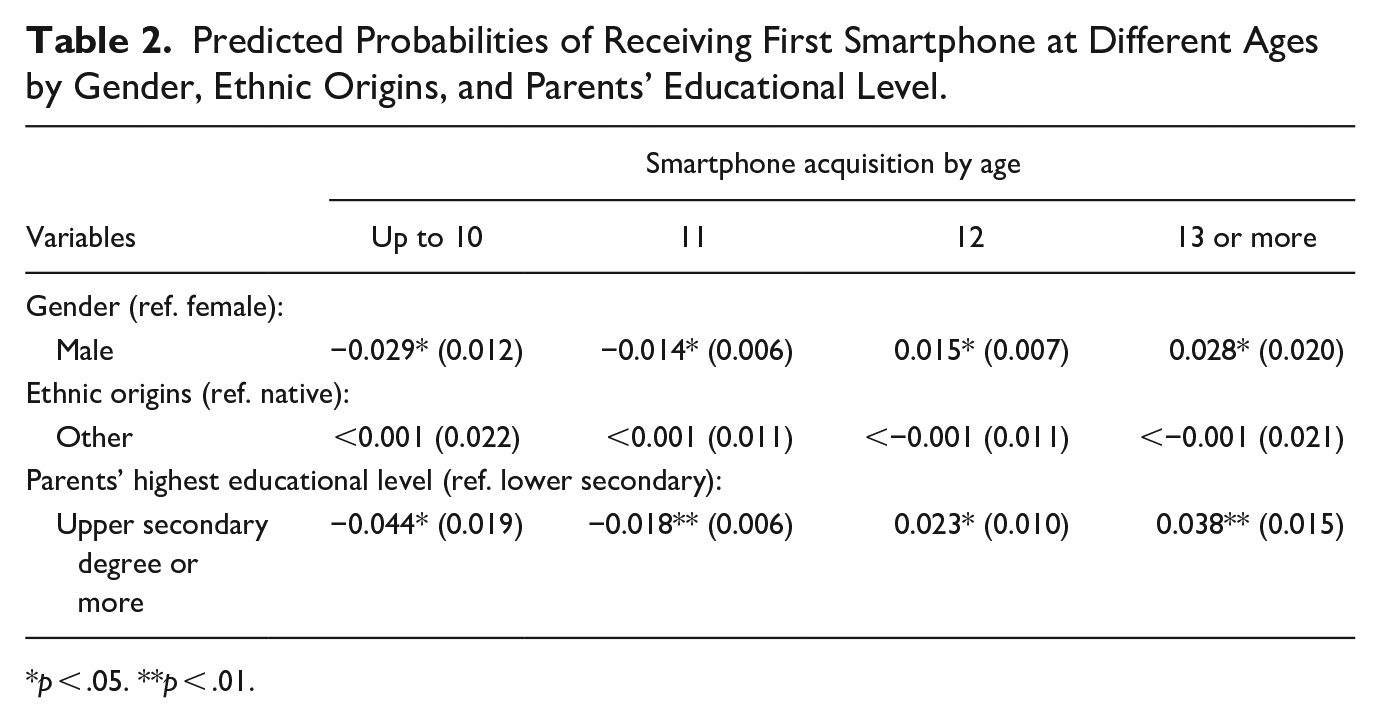
p < .05. **p < .01.
We then addressed the association between the age of smartphone acquisition and all selected outcomes: language and math proficiency measured by INVALSI, digital competence, smartphone pervasiveness, smartphone addiction, creative digital media use, interactive social media use and satisfaction with life. The first column of Table 3 summarizes the average variations in students’ language proficiency at grade 10 according to different ages of smartphone access (M1). There is a clear performance gap in language proficiency test scores between those who received a smartphone at 10 or under and those who received it later. The best-performing students, net of control variables, are those who were given a smartphone after the age of 11, with an average gain of 0.291 (p < .001) standard deviations compared to the early owners’ reference group. A gradual but negligible decrease in the gap is then observed with the transition to age 12 (b = 0.252; p < .001) and 13 or more (b = 0.243; p < .001), suggesting the existence of a clear change in the relationship between students’ age of smartphone access and language proficiency among those who received it before and after the age of 10 (i.e., transition to lower secondary school). Similar results also emerge for math proficiency, digital competence and creative digital media use (M2, M3, and M6 respectively). However, the differences between the reference category of early owners (up to 10) and those who received it afterward are smaller for math (11: b = 0.171; p < .01; 12: b = 0.168; p < .01; 13 or more: b = 0.124; p < .05), while the highest performers on the digital competence test and the most creative digital media users are those who received it at age 12 (M3: b = 0.266; p < .001; M6: b = 0.281; p < .001).
Results of the OLS Regression Models on the Selected Outcomes.
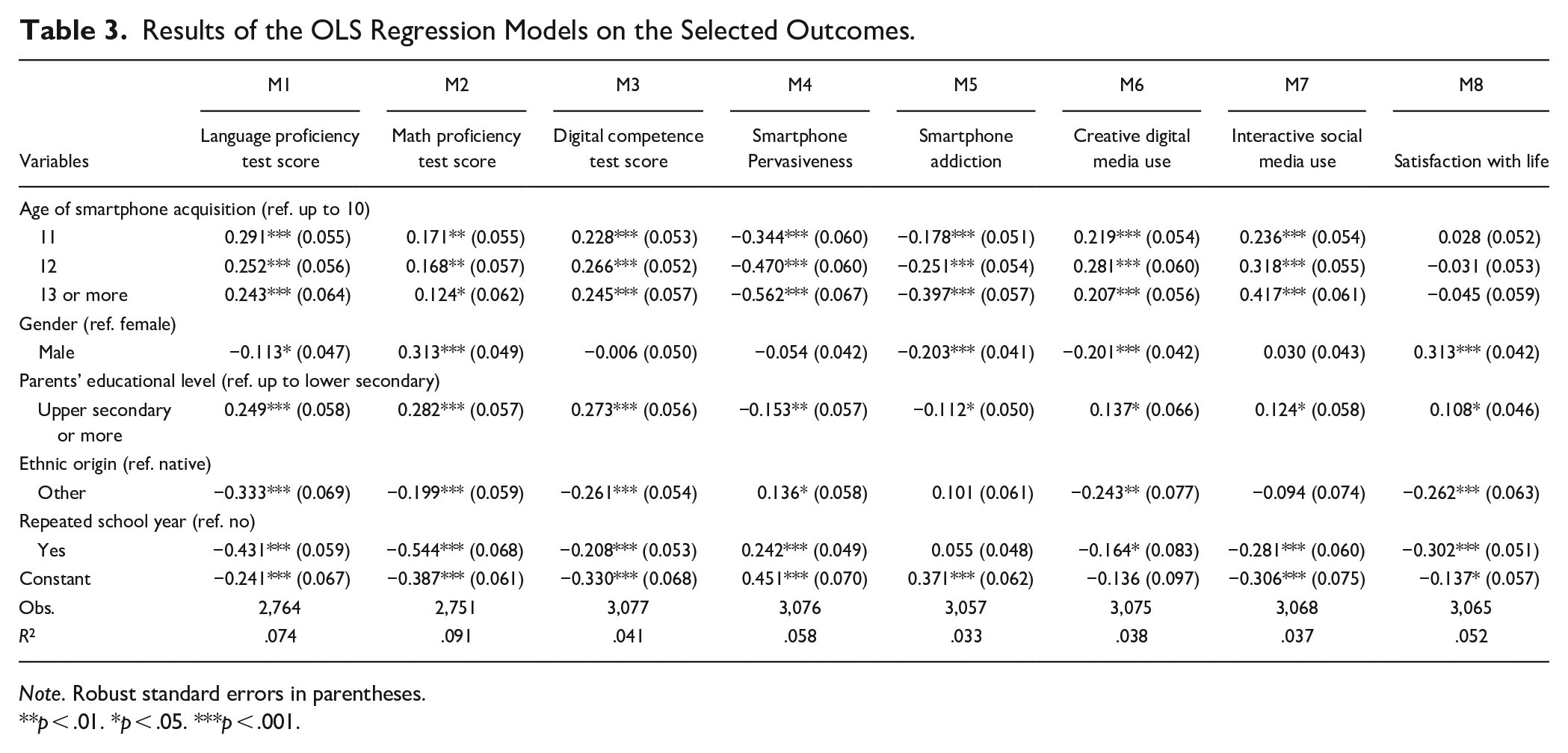
Note. Robust standard errors in parentheses.
p < .01. *p < .05. ***p < .001.
As far as problematic media use is concerned, receiving a smartphone at a younger age seems to be associated with both greater smartphone pervasiveness in the subsequent years (M4) and greater risk of smartphone “addiction” (M5). The later children access their own smartphone, the less they tend to manifest pervasive use (11: b = −0.344; p < .001; 12: b = −0.470; p < .001; 13 or more: b = −0.562; p < .001) or the risk of addiction in subsequent years (11: b = −0.178; p < .001; 12: b = 0.251; p < .001; 13 or more: b = 0.397; p < .001). The same happens, in the opposite direction, for interactive social media use, with an approximately linear growth as the age of smartphone access increases (11: b = −0.236; p < .001; 12: b = 0.318; p < .001; 13 or more: b = 0.417; p < .001).
Finally, looking at subjective well-being (M8), there are no noteworthy changes in students’ overall satisfaction with their lives according to the age at which they received their first smartphone.
The last set of evidence concerns estimates from OLS regression models with multiple interactions (from M9 to M16). A complete summary of the results is reported in Supplemental material, while here we graphically report only significant interactions for simplicity in the presentation of relevant findings. Results of the moderation analysis for gender, as shown in Figure 1, highlight that females’ performance in language proficiency and the digital competence test (M9 and M11) does not particularly benefit from the postponement of access to a smartphone, while males who receive it from age 11 onward perform significantly better than their early owner counterparts. The improvement of late owners who obtain their first smartphone at 13 or older is such as to equate girls’ average performances for both outcomes (M9, 13 or more: Δb = 0.327; p < .01; M11, 13 or more: Δb = 0.390; p < .001). Moving to subjective well-being (M16), interaction estimates suggest opposite directions between males and females in the relationship with age of smartphone access. Satisfaction with life increases slightly for females as the age of first acquisition increases, while it gradually decreases for males, until the gap of 0.509 (p < .001) standard deviations found with early owners is largely closed (12: Δb = −0.305; p < .01; 13 or more: Δb = −0.345; p < .01). Parents’ educational level significantly moderates the relationship with performance in mathematics (M10), stressing how postponing the age of access to smartphones, especially after 11, seems to be beneficial only for the children of high school or university graduates (12: Δb = 0.290; p < .05; 13 or more: Δb = 0.388; p < .001). Finally, the decrease in smartphone pervasiveness found as the age of access to the device increases is significantly moderated by students’ ethnic origin (M4), with natives showing a much more marked reduction than first- and second-generation immigrants (11: Δb = 0.337, p < .05; 12: Δb = 0.349, p < .05; 13 or more: Δb = 0.469, p < .01).
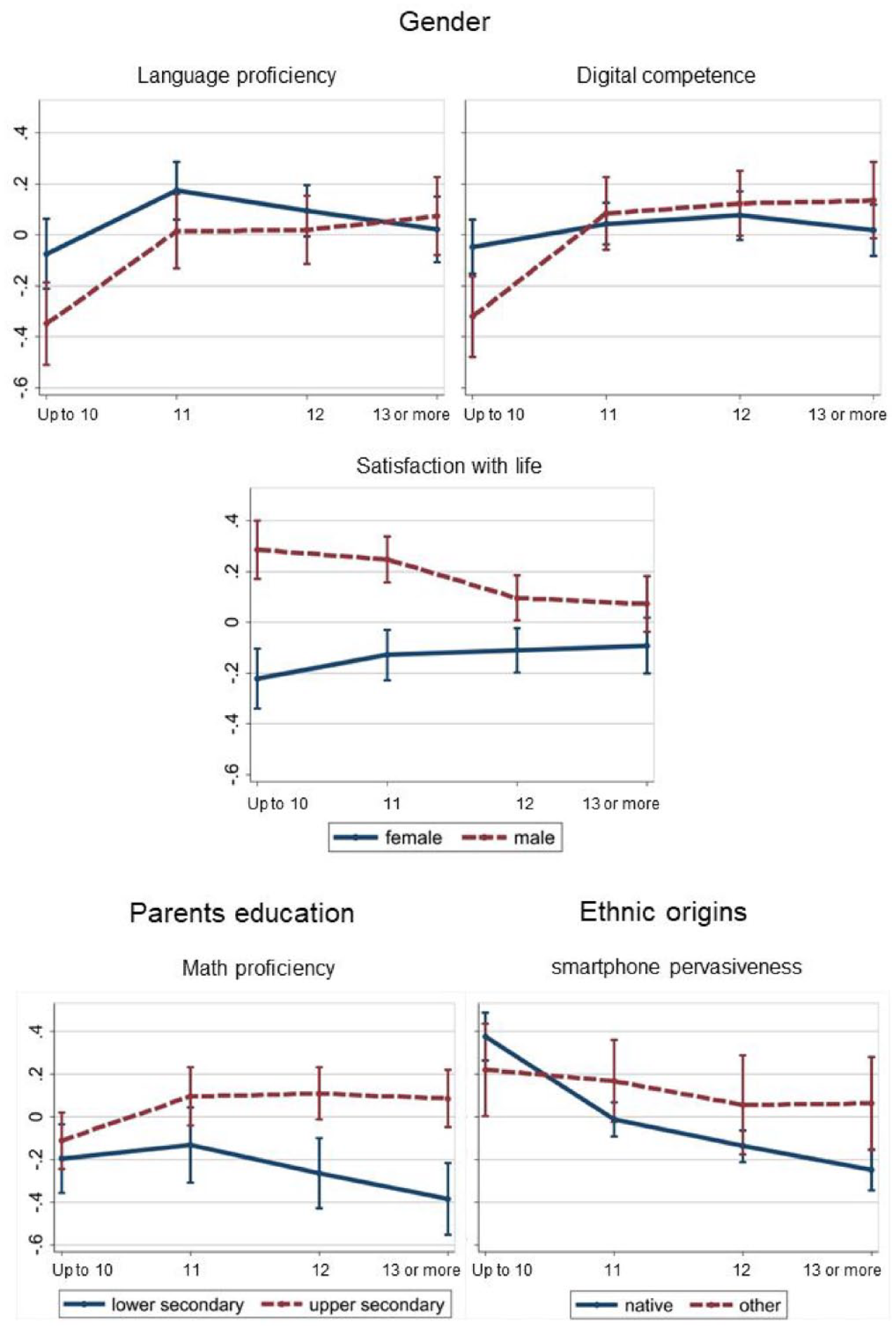
Results of the moderation analysis for gender (language proficiency, digital competence, and satisfaction with life), parents’ educational level (math proficiency), and ethnic origins (smartphone pervasiveness).
Discussion
In this study we aimed to provide evidence of the long-term correlates of the age of first smartphone ownership, which are still scarce in the literature. Through data collected in the DWB-S program among Italian high school students, we investigated whether socio-demographic characteristics significantly predict the age of smartphone acquisition, the relationship between age of smartphone acquisition and a series of life outcomes, and the role played by socio-demographic characteristics in moderating such relationships.
First, we observed the socio-demographic predictors of age of first smartphone ownership. Females and students with less educated parents show a higher probability of receiving a smartphone earlier, while there is no significant association with ethnic origins. These results repropose the “upside-down digital divide” already observed in previous studies, where social exclusion is no longer linked to a lack of internet access but to a lack of resources to manage—and sometimes limit—it (Gui & Gerosa, 2021). Indeed, research highlighted that families with fewer socio-cultural resources are more likely to possess costly technologies (Carlo, 2012, 2013), and smartphones do not seem to be an exception to this trend. Early smartphone ownership mirrors the consumption pattern of mature communication technologies (e.g., television), which counterintuitively are more heavily used among individuals with more disadvantaged socio-cultural backgrounds (Sevilla et al., 2012).
Second, regarding the association between the age of first smartphone acquisition and selected life outcomes, we observed negative associations between early smartphone access and adolescents’ well-functioning and well-being. Receiving a smartphone before 11 years old is negatively associated with academic achievement and capital-enhancing indicators, such as lower math and language proficiency, lower digital skills, and less creative media use. Previous international literature has already observed a negative relationship between early smartphone ownership and academic performance (Dempsey et al., 2019, 2020; Jaalouk & Boumosleh, 2018), but the association with lower competence related to the digital world is a new—and unexpected—result. Behind this apparently paradoxical relationship might be the influence of unobserved variables, even though the role of the smartphone could be significant in the light of contextual research. The European Commission’s Digital Economic and Society Index (DESI) shows that most Italians between age 18 and 74 have the tools to benefit from technology and the internet, but that their digital competence is nonetheless below the European average (European Commission, 2022). Additionally, the Italian national statistics agency, ISTAT (2019), reports that 90% of Italians access the internet most often through a smartphone. These indicators are relevant as it has been observed that specific features of the devices employed to access the internet have consequences for the range of possible actions available to the users (Napoli & Obar, 2014; Van Deursen & Van Dijk, 2015, 2019) and, therefore, the abilities they can develop. Smartphones are characterized by narrow and simple operative functions, and consequently this can have negative repercussions on users’ abilities and usage patterns (Correa et al., 2018; Pearce & Rice, 2013). Indeed, it has been observed that those who predominantly use the smartphone as their digital instrument are able to perform a reduced spectrum of activities compared to those who also employ a computer (Correa et al., 2018). Therefore, we may assume that the early receipt of a smartphone could lead children to focus on the few functions that are easily carried out on this device, consolidating usage habits based on relatively simple activities. We must emphasize that this elaboration is speculative, and that no causal relationship can be deduced from the present analysis (see the discussion of the study limitations below). Further research should explore this avenue more deeply, employing more rigorous methods and longitudinal data.
Nonetheless, this interpretation finds support in the nature of the relationship that we observe between the age of first smartphone ownership and problematic smartphone use. The older children are when they receive their first smartphone, the less problematic their smartphone use seems to be when they grow older, both in terms of smartphone pervasiveness and addiction. Additionally, the age of first smartphone ownership seems to influence the way adolescents approach social media: the later they receive their first device, the more interactive their social media use will be. These results seem to agree with evidence from existing studies observing negative links between problematic smartphone use and the age at which the device is first accessed (Jaalouk & Boumosleh, 2018; Orsal et al., 2013; Sahin et al., 2013). Moreover, this is also relevant in association with evidence emerging in the present research about smartphone access, digital skills, and creative media use. Early smartphone receipt does not appear to confer a technology advantage; rather, the portability of smartphones and their constant supply of audio-visual stimuli may encourage their exclusive and pervasive use, especially if this begins earlier in life.
It is important to highlight that our findings reveal a difference between outcomes related to performance (such as learning, digital skills, and creative social media usage) and outcomes associated with problematic usage (including addiction, pervasiveness, and creative use). Concerning the former, our analysis indicates a plateau at the age of 12, beyond which the values linked to a delayed introduction of smartphones tend to marginally decrease. Conversely, concerning problematic usage, a higher age is correlated with a diminished level in related indicators. This discrepancy is likely a clue of the existence of distinct mechanisms at play, where the adverse impact on learning appears to be a phenomenon specific to certain developmental phases. In contrast, evidence suggests that problematic usage accumulates linearly over time. These findings underscore the challenge of reshaping problematic usage patterns established during childhood, even beyond the specific pre-adolescent phase.
Additionally, we observe no association with life satisfaction. This contrasts with the literature arguing the existence of a link between greater exposure to digital media and worse psychological and relational health among children (Pagani et al., 2010; Park et al., 2014; Prieur, 2020). However, our result is supported by similar studies that did not find age at first smartphone ownership to be related to worse mental health symptoms (Jensen et al., 2019; Lemola et al., 2015).
Third, we assessed whether socio-demographic characteristics moderate these relationships and observed that gender, parental educational level, and ethnic background interact differently with various outcomes. Increasing the age of access to the first smartphone is related to reduced gaps between female and male students in language proficiency scores and digital skills scores to the advantage of males, and life satisfaction to the advantage of females. This last result confirms previous literature reporting a link between early smartphone ownership and worse self-assessed problematic behavior and intellectual activities only among female respondents (Dempsey et al., 2020). However, the later participants received their first smartphone, the wider the gap in math proficiency between adolescents regardless of parental education levels, to the disadvantage of those with highly educated parents. We might suppose that the loss determined by having early access to a smartphone acquires relevance especially for those who would have access to offline resources within the family but end up being distracted by the device. Similarly, the gap in smartphone pervasiveness becomes wider between native adolescents and those of other ethnic origins, with natives showing less problematic use if they received the device later while those of other origins registered no substantial variation. This evidence is in line with some of the existing studies on the relationship between ethnic origins and problematic smartphone use, which have observed that non-native students tend to develop a more pervasive relationship with this instrument (Vitullo et al., 2021). These last results highlight the relevance of considering also the demographic and socio-economic background of respondents when studying the consequences of smartphone access and use (e.g., Camerini et al., 2021).
Some limitations need to be acknowledged before concluding. First and foremost, the analyses presented here do not allow for a causal interpretation of the relationship between the age of smartphone acquisition and the selected outcomes. Although we used parents’ educational levels, ethnic origin and gender as control variables, there could be other factors (such as greater digital competence among parents who give their children a smartphone later) that may have affected our results and that we were unable to control. Therefore, we cannot state that early access to a smartphone directly affects adolescents’ school performance or media usage habits in later years. However, it cannot be ruled out that the early presence of a smartphone could explain—at least in part—the robust associations described. There is a solid body of literature that shows that the early and indiscriminate use of screens is potentially damaging for younger children (e.g., Oswald et al., 2020; Radesky & Christakis, 2016), which is why future research will need to investigate the subject more thoroughly, including beyond the Italian context. We hope that this study will encourage researchers to focus on this link with more solid methodologies and research designs, allowing for exploration of the phenomenon in causal terms and in greater depth. Initial examples can be found in the field of academic achievement (Dempsey et al., 2019; Gerosa & Gui, 2023), but increased attention on well-being and efforts that consider the whole sphere of adolescents’ lives are needed.
In addition to this, a second limitation of our analysis is the decision of not addressing the issue of multiple testing, which introduces the risk of false discoveries across multiple outcomes considered. Despite multiple testing being relevant in experimental settings (e.g., Rosenblum & van der Laan, 2011), its applications in observational studies without a pre-registered comprehensive set of specific hypotheses, as in the case of the present study, is debated in the literature (see Bender & Lange, 2001, p. 344; but also: Roback & Askins, 2005; Viviano et al., 2021). Moreover, the complexity of our investigation including relationships among variables of varied nature, continuous, ordinal, and categorical, together with the absence of clear guidance on the appropriate strategy for selecting adjustments, further complicates the application of multiple testing in this scenario. This limitation underscores the need for further research on adjusting for multiple testing in similar exploratory studies.
Another aspect that requires more in-depth research is the way age of smartphone acquisition is conceptualized and measured. First, this study is based on a clear question that asks how old students were when they received their first smartphone. However, smartphone access could be—and in some cases is—a gradual process managed in different stages by parents. For example, a pre-adolescent may initially use their parents’ smartphone, then one on loan for personal use, and only later might obtain a personal smartphone, with their own passwords and access credentials. It will therefore be necessary to investigate how the various ways of managing smartphone “ownership” contribute to positive and negative outcomes. Second, from a measurement point of view, we did not have the chance to control and correct for respondents’ inaccuracies in reporting their age of smartphone acquisition. Issues of inaccuracies of self-reported measures are indeed a common concern in research on smartphone use (see discussions in Andrews et al., 2015; Wilcockson et al., 2018). Not only respondents might misremember the time at which they acquired their first smartphone, they might also misreport their digital habits for a variety of reasons, or these same habits can simply vary over time. Future research should invest in survey enrichments to limit the occurrence of such biases or even in the triangulation of additional sources of data. Respondents, for instance, may be requested to provide more information about the time they received their first smartphone besides age, such as the school grade attended, or the occasion for which it was purchased or gifted (e.g., birthday, Christmas, school promotion). Another way might be adopting a multisource research design based on the administration of the same question to both adolescents and their parents or caregivers, to cross-reference the collected information. To better increase accuracy of investigations concerning these measures, future research should invest in objective measures of these indicators, for example by employing usage tracking apps on smartphones (see Deng et al., 2019).
Conclusions
The results of this study can help understand the role that smartphones have played in recent years in the lives of adolescents and identify crucial areas that could be tackled more effectively in the future.
The results suggest caution with respect to the increasingly early age at which children are given a personal smartphone. A novel contribution of this paper is that an earlier age at smartphone ownership negatively relates with digital competence, a paradoxical result which challenges the role of smartphones as digital skills enablers. These results support the efforts of those aiming to diminish the prominence and ubiquity of smartphones among the digital technologies used by children and pre-adolescents, encouraging the development of improved digital competence through the use of more complex and less pervasive devices.
Regarding performance-related outcomes, 12 is the age of smartphone acquisition below which scores tend to diminish significantly, with marginal decreases also for later ages. As regards problematic smartphone usage, instead, the results bring support to a “the later, the better” approach.
These results support and broaden the spectrum of negative relationships found in the literature between precocity of smartphone use and various life outcomes (Dempsey et al., 2019; Jaalouk & Boumosleh, 2018; Lemola et al. 2015) and confirm the fragility of the specific stage of puberty and pre-adolescence regarding intensive media usage (Orben et al., 2022).
Supplemental Material
sj-docx-1-yas-10.1177_0044118X231223218 – Supplemental material for The Age of the Smartphone: An Analysis of Social Predictors of Children’s Age of Access and Potential Consequences Over Time
Supplemental material, sj-docx-1-yas-10.1177_0044118X231223218 for The Age of the Smartphone: An Analysis of Social Predictors of Children’s Age of Access and Potential Consequences Over Time by Tiziano Gerosa, Lucilla Losi and Marco Gui in Youth & Society
Footnotes
Data Availability Statement
Data sharing not applicable to this article as no datasets were generated or analyzed during the current study.
Declaration of Conflicting Interests
The author(s) declared no potential conflicts of interest with respect to the research, authorship, and/or publication of this article.
Funding
The author(s) disclosed receipt of the following financial support for the research, authorship, and/or publication of this article: The author(s) received financial support for the research by the University of Milano-Bicocca [grant number 2016-CONV-0051]. Open access funding was provided by SUPSI - University of Applied Sciences and Arts of Southern Switzerland.

Supplemental material
Supplemental material for this article is available online.
Author Biographies
References
Supplementary Material
Please find the following supplemental material available below.
For Open Access articles published under a Creative Commons License, all supplemental material carries the same license as the article it is associated with.
For non-Open Access articles published, all supplemental material carries a non-exclusive license, and permission requests for re-use of supplemental material or any part of supplemental material shall be sent directly to the copyright owner as specified in the copyright notice associated with the article.
