




Abstract
This study contributes to the theoretical and empirical debate on how adolescent employment affects later labour market resources. Specifically, we view such employment as having a complex relation with labour market outcomes in young adulthood, depending on the specific resource examined: the likelihood to be employed and the earnings level. Focusing on Israeli millennials, we used administrative longitudinal data from the Israel National Insurance Institute with respect to a representative sample of the 1991 cohort, covering ages 12–28. Findings show that while employment during adolescence increases the likelihood of working in young adulthood, once employed, it decreases earnings, suggesting that adolescent employment has relations of both inclusion and exclusion with respect to the labour market resources of young adults.
Keywords
Introduction
Studies have shown that employment during adolescence is an important factor in understanding young adults’ current life in general and their labour market resources in particular (Buchmann & Steinhoff, 2017; Mortimer et al., 2003; Staff & Mortimer, 2007). The transition to adulthood, which usually takes place between the late teens and the late twenties (Grosemans et al., 2020), represents a critical developmental stage, combining previous socialization with current experiences to shape the future (Manzoni, 2018).
While scholars agree that employment shapes the short- and long-term labour market outcomes of adolescents (Hobbs et al., 2016; Houshmand et al., 2014; McLoyd & Hallman, 2020; Mortimer et al., 2003; Mortimer, 2010), they disagree about how, and to what extent, work at this age can impact later labour market resources. On a theoretical level, two main opposing approaches can be found. The first sees adolescent employment as a resource, identifying conditions whereby adult pay is increased by working during adolescence (Baum & Ruhm, 2016; Dudyrev et al., 2020; Houshmand et al., 2014). The second direction suggests that employment during adolescence can diminish the allocation of time to study, reducing educational success (Baert et al., 2018; French et al., 2015; Neyt et al., 2019) and labour market resources. Empirical findings also highlight controversies over the effect of adolescent employment on labour market outcomes in young adulthood (Monahan et al., 2011; Mortimer & Staff, 2004; Staff et al., 2012).
In the current study, we aim to contribute to resolving this theoretical and empirical puzzle by offering a third possibility. Namely, we suggest that the relation between employment during adolescence and labour market resources can be both positive (inclusion) and negative (exclusion), depending on the specific labour market resource in young adulthood that is examined: (a) the likelihood to be employed and (b) earnings. While the former captures the ability to enter the labour market, the latter captures the economic position within the market hierarchy. Employment during adolescence might enhance attachment to the labour market and thus increase the odds of being employed (i.e., have an inclusion effect), while at the same time, it can diminish educational resources and thus decrease earnings (exclusion effect).
The relation of adolescent employment to life outcomes as young adults also depends on the context in which they take place (Zimmer-Gembeck & Mortimer, 2006). This issue is particularly important in the case of young adult millennials, that is, those born between 1981 and 1994 (Eisner, 2005) and coming of age in the 2000s (Manzoni, 2018), in Israeli society. Israel provides a unique context, as it is a mix of both a capitalist and a familistic society, with high labour market inequality, on the one hand, and high marriage rates at young adulthood, on the other, compared to the OECD average (Gal, 2010; Kimhi & Shraberman, 2014; OECD, 2021).
In short, we address two questions: How is adolescent employment related to employment in young adulthood? How is it related to earnings as young adults? To examine our research questions, we use administrative data from the Israel National Insurance Institute (NII) on a representative sample of the 1991 cohort for the years 2003–2019, covering ages 12–28.
Literature Review
The life course approach asserts that significant events throughout life can impact the future development of adolescents and young adults (Elder et al., 2003). One critical transition point is the move to adulthood in general (Manzoni, 2018) and the shift from school to work in particular (Schoon & Silbereisen, 2009; Shanahan et al., 2002). Arnett (2000) coined the developmental phase of ‘emerging adulthood’ to reflect this extended period of adolescence. However, studies suggest this concept is problematic in the conservative context of Israel, where young adulthood is more appropriate (Lavie et al., 2022; Cinamon et al., 2012).
There is a theoretical debate about the effect of employment during adolescence on labour marker resources later in life. One direction, based on several theories, emphasizes positive effects. First, human capital theory (Houshmand et al., 2014) argues that work during school years helps adolescents acquire skills needed in the labour market. As such, individuals with more exchangeable qualifications will be better rewarded in the labour market in increased employability, in higher wages or in both dimensions of the successful school-to-work transition. Second, signalling theory argues that working during adolescent years adds value to future employers by indicating the potential productivity of the individuals. The possibility to choose a more productive employee can be highly important in the context of a rising level of educational completion. This context produces an incentive for employers to look beyond educational attainment and search for productivity markers (Dudyrev et al., 2020). Moreover, the time college students devote to work has been shown to be at the expense of their leisure time rather than education-related activities (Triventi, 2014). From a third, non-economic perspective, adolescent employment might be particularly beneficial for youth who are not planning to attend college (Ling & O’Brien, 2013). Poor inner-city youth sometimes have difficulty finding employment, which can contribute to negative outcomes (Johnson, 2004; Leventhal et al., 2001; Purtell & McLoyd, 2013). The context of adolescent employment can shape vocational identity, personal goal setting and educational interests and commitment. It can also provide decision-making opportunities and exploration of interests, build confidence and competence in work skills and offer exposure to diverse employment settings (Zimmer-Gembeck & Mortimer, 2006). Indeed, some studies found a positive effect of adolescent employment on labour force participation and income in later life. Some of these effects were stronger for males than for females (Baum & Ruhm, 2016; Carr et al., 1996). A positive effect of working during the senior year of high school was found in the short term (5–11 years after high school) in terms of labour market outcomes although this attenuated in the longer run (Baum & Ruhm, 2016). These theories and findings suggest that employment during adolescence will increase the likelihood of employment in young adulthood and increase earnings.
Other theories challenge the positive effect of work during adolescence on later labour market outcomes. They mainly are established on a body of literature that points to negative correlations between working during high school and educational attainment, which indirectly influences later labour market outcomes (French et al., 2015; Neyt et al., 2019). A majority of these studies use the perspective of zero-sum theory (Warren, 2002), built on the assumption that student time is limited. Thus, work investment takes up time that could be invested in studying, reducing educational success (Dudyrev et al., 2020). Primary orientation theory also explains the negative impact of combining employment and school on academic performance, suggesting that those who both work and study develop socio-psychological factors prioritizing employment (Baert et al., 2018). As a result, they will prefer to work instead of engaging in educational activities, leading to poorer scholastic performance. Finally, theories of precocious development and pseudo-maturity suggest that many adolescents would be better served by spending time in settings more conducive to fostering age-appropriate positive development, such as families, schools and extracurricular activities (Staff & Uggen, 2003). These theories suggest that employment during adolescence will decrease the likelihood of employment in young adulthood and decrease earnings.
Most research on adolescent employment has been conducted on large nationally representative samples or on middle-class Americans. Findings indicated that adolescents start working by the end of their freshman year of high school and work in service sector jobs, such as food service or retail (Kingston & Rose, 2015). A large amount of research on adolescent employment has connected employment to poorer academic performance, increased school deviance, lowered expectations for educational achievement, increased substance abuse, increased likelihood of engaging in risky behaviour and decreased psychological functioning (Lee & Staff, 2007; McNeal, 2011; Monahan et al., 2011; Rauscher, 2011; Staff et al., 2012).
These negative effects of employment during high school can be attributed to selection effects, where adolescents who work (especially those who work long hours) are less engaged in school and thus more at risk of adopting risky behaviour due to their demographics, personality or temperament (Apel et al., 2006). However, a few studies have found that even after controlling for demographics and behavioural and attitudinal characteristics related to school dropout and risky behaviour, work during high school still holds risks (Monahan et al., 2011; Robert Warren & Lee, 2003; Staff et al., 2012).
In the current study we assume that developmental consequences of life behavioural patterns vary according to their timing in a person’s life (Elder et al., 2003). As such, it is important to understand labour market resources as being affected by experiences earlier in life, at adolescence. Different tracks in adolescence can lead to diverse consequences, positive and negative at the same time, in the labour market as young adults (Carter, 2019; Manzoni, 2018; Mortimer et al., 2003; Shavit & Muller, 2000).
In light of the theoretical and empirical debates over how working during adolescence affects labour market outcomes, we suggest a third possibility, seeing employment during adolescence as having both positive and negative effects. On the one hand, work during adolescence can improve attachment to the labour market and hence increase labour force participation (and decrease unemployment) in young adulthood, as suggested by human capital and signalling theories (Baum & Ruhm, 2016). That is, it can have an inclusion effect on labour force participation. On the other hand, as working during adolescence can also be at the expense of studying, despite its positive effect on employment, it may decrease earnings in young adulthood, as suggested by zero-sum theory (Baert et al., 2018). That is, it can have an exclusion effect on labour force earnings. Resting on this argument, we hypothesize that employment during adolescence will increase the likelihood of employment in young adulthood and, once employed, decrease earnings.
The Israeli Context
The current study is of young adults in Israel – a Mediterranean country in the Middle East and part of the OECD. In certain aspects, young Israeli adults have characteristics common to their counterparts in other OECD countries. For instance, 58% of women aged 25–34 had a post-secondary education in Israel in 2020, similar to the OECD average of 52%, whereas the corresponding figures for men were 37% and 39%, respectively (Israel Central Bureau of Statistics [ICBS], 2021). Moreover, there are similar gender differences with regard to tertiary education among this same age group: 56.9% of women in Israel and 53.4% in the OECD, compared to 36.3% of men in Israel and 40.7% in the OECD (Ministry of Education, 2022).
In addition, in Israel as in the OECD, there is a positive correlation between the level of education and employment rate: the rate is 84% for those with a post-secondary education in Israel, compared to 81% in the OECD (2022a). Employment rates among Israeli millennials are 61% for ages 18–24 and 74% for ages 25–29 (Kahn-Strawczynski et al., 2016). Employment rates in this generation for ages 15–24 (the only age range for which comparative data between Israel and other OECD countries are available) are very similar in Israel and the OECD: 41% versus an average of 43%, respectively (OECD, 2022a). The rate of young adults not currently in education, employment or training (NEET) is 14% in Israel (12.3% of men and 15.6% of women), similar to the OECD average of 13% (11.4% of men and 15.8% of women) (OECD, 2020).
At the same time, there are certain characteristics unique to the case of Israel. First, Israelis tend to begin higher education at a relatively late age (25 compared to the OECD average of 22; OECD, 2019b). This is owing to mandatory military service – two years for young women and three for young men – and the common practice of taking time off after the army and before beginning studies (Girsh, 2019; Uriely et al., 2002). The average age at which women start an undergraduate degree is a year and a half earlier than for men; women also graduate at a younger age (ICBS, 2017, 2019).
Second, a vast majority of universities and colleges in Israel require full matriculation (based on nationwide exams) as a minimal condition for acceptance. In 2019/2020, 75.6% of girls and 72.5% of boys qualified for matriculation (Wininger, 2022). In 2021, about 52% of 18–24-year-olds did not continue to higher education and entered the labour market (not in education–employed), as opposed to the OECD average of 34% (OECD, 2022b).
Third, Israel is a familistic society, with a dominant conservative family model, lower divorce rates and higher marital rates than other OECD countries (OECD, 2019a). It is a traditional society that embraces robust family values (Gal, 2010; Lewin-Epstein et al., 2006). Israel has the highest birth rate in the OECD, with an average of 2.9 children per woman, compared to the OECD average of 1.6 (OECD, 2022c). The mean age at first marriage among Israeli women and men (24.9 and 27.3, respectively) is much lower than the OECD average (women = 30.7, men = 33.1; OECD, 2022c). Similarly, Israeli mothers’ mean age at first birth is younger than the OECD average (27 and 29, respectively; OECD, 2021). Moreover, in relation to its population size, Israel boasts the highest number of fertility clinics in the world (Hashiloni-Dolev, 2006).
Familistic behaviours and perceptions correspond to the pronatalist welfare policy and laws of Israel, which have codified the right to bear offspring, encouraging women – especially Jewish women – to have many children (Berkovitch & Manor, 2023; Berkovitch, 1997; Gal, 2010). The concept of motherhood in Israel has been significantly influenced by the dynamics of nation-building and social policies related to maternal roles, shaped by national-demographic considerations (Ajzenstadt & Gal, 2001; Herbst & Benjamin, 2012). For Jewish women, motherhood has been framed as a pivotal national undertaking (Yuval-Davis, 1996) related to the emergence of a burgeoning Palestinian minority and prompting characterization of the Arab–Israeli conflict as a ‘demographic threat’ (Berkovitch, 1997).
Nevertheless, the state has not ensured the family’s economic ability to raise children (Renan Barzilay, 2012; Holler & Gal, 2011). This is reflected in economic inequality in Israel, which is currently among the most acute in the developed world and has been rising since the 1980s (Feniger et al., 2021). This is also reflected in the poverty rate of children, which is the highest among OECD countries – 22% compared to an OECD average of 13% – related to the correlation in Israeli society between high poverty and a large number of children (Endeweld et al., 2023). 1
In sum, in this study we focus on Israeli millennials aged 19–28. Their life course is embedded in a unique combination of pronatalist and familial characteristics, on the one hand, and high rates of college degrees and employment (as in the rest of the OECD), on the other hand. All this makes it an interesting case study for examining future labour market outcomes of adolescent employment.
Method
Data Source
We used administrative data from the NII with respect to a representative sample of the 1991 cohort for the years 2003–2019, covering ages 12–28. We begin with 2003 because this is the first year for which the NII has complete data on families and income. The data was prepared especially for the study and includes information on employment, earnings and the sociodemographic characteristics of young adults. Thus, we created panel data for the research population of this cohort at ages 19–28 (2010–2019). In order to examine the effect of employment during adolescence, we added to this panel information on the individual’s employment, parental earnings and parental family status during the teen years (ages 12–18).
The database is suitable for addressing our research questions given its long-itudinal nature, covering both adolescence (12–18) and young adulthood (19–28). Moreover, the dataset includes rich information on employment across the years: annual working months, earnings and economic branch of employment. Hence, this data is suitable for measuring employment during adolescence and employment and earnings during young adulthood, and it contains information on important variables commonly used when modelling earnings. It also includes high-quality information on household income: employment income (including self-employment), pensions, benefits and allowances. Finally, as this is administrative data, sample attrition is negligible.
The total sample consists of 20% of the 1991 cohort in the NII data, selected randomly (N = 28,352, 50.3% boys and 49.7% girls). About one quarter of the sample was employed at ages 15–17 (32.5% of boys and 24.3% of girls). All numbers and percentages of persons in the sample refer to the year 2019.
Research Variables
Dependent Variables
The first dependent variable is employment during young adulthood, a time-varying dichotomous variable indicating whether the young adult was employed (=1) or not (=0) in each year. The second dependent variable is a time-varying variable indicating the log of gross monthly earnings in each year of young adulthood.
Independent Variables
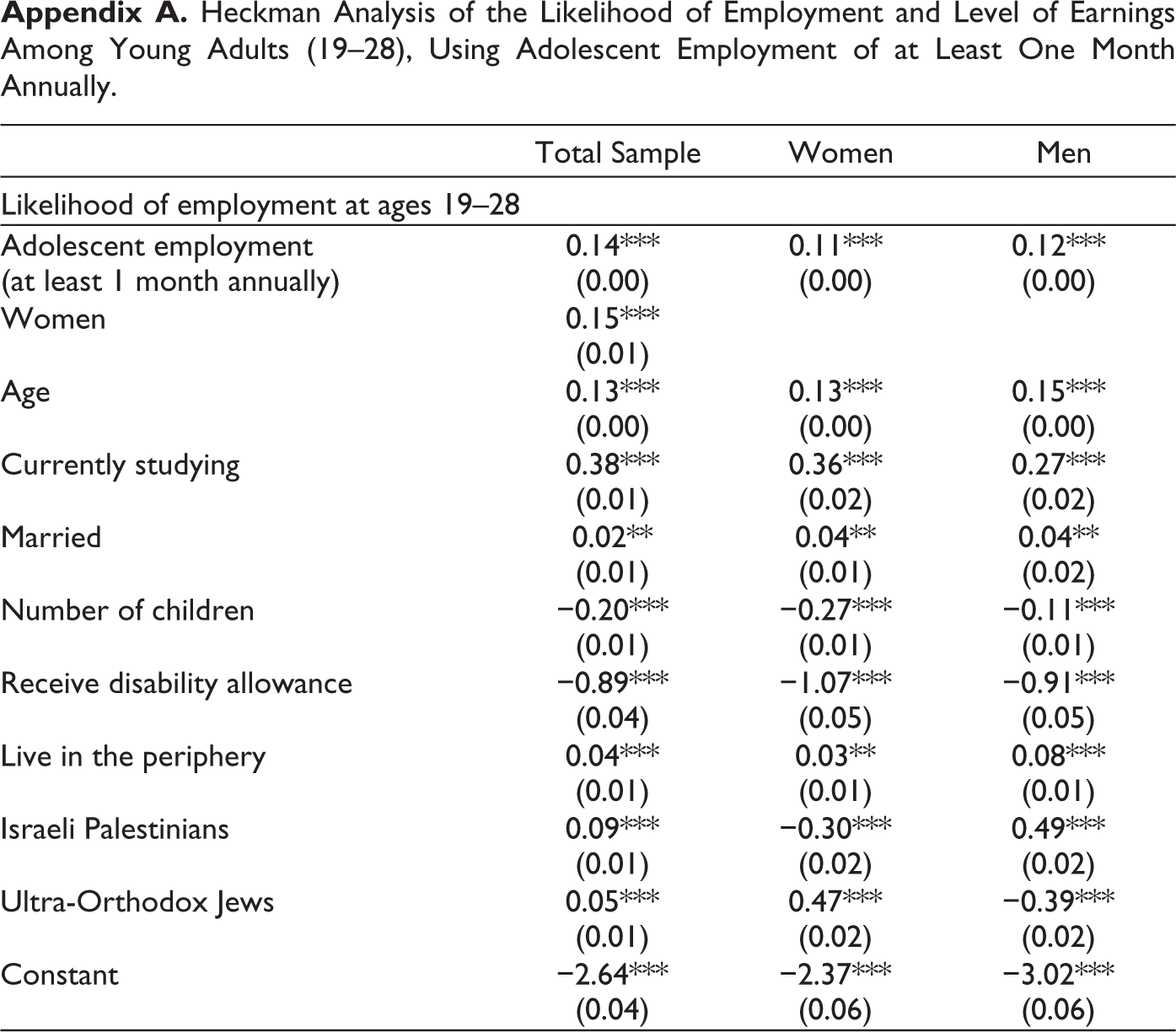
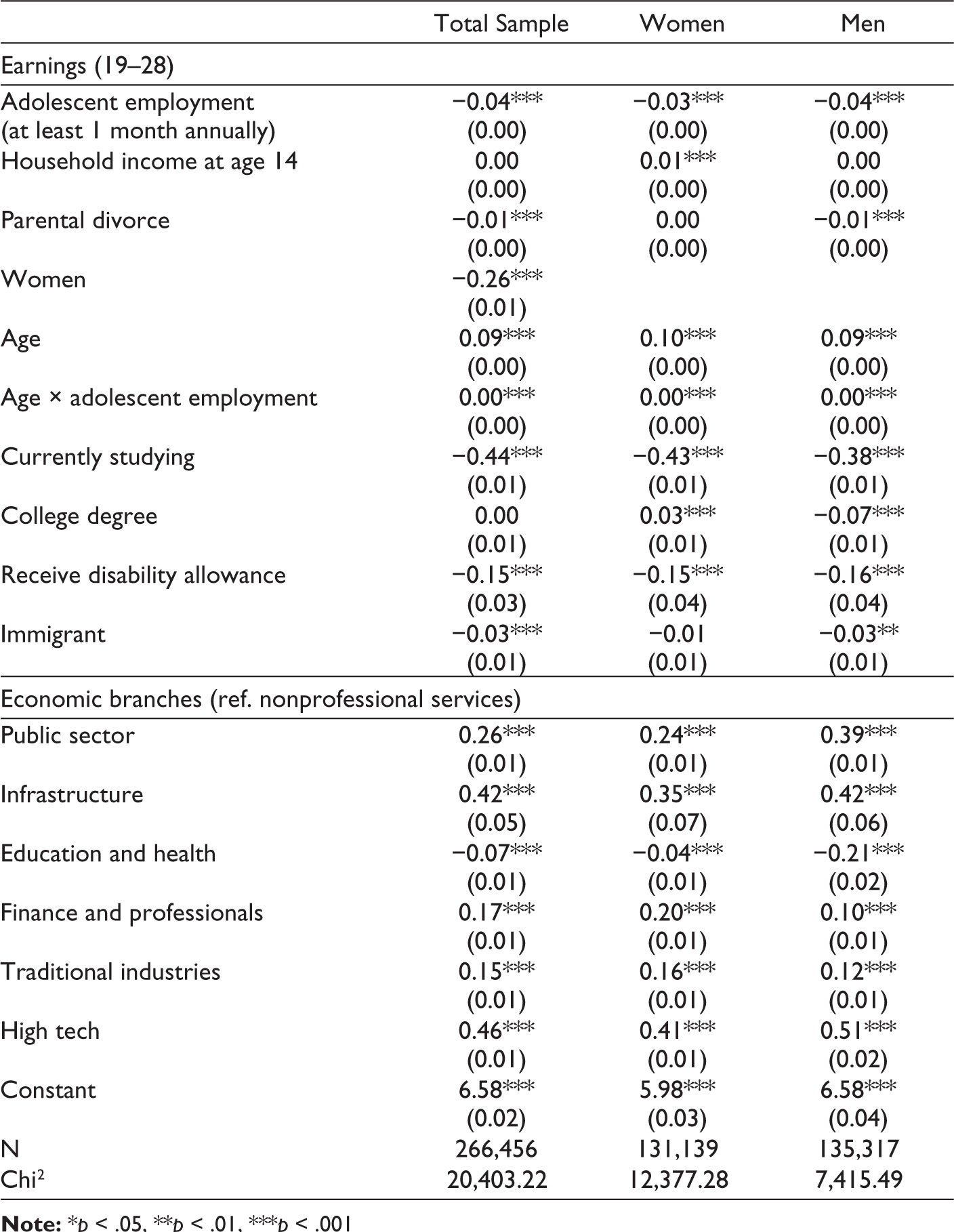
Our main independent variable, employment during adolescence, was measured by the number of years the individual worked for pay at ages 15–17 (range = 0–3). We chose this indicator as it reflects the level of work intensity, beyond employment itself (which was about 10% of the sample). Employment was counted only if the adolescent worked more than three months in the calendar year, so as to avoid including summer jobs, which are popular in Israel. In a sensitivity analysis, we included a variable that accounts for all adolescents who worked at least one month a year. Results were much the same (see Appendix A).
Two additional independent variables provided background information during adolescence. Parental SES was measured as the annual log net household income at age 14. Parental divorce during adolescence was measured by the number of years of divorce between ages 12 and 18, owing to the negative effect of parental divorce on attaining a higher education (Bernardi & Boertien, 2016). Unfortunately, we lack information on parental divorce prior to age 12.
In addition, we included time-varying variables related to young adulthood (19–28): age; currently in higher education 2 (1 = yes, 0 = no); completed a college degree (1 = yes, 0 = no); family status (married = 1, single = 0); number of children; receives disability allowance (1 = yes, 0 = no) (as an indicator of health status) and a set of dummy variables denoting economic branches or industries for those employed: public sector; infrastructure; education and health; finance and professionals; traditional industries (construction, agriculture and low tech); high tech and nonprofessional services, such as sales and cleaning services, which served as the reference category. We also included an interaction between age and number of years of employment during adolescence to measure whether the effect of employment on earnings decreases with age.
Last, we included a set of dummy variables indicating whether the individual was part of a minority group in Israel (based on Swirski et al., 2021): Israeli Palestinians (=1) vs Israeli Jews (=0); ultra-Orthodox Jews (=1) vs others (=0); and immigrants (=1) vs non-immigrants (=0), where the former were born abroad, mainly in the former USSR, and the latter were native-born. Since there are fewer employment opportunities in the geographical periphery (southern or northern regions), we also included a variable of residing in the periphery at age 17 (1 = yes, 0 = no).
Analytical Strategy
To estimate employment probability and earning level in young adulthood, we applied Heckman’s (1976) selection model. We chose this model because it addresses possible selectivity into employment of young adults. Labour market participation in our case is affected not only by well-known gender differences but also by the fact that higher education is usually acquired in young adulthood, affecting labour force participation.
Our approach allowed us to model the dependent variable of the likelihood of being employed (‘selection equation’) in the first step and the young adult’s earnings regression (‘response equation’) in the second step. The model corrects for self-selection into employment by incorporating a transformation of these predicted individual probabilities as an additional explanatory variable. Following Mysíková (2012), we included household characteristics (number of children and family status) only in the first step (explaining employment, the ‘selection equation’). That is, they are the variables that affect participation in the labour market without affecting wages for those employed. As in Israel most married women are mothers, there is a low motherhood penalty; that is, motherhood affects labour market participation but not earnings (Budig et al., 2016; Mandel & Birgier, 2016). In the first step only, we also included two populations whose employment rates are relatively low: Israeli Palestinians and ultra-Orthodox Jews.
Owing to its centrality to our research questions, we included employment in adolescence as an explanatory variable in both parts of the regression model. We did the same with the variables of gender, age, currently in higher education, receives disability allowance and resides in the periphery. In the earnings regression (‘response equation’) we added the variables of industry, college degree 3 and interaction between age and number of years of employment during adolescence, as well as the variables of family income and parental divorce during adolescence.
Heckman’s regression for panel data treats each observation as an individual. To take into account the correlation between observations over the years, we implemented the option of clustering per person (UCLA, 2022). We ran the model for the total sample and for men and women separately.
Results
Descriptive Statistics
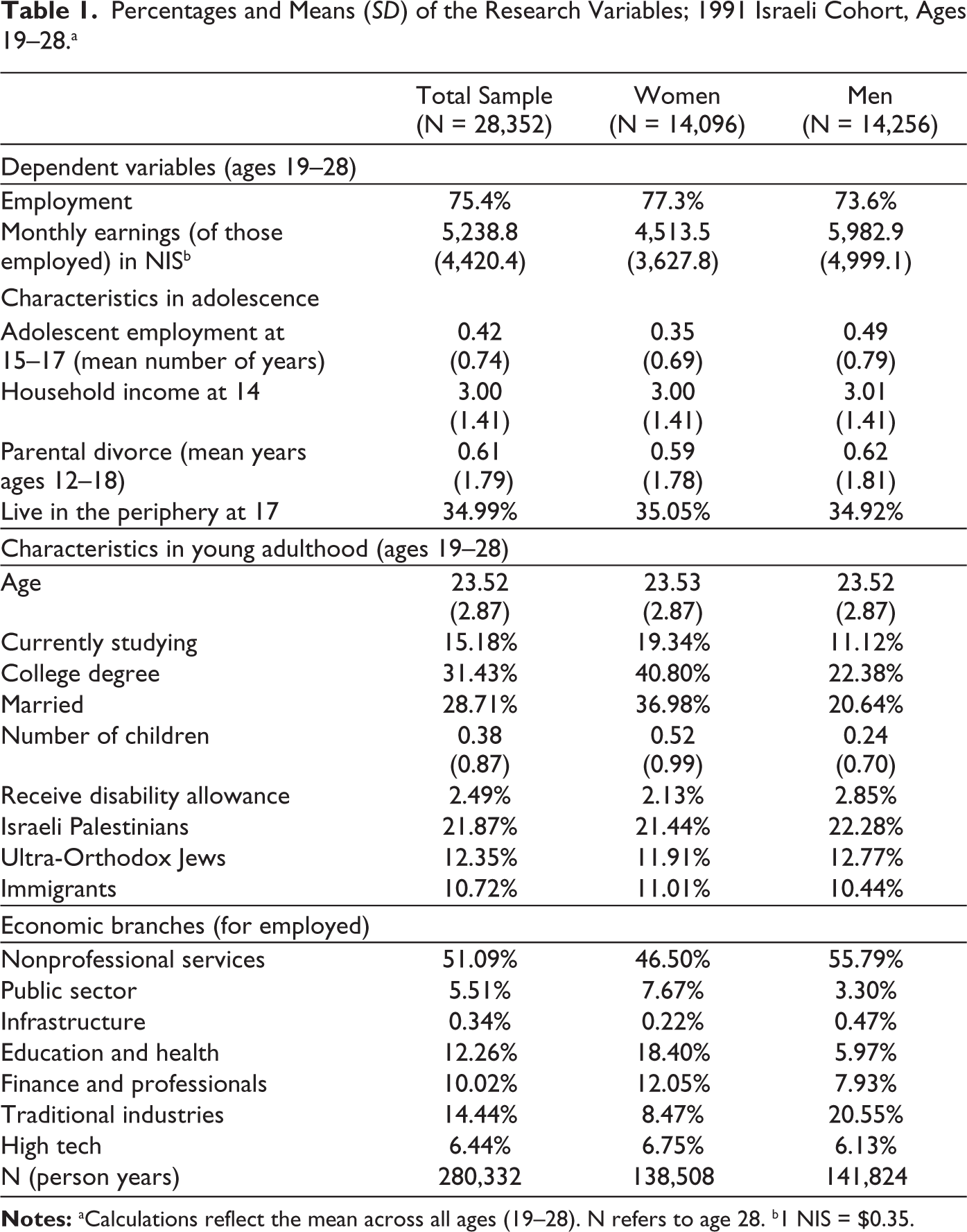
Table 1 presents descriptive statistics for the research variables in the total sample and by gender. While the employment rate of young adult women was slightly higher than that of men (about 77% and 74%, respectively), men had higher average monthly earnings. Men also had worked more years during adolescence. Despite the same average age (23.5) for both genders, there was a gender difference in higher education: a larger percentage of women were currently studying and a larger percentage had completed a degree. As Israeli women usually start college studies one and a half years earlier than Israeli men (ICBS, 2017), part of this gender gap probably decreased as this cohort became older. Gender differences were also found regarding family life: a higher percentage of women were married in young adulthood and women had, on average, more children than men. Regarding economic branches, the most salient gender difference is that higher percentages among women were employed in education and health industries, while a greater proportion of men worked in traditional industries (construction, agriculture, low tech).
Percentages and Means (SD) of the Research Variables; 1991 Israeli Cohort, Ages 19–28.a
We next considered the interplay between adolescent employment and gender, on the one hand, and employment and earnings at ages 19–28, on the other. Figure 1 presents the percentage of employment at each age by gender and adolescent employment. As can be seen, employment rates at age 19 were lower than at later ages due to mandatory army service in Israel. Among women, these rates started to increase at age 20 while among men the rise began at ages 21–22. These gender differences can be attributed to the fact that men serve in the military one year longer than women. Beyond that, the figure shows that, across all ages and in both gender groups, employment rates among those who worked at ages 15–17 were higher than among those who did not work at that time. These differences by employment history in adolescence seem, at least in this descriptive data, to be more important than gender differences. At ages 24–28 there were no longer gender differences or differences by adolescent employment.
Employment in Young Adulthood (%) by Adolescent Employment and Gender, 1991 Israeli Cohort, Ages 19–28.
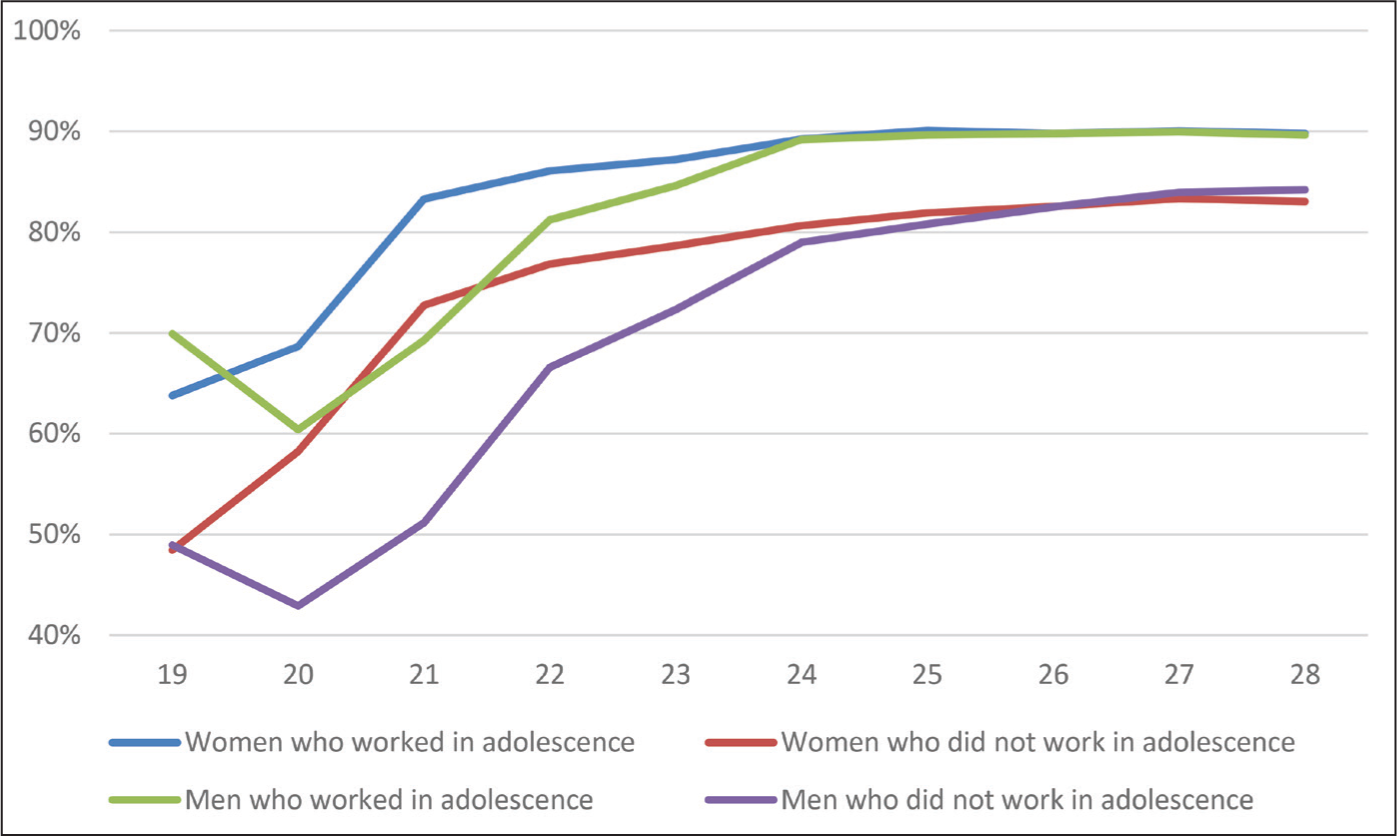
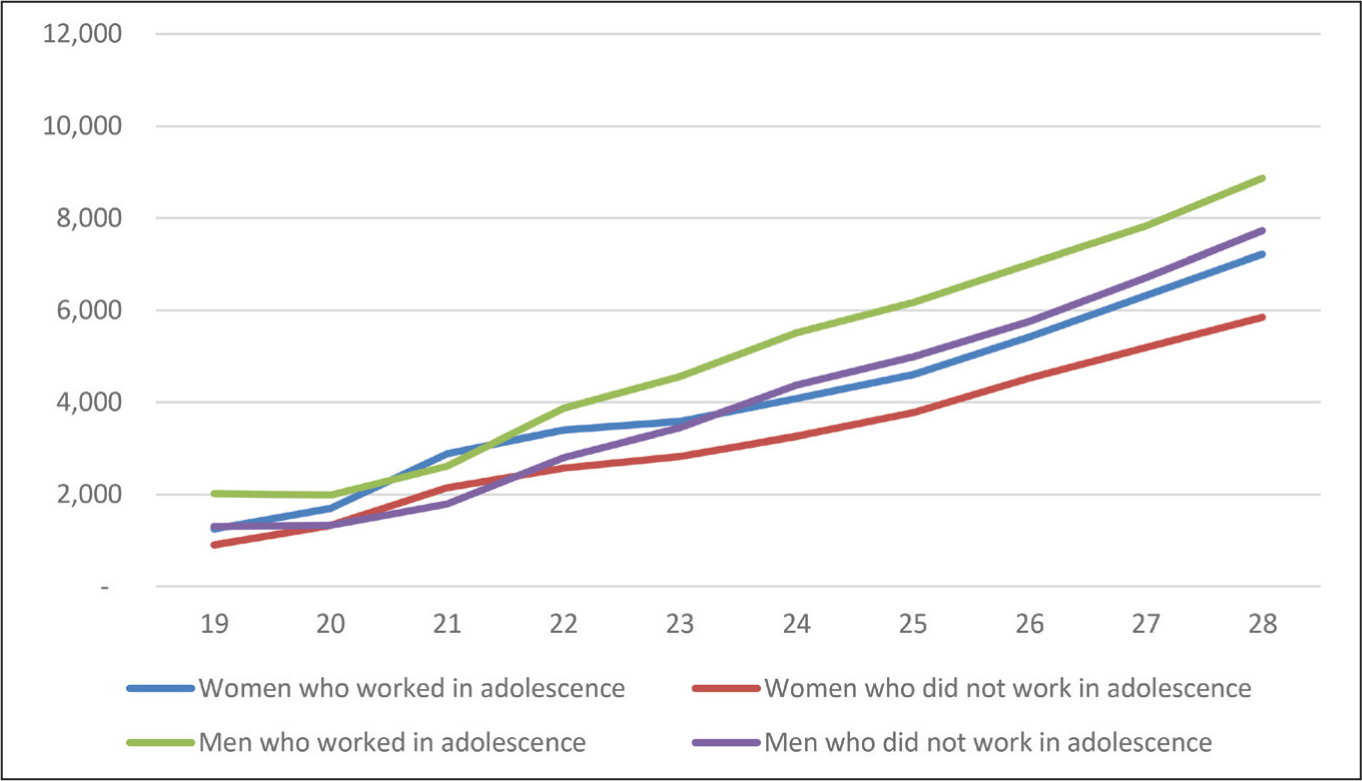
Figure 2 focuses only on those employed at ages 19–28 and presents their monthly earnings by gender and adolescent employment. First, earnings clearly increased with age, regardless of gender or employment history. Second, unrelated to adolescent employment, a gender wage gap appears (despite equivalent employment rates) throughout young adulthood, increasing as the cohort gets older. Third, in both gender groups, those who were employed during adolescence had higher earnings than those who did not work at ages 15–17. In the next step we examine whether these earning patterns hold in a multivariate analysis that controls for selection into employment and several important characteristics, such as educational level, economic branch and family life in young adulthood.
Monthly Earnings (NIS) by Adolescent Employment and Gender, 1991 Israeli Cohort, Ages 19–28.
Multivariate Analysis
Table 2 presents the results of a Heckman model analysis of the likelihood of employment and level of earnings among the total sample of young adults (Model 1), as well as for women and men separately (Models 2 and 3). First, to check for the selection effect, meaning that the estimates without correction (in an OLS model) are biased, we looked at the likelihood-ratio test reported at the bottom of Table 2 (equivalent test for ρ = 0), which shows that χ2 is statistically significant and therefore justifies the selection equation with our data. 4 This led us to the conclusion that the Heckman model works better and gives unbiased results compared to a model that does not account for selection.
Heckman Analysis of the Likelihood of Employment and Level of Earnings Among Young Adults (19–28).
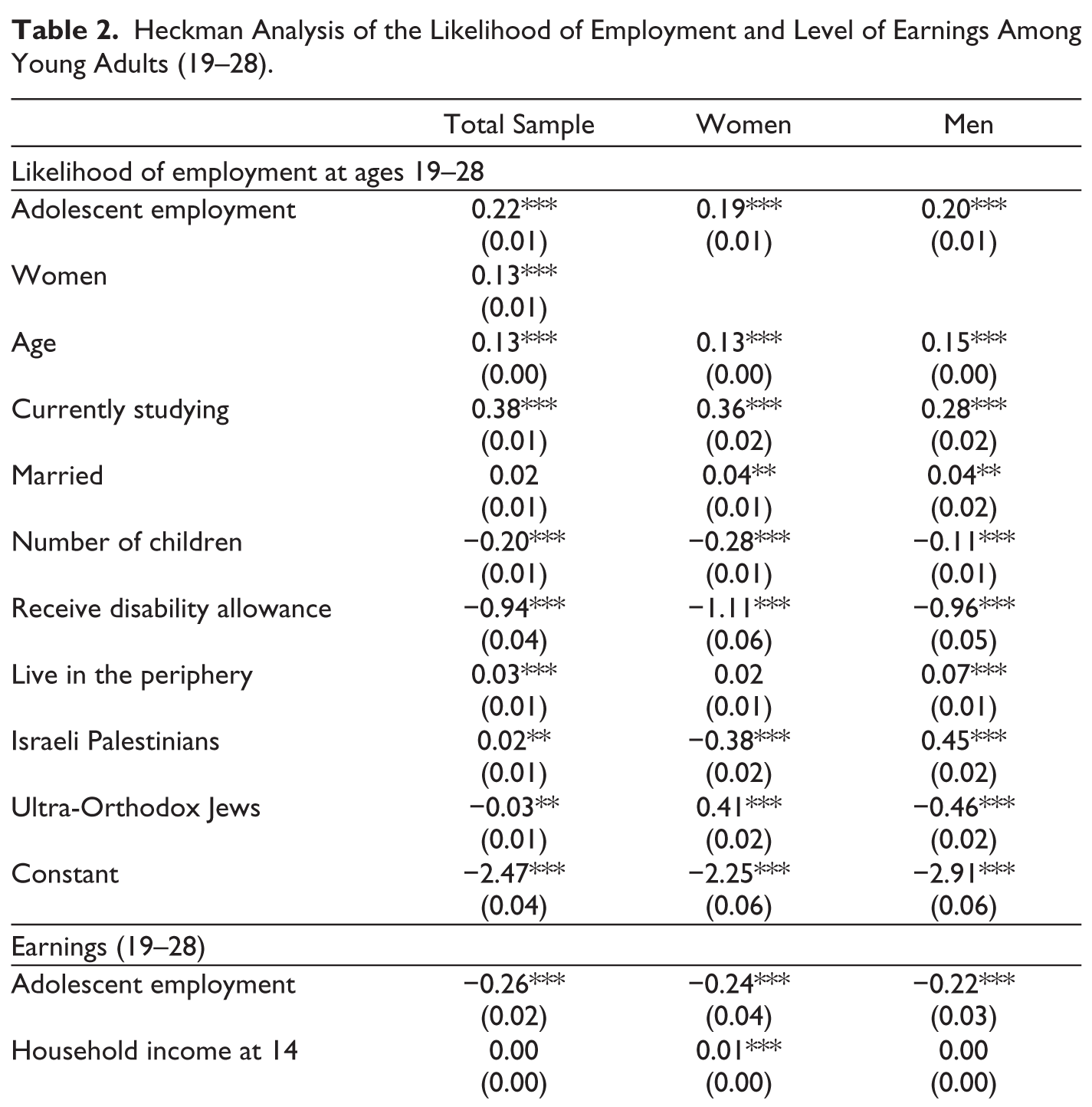
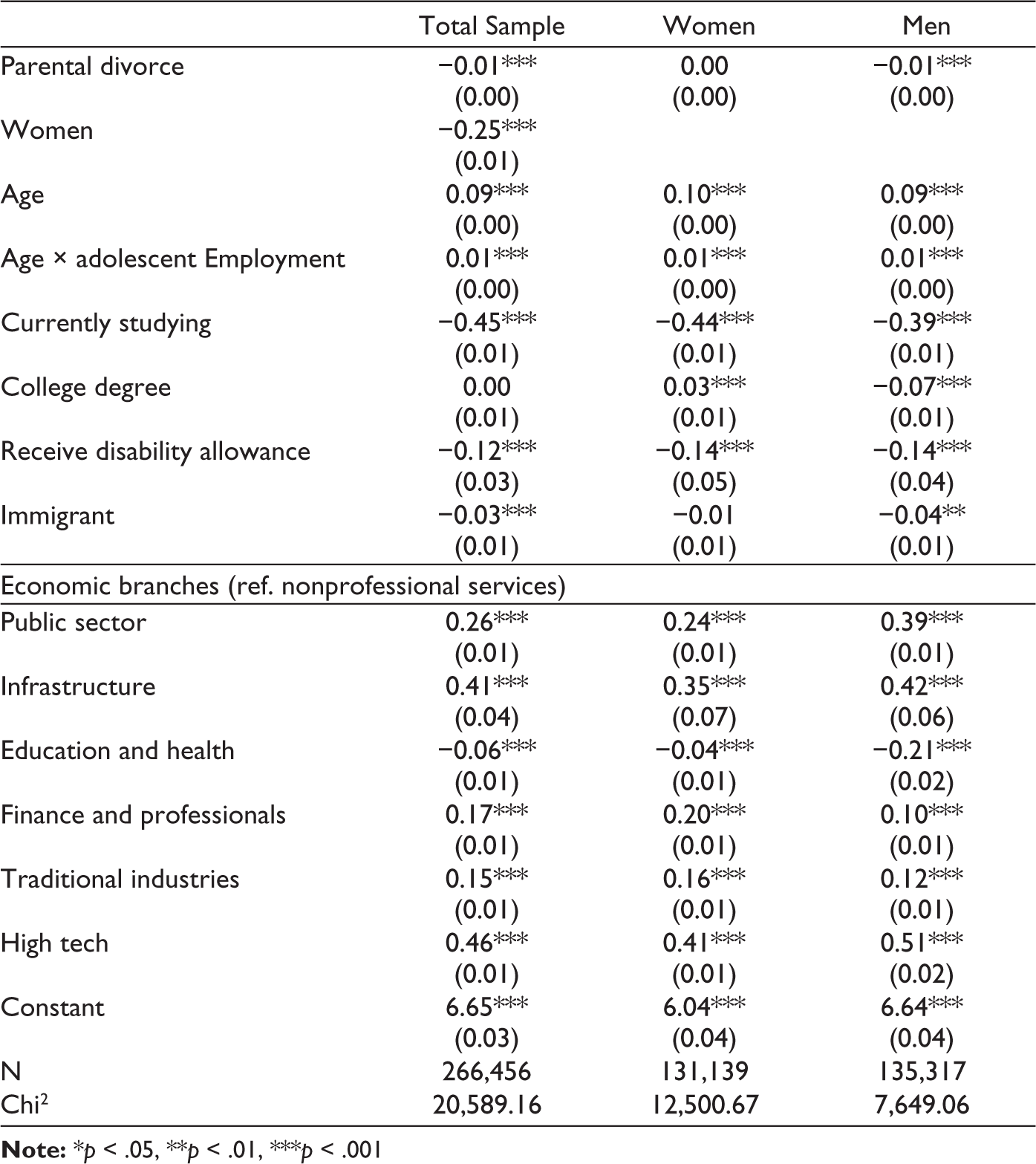
Second, turning to the coefficients yielded in the models, in the first step we modelled the dependent variable of the likelihood of being employed at ages 19–28. In the total sample, as well as among both women and men, the greater the number of years employed between the ages of 15 and 17, the greater the likelihood to be employed in young adulthood (0.22, 0.19 and 0.20, respectively). Currently studying increased the likelihood of employment at ages 19–28 among women and men alike, and, as can be expected, the number of children decreased the likelihood among women (−0.28) and to a lesser extent among men (−0.11). Receiving a disability allowance lowered chances of being employed, also as expected. Regarding disadvantaged groups, interesting gendered patterns are found. Generally, women had a higher likelihood of being employed than men. Beyond that, being an Israeli-Palestinian man increased the chances of employment compared to Israeli-Jewish men (0.45), whereas the effect was negative for Israeli-Palestinian women (−0.39). Opposite gendered effects are found for the ultra-Orthodox: being an ultra-Orthodox woman increased the likelihood of employment (0.41); being an ultra-Orthodox man decreased it (−0.46). Living in the periphery also increased the likelihood to be employed.
In the second step of the analysis, the dependent variable was the young adults’ log earnings (among those employed), taking selectivity into employment into account. The effect of employment during adolescence on earnings in young adulthood was opposite to its effect on the likelihood of working in young adulthood. That is, the number of years employed at ages 15–17 significantly decreased earnings at ages 19–28. This pattern is found among women and men alike (as well as for the total sample). The interaction between age and adolescent employment is statistically significant and positive among both genders and the whole sample. That is, while an increase in age raises earnings, as could be expected, the negative effect of adolescent employment on earnings in young adulthood tends to diminish with age. Household income at age 14 increased earnings only among women, while the number of years of parental divorce since age 12 decreased it only for men (and the total sample).
Regarding gender, although women were more likely to be employed, they earned less than men (−0.25). Moreover, while a college degree increased earnings of women, it slightly decreased earnings of men. This might be because young men who did not acquire a higher education accumulated more years in the labour market than those who did study (Cohen et al., 2023). As men in Israel start their college education late due to their longer army service, they receive returns on higher education at an older age. In addition, Israeli women tend to start and complete studies earlier than Israeli men, giving the women an early start to receive returns on education. However, gender similarities in relation to earnings are found for the variable of currently studying, as it decreased earnings among women and men alike. Gender similarities are also found for the relation between economic branch and earnings: while working in the public sector, infrastructure, finance and professional industries, traditional industries or high tech increases earnings compared to nonprofessional services, working in the education and health industry decreases them. Thus, for young adults born in 1991, the lowest earnings of the education and health industries prevail.
Discussion
Situated in the literature on employment of adolescents and young adults, the current study examined the effect of adolescent employment on labour market outcomes in young adulthood among millennials in Israel. Existing research offers two main directions of effects. The first suggests that adolescent employment has a positive effect on employment later in life. This is because it helps adolescents to acquire skills needed in the labour market and hence increases human capital (Houshmand et al., 2014), signalling employers of the potential productivity of the individual (Dudyrev et al., 2020), especially for youth who are not planning to attend college (Ling & O’Brien, 2013). The second direction argues that working during adolescence has a negative effect on employment later in life mainly because it may decrease attachment to educational activities (Dudyrev et al., 2020). Here, we offer a unique perspective that perceives adolescent employment as having complex implications that depend on the specific labour market resource examined: participation and earnings level. Moreover, while previous studies on the subject pertain to the United States and the European societies, our study focuses on the Israeli context, which is characterized by late entry into higher education and early entry into marriage and parenthood.
Overall, the study findings confirm our hypothesis. First, the descriptive results indicate that, across all ages of young adulthood (19–28) and in both gender groups, the employment rates of those who worked at ages 15–17 are higher than for those who did not work as teens. The multivariate analysis strongly supports this pattern. Second, the descriptive findings reveal that both men and women who had been employed during adolescence had higher earnings in young adulthood than those who did not work at ages 15–17. However, when controlling for, among other things, enrolment in higher education, college degree, economic branch of employment, marital and parental status as well as the selection into employment, we found that employment at ages 15–17 decreased earnings at ages 19–28. Taken together, while employment during adolescence increases the likelihood of working in young adulthood, once employed, it decreases earnings for both young women and young men. This could be explained by the fact that those who worked at ages 15–17 were less likely to complete higher education, especially if they worked intensively during adolescence (Kaplan et al., 2023).
As such, contrary to the argument pointing to negative implications of adolescent employment (Dudyrev et al., 2020), employment during adolescence seems to increase acquisition of those skills needed in the labour market and hence employability, as suggested by human capital theory (Houshmand et al., 2014). This work experience helps young adults enter the labour market and avoid unemployment and associated risks; hence, it has an inclusion effect. Nonetheless, and contrary to human capital theory, work during high school did not result in higher wages later in life. This supports the argument that spending time in employment during adolescence may also have an exclusion effect, as suggested by zero-sum theory (Warren, 2002). In other words, the time invested in working at ages 15–17 might take up resources that would otherwise be spent on educational activity.
It thus seems that experiences during adolescence can lead to diverse and complex consequences in young adulthood (Manzoni, 2018; Mortimer et al., 2003; Shavit & Muller, 2000). Specifically, employment during adolescence in Israel can have both inclusion and exclusion effects on labour market resources as young adults. This might be related to the Israeli context, which compresses life course events, such as marriage, parenthood, higher education and first steps into the labour market, into a relatively short period of time (during their young adulthood). Notwithstanding this unique context, Israeli millennials have characteristics in common with millennials in other OECD countries, especially regarding post-secondary education and employment rates in young adulthood. Hence, as our findings can also be relevant to other contexts, future studies should examine the inclusion and exclusion effects of adolescent employment in other contexts.
The study is not without limitations. First, our administrative dataset lacks information on the number of work hours in adolescence and young adulthood. Second, it lacks information on whether each individual received a matriculation certificate at the end of high school.
In sum, we found that employment during the teen years is significantly related to young adulthood in terms of both the likelihood to be employed and earnings. This is beyond socioeconomic, familial and social characteristics, which are usually used to explain employment and earnings. Thus, this article points to the importance of including adolescent employment when studying the labour market resources of young adults and, indeed, perhaps also in later stages of life – which would be interesting to examine in future research.
Footnotes
Acknowledgements
This article benefited from the support of the Israel Science Foundation (Grant number: 2334/19). We thank YOUNG editors and reviewers for their enlightening comments and suggestions. We also thank Helene Hogri, our editor, for her important contribution.
Declaration of Conflicting Interests
The authors declared no potential conflicts of interest with respect to the research, authorship and/or publication of this article.
Funding
This work was supported by the Israel Science Foundation (Grant number: 2334/19].
Appendix
Heckman Analysis of the Likelihood of Employment and Level of Earnings Among Young Adults (19–28), Using Adolescent Employment of at Least One Month Annually.
| Total Sample | Women | Men | |
| Likelihood of employment at ages 19–28 | |||
| Adolescent employment (at least 1 month annually) | 0.14*** (0.00) |
0.11*** (0.00) |
0.12*** (0.00) |
| Women | 0.15*** (0.01) |
||
| Age | 0.13*** (0.00) |
0.13*** (0.00) |
0.15*** (0.00) |
| Currently studying | 0.38*** (0.01) |
0.36*** (0.02) |
0.27*** (0.02) |
| Married | 0.02** (0.01) |
0.04** (0.01) |
0.04** (0.02) |
| Number of children | −0.20*** (0.01) |
−0.27*** (0.01) |
−0.11*** (0.01) |
| Receive disability allowance | −0.89*** (0.04) |
−1.07*** (0.05) |
−0.91*** (0.05) |
| Live in the periphery | 0.04*** (0.01) |
0.03** (0.01) |
0.08*** (0.01) |
| Israeli Palestinians | 0.09*** (0.01) |
−0.30*** (0.02) |
0.49*** (0.02) |
| Ultra-Orthodox Jews | 0.05*** (0.01) |
0.47*** (0.02) |
−0.39*** (0.02) |
| Constant | −2.64*** (0.04) |
−2.37*** (0.06) |
−3.02*** (0.06) |
| Earnings (19–28) | |||
| Adolescent employment (at least 1 month annually) | −0.04*** (0.00) |
−0.03*** (0.00) |
−0.04*** (0.00) |
| Household income at age 14 | 0.00 (0.00) |
0.01*** (0.00) |
0.00 (0.00) |
| Parental divorce | −0.01*** (0.00) |
0.00 (0.00) |
−0.01*** (0.00) |
| Women | −0.26*** (0.01) |
||
| Age | 0.09*** (0.00) |
0.10*** (0.00) |
0.09*** (0.00) |
| Age × adolescent employment | 0.00*** (0.00) |
0.00*** (0.00) |
0.00*** (0.00) |
| Currently studying | −0.44*** (0.01) |
−0.43*** (0.01) |
−0.38*** (0.01) |
| College degree | 0.00 (0.01) |
0.03*** (0.01) |
−0.07*** (0.01) |
| Receive disability allowance | −0.15*** (0.03) |
−0.15*** (0.04) |
−0.16*** (0.04) |
| Immigrant | −0.03*** (0.01) |
−0.01 (0.01) |
−0.03** (0.01) |
| Economic branches (ref. nonprofessional services) | |||
| Public sector | 0.26*** (0.01) |
0.24*** (0.01) |
0.39*** (0.01) |
| Infrastructure | 0.42*** (0.05) |
0.35*** (0.07) |
0.42*** (0.06) |
| Education and health | −0.07*** (0.01) |
−0.04*** (0.01) |
−0.21*** (0.02) |
| Finance and professionals | 0.17*** (0.01) |
0.20*** (0.01) |
0.10*** (0.01) |
| Traditional industries | 0.15*** (0.01) |
0.16*** (0.01) |
0.12*** (0.01) |
| High tech | 0.46*** (0.01) |
0.41*** (0.01) |
0.51*** (0.02) |
| Constant | 6.58*** (0.02) |
5.98*** (0.03) |
6.58*** (0.04) |
| N | 266,456 | 131,139 | 135,317 |
| Chi2 | 20,403.22 | 12,377.28 | 7,415.49 |