




Abstract
Physical and aesthetic factors are the basic elements in fabric design. Physical factors include structural elements, such as raw materials, yarn, and fabric properties, while aesthetic factors involve color, shape, and texture. Since physical and aesthetic factors influence each other and the final product, fabric design should take an integrated approach. The aim of this study is to explain mathematical design theory from both aesthetic and physical design perspectives to reveal the interrelationships of aesthetic and physical factors. The process began with a definition of the fabric’s intended use and theme. This was followed by motif development, surface design, and the creation and sizing of design units. The fabric’s mass per unit area was also defined, based on its intended application. The design problem was then solved mathematically, incorporating aesthetic and physical factors while considering constraints and assumptions. Three different motifs and eight surface compositions were developed. Designs were calculated for 44 fabrics, each with two weave types and two setting options. These calculations were revised according to production possibilities, and the 44 fabrics were produced based on relevant production parameters. Finally, the aesthetic and physical properties of the woven fabrics were analyzed. These calculations are valuable for designers and engineers to examine the relationship between aesthetic and structural factors before production.
Woven fabrics formed by the intersection of two yarns, warp and weft, are important in various industrial areas, such as fashion, furnishings, and the automotive industry. As with many industrial products, fabrics are produced through a design process to meet technical and aesthetic expectations. Friedman et al. 1 linked the effort to make an object more comfortable, helpful, efficient, safe, and economical to the functional aspect of design. Conversely, efforts to satisfy the visual perception of a fabric or sensory experiences are related to the visual or aesthetic content of the design. 1
Fabrics are expected to provide different performance characteristics, such as mechanical, sensory, permeability, conductivity, and aesthetic properties, depending on their intended use. The priority for fabrics used in technical applications is to deliver the expected performance characteristics. Conversely, for fabrics designed for apparel and home textiles, the aesthetic properties that satisfy the visual function are just as important as the performance properties. Therefore, the fabric design process should include physical and aesthetic design studies for the intended product.
Matsuo and Suresh 2 indicated that the textile product design has three stages: (a) aesthetic effect or functional design; (b) basic structural design; and (c) basic manufacturing design. The role of an industrial designer is to create an optimal product for mass production of aesthetics, performance characteristics, and price performance. Studd 3 discussed a case study of textile design as a road map for designers, with the aim of proposing a model for the textile design process. Designers of woven fabrics must combine creative flair and technological know-how to develop fabrics that are in demand and perform well in a given market and end use. 4 Designers and manufacturing technologists should communicate and coordinate extensively to finalize the design process and reach compromise solutions. 5
The decisions made at each stage of textile production, from the fiber properties to the final product, directly influence the physical and aesthetic properties of the product. Başer 6 emphasized that the design process should be approached with an integrated perspective. For example, Acar 7 stated that yarns not only affect the fabric’s utility functions, such as the handling and strength, but also the visual functions, such as the texture, motif, and pattern. The designer should consider color and form elements and structural components together. Various researchers have also emphasized that designers must have creative design skills and extensive knowledge of the technical aspects of fabric.3,8 Accordingly, the designer must be able to synthesize sub-items, such as function, production technology, production restrictions (machine characteristics, raw material, etc.), and target audience, in addition to structural and aesthetic elements. Designers and manufacturing technologists should also communicate and coordinate extensively to finalize the design process and reach compromise solutions. 5 Thus, textile products with creative and competitive advantages can be designed.
In visual design, design elements and principles are based on universal rules, and they are accepted as a set of principles that provide designers with references to design. 9 Design elements are generally defined as line, mass, color, point, shape, and texture. Designers create a design by applying such design principles as harmony, balance, rhythm, repetition, symmetry, opposition, and unity.10,11 In woven fabric design, the basic components that influence the fabric design can be thought of as the structures that form the core of the design. In contrast, the basic design elements and principles can be thought of as the “cytoplasm”, as it were, that surrounds and communicates with these core structures.
The effects of physical and aesthetic properties on woven fabric design have been investigated in various studies.12–16 Başer 6 pointed out that structure, color, shape, and texture are the basic components influencing fabric design. The structure is related to all fiber, yarn, and fabric properties, such as fiber type, yarn production technology, yarn count, twist, weave type, and setting. Conversely, color, shape, and texture elements are classified as aesthetic elements. Acar 9 detailed these elements as raw material, technique, weave type, density–distortion–tension differences that are dependent on the yarn position in woven structures, yarn, color, printing, and finishing processes that affect the fabric structure. Color and texture are, commonly, basic components and basic design elements and principles that affect fabric design, as they are essential features that characterize fabrics. Mainly, owing to its relationship with weaving, “texture” was considered a necessary element at the Bauhaus (1919–1933), one of the leading schools in modern fabric design education. 17 As a basic design element, texture is related to the structure, 6 weaving construction, and technique, 9 which are the fundamental components that affect the fabric design. Finishing operations also affect the physical and textural properties of fabrics. Therefore, all these components should be combined in the most appropriate way to form a fabric for a specific use. Albers 18 stated that color is directly related to aesthetic design and reveals features primarily related to visual perception. However, it is evident that the textural properties also influence the color appearance and perception of fabric. For example, long floatings provide a smooth surface and lighter perception, while higher settings provide a darker perception. Mathur and Seyam 8 investigated the effect of weave type on color using a generalized model based on the cover factor of the fabric. They noted that weave type and settings have a significant effect on the color.
Limited studies have been conducted on fabric aesthetics and structural design. In aesthetic design studies, the importance of computer-aided design was also emphasized.2,4,5,8,19 Now, ScotWeave, Penelope, Pointcarré, and NetGraphics are some of the popular design programs for weave designers. These programs help designers determine two- and three-dimensional visual effects of fabrics and prepare production orders.
Studies have generally been focused on the structural and physical design of fabrics. For instance, the structural design of various cotton and worsted fabrics 20 and various polyester and nylon fabrics 21 was investigated using yarn count, weave type, and settings as input parameters. The results were analyzed in terms of the weave density coefficient, cover factor, and yarn density coefficient. Conversely, many studies have been conducted to investigate the relationship between structural design and performance properties, to suggest better fabric design.
In woven fabric production, it is beneficial to approach design activities not merely as aesthetic studies but as a comprehensive product and process design that meets both the aesthetic and physical expectations of the fabric. In the industry, numerous trials are conducted before the production process begins. By accurately defining objectives and constraints and making decisions accordingly, the entire process can be optimized, resulting in reduced time and costs for production. The aim of this study is to contribute to the process of woven fabric design by enabling designers and engineers to achieve rational results through mathematical analysis while considering both aesthetic and physical perspectives. Both approaches may lead the designer to different solutions. At this stage, considering the internal constraints of the business, designers and engineers must make revisions if necessary to find the most accurate solution for production. In this study, all design and process stages were analyzed for the aesthetic and physical design of a product, developed based on a specific theme, and a roadmap for the industry was created. The research is an investigation of the effects of structural components, such as weave type and settings, as well as aesthetic elements, such as color, texture, motif, and composition. Mathematical calculations for both aesthetic and physical design approaches were conducted from an integrated perspective. Additionally, the design changes made, based on the assumptions and constraints from the design phase to production, were presented step by step. Ultimately, in the study, the effects of all these factors on the aesthetic and physical properties of the fabric are discussed.
Mathematical theory of woven fabric
The aim in textile design is to create a product that is suitable for its use and that meets the expected product characteristics in terms of performance and aesthetics. When designing a product for a specific field, the expected characteristics of the product should be determined, and then the structural factors that affect these characteristics should be identified. Many possible solutions may emerge once all the factors necessary in creating the specific product have been identified. It is crucial to find the most appropriate solution among the possibilities. Therefore, the design process can be considered a mathematical problem that must be solved step by step. First, the objective function, which represents the goal of the specific product, should be determined. At the same time, the target or limit values of the objective function must be defined. Then, the dependent and independent variables that affect this objective function should be identified. The relationships between the dependent and independent variables should be established, and the limits of the independent parameters and the constants should be determined. If there are any restrictions, they should also be defined. Figure 1 shows the factors that form the fabric design.
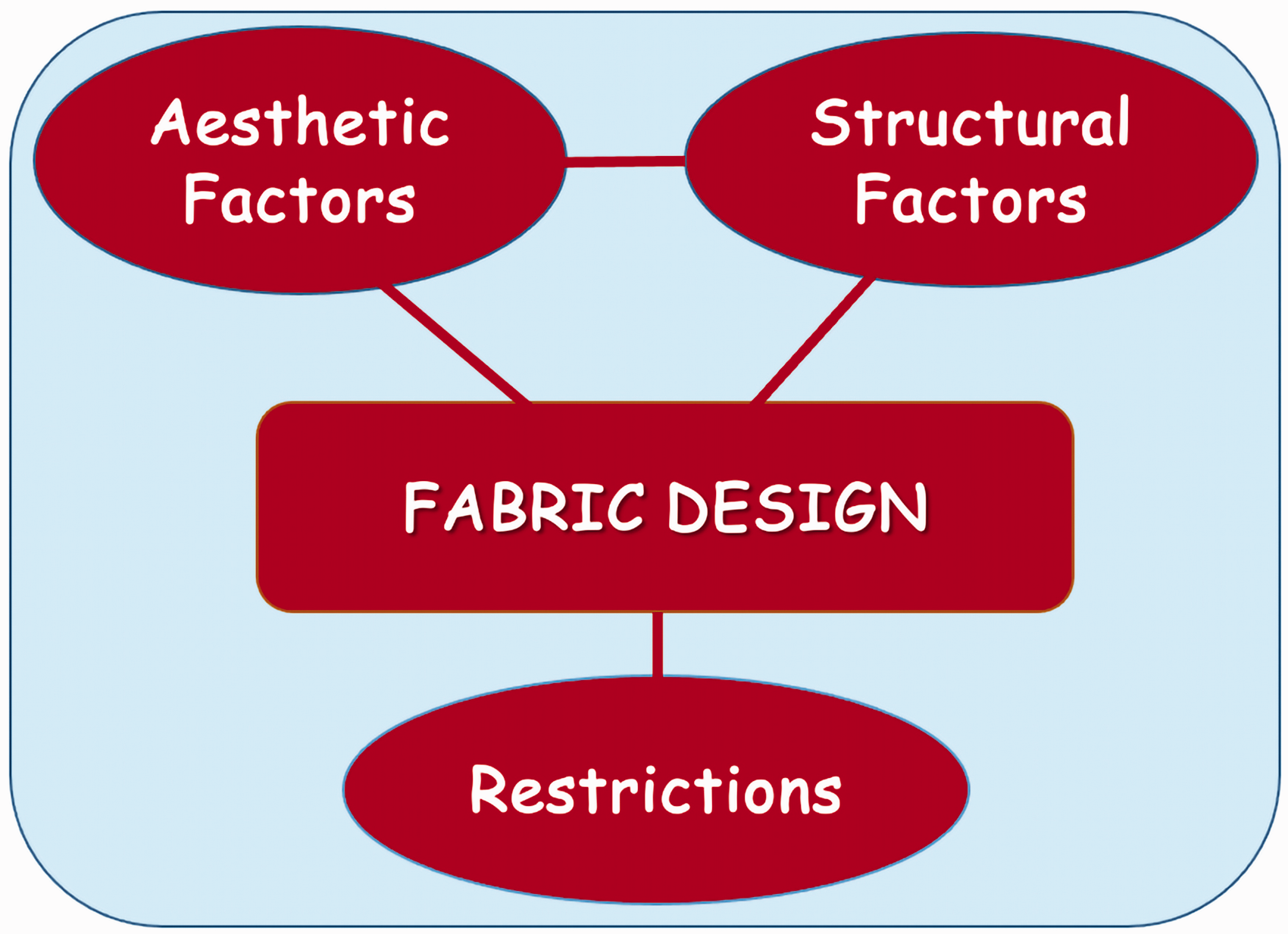
Factors affecting fabric design.
Fabric design can have many different objectives. For example, achieving specific aesthetic properties, a particular mass per unit area, a certain tensile strength, and a particular production cost may be objective functions in fabric design. The mathematical analysis of the fabric design for a particular use is conducted based on one or more objective functions. In this study, the objectives were to achieve the desired aesthetic purpose and to produce a fabric with a specific mass per unit area. The fabric design problem was solved mathematically for both objective functions.
Mathematical solution for aesthetic design approach
The aim of the aesthetic design approach is to provide aesthetic features by creating a developed motif with a similar appearance and targeted dimensions. In the mathematical analysis, the motif and design unit dimensions are used as parameters. In the aesthetic design approach, the warp setting of the figured fabric can be determined, depending on the width of the motif. Then, the yarn count can be calculated using the relationship between the setting and the yarn count, based on Ashenhurst’s setting theory. 22 Finally, the mass per unit area of the fabric can be estimated as a function of the setting and yarn count, according to the dimensions of the motif and design unit. In this way, the production parameters and the product’s final characteristics are objectively determined through an analytical method with aesthetic objectives.
Several techniques are available for creating figured woven fabric. In this study, motifs were formed with extra warp yarns, and the mathematical solutions were improved accordingly. The extra warps form motifs by making long floatings in the motif region. Depending on the aesthetic design, the extra warp-figured fabric’s warp setting (S1) could be calculated as
6

The loom setting of fabric (SL), according to Ashenhurst’s setting theory,
22
is given as


The setting value calculated according to the motif properties (equation (1)) and the setting value calculated according to Ashenhurst’s setting theory
22
(equation (3)) should be equal. Accordingly, using the relationship between equation (1) and equation (2), the yarn count equation is derived as

The mass per unit area of the figured fabric can be estimated from the settings, yarn counts, and motif properties according to the aesthetic design. The mass per unit area (w) of an extra warp-figured fabric is given as

The mass per unit area calculated according to aesthetic design objectives might exceed the limits determined for the fabric’s use. In this case, the design analysis must be changed, and different solutions must be produced.
Mathematical solution for physical design approach
In the physical design approach, the objective is to obtain a fabric with a certain mass per unit area according to its use. The formula for the mass per unit area is given in equation (5). However, in this approach, the yarn count, crimp ratios, and density variables have yet to be discovered. Several assumptions should be made to solve this equation. For example, it can be assumed that there is a ratio between the warp and weft settings. In this case, equation (5) can be solved by determining the ratio between the yarn counts based on the ratio of the settings. Başer
23
suggested a complex mass per unit area equation that involves all dependent and independent parameters. Alternatively, in this study, a simpler solution was derived by assuming a square fabric arrangement. This approach provides an approximate solution for a fabric with identical structural properties in both the warp and weft directions. Accordingly, the settings, the yarn counts, and the crimp ratios were assumed to be equal to each other (S1 = S2; N1 = N2; k1 = k2) in the warp and weft directions. Conversely, the relationship between the yarn count of the extra warp and the ground warp can be taken to depend on a coefficient e, as

There is a relationship between the extra warp setting and the ground warp setting according to the yarn arrangement, as


After obtaining the yarn count, the fabric’s setting is calculated using equation (3), and then the motif width is calculated using equation (1). If the calculated motif width is outside the desired limits, revisions can be made, and calculations can be repeated.
Materials and methods
Material
In this study, decorative woven upholstery fabrics were designed. The expected performance characteristics of the upholstery fabrics were color fastness, wash fastness, friction fastness, and a particular strength. The aim was to design and produce a woven cotton–polyester blended upholstery fabric with a medium mass per unit area. The designed fabrics were produced after the structural parameters were mathematically defined, based on both aesthetic and physical design approaches.
Methods
The design of the decorative upholstery fabric was based on physical and aesthetic design studies. The visual design studies were carried out according to the defined theme. The stylized motifs, design units, and surface compositions were created using Microsoft Excel. Meanwhile, the expected performance characteristics of the decorative woven upholstery fabrics were defined. The limits of the objective functions were defined as a motif width of 1 cm for the aesthetic design approach and a mass per unit area of approximately 350 g/m2 for the physical design approach. The designs were calculated, and all the dependent and independent variables for the fabric were determined. Finally, production calculations were made by selecting the most appropriate analyses.
Visual design studies
In this design, the theme of “reunion” was used as the visual design process theme. Design can be defined as relating and arranging components or elements to create effects. 11 Based on this, the designer, inspired by bridges, translated the concept of “reunion” into a concrete image and produced motif development sketches. The smallest unit of the formal element in a work is defined as a motif. 1 Motifs can be developed using natural shapes with curvilinear effects, geometric shapes, or syntheses of abstract forms. In the visual design studies, various bridges were studied, and the studies focused on the Golden Gate Bridge, one of the largest suspension bridges in the world, located in the USA, in the state of California. At this stage, sketches were produced using the element of color. Color is the most crucial element in the relationship of design to the environment (body or space). The designer must understand color and aesthetics well and be able to use color and patterns effectively. 11 Colors work with hue, saturation, brightness, contrast, and warm–cold values. In addition to the physical existence of colors, they also affect the image in terms of psychological perception. Correctly chosen colors can prevent the fabric from losing its pattern and texture characteristics and the composition from deteriorating. In this design, black, white, and red colors were used. This is because black and white were at the extremes of hue, saturation, brightness, and contrast and clearly emphasize these values. The red color provides the warm–cold balance in the composition, balancing the black motifs on the white ground and ensuring the correct establishment of the motif–ground relationship.
Factors that affect a motif’s clarity are the motif’s size, the clarity of the contour lines, the texture element, the color element, and the motif–ground relationships. The creation of the desired motif is affected by both technological constraints and structural design limitations. Therefore, it was necessary to evaluate all factors as a whole, and the motif should be simplified and stylized according to both structural factors, production technology, and weaving methods. The process of simplifying and schematizing the motifs by retaining their main lines without distorting their shape and character is called stylization. Figure 2 shows stylized motifs.
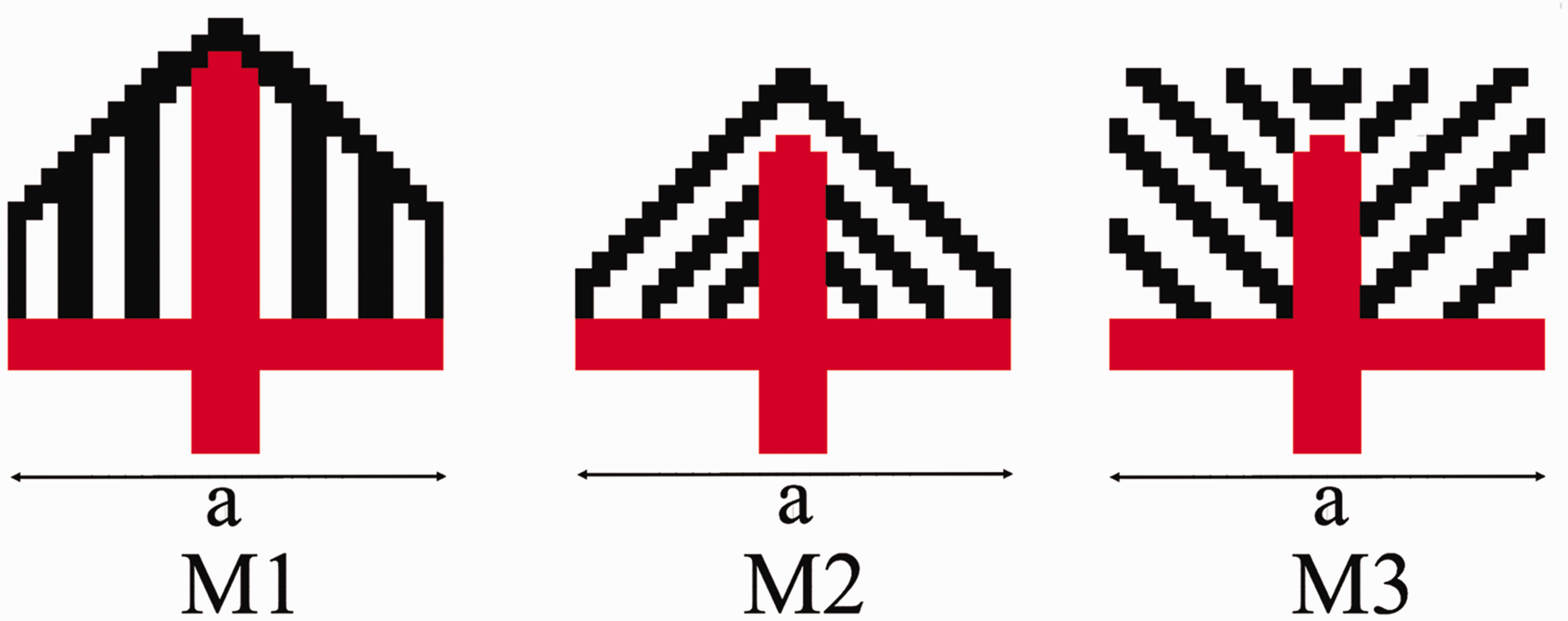
Stylized motifs.
The next step after stylization is the placement and composition of the motifs on a fabric surface. This process is called “surface composition” and is guided by design principles, such as harmony, balance, rhythm, repetition, symmetry, subordination, opposition, and unity. According to the composition, the motifs can be arbitrary, uniform, non-uniform, on the vertical–horizontal bias line, centripetal, or of similar order. After the motif is placed and sized to obtain the desired surface pattern, the design unit, the smallest unit that will form this composition, is obtained. In the visual design process of the study, a collection of different surface compositions was prepared using three created motifs, as shown in Figure 2. Three different motifs (M1, M2, and M3) and eight different design units were produced, to investigate the effect of the shape element. In addition, the effect of different weave types (plain and 2/2 twill) and settings on the fabric’s structural and aesthetic properties was investigated. The aesthetic and structural properties of the collection are summarized in Table 1. Subsequently, the aesthetic and physical results of 44 types of woven fabric were discussed.
Visual design: surface composition, design unit, and weave type
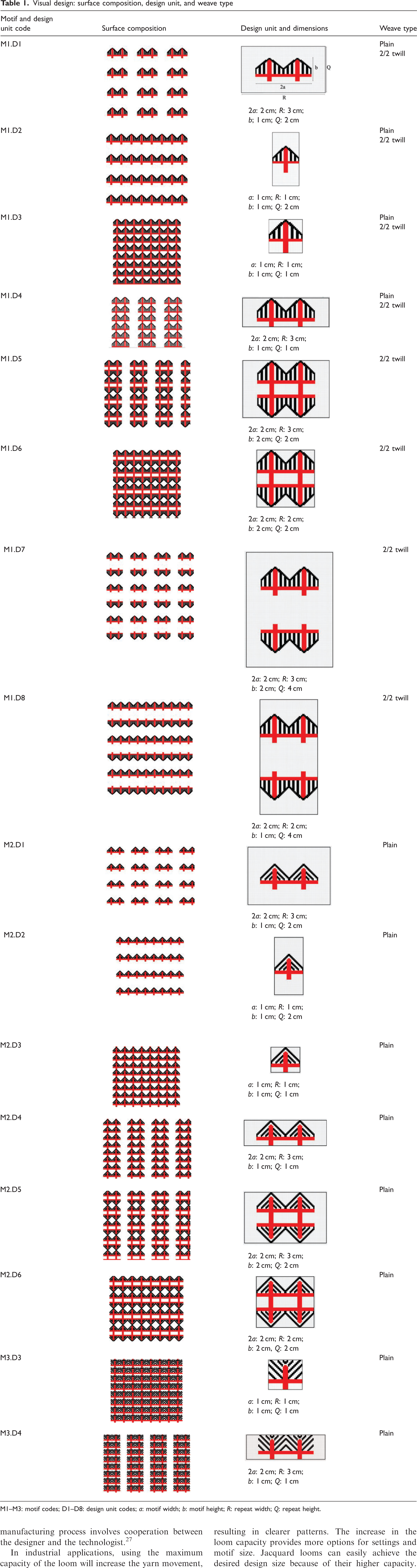
M1–M3: motif codes; D1–D8: design unit codes; a: motif width; b: motif height; R: repeat width; Q: repeat height.
Application of aesthetic and physical design approaches
The designed fabrics’ structural parameters were calculated using aesthetic and physical design approaches, as explained previously. First, the setting, yarn count, and mass per unit area of the fabrics were calculated using the aesthetic design approach. The width of the motif was aimed to be 1 cm. Second, using the physical design approach, the target fabric mass per unit area was aimed to be 350 g/m2, and the yarn count, setting, and motif width were estimated, respectively. There are two different colors of extra warp yarn in the aesthetic design. The improved formula mass per unit area for two extra yarns is given as


In general, the frame capacity of the dobby loom is 24 frames. The number of frames used for black extra yarns in the motif region (A) was planned to be 17 for each design, after defining the required frames for ground weaves and selvages. For all calculations, the yarn coefficient (K) for cotton–polyester blended yarns was assumed to be 8.3 22 and the stiffness factor (V) was assumed to be 100%. An extra and a ground yarn arrangement (1E:1G) was used in the motif region, so the ratio of extra yarn to ground yarn (p) was 1. The linear density of the extra yarn was assumed to be the same as that of the ground yarn (e = 1), and the square fabric arrangement was accepted.
Yarn crimp has practical significance for designers and engineers. This parameter can be used to guess fabric shrinkages and to define material consumption. It is an important parameter for the determination of final fabric settings and mass per unit area. Researchers developed statistical models 24 measuring methods, 25 and theoretical models 26 based on the structural properties and geometric characteristics of different woven fabrics. The warp crimp was generally greater than weft because of higher warp settings. When the studies were examined, it was observed that the warp crimp was in the range of 5–19%, and the weft crimp was in the range of 2–10%. So, in this study, because of the square fabric assumption, the crimp ratio (k) of each yarn was assumed to be 1.1.
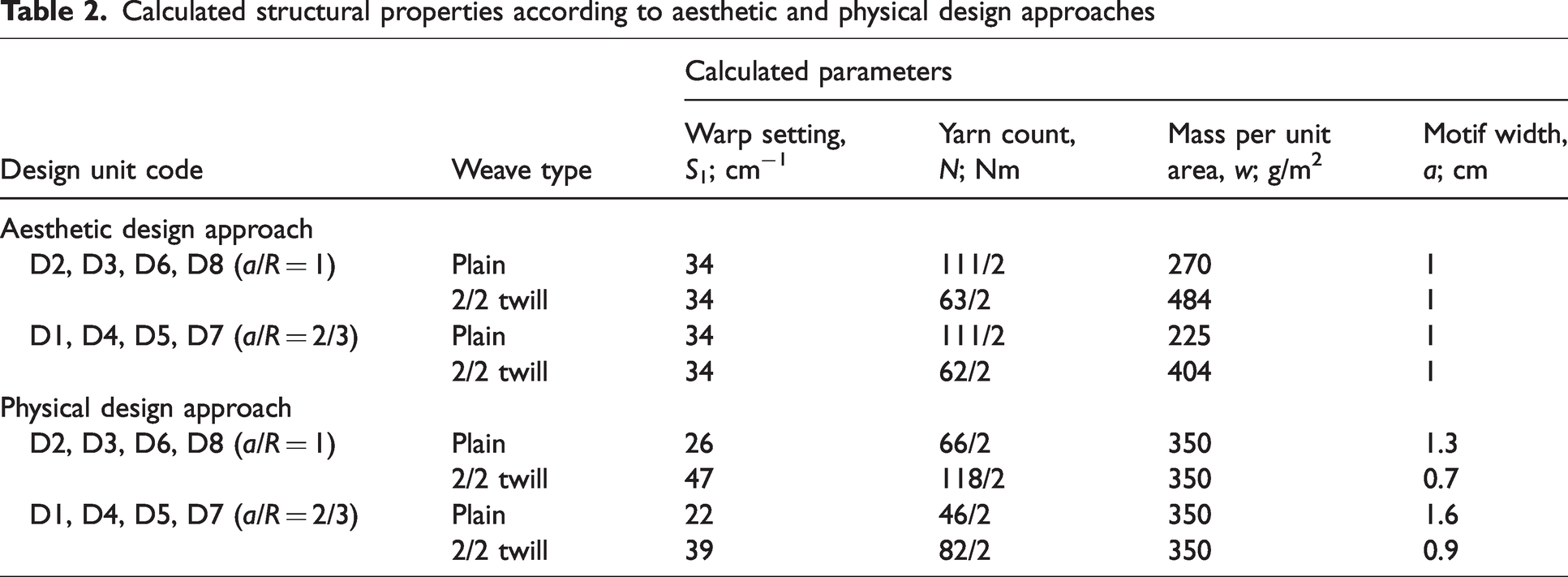
Table 2 gives the parameters calculated by the aesthetic and physical design approaches, depending on the assumptions. The theoretical results obtained according to the objective function of each approach could be examined in detail for each design unit and ground weave type. The calculated yarn counts and setting parameters were different for each design. It can be seen that the results for mass per unit area and motif width changed when the weave type or design unit parameters were altered. In addition, the ratio of p (the yarn arrangement) and the number of frames used determined these results. These are rational results, calculated according to the constants and assumptions; by examining these results, design options can be created, or different assumptions can be made, and design solutions can be recalculated. These mathematical analyses of the available data helped us make design revisions by considering possible restrictions and establishing cause-and-effect relationships before production.
Calculated structural properties according to aesthetic and physical design approaches
Redesign according to restrictions and production process
In manufacturing, design is the selection of production methods to realize the design. The design process may be subject to certain restrictions, such as time, human power, and cost. 2 Bojič and Dimitrovski 27 discussed the constructional and technological parameters that are important in designing a woven fabric. Production preparation cannot start without correctly defining and determining construction parameters. A basic knowledge of technology and technological parameters helps a designer to adapt a new product to the available technological capacity and better communicate with technological staff. The entire manufacturing process involves cooperation between the designer and the technologist. 27
In industrial applications, using the maximum capacity of the loom will increase the yarn movement, resulting in clearer patterns. The increase in the loom capacity provides more options for settings and motif size. Jacquard looms can easily achieve the desired design size because of their higher capacity. However, owing to the limited loom capacity of dobby looms, the setting and motif width relationships are more restrictive in figured fabric design. In this study, the fabrics were woven on a CCI dobby sampling loom with 18 frames; this was a technological restriction in the design process. Therefore, the design had to be revised according to the number of frames. For the plain weave designs, 2 frames were planned for the ground weave and 16 frames for the motif region. In the motif region, 3 frames were reserved for extra red yarns and 13 for extra black yarns. For 2/2 twill ground weave fabrics, 4 frames were used for the ground weave and 14 frames for the motif region. Here, 3 frames were reserved for extra red and 11 for extra black yarns. Therefore, the number of heald shafts (A) was 13 for plain weave and 11 for 2/2 twill weave. Similarly, in the industry, there may be restrictions related to the machine capacity. Accordingly, new arrangements should be made in the design regarding the number of frames.
The design had to be reworked before production, because there were various restrictions. One of the restrictions encountered in the production process was the supply of yarns of different counts. As a result of the design calculations in the previous section, the relationships between motif width, design unit, and mass per unit area of fabric were mathematically established, and possible yarn counts were determined. However, the yarns supplied for this study were 40/2 Nm (2 × 25 tex) white color yarn for the ground warp and weft and 36/2 Nm (2 × 28 tex) black and red extra yarns for the motif. The same ground yarn was used in all designs to study only the effect of visual designs, weave types, and settings. Therefore, it was necessary to calculate design and production parameters according to the new constraints. Loom settings were calculated according to ground yarn count using equation (1) and estimated to be 19 cm−1 for plain weaves and 25 cm−1 for twill ones, respectively. The warp loom setting was determined as 20 cm−1 to weave all the fabrics with the same settings. The weft loom setting was also accepted to be the same as the warp to obtain a square fabric arrangement. The setting of the finished fabrics was calculated by assuming the crimp factor to be 1.1 and the stiffness factor to be 100%. The width of the motif was calculated according to the intended setting, and was found to be 1.2 cm for plain weave and 1.0 cm for 2/2 twill weave. Fabrics were also woven with a loom setting of 10 cm−1 to investigate the effect of a lower setting on the aesthetic design. The structural and revised design parameters estimated from the supplied yarns and applied settings are given in Table 3.
Revised design parameters according to yarn counts and settings
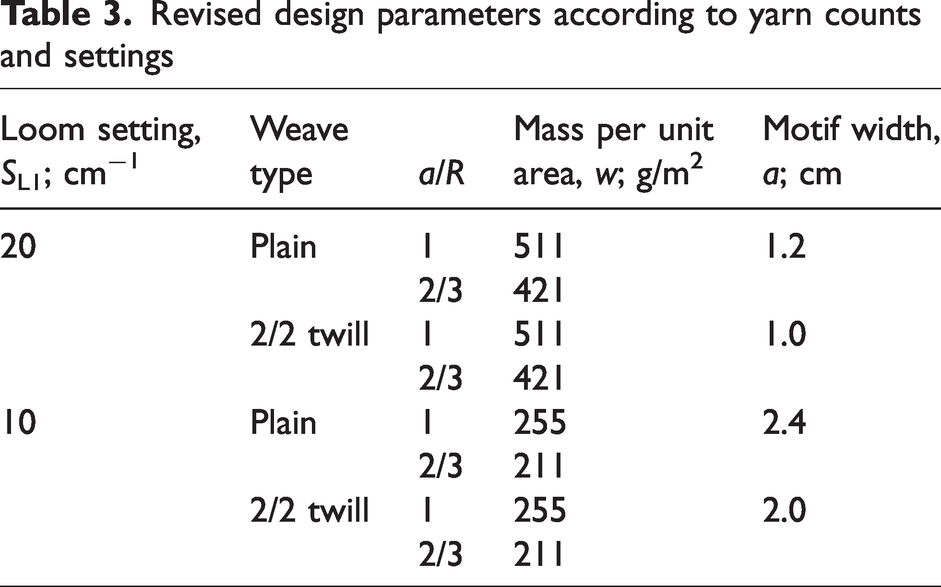
Production can be more complex in the industry. When designers and engineers encounter problems or constraints, mathematical solutions derived from aesthetic and physical design approaches provide greater flexibility in production. Each new design presents a different solution based on the constraints and assumptions made. The important point here is to establish relationships and gain the ability to interpret them effectively.
The weave plans were prepared according to the design units. Figure 3 shows the weave, drafting, pegging, and reed plans for the M1 motif and the D1 design unit. Two different reed plans were used to apply different loom settings. As seen in the weave plan, binding points were formed in the motif and ground regions to prevent long floating extra yarns. The binding points were arranged to match the motif, thus providing visual benefits to the fabric.
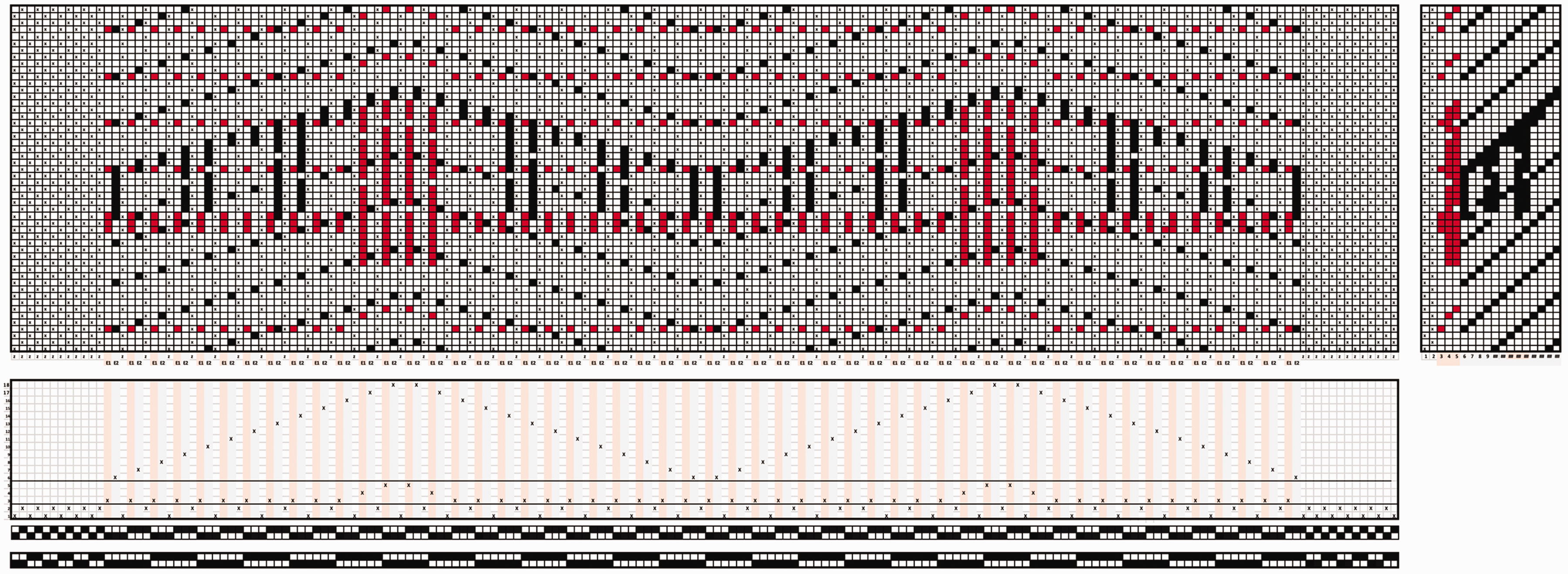
Weave, drafting, pegging, and two reed plans for M1.D1 design unit.
The warp color, drafting, and reed plans were organized, and the different surface plans were woven by changing the pegging plans. Two different warp beams were prepared for plain and 2/2 twill weave types. A total of 44 different fabrics were produced with different weave types, settings, motifs, and design units. A CCI sampling loom was used for production, as shown in Figure 4.
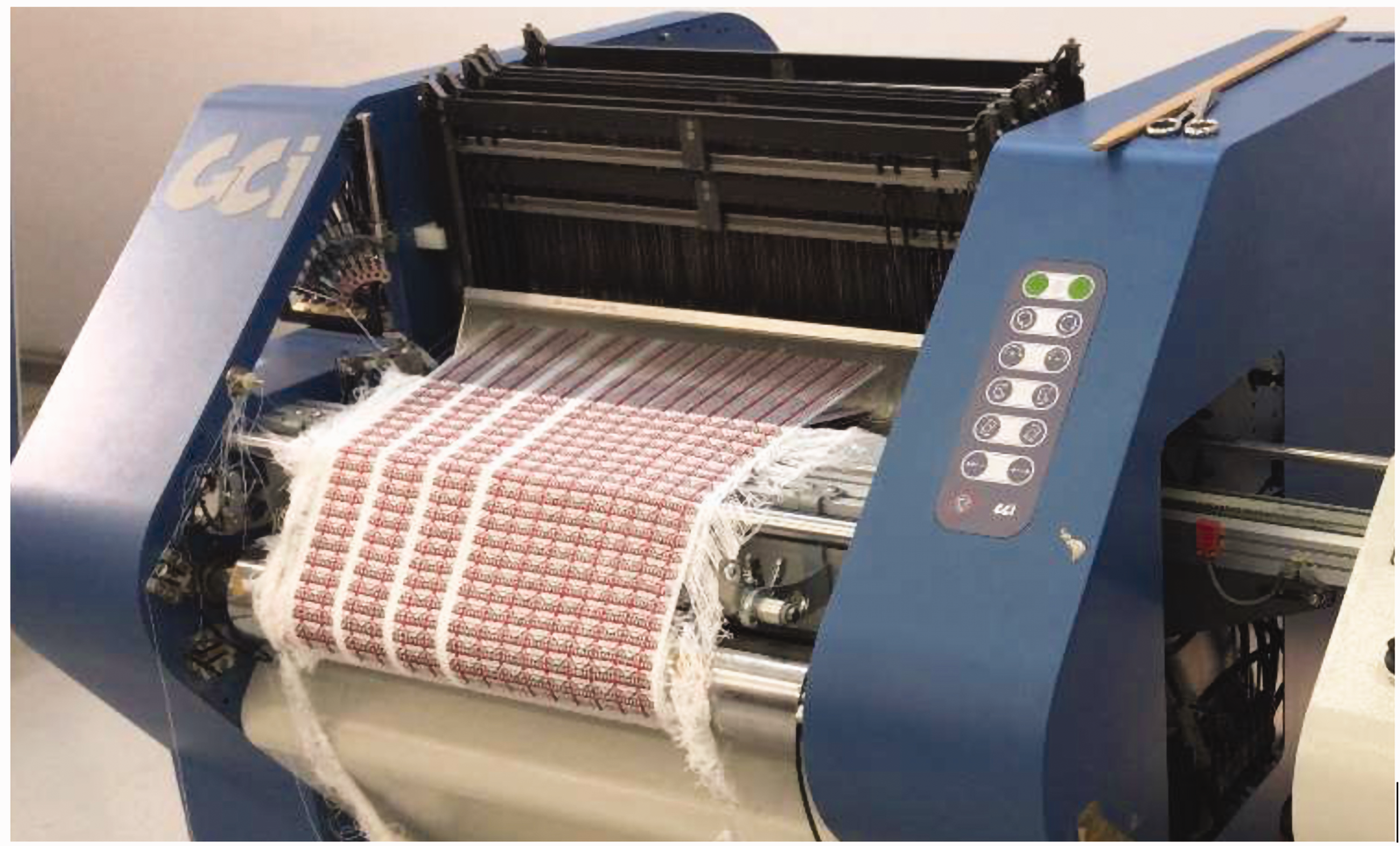
Production on CCI sampling loom.
The produced fabrics’ structural properties (mass per unit area, settings, crimp factors) and aesthetic properties (motif width and height, design unit width and height) were analyzed under standard atmospheric conditions.
Results and discussion
At the design stage, the weft setting of the fabrics was assumed to be the same as the warp setting. However, during weaving, the target setting could not be achieved, especially for the plain weave, because of the binding points of the extra warp yarns. At the production stage, the weft loom settings were revised to 10 cm−1 for plain weave and 18 cm−1 for 2/2 twill weave, with warp loom settings of 20 cm−1. In addition, at the 10 cm−1 loom setting for warps, the loom setting for weft was 10–12 cm−1 for plain weave and 18 cm−1 for 2/2 twill ground weave. In plain weave, in addition to the continuous intersections of the ground yarns, the intersections created by the binding points of the extra yarns increased the yarn tension. The increasing intersections within the fabric prevent the targeted settings from being achieved in the weft direction. Conversely, the planned weft setting could be achieved in 2/2 twill weave having long floatings. Unlike continuous intersections, long floatings allowed the yarns to come closer to each other.
Table 4 presents the analyzed structural and design properties of the produced woven fabrics. The P1 and T1 codes were used for plain and 2/2 twill fabrics with 10 cm−1 loom settings along the warp direction, respectively. The P2 and T2 codes were used for 20 cm−1 loom settings. The P3 code was used for plain fabric with 10 cm−1/18 cm−1 warp/weft loom settings.
Analyzed structural and design parameters of produced woven fabrics
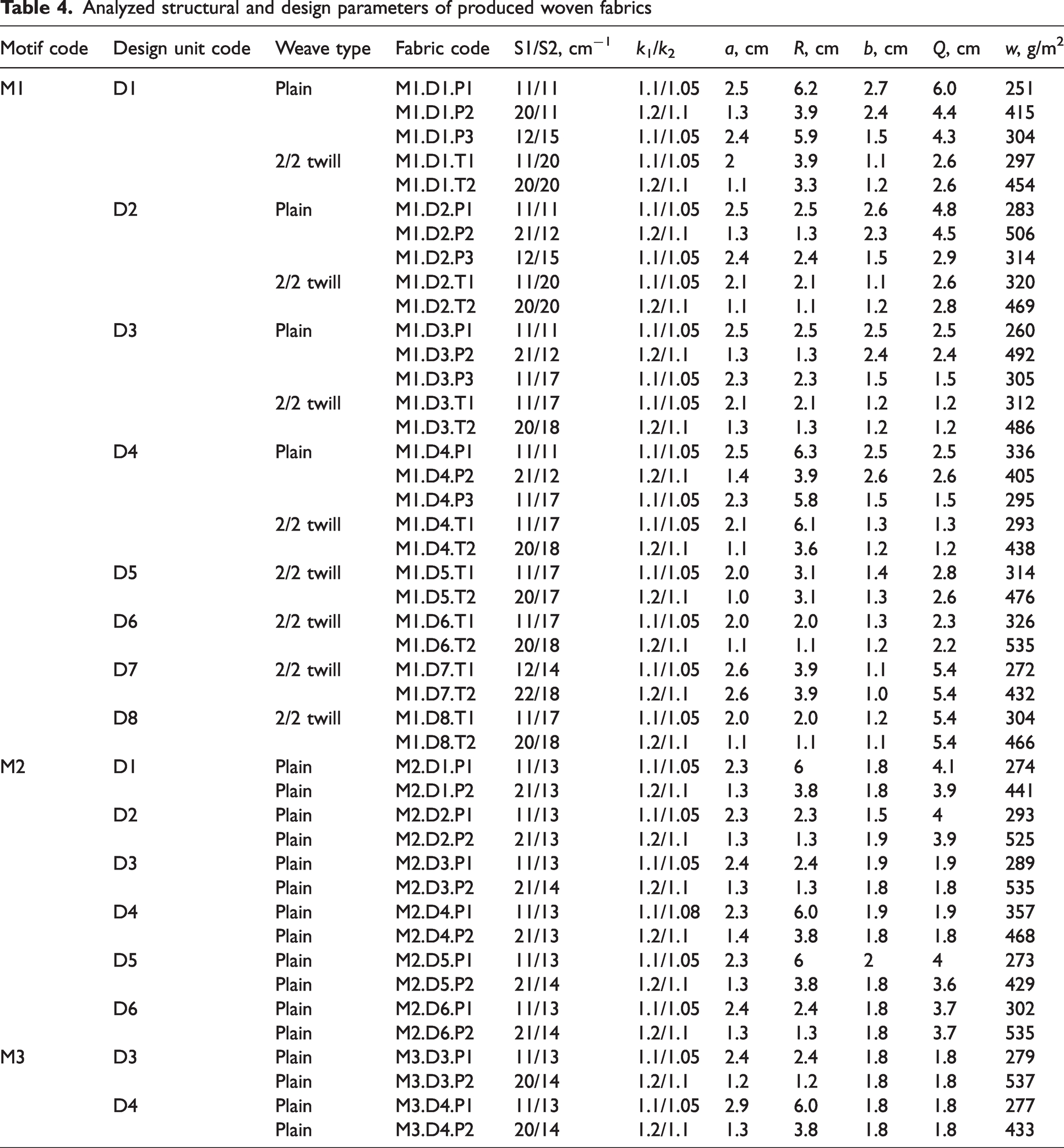
The estimated and realized mass per unit area of the fabrics were each different. First, the warp and weft settings were assumed to be the same at the design stage. However, during the production, the settings were revised, owing to tensions. The assumed crimp value in the design step was 1.1, but the analyzed crimp factors were found to be in the range 1.1–1.2 for ground warps (k1) and in the range 1.05–1.1 for wefts (k2). The realized motif dimensions were also changed, depending on the settings. The width of the motifs could be provided, as aimed, at 20 cm−1 warp setting, but the height of the motif was increased, owing to the reduced weft setting. At the 10 cm−1 warp setting, the width of the motif was approximately twice that of the aimed width. Conversely, increased settings increased the mass per unit area of the fabric. This means that for an approximately 1 cm motif width, the warp setting of the fabric should be 20 cm−1, which created a heavier fabric than the 350 g/m2 target. Alternatively, if the priority was to make 350 g/m2 fabric according to the physical design, the fabric warp setting decreased, and the motif width increased accordingly.
The surface composition of the fabric, being an aesthetic parameter, also affected the mass per unit area. The mass per unit area of fabrics was higher for design units D2 and D3, where extra yarns were located throughout the unit. Thus, if the mass per unit area of fabrics is one of the design constraints in industrial applications, then the pattern unit can also be designed accordingly.
Comparing the results of ground weave types, fabrics with a 2/2 twill weave type had a higher mass per unit area. This is because, in 2/2 twill structures, higher weft settings were obtained for both 10 cm−1 and 20 cm−1 warp settings.
Estimating the assumed data, such as the yarn crimp ratio, by considering the yarn type, weave, and settings, will improve the relationship between the theoretical and actual calculations. In addition, it has been observed that a reduction in setting should be applied in the theoretical calculations for extra yarn figured fabrics. In these fabrics, binding points increase the tension and prevent high theoretically calculated settings from being reached. Considering setting reduction, theoretical results can be obtained closer to actual fabrics.
Figures 5 and 6 show photographs of all woven fabrics according to the design units applied for plain and 2/2 twill ground weave, respectively. The motifs developed according to the theme were harmonious, and various surface designs created different aesthetic perceptions. The design units and surface compositions created using Microsoft Excel are given in Table 1. The actual fabrics and the images generated on the computer screen are generally in harmony. Figure 5 displays fabrics with P1 and P3 (10 cm−1 warp loom setting), and P2 (20 cm−1 warp loom setting). The structural properties of the fabrics influenced the aesthetic properties. The settings directly affected the designed motif’s dimensions, as seen from the fabric images. In actual plain weave fabrics, for those with higher warp densities (P2), the motif width was smaller than the motif length. The motif width and length dimensions were comparable in fabrics where the warp and weft densities were similar (P2, P3). In the fabrics with a 2/2 twill ground weave, shown in Figure 6, increasing the warp setting led to a decrease in motif width, while the motif length remained similar for both T1 and T2 warp densities. This is because the fabric was woven with similar weft densities in both cases. The settings also affected the clarity of the contours of the motif. As seen in Figures 5 and 6, in both plain and 2/2 twill ground weaves, the extra yarns that make long floatings in the motif region come closer to each other at higher settings, thus creating an apparent motif contour.
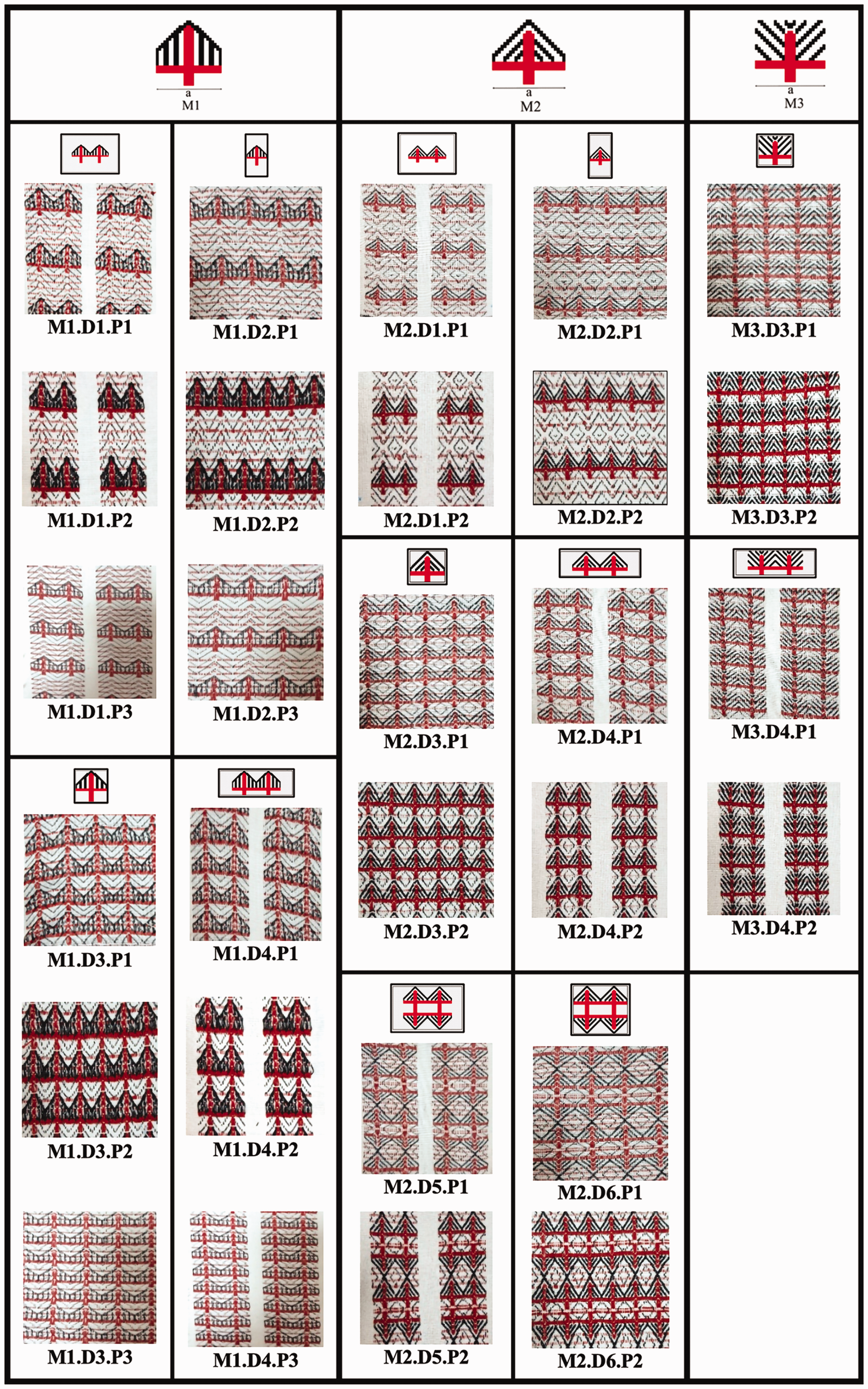
Photographs of fabrics with plain ground weave produced for given design units.
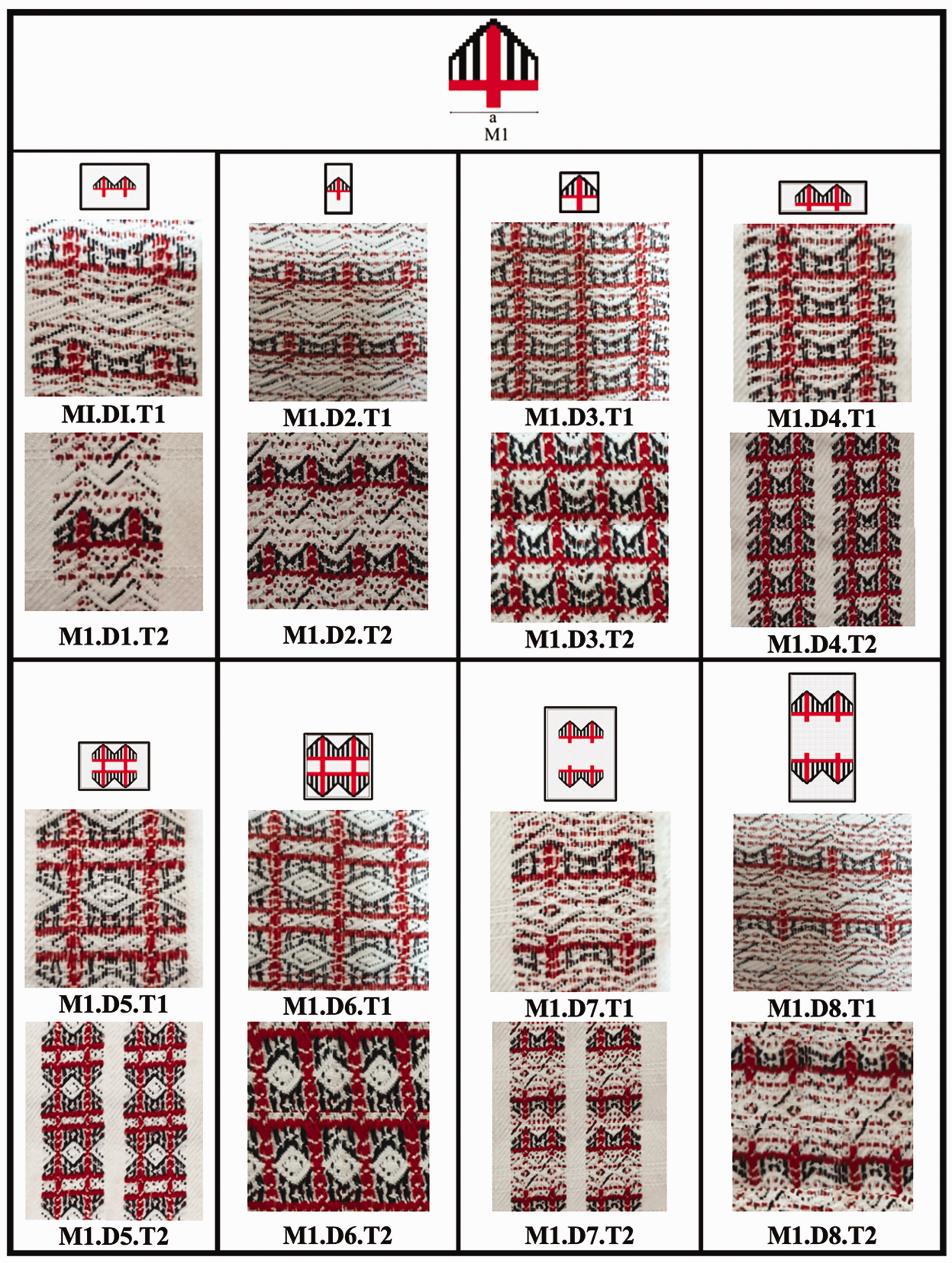
Photographs of fabrics with 2/2 twill ground weave produced for given design units.
In addition, different weave types changed the visual perception of the motif. The clarity was different for plain and 2/2 twill ground weave motifs. The extra warp yarns that form the motif could be seen more clearly in fabrics designed with plain weave. Therefore, the compositions could be perceived more clearly in the plain fabrics. This could be due to the balanced structure of the plain weave, formed by repeated intersections of warps and wefts. Conversely, long diagonal floatings in 2/2 twill fabrics reduced the clarity of the motif. However, the fabrics’ blurred, faint, sandy textures add textural richness. In preferred cases, this could be used to achieve visual design gains.
When the produced fabrics were analyzed from an aesthetic point of view, it could be seen that different motifs and design units had different effects on the fabric’s appearance. In the D1 and D7 design units, the ground region was increased by leaving gaps at the sides and top of the motif so that the surface compositions provided a uniform appearance on the ground. In the D2 and D8 design units, the ground region was increased by leaving gaps above and below the motif, and the surface compositions resulted in a horizontal line appearance on the ground. In the D3 and D6 design units, no ground region was left in the warp and weft directions. Since the motifs in the surface compositions show continuity, the ground was covered with motifs. In particular, in the M3 motif, the ground was lost because the black color was used intensively in the ground. In the other design units, depending on the angle of the motif, the white ground created strong effects on the surface in the form of triangles or diamonds. Binding points enhanced these effects. In the D4 and D5 design units, the ground region had increased in the weft direction, leaving gaps at the sides of the motif. The surface compositions had a vertical line appearance on the ground. It should also be noted that the design units D5, D6, D7, and D8 were compatible with the symmetry principle and were more balanced, considering psychological perception.
Changes in the fabric’s structural properties (yarn count and setting) during production affected its aesthetic appearance. Therefore, the structural and aesthetic design parameters influenced each other, and the production restrictions also affected each design result.
A review of the literature reveals that publications on woven fabric design include findings related to the effects of yarn type and raw materials on the textures produced in woven fabrics.7,9,15,16,28 Studd 3 proposed a model for the textile design process; Redmore 4 gave examples from various designers who used weaving techniques in their designs, but these studies did not contain a mathematical and integrated approach. Başer23,29 suggested an engineering design approach to the design of woven fabrics and also calculated structural parameters for the design unit. However, there is, it seems, no study that has included a systematic evaluation of the visual and structural effects of various surface designs obtained by repeating design units. In addition, no study has, to our knowledge, incorporated the use of mathematical analysis, with design revision according to production.
This study had several different stages. In the first stage, motifs based on the theme were developed, and these motifs were repeated within the context of design principles, such as repetition, spacing, direction, symmetry, rhythm, and balance, to create motif units focused on visual design. According to aesthetic and physical design approaches, mathematical solutions were provided for each motif unit in a second stage. In the third stage, considering production constraints, revisions were made to the design, and weaving parameters were determined. Finally, textiles were produced, and the visual effects and physical outcomes of the surface compositions were evaluated. All these stages distinguish this study from others. This study provides designers and engineers with a systematic approach to completing a design process, allowing them to reach solutions using a common framework language.
This study will help designers and engineers reach solutions using a common language by providing a systematic approach to complete the design process.
Conclusion
In this study, fabric designs were created by using aesthetic and structural design elements in different combinations. Motifs were created using the extra yarn figuring method and designs were made for dobby looms. The effects of two different settings, two different weave types, three different motifs, and eight different design units on the aesthetic and physical properties of the fabrics were investigated. The effect of the form factor, one of the aesthetic elements, was investigated by developing similar motifs and different surface compositions appropriate to a chosen theme. The design process was treated systematically, and the relationships between the fabric parameters were established mathematically according to aesthetic and physical objectives. It was found that different settings, weave types, motifs, design units, and assumptions affect the fabric’s aesthetic and physical properties. It is possible to achieve very different results rationally by combining different parameters according to mathematical design theory. However, it is still necessary to change the fact that design is a complex problem. During the analysis, it is necessary to consider some restrictions, such as technology and raw material supply, as well as assumptions, such as crimp rate and square fabric construction. More complex fabrics, such as those with extra yarn figured fabrics, can present different problems during production. Therefore, the design phase is sometimes completed during production trials.
Finding solutions based on mathematical approaches to fabric design allows designers and engineers to see the possible results for the fabric’s aesthetic and physical objectives according to the constraints and assumptions before production. Various design solutions may exist. The best design should be selected based on these results. In this study, the design was solved mathematically by considering the structural and aesthetic components together. The effect of the parameters was systematically observed, and a dynamic design and production process was realized by making revisions according to the problems and constraints encountered during the design and production steps. This study will help designers and engineers understand limitations and realize designs according to available constraints. Determining the goals and limits of design according to both approaches will help the designer better use available resources.
This study was focused on designing fabrics using their aesthetic and structural parameters. In future studies, fabric design problems can be solved based not only on aesthetic and physical aspects but also on the desired performance properties. Predicting the fabric’s performance characteristics relative to structural parameters at the design stage is important because this can enhance production efficiency and reduce costs. Additionally, in future studies, the presented mathematical approach can be integrated into computer-aided design programs for woven fabrics. As a result, a more effective production process can be achieved, creating higher-quality fabrics by the end of the design process.
Footnotes
Acknowledgments
The authors thank textile engineer Nilhan Sedanur Güleçyüz for her motif studies and technician Hasan Ünalan for his contributions during the weaving process.
Declaration of conflicting interests
The author(s) declared no potential conflicts of interest with respect to the research, authorship, and/or publication of this article.
Funding
The author(s) received no financial support for the research, authorship, and/or publication of this article.
