




Abstract
This research critically reviewed the influence of textile characteristics, including textile content (fiber composition), yarn construction, material structure, and treatment type, on microplastic release from textile products during washing. To date, the predominant focus of research has been on the washing parameters rather than the intrinsic characteristics of textiles. The findings of this review revealed that natural, man-made, and mixed-composition fabrics tend to release more microfibers compared to pure synthetic fabrics. Divergent results have been observed in studies on the release of microplastics from recycled synthetic fabrics. Woven fabrics release less microplastic compared to knitted fabrics. However, it is evident that yarn construction has more impact on microplastic release than textile composition or structure, and high-twist filament yarns reduce microplastic formation. Mechanical finishes tend to enhance microplastic release, while synthetic and biodegradable reduce it, but their sustainability and durability aspects need further investigation. The impact of different types of dyes on microplastic release remains unclear. All of the textile characteristics specified in this article are of pivotal importance in microplastic research. Overlooking the significance of any of these details can complicate the development of microplastic mitigation strategies.
Keywords
One of the first fully synthetic plastics, named Bakelite, was invented in 1907 by the chemist Leo Baekeland. 1 Soon after, various types of synthetic polymers were developed and continue to be extensively utilized due to their exceptional properties, including durability, flexibility, and resistance to degradation. These attributes render them suitable for a wide range of industries, such as packaging,2,3 electronics, 4 automotive, 5 consumer goods, 6 medical, 7 textile, 8 and others. 9
The textile industry is a great example of how fast and popular synthetic polymers became in a very short time. Synthetic fibers, including polyester, polyamide, and acrylic, have become predominant in clothing manufacturing, replacing natural materials, such as cotton, linen, and wool, as well as man-made fibers, such as viscose and rayon. This shift is attributed to the specific properties of synthetic polymers, such as their resistance to wrinkles and shorter drying times after laundry. The high production speed also makes synthetic fiber cost-effective in production. Consequently, this cost-efficiency translates to more affordable and appealing clothing for consumers.10,11 Over the past three decades, the use of synthetic textiles in clothing manufacturing has experienced a substantial increase. 12
According to the Textile Exchange Materials Market Report published in 2023, 13 synthetic fibers, such as polyester, polyamide, acrylic, and others, accounted for 65% of global fiber production in 2022. The same report announced that polyester is the most widely used textile and forms 54% of total global fiber production.
Although the versatility of synthetic fibers has contributed to advancements in the clothing industry, it has also given rise to new environmental challenges, one of them being a new form of pollution—plastic debris.14,15 A very rapid increase of plastic debris in the oceans at the beginning of the 21st century was observed in a major study released by Eriksen et al. in 2023. 16 The comprehensive study used various data from 1979 to 2019 on plastic floating in the oceans. Their estimation showed that there were 82–358 trillion plastic pieces weighing 1.1–4.9 million tonnes and most of it was microplastics.
The term ‘microplastics’ was introduced for the first time in research published by Thompson et al. 17 in 2004. However, at that time, the term did not have a clear definition. In 2007, Browne et al. 18 described microplastics as small plastic particles that are formed when larger pieces of plastic progressively fragment into smaller pieces, although no specific size was defined. The term ‘microplastic’ was further clarified in a conference organized by the National Oceanic & Atmospheric Administration (NOAA) 19 of the USA in 2008. During the conference the definition of ‘microplastics’ as plastic particles smaller than 5 mm was established. Although no official decision was made on the minimum size of microplastic particles, it was mentioned that the mesh size of the nets used to capture plankton is 333 μm. Since microplastics are often found in these nets, and at that time, there was no methodology to collect the smaller microplastic particles found in the oceans, it was suggested to use 333 μm as the minimum reference size. As discussed by Hartmann et al., 20 the lack of a clear unified terminology in microplastic research has been highlighted as a hindrance to the field’s progress. To this day, there are often cases where different and not always accurate definitions and terms are used to describe microplastics in various scientific studies. Currently, according to the ISO/TR 21960:2020 21 and ISO 4484-2:2023 22 standards, plastic particles smaller than 5 mm and larger than 1 μm are classified as microplastics, while particles smaller than 1 μm are called nanoplastics. Microplastics larger than 1 mm are classified separately and can be referred to as macroplastics. As there are various microplastic sources and pathways, 23 microplastics are often categorized by their origin into two groups: primary and secondary. 24 Primary microplastics are intentionally produced, such as microbeads in cosmetic products,25 –30 while secondary microplastics are formed during the fragmentation of the plastic product. 24 Fiber-shaped microplastics have a separate definition and are described as particles with a length greater than 300 nm and less than 15 mm and with a diameter to length ratio greater than 3. 22 Microplastics originating from textiles are released into the environment when synthetic fibers break into smaller particles, typically in a shape of fiber. Consequently, these particles are commonly referred to as fibrous microplastics (FMPs) or occasionally denoted as fiber fragments.
Microplastic pollution is most commonly found in populated areas,31,32 for example, microplastics were found in the gastrointestinal tracts of 36.5% of tested fish from the English Channel 33 and in surface water, waste water, and atmospheric fallout in Greater Paris. 34 However, microplastic traces can be found even in remote areas, such as the Arctic35 –38 or Antarctic. 39 However, it is important to mention that the Antarctic region, which is far more distant from human settlements than the Arctic, had lower microplastic pollution concentrations40,41 or, in some cases, were not found at all. 42 Traces of microplastic has also been found in a range of food products, such as sugar, salts, and beer,43 –46 as well as in the human placenta 47 and the lungs of patients with lung cancer. 48 Yee et al. 49 highlighted that microplastics can enter the human body through ingestion, inhalation, and skin contact. The presence of microplastics in living organisms poses significant risks, potentially leading to disruptions in the digestive system, reproduction, 50 and other vital biological processes, thereby posing a substantial threat to the entire biota.51 –55 Furthermore, microplastic pollution has been found in terrestrial environments, such as soil. 56 Studies have documented the influence of microplastics on soil microbial communities, with some polluted areas exhibiting a notable abundance of specific microbial species. 57 Furthermore, the impact of microplastic on soil pH has been identified, 58 which can in turn alter flora. Authors have also explored the impact of various shapes (fiber, film, foam, or fragment) of microplastics. During experimentation, different shapes of microplastics were cut into the same or very similar size particles to make sure that the surface area would be the same for all the shapes. Notably, the study made an observation that the shape, type, and duration of exposure to microplastics significantly influence the soil pH. 58 This finding is very substantial, as laboratory experiments commonly utilize spherical microplastics, while other shapes remain less explored. 59
When it comes to degradability, the degradation time of microplastics varies depending on the polymer structure, the environmental conditions to which they are exposed, and other factors, but microplastics typically take several months to degrade.60,61 The degradation process can be further prolonged if the particle remains unaffected by mechanical, biological, or chemical environmental factors.60,62 For instance, while plastic breakdown is rapid in salt marshes, 63 synthetic fibers have been observed to retain their characteristics even after 5 years in sludge or 15 years in soil. 64 Moreover, it is important to mention that weathering microplastics can pose a heightened risk to the environment due to the release of harmful degradation products. 65 Some findings already show a positive correlation between microplastics and metals found in some fish species, suggesting that metals were adsorbed by microplastics. 66
Unfortunately, the composition of microplastics is not always widely studied, making it more difficult to determine their origin and main sources. 67 In a study by Bergami et al., 68 which was conducted in one of the largest protected marine areas, the Ross Sea, microplastics were found in marine snails (Neobuccinum eatoni). Of all the marine snail samples analyzed, 27.3% contained textile-based, synthetic, or mixed-composition microplastics ranging in length from 0.8 to 5.7 mm. Furthermore, a comparison of the polymer composition of microplastics found in marine snails revealed that it matched the polymer composition of the technical clothing worn by scientists at the research station. Although Bergami et al. 68 suggested conducting more studies to investigate the sources of microplastic contamination in the Ross Sea, their findings demonstrated the risk of microplastic contamination in the Antarctic food chain and proposed that the likely source of microplastics is the wastewater from the research station, which includes water used for laundering technical clothing. However, the first study to announce that domestic laundry can be a source of microplastics was conducted by Browne et al. 31 in 2011. To this day, it is one the most frequently cited studies on the topic. In their study, scientists collected microplastics from six shores across different regions of the world and compared them with microplastics found in domestic washing machine filters. The composition of the microplastics found in both environments was very similar. After the publication of these findings by Browne et al., 31 further research has been conducted to understand the impacts of microplastic release during washing. Gavigan et al. 69 even evaluated that 5.6 million tonnes of microplastics have been released into the environment during domestic washing from 1950 to 2016.
It has been found and confirmed by many studies that the amount of released microplastics depends on various washing parameters, including the water pH (influenced by the use of washing detergent and fabric softener), water temperature, water-to-clothing ratio, mechanical impact (friction), type of washing machine, and duration of the washing cycle.70 –75
However, while washing parameters play a crucial role in the release of microplastics, it is equally important to consider the properties of the textile materials themselves. To date, the impact of textile material properties on microplastic release has not been extensively explored. Limited research has been undertaken to test textile parameters,76 –81 and there are even fewer detailed review articles that systematically focus solely on textile properties. 82
Impact of textile characteristics on microplastic release
Understanding the influence of textile material characteristics is crucial for gaining a deeper understanding of the formation and release of microplastics during washing. Factors such as the fiber material composition (polyester, polyamide, acrylic, etc.), 83 textile yarn structure (filament yarn, spun yarn based on staple fiber, etc.), 84 textile material structure (knitted, woven, non-woven) and its construction parameters (design pattern, yarn density, area density, etc.), and textile treatment type 76 can have a significant impact (Figure 1).
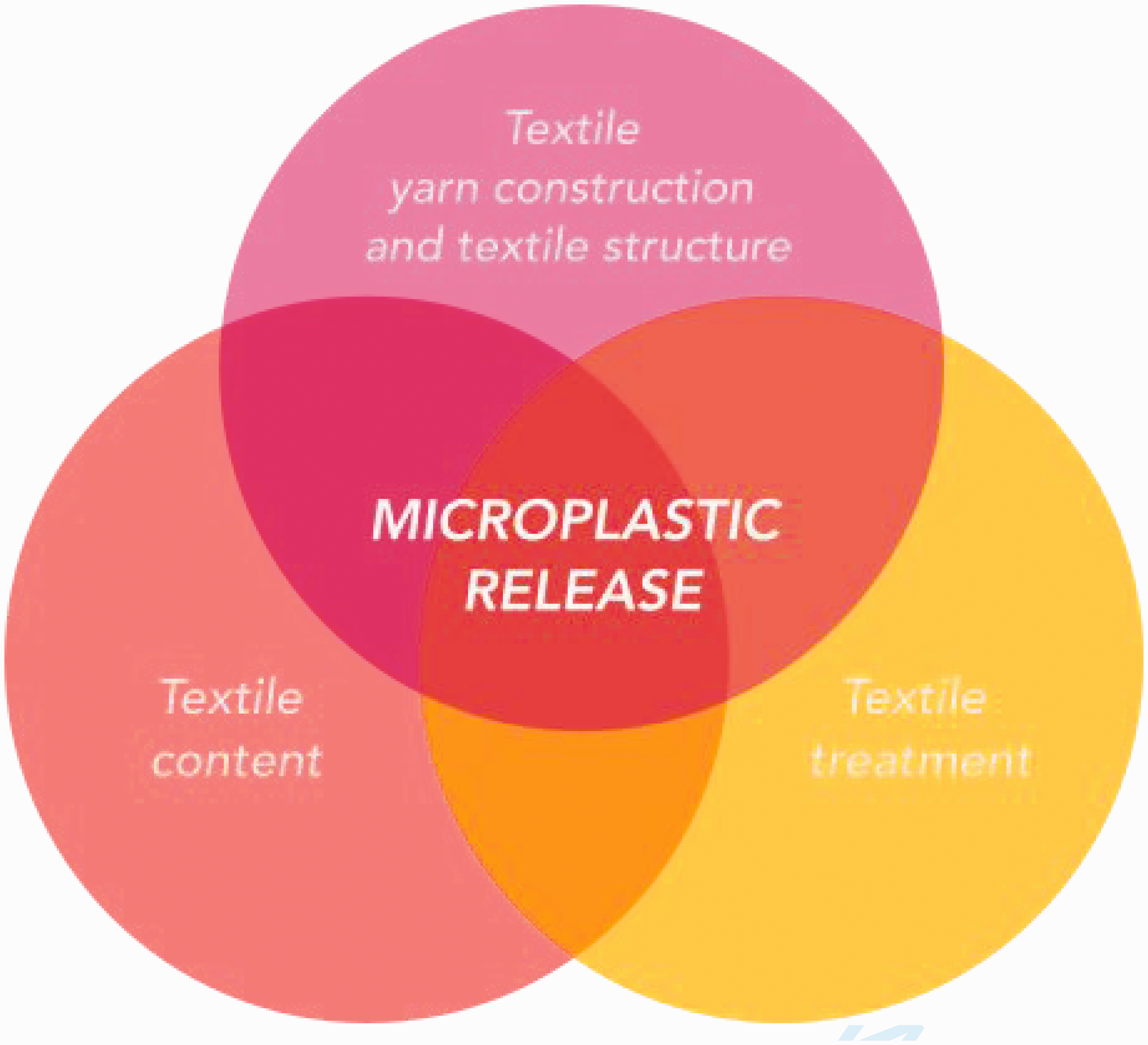
Textile parameters influencing the microplastic release.
However, since the impact of the textile material structure is less explored, research often lacks clear constants and variables. For example, in some studies where the effects of washing parameters were tested, samples of various fiber types were utilized. Unfortunately, very often, actual clothing items with very different types of construction, for example, jackets and T-shirts, and treatment were selected.85,86 Although these samples were suitable for testing the impact of washing parameters, they posed challenges in comparing the actual impact of the fiber type or yarn construction. As a result, comparing the quantities of released microplastics in different studies becomes more complex. However, in this review, the aim was to compile data from different studies and establish the main textile material characteristics that can have an impact on microplastic release.
Textile content
Since many of the samples in fibrous microplastic research comprised actual garments, differences in fiber fragment release between natural and synthetic compositions were frequently explored, as this parameter is typically provided by the manufacturer or seller.
According to the majority of research, samples of natural and/or man-made and synthetic composition were washed, and the results showed that natural and man-made fibers are more prone to releasing microfibers than synthetic ones.81,86 –88
In the research conducted by Sudheshina et al., 87 real-life laundry from different families was examined. The collected wastewater was subsequently filtered, and samples of released microplastic particles were analyzed. The results of the Fourier transform infrared spectroscopy (FTIR) test showed that 62% of fibrous microplastics found in the wastewater were of natural origin, while 37% were recognized as synthetic. A similar distribution of natural and synthetic origin fibrous microplastics was confirmed in other studies where samples were washed under laboratory conditions.86,88 It was observed that cotton fibers tended to release more microfibers than polyester, and the examined cotton microfibers exhibited irregular shapes and shorter lengths compared to polyester microplastics. 88 At the same time, there were also studies that showed the opposite results. Napper and Thompson 85 stated that in their research, knitted sweatshirts made of a combination of synthetic and natural fibers released fewer microplastics compared to fully synthetic ones. However, it is important to note that the sweatshirts used in their study were purchased in stores and may have had varying constructions, dyes, and finishes, which could have potentially influenced the results.
In studies in which samples of man-made fibers were used for testing, results similar to those of natural fibers were observed. 89 When samples were made of a fiber blend of synthetic and man-made (viscose) or natural (cotton) fibers, those with a fully synthetic composition still released fewer fibrous microplastics than those with a mixed fiber composition. 89 Similar results were obtained in another study where samples of man-made rayon and natural cotton were used, 90 as well as in a study that tested man-made acetate. 88 The length of the fibrous microfibers was also measured after washing man-made acetate, revealing that it released longer microfibers than synthetic fabrics (man-made acetate—1128.00 ± 750.72 μm; polyamide—1056.53 ± 761.42 μm; polyester—499.49 ± 505.65 μm). Haap et al. 91 were even more precise and conducted a specific examination of microplastics found in wastewater after washing a 50% cotton and 50% polyester blend sample. It was observed that the cotton part (86 ± 3%) shed a higher amount of microplastics compared to the polyester part (14 ± 3%). De Falco et al. 84 also performed a similar test and observed that the sample made of polyester and cotton fibers released more cotton particles compared to polyester. 84 However, Sudehesna et al. 87 observed that while polyester fibers (19.74%) released fewer fibrous microfibers compared to man-made viscose (17.58%), the amounts were very similar and justify further investigation. In addition, the results of another research showed that natural fibers, such as wool and cotton, shed similar amounts, approximately 165 ± 44 mg of microfibers per wash. 92 These findings can be explained by examining the morphology of natural and synthetic fibres. 93 Most natural fibers, such as wool or cotton, consist of shorter staple fibers and have a rough surface. In contrast, synthetic fibers, such as polyester, are often made of long continuous filament fibers, and have a smooth surface. These characteristics make it easier for particles of natural fibers to detach during mechanical stress and chemical reactions during washing.84,93
Unfortunately, there is still a lack of studies on how synthetic fibers with similar textile and yarn structure would behave. In the research conducted by Yang et al., 88 the authors used woven polyamide and woven polyester and found that the number of fibrous microfibers released was higher after washing the polyamide sample compared to the polyester. The length of the fibrous microfibers was also measured, and polyester (499.49 ± 505.65 μm) had shorter microfibers compared to polyamide (1056.53 ± 761.42 μm). The authors proposed that this is probably due to a different yarn count and tighter polyamide fabric structure. 80 Some other studies also observed that polyamide fibers tend to release more fibrous microplastics than polyester fiber, while acrylic releases the most fibrous microplastics during washing.88,94,95 In one study, the length of polyester, nylon, and acrylic microplastics was measured, revealing that acrylic made up 11% of long microplastics (>1000 μm), while nylon and polyester made up 6% and 4%, respectively. Short microplastics (<500 μm) accounted for 59% (acrylic), 62% (polyester), and 71% (nylon) of the microplastic distribution. 94 Other scientists stated that the difference in the amount of fibrous microplastic after washing polyamide and polyester is insignificant. 81 Carney Almroth et al. 96 also noted that no significant differences were observed in the amount of fibrous microplastic after washing polyester, polyamide, and acrylic samples. 96 All of these results lead to the hypothesis that the type of synthetic polymer fiber does not have or has very little impact on fibrous microplastic release, and other factors such as textile material structure, yarn construction, or additives have a greater effect on it.
It would be valuable to explore the differences between virgin (sometimes referred to as primary) and recycled fibers, since this topic has been less researched. Some scientists found that recycled fibers tend to have lower tensile and break strengths and their surface has more imperfections and unevenness,97,98 which, theoretically, should increase the amount of microplastic released. Conflicting findings have been reported by authors of other studies, suggesting that the observed differences are too insignificant. 99
The results of studies comparing the impact of composition on microplastic release between virgin and recycled fabrics have shown considerable variability. Several studies, which tested virgin and recycled fabrics, 100 knitted cotton and woven cotton/polyester blends with different percentages of recycled material, 80 or blends of elastane/virgin polyamide and elastane/recycled polyamide, 101 did not observe significant differences. However, Özkan and Gündoğdu 78 performed research where knitted recycled polyester fabric released 2.3 times more microplastics than knitted virgin polyester. In a separate study, Frost et al. 80 did not observe significant differences in fabrics with recycled cotton content, except for the longer microplastics released by recycled cotton compared to virgin cotton. Notably, more compelling results were obtained when analyzing polyester fabrics. The authors tested knitted virgin polyester and two knitted polyester fabrics with different recycled polyester content (40% and 70%). Surprisingly, they found that samples with the highest recycled polyester composition (70%) shed the longest microplastics, although the total amount of microplastics was lower compared to samples with 40% recycled polyester, while virgin polyester demonstrated the least shedding. Given the unexpected nature of these results, the authors recommended further investigating into how fabric yarn twist, thread count, points of friction, and interlacing/interlooping patterns influence the results, particularly since they only selected samples with similar yarns and textile structures.
The results of these studies have led some scientists 85 to suggest that manufacturers and consumers should consider choosing clothing pieces with mixed composition made of synthetic and/or man-made fibers, because it releases fewer microplastics. It is important to note, however, that these suggestions do not fully account for the fact that mixed-composition garments are much more difficult to recycle than garments made of one type of fiber (i.e., monomaterial).102,103 Further exploration and research are therefore needed to identify alternative solutions to mitigate microplastic release while addressing the complexities of recycling mixed-composition textiles.
Textile yarn construction and material structure
When comparing different synthetic types of fibers, no significant differences were found in terms of fibrous microfiber release. Results that are more interesting were obtained after washing samples with different structures and/or yarn constructions. Unfortunately, as noted by other authors as well, 104 the research on the impact of these properties on microplastic release is still limited.
During the washing process conducted by De Falco et al., 84 samples made of woven filament polyester fabric released a smaller amount of fibrous microfiber than samples made of knitted filament polyester fiber. Similar results were observed after testing the same composition samples and their release of fibrous microfibers into the air. 84 Vassilenko et al. 92 also observed the same trend. In their research, knitted fleece and jersey released more fibrous microplastics (161 ± 173 mg per wash) than woven polyester (27 ± 14 mg per wash). Another study did not address the textile structure of their samples, but it was mentioned in the methodology section that T-shirts, which are usually made of knitted fabrics, released a larger amount of fibrous microplastic than soft shell samples, which are usually woven. 86 Other scientists did not notice much difference between woven and knitted structures. 105 However, it is important to mention that yarn constructions in that study were not tested, and the composition of all the samples was different, which makes the results of the last two research studies irrelevant. In addition, no proper research has been conducted yet on different types of weaves to determine which design is more prone to releasing fibrous microfibers.
Further research has focused on knitted fabrics, comparing different types of knits. It has been observed that looser construction knits tend to be more prone to shedding. 96 This may be attributed to the fact that fibrous microplastics are less likely to entangle and adhere between the looser loops of knits, while tighter loops could prevent them from falling out. Among all the reviewed articles, fleece fabric was the most researched knit.
In Kärkkäinen and Sillanpää, 83 a washed double-sided polyester fleece, a knitted acrylic sweatshirt, and a knitted polyester technical T-shirt were investigated. The double-sided fleece released the highest amount of microfiber, while the T-shirt released the smallest amount, which could be explained by a potentially large difference in sample thickness, as the impact of this property was also observed by other scientists. 92 In addition, the article uses the term ‘technical t-shirt,’ which is not clarified by the authors. The word ‘technical’ may suggest that this garment was manufactured for sports or outdoor activities and may have additional finishes, which are common in these types of garments. These finishes may have had an impact on the release of fibrous microfibers and should always be considered. Another study, where jersey and fleece fabrics were tested, did not observe any difference between these two fabrics. 100
Carney Almroth et al. 96 also observed that fleece and microfleece polyester fibers release a greater number of fibrous microplastics compared to knitted polyester. They also noted that knitted polyester fabric with a higher density of open filaments per unit area poses a higher tendency of microplastic shedding compared to fabrics made of filaments with fewer yarns. De Falco et al. 89 compared three knitted samples similar in composition and observed that one sample with the highest yarn twist released a smaller amount of fibrous microplastic than the other two with lower twist. 89 In tests performed by Choi et al., 77 similar observations were made. During their investigation, three plain woven polyester samples were washed. Each sample had a different yarn construction: high-twist filament, no-twist filament, and spun yarn. As expected by the authors, the spun yarn released the highest number of fibrous microplastics, while the lowest amount was released by the high-twist filament yarn. This was explained by the shorter fiber length in spun yarn and the lower friction between fibers in high-twist filament yarn. Another study also indicated that higher density yarns are more compact and restrict fiber movement. 106 This also demonstrates that synthetic yarn made of staple fiber tends to behave similarly to natural fibers with naturally shorter staple fiber in the yarns and release more fibrous microplastics into the environment. This was confirmed by researchers who tested samples of the same type of synthetic fibers made of staple fiber and filament yarns. 107 Another interesting result was shown in a study conducted by De Falco et al., 107 where woven polyester staple fiber released the highest amount of fibrous microplastic. It was followed by knitted filament polyester, while woven polypropylene staple fiber had the least number of fibrous microplastics released. This indicates that yarn construction has a greater impact on the release of fibrous microplastics than textile structure, as the woven polyester fabric, which should be more resistant to fiber shedding, still released more fibrous microplastics than the less resistant knitted polyester fabric. Hernandez et al. 108 also emphasized the importance of yarn construction. They reported that while quantities of released microplastics varied depending on the different textile structures, the overall length of fibrous microplastics was similar regardless of which knitted structure sample, interlock, or jersey, was used. It suggests that fibrous microplastic length is more dependent on the yarn construction than the textile structure. This suggestion was further confirmed in another study, 77 where all the samples were woven but had different yarn constructions. All samples showed various length distributions below 1000 µm; for example, the peak point for high-twist yarn was 200–300 µm, for non-twist yarn it was 100–300 µm, and for spun yarn it was 300–400 µm. Interestingly, all samples also had the same highest peak at 1500 µm, which was not further explained.
It is also important to mention that several scientists examined samples before and after washing using scanning electron microscopy (SEM) and noticed that after washing, the surface of the knitted fabrics made from polyester filament yarns appeared more rough, 109 and there was obvious damage. 105 This indicates that after continuous washing, even continuous filament yarns could start to release higher amounts of fibrous microplastics.
The results of the reviewed research suggest that garments with compact woven structures and yarns made of continuous filaments would release the lowest amounts of fibrous microfiber, but the amount released could possibly change with aging and continuous washing.
Textile treatment
Another important factor to consider in the context of fibrous microplastic release is the type of treatment applied to textile products. It has been noted in this review that many studies in this field utilized various types of fabric samples. Unfortunately, while the samples had various kinds of treatment, the impact of textile treatments themselves on microplastic release was less explored.
In the reviewed articles, the most popular type of treatment used in the samples was textile dyes. However, it is noteworthy that the impact of dyes on microplastic release was not thoroughly investigated in these studies. Instead, fabric samples dyed in different colors85,86,90 were chosen because it helped the authors easily distinguish which samples shed which microplastics. The lack of studies on the impact of textile dyes on microplastic formation not only highlights a significant research gap, but also raises the possibility that the results of studies utilizing fabrics with different dyes as samples may have been influenced without proper acknowledgment by the authors. For instance, in a study performed by Zambrano et al., 76 the influence of the dye (Blue 19) was examined. The results showed that the dyed fabric released a higher amount of microplastics than the control fabric, although the difference was not statistically significant. On the other hand, dyed fabric did release significantly longer microplastics. The authors later concluded that textile treatments alter the mechanical properties of fabrics and fibers, consequently impacting microplastic formation. These findings cast doubt on the precision of an earlier study also done by Zambrano et al., 90 where the authors prepared samples by removing all textile coatings, followed by bleaching and dyeing them in various colors. Such invasive procedures could have and most likely changed the mechanical properties of the fabrics, potentially influencing the results. Similarly, in studies where less preparation was performed, but the samples already came in different colors, the results may have been similarly affected.85,86
More research has been conducted on different finishes. Mechanical finishes are commonly used in the clothing industry to create a distinct look on a garment, such as rips on jeans, suede imitations, and similar. 110 As these finishes often damage the fiber surface, they may accelerate fibrous microplastic formation even during the production stage of the product. This hypothesis is supported by Cai et al., 111 who tested the presence of microplastic particles on different textile fabrics with and without mechanical finishes. Textile fabrics with unprocessed surfaces had fewer microplastics than samples with mechanical finishes, such as fleece or microfiber.
Coatings could also have an effect similar to that of mechanical finishes and may reduce or increase the release of fibrous microplastics. This was evident in the research conducted by Sillanpää and Sainio. 86 Two of their samples were fleece with anti-pill treatment, which is intended to prevent clothing pilling and, consequently, the formation of fibrous microplastics. The results showed that polyester fleece released the least amount of microplastic during the first three washings compared to other samples. This is unusual because, as noted by other scientists, fleece samples typically release larger amounts of fibrous microplastic than samples of different structures or yarns. 96 This suggests that anti-pilling treatment effectively inhibited the fibrous microfiber formation and influenced the results. However, after the fourth wash, the fleece sample released the largest number of fibrous microplastics compared to other samples, possibly due to the anti-pill treatment starting to wash away.
A popular group of finishes is synthetic polymer coatings, which form a thin layer on the fiber or fabric. 112 In some cases, these coatings protect the fabric from abrasion and the formation of fibrous microplastics, but they can also cause fibers to become smoother and less resistant to friction. Several popular synthetic polymer coatings, such as water repellent, durable press, and softener, were compared in knitted cotton samples. 76 After comparing the total mass and the number of fibrous microplastics following washing, no significant differences were observed between the control sample (no finish) and the sample treated with water repellent finish, but the durable press and softener finishes caused samples to release more fibrous microplastics. In addition, fabrics treated with the durable press and water repellent produced the shortest fibrous microfibers, whereas fabric treated with a softener treatment released the longest. However, another study showed that laminate water repellent treatments can reduce the amount of released microplastic. 113 Two other studies observed that polydimethylsiloxane (PDMS) silicone coating, which improved the fabric's waterproof properties, helped to reduce microplastic release.114,115
Synthetic polymer coatings appear to be effective regardless of their application method. In a study where polyethylene glycol (PEG) treatment was added on fibers during spinning, it helped to increase cotton yarn strength by 66%. 116 Another study, where a PEG solution was sprayed on samples of different compositions made of 100% cotton, 100% polyester, and 50% cotton/50% polyester blend, showed that the treatment helped to preserve fiber length even after the samples were recycled. 117 In both studies coatings helped to increase fiber strength and length, which prevents microplastic formation. 118
However, as some research results indicate, even with the addition of the coating, the textile structure still has an impact. Rathinamoorthy and Raja Balasaraswathi 119 soaked samples in alkali treatment (NaOH) and observed that treatment reduced microplastic release from knitted polyester fabric by 68% and woven polyester fabric by 89.6%.
Regardless of how efficiently synthetic polymer coatings can prevent fibrous microplastic formation, the major question is their durability and sustainability. As previously mentioned, these coatings can be washed away, 86 which not only means that textile materials are not protected from releasing higher amounts of fibrous microplastic, but also that synthetic coating is released into the environment and may pose additional risks to human health. 120
Due to the possible sustainability issues caused by synthetic polymer coatings, scientists have begun to developing more eco-friendly solutions.121 –123 Biodegradable pectin coatings have been found to reduce fibrous microplastic formation by 90%. SEM analysis of samples made of woven polyamide revealed obvious differences in fiber morphology, as the surface appeared much smoother. 122 In another research, biodegradable polymers were tested on woven polyamide fabrics, 121 and while the results showed that biodegradable coatings could help mitigate the fibrous microplastic formation by up to 80%, the authors noted that the durability of these coatings should be improved. More promising results were demonstrated in another study that investigated the application of enzymes in polyester fabrics. 124 Eco-friendly finishes improved polyester anti-pilling and water repellency properties and reduced fiber luster. The application of enzymes reduced the number of fibrous microplastics after washing by 79.11%. Even after the 20th washing test, samples continued to release smaller amounts of microfiber.
Since fibrous microplastics are formed during the breakage of longer textile fibers, any natural coatings, which can increase textiles’ resistance to abrasion or reduce their hairiness, might decrease microplastic formation. A great example is corn starch coating, because it reduces yarn surface hairiness 125 and, as confirmed by Schwarz et al., 126 can increase resistance to abrasion by up to 135%.
The percentage of microplastic decrease also depends on the concentration of the treatment solution. Mossotti et al. 127 treated woven polyester samples with different concentrations of chitosan solution. All treated samples had lower amounts of microplastic than the untreated sample, with the most effective solution (1%) decreasing the amount by 43%.
The results of these reviewed research efforts demonstrate that dyes and other finishes can play a major role in the formation of fibrous microplastics. Mechanical finishes usually accelerate fibrous microplastic formation. Synthetic polymer coatings can reduce fibrous microplastic release for some time, but concerns have already raised about their durability and sustainability. Biodegradable solutions show promising results, but they still need to be more explored.
Conclusions
In this review article, the impact of textile characteristics, such as textile content (fiber composition), yarn construction, material structure, and treatment type, on microplastic release from textile products during washing was analyzed. The literature analysis revealed that the impact of textile characteristics on the formation of microplastics has been widely studied. Sometimes a contradiction was observed between the final results of the different investigations due to the absence of a standardized testing methodology. New and standardized methods for microplastic release from synthetic textile products during washing were only implemented in 2023.22,128,129 Notwithstanding this from the literature analyzed, some tendencies relevant for planning future investigations in this field might be highlighted.
Natural and man-made fibers tend to release more fibrous microplastics than synthetic ones,81,86 –88 but synthetic fibers tend to take longer to fully degrade.60,61 Fabric samples made from fully synthetic fiber blends release fewer microplastics than fabric samples made from fiber blends.88 –90 No significant differences were found when comparing different types of synthetic fibers.81,88,94 –96 In some studies, no significant differences were observed between virgin and recycled fibers,100,101 but other studies showed conflicting results.78,80
Synthetic fabrics made of staple fiber yarns tend to release more fibrous microplastics than fabrics made of filament yarns.77,89,106 Textile fabrics with woven structures release lower amounts of fibrous microplastic than looser knitted structures.84,92 The yarn construction has a greater impact on the release of fibrous microplastics than the textile structure.77,107,108
The impact of different dyes needs further study. Mechanical finishes enforce fibrous microplastic formation, 111 while synthetic polymer coatings prevent fibrous microplastic release,113 –115 but raise sustainability concerns. 120 Biodegradable coatings can mitigate fibrous microplastic formation and solve sustainability issues,121 –123 but their durability still needs to be improved. 121
However, understanding how properties, such as the textile content, structure and yarn construction, and treatment, affect microplastic release in both individual and complex ways is crucial to developing effective microplastic mitigation strategies. In addition, expecting the industry to accurately replicate a textile sample becomes challenging when the fiber content, yarn count or linear density, fiber length for staple fibers, number of fibers in a yarn for filament fibers, twist per unit length, twist direction, and relevant spinning method details are missing. Ideally, any finishes or post-treatment processing should also be documented. The absence of one or more of these crucial details significantly decreases the reproducibility of a study and makes it difficult to develop effective microplastic mitigation strategies. Therefore, more studies are needed to better explore the correlation between textile properties and their impact on the release of microplastics and other sustainability aspects. Since the influence of treatment on the release of microplastics has been least explored, in the future, it is planned to focus on these investigations.
Footnotes
Declaration of conflicting interests
The author(s) declared no potential conflicts of interest with respect to the research, authorship, and/or publication of this article.
Funding
The author(s) received no financial support for the research, authorship, and/or publication of this article.
