




Abstract
As repair can lead to a reduction in clothing consumption and textile waste, repair is essential toward improving the lifetime sustainability of garments and achieving a circular economy. In the literature, common barriers preventing one from conducting garment repairs have been identified. This research re-conceptualizes common repair barriers as repair resources that comprise the skills, tools, priority, and perceived expense that may motivate one toward self-repair, paid and unpaid repair of clothing. A survey of 523 young Canadian consumers (aged 18–34 years) was conducted, in order to examine the impact selected demographic factors and repair resources have on their propensity to carry out different forms of clothing repair. Independent variables were demographic factors and four repair resources, dependent variables were three repair practices. Hierarchical linear regression analyses showed that women were more likely to engage in self-repair, while no gender differences appeared in paid and unpaid repair. Increasing age leads to increased self and paid repair; whereas unpaid repair was more likely to be utilized by the younger consumers. Three repair resources of skills, tools, and priority toward repair strongly predict self-repair. Paid repair is more likely to be utilized if the cost for professional repair services is not perceived to be prohibitive. Young consumers who utilize unpaid repair, while not having the skills, do have access to repair tools and access to skilled resource-rich individuals. The results from this study have implications toward fashion brands, policy and communities in promoting and encouraging various forms of repair practice.
Historically, clothing was recognized as being a valuable commodity. Clothes were constructed with the intention that they would be long lasting, and it was considered important to take care of the garments in one’s possession. 1 The act of mending clothes and other textile products, whether performed at home or paying for the service, was seen as worth the time, effort and expense. 2 Essentially, prior to the growth in mass-produced, ready-to-wear garments of the 1960s, clothing was utilized to its fullest extent. Now the ever-increasing availability of cheap and often poor-quality clothing has resulted in mass consumption and disposal of textile products around the world. Unsurprisingly, this shortening of the consumption and disposal cycle has resulted in textile waste volumes which have been rapidly growing since the beginning of the 21st century. 3
There has been little research examining Canadian consumers’ behavior in clothing disposal and repair activities.4,5 Yet, Canadians are major consumers of clothing and textiles, with sales value of the market estimated at CAD$23.85 billion in 2020 and growing, while households’ expenditure on apparel estimated to be around CAD$3000–3500 per year. 6 In Vancouver, textiles were estimated to be one of the city’s fastest growing waste streams, 7 and in Edmonton, another Canadian city, textile waste accounts for about 6% of the total residential waste stream. 4 A recent Canadian report estimated that 480,576 tonnes of textiles were disposed of in residential waste nationwide in 2018. 8 The authors of this study reported a residential waste audit carried out in the Canadian province of Ontario from July 2019 to March 2020, finding that approximately 64% of textiles thrown away were considered ‘good enough’ quality to have been reused, with the majority of this proportion benefiting from repair. 8 Extrapolating these residential waste audit data nationwide, almost 200,000 tonnes of clothing could have otherwise been reused if repaired. 8 Similar significant environmental impacts surrounding the repair of clothing have been reported in other countries. For example, based on UK data, it is estimated that around 166 million items of clothing could be reused if they were repaired. 9
Repair is an essential element of a circular economy, 10 as through acts of repair, clothing can be reused and the drive to consume more clothes is reduced. 11 Reduce and reuse are the highest priority areas in the waste hierarchy – a central framework within a circular economy. 12 Circular economy principals focus on narrowing, slowing and closing resource loops. 13 Increasing the longevity of a garment by way of repair contributes to slowing resource loops. Clothing repair has been garnering more interest as designers, environmentalists, academics and municipalities attempt to determine how clothing can be used to its fullest extent, to reduce the detrimental effects of excess consumption leading to excess waste. At the production level, designer-led approaches to repair behavior include incorporating modularity in clothing design while enabling easier repair when required.1,14 At the consumption level, repair cafes and community events which normalize visible repair while inspiring creativity are beginning to gain popularity.15,16 Increasing clothing use by even nine months longer than average could result in a predicted £5 billion worth of resource savings per year. 17 To enact these potential resource savings, practices of repair are essential in extending the life of garments that have become damaged or worn through use, poor initial workmanship, or other internal/external factors that may degrade textile products (e.g. sunlight or insect damage). Repair of clothing to extend its life has thus been recommended as critical for improving the lifetime sustainability of garments.18,19
Repairing clothing requires a skill set ranging from basic, such as sewing on an errant button, to the more complex, such as replacing a broken zipper. Unfortunately, the necessary skill set required to repair clothing has been declining, particularly among younger generations in which the teaching of sewing skills are waning within school curricula. 20 Repair is often perceived as gendered and age-bound, thought of as something older women do, hence younger people may lack the motivation or confidence to carry out repair actions.18,20,21 This disinclination to repair is further perpetuated by the low cost of the replacement of worn clothing with new fast fashion items. 21 The low cost of fast fashion garments also impacts perceptions of the ‘repairability’ of garments in terms of effort and economics, in which consumers will perceive that it is not sensible or worthwhile to pay others to repair such clothing, or put in their own time and effort to repair. The various barriers to clothing repair have been discussed within the clothing sustainability literature.22–24 However, there are few studies that examine the role of repair resources, in contrast to repair barriers. Repair resources are those skills and tools that may motivate one toward self-repair, paid and unpaid repair of clothing. The aim of this study is to draw on the constructs of repair barriers to conceptualize the converse, that of repair resources, and the impact of these resources on young Canadian consumers’ propensity to carry out different forms of clothing repair.
The next section of this article presents a review of the repair literature leading to the proposed research hypotheses. The methods are then presented describing the survey tool and the methods used to analyze the data. Then the results section follows reporting key findings and hypothesis testing. Finally, the results are interpreted and implications of the study are discussed in the combined discussion and conclusions section.
Literature review
Clothing repair practices
Research suggests that, over the course of the last few generations, the culture of garment repair has almost disappeared from communities. 1 This disengagement with the actions of garment care and repair has significantly shortened the useable lifespan of clothing and textiles. Through the practice of repair, clothing could continue to be used beyond the first evidence of damage or wear and tear, offering an immediate solution to some of the underlying issues of the take-make-waste model of clothing consumption epitomized by fast fashion. Through repair, worn, damaged or not-fit-for-purpose (size, fit, style) clothing can be returned to a usable or presentable condition. In respect of this, many clothing producers now encourage customers to care more for their garments, sharing strategies for extending a garment’s life and attempting to move the consumer away from a ‘fast’ mentality of use minimally and then dispose. 25
When a consumer decides to repair their garments, they have different options available to them. Broadly speaking, there are three types of repair categories, although hybrid models of repair also exist. The three main forms of clothing repair are self-repair, paid repair and unpaid repair. Self-repair involves a person repairing their own clothing items. Paid repair typically takes the form of paying for the repair services of a professional, such as a tailor or seamstress. When an individual has their clothing repaired by another for free, this constitutes unpaid repair and is most often undertaken by someone who is not a professional repairer. 26 Although the frequency of repair may still be relatively low within selected populations, for those who do engage in repair, self-repair is more common than other garment repair practices, such as paying a professional.27,28 In order of frequency, self-repair is followed by unpaid repair and then by paid repair. 28
Self-repair is often focused on relatively simple tasks, with more complicated repairs such as changing a zipper, outsourced to more skilled individuals, or by a professional.26,29 Despite the relative simplicity of many self-repair tasks, it is still imperative that an individual has sufficient skill to mend clothing, as well as access to the necessary tools (e.g. needle and thread or a sewing machine), in order to carry out self-repair successfully. While the ‘stapled hem of the office trouser leg’ 11 and other such makeshift repairs also constitute self-repair at its lowest form of skill, repair is still facilitated by having the means and knowledge to complete the task. Discouragingly, longitudinal examination of self-repair practices notes a consistent decline, with about 64% of respondents in a Norwegian study reporting they had sewn on a button in the past year in 2011, compared to 51% in 2017. Similar declines were evident in other self-reported repair activities (i.e. fixing an unravelling seam and darning clothing). 26
Compared with other forms of household repairs (e.g. appliances, mobile phones), clothing repair is said to be much more likely to be carried out by the owner of the product than by a professional. However, evidence suggests low engagement with clothing repair generally, with only 31% of US respondents in a recent study agreeing with the statement ‘I mend my clothing’ 23 and only 46% of respondents in a similar Norwegian study indicating they had repaired or attempted to repair clothing within the previous two-year period. 28 However, Laitala and Klepp 26 noted that a high proportion of respondents do carry out some form of repair on their clothing, but they found that there was some confusion about what exactly constituted ‘clothing repair’, and this may depend on the perspective of the individual. As it appeared that some did not view minor repairs such as sewing on a button or fixing an unravelling seam to be ‘real’ repair. 26
Most self-repair is carried out privately within the home environment; however, the social action of joining formal or informal mending communities is now gaining momentum.11,16,30 These mending communities encourage more public self-repair as well as hybrid repair models that evolve through the act of doing while learning from skilled others. 16 Repair communities are now recognized as important grassroots movements where people can come together to learn and share skills toward extending the life of their clothing.1,16,31 These gatherings can mobilize communities of people who are motivated by environmental reasons toward taking care of their clothing and reducing their consumption of new apparel products. 16 Groups such as these constitute a hybrid type of self-repair in which individuals may pool together their resources such as sewing machines, threads and other sewing tools to conduct repair activities. Through this type of hybrid repair, they may also learn, or impart, new techniques to/from one other during repair activities.16,31 Those who are interested and engaged in repair and other forms of textile crafts may also see mending as an enjoyable activity akin to a leisure pursuit rather than a chore, 32 but they may also find the social interaction of collaborative communities of repair all the more enticing. Such evolution of these types of collaborative repair cultures results in a public experience of repair. 33 However, much of clothing repair is still done in private within the home or by professionals of usually small businesses, underscoring the invisibility of repair in the fashion context.
Unpaid, non-self-repair is usually carried out by a person who is well known to the individual, such as a family member or a friend. 18 Often, when garment repair is required, it is done by an older female relative who carries out such tasks for the family, taking the role of unpaid mender.22,26 The use of others to repair clothing is relatively common, with US survey participants indicating 33% agreement with the statement ‘I ask my family and/or friends to help mend my clothes’, and 22% agreeing with the statement ‘I help mend clothes for my family and/or friends’. 23 Similar findings were seen among Norwegian consumers, where it was indicated that many people who engage in self-repair also repair the clothing of others they know. 26
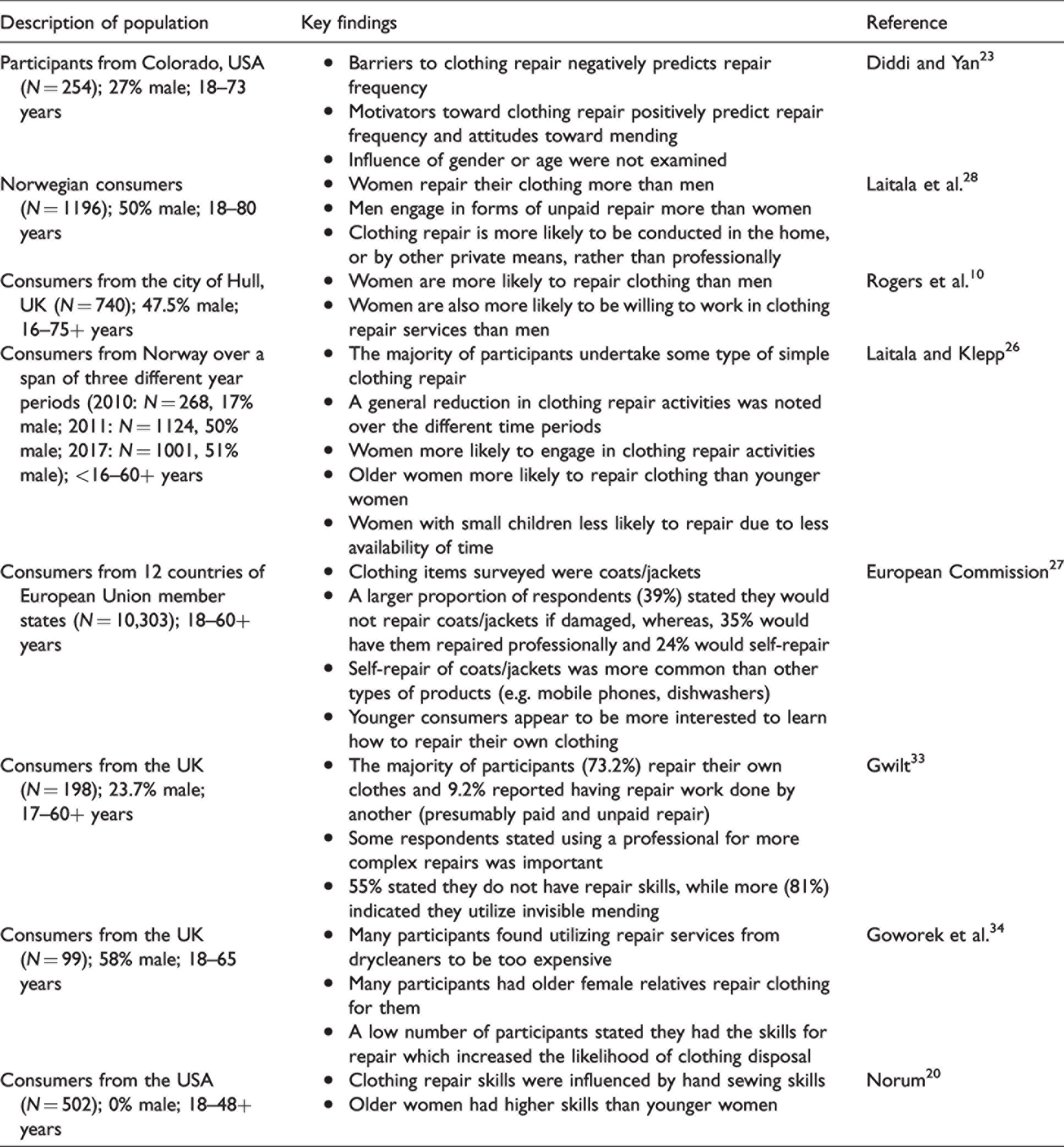
Besides asking family members or acquaintances to assist with repair of damaged or worn garments, access to those more skilled at clothing repair may also come in the form of professional services (such as tailors or mending services offered by dry cleaners), but also by way of retail stores or clothing brands. 28 The latter two options may not necessarily involve payment, as this could depend on the clothing brands’ warranties or practices around offering free repair services (e.g. Patagonia, Nudie Jeans Co.). A summary of studies examining clothing repair activities among consumers from various countries is given in Table 1. Community repair events which comprise important findings of the motivations behind clothing repair are not included in the summary table because they include data on participants who actively choose to engage in clothing repair.
Summary of findings from studies examining consumers’ clothing repair activities
The demographics of clothing repair
Engagement in clothing repair activities have been found to be dependent on both the gender and age of consumers, with sewing and mending part of the domestic chores which are traditionally viewed as within the woman’s domain. 2 The view of clothing repair as within the domain of women is supported in extant literature, which generally finds that women are more likely to carry out repair of their own clothing than men. In a study of Norwegian consumers women were more likely to get clothing repaired or altered than were men. 28 In terms of self-repair, 74% of women stated that they would repair clothing themselves and only 32% of men would carry out their own repairs. However, when it came to having others repair clothing for them, men were more likely to ask someone they know to repair their clothing (47%), while this was less common for women (26%). 28
As well as gender, age is a contributing factor to repair behavior. Older women are said to be more likely to have sewing skills, and subsequently repair more often, than younger women.20,26 This is particularly true between generations with greater age gaps (e.g. baby boomers versus generation Y). 20 Older female relatives are typically the ones sought out to complete repair tasks for men and for younger members of the family. 22 A general perception is that young consumers are not engaging in self-repair, they are less likely to know how to sew, and do not have the necessary interest in learning. 27 Therefore, understanding young adults’ propensity to engage in self-repair and other types of repair activities is important in constructing a framework of repair resources that will motivate younger generations toward a more repair-minded attitude.
Previous research examining demographic factors that influence clothing repair behaviors have examined wider age ranges.20,26,28 Our study examines these relationships within young adults to examine whether within a smaller age range these trends still apply. Therefore, hypothesis 1 and hypothesis 2 are proposed: Hypothesis 1: Women are more likely to engage in practices of clothing repair than men for self-repair (H1a), and paid repair (H1b), but are less likely to engage in unpaid repair (H1c). Hypothesis 2: Age will be positively associated with practices of clothing repair for self-repair (H2a), paid repair (H2b), and unpaid repair (H2c).
Repair practice and repair resources
Scholars who have examined clothing repair practices among various groups and communities have identified several barriers to consumers actively engaging with repair of their clothing. Repair barriers have been identified within the following dimensions: psychological, economic, behavioral, and practical. Psychological barriers relate to the negative perception of visibly mended clothing being associated with poverty and economic hardship.1,24 The association of mending as a domestic chore and essentially ‘women’s work’ also elicits negative connotations for many women as König asserts, there has been a ‘long history of female resistance to needlework’ (emphasis in the original). 2 However, many of the barriers are behavioral or practical in so far as they lack the embedded repair habit, or skills, tools and time to repair.23,24,31,34 Economic barriers also exist: on one hand, the cost of replacement of a damaged garment is so low it is often perceived as not worth the time or expense of getting clothing repaired.18,24,35 Alternatively, the cost of paying a professional to make repairs may be a prohibitive barrier for many.18,27,28
Not having the skills to repair has a direct impact on the useful life of any garment in an individual’s possession. In one report based on a survey of UK consumers conducted in 2011–2012, clothing that required repair was cited as a reason why some consumers had not worn particular garments in the past 12 months. Although physical, economic and psychological reasons were more dominant barriers to the wear and use of garments in one’s possession, many respondents still indicated that if they had the skills, more spare time, and/or access to clothing repair equipment, then they would be more likely to repair and therefore wear more of their unused wardrobe items. 9 Extending this, recent studies have found a significant negative relationship between perceived barriers to repair and reported frequency of repair activities. Barriers to repair were categorized into seven groups, including: lack of skills; time; inconvenience; changes in visual aesthetics and fit following repair; the cost associated with getting clothes repaired; and lack of access to repair services. 23 Hence, lack of sewing and clothing repair skills, which would mitigate almost all other barriers bar time and inconvenience, can be posited as the most critical barrier to repair practice becoming a behavioral norm.23,24
As much of the literature regarding clothing repair focuses on the identification of barriers to such behavior, there is a distinct gap in knowledge regarding repair resources required to motivate and sustain repair behavior among different groups of consumers. With sufficient repair skills there is an increased likelihood of self-repair. An increase in clothing repair within a household is significantly influenced when individuals in that household demonstrate greater sewing, repair and button replacement skills, 20 and a perceived match between skill levels and repair type will influence whether consumers will even attempt repair of clothing. 29 Studies have found that many individuals are willing to repair garments which had only a small amount of damage, but when the damage was more severe they were less likely to consider repairing the garment and would dispose of it instead.29,36 A lack of sewing skills combined with the low cost of clothing often makes consumers perceive of professional clothing repair as unfeasible, thus reinforcing the dominant mindset of many consumers that clothing is disposable. 34
Based on the literature, there is clear evidence that having repair skills will lead to garment repair; however, it is less clear what effect having the skills to repair (or absence of skills) has on other forms of clothing repair. Therefore, our study attempts to extend previous research related to self-repair by contributing a greater understanding of the relationship between repair skills and paid and unpaid repair as distinct categories of behavior under ‘repair’. Subsequently, hypothesis 3 is proposed: Hypothesis 3: Having repair skills will be positively associated with practices of self-repair (H3a); but negatively associated with paid repair (H3b), and unpaid repair (H3c). Hypothesis 4: Access to repair tools will be positively associated with self-repair (H4a), but negatively associated with paid repair (H4b), and unpaid repair (H4c). Hypothesis 5: Priority given to clothing repair will be positively associated with repair practices for self-repair (H5a), paid repair (H5b), and unpaid repair (H5c).
The financial cost associated with professional repair services has been identified as a barrier for many consumers to engage in paid repair.18,27,28 Conversely, if the cost is not perceived as expensive, this should lead to paid repair. In the current literature, the relationship between perceived cost and self-repair or unpaid repair has not been well examined. Thus, hypothesis 6 is proposed: Hypothesis 6: The perceived cost (expense) of paid repair will be negatively associated with self-repair (H6a), and unpaid repair (H6b), but positively associated with paid repair (H6c).
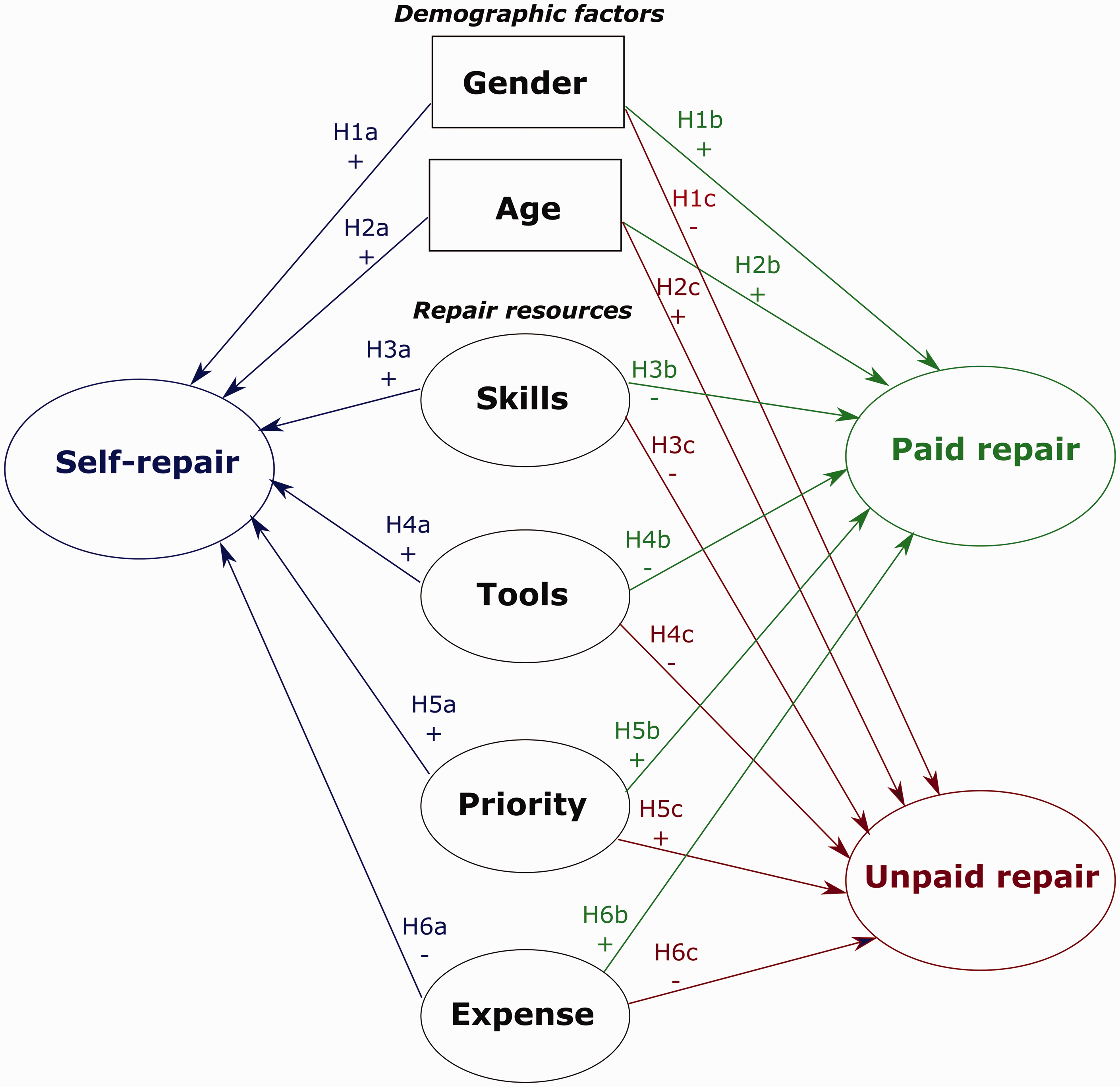
Conceptual model consumer repair practice.
Methods
Data collection
A survey was developed to measure repair practice among young consumers. An invitation and link to the survey was disseminated to University of Alberta students through the student online weekly newsletter, which was emailed to all undergraduate and graduate students. A total of 523 valid survey responses were used for this study, consisting of 262 (50.1%) women and 261 (49.9%) men. The average age of respondents was 22.3 ± 4.0 years, with a range of 18 to 34 years. This age group represents an important demographic as being high purchasers of fast fashion41,42 while being increasingly aware of sustainability issues. 43
Measures
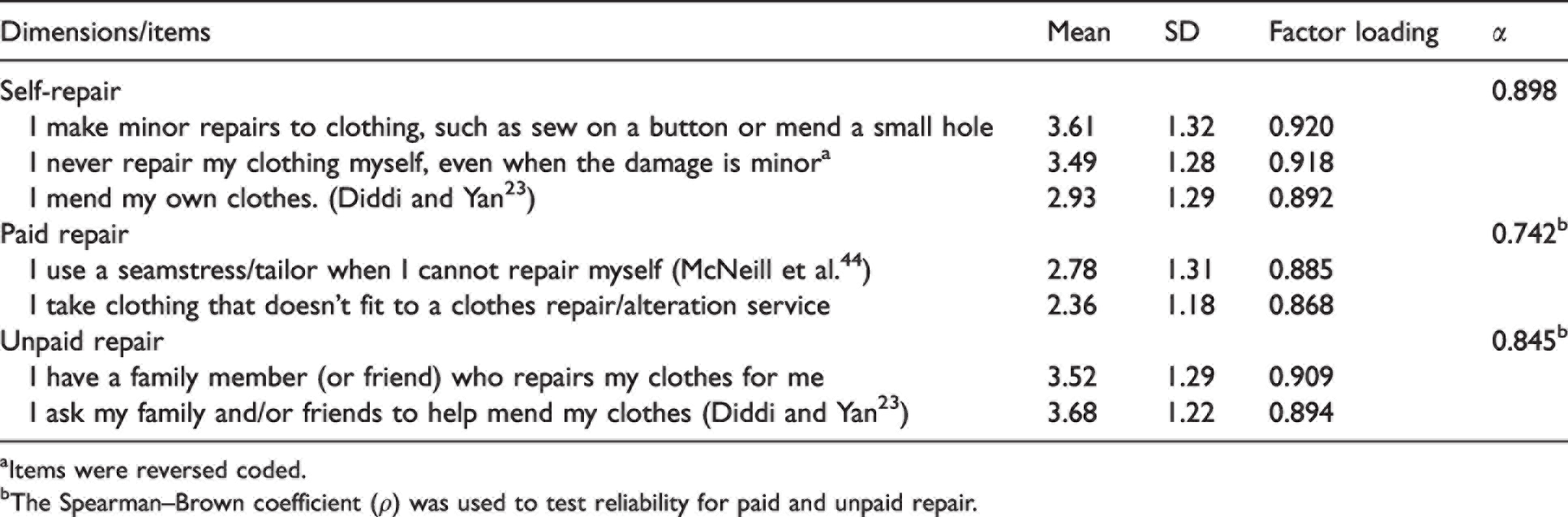
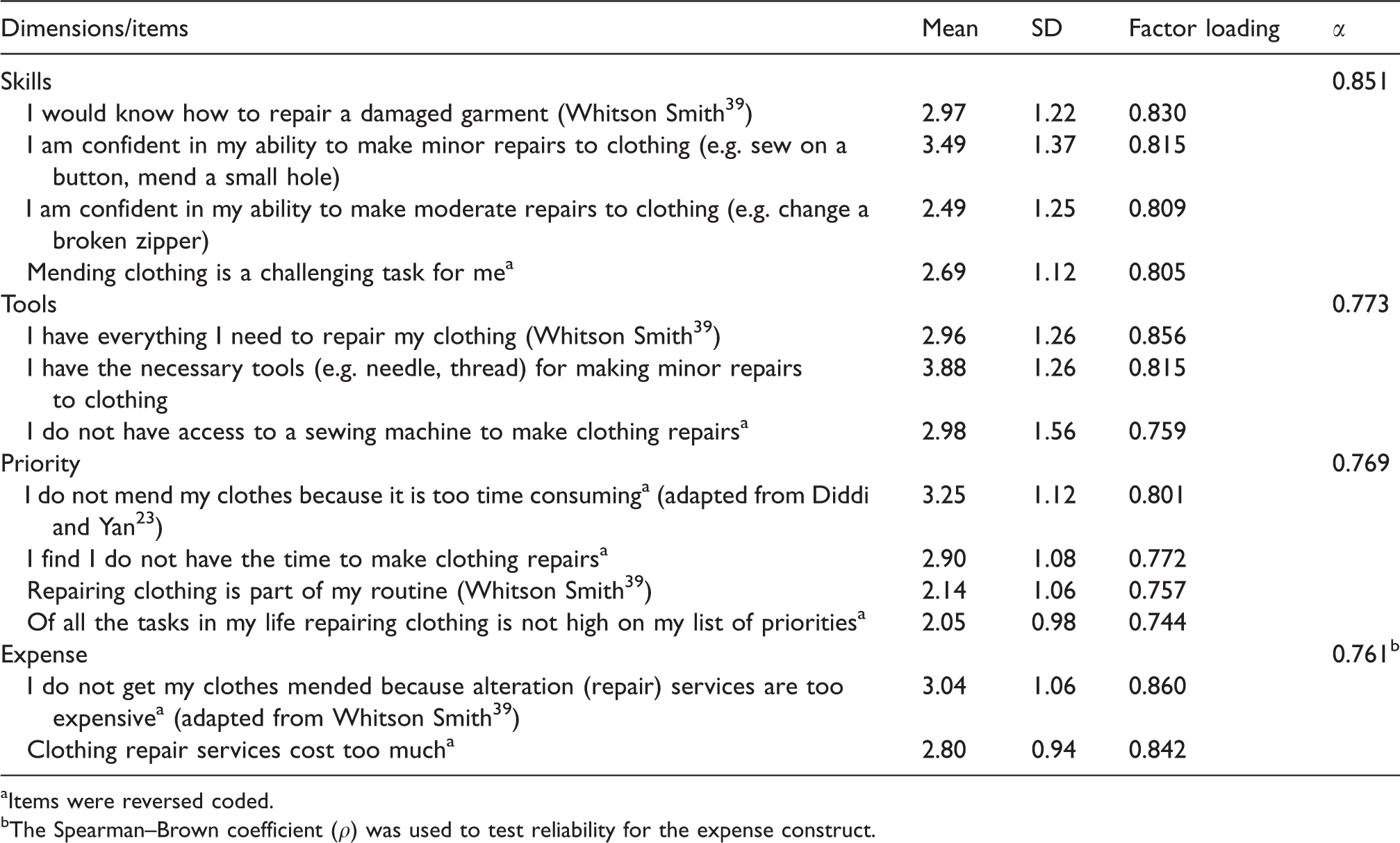
Seven multi-item clothing repair scales were developed for this study to measure clothing repair practices (self, paid, and unpaid repair), and resources toward repair (skills, tools, priority and expense). Individual items for the repair scales were taken directly, or modified, from previous research when applicable,23,39,44 as well as additional items related to repair that were developed for the survey (Table 2 and Table 3).
Repair practice scales (N = 523)
aItems were reversed coded.
bThe Spearman–Brown coefficient (ρ) was used to test reliability for paid and unpaid repair.
Repair resources scales (N = 523)
aItems were reversed coded.
bThe Spearman–Brown coefficient (ρ) was used to test reliability for the expense construct.
The three dependent variables measuring self-repair, paid repair and unpaid repair practices were formed from multi-item scales utilizing five-point Likert scales consisting of: (1) strongly disagree to (5) strongly agree. Initially an exploratory factor analysis (EFA) was carried out on 11 items, all relating to the various forms of clothing repair practices. An oblique rotation was carried out and three factors were extracted which had factor loadings of more than 0.40. 45 Next, the reliability of each set of items was assessed by the Cronbach’s alpha coefficient (α) for scales of three or more items and the Spearman–Brown coefficient (ρ) for scales with only two items. During this step the corrected item total correlations were assessed and items that had an item total correlation below 0.50 were removed. 46
This process resulted in a self-repair construct made up of three items ‘I mend my own clothes’, ‘I make minor repairs to clothing, such as sew on a button or mend a small hole’ and ‘I never repair my clothing myself, even when the damage is minor’ with a Cronbach’s alpha of 0.898. The paid repair construct was made up of two items ‘I use a seamstress/tailor when I cannot repair myself’ and ‘I take clothing that doesn’t fit to a clothes repair/alteration service’ with a Spearman-Brown coefficient of 0.742. The unpaid repair construct was initially made up of three items based on the above-mentioned criterion. However, although the item ‘I never have my clothing repaired by someone else’ did not cross-load with the paid repair scale items, it logically appeared that it could also relate to paid repair. Therefore, this item was removed from the scale, with a resulting Cronbach’s alpha change of 0.797 (for all three items) to a Spearman-Brown coefficient 0.845 for the remaining two items: ‘I ask my family and/or friends to help mend my clothes’ and ‘I have a family member (or friend) who repairs my clothes for me’. The three final constructs making up the dependent variables of repair practice are shown in Table 2.
Four independent variables measuring resources that facilitate repair were classified as repair skills, tools, priority toward repair, and expense related to repair. Rather than using the term ‘barriers’, which suggests absence, items were framed as ‘resources’. Repair resource was also measured on a five-point Likert scale from (1) strongly disagree to (5) strongly agree. In the development of the repair resources scale items, it was expected that there would be collinearity among some of the items (e.g. someone having repair skills will be likely also to have repair tools). Therefore, from the 17 items included in the survey, groupings were made according to categories they should most likely relate to. Four separate EFAs were then carried out on each of the proposed constructs. Each set loaded onto one factor with a loading of 0.40 or higher. 45 The reliability coefficient of each set of items was assessed. As per the dependent variable, during this step an item that had a corrected item total correlation below 0.50 was removed from the final construct. 46 The final four constructs that made up the independent variables, their factor loadings and reliability coefficient values are shown in Table 3. The reliability coefficients ranged from 0.761 to 0.851.
Data analysis
Means and standard deviations (SDs) of individual scale items and final constructs were calculated. Multivariate hierarchical regression models were used to examine the contribution to variation in each of the three repair practice measures of the demographic variables, repair resources measures and the two-way interactions between the repair resources measures. Thus the first step in the model was the demographic variables of gender and age. Gender was coded as ‘0’ for men and ‘1’ for women. Age was added to the model as a continuous variable. The second step in the model included the four repair resources measures. Scales with multiple items were averaged to form composite scales, with the mean centered to address issues of multicollinearity. 47 In step 3, the interaction effect between mean centered repair resources was included. All statistical analysis was carried out using IBM SPSS version 26.
Results
Descriptive results
Means and SDs for dependent and independent variables are shown in Figure 2 by gender, and in Figure 3 by age group. Respondents reported utilizing paid repair services less than carrying out self-repair or engaging in unpaid repair (Figure 2 and Table 2). Women engaged in self-repair activities more than men, while men were slightly more likely to use unpaid repair. The youngest group of respondents (18–24 years) were less likely to use paid repair and more likely to engage in unpaid repair compared with the older two age groups (Figure 3).
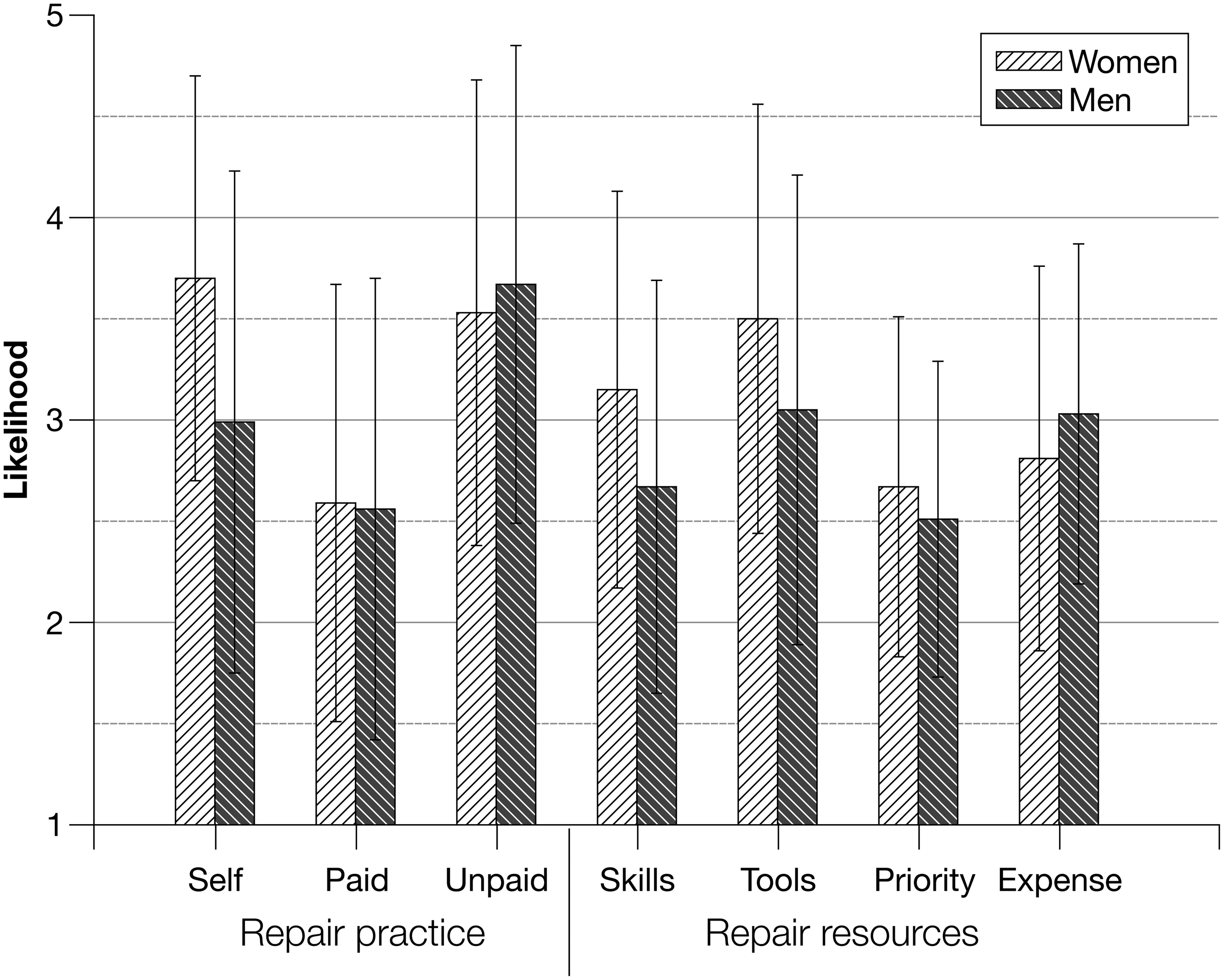
Mean (± standard deviation (SD)) for repair practice and repair resources by gender (women N = 262; men N = 261).
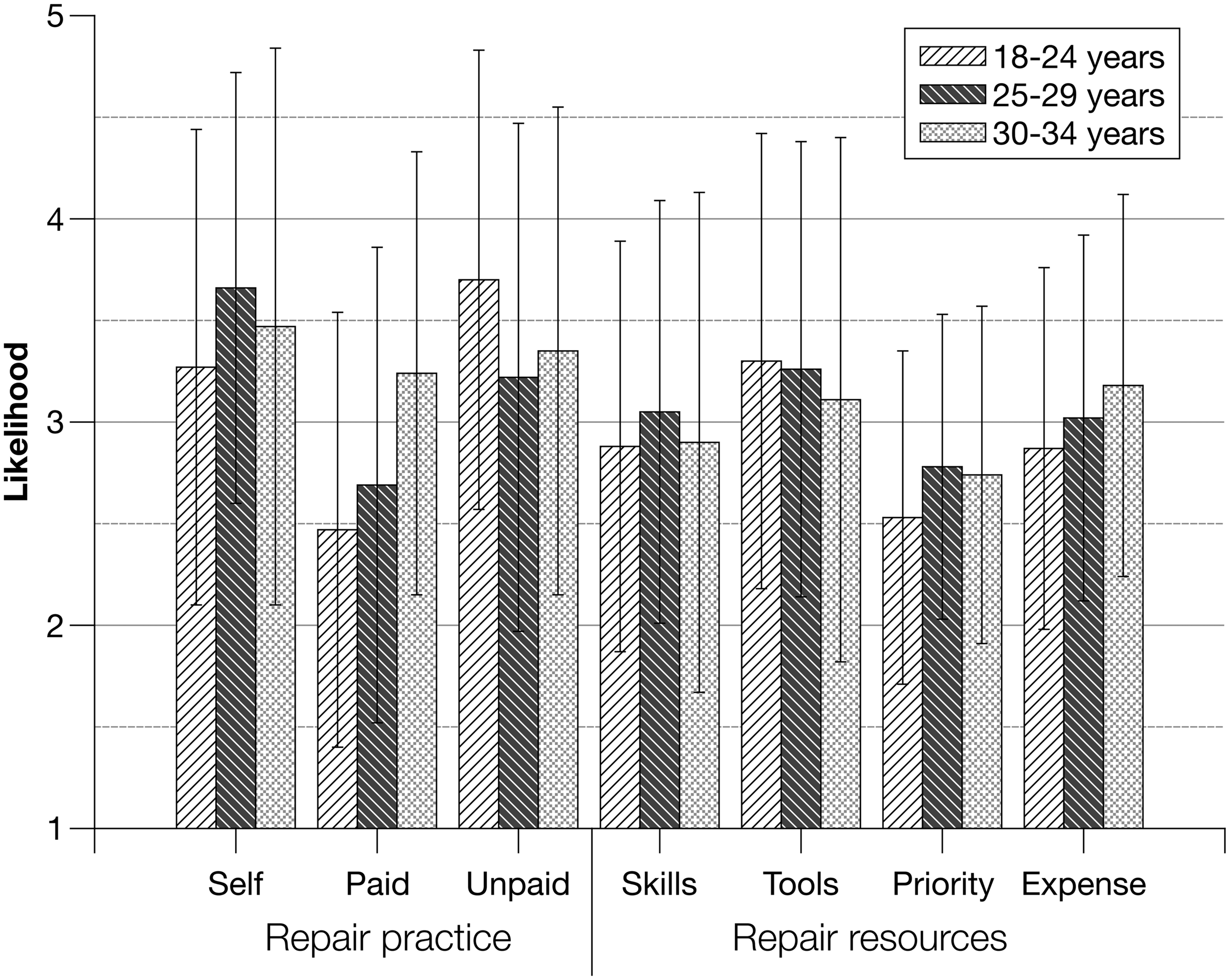
Mean (± standard deviation (SD)) for repair practice and repair resources by age (18–24 years N = 396; 25–29 years N = 83; 30–34 years N = 44).
Among repair resources, the availability of repair tools was found to be higher than having repair skills or placing a priority on carrying out repair. Men were likely to view the expense of paying for repair services to be slightly less prohibitive than did women (Figure 2), as did those in the older age cohorts of the sample (Figure 3).
Hypothesis testing
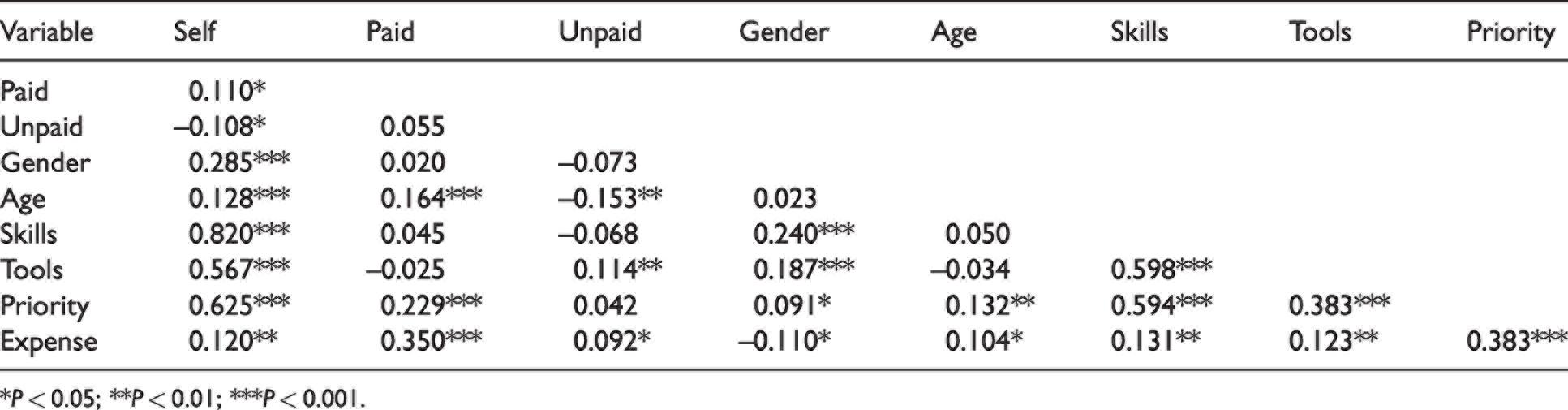
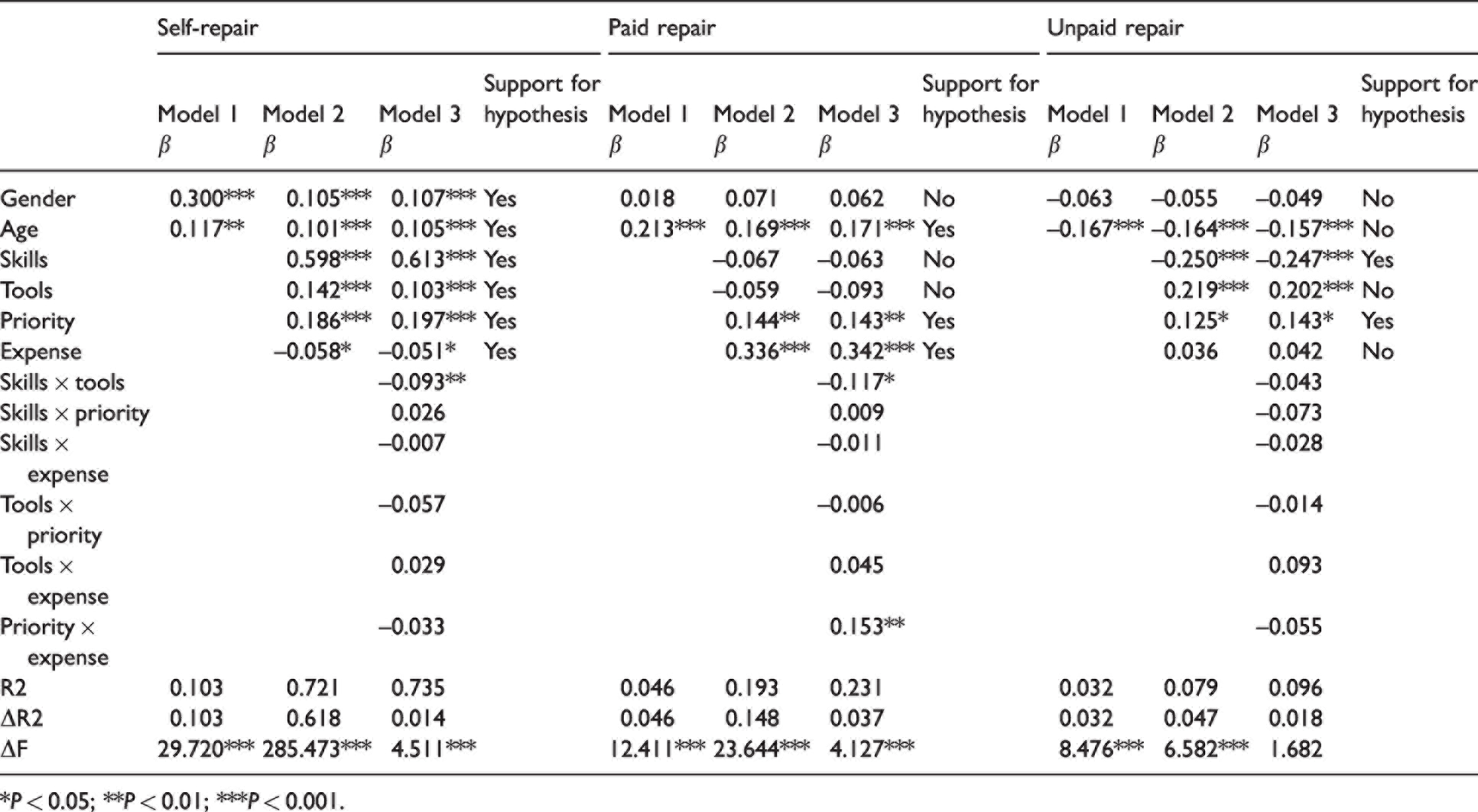
Correlations between all variables (dependent and independent) are shown in Table 4. Results from the hierarchical multivariant regression analyzing the association between selected demographic factors and clothing repair resources to repair practices of self-repair, paid repair and unpaid repair are shown in Table 5.
Spearman’s rho correlations of repair variables
*P < 0.05; **P < 0.01; ***P < 0.001.
Hierarchical regression analyses for clothing repair practices
*P < 0.05; **P < 0.01; ***P < 0.001.
The first step of the regression included the demographic variables of gender and age. The demographic variables accounted for 10.3% of the variance for self-repair, and only 4.6% and 3.2% of the variance for paid repair and unpaid repair, respectively. Gender predicted self-repair with women being more likely to carry out self-repair on their clothing than men. Therefore, the first hypothesis for self-repair (hypothesis H1a) was supported. However, gender was not a predictor for either paid repair or unpaid repair, hence hypotheses H1b and H1c were not supported. Age was a predictor for self-repair and paid repair, with older respondents being more likely to carry out both types of repair practices than younger respondents. Thus hypotheses H2a and H2b were supported. However, age negatively predicted unpaid repair which was significant. Thus hypothesis H2c, that older respondents would engage in unpaid repair, was not supported.
The second step of the analysis included the repair resources variables, while keeping the two demographic variables in the model. At this step an additional 61.8% of the variance was explained in self-repair practices with the entire model 2 explaining 72.1% of the total variance. For paid repair resources to clothing repair explained an additional 14.8% and for unpaid repair an additional 4.7% of the variance. Hypothesis H3a proposed that having repair skills would positively predict self-repair. This hypothesis was supported, as a positive relationship between skills and self-repair was found. Hypothesis H3c was also supported, as a negative relationship between unpaid repair and skills was obtained (β = –0.250, P < 0.001). However, hypothesis H3b, that repair skills would be negatively associated with paid repair, was not supported as the coefficient was not significant.
Having access to repair tools, such as a sewing machine or needle and thread for minor repairs, was also positively associated with self-repair. Hence hypothesis H4a was supported. While tools did predict unpaid repair (β = 0.226, P < 0.001), hypothesis H4c was not supported as the relationship was positive rather than negative. Hypothesis H4b for paid repair was also not supported, as the relationship between tools and unpaid repair was nonsignificant. Priority toward carrying out repair was supported for self-repair (hypothesis H5a), paid repair (hypothesis H5b), and unpaid repair (hypothesis H5c). Finally, the expense of clothing repair negatively predicted self-repair (β = –0.059, P < 0.05), and positively predicted paid repair (β = 0.333, P < 0.001) (hypotheses H6a and H6c). However, the expense related to paying for clothing repair services was not significant for unpaid repair. Therefore, hypothesis H6b was not supported.
Interactions among clothing repair barriers
Interactions between two repair resources were examined in model 3 for each type of clothing repair practice. In this third step an additional 1.7%, 3.7% and 1.8% of the variance was explained for self-repair, paid repair and unpaid repair, respectively. For self-repair a significant interaction occurred between skills and tools (β = –0.093, P < 0.01). This interaction was negative, indicating that with higher than average skills, tools were lower than average, or vice versa. A significant interaction between skills and tools was also found for paid repair (β = –0.117, P < 0.05). Also, a significant interaction between priority and expense was found for paid repair (β = 0.153, P < 0.01).
Discussion and conclusions
This study makes a significant contribution to our understanding of repair resources (often framed as repair barriers), gender and age of young adults’ behavior toward engaging in clothing repair practices. The contribution can be recognized in multiples ways. We distinguished among three types of repair practices. Previous studies have addressed different types of clothing repair, in terms of differentiating between private or professional repair,26,28 or combining the different forms of repair within a more general construct of clothing repair. 23 However, our research has extended repair constructs further by identifying the distinct features of self, paid and unpaid repair practices, and examined the influence repair resources have on each type of repair.
Clear trends related to age were observed for all forms of clothing repair. Older consumers were more likely to carry out self-repair and pay for professional repair of their garments. This is consistent with findings from other research, in which older consumers were more likely to engage in clothing repair.20,26 However, our findings are novel in that they indicate the role of age in repair choice, even within a relatively narrow age band (18–34 years). Furthermore, it is particularly noteworthy that the youngest consumers (18–24 years) within this overall group of young consumers were more likely to have a friend or family member repair clothing for them. Our findings revealed some interesting characteristics of young adults that may be related to their living circumstances.
The most likely reason younger consumers utilize unpaid repair more than older consumers may be because they live with an older relative (presumably a mother) who carries out repairs for them. Respondents were not asked about their living arrangements so this explanation is speculative, but it seems highly likely based on the university sample population as many undergraduate students are local and continue to live at home while carrying out their university studies. In addition, a positive relationship between repair tools and unpaid repair was found. This suggests that respondents who have family (or friends) who repair clothing for them most likely live together. Whereas older respondents, possibly senior or mature undergraduate students and also graduate students, may have moved away from home and do not have the same access to someone who can carry out repairs for them. Instead, they have to become responsible for conducting their own clothing repairs.
The findings of this study related to unpaid repair make a significant contribution to our understanding of repair culture among young consumers, and the opportunities they have toward acquiring repair skills. However, further investigation is warranted as the motivations for unpaid repair have not been fully tested in our study. Do these students who use unpaid repair ask to have their clothes mended? Or do their mothers (or other unpaid repairers) instigate the repair because they notice their clothing needs repair? If the latter, will many of these young adults acquire an appreciation of having their clothes mended, to the point that they will want to continue with repair practices once they have left home? Examining the instigating factors that lead to unpaid repair would be beneficial in determining how this generation can become future repairers. Furthermore, repair is an essential component to a successful circular economy presenting high on the waste hierarchy as it contributes to reuse and reduce, 12 then our findings have important implications for clothing brands in their sustainability initiatives. That is, as many young consumers have the access to repair tools, but not necessarily the skills, then messaging from brands promoting valuing repair should be made through their online and in-store marketing. Many outdoor apparel brands have been offering repair services, tools and tutorials for their consumers (e.g. Patagonia), but this should become an industry-wide approach which includes fashion apparel.
Traditionally, mending clothing and household linens was a domestic chore carried out by women. 2 Our finding supports that from other research in which more women reported repairing clothing than men, 28 and noted the prevalence of women over men participating in community clothing repair workshops. 16 However, we found there to be no significant differences among men and women in terms of their propensity toward paid and unpaid repair, which differs from the literature. Laitala et al. found that more men reported utilizing unpaid repair than did women in their study, in which the age ranged from 18 to 80 years (with about 54% of the sample being 45 years or older). 28 It seems likely that wives or partners conducted much of the unpaid repair in this context, which would account for a larger proportion of male respondents reporting using unpaid repair. Whereas in the context of this study, which examines repair behavior among younger adults at a university, such a marked difference between genders may not yet be apparent. No age by gender interaction was found in the current study (data not shown), but with a wider age range such differences may be evident in a general Canadian population. Examining the interaction between age and gender among a sample that represents a wider age range would be of interest in future research. However, young consumers were the primary focus of the current study because they comprise a population of high fashion consumers41,48 and therefore understanding their clothing repair behaviors is useful if we want to enact social/behavioral change to prolonging clothing life.
A main aim of this research was to examine the influence of perceptions of clothing repair resources on young consumer’s propensity to repair clothing. Unlike prior studies of repair barriers, this study considered resources in such that individuals have the skills, tools, time (and therefore will prioritize repair) and finances. Having the skills to repair, access to repair tools, and prioritizing repair activities were strongly predictive of the self-repair of clothing. Whereas the perceived high cost of professional repair was negatively associated with self-repair. These four variables explained the majority of the variance for the self-repair construct (more than 60%) and therefore are highly important for informing our understanding of young consumers’ self-repair activities. Furthermore, the interaction between skills and tools indicates that while some young consumers may have the skills to conduct repairs, they may be limited by not having access to repair tools, or vice versa. Perhaps in order to carry out their own clothing repairs they must borrow, rent or make do with only inadequate repair tools (that is, they do not have access to everything they need to repair). Conversely, other young consumers may have access to a needle, thread and sewing machine, but they may lack confidence in their actual skills (but still manage to muddle through and carry out some simple clothing repairs). This interaction between skills and tools highlights the significance of community repair events where repairers can come together, sharing and gaining access to repair tools, while learning from, and sharing their knowledge and skills with, others.16,31
Based on the multivariant analysis, the perceived expense of repair was negatively associated with self-repair, as hypothesized. That is, young consumers who perceived the cost of repair to be too expensive were less likely to engage in self-repair. However, when the perceived expense of paying for repair services was correlated with self-repair a significant positive association was found (see Table 4). In the work by Laitala et al. consumers were found to carry out their own basic clothing repairs, but for more complicated clothing repairs many self-repairers would take these items to a professional. 28 This could explain the positive correlation in our study between expense and self-repair, as many who repair themselves also take some more challenging repairs to a professional, as they value the outcome of the repair process generally. However, when skills and tools are also considered in the relationship, these factors mediate the effect of perceived expense on self-repair, suggesting that many self-repairers consider themselves sufficient in their overall repair capability (in having the skills and tools to repair to the extent they feel they need), which makes paying someone else to repair for them not economically desirable. Nonetheless, reducing the financial barrier of clothing repair is an important goal toward achieving a circular economy. Therefore, increasing access to professional clothing repairers while lowering the cost to the consumer should be considered by government in policies aimed at waste reduction strategies within the broader climate change policy agendas. 49
Unlike self-repair, the four variables of skills, tools, priority and expense explained far less variance for paid and unpaid repair (∼15% and ∼5%, respectively). This suggests that other, potentially hidden, factors come into play in determining whether consumers will engage in paid and unpaid repair. Nonetheless, some significant relationships emerged from the data that are of interest to our understanding of paid and unpaid repair. First, prioritizing repair activities predicted both paid and unpaid forms of repair. Mending one’s own clothing can be particularly time-consuming, so people must make time and prioritize self-repair in order to get it done. This was clear in the reported relationship between priority and self-repair. However, prioritizing repair also appears to be important when repairs are conducted by others. Organizing and separating damaged garments and taking them to a professional repair service, or asking a family member or friend to repair, requires a certain amount of active engagement toward clothing repair. This intention requires some effort, time, and also a sense that repairing clothing is valuable, in order to prioritize it in one’s schedule.
Second, as hypothesized, consumers who do not consider professional repair services to be too expensive were more likely to engage in paid repair. What may be missing from this finding is a clearer understanding of what aspects of expense are factored into an individual’s perception of the cost of repair. For example, is it a relative cost related to the original price of clothing they purchase? Or is repair prioritization based on personal or household incomes? Potentially, the perceived cost of paid repair could be associated with an inherent value system, or consumption behavior they may align with (e.g. frugality, environmental concern). 50 Furthermore, cultural and social elements may impact the relative norms of repair for individuals. Future research that directly explores the economic and social relationships between consumer values and engagement with repair is thus warranted.
Third, although consumers who utilized unpaid repair did not have repair skills, they did have access to repair tools. The significant relationship between repair tools and unpaid repair was therefore an unexpected finding of this study, and highlights the potential for education and assistance with repair upskilling of this group (who, ostensibly, already have the physical resources to close the repair loop). As mentioned previously, this finding suggests that most consumers who utilized unpaid repair live with the person who repairs their clothing for them. So even though they do not have the skills to repair they do have access to the repair tools such as a sewing machine. This has implications for determining how to encourage young adults to learn the skills from their older relatives, presumably mothers and grandmothers, while they are still living with them, so they can continue on as self-repairers once they move away from home. This is a critical finding for understanding the importance of community within resource-based views of consumer behavior, in which the role of consumers as co-producers within the servicescape of garment life extension extends to all actors within the consumption community – hence the weight of responsibility on those who are skill-resource rich to upskill those who are not.
This study examined young Canadian consumers, and therefore generalizations to other older or international groups on their clothing repair behaviors are limited. However, the study through the reconceptualization of repair barriers to those of resources, and the distinction between self, paid, and unpaid repair practice raises findings that have practical implications for fashion brands, policy makers, educators, and communities. In sustainability messaging brands can increase their messaging to young fashion consumers on the role of repair in valuing their clothes. Policies at the local, provincial, and federal levels that focus on managing textile waste should be directed at the affordability of paid repair, and increase access to clothing repair professionals. The role of repair events within community toward upskilling young consumers continues to be an important avenue for engagement in repair activities.
Footnotes
Acknowledgements
The authors would like to thank Dr Linda Dunn, Dr Sarah Wakes and Ms. Lauren Degenstein for their feedback on the survey.
Declaration of conflicting interests
The author(s) declared no potential conflicts of interest with respect to the research, authorship, and/or publication of this article.
Funding
The author(s) received no financial support for the research, authorship, and/or publication of this article.
