



Abstract
The rapid growth in global clothing consumption has resulted in significant environmental impacts, notably through increased textile waste. This study investigates use-oriented services and repurpose strategies as potential solutions to mitigate the environmental consequences associated with fast fashion. Despite rising awareness, limited access to affordable, eco-friendly alternatives remains a barrier to responsible fashion consumption. This research addresses this gap by analyzing consumer behavior toward second-hand clothing through survey analysis and evaluating the feasibility of establishing a Clothing Library (A clothing library is a community-based initiative modeled after traditional book libraries, where individuals can access preloved garments instead of books. It offers an alternative to fast fashion by allowing users to purchase second-hand clothing, thereby supporting sustainable consumption while fulfilling the desire for novelty and variety in personal style.) through detailed operational cost assessments and economic analyses. The proposed Clothing Library aims to transform consumer behavior by extending clothing’s lifespan and promoting second-hand items. Key findings indicate that the Clothing Library concept is financially viable, demonstrating potential profitability with a break-even point achievable within 6 months. Moreover, the study reveals strong consumer motivation driven by affordability and environmental awareness among women aged 20–30. Additionally, the operational model demonstrates that structured refurbishment and resale strategies effectively reduce textile waste and enhance consumer satisfaction. The anticipated outcome is to normalize and increase the preference for second-hand clothing, thereby reducing the demand for new garments and decreasing production-related environmental waste.
Keywords
Introduction
The global consumption of clothing and textiles expanded due to fast fashion trends and low prices, leading to a significant amount of textile waste. The fast fashion changes fuel this throwaway culture and have a detrimental effect on the environment. 1 Excessive utilization and production of novelty harm the environment and society. Textile waste increases the amount of waste produced. In 2014, estimates from different research indicate that the worldwide textile industry produced 92 million tons of textile waste, of which only a small portion gets recycled and reused. In addition, it is predicted that the amount of textile waste produced worldwide will rise by 60% a year, producing an extra 57 million tons of waste annually, for a total of 148 million tons.2,3
These concerns are leading to the need to find an alternative. The EU Circular Economy Action Plan was introduced in 2021 and seeks to accelerate the shift to a circular economy to help the EU achieve its goal of being carbon neutral by 2050. It includes steps like expanding the parameters of eco-design laws, empowering clients to make eco-friendly decisions, and putting plans in place for sustainable textile production. A follow-up package introduced in 2023 limited the use of environmental (“green”) claims by businesses and established a legal right to product repair, aiming to prevent misleading sustainability marketing.
A follow-up package limited the use of “green” claims by business organizations and established a right to product repair in 2023 was introduced.4,5
In 2024, the directive was approved (with the support of Minimum Energy Performance Standards, MEPs) to mitigate expected wear and tear, increase product reparability and durability, and reinforce consumer rights. The directive prioritizes consumer choice and sustainability, emphasizing less expensive and easier product repair rather than replacements. The circular economy reduces overwhelming resource consumption through business models, thereby proposing sustainable production and consumption. Circular business models generate value, improve resource efficiency, and prolong the life of products and services. 6 The 10 R-Imperatives, which focus on reducing resource use through altered consumption (such as those found in R0: discard, R1: reduce, and R2: resell/reuse) and production patterns (such as those found in R5: remanufacture and R7: recycle materials), contain concepts that are extremely similar to those found in the circular economy. 7
Second-hand clothing has emerged as a major trend in the fashion industry’s drive for sustainability, offering consumers a way to express their individuality while highlighting moral and environmental concerns. Consumers are increasingly using second-hand clothing as a less expensive option as the drawbacks of fast fashion become more apparent. This prolongs the life of clothing and decreases waste. The used clothing promotes resource conservation and the circular economy, helping local companies and community projects. Therefore, it has significant positive social and environmental implications. As a result, consumer movements urging responsible behavior and lower consumption have expanded. Reusing, repurposing, and sharing things are the focal points of these movements. Driven by these motivations and attracted by excellent quality and affordable costs, up to 15% of Americans now visit thrift stores annually.8,9
Customers typically purchase second-hand clothing from online sellers, small boutiques, consignment stores, family members, and charities. The renting and trading of clothing has also gained popularity recently. 10 We can lessen our environmental impact and improve the community by exchanging goods through exchanges, shared wardrobes, and community libraries. 11 This study focuses on sustainable consumption, highlighting the need to promote products that serve multiple users and decrease the demand for freshly manufactured commodities. Sustainable consumption requires individuals to limit their use of environmental resources to their equitable “earth share”—the portion of global resources available per person for long-term ecological balance and social equity. The environmental benefits of recycling, remanufacturing, reusing, and reconsidering products and processes are obvious.12,13
Customers purchase second-hand clothing due to low prices. Customers love to look for discounts and unique products. Clothing libraries, like book libraries, let consumers buy second-hand clothing, encouraging sustainable consumption by extending the life of each item and lowering the need for new ones. As they offer a collaborative consumption model and prolong the life of garments, these libraries benefit the economy and the environment. Clothing libraries help existing and emerging designers by providing luxurious designer items and enabling customers to update their collections. By making new clothing accessible without encouraging overproduction and stockpiling, they provide an alternative to typical fashion consumption. 14
Clothing libraries repurpose clothing and distribute it into the market. Particularly in this fast-fashion era, clothes have a shorter lifespan than ever before, yet style is becoming disposable. The annual waste of several million tons of textiles is causing a serious problem. The volume of clothing already produced globally is so large that, if reused effectively, it could meet consumer needs for several decades without requiring new production. Despite challenges like fitness and accessibility, social media and influencers contribute to the growing popularity of used clothing. Besides just a consumer desire, used clothing represents a shift in the fashion industry toward an ethical and ecological model, consistent with initiatives like clothing libraries that promote sharing and repurposing clothing resources. Adopting used clothing can contribute to the development of a more sustainable society, one wardrobe choice at a time. 14
The sustainable fashion industry is projected to experience significant growth in the coming years. Currently valued at $6.5 billion, the market is expected to reach $10.1 billion by 2025 and $15 billion by 2030. This growth is driven by an annual growth rate of 8.3%. Furthermore, the industry is expected to generate up to 18 million new jobs by 2030, demonstrating its potential for employment. Resolving the problems brought on by fast fashion might provide an estimated $192 billion in benefits for the world economy. Additionally, it is anticipated that sales of sustainable products will increase at a rate of 5.6 times faster than non-sustainable products, highlighting the growing desire from consumers for eco-friendly fashion solutions. Research from the Global Fashion Agenda, Harvard Business, IISD, and Research & Markets supports these findings. 15
At the current rate, clothing sales are expected to exceed 160 million tons by 2050, according to statistics provided by Roundup.org. We own 60% more clothes than we did 15 years ago, but only wear them half as often, which means more production and less consumption. The average person discards 81 pounds of clothing annually, according to EPA statistics. 16 Worldwide data indicates that up to 100 billion new clothes are produced yearly, and 92 million tons of textile waste are produced worldwide. According to data from Harvard Business, IISD, data & Markets, and the Global Fashion Agenda, the sustainable fashion industry is projected to develop substantially in the next years. 15
According to Statista’s Second-Hand Apparel dossier, the value of the global second-hand clothing market is expected to reach $84 billion by 2030, up $56 billion in just 10 years. 17 In recent research, Armstrong et al. 18 delved into comparing renting and buying clothing, revealing the financial benefits and low-risk trials associated with renting. Their findings underscored the preference for use-oriented services, such as clothing libraries, over ownership. Key to the success of these services were established brands and quality assurances. The emerging provider of repurposed clothing and upcycling provide an attractive alternative to the excessive manufacturing of fast fashion.
The global second-hand market is expected to develop three times faster on average than the garment market overall, according to Thredup’s Resale Report 2023, and reach a value of $351 billion by 2027. 19 Albinsson and Yasanthi Perera explored collaborative consumption, emphasizing access over ownership, while Korobar highlighted the advantages of Product Service Systems (PSS) in shifting from goods to services. The growing number of repurposed clothing and upcycling provide an attractive alternative to the excessive manufacturing of fast fashion.20,21
The rising demand for ethically and sustainably made clothing was investigated by Koszewska 22 , shedding light on its influence on consumer decisions. Pal 23 examined value generation in the used clothing network, emphasizing business model diversity and environmental benefits. Pedersen and Netter studied the potential of clothing libraries, offering alternatives to traditional shopping despite challenges in resources and consumer habits. The concept of clothing libraries aims to revolutionize the textile industry through diversity while reducing consumption and acknowledging the challenges of disrupting traditional purchasing patterns. Iran and Schrader focused on Collaborative Fashion Consumption (CFC), aiming to reduce fashion industry waste through new usage patterns.24,25
Psychological factors influencing used clothing purchases, such as contamination perception and environmental consciousness, were explored by various scholars. Zaman et al. 26 analyzed consumer orientations toward thrift stores, highlighting varying motivations for purchasing used clothing. Sorensen and Johnson Jorgensen 27 investigated Millennials’ attitudes toward fast fashion and second-hand clothing, emphasizing social and environmental concerns. Studies by Liang and Xu, Kwon et al., and Degenstein et al. delved into factors influencing clothing disposal, including boredom, physical condition, and structural damage.8,28,29 Gray et al. 30 examined business models for extending clothing usage, stressing the environmental benefits and the importance of garment repair services.
The concept of clothing libraries aims to revolutionize the textile industry by offering diversity while reducing consumption and acknowledging the challenges of disrupting traditional purchasing patterns. The idea of the clothing library is to change the textile industry rather than destroy the tradition of buying clothing. The perceived advantages include the financial gain from reduced prices for used clothing, the hedonistic value from treasure-seeking, uniqueness from the characteristics of the product, and the environmental benefit from consuming fewer new things. 14
Clothing libraries provide an actionable way to reduce the environmental impact of fashion and build community resilience by encouraging resource sharing and sustainable consumption. This study highlights the importance of implementing sustainable fashion methods and promotes novel concepts that put the wellness of the earth and society first. 31 This model leverages the appeal of affordable luxury while promoting circular economy principles by extending the lifespan of garments and reducing the demand for new production. The concept of a clothing library offers a practical solution to the growing problem of fashion waste and a sustainable alternative that aligns with the modern consumer’s increasing preference for eco-conscious choices. As more people seek to balance fashion with environmental responsibility, clothing libraries represent a promising intersection of sustainability and style, reshaping how we perceive value, and ownership in the fashion industry.10,32
The clothing library model represents a novel approach to sustainable fashion consumption, offering a platform for shared access to high-quality second-hand clothing. This innovative concept addresses the growing concern of textile waste while promoting responsible consumption patterns and normalizing the use of second-hand items. Furthermore, our study fills significant research gaps by analyzing consumer behavior toward second-hand clothing in the context of developing countries, where such models are still emerging. We evaluate the feasibility of establishing a clothing library business model tailored to local market conditions, an aspect that has not been extensively documented in existing literature. Additionally, we investigate the operational and economic implications of clothing libraries, thereby contributing to the broader discourse on collaborative consumption and sustainable business practices. These insights highlight the significance of the clothing library concept within the context of sustainable consumption and its potential to influence future research and practice.
Methods
The success of clothing libraries in the West suggests promising opportunities for similar sustainable business models to be explored and adapted in Eastern markets. Furthermore, no feasibility study is present in the literature to give a proper idea to business owners of what resources and investments are needed to form a clothing library. This research aims to investigate and promote the feasibility of a clothing library as a sustainable business model to address the underutilization of clothing and encourage a shift toward responsible consumption patterns in developing countries. This study develops a feasibility study as a guideline for a business model for all business owners. This study underscores those immediate innovative approaches, such as clothing libraries, are needed to solve the social, and environmental problems the fashion industry has raised.1 –32 Developing a comprehensive operational and organizational plan was crucial to establishing a viable and sustainable business framework. The feasibility analysis aimed to validate the business model, ensuring its practical implementation and potential for success in the market.
Preliminary analysis of the clothing library business model
The methodology employed in this study follows a quantitative approach to evaluate the feasibility of establishing a clothing library business model. Several assumptions guided the selection of resources and cost estimation. Market assumptions included an expectation of steady growth in consumer preferences for sustainable fashion, supported by existing literature and global sustainability trends reported by the Global Fashion Agenda and Statista, which indicate rapid expansion in second-hand clothing markets. The target demographic, women aged 20–30, was chosen based on preliminary data from initial open-ended surveys identifying this group as particularly responsive and interested in sustainable fashion consumption. The methodology involves developing a comprehensive operational and organizational plan to ensure the business framework is viable and sustainable.
To assess the viability of the clothing library, a preliminary study was done, and feedback on the proposed project from relevant stakeholders was gathered through a survey. The survey consisted of 48 questions divided into distinct categories: sales, apparel preferences, and consumer behaviors toward second-hand clothing. Responses were systematically analyzed using Excel for distribution and frequency analysis to ensure transparency and reproducibility. A structured survey was conducted using both online platforms, such as Google Forms, and face-to-face interactions at local shopping centers and universities. Initially, convenience sampling was employed due to time constraints, followed by targeted sampling specifically aimed at capturing responses from women aged 20–30. Although the total sample size was limited to 100 participants, this provided meaningful preliminary insights; future studies could expand the sample size to increase data comprehensiveness and robustness.
The survey aimed to assess consumer attitudes toward sustainable consumption and their willingness to participate in a clothing library model. It focused on key areas such as perceived value, sustainability benefits, and potential barriers to adoption. A questionnaire was developed to get perspectives on this subject matter. As stakeholders, this study reached out to several eastern brands to examine input on all facets of the questionnaire that was created. The survey’s results were compiled and evaluated. The sample set for the survey consisted of 100 people, and the target demographic region focused primarily on women aged between 20 and 30, particularly in both Eastern, and Western dress categories. The survey included 48 questions divided into sales, apparel categories, and consumer behavior regarding second-hand clothing.
The survey targeted consumers who are likely to engage with second-hand clothing, focusing specifically on women within the age range of 20–30. Brands, including well-known ones such as Pull & Bear, Hugo Boss, and Jack & Jones, were consulted for feedback on the feasibility of establishing a clothing library. The questionnaire was developed after a thorough exploration of existing literature and trends related to sustainability. Data was collected through both on-site visits and online surveys with key stakeholders and relevant clothing brands. While there is no explicit mention of a formal pilot test, the structured survey with sections on sales, consumer behavior, and business planning suggests that the survey was designed carefully to capture relevant information, possibly with stakeholder feedback acting as a form of informal testing.
The survey was initially open to respondents across all age groups, but analysis of the results indicated that women aged 20–30, particularly university students, showed the most interest and engagement with the concept of a clothing library. This age group was identified as particularly relevant due to their financial constraints and growing interest in sustainable consumption practices. As a result, the focus was placed on this demographic for further analysis. While 100 responses were sufficient to identify key insights and determine the viability of the clothing library model for this group, future studies could expand the survey to include a broader range of participants. This would provide a more comprehensive understanding of the concept’s appeal across different age groups and further enrich the knowledge base surrounding sustainable consumption.
To assess the viability of the clothing library, a preliminary study was done, and feedback on the proposed project from relevant stakeholders was gathered through a survey. Responses were systematically analyzed using Excel for distribution and frequency analysis to ensure transparency and reproducibility. These justifications and detailed sampling methods significantly strengthen the robustness and reliability of the feasibility study, establishing a solid foundation for practical future implementation, where other systematic software like SPSS can also be used.
Data were categorized and examined to draw conclusions about the feasibility and potential of the clothing library model. The detailed process of consulting various stakeholders, including prestigious brands, and analyzing consumer behavior and economic feasibility suggests efforts to ensure validity. The structured nature of the questionnaire and the analysis of each section separately contribute to the reliability of the data.
Developing a successful business startup was a crucial component following the survey’s core conclusions. After an extensive review of the survey data, certain elements for the initial startup were found. This study focuses on women’s clothing from ages 20 to 30, including Eastern and Western wear. The categories used in the research were trousers, shirts, shalwar kameez, long dresses, jeans, tops, t-shirts, and blazers. The findings demonstrated an interest in creating a brand clothing library for their used apparel. Business scenarios in developing nations were examined to analyze the market potential and demand. According to the analysis, this business strategy presently has no rivals. This concept served as the foundation for a feasibility assessment that considered all relevant factors, and an operational and organizational business plan was created as a result.
By providing a viable and affordable substitute, the proposed clothing library business concept seeks to transform the fashion industry. The clothing library promises a variety of clothing alternatives, from casual wear to formal wear for women, catering to different preferences, and occasions. Its target market comprises ecologically concerned shoppers and fashion enthusiasts. The clothing library is well-positioned to establish a dynamic and scalable enterprise that caters to the increasing need for sustainable fashion solutions. Consumers can experience a concept to refresh their wardrobes with minimal investment in “Temporary wear, satisfaction.” Clothing trial periods and a proper guide on how consumers can avail themselves of the services are explained in Figure 1 below.

Roadmap for the proposed business model of clothing library.
Figure 1 presents the conceptual model illustrating how the clothing library will function and how consumers can utilize its services. This model was developed by studying established brand systems, particularly focusing on how they manage returns and customer interactions. The design of the clothing library system draws upon these insights to ensure seamless user experience, offering customers an intuitive process for accessing, borrowing, and returning items. The model was further refined based on the findings from the survey, which identified key consumer preferences and behaviors. By combining best practices from existing systems with the unique needs of the target demographic, the proposed model highlights the potential for a sustainable and accessible clothing library concept.
Creating a company framework begins with defining certain phases. The two separate cost centers are used to calculate expenses. The clothing library makes up the first category, and back-end expenses like warehousing resources were assessed to make up the second. The initial costs of creating a practical business model are represented by the first cost center. The impacts and operational process are represented by the second cost center. Following the identification of the cost centers, the necessary data collection and computations are completed. To determine whether the proposed business opportunity is feasible and practical, the brand’s operational and organizational structure was developed. An evaluation was conducted on the viability of the suggested business plan. The study examined many aspects such as market potential, competitiveness, startup costs, advantages, risks, and rewards. As evidenced by the research design presented in Figure 2, the conceptual model of the clothing return and renewal process was formed.

Clothing return and renewal process.
After the collection of clothing from customers, it will undergo a sorting process. Repairable garments will be sent to our warehouse for refurbishment, including repairs, accessory changes, and any necessary stitching fixes. Garments that cannot be repaired will be accepted by customers with minimal compensation and then responsibly sent to recyclers for recycling. This process aims to simplify waste disposal for consumers. The minimal compensation acts as an incentive to return items to our brand instead of discarding them, thereby reducing textile waste. This circular approach supports sustainable practices and creates a revenue stream from post-consumer waste, reinforcing commitment to environmental challenges.
To further support the model’s circularity and sustainability objectives, it is essential to visualize the full clothing reuse cycle. Beyond basic repair and reuse, this cycle begins with the donation or return of garments, continues through repair and redistribution for reuse, and concludes with the final recycling of items that have reached the end of their usable life. This cycle ensures that maximum value is extracted from each garment while minimizing environmental harm. Figure 3 below illustrates this complete flow within the clothing library model.

Full reuse cycle under the clothing library model.
This complete reuse cycle not only addresses environmental concerns but also creates opportunities for value retention within the fashion system. By integrating donation, repair, and recycling into the operational model, clothing libraries can extend garment lifespans and reduce reliance on virgin textile production. These circular strategies contribute to long-term economic feasibility, which is explored in the following section on cost estimates.
Cost estimates for clothing library
To assess the financial feasibility of the clothing library business model, this section provides a detailed evaluation of the required investments. The analysis covers various cost parameters, including physical, digital, human, and intellectual resources. Estimates include expenses for setting up the store, acquiring necessary technology and marketing tools, staffing, and legal requirements. By calculating these costs, the study aims to outline the financial commitments needed to establish and operate the clothing library, ensuring a clear understanding of the investment required for its successful launch and sustainability. In this section, different cost parameters for investment in this business model will be estimated and evaluated to determine the financial feasibility of the clothing library.
Physical resources
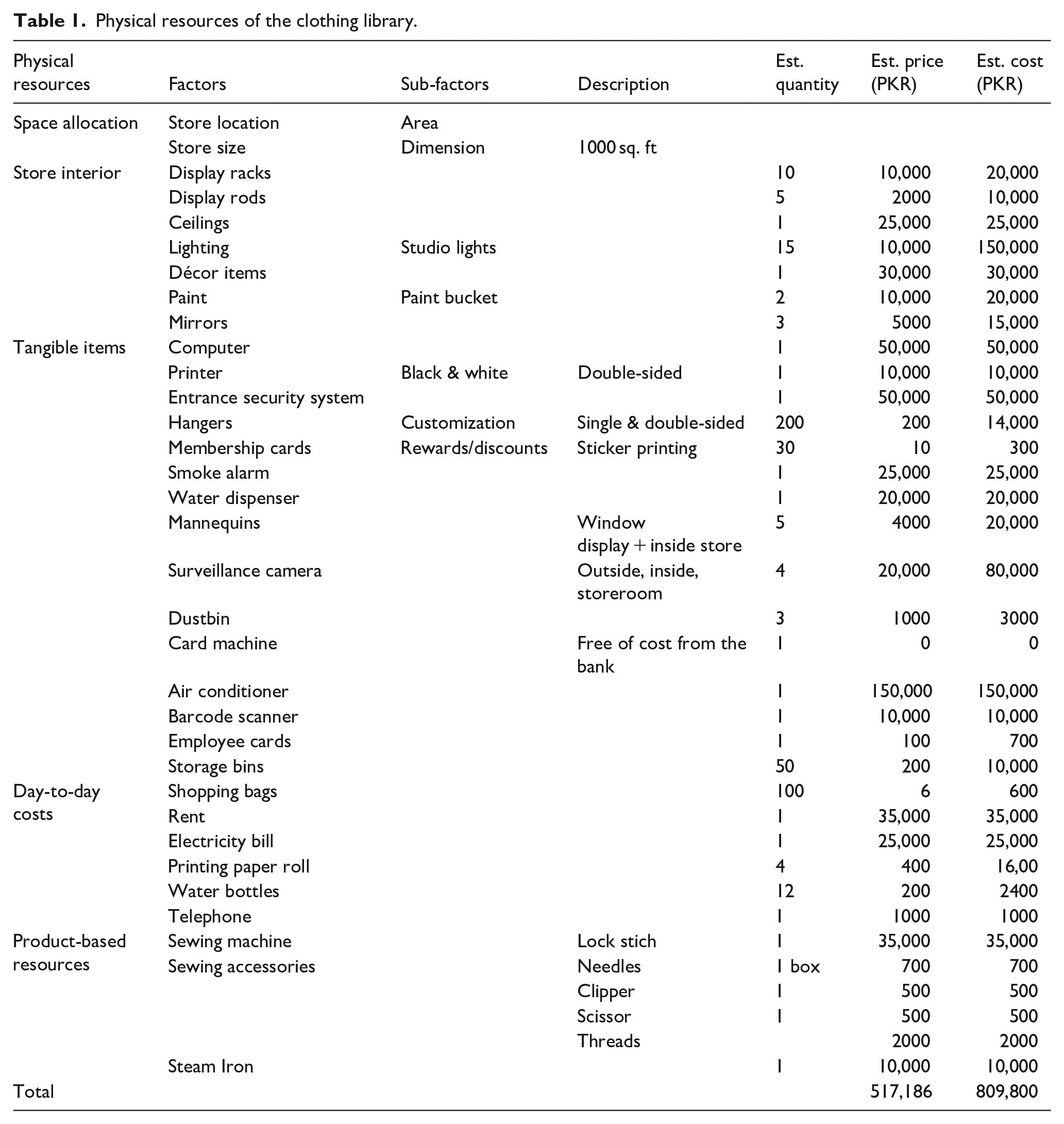
The Clothing library establishment requires careful planning of various physical resources, including space allocation, store interior, tangible items, daily costs, and product-based resources. This section outlines the estimated costs of securing a suitable location, outfitting the store, and equipping it with necessary items and utilities. By evaluating these factors, we aim to ensure that all physical aspects are adequately addressed to create a functional and attractive environment for the clothing library, which will facilitate its operations and appeal to customers. The choice of shopping malls as store locations assumed higher foot traffic and visibility, validated through local market observations showing that malls attract diverse demographics, including the targeted age group. The shopping mall was chosen for the clothing library as people visit stores randomly, boosting the flow of customers into the new business. Every component required for a quality makeover of the outlet was estimated. The store’s tangible needs are listed, along with an estimate of the price and quantity. The daily expenses of the library were calculated, and the kind of product-based resources that the library requires were assessed. The estimated cost is displayed in Table 1 below based on the projected quantity.
Physical resources of the clothing library.
Digital resources
Effective digital resources are essential for the clothing library’s success, encompassing web-based infrastructure and strategic marketing efforts. This section details the necessary investments in digital tools, including the development of a website and the implementation of point-of-sale (POS) software to streamline operations and enhance customer experience. Additionally, a comprehensive marketing plan is vital for attracting and engaging customers through social media campaigns, online advertising, and influencer partnerships. By investing in these digital resources, the clothing library aims to establish a strong online presence and leverage modern marketing strategies to drive customer interest and operational efficiency.
Web-based and marketing resources were the two categories under which digital resources were divided. The marketing plan and the software required for the store were examined to run a business efficiently in this fast-paced digital environment. An important marketing tool was the retail brand’s already-existing fresh clothing chain. Customers who dropped by were told about the brand’s clothing library. The overall costs for this sector are shown in Table 2, calculated by adding the predicted cost points.
Digital resources of the clothing library.

Human resources
Human resources are pivotal to efficient operation and customer satisfaction in the clothing library. This section outlines the necessary staffing and associated costs required to support various functions within the business. Key roles include a store manager, associates, a visual merchandiser, a cashier, a tailor, and support staff. Salaries are estimated based on prevailing market rates, ensuring competitive compensation to attract and retain skilled employees. Each position is crucial for managing daily operations, maintaining store esthetics, handling financial transactions, and ensuring high-quality garment care. Additionally, the analysis includes annual cost projections for these roles to provide a clear understanding of the labor investment needed to sustain the clothing library, contributing to its overall effectiveness and customer service excellence.
Numerical results, particularly cost estimates, were validated by comparing them with local market data and consulting industry professionals. Human resources costs, such as the tailor’s salary estimated at PKR 25,000 per month, were derived from local employment surveys and government labor statistics. Similarly, other estimates for physical and digital resources were acquired directly from local suppliers, retailers, and service providers, ensuring realistic budgeting aligned with current market standards. The annual costs of the necessary staff members of the library were then determined as indicated in Table 3 below.
Human resources for the clothing library.

Intellectual resources
Intellectual resources are vital for establishing the clothing library’s legal and brand identity in the marketplace. This section focuses on the costs and processes involved in securing the necessary intellectual property and legal permissions. Key elements include registration, logo, and other required legal certifications, essential for protecting the business’s identity and operations. Additionally, this encompasses obtaining internet and communication facilities to support the library’s functionality. Conducting a thorough legal feasibility evaluation ensures compliance with relevant regulations and provides a solid foundation for the clothing library’s market entry, facilitating its recognition and legitimacy. Costs were estimated, and a legal feasibility evaluation was conducted, as indicated below in Table 4.
Intellectual resources of clothing library.

Cost estimates for the backend resources of the clothing library
The core of the company, where all operational tasks are carried out and expenses are estimated, is its back-end resources. To evaluate the business operating costs, including the operational and technological feasibility, a complete workflow methodology was developed. Everything needed to fix the used clothing was supplied in this segment by keeping it tidy without sacrificing quality. Cleaning, mending, ironing, and packing it to ensure no bacteria remain, making it brand-new. Customers may also purchase high-quality used clothing because the brand already employs premium fabric with a longer lifespan. Used clothing is transported to warehouses from brand-new chain stores, where it is mended and then transferred to a clothing library for display. All the operational costs are shown in Table 5 below.
Back-end operational costs.
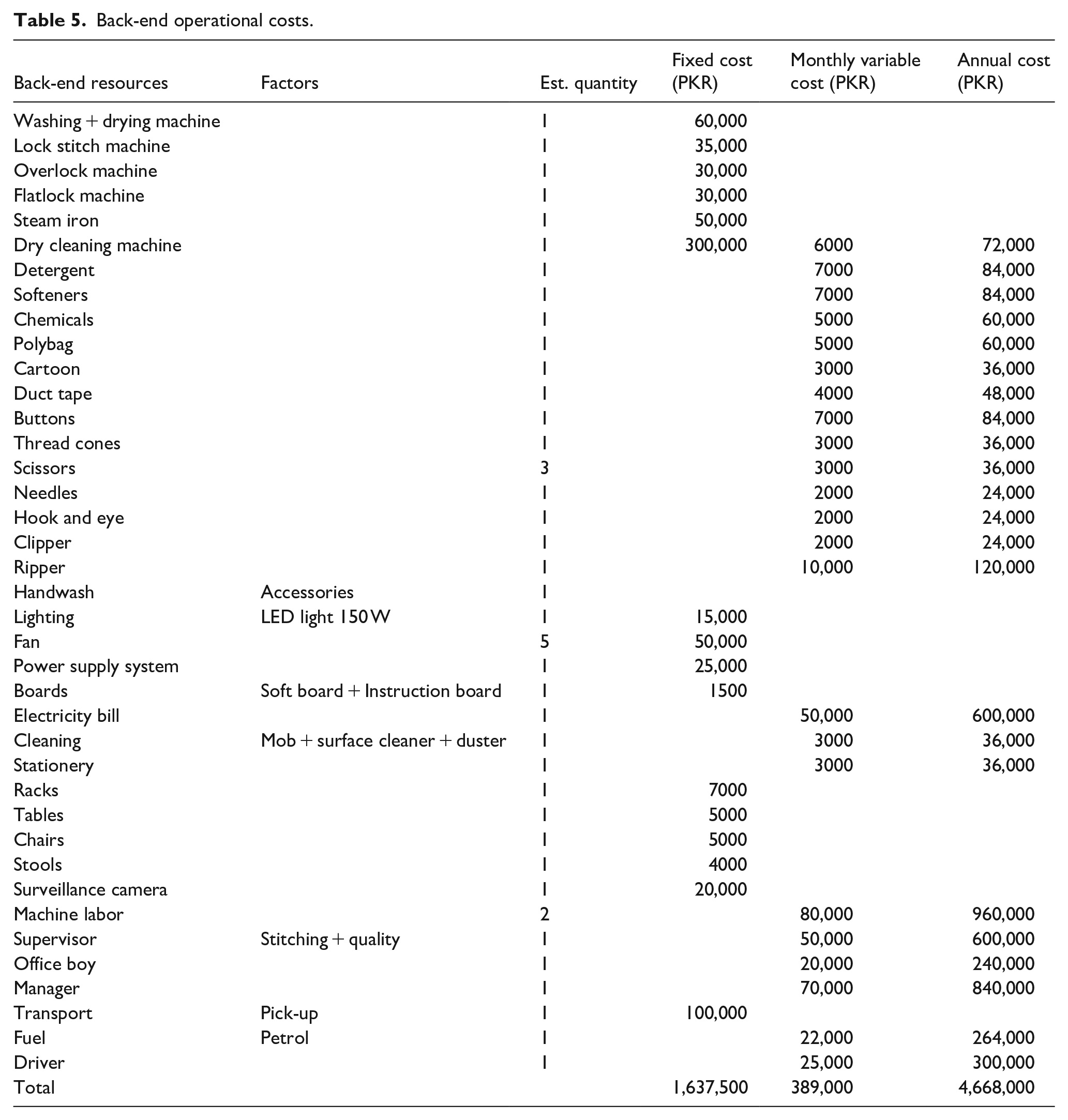
Table 5 calculates the expenditure for the storefront and warehouse, It became apparent that the total costs required by the business could be generated by adding all those costs together using the formulated equation (1) below.

The initial costs were collected and tabulated in Table 6. This represents the potential investment amount a brand may pursue to establish a clothing library or pre-loved clothes.
Total cost estimate of the business model.

Strategic resale and discount plan for clothing library revenue management
The first stage in selling used clothing from the clothing library was to develop a selling plan. Doing so facilitates carrying out the plan that must be followed to generate income. The amount of the cashback top-up was determined by how long the consumer had owned the item. A plan of 6 months has been created to return brand-new clothing to the brand. The purchasing date of the item is verified by the system at the time of return and applied to the predetermined cashback ratio. The brand will examine the condition of the garment. But, if the condition can be repaired within 5% rework cost determined by the business, then the brand will take it. In this method, the clothing library can ascertain the price at which the item has to be resold, while also ensuring that the client receives the cashback top-up in their membership cards, and the company has its item back. The revenue stream and practical business management strategy set a 10% profit margin. A detailed overview of the selling strategy is shown in Table 7.
Selling strategy of the clothing library.

The brand will determine the resale price according to the plan created and shown in Table 7. For example, a fresh item of 5000 rupees is returned to the brand within 15 days in good repairable condition. The brand will take it and apply the cashback, rework, and profit formula to determine the resale price of that item. This scenario is explained in equation (2) below.


This equation explains that the brand can resell the item of 5000 rupees for 4025 rupees to continue its sales flow. In this way, calculations have been made from the prices 0–50,000 as a set limit in this research. One by one, the formula is applied to every price point falling in the set limit to determine the resale price of the item.
Results and discussion
The inventory and items sold each month were added realistically to create a predicted business revenue statement. These inventories were beginning to appear in greater quantities in some months and in smaller quantities in others. Since the brand in question worked hard to maintain its reputation as a provider of fresh clothing for years, it took time for the stability of the business to change people’s perceptions of using used clothing as neither shameful nor a sign of inferior quality. Inventory for different categories of clothing was calculated as a total, and estimated sales were generated. A business plan for 1 year was formulated to check the sales and revenue generation of the clothing library business, shown in Table 8 below.
Projected income statement of clothing library.

The first step in any business analysis is to determine profit, which is determined by examining the annual business plan. The business profit within a year can be determined using the formulated equation (3) below.


As feasibility analysis is the main metric used for the study, other tools used are explained, including the results from the costing model. As time passed, the brand’s clientele developed to rely on it for clothes returns within the allotted period to receive a discount. These tactics worked adequately to generate a healthy amount of revenue for the business. Based on a 1-year business plan, the figures in Table 8 demonstrate the profit level at which the company is currently operating. Determining the point at which a corporation will reach the break-even point was an essential step. It took 6 months to break even, though the business concept and model are completely new, the name is already associated with a well-known brand. This demonstrated the viability of the business strategy and plan. This research’s feasibility study was successful. Any brand can use this business strategy in the future by carefully examining the numbers to get a realistic approach to the investment and return on investment.
The proposed business concept proved viable and financially sound when it reached the break-even point in less than 6 months. This accomplishment shows that efficient cost control and successful sales tactics were used to create enough revenue to cover all fixed and variable costs. Reaching this goal so fast demonstrates strength and lays the groundwork for future expansion and profitability. It draws attention to the company’s capacity for long-term success and gives stakeholders hope for its long-term financial stability. Over 6 months, 14,692,400 sales were generated, with a total cost of 10,622,000 and a profit of 4,070,400. The results of statistically based experimental investigations demonstrate that 6 months are needed to achieve the breakeven point. The utility of the business model was demonstrated by successful experimental results for the clothing library.
The current experimental research study was designed and systematically formed as a business model feasibility study to conduct a preliminary analysis of the idea to be implemented realistically. A realistic project plan and budget can be made using the feasibility study’s findings. Determining whether a proposed project is worthwhile or not is not possible without a feasibility study. The necessary cost and the expected value were the two factors considered when determining the feasibility. The venture’s viability was assessed as part of the feasibility study to ascertain its likelihood of success. To assist brands with this business model, this feasibility study offered an unbiased evaluation that looked at all facets of the suggested project, including technical, financial, and legal issues.
The business idea appears plausible and can develop from a business idea into an actual business based on the feasibility analysis results. As a result, the study considered all the data to conduct a feasibility study and build the clothing library by analyzing potential brands. This study focused on ethical production, consumer consumption, post-consumer waste, and the loop of circularity from product usage to its end life and afterlife. This research aligns well with Sustainable Development Goal 12-Responsible Consumption and Production. Future research should focus on higher price ranges, as this study could only look at garments costing 50,000 rupees. However, businesses should increase their capacity to provide more optimal alternatives to expensive haute couture and bridal wear. This study had some limitations, but in a broader vision, the categories could be expanded from clothing to footwear, and accessories, including men’s and children’s wear.
With its novel approach to sustainable fashion consumption, the clothing library concept offers a common platform for access to high-quality used clothing. By normalizing the use of secondhand products, this strategy promotes ethical purchasing habits while addressing the pressing problem of textile waste. Notably, this study finds and closes several important gaps in the literature. First, it examines how consumers in developing countries like Pakistan, where these cooperative consumption models are still in their early stages, behave when it comes to used apparel. Second, it assesses the viability of developing a business model for a clothing library that is adapted to the specifics of the local market, which has received little attention from previous research. Lastly, by examining the practical and financial effects of clothing libraries, this study adds to the growing body of knowledge regarding cooperative consumption and sustainable business practices. To clearly illustrate the transformation introduced by the clothing library model, Table 9 presents a comparative summary of key environmental, behavioral, and financial indicators before and after its implementation.
Comparative impact of the clothing library model.

The comparative table highlights the significant shift introduced by the clothing library model across multiple dimensions. By reducing textile waste, encouraging reuse over disposal, and lowering consumer costs, the model directly supports sustainability goals. Additionally, it enables brands to diversify revenue streams through resale and returns, rather than relying solely on new product sales. This shift not only benefits the environment but also aligns with changing consumer values and business resilience in the circular economy.
The adoption of a clothing library model offers noteworthy advantages for the environment, chiefly through the mitigation of textile waste and the encouragement of sustainable consumption habits. Clothing libraries can greatly reduce the need for new garment manufacturing by making second-hand clothing more accessible, which will lessen the fashion industry’s environmental impact. However, there are challenges to this strategy as well, such as possible consumer resistance to buying used clothes and competition from traditional retail models. To overcome these, strategic interventions such as public education campaigns, awareness drives, and collaborations with local businesses and environmental organizations can help strengthen consumer acceptance and promote long-term engagement with the model.
Conclusion
This research has shed light on multiple facets of sustainable consumption, with a special emphasis on the notable function of the cooperative consumption model. The study has investigated the viability and possible influence of clothing libraries in revolutionizing the fashion business through a comprehensive examination of literature and methodological analysis. A clothing library conceptual model was created to meet customer demand for diversity and encourage sustainable fashion practices. Clothing libraries provide an alternative to traditional ownership models by providing access to high-quality clothing through borrowing and sharing, consequently lowering the environmental impact of fashion consumption. In addition, comprehensive cost calculations and strategic planning provide insightful information about the operational viability and income potential of clothing libraries. Predicted income statements and break-even analyses demonstrate the financial viability of this business model and indicate its potential for long-term success and scalability. The research’s conclusions highlight the significance of sustainable shopping as a means of reducing the detrimental impacts that the fashion industry has on both society and the environment. By implementing cutting-edge strategies like clothing libraries, stakeholders can contribute to a more ethical and sustainable approach to fashion consumption by paving the way for a more equitable and environmentally friendly future. Clothing libraries offer a sustainable solution to fashion consumption by promoting the sharing and reuse of clothing resources, reducing waste and carbon footprint in the industry. Furthermore, they foster community engagement, empower individuals to access affordable, quality clothing, and support local economies through collaborative and environmentally conscious practices. This study aimed to improve the standard of living while complementing existing businesses rather than disrupting the textile industry. This economically viable solution increases customer engagement and fosters a sustainable fashion ecosystem. In conclusion, this study comprehensively explores the viability and potential impact of clothing libraries in transforming the fashion industry. By developing a theoretical model and analyzing existing literature and methodologies, we have highlighted the significant opportunity for clothing libraries to offer sustainable and accessible fashion alternatives. However, to fully validate the proposed business model and assess its real-world feasibility, future studies should focus on implementing the model at a pilot scale. This can be achieved through collaborations with established brands, leveraging real-time data to refine the model further. Such practical applications will be crucial in testing the scalability of the concept, ultimately supporting its broader adoption and integration into the market. In future research, we aim to pilot the clothing library model in real-world settings to evaluate operational performance, user engagement, and scalability. Additional studies will also explore expanding the model to include men’s and children’s wear, as well as footwear and accessories.
Footnotes
Abbreviations
CFC Collaborative Fashion Consumption
EPA Environmental Protection Agency
Eq. Equation
EU European Union
MEP Minimum Energy Performance Standards
PSS Product Service System

Funding
The author(s) received no financial support for the research, authorship, and/or publication of this article.
Declaration of conflicting interests
The author(s) declared no potential conflicts of interest with respect to the research, authorship, and/or publication of this article.
Data availability statement
All data and materials used in this study are available within the paper. One author had full access to the data and assumed responsibility for its integrity and analysis accuracy.