



Abstract
The innovation in high-converging technology using electronics and textiles augments the functionality of E-textiles as Smart E-Textiles (SETs), which overcome the gap between interactivity and inter-connectivity. The current article presents a review about the recent developments in Smart E-textiles and their relationship with other modern technologies. Smart E-Textiles can be developed via smart sensors, wireless communication technologies, embedded technologies, and nanotechnology, which can monitor activity for modern applications. Investments in research and development of Smart E-Textiles will encourage the use of them as sustainable and cost-effective options for light-weight, high-performance wearable technology for monitoring a wide range of the digitization activities of Smart E-Textiles applications.

Introduction
Smart material was first introduced in Japan in 1989 as shape memory silk yarn, the first textile electronic semi conductive components were produced in the early 2000s. 1 E-textiles are made of weaved semiconductors to create textiles (not electronic products), or they can be laminated with non-textile substances to develop electronic products (not textile products); Smart Electronic Textiles (SETs) will affect the whole concept of modern Industry, they sort to passive (sense environment conditions), active (sense and react to environment conditions), and ultra-smart textile (sense, react and adapt themselves to environment).
Conductive clothing, electronic clothing, soft circuits, and electronically integrated textiles are examples of electronic textiles; E-textiles are sometimes used for wearable uses such as work, sports and fitness, and medical and healthcare uses; or for non-wearable uses such as interior design.2,3 Several researches are done to help the electronics industry to better design and produce their components and devices with soft and lightweight textile structures to be used in different systems 4 designed with smart interactions with fibers, threads/yarns, fabrics, and clothing.
Smart textiles bridge the gap between interactivity and interconnectivity,
5
they react to outside stimuli but doesn’t necessarily have an electronic component like thermo-chromic and photochromic fabrics;6–8 they could be developed by Nano-technologies, embedded system and wireless communication technologies and create hybrid systems;
9
which can transferee information between the primary components of the textile, fabric, and fiber complex through the paths chosen by manufacturers, garment suppliers, fabric factories, and yarn suppliers,
10
Figure 1. They have a profound influence on the fourth industrial revolution, and form a significant step of Internet of Things (IoT); For example, screen-printed electroluminescent matrix display on fabric, as well as the design and construction of integrated drive electronics capable of operating the electroluminescent display and achieving good visibility.
11
Components of e-textile system.
4

The commercialize textile-based wearable devices, such as small computers, are built with special conductive thread, paints sewn, or applied to the fabric.
12
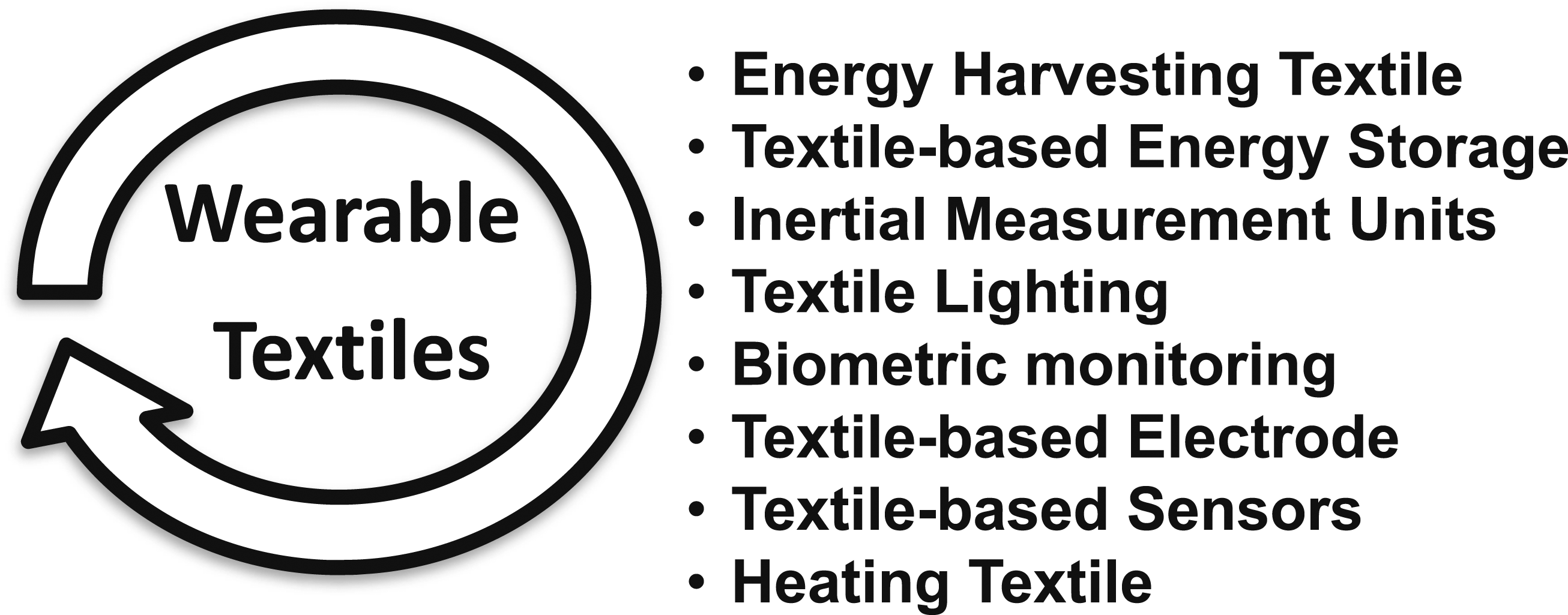
Wearable textiles are a new branch generated by the synergic connection of textile science, electronics, and computer technology without requiring of the role of humans, Figure 2.13–15 Automation could be used for knitting wearable textiles (Figure 3), minimum number of yarns and loops could be achieved using robot arm.
16
Main applications of wearable textiles. Knitted fabric made using robot arm.
16

The preparation methods and connecting technology for SETs
Electronic textiles are classified into two main types which are new textile electronic (nano- or submicron structures inside or on the surface of textiles), or the integration of microelectronic or MEMS devices (hybrid electronics), 17 regarding the materials used to make flexible conductors, one of the main challenges in the creation of fabric circuits is material selection.
Manufacturing of textile-structured electronics.

A transmission textile lines could be direct implementation of conductive transmission lines in the form of conductive wires, 24 electro conductive yarns in woven, knitting and nonwoven fabrics; overprinting an electro conductive medium on a fabrics; spraying or other deposition of an electro conductive medium on a fabrics; or incorporating electro conductive paths using sewing or embroidery methods. 25 There are difficulties related to the design and implementation of transmission lines, such as resistance to mechanical stress and washing, and the change in environmental conditions. 26
The electrical properties of conductive textile materials are often characterized through determining the resistance, conductivity, surface resistance or sheet resistance, and EMS (electromagnetic shielding) of the textile substrates. 27
A piezo-resistive smart textiles were experimentally quantified and determined to be sufficient for classification tasks; 28 A new RFID devices is implemented in the textronic structure with the RFID interface in order to split the transponder into two independently manufactured components. 29
Smart E-textile as wearable technologies
There are variety of e-textile products is extremely broad from clothing to bed linen and industrial fabrics, new products are appearing throughout a variety of verticals as this technology area is increasingly explored.
Many smart clothing, wearable technology or computing projects involve the use of e-textiles; they combine between the environment factors (Temperature, Light, Chemicals and Moisture, PH) and actuators (Mechanical Force and Electromagnetic Field) into responses (Color, Light Intensity, Fluorescence, Shape Form); or mechanical, electrical, thermal, chemical and wetting properties. 30 Due to the soft robotics softness, breathability, and biocompatibility, wearable e-textiles have attracted increasing appeal, making them long-lasting and wearable in the long run. 31
Gluteal muscles could be designed by the custom-made adaptive garment as a wearable preventive pressure ulcer system. 32 Android app could control a jacket with 15 features; divided into seven groups, including defense, sports, health, medical, women, and children safety mechanisms, four out of these 15 functions, 33 it has solar power and energy harvesting technology to produce electricity from body heat and foot-powered energy were used. 34 In addition to soft robotics (soft systems and Patches to control machines), 35 education (electronic embroidered books), and fashion applications and testing or qualification standards exist.36,37
Modern smart E-textiles present the revolution of modern functional textiles for intelligence area;
38
they provide intelligent features and use a connection with a smartphone or tablet to borrow computing power. Sensors and computers are flexible, light, easy to wear and even fashionable in electronic textiles with the invisible circuitry can be mostly giving the wearer a sense of discretion as most circuits embedded in textiles (Figure 4). Commercially, three generations of textile wearable technologies have been set, from attach a sensor to apparel (Adidas and Nike), to products embed the sensor in the garment, (Samsung and Alphabet), and finally where the garment is the sensor (Integrated Display Textiles).
39
Smart textiles via E-textiles.
Smart E-textiles and modern technologies
Reactive, self-actuated, or adaptive textiles are non-electronic textiles; Electronic textiles require a computer and batteries, 40 they have value chain from the manufacturing through yarns or conductive inks, to the components such as the sensors (1D slide sensor (fiber) or 2D touchpad sensor (woven fabric)).41,42 Electrochemical wearable sweat sensors need to be calibrated for the preparation of non-enzymatic sensors based on electrochemical detection methods with low cost, good stability and good performance. 43 Not like wearable technology, e-textiles and smart textiles don’t require printed circuit boards or other cumbersome hardware components as the sensors and circuits are integrated directly into the garment. Textronics is an interdisciplinary branch of textile engineering which focuses on the integration of mechanical of textiles with electronic, and electrical engineering systems, and includes a combination of textiles, electronics, computer science, 21 they are similar to those already in use in other fields.44,45 In development of a local area network system for weaving factories, data processing block collects many kinds of data and works as a database management system handling the production management data, the quality control data, the machine-adjustment data, and the textile management data. 46
In modern E-Textiles system, reducing deviations could be achieved by stochastic characteristics of the realized process, or by average determination of model factors.
47
Validation of the simulation results can be realized by comparison with the real plant behavior as a detailed predictive simulation.
48
Many researches worked on the generation of computer-based specifications from the creative design process; fabric spreading, cutting and pattern matching; semi-automated and automated sewing; automatic finishing and packing; and automated methods for the making-up of knitting blanks.20,46 The importance of the textile industries includes 3D printing and braiding; weaving and intelligent systems/applications for weaving; yarn spinning compensation; texturing; spinning: measurement automation and diagnosis, knowledge-based expert systems; automated textiles manufacture and assembly; and apparel manufacture.
21
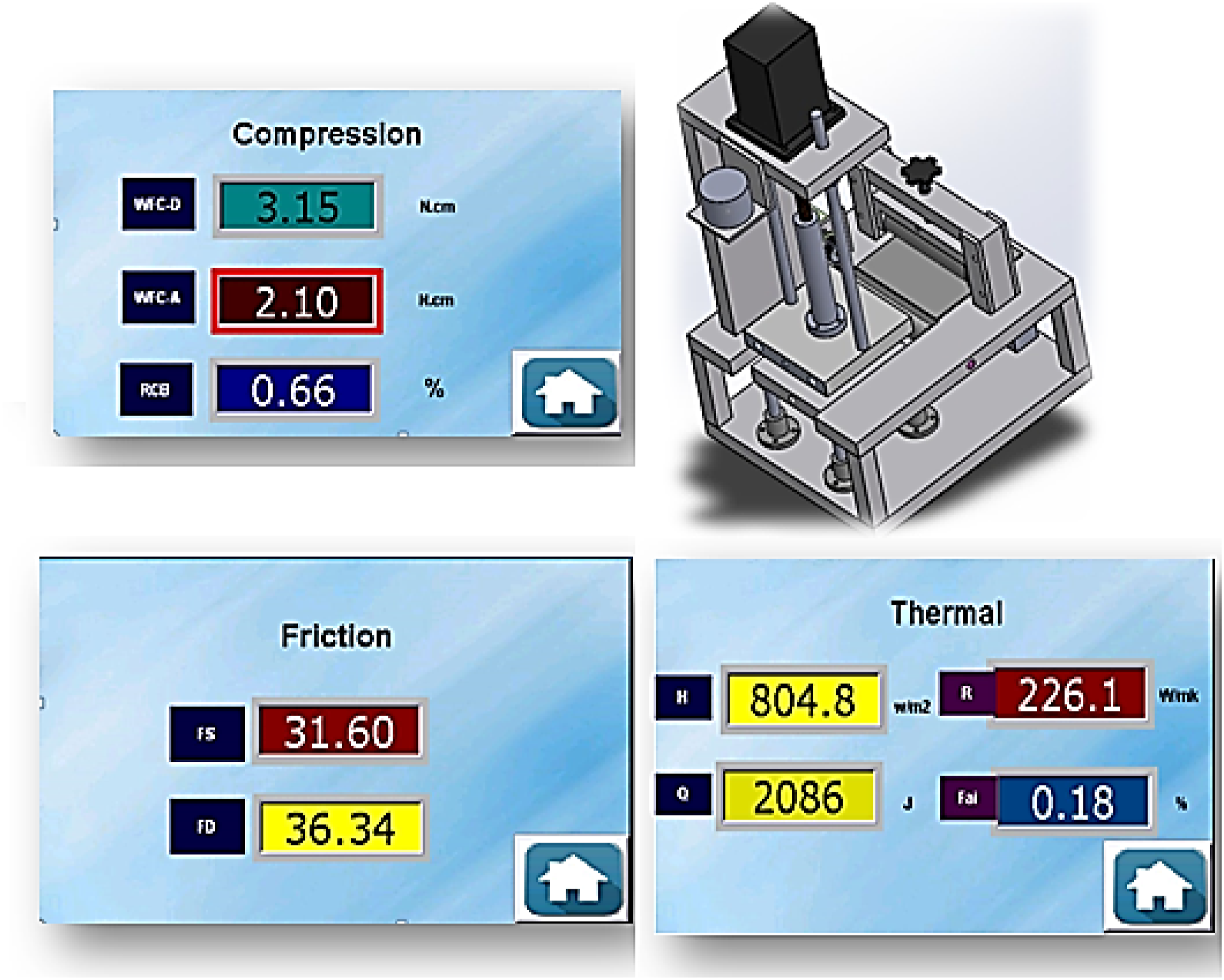
For examples, the fabric touch tester device is designed and implemented with three units: pressure, surface and thermal, depending on the studies of different physical properties and their impact on the texture of the cloth Figure 5.
50
Fabric touch tester.
49
In smart materials market, the main use of smart materials are in industrial, defense & aerospace, automotive, consumer electronics, healthcare, and other (civil engineering and retail; that will be for different applications such as transducer, actuators & motors, sensors, structural materials, coatings. Some commercialized smart textiles have a relatively low cost as in the case of (smart watches - wristbands).
50
Smart E-textiles can become a commercially successful generation of high-tech products, Figure 6. Smart materials market by application (2014–2025).
Transmission and communication of smart e-textile
In classical electronics, the conducting and semi-conducting materials are used such as metallic fibers mixed with textile fibers which are woven or sewn. In modern electronic materials, the organic electronics materials are semiconducting, and designed as inks and plastics which are completely compatible with textile manufacturing without metals at all; 51 such as organic solar cells on fibers.34,52
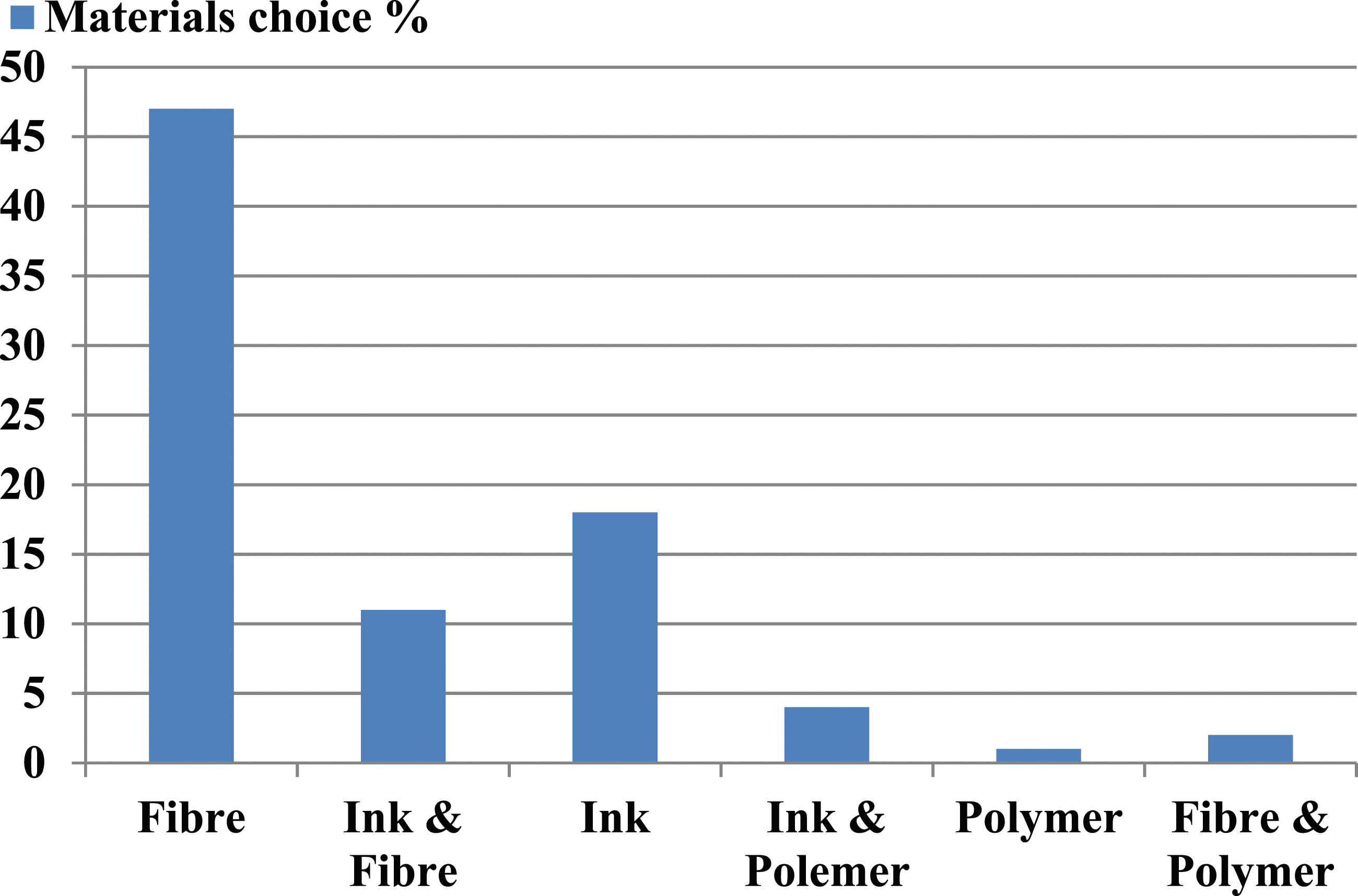
The development of textile signal lines should be resistant to ambient factors, mechanical stresses in textronic (Figure 7); the selection of the right textile transmission line depends on the particular application, the frequency range, the cost of production, etc. Materials used in e-textile manufacturing.
41
Components of Electronic textiles are conductive, interconnects and communication interconnects, wires, or antennas relay information and power between components, and electronic sensors and actuators. They could be connected to computer or central processing unit; printed sensors for both physiological and environmental monitoring could be integrated into textiles including cotton, gore-tex, and neoprene.53,54

Computer technology for textiles and apparel
An artificial neural network (ANN) forms a stochastic and heuristic tool to learn the relationship between the factors and their responses. After training it, the network is able to predict the values of the response from the new set of independent variables and give a response based on its training experience. The flow diagram for procedure adopted to predict process factors for yarns. 60 Artificial neural network modeling for prediction of thermal transmission properties of woven fabrics and the fuzzy logic method has many advantages 60 such as translation of vague human description to fuzzy linguistic variables, translation of human expert knowledge to production rules, automatic extraction of knowledge, and efficient run-time performance. Using Image processing procedure offer an algorithm for recognizing and to send information; The glove with a visible pocket for power bank was conducted in two stages; the first one focused on the verification of the operation of tension flex sensors, and the second on the verification of indications of an orientation sensor. 61 Soft computing has found a home in the textile industry, the main characteristics of soft computing are capability to approximate various kinds of real-world systems; tolerance for imprecision, partial truth, and uncertainty. 62 The use of RFID Tag could be used in management system for washing machine, which supports decision-making based on data provided by reading of RFID tags integrated with clothes, and the laundry device was integrated with cloud computing for garment management based on the unique identifier of the tags.63–65
The radiation protective materials and smart textiles
Multifunctional textiles with UV-blocking, antimicrobial, self-cleaning, and water-repellent can be obtained via green treatments to be smart textiles. They can detect and respond to light, pH, temperature, polar solvents, chemicals, and electricity. Regarding safety, anti-ultraviolet radiation (UVR) textiles matrix (cotton and silk) were prepared by incorporation of nano-metal–organic frameworks (n-MOFs) that exhibited full UVR blocking after modification. The washed samples showed a very good blocking rate, supporting good laundering durability. 66
The human body reacts to UV radiation in a different way; Besides have some benefits of UV irradiation on human health, but electromagnetic radiation has many disadvantages on body. 67 The World Health Organization (WHO) and the European Union pay attention to workers exposed to risk caused by harmful UV radiation. There are positive effects of UV on the body such as producing vitamin D, treatment of some skin diseases, improvement of human mood, UV as a disinfection factor. On the other hand, there are negative effects of UV on the body such as skin cancer, sunburn, damage to the immune system, damage to the eyes, skin aging.
The future goals of most researchers are the UV-blocking effects and improve the wash fastness of finished textiles with organic and inorganic UV absorbers. 67 Fluorescent fabrics are designed using rare earth metal compounds, pigments, aggregation-induced emission (AIE) molecules, dendrimers, and fluorescent dyes (coumarins, naphthalimides, perylenes, and rhodamines).
Fluorescent fabrics and innovation (e.g., fabric-based electronic image displays, security barcodes, sensors) add value for human safety in outdoor sports and special services in the armed forces, fashion, and trends. 68 Some researchers use nanoparticles for blocking ultraviolet radiation as non-toxic in nature, very compatible with human skin, and chemically more stable at high temperatures and UV region. 69 Ultraviolet protection factor of woven or knitted fabrics has a higher coverage factor than other fabrics; knitted fabric structures are observed as the wavelength increases resulting in lower protection levels in the UVA region. 70
Nanomaterials and smart textiles
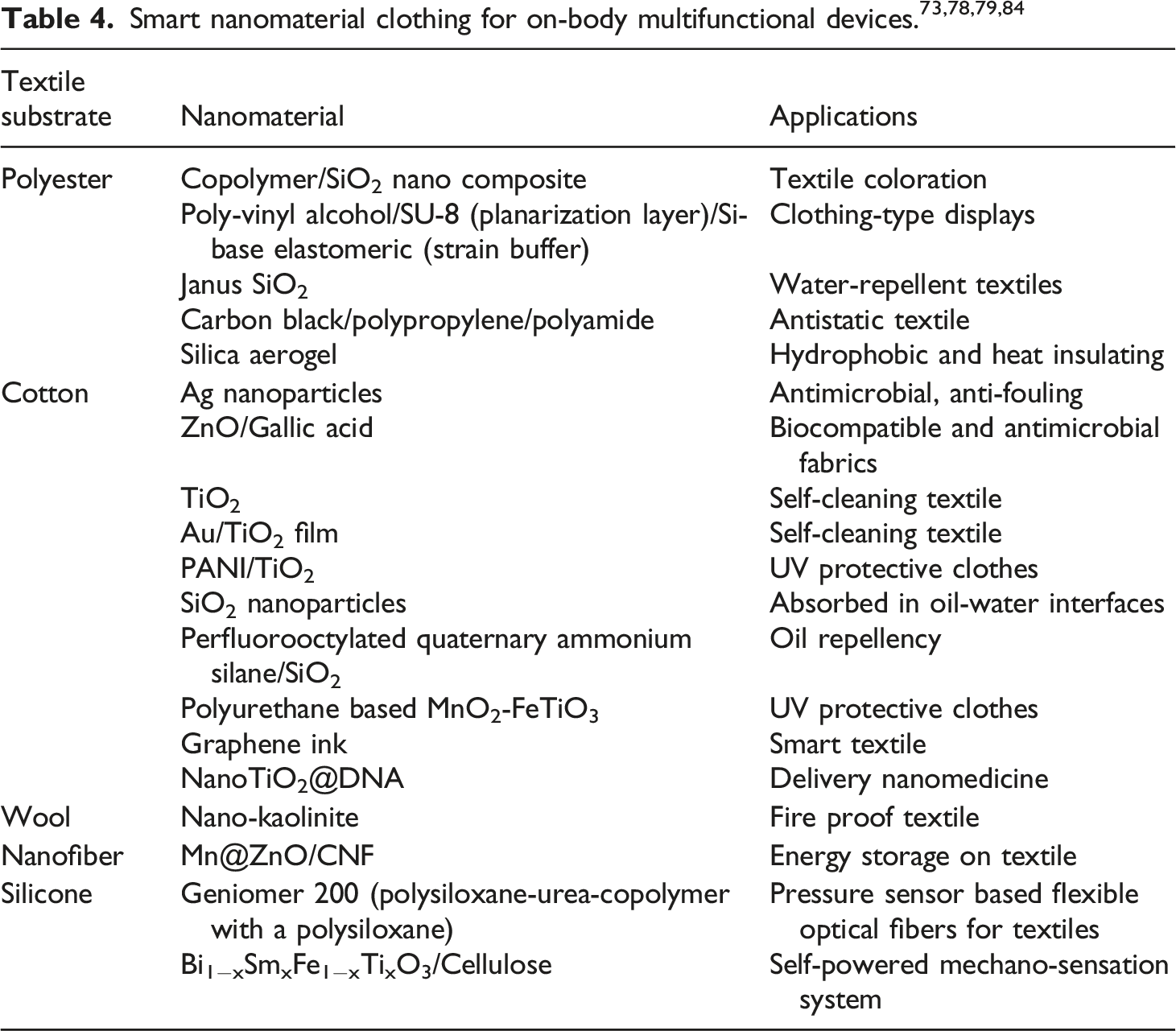
Nanomaterial based smart devices are now also being integrated with textiles so as to perform various functions. 73 Those have been used include polyacetylene, polypyrrole, polyaniline, Au, Ag, Pd, Cu, Si, CuO, ZnO, carbon nanotube, TiO2, chitosan, MXenes and graphene oxide nanoparticles.73,74 Triboelectric Nano generators exhibit an output voltage of 120 V at 65 μA, There was an insignificant drift even after 120,000 cycles which indicated their stability. 74
Environmental control must be safe, recyclable and climate neutral Nano textiles are produced. The most common nanotechnology research is antimicrobial textiles, hydrophobicity and oleophobicity in textiles, ultraviolet-resistant textiles, antistatic properties in textiles, electrically conductive textiles, photonics in textiles, color-tunable optical fibers environmental and health concerns associated with smart textiles, sensors on textile, and textile based triboelectric nanogeneratorss and pericapsular nerve group.75,76 The Scientific Committee on Emerging and Newly Identified Health Risks has reported that, even though nanomaterials are not per se dangerous, there is still scientific uncertainty about the safety of nanomaterials in many aspects and therefore the safety assessment of the substances must be done on a case-by-case basis. 77
In the energy section, many applications have been reported such as energy storage by textiles, harvesting human energy for electronic applications through textiles, biomechanical energy harvesting in textiles, biochemical energy harvesting in human clothes, solar energy harvesting by textiles, hybrid energy harvesting by textiles.78,79 It raises the requirement for more innovations in architecting preventive measures such as face masks-respirators with smart and intelligent features. It is only achievable with the inclusion of modern era technologies of nanotechnology, machine learning, data analytics, and artificial intelligence (AI). 80 Schematic depiction of smart and intelligent face masks-respirators (FMR) was integrated with Opt-chemical sensor-driven through a smartphone for monitoring of low-trace airborne CO2 as low as 140 ppm with a lifetime of 8 h.81–83
Smart E-textiles applications
Modern electro-conductive textiles use electro conductive polymer yarns and metallic yarns for breathing frequency measurements, or optical fibers as textile sensors for measuring breathing rhythm. 85 Communicating garments could use for public safety, active uniforms for policemen, firemen and airport services, internal decoration of living apartments, and the car industry (such as internal warning screens). 86 In medical field, there are a shirt that takes regular measurements of the wearer’s heart rate to be paired with a smartphone app, and small, light, and stylish wearable medical devices, the goal is to monitor blood oxygen and sends alerts to a medical team automatically.

Paintable carbon nanotube coating-based smart E-Textiles is used to get a benefit from rapid, precise, and readily available diagnostics. 87 Emerging Washable Smart E-Textiles for Imminent E-Waste Mitigation for portable sensing, energy harvesting, and healthcare has sparked massive advances in wearable textile electronics. 88 Others focused on checking the quality and repeatability of electrical and geometric factors of textile antennas for various types of transmission, including connections in constant environmental conditions. 89 Innovative Smart E-Textiles could be a good solution using photovoltaic cells to test the use of solar panels in combination with textiles. 52
The digitization of textiles (Smart E-Textiles) has created new opportunities for integration with conformable sensors to enable unobtrusive, noninvasive, and continuous decoding of vital body signals, 90 characterization techniques used for commercial apparel and textile-based sensors, a coordinated interplay and reconciliation of the contesting needs of the textronic as a textile platform and a biomedical sensor.
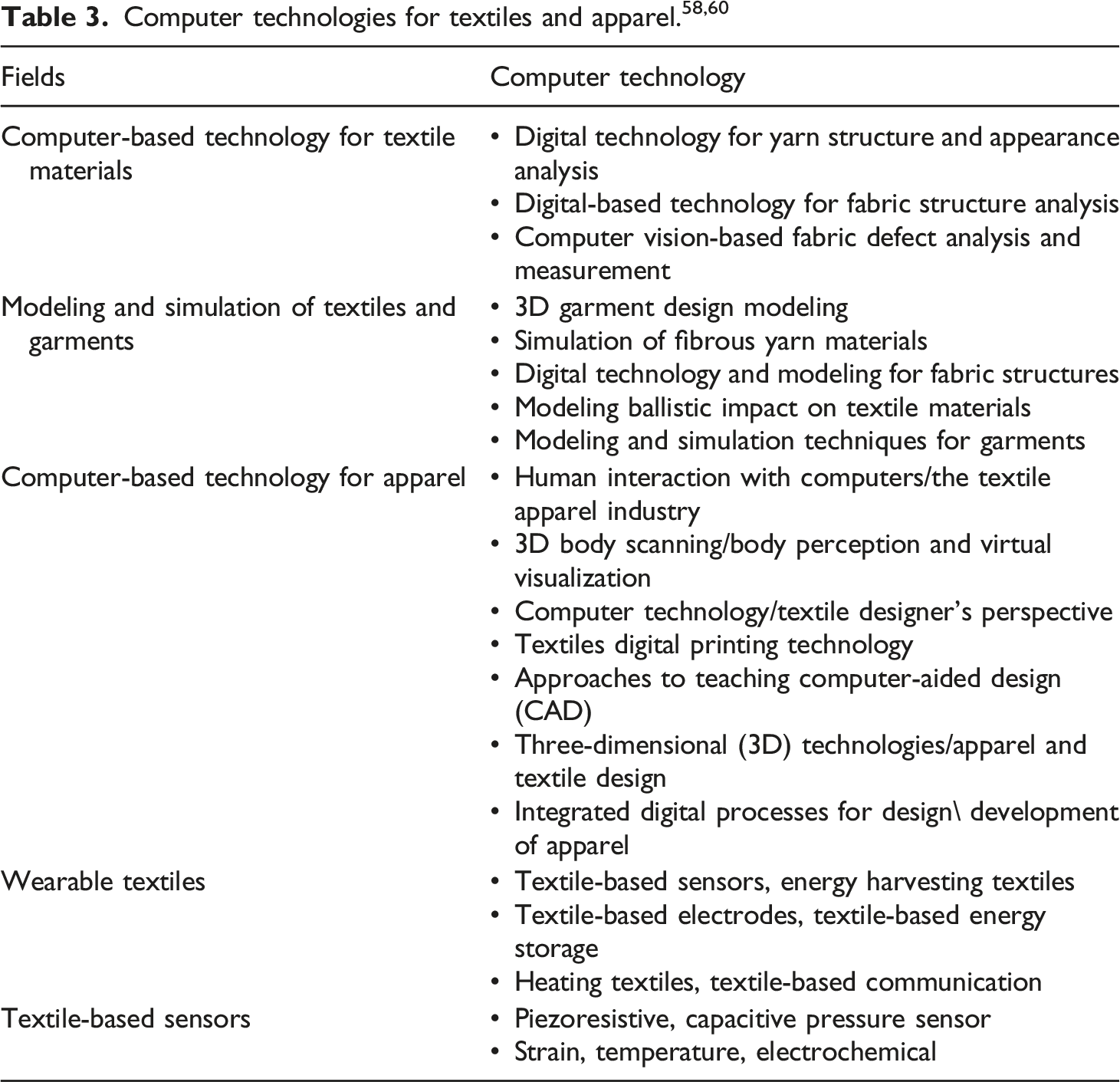
Applications for e-textiles according to smart clothing and e-textile markets forecast 91 monitoring through e-textiles for healthcare (heart rate monitoring for healthcare, bedsore/pressure ulcer prevention, and wound care and compression therapies), wellness (smart beds and mattresses), sports, and fitness, e-textiles in space (smart footwear for both fitness and medical applications), biometric monitoring through e-textiles, textile heating (heated motorcycle jackets, heated clothing for sports and outdoor activities, heated blankets, building-integrated opportunities for textile heaters, e-textiles for space heating in vehicle interiors), conductive textiles (conductive (non-electronic) textiles, electromagnetic shielding, antistatic protective clothing, antimicrobial textiles, thermal regulation in textiles, protective clothing for impact resistance), textile lighting (mass market fashion with textile lighting, safety lighting using e-textiles, textile lighting in automotive interiors), in addition to Motion capture in animation, Motion capture for AR/VR, Haptic suits using e-textiles, Assistive clothing, Wearable technology for animals). Key trends assessed in the report include smart watches & fitness trackers; virtual, augmented and mixed reality (VR, AR & MR); hearable; smart clothing & e-textiles; electronic skin patches. The smart watch market continues to increase its focus on wellness and healthcare, wires stereo headphones, ongoing investment into the development of augmented reality hardware, healthcare and wellness electronic skin patches, smart clothing, and IDTECHEX’S wearable technology. 92
Market’s needs, limitations, performance and problems
Microelectronic circuits connecting technology products with flat textiles, fibrous electronics, and basic electronic devices stitched into garments are all included in the design of multifunction textile products known as smart e-textiles. Conductive fibers (used in weaving, knitting, and embroidery) and conductive ink printing are typical methods of production for e-textiles. 41 Analysis of use cases and opportunities for various components which will be integrated with e-textiles, including heaters, electrodes, pressure sensors. From the point of view of mobile Smart E-Textiles, the least important factors are their size and type of housing, as well as the signal output system and their average and instantaneous power consumption during operation. The main issues related to Smart E-Textiles are the type of power supply to their systems, the choice of data transmission, ensuring good contact between the fiber optic and electrically conductive connections with a commercial or test electronic system. In addition to the correct implementation of the commercial sensor for a textile product and the search for a suitable substrate compatible with the active layer and characterized by certain factors. It is also important to provide the finished part with an adequate hermetic coating that will protect it from various operational stresses resulting from textile use.14,15 Market analysis and forecast of four key areas for e-textile: biometric monitoring, heating, lighting, and all others; and across several use cases and segments including healthcare, wellness, sports, and fitness, among others. 41 For example, designing prototype textile sensors included in clothing structures and devoted to measuring a human physiological signal and the frequency of breathing; for medical applications or for firemen’s protective clothing; 85 such as survival suit with GPS, a hydrometer, thermometer, and embroidered electrodes, motorbike suits, safety shoes, running insoles, and health garments. Reported global wearable smart apparel markets are Google with Levi, Apple, Samsung, Intel, Ralph Lauren, Polar, Xiaomi, Fitbit, Huawei, and Garmin. In technology side, 79 in yarn engineering using an artificial neural network, and woven fabric engineering by mathematical modeling and soft computing methods where the knowledge acquisition module facilitates the transfer and transformation of problem solving expertise from the knowledge source to the knowledge base, in addition to Garment modelling by fuzzy logic. 60 Connection between mechatronics and biodegradable polymers93–95 Statistical modeling96,97 could be open new field regarding to environmentally friendly applications. The design and production of apparel industry are a combination between the arts, the engineering, and the technology section or smart photochromic and thermo chromic fabrics, smart textiles perceive and adapt to changes in their surroundings. 98
E-textiles face many challenges, such as wash-ability, power supply, product development, and commercialization, from users’ perspective. 27 In garment industry/cutting department, a new designed algorithm demonstrated its ability to arrange the parts of the molds within the marker more efficiently than the traditional method, as the algorithm achieved an improvement in the percentage of fabric consumption 2.5–3% and reduced waste. 99
Smart E-textiles provides a new advantage to the wearer for different application such as 40 Medical and health monitoring (wireless-enabled garment for simultaneous acquisition and continuous monitoring of electrocardiographic, respiration, electromyogram, and physical activity, sensitized vest, and wearable sensitized garment/smart shirt, remote monitoring of a patient), Military and defense (personal protective clothing, individual equipment, and defense system and weapons), and Sport applications (tennis rackets, pole vault poles, athletic sports apparels, advanced computer stimulations and motion capture).
For reliably washable e-textiles, more differentiated examinations are necessary, discerning conductor and substrate materials and their requirements as well as the specific E-textile application more thoroughly than this relatively general overview. 100 Practically, the textiles sector, risk factors include Working in awkward postures, repetitive movements, and fatigue from manual handling during spinning, cutting, product control, and packaging, inspection, treatment, shipping, finishing, and cutting of textiles. 101
As the synthesis process are used for producing synthetic fibers is often too complex and contain harmful ingredients in addition to other components; There are new research to develop the wearable e-textiles which made from eco-friendly materials using sustainable manufacturing processes, that is depending on effective end-of-the-life strategy to manufacture next generation smart and sustainable wearable e-textiles, they are recycled to value-added products, or decomposed in the landfill without any negative environmental impacts. 102 Some chemicals were detected in clothes such as flame retardants, trace elements, aromatic amines, quinoline, bisphenols, benzothiazoles/benzotriazoles, phthalates, formaldehyde, and also metal nanoparticles; that could show a non-negligible presence in some textile, but Human dermal exposure to potentially toxic chemicals through skin-contact textiles/clothes might lead to potential systemic risks, that might mean non-assumable cancer risks. 103
There are several developed standards under the auspices of the European Committee for Standardization, some researchers design a test method to evaluate the skin exposure to nanoparticles, which will evaluate the nanoparticles transfer from the clothes to the skin by the effect of abrasion or sweat. 77 Because of the connection wires, Smart textiles can be uncomfortable where the skin is already sensitive (Eczema or Psoriasis). If their components malfunction, that will ultimately prevent the wearers from being able to track potentially useful information. One of the major cons of smart clothes is that they require people to disclose sensitive information about themselves; they prevent wearers from being able to maintain their privacy levels.
The safety requirement could be summarized such as they are not completely waterproof and not developed for children, for medical applications, they require calibration, they are not flexible as normal textile clothing, and they have specific range of applications. In addition to the durability of the materials used is another factor that gets implicated by the harsh environment. The e-waste problem could be divided to e-Waste Mountains, toxic load, and resource depletion. 104 At the end, European and national innovation policies foster R&D and encourage industry to invest in commercialization of e-textiles.
Conclusion
In conclusion, smart e-textiles provide an opportunity for new approaches and applications to evaluate the functional and metrological features; sets termed smart fabrics and interactive textiles (SFITS) consists of sensors, actuators, over automatic control systems, and fully integrated devices. Smart e-textiles systems offer new opportunities for three-dimensional printing (3D Fabric Printing), 5G, RFID as well as the internet of things, advanced materials, energy storage, food and agricultural technologies, sustainability, healthcare, life sciences, off-grid and energy harvesting, photonics, printed-flexible-organic-electronics, robotics, sensors and haptic, semiconductors, computing (Artificial Intelligence), and photonics. Estimating the physical, chemical, and mechanical property of a novel smart e-textiles based products should be new areas of research.
In future perspective, electronic fibers/textiles will represent a burgeoning field in the realm of flexible electronics, offering significant potential for application in smart wearable technologies. These materials not only meet the requirements of everyday wearable’s but also hold promise for addressing the emerging demands of personalized health/medical treatments and human-machine interfaces, thereby catalyzing transformative societal changes through the digitization of textiles.
Footnotes
Declaration of conflicting interests
The author(s) declared no potential conflicts of interest with respect to the research, authorship, and/or publication of this article.
Funding
The author(s) received no financial support for the research, authorship, and/or publication of this article.
