




Abstract
This study evaluated the effect of socks (different in fiber type) and the effect of not wearing a sock on perceptions of thermal comfort in relation to changes in foot skin temperature and shoe microclimate (temperature and humidity) during rest and exercise. Ten females completed five trials on separate occasions. Four socks (cotton, wool, polyester, Coolmax) and no sock were evaluated. Trials were conducted at 23°C, 50% relative humidity and consisted of rest (10 min seated), treadmill running (40 min, 7.5 km·h−1) and recovery (15 min seated). Foot skin temperature and shoe microclimate were measured at seven sites on the right foot. Foot skin hydration was measured at nine foot sites. Perceptual responses were recorded. Foot thermo-physiological and foot perceptual responses were similar for all sock conditions (p > 0.05). Similar foot thermo-physiological responses were also observed between the sock and no sock conditions (p > 0.05). Interestingly, however, not wearing a sock resulted in greater perceptions of foot wetness, stickiness and discomfort (p < 0.05). As tactile interactions caused by foot movement within the shoe are strong predictors of foot wetness perception (a key contributor to wear discomfort), socks are important in reducing the tactile cues generated. The sock is therefore an important area for development and relevant for overall improvements in footwear comfort.
Socks are regarded as an important component within the foot-shoe system acting as a barrier between the skin and the shoe. Often marketed as having moisture wicking, insulative/heat dissipating or blister reducing properties, the sock is believed to be both important for protection and for comfort.
With neutral/cold environmental exposures, the sock is primarily worn to provide insulation in order to maintain foot skin temperature (foot
Several human wear trials have been employed to investigate the role of sock fiber type on thermo-physiological responses during running.6–9 Socks composed of either natural or synthetic fibers and natural/synthetic fiber blends have been reported to elicit no differences in foot
Interestingly however, these observations have been based upon the assessment of foot
It is also important to consider that previous studies investigating the role of the sock vary in terms of the shoes (standardized running shoes, the participants own running shoes, hiking boots) and socks used (differences in blends, thickness, design/construction), exercise protocols (short bouts of running versus 45–180 min of walking) and setting (field, laboratory).6–9,12,13
With this considered, although cotton has been reported to negatively affect temperature sensation and wetness perception during activity, it is difficult to: (a) provide experimental evidence to substantiate the superiority of one sock over another; and (b) to isolate factors contributing to differences in perceptual responses between sock conditions. As shoe designers and manufacturers work towards developing shoes which better support heat dissipation and moisture removal, the sock is an important area for exploration.
The aim of this study was threefold: (1) to investigate the impact of wearing socks on thermo-physiological responses and perceptions of comfort in comparison with not wearing a sock; (2) to determine whether socks of different fiber types affect foot
Materials and methods
Participants
Ten females (age: 23 ± 4 years; height: 169.1 ± 4.6 cm; body weight: 62.7 ± 8.2 kg; foot size: 6.5 ± 0.6 UK) volunteered to participate in this study. Test procedures were outlined in a written information sheet and were explained to participants before obtaining written informed consent. Experimental procedures were approved by Loughborough University Ethical Committee and were conducted within the confines of the World Medical Association Declaration of Helsinki for medical research using human participants.
Experimental design
To achieve the aims of the study, a repeated measures design was selected. Participants took part in five running trials on separate occasions at approximately the same time of day. In each trial, one of four experimental socks was worn. One trial was performed without a sock. The testing sequence was counterbalanced to minimize any order effects. No information was provided to participants regarding sock-related differences and participants were not allowed to visually inspect the socks. Some visual differences, however, may have been noted when donning the socks.
Instrumentation and calculations
Gross sweat loss and sock sweat absorption
To determine gross sweat loss, pre- and post-test semi-nude body weight and fluid consumed during each experimental session were recorded using electronic scales with a resolution of 0.001 kg (Mettler Toledo kcc150, Mettler Toledo, Leicester, UK). Gross sweat loss was calculated using equation (1)
14
and is presented in kilograms

Sock weight was recorded pre- and post-test using electronic scales with a resolution of 0.001 g (FX-500i, A&D Company Ltd, Oxfordshire, UK) to determine sweat absorption into the sock.
Rectal temperature, mean skin temperature and heart rate
Rectal temperature was monitored continuously and recorded at 60 s intervals (Squirrel 2020 data logger) using a thermistor self-inserted 10 cm beyond the anal sphincter (Grant Instruments, Cambridge, UK). Skin temperature was measured at four sites: calf, thigh, chest and upper arm using iButton wireless temperature loggers (Maxim, San Jose, USA) attached to the skin by 3M™ Transpore™ surgical tape (3M United Kingdom PLC). The weighted skin temperature (

Heart rate was measured during all tests using telemetry (Polar RS400sd, Polar Electro Oy, Kempele, Finland).
Foot skin hydration
Corneometry was used to assess skin hydration at nine sites on the right foot (Figure 1) pre- and post-test at the stratum corneum and epidermis (MoistureMeterSC and MoistureMeterEpiD, Delfin Technologies, Kuopio, Finland). The corneometers derive skin hydration from the electrical capacitance of the skin. This parameter depends on the high dielectric constant of water content relative to other skin components.16,17 The water content of the stratum corneum was expressed digitally by the MoistureMeterSC in arbitrary units. The measurement scale is up to 300. The water content of the epidermis was expressed digitally by the MoistureMeterEpiD, which converts the tissue dielectric constant value into a percentage. Foot testing sites were selected based upon areas reported to have high blister incidence within the literature.18–21 Three measurements at both skin levels for each test site were recorded.
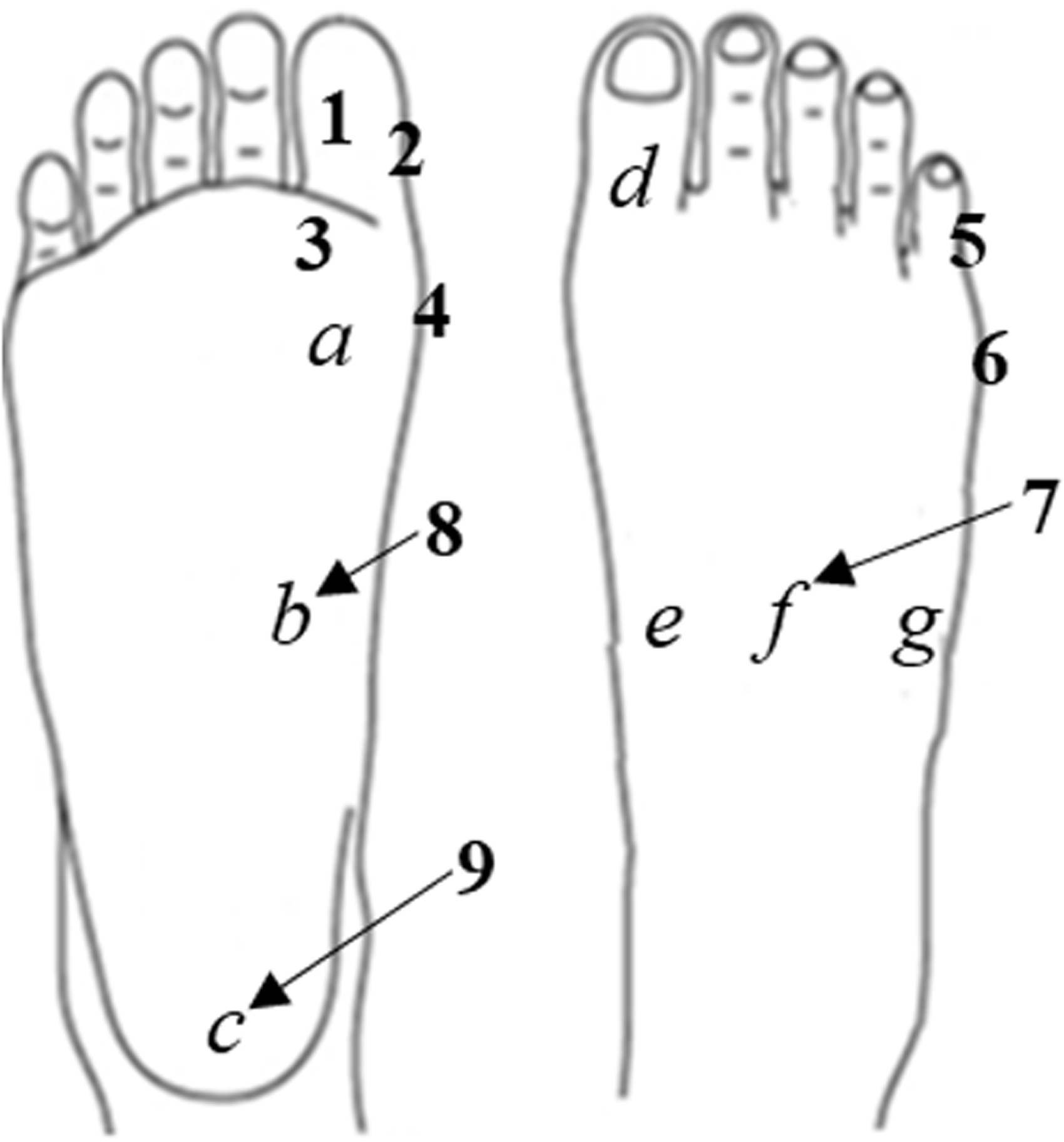
Foot locations for skin hydration (stratum corneum and epidermis) and foot skin temperature measurements on the right foot. Site codes (skin hydration): 1 = plantar toe 1; 2 = lateral toe 1; 3 = plantar base toe 1; 4 = lateral ball toe 1; 5 = lateral upper toe 5; 6 = lateral lower toe 5; 7 = central dorsal; 8 = plantar arch; 9 = plantar heel. Site codes (skin temperature): a = plantar ball; b = plantar arch; c = plantar heel; d = base of toe 1; e = central dorsal; f = medial dorsal; g = lateral dorsal.
Foot skin temperature
Foot
In-shoe temperature and in-shoe relative humidity
Temperature and relative humidity sensors were attached to seven sites on the right foot (Figure 2) to record changes to in-shoe temperature and in-shoe relative humidity (SHT31, Sensirion, Switzerland). Sensors were applied to each sock or to the skin for the no sock condition using Transpore surgical tape. Data were collected wirelessly from a specially developed Bluetooth data acquisition system (University of Applied Sciences Kaiserslautern, Zweibrücken, Germany), secured to the participants ankle, at a sampling rate of 10 s and simultaneously displayed and recorded in LabVIEW software (2016, National Instruments). The total weight of the data acquisition system and sensors was 112 g.
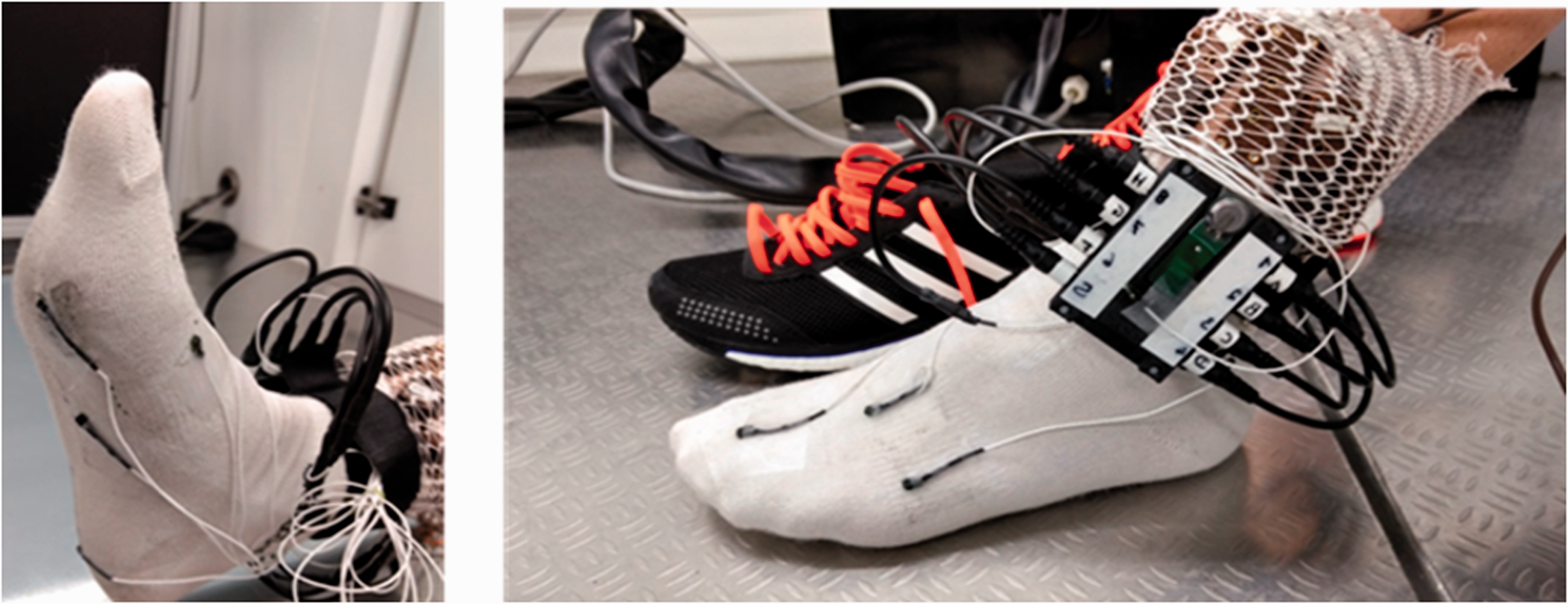
Positioning of temperature and relative humidity sensors.
In-shoe absolute humidity
In-shoe absolute humidity was calculated from in-shoe temperature and in-shoe relative humidity using the Antoine equation
22

Perceptual scales
Ordinal scales were used to assess thermal sensation, wetness perception, stickiness and thermal comfort (Figure 3). Scales were designed in line with instructions from ISO 10551 23 with the sensitivity, accuracy, ease of use and descriptors chosen for each individual scale carefully considered.
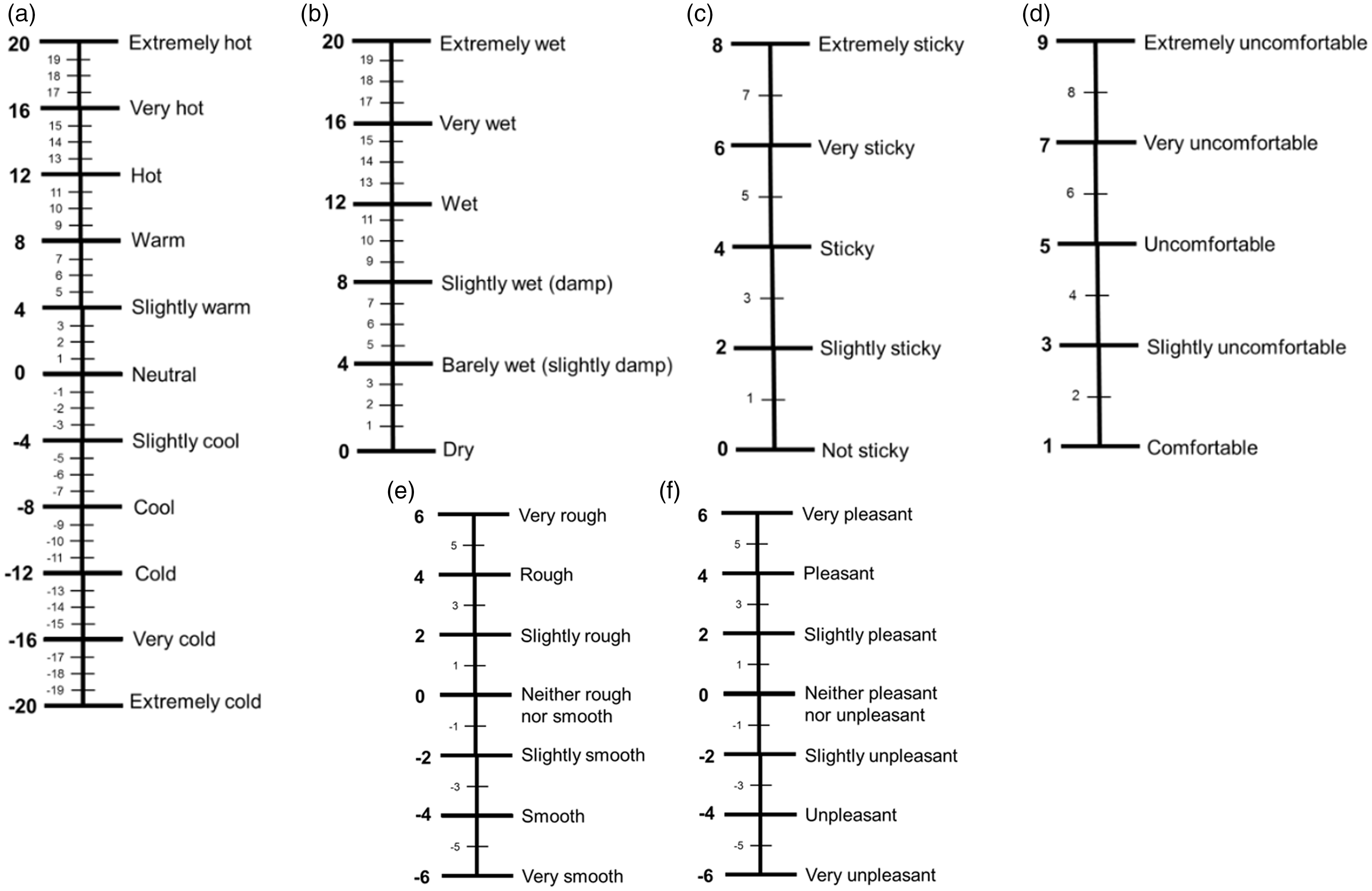
(a) Thermal sensation scale; (b) wetness perception scale; (c) stickiness scale; (d) thermal comfort scale; (e) texture scale; (f) pleasantness scale.
Scales were used to gain subjective information for the whole body (thermal sensation and thermal comfort) and whole foot (thermal sensation
Experimental protocol
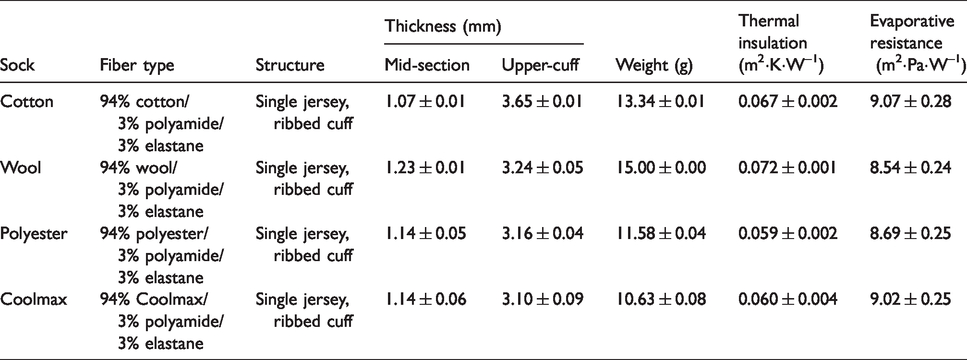
Participants took part in five experimental trials performed in a climatic chamber maintained at 23°C, 50% relative humidity. The five experimental trials differed with regard to the running socks worn. One trial was performed without wearing a sock, and four trials were performed with socks. The running socks assessed were identical in design/construction (cream/off-white color, ankle length, single jersey, ribbed cuff) but different in terms of the fiber composition (Table 1). Socks were matched for thickness. The running shoes were standardized for each trial (adidas Supernova Glide Boost 8 Clima Chill). Heat loss measurements for the socks (Table 1) and shoes were performed using a 12-zone sweating thermal foot manikin (Thermetrics, Measurement Technology Northwest, Seattle, USA) in accordance with ISO 15831. 25 Thermal insulation and evaporative resistance were calculated from thermal foot manikin measurements performed statically at an air velocity of 0.20 m·s−1, and at least two tests were carried out. The thermal insulation and evaporative resistance for the shoes were 0.10 m2·K·W−1 and 16.06 m2·Pa·W−1, respectively.
Experimental sock specifications (mean ± SD)
Upon arrival, participants changed into running shorts and t-shirt and washed their feet with tepid water. Following instrumentation, participants donned test shoes and rested in an upright seated position for a 10-min period. Participants then performed a 40-min run at a constant speed (7.5 km·h−1). This was followed by a 15-min recovery period in an upright seated position. The protocol employed has previously been used to objectively characterize shoe microclimate and perceptual responses for permeable and impermeable running shoes. 5
Analysis
The mean foot response for each individual variable (foot
Statistical analysis
In this study the independent variables were no sock/sock (cotton, wool, polyester, Coolmax) and time (rest, run, recovery). Dependent variables were gross sweat loss, sock sweat absorption, heart rate, skin hydration, rectal temperature, mean skin temperature, foot
Results
Environmental conditions
Mean (± SD) environmental conditions for the experimental trials were 23.1 ± 0.2°C and 49.6 ± 2.6% relative humidity. No significant difference in ambient air temperature (p = 0.79) or ambient relative humidity (p = 0.16) between trials was observed.
Whole body thermal responses
Rectal temperature, mean skin temperature and heart rate
As shown in Table 2, there were no sock-related differences in the dynamics of rectal temperature (p = 0.85) and their absolute values (p = 0.88). A condition × time interaction was observed for mean skin temperature (p = 0.02). At the end of the run (50 min) mean skin temperature was significantly higher when participants wore the polyester socks compared with the cotton (p = 0.02) and Coolmax socks (p < 0.01). There were no differences in heart rate between trials (p = 0.95).
Rectal temperature and mean skin temperature (mean ± SD) during the experimental protocol consisting of rest, run and recovery for four sock conditions and a no sock condition.
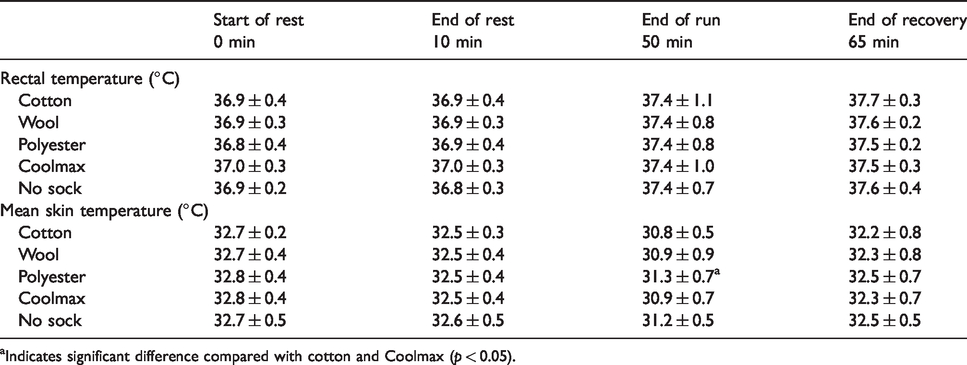
aIndicates significant difference compared with cotton and Coolmax (p < 0.05).
Gross sweat loss and sock sweat absorption
Gross sweat loss was not different between sock trials (average gross sweat loss across trials 0.39 ± 0.10 kg, p = 0.52). A difference in sock sweat absorption was only observed between the polyester and wool sock (0.90 ± 1.29 g versus 2.20 ± 0.84 g respectively, p = 0.002).
Perceptual responses
The dynamics of perceptual responses were similar between all trials. During the run, whole body thermal sensation increased from neutral to warm (p < 0.01). Participants experienced moderate thermal discomfort during the running period. With recovery, whole body thermal sensation returned toward neutral, resulting in reduced thermal discomfort (p < 0.01).
No sock-related differences were observed in whole body thermal sensation. Participants reported slightly higher whole body discomfort when wearing the cotton sock compared with the wool sock at the end of the run (cotton versus wool: 3.9 ± 1.9°C versus 3.4 ± 1.7°C, p = 0.04).
Foot thermal responses
Foot skin hydration
The results indicated no significant main effect of condition on skin hydration of the stratum corneum (p = 0.30). A significant main effect of location, however, was observed (p = 0.001). Significant differences within each condition are shown in Figure 4. The results indicated no significant main effect of condition (p = 0.20) or location (p = 0.21) on skin hydration of the epidermis.
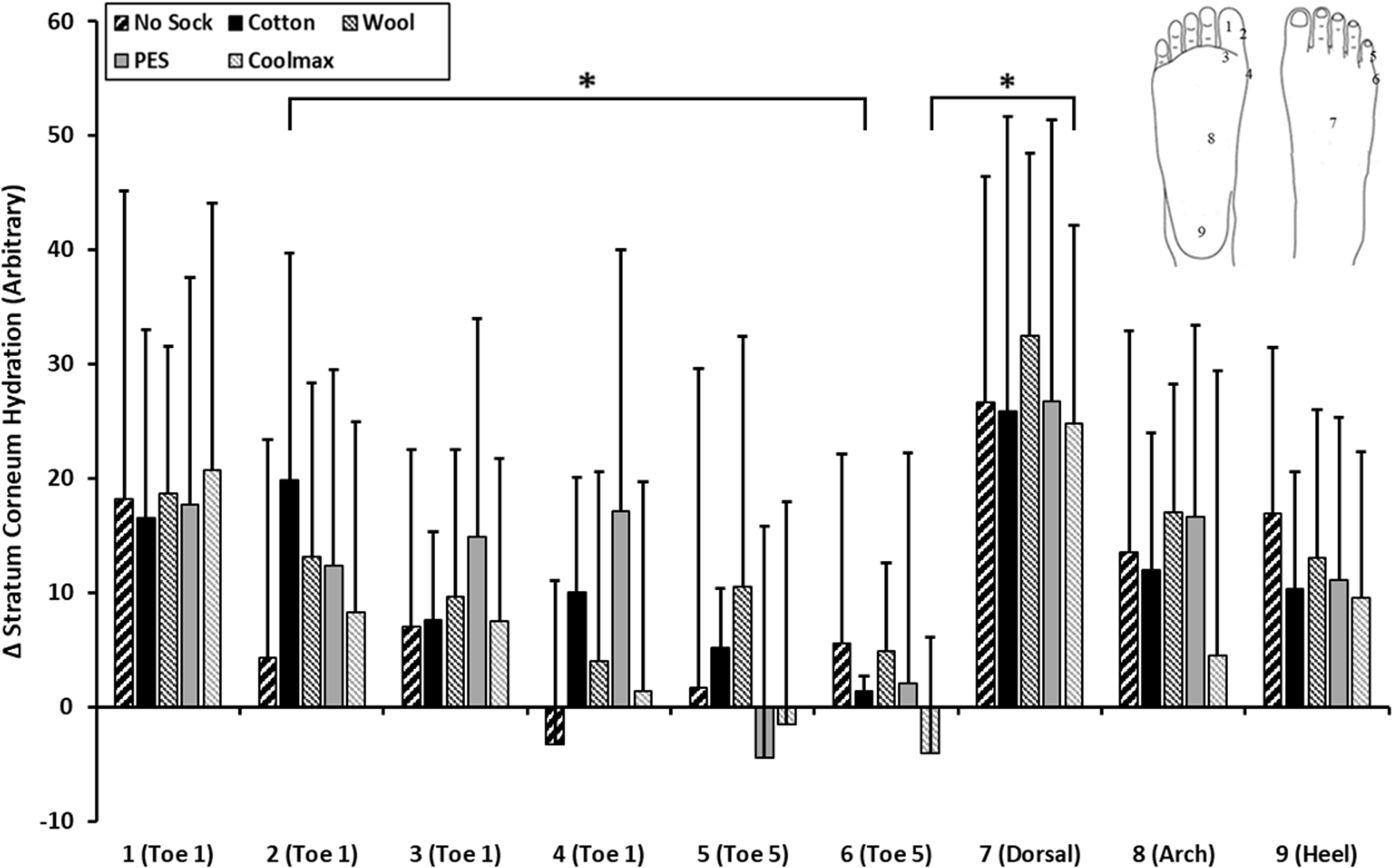
Change in skin hydration of the stratum corneum at nine foot sites from the start to end of the experimental protocol consisting of rest, run and recovery for four sock conditions (cotton, wool, polyester and Coolmax) and a no sock condition. * indicates significant difference for the cotton sock between toe 1 and toe 5 (p = 0.02) and a significant difference for the Coolmax sock between toe 5 and dorsal (p = 0.03).
Mean foot skin temperature and mean in-shoe temperature
As shown in Figure 5, mean foot
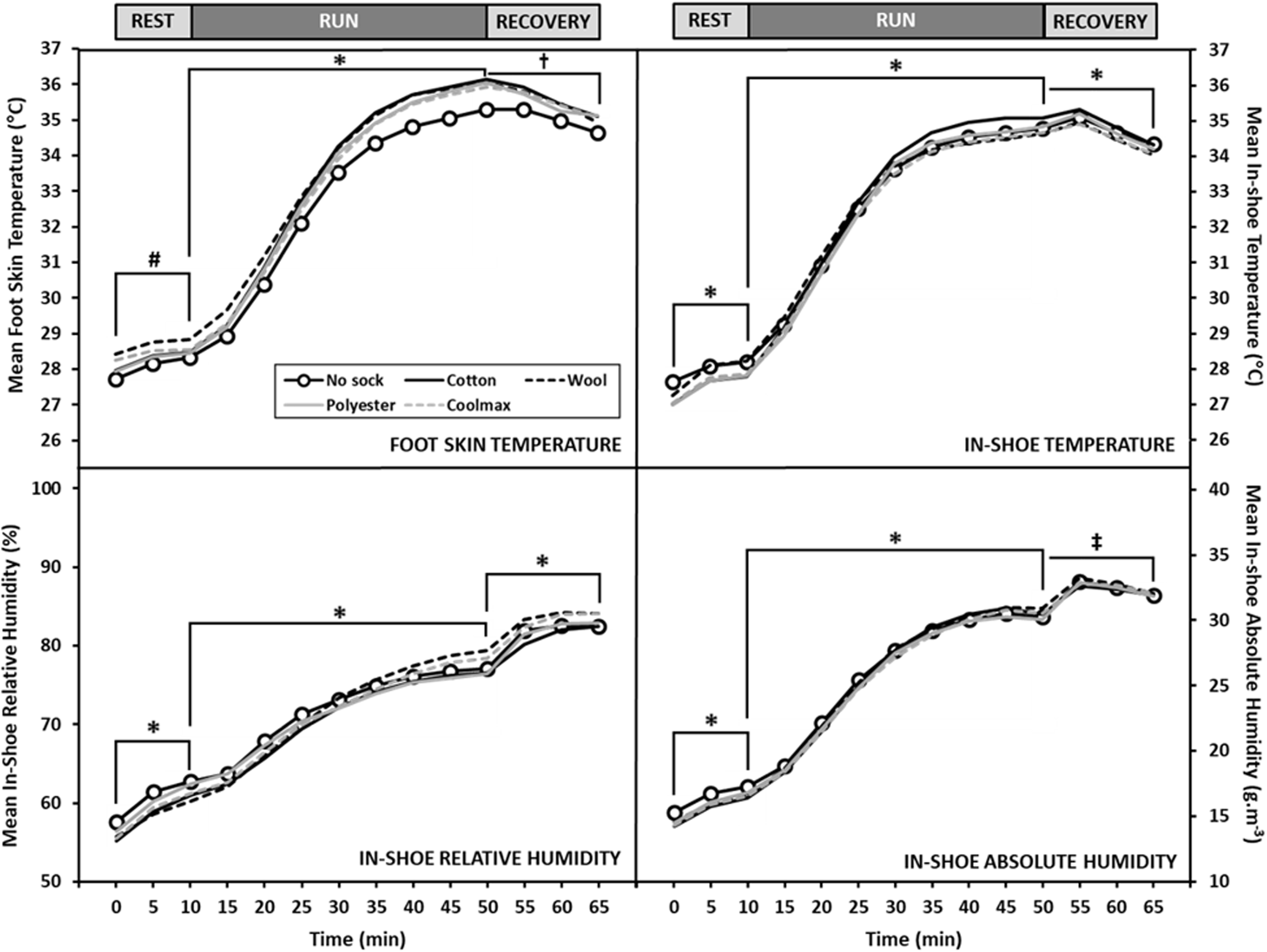
Mean foot skin temperature, in-shoe temperature, in-shoe relative humidity and in-shoe absolute humidity for four sock conditions (cotton, wool, polyester, Coolmax) and a no sock condition during the experimental protocol consisting of rest, run and recovery. * indicates significant difference from the previous time point for all conditions (p < 0.05). # indicates significant difference from the previous time point for wool, Coolmax and no sock (p < 0.01). † indicates significant difference from the previous time point for sock conditions only (p < 0.001). ‡ indicates significant difference from the previous time point for no sock (p = 0.03).
Although a significant main effect of condition (p = 0.28) or condition × time interaction (p = 0.88) was not observed for mean foot
In-shoe temperature increased with rest (p < 0.001) and run (p < 0.001) and decreased with recovery (p < 0.05) for all conditions (Figure 5). A significant main effect of condition (p = 0.29) or condition × time interaction was not observed (p = 0.48).
Mean in-shoe relative humidity and mean in-shoe absolute humidity
Mean in-shoe relative humidity increased with rest (p < 0.001) and throughout the run (p < 0.001) for all conditions (Figure 5). Mean in-shoe relative humidity remained high during recovery for all conditions (p < 0.05). A significant main effect of condition (p = 0.78) or condition × time interaction was not observed (p = 0.12).
Mean in-shoe absolute humidity increased with rest and throughout the run (p < 0.001) for all conditions (Figure 5). With the cessation of running (50–55 min), in-shoe absolute humidity increased briefly by ⁓2.5 g·m−3, before exhibiting a decreasing trend for all sock conditions. In-shoe absolute humidity significantly decreased for the no sock condition only (1.7 g·m−3, p = 0.03).
Foot perceptual responses
Foot perceptual responses are shown in Figure 6 with differences over time and between conditions shown in Table 3.
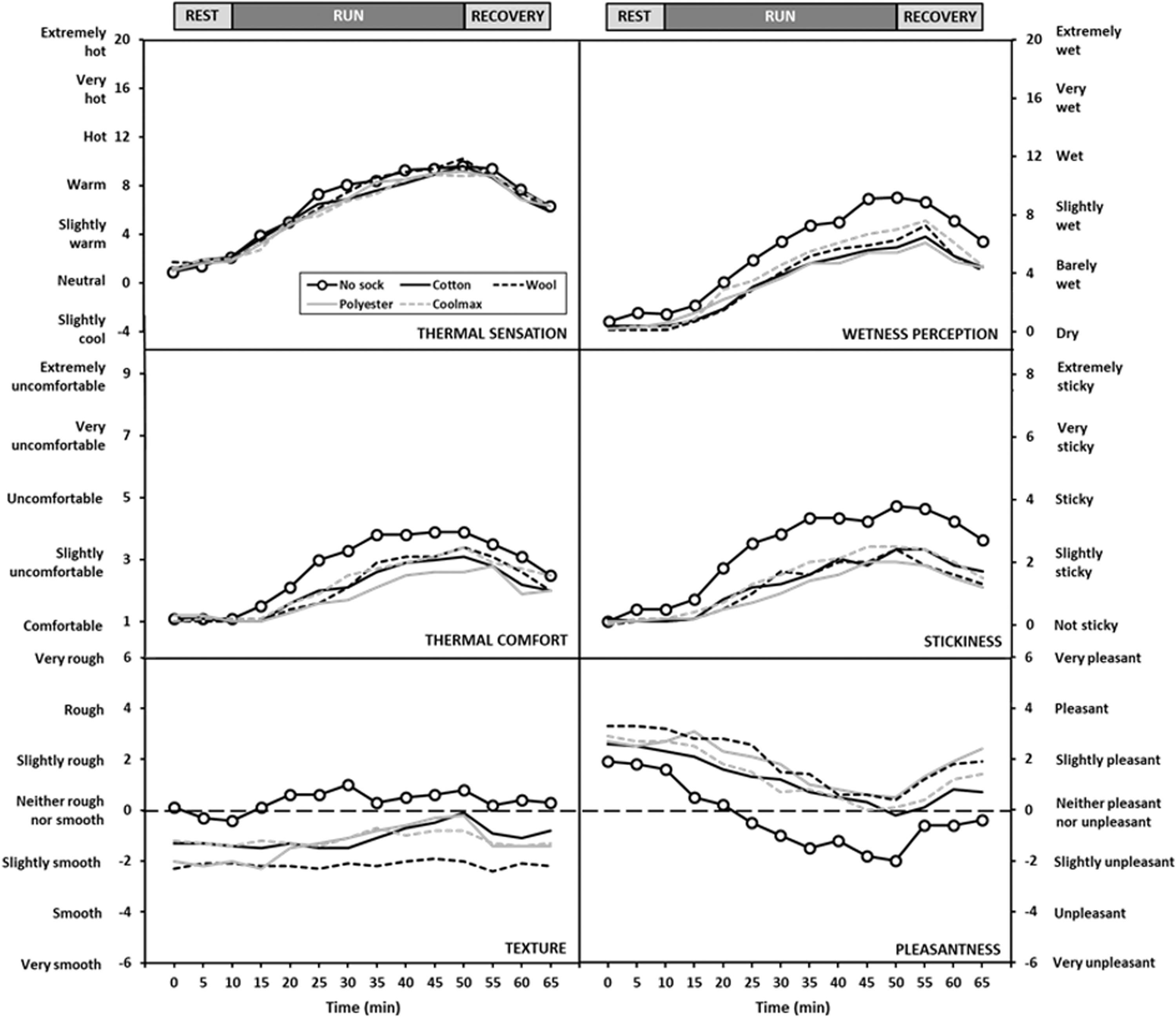
Mean foot thermal sensation, foot wetness perception, foot thermal comfort, foot stickiness, texture sensation and foot pleasantness for four socks conditions (cotton, wool, polyester, Coolmax) and a no sock condition during the experimental protocol consisting of rest, run and recovery.
Significance of comparisons (p-values) for perceptual responses provided over time and between four sock conditions and a no sock condition during the experimental protocol consisting of rest, run and recovery
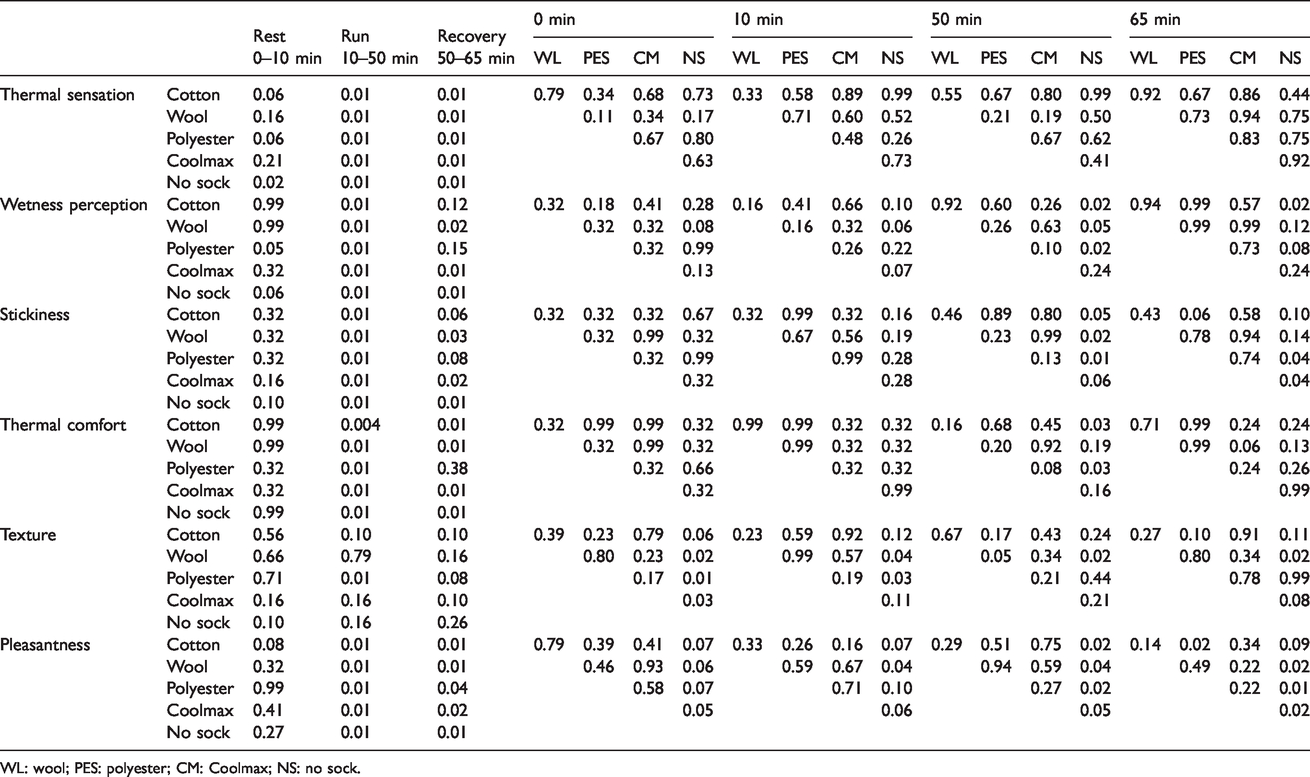
WL: wool; PES: polyester; CM: Coolmax; NS: no sock.
Mean foot thermal sensation
With rest, participants
Mean foot wetness and stickiness
Participants experienced no
At the end of the run,
Mean foot thermal comfort
With rest, participants feet were judged comfortable with no change over time. Participants experienced moderate local discomfort throughout the run regardless of the condition (p < 0.01). With recovery,
Mean sock/no sock texture sensation
Texture sensation did not change with rest. During the run, texture sensation only significantly changed for the polyester sock (p = 0.01). With recovery, texture sensation only significantly changed for the cotton sock (p = 0.02).
Differences in texture were significantly different between the no sock condition and sock conditions (p < 0.05) at the start of the experiment. At the end of the run, the wool sock was perceived as smoother than the polyester and no sock condition (p < 0.05). At the end of recovery, the wool sock was significantly smoother than the no sock condition (p = 0.02).
Mean foot pleasantness
With rest, participants rated their feet as slightly pleasant/pleasant. At the end of the run, participants rated their feet as neither pleasant nor unpleasant to slightly unpleasant (p < 0.01). During recovery, participants returned more towards slightly pleasant sensations (p < 0.05).
Relation between foot perceptual responses
Foot
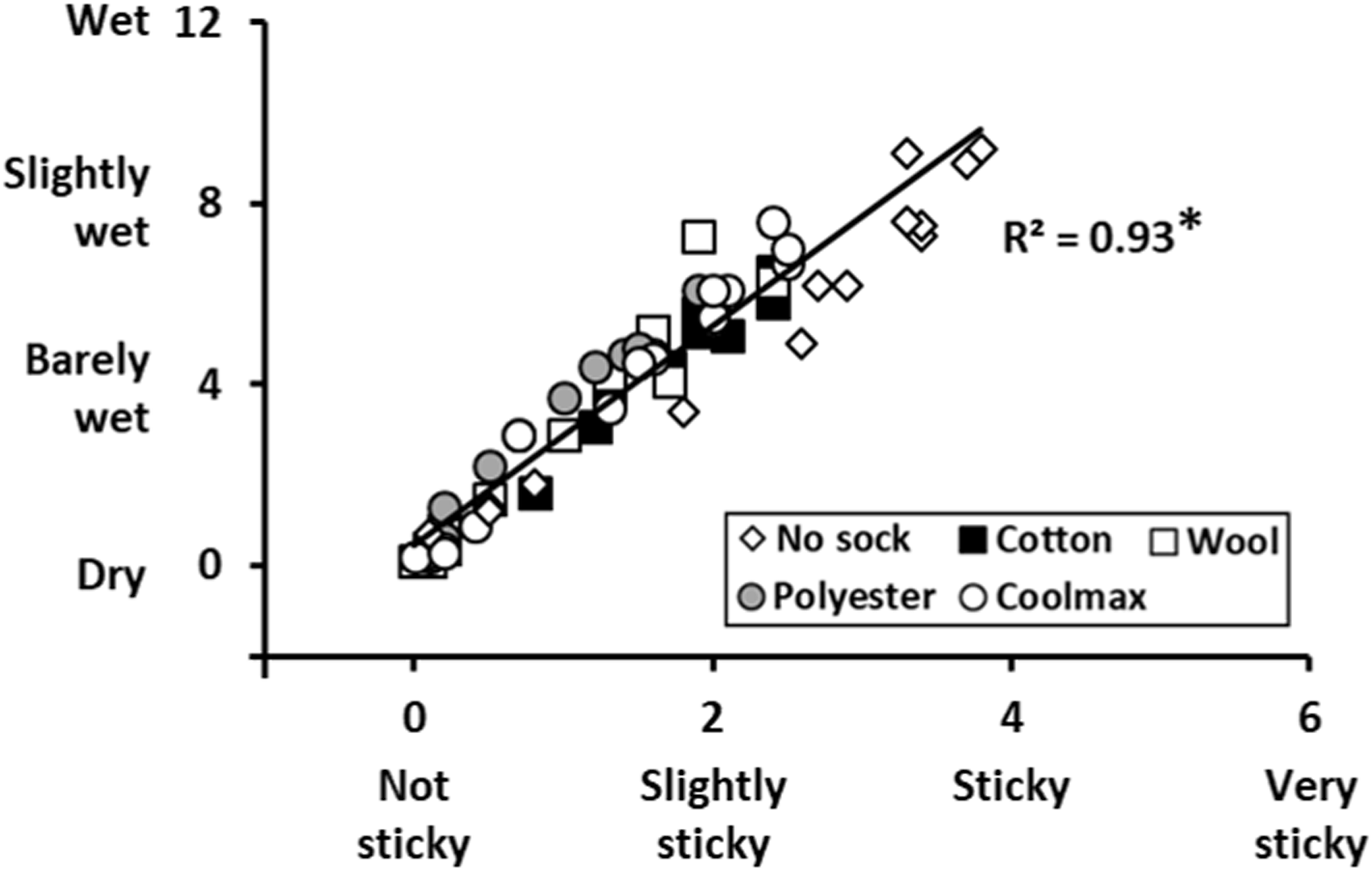
Relationship between foot wetness perception and foot stickiness for four socks conditions (cotton, wool, polyester, Coolmax) and a no sock condition during the experimental protocol consisting of rest, run and recovery. * indicates a significant relationship when all conditions and protocol phases are combined (p < 0.001).
Weak (R2 < 0.40) but significant relationships (p < 0.001) were observed between texture sensation and foot
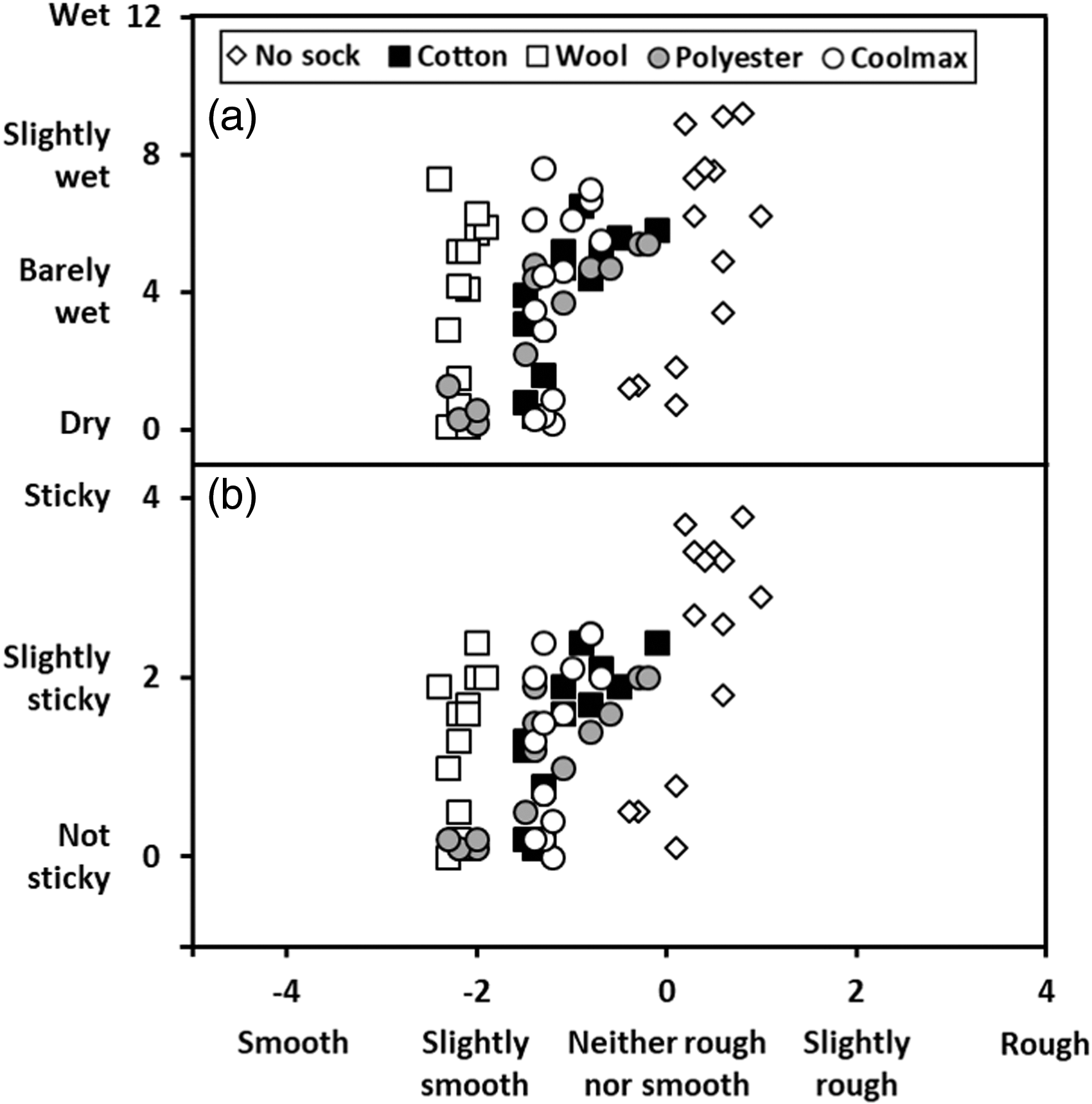
Relationship between (a) foot wetness perception and (b) foot stickiness and perceived texture for four socks conditions (cotton, wool, polyester, Coolmax) and a no sock condition during the experimental protocol consisting of rest, run and recovery.
Texture sensation showed a significant relationship with pleasantness when all sock conditions and phases of the experimental protocol were considered (Figure 9: R2 = 0.61, p < 0.001).
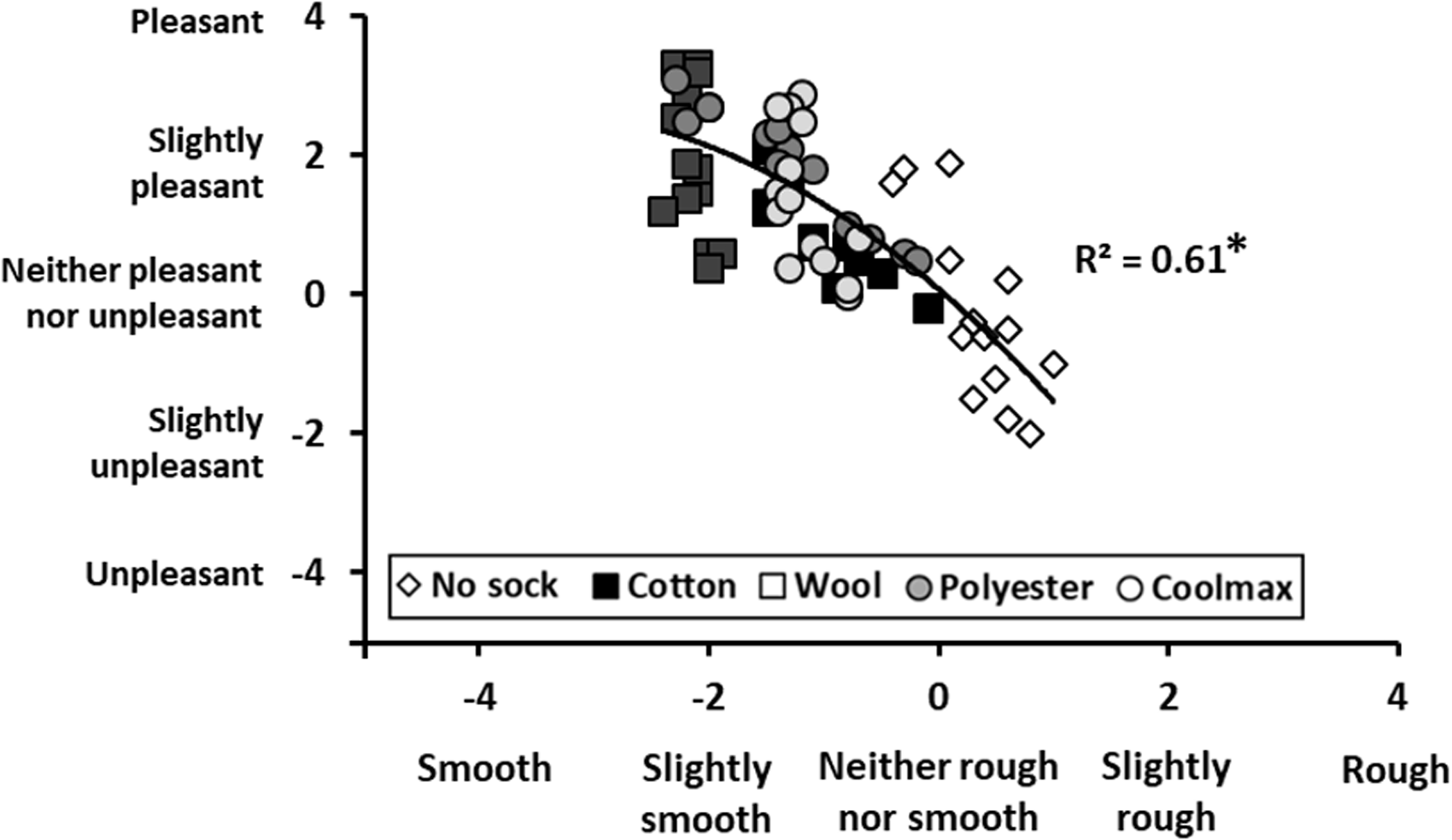
Relationship between pleasantness and perceived texture for four socks conditions (cotton, wool, polyester, Coolmax) and a no sock condition during the experimental protocol consisting of rest, run and recovery. * indicates a significant relationship when all conditions and protocol phases are combined (p < 0.001).
Discussion
This study is the first to evaluate the effect of sock fiber type (accounting for sock design/construction and thickness) and the impact of not wearing a sock on perceptions of foot thermal comfort in relation to thermo-physiological responses (foot
The outcomes of this study show similar thermo-physiological responses when wearing socks (regardless of fiber type) compared with not wearing a sock during rest and exercise. No differences in foot
Although wearing socks of different fiber types had little thermo-physiological impact and no effect on the perception of comfort (all socks elicited moderate local discomfort to participants with exercise p < 0.01), exercising without a sock resulted in greater perceptions of foot wetness, stickiness and thermal discomfort.
Should we wear socks?
The sock is believed to be both important for protection and for comfort, yet the thermo-physiological effect of not wearing a sock during exercise has not been investigated. In the current study, we show little thermo-physiological effect of wearing socks different in fiber composition compared with not wearing a sock during any phase (rest, run, recovery) of the experimental protocol. No differences in foot skin hydration, foot
Tactile interactions which occur when materials come into contact with the human body are important in the perception of wetness when wearing apparel26,27 and footwear.5,28 Our previous experimental work 28 has shown that the perception of wetness and comfort at the foot is not dominated by regions of high sweat production but rather by tactile cues caused by foot movement in the shoe. Areas of low sweat production (toes and heel) were perceived as being wetter, stickier and more uncomfortable than the dorsal and plantar foot regions (areas of high sweat production) due to the expected higher contact loads and propulsion actions experienced and required at these regions during running. 28 The perception of wetness at the foot is therefore strongly related to the perception of stickiness 28 which is also supported in the present data (Figure 7).
It could be expected therefore that running without socks generates tactile inputs which are greater than those experienced when running with socks. The tactile cues generated between the foot and sock fabric may therefore be lower than those generated directly between the foot and shoe lining. Shoe linings vary from padded textile areas around the heel to meshed areas in the forefoot. Also seams, stitching and overlapping of materials particularly around the lacing area/tongue of the shoe may provide greater tactile inputs. Although we assessed the perception of texture, in an attempt to identify potential differences in the tactile cues generated between the no sock and sock conditions, only weak relationships were observed between texture and foot stickiness (Figure 8(b)). Bertaux et al. 7 also observed no correlation between surface roughness of sock fabrics and comfort. The textile-related parameter that would need to be assessed in order to identify differences in tactile cues generated between conditions such as those investigated in the present work is currently unknown but provides an interesting area for exploration.
Overall, although wearing socks compared with not wearing a sock with exercise had little thermo-physiological effect in terms of differences in foot
Effect of sock fiber type on foot skin temperature, in-shoe temperature and thermal sensation
Wearing socks matched for thickness but different in fiber type did not result in differences in foot
Fundamentally, the distribution of thermoreceptors varies across the body resulting in regional differences in thermal sensation.29–31 Also, the surface area exposed to a thermal stimulus and the number of thermoreceptors activated impacts upon the thermal sensation.
32
Thus, reporting foot thermal sensation relative to a temperature stimulus applied to the forearm is not representative of the actual thermal sensation experienced. Practically, asking participants to rate thermal sensation in relation to three temperatures (wide in range) reduces the ability to discriminate between sock conditions. At rest in thermo-neutral conditions, mean foot
With these methodological issues identified and considered, research suggesting that differences in thermal sensation can be elicited without changes in foot
Effect of sock fiber type on skin hydration, in-shoe humidity and wetness perception
Assessment of the mean change in sock weight (an indication of sweat accumulation within the sock) pre- and post-test, only indicated a small difference of 1.2 g between the wool and polyester sock (p = 0.002). No differences in sweat accumulation were observed between any other sock conditions. Purvis and Tunstall 8 also reported no significant differences in the change in sock weight (1.6 g) of cotton compared with a cotton/Coolmax/polypropylene blended sock following running.
The present study also indicated no differences in stratum corneum or epidermis skin hydration across multiple foot sites in relation to sock fiber type. Bogerd et al. 20 also did not observe differences in stratum corneum skin hydration when investigating synthetic and natural/synthetic fiber blend socks worn with military boots during 30-min bouts of walking. It was suggested that the short duration exercise may have been insufficient to elicit observable differences in skin hydration. 20 It was also hypothesized that for shoes with a high water vapor resistance (i.e. military boots) or in conditions where moisture transfer from the shoe to the environment is low, skin hydration may increase with the application of wicking fabrics. Indeed, a subsequent study by Bogerd et al. 21 showed that with longer duration exercise performed in military boots, skin hydration was greater for the synthetic sock compared with a natural/synthetic blend sock. For the present study, using permeable shoes and short duration exercise, this may explain the lack of significant effect of sock type on skin hydration.
With regard to the effect of sock fiber type on moisture accumulation within the shoe (in-shoe relative or absolute humidity) limited data are available. 7 Although changes to in-shoe relative humidity over time have been reported (after 40-min running minimum and maximum in-shoe relative humidity at the toe area across sock conditions was 77.5 ± 7.9% and 86.8 ± 8.5%, respectively) and are similar to those observed in the current study, Bertaux et al. 7 did not discuss whether in-shoe relative humidity differed between the sock conditions investigated. Thus, in the present study, for the first time we show that sock fiber type does not impact moisture accumulation within the shoe during any phase (rest, run, recovery) of the experimental protocol. The mean in-shoe relative humidity and mean in-shoe absolute humidity across sock conditions at the end of the run were 77.6% and 30.4 g·m−3, respectively.
In light of these findings, previous differences reported between natural and synthetic fibers have been confounded by other material factors such as thickness, design/construction and weight,6–9 all of which affect water absorption parameters within the material.33–35 Although we were unable to match socks according to weight, the present study is the first to evaluate the effect of sock fiber accounting for thickness and design/construction. As no differences in thermo-physiological responses were observed between sock conditions, it could be concluded that the small weight difference between sock conditions was negligible.
As differences in sock fiber type did not result in differences in sweat accumulation within the sock, skin hydration or in-shoe relative or absolute humidity, no differences in wetness perception were observed. Although tactile cues/dynamic exploration is important in the perception of wetness within footwear, 5 the perception of stickiness did not differ between the sock conditions. As sock design/construction and thickness were controlled for within the study, it could therefore be expected that the mechanosensory stimuli generated between the sock and shoe would have been similar between the conditions, thus no perceptual differences were observed.
Effect of sock fiber type on thermal comfort and perceptions of pleasantness
Fiber content and frictional properties have been suggested to be two relevant textile parameters important for sock comfort.
7
In the present data, although participants experienced moderate local discomfort throughout exercise, the level of discomfort reported did not differ according to the sock worn. This is perhaps not surprising considering wearing socks of different fiber types was shown to have little thermo-physiological (foot
Pleasantness is also commonly used in the assessment and evaluation of fabrics and clothing. Although pleasantness did not differ according to the socks worn, socks which were perceived as rougher were associated with being unpleasant (Figure 9). Raccuglia et al. 24 previously reported a significant reduction in pleasantness when fabric texture increased both in dry and wet states.
Considerations
In the current study, the role of the sock was investigated in running shoes where moisture transfer from the shoe to the environment is high. It is therefore relevant to consider whether the same results would apply to shoes with different moisture vapor permeability characteristics (i.e. hiking or military footwear) that may be highly insulative, windproof and/or waterproof. For such applications, where moisture transfer from the shoe to the environment is low, the moisture absorption characteristics of the textiles in contact with the skin may become more important to wear comfort. It is typically assumed that natural fibers have a greater moisture absorption capacity compared with synthetic fibers. However, the amount of moisture absorbed by fabrics with different fiber types is often confounded by fabric thickness.33,36,37 With this considered, it could be expected that although foot skin hydration, foot
Finally, it should also be noted that although this study is the first to evaluate the role of the sock and sock fiber type on shoe microclimate and subjective evaluations, the results of this study, given the limited number of participants, all females, may not necessarily be generalizable across the whole population. Although there currently is no indication in the literature that the observations would be expected to be different for other groups, further investigation of footwear comfort is encouraged for groups of different physical characteristics.
Conclusion
The outcomes of this study show similar thermo-physiological and perceptual responses when wearing socks composed of different fiber types during rest and exercise. Similar thermo-physiological responses were also observed when wearing socks (regardless of fiber type) compared with not wearing a sock. Surprisingly, however, exercising without a sock resulted in greater perceptions of foot wetness, stickiness and thermal discomfort. Socks therefore play an important positive role in the reduction of tactile and mechanical inputs (predictors of foot wetness perception, a key contributor to wear discomfort) generated between the foot and the shoe. Thus, the sock is an important area for development and relevant for overall improvements in footwear comfort.
Footnotes
Declaration of conflicting interests
The authors declared no potential conflicts of interest with respect to the research, authorship, and/or publication of this article.
Funding
The authors received no financial support for the research, authorship, and/or publication of this article.
