




Abstract
The education sector in low- and middle-income countries (LMICs) has experienced a surge of neoliberal reforms over the past few decades, primarily led by the World Bank (WB). One of these reform agendas has been to “decrease standards” or “destandardize” educational responsibilities and policies by devolving educational systems to subnational and school levels. Diffused through different mechanisms, such as conditional aid and the “what works” mantra, we know little about the growth and nature of these reforms, but they may have significant socioeconomic consequences. This is the first study to investigate the destandardization reforms implemented by the WB in the educational systems of 99 historical and present LMICs. Results show that about 63 percent of WB project components in primary and secondary education have focused on destandardizing educational systems at subnational and school levels. Growth of these reforms at the subnational level slowed between the mid-1990s and the early 2000s but sharply increased at the school level since the late 1980s. I argue that the latter could be due to a global emphasis on school-based intervention, an urge for aid effectiveness, and a strategy to spread democratic values in micro-social units. I provide evidence of how homogeneous strategies of supranational organizations diffuse heterogeneous educational systems of nation-states because of aid dependency.
Keywords
During the past few decades, low- and middle-income countries (LMICs) worldwide have experienced waves of neoliberal reforms in their educational systems, similar to other political and social institutions. These reforms have primarily focused on changing or “reculturing” institutions, which emphasizes transferring educational responsibilities to local authorities and schools, strengthening accountability frameworks, building local leadership, and enhancing participatory management (Ball and Youdell 2009; Naidoo 2005).
Pioneered by the World Bank (WB), other international organizations (IOs) have also been involved in diffusing these reforms, with the aim of curing the “failure” of state-provided education and the “ineffectiveness” of rigidly centralized traditional bureaucracy to deliver primary and secondary education (Ball and Youdell 2009). The new management paradigm calls for more empowerment of individuals and meso- and micro-level institutions, that is, local governments and schools. The increasing attention to local and school autonomy has likely decreased the “standards” of educational responsibilities and policies across subnational entities and schools in a country. In the sociological literature, standardization is understood as “the degree to which the quality of education meets the same standards nationwide” (Allmendinger 1989:233). By decreasing the uniformity of standards across local authorities (e.g., decisions regarding curriculum, teaching, and recruitment), IOs aim to contextualize the identification and solution of local problems (Barrera-Osorio, Fasih, and Patrinos 2009). Hence, destandardization here refers to the extent to which local authorities and schools can set their own educational standards. This definition is supported by an established body of scholarship (e.g., Gamoran 1996; Van de Werfhorst and Mijs 2010).
I adopt the term destandardization rather than decentralization or devolution for several reasons. First, I argue that destandardization encapsulates broader institutional changes by IOs. To elaborate, subnational entities and schools have varying levels of capacity and ability due to, for instance, differences in resources and skills among teachers and education officials. The variation in capacity means local authorities may not be able to administer devolved responsibilities uniformly. Second, along with devolving educational systems, I also examine how reforms have triggered nonstandard educational practices by creating new local platforms and capacity building. For instance, the WB promotes school-based management (SBM) by creating school management committees (SMCs) and encouraging participatory decision-making (Barrera-Osorio et al. 2009). SBM does not always necessitate the transfer of responsibilities from the central government; it mainly encourages schools to autonomously run different functions. This is likely to increase nonstandard practices across schools. Finally, nonstandard practices may lead to inequalities in learning outcomes depending on the schools children attend. I put forward this discussion for future research to examine the inequality consequences of destandardization-like reforms.
Destandardization reforms have been triggered by neoliberal ideas of limited state intervention and the dominance of market principles in managing public services such as education and health (Harvey 2006). Originated during the Reagan–Thatcher era in the 1980s, these neo- and hyper-liberal reforms in the education sector aggressively traveled the world throughout the 1990s and onward (Steiner-Khamsi 2014).
Despite being vigorously exported, almost no research exists on the extent to which destandardization reforms have diffused among educational systems of LMICs. Moreover, there is no well-developed theoretical underpinning on how global norms shape institutions in service sectors such as education. It is well established that once world society (e.g., IOs) embraces some policies, these spread across the globe rapidly (Boyle, Kim, and Longhofer 2015). There are different theoretical arguments about why policies diffuse worldwide, including diffusion through globally agreed policies (Meyer et al. 1997); “coercion” in exchange for foreign direct investments, grants, or aid in LMICs (Dobbin, Simmons, and Garrett 2007) and aid conditionality (Mosley, Harrigan, and Toye 1995; Reinsberg et al. 2019); and policy diffusion to create a competitive environment and to learn from others (Dobbin et al. 2007). A combination of these mechanisms might have driven the diffusion of destandardization reforms.
The core objective of this study is to examine the growth and types of WB-diffused destandardization reforms in the education sector of LMICs, both present and historical. The WB has played a pioneering role in promoting neoliberal reforms, especially in social sectors (Mosley et al. 1995). This study looks at the projects implemented by the WB; hence, it does not capture the factual changes in the level of destandardization on the ground.
To my knowledge, this article provides the first body of evidence on the volume of destandardization reforms implemented in 99 historical and present LMICs. The other contribution of this article is to investigate the types of destandardization, that is, the level at which reforms have taken place. Existing literature, predominantly from advanced economies, describes destandardization from a dichotomous viewpoint, that is, an educational system can be more or less standardized (e.g., Gamoran 1996; Van de Werfhorst and Mijs 2010). However, educational systems typically contain multiple layers of governance, which means destandardization may be a multidimensional phenomenon that involves different types of actors in each tier of the administrative hierarchy. I thus divide destandardization into the (1) meso or subnational level and (2) micro-social units or schools. Subnational bodies refer to districts, regions, or any other entities above schools. These types represent destandardization in two different forms; one form is not weaker than the other. 1
This study covers most regions of the world, excluding Western Europe, North America, and Oceania, apart from Papua New Guinea, over the past half-century. Here, historical means countries that were once considered LMICs and received aid but later became economically advanced and are no longer aid recipients. South Korea, for example, has not borrowed from the WB since 1999 (Heckelman, Knack, and Rogers 2011).
There is no systematic documentation of donor-led destandardization reforms, so the primary purpose of this article is to present a descriptive overview of these reforms. In doing so, I explore two research questions. First, whether and how has the volume of destandardization reforms by the WB grown in LMICs since 1965? This question aims to describe the magnitude of destandardization reforms and their growth at the subnational and school levels. Second, how has the growth of destandardization reforms been similar or dissimilar across LMICs? This question examines the homogeneity or heterogeneity in the growth of destandardization reforms implemented by the WB.
Theoretical Framework
Background
Destandardization reforms, similar to other educational reforms implemented in LMICs by IOs, are understood to be a policy-borrowing phenomenon. Here, education policies diffuse when the Global South borrows from the Global North (either IOs or countries) (Steiner-Khamsi 2012). There are four different arguments about why policies diffuse across countries (Dobbin et al. 2007), which may overlap.
Constructivists argue that policy diffusion is a socially constructed phenomenon that changes over time. A set of actors in a global political culture broadly agree on diffusion of certain policies to attain certain goals (Berger and Luckmann 1966; Meyer et al. 1997). Proponents of this view suggest the United States and the WB may encourage policy models, but nation-states are generally willing to implement them (March and Simon 1993). In other words, policy models are socially accepted because they are seen as working well in exemplar countries; this is a “follow-the-leader” approach (Dobbin et al. 2007).
By contrast, coercion theory suggests policies are diffused forcibly by great powers to expand their influence on other nations, promote their own institutions, and keep their ideological regimes in power (Owen 2002). Coercion can also happen through manipulation of economic costs and benefits by having a monopoly over information, resources, and expertise. For instance, IOs and resourceful states may influence different policies in LMICs that rely on aid, grants, loans, or foreign direct investments (see Kentikelenis and Babb 2019; Kentikelenis, Stubbs, and King 2016; Mosley et al. 1995; Vreeland 2003).
Third, countries can borrow policies to stimulate economic competition (Sinn and Ochel 2003). Fourth, policy diffusion can take place as countries learn from each other (Dobbin et al. 2007). These four theories may somewhat overlap, but I will argue that constructivist and coercion approaches may better reflect the borrowing of WB's destandardization reforms. However, it is beyond the scope of this article to test which theories may apply here. Instead, I discuss these to provide a general framework to understand policy diffusion in education.
Policy borrowing in educational systems dates back to colonial times. A frequently cited example in comparative education is the case of transferring the U.S. industrial education model, designed for African Americans by the British colonial government, to Achimota, located near Accra in Ghana, in 1920. The model, borrowed from Hampton Institute in Virginia, originally provided industrial education to the racially segregated U.S. South. Adapters in Accra argued that this segregated model must be a blessing for Africans because it was good for African Americans. Cultural differences between the two continents were not seen as an issue for Achimota's “adapted education.” Opponents, however, contended that adapters were linking Black Africa to African Americans with little rationale, and they criticized the underlying racism behind the nonacademic and racially segregated training for Africans (Berman 1971; Steiner-Khamsi and Quist 2000).
Two elements of this historical case are apparent in recent neoliberal reforms: the cross-border traveling of reforms from the global “center” to the “periphery” and the notion of “what works” (Dobbin et al. 2007). The adapted education model was argued to have positively influenced African Americans in the rural United States; hence, the colonial government thought it was the best fit for rural Africa, although there was no evidence behind this claim. Similarly, motivation for the recent transfer of destandardization and other reforms by donors represents the ideological position of global leaders since the 1980s, including the United States's and the United Kingdom's push to integrate market principles in delivering services. These reforms are assumed to work best for efficient service delivery in LMICs, although there is no conclusive evidence of this even in advanced economies (Van de Werfhorst and Mijs 2010). To give an overview of the scale of destandardization-like reforms, in the late 1990s, 80 percent of developing and emerging economies in different regions experimented with devolving institutions (Manor 1999). This suggests these reforms have become widely accepted by world society associations, reflecting the constructivist view, but are implemented through a coercive mechanism, that is, conditional aid and grants.
But why are destandardization reforms spreading? Leveraging constructivism and coercion arguments, I provide two broad accounts. First, the changing global political hegemony during the post–cold war period instigated destandardization reforms. Many formerly pro-Soviet regimes started leaning toward the United States and its allies and embraced destandardization reforms led by development banks and aid agencies (Thimmaiah 2000; Wunsch 2014). The chronic ineffectiveness of traditional rigidly centralized administrations to deliver services also contributed to this policy shift to bring services closer to people (Rondinelli, McCullough, and Johnson 1989). But, as Owen (2002) argues, the infiltration of reforms follows a coercive mechanism: the “ineffectiveness of existing institutions” argument is used to influence LMICs to accept the reforms.
Second, another line of thought posits that institutional reforms such as destandardization are the prerequisites for sustainable aid effectiveness. Despite the growth of foreign aid since World War II, its effect on economic development and poverty reduction in LMICs remains debatable (Cassen 1994). This dispute has increased since the 1980s (Lipton and Toye 2010), specifically in the education sector: although school enrollment has improved, learning achievement has not (UNESCO 2015). Hence, hinging on the argument that aid is more effective in democracies (Kosack 2003), since the early 1990s, policies have shifted from merely financing education to building more democratic institutions. In this regard, destandardization reforms, such as more local autonomy for educational responsibilities (Channa and Faguet 2012), have been seen as creating democratic space in local institutions and communities. As a result, institutional capacity building, such as destandardization reforms, has been tied to aid conditionality (Baylies 1995). Donor countries make routine pronouncements about reducing aid if these conditions are not met (Robinson 1993).
Why Expect Differences in Trajectories across Countries?
My first research question is concerned with the descriptive overview of growth trajectories of destandardization reforms in LMICs. The second question deals with how similar or dissimilar reform trajectories have been across countries, and I expect to observe some patterns in the trend in destandardization reforms. The main expectations are related to the shape and timing of growth trajectories. These are exploratory expectations rather than hypotheses because the study is mainly descriptive and one of the first in the field.
Specifically, regarding the shape, an increasing push from the WB to implement destandardization reforms at both subnational and school levels across countries over time would conform to the well-established theory that once certain policies are embraced by world society, they tend to spread globally (Boyle et al. 2015; Schofer 2003). But such an embrace may happen by coercion and, eventually, via a global consensus led by world society. This is because destandardization reforms often take place through the “what works” principle (Dobbin et al. 2007). Destandardization reforms are argued to lead to better learning outcomes (Barrera-Osorio et al. 2009). Given that high-income societies have a long tradition of autonomy in local governance (Ladner, Keuffer, and Baldersheim 2016), LMICs are often pushed, through aid conditionality, to install destandardization reforms to improve learning achievement. Some countries may implement fewer reforms than others because of contextual differences, but on average, the growth pattern will likely show some similarities.
The process of adopting neoliberal reforms in social and economic sectors, including education in LMICs, was institutionalized by the “Washington Consensus” in the late 1980s. Starting in the 1990s, these reforms diffused globally followed by different United Nations (UN) programs, such as the Programme of Action for the Least Developed Countries in the 1990s and Millennium Development Goals (MDGs) in 2000 (Jolly 2004). The diffusion of neoliberal reforms started with a market-centerd approach to running state apparatuses, including a focus on devolving institutions at the local level (Manor 1999). Thus, as illustrated in the left panel in Figure 1, I expect the growth of both levels of destandardization may go steeply upward, especially starting from the late 1980s and early 1990s.
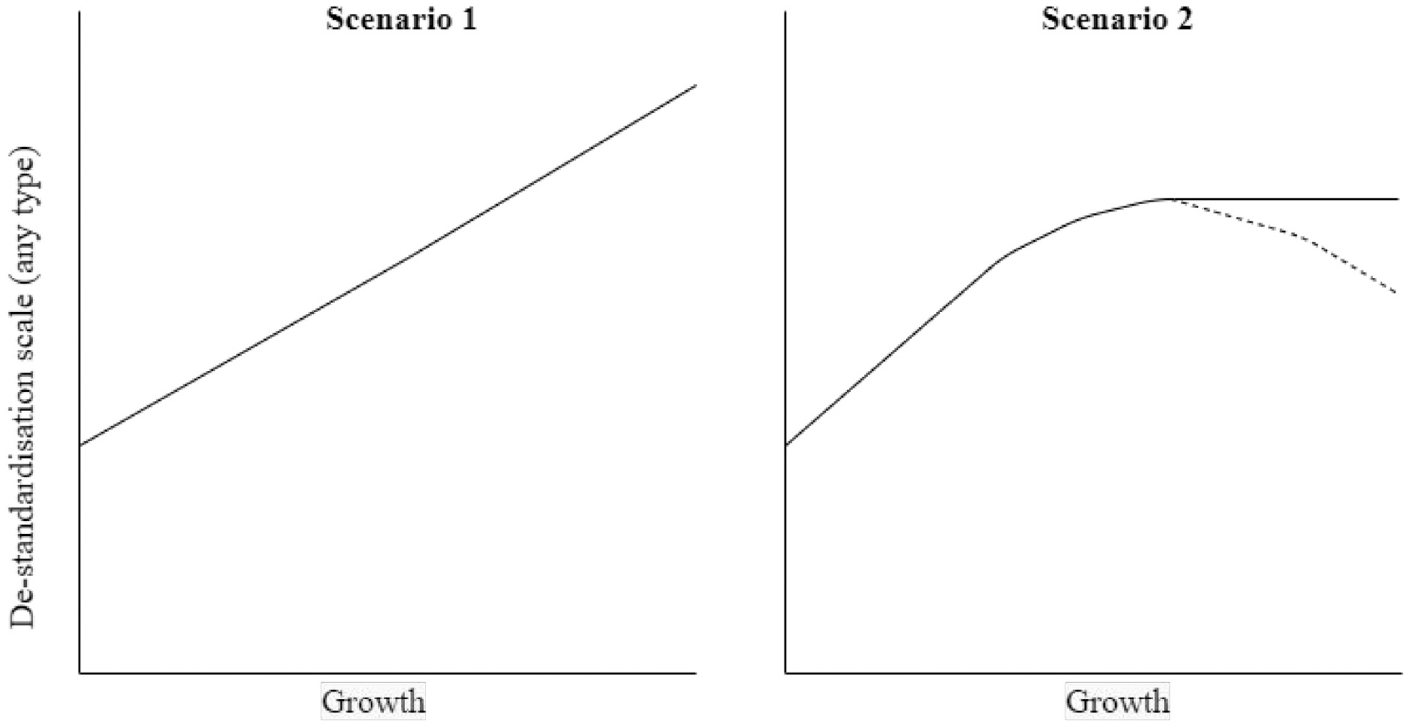
Stylized scenarios of the process of destandardization reforms over time.
The growth of destandardization elements is likely to be upward, but there may be heterogeneity in the starting period of reforms and between-country variance in reforms. Some Western allies (e.g., Chile and Argentina) may have experienced destandardization reforms throughout the cold war era (Harvey 2006; Holmes 1981), but the gradual decolonization and democratization of many LMICs have likely led to the rapid growth of these reforms worldwide.
Differences in the implementation of destandardization reforms at the initial stage or afterward can be driven by changes in the global political landscape, more specifically, by the cold war between Western countries and the former Soviet Union. For instance, U.S.-led multilateral aid agencies, including the WB, started influencing LMICs where the Soviets did not have a stronghold (Willis, da CB Garman, and Haggard 1999). However, countries that emerged from the Soviet Union in Central and Western Asia (CWA) and Eastern Europe (EE) may have experienced destandardization reforms much later because of the delayed engagement with development partners. This means the closeness of countries with Western allies may lead to more exposure to such reforms (on the proximity hypothesis, see Schofer 2003).
Moreover, because the cold war period was more concerned with political decentralization (Manor 1999), the growth of subnational-level reforms may have started earlier than that of school-level reforms across countries. This is because political decentralization, a reduction in central government's policy-making authority, requires devolution at the system or subnational level, not at the school level. I assume school-level destandardization became a major focus in the late 1980s when the failure of aid came to the attention of neoliberal reform promoters. Hence, school-level destandardization was seen as an alternative to improve learning achievement.
Adoption of reforms may slow after educational systems achieve a certain level of destandardization (see Scenario 2 in Figure 1). This can also happen if the proportion of WB project components reaches a tipping point, and reform adoption then remains steady or even mildly declines. Furthermore, the initial destandardization level may influence how far external actors can infiltrate reforms and to what extent these can be implemented. However, in this study, I do not observe the actual destandardization level at the initial stage, but only the reforms implemented by the WB.
The main argument of this study is that destandardization reforms have been implemented by the WB on a global scale, so I do not expect to see between-region differences in growth. This is in line with the literature that suggests the WB and other development actors have adopted similar reform strategies across continents (e.g., Steiner-Khamsi 2012).
Methodology
Data
Despite the overwhelming discussion in the literature and policy debates about the diffusion of neoliberal educational reforms by the WB and other donors, empirical evidence in this field is scarce. This is mainly because of the lack of organized data on this issue. To address my research puzzle, I analyzed all of the WB's projects available on its website at the primary- and secondary-education levels in LMICs.
I manually coded all 910 projects at the targeted education level on the WB website that have been or are still being implemented in 99 countries from 1965 until 2020 (WB n.d.). 2 To select relevant projects, I went through the projects and operations archived on the WB website. I sorted all projects by three categories provided on the website—primary education, secondary education, and public administration–education. This search provided a total of 1,160 projects, of which 910 were directly related to primary and secondary education. The rest were primarily related to noneducation sectors. 3 I further excluded projects that had been dropped or canceled and that did not have any detailed information on the website, decreasing the project number in the analysis to 897. 4
Because most projects span a few years in duration, I converted each project into country–project-year observations according to its implementation period. For instance, looking at Figure 2, the project in Honduras lasted five years, from 2008 to 2013, hence the project has five country–project-year observations. In total, the analysis has 3,312 country–project-year observations. The panel structure of the data is unbalanced due to the different beginning and ending times of projects. The unit of analysis is project-year rather than the beginning or ending year of projects because the latter would give an incomplete and erroneous state of WB operations. Without including a project's whole time frame, we would not know the trend in WB reforms, which is the main purpose of this study. Project length may indicate how large a project is and its significance in changing the education sector.
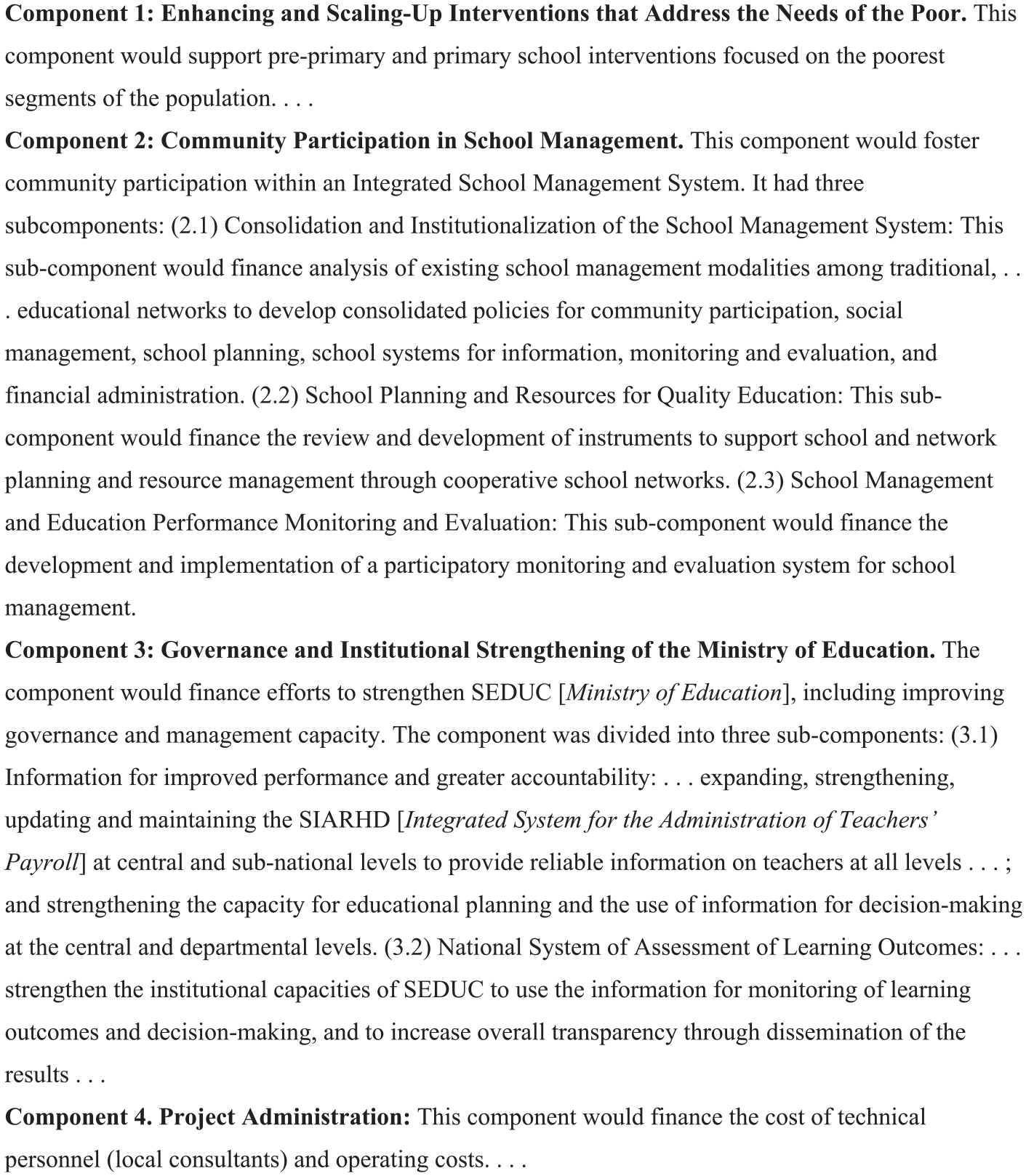
Example of an education project implemented by the World Bank in Honduras during 2008 to 2013.
Each project includes various documents, such as project appraisals, project implementations, and reviews, in addition to many other technical and descriptive records according to the type and length of projects. On average, I went through around two to three documents for each project, requiring reading over 2,500 documents to code the indicators.
Variables
I constructed two indicators of destandardization reforms: meso- or subnational and micro- or school-level destandardization.
Meso or subnational level
To construct this indicator, I considered WB project components that focus on educational autonomy at the subnational levels, including regions, directorates, districts, and subdistricts, or any unit above schools (1) that has more than one school under its jurisdiction and (2) is hierarchically linked with central government above (either directly or through other tiers) and with schools below. Destandardization can happen by transferring power or by strengthening or building local capacity. I include the latter because without reinforcing local capacity, power cannot be transferred and sustainable.
A brief clarification of WB project structure is necessary to properly explain the construction of the measure. Each project consists of one to several components; the components can involve a range of issues within a single project. For instance, the education project in Honduras in Figure 2 has four issue components: the expansion of education, teacher training, community involvement in schools, and strengthening the education ministry at the central and local levels.
To code the subnational-level indicator, I considered any project component that involves creating more autonomy at the subnational level. In the example in Figure 2, component three would be considered in the subnational category because it worked toward capacity building at the departmental/regional levels for education planning and use of data/information. The component also invested in building a better system at the subnational level to reliably disseminate information on teachers. These components may appear to bring coherence to policies across the country, but they combine other elements, such as accountability among stakeholders to make better decisions about teachers’ wages or how to disseminate wages. This is likely to destandardize responsibilities because different local governments may make different decisions.
In the first step of variable construction, I coded according to the number of components in a project associated with subnational destandardization. For instance, in Figure 2, only one component deals with the subnational level. The remaining three components are unrelated to it. In the second step, I converted the numeric values to proportions by dividing the subnational component(s), SN, by the total components of a project, C, or
Micro or school level
School-level destandardization is measured in the same way as subnational destandardization. Here, the project components are dedicated to creating autonomy in schools in the decision-making process or a more participatory environment. For instance, in Figure 2, the second component is about school-level destandardization because it emphasizes more autonomy in schools, community participation in school decisions, and monitoring and evaluation of schools through a participatory process. Thus, with one component on the school level, the final value is 25 percent (similar to the subnational level); the other 75 percent refer to nonschool components. Together, this project represents 50 percent of destandardization reform elements.
School- and subnational-level destandardization are “independent” of each other because the absence of one type does not mean the presence of another. Both components are defined distinctively, which means they can appear alone or simultaneously in a project. Hence, both types may not add up to 100 percent. A further illustration is presented in Table S1 of the online supplement, where I present some randomly selected examples of coding for subnational and school levels. I also check the reliability of manually coded measures by automated coding and intrarater reliability checks, which I discuss in detail in robustness checks and in Part S1 (Reliability) of the online supplement. I find high reliability of the measures.
Controls
The control variables include a region dummy in seven categories; a dummy for the education level at which WB projects have been implemented, that is, primary, secondary, or both; and the log of primary and secondary education aid in U.S. dollars (USD). The log of aid variable is the costs for each WB project considered in this study. This reflects the total aid in primary and secondary education because I considered all available WB projects for these education levels. Finally, I controlled for the starting time of destandardization reforms because the heterogeneity of the starting time point may affect growth trajectories across countries.
Modeling
To investigate the first research question, I visualize the data using various plots showing the trajectories of destandardization reforms over time by countries and regions. This also allows us to observe whether the timing of growth corresponds to the initial expectations.
To address the second research question, I use generalized linear mixed models (GLMM) with a logit link function to examine similarities or differences in the process of destandardization reforms. I do this because the dependent variables are measured in proportion bounded between 0 and 1, and there are many observations with 0 with a skewed distribution. Because I am interested in the predicted growth trajectories for all countries, using linear models would lead to slopes outside the range of 0 and 1. I thus also present linear regression outputs for robustness checks. I use mixed/country random-effects models to capture the variance across countries in receiving WB reforms. I fit the main model in Equation 1:
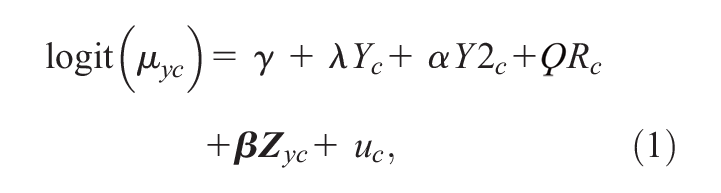
where y is the country–project-year in country c; μcy represents Pr(Dyc = 1|Yc, Y2c, Rc,
Because I expect growth trajectories of both levels will be approximately similar across regions, I test this expectation with Equation 2:
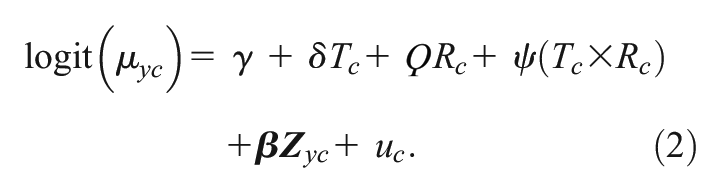
I include a dummy of year categories Tc using five-year range intervals between 1965 and 2025 (because some projects are still ongoing). Then, I interact the year dummies with regions (Tc×Rc) to see the similarities or dissimilarities across regions. I include year dummies instead of year and the quadratic term of year to capture potential nonparametric patterns in growth, which may not be as smooth as the pattern from the linear plus quadratic trend may show.
Findings
Descriptive Account of the Growth of Destandardization Reforms
Findings show that IOs have indeed pushed hard to destandardize educational systems. As Appendix Figure A1 illustrates, since 1965, around 63 percent of all project components implemented in primary and secondary education have aimed at destandardizing educational systems, combining school and subnational levels (excluding the project category “not related to destandardization”). After 1988, over 69 percent of these projects involved destandardization reforms, compared to only 24.65 percent before 1988. 5 As expected, starting from the late 1980s, the golden era of neoliberalism, destandardization reforms rapidly increased. During that time, the Washington Consensus-triggered neoliberal packages of institutional reforms were widely diffused in LMICs. This illustrates the magnitude of recent efforts to institute market principles in running a basic service sector.
The trend in destandardization reforms at the subnational and school levels shows a similar growth pattern (see Figure 3). From 1965 to the beginning of the 1980s, the growth of reforms at both levels remained quite slow. However, whereas subnational reforms experienced a steep increase starting around 1980, they emerged at the school level only at the end of the 1980s. As assumed in the theoretical section, the growth of subnational destandardization started earlier than school-level destandardization. This aligns with prior literature showing that during the cold war, the United States and its allies promoted similar institutional reforms at the subnational level in their bloc countries (Steiner-Khamsi and Quist 2000). However, concerns about aid effectiveness, declarations of different UN goals (Jolly 2004), and structural adjustment reforms (SAPs) have shifted the focus to lower administrative tiers, such as schools and local communities. These programs aim to increase the efficiency of educational systems and the effective use of aids and loans by making these systems more participatory and focused on service recipients at the grassroots level (Baylies 1995).
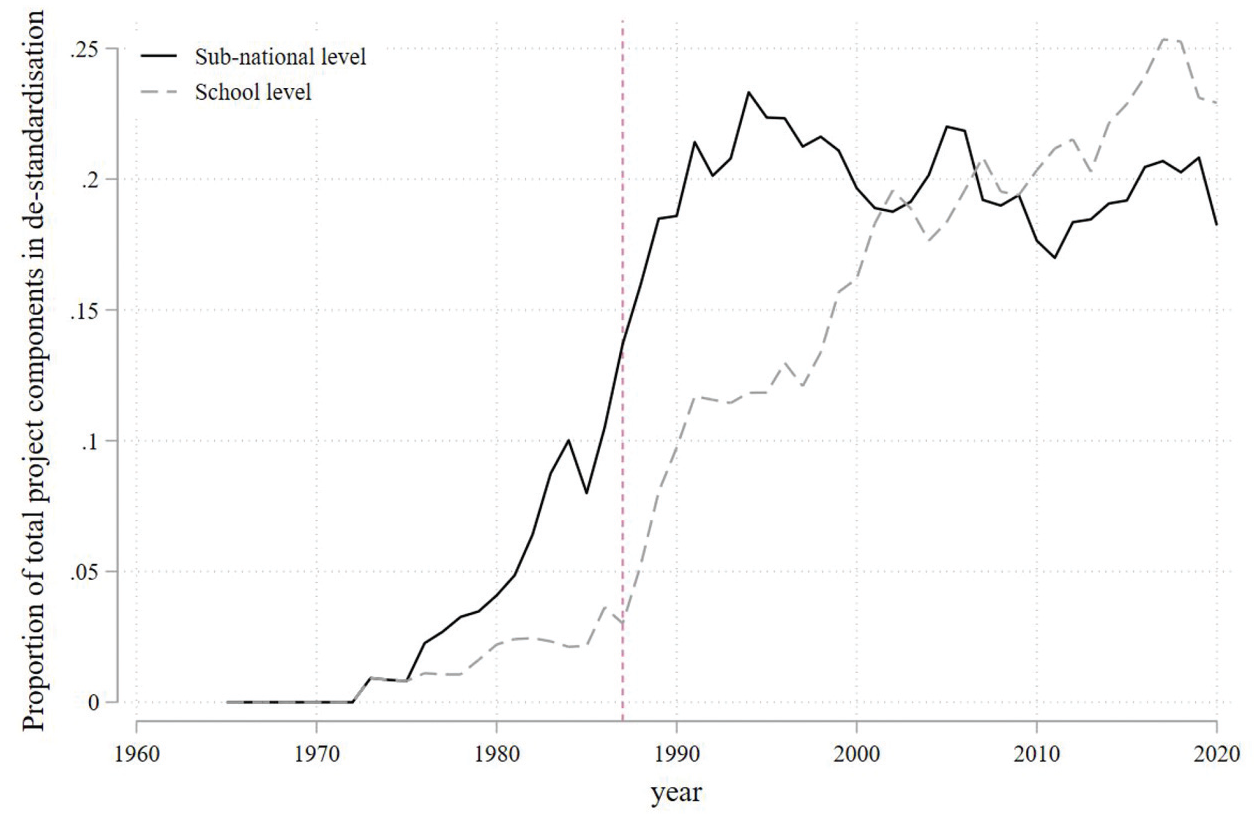
Share of subnational and school-level destandardization project components by the World Bank over time.
Figure 4 disentangles the trend in subnational and school-level destandardization by region. The initial growth of the former was similar to or higher than that of the latter in most cases. Subnational reforms were much higher initially in CWA, East Asia and Pacific (EAP), and EE. But across all seven regions, similar to Figure 3, the growth of subnational reforms has fallen compared to that of school-level reforms; the difference between the growth of both types is less noticeable in Latin America and the Caribbean (LAC), the Middle East and North Africa (MENA), and sub-Saharan Africa (SSA).
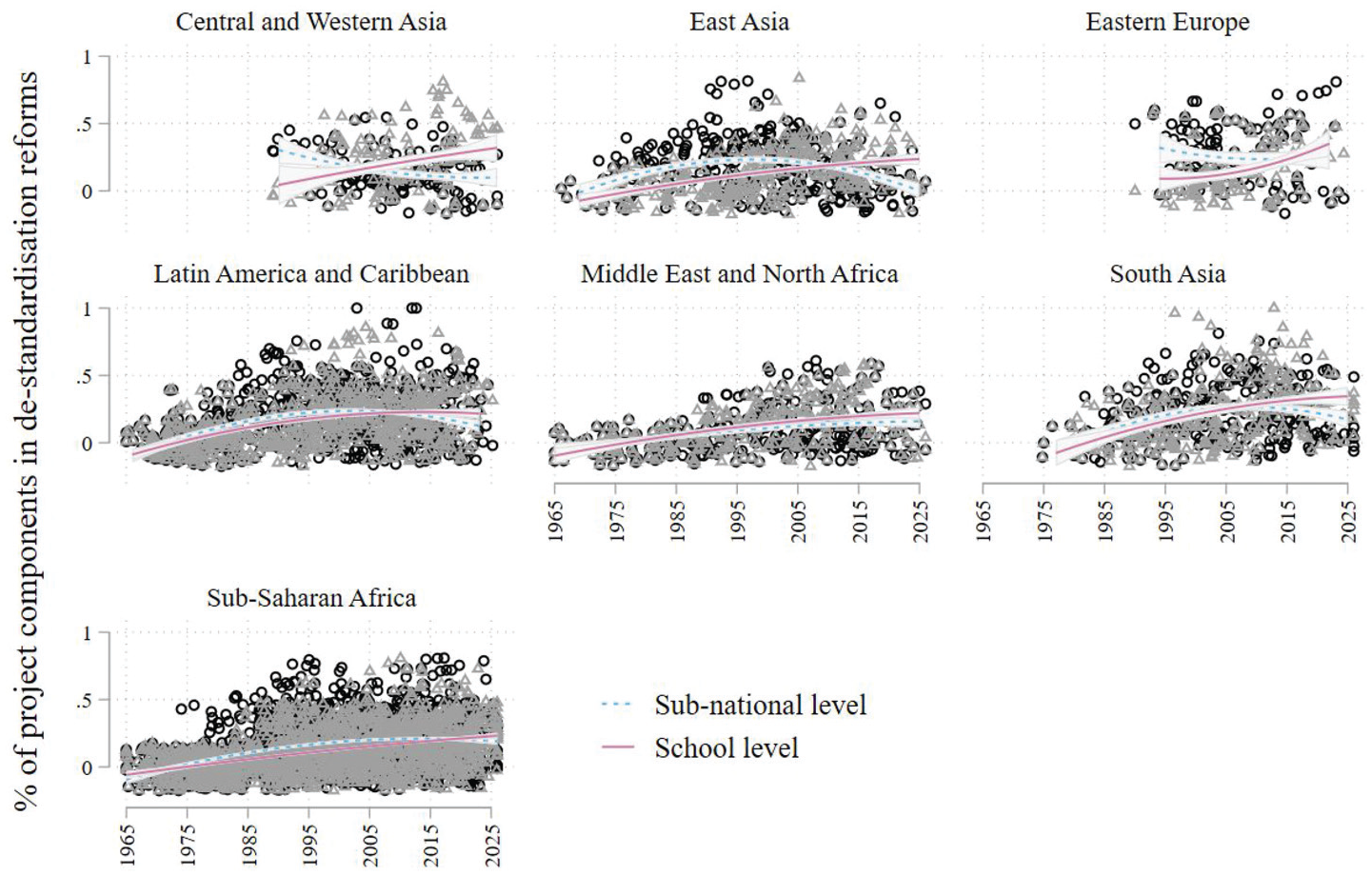
Scatter plots of both types of destandardization and time, by region.
The distinction in the rise and decline of both elements is more apparent in EAP, where subnational reforms started earlier compared to other regions but started dropping around 2000. By contrast, school-level reforms are steeply increasing in the region. The trend is somewhat similar in South Asia (SA), although reforms at the school level also slowed recently. The decline of subnational reforms is slightly slower in SSA and in the MENA region. The trend in CWA and EE regions is more dramatic because destandardization reforms started in these regions after the end of the cold war. While destandardization reforms at the subnational level have declined, they have increased in schools since the early 1990s. Furthermore, unlike other regions, CWA and EE have not experienced a steep growth because reforms started there during the peak diffusion of neoliberal reforms.
Trajectories of Destandardization Growth
My second research question is about whether there are any similarities or dissimilarities in the growth of destandardization across countries. To answer this question, I examine the trajectories in all countries using GLMM models. Figure 5 presents growth curves of subnational and school-level destandardization using Equation 1, where each slope represents a country. The graphs depict quite different pictures. Subnational reforms started slowing in the early 1990s, with a downward slope starting from the mid 2000s. In contrast, school-level reforms kept rising until reaching a tipping point, then remained steady.
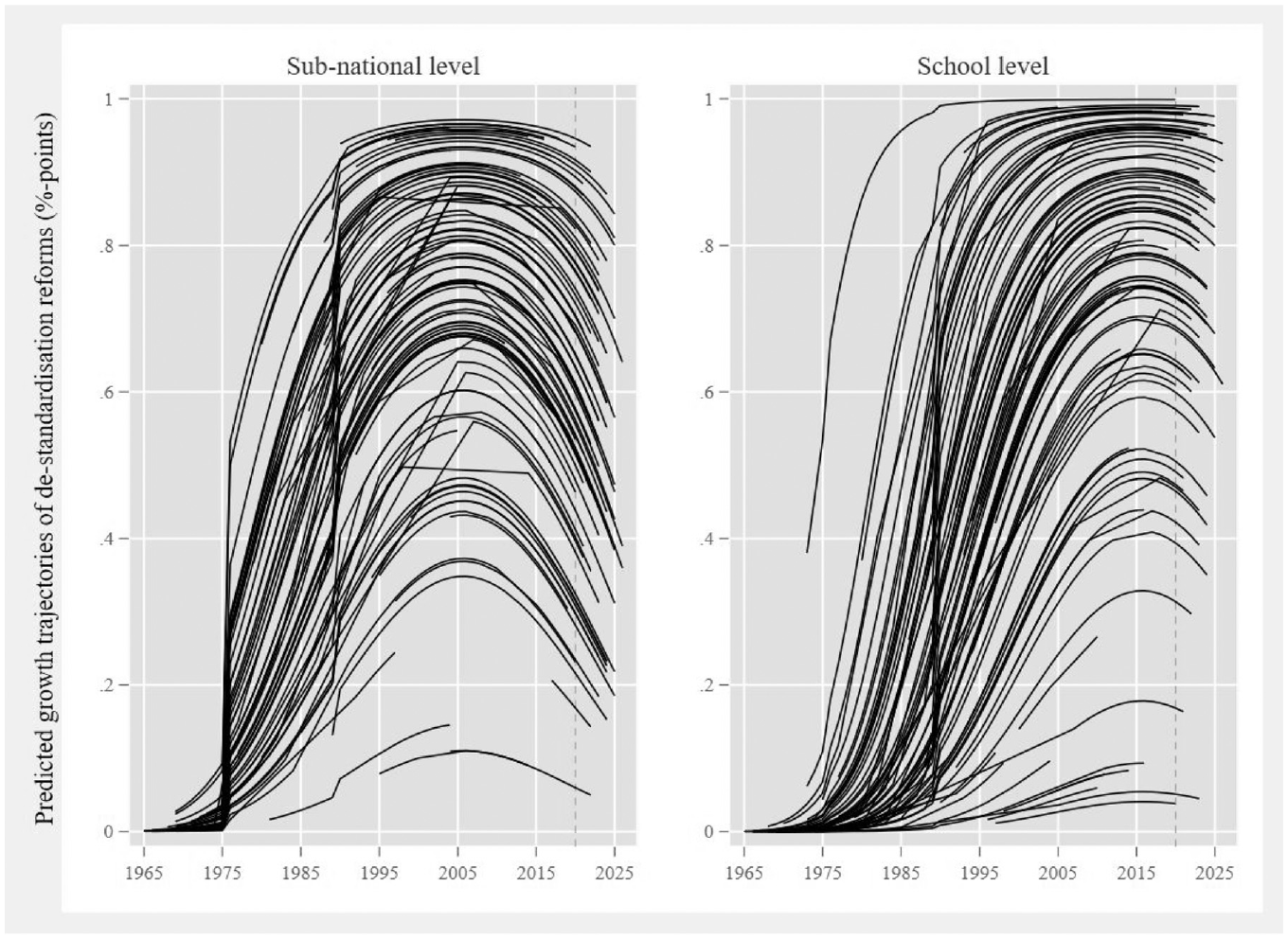
Subnational destandardization reforms demonstrate a strong curvature after initial growth; school-level growth shows less so.
Regression Results in Log Odds from Generalized Linear Mixed-Effects Models.
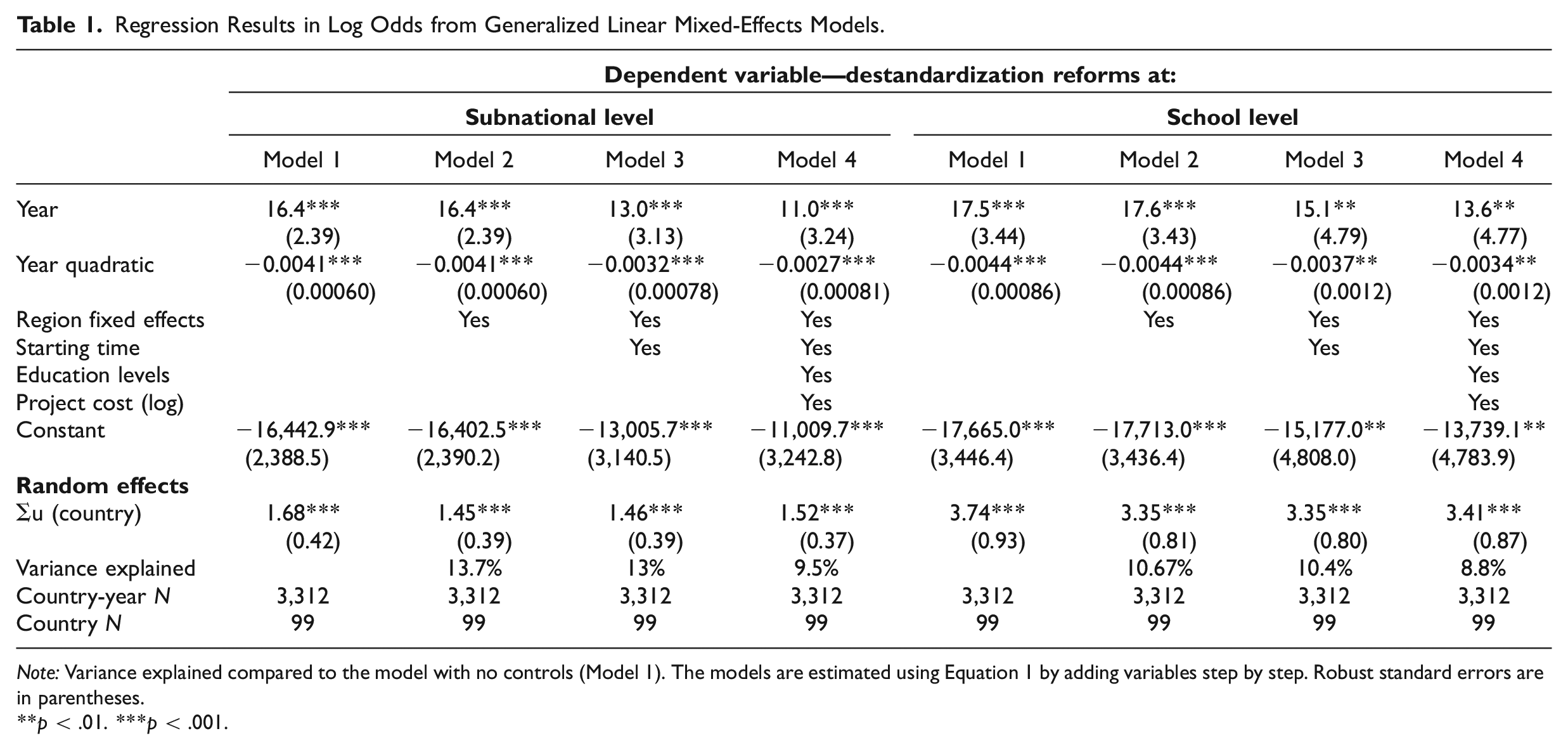
Note: Variance explained compared to the model with no controls (Model 1). The models are estimated using Equation 1 by adding variables step by step. Robust standard errors are in parentheses.
p < .01. ***p < .001.
Regression results from different models in Table 1 also suggest the coefficients for the year variable in all models are larger for the school level than for the subnational level. Instantaneous growth is higher for the school level, which means this level has experienced a steeper growth of destandardization reforms than the subnational level.
Nonetheless, the results demonstrate a uniform growth of both types. The shape of reforms is similar to scenario 2 in Figure 1, which suggests that after reaching a tipping point, WB destandardization projects either slow down (subnational level) or remain steady (school level). In some cases, the tipping point of school-level reforms is around 100 percent of WB project components. Once the maximum point is reached, growth remains steady, indicating that school-level destandardization reforms are still highly promoted. This conforms to the assumption that the focus of reforms in educational systems may increasingly shift toward the lowest service tiers, closer to local communities, such as schools. This strategy is more viable, especially in countries where subnational destandardization is difficult to implement because of political unwillingness because civil service or system reforms require radical bureaucratic changes. By contrast, because schools are not firmly linked to institutional hierarchy, it might be easier to create more autonomy there by bypassing bureaucratic and political complexities. This would apply to many LMICs with limited democracy and rigidly centralized administrative systems.
While I find consistent growth of both types of destandardization across countries, I see a noticeable variance in the slopes, which suggests the level of growth across countries has been different. The between-country variance is statistically significant, as shown in the random part of the regression results in Table 1. When the region dummy is added to the second model, it explains around 13.7 percent of the between-country variance for subnational reforms and 10.67 percent for the school level. However, a large proportion of variance remains unexplained. Nonetheless, the time-variant variables do not explain much of the Level 1 variance. A notable between-country variance in implementing subnational and school reforms does not mean countries do not learn from their neighbors (see Ramirez, Soysal, and Shanahan 1997; Sikkink 1993). In our case, reforms still travel across countries, but their volume varies.
To better understand the between-country variance, I plot the expected values of destandardization reforms estimated by Equation 1 on subnational (Figure 6) and school (Figure 7) levels. In both maps, the higher concentration of destandardization reforms is not centered in a specific region. Every region is characterized by countries having a higher and a lower proportion of destandardization reform components, as I anticipated. The maps also show some countries have received high levels of both types of institutional reforms, particularly Afghanistan, Bangladesh, India, Nepal, and Sri Lanka in SA; Argentina, Ecuador, Mexico, and Peru in LAC; and Cote D’Ivoire, Mozambique, Niger, and Senegal, among others, in SSA.
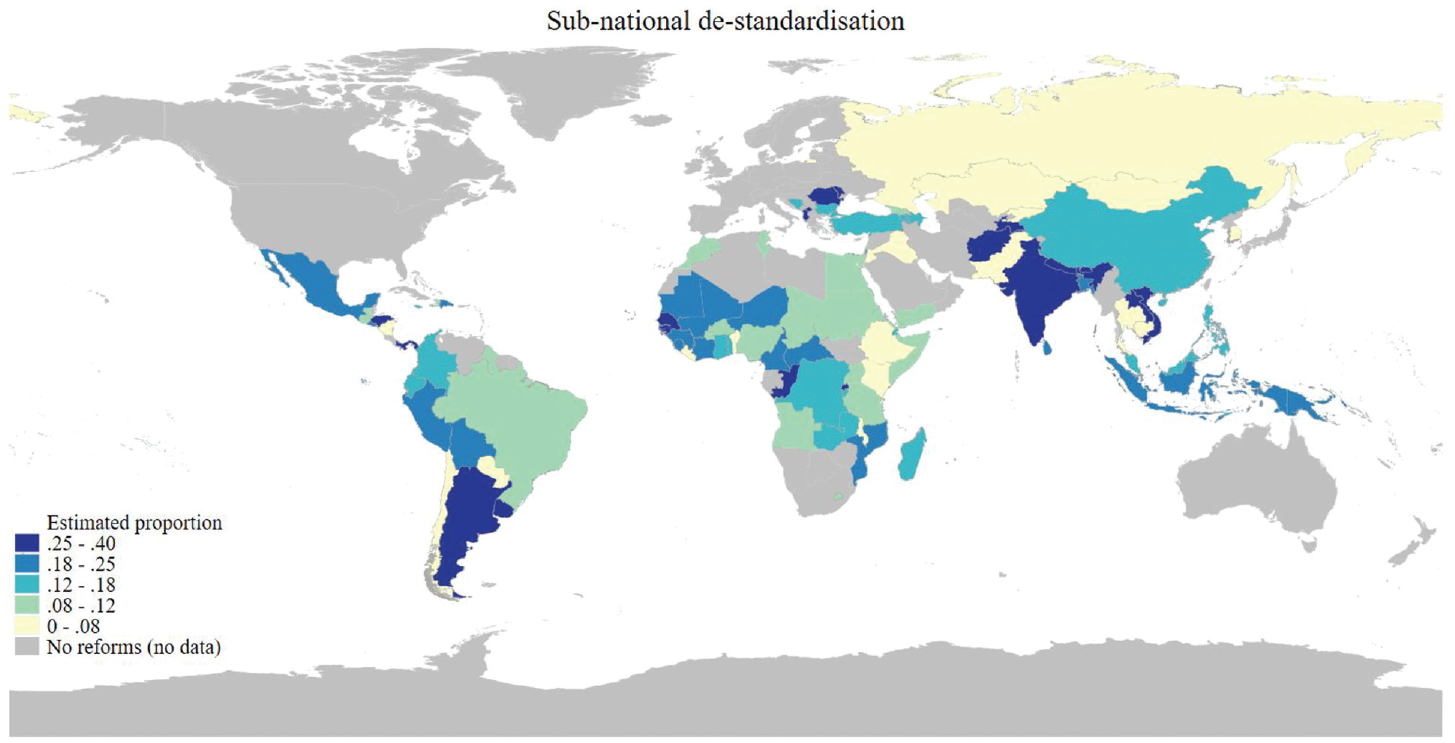
Cross-country differences in implementation of destandardization reforms at the subnational level.
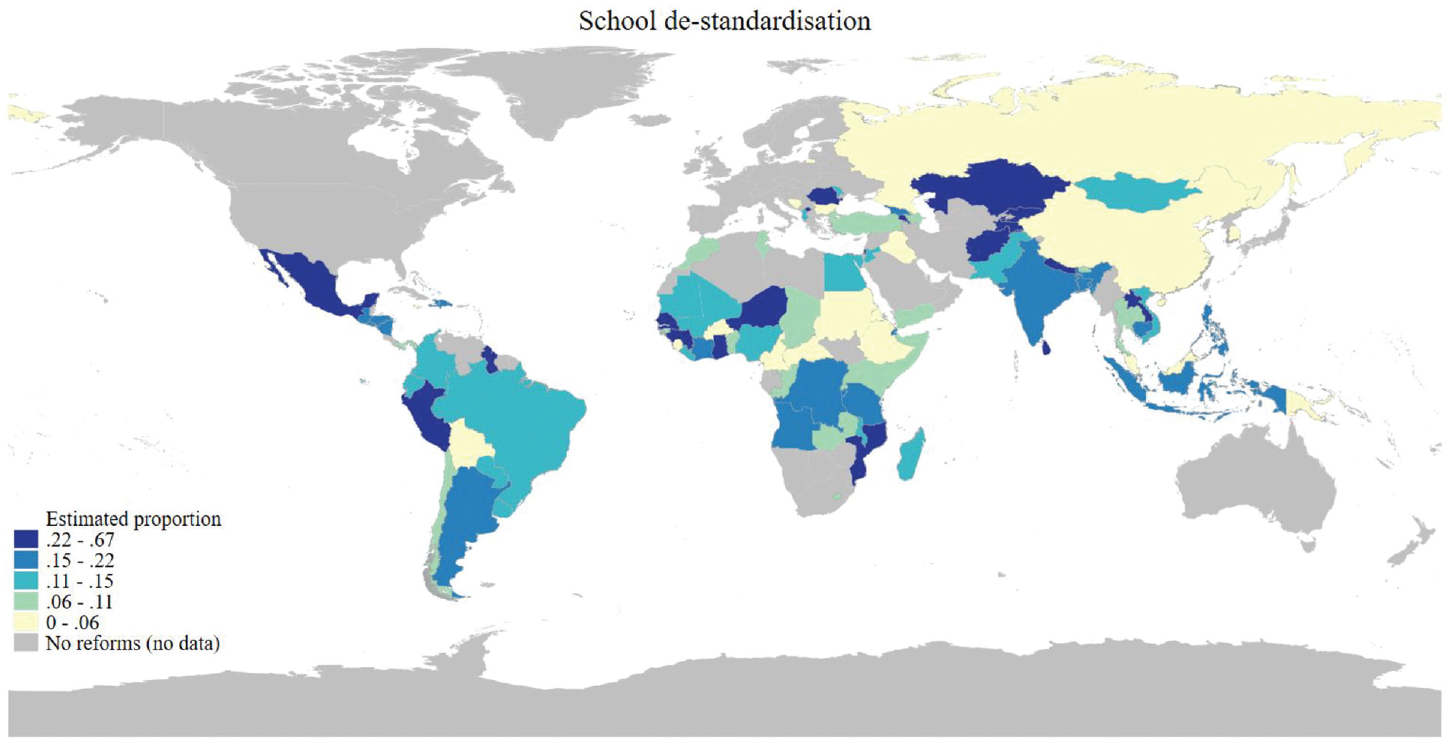
Cross-country differences in implementation of destandardization reforms at the school level.
The results of the growth trajectories of both types of destandardization reforms reflect our initial expectations. First, the shape of trajectories shows a close linkage between the actions of world society platforms (e.g., the Washington Consensus in the late 1980s) and the diffusion of neoliberal educational reforms. This aligns with the existing theory that once a policy model is widely agreed on by global society, it rapidly spreads across countries (Dobbin et al. 2007). However, because the reforms were attached to aid and loans (Steiner-Khamsi 2012), I assume they were conditional and diffused with some compulsion (Owen 2002).
Figures 5 and 6 show notable variances across countries. Due to limited scope, I do not examine the reasons for the variance here, but I note some patterns that may explain this. I find that countries in EE and CWA started receiving destandardization reforms after the breakdown of the Soviet Union, and comparatively disconnected or pariah states such as Cuba, Iran, and Myanmar have not received any reforms at all. This means countries with close affinity to the WB and the United States have received more neoliberal reforms in the educational systems. Past studies support this theory that countries deeply embedded in the world system tend to embrace policies that align with core principles of world society (Mathias 2013; Schofer 2003).
I next investigate whether the growth of the two types of destandardization reforms is similar across regions. To do so, I use the interaction of region and year dummies on both types by Equation 2. However, I do not find significant differences in the growth of destandardization at both levels across regions when I add confidence intervals in the slopes (see Figure S2 in the online supplement, which is presented without confidence intervals for the purpose of clear understanding of the pattern). This means destandardization reforms are fairly uniform across regions, which aligns with our initial assumption given the scale of the global diffusion of these reforms.
Sensitivity Analyses
Data reliability
The robustness of the results would primarily depend on the reliability of the two main measures in the study—subnational and school-level destandardization, which are manually coded. To examine whether manual coding is biasing the growth trajectories of destandardization reforms, I constructed the same measures by automated coding using text analysis techniques. Specifically, I web scraped all WB project documents used in this study. I then created two lists of keywords, one related to reforms at the subnational level and the other to the school level, leveraging the literature in the field (see Table S3 in the online supplement). Next, I constructed the measures based on the relative occurrence of the respective keywords in project document texts (a detailed account of the process is explained in Part S1 of the online supplement, the Reliability section).
After constructing the measures, I compared the growth trajectories of the two types by manual and automated coding estimated by the same models as Equation 1. I found close proximity in the distribution of growth in both measures using manual and automated coding (Figure S3 in the online supplement). More importantly, as illustrated in Figures S4 and S5 in the online supplement, the predicted growth in the country slope of both destandardization types from automated coding is approximately similar to that of manual coding (for more details, see Part S1 of the online supplement).
In addition to automated text analysis, I also recoded a randomly selected 5 percent of the total WB projects considered in the study. The results show a strong correlation between the original and recoded measures (see Part S1 in the online supplement).
Additional models
I ran two additional robustness checks to see whether the growth and variation of destandardization reforms change due to alternative mechanisms. First, I controlled for countries’ expenditure on education as a percentage of GDP and GDP per capita. One could argue that destandardization reforms may have been implemented to ensure the effectiveness of spending aimed at accelerating educational expansion in LMICs.
Second, the WB may have implemented these reforms to ensure government accountability for educational expansion. To check on this, I control for government accountability toward citizens and civil society and between its institutions (see the notes in Table S6 in the online supplement for variable construction).
As shown in Figure S8 in the online supplement, after accounting for both of these mechanisms, the trajectories of destandardization reforms remain quite similar to that of Figure 5. This is further confirmed by the coefficients of year and quadratic year in Table S6, which also resemble the results in Table 1.
Discussion and Conclusions
This article reviewed educational projects of the WB in LMICs worldwide to examine the extent to which this powerful supranational agency has diffused destandardization reforms across educational systems. I covered major developing territories of the world since 1965. I found that an overwhelming share of primary- and secondary-education project components (63 percent) were dedicated to destandardizing educational management and responsibilities to subnational agencies and schools. Diffusion of these reforms was consistent across boundaries regardless of region. However, in recent times, especially since the late 1980s, the focus has increasingly shifted toward management of educational responsibilities at the school level. This includes school autonomy in making key educational decisions. While subnational destandardization has slightly decelerated since the mid-1990s to early 2000s, it is still being implemented in many countries. As Figure 3 suggests, around 18 percent of WB project components, on average, were related to destandardization reforms in 2020, compared to around 22 percent in 2006. This implies the persistent and perceived importance of institutional reforms at the system level to the WB and IOs (Reinsberg et al. 2019).
As I discussed in the theoretical framework, these reforms originated mainly from the United States and United Kingdom through the WB and other IOs (Steiner-Khamsi 2012, 2014). However, there is very limited evidence for the effectiveness of destandardized or similar educational systems (Bukodi et al. 2018; Hanushek, Link, and Wöbmann 2013). This suggests policies can diffuse based on theories or ideas rather than evidence.
I summarize the mechanism through which destandardization reforms have been imported to LMICs. As shown in Figure 8, a key trigger of destandardization reforms in education is the learning crisis, which has led powerful countries to look for models/reforms that would presumably improve learning and ensure the efficient use of aid to get more results with strategic investment. Learning achievement progress is arguably plagued by the “malgovernance” of traditional rigidly centralized bureaucracy (Channa and Faguet 2012). These multiple frameworks are then internalized by world society associations and get scripted. For instance, these reforms were institutionalized during the Washington Consensus in the late 1980s through SAPs across LMICs (Reinsberg et al. 2019). Once the scripts are written, reforms get diffused in countries that are closely linked to world society, through aid or other strategic partnerships. The scripts also become universal. For instance, the WB was the primary advocate for destandardization reforms, but the UN later joined to support their implementation (Naidoo 2005). As I have discussed, countries that are not connected to world society or to powerful states that advocate for such policies do not tend to accept these reforms. For instance, EE and CWA countries accepted destandardization reforms only after the breakdown of the Soviet Union, and countries like Cuba, Iran, and Myanmar are yet to undertake this path.
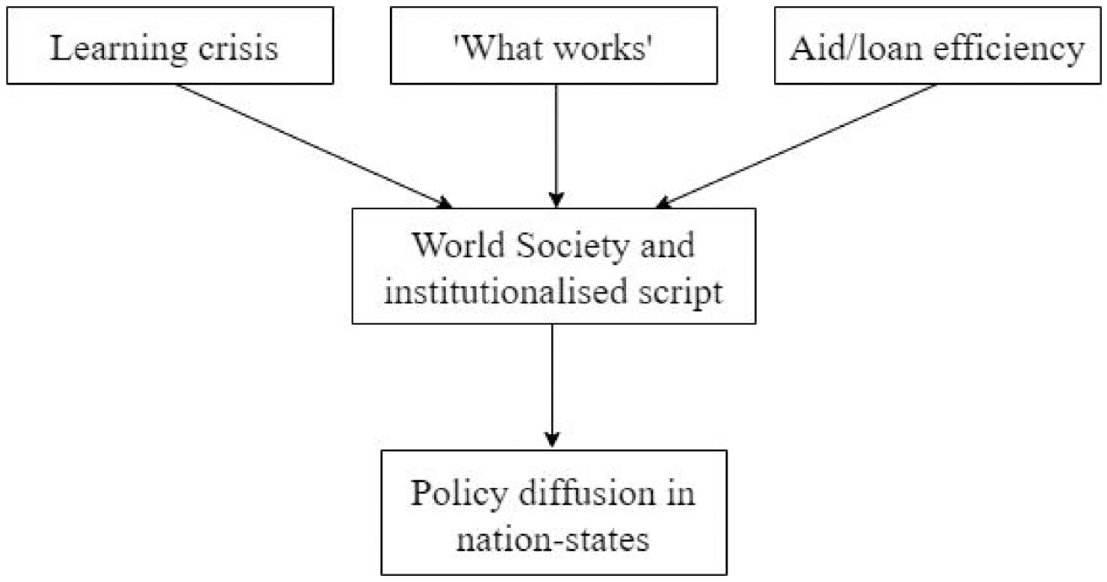
Institutionalization process of reforming educational systems in low- and middle-income countries.
My findings further suggest that subnational destandardization reforms experienced a slow and decreasing growth recently, while school-level destandardization kept rising. I see three possible explanations for this. The first reason for a steep rise in school-level reforms could be to nurture more individual freedom and create democratic practices in micro-level social organizations, such as schools, rather than at the meso level, that is, subnational agencies. This would arguably bring services closer to people, enabling a better understanding of problems through a more participatory environment (Barrera-Osorio et al. 2009).
The second reason could be the participation of many actors, such as IOs, with WB reforms. To elaborate, although initially pioneered by the WB, neoliberal practices, specifically the idea of institutional reforms in education, became popular among other actors, including UNESCO. This is evident in some of UNESCO's working papers (e.g., McGinn and Welsh 1999; Naidoo 2005). Schools may have come to the fore in reform efforts because in many LMICs, local district and regional governments are rigidly hierarchically linked to the central government, which means resource mobilization efforts at these levels are harder to carry out. By contrast, schools are embedded in communities that are also service recipients. It would be more feasible to mobilize resources from service recipients rather than bureaucratic hierarchies. Thus, under SAPs, school-level destandardization may have received more attention as an easy target to maximize local resource mobilization and make aid more result-driven.
The third possible explanation is related to the black box of scriptwriting. As Kentikelenis and Seabrooke (2017) explain with the example of the International Monetary Fund, scriptwriting plays a pivotal role in implementing policies in LMICs, even sometimes going against the will of stakeholders in nation-states. Whether a policy script is final depends on actions by scientific and political wings of IOs; these scripts are hard to change once set. Thus, the WB may have fixed these policies in the script and recently prioritized school-level destandardization even though these have been contentious in many contexts.
This study is not without limitations. I discuss two major ones here. First, I use only WB projects to examine destandardization reforms. While the WB is a dominant actor in promoting these reforms, other donors may also be implementing similar projects in LMICs. Future research can explore this by focusing on other IOs. Second, I could not examine cultural contexts in detail. Given that our sample includes countries with heterogeneous characteristics, different contexts may affect how the WB approaches its reforms. As I have mentioned, different types of destandardization reforms take place at the subnational and school levels. Variation in these types of reforms may depend on the institutional and cultural contexts of a country. Because I mainly looked at overall trends across nations, it was not possible to further disaggregate reform types by country. Future research can explore both of these issues.
Supplemental Material
sj-docx-1-soe-10.1177_00380407221109209 – Supplemental material for Diffusing “Destandardization” Reforms across Educational Systems in Low- and Middle-Income Countries: The Case of the World Bank, 1965 to 2020
Supplemental material, sj-docx-1-soe-10.1177_00380407221109209 for Diffusing “Destandardization” Reforms across Educational Systems in Low- and Middle-Income Countries: The Case of the World Bank, 1965 to 2020 by Mobarak Hossain in Sociology of Education
Footnotes
Appendix
Acknowledgements
I am especially indebted to my doctoral supervisor, Erzsébet Bukodi, for her helpful advice in preparing this article. I also thank Richard Breen, Jane Gingrich, Aaron Reeves, Brian Nolan, and Martina Beretta for their invaluable feedback. All errors are my own.
Funding
This project received funding from Nuffield College and the Department of Social Policy and Intervention, University of Oxford.
Research Ethics
Ethics approval was not required for this study because it did not involve any human subjects.

Supplemental Material
Supplemental material for this article is available online.
Notes
Author Biography
References
Supplementary Material
Please find the following supplemental material available below.
For Open Access articles published under a Creative Commons License, all supplemental material carries the same license as the article it is associated with.
For non-Open Access articles published, all supplemental material carries a non-exclusive license, and permission requests for re-use of supplemental material or any part of supplemental material shall be sent directly to the copyright owner as specified in the copyright notice associated with the article.
