




Abstract
This article explores the culinary taste repertoires of middle-class people in Turkey who can be defined as omnivores due to their routine engagement with ‘lowbrow’ food spaces. We aim to understand how they make sense of their boundary crossing and the extent to which this indicates tolerance. We find that our culinary omnivores develop interest in traditional food and tend to cross established boundaries between the traditional and modern to maintain a cosmopolitan palette. However, our analysis identifies certain conditions that foster and limit omnivorous practices, such as mealtime, type of occasion and with whom the food is shared, as well as one’s class trajectory, demonstrating how selective people are when they step outside of their original taste profiles. Derogatory comments about the manners of these settings’ original clientele suggest that omnivores continue to perform distinction regardless of their openness to ‘lowbrow’ cultural forms.
Introduction
The role tastes play in class processes has long been debated in the sociology of consumption. Researchers have investigated a variety of fields, from artistic to material, to reveal the extent to which they serve the formation of class boundaries. Food practices at home and beyond have received considerable attention; a number of studies revealed how class shapes food dispositions in different national contexts (e.g. Atkinson and Deeming, 2015; Bennett et al., 2009; Flemmen et al., 2018), and the ‘cultural omnivore’ debate has facilitated qualitative and quantitative empirical investigation of the current status of taste boundaries in many consumption domains, including food (for an overview see Karademir Hazır, 2015; Karademir Hazır and Warde, 2015). This article engages with this literature and explores the taste repertoires of middle-class people who can be defined as omnivores in Turkey due to their routine engagement with ‘lowbrow’ culinary space. We aim to understand how such people with eclectic repertoires make sense of their interest in ‘shabby’ restaurants and the extent to which their cultural boundary crossing indicates tolerance. Turkey is an interesting case for studying class-cultural boundaries, since other symbolic distinctions (e.g. traditional/western) are known to operate in addition to well-known ones (e.g. highbrow/lowbrow) (Karademir Hazır, 2014, 2017; Rankin et al., 2014).
Class, Taste and Food
Especially after the cultural turn in class analysis, consumption and taste have begun to be seen as significant aspects of the formation and maintenance of class boundaries (Bottero, 2004; Devine et al., 2005). Moving away from collectivist accounts of class identities and explicit consciousness, the new agenda prioritises the study of modes of differentiation. Along with other consumption domains, individual tastes in food practices and eating out have begun to be investigated to understand their roles in marking classed identities. Bourdieusian concepts of habitus (a generative principle), field and forms of capital have been instrumental in linking such ‘individual’ habits and tastes to a broader system of inequality.
In the literature, specific attention has been paid to eating practices since the body, ‘the most indisputable materialization of class taste’ (Bourdieu, 1984: 190), is the domain in which bodies are cultivated. Marked by the taste for necessity, the working-class habitus generates an instrumental disposition to food, leading to the consumption of substantial and fulfilling meals. This is in stark contrast to the light, refined and health-conscious choices that the middle-class habitus generates. Such patterns are significant because food practices associated with upper-middle classes not only tend to carry symbolic capital but are also often firmly ensconced in dominant discourses about what constitutes ‘good eating’ (Beagan et al., 2016: 47). Consequently, members of other classes are judged for their lack of interest in healthy eating, demonstrating how food practices are imbued with symbolic value or lack thereof (Wills et al., 2011). This also influences how people define ‘them’ and ‘us’ by reinforcing cultural and moral boundaries (Lamont, 1992).
Recent studies exploring different national contexts demonstrate that divisions in food tastes are still clearly connected to social class divisions, albeit with some new associations. Flemmen et al.’s (2018) analysis of the Norwegian culinary field shows that it is the capacity to consume new, alternative and rare foodstuffs that enables people to perform distinction. They also show that taste profiles are so dynamic that traditional peasant foods, which were once common in the pre-capitalist period, are now ‘refashioned as a badge of distinction’. Similarly, Atkinson and Deeming (2015) argue that food consumption in Britain is structured along the axes of volume and composition of capital, parallel to Bourdieu’s findings. Their analysis also reveals that the highly educated give more importance to the ethical dimensions of food consumption, stemming from health concerns as well as their ‘capacity to project oneself and one’s doings into the longer-term future’ (Atkinson and Deeming, 2015: 893). This finding is consistent with studies conducted in other national contexts such as Scotland (Wills et al., 2011) and Canada (Beagan et al., 2015). There is also ample evidence that the hierarchy applies to tastes in eating out. A class pattern seems to exist in preferred cuisines, with a contrast in the frequency of enjoying a meal outside the home across social classes in different national contexts (Bennett et al., 2009; Johnston and Baumann, 2014; Warde et al., 2018).
The Rise of the (Culinary) Omnivore
Peterson’s (1992) findings regarding a new cultural profile, ‘omnivore’, launched a debate regarding the transformation of taste repertoires. Peterson’s (1992) omnivores were high-status listeners who enjoyed popular musical genres symbolically distant from conventional highbrow taste. This eclecticism emerged in a context where broader structural transformations made strict taste boundaries and narrow repertoires undesirable. According to him, omnivorousness indicated an openness to diversity and a model of cultural tolerance. Initial inquiries were largely built upon the field of cultural consumption, primarily music and art, in western societies (for a review see Karademir Hazır and Warde, 2015). However, there is now a growing interest in exploring the implications of such structural changes on tastes in food and eating. Paralleling the decline in highbrow taste in music, there seems to be relatively less interest in conventional snobbish cookery among the highly educated. Instead, distinction seems to be performed through ‘knowledgeable and playful ways of straddling hierarchical divides’ (Flemmen et al., 2018: 4) and with the adoption of expansive tastes (Conner, 2008). The culinary omnivore’s cultural cultivation allows one to confidently try, enjoy and publicly consume food that originally appeals to lower ranks of the class-cultural stratification. The omnivore’s willingness to ‘experience’ the exotic, the alternative and the ‘hip’ is argued to generate an inclusive attitude towards different ethnic cuisines (Johnston and Baumann, 2014; Paddock, 2016; Rhys-Taylor, 2013; Warde et al., 2018). However, as mentioned earlier, once appropriated by higher status groups, even mundane national traditional cuisine can be upgraded to ‘authentic’, signifying omnivores’ distinguishing capacity to reinterpret ‘démodé’ (Flemmen et al., 2018). Some foodstuff associated with lower classes is also successfully rebranded as ‘cool’ by culinary omnivores (Kaplan, 2013).
The rise of the omnivore has also been considered as a sign of decline in class distinctions. The capacity to enjoy popular taste as well as the unfamiliar is argued to generate tolerant, inclusive and anti-snobbish attitudes. 1 As Warde et al. (2007: 158) suggest, Peterson’s omnivore tends to appeal to the liberal academic mind, with ‘a commitment to the values of high culture, while neither being condescending towards popular culture, nor implying that refined taste was deserving of social deference’. Questioning the correlation between omnivorousness and attitudes quantitatively, others argue that omnivores are more trusting, risk-taking, open, politically engaged and not willing to define their status through their education and profession (Chan, 2019), or are rather more concerned with the well-being of others and not individualistic (Van Eijck and Lievens, 2008). However, many researchers today interpret the rise of the omnivore as an indication of a change in the content of highbrow culinary repertoires rather than the eradication of boundaries or attitudes of openness. These studies highlight that crossing boundaries requires broad cultural knowledge of food (Glevarec and Pinet, 2017; Oleschuk, 2017; Warde and Martens, 2000; Warde et al., 2018), mostly embodied by a certain fraction of society.
Despite its centrality in the debate, the extent to which omnivorous profiles are associated with cultural tolerance has not been empirically scrutinised. Some indirect insights can be gathered from research looking at cultural hostility and distaste. For instance, after examining musical dislikes in the USA, Bryson (1996) suggested that the tolerance shown to popular tastes was patterned and excluded genres associated with the working class while accepting ethnic music. In a similar vein, Warde (2010) suggests that, despite the lack of cultural hostility found in the UK data, there are ‘objects of mutual and reciprocal antagonism’, which are ‘putative sources of hostility, of condescension and resentment’. Omnivore debates over reliance on quantitative methods 2 tend to discourage us from exploring how omnivores make sense of their eclecticism, and whether or not their broader notions on good taste (in addition to their quantitatively measured practices) become more inclusive in the process.
Aiming to fill this gap and taking culinary tastes as a case study, this article qualitatively explores the repertoires of middle-class people in Turkey who frequent ‘low-key’ and ‘shabby’ settings 3 located outside of the typically well-off sections of the city. We assume that these interviewees would be classified as culinary omnivores if evaluated quantitatively. 4 Our aim is to understand how these culinary omnivores make sense of their interest in lower-class food settings and to what extent their boundary crossing can be considered as an indication of cultural inclusivity and tolerance. The next section will unpack some of the characteristics of the class-cultural hierarchy in Turkey and our data collection method.
Turkish Context and Data
Turkey’s class structure transformed dramatically in the second half of the 20th century. Expansion of tertiary education, rural to urban migration and the growth of the service sector at the expense of agriculture fostered the growth of professional, managerial jobs and the third sector. Moreover, the 1980s witnessed fierce implementation of economic policies to adjust the Turkish economy to the global market order. This led to the emergence of a new fraction in the middle class whose aspirations strongly resonated with the market perspective (Emrence, 2008), symbolising flexibility as opposed to ‘infertile’ state institutions and being more liberal on issues such as gender, foreign cultures and religion (e.g. Şimşek, 2005). Economic liberalisation also resulted in a consumption market enriched by new flows of western goods, tastes and habits. Imitating western consumption practices helped this new middle-class fraction distinguish itself from the working class, traditional middle class (small property holders) and economically upwardly mobile upper class, which lacked cultural capital. This transformation also accentuated the age-old perception of the superior quality of Alafranga (western style) taste as opposed to Alaturca (Turkish style) (Kandiyoti, 1997). Class-cultural dynamics became even more complex when the rise of political Islam in the 1990s brought economic upward mobility to the religious lower classes and created an almost parallel consumption space for the pious fractions of each socioeconomic stratum (Navaro-Yashin, 2002; Sandıkçı and Ger, 2007). However, different strategies of distinction were in play in each group, especially among the secular new middle class, highly heterogeneous in terms of the composition of its capital and class background (Karademir Hazır, 2014).
The neoliberal shift of the 1980s greatly influenced the culinary field. It paved the way for new eating and drinking habits, such as the emergence of fast food, infusion of western brands and restaurants, and intellectual and popular interest in cooking. The massive increase in food programmes, gourmet culture and photographic food magazines created what Yenal (2003) refers to as ‘gastro-pornography’, which also resulted in the disappearance of less assertive traditional food consumption practices. In the same period, new luxurious restaurants and hotels opened and made foreign cuisine known in a wider context, wherein the hierarchies in the culinary field mirrored the historical distinction between Alaturca vs. Alafranga. For instance, onion and its smell began to be associated with traditional cooking practices and used to devalue the fractions of society that enjoyed such cuisine (Yenal, 2010). Oily Turkish stews (tencere yemeği) and southern Turkish cuisine (kebabs and Turkish mince pizza/lahmacun) began to be contrasted with olive oil-based Mediterranean vegetable dishes and with foreign cuisines such as Chinese. While the former yield low symbolic value, the latter indicate a refined, modern and healthy approach to food. Such culinary distinctions are deeply embedded in Turkish class and ethnic structures. Studies show that the growing new middle class distinguishes itself from various other social fractions, including rural migrants, people of Kurdish ethnic origin and the working class, through a parallel symbolic classification (e.g. Ayata, 2002; Karademir Hazır, 2014; Öncü, 1997; Üstüner and Holt, 2010). It seems that in this search for culinary distinction, the ambiance of restaurants and the quality of social interactions play a significant role, as middle-class consumers strive to ‘feel special’ via the ‘quality of the service provided’ (Akarçay, 2016).
Studies on taste and consumption in Turkey suggest that rather than excluding certain groups entirely, higher Turkish social classes adopt a strategy of selective and limited inclusion (Rankin and Ergin, 2016). Omnivores in Turkey are likely to cross established boundaries in various consumption domains, including food, but usually those separating traditional and western cultural forms. This transformation coincides with an increase in the number of shows covering gourmets’ visits to less urban settings and their appreciation and rediscovery of local food, indicating a broader trend towards inclusivity in the domain of Turkish food consumption.
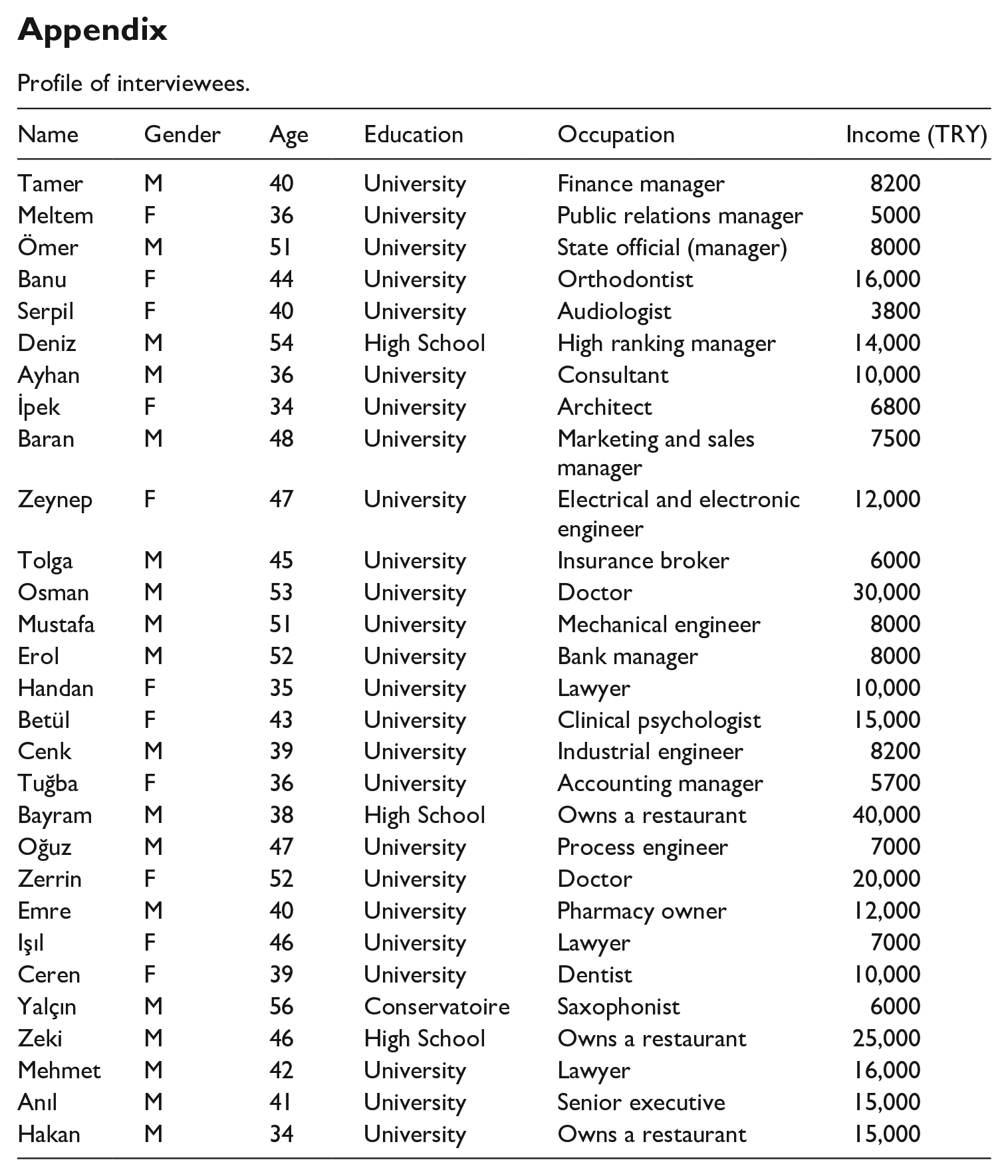
To explore our research questions, we use data gathered from 22 semi-structured interviews, two small group discussions with seven participants and participant observations. These took place in four different low-key settings chosen after a careful overview of food and gourmet blogs of the time. We wanted to make sure that these settings were not gentrified in the sense of primarily serving gourmets, so we first conducted short interviews with restaurant owners. They confirmed that culturally cultivated food enthusiasts do not make up the majority of their customers and that their interest is a rather recent trend. Therefore, taking into consideration the type of the food served in these settings, their location, ambiance and the social status of the main clientele, we defined them as lowbrow eating spaces. Interviews with the owners also helped us to identify their frequenters with high-status professional occupations. In most cases, the owners facilitated our recruitment by introducing us to such customers. We also used the snowball technique to meet the colleagues/friends of our interviewees if they showed the same interest in the food served in these settings. All interviews were held at the restaurants while interviewees were eating and they lasted approximately 90 minutes. The sample includes 18 men and 11 women aged 34–56 (average: 43.6) years (see Appendix). The majority of interviewees are university graduates with high salaried professional jobs, positioned well above average in terms of the cultural and economic capital that they possess. Five of the interviewees have upward class trajectories as they have significantly higher education and income compared to their parents. In terms of cultural orientation (e.g. secular, western, culturally liberal), as well as their resources, they would fit the definition of the new middle class as described above. However, we choose to refer to them as simply middle class, since the phenomenon is no longer new or marginal in the overall composition of the middle strata.
Our semi-structured interview unpacked the culinary routines of the participants, such as eating and shopping habits, cooking styles and understandings of good taste in food. We also talked about why they like shabby restaurants and if they are concerned about any aspects of their particular eating-out experiences. We then coded the transcripts and identified themes in line with the principles of qualitative thematic analysis (Boyatzis, 1998), which enabled us to find repertoires of inclusion and exclusion.
The settings that we visited are all located in lower-class neighbourhoods. One of them is inside a gas station on a bypass road and others are similarly located at major road junctions in Ankara. However, their locations are central and by no means comparable to roadside restaurants that only cater to travellers. In general, the menus included only ethnic Turkish foods such as döner kebab, Turkish mince pizza (lahmacun) and grilled sheep intestines (kokoreç). The interiors of each setting have traditional decorative items such as Turkish carpets and pictures of rural places. Turkish Arabesk music, which is typically looked down upon by the educated western-leaning middle class, was prevalent in all four settings.
In the next section, we unpack how our interviewees make sense of their eclecticism and their approach to culinary taste hierarchies. We start with a distinct quality of rediscovering traditional food: playful and experimental engagement. We then explore the self-consciousness of our omnivores (‘Appropriation of Food’) and the strategies they adopt to navigate their eclecticism (‘Context dependency’). Finally, we discuss how class background generates a particular way of experiencing boundary crossing (‘The Comfort of the Familiar’).
Playful and Experimental Engagement
Earlier studies on class cultures in Turkey emphasised the dominance of ‘western’, ‘Alafranga’ and ‘non-Turkish’ styles in higher echelons of the taste hierarchy. Our interviewees, however, more in line with Rankin and Ergin’s (2016) descriptions of Turkish omnivores, tend to cross boundaries between traditional/local and modern/western. They tend to eat in high-status restaurants, enjoy cosmopolitan tastes and have concerns about healthy eating, but they also appreciate popular tastes at home and beyond. However, merging different taste profiles is not a straightforward process; it requires work, commitment and improvisation on the part of the aspiring omnivore. Most interviewees take extra measures to ‘adjust’ local Turkish food to fit their cultivated repertoires and domestic cooking practices. Banu (female, 44, orthodontist), for example, modifies local recipes by adding ingredients that she has learned from foreign websites: ‘For me, Turkish food is greasier than most other cuisines, so I cook some meals by adding foreign spices or sauces to the traditional recipe, which I think makes it more exotic.’
As Johnston and Baumann (2014) suggest, the middle class can accept lowbrow foods only after they are transformed with more exotic ingredients. In this case, too, knowledge of foreign foodstuffs enables Banu to give dishes a twist and elevate the status of local Turkish food. Many other interviewees in our study referred to their familiarity with world cuisine (including Turkish) as a quality to be proud of. More interestingly, they engage with local Turkish food as a creative process and contextualise it into their cosmopolitan taste palette rather than fixing it into a lowbrow position. In other words, the same cosmopolitan disposition that generates an interest in foreign cuisines encourages these interviewees to discover and enjoy their own culinary culture. We refer to this style as ‘playful’ because it highlights the consumer’s capacity to engage with different ways of consuming the same product in a reflexive and creative manner. A disposition towards playful engagement would stem from a clear understanding of what makes that particular product lowbrow and a repertoire (e.g. irony, retro, mix/match) for uplifting the quality of the chosen bits. In fact, playfulness, together with eclecticism and social reflexivity, is considered to be an element of new aesthetic criteria for contemporary forms of highbrow distinction (Friedman et al., 2015). Our interviewees’ playful inclusion of local cuisine is in clear contrast to the dispositions of those who aspire to its western counterparts as revealed in earlier studies on the Turkish consumption scene (e.g. looking down on typical Turkish cultural forms), but it resonates with some recent culinary trends identified in other national contexts (Flemmen et al., 2018; Kaplan, 2013).
With this mode of appreciation, the value of food is defined by referring to shabby settings, focusing on satisfaction with the eating experience as a whole rather than the food itself. Interviewees referred to the ambiance as a constant reminder of the food’s authenticity and hence quality. Here, ‘authenticity’ measures how close the appropriation of the food in the shabby setting is to its consumption in its place of origin. This includes not only the originality of the recipe but also the style of the service and the way the food is eaten. For instance, Yalçın (male, 56, saxophonist) explains:
Here you can see people with very prestigious jobs. It’s because they give more importance to the taste of food than the visual qualities of the place. You can’t eat kokoreç [grilled intestines] in a fancy restaurant. That’s against its own traditional culture. The authentic concept of a low-key place makes the food even more delicious. Watching the chief preparing food in front of the fire is like an art show, which makes it more appetising.
Consistent with an interest in the broader elements of eating experiences, the music taste of the owner is described as something that accentuates authenticity. Ayhan (male, 36, consultant), for example, says that he does not mind listening to Arabesk music (a combination of Turkish folk and Middle Eastern music genres) in such restaurants after mentioning the clash between his own culture and that associated with Arabesk. He thinks that it ‘is suitable both with this restaurant’s and the owner’s culture’ and thus enhances the authenticity of the experience. Despite Arabesk music’s association with uncultivated, rural, masculine migrant culture (Başaran and Işık, 2017), Ayhan’s playful mode of boundary crossing encourages him to go beyond his comfort zone and enjoy ‘real’ Turkish food in its ‘real’ setting. This mode of boundary crossing first seems to generate a kind of cultural tolerance as implied in the original development of the concept of omnivorousness. For instance, Serpil (female, 40, audiologist) explains:
We love authentic places more than classy restaurants. There’s an authentic place that we usually go to, and we find its decor hilarious. It’s heavily decorated with traditional motifs, but the taste is good and our communication with the staff is intimate, so that’s why we keep going there.
Ayhan and Serpil seem to be tolerant of lowbrow tastes in fields parallel to food, such as decor and music, since they are hesitant in judging the tastes of the ‘original’ clientele of the shabby restaurants or their owners. However, it would be wrong to assume that this tolerance is accompanied by more inclusive dispositions in general; in the end, our interviewees emphasised the clash between lowbrow forms and their own culture explicitly (as in the case of Arabesk) or indirectly with humour and irony (as in the case of ‘hilarious decor’). As we talked more broadly about food tastes and classifications, and how they made sense of their boundary crossing, our interviewees’ practices and judgements began to look less like the kind of openness defined by core references in the omnivore debate.
Carefully Orchestrated Boundary Crossings: Delicious Food vs. High-Quality Eating
A playful attitude towards consuming traditional cultural goods is not surprising, given that most omnivores discussed in the literature embody the cultural competency to frame their experiences in this way. However, our analysis demonstrated that our interviewees distinguish their lowbrow eating from their general habits, making the practice of going to these shabby places stand apart from their ‘usual’ preferences. This is a striking finding and one that cannot be easily captured with the kind of quantitative approach that dominates the field. This awareness about hierarchical boundaries and the crossing of them reveals some dispositions that conflict with the tolerance and openness implied. We will discuss this awareness and its consequences as we unpack two themes: judgements based on the appropriation of food and the context dependency of boundary crossing.
Appropriation of Food
Although our main topic was the taste for food, our interviewees referred to a range of issues that they identified with the eating-out experience, such as hygiene, customer profiles, language and manners. We noticed that, despite the interest shown in shabby restaurants, the interviewees – except those with lower-class backgrounds – have quite high expectations and selective criteria for good taste in food. For instance, customer profile is noted as an important criterion defining a restaurant’s worth in addition to the food served. Interviewees refer to customer profiles to define the class positions of their fellow diners, embodied through clothing style and bodily demeanour. For instance, Baran (male, 48, marketing and sales manager) emphasises that his interest in shabby places and traditional food is in contrast with his habitual dispositions, which are recognised and respected by people of his social class:
Obviously, the clothes I wear, the accessories I use are more suitable for elegant places. The customers in fancy restaurants have more or less the same taste in clothing. When I eat at a low-key place, my friends are usually surprised since they can’t associate my outlook with a shabby environment.
The importance of fitting into a particular group is heavily underlined with emphasis on types of clothing. In shabby settings, a more casual form of interaction with the staff and fellow diners, more casual clothes or eating with the hands are all considered acceptable. Some of our interviewees suggested that they step outside of their comfort zone, while others stick to their own habitual manners, but all implied that these relaxed manners typical of shabby places’ ‘original’ customers stem from one’s cultural background and have a low status in the hierarchy:
Some people attack the food as if it were their last meal. All table manners, forms of politeness seem to be forgotten during the effort to consume everything on the table in one breath. This is why I like classy restaurants most. You’re unlikely to encounter such primitive behaviours there. (Banu, female, 44, orthodontist)
Interviewees referred to ‘primitive’ attitudes often as they explained the kinds of people with whom they do not want to dine. In some cases, such remarks were accompanied by a narrative on the long process of socialisation into these classifications. For instance, Deniz (male, 54, high ranking manager) told us how his mother warned him to not ‘eat like peasants’, demonstrating how food manners as well as classificatory schemes are instilled in the body from early childhood, as Bourdieu suggested (1984, 2011). Similarly, Zerrin (female, 52, doctor) refers to how tastes in lowbrow food (kebab), a narrow taste profile and an inability to improve one’s cultural repertoire are all qualities of shabby restaurants’ original clientele:
I think what defines one’s taste is an important issue. If you’re only eating kebab and not open to distinct tastes, then you are part of a particular cultural group. My grandmother believed that potato was for the [rural] poor, so she never cooked it, as if when we consumed it, we would seem poor, too. Lower groups thus immediately show themselves through their daily practices. But it’s important to improve yourself in cultural terms, even though you have limited opportunities.
Such accounts also demonstrate how far cultural hierarchies are reproduced by the perceived urban/rural distinctions in style. Here, ‘urban’ refers to not only living in a city but also embodying cultured, cultivated and ‘western’ ways of consuming. Interviewees’ awareness of their boundary crossing is clearly demonstrated via careful choice of words. Interviewees used the term ‘authentic places’ to indicate shabby settings, while they used ‘restaurant’ to describe what they considered to be ‘elegant’ options. It seems that shabby restaurants serving traditional recipes are particularly chosen for the delicious food, with a conscious acceptance of their low status, whereas other restaurants fulfil the symbolic function of class identification and demarcation. This brings us to our second issue related to the awareness of our interviewees: the conditions under which our omnivores choose to cross boundaries.
Context Dependency
Our interviewees’ interest in rediscovering local food and in being open to world cuisine in general resonates with the habitus of cultural omnivores as described so far. However, our fieldwork also demonstrated that there are certain conditions that foster or limit such boundary crossing, including the timing of the meal and the type of occasion. Due to the plainness of shabby settings, most frequenters consider them a practical choice for lunch, fitting them into their busy work schedules. Dinners, on the contrary, seem to have a different symbolic value than other meals as they are associated with special gatherings, including business meetings. Occasion acts as a significant gatekeeper, allowing culinary omnivores to cross boundaries with pleasure under certain circumstances, while discouraging them to do so when the event has high symbolic value:
I always prefer luxurious restaurants for dinner because they offer something more than food. It’s like you get satisfied with both the meal and the visual experience. Even the waiters treat you so that you feel spoiled. And I think I deserve this treatment because of my particular lifestyle. (Zerrin, female, 52, doctor)
Zerrin’s account demonstrates the importance of the exclusive ambiance that an elegant restaurant offers. Most interviewees prefer eating alone when their main goal is a quick meal, particularly during business hours, and they are more likely to use that as an opportunity to discover unfamiliar settings. If the occasion is dinner or the interviewees are in the company of friends and colleagues to share special time together, restaurants with higher social status are preferred. Women who have children particularly emphasised their reluctance for bringing their children to eat at shabby restaurants where the food served is not healthy or hygienic enough. There is a limit to the tolerance our culinary omnivores can show to shabby places; not all occasions can offer a safe boundary-crossing experience. For instance, Oğuz (male, 47, process engineer) states:
I like to go to places where the customers have decent eating manners. I can’t say that I can eat in all low-key places because eating is an enjoyable social activity and I don’t want anything to disturb me there.
Similarly, Meltem (female, 36, public relations manager) suggests that she does not want to ‘eat with people who look like a punk or are oddly dressed [zibidi]’ to avoid being identified as a tasteless person from the outside. Betül (female, 43, clinical psychologist), on the other hand, says she is sceptical of the hygiene standards in shabby places and thus is very cautious when choosing one. These accounts reveal that our culinary omnivores are highly selective even while stepping outside of their habitual eating repertoires. The tolerant, appreciative and playful attitude towards local, traditional and lowbrow culinary experience revealed in the first section of the analysis is recalibrated by the interviewees’ original class habitus. Those who have a middle-class background particularly draw on their long-established dispositions to assess which settings are safe for practising boundary crossing. This selective appropriation seems to reveal how interviewees understand and respond to the stigma associated with eating lowbrow food. Interviewees’ willingness to distance themselves from this specific mode of consumption might also indicate that this practice is not legitimated despite the increasing interest shown to traditional and authentic tastes by the culturally privileged, and this shows how misleading it can be to attribute broader dispositions such as openness and tolerance to boundary-crossing behaviours. To the best of our knowledge, the context dependency of omnivorous orientations has not been highlighted in studies on culinary omnivores so far, showing the significance of focusing on practitioners’ meaning-making mechanisms rather than the actual quantity of their lowbrow consumption.
The Comfort of the Familiar: Mobility Trajectories
Despite striking similarities in their understandings of culinary omnivorousness, not all of our interviewees appreciated lowbrow food spaces in the same way. Playful engagement and consciousness around crossing taste boundaries were experienced and articulated differently. In some cases, shabby restaurants are appreciated not because they are different and interesting, but rather for their familiarity in terms of the ambiance and eating experience. Interviewees’ class background and prior knowledge of non-consecrated eating practices seem to influence this, resonating with what Bourdieu (2000) calls ‘double binds’, a situation that occurs due to the conflict between one’s primary habitus, acquired within the family, and one’s current class location. Accordingly, as Friedman’s (2015) analysis of habitus clivé illustrates, upward class trajectories can lead to suffering and pain caused by the loss of coherence in the ‘conditions of existence’.
The impact of mobility became clear when we asked our interviewees to reflect on how the changes in their social environments influenced their eating practices. Interviewees with lower social class backgrounds particularly seemed to struggle as they adapted to the middle-class notions of good food taste. For instance, Hakan (male, 34, owns a restaurant), who grew up in a shantytown, explained the way upward mobility affected his orientation towards food:
I can’t eat at fancy restaurants in comfort because I don’t belong to that culture. Maybe if I were raised in a high-status family, things would be different. [But] I’m not saying I reject different tastes as I try distinct cuisines, too. As long as the taste is good, it doesn’t matter whether I eat on a plastic or porcelain plate.
Mustafa (male, 51, mechanical engineer), who also has a lower-class background, explained how self-control mechanisms function differently in these two types of restaurants by saying that he feels like he loses his self-identity in luxurious restaurants. He argued that in these settings ‘it is expected that you be something more than you actually are’ and that ‘there’s an unwritten rule regarding not to eat without using a fork and knife’. The impact of social mobility and the structuring power of embodied cultural capital became clearer when interviewees were asked about how they feel in shabby settings. Tuğba (female, 36, accounting manager), for instance, said that she normally enjoys eating at shabby restaurants more than other places, but due to her social milieu, which changed even more with marriage, she has to disguise some of her old habits from childhood:
Frankly, I rather prefer authentic places because of the sense of belonging. I grew up in a small family with limited resources. For that reason, spending too much money on clothing or food isn’t for me. However, the social environment I am in drags me into situations where I begin to forget the place I came from . . . I sometimes feel like I’m obliged to follow certain rules to fit into that group.
Resonating with Lawler’s (1999: 15) findings, expressions of a disrupted habitus become more explicit when Tuğba mentions her inability to occupy the habitus of her present life. Although our intention was not to specifically focus on the impact of mobility on omnivorousness, our analysis revealed that crossing a boundary means different things to different people. This distinctive mode of appreciation draws on whether these omnivores originally occupied the other side of the boundary in their former lives. Most of our interviewees engage with lowbrow food, following trends towards rediscovering traditional food, whereas upwardly mobile interviewees feel more comfortable at home as they revisit their ‘original’ taste repertoire. This contrasts with Beagan et al.’s (2015: 93) findings that upwardly mobile people perform distinctions by making use of their backgrounds to demonstrate their knowledge of ‘the best hole-in-the-wall places in town’. There also seems to be a relationship between how far boundary crossing brings tolerance and whether people are familiar with the taste groups they navigate between. The playful engagement and its articulation that we unpacked earlier was dramatically toned down in our upwardly mobile omnivores’ repertoires, demonstrating a more genuine openness compared to others who look down on everything about these places other than the food.
Concluding Discussion
In this study, we have explored the culinary taste repertoires of middle-class frequenters of lowbrow settings in Turkey with an aim of shedding light onto the workings of boundary crossing and distinction. We have found that some of the trends observed in western settings, where this concept emerged, do also operate in our context. In Turkey, too, some middle-class people develop an interest in traditional culinary practices and reinterpret local food as a part of their growing cosmopolitan palette. Compared to the vegetable/olive oil-oriented Mediterranean diet, as well as world cuisine options increasingly available in urban centres in the last decades, south-eastern cuisine has had a much lower symbolic status. The Turkish food served in such places is high in protein and fats, quite unlikely to find a regular place in health-conscious middle-class diets. Interestingly, not only the food presented in these places but also the physical conditions surrounding the eating experience (such as ventilation, lighting, size of the place) are at odds with the typical middle-class habitus, which is oriented towards performing distinctions prioritising aesthetics and health (Bourdieu, 1984). Our observations can be contextualised within a recent trend in Turkey led by prominent food gourmets, reviving interest in the local and traditional.
Our analysis contributes to the growing literature on cultural omnivorousness by showing why it would be problematic to associate the search for authenticity with a disposition to openness and inclusivity. First, this qualitative inspection demonstrates that these consumers, who would be categorised as omnivores by quantitative measures, do articulate their distinction with hierarchical class terms. They explicitly recognise that they are stepping out of their habitual routine and that the new tastes they are trying are low in terms of status. Concerns about the embodiment styles of regular customers, including their dressing style and eating manners, are addressed by most of the interviewees to demarcate the boundaries between them. Thus, instead of genuine openness, our interviewees try not to mind ‘hilarious’ decor or customers dressed as ‘punks’ because they are part of the authentic package. This awareness and legitimation of boundaries make them strategic about their engagement; they choose to cross boundaries only under particular ‘safe’ circumstances (e.g. certain mealtimes or occasions). Moreover, interviewees do not seem to hesitate in judging the tastes and habits of lowbrow taste-holders harshly when talking about their other qualities, again challenging the conceptualisation of boundary crossing as inclusivity. Thus, our findings resonate with critical accounts of cultural omnivores, suggesting that a selective expansion of tastes is unlikely to signify the eradication of class-cultural hierarchies. A more reasonable explanation for a disposition to cross boundaries is that wide knowledge for the appreciation of a broader taste palette is a sign of a new form of distinction (Warde et al., 1999). This brings us to our second point; while our case from Turkey seems to support this perspective, we are hesitant to consider omnivorousness as a profile replacing traditional and exclusive Bourdieusian taste for distinction. Classical highbrow culture is known to generate a snobbish attitude; it is reproduced through elite (formal and non-formal) education and certainly translates to other forms of capital in the employment market. Despite recent attempts (e.g. the debate on emerging cultural capital), we know very little about how omnivorousness is reproduced and valued in the greater scheme of social fields. Moreover, we know that eclecticism is highly heterogeneous in terms of how it is acquired and appropriated. Our data show that the willingness to perform distinction was much less pronounced in upwardly mobile interviewees’ practices, supporting Friedman’s (2012) thesis that omnivorousness as a by-product of life trajectories creates a state of ‘cultural homelessness’, as the new refined tastes are not embodied as ‘naturally’ as the established ones. There is great variation in the formation/character of eclecticism, and our understanding regarding how it works as a cultural currency is limited. We think this makes it problematic to attribute a character (distinction vs. openness) to its various forms of embodiment, reproduction and appropriation.
We engage with the broader literature on class and culinary taste, but we are aware of certain limitations that come with our measurement of omnivorousness. Unfortunately, there are no available cultural participation datasets from Turkey that could allow us to identify omnivores quantitatively with sophisticated measures of highbrow and lowbrow practices (e.g. Hanquinet, 2016; Savage and Gayo, 2011). However, based on the insights that we gathered from our field study and our interviewees’ routine engagement with lowbrow eating settings, we concluded that they could be defined as culinary omnivores in the Turkish context. Despite this limitation, our findings invite us to think about the significance of data collection methods, especially on topics surrounding evaluations and boundaries. If we had not explored our interviewees’ culinary tastes and distastes with qualitative methods, we would not have learned how most of our interviewees, who wait half an hour in a queue to eat intestines and share a table with strangers, still do not want to be associated with the original clientele of these settings. This points to the need to explore individuals’ boundary-making mechanisms with qualitative methods (e.g. Jarness, 2017; Jarness and Friedman, 2017; Karademir Hazır, 2014; Lamont, 1992) before associating the quantitatively measured expansion of tastes with democratisation and anti-snobbish attitudes.
Our case certainly has unique elements due to the national context of our study. Scholars examining cultural consumption in Turkey largely emphasise the continuing power of the modern/traditional divide in establishing cultural and symbolic boundaries. However, such distinctions do not correspond neatly to brow categories and boundaries have become fuzzier, especially in the last decades. For instance, the local and national began to receive more esteem with the rise of political Islam, which deliberately began to circulate a narrative on the need to rediscover the local/national cultural forms of the past. However, our interviewees, who are not in close proximity to an Islamic lifestyle, do not appreciate local/traditional cultural forms with the same ideological motivations. Instead, their motivation comes from a quest to cultivate a wide palette, which is consistent with their cosmopolitan aspirations. This supports the findings of Rankin and Ergin (2016) regarding Turkish omnivores’ strategies for crossing boundaries between ‘western’ and local, and also resonates with Bellavance’s (2008) argument that distinctions other than high/low, such as old/new, can be equally structuring principles of taste. Finally, some of the derogatory comments made regarding the manners and tastes of people of rural origin suggest that the boundaries identified in earlier studies on class cultures in Turkey (e.g. Ayata, 2002; Karademir Hazır, 2014) still operate regardless of the trends towards tolerance for some traditional cultural forms. We are hesitant in suggesting that this finding is peculiar to the Turkish context. Qualitative inspections of evaluative mechanisms and experiences of omnivores defined with quantitative terms can tell us more about the relationship between ‘openness to appreciating everything’ and cultural boundaries as they are enacted in everyday life.
Footnotes
Appendix
Profile of interviewees.
| Name | Gender | Age | Education | Occupation | Income (TRY) |
|---|---|---|---|---|---|
| Tamer | M | 40 | University | Finance manager | 8200 |
| Meltem | F | 36 | University | Public relations manager | 5000 |
| Ömer | M | 51 | University | State official (manager) | 8000 |
| Banu | F | 44 | University | Orthodontist | 16,000 |
| Serpil | F | 40 | University | Audiologist | 3800 |
| Deniz | M | 54 | High School | High ranking manager | 14,000 |
| Ayhan | M | 36 | University | Consultant | 10,000 |
| İpek< | F | 34 | University | Architect | 6800 |
| Baran | M | 48 | University | Marketing and sales manager | 7500 |
| Zeynep | F | 47 | University | Electrical and electronic engineer | 12,000 |
| Tolga | M | 45 | University | Insurance broker | 6000 |
| Osman | M | 53 | University | Doctor | 30,000 |
| Mustafa | M | 51 | University | Mechanical engineer | 8000 |
| Erol | M | 52 | University | Bank manager | 8000 |
| Handan | F | 35 | University | Lawyer | 10,000 |
| Betül | F | 43 | University | Clinical psychologist | 15,000 |
| Cenk | M | 39 | University | Industrial engineer | 8200 |
| Tuğba | F | 36 | University | Accounting manager | 5700 |
| Bayram | M | 38 | High School | Owns a restaurant | 40,000 |
| Oğuz | M | 47 | University | Process engineer | 7000 |
| Zerrin | F | 52 | University | Doctor | 20,000 |
| Emre | M | 40 | University | Pharmacy owner | 12,000 |
| Işıl | F | 46 | University | Lawyer | 7000 |
| Ceren | F | 39 | University | Dentist | 10,000 |
| Yalçın | M | 56 | Conservatoire | Saxophonist | 6000 |
| Zeki | M | 46 | High School | Owns a restaurant | 25,000 |
| Mehmet | M | 42 | University | Lawyer | 16,000 |
| Anıl | M | 41 | University | Senior executive | 15,000 |
| Hakan | M | 34 | University | Owns a restaurant | 15,000 |
Acknowledgements
We would like to thank Magne Flemmen, Murat Ergin and two anonymous reviewers for providing generous and useful feedback on the first draft of the article.
Funding
The authors received no financial support for the research, authorship and/or publication of this article.