




Abstract
In Morocco, people usually call Gnawa those communities of black Moroccans made up of descendants of slaves from sub-Saharan Africa (Mauritania, Senegal, Mali, Nigeria, and Guinea) who follow rituals merging Islamic traditions with pre-Islamic African traditions. Gnawa brotherhoods are organised into ‘houses’ called Dar Gnawa. Each house is led by a Mʿallem (a ritual master) who inherits his ancestor’s knowledge and is responsible for a group of apprentice musicians and dancers from the same town or from other places. Music and dancing are key elements in their religious ceremonies. Based on fieldwork carried out in 2012–2016 in a black community living in southeastern Morocco, a village in the desert, 50 km away from the border with Algeria, this article analyses the healing rituals performed by the brotherhood in the two Dar Gnawas in the town, in nearby villages, and in the annual festival. The aim of this article is to explain how Gnawas created their legitimacy and prestige as ‘professional’ healers.
Introduction
This article explore how the Gnawas practice their religious tradition in a small village inhabited by blacks, striving to create legitimacy as professional healers and true masters of spirits, trying to differentiate themselves from the commoditised forms of gnawaness spread throughout contemporary Morocco.
Exorcism as a spirit eviction practice and adorcism as a spirit accommodation or domestication treatment in people possessed are not always described as antithetical strategies, but as such that can be reconciled within one and the same ritual (Lewis, 1990: 38). Gnawas deal with spirits by emphasising the accommodation option, invoking them and restoring, through the music-induced trance, the balance between the possessed and the spirit inhabiting them. Quite occasionally, the person possessed’s behaviour may suggest the need or the desire for eviction, so that they have to consult other specialists or perform themselves, in specific ritual contexts, practices such as ruqyah, the treatment of diseases, evil eye, or possession through Quranic recitation. The ‘blacks’ village’, as the small town in the southeast of the Moroccan desert in the Meknés-Tafilalet region has come to be known, is inhabited by about 300 people. More than 60 years ago, groups of nomadic descendants of sub-Saharan slaves settled in the region, first in a today uninhabited village and later in their current location on a permanent basis. Some 45 dwellings made of clay house all the families. Two decades ago, the extension of the state road split the village into two halves and, while it enabled connection with nearby towns and cities, it did not alter the relative isolation in which Gnawas live. A subsistence economy based on some farming plots and small animal-raising affords them relative self-sufficiency. Formally, the village is under the qadi of a nearby settlement, so in practice, daily life is governed by traditional forms of power.
The term Gnawa has various contextual meanings: it can refer to the music associated with a specific religious practice, and with rituals of possession, healing, and spirit expulsion, regardless of the identity, descent, and ethnicity of those involved. In several cities in Morocco, such as Marrakesh, Rabat, Fez, or Essaouira, there are brotherhoods (Langlois, 1998; Lapassade, 1976) that bring together blacks, Arabs, Berbers, and even foreigners, occasionally including tourists. Gnawa can also be used to refer exclusively to the music genre that became popular since, in the 1970s, some music bands brought about a disjunction between this expression and its ritual environment, popularising the music at national and international festivals and introducing the genre in the cultural industry worldwide. In the narrowest sense, Gnawa refers to those communities of black Moroccans made up of descendants of slaves from sub-Saharan Africa (Mauritania, Senegal, Mali, Nigeria, and Guinea) who follow rituals merging Islamic traditions with pre-Islamic African traditions.
The case of the blacks’ village responds to the latter meaning, as it comprises Moroccan blacks living in relative autonomous conditions; they consider themselves Gnawas as an attribute of origin, and they practise Gnawa rituals and their music, as part of their Muslim identity. And, connecting all of these elements, they build authenticity borders separating them from any groups or cultural expressions that dissociate these aspects. In the village, the traditional form of organisation of the religious practice occurs in specific places called Dar Gnawa (Gnawa House), in an exclusively male universe, where a Mʿallem (master), who inherits his status from another master, holds the knowledge of the music and the exclusive right to play one of the three musical instruments, the guembri, which is associated with the invocation of spirits. He is surrounded by a group of musicians, dancers, and apprentices, who are either blacks from the village or coming from other regions to spend some time in the Dar Gnawa, where they learn the dances, participate in the rituals, and help make the instruments. There are two independently acting Gnawa Houses in the village, involving the various families. Both groups travel to nearby towns in order to perform at ceremonies, and work together to organise the moussem or annual festival, when people from other regions visit the village taking part in collective healing practices, ritual sacrifice of animals, and spirit control and eviction.
Based on fieldwork in the town, through daily-life participant observation in both Gnawa Houses and the participation on two occasions at the great moussem, as well as through trips accompanying the musicians to nearby towns for ceremonies, visits to saints and interviews with musicians, Mʿallems and locals, this article analyses the way in which Gnawas build their legitimacy as healers resorting to a repertoire of authenticity symbols that recall the construction of a Bambara ancestry as restricted to village boundaries. It is around this authenticity feature that the Houses compete within the town, while at the same time, they merge into one in front of a wider audience. Invocation, trance, and the possession of spirits are inseparable dimensions from the context induced by Gnawa music, on which not only the religious language and the efficacy of the ceremonies rely, but also the prestige of the musicians’ houses within the village and in connection with the other towns where they are invited to hold ceremonies. A focus on knowledge and practices makes it possible to transcend the boundaries and taxonomies between medicine and religion, considering that healing is basically associated with knowledge put into practice (Lambeck, 1993: 16). Among Gnawas, this knowledge adopts the language of music (Figure 1).
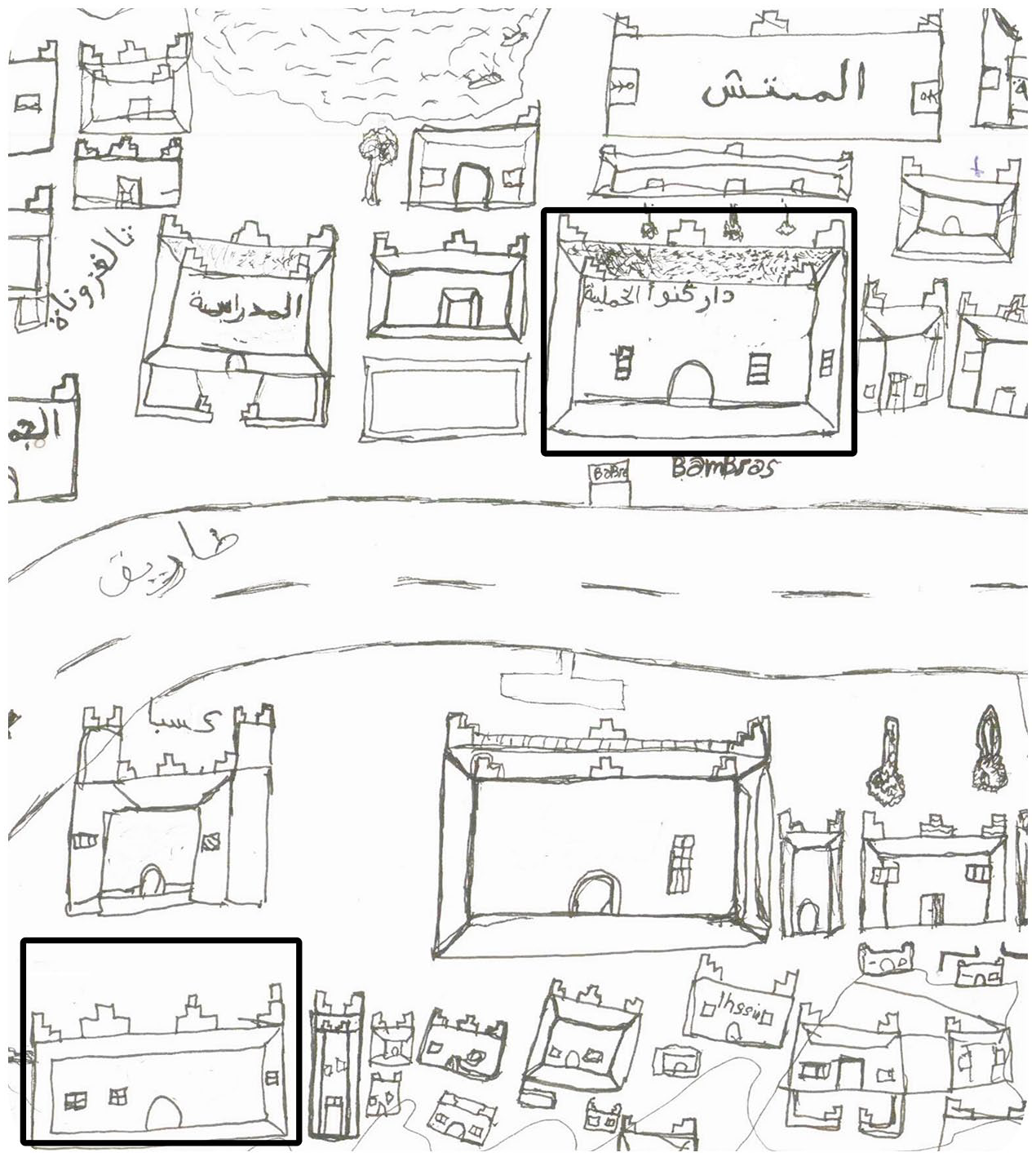
A fragment of the village map made by a group of informants in collaboration with the author, marking the location of the two Dar Gnawa. November 2014, Silvia Montenegro.
Gnawas and their special relationship with spirits
The belief in the potential relationship that spirits establish with human beings and the specific case of possession is an evidently cross-cultural phenomenon studied by anthropology in different ethnographic contexts, including in Muslim populations. In Islam, jinns and jenniyyas, male and female respectively, are one of the creatures of creation. Unlike humans, created out of mud, and angels, created out of light, jinns are created out of fire; their existence occurs in a parallel dimension and they live in groups, like humans. They are thought to follow different religions; hence, among them there are Jews, Muslims, Christians, and also unbelievers. Like humans, they eat, they engage in different jobs or occupations, they have families and personalities. Jinns can be good or bad, and any likely interaction with human beings is complex. They can take on various forms, they can appear as humans or as animals, and change appearances, alternately. In Morocco, the allusion to the existence of spirits and their interference in humans, causing diseases, or benefitting people by giving them special skills or powers, is part of the repertoire of popular culture, not only among Gnawas but also in urban environments. The well-known legend of A’isha Qandisha, popularised in songs, illustrations, and oral narrative, is a piece of Moroccan folklore that clearly illustrates how popular these beliefs are. It tells about a jenniyya that assumes the appearance of an extraordinarily beautiful, goat-footed woman, who wanders around rivers and lakes, attracting men and driving them to madness or death.
An ethnological approach to Gnawa culture was adopted by Viviana Pâques (1976, 1991) who distinguished the main aspects of Gnawa tradition by highlighting the importance of the cosmologies and rituals connected with sub-Saharan animism and the belief in the possession by spirits, forming a unique religious order associated with enslaved ontology. Hell (1999) assigns a key role to the practice of possession, defining Gnawas as a brotherhood that delves into the manifestations of the invisible, as managers of disorder, since they act on the misfortune experienced by the faithful. From that viewpoint, it is rituals, and particularly music, that create meanings. As experts at dealing with the world of spirits, Gnawas would play a social role among their followers, namely, that of rendering conceivable the misfortunes, diseases, and other events altering the order of experience. The tendency to analyse Gnawa practices as typical of the ‘magical-religious’ domain (Hell, 2002: 121), or by stressing their belonging to a ‘culture of possession’ and trance (Kapchan, 2007: 11), has very often led to an anthropological overinterpretation of the therapeutic aspects, resulting in a reductive analysis of possession cults (De Sardan, 1994: 19).
Many studies have addressed the phenomenon of possession in Morocco and its relationship with different institutions, social stratification, and power structures. Westermarck (1899), who started his work in several locations in the country back in 1899, accounts for the cultural consensus around the belief in jinns, stating that the belief in jnun forms a very important part of the actual creed of the Muhammedan population in Morocco, Arab and Berber alike. It pervades all classes, and though some of the more enlightened Moors are inclined to represent it as a superstition of the ignorant, I doubt whether there is anyone who does not practically adhere to it. (p. 252)
The Finnish anthropologist also describes the cases of some men who claim to have married a jenniyya, a kind of interaction between humans and spirits that, almost one century later, was the subject matter of the book Tuhami, where Crapanzano (1985) tells the life story of a Moroccan tilemaker who claims to have married jenniyya A’isha Qandisha, rebuilding the complex self-reflectivity of the character and his relationship with jinns, saints, and demons, from whom he wishes to break free. Maarouf (2007) studies the rites and practices associated to jinn eviction within the maraboutic institution of zawiya, focusing on the discursive interaction between patients and healers tracing their lineage to Prophet Mohammed’s descendants. His study primarily explores the ideological functions of the discourse that healers evoke to control and expel jinns and the reproduction of the dominance/submission dialectics existing in society, which perpetuates people’s hope for a miraculous improvement of their social conditions. Various rhetorics about jinns’ possession can also be found in the practice of Quranic exorcism performed by fqihs in northeastern Morocco, where, amid a revitalisation of the practice, some exorcists appeal to a unified discourse of science and religion, producing intersections between ancient rhetorics inspired in humoral medicine or Prophetic medicine and ideas taken from modern biomedicine (Dieste, 2014: 46).
While Gnawa practices are part of a cosmological continuum that goes across different religious expressions in Morocco, and where the relationship between humans and spirits, trance, eviction, and healing are recurrent, Gnawas are labelled as a unique group, marked by the ‘African cultural influence’. Their status is ambiguous in connection with the various traditional Sufi brotherhoods officially acknowledged in Morocco. Together with other brotherhoods that engage in possession rituals, such as Isawa and Hamadsha, they are often stigmatised as being influenced by ignorance and superstition. However, throughout my research, I noticed that they enjoyed prestige among nearby settlements in the province of Errachidia, and that they took great pride in being welcome and respected, which they attributed to the recognition of their spiritual skills. The same argument was often used to mention that the police or authorities rarely entered the village, since they knew that these people never got into trouble and were busy with their spiritual tasks. In cities such as Rabat or Casablanca, among intellectualised middle-class sectors, on returning from my stay in the village quite a few people reminded me that I should clean my clothes and all my belongings and watch out for any discomfort, because of the danger of having stayed with people who interact with spirits on a regular basis. The reputation as healers, spirit masters, and exorcists is part of black Gnawas’ identity, and a reason that differentiates them from other groups that have, in their view, altered the traditions. This emphasis on authenticity stems from the fact that ‘Gnawa culture’ in cities such as Rabat, Marrakesh, Fez, and Essaouira has long been exposed to market forces, the organisation of large music festivals, all of which has given rise to Gnawa musicians’ self-marketing and the expansion of the genre into the global marketplace (Becker, 2011). Until the 1970s, Gnawa music remained restricted to ritual circles, although long before that musicians used to frequent tourist spots such as the Jemaa el-Fna square in Marrakesh. Later on, music bands such as Nass El Ghiwane spread the genre in the global music industry at the height of protest movements, urbanisation, and youth culture (Witulski, 2019: 68). The Essaouira Gnawa Festival started in 1998, enshrining that a sacred and local practice such as trance was made into a fetish, detaching itself from its context of origin and circulating in transnational markets and international music festivals (Kapchan, 2008: 54).
The Gnawas in the village develop a discourse of authenticity as a way of preserving their prestige and legitimacy, referring to groups that engage in tourist business, involving whites and even foreigners in their practices, as being neither true Gnawas nor efficient in their therapeutic approach. This is expressed in a series of originality discourses as well as in the search of a repertoire of ‘authenticity symbols’ that may help define true Gnawa identity as confined to village boundaries and deriving from a mythologically built Bambara ancestry. Life in the desert is also part of these self-othering discourses, as compared with an outside seen as contaminated, alienated from nature, and exposed to dangers.
Westermarck’s (1926) premise in another of his papers, namely, ‘but the Gnawa are not only exorcists, they are actual jinn-worshippers’ (p. 380), shows how Gnawas have long been seen as specialists in dealing with spirits. In our observation context, this externally imposed label is reappropriated as a self-image associated with the professionalisation of the preparation for the rituals in the Gnawa Houses. Gnawas define themselves as Muslims, likening their way of experiencing religion to Islam in a broad sense. Twelve years ago, a mosque was built in the village, a donation by a wealthy, pious man from the North of the country. Then a young man from the village was sent to one of the official religious education centres in the city of Rabat. When I interviewed the Imam, who since his return had been leading the mosque, he complained that very few people in the village visit the temple, but he argued that religious practices in the village are perfectly in line with Islam, claiming that his task consists in giving advice on some details of the annual festival just to ensure that, for instance, officiants are properly orientated towards Mecca when sacrificing animals. Some locals said they go to the mosque for the Friday prayer, but that they are also used to praying outdoors, in some places demarcated in the village since long, before the mosque existed, and they admitted that the mosque is not the place for ‘making the music’, an expression that summarises the entire activity involving invocation, trance, and dealing with spirits. This differentiation of ritual spatiality is opposite to the comparison established by Gnawas between ‘Islam’ and Gnawa practice, as both are inseparable dimensions to them.
Musician houses as ‘professionalisation’ venues
The Houses are male spaces where the activity of musicians and dancers takes place every day. The thorough work involved shows to what extent dealing with spirits has become for Gnawas an institutionalised, professionalised activity. Music is the vehicle for communication and, at the same time, the language for starting the connection with spirits; its rhythm, tone, and instrumentation follow distinctive characteristics (Schuyler, 1981; Sum, 2011). Thus, even when the musicians and their M’allem are not performing a specific ritual activity, they devote most of their time to maintaining these spaces and to planning for activities. Musicians in the older group, when referring to the beginnings, mention the unavailability of musical instruments, claiming that earlier generations were forced to use as castanets metal pieces no longer used they found in neighbouring towns. Today, both groups bear the cost of making their instruments and the necessary costumes typically worn at the events. It is said that one of the leaders instructed that the two groups should join during the annual festival, and this has been the case year after year since then. The Houses report to the traditional authority in the village, the Leader, who dictates which group should respond to requests from outside the village, the rest periods, and how to work during the festival. Gnawas’ religious services in other towns also generate compensation, sometimes as money and sometimes as donations by the hosts requesting their services. There is, therefore, a regulated scheme for using that compensation, with musicians being rotated so that everyone may have a share in the profits made through the religious services (Figure 2).
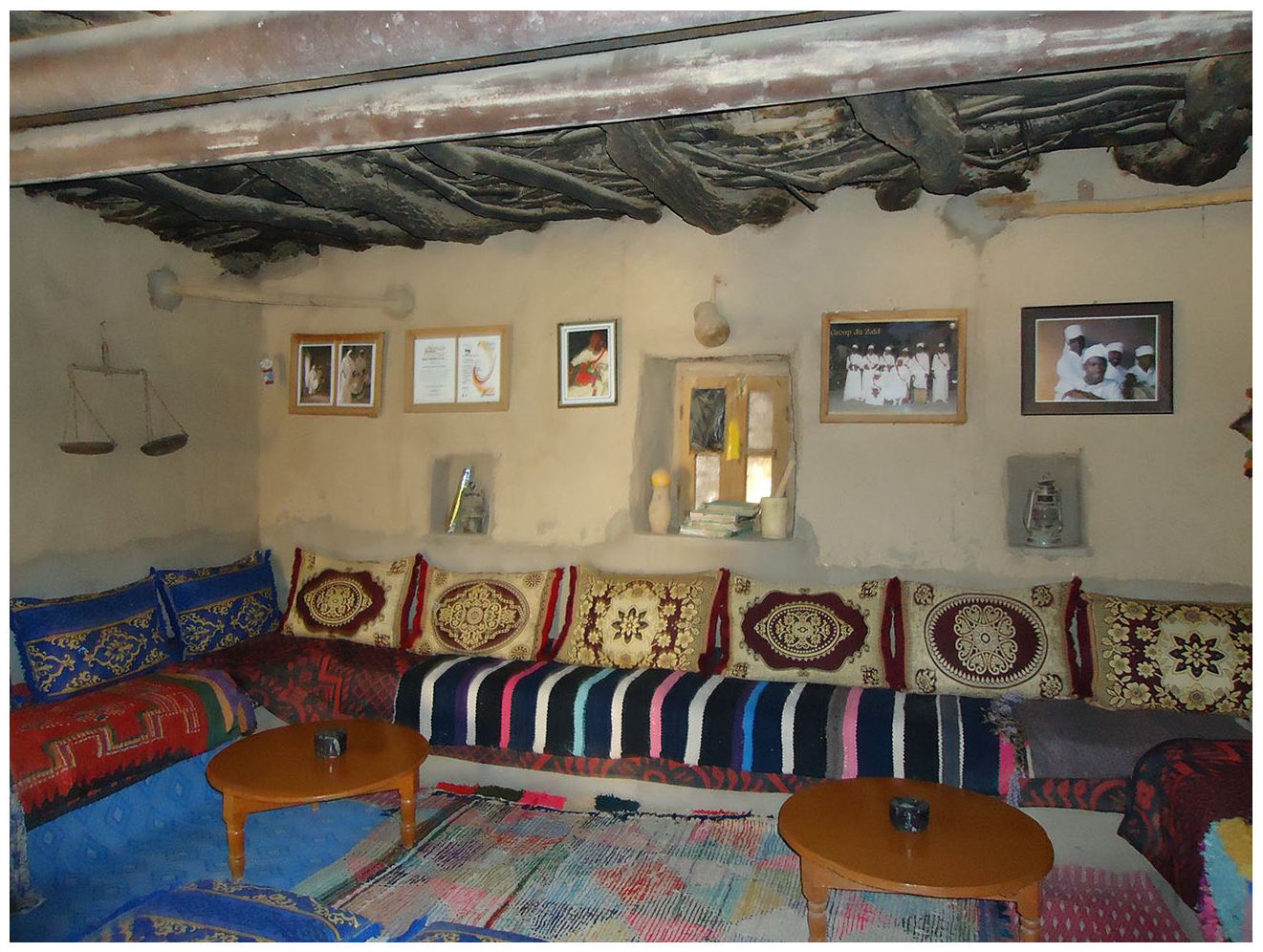
Interior of one of the Dar Gnawa. November 2014, Silvia Montenegro.
The Houses include a group of seven or eight musicians and dancers with their M’allem, plus a number of apprentices who are, given Gnawas’ diasporic identity, blacks coming from other places to spend some time in the village to be able to participate in the daily life of the musicians’ houses. Gnawa music is played with three traditional instruments: the guembri, a kind of three-stringed lute made of male goat gut that produces a very characteristic sound – it is a tabooed instrument that may only be played by the M’allem, as its sound is the key in inducing trance. The second instrument is the drum or tbel; usually two are used, one big and one small, which are hit with curved wood sticks. The bigger one may be played by the M’allem, by any of the musicians or by guests. At some ceremonies, I was able to see the tbel being offered to some renowned healer from outside the village. Its sound sets the tempo of the ceremonies. Finally, the qraqebs are large iron castanets played by the remaining musicians during the chants, the dances, and the ceremonies as a whole. The drums are made in the village and require delicate workmanship, preparing the animal skin, getting and drying the wood. The clothes worn in performances, but also very often in daily life, meet a rigorous standard; they are white robes thoroughly covering the body, diagonally crossed by a red cord between the shoulders and the waist. Gnawas’ most widespread figure shows them wearing the characteristic headdress, decorated with cowry shells. Even in the two Houses in the village, drawings and old photographs are exhibited showing black Gnawas wearing this kind of headdress. The model adopted by the musicians is different, consisting of a white turban with no ornament, tied on the back of the head. Some village women undertake the task of keeping up the musicians’ clothes, ensuring they are always available for performances. Thus, the professionalisation of the interaction with spirits also involves an aesthetic dimension, a stock of musical instruments, and spaces for the education of apprentices. The young men staying for some time in the village learn through a slow mimetic process, by watching and participating in the dances and playing the music, guided by the remaining Gnawas. The musicians’ houses are the most ‘luxurious’ buildings in the village with large rooms and a kitchen where they can cook their meals. In the Houses, Gnawas’ symbolic capital materialises as prestigious experts at communicating with spirits and ancestors (Figure 3).
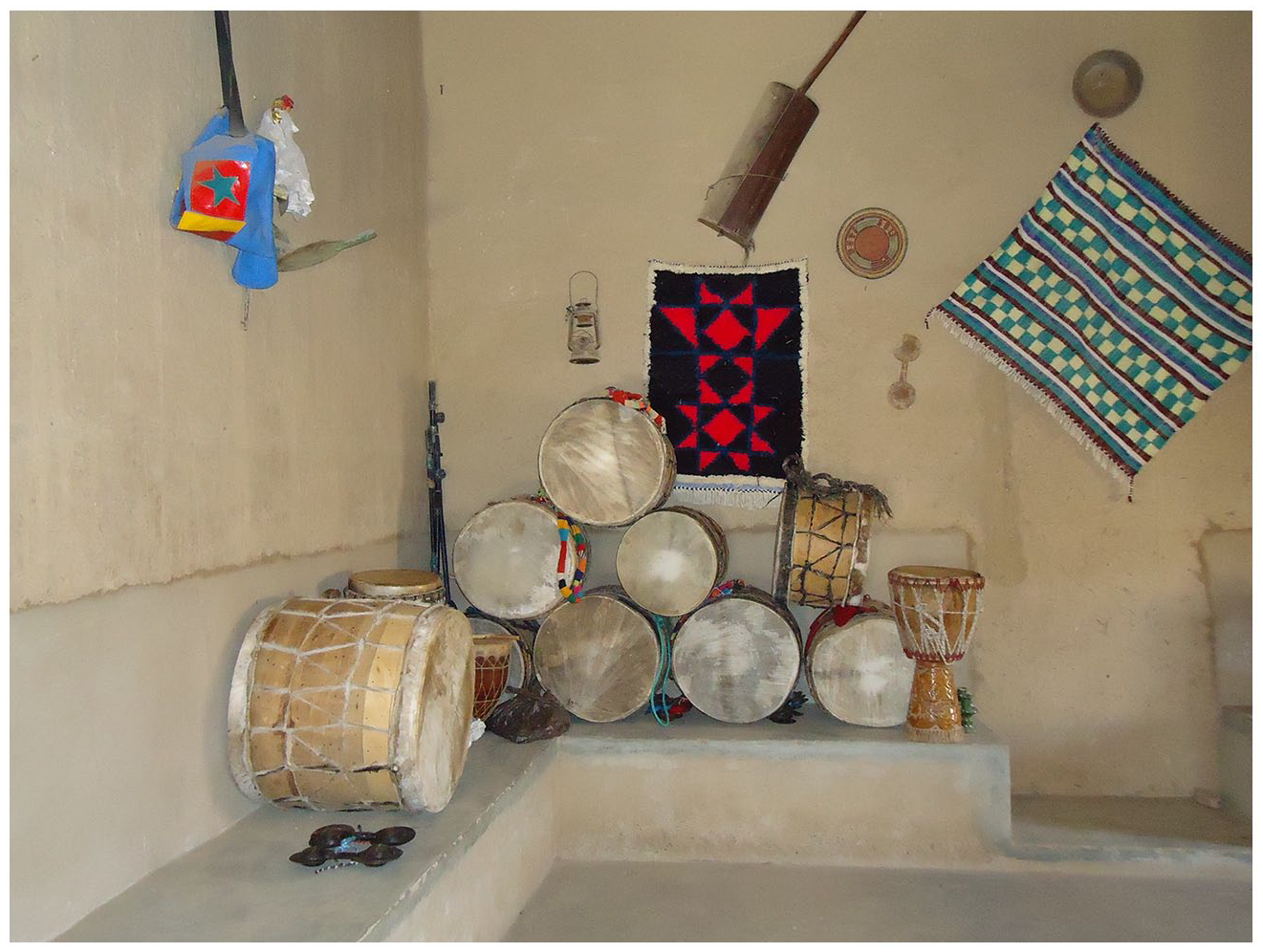
Musical instruments inside one of the Dar Gnawa. December 2015, Silvia Montenegro.
Tales of being ‘inhabited’
Gnawas classify spirits into different categories. While they use the term mluk to name entities that engage in possession processes, they can also refer to them as jinns. These are present even if very often they cannot be seen, so one should be careful not to throw rubbish or venture into some places where these spirits usually live, such as the dry riverbed near the village which at times receives water from other tributaries, or the area behind the mosque where there are abandoned houses. The relationship is not one of fear, but the intention is rather to avoid annoying them or breaking the harmony existing between both worlds, in order to prevent their interference. When these entities enter a human body, the person possessed is said to be inhabited (maskun); this ‘occupancy’ will not always have negative effects, but it might be troublesome, as it may cause diseases, strange behaviour, and misfortune. Possession accounts are not always related to illness and suffering, but there are people who become possessed for different reasons. Brotherhoods such as the Gnawa not always recruit their followers through distress (De Sardan, 1994: 18).
The accounts of people possessed by jinns are common in the oral tradition around the village. The situation may last for some time and disappear without the person having noticed how the spirit left, and it may happen both to men and women. For example, Ahmed said that, as a teenager, for several months, he behaved in an inexplicable way, since he felt a continuous urge to visit the house of a family in a neighbouring town. When the day was over, he was surprised to find himself going to the house, where he would stay until nightfall. After some months this urge disappeared, so now he believes that at that time he was probably inhabited by a spirit who wished to meet one of the young women in that family. In other cases, the people possessed remain indefinitely in this situation and feel an ongoing need to participate in the musicians’ practices aimed at handling spirits. One day in the village, I visited a small room where a young woman was looking after some children who were drawing while looking at a map of the African continent. I took part for 1 hour in the group activity and, once back where I was staying, Ali, one of my hosts, asked me whether I had noticed anything strange, since the young woman had been ‘inhabited’ for over 4 months then. People in that state behave normally and can manage their daily activities, but they may suddenly show unpredictable behaviour or related symptoms. According to Ali, that was a difficult case: the musicians had already done their work but she still continued in that state. As she felt ill, they called a well-known healer in the region and, although she had been in trance for 3 days and danced till her feet bled, she remained unstable and guided by a very powerful entity.
The people who are ‘inhabited’ may be induced to engage in activities demanded by ‘the occupiers’, without understanding why they feel driven to do them. These instructions may appear in their dreams. Dreams play a key role in the imagination of the relationship with spirits. This can be interpreted as an altered state in which people receive messages from other worlds (Kapchan, 2007: 109). Another one of my informants, Mohammed, told me about a case that is considered even more significant than the former: it concerned another young woman who ‘has the jinns’, and was required in dreams to travel to the city of Meknès. The girl’s brother had to collect the money required for the trip by borrowing; several people agreed to help, realising that it was necessary to appease the jinns. Brother and sister spent some time in the city, visited saints, and when they came back, everyone noticed that the girl was better. Mohammed went on to say that the situation caused him fear, because, when the musicians played and the jinns heard the relevant melodies, they withdrew leaving the young woman alone, but after a few days they returned and caused her trouble. Two fqihs, a term used in Morocco to refer to an Islamic healer, had to be consulted in order to try to expel them, and even invited one of the best guembri players in the area, failing to make the spirits leave her. Mohammed also pointed out that the girl used to argue with him and with one of his brothers; therefore, when there is lila, the typical Gnawa nighttime ceremony, both of them try to get away from the village, since they are afraid lest they should be harassed by the jinns. However, the young woman has the potential to relieve or improve another person’s state, which allegedly occurred during a lila, when, as she was in a trance, she spoke to a young man who was undergoing some family problems. According to the account, using the girl as an intermediary the jinns ordered the young man to dance doing 14 turns. In a trance, he was only able to complete 10, falling then to the floor where he stayed for some time. Later, he managed to stand on his feet again and finish the task demanded by the spirits. After that, he felt well and managed to establish harmony with his family again.
Being permanently inhabited does not seem to be a widespread condition, but rather an exceptional circumstance. According to my informants, the young woman was currently the only person in that situation in the entire village, although people in a similar state had existed in the past and were remembered, including a man who always appeared to be in that condition and, when in trance, performed self-mortification practices, cutting his arms with knives until he bled, while on the following day, he bore neither marks on his body nor symptoms of pain. This is seen as a sign that the person is in a state of grace, that is, the spirit is not embodied so much as the body takes on the attributes of the spirit – it becomes invulnerable and protected (Kapchan, 2007: 33).
The various accounts show that people possessed by jinns can find relief or stabilisation of their symptoms through trance at Gnawa ceremonies, but there is also the case in which the person possessed is reluctant and fails to respond to the effects of Gnawa therapy. The complex knowledge of the various cases and of the limitations of the efficacy of the practices determines the decision to resort to other figures, as in the case of the person who was sent to a fqih so that he may try to expel the invading spirit through other means. Like in the cult of zār, widespread in Iran and in African countries including Sudan, Ethiopia, and Egypt, and with which Gnawa practices have a lot in common, the cases exhibit a ‘spirit-host relationship’, with differences in ‘how spirits figure in the lives of the possessed’ (Boddy, 1989: 238).
Another set of accounts helps understand how engagement in the belief in possession and trance defines the legitimacy of the audience participating in lilas, as the person who does not believe in or questions the existence of spirits and the practices aimed at invoking and soothing them down runs the risk of being noticed by them. According to my informants, during a lila, the aforementioned inhabited young woman, already in a trance, bit a Berber woman who had questioned the ceremony, suggesting that is was all a farce. Subsequently, the victim is said to have gone into a trance herself, proving to all the people there the truthfulness of the spirits’ presence. This participation in belief implies recognising the real presence of spirits. Another case could help clarify this point. A black man from a nearby town told me that he thought of being a Muslim as a direct relationship with Allah, far from such practices as those performed by Gnawas, but that, being black and of sub-Saharan descent, he chose not to participate in the ceremonies for fear of being involved and left at the mercy of spirits (Figure 4).
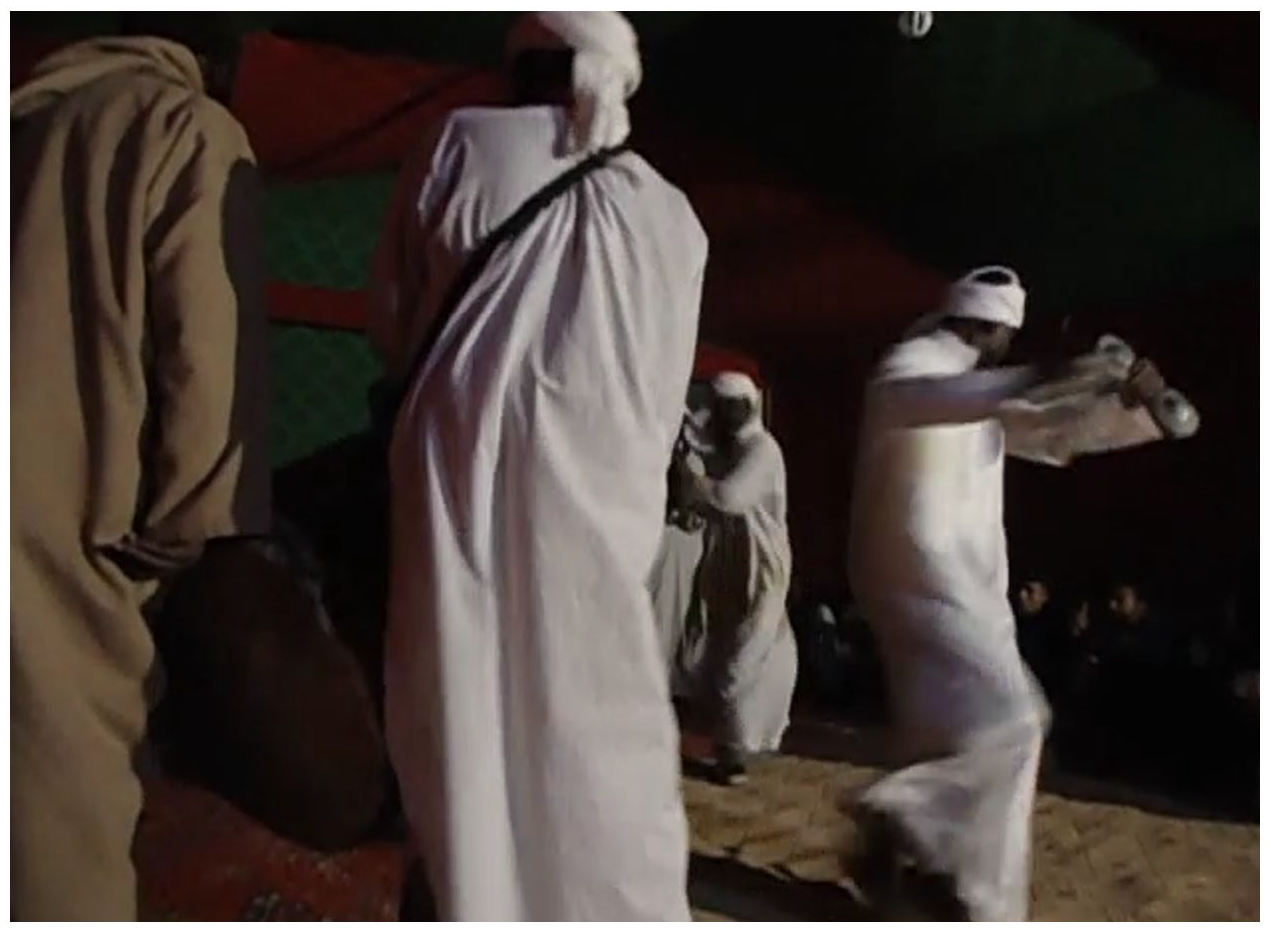
Gnawa musicians during a performance in a nearby village. January 2016, Silvia Montenegro.
The distinction between legitimate practices/audiences and those that are not is also encouraged by the effects of the commodification of Gnawa music in Morocco and the accompanying effort made by the musicians’ houses to build their image of ‘true Gnawas’. While it is thought that Arabs and Berbers may be in the audience and request ceremonies, and that they are likely to go into a trance and receive the treatment offered by the music, both the M’allem and the musicians must be black. The racialisation of the expertise enables the establishment of legitimacy boundaries against other Gnawa groups, as Said stated when referring to his group as made up of true Gnawas: ‘Some say that Gnawas can be white, sure, that is what you see in cities such as Marrakesh or Essaouira, but this is not possible, it is not possible that they respect the tbel’.
Lila and moussem: invocation, trance, and healing
Lila, from Arabic layla, night, is a nighttime ceremony, which takes place until dawn and may be performed for various reasons. Following the tradition of maraboutism and the practice of ziyara or visitation of saints that is common all over Morocco, Gnawas perform the ceremony in their annual visit to saint Sidi Abdelsak, located 25 km away from the village, who is also worshipped by Arabs and Berbers. In addition, the ceremony may be requested by someone because of illness, childbirth, or in order to obtain good fortune. In general, Gnawas know in advance when a lila has been requested for one of the days of the week. They will then start preparing the equipment to travel to the town where it will be held, in case it is outside the village itself. On several occasions, I accompanied the musicians from one of the Houses to perform lilas in neighbouring towns. Carrying their instruments and wearing their white robes, after getting some casual means of transport, the musicians go to the location, usually a spacious room where they and the audience may stay (Figure 5).
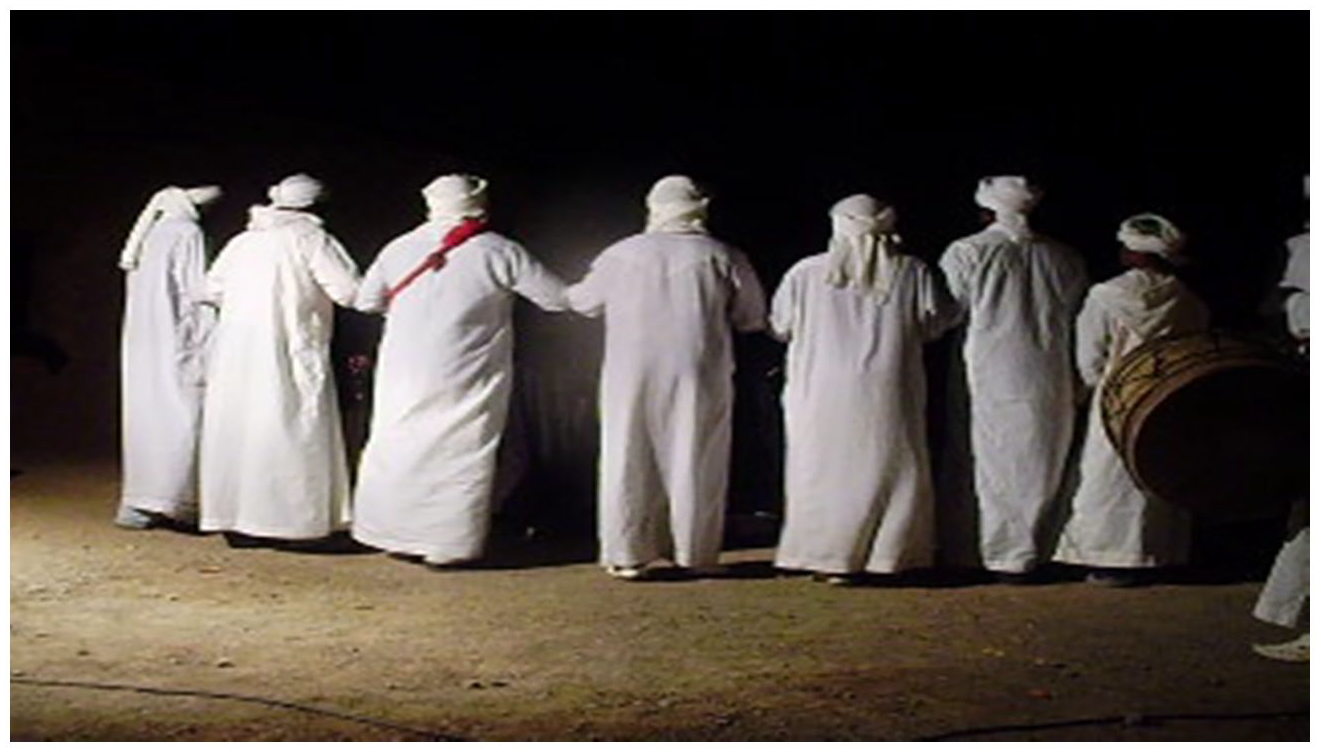
A dance during a lila held to celebrate the birth of a child in the village. January 2016, Silvia Montenegro.
While generally, most Gnawa brotherhoods start these ceremonies by sacrificing an animal, it is not always possible to include this practice. Ritual variations are introduced because of various circumstances, often of a financial nature, or because of the local character of the performances. The music begins with a rhythm that is typical of the genre and its instruments. Subsequently, there is a vocal session with a call-and-response pattern between the M’allem and the other musicians. The songs are traditional and said to have been preserved over the generations. The chants start by honouring Allah and Prophet Mohammed, and Bilal, a slave freed by the prophet; also local saints are honoured. Only then does the invocation to African spirits begin, without neglecting the power of Allah over all the other beings who share the capacity of being endowed with baraka (blessings). Mluk respond to a classification including a leader, a type of mastery over nature, a specific colour and perfumes – for instance, water spirits are associated with the colour blue and respond to Musa. The music successively invokes the whole set of spirits making up these groups. The instrument played by the M’allem, namely the guembri, has the power of attracting the invoked spirits to attend the meeting. Induced by the music, the spirits appear by causing trance and the possession of some believers. The dance starts with prescribed choreographies that bear different names, and the possessed persons, usually women, dance in the middle of the scene or simply move their heads and make other body movements that reveal their state of trance. For healing to take place, the person will undergo the process whereby the world of spirits comes into contact with the human one, to finally be cured at the end of the ceremony, obtaining baraka and restoring the harmonious relationship between the world of spirits and the world of humans. It is in this sense that Gnawas are considered healers: they can cure a physically ill person through this mediation. Their music provides an accommodation between humans and spirits, appeasing any troubles in the coexistence between the inhabited person and any spirits that may have entered that body.
The moussem implies complex organisation. Every year, between June and July, the leader and the village men get together to set the exact date for the 3-day festival. At that time, an intense interchange begins between Gnawas and nearby towns, which are visited to offer them the music. In exchange for the baraka this is thought to have, Gnawas collect the goods to be stored for the festival. Food, clothes, and animals are stored in an empty house in the village. During the festival, also the authority dynamics of the village are dramatised. If throughout the year, the ritual activity revolves around the two musicians’ houses and the lilas each one offers, led by a M’allem, in the weeks preceding the festival, it is the leader and the older members of the community that go to other towns together with some musicians, with the M’allem of each of the two groups being required to stay in the village to welcome any visitors that may arrive during those days.
The festival is older than the organisation of the Houses. Some people have told me that the first one was held in 1912 and, before then, it used to take place in a nearby town where the community lived. The event is held outdoors in a large, round area. At the beginning, the two groups of musicians come out of their respective Houses and join together inside the circle, forming a single group. Throughout the 3 days, the Gnawas in the village try to demonstrate in front of a wider audience the therapeutic properties of their music. Sick people attend from various regions, with visible symptoms on their body or other types of discomfort, in all cases induced by the fact of being inhabited by spirits. The ‘patients’ step into the central circle, with some of them even having to be assisted by others because of the physical limitations impairing their movement. The sick people sit on the floor forming a semicircle, with their faces turned towards Mecca. One of the Gnawas will lay a long white cloth over their heads covering all those who are sitting in the semicircle. The ritual will start with the sick drinking water, which has been previously prepared in a pitcher and must meet two requirements: having been in contact with the musicians, who will dip one by one their little finger into the container, and containing salt, which is added after the contact, as salt has prophylactic features against spirits. The sick will drink the water one by one straight from the hollow of one of the qraqebs, the large iron castanets used at the ceremonies. Each patient must take three sips, stand up, take three steps, and move forwards to the right. As the water is drunk, the Gnawas surround the semicircle doing three turns in one direction and then in the opposite one. This is the time to recite Al Fatiha, the opening sura of the Qu’ran, to start subsequently playing the music. The states of trance occur and the musicians help control the sick; later, the cloth covering them will be removed and the patients will gradually leave the semicircle, after the trance has controlled the spirits that were causing the disease. On that same day, the animals – black goats – are sacrificed, and a large couscous is prepared to be offered in the evening to all the guests. The Gnawas will serve the food but must refrain from eating meat. On the subsequent days and nights, the music is louder, more complex cases may come up during the trance and it may be necessary to resort to other techniques for expelling the spirits, such as ruqyah, where Quranic recitation is performed around the person possessed by a jinn, preferably using the Ayat al-Kursi passages providing physical and spiritual protection. Once freed from the spirit, the person concerned will be exhausted, very often lying on the floor for a long time, to later stand up and return to normality. On the third day, the musicians must play without the drums or the castanets, using only their hands and the guembri. During the festival, black Gnawas perform in front of a large audience, enabling the preservation of the image for which they are well-known and stereotyped in the region, as healers, spirit expellers, and baraka providers through music, as well as experts in the techniques for communicating with ancestral spirits.
Concluding remarks
The division established by De Heusch (1971) between the two attitudes towards the possession by spirits is widely known: adorcism, implying the acceptance of the trance and of the possession, addressed through accommodation and stabilisation processes, on one hand, and exorcism, involving actions for expelling spirits, on the other hand. Both have a long-lasting tradition in Morocco, and very often their use is associated with specific groups or specialists: adorcism with brotherhoods such as Gnawa, Isawa, and Hamadsha, and exorcism with a different type of specialists (Dieste, 2014: 48). Analysing the theories of cure among the Hamadsha brotherhood, Crapanzano (1973) used the terms exorcistic and symbiotic cures, whose main difference would lie in that the former is a one-shot affair and the latter an ongoing process. The choice among these processes depends not only on the case but also on the distinction between unnamed and named spirits, non-recognised jinns are unpredictable and difficult to manage, and an exorcist may be required to control them; named jinns recognised during the rituals are very often successfully managed over time. In fact, Gnawas use the latter strategy, where the principle is the removal of symptoms rather than the permanent eviction of the spirit, bringing about control and calm in the spirit-host relationship. However, in engaging in a larger, more widespread system of beliefs, they appeal to other specialists such as fqihs, whose approach emphasises the option of exorcism, or even during the moussem they use ruqyah themselves, based on actions accompanied by Quranic recitation for expelling spirits. In the surrounding areas, the village Gnawas are recognised, even by those who do not attend their ceremonies or are familiar with their practices, because of the following two main skills: producing music for cure and being spirit handlers.
The efficacy that the faithful attribute to Gnawas not only lies in the belief in their agency as healers but also in the confidence that they can ensure the transmission of the baraka required for many daily-life situations. The native category ‘music heals’, frequently heard among the village inhabitants and also among musicians themselves, expresses the belief that the brotherhood members have the required skills so that the songs and dances they perform may work as a spiritual language that communicates with dimensions of the invisible. From the centrality of this language, which they associate with blackness and with authenticity in preserving their traditions, Gnawas may occasionally turn to bearers of other healing languages, such as those agents engaging in ruqyah, or to exorcists from other towns, reaffirming the authenticity of their ‘Gnawaness’ through these alliances and complementarities.
The preservation of this prestige relies increasingly on the exaltation of the authenticity of their practices, insofar as they are imaginatively connected with Gnawas’ Bambara origin as black descendants of slaves.
Footnotes
Acknowledgements
The author thanks Fatiha Benlabbah for the helpful conversations and support. She is also grateful to Abdelhak, Ali, Mustafa, and to many others in the village for their generous hospitality.
Funding
The author(s) disclosed receipt of the following financial support for the research, authorship, and/or publication of this article: This study was made possible by the support of The National Scientific and Technical Research Council (Argentina) and l’Institut des Études Hispano-Lusophones (Université Mohammed V, Rabat, Morocco).

Author biography
Address: CONICET, Department of Anthropology, Universidad Nacional de Rosario, Entre Rios, 758 2000 Rosario, Argentina.
Email: