




Abstract
The integration of religious minorities within the secularized West has been a recurring topic of scholarly interest. Previous studies show that religious identities are shaped by family background and social context. Using data from the European Social Survey, this study turns to Scandinavia, the most secular region of the world, to examine religious salience among immigrants over time and across generations. The findings reveal that on most measures, second-generation immigrants are more secular than the first generation, but more religious than their native peers. However, individuals with one immigrant and one native parent are less likely to identify with a religion than other groups, including the native majority. Furthermore, among first-generation immigrants, there is a negative relationship between the duration of residence and religiosity. This study argues for the fluidity of religiosity among immigrants and the secularizing effect of structural agents on the salience of religious identities.
Introduction
Religion can serve a pivotal role in integrating immigrants into new societies. Whether as a means of finding a familiar community or for seeking resources, places of religious worship connect newcomers to people in the host society who share their language and similar cultural values (e.g. Berger et al., 2008; Hirschman, 2004, 2006). The characteristics and levels of religiosity – and secularity – of the receiving context thus have a direct effect on immigrant experiences. Yet, few studies have explored the effects of secularization and secularity on immigrant religiosity. This is echoed by Furseth et al. (2018) who argue that, in the context of Scandinavia, the region of focus in this study, we ‘know little’ about secularization processes among immigrants and their descendants (2018: 52).
Scandinavia encompasses three countries: Denmark, Norway, and Sweden. These countries share a number of similarities in religious characteristics and immigration patterns. In addition to the fact that the Scandinavian countries have significantly larger proportions of immigrants compared to their Nordic neighbors of Iceland and Finland (Furseth et al., 2018), Scandinavia is also described as the most secularized region in the world (Casanova, 2009; Zuckerman, 2008). More specifically, Scandinavia may serve as the most prominent example of a population that ‘belongs without believing’ (Hervieu-Léger, 2006). Although recent studies show a decline in religious belonging in this region (Kasselstrand et al., 2018), Scandinavians have historically been considered ‘culturally religious’ (Demerath, 2000; Kasselstrand, 2015; Zuckerman, 2008), where indifference in regard to religious matters and low levels of active participation and beliefs are coupled with an often strong connection to the cultural heritage of the national churches. For this reason, Scandinavia lends itself to a close examination of the effect of such secularization on immigrant religiosity. With widespread secularity and limited religious pluralism, the potential for immigrants to congregate in religious worship and to organically connect with coethnics diminishes (Voas and Fleischmann, 2012).
The key purpose of this study is to investigate the effect of Scandinavian secularization on religiosity among immigrants, focusing on two aspects of integration: (1) generational differences and (2) duration of residence. First, we compare levels of religiosity across various immigrant generations relative to Scandinavian natives. Second, we look at the effect of the amount of time spent in a Scandinavian society on the level of religiosity of first-generation immigrants. Our research questions are as follows:
How do levels of religiosity differ across various immigrant generations compared to Scandinavian natives?
Among first-generation immigrants, is there a relationship between number of years spent in a secular social context and levels of secularity?
We explore these questions with cross-sectional data from the European Social Survey (ESS). Our multivariate analysis consists of binary logistic and multiple linear regression models that control for age, family size, education, marital status, gender, Scandinavian country of residence, region of birth (for the models on the duration of residence) and non-Scandinavian heritage (for the models on generational differences). By accounting for multiple generations and years since immigration, we can begin to understand how immigrant religious beliefs and practices are shaped by a largely secular social context.
Religion and immigration
Europe is the most secular continent in the world (e.g. Berger et al., 2008; Bruce, 2002; Davie, 2002). As such, the role of religion in immigrant integration is vastly different there compared to more religious contexts. In the United States, for example, Hirschman (2004) observed that immigrants gravitate to coethnic religious communities for the ‘three Rs’: refuge, respect, and resources. The three Rs describe the multifaceted role religion serves in offering recent immigrants security, belonging, and connections to local resources. Through religious institutions, immigrants can leverage their shared faith for concrete benefits and supportive social networks that nonreligious immigrants cannot access (Hirschman, 2006). These advantages help to explain why immigrants become more religious as they adapt to life in the United States (Cadge and Howard Ecklund, 2007).
In Europe, however, religious identities hobble integration as a source of division. Zolberg and Woon (1999) describe the difficulties religious immigrants experience in the European context by equating it to the challenges faced by ethnic minorities in the United States. Expressions of religious identities that are different from that of the host country become symbolic boundaries (Bail, 2008). These boundaries distinguish immigrants from the native majority and become banal emblems of negative stereotypes that lead to tangible inequalities (Killian, 2003). This is reiterated by Casanova (2009) who argues that the secularization of Western Europe has led to a widely shared belief that religion, especially in the public sphere, is a source of tension and conflict.
In multicultural societies that welcome diversity, a community of coethnics can provide support to parents raising children in their religion. In these environments, continuing the religious practices within an immigrant community is tied to upward assimilation (Portes and Rumbaut, 2006). In addition, attending religious services may imbue children of immigrant families with a sense of belonging and inclusion (Zhou and Bankston, 1994). However, Western countries are not equally welcoming of immigrants, nor are all religious identities equally valued (Connor, 2010). To illustrate, the persistent association of non-European values with Muslim culture complicates immigrant integration processes (Astor, 2012; Foner and Alba, 2008). Muslim immigrants are more visible in Western societies than are other religious communities, and even constructing a place of worship for a Muslim community requires extensive negotiations and compromises with the European public (Göle, 2011). Previous research has also found that, with higher levels of religiosity, Muslim immigrants in Europe differ significantly from other immigrants (Jacob and Kalter, 2013), a key observation in relation to this study given the substantial share of Muslims among the immigrant population in Scandinavia (Furseth et al., 2018).
The Scandinavian context
Analyzing religiosity in 15 countries in Western Europe, Pew Research Center (2018) shows that Scandinavians, along with Belgians, are the least likely to say that they believe in God as described in the Bible (14%–20%) and most likely to say that they do not believe in any higher power (29%–41%). This illustrates that even within the highly secular European context, the Scandinavian countries stand out from their neighbors for their widespread secularity.
The national churches are by far the largest religious organizations in Sweden, Norway, and Denmark, with a majority of each country’s population retaining membership in these churches. In 2014, 66% of Swedes, 75% of Norwegians, and 78% of Danes were members of respective national church (Furseth et al., 2018). However, as noted above, many Scandinavians are ‘culturally religious’ (Demerath, 2000; Kasselstrand, 2015; Zuckerman, 2008). With low levels of active church attendance and belief in God, belonging to a national church is often characterized as a secular adherence to a cultural and historic heritage. Furthermore, rather than self-defined atheism or explicit rejection of religion, it is indifference that prevails in Scandinavia and in other contexts with high levels of secularity (Kasselstrand, 2019; Zuckerman, 2008). The reasons for the pervasive secularity in this region are complex and under debate, but other studies (Bruce, 2002; Kasselstrand, 2015; Norris and Inglehart, 2004; Zuckerman, 2008) have listed modernization, limited religious pluralism, government implementation and regulation of religion, as well as the economic and existential security provided by the welfare states as possible causes.
Norway has seen the largest increase in its share of the population that are members of non-Christian faith communities. However, in 2014, this group remained small at 3.2% of the population, with the same figures for Denmark and Sweden at 1.0 and 1.3%, respectively. For all three countries, the largest non-Christian religion is Islam. Although their numbers are low, Furseth et al. (2018) note that they have grown alongside increasing immigration to Scandinavia; however, the data ‘support the idea that the religious growth caused by immigration is not able to outweigh the process of secularization, simply because immigrant groups are too small’ (2018: 52).
Significant waves of immigration to Scandinavia began in the 1950s in Sweden and in the late 1960s in Denmark and Norway (Brochmann and Hagelund, 2011). Approximately half of all immigrants in Scandinavia have arrived from non-Western countries (Pettersen and Østby, 2013), and although there are large numbers of immigrants from places such as Turkey, Iran, Iraq, Pakistan, Chile, Somalia, and Vietnam throughout Scandinavia, different contexts of reception affect their relative presence in each country. Furthermore, Brochmann and Hagelund (2011) highlight the distinct policies and perceptions on immigration in the three Scandinavian countries, describing Norway as ‘positioned somewhere between the liberally minded Sweden and the restrictionist Denmark’. In Norway and Sweden, non-practicing Christians are the most likely to be in favor of reducing immigration levels, followed by the unaffiliated and practicing Christians. In Denmark, both non-practicing and practicing Christians are more likely than the unaffiliated to state this opinion (Pew Research Center, 2018).
The unusually high prevalence of secularity in Scandinavia thus makes it an interesting case for studying secularization of the immigrant population. The support extended through the welfare states provides a unique dimension of immigrant integration. The duties historically tied to religious communities, such as providing shelter or helping newcomers find access to employment, have been subsumed by official sectors of the government (Bäckström et al., 2004). These implications support the hypothesis that immigrants are integrated into their host society through formal institutions that foster different forms of social capital (Furseth, 2008) that are further removed from religion.
The prominence of secularity and cultural religion in the native population in some respects diverge from immigrant patterns of religiosity. In practice, this means that native-born Scandinavians are less likely to pray, attend religious services, and to define themselves as religious. Yet, active participation in religious services is rare for both immigrants and natives alike. In Norway, 10.28% of first-generation immigrants report attending religious services weekly, while only 4.62% of native Norwegians report doing the same. In Denmark, this divide is even greater, with 11.56% of immigrants attending religious services weekly compared to 2.71% of Danish natives. Attendance among native Swedes is comparable to their native Scandinavian counterparts (4.07%), but only 6.80% of immigrants in Sweden report attending weekly services (Van Tubergen and Sindradóttir, 2011: 281).
Also referring to low levels of participation, Pettersson (2013) cautioned against the artificial inflation of religiosity among ‘new Swedes’ who, like native-born Swedes, do not typically practice their religions in ‘traditional ways’ (2013: 34–35). According to Van Tubergen and Sindradóttir (2011), the largest difference between natives and first-generation immigrants is observed for the measure on ‘daily prayer’, with around one in five to one in four immigrants praying daily compared to around one in 10 natives (2011: 281). Although their analysis is done with similar data and addresses a related question, this study extends and expands on the study conducted by Van Tubergen and Sindradóttir (2011), by focusing specifically on Scandinavia and by examining immigrant religiosity not only based on the duration of residence for first-generation immigrants, but also across immigrant generations.
Religious socialization and social integration
Religious socialization describes how individuals learn their religious preferences through social interactions (Sherkat, 2003). In describing how a child absorbs religious beliefs and values from significant others, previous literature (e.g. Bengtson, 2013; McPhail, 2019; Myers, 1996; Regnerus et al., 2004) focuses on the particularly important role that parents play in shaping religious identities. Myers (1996) finds that parental religiosity, family structure, and the quality of parent–child relationships are especially influential in this process.
Previous studies on religious heterogamy of parents have found lower levels of religiosity among adult children of parents with diverse religious identities (Bengtson, 2013; McPhail, 2019; Myers, 1996). McPhail (2019) notes that religiously heterogamous parents have lower levels of religious commitment themselves and are less likely to involve their child in active religious practice in their home or in a religious community. Of high relevance to Scandinavia, where many natives are highly secular, McPhail (2019) further explains that ‘compared to having parents who identify with two separate religions, having one parent who is religiously unaffiliated is related to even lower levels of religiousness’ (2019: 5). Among immigrants, intermarriage is similarly an indicator of lower levels of religiosity and higher rates of integration into the host society (Carol, 2013), thus explaining the secularizing effect of intermarriages on children’s religiosity.
Over time, as individuals are influenced by new experiences and various conforming social forces, it is possible for preferences to change. Peers, media, and education are all agents of socialization that transmit religious and secular worldviews from one generation to the next (Østberg, 2003; Van Tubergen, 2007). Along the same line, general assimilation theory assumes that, over time, immigrants absorb the values and norms of the host society (Jacob and Kalter, 2013). Van Tubergen (2007) refers to social integration theory as he describes that ‘Social settings or groups in which people participate influence their religious beliefs and practices. People who are strongly integrated into a social group are assumed to be more likely to comply with the norms of that group, including norms about religion’. (2007: 748)
Van Tubergen and Sindradóttir (2011) note that immigrants tend to be more secular when the host country is secular. They agree that one important way to explain these results is the fact that, over time, immigrants integrate and are socialized into a social structure that is normatively secular. In essence, there are significant challenges associated with retaining a religious identity or to transmit religion to future generations in such a social context. As Voas and Fleischmann (2012) point out when discussing the secularity of the West: ‘the ambient religiosity is much lower and so being religious requires more effort, like staying warm in a cold climate’ (2012: 531). Van Tubergen and Sindradóttir (2011) further maintain that secular immigrants may also end up settling in more secular countries.
Notwithstanding the literature described above, previous research on immigrant religiosity in secular contexts presents mixed conclusions (see, for example, Jacob and Kalter, 2013 for an overview), exemplified by the notable exception of children of Muslim immigrants to the assumption that integration into a secularized context may weaken religious affiliation and commitment (Connor, 2014; Jacob and Kalter, 2013; Voas and Fleischmann, 2012). In this manner, Peek (2005) found that peers could either be instrumental in constructing and affirming religious identities or contribute to feelings of stigmatization and encourage assimilation to the dominant culture.
For immigrant communities, raising families in a more secular society complicates a process that may have been taken for granted in the home country. Through the shared practice of a common religion, immigrants cultivate a sense of belonging and reinforce their ethnic identity (Hirschman, 2004; Rumbaut, 2006). While immigrants do not simply replicate cultural patterns from their home countries, their learned values and norms influence their behavior as they adapt in the receiving country (Foner, 1997). By practicing their religion in a new context, immigrants and their children develop a shared identity that both maintain their cultural heritage and adapt to norms of their receiving country (Stepick and Stepick, 2002). As such, structural forces external to the family are of great relevance in understanding how immigrants and their children shape their religious identity as they interact with and immerse themselves in an increasingly secular society.
Methodology
Data
Given the role of social context in shaping individuals’ religious beliefs and practices (Bengtson, 2013; Voas and Fleischmann, 2012), and with Scandinavia as a particularly secular region (Casanova, 2009; Zuckerman, 2008), we hypothesize that over time and across generations, immigrants to Scandinavia become more secular. To investigate this problem, we analyze survey data from the ESS. Every 2 years, data are collected in face-to-face interviews. Probability sampling is used to obtain samples that are representative of the population aged 15 years or older in each country. There are 36 participating countries; however, not all countries participate in every wave (ESS, 2018). We used waves 6 (2012–2013) and 7 (2014–2015), the two most recent waves that included data on all three Scandinavian countries. By combining these two waves, our data are not only current, but also allow for analyzing a larger sample. This is of crucial importance given the relatively small number of individuals in certain immigrant generations (Table 2). The total sample size for this study is 9850 respondents, with 3152 individuals from Denmark, 3060 from Norway, and 3638 from Sweden. Missing cases, which make up 3.5% of the full sample and 21.8% of the sub-sample on first-generation immigrants, were excluded from the regression analysis. The higher percentage of missing cases for the sub-sample of first-generation immigrants is due to the large number of ‘no answer’ to the question of what country they were born in. The same models were estimated without the affected variable, which did not result in any substantial changes in the results.
Dependent variables
As religion is commonly conceptualized as a multidimensional phenomenon with various indicators of religious practices, beliefs, and identification (Cornwall et al., 1986; Keysar, 2014), four different measures of religion were used as dependent variables in this study: (1) religious belonging, (2) frequency of prayer, (3) attendance at religious services, and (4) self-defined religiosity. Given the coding described below, binary logistic regression analysis was performed for the models on religious belonging, praying, and attendance, and linear regression models were created for the variable on religiosity. While additional indicators of subjective religious beliefs would have been beneficial, such indicators were not present in the survey data.
Belonging to a religion was coded as 1 for ‘yes’ and 0 for ‘no’ for the survey question that asks, ‘Do you consider yourself as belonging to any particular religion or denomination?’ The ESS asks, ‘Apart from special occasions such as weddings and funerals, about how often do you attend religious services nowadays?’ For attendance, ‘at least monthly’ is coded as 1, with less often as 0. Religiosity is based on the following survey question: ‘Regardless of whether you belong to a particular religion, how religious would you say you are?’ For this item, a Likert-type scale of 0–10 is used, with 0 corresponding with ‘not at all religious’ and 10 ‘very religious’. Finally, Praying is measured as 1 for ‘at least weekly’ and 0 for less often from the question that asks, ‘Apart from when you are at religious services, how often, if at all, do you pray?’
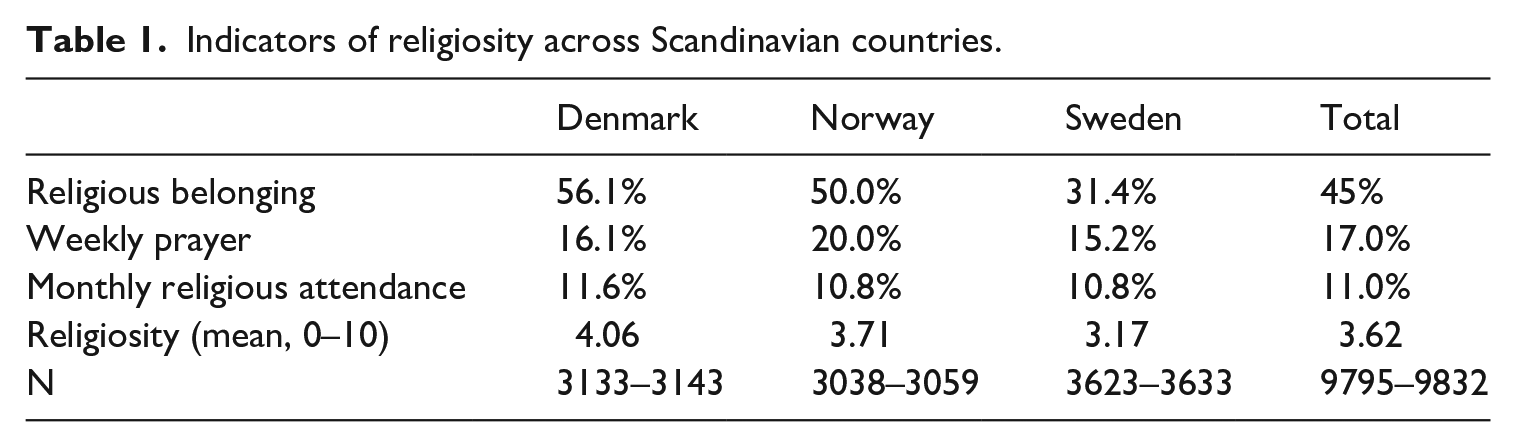
Table 1 displays the percentage of the respondents in each country who belong to a religion, pray at least weekly, and attend religious services at least monthly. It also shows the mean score for self-rated religiosity. Sweden appears the most secular on most measures. The reason for why more Danes and Norwegians belong to a religion may be because the Church of Sweden was disestablished as a state church earlier (2000) than in Norway (2012), while the Church of Denmark still serves as a state church (Kasselstrand and Kandlik Eltanani, 2013).
Indicators of religiosity across Scandinavian countries.
Independent variables
There are two independent variables in this study: (1) immigrant generation and (2) years since immigration. Each of these variables was used in separate regression models. The first independent variable measures the particular immigrant generation of an individual. This consists of four separate categories: (1) Generation 1, (2) Generation 2, (3) Generation 2.5, and (4) Native. Following the classifications in Rumbaut (2004) and Ramakrishnan (2004), Generation 1 describes individuals who themselves are immigrants, who were born outside of the country of residence. Generation 2 are those individuals who were born in the country of residence to two immigrant parents. Generation 2.5 are those who were born in the country of residence to one immigrant parent and one native parent. Natives are here defined as those who were born in the country of residence to two parents who were also born in the country of residence. For regression analysis, three dummy variables were created with Native as the reference category.
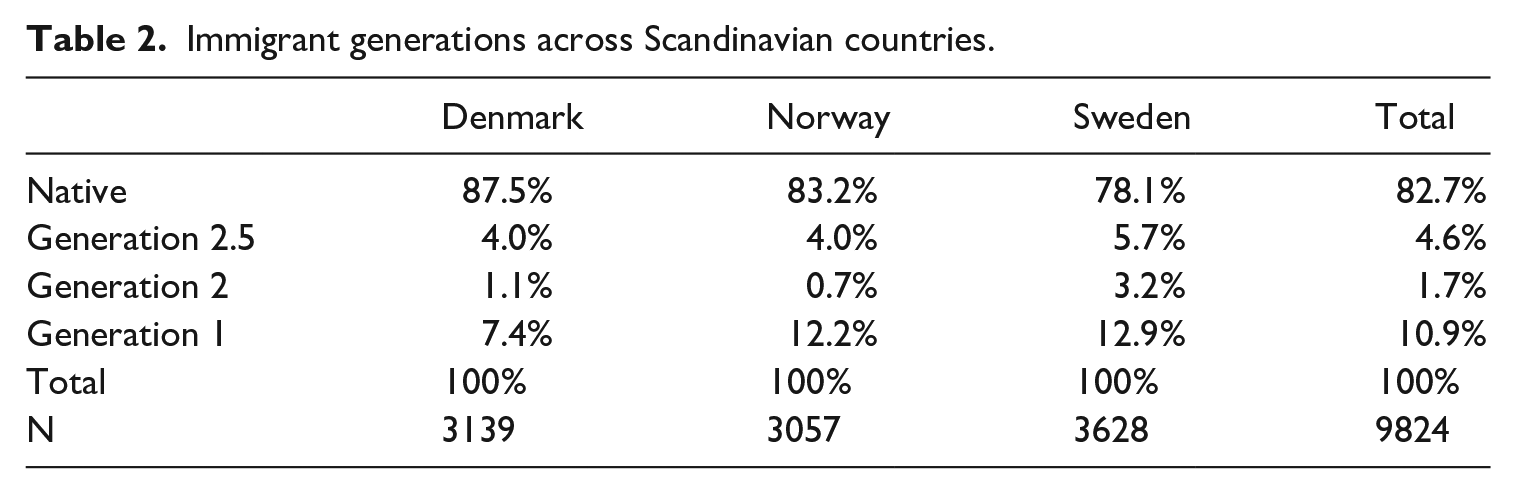
As presented in Table 2, 11% of the sample consists of first-generation immigrants, 2% are second-generation immigrants, 5% belong to Generation 2.5, and a significant majority, 83%, are classified as natives. Their distributions differ across the three Scandinavian countries, with Sweden having the highest proportion of first-generation immigrants and Denmark the lowest. Denmark and Norway also have particularly small proportions of second-generation immigrants. These overall trends go hand in hand with data from other sources (Brochmann and Hagelund, 2011; Pettersen and Østby, 2013).
Immigrant generations across Scandinavian countries.
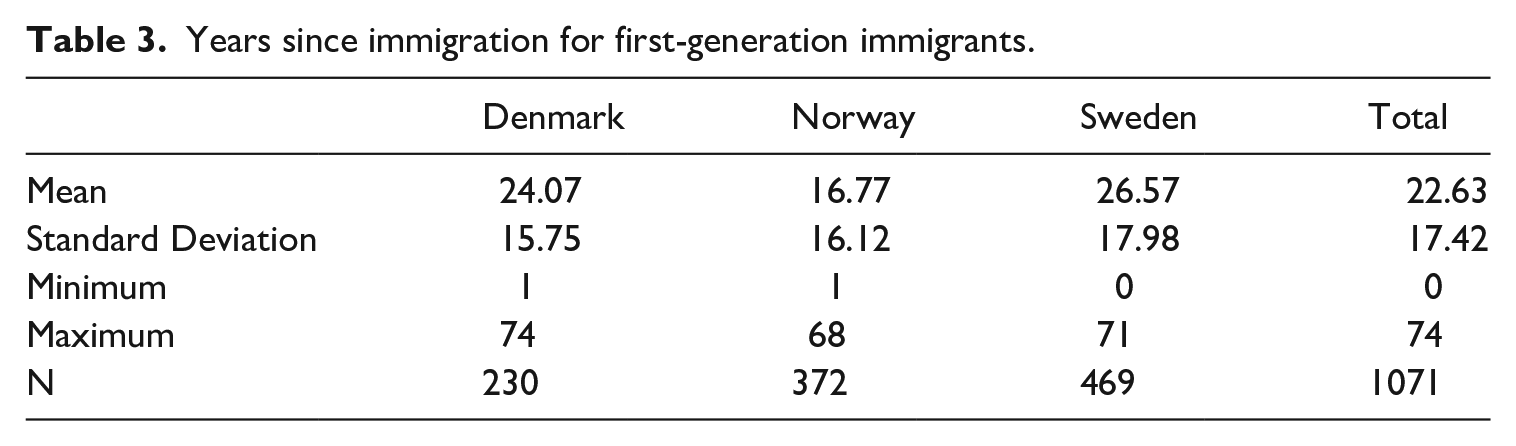
The second independent variable is the number of years since immigration, also known as the duration of residence. As this only applies to individuals who immigrated themselves, the models with this independent variable include data on first-generation immigrants only. Table 3 shows the mean, median, standard deviation, and range for this variable. The mean number of years since immigration is overall 22.6, with a higher mean for Sweden (26.5 years) and Denmark (24.0 years) than for Norway (16.8 years). This may be due to the fact that waves of immigration happened earlier in Sweden than in Norway and Denmark (Brochmann and Hagelund, 2011), and that there has been a steep increase in Norwegian immigration since 2005, primarily due to the rise in labor migration to Norway (Pettersen and Østby, 2013).
Years since immigration for first-generation immigrants.
Control variables
Given the effects that various demographic factors and distinct cultural backgrounds have on migration and secularity (Cadge and Howard Ecklund, 2007; Van Tubergen and Sindradóttir, 2011), the following control variables were included in the models: age, family size, education, marital status, gender, country, region of origin (for models on first-generation immigrants), and non-Scandinavian heritage (for models on immigrant generations). Age is measured in years. Family size measures the number of people who live in the respondent’s household. Education describes the respondent’s completed years of full-time education. Married is coded as 1 for individuals who are married and 0 for those who are not married. Gender is measured with the variable Female, where 1 corresponds to females and 0 to males. To control for country of residence, two dummy variables called Denmark and Norway were created, with Sweden as the reference category. For the models on immigrant generations, the variable non-Scandinavian was created to account for the high degree of internal migration in Scandinavia, when individuals or their parents move from similar sociocultural contexts, not the least in regard to the levels of secularity. For this variable, 1 means that either the respondent or at least one parent was born outside of Scandinavia, with 0 corresponding to individuals who were born within Scandinavia and who also had both parents born in Scandinavia.
The final control variable is the region of origin of first-generation immigrants. This variable is included to be able to examine the effect of duration of residence on secularity, while accounting for the religious and cultural diversity of immigrant backgrounds. The regions are as follows: Scandinavia (11.3%), Western Europe (excluding Scandinavia; 23.9%), Eastern Europe (23.7%), Asia and Oceania (10.0%), Africa (6.4%), Middle East (17.3%), South America (3.7%), and North America (3.8%). With a relatively small sample of first-generation immigrants (903), these data did not allow for generating narrower regions. The distribution of this variable shows that a majority of immigrants come from Europe and the Middle East, which is similar to a previous study conducted by Pettersen and Østby (2013). For the regression analysis, seven dummy variables were created, one for each region, excluding Scandinavia, which was used as the reference category.
Findings and discussion
Generational differences
The results from bivariate analyses that examine the relationship between immigrant generation and religion are displayed in Table 4. Clear trends emerge across the four indicators of religiosity, with overall higher levels among Generations 1 and 2 compared to Generation 2.5 and natives. The variable with the smallest differences is religious belonging, which aligns with the notion that many Scandinavian natives belong to the national churches to recognize its cultural heritage (Hervieu-Léger, 2006; Kasselstrand et al., 2018; Zuckerman, 2008). It is important to highlight that only approximately half of first-generation immigrants state that they belong to a religion.
Generational differences in religiosity, belonging, prayer, and attendance. a
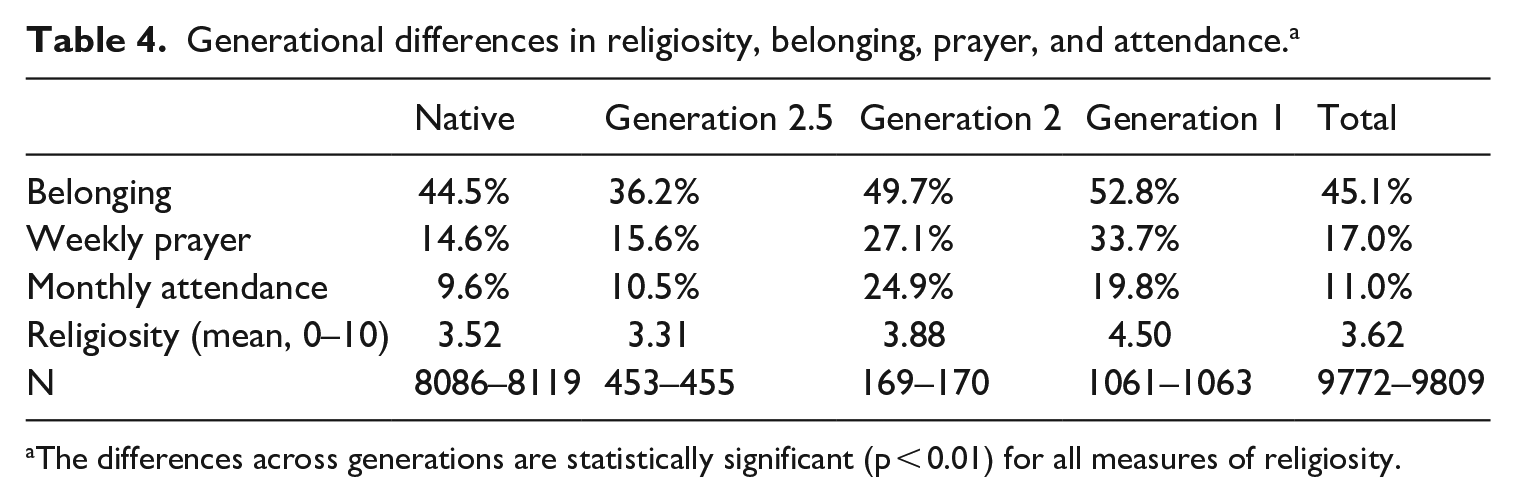
The differences across generations are statistically significant (p < 0.01) for all measures of religiosity.
Supplemental analysis of religious belonging across generations shows that, for the first and the second generation, behind the unaffiliated (47.8% and 50.6%, respectively), Islam is the most common identity (15.9% and 25.3%). For Generation 2.5 and natives, Protestantism (31.4% and 42.9%) is the most prevalent, following the unaffiliated (64.0% and 55.6%). In other words, the natives are relatively homogeneous with 98.5% of the sample either not belonging to a religion or identifying as Protestant. The first generation is the most diverse with a substantial share of Catholics (10.8%), Protestants (13.8%), and Eastern Orthodox (4.6%) in addition to the Muslim and the unaffiliated populations described above. Overall, compared to previous reports on immigrants within the European Union as a whole (Pew Research Center, 2012), immigrants in Scandinavia are more likely to be religiously unaffiliated, following the notion that immigrants may become more secular in secular contexts, but also that secular immigrants settle in more secular locations (Van Tubergen and Sindradóttir, 2011).
Regarding weekly prayer, results show a decline across generations, with 33.7% of the first generation praying weekly, followed by 27.1% of the second generation, 15.6% of Generation 2.5, and 14.6% of natives. Generations 1 and 2 attend more frequently than Generation 2.5 and natives, with 19.8% of Generation 1 and 24.9% of Generation 2 attending monthly. Only about 1 in 10 among the natives and Generation 2.5 attend as frequently. Similar trends are observed for religiosity, with a mean of 4.50 for Generation 1, 3.88 for Generation 2, and 3.31 and 3.52 for Generation 2.5 and natives, respectively.
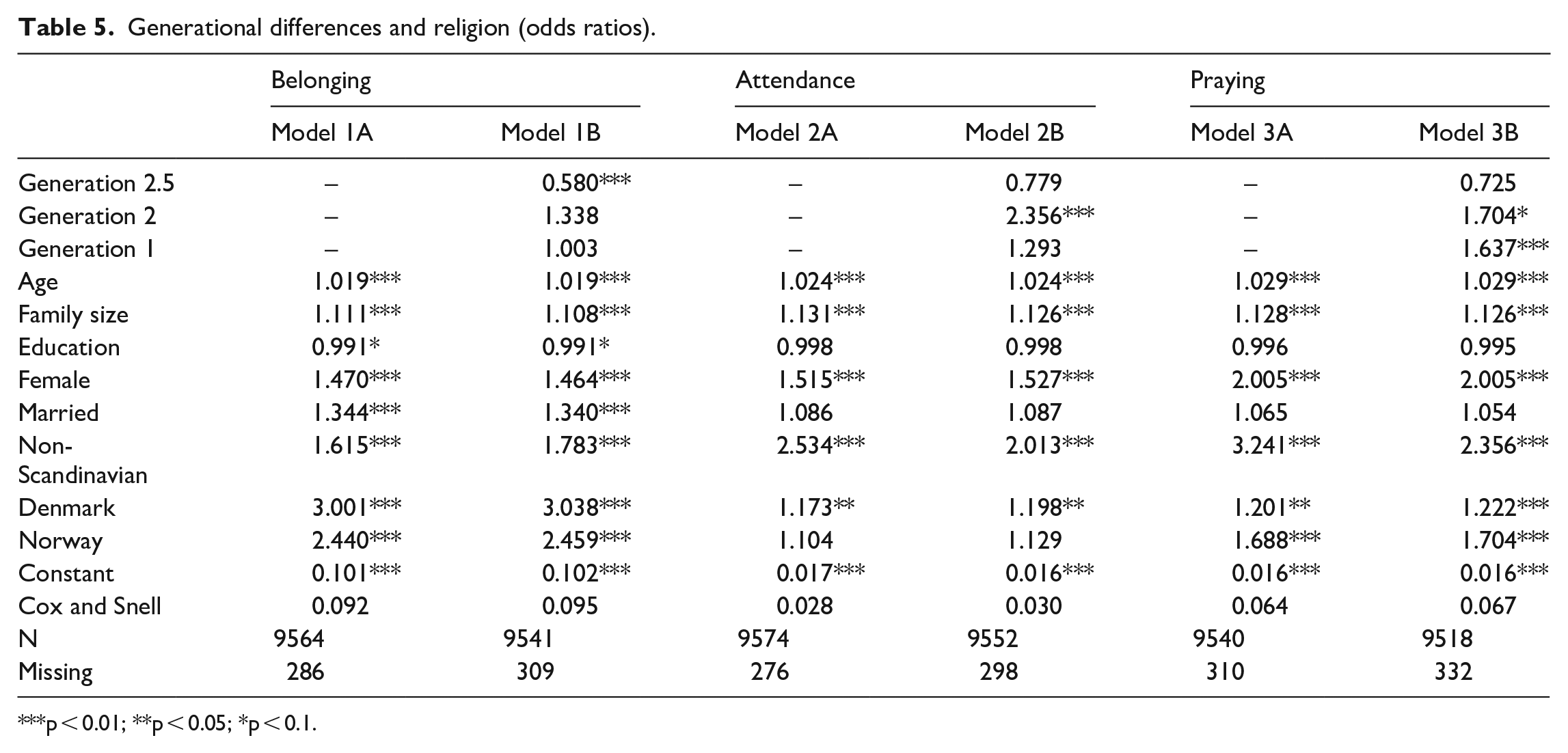
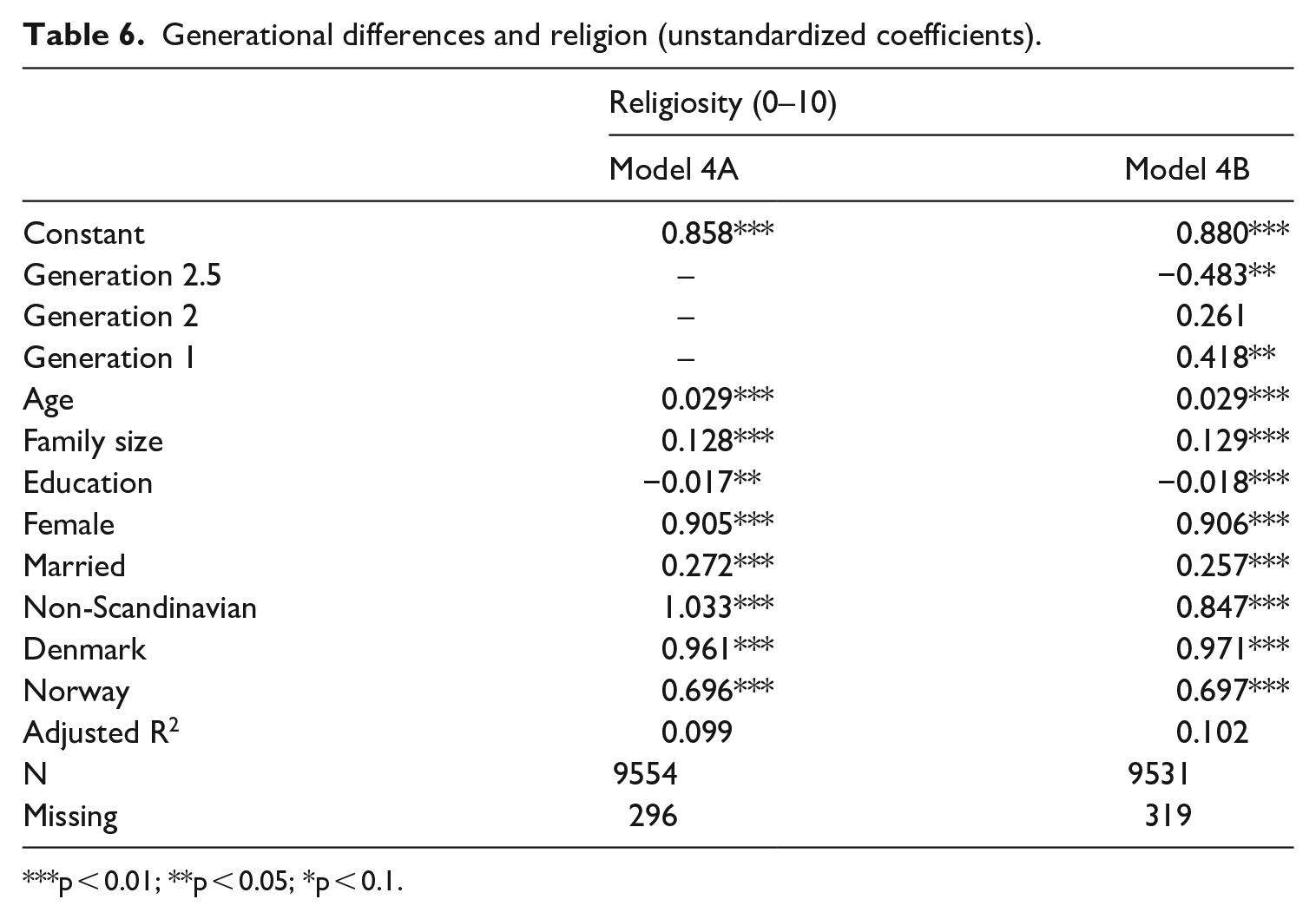
Tables 5 and 6 examine these relationships while controlling for age, family size, education, gender, marital status, non-Scandinavian heritage, and country of residence. Models 1A, 2A, 3A, and 4A are base models of the control variables and the dependent variables. These reveal that age and household size are positively associated with all four indicators of religiosity. Education has a negative effect on religion, while being married has a positive effect. However, education and marital status are only statistically significant for belonging and religiosity. Across all models and indicators, women and individuals with non-Scandinavian heritage are significantly more religious. Both Danes and Norwegians are more religious than Swedes, a relationship that is statistically significant for a majority of the indicators.
Generational differences and religion (odds ratios).
p < 0.01; **p < 0.05; *p < 0.1.
Generational differences and religion (unstandardized coefficients).
p < 0.01; **p < 0.05; *p < 0.1.
The findings presented in Model 1B show that Generations 1 and 2 are more likely to belong to a religion compared to natives. However, these differences are not large enough to be statistically significant. Generation 2.5 is less likely than natives to identify with a religion (odds ratio: 0.580, p < 0.01). This aligns with the assumption that, as opposed to an active choice, many natives identify with the national churches, often as a result of an ascribed and normative cultural tradition (Kasselstrand, 2015; Zuckerman, 2008). However, an individual from Generation 2.5 is more likely to have parents from diverse cultural backgrounds and is thus less inclined to automatically assume an affiliation with a national church as a matter of a cultural heritage.
For monthly attendance at religious services, Model 2B shows that the second generation is more likely than natives to attend at least monthly (odds ratio: 2.356, p < 0.01). Although Generation 1 attends more frequently than natives and Generation 2.5 less frequently, these differences are not substantial enough to be statistically significant. One possible explanation for why Generation 2 has higher rates of monthly attendance is the conscious and explicit religious socialization in families with two immigrant parents whose goal may be to reinforce a cultural background (McPhail, 2019). Alternatively, given their lower rates of religious belonging and weekly prayer compared to the first generation, this finding can also result from a nonreligious social aspect of monthly attendance that otherwise benefits the second generation (Connor, 2014). In either case, as seen in Table 4, monthly attendance is rare among all generations, with only 25% of Generation 2 attending monthly, and with even lower levels for the other generations.
Both Generation 1 (odds ratio: 1.637, p < 0.01) and Generation 2 (odds ratio: 1.704, p < 0.1) are more likely to pray at least weekly compared to natives. These results follow the findings in Table 4, where a minority, of all generations, prays at least weekly, but where Generations 1 and 2 show higher levels. Generation 2.5 is less likely than natives to pray weekly, but again, this particular finding is not statistically significant. Similar results are displayed in Table 6 on self-rated religiosity. First-generation immigrants rate themselves higher on religiosity than natives, while Generation 2.5 rates themselves lower. On a scale of 0–10, Generation 1 is, on average, 0.418 points higher (p < 0.05) than natives, while Generation 2.5 is 0.483 points lower (p < 0.05). Although Generation 2 rates themselves slightly higher (0.261), the difference between Generation 2 and natives is not significant.
In short, for all dimensions of religion (although not all statistically significant), Generations 1 and 2 are more religious and Generation 2.5 less religious than the natives. The fact that first- and second-generation immigrants are more religious follows the notion of Scandinavia as the most secular region of the world (e.g. Casanova, 2009; Zuckerman, 2008) and the idea that immigrants may turn to religion as a source of community (Hirschman, 2004). Yet, we must reiterate that all generations are highly secular on all measures, and that, on three out of four measures, Generation 1 is more religious than Generation 2 (Table 2), suggesting a trend of secularization across generations.
The lowest level of religiosity among Generation 2.5 goes hand in hand with the theory that when parents come from diverse cultural backgrounds, and thus potentially heterogamous religious backgrounds, the religious socialization in the household tends to be limited in general, but particularly when one partner is secular (Bengtson, 2013; McPhail, 2019; Myers, 1996). It also follows the assumption that immigrants who are open to intermarriage may already be more integrated and secular (Carol, 2013), which explains why they would be less likely to raise a religiously active child.
Years since immigration
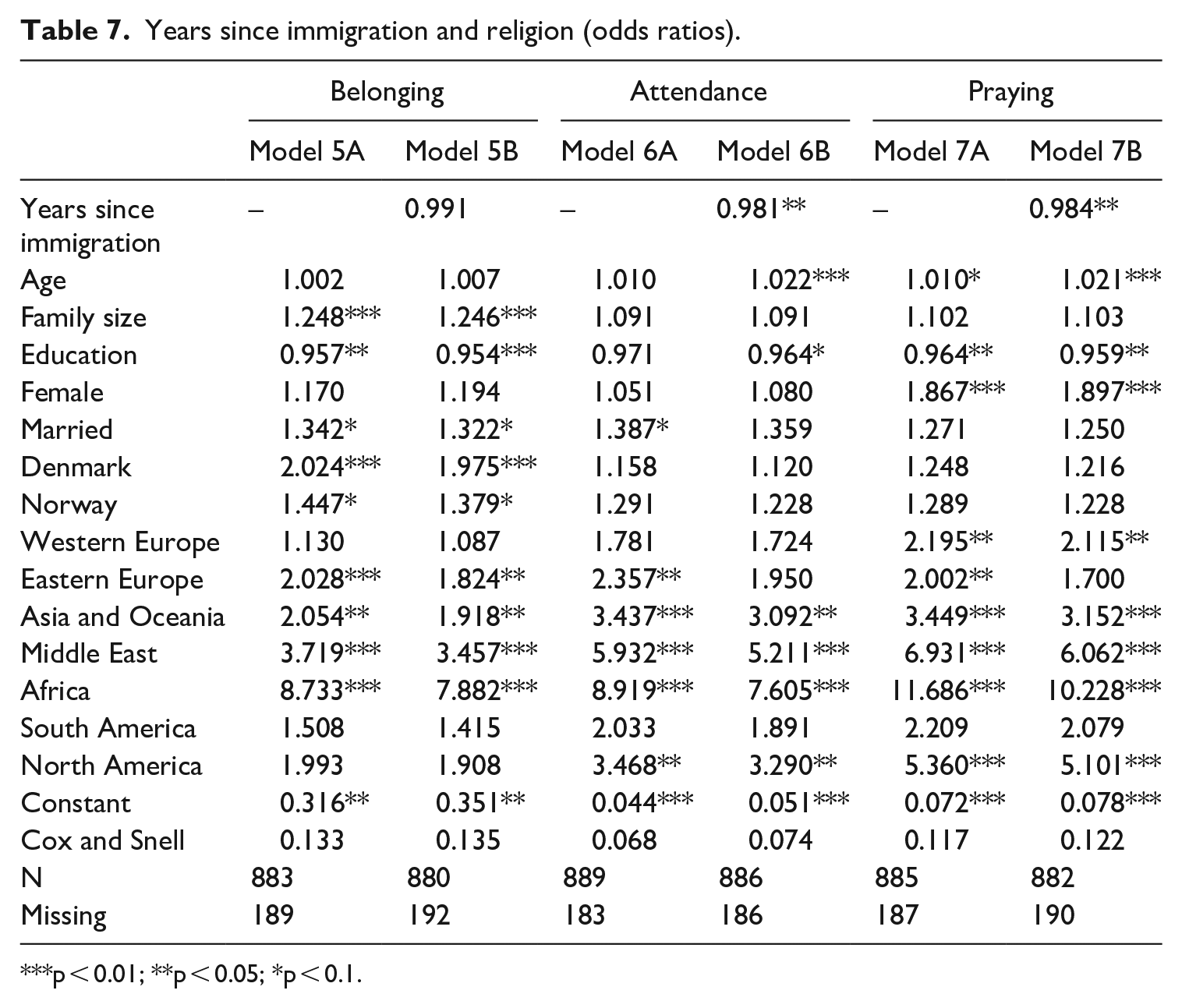
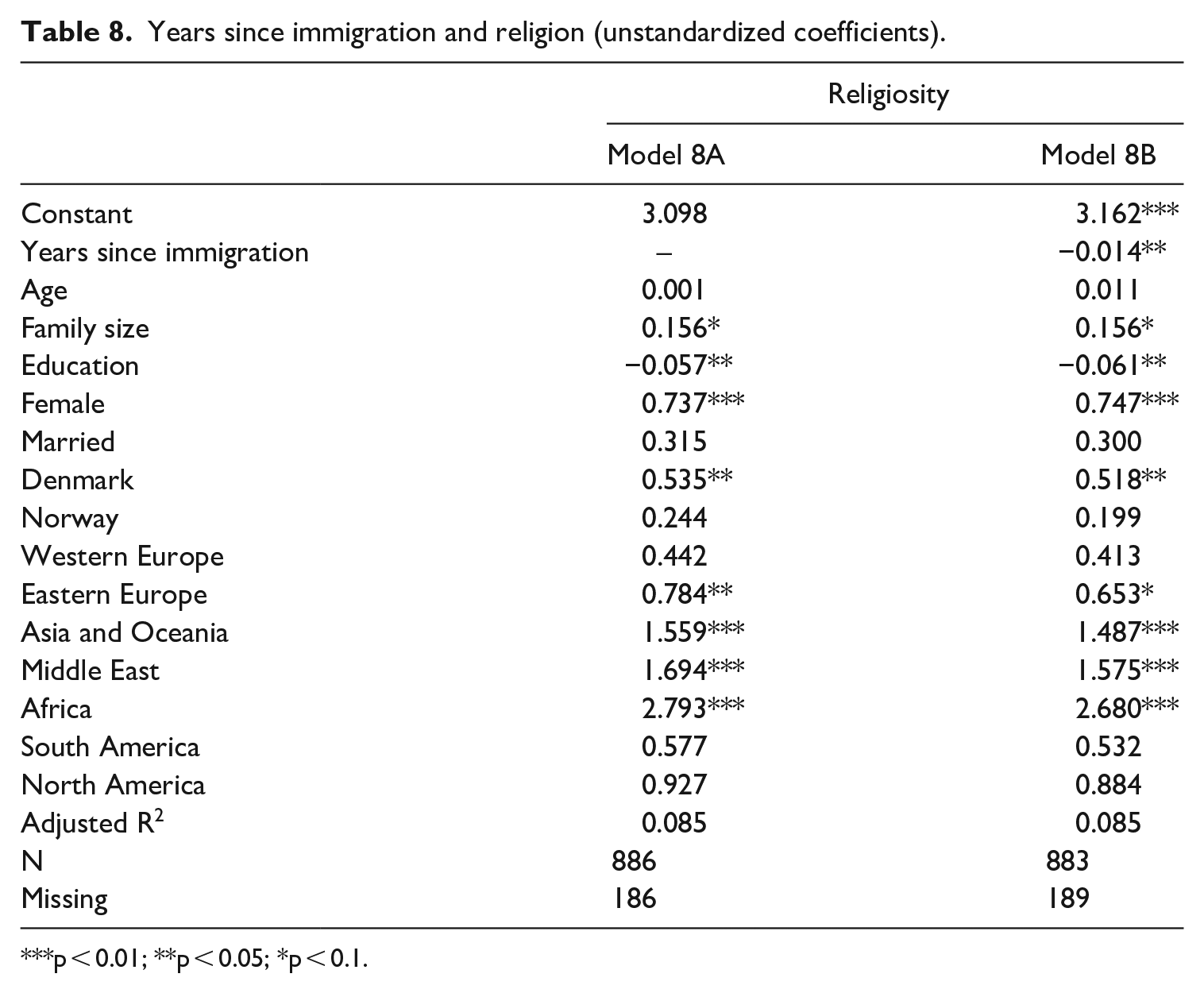
Interesting findings emerge when examining the sub-sample of first-generation immigrants. Models 5A, 6A, 7A (Table 7), and 8A (Table 8) show the effects of the control variables on the four indicators of religion. Although only significant for some models, being a woman, having a larger family, being older, being married, and living in Denmark or Norway (compared to Sweden) are positively correlated with religiosity.
Years since immigration and religion (odds ratios).
p < 0.01; **p < 0.05; *p < 0.1.
Years since immigration and religion (unstandardized coefficients).
p < 0.01; **p < 0.05; *p < 0.1.
For region of origin, the highest odds ratios, meaning the highest difference in religiosity (compared to Scandinavian immigrants), can be seen for immigrants from Africa. This is followed by immigrants from the Middle East. This is confirmed in previous research (e.g. Zuckerman et al., 2016) on regional differences in religiosity at the global scale. Furthermore, there is a substantial difference between North American and Scandinavian immigrants regarding likelihood of praying (odds ratio: 5.360, p < 0.01) and attendance (odds ratio: 3.468, p < 0.05), but the difference is smaller and not significant for belonging and self-rated religiosity. Western European immigrants are only significantly more religious on the measure of praying (odds ratio: 2.195, p < 0.05), while Eastern European immigrants and immigrants from Asia and Oceania are significantly more religious on most measures.
Models 5B, 6B, and 7B (Table 7) show the results for the full models from the binary logistic regression analysis and Model 8B (Table 8) for the linear regression. As mentioned above, the independent variable measures the duration of residence in years. For all three logistic models (Table 7), while controlling for the age of the respondent, the variable on the duration of residence, years since immigration, is negatively associated with religiosity. However, the difference in belonging is not statistically significant, which may be explained by the fact that religious belonging is, to some extent, normative in Scandinavia (Furseth et al., 2018; Kasselstrand et al., 2018). For each year since immigration, the odds of attending religious services at least monthly are reduced by a factor of 0.981 (p < 0.05) and the odds of praying at least weekly are predicted to decline by a factor of 0.984 (p < 0.05).
Similar to the results for the other measures, time spent in the Scandinavian country of residence is associated with lower self-rated religiosity (Table 8), in line with theories of socialization and social integration (Østberg, 2003; Sherkat, 2003; Van Tubergen, 2007). More specifically, for each additional year in the Scandinavian country of residence, self-rated religiosity is predicted to decline by 0.014 points (p < 0.05). Just as hypothesized, first-generation immigrants to Scandinavia are more secular the longer they have been in the Scandinavian host country, even after controlling for a range of demographic factors and region of origin.
Conclusion
Framed by trends of secularization and theories of religious socialization and social integration, this study set out to investigate the salience of religiosity among immigrants to Scandinavia, the most secular region of the world (Casanova, 2009; Zuckerman, 2008). Overall, our findings suggest that immigrants tend to assimilate to a secular social context across generations in the country of residence. This is highlighted by the fact that first-generation immigrants, on all measures except for attendance, are more religious than second-generation immigrants. While parents may be the most prominent agent of socialization for transmitting religious beliefs and practices (Bengtson, 2013; Myers, 1996; Regnerus et al., 2004), these findings suggest that other structural forces are at play (Foner, 1997; Østberg, 2003), given that children of immigrants hold religious identities that can arguably be positioned ‘in between’ those of their parents and the native population. It is also important to note that first-generation immigrants, themselves, may become more secular as they assimilate to life in Scandinavia: in terms of prayer, attendance, and self-rated religiosity, first-generation immigrants tend to be significantly more secular the longer they have lived in the Scandinavian country of residence.
Generation 2.5 is more secular than natives on self-rated religiosity and belonging. Lower rates of religious belonging among Generation 2.5 may be a result of the fact that a couple with one native and one immigrant partner have to make a more conscious decision about national church membership and what religion, if any, to raise their child in. Furthermore, Generation 2.5 may be more likely to have been raised by interreligious parents, following the notion that religion is less likely to be transmitted in a household with religiously heterogamous parents (McPhail, 2019). Given their openness to marrying someone from a different background, the immigrant parent in such a couple may also be more integrated and, as such, more secular (Carol, 2013).
We acknowledge limitations to this study that we believe future research could expand on. First, we used cross-sectional data from 2012 to 2015. When we make claims about secularization across time and generations, this is not based on longitudinal data, which necessitates some caution regarding assertions of causality. In other words, we are not able to conclude from this data if a specific individual became more religious over time, but merely if individuals who have been in the Scandinavian country longer are more secular. Furthermore, we briefly note the differences across specific religions in the bivariate analysis. We suggest more extensive analysis on the role of diverse religious perspectives and backgrounds in this process, both with respect to the immigrants’ origin and the context they settle in. Moreover, further qualitative studies on this topic may broaden our understanding of the meanings, perceptions, and experiences of these changes among immigrants and their children.
For both immigrants and natives alike, active religious practice is rare, and for immigrants, this trend deepens across generations and time. In response to the statement by Furseth et al. (2018) that we ‘know little’ about secularization processes among immigrants in this region (2018: 52), our study begins to build on this knowledge by showing that immigrants are not excluded from the secularizing forces that are present in Scandinavia.
Footnotes
Acknowledgements
Earlier versions of this article were presented at conferences for the International Society for the Sociology of Religion in Lausanne, Switzerland (2017) and the Pacific Sociological Association in Portland, Oregon (2017). We are grateful for comments and suggestions from colleagues and from the anonymous reviewers. We would also like to thank the European Social Survey ( ) for providing the data for this study.
Funding
The author(s) received no financial support for the research, authorship, and/or publication of this article.
Author biographies
Address: Department of Sociology, California State University, Bakersfield, 9001 Stockdale Highway, Bakersfield, CA 93311, USA.
Email:
Address: Department of Sociology, 4215 Social Science Plaza B, University of California-Irvine, Irvine, CA 92697, United States.
Email: