




Abstract
Many studies have shown that women are more religious than men, a difference long accepted as an established fact in the sociology of religion. But some recent research has revealed that this difference is not ‘universal’, varying in space and time. However, only a few scholars have focused on religiosity gender-gap trends over time, either on the theoretical or empirical levels. The aim of this article is to help fill this gap by analysing the progress of gender differences in religiosity from 1981 to 2009 in Italy, an interesting cultural context because of the gradual penetration of secularisation and the high level of gender inequality. Our empirical analysis is based on a longitudinal approach, using data from the European Values Study. The findings show that the gender gap in Italy was quite stable in regard to many aspects of religiosity, with three noteworthy exceptions: the gender gap decreased in beliefs, in intergenerational transmission of faith and in adherence to the Church’s doctrines on prostitution, abortion, divorce, euthanasia, suicide and adultery. Contrary to expectations, in most cases this narrowing came about because of an increase in men’s religiosity, not a decrease in women’s.
Introduction
One of the most accepted findings in the sociology of religion is women’s greater religiosity than men’s – a difference long considered a universal difference. Rivers of ink have flowed in explaining the reasons. Only recently has the scientific community accepted that this ‘universal’ may vary in space (Sullins, 2006) and in time (Trzebiatowska and Bruce, 2012). As a result, sociologists have begun to question the influence of social and cultural changes on the religious gender gap. The question is now debated but little explored in depth, not only in terms of theoretical reflection but also – primarily – of empirical research.
Our aim is to help fill this gap. By means of a longitudinal approach we shall analyse the evolution of Italian gender differences from 1981 to 2009. Thus, we devote attention to the comparison between trends in women’s religiosity and in men’s over those three decades. Did the Italian religiosity gender gap remain stable, diminish or increase? If there was a change, is it to be attributed to the choices of men, women or both? Since this study is focussed on the Italian context, the religiosity investigated mainly refers to how Catholicism is lived and practised in accordance with Church teachings. The article will be structured as follows in order to answer the above questions. First we shall survey the theoretical debate about the reduction of the gender gap in the religious sphere. Second we shall illustrate available international research carried out using empirical testing on the theme, and we shall argue the reasons for our study. Third we shall dwell upon some methodological aspects of the research and analytical findings, which will be discussed in the light of available literature. Finally, we shall make some concluding observations.
Reducing the gender gap in religiosity: The theoretical framework
For over half a century the international scientific community has been in agreement that in the Christian tradition of Western countries women are more religious than men, independently of the religiosity indices (belief, religious experience, practice) considered (Le Bras, 1955; Jacobs, 1984; Swatos, 1994; Kay and Francis, 1996; Walter and Davie, 1998; Trzebiatowska and Bruce, 2012; Voas et al., 2013, Pew Research Center, 2016). 1 Although their research is dated by now, some scholars (Simmons and Walter, 1988; Ozorak, 1996) have also pointed out that men and women interpret the same religious beliefs differently: for example, women are more inclined to perceive God as love, mercy and forgiveness whereas men see God as power and control.
The reasons for these differences have long been ignored in sociological debate (Walter and Davie, 1998; Miller and Stark, 2002). Only in the 1980s did scholars (see, for example, Simmons and Walter 1988) seriously address the question of why women are more religious than men, a significant contribution towards this reflection being added by feminist literature (Neitz, 1990). Over time a lively research debate has sprung up with the aim of answering the question. This research can be subdivided into two groups, according to whether they explain differences between men and women in terms of ‘nature’ – which is to say, innate biological differences – or of ‘gender’ – socially-generated differences created through a cultural process. Authors belonging to the first group attribute women’s greater religiosity mainly to physiology (Stark, 2002) and to genetics (Bradshaw and Ellison, 2009); and those belonging to the latter group rather identify the origin of the differences in the roles which men and women play in society (Francis, 1997), in traditional socialization models and consequent social expectations (Thompson, 1991; Beit-Hallahmi, 1997; Collett and Lizardo, 2009; Hoffman, 2009).
More recent studies (King-Hele, 2010; Trzebiatowska and Bruce, 2012; Voas et al., 2013) on one hand reject this dualism by underlining the interdependence between biological and social factors and, on the other, shift the debate onto effects of female and male religiosity deriving from processes of economic growth, modernization, secularisation and narrowing of gender inequality and, consequently, on the evolution of the gender gap in this context. Although there are still few contributions to the subject (Miller and Stark, 2002; Trzebiatowska and Bruce, 2012; Voas et al., 2013), this shifting of attention demonstrates that the scientific community is no longer asking only about the causes of differences between sexes but also how these differences, often considered ‘universal’, can change in space and time. Their shared idea is that in all European countries, despite some differences, both the increase in economic wealth and the modernization process have helped to reduce the population’s condition of physical, material and social vulnerability, thus limiting the need for religion and triggering large-scale secularisation processes (Norris and Inglehart, 2004). The question posed by scholars who have focussed their attention on the differences in terms of religiosity between men and women has therefore become: Given the abovementioned social changes, do these differences persist or diminish with time? The basic hypothesis is that if differences are innate, they will not be eroded by social changes introduced by modernity, whereas if they are produced by social factors, they will tend to lessen in time. For example, in countertendency to authors who emphasize the role of social factors, Miller and Stark (2002) assert that what is responsible for greater female religiosity is not traditional models of gender socialisation; in their opinion the main reason – unchanging over time – is women’s lower propensity to take risks, a genetically-determined phenomenon (for a contrary opinion, see Collett and Lizardo, 2009).
Since this research path has not yet been much trodden, it is no surprise that theoretical elaboration of the temporal evolution of the gap between the sexes in religiosity is still today limited. A position gaining strength in today’s debate (Trzebiatowska and Bruce, 2012, Voas et al., 2013) foresees that gender differences in this field will erode gradually in Western liberal, democratic societies where religious indifference is increasing and the socialisation of women’s and men’s lifestyles is more and more similar. This is attributed to a weakness in women’s religiosity, which draws them closer to male religiosity. Although in the near-century between 1850 and 1960 women were the hardcore practicants, from the 1970s onwards they began to be secularised, and in some countries this process is more rapid than men’s secularisation (Brown, 2012). There are various causes for female secularisation: women entering the world of work (Swatos, 1994; Marler, 2008), greater female awareness resulting from the 1960s cultural revolution and the conquest of sexual liberty and a feminist agenda in the religious field aimed at gender equality (Woodhead, 2008). De Vaus and McAllister (1987), on the basis of a survey of the relationship between female employment and religiosity, claim that women who work full-time are less religious than those who stay at home, having a religiosity profile similar to that of males. This relationship is confirmed by a more recent study of Catholic countries (Dubach, 2009) and can be explained by the so-called labour-force thesis: time devoted to work can interfere with involvement in a religious community; moreover, work offers alternatives around which to construct personal and community identities. Finally, work can broaden horizons beyond the family, exposing individuals to new ideas and ways of life that can challenge traditional religious dogma (Pew Research Center, 2016).
Trzebiatowska and Bruce (2012: 179) conclude their work by stating that ‘Enough women are now free of the social roles that coincidentally brought them into the orbit of organized religion to destroy the web of expectations that disposed them to be more favourable, as a class, to religion’.
The study of female disaffiliation as being responsible for the reduction of the gender gap opens up a new epistemological perspective for sociologists of religion who, for a long time, have studied secularisation from a male point of view and, above all, have ignored the existence of gender differences in this process, assuming that its characteristic mechanisms are the same for men and women (Woodhead, 2008).
Empirical research and aims
If the theoretical development concerning the evolution of gender differences in religiosity is still limited, empirical research on the subject is even more limited. Studies adopting a longitudinal approach – necessary to deal adequately with this research question – are extremely rare. They raise doubts about the theory postulating gradual erosion of gender differences in religiosity. For example, Voas et al. (2013) point out that of 24 European countries where data are available for at least 15 years bridging the 20th and 21st centuries, only Great Britain, West Germany and Spain register a clear decrease in gender differences with regard to affiliation to any religious denomination. As far as attendance at ceremonies is concerned, the reduction of differences between the sexes is statistically significant in Spain, Portugal, Italy and Austria, whereas in the Czech Republic and in Latvia – in total countertendency to theoretical hypotheses – an increase can be observed. Miller and Stark (2002) reveal that the gender gap in the United States according to four different individual-religiosity variables (attendance at ceremonies, belief in life after death, intensity of denominational belonging and frequency of prayer) remained substantially unchanged from the beginning of the 1970s to the end of the 1990s.
Our study, based on a longitudinal approach, aims at strengthening the scarce empirical knowledge available about this subject. It adds three main innovative elements to the contents of the two works cited above. First, it allows greater understanding of the evolution of the trend of women’s religiosity compared to men’s – both on the level of theoretical elaboration and empirical testing – being entirely dedicated to this research question. On the contrary, very few theoretical reflections and analyses presented in the works of Voas et al. and Miller and Stark deal with the topic. Secondly, we adopt to a greater extent a multidimensional interpretation of religiosity, proposing analysis of 18 variables referring to four different dimensions of the concept. Finally, changes in gender differences will be analysed at four different points over a thirty-year period. The works of Miller and Stark and of Voas et al. concern shorter periods or at least refer to only two points in time.
This study is focussed on Italy where, as is well known, the penetration of secularisation is slower than in the majority of European countries (Garelli et al., 2003; Garelli, 2016) and is distinguished by higher levels of gender inequality (European Institute for Gender Equality, 2015). Given these characteristics, it becomes particularly interesting to observe the development of gender differences in religiosity in such a cultural context. As far as we know, there are no studies devoted to the Italian context that adequately respond to the need for answers to this question. However, it is worth noting, among the most recent studies, the work of Crespi (2014), which carries out cohort analysis of gender differences in religiosity, focussed on only one point in time.
Data and method
Shedding light on our research question calls for the use of repeated cross-sectional data, i.e., data provided by administering the same survey over time to different samples drawn from the same population. This type of information makes it possible to analyse the time trends found for the phenomenon in question, as it provides an up-to-date picture of the tendencies shown by the population during the period covered by each survey wave. Of the various surveys that satisfy these requirements, we chose the European Values Study (EVS), a repeated cross-sectional dataset collected in a number of European countries. Specifically, we used the EVS Longitudinal Data File, which presents data and documentation for the 48 European countries that participated in the four EVS waves carried out to date. In Italy, these waves took place in 1981, 1990, 1999 and 2009. The data thus cover a time period of almost 30 years, more than sufficient for a long-term analysis such as ours. The data contained in the EVS Longitudinal Data File provide a number of advantages over other surveys. First, they have a high level of comparability: the reference universe (the adult population) is the same, as is the data collection method (face-to-face interviews with standardized questionnaires). In addition, the variables used here are identical in all survey waves, with the exception of a single case that will be discussed below. A further strong point of the EVS is that it investigates the interviewees’ religiosity very thoroughly, devoting an entire section of the questionnaire to it. This wealth of information makes it possible to analyse religiosity as a multidimensional construct, operationalising its different dimensions with multiple variables. A limitation of the EVS survey – which it shares with other comparative datasets – is its modest sample size: for Italy, 1,348 in the 1981 wave, 2,018 in the 1990 wave, 2,000 in the 1999 wave and 1,519 in the 2009 wave. However, most of our analyses are not based on the individual EVS waves, but on a sample including all four waves (see below). Consequently, we have an initial sample size of 6,885. Moreover, it must be borne in mind that the adequacy of a sample size depends on the kind of analysis applied to the data. In order to get an acceptable level of sensivity in the results, analysis involving a small number of variables requires a lower sample size than one involving a higher number of variables (see for example Green, 1991). Our analyses do not involve sophisticated statistical models with many variables whose effects are to be controlled: by contrast, the multivariate models presented here entail only three variables. Thus, the sample size is definitely not a problem affecting this study.
Religiosity is a complex, multidimensional concept difficult to operationalise. An extensive literature has dealt with the various dimensions of this concept, starting from Glock’s model presented in his pioneering study (1964). Although the most recent research has problematized this approach, 2 still today sociologists of religion engaged in statistical analysis adopt Glock’s multidimensional model on the basis of the variables available in datasets used in their analysis. This model identifies five dimensions of religiosity: belief, practice, knowledge, religious experience and religious belonging. In order to achieve a good match between this theoretical background and the religiosity variables available in the four EVS waves – following Segatti and Brunelli’s revision (2010) of Glock’s model – we have chosen to refer to the following dimensions:
The spiritual dimension, regarding aspects of the interviewee’s faith in terms of belief in God and the afterlife. The variables used are: belief in God; belief in life after death; belief in hell; belief in heaven.
The identity/cultural dimension, regarding the role and importance of religion in the interviewees’ construction of identity. The variables used are: self-categorization as a Roman Catholic; self-categorization as a religious person; importance of religion in life; importance of encouraging one’s children to have religious faith; importance of shared religious beliefs for a successful marriage.
The behavioural dimension, regarding the behaviours that stem from abiding by the teachings of the Roman Catholic Church. The variables used are: frequency of attendance at religious services; frequency of prayer outside religious services; 3 belonging to religious or church organizations.
The institutional dimension, regarding the interviewees’ relationship with the Roman Catholic Church as an institution and their attitude towards several teachings of the Church regarding certain types of conduct. The variables used are: trust in the Church; assessment of the Church’s ability to give adequate answers to moral problems and needs of the individual, peoples’ spiritual needs, the problems of family life and social problems; an index of acceptance of the teachings of the Church on abortion, divorce, euthanasia, suicide and adultery. 4
To provide a solid basis for interpreting our findings, changes in gender differences in religiosity over time were tested for statistical significance; this makes it possible to understand whether the trends found in the sample also take place – with a known margin of error – in the reference population. To conduct the significance tests, we constructed a series of binomial logistic regression models – one for each religiosity variable – with only three variables: the variable for religiosity – say, the frequency of attending religious services, dichotomized as ‘At least once a week’ vs ‘Less than once a week’ – as the dependent variable, gender as the independent variable of interest, and the survey year as the third variable. By calculating the interaction effect between the latter two variables, it is possible to determine whether the effect of gender on the frequency of attending Mass undergoes significant statistical changes across the survey waves. In other words, we can see whether gender differences in religiosity vary over time. 5 The coefficients that measure the effect of gender on religiosity in the different waves are expressed by means of odds ratios, which have the advantage of being more readily interpreted than beta coefficients. To continue with the example of frequency of attendance recoded as a dichotomic variable, the odds ratio for the effect of gender is calculated as follows:
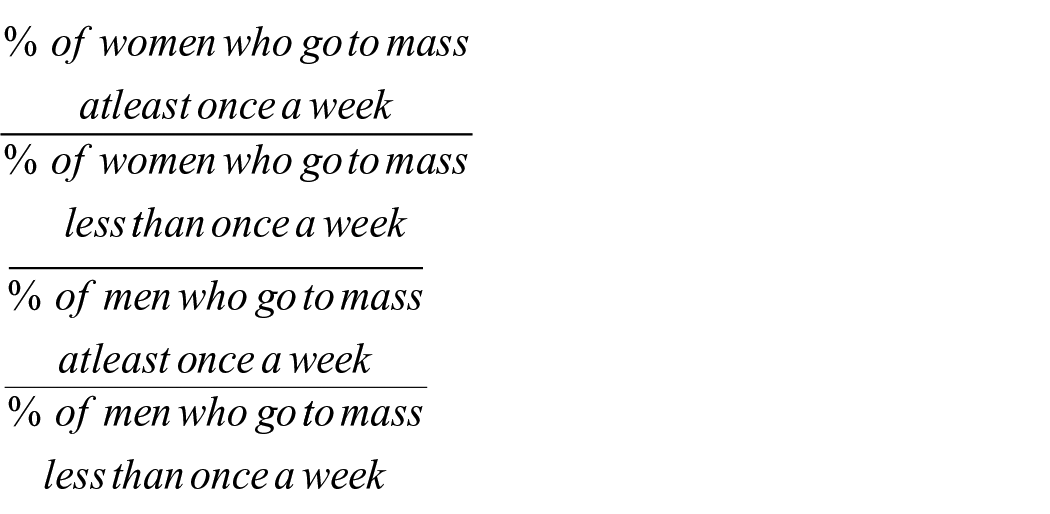
The value of the odds ratio ranges from 0 to +∞. In this case, a value of 1 indicates that there is no difference in men’s and women’s frequency of attendance. Values over 1 indicate that women go to Mass at least once a week more than men, while values between 0 and 1 mean that men go to mass at least once a week more than women. From a substantive standpoint, an odds ratio – of 1.71, say – can be interpreted as follows: women’s relative propensity to go to Mass regularly rather than occasionally is 1.71 times that of men. In other words, the percentage change between men’s relative propensity to go to Mass regularly rather than occasionally and women’s relative propensity to do so is (1.71-1) x 100 = +71% (Menard, 1995; Pisati, 2003).
Analyses were carried out using the weights indicated in the various EVS waves, as is also suggested in the documentation accompanying the data. These weights adjust certain sociodemographic characteristics of the sample, such as gender and age, to their distribution in the population. Though weighting can often be controversial, it appeared to be particularly necessary in this case, given that 18- to 24-year-olds were oversampled (200 cases) in the 1981 EVS wave.
Results
Analysis results are presented separately for each of the four dimensions of religiosity mentioned in the previous section: spiritual, identity/cultural, behavioural and institutional. For each variable used for these dimensions, the odds ratios are presented for gender differences in the EVS waves. The significance tests needed to identify any changes over time were carried out between each wave and the one preceding it, and between the first and the latest waves, in order to encompass changes in the entire observation period. For reasons of space, the complete binomial logistic regression models used to determine the odds ratios are not presented here: the 18 models (one for each religiosity variable) are available on request. The odds ratios enable us to observe trends in the gender gap in religiosity over time, but not to understand whether the changes that come to light are due to changing behaviour on the part of women, men or both. To illuminate the dynamics underlying changes in the gender gap in religiosity, we thus also present men’s and women’s trends for the variables where statistically significant differences in the gender gap were found between the first and latest waves.
The spiritual is the dimension of religiosity showing the greatest changes in the gender gap over time (Graph 1). Three of the four variables for this dimension exhibit a statistically significant reduction in the odds ratio in the observation period: the gender gap would thus seem to have narrowed. In 1981, women’s relative propensity to believe in God rather than not believe was 212% above men’s; thirty years later, the difference is still significant, but has dropped sharply (+115%). At the beginning of the observation period, moreover, women’s relative propensity to believe in heaven rather than not believe was 141% greater than that of men, while in the latest wave the difference fell to +58%. Lastly, women’s relative propensity to believe in hell rather than not believe exceeded men’s by 119% in 1981, but by only 57% in 2009. By contrast, there were no statistically significant changes in the gender gap in belief in life after death.
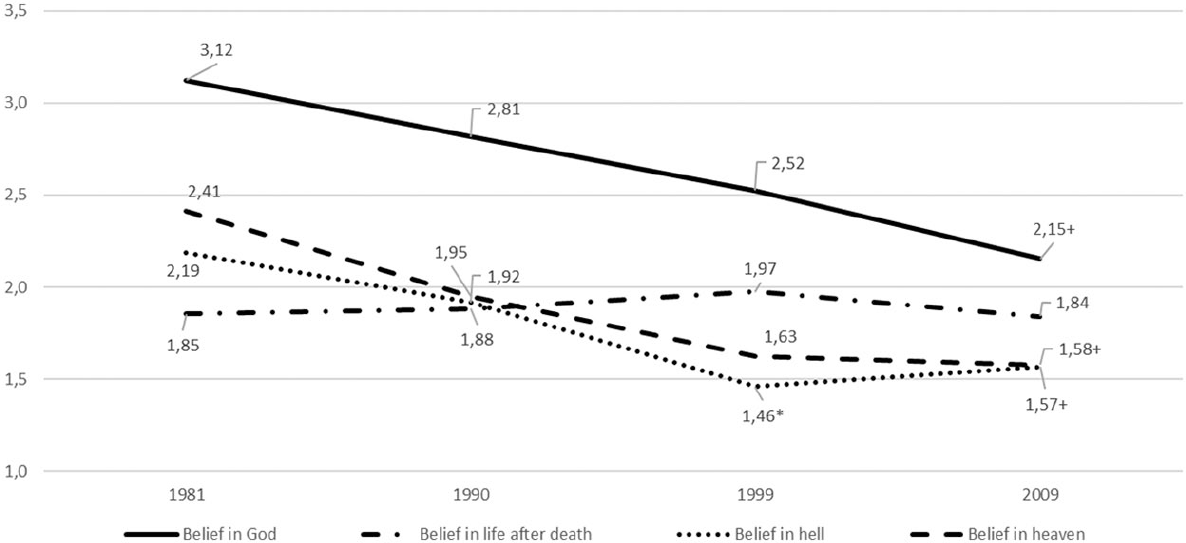
Gender gap in religiosity over time. Odds ratio, Italy, 1981–2009 – Spiritual dimension.
As can be seen from the data presented in Table 1, the reduction in the gender gap – contrary to the theoretical hypotheses – is due to the increase in beliefs among men mentioned above, while for women belief has remained stable (as in the case of belief in God) or has also increased (belief in hell and in heaven), but to a lesser extent than it has for men.
Religiosity over time, by gender. Percentage values, Italy, 1981–2009 – Variables for the spiritual dimension where statistically significant differences in the gender gap over time were found.
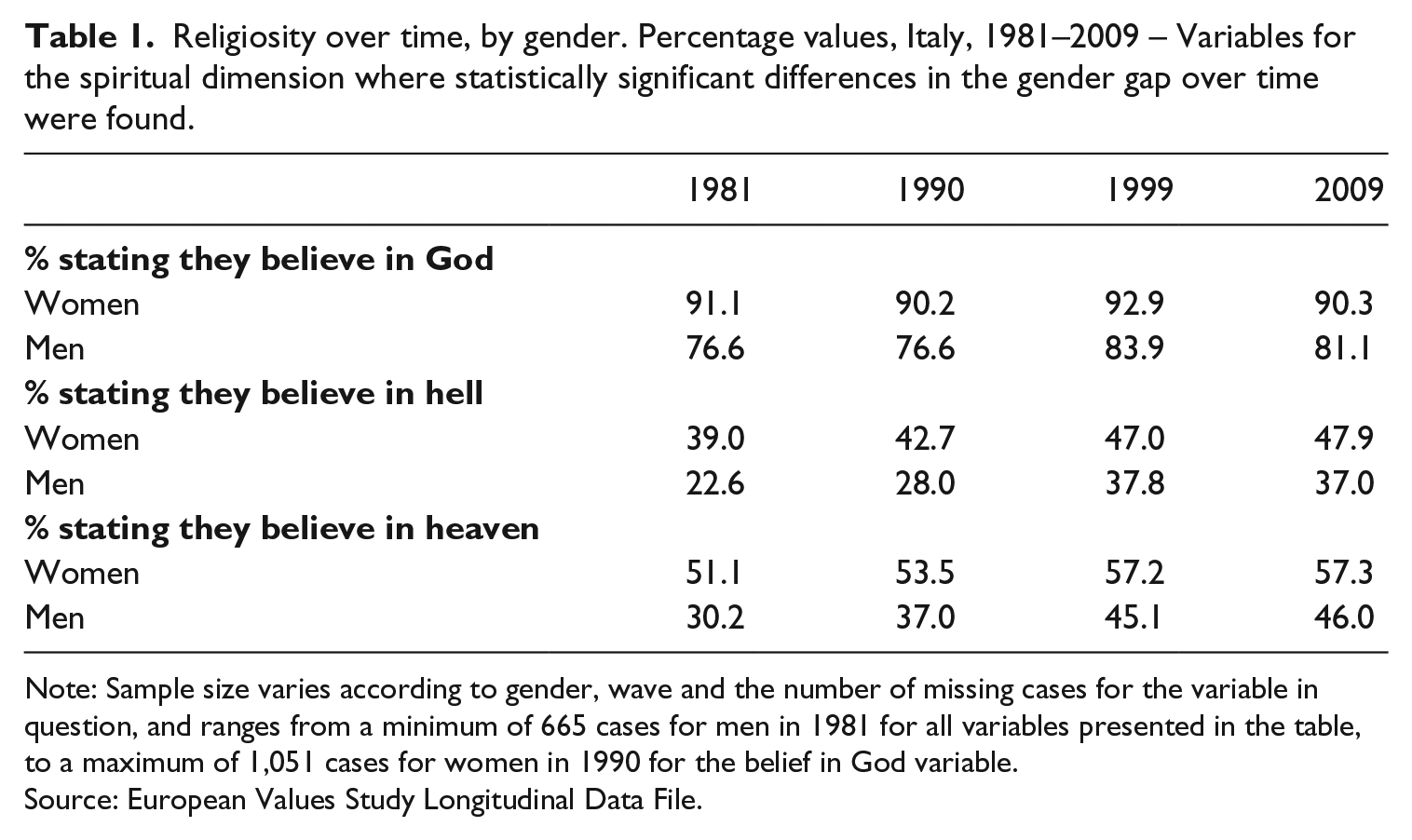
Note: Sample size varies according to gender, wave and the number of missing cases for the variable in question, and ranges from a minimum of 665 cases for men in 1981 for all variables presented in the table, to a maximum of 1,051 cases for women in 1990 for the belief in God variable.
Source: European Values Study Longitudinal Data File.
The picture changes when we shift our attention to the identity/cultural dimension. The gender gap, in fact, is more stable over time (Graph 2): there is a statistically significant decrease for only one of the five variables for this dimension, the importance of encouraging one’s children to have religious faith. In 1981, women’s propensity to consider this important rather than otherwise was 150% greater than that of men. Thirty years later, the difference dropped to +43%. Here again, the reduction in the gender gap is due to the fact that the percentage who consider encouraging their children’s faith to be important increased among both genders, but more for men than for women (Table 2). It should be emphasized, however, that the gender gap narrowed between 1981 and 2009 for all variables in the identity/cultural dimension except for self-categorization as a Roman Catholic, but the reduction was statistically significant only in the case of encouraging children’s faith.
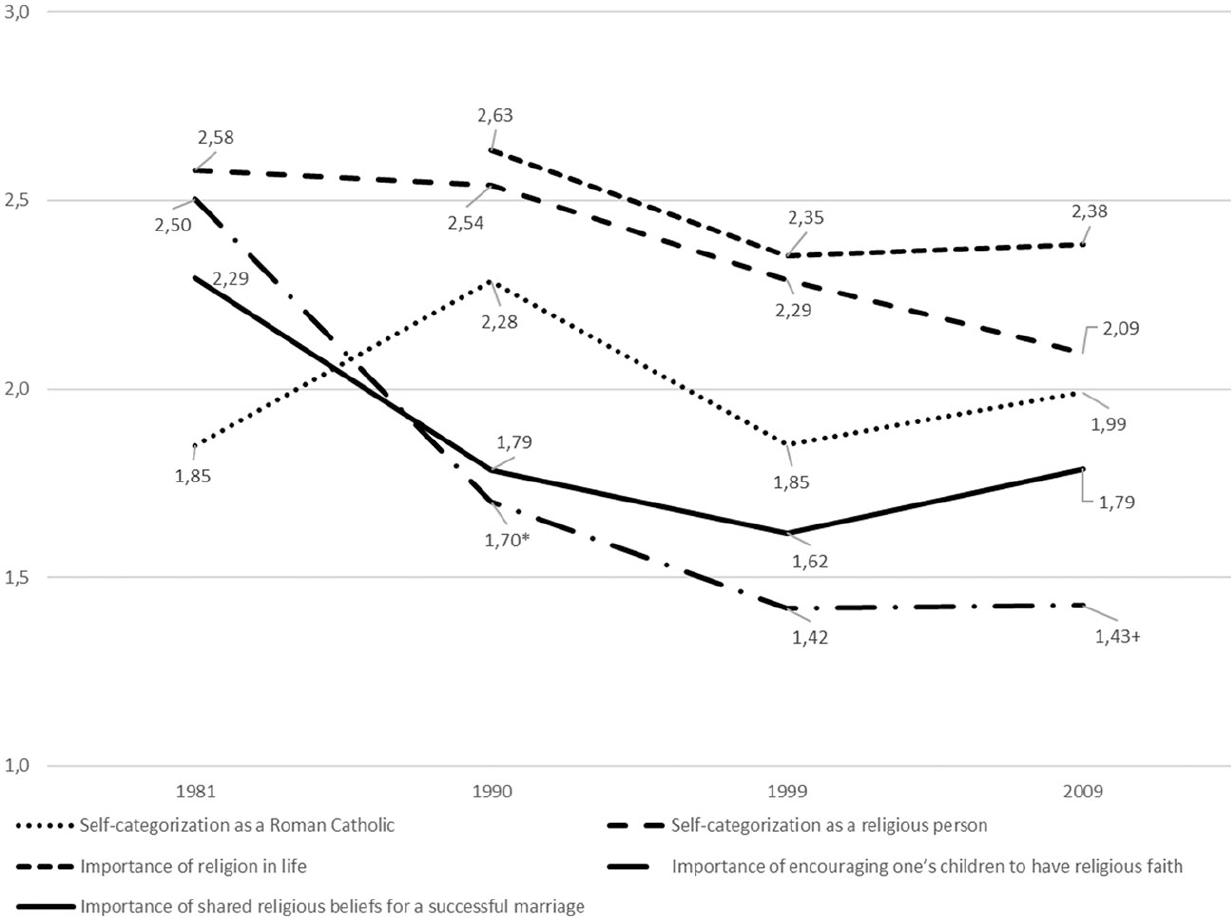
Gender gap in religiosity over time. Odds ratio, Italy, 1981–2009 – Identity/cultural dimension.
Religiosity over time, by gender. Percentage values, Italy, 1981–2009 – Variables for the identity/cultural dimension where statistically significant differences in the gender gap over time were found.
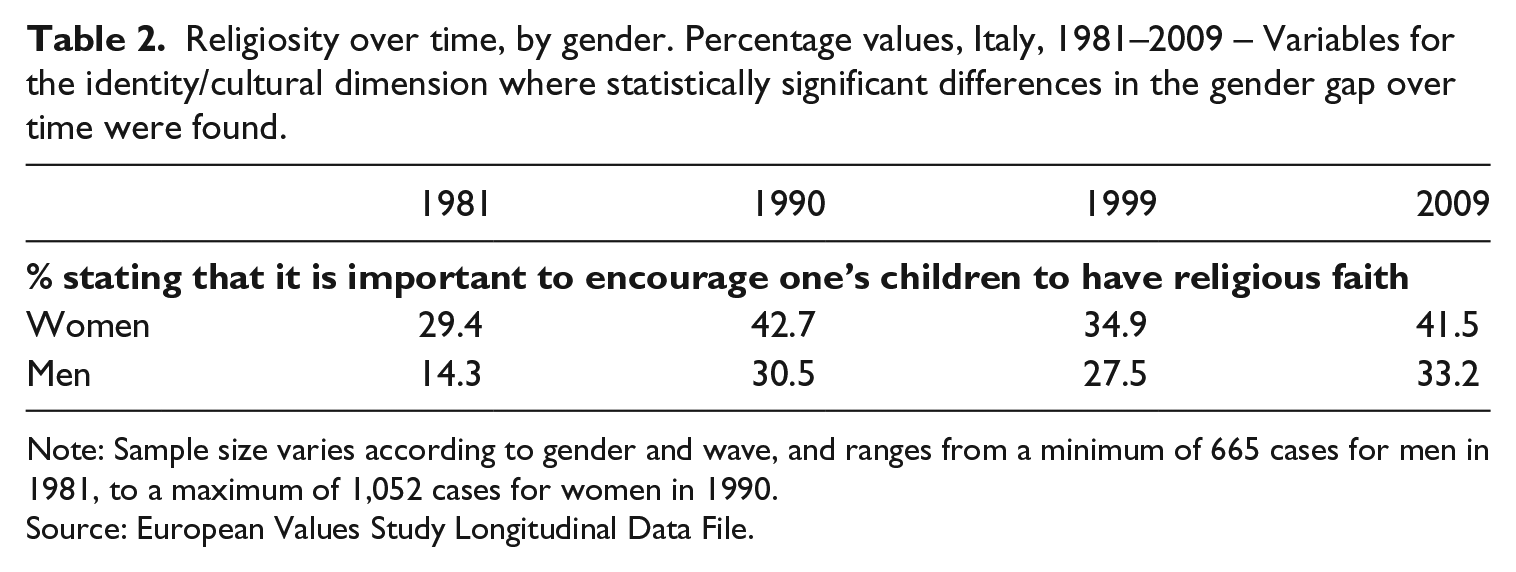
Note: Sample size varies according to gender and wave, and ranges from a minimum of 665 cases for men in 1981, to a maximum of 1,052 cases for women in 1990.
Source: European Values Study Longitudinal Data File.
As regards the behavioural dimension, the gender gap remains stable over the observation period for all variables considered (Graph 3). Regarding membership in religious or church organizations, a statistically significant reduction in the gender gap was found between 1981 and 1990, but was balanced by an increase in the immediately subsequent period, between 1990 and 1999.
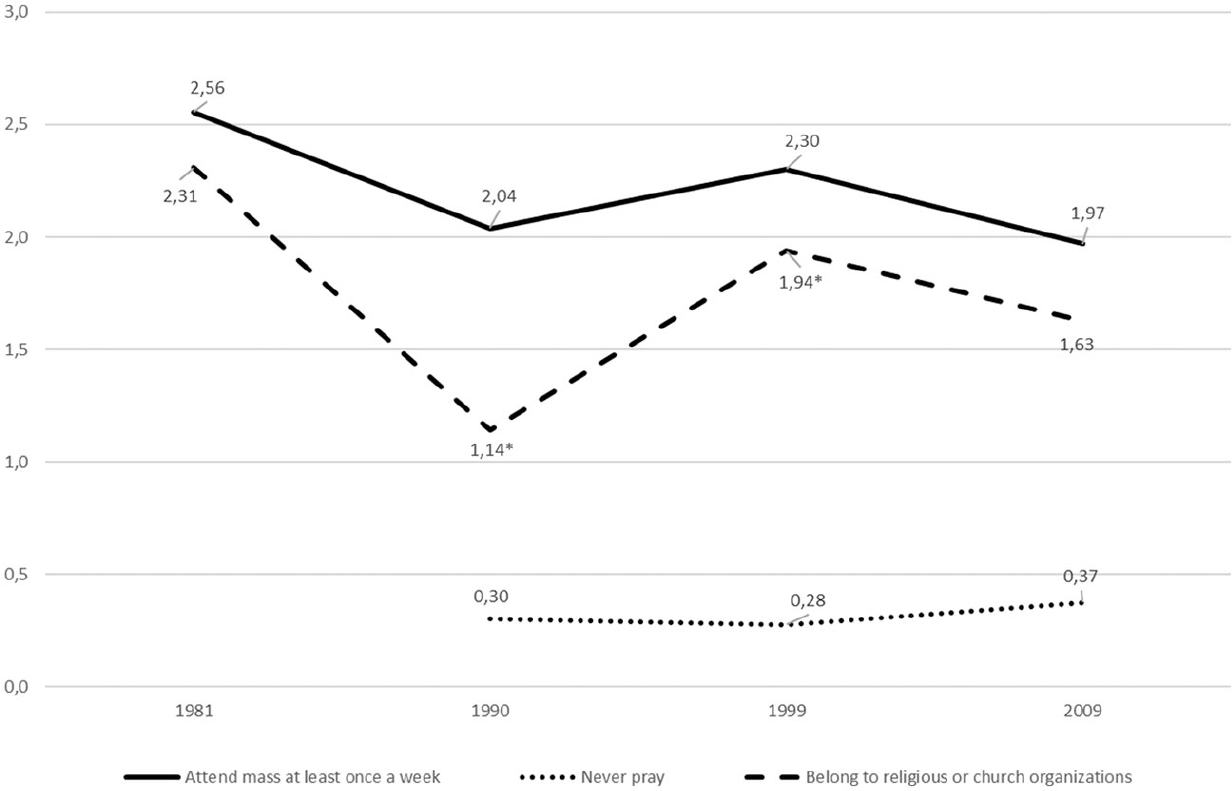
Gender gap in religiosity over time. Odds ratio, Italy, 1981–2009 – Behavioral dimension.
Lastly, the gender gap also seems to be fairly stable over time for the institutional dimension of religiosity (Graph 4). Only one of the six variables for this dimension – acceptance of the teachings of the Church on abortion, divorce, euthanasia, suicide and adultery – shows a statistically significant reduction in the gender gap, with a first drop between 1981 and 1990, and a further drop between 1999 and 2009. In 1981, women’s propensity to report a high acceptance of these teachings as opposed to a medium or low acceptance was 143% greater than men’s. In 2009, the difference had shrunk to barely 5%: in the last wave, the gender gap in this aspect of religiosity essentially disappeared. This is the only case in which this occurs: for all the other variables considered here, statistically significant differences between men and women were found for all waves (data not shown, available on request).
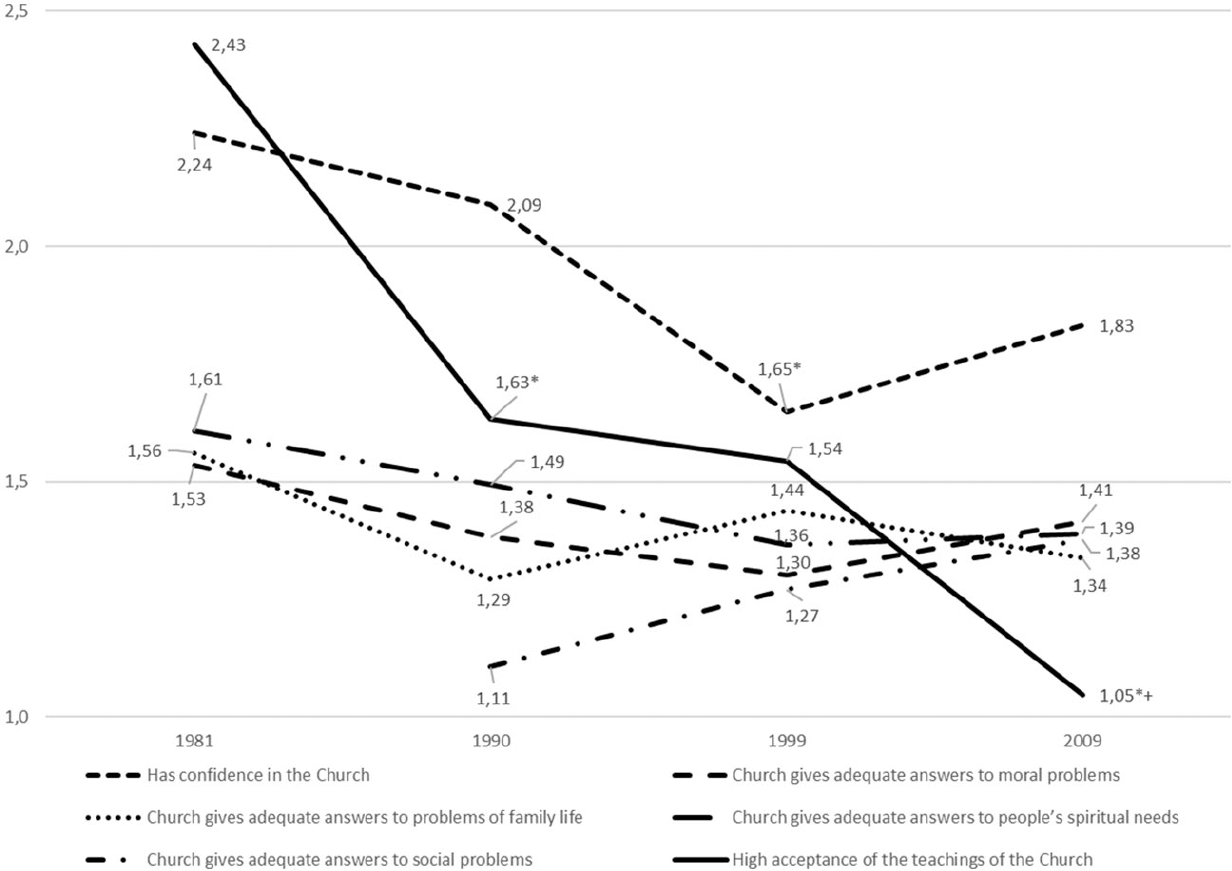
Gender gap in religiosity over time. Odds ratio, Italy, 1981–2009 – Institutional dimension.
The results presented in Table 3 indicate that the closing of the gender gap in acceptance of the Church’s teachings was due to opposing trends for men and women: acceptance increased over time for the former, and dropped for the latter.
Religiosity over time, by gender. Percentage values, Italy, 1981–2009 – Variables for the institutional dimension where statistically significant differences in the gender gap over time were found.
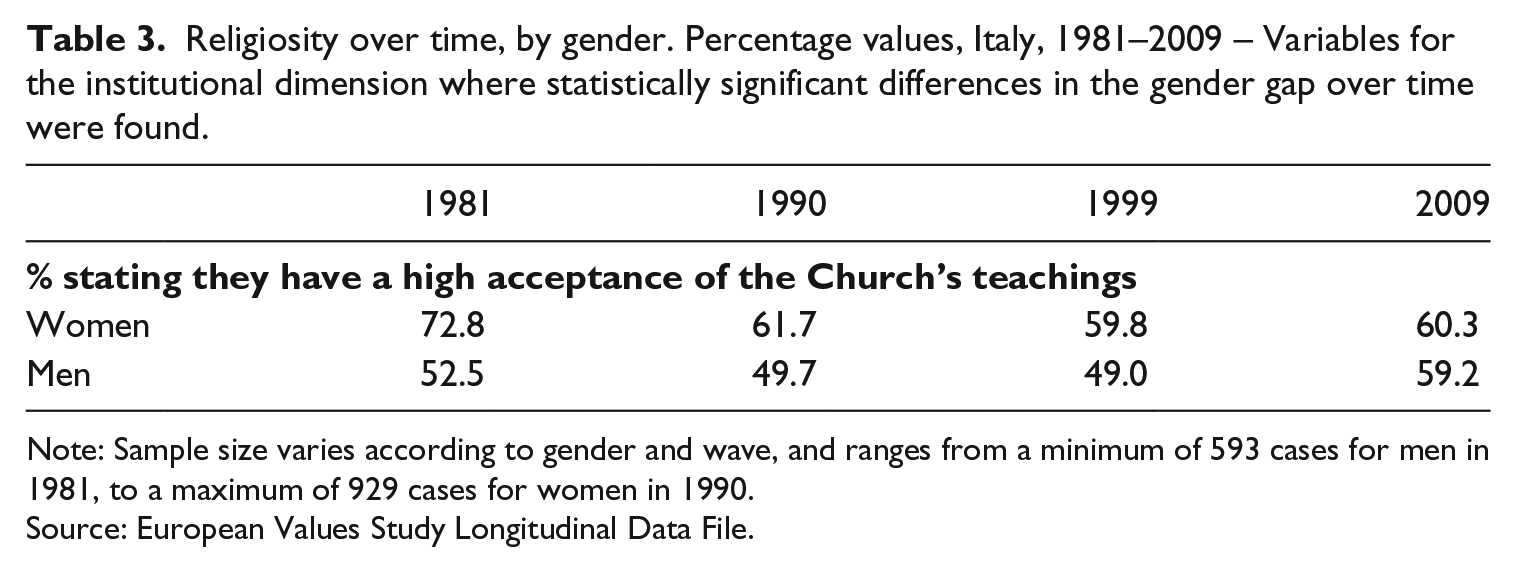
Note: Sample size varies according to gender and wave, and ranges from a minimum of 593 cases for men in 1981, to a maximum of 929 cases for women in 1990.
Source: European Values Study Longitudinal Data File.
In sum, we can say that Italy’s gender gap in religiosity has tended to be stable during the observation period, with a few significant exceptions. The greatest changes were found in the spiritual dimension: with the passage of time, men and women have become more similar as regards three out of the four variables considered (belief in God, in hell and in heaven). For the other dimensions, the changes in the gender gap have been decidedly smaller or entirely absent. No change was found for the behavioural dimension, while there was a statistically significant narrowing of the gap in only one of the variables used for the identity/cultural dimension and the institutional dimension: respectively, the importance of encouraging one’s children to have religious faith, and acceptance of the teachings of the Church.
Discussion
The above findings show that gender differences in Italy are constant over time in many religiosity environments, with women still today more religious than men; they continue to take the lead in Catholic and religious self-definition, in the importance attributed to religion and its intergenerational transmission, in placing their trust in the Church and in believing that the Church’s magisterium on spiritual, family and social questions are adequate. Furthermore, they continue to predominate in church attendance and in prayer and to participate more than men in religious organizations. Nevertheless, our findings shows up progressive narrowing of the gender gap with regard to some emblematic aspects – without, however, calling into question the overall female primacy. It must be borne in mind that our analysis is focused on the trend of women’s religiosity compared to men’s. No attention is devoted – this constitutes a limitation of the study to be overcome by future research – to other issues related to gender differences in religiosity: for instance, the features and topics of religiosity that women emphasize and men do not, or the fact that in some cases men and women interpret the same religious beliefs differently.
With regard to its dynamic aspects, the framework we have described may be interpreted in the perspective of the currently hegemonic theory in international debate on the evolution of the gender gap in religiosity: gender differences tend to erode in societies where religious indifference and gender equality are on the rise and women’s and men’s lifestyles are becoming more similar (Trzebiatowska and Bruce, 2012; Voas et al., 2013). One of the reasons why the diminishing of religiosity gender differences in Italy have been more restricted is that the characteristics of the cultural-religious context and the labour market are radically different from those foreseen by the theoretical model. These differences have been documented by various, heterogeneous research but, for reasons of space, we shall cite only a few. First, Italian secularisation – defined as ‘weak’ (Pace, 2015) and later as ‘soft’ (Garelli, 2016) – is evolving at a slower pace than most European countries; even female secularisation is ‘low impact’ (Crespi, 2014) or ‘decelerated’ (Palmisano and Todesco, 2017). Secondly, the datum about the position of women in the employment market (48.9% in work in 2017, Eurostat, 2018) is indicative of the gender inequality persisting in the country, confirming that Italy still brings up the rear in the EU (with only Greece lagging behind). Thus the reduced narrowing of the religiosity gender gap in Italy does not conflict with theoretical forecasts. This hypothetical explanation should be further tested in empirical studies.
Yet we have seen that the little empirical research available shows that even in those countries where cultural characteristics should herald a greater reduction in the gender gap, this does not come about. This finding illustrates the desirability of not only carrying out fresh empirical research but also of re-elaborating existing theory, enriching it with new analytical directions.
More specifically, our analysis establishes that the behaviour of men and women today has drawn closer compared with thirty years ago only with regard to beliefs, opinions about moral and ethical questions and the importance of intergenerational transmission of faith. But the curious discovery is that the gender dichotomy has not diminished either in the spiritual or in the identity-cultural dimension because, in accordance with theoretical hypotheses, it is women who have turned their backs on religion. In contrast with other European countries, where female secularisation has surged (Marler, 2008; Trzebiatowska and Bruce, 2012), Italian women have maintained or increased their involvement in those fields but the men have overtaken them. Although this finding may be surprising because it is counter-intuitive to what has been seen hitherto in the literature, it should be noted that in Italy – and, to the best of our knowledge, internationally – there are no other longitudinal studies analysing the progress of male and female religiosity using such a broad range of variables as does the present work. 6 While awaiting further research confirming – or contradicting – the novelties recorded here regarding men’s religiosity, it would be worthwhile to attempt some provisional considerations.
Considering the male spurt in belief in God and an afterlife, two points must be made. The first is that it should be sited in the more general context of the Italian tendency to believe which is constant (Garelli, 2016) and also elevated compared with other European nations with a Catholic or Protestant culture (Pérez-Agote, 2012). The second is that this datum only concerns the presence/absence of faith without distinguishing among those whose faith is certain, uncertain or intermittent; thus it is not possible to know whether the increase of faith in men relates to convinced or tenuous faith. In the same way it does not reveal the traits of the God which people claim to believe in or what kind of afterlife (Heaven and Hell) they have in mind. Therefore, we cannot exclude the possibility that some are not referring to the personal transcendent God of Catholicism, but in an undefined spirit or life form; similarly, some of them may have a personal or at least unorthodox vision of the afterlife.
Gender differences are also reduced with regard to the need to transmit faith to children: here too the increase is greater among men although more people of both genders consider it important. One hypothetical explanation is that – since in Italy male commitment to children’s upbringing has been growing for some time (cf. Romano and Bruzzese, 2006; Istat, 2016) – fathers feel more involved on the level of meaning-seeking which leads to a religious-spiritual quest. This does not necessarily mean that they turn to religion to offer their children an itinerary of belief; they may do so for the most disparate reasons (e.g. morale guidance, preservation of ethnic and family identity, finding socially-useful activities, belonging to a community) but in any case they flow together to determine greater male interest than in the past. This datum should be interpreted as belonging to the (Italian) Catholic environment which, as Dobbelaere et al. (2003) pointed out, is characterized by a more integrated view of religion and family than is the Protestant context and consequently religious issues can be a relevant topic in families’ relations.
Only with regard to so-called ‘moral politics’ (Ozzano and Giorgi, 2016) precepts (prostitution, abortion, divorce, euthanasia, suicide and adultery) do gender differences diminish to the point of disappearing. While women obey such precepts less, men tend towards the opposite direction. Whereas women on one hand persist in claiming that the Church gives adequate answers to moral questions, on the other, many have freed themselves from those doctrines, freely expressing their opinions. In order to explain such a change, it should be noted that in the thirty years under consideration women took the lead during a particular phase of the history of Italian Catholicism when the division between the Church and women became deeper. Some authors (Scaraffia and Zarri, 1994; Donadi, 2014) have identified Pope Paul VI’s encyclical Humanae Vitae 1968 as the beginning of the end of the Church-women alliance; presumably, it was disappointment with that document (reaffirming the primary procreative function of marriage and banning all forms of contraception) which drove women away from the Church’s teachings. Donadi (2014) underlines that another push in the same direction can be observed in the following decades as a result of greater female awareness of the distance between pastoral indications and individual conscience. As D’Amelia (1997) pointed out, the natural maternal function was once again utilised to relegate women (wives and mothers) to the domestic hearth and to praise the female virtues of sacrifice, humility and loyalty in contrast with a male culture of individualism and success – a double morality constructed on persistent social discrimination against women. The disappointment of women can be seen partly in a 1981–2009 falling off in their attendance at Mass: as Palmisano and Todesco (2017) observed, regular women practicants declined by 9 percentage points. Our more extensive analysis (available on request) reveals that the vanishing of the gender gap on matters ethical and moral does not depend only upon the fact that many women have abandoned the Church and its teachings; there is also a considerable proportion of women remaining faithful and practising who, over time, have changed their minds, detaching themselves from official doctrine.
Conclusion
In this article we have pointed out that the narrowing of the religiosity gender gap in Italy has been contained by decelerated secularisation and a cultural and employment environment still deeply marked by sexual inequality. Most cases of this reduction have – counterintuitively – come about because men are more (and not because women are less) involved. New theoretical reflection and empirical research are therefore necessary not only to analyse – as is already happening – women’s religiosity and the reasons for their disaffection from the Church but also to return to the investigation of men’s religiosity, a research thread which has been neglected in recent years because men are by now considered as mostly secularised. Whereas some research has begun to appear about unaffiliated, unbelieving and/or indifferent fathers struggling with a possible spiritual heritage to transmit to their children, the theme of the religious experience of male believers and their choices as parents concerning religious socialisation (Bengtson, 2013) has remained largely unexplored. This topic merits particular attention in a context of sudden cultural, family and social changes which, according to some scholars (Putnam and Campbell, 2010) cannot but encourage intergenerational differences in values and religion.
Footnotes
Funding
This research received no specific grant from any funding agency in the public, commercial or not-for-profit sectors.
Notes
Author biographies
Address: Università di Torino, Dipartimento di Culture, Politica e Società, Lungo Dora Siena 100, 10153, Turin, Italy.
Email:
Address: Università di Torino, Dipartimento di Culture, Politica e Società, Lungo Dora Siena 100, 10153, Turin, Italy.
Email: