




Abstract
From the religious standpoint, the Italian case is a good example of how, and to what extent, a symbolically monopolistic system can be transformed exogenously. Using the famous paradox of Achilles and the tortoise attributed to the pre-Socratic philosopher Zeno of Elea (5th century BC), the author analyzes the social changes taking place in Italy from a particular angle, i.e. the passage from a society under a Catholic monopoly to one characterized by an unprecedented and unexpected religious pluralism. The maps illustrating the presence of a number of religions other than that of a typical Italian’s birth (Catholicism) show how the country’s social and religious geography is changing. Such a change is a major novelty in a country that has always seen itself as Catholic for long-standing historical reasons and also for deeply rooted and still strong cultural motives.
Achilles, symbol of speed, is to race with a tortoise, the epitome of lethargy. Achilles can run ten times as fast as the tortoise so he gives it a ten-metre head start. While Achilles runs those ten metres, the tortoise runs another metre; Achilles runs that metre, and the tortoise runs a further ten centimetres; Achilles runs those ten centimetres, and the tortoise runs one centimetre more; Achilles runs that centimetre, and the tortoise runs an extra one millimetre; Achilles runs that millimetre, and the tortoise distances himself by a tenth of a millimetre, and so on indefinitely; so Achilles can run for ever without catching up with the tortoise. (from Jorge Luis Borges, The Perpetual Race of Achilles and the Tortoise [personal translation])
Introduction
Using the famous paradox of Achilles and the tortoise attributed to the pre-Socratic philosopher Zeno of Elea (5th century BC), I propose to analyze the social changes taking place in Italy from a particular angle, i.e. the passage from a society under a Catholic monopoly to one characterized by an unprecedented and unexpected religious pluralism. The maps illustrating the presence of a number of religions from other than that of a typical Italian’s birth (Catholicism) show how the country’s social and religious geography is changing. Such a change is a major novelty in a country that has always seen itself as Catholic for long-standing historical reasons and also for deeply rooted and still strong cultural motives.
Despite the religious diversity that is beginning to make itself socially obvious, the Catholic Church continues to have a central role in the public arena but, like Achilles in the metaphor, it is beginning to realize that Italian society (the tortoise in the metaphor) is moving on, not only because other religions are striving to gain visibility and public acknowledgement, but also because they are contributing in some cases to making the religious field more variegated.
To better delineate the object of our analysis: if I were asked, ‘Who does Achilles represent?’ in my metaphorical premise, I would answer as follows. According to the Greek myth, Achilles’s mother, Thetis, immersed him as a baby in the waters of the River Styx to make him become invulnerable; to do so, she held him by his heel, which remained the only part of his body liable to harm. Homer’s hero symbolizes the Catholic Church and religion in Italy, a system of belief that is still well organized, permeates every facet of society, and acts as the custodian of the collective memory and identity of the Italian people, with a complex potestas indirecta (Poulat, 1974) in the sphere of political decision-making. This is the majority system of religious belief, the religion of Italians’ birth. Albeit with growing difficulty, it has continued to withstand the onslaught of secularization, as an analysis of a representative sample of the population (Garelli, 2011) and an ethnographic study (Marzano, 2012) have recently confirmed, taking two very different approaches. In comparison with other situations in Europe (Perez-Agote, 2012), Italy appears to have become secularized while remaining faithful to its image (in collective representational terms) as a Catholic country, thanks to the Church’s organizational strength. It is no longer a Catholic country in terms of many Italian people’s practices, but the collective myth of the Italians’ Catholic identity still seems to hold (Garelli et al., 2003). So, having explained the role of Achilles, let us see who the tortoise represents. I use the tortoise to represent the socio-religious shift taking place in Italian society, from a single religious culture to a novel form of religious diversity. This is a slow process that is going largely unnoticed, generating no particular tension or conflict (except for the case of Muslim places of worship), but it is ultimately producing a change in the country’s socio-religious geography. Italian people are no longer born inherently Catholic.
My aim in the following pages is to illustrate and describe this change with the aid of data collected in a study completed in 2012 (Pace, 2013), which enable us to go beyond mere generic estimates of the presence of other, non-Catholic religions in Italy to map the different places of worship, by region and by religious confession. In its annual report on immigration, Caritas/Migrantes prepares estimates that measure religious diversity on the basis of a simple (sometimes over-simple) inductive process: if 100 immigrants have arrived from Morocco, for instance, then 99.9% of them will be Muslims because that is the proportion of people of Muslim faith by birth in their society of origin. Caritas is a Catholic voluntary organization that takes credit for having attempted over the years to fill a very obvious gap in the reliable information available on immigration in Italy. Although the number of immigrants reached 5 million in 2011 (accounting for 7% of the population), neither the central Italian Statistics Institute (ISTAT) nor the Ministry of the Interior has succeeded in providing a circumstantiated picture of the real presence of the various religions in the country, except in the case of Muslim places of worship, which are monitored by the police and the intelligence services on behalf of the Ministry of the Interior for reasons of public security. Indeed, this source provides a good starting point for examining and further analyzing the situation, as was done recently by Allievi (2010) and Bombardieri (2012).
Be that as it may, the 189 different nationalities of Italy’s immigrants make it plain that religious diversity is now part of Italians’ lives, at the local market, in hospital wards, prisons and school rooms, at the offices of local social services, and so on. Estimates may be a starting point, but they no longer suffice to give an accurate picture of Italy’s socio-religious geography, capable of realistically illustrating people’s experiences and their ways of belonging to a given religion. In other words, estimates cannot answer the question of what people we formally classify as Muslims, Buddhists, Hindus, Sikhs, Pentecostalists and so on, actually believe in.
We are beginning to gain an idea of the areas where the immigrants’ different religions tend to become concentrated, but we have only a very incomplete and imprecise map of their places of worship. These places are still not very obvious to the naked eye – to our cursory gaze, at least: though we are accustomed to recognizing a Catholic church at a glance, we are less well equipped to notice buildings that identify the presence of other, non-Catholic religions. Our eyesight has a role in religions. Our eyes reflect and record an orderly outside world, where we see things that are familiar to us. If, at some future time, we were to see a mosque or a Sikh temple standing alongside our local parish church, the new building might seem like an intrusion, an image that stands out instead of fading into the background. We can learn something from the recent referendum held in Switzerland (in the autumn of 2009) on the prohibition of the building of minarets (not of mosques, note), which the referendum’s promoters see as invasive symbols in a religious landscape characterized and occupied mainly by bell towers.
To begin to really see how Italy’s socio-religious geography is changing, we must first go a step further, beyond mere estimates of the different religious realities that have now become well established in Italy. Some religious communities show a marked degree of homogeneity, while others are differentiated even amongst themselves (this is true both of Islam and of the Orthodox Churches that refer to different patriarchal sees or national Churches). It is easy to find information on the former, much more difficult on the latter (as in the case of the Muslim communities that refer to different associations, some of which represent the world of believers as a whole, while others are based on geographical origin). For some religions, despite a degree of differentiation, we can deal with the problem of obtaining a credible picture of their places of worship by relying on a network (that we have patiently constructed) of witnesses, who have provided addresses and other precious details.
Maps are used for travelling and, combined with a compass, they help us to orient ourselves in an effort to interpret the new distribution of religions in Italy. If somebody were to travel through Italy from north to south, and from west to east, they would certainly not be immediately aware of any Sikh temples or mosques, nor would they know how to recognize an Orthodox church (barring a few exceptions in Trieste or Venice, or in Bari or Reggio Calabria in the south, where there are churches that bear witness to the historical presence of flourishing Greek and Albanian Orthodox communities). They would be even less likely to stumble upon evidence of Hindu mandir or Buddhist temples, and would have virtually no chance of noticing any African, South American or Chinese neo-Pentecostal churches. While the African neo-Pentecostal churches have been the object of a specific investigation (Pace and Butticci, 2010), their Latin American and Chinese counterparts have remained in the background. A problem with the new Churches, moreover, lies in the fact that it is very difficult to find them because they are often born and survive in very precarious logistic and operating conditions. It is nonetheless common knowledge that some Latin American mega-Churches, and particularly the Igreja Universal do Reino de Deus (founded in Brazil in 1977) are now widespread in many countries. This Church has ten locations in Italy (in Rome, Milan, Turin, Genova, Mantova, Verona, Udine, Naples, Florence and Siracusa). Then again, little or nothing is known about the religious habits of the Chinese, with the exception of a study conducted in Turin (Berzano et al., 2010).
This article is divided into two parts. In the first, I summarize the main results of a study conducted on religious pluralism in Italy; in the second, I discuss the possible scenarios that will emerge in the relations between the new, different religions on the one hand, and the historically dominant Catholicism on the other.
Lento pede. The tortoise is advancing
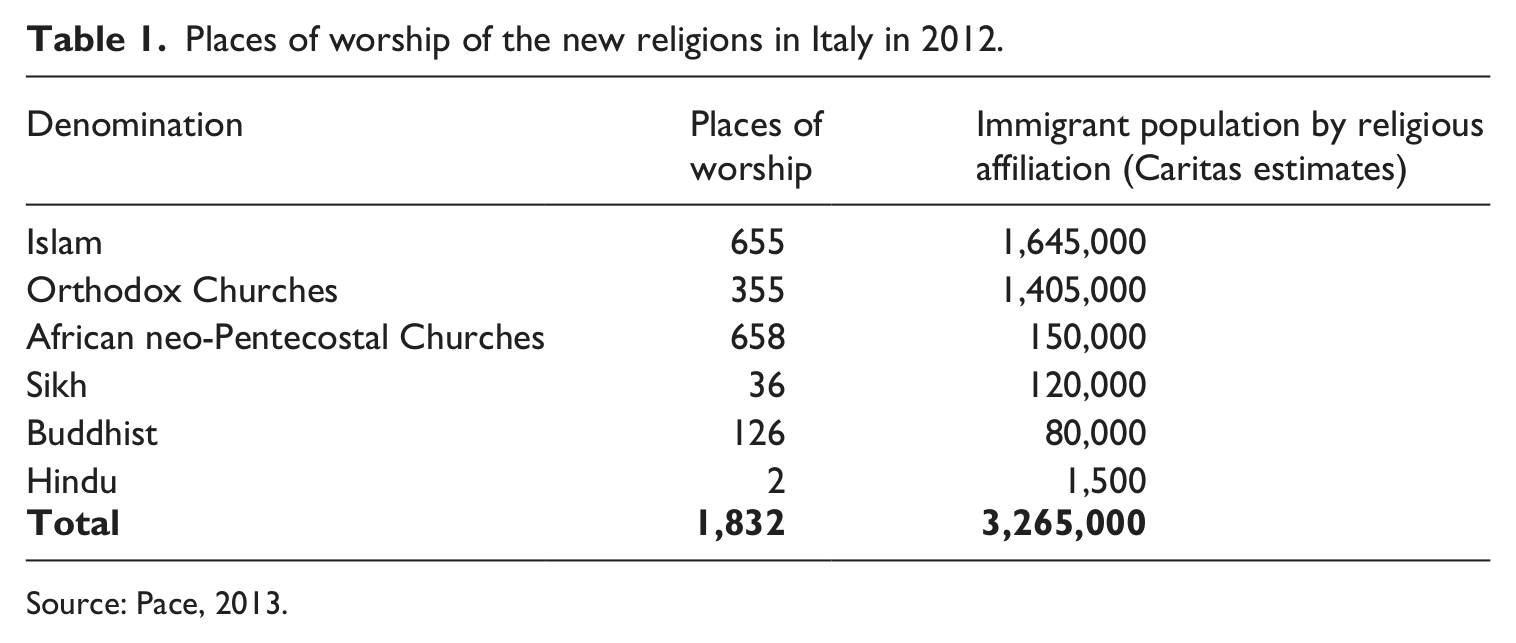
Taking a quick look at non-Catholic religions in Italy, we see the following situation concerning places of worship (Table 1).
Places of worship of the new religions in Italy in 2012.
Source: Pace, 2013.
As we can see, the Chinese and Latin American Evangelical Churches are not on the list: the former are difficult to survey; the latter are beginning to spread, but they are of little importance in comparison with the denominations included in the above table.
There are Islamic places of worship dotted all over the country, with a greater density where the concentration of small and medium enterprises (in the numerous industrial districts of northern and central Italy) has attracted numerous immigrants from countries with a Muslim majority. This means not only the Maghreb countries (Morocco taking first place, with half a million men and women who have now been residing permanently in Italy for 20–25 years), but also Egypt, Pakistan and Bangladesh. The relatively large Iranian and Syrian communities date from further back, having become established at the time of their two countries’ political troubles: with the advent of Khomeini’s regime in Iran, and Hafez el-Assad’s repression of the political opposition in Syria in the 1980s.
Map 1 gives us an idea of the uneven distribution of the places of worship, which are mainly prayer halls (musallayat), sometimes precariously occupying uncomfortable premises. In fact, the number of mosques, in the proper sense, can be counted on the fingers of one hand: there are only three, the most important being the one opened in Rome in 1995, which can contain 12,000 faithful.
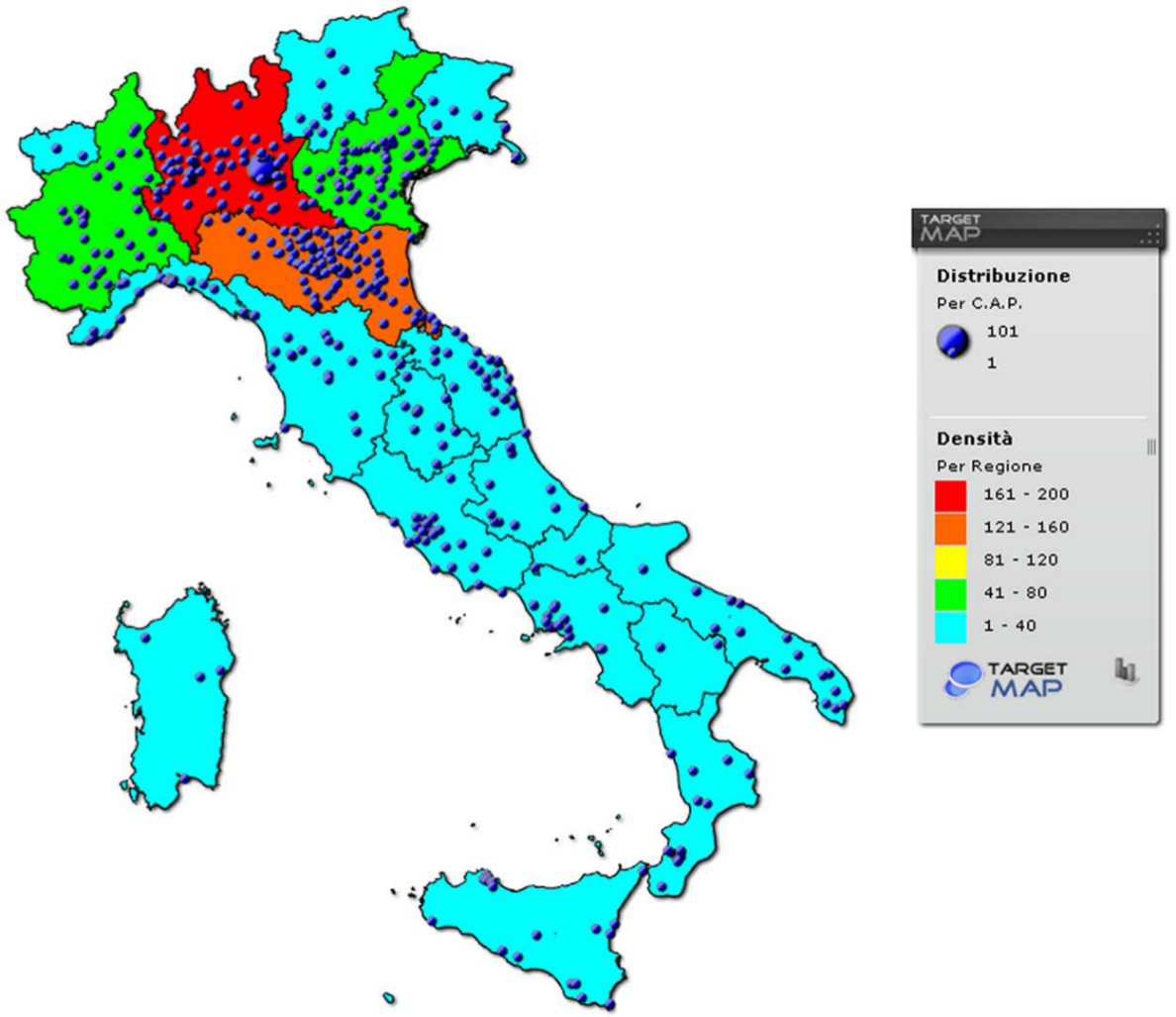
The 655 Muslim prayer halls in Italy (data as at 2012, by region).
We can see from the above map that the prayer halls are concentrated mainly along a west–east axis, peaking in Lombardy, followed by the Veneto and Emilia-Romagna regions. This distribution also reflects the different components of the Muslim world, recognizable in some of the most important national associations – if for no other reason than because almost all the places of worship included in the census refer, from the organizational standpoint, to one of these associations. On the one hand, there is the Union of Islamic Communities of Italy (UCOII), which is historically close to the Muslim brotherhood (though it is currently undergoing internal change): this is one of the best-organized associations, which manages 31% (205) of the prayer halls identified in the census, while another 32% (209) are part of the new Italian Islamic Confederation, (CII), which mainly enrols Moroccan immigrants (and their families). The other 240 musallayat belong to other, smaller associations, at least one of which – called the Islamic Religious Community (COREIS) – was founded by an Italian convert to Islam (through the esoteric tradition that goes back to the figure and thinking of René Guénon), so it is easy to imagine that this is, strictly speaking, an Italian Islam. Although this is numerically a small group, it has a public visibility unlike any of the other, above-mentioned associations.
The presence of the Orthodox Christians appears to be much more stable and well defined than the still precarious position of the various Muslim communities (also in terms of the often poor, derelict urban locations made available to them as places of worship), since the latter are still waiting to see their legal position confirmed on the strength of an understanding between these Muslim communities and the Italian State, in accordance with the Italian constitution. This difference is not only because one of the Orthodox Churches was recently recognized (in December 2012) by the Italian State, but also because their inclusion in the Italian social and religious fabric has been facilitated – for the Romanian, Moldavian and Ukrainian Orthodox Churches, at least – by the bishops of the Catholic Church. In many a diocese, where there was a visible and pressing demand for places of worship or parishes, the Catholic bishops authorized Orthodox priests to use small churches left without a priest, or chapels that had remained unused for some time (located on the outskirts of towns). The global picture, accurately reconstructed in our study by Giuseppe Giordan (2013), emerges as follows (Table 2).
New Orthodox parishes by reference institution (data as at 2012).
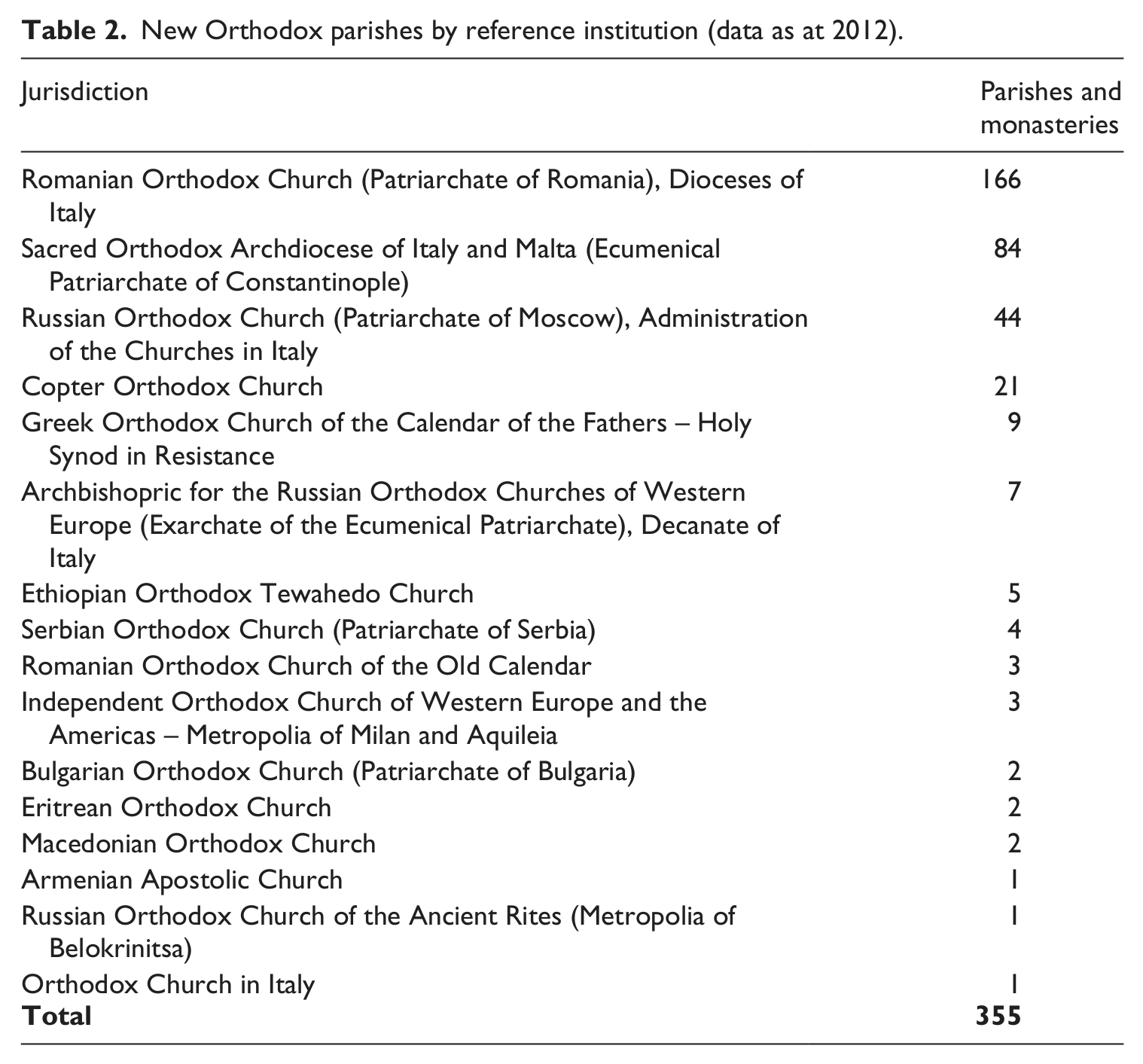
The vast majority of the parishes were established after the year 2000 and almost 80% of them occupy churches granted by Catholic bishops; 81% of the popes are married and 69% of them are between 29 and 45 years old. In comparison with the Muslim communities, the Orthodox parishes are more evenly distributed all over Italy, as we can see from the Map 2.
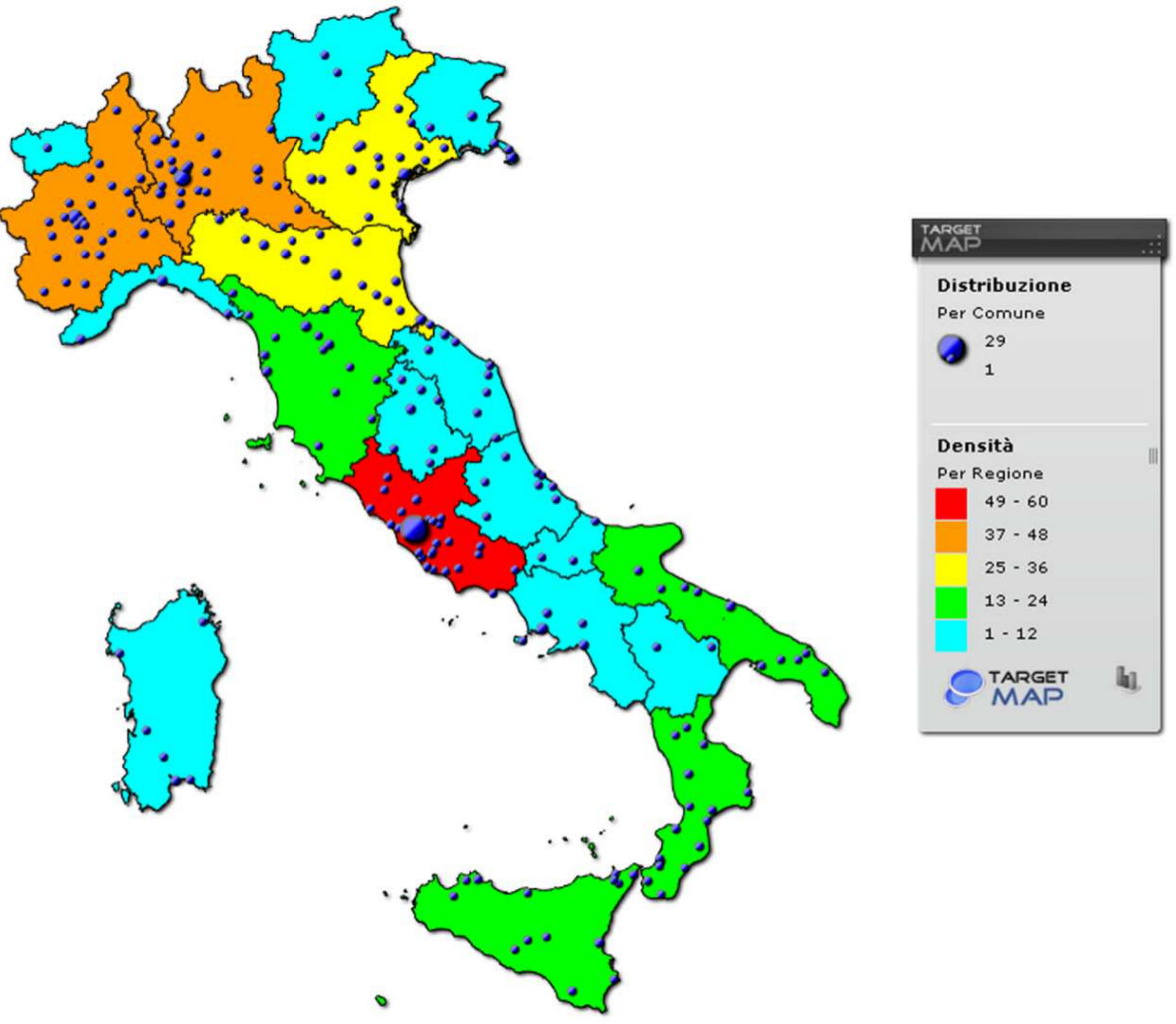
Orthodox parishes in Italy (as at 2012).
If we now look at the 36 Sikh temples (Gurudwara), their uneven territorial distribution stems from the segments of the job market that immigrants from the Punjab have gradually come to occupy. A sizeable proportion of these workers has filled the space abandoned by Italians throughout the central portions of the northwest and northeast of Italy, including parts of Emilia, as breeders of cows serving the large dairy industries and pigs for pork products: the historical figure of the Italian bergamini (as they were called throughout the Po valley) has been replaced by a man with a turban, the Sikh. These migrants have not only benefited from a good salary, they have also been given a home (usually adjacent to the stables so that they can take care of the animals round the clock), and this has made it easier from them to bring their families to Italy – something that is much harder for other communities of migrants to do because they are usually unable to demonstrate that they have an established home. As a consequence, a generation of Italian Sikh soon developed (either because they arrived at a very young age, or because they were born in Italy).
The Sikh communities now amount to about 80,000, out of the 120,000 immigrants from India. Most of them arrived in Italy around 1984, driven by a combination of factors including: severe social problems in the Punjab region because Great Britain (the country to which these migrants had historically flocked) refused them entry; a crisis in the farming sector; and political conflict between the independentist Punjabi movement and the government in New Delhi (Denti et al., 2005; Bertolani, 2005; Bertolani et al., 2011).
Our map of the gurudwara (Map 3) was developed by Barbara Bertolani (2013). First of all, it shows a gradual institutionalization of the Sikh communities, which have proved capable not only of finding the financial resources needed to renovate old industrial sheds and convert them into places of worship, but also of negotiating with the native communities without encountering any particular administrative difficulties or political obstacles (unlike the Muslim communities when they try to set up a prayer hall or mosque). The map also shows the early signs of a differentiation amongst the Sikh: there are two different associations (the Association of the Sikh Religion in Italy and the Italy Sikh Council) to which the various temples refer. There is also a religious minority that mainstream Sikhism considers heterodox, the Ravidasi, followers of a spiritual master called Ravidas Darbar, who appears to have lived between the 14th and 15th centuries in Punjab; for his wisdom and authority, he was recognized as a new guru and added to the ten that all of the Sikh world venerates. Although some hymns attributed to Ravidas have been included in the Sikh’s sacred text (the Granth Sahib), most Sikh deny him the same status as the gurus officially acknowledged by tradition. Ravidas would appear to have come from a dalit caste (the tanners, an occupation considered by the Hindu Brahmins to be the very quintessence of impurity) and, although in principle the way of the Sikh (which literally translates the expression sikh-panth) preaches the abolition of the caste system, there still appears to be a strong resistance to the dalit even amongst today’s Sikh.
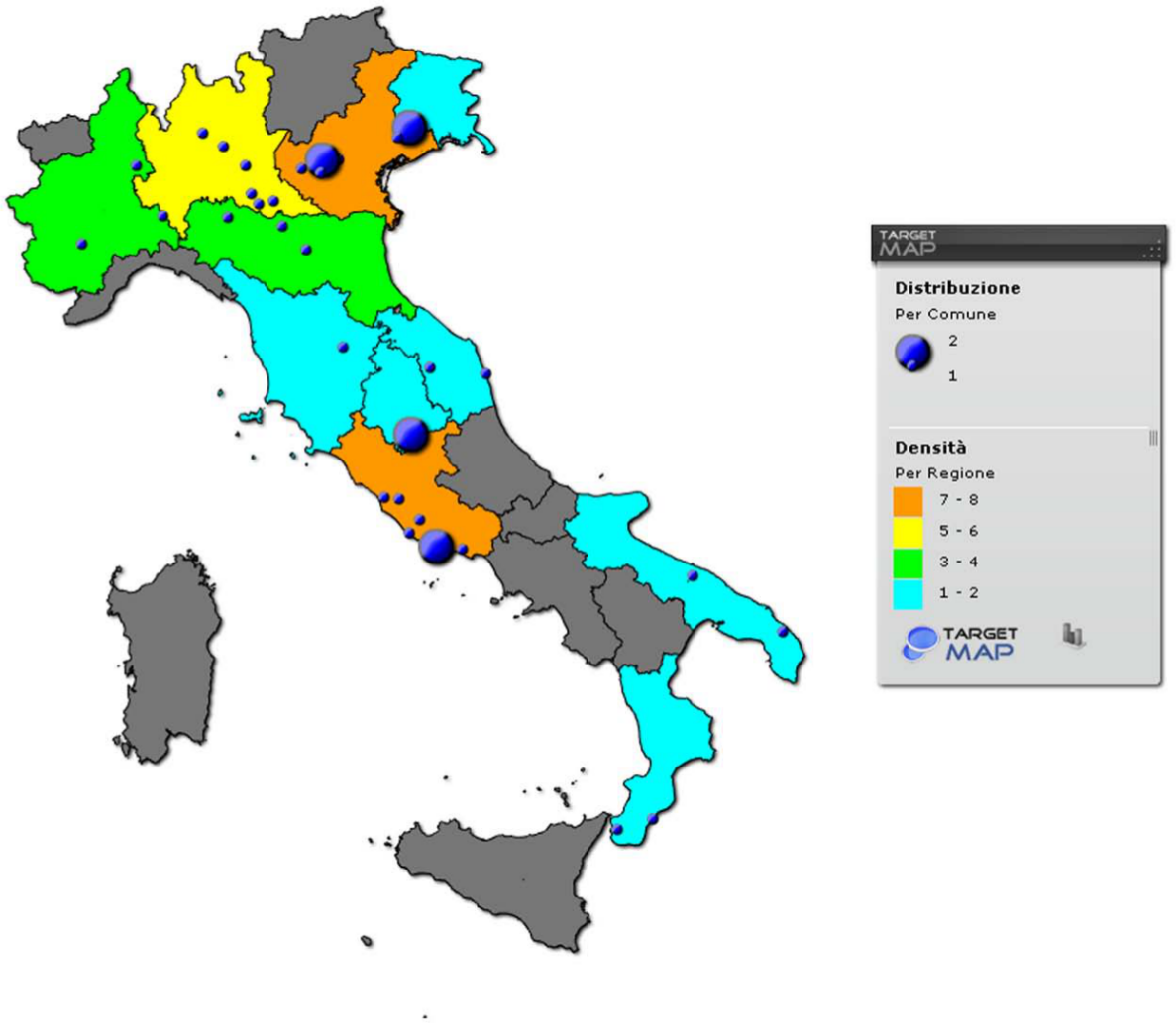
The 36 Sikh temples (gurudwara) in Italy (as at 2012).
So far, I have chosen just a few of the maps now available to document the slow movement of Italian society towards an unprecedented, unexpected socio-religious configuration that is still, in some aspects, unknown to many Italian people. To give just one example: in the areas where the Sikh have settled, for a long time they were mistaken for Arabs with a turban, or Orthodox Christians; few people grasped the differences that exist between them in terms of their national Churches.
To complete the picture, it is worth taking a look at a few other maps that reflect changes under way in Italian society that are not due to exogenous phenomena (like the immigration of men and women from other countries). I have chosen two maps illustrating the growth in the last ten years of the Jehovah’s Witnesses and the various Pentecostal congregations (the most important of which are the Assemblies of God and the Federation of the Pentecostal Churches), both of which have been recruiting new members from among Italian people who were originally Catholics, but have opted to adhere to another form of Christianity.
The Jehovah’s Witnesses first came on the scene in 1891; since then, they have grown constantly in number. Today, they are widespread all over Italy (see Map 4), with more than 3,000 congregations, 1,500 Kingdom halls, 250,000 evangelizers, and a similar number of supporters. They also have a far from negligible number of new conversions drawn from among the Albanian, Romanian and Chinese immigrants, as well as from the French- and Portuguese-speaking Africans (Naso, 2013).
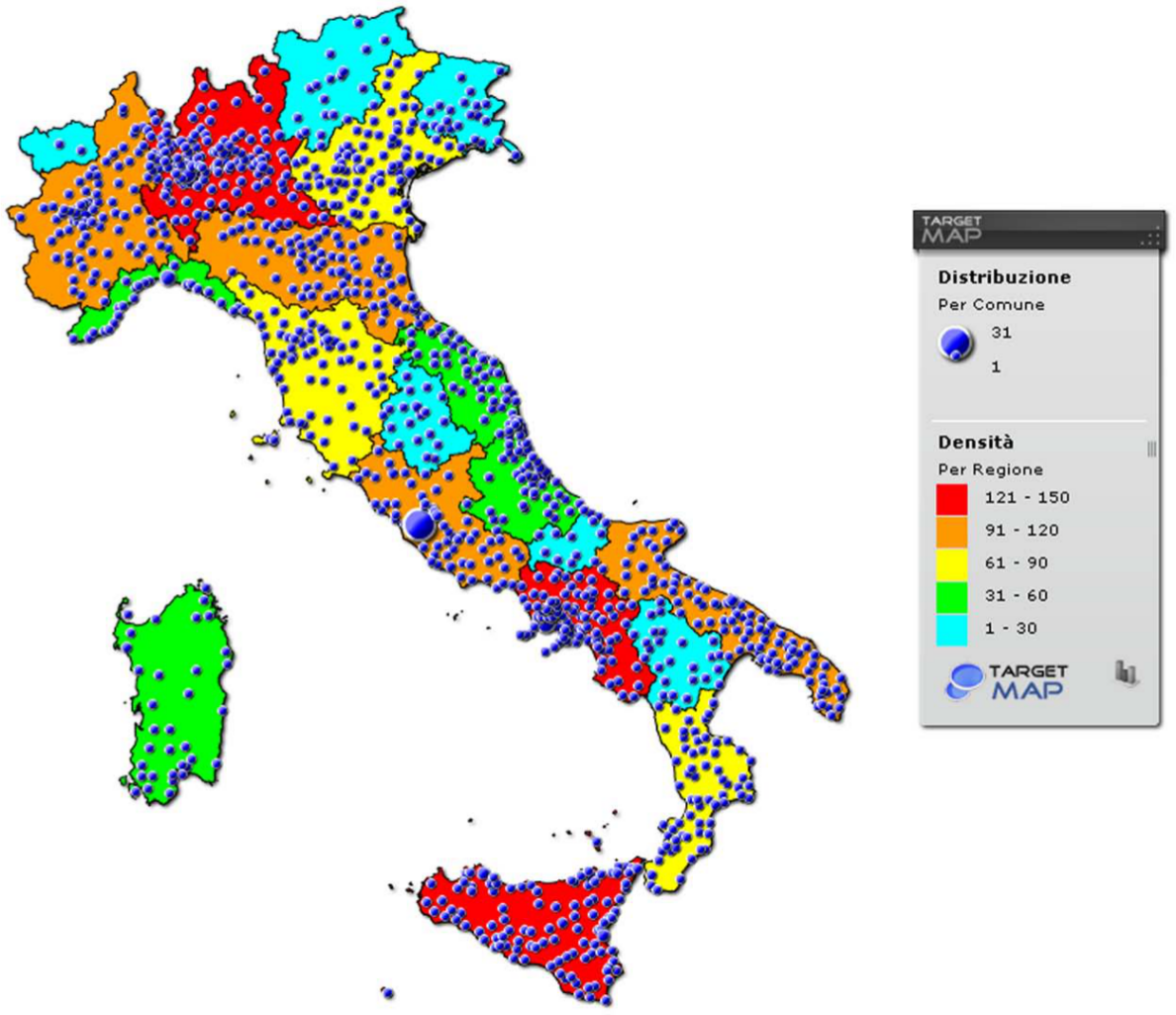
Jehovah’s Witnesses in Italy (congregations and Kingdom halls as at 2012).
The diffusion of the Pentecostal Churches is even more significant. Most of them come under the heading Assemblies of God, with 1,181 communities dotted all over Italy, with a greater density in certain southern regions (Sicily, Campania and Calabria, as shown in Map 5), areas that are generally believed to have strong Catholic traditions. The other group, the Federation of Pentecostal Churches, currently has 400 congregations and approximately 50,000 members.
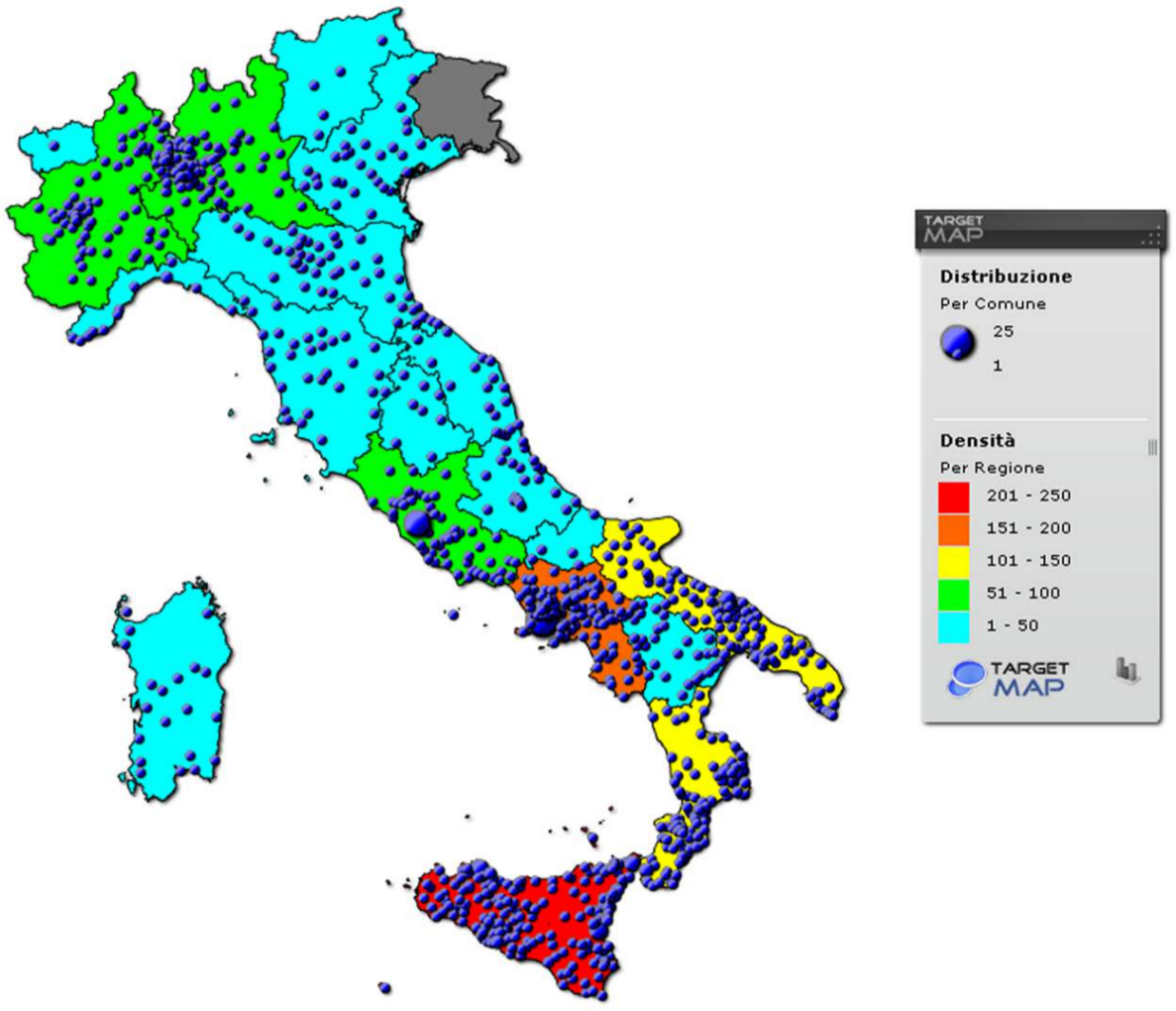
Assemblies of God in Italy (as at 2012) (total number: 1,181).
If we combine the Pentecostal communities and Churches with a Protestant matrix with the African, Latin American and Chinese neo-Pentecostal Churches, and then add the movement that has formed within the Catholic Church called Renewal in the Spirit (which now includes approximately 250,000 people in Italy, with 1,842 communities established in almost every region [Table 3]), we can see that the Church religion model – that Catholicism has developed over the centuries, with its parish-based civilization – is being challenged by an alternative model where the experience (through community rites) of a charisma counts for more than a set of dogmas. Above all, the organizational format of these alternative religions no longer preserves the traditional separation between clergy and laymen. If the spirit blows where it will, as Pentecostalism (in all its various expressions) becomes more established in Italy’s traditionally Catholic society, it could become an element of further differentiation in Italians’ choices in the religious sphere.
Communities of the Renewal in the Spirit (1978–2005) in Italy by region.
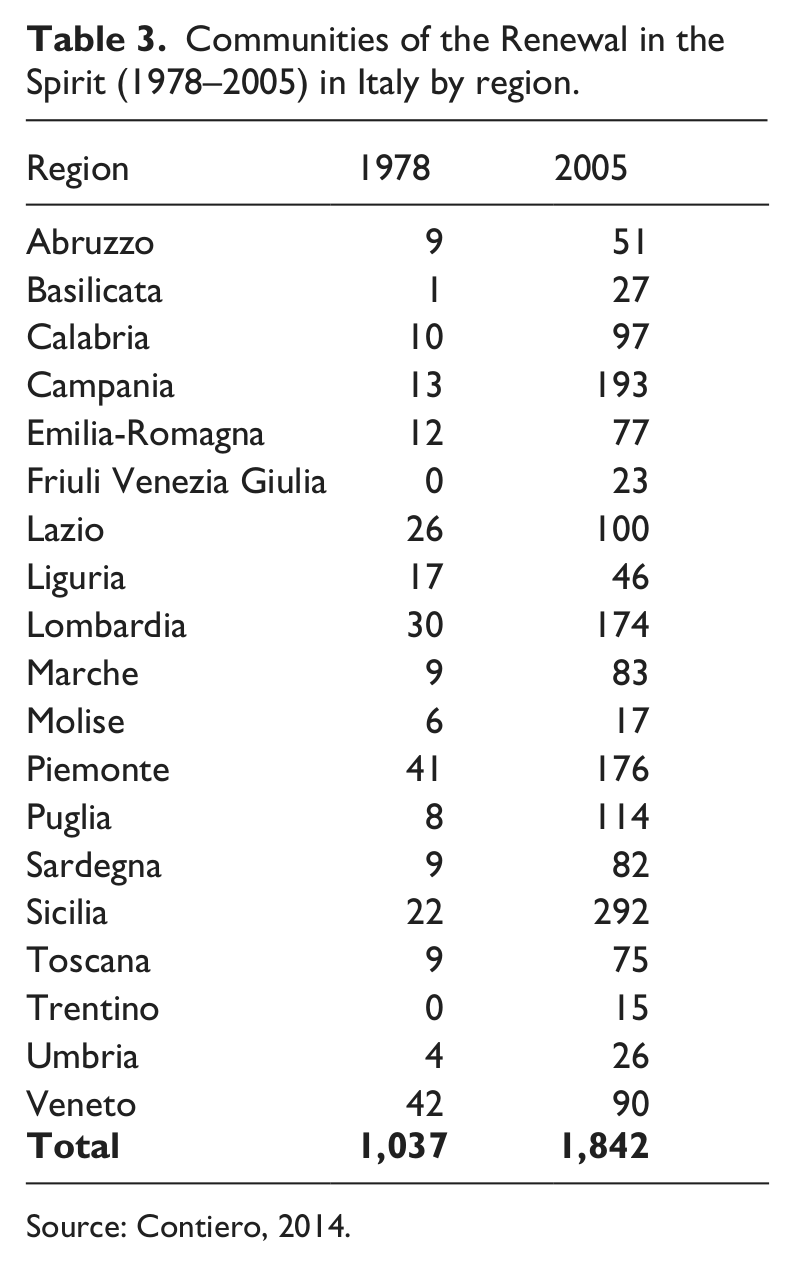
Source: Contiero, 2014.
Achilles and the tortoise travelling at different speeds
Italy’s socio-religious geography is changing – slowly, but constantly and irreversibly. The above maps and figures also faithfully record a demographic transition affecting Italian society as a whole that has been going on for at least 50 years.
The Italian population is continuing to age (nowadays, 20% of the population is over 65 years old). Meanwhile, the size of Italy’s population is not diminishing thanks to a higher birth rate per female (from 1.19 in 2002 to 1.25 in 2012), due to the greater propensity of immigrant families to have children, and more of them, in comparison with Italian couples. Set against this background, it is hardly surprising that the Catholic clergy is constantly ageing too: while there were 42,000 priests in Italy in 1972, this figure is expected to drop to 25,000 by 2023; 48% of Italian clergymen are now over 65 years old, and the mean age of the clergy as a whole is 62. There is a paucity of vocations, and policies to recruit young Asian and African priests seem unable to fill the gap that is already apparent in the ranks of the Italian clergy (Castegnaro, 2012). In comparison, the new popes of the 355 Orthodox parishes are much younger: 60% of them are between 30 and 45 years old, and 6% are under 30; the mean age of the Muslim communities’ 600 imam is under 35; and the 300 pastors of the African Pentecostal Churches are usually between 28 and 35 years old.
For the Italian Catholic Church, the changes taking place on the religious scene are an absolute historical novelty. Being used to seeing themselves, quite understandably, as a well organized salvation organization, with a capillary distribution throughout the country (with 28,000 parishes and a considerable number of monasteries, sanctuaries, centres for spiritual retreats, and so on). Though it is still an authoritative actor on the public stage, the Catholic Church – intended here in all its various aspects, from the highest ranks right down to the normal clergyman, from the lay associations to the individual believers and practising Catholics – is having to cope with the changes that are under way. For a good deal of the short history of Italy as a nation, right up to the Second Vatican Council, the Catholic Church maintained a sort of civil disinterest in the country’s religious diversity. Then it changed tack, during the years of ecumenical and interreligious dialogue, becoming more open to exchanges with the Hebrew communities and the Churches of a Protestant matrix. It succeeded in considering the other religious presences established in Italy as potential parties to a dialogue between different faiths, promoted by the Catholic Church with a view to appearing tolerant and open-minded, while emphasizing that it was still the dominant figure on the public stage in the Italian religious sphere, the primus inter pares in regulating public communication on matters of religion. In parallel with official steps taken by popes and bishops, from the Second Vatican Council onwards, the dialogue continued and a number of small, spontaneous schemes flourished (associations of Hebrews and Christians; permanent roundtables for Muslims, Christians and Jews; and so on). Sociologically speaking, this was an acknowledgement of the existence of other subjects with a religious vocation, who were allowed to speak – often for the first time – in a religious arena that had been wholly occupied by a single subject, the Catholic Church (Pace, 2011). The arrival en masse of immigrants from various parts of the world completely changed the religious scenario. Today, in addition to differences of faith among Italians, there are other diversities, of language, culture, nationality and customs. What was remote has come closer, and the exotic has become familiar. Instead of just being a case of exchanging views with one’s neighbours, it is now a matter of acknowledging a profound change in the socio-religious composition of the Italian population.
The Catholic Church, in all its expressions, has not remained indifferent to society’s movement; it too has moved, but at two different speeds. It has sought to interpret the phenomenon, calling upon all its material and symbolic internal resources, and taking action as an organized, expert system of religious belief accustomed to operating in a social setting on whose symbols it used to have a monopoly, and seeking to transform the unprecedented external complexity into an internal differentiation. The Catholic Church system is striving to incorporate the novel shape and topology of the religious landscape and make sense of it using its own categories, which are broad and narrow at one and the same time, based on open and closed codes. A religious system shows its power and wisdom (in organizational terms) when it succeeds in functioning as a closed system, capable of defending the symbolic boundaries that identify it as such, in order to remain open towards the outside. If we consider the aspect that can be defined as Catholic welfare, managed directly by the Church and its most important supporting associations (from Caritas to the ACLI), the commitment is enormous, as we can see from the map of the centres that provide shelter and (religious) support, set up specifically to serve the material and spiritual needs of many immigrants (Map 6).
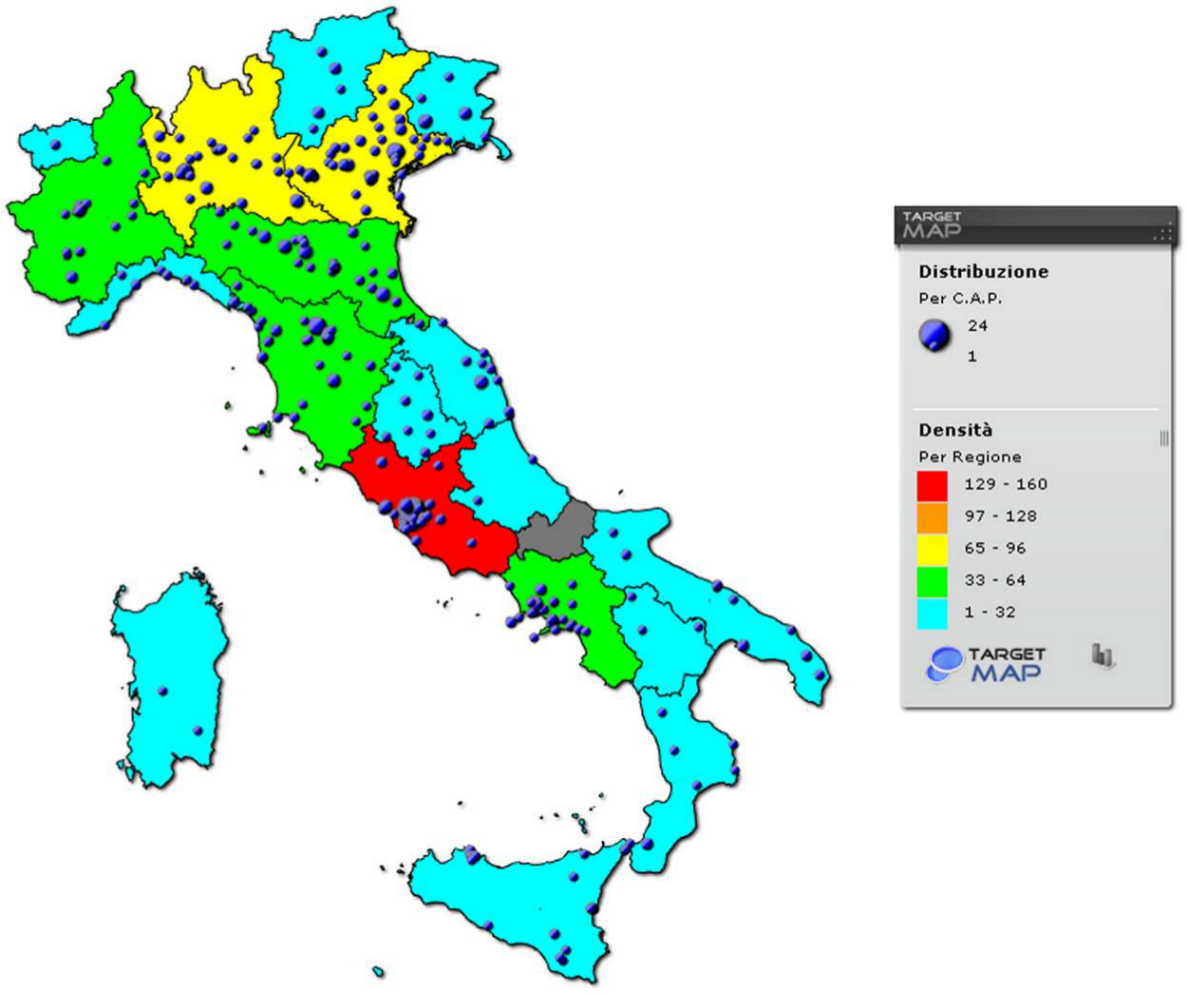
Catholic pastoral centres for immigrants by region (as at 2012).
This capillary effort to provide shelter and support has been balanced by a differentiation in the willingness to have a closer exchange with the other religious faiths that have begun to become organized in Italy. Returning to our initial metaphor, Achilles has tried to catch up with the tortoise, but they are moving at different speeds.
Leaving aside the metaphor now, the Italian Catholic Church has first fine-tuned its traditional charitable activities, mainly through its religious welfare associations, while also engaging in open criticism of the conditions of social injustice and the negative stigma to which immigrants as a whole have been liable, especially when there were centre-right governments in office. Second, it has tried to reiterate its central role on the public stage, acknowledging the existence of religious pluralism, but also defending its historically established dominant position. There are two main indicators of this latter tendency (among others that are less pertinent to the present discussion): the first is the Catholic Church’s determined defence of the teaching of Catholic religion in all public schools (from kindergarten to secondary school, for an hour a week); the second concerns the different ways in which it communicates with the new religious entities.
Concerning the teaching of Catholic religion at school, the Church’s strategy so far has been: from the institutional standpoint, to have the State acknowledge that teachers of this subject (who are recruited and trained by the Church at institutes of religious science run by the bishoprics) have a public role and the same value as teachers of other subjects, and to promote the idea that this lesson on religious culture is not strictly confessional but also presents the other religious faiths.
As for its differentiated willingness to communicate with the other religions, the Catholic Church officially has a soft spot for the Orthodox Churches (which are often granted the use of unused churches and chapels, as mentioned earlier), while it is more cautious in dealing with other religious entities, and particularly with the multi-coloured world of Islam. While local parish priests and Catholic associations were often willing to exchange views and even provide spaces for prayer in rooms attached to the parishes until 2001, the attack on the Twin Towers and the growing sentiments of fear and suspicion in its aftermath have since made it difficult for practising Catholics to accept a dialogue with and give credit to Muslims.
Conclusion
From the religious standpoint, the Italian case is a good example of how, and to what extent, a symbolically monopolistic system can be transformed exogenously. The unprecedented and unexpected religious diversity that has begun to emerge in Italy makes it necessary to update the maps of religiosity and secularization that the country’s sociologists of religion study to interpret the changes taking place over the years. In the past, these changes often occurred within Catholicism itself (Cartocci, 2011), often involving small percentage displacements in a picture of apparently substantial immobility in terms of the Italians’ collective representation of themselves: they saw themselves as Catholic in more than 85% of cases, though they revealed marked differences (and diversified levels of secularization) in both their attitudes to their belief and their behaviour (from their religious practices to their moral choices, which were sometimes highly individualized and by no means consistent with the official doctrine of the Catholic Church).
Now, for the first time after years of research, the maps (some of which are illustrated here) show that we need to use a different compass to interpret a rapidly and radically changing social and religious scenario. With time, Catholicism will also experience some degree of internal change. In the debate on pluralism within the Catholic Church, it will no longer be enough to say ‘bring in the cavalry’ to conceal the fact that only 5% of Italy’s immigrant population are Catholics and even they come from worlds that are moving away from the theology and the liturgy of the Roman Catholic Church. These African, Latin American, Philippine, Chinese and Korean Catholics will add their own point of view to what being Catholic means, which will not necessarily be consistent with Italian mainstream traditions.
This will give rise to a new area of research that will require new intellectual energies to investigate the real religious experiences of so many people belonging to so many religions, going beyond the ethno-centrism (or Catholic-centrism that has inevitably characterized our research on our predominantly Catholic society). We must also reflect critically on the concepts and theoretical reference systems needed to deal with the unprecedented religious pluralism that has been increasingly characterizing life in Italy.
Footnotes
Funding
This study was financed the Ministry for Education and the University (MIUR). The group of researchers, coordinated by Enzo Pace, came from the universities of Padua (Stefano Allievi, Barbara Bertolani, Annalisa Butticci, Monica Chilese, Annalisa Frisina, Giuseppe Giordan, Khalid Rhazzali, Valentina Schiavinato), Bologna (Massimiliana Equizi, Cristiana Natali, Pino Lucà Trombetta, Azeb Trombetta), Turin (Giulia Becchis, Luigi Berzano, Carlo Genova), Rome (Enrico Gandolfi, Domenico Di Sanzo, Maria Immacolata Macioti, Antonietta Maggio, Paolo Naso) and Palermo (Annamaria Amitrano, Giuseppe Burgio, Igor Cardella, Elisabetta Di Giovanni).
Author biography
Address: Department of Philosophy, Sociology, Education and Applied Psychology, via Cesarotti 12, 35123 Padova, Iatly.
Email:
References
Supplementary Material
Please find the following supplemental material available below.
For Open Access articles published under a Creative Commons License, all supplemental material carries the same license as the article it is associated with.
For non-Open Access articles published, all supplemental material carries a non-exclusive license, and permission requests for re-use of supplemental material or any part of supplemental material shall be sent directly to the copyright owner as specified in the copyright notice associated with the article.
