



Abstract
Ecosystems, biodiversity, and the human population all depend on a quality or uncontaminated environment. Quality environment provides people and wildlife access to nutrition, medications, dietary supplements, and other ecosystem services. The conservation of biodiversity—that is, species richness, abundance, heredities, and diversity—as well as the control of climate change are facilitated by such an uncontaminated environment. However, these advantages are jeopardized by newly emerging environmental chemical contaminants (EECCs) brought on by increased industrialization and urbanization. In developing countries, inadequate or poor environmental policies, infrastructure, and national standards concerning the usage, recycling, remediation, control, and management of EECCs hasten their effects. EECCs in these countries negatively affect biodiversity, ecological services and functions, and human health. This review reveals that the most deprived or vulnerable local communities in developing countries are those residing near mining or industrial areas and cultivating their crops and vegetables on contaminated soils, as is wildlife that forages or drinks in EECC-contaminated water bodies. Yet, people in these countries have limited knowledge about EECCs, their threats to human well-being, ecosystem safety, and the environment, as well as remediation technologies. Besides, efforts to efficiently control, combat, regulate, and monitor EECCs are limited. Thus, the review aims to increase public knowledge concerning EECCs in developing countries and present a comprehensive overview of the current status of EECCs. It also explores the sources and advancements in remediation techniques and the threats of EECCs to humans, ecosystems, and biodiversity.
Keywords
Introduction
A safety ecosystem is important for food and biomass production, water retention, supplies, and filtration. It is also vital for the survival of humans, biodiversity—which encompasses a wide range of all living organisms on the planet, such as plants, animals, fungi, and microbes, and their habitats—and healthy systems.1–3 Along with regulating climate change, a healthy ecosystem also maintains the provision of clean, oxygen-rich air and water and raw products, including food and medicines.2,3 Also, it promotes the interaction between biotic and abiotic components, which in turn facilitates the breakdown and transformation of organic matter and carbon storage, 4 aeration, and detoxification of various harmful chemicals, e.g. pharmaceuticals, insecticides, and pesticides.5,6 Our environment is home to millions of living things, both flora and fauna, whose interplay ensures healthy and sustainable ecosystems and human life on earth.3,6 However, contaminated environments are supposed to adversely affect these organisms and their roles, threatening ecosystem health, agricultural productivity, biodiversity, and soil biotic. 7 Accordingly, in addition to losing thousands of biodiversity and ecosystem services, a contaminated environment could also hinder people from producing enough and safe food, which is crucial for food security and a sustainable world. 3 This is due to the fact that a quality environment, biodiversity, and human health are all clearly correlated.3,8
Emerging environmental chemical contaminants (EECCs) are examples of major pollutants as a result of industrialization and urbanization. They are defined in this article as all chemical products that are continuously produced, used, and released into the environment in a multitude of ways; however, currently, they lack or have limited regulations especially in developing countries. They include organic (e.g. insecticides, herbicides, synthetic fertilizers, dyes, and phenols) and inorganic (e.g. potentially hazardous heavy metals) chemicals.5,9,10 Further, nanoparticles, drugs, personal hygiene products, phthalates, heavy metals, per- and poly-fluoroalkyl compounds, flame retardants, and microplastics are a few examples of industrial and urban EECCs.3,8,9,11–13 Nonetheless, some EECCs that have harmful impacts on the environment and human well-being are found in nature.8,12 Since EECCs have a detrimental effect on biodiversity, human, environmental, and social integrity, they need to be managed globally, especially in developing countries.8,10
Overuse and misuse of agrochemicals, nanomaterials, drugs, personal hygiene products, and pharmaceuticals, materials containing toxic heavy metals, per- and poly-fluoroalkyl compounds, and many other EECCs can lead to environmental or ecosystem pollution, which may eventually cause the decline or extinction of biodiversity.5,7,14 When exposed to an EECC-contaminated environment, for instance, when eating or drinking contaminated food, water, or forage, human beings and wild animals may also be affected either directly or indirectly.7,15 Earlier study affirms that more than fifty thousand people die each year worldwide as a result of prolonged human exposure to EECCs. 16 Pregnant women, the elderly, and children make up the majority of these victims.14,16–18 Even with this established evidence of effects, controlling and preventing EECCs from entering the environment remains the main problem facing developing countries, especially those in sub-Saharan Africa. 9 And, there is increasing EECC contamination (e.g. pharmaceutical wastes, toxic heavy metals, microplastics, pesticides, etc.) in the environment that increases the risk to humans, wildlife, and ecosystem safety. Consequently, the increase in EECC pollution in the environment raises the risk to people, wildlife, and ecosystem safety. This problem has been present since there are insufficient or no national strategies for the use and discarding of EECCs in most developing countries.
The EECCs-caused contamination affects soil fertility by reducing soil organic matter and reducing soil resilience, biodiversity, and its capacity to hold water.3,8,19 This occurs because EECCs cause the demise of vital macro- and microorganisms, i.e. nematodes, bacteria, fungi, protozoans, arthropods, and earthworms, which help maintain a healthy soil ecosystem. These organisms execute imperative roles such as soil aeration, decomposition and breakdown of organic matter, carbon cycling, and fixation of atmospheric nitrogen, which ensure quality ecosystem.3,20,21 Thus, the dwindling diversity of these organisms and changes in their community structure due to EECCs could cause a loss of ecosystem viability and services.3,20 This can further jeopardize the way different soil macro- and microorganisms interact with each other and their environment.
Previous studies highlight that the most deprived local communities in the developing world, particularly those residing near mining or industrial areas and cultivating their crops on contaminated soils, are the most vulnerable, as is wildlife that forages or drinks in EECC-contaminated water bodies.9,15,22,23 However, people in developing countries still lack knowledge about EECCs, their problems (i.e. threats to human well-being, ecosystem safety, and the environment), and remediation technologies. Also, effort to efficiently control, combat, regulate, and monitor EECCs is also limited. This review aims to increase public knowledge concerning EECCs in developing countries and present a comprehensive overview of the current status of EECCs. It also explores the sources and advancements in remediation techniques and the challenges of EECCs to human, ecosystem, and biodiversity. Overall, the rest of the paper is structured as follows: Section 2 contains the literature review method; Section 3 contains the sources of EECCs; Section 4 contains the potential effects of the EECCs on biodiversity and humans; Sections 5, 6, and 7 contain the remediation technology of EECC, biodiversity conservation implications, and the limitations of the study, respectively; and Section 8 is the conclusion.
Literature review method
Peer-reviewed articles from international databases and publishers, which include Springer, Elsevier, Taylor & Francis, SAGE, Science Direct, Scopus, Wiley-Blackwell, PLOS ONE, Hindawi, MDPI, the Directorate of Open Access Journals, African Journal Online, and the Web of Science, are the source of the material presented in this article. We looked at papers that addressed EECCs—their origins, types, and effects on biodiversity, the environment, and people. Within the databases, publishers, journals, article titles, and keywords, we specifically searched for the following terms: “types of EECCs,” “soil pollutants,” “chemical pollutants,” “pollution,” “environmental pollutants,” “sources of pollutants,” “remediation technology,” “industrial pollutants,” “pharmaceuticals,” “urban pollutant,” “impact EECC humans,” “impact EECCs on biodiversity,” “pesticides,” “insecticides,” “impact EECCs on ecosystem health,” and “types of EECCs.” The search for information took a period of four months, from October 2023 to January 2024. The review covered the period from the 2000s to the present to establish the very recent updates concerning research on EECCs and their effects on biodiversity, humans, and remediation technology.
Sources of EECCs
Different economic activities release EECCs into the environment, including mining, industrial, coal-burning, and agricultural practices such as extensive and inappropriate application of synthetic fertilizer and chemical pesticides in farming systems.3,24,25 The primary sources of EECC, as shown in Table 1, include industrialization (e.g. manufacturing of pharmaceuticals, electronics, nanomaterials, plastics, personal care products, poly-fluoroalkyl substances, etc.); increasing urbanization (e.g. domestic wastes); and agriculture (e.g. pesticides, insecticides, synthetic fertilizer, and herbicides). These pollutants are released into the environment through agricultural runoff, direct discharge, or wastewater treatment facilities.23,25–27 Some EECCs are released into the environment by the application of untreated human excreta and animal waste on farms.5,25 These excreta and wastes contain a significant quantity of hazardous EECCs as well as other materials such as polycyclic aromatic hydrocarbons, trace metals, and other contaminants. 25 Some farmers in developing countries, for instance in Kenya, India, Bangladesh, Zambia, Zimbabwe, and Tanzania, to mention a few, utilize agrochemicals and human and animal waste extensively in their fields, which increase the accumulation and risks of EECCs.23,25,28,29
Some types and sources of EECCs.

Given that the majority of these synthetic chemicals and fertilizers contain EECC, such as hazardous heavy metals (i.e. arsenic, cadmium, lead, chromium, mercury etc.,) there is a risk to human and biodiversity. They can change the composition of the soil’s biodiversity and the overall condition of the soil as they stay inert for many years without degrading and ultimately find their way into the food chain.9,13 In addition, poor disposal of waste, urban runoff, and the abuse of agrochemicals are sources of EECCs in the environment. 5 These herbicides and pesticides could also contain antibiotic residues, genes for antibiotic resistance, and persistent organic contaminants.2,26,35,36 Therefore, their misuse can contaminate agricultural products, plants, and crops and have a direct impact on humans through consumption and pollinating insects, among other things. 5
As EECCs, nanoparticles (particles with less than 100 manometers) pose a threat to human, biodiversity, and environmental safety.11,12,32 According to earlier research, nanoparticles can readily enter human living cells due to their small size, which might cause cancer and other health issues.11,12,32 They are released throughout the fabrication and application of nanoscopic objects, tools, equipment, or materials. 11 Also, most industrial processes or activities result in the production of nanowastes, which usually end up in the atmosphere. Examples of nanomaterials that have been widely used in a variety of goods comprise graphene, carbon nanotubes, and fullerenes.11,32 Carbon nanotubes and fullerenes, for instance, are employed as lubricants in industrial machines and equipment and in sports. Besides, they are present in a wide range of goods, including sunscreen, food packaging, and cosmetics.
Personal care and pharmaceutical products are other examples of EECCs that are found in a variety of products, including medications (such as carbamazepine, antibiotics, etc.), toothpaste, makeup or cosmetics, laundry detergent, and sunscreen.25,37 For instance, pharmaceuticals are employed by both humans and animals to reduce the risk of disease, enhance the quality of meat, or increase the rate of reproduction. Since they are employed to improve the health of plants, animals, and people, and because they are partially disintegrated in the environment, many of them end up in water bodies, soil, or sewage.24,25,38 This occurs because the majority of pharmaceuticals, whether metabolized or not, are eliminated through urine and feces, contaminating the soil and causing bioaccumulation in certain plants. 25 Pharmaceutical residues, such as antibiotics, analgesics, and antiretrovirals, have been revealed in plant tissues, feces, urine, wastewater, and sludge.24,25,38
Minute plastic particles or simple microplastics with sizes ranging from 0.1 to 5000 μm are another potential industrial and urban EECCs.4,12,34 Similar to other EECCs, they pollute the environment by using plastic mulch, sewage sludge, and organic fertilizers. 4 Microplastics’ presence in the environment has a significant negative effect on food or forages or directly affects biodiversity in the food chain.3,25,34 The primary processes that result in microplastics include the release of plastic fibers from clothing, the disintegration of larger plastic materials, and the use of microbeads in personal care products. 12 However, in contrast to the developed world, there is less awareness and information about microplastics in developing countries and their effects on biodiversity, including human health7,39 Furthermore, EECCs are present in a variety of products, including but not limited to nonstick cookware, stain-resistant fabric, and firefighting foam. Per- and poly-fluoroalkyl compounds pollute the environment and linger in it for years, much like other EECCs do. 38 Organophosphate flame retardants are another kind of EECC that are generated during garbage disposal and plastic item burning from industries or urban areas. 12 Human health, biodiversity, and ecosystem safety can all be negatively impacted by per- and poly-fluoroalkyl chemicals, as well as organophosphate flame retardants.39,40
Potential effects of the EECCs on biodiversity and human
According to recent and earlier research, EECCs pose a serious risk to ecosystem safety, endangering both human health and biodiversity.9,14,15,25 The neurological, reproductive, cardiovascular, and immune systems of humans and other animals, as well as their organs (lungs, liver, kidneys, skin, etc.) may all suffer harm depending on EECCs.8,12,33 Long-term negative consequences of EECCs include tumors, carcinoma, birth abnormalities, and miscarriages in humans and wildlife, as well as the impairment of ecosystem safety. 31 However, the kind and degree of exposure to EECCs determines the magnitude of the effects on biodiversity, human, and ecosystem safety (Figure 1 and Table 2). Being one of the EECCs, antibiotics and heavy metals pose a threat to humanity as well as biodiversity.8,13,41 After being released into the environment, they generally build up in plant and animal tissues and ultimately find their way into the food chain.22,42 For instance, food crops like rice grains and cassava leaves that were farmed next to the Shenda gold mine in Geita, Tanzania, were confirmed to have high levels of mercury (Hg) concentrations that exceeded the maximum amounts permitted by the Tanzania Bureau of Standards. 15 So these contaminants could endanger the health of people, wildlife, and other organisms when they consume contaminated meat, milk, vegetation, and/or fruits, seeds, vegetables, and crops.27,43 Prolonged feasting on contaminated foods may result in the loss of biodiversity and exacerbate the extinction risks of threatened species.8,41

Negative impacts of EECs on biodiversity and human being.
Some potential effects of EECs ecosystem, biodiversity, and human health.

Some studies have documented incidences of poisoning caused by exposure to heavy metals. For example, in 2010, research in the Nigerian state of Zamfara revealed that 400 children died as a result of lead poisoning. 17 Also, it was reported that children whose fathers worked in lead mines in the South African town of Aggeneys had high blood lead levels (nearly 16 μg/dl) and that children in Kabwe, Zambia, where the soil had high levels of lead contamination (around 51,188 mg/kg), had lead pollution of about 427.8 μg/dl.17,44 Another piece of evidence of the impacts of heavy metals and antibiotics on biodiversity and humans is from studies in Uganda,26,29,45–48 and Kenya.22,23,40
Moreover, EECCs such as agrochemicals (i.e. pesticides, rodenticides, herbicides, synthetic fertilizers etc.) are harmful to biodiversity e.g. insect pollinators and soil living organism.9,13,25,44 Widespread application of pesticides can cause the demise of agroecosystem biodiversity, both aerial, ground, and underground species. Besides, this can affect the interactions between organisms (e.g. plant–pollinator interactions) in the ecosystem, leading to the collapse of primary productivity7,23 and ecosystem services, for instance, airflow to the soil and the cycling of nutrients.3,7,12,13 This can further have an impact on the species behavior, e.g. reproduction and growth rate.13,14 Moreover, excessive use of agrochemicals can alter the acidity, salinity, and eutrophication of ecosystems, which may cause species extinction. 13 According to published data, exposure to agrochemicals eliminates millions of species and affects roughly 25 million farmers each year.2,5
Microplastics, like all other EECCs, impact the well-being of people, biodiversity, and the composition, function, and physicochemical properties of soil in contaminated environments. 4 The diversity and species richness of soil-living things may decline as a result of changes in ecosystem properties. 4 In addition to soil biodiversity, other wildlife species, such as invertebrates, may also be indirectly affected by deviations in physicochemical properties (e.g. a decrease in water quality, a change in conductivity, and pH), including a decrease in food or feed availability. 4 But, it is important to keep in mind that microplastics, like other EECCS (e.g. heavy metals and antibiotics), can enter the food chain and endanger human and wildlife by contaminating food or soil and eventually leading to their demise. 34 In general, adequate control and surveillance of EECCs are crucial to minimize these risks, protect the welfare of people, and promote biodiversity conservation.
Remediation technology of EECC
To control the use and release of EECC products and minimize any possible risks, a number of strategies are available.7,12,13,27,49 They include, yet are not restricted to biological, chemical, and physical remediation.7,12,13,49 Nevertheless, it is crucial to keep in mind that these methods rely on the nature and source of EECCs, the degree of pollution, and the effects they have on the ecosystem.7,27 Consequentially, integrating these methods would improve remediation process. Figure 2 depicts some of the remediation techniques used to remove hazardous EECCs from the environment.
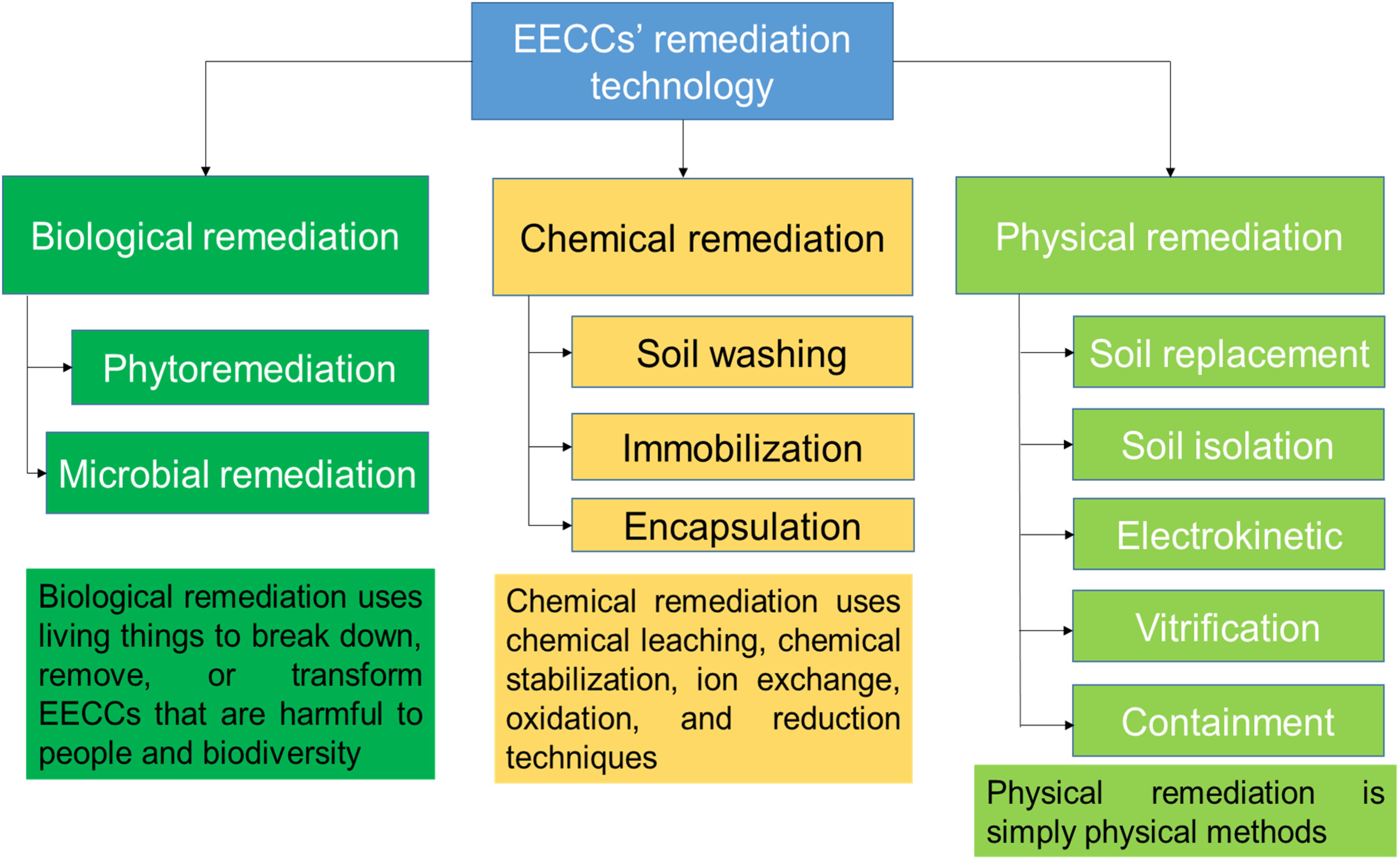
Examples of remediation techniques used to transform or/and remove hazardous EECCs from the environment.
Biological, chemical, and physical remediation of EECCs
Remediation is the most economical and efficient way to remove EECCs from the environment.13,25,31 It encompasses physical, chemical, and biological remediation (also known as bioremediation, Figure 2).6,49,50 A technology that uses living things to break down, remove, or transform EECCs that are hazardous to people and biodiversity is known as biological remediation, or simply bioremediation.7,13 It is regarded as one of the most economical, effective, and environmentally benign ways to degrade EECCs. Phytoremediation and microbial remediation techniques are all part of bioremediation.6,7,49,51,52 EECCs can also be eliminated from contaminated ecosystems using chemical methods called chemical remediation.25,53 It entails membrane filtration, oxidation, reduction, chemical leaching, chemical stabilization, and ion exchange procedures.49,53 Moreover, EECCs are removed from the environment via physical methods such as permeable barrier systems, excavation, vitrification, washing or soil cleansing, electrokinesis, and isolating contaminated areas in impenetrable layers.49,53 These EECCs remediation technology are described below.
Biological remediation: phytoremediation and microbial remediation
Phytoremediation—also known as agroremediation, botanoremediation, vegetative remediation, or green remediation—uses certain plant species that are tolerant to metals in order to clean up or restore contaminated areas or eliminate particular organic or inorganic contaminants from the environment.7,13 Hyperaccumulators, sometimes referred to as high-biomass crops, are plant species that have the capacity to absorb EECCs directly from the soil and store them in their biomass.7,49 There are different types of phytoremediation, which include, phytostabilization, phytoaccumulation or phytoextraction, and phytovolatilization (phytotransformation or phytodegradation).7,54,55 Table 3 lists some possible plant species for phytoremediation as well as phytoremediation methodologies. When plants absorb heavy metals or other EECCs from the soil through their roots and move them into their shoots and leaves, this is known as phytoaccumulation. 49 While certain metals are particularly toxic to specific plants, those plants that accumulate EECCs in their biomass and support permanent soil clean-up are known as hyperaccumulators.51,54 They usually do not show any toxicity signs. 49
Some examples of plants used in phytoremediation of EECCs.

Phytostabilization employs plant species that produce phytochemicals to immobilize EECCs and prohibit or restrict their mobility.54,55 This approach helps to prevent or lessen EECC movement in the food chain and groundwater.6,49,50 In other words, these plants restrict the leaching of EECCs (e.g. heavy metals), obstruct their flow, and prevent interaction with contaminated soils7,49 During the process of phytodegradation, plants take up EECCs from polluted soils, metabolize them, and convert them into volatile organic compounds, less-toxic byproducts, or less-harmful vapors using certain enzymes.7,50,55,56 In general, phytoremediation trials conducted in previous studies have demonstrated efficacy in eliminating EECCs from contaminated areas.6,50,54–56
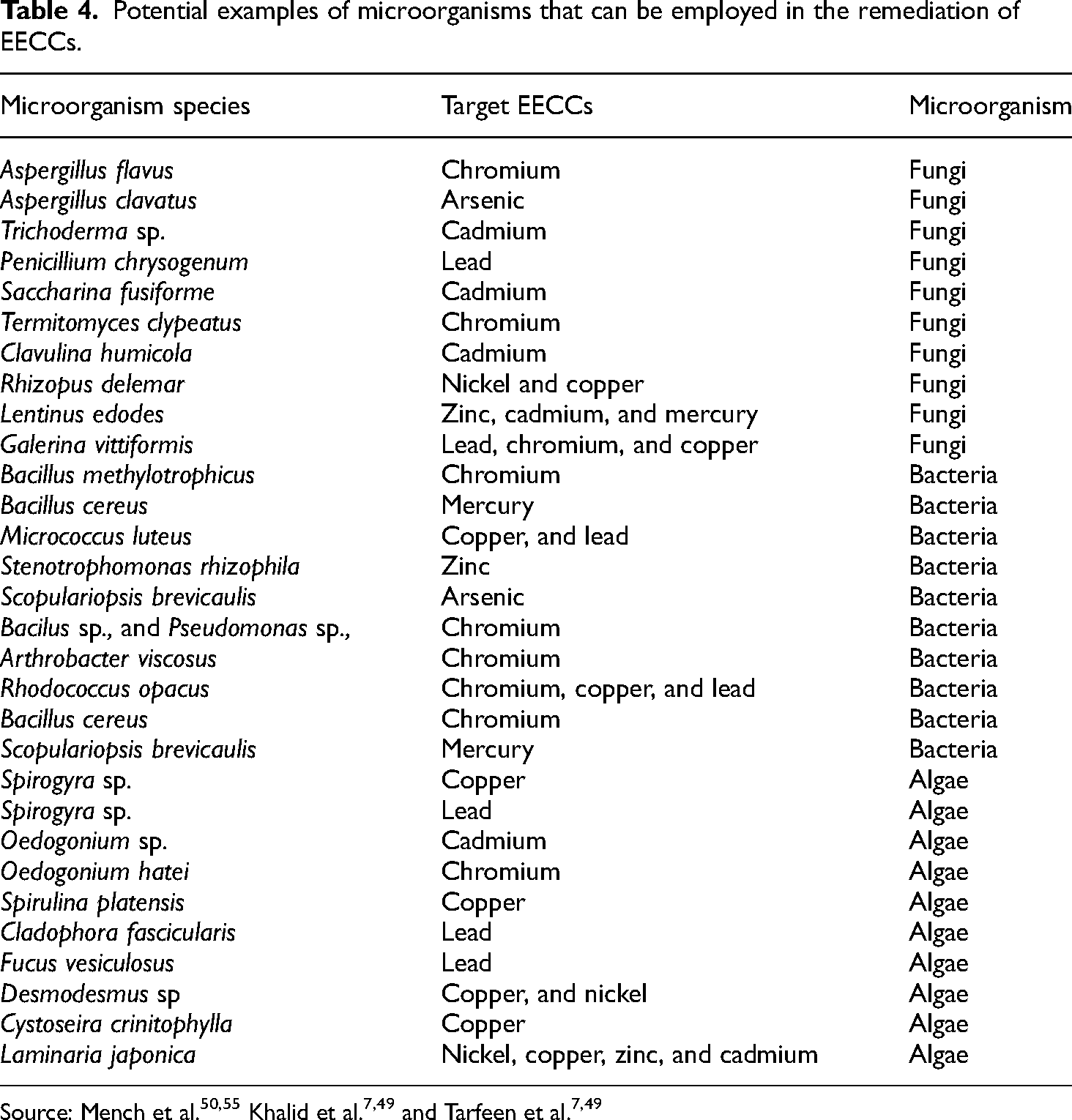
Microbial remediation is a technology uses microorganisms (such as fungi, bacteria, algae, or genetically modified microbes) to either eliminate or lessen environmentally harmful EECCs, such Because of their high specificity towards distinct EECCs, ability to reproduce quickly, ability to withstand a variety of environmental conditions, ease of cultivation, and ability to perform well even at lower concentrations, microorganisms are preferred in bioremediation.30,31 Further, compared to other remediation techniques, the biomass of microbes—which are too small in size—increases the surface area to volume ratio for the absorption of EECCs such as toxic metals.30,31 Some microbes that utilize carbon produced from microplastics for growth and energy are used in the remediation of microplastic contaminants.3,4,49 In order to successful complete the remediation process, fungi interact with the bacteria to release exudates, which serve as a source of energy and stimulate bacterial activity.13,58,59 Fungi also have the ability to detoxify EECCs using their peptides, which enhance the accumulation of contaminants such as heavy metals.7,13,60 Table 4 provides a number of microorganisms that could be employed for the removal of hazardous heavy metals from the environment.13,59
Potential examples of microorganisms that can be employed in the remediation of EECCs.
Chemical remediation: soil washing, immobilization and encapsulation
This method removes EECCs, such as heavy metals, from contaminated environments using chemical reagents or extractants, such as thylene diamine disuccinate (EDDS), calcium chloride, surfactants, organic acids, compounds, cyclodextrins, and iron (III) chloride.7,57,61 It entails excavating the soil that has been contaminated by heavy metals and combining it with the proper reagent or extractant solution.49,50 The method's removal efficacy is contingent upon the reagent's or extractant's ability to dissolve pollutants.49,50,62 Using immobilizing chemicals (e.g. zeolites, phosphates, cement, clay, minerals, and microbes), the immobilization method reduces the mobility, bioaccessibility, and solubility of heavy metals in soils with contaminants.49,57,63 Immobilization of EECCs, such as toxic heavy metals, employs organic and inorganic amendments in contaminated soils.13,49,52 The contaminated soils are typically combined with concrete, asphalt, lime, or other mobilizing agents such as chitosan, polyvinyl alcohol, polyurethanes, polyacrylamide, agar, and alginate in the encapsulation process.39,52,57 When these compounds are combined with polluted soils, the EECCs, particularly heavy metals, become stationary and stop contaminating other adjacent areas or materials.39,52,57
Physical remediation: soil replacement and isolation, electrokinetic and vitrification, and containment
Soil replacement refers to partially or completely removal and replace contaminated soils with non-polluted soils.49,64 It entails digging deeper to disperse the heavy metals in a polluted site; this technique is called metal dilution.49,50 Also, sometimes new uncontaminated soil is imported and added to EECC’s contaminated soil. 49 Soil isolation remediation simply involves separating heavy metal-contaminated soil from clean soil.49,50 In order to isolate contaminated surfaces, such as soil or water, subsurface barriers are used, which limit the flow of surface or ground water at the contaminated site.7,49,50 Electrokinetic remediation technology employs electrophoresis or electric seepage. However, for the efficient and effective removal of EECCs it may be used along with other technologies e.g. electrokinetic-microbe remediation, 60 reduction/electrokinetic-oxidation remediation, 49 electrokinetic phytoremediation, 65 electrokinetics conjugated with electrospun polyacrylonitrile nanofiber membrane, 66 and electrokinetic-chemical remediation. 64 On the other hand, soil vitrification is a remediation technology that uses high temperatures to restrain EECCs like heavy metals in polluted soils. 67 Therefore, during this process, temperature has a major role on reducing the mobility of heavy metals in the contaminated area. 57 In addition, in order to avert the migration of contaminants, the containment method entails isolating the EECCs in the soil by employing physical barriers or biological techniques. Physical barriers include the use of liners and covers to stop the spread of EECCs in the environment. Cover can be utilized to stop EECC from escaping the atmosphere, while liners stop contaminants from seeping into the ground.
Biodiversity conservation implications
EECCs have implications for biodiversity conservation and community socio-economic growth through the health environment, ecosystems, agriculture, and people. If biodiversity and ecosystems are protected from EECCs, it can essentially improve the species richness and diversity of plants, animals, and vital microorganisms, as well as food security and income. Thus, this work demonstrates the importance of controlling and preventing the misuse and disposal of EECCs in order to improve biodiversity conservation. While biodiversity conservation influences people's socio-economic growth, the management and control of EECCs have remained limited in some countries rich in biodiversity, particularly in developing nations. The eco-friendly remediation techniques discussed in this work could help to promote biodiversity conservation and ecosystem safety. Besides being low cost techniques, they can further improve socio-economic development in society. Moreover, local people's understanding of EECCs and their remediation technologies would reduce the negative effects of the contaminants on biodiversity, thereby promoting its conservation. This can be further accomplished by training local people about the proper use and disposal of EECCs. This will enhance the sustainable management of EECCs and the conservation of biodiversity.
Limitations of the review
The review only focuses on the types of EECCs from industrialization and urbanization with limited regulations, particularly in the global south. However, it should be noted that this review did not exhaust all the EECCs available in the environment and their effects on biodiversity and humans. Thus, more reviews and original research work are needed to highlight the remaining EECCs and their potential impacts. Moreover, the review did not discuss the proper disposal, control, and monitoring techniques required in developing countries. As such, we call upon other reviews to conduct research and/or reviews on the suitable ways to control and prevent improper disposal of EECCs so as to minimize the associated risks that would jeopardize public health and biodiversity conservation.
Conclusion
This review shows that a clean environment is essential for maintaining ecosystem safety, biodiversity, and human population health. It also gives people and wildlife access to food, medicine, nutritional supplements, and other ecosystem services. However, EECCs brought on by industrialization and urbanization in developing countries endanger these benefits. It should be acknowledged, however, that an improved understanding of the composition and/or physical chemical characteristics of EECCs could increase their remediation efficiency. The analysis comes to the conclusion that adequate control and monitoring of EECCs are imperative to be in place in order to minimize the risks associated with contaminants, safeguard public health, and promote biodiversity conservation. In general, this review is a useful tool for policymakers, wildlife and environmental managers, ecologists, researchers, and farmers because it summarizes the state of the field and future directions of EECCs. It explores the environmental ramifications, highlighting the prospect of reducing the detrimental effects of EECCs on ecosystems, human health, and universal sustainability. The present evaluation not only enhances comprehension of the effectiveness of existing remediation strategies but also provides valuable perspectives on the obstacles and prospects associated with their implementation. Finally, by tackling the pressing worldwide challenges of biodiversity conservation and environmental sustainability, the assessment may ultimately serve as a roadmap for the shift towards sustainable management of EECCs.
Footnotes
Acknowledgements
The author thanks anonymous reviewers and colleagues who provided practical suggestions and an incisive critique that greatly improved the manuscript.
Declaration of conflicting interests
The author declared no potential conflicts of interest with respect to the research, authorship, and/or publication of this article.
Ethics approval and informed consent
This study did not involve any local people or patient. Thus, the authors did not have ethics approval nor informed consent.
Funding
The author disclosed receipt of the following financial support for the research, authorship, and/or publication of this article: the Mbeya University of Science and Technology for offering time and suitable environment for writing this review article.
