



Abstract
The advancement of nanofluid innovation is a crucial area of research for physicists, mathematicians, manufacturers, and materials scientists. In engineering and industries, the fluid velocity caused by stretching sheets and nanofluids has a lot of applications such as refrigerators, chips, heat exchangers, hybrid mechanical motors, food development, and so on. The originality of the current study is the analysis of the thermal nanofluid in the existence of a porous matrix, and buoyancy force over the stretched sheet, so in limiting cases, the existing work is equated with the available effort, and excellent correspondence is originated. The governing equations in terms of PDEs are changed to the convection differential by utilizing the appropriate transformation and then solved by the ND-solved method along with bvph2. The thermal boundary layer thickness upsurges as the radiation and temperature factors are improved. It is observed that with the growing amount of volume fraction factor the velocity profile declines. When the velocity slip factors and permeability are enhanced the velocity profile augments. It is examined as the values of permeability factor, Biot number, and velocity slip factor are increased the inner temperature of the fluid improves. For the increasing values of θ_r, ϕ, and Nr, the temperature is increasing. In the future, the present model can be extended by using the hybrid nanofluid for the activation of thermal conductivity and heat enhancement analysis.
Keywords
Introduction
Nanofluid (NF) technology has become an increasingly important area of study in recent years due to its potential applications in various fields. The concept of NF involves adding nanoscale particles to a base fluid to enhance its thermal conductivity and other properties, which was first introduced by Choi et al. 1 This technology has the potential to improve the efficiency of many systems that rely on heat transfer, such as heat gradients, refrigeration systems, and microelectronic devices. Researchers have been studying the fundamental physics of NF flow and heat transfer, as well as developing new materials and manufacturing techniques for producing NFs. Mathematical models and simulations are often used to understand the behavior of NFs and optimize their performance for specific applications. Nanofluid technology has the prospective to modernize food production by enlightening the quality and safety of food products. For example, adding nanoparticles to food packaging materials can enhance their antimicrobial properties and increase their shelf life. The mathematical form of NF was first given by Buongiorno. 2 Researchers have studied the usage of NFs in several fields, including industrial applications, biomedical engineering, solar thermal applications, and many others. Some of these studies have explored the use of NFs to improve heat transfer in various systems, such as heat exchangers,3,4 electronic cooling systems, 5 and solar collectors. 6 Other studies have investigated the potential use of NFs in drug distribution, cancer treatment, and other biomedical uses. 7 Saidur et al. 8 provided a complete assessment of investigation on NF flow. Wong et al. 9 specifically explored the application of NF and its features, while the stagnation point MHD flow comprising nanoparticles was examined by Sandeep and Ashwinkumar 10 by means of Carreau-fluid. Sandep et al. 11 deliberated on the influence of hybrid nanofluid (HNF) with thermal radiation, and Samrat et al. 12 inspected HNF transfer of heat with simultaneous solutions. Additionally, there are several other studies13–25 that apply NF to different physical problems, which may be of interest to readers interested in the topic.
Convection boundary layers over a stretched surface affected by thermal radiation are commonly encountered in many industrial applications, and understanding the heat transfer mechanisms in such schemes is vital for the design and optimization of equipment used in various processes. In these systems, thermal radiation produces a noteworthy character in the inclusive heat transmission, especially at high temperatures. The interaction between the radiation and the fluid flow affects the boundary layer thickness and the heat dissemination in the liquid, which in turn affect the heat transfer rate and efficiency. Therefore, a thorough understanding of the radiation properties of the materials involved, the fluid stream behavior, and the heat transmission mechanisms are essential for the design of efficient and effective heat transfer systems for various industrial applications. This knowledge can be applied to optimize the design of heating systems, thermal storage systems, solar thermal collectors, and other devices used in energy conversion and storage.
The NF flow past a stretched surface with heat generation/absorption and chemical response properties was investigated by Pantokratoras. 26 It is worth noting that the studies mentioned above are all related to heat transfer and fluid mechanics, which are important areas of research with many practical applications. The investigation of radiation in these studies highlights its significant role in energy transfer and the behavior of fluids.27,28 The use of novel radiation factors and the consideration of various physical phenomena provide valuable visions into the multifaceted connections between radiation, fluid flow, and heat transfer. 29 These studies also demonstrate the importance of interdisciplinary research, as they involve the integration of knowledge from multiple fields, including physics, engineering, and mathematics. The results of these investigations have the potential to contribute to the development of new technologies and strategies for improving energy efficiency and sustainability. 30
In simpler terms, many liquids that do not monitor Newton's law of viscosity (non-Newtonian liquids) may exhibit slip flow at their boundaries, even though they are supposed to stick to the surface according to the no-slip condition. This slip flow can be caused by several factors, like the presence of particles in the liquid, and it can occur in different types of industrial processes. To study slip flow, scientists often use the Navier velocity slip condition. Slip flow can also cause issues in medical applications, such as when refining interior cavities and prosthetic heart valves. Recently, researchers have found analytical and numerical solutions to address slip flow issues in the heat transport and boundary layer movement produced by a stretched surface.
In these studies, researchers investigated different aspects of fluid movement and heat transmission in various scenarios. Aziz 31 looked at the belongings of magnetic fields on the flow and rate of a nanomaterial fluid warmth transmission with slip at the wall over an absorptive surface. Pantokratoras and Fang 32 studied the mass and heat transfer in a two-dimension fluid conducting electrically with slip flow in an unsteady laminar flow microchannel over a smooth sheet. Goyal et al. 33 analyzed the mixed convective movement and exchange of heat of an upper-convected Maxwell fluid above an absorbent stretchy plane. Finally, Nadeem et al. 34 inspected the slip impact of movement on the MHD movement comprising nanoparticles over a transportable sheet using computational approaches and Lie group transformations.
Overall, these studies provide valuable insights into the complex nature of fluid movement and heat transmission phenomena in different settings, including magnetic fields, slip flow, porous media, and nanomaterial fluids. The findings from these studies can be used to improve the design and optimization of industrial processes and devices, such as heat exchangers, microfluidic devices, and energy conversion systems. 27 Daniel et al. 35 investigated the slip effect on MHD NF across a stretching sheet enclosing radiation and electric field effect. Daniel et al. 36 explored the electromagnetohydrodynamic movement of NF with a convective role. The analytical solution for thermally MHD flow through stretched sheets was investigated by Daniel et al. 37 MHD unsteady flow along with joule heating of NF with dual stratification was investigated by Daniel et al. 38 Similarly, Daniel et al. 39 studied the laminar slip flow analytically with the slip effect. Daniel et al. 40 investigated the thermally magnetized flow of NF passed through a stretched surface. Recently, Yahaya et al. 41 explored the stagnation point movement with a magnetic field through an elongated surface with thermal radiation.
The aim of the current study is to improve a better appreciation of the complex heat transmission phenomena that occur in the flow of NFs over porous stretching sheets and to provide insights into the effects of various factors on this process. The findings from this study may have practical applications in fields such as materials science, energy conversion, and engineering design, where the efficient transfer of heat is a critical factor in the performance of many industrial processes and devices. The leading partial equations are distorted into convectional differential equations (ODEs) by proper conversions. The resulting ODEs are then changed into first-order equations by presenting innovative variables, and a numerical approach is used to resolve them. The bvph2 numerical technique is used for this purpose.
The innovation of the current study lies in its examination of the heat transfer convection of nanomaterial fluids in a permeable matrix over a spreading sheet, in the occurrence of (buoyancy) viscous forces, boundary slip, and nonlinear thermal radiation. This study builds upon previous research in the field by considering the effects of these additional factors, which have not been widely explored in previous studies. By comparing the results of this study to those of existing literature in some limiting cases, the researchers can further validate the findings and contribute to the ongoing scientific discourse in the field. The originality of the current study is the analysis of the thermal NF in the existence of a porous matrix, and buoyancy force over the stretched sheet, so in limiting cases, the existing work is equated with the available effort, and excellent correspondence is originated. The study's results may have significant implications for various fields, including thermodynamic efficiency, advanced manufacturing, enhancement of exchange of heat in biomaterials, and photovoltaic systems.
Mathematical formulation
Here, we investigate the BLF of two-dimensional time-independent NF over the elongation sheet with slip influence and nonlinear thermal radiation BLF mentions to the movement of liquid near a sheet, where the flowing fluid is influenced by the presence of the surface. In this case, the surface is porous and stretched, which means that the fluid must pass through the small openings in the surface and also experience a linear stretching effect along with the x-axis. The flow is also laminar, which means that the fluid moves in parallel layers without any significant mixing between them. The presence of nanoparticles in the fluid can affect its properties, such as viscosity, thermal conductivity, and heat transfer coefficient. In particular, the addition of Al2O3 nanoparticles to the water-based fluid can increase its thermal conductivity and heat transmission coefficient, which can enhance the convective heat transmission between the fluid and the sheet. However, the influence of nanoparticles on the viscosity of the fluid can also increase the frictional resistance to the flow, which can affect the overall flow behavior. The flow sheet is coincided with the plane

Flow geometry of the problem.
The equations flow under usual boundary layer estimates are provided by:17,27


The viscosity of NF
Thermal characteristics of base fluid and nanoparticles.

It is thought that convection of transfer of heat keeps the surface sheet at a stable temperature 


The similarities transformation defined in equation (9) satisfy equation (1). Now, one can attain by put on equation (9) into equations (2)–(8) and to relevant conditions:


The skin friction (SF) 


Validation
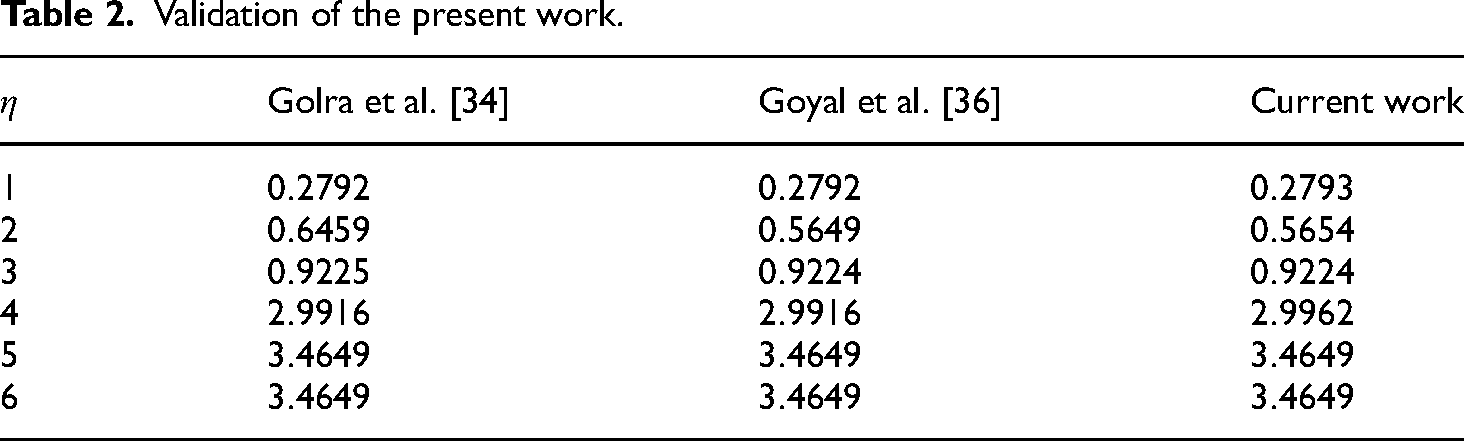
The ND-solve method is applied to evaluate the set of equations (10)–(12). These are first changed to ODEs and then resolved by ND-Solve approach. For the validation of the outcomes, bvph2 is used for the comparison and excellent agreement is originated as revealed in Figure 2. Furthermore, the present study is authenticated with the previous study27,33 and an outstanding agreement originated as revealed in Table 2.

Assessment of bvph2 and Nd-Solve methods.
Validation of the present work.
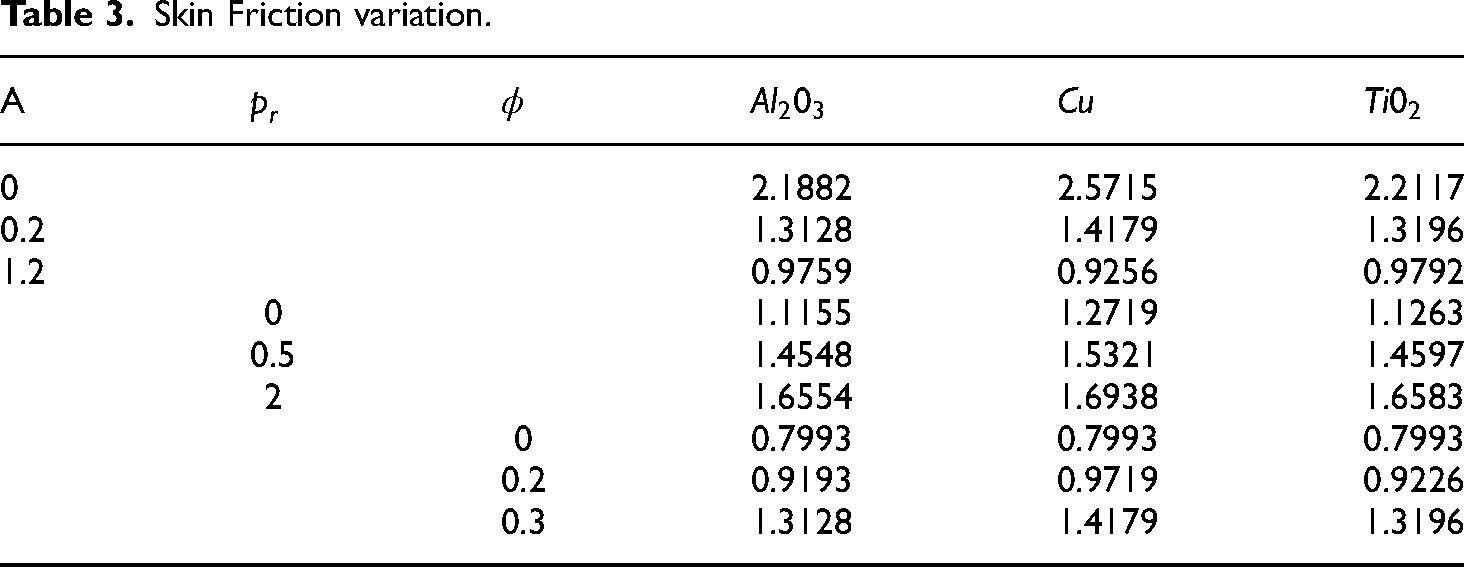
Skin Friction variation.
Graphical analysis
A hypothetically studied has been carried out for NTR of NF (Al2O3-water) under the effect of convection boundary conditions over a porous stretchy surface along with velocity slip BLF.
The impact of slip factor A on temperature and flow is shown in Figures 3 and 4. As the slip factor value A increase, the thickness of layer of the boundary decays, which consequences decrease in a flow fluid. When the slip factor enhances, the wall surface slip is increased. This consequence in less diffusion of surface in the fluid. Figures 5 and 6 display the changes in temperature and flow distributions for numerous permeable
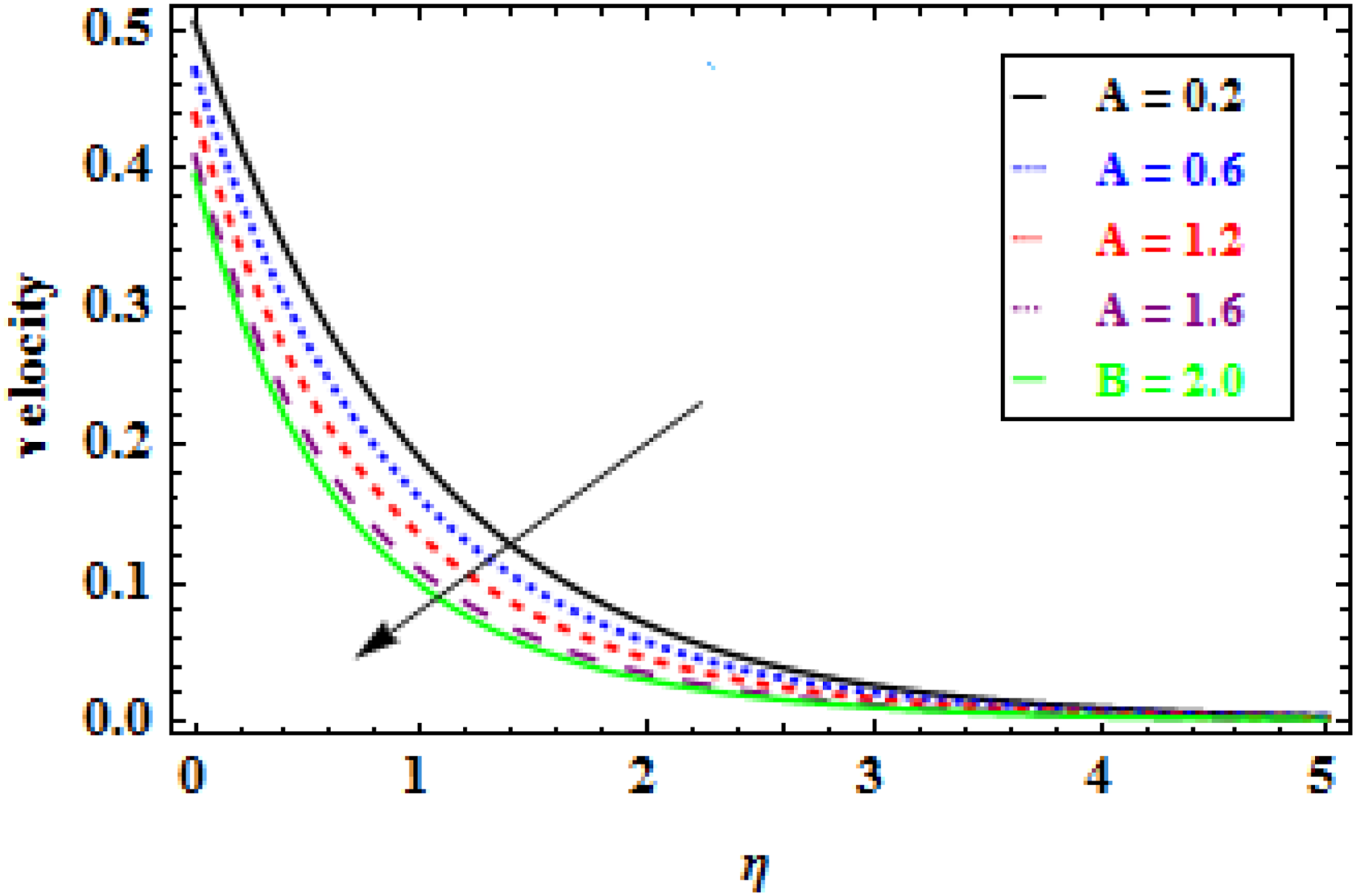
Motivation of A on velocity.
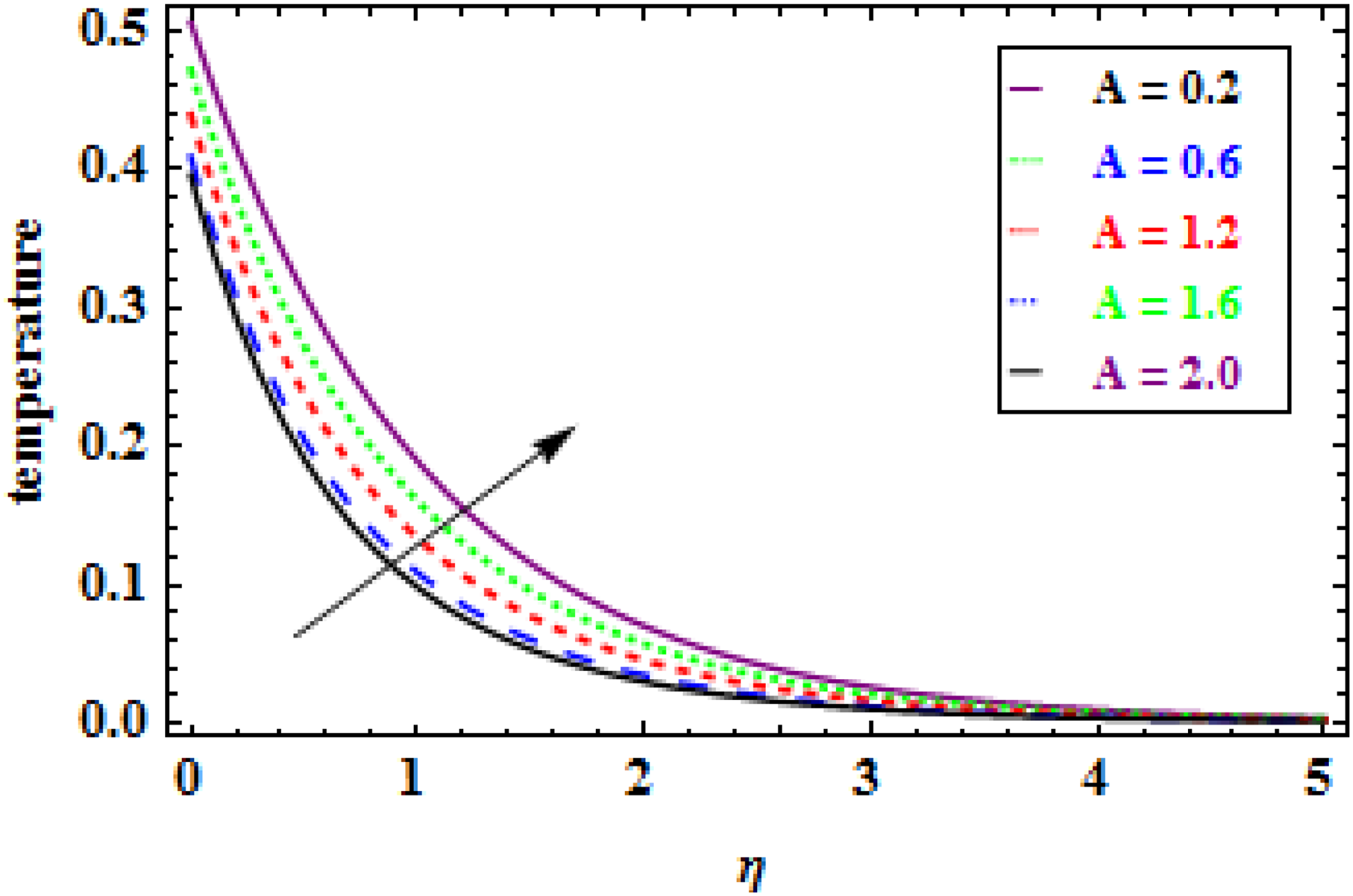
Inspiration of A on temperature.
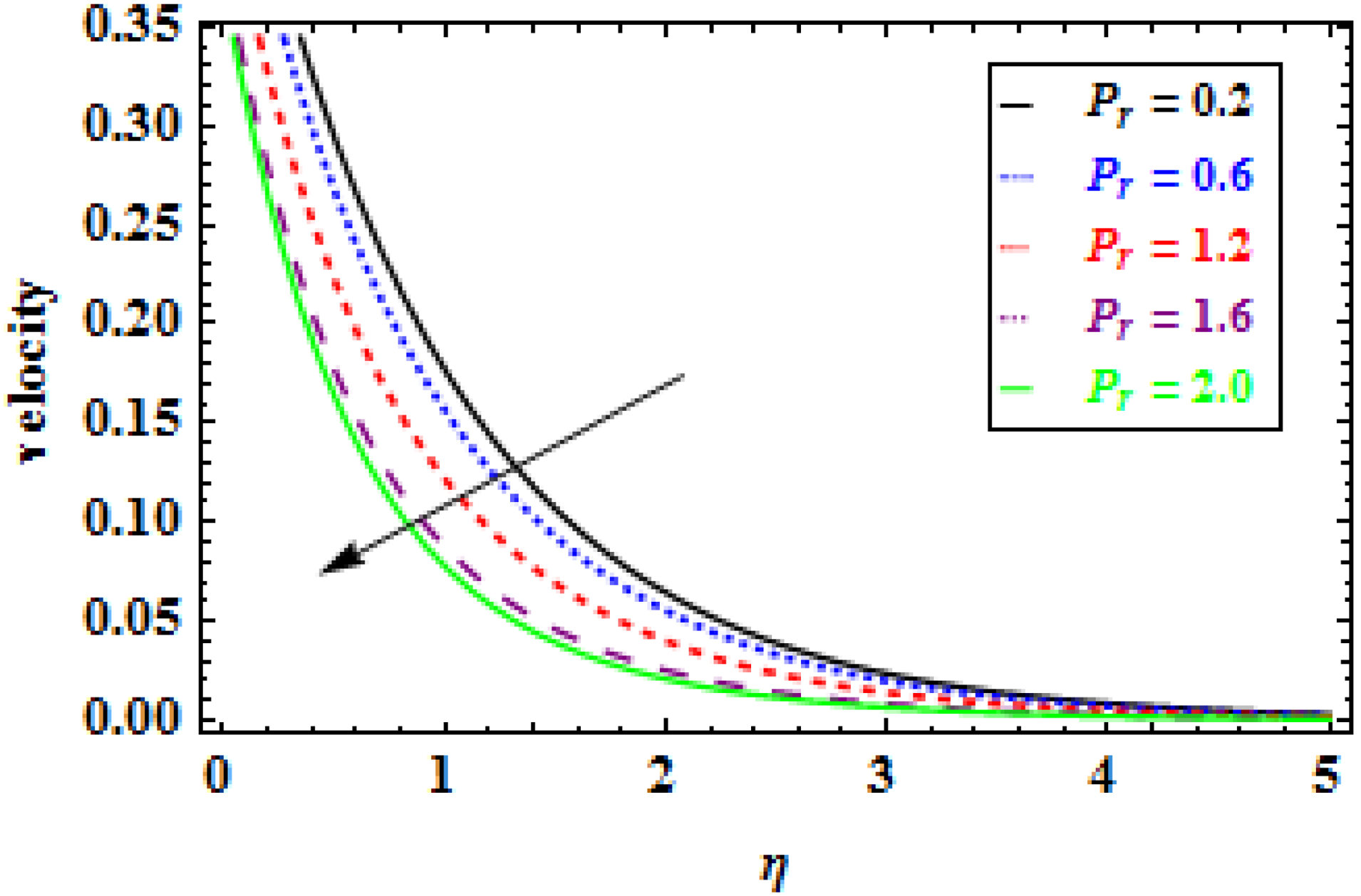
Impact of Pr on velocity.

Impact of Pr on temperature.
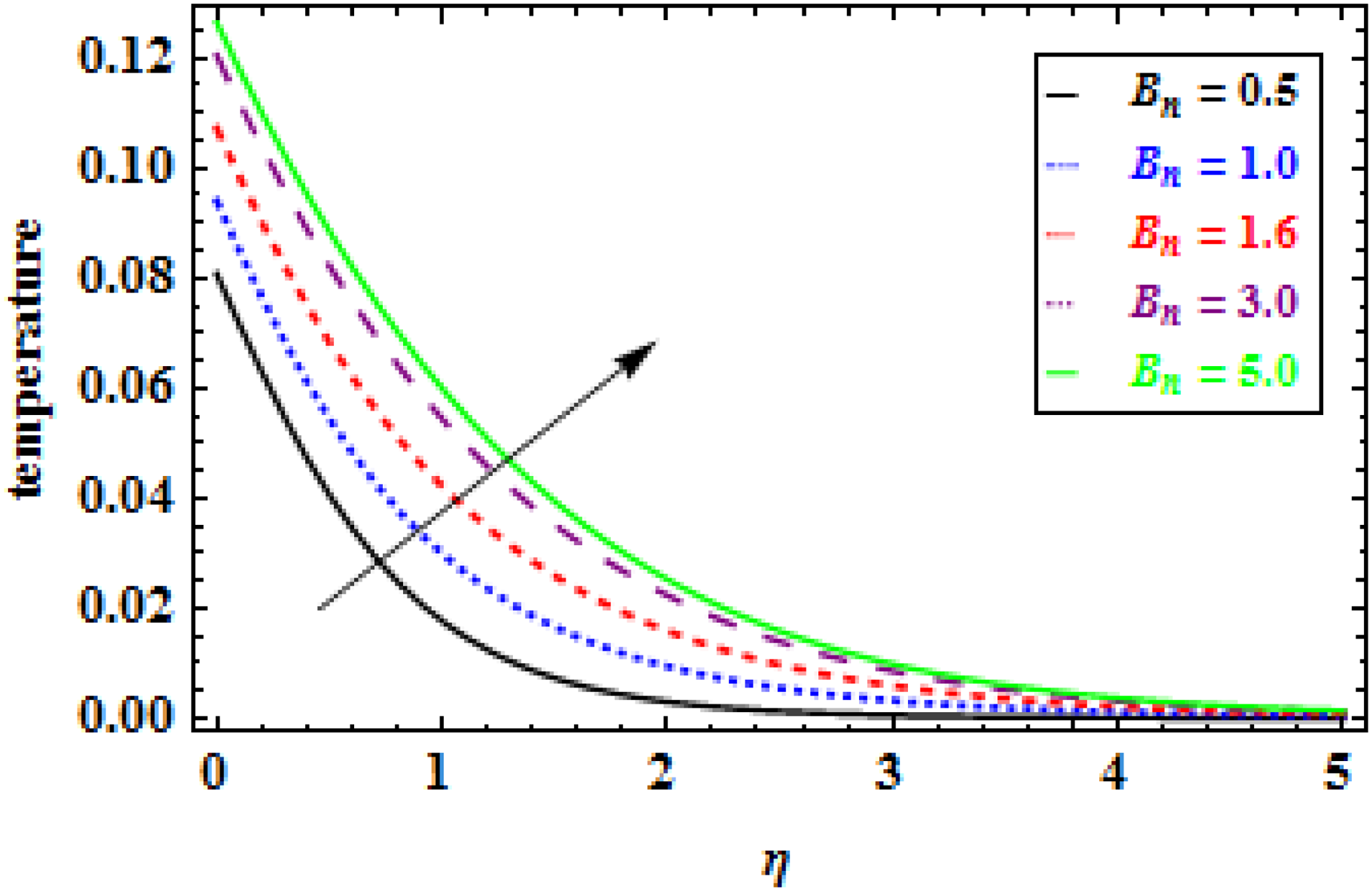
Inspiration of

Impact of

Inspiration of
Figure 9 displays the change of heat distribution for numerous amounts of

Impact of

Impact of

Impact of
For numerous nanoparticle types, the change in approximately physical features

Impact of A and

Impact of
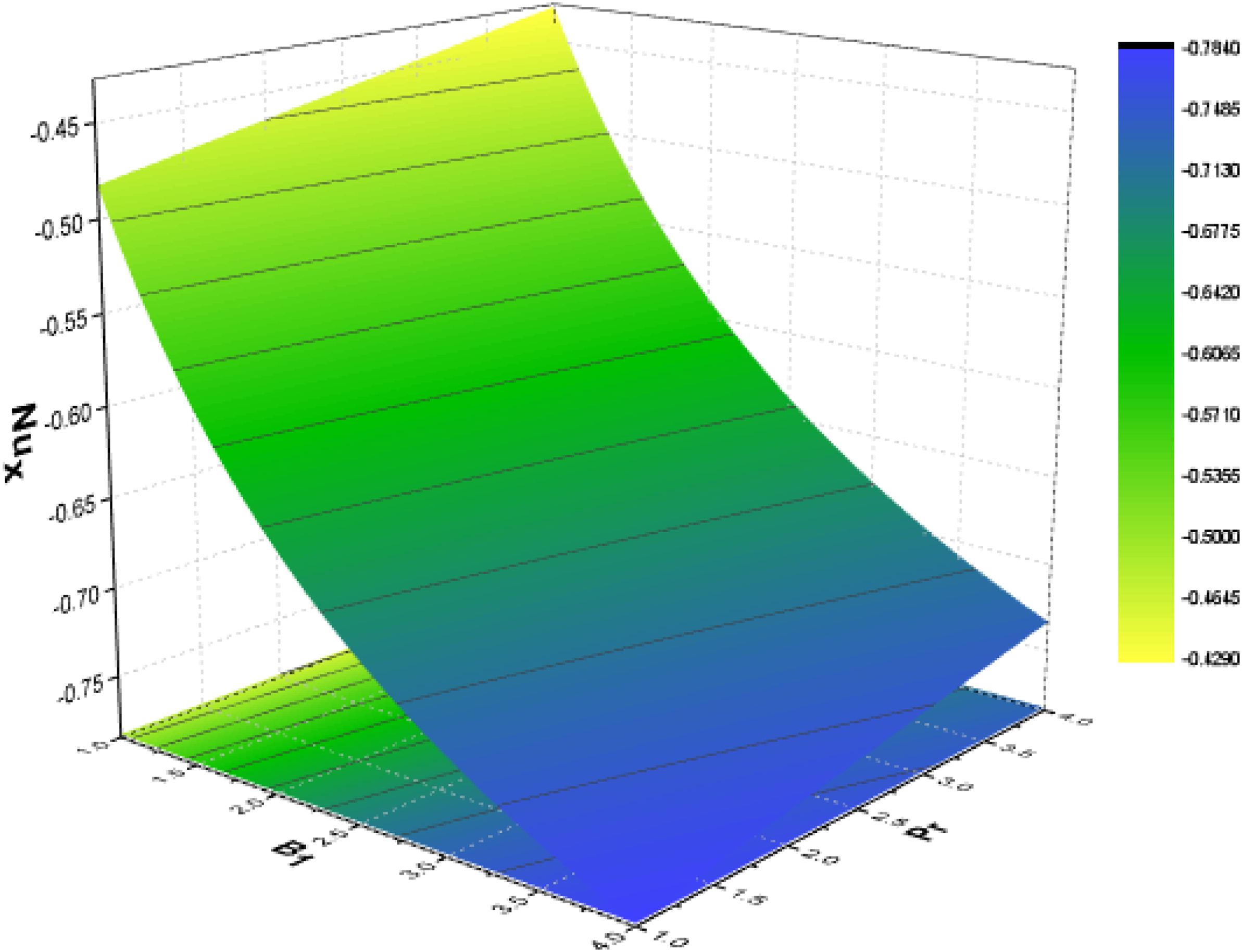
Impact of
Moreover, Figures 16a–c and 17a–c exposed different magnitude of A and

Streamlines for dissimilar magnitude of A.

Streamlines for dissimilar magnitude of
The SF is revealed in Table 3 for different values of physical parameters. The SF is exposed to rise with
Variation of NN.

Conclusion
The exploration of thermal NF across a porous extended sheet is explored numerically utilizing ND-Solve method along with bvph2 of BLF. The fundamental flow problem is first changed to a conventional first-order equation by adding additional variables, and then computationally solved. Graphs and tables are made to explore the influence of developing factors on velocity, temperature, SF, and NN. This study also includes streamlines. The following findings are made:
When the heat and thermal parameters rise, so does the TBLT. It is noticed that when It is revealed that the velocity distribution enhances as the slip factor and permeability factor are increased. It is discovered that when the quantities of the velocity slip variable, porosity factor, and Biot number grow, the temperature within the fluid rises. It is perceived that the heat inside the fluid is enhanced with increments in It is discovered that the velocity slip parameter reduces the friction factor.
In the future, the present model can be extended by using the HNF for the activation of thermal conductivity and heat enhancement analysis.
Footnotes
Data availability statement
The datasets generated and/or analyzed during the current study are not publicly available but are available from the corresponding author on reasonable request.
Declaration of conflicting interests
The author(s) declared no potential conflicts of interest with respect to the research, authorship, and/or publication of this article.
Funding
The author(s) disclosed receipt of the following financial support for the research, authorship, and/or publication of this article: This study received funding from King Saud University, Saudi Arabia through researchers supporting project number (RSP2023R145). Additionally, the APCs were funded by King Saud University, Saudi Arabia researchers supporting project number (RSP2023R145).

Author biographies
Zeeshan is Working as an Assistant Professor in Mathematics, Department of Mathematics and Statistics, Bacha Khan University Charsadda, Pakistan. He did his PhD from Abdul Wali Khan University Mardan. He received his MPhil and Master degree in mathematics from Quaid-i-Azam University Islamabad. He has published more than 80 papers in JCR journals.
Saeed Islam, Professor of Mathematics and Dean Faculty of Physical & Numerical Sciences Abdul Wali Khan University Mardan, Khyber Pakhtunkhwa, Pakistan Dean Faculty of Physical and Numerical Sciences since April 28, 2020. Affiliated Professor George Mason University, since 2022, USA. Director Academics & Research, Additional Charge since September 2020. Ranked 4th in the country by research.com and amongst the top 2% of the Scientists ranked by the Stanford University USA. Project Leader: Execution of 4 billion@ PKR project, “Strengthening of Abdul Wali Khan University Mardan (Supply, Installation and Testing/Performance of Laboratory Equipment), PSDP. Project Leader: Execution of 1 billion@ PKR project, “Support to AWKUM for special initiatives “ADP 963-190443. Have completed more than 05 research projects and have organized more than 06 conferences. Awarded Research productivity awards by Ministry of Science and Technology in the years 2009, 2012, 2013, 2014, 2016. Have produced 42 PhDs and more than 120 MPhils. More than 500 papers having impact factor more than 1300.
Shah Hussain earned his MSc degree from Kohat University, of Science and Technology, Kohat, Pakistan. He then pursued further studies and obtained his MS degree from COMSATS University Islamabad Abbottabad Campus, Khyberpukhtun Khawa, Pakistan. Currently, he is pursuing his PhD from Technical University Graz, Graz Austria. His research interests are diverse and encompass areas such as applied analysis, space-time finite element methods for hyperbolic and parabolic partial differential equations, inverse problems, and optimal control problems constraints by evaluation partial differential equations. These interests reflect his dedication to exploring various aspects of mathematics and its applications, contributing to the advancement of knowledge in these fields.
Waris Khan received his educational degrees as follows: MSc degree from Quaid-e-Azam University, Islamabad, Pakistan. MS degree from COMSATS University Abbottabad, KP, Pakistan. PhD degree from Islamia College University, Peshawar, KP, Pakistan. He currently holds the position of Assistant Professor in Mathematics at Hazara University, Mansehra, KP, Pakistan. He has a prolific academic record with 80 articles published in high-impact factor journals, along with active participation in national conferences. His research expertise spans various areas including magnetohydrodynamics, nanofluids, heat transfer, hall effect, electrohydrodynamics, thin films, and heat exchangers.
Bashir Salah is an associate professor of industrial engineering (IED) at King Saud University. His job involves conducting research as well as teaching undergraduate courses in the area of industrial engineering. He is also a member of accreditation committee in the department. His current research interests lie in three areas: (i) design and analysis of computer-integrated manufacturing, (ii) industrial facilities planning, and (iii) professional project management.