




Abstract
Breast cancer is a destructive lump type that affects women globally. Despite the availability of multi-directional therapeutic strategies, advanced stages of breast cancer are difficult to treat and impose major healthcare burdens. This situation reinforces the need to identify new potential therapeutic compounds with better clinical features. In this context, different treatment methods were included such as Endocrine therapy, chemotherapy, Radiation therapy, antimicrobial peptide-dependent growth inhibitor, liposome-based drug delivery, antibiotics used as a co-medication, photothermal, immunotherapy, and nano drug delivery systems such as Bombyx mori natural protein sericin and its mediated nanoparticles are promising biomedical agents. They have been tested as an anticancer agent against various malignancies in pre-clinical settings. The biocompatible and restricted breakdown properties of silk sericin and sericin-conjugated nanoparticles made them perfect contenders for a nanoscale drug-delivery system.
Introduction
Worldwide, cancer is the foremost source of human fatality and a chief community fitness apprehension. Generally, during various years, it can be defined as any part of the body having an unrestrained expansion and proliferation of the cells occurring due to genetic alterations and harmful environmental factors. In the case of cancer, during the transformation process, important genes like a tumor suppressor and oncogene deregulate and this imbalance leads to lethal cellular changes. 1 Breast cancers (BCs) are widespread and destructive tumor types that affect the female population in the entire world. 1
This review is very important for every human being globally. Cancer, BC, and treatment strategies with a natural product are very significant. This review is intended for everyone.
Taxonomy of breast malignancy
Breast tumors physiology changes according to the stage, a grade of the patient-oriented characteristics.2,3 Breast tumors can be largely divided into two main kinds which include invasive (infiltrating) carcinoma and in situ ductal carcinoma. 4 In situ breast carcinoma is additionally subdivided as either lobular cancer in situ or DC in situ. Lobular cancer in situ commences as of unusual lobular hyperplasia and ductal carcinoma in situ, lesions come out nearly often in the mammary glands. 5 The terms ductal and lobular carcinomas have persevered, other than it is at this time implicit with the purpose of every pre-invasive lesion originating from the terminal duct lobular unit. 2 There are two categories of ductal carcinoma in situ, non-comedo and comedo ductal carcinoma in situ, one of which is said to be extra insistent as compared to another one. The non-comedo types of ductal carcinoma in situ, have three majority ordinary types including 2 : Solid ductal carcinoma in situ, within which exaggerated breast glands are full by way of melanoma cells. The second type of non-comedo ductal carcinoma in situ is cribriform into which pretentious breast glands do not wholly seal by cancer cells and there are gaps between them. The third category of non-comedo ductal carcinoma in situ is papillary as well as micropapillary ductal carcinoma in situ in which cells are lesser than papillary ductal carcinoma in situ cells, and cancer cell put together themselves in a fern-like prototype surrounded by the precious breast glands. Of all cases along with ductal invasive ductal carcinoma, the foremost existing cancer type includes invasive lobular carcinoma (ILC) comprising up to 15%. 6 In the ILC form, the malignant cells usually seem to be a certain degree related to every supplementary, and the nucleus is likely to be minute and come across similarly from cell to cell (Figure 1). 1

Taxonomy of breast tumor.
Breast malignancy growth pattern
Cancer growth is expressed in many ways including classic, solid, alveolar, and tubule-ILCs. Classic ILC flourishes in the form of a single-file pattern with tiny growth cells occupying the stroma one at a time. Solid ILCs type with little stroma cells are present that grow in large sheets between them. Alveolar ILCs are a type of invasive lobular cancer in which the melanoma cells grow up in grouped appearance or other. In tubule lobular ILCs, particular cases develop in which cells are present, although several cells also made tiny tubules in classic ILC. Some cancer units are full of mucus that causes a signet ring appearance as a result of moving forwards the nucleus to a single plane owing just before which cell nuclei give the impression of being diverse from each other. 6 Of all invasive lesions infiltrating ductal carcinomas are the most general subtype accounting for 70%–80%. Infiltrating ductal carcinomas can be auxiliary subdivided into mucinous (colloid), medullary, tubular, papillary, and cribriform cancer forms, whereas, ductal carcinomas (DL) have no particular such category of carcinomas (NOS). 6
Molecular subtype
Starting from the 1980s, BC's first classification is based on the histological features of the tumors. BCs are classified based on cell surface receptors like progesterone receptor (PR), estrogen receptor (ER), and human epidermal growth receptor-2 (HER-2). In 2000, the microarray uprising revealed that in BCs physical difference is attributed to the mRNA turn of phrase contours. The major part of modern genomics upheaval was confirmed due to the microarray revolution. 5 BC molecular subtypes are included Luminal A, B, Basal type cancer, triple-negative BC (TNBC), and Claudin low.
Luminal A subtypes are ER+, PR+, and HER-2־ and low Ki-67 protein, the marker of cell proliferation. Luminal B subtype included HER-2−, ER+, and either high Ki-67 protein or low PR. Basal-like BC is an aggressive molecular subtype and encompasses a robust genetic expression in the basal epithelial cells or outer layer of the mammary gland. TNBC has no receptors on the surface of the BC cells. 2 Some special histological types of triple-negative by way of the little hazard of far-away repetition are counting distinctive medullary and adenoid cystic carcinoma. 2 From all other types, HER2+ tumor is predominantly destructive along with further to be expected to extend hurriedly and it is identified in 10%–20% of all BC patients. 6 Claudin low is extra in recent times explain group interrelated to TNBC, into which nearby be the little turn of phrase of cell–cell joint proteins together among E-cadherin and dispersion by lymphocytes is frequent (Table 1).
Molecular types of breast cancer growth and their parameters.
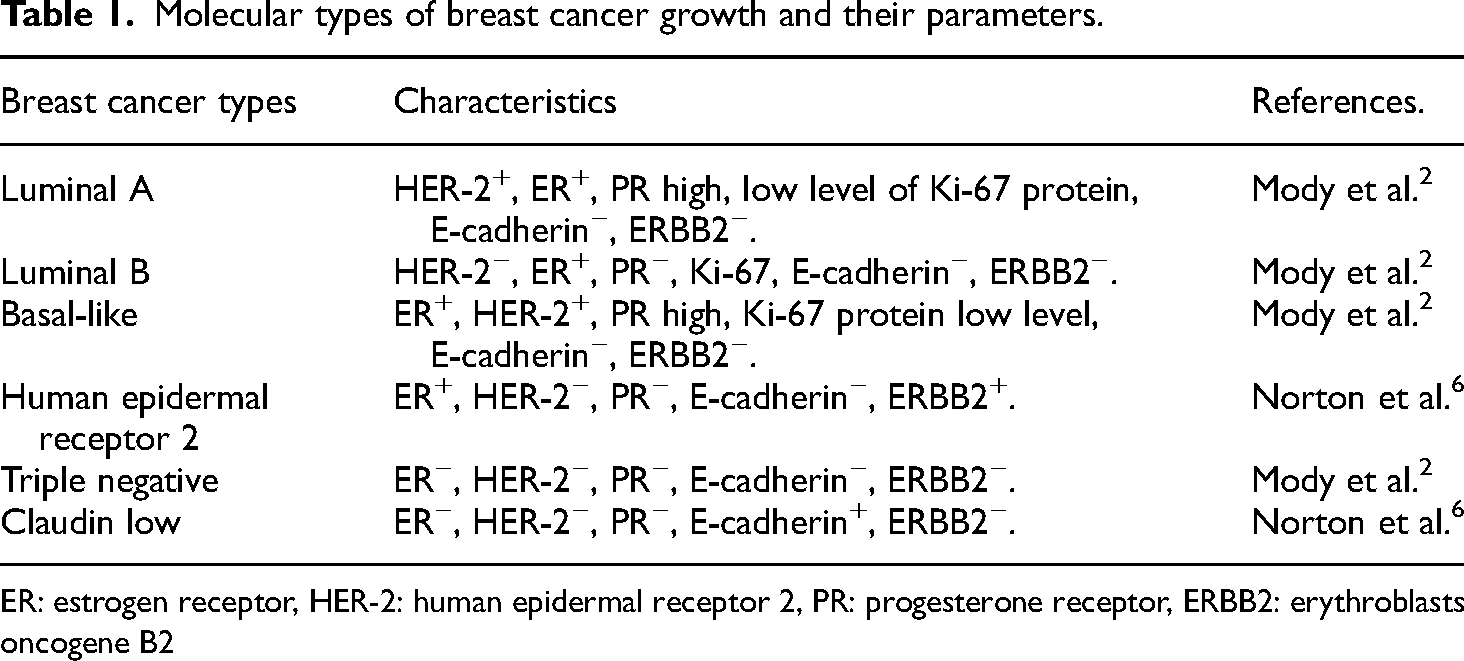
ER: estrogen receptor, HER-2: human epidermal receptor 2, PR: progesterone receptor, ERBB2: erythroblasts oncogene B2
Pathophysiology of BC
The pathophysiology of BC is together with subsequent factors: High-penetrance genes such as (BC type one, BC type two, phosphor protein 53, phosphatase and tensin homolog, ataxia telangiectasia mutated, fibrin, or liver kinase B1).
The low-penetrance genes are cytochrome P450 genes (cytochrome P450 1A1, cytochrome P450 2D6, cytochrome P 450 family 19 subfamilies chrome P450 family 19).
Subfamilies A member (1), glutathione S-transferase family (glutathione S-transferase Mu 1, glutathione S-transferase π gene), alcohol, and 1C metabolism gene (Alcohol dehydrogenase 1C and Methylenetetrahydrofolate reductase), DNA repair genes (x-ray cross-complementing −3, excision repair cross complementing −3, excision repair cross complementation group ¼), and genes encoding cell signaling molecules (PR, ER, tumor necrosis factor-α or heat shock protein seventy. 6 Growth factor proteins such as HER-negative/neu proto-oncogene antigen are greater than uttered in unusual types of human cancers, including breast, ovarian, lung, gastric, and oral cancers. 6 The HER-negative/neu proto-oncogene is exposed to be enlarged and above uttered in 20%–30% of invasive BCs. In 1987, these genes are moreover given away to be linked by way of inferior ending and abridged continued existence. The merely right authenticated prophetic indicator in BC is the Nottingham prognostic index 5 (Figure 2).
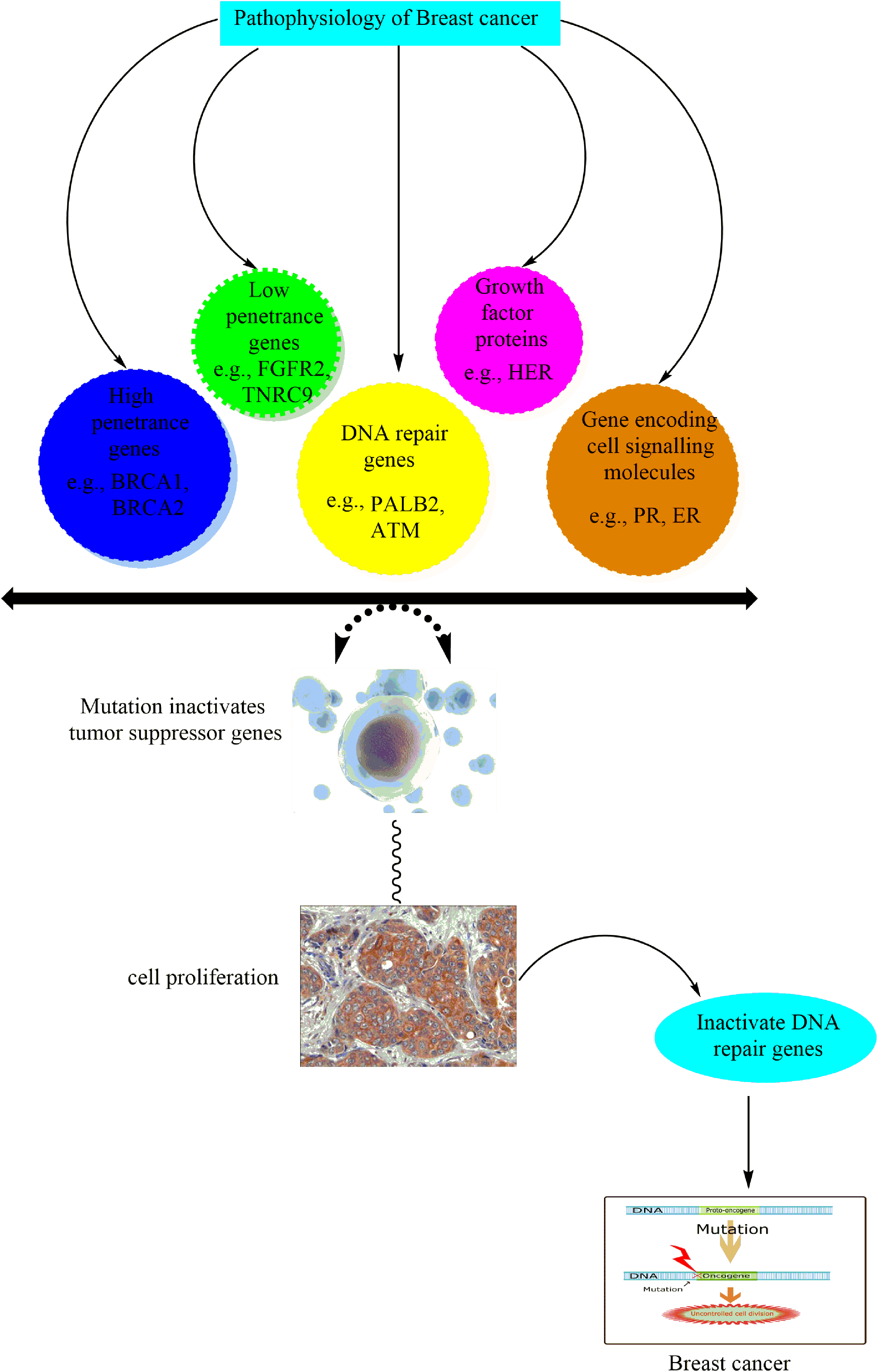
Pathophysiology of breast cancer.
BC treatment
Endocrine therapy
All around the world, the most highly effective and widely prescribed therapies are adjuvant endocrine therapy which is used against nearly all women with estrogen (-) and progesterone (±) tumors. This therapy includes non-steroidal anti-estrogens including tamoxifen used as a standard drug and for postmenopausal patients used aromatase inhibitor as an alternative to tamoxifen. Another one is pure anti-estrogens which include immune checkpoint inhibitor (ICI) 164,384 and appears to prevent the dimerization of the ER which is essential for transcriptional activation. 7
Tamoxifen is an anti-estrogen treatment
Tamoxifen is dependent upon the NH2-terminal fra/15-activation domain which interacts with high affinity microsomal binding protein and inhibits the function of calmodulin as well as protein kinase C. Now a day, it also interacts with transforming growth factor (TGF)-/3, a family which plays a significant function in the inhibition of proliferation and differentiation in human epithelial tissues. In vitro studies showed that tamoxifen induces the autocrine secretion and TGF-/3 secretion of human BC fetal fibroblastic cell lines which act as an inhibitor of growth TGF-/3. 8
Mechanism of action
Different isoforms of primary and secondary metabolites are used in in vitro studies, but the major one is CYP3A for the formation of desmethyl tamoxifen and CYP2D6 used for the generation of 4-hydroxytamoxifen (4-OH-TAM) and endoxifen. 9 The most important primary metabolites of tamoxifen are included; one is 4-OH-TAM and another one is 4-hydroxy-N-desmethyltamoxifen (endoxifen) which have 100 fold effectiveness than individual drugs. These are bound with ER and block BC cell proliferation. These active metabolites activate the antiproliferative, TGF-β by signal transduction pathways, moreover an up-regulation of TGF secretion and its receptors. The main enzyme involved in the formation of both metabolites is the cytochrome P450 enzyme CYP2D6. Meanwhile without these alleles leads to a poor metabolizer (PM) phenotype which has a low plasma level. Selective serotonin reuptake inhibitor (SSRIs) drugs are used for the treatment of hot flashes, affecting the formation of antiestrogenic metabolites and inhibiting the CYP2D6. Moreover, the intermediate metabolizer (IM) phenotype, having a frequency of 10% which has played the role of impaired CYP2D6, leads to slowing down endoxifen plasma levels like PMs. 10
Side effects
In total, 35% of ER ( + ) BC patients eventually become do not respond or become resistant to tamoxifen therapy. These therapy-related secondary effects include bone mineral density and higher lipid profile in postmenopausal women. It is also related to side effects such as venous thromboses, endometrial cancer, and hot flashes whose risk is 2–3 folds higher in tamoxifen taken women as compared to another one. The SSRI antidepressants are used for the treatment of hot flashes but these metabolites also inhibit the cytochrome P450 CYP2D6 enzyme. In clinical response, there is no statistical difference between 40 and 20 mg/day of tamoxifen used in women with a higher concentration of plasma tamoxifen in a higher dose as compared to a lower one. 9
Chemotherapy
Taxol and its mechanism of action
Taxanes including taxol have been used against different types of cancer, namely breast, lung, and ovarian cancer. The primary mechanism of taxol showed that it stabilizes the microtubules by blocking of mitotic process and depolarization of cells. Recent studies suggested that taxol has anti-cancer activity including other biological mechanisms secretion and regulation of cytokines and the most important action is anti-angiogenesis. 11
Several endogenous molecules present in the human body may have angiogenic characteristics that may have been demonstrated to be fundamental for dissemination and cancer growth. One important endogenous molecule is vascular endothelial growth factor (VEGF) peptide present in four monomeric forms including 121, 165, 189, and 206 amino acid residues have been recognized, while the most important biologically active forms of VEGF are VEGF-165 and VEGF-121. The increased secretion of endogenous molecule VEGF, enhanced abnormal blood concentration which negatively influences the prognosis of cancer and reduces survival by stimulating cancer-related angiogenesis and by inducing immune suppression, as well as inhibition of dendritic cell differentiation. The most fundamental anticancer role is to control the VEGF secretion which may prevent immune competence repairing or angiogenesis-related cancer cell proliferation in cancer patients (Figure 3). 11

Mechanism action of Taxol.
Abraxane® ABI-007 (albumin-bound formulation of paclitaxel)
Albumin is an endogenous hydrophobic molecule that acts as a natural carrier and a most important drug delivery approach in cancer biology. It gives the impression to help endothelial transcytosis by reversible non-covalently binding with 60 kDa glycoprotein (gp60) receptor (albondin). Then, 60kDa-glycoproteins bind to the intracellular protein caveolin-1 and form transcytotic vesicles that are called caveolae. Moreover, a homologous acid rich in cysteine (SPARC) protein known as osteonectin also binds with gp60 and is often present in neoplasm and consequently assists intra-tumor accumulation of albumin-bound drugs.
Abraxane®; Abraxis BioScience and AstraZeneca are an EPR-based albumin-bound paclitaxel ABI-007 used as a novel nano vector application for BC. It is a 130 nm particle formulation albumin-bounded drug of paclitaxel, free from any solvent which is used as a colloidal suspension. It is a colloidal suspension of human serum albumin and lyophilized paclitaxel formulations both diluted in a 0.9% solution of saline. The human serum albumin played a role as a stabilizer for drug particles to their average size which avoids any type of capillary obstacles as well as premedication infusion systems or steroid/antihistamines. Another part of the drug is albumin-bound paclitaxel ABI-007, which seems to increase antitumor activity due to higher penetration into the tumor as compared to an equal standard single dose of paclitaxel in BC cells. Abraxane® is albumin-bound paclitaxel used in BC applications due to the presence of active ingredients of paclitaxel which showed significant antitumor activity after adjuvant chemotherapy within 6 months of the relapse period. The main advantage of this compound is that it showed strong antitumor effects without affecting normal tissues of the body. 12
Neoadjuvant cisplatin in triple-negative
Cisplatin is a chemotherapeutic agent which is an effective treatment used against hereditary BRCA1-mutated BCs due to DNA cross-linking agents which share common pathogenesis with sporadic TNBC. Both these categories of BCs have a low level of BRCA1 mRNA expression which is sensitive to cisplatin agents. However, only tumor types those were showed moderate response against cisplatin were included with lower levels of BRCA1 gene expression while others associated with PCR were excluded like BRCA1 germline mutation tumors. 13
Side effects of chemotherapy
However, due to inherent or acquired chemotherapeutic drug resistance, it becomes a dramatic challenge for their effectiveness. The main reason for resistance is due to enhanced activity of the efflux transporter P-glycoprotein (P-gp) present on the tumor cell membrane surface and high expression. The increased expression and high action of the drug efflux transporter P-gp are decisive for drug resistance. These transporters P-gp passed from the transmembrane structure and removed the drug by endocytosis, afterward reducing intracellular drug accumulation and reducing its effectiveness. Another main reason for drug resistance is the usage of highly frequently used drugs that give clinical effects but cause severe side effects on vital organs including the liver, kidney, and heart. 13
Radiation therapy
Due to safe and efficacious doses of radiation therapy, the proportion rate of patients with BC treatment has significantly increased during the past two decades. Adding, intensity-modulated radiotherapy (IMRT) and three-dimensional (3D) treatment planning in radiotherap (RT) improves the technical limitations of traditional RT.
Mechanism of RT treatment
In the RT treatment technique, with the help of radiation DNA of cancerous cells is damaged and afterward, cell death will occur by apoptosis. DNA of cancer cells repairs more slowly as compared to normal cells in both single and double-strand breaks along with different types of proteins and DNA damage mechanisms involved. In RT treatment radiation have two types of effects one is direct which directly kills cellular molecules like DNA and causes damage. Another effect is an indirect effect in which ionization or excitation of water molecules present in our body produces free radicals which cause death. A mutation occurs in different transcriptional factors which leads to cause cancer. One of the most important transcriptional factors is p53 which responds to the ionization of RT by initiating cell cycle arrest, apoptosis, and DNA damage repair mechanism depending on its abundance. A low level of p53 causes cell cycle arrest and a high level caused apoptosis. However, some DNA-repairing mechanisms in tumor cells block cell death and cause radioresistance in cancerous cells by inhibiting DNA-repairing proteins i.e. ATM and DNA-dependent protein kinase (Figure 4). 14
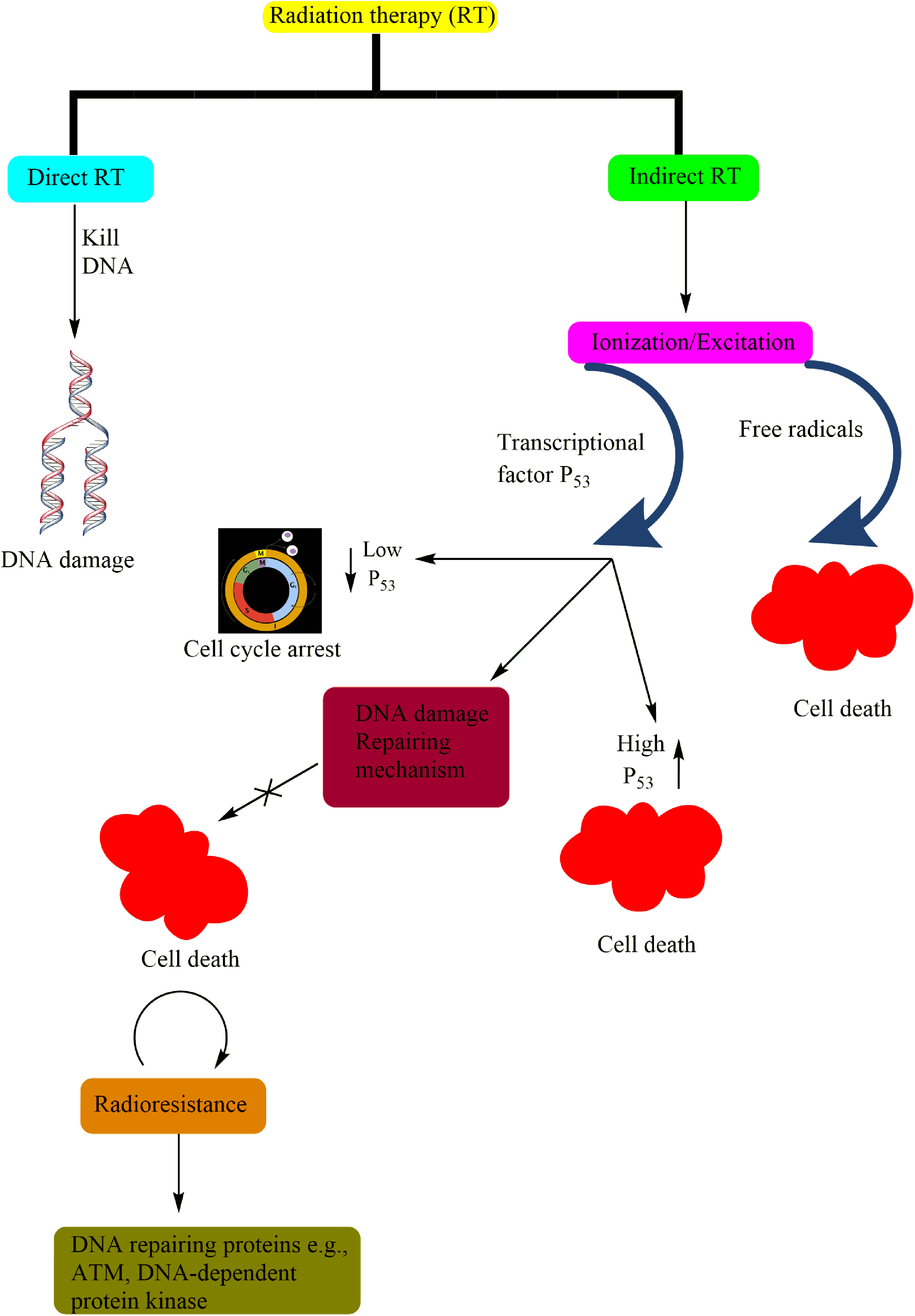
Radiation therapy.
Side effects of RT systems
Despite the renowned consequence of RT on the whole treatment of BC patients, there are many disadvantages of this technology. Due to the generation of gap junctions or cytokines mediating cellular toxicity and different cellular along with microenvironmental cascades radiations in RT therapy are far away from their radiation track. 14 It can diminish the whole quality of patients’ life as well as decrease the normal tissue survival rate. However, the use of IMRT and 3D treatment planning multiple has been proven difficult for large-scale treatment of BC due to their considerable raises in time and delivery of both these complex RT systems. 15
Metformin is an antimicrobial peptide--dependent growth inhibitor in BC treatment
The “insulin sensitizer” is used in the treatment of diabetes mellitus type-2 also known as metformin or 1, 1-dimethyl biguanide hydrochloride involved in lowering insulin levels, during hyperinsulinemia and improvement of insulin resistance. Some studies presented that the mechanism of action of metformin is due to the signaling of insulin receptors, while recent studies showed that the main function of metformin is the inhibition of gluconeogenesis. Due to the inhibition of gluconeogenesis, hepatic glucose production is also inhibited or stopped as well as a decline in insulin level which in turn has a major effect on insulin signaling.
Mechanism of action of metformin in BC
Even though the metformin mechanism of action was studied in liver, fat, and muscle tissues due to glucose and insulin homeostasis, comparatively little knowledge about its effect on epithelial tissues. Recent work on this compound showed inhibition/suppression of gluconeogenesis by involving activation of the antimicrobial peptide (AMP) kinase enzyme pathway in hepatocytes or liver cells through LKB1 which is a tumor suppressor gene related to epithelial tissues. The major function of LKB1 is the regulation of gluconeogenesis in liver cells and acts as a tumor-suppressing gene in epithelial tissues. Due to some inherited diseases like Peutz-Jeghers syndrome, the LKB1 gene could not perform its function properly. During this syndrome, a large number of gastrointestinal polyps are formed which significantly increased the risk of epithelial cancers, including BC (approaching 80%). Generally, activation of AMP-activated protein kinase (AMPK) is due to the consumption of energy during nutrient depleting down-regulation process which includes, translation of protein and cell division as well as energy-producing up-regulation processes (Figure 5). 16

Role of metformin in the treatment of breast cancer (BC).
Antibiotics used as co-medication
Some patients with cancer forms react to ICI which program the death 1 receptor or target programed death-ligand 1. Different factors involved in tumor responses include lack of infiltrating lymphocytes, defective antigen presentation, functionally exhausted tumor-infiltrating lymphocytes, and low tumor mutational burden. Present studies showed that the microbiota of the gut has played a vital role in modifying tumor responses against chemotherapeutic agents as well as immunotherapy. Particularly, co-medications such as antibiotics (ATB) can affect the intestinal microbiota, which acts in the regulation of host-acquired and innate immune reactions. Numerous other retrospective clinical studies showed that in some types of tumors including lung cancer, melanoma, and kidney bladder cancer people who used ABT at the beginning of ICIs minimize the effects of ICIs. However, proton pump inhibitors which have also been connected with gut microbiota reduced bacterial richness, and were also involved in the promotion of T-cell tolerance showed very little effect on ICI efficacy. 17
Liposome-based drug delivery
The main principle of liposome-based drug delivery systems recommends enhancing the therapeutic index of anti-BC drugs. The enhancements of this agent take place by declining its exposure to normal body tissue and rising drug concentration in cancerous cells used for prevention of the normal BC damage. In the case of BC which is included in solid tumor types, there were great challenges for the delivery of drugs in systemic therapies due to theoretical barriers in which slow diffusion of macromolecules agent is taking place by cancerous cells. These barriers include high interstitial pressures and heterogeneous vascular supply, especially in the necrotic area of cancerous cells. 18
How do these systems work?
Now a day, delivery systems have been formed based on tumor micro physiology named “enhanced permeability and retention effect.” The macromolecular drug agents having the property of high distribution rate in specific limited volume and long-term circulation capacity will preferentially extravasate from these abnormal vessels and collect in tumor cells as compared to normal cell damage. The accumulation of these macromolecule agents in tumor cells gives consequences of dysregulation of tumor angiogenesis. This dysregulation caused hyperpermeability of cells due to structural and physiological defects. One of the best examples of this system is “passively targeted” long-term liposomal drugs. These drugs act as an enzymatic breakdown or phagocytic action that leads the drug to the cancerous cells by the process of diffusion. 18
Side effects of liposomal drug delivery system
Currently, the used liposomal drug delivery system provided many benefits in cancer treatment but also damages normal cells of the body. These liposomes interact with plasma proteins and cell membranes as reactive carriers which prevent their interaction with cancerous cells. They remain stored in the tumor stroma as a drug-loaded depository, instead of breaking out into tumor tissue. Now a day, liposomes are used as a molecular carrier for targeting cancer cells via interaction with antibodies or other ligands. 21Other shortcomings of the liposomal drug delivery system have physical, low encapsulation efficiency, and chemical instability of hydrophobic drugs. Physical instability is caused due to poor colloidal stability in the aggregation of vesicles and the formation of large particles. In chemical instability, the escape of liposomes and discharge of the drug occur before reaching cancer tissues due to the oxidation of the unsaturated acyl chain of lipids. The low effectiveness of hydrophobic drugs in lipid bilayer membranes is due to their low affinity. 2
Photothermal therapy
It is widely used to treat superficial cancers by using different photothermal agents to convert irradiation to generate heat which makes cancerous cells kill without affecting normal tissues of the body. 19 In photothermal therapy (PTT), near-infrared (NIR) light-induced PTT is used to treat invasive cancer cells tropically/hyperthermia by optical fibers and killed them by absorption of light energy and convert them into heat energy by optical absorption. The photothermal absorption in cancer cells mostly depends on the photothermal transducers which are the wavelength of light and its mode of delivery. So, through photothermal conversion multifunctional nanocarriers can lower the chance of cancer reoccurrence. 20 It damages tumor cells reaches 41 °C, however effective removal of cancer cells requires a higher temperature nearly equal to >50 °C. In photothermal applications usage of nanoparticles and optical absorption spectra are of great importance because nano micelles exhibited strong absorption in the NIR range and showed effective photothermal transducers. But one of the most important drawbacks of PTT is the heat will seep out from target tissues and spread to the normal tissues of the body and damages them. To cure this, photothermal absorbers are required to increase the heat generation to the target sites, so a lesser amount of heat is required to achieve therapeutic temperature, as a result, reduced the chance of normal tissues due to less amount of heat seeping out from the target cancerous part. 21
Immunotherapy
Immunotherapy proved to be an effective treatment for metastatic and invasive BC types. It includes adoptive T cell transfer immunotherapy used for metastatic breast tumors, antibody-based, cancer vaccines, and T-cell receptor gene transfer immunotherapy. 22 All these types and their mechanism of action were discussed as followed:
Antibody-dependent cell-mediated therapy
There are different characteristics of monoclonal antibodies used in oncology treatment including, low molecular weight, high specificity, mechanism of action, and long half-lives. These antibodies bind with antigens by signal transduction mechanism which exerts actions as antibody-dependent cellular phagocytosis along with cell-mediated cytotoxicity and complements dependent cytotoxicity. 23
Trastuzumab
Trastuzumab is a humanized monoclonal antibody that showed a 15% to 40% response rate against HER-2 as a single agent in BC patients. Meanwhile, when used in combination with a chemotherapeutic agent it gives a prolonged survival rate in first-line therapy for these people. Although, its mediating mechanism of action has become standard care for women with overexpressing HER-2 metastatic BC. In the case of in vitro HER-2 overexpressing BC cell lines treatment, it shows inhibition of tumor growth along with the downregulation of these receptors. However, the mechanism of action of trastuzumab is not completely understood in clinical trials. In animal mice models consisting of severe immune-deficient which are transplanted with overexpressing HER-2 human BC, cells showed a 30% reduction in tumor volume. The reduction in tumor size indicates that antibodies depended on cytotoxicity (ADCC) due to the involvement of antibodies with Fc-receptor-expressing lymphocytes. 24
Mechanism of action of Trastuzumab
It consists of two antigen-specific binding sites, one of which is the HER-2 receptor juxtamembrane portion, and prevents activation of intracellular tyrosine kinase enzyme activity. Another binding site is the human IgG humanized antibody with Fc conserved part. It also decreases the signaling process by preventing dimerization of HER-2 receptor, increasing endocytotic receptor destruction, shedding of extracellular domain inhibition, and activation of immune responses. Some preclinical studies suggest that trastuzumab worked as an immune effector on cells Fc receptors due to the increasing rate of tumor infiltration and antibody-dependent cytotoxicity modulation. While in the case of immune-deficient cells do not have shown any type of response. The immunomodulatory facets usage of its conjugated drug with HER-2 targeted vaccine and CD8 + lymphocytes activation which serves as the target delivery mechanism of antibodies to the HER-2 receptor. Recent in vivo studies in which HER-2 is over-expressed showed that trastuzumab inhibited angiogenesis by modulating proangiogenic and anti-angiogenic factors including utilizing regression of the vasculature and induction of normalization. Adjuvant of trastuzumab with bevacizumab increased production of a ligand HER-3 and HER-4 called heregulin, which regulates the VEGF production along with blockade of HER receptor family that inhibits VEGF, showed action against HER-2+ BC (Figure 6). 25

Antibody-dependent cell-mediated breast cancer (BC) therapy.
Pertuzumab and its mechanism of action against BC
Pertuzumab is also one of the humanized monoclonal antibodies that inhibits the HER-2 receptor dimerization and has a mechanism of action complementary to trastuzumab. About 20% of all BC types have gene amplification of HER-2 which is a tyrosine kinase transmembrane receptor having a poor prognosis and more aggressive phenotype. It binds with HER-2 extracellular domain II of different epitopes most likely HER-3 in the presence of HRG which activates the PI3k/Akt signaling pathway as compared to trastuzumab which binds with HER-2 extracellular domain IV with the different epitope. Due to the progression of HER-2+ in most BC patients, there is a need for new targeted therapies for most advanced diseases. So, pertuzumab is one of the most advanced monoclonal antibodies that inhibition of heterodimerization with other ligand-activated HER receptors. In addition, it also stimulates antibody-dependent cytotoxicity. Therefore, pertuzumab and trastuzumab act on different epitopes of HER-2 domains complementary to each other, so combination therapy has shown a more notable and acceptable safety profile for phase 2 HER-2 (+) BC patients. Adjuvant therapy of both these antibodies showed a complete blockage of HER-2 signaling pathways in early BC patients as well as in HER-2+ metastatic BC patients. Clinical evaluation showed that both these are safe and effective when used with docetaxel as compared to placebo with trastuzumab alone with docetaxel (Figure 6). 26
Side effects of antibody-dependent cell-mediated therapy
There are many disadvantages of monoclonal antibody treatment, along with many advantages over other treatments for BC. These caused cardiotoxicity along with ABT seems to be target-related due to blockage of all downstream signaling from target cells as a result of apoptosis of cardiac muscles with ventricular function and impaired contractility. These are also caused by infusion reactions and severe hypersensitivity, pulmonary toxicity, hypomagnesemia, and skin reactions. 23
Cancer vaccine immunotherapy
In this technique, anti-tumor cytotoxic T lymphocytes were used as a weapon to kill cancerous cells. Tumor antigen-derived cells including peptides, DNA, RNA, proteins, vectors, and dendritic cells were injected subcutaneously in cancer patients, processed, and presented by antigen-presenting cells and stimulate lymphocytes to develop into anti-cancer lymphocytes which migrated to cancer sites and as result killed tumor cells. However, it has some limitations because it cannot induce tumor regression due to the lower frequency of tumor-specific T cells in cancer patients. 22
Adoptive T cell transfer immunotherapy
It involves the generation of anti-tumor T lymphocytes from primary tumor tissues by surgery from cancer patients, expended through ex vivo expansion and activation, and subsequently transferred into cancer patients through autologous administration. Anti-cancer cells migrated to the tumor site and kill them. Limited data is available on this type of immunotherapy further clinical trials will be needed for confirmation. 22
T cell receptor gene transfer immunotherapy
It is based on T cell receptors which are antigen recognition potential transferred into the recipient cells which are minor histocompatible antigens mostly expressed in hematopoietic used for the passive transfer of T-cell immunity. Different types of receptors were used to redirect the specificity of cytotoxic T hybridoma cells to obtain anti-tumor cells without the loss of original specificity. Generation of T cells with dual specificity leads to the survival of these cells in vivo environment for a prolonged period due to the transactivation of endogenous T cells receptors of the tumor T cells by the latent presence of viral antigens. Moreover, they also transferred into restricted T cells will minimize the chance of autoimmunity due to nonself reactivity. It holds great ideas for cancer treatment but no successful data on the clinical trial are available so far. 22
Nano-drug delivery system
It is the use of nanocarriers to overcome the limitations of common treatment strategies such as chemotherapy, surgery, and radiation therapy used against BC. There are many advantages over all other treatment techniques such as carrying the drug to the specific target site due to lesser toxicity, enhancing the cellular uptake of hydrophobic drug delivery due to decreasing the period of drug chemotherapeutic administration as well as long-term blood circulation due to higher therapeutic efficacy. These nanocarriers also encountered various barriers during the route of administration and they prevent the effective delivery of the drug to the specific target site. So, nanocarriers were encapsulated with different types of ligands for controlled drugs released to the target site.27,28 It played a great role in drug development, enhanced permeability and retention effect of drug due to effective accumulation into the tumor site, enhances the bioavailability of the drugs due to passive targeting and charge reversal properties of nano drugs to prevent the non-specific binding, and enhanced their cellular uptake due to acidic tumor extracellular environment. These nanocarriers’ internalization into tumor cells by receptor-mediated endocytosis due to the presence of ligands that have improved their properties such as the capacity to assemble, rigidity, bioavailability, and biodegradability. These ligands have controlled the release of the drug at the specific cancerous site and prevent its leakage in blood vessels during blood circulation. 29
Nanotechnology approach
The most efficient drug delivery system is based on nanotechnology practices (nano-DDSs) which are the best strategies used in the modern world. 30 Green nanotechnology is a new approach in which from green plants derived bioactive compounds, intact cells, and living organisms or microorganisms metabolites known as environmentally non-threatening resources are used in the bio-fabrication of metallic origin of nanoparticles. 31 The most useful technique to overcome drug resistance is the use of natural polymers which have drawn great attention over the recent year. In 2019, silkworm proteins i.e sericin (SER) and fibroin are approved by Food and Drug Administration for use in nanomaterial synthesis and increased their potential in the field of biomedicine. 2 SER is suggested as the novel and most imperative material utilized in pharmaceutical applications as a drug delivery agent. For nanocarrier purposes for gene and drug delivery, different types of SER nanoparticles are used including self-assembled nanoparticles (NP), SER-poly ethylene glycol (PEG) NPs, SER AgNPs (S-AgNPs), and other kinds of SER micelles. 30 Green bio-based polymers such as protein polymers and polysaccharides protein complexes are rapidly used in biomedical applications due to the production of the polypeptide chain, as well as properties of hydration and structuration would form polysaccharide complexes with green routes. These polymeric macromolecules are eco-friendly, cost-effective, versatile, and diversified structures. 32
Polymeric nanoparticles are helpful in treatment due to their sustainable release, reducing toxicity by a lesser use of dose concentration. These NP provide drug protection in vivo against chemical and enzymatic degradation and also increase their therapeutic effects. The smaller size and high surface-to-volume ratio of these nanoparticles increase the entrapment efficiency of the drug as well as easy excess to distance-related areas, resulting in increased bioavailability in deeper tissues. The polymeric micelles can control the behavior and properties of nanoparticles as in an acidic environment they have positively charged and enhance the cellular uptake but in neutral pH, they have negatively charged and prevent nanoparticles to bind with normal cells of the body. 29 The polymeric micelles are self-assembled by the inner hydrophobic and outer hydrophilic outer core but in some extensive studies, amphophilic copolymers were also used in protein, drug, as well as gene delivery, and medical diagnosis. 33 The hydrophobic part of polymeric micelles binds with the hydrophilic polymer to form a hybrid by grafting, copolymerization, block polymerization, and interpenetrating between both molecules can be used as a desired vehicle for controlled drug delivery. The hydrophilic properties of polymers have good solubility in water molecules which is considered one of the most important factors for anticancer systematic drug delivery formulations. The hydrophobic part of hybrid polymers effectively surrounds the drug molecules and prevents their attachment with water molecules. 34 In cytotoxicity and apoptotic assays along with gene expression in vitro studies, SER nanoparticles are away from each other from biophysical characterization (Table 2). 35
Different treatment strategies, their advantages, and disadvantages.

VEGF: vascular endothelial growth factor; P-gp, P-glycoprotein; IMRT: intensity-modulated radiotherapy; 3D: three-dimensional; PPI: proton pump inhibitor; NIR: near-infrared; ADCC: antibodies depended on cytotoxicity; MDR: multidrug resistance; PD-L1: programed death-ligand 1.
Silkworm protein sericin is a novel treatment against BC
Silk is a fiber that is most exploited from Bombyx mori cocoons which contain two types of proteins SER (globular) and fibroin (fibrous). Fibroin is 65–85% of silk which formed the core structure of silk fiber. Another type of protein is SER which contains 15%–35% of silk fibers and formed the gummy structure which encloses these fibers and binds them together. SER produced from the salivary gland of silkworms having molecular weight varies from 20 kDa and 400 kDa. 5
Structure of silk SER
Silkworm protein SER extracted from silkworm Bombyx mori has a different amino acid composition and its secondary metabolites include polyphenols and flavonoids. 36 It is a water-soluble protein, constituted by carboxyl, hydroxyl, and polar AA including glycine, proline, alanine, glutamic acid, arginine, valine, leucine, aspartic acid, histidine, phenylalanine, isoleucine, threonine, lysine, tyrosine, methionine, tryptophan, cysteine and serine which formed the 40% of SER. The resistance of SER-based biomaterials improved due to cross-linking blend of polar amino acid with other polymers. The three types of SER mainly known as 1 (SER-1), SER 2 (SER-2), and SER 3 (SER-3) depend on molecular weight and structure changes. These are formed by the incomplete unfolding state of the polypeptide amino acid chain including serine, glycine, and aspartic acid encompasses β-sheet and random coil. 5
Properties of SER
The connection of SER with other polymers is due to different properties which are high degradability, biocompatibility, great mechanical properties, low immunogenicity, long-life production, easy processing, tremendous pH-instability, and favorable source supply, temperature, and water solubility which made it in the form of nano-size. 6 SER structure protection is a great effort for the formation of its formulation due to its chemical degradations. Meanwhile, this chemical protein degradation is prevented by a mild aqueous extraction process, instead of a conventional extraction process with high temperature or alkaline conditions. By controlling this degradation amino acid assembly occurs in the right way which favors cell growth and attachment of material-based formulation on the SER membrane, especially by the existence of cysteine and methionine.30,37
Preparation of silk SER nanoparticles
SER-based nanoparticles are synthesized mostly by desolvation, self-assembly, and cross-linking methods. The desolvation method is in which within mild conditions protein-based nanoparticles are prepared by using desolvating agents including acetone and ethanol. These agents contain a water-based segment in which protein is present resulting in dehydration which gives protein coil formation. For reduction of size and more thin nanoparticles formation, the double desolvation method is used. The nanoparticles formed by this method are denser and more stable due to cross-linking of protein amino groups. This technique is used by Suktham et al. in which stabilizer agent pluronic loading resveratrol (RES) increased growth of inhibition of colorectal adenocarcinoma cells (Caco-2) and did not toxic for usual skin fibroblast tissues. The internalization of NPs is time-dependent in which within 6 h only 10% are uptake by cells while increased by 97% after 24 h. However, the main disadvantage of this method is the use of organic components and the usage of toxic cross-linkers having low encapsulation efficiency including glutaraldehyde. 5
Mandal and Kundu have used a self-assembled synthesized SER nanoparticles method in which blended these NPS with pluronic compounds (F-127 and F-87) to load with water-insoluble drugs or water-soluble drugs. The hydrophobic drug paclitaxel showed cytotoxic effects against BC MCF-7 cells while non-toxic for normal cells. The cell toxicity associated with cell death due to regulatory protein Poly (ADP-ribose) polymerase degradation along with downregulation of antiapoptotic (B-cell lymphoma-2) and upregulation of pro-apoptotic protein including Bcl-2 associated X-protei-Bax. In this technique, SER NPs were synthesized by spontaneous association by the use of self-assembly complexes which are reconciled by weak noncovalent interaction of proteins. These proteins are dissolved in an aqueous solution at specific temperatures and micelle concentrations that formed nano-sized particles 6 It can be used for hardening and stabilization of other self-assembled polymers which are formed by cross-linking of polymers chain. 2
The third method for the synthesis of protein-based NPs is the cross-linking method in which different types of cross-linkers are used for example ionic, enzymatic thermal, and chemical. The main commonly utilized cross-linker is glutaraldehyde which promotes multifunctional cross-linking by combing with the amino group of protein. 2 Meanwhile, due to toxicity effects mostly natural cross-linkers are used including SER and chitosan. SER-based NPs are formed by Hu et al. using two steps cross-linking method in which by physical reaction of chitosan and SER is followed by chemical EDC cross-linking to enhance the cellular uptake of NPs load with anticancer drug doxorubicin. 5 NPs showed pH-responsive charge exchange properties that at neutral pH they become negatively charged and at acidic pH, they become positively charged which differentiates the tumors and their surroundings. In HeLa cell lines cellular uptake of NPs was six-fold higher at pH 6 as compared to a neutral pH or alkaline. Subsequently, they accumulated in the lysosomes and released drugs into the nucleus of cancerous cells. 38 Another method for the synthesis of NPs is nanoprecipitation in which in the organic phase of nonsolvent including acetone different concentrations were added. Afterward, in acetone protein, the aqueous solution was added dropwise under vigorous stirring and recovered by water acetone vaporization. 36
Types of sericin nanoparticles
Many types of SER nanoparticles are used against cancer including self-assembled or poloxamer, SER-regulated spherical calcium phosphate NPs, SER-PEG and SER-PBLG micelles, multifunctional SER NPs, and RES-loaded SER nanoparticles.
SER self-assembled or poloxamer
The SER self-assembled NPs were synthesized through pluronic surfactants in the ratio of 1:5. These nanoparticles were formed by the incorporation of water-insoluble drug core paclitaxel and water-soluble drug inulin. The amphophilic properties of poloxamer block the copolymer-related hydrophobic and hydrophilic domains to form micelles which help in long half-life inside the body and competent drug encapsulation efficiency. The SER NPs have a prolonged storage period still after 10 days of the incubation period. The cellular uptake of silk SER (SS) poloxamer assumed that they firstly bind with the cell surface and uptake by cells by a passive mechanism in the case of large nanoparticles and through endocytosis in the case of small nanoparticles. SER contains positively charged amino acids that specifically bind with negatively charged cell surface molecules. The addition of SER in poloxamers may uptake these NPs inside cells and enhances the possibility of cellular contact. After, entrance into cells by these two mechanisms they were breakdown into small pieces by cellular enzymes and entered into the nucleus. The cellular uptake of this SER self-assembled or poloxamer showed that they have a potential source for drug delivery applications. The drug loading efficiency of poloxamers showed that they are efficiently utilized for developing drug delivery techniques in tumor treatment (Table 3). 37
Types of sericin NPs, their properties, and mechanism of action.
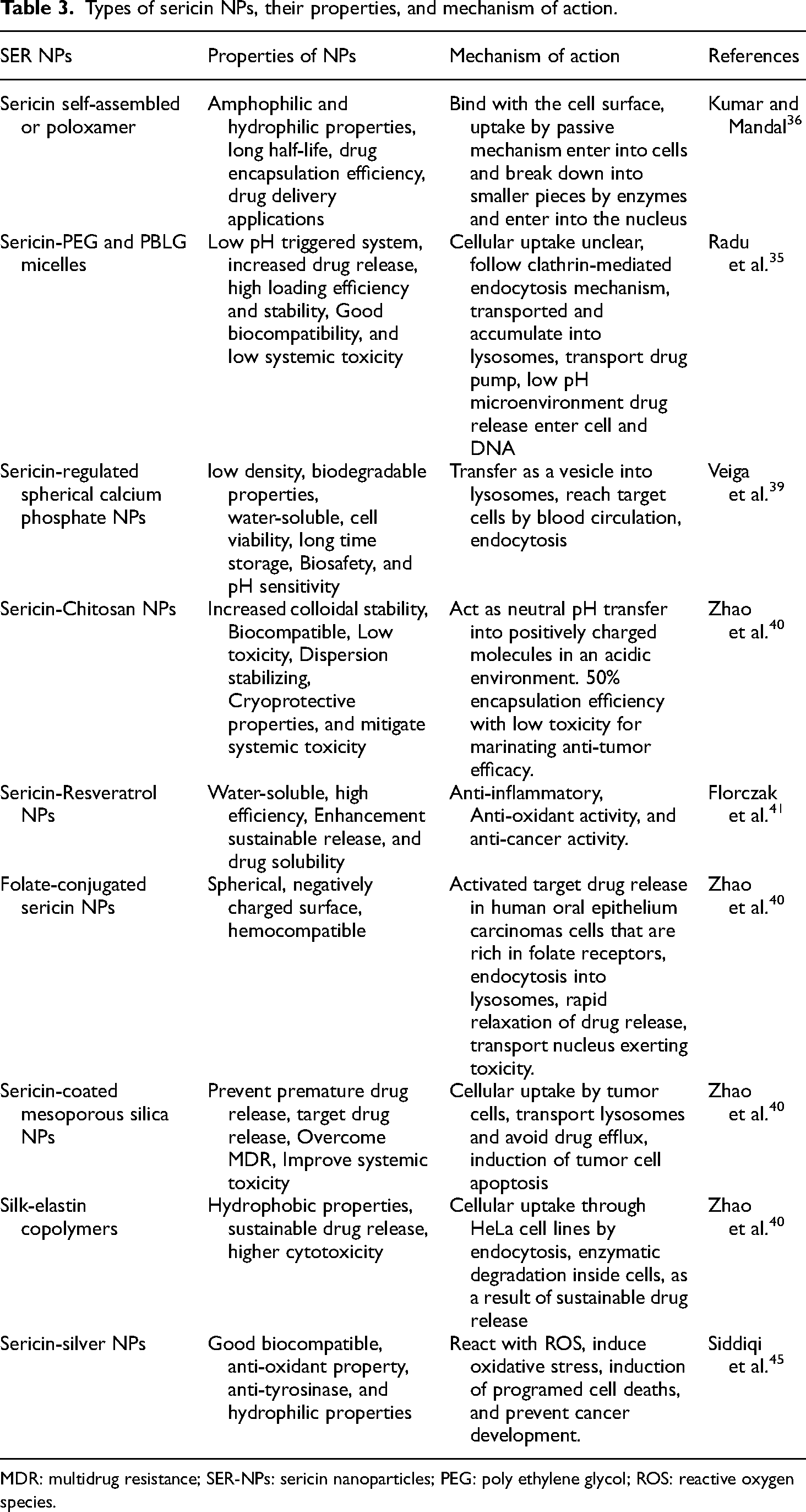
MDR: multidrug resistance; SER-NPs: sericin nanoparticles; PEG: poly ethylene glycol; ROS: reactive oxygen species.
SER-PEG and SER-PBLG micelles
These NPs were formed by ring-opening polymerization of γ-benzyl-L-glutamic acid-based N-carboxy anhydrides activated by primary amine on the SER backbone and self-assembled PBLG micelles were synthesized by dialysis process. The micelles having a low pH-triggered system showed with the intention of nanomedicine in the field of clinical application is used an increase drug release in tumor-containing regions. The drug loading efficiency and stability showed that micelles improved the anti-tumor effect by releasing sustainably as well as stable over a week. In vitro and clinical use of SER-PBLG micelles presented that they are good biocompatibility and there were no pathological changes that induce negligible systemic toxicity. The cellular uptake of these NPs is unclear, but these micelles played a functional role in upholding the cellular uptake of DOX by the clathrin-mediated endocytosis mechanism. They are transported and accumulated within perinuclear lysosomes away from transmembrane drug pumps, at low pH microenvironment drug release and directly entering into the center of the cell, foremost to break down deoxyribonucleic acid and enhance anti-cancer properties. They can efficiently remove cancerous cells which are multi-drug resistant by increasing intracellular drug intake as compared to blocking P(glycoprotein) representation (Table 3). 30
SER-regulated spherical calcium phosphate NPs
Calcium-phosphate is an important component of the bone matrix which is synthesized from natural sources due to its chemical stability, good biocompatible property, and low density along with many other properties used in bone-related applications. On the other hand, SER has been established to be an appropriate pattern for Ca/P mineralization. The SER Ca/P nanocarrier showed the ability of cell propagation and discrimination of human osteosarcoma cells and bone marrow-derived mesenchymal stem cells. They have also been planned as a drug liberation system approach due to their biodegradable property and water-soluble-based SER material utilized as a means of transportation to distribute anti-tumor curative drugs. The Ca/P shell protects the SER inner structure and stores bioactive compounds until a change in the surrounding environment's pH. The Ca/P NPs have increased stability, cell viability, and long-time storage capability. They transfer as a vesicle into the lysosomes and reach target cells by blood circulation and after endocytosis biodegraded. 39 In vivo data showed that S-Ca/P nanoparticles presented a good future due to their excellent biosafety and pH sensitivity, they were used in drug or gene delivery in cancer therapy (Table 3). 40
SER/Chitosan-based nanoparticles
SER/chitosan-based NPs (SSC@NPs) were prepared by cross-linking SS to chitosan which is a biodegradable and biocompatible polymer having a low toxicity. Chitosan is also utilized as a transporter in polymeric NPs for non-parental drug release for the treatment of cancer. SSC@NPs are at neutral pH charged negatively and transfer into positively charged molecules in an acidic environment. Furthermore, due to the hydrophilic properties of SS, these NPs showed dispersion stabilizing and cryoprotective properties. The hydrophilic property of these NPs also increased their colloidal stability in the physiological fluid environment and their integrity during lyophilization. They also have biocompatible, 50% encapsulation efficiency as well as mitigate systemic toxicity for maintaining the anti-tumor efficacy of the drug (Table 3). 41
SER chitosan doped maleate gellan gum nanocarriers (MA-GG-SS-CS)
These nanocarriers were formed by the addition of a free radical polymerizable group that polymerized into the three-dimensional network in the presence of acetone and was synthesized by the esterification process. Maleic anhydride is used for surface modification and hydrolyzed in an aqueous solution and simply cross-linked with gellan gum exopolysaccharides consisting of the unsaturated substituent that help in cross-linking and grafting which provide controlled drug delivery, degradation, and mechanical properties. SS protein extract from Bombyx mori which containing different types of acidic and basic amino acids that makes nanoparticles a potential carrier for pH-responsive drug delivery. 29
Resveratrol-loaded SER NPs
Trans-3, 5, 4´-trihydroxy-stilbene, RES is a polyphenolic compound that has been used as an anti-inflammatory, anti-cancer, and antioxidant activity. Although due to its poor water solubility and rapid degradability used in combination with other types of biomolecules increased its efficiency. These formulations were prepared by a modified-desolvation process, using lyophilized SER from wastewater. RES-loaded NPs inhibited the growth of colorectal adenocarcinoma (Caco-2) cells while non-cytotoxic effects on skin fibroblast cells. In vitro results showed that encapsulation of RSV nanoparticles enhanced sustainable release and drug solubility in therapeutic and pharmaceutical applications (Table 3). 42
Folate-conjugated SS nanoparticles (FA-SND)
These NPs were generated by a self-assembly process having spherical, negatively charged surfaces, and hemocompatible properties. In acidic environment conditions, they activated a significant amount of target drug release in human oral epithelium carcinomas KB cells that are rich in folate-receptors. The FA-SND nanoparticles were endocytosed into lysosomes and promoted rapid relaxation of targeted drug release in an acidic microenvironment then transported to nuclei exerting toxicity (Table 3). 41
SER-coated mesoporous silica nanoparticles (SMSNs)
These NPs were synthesized by a series of chemical reactions between the amine group of SER and the aldehyde group of MSNs, as a result of the adsorption of SER on the exterior of MSN. These NPs have the characteristic to prevent the premature release of drugs from MSNs before the particles could reach the targeted cells. Once they reached the targeted tumor microenvironment they were cellular uptake by tumor cells due to SER adhesive properties. After that, these SMSNs were transported into perinuclear lysosomes and avoided drug efflux mediated by membrane bound-pump. On the other hand, lysosomal double action of the microenvironment led to target drug release and its nuclear trafficking and induction of tumor cell apoptosis. These NPs also overcome multidrug resistance (MDR) in both in vitro and in vivo tumor cells while improving the systemic toxicity of cancer treatment (Table 3). 41
Silk-elastin-like copolymer
These copolymers were prepared by self-assembly method in which silk and elastin were in the ratio of 1:8 in the presence of doxorubicin (SOX) into uniform micelles like NPs. They were hydrophobic characteristics between drugs like DOX and silk blocks that triggered the formation of these silk-elastin-like copolymer (SELP) nanoparticles. The cellular uptake of these NPs through HeLa cell lines by endocytosis and enzymatic degradation occur of copolymer bioengineered SELP inside the cells, as a result of this sustainable release of drug having higher cytotoxicity as compared to free DOX drug (Table 3). 41
Silk sericin based-chlorine NPs phototherapy in cancer
Photodynamic therapy, high specificity, low systemic toxicity, and a potential therapeutic modality have acquired remarkable consideration for correctness cancer drugs. SSC NPs were synthesized in which photosensitizer chlorine e6 was combined with SS protein by simple amidation reaction through imaging-guided photodynamic therapy. These NPs exhibited good biocompatibility, elevated dispersion into the tumor area, and enhanced intracellular uptake. However, they also showed very little cytotoxicity toward cell line cells in the dark and a high anti-tumor consequence in a low laser power density (660 nm, 100 mW cm-2). The SSC NPs administered in cancer cell lines showed that they accumulated in specific target tumor cells and long time duration in blood circulation. Animal model studies presented that these nanoparticles suppress tumor development and induce very few side effects. SSC NPs have a substitute applicant for SS-based PDT tumors. 43
Sericin-silver NPs in cancer treatment
In the area of biomedical field silver and its nanoparticles (Ag-NPs) either in pristine or in combination both have great importance from dressing wounds to targeting the release of drugs in a specific area. Although many applications of Ag-NPs in various fields of life the stability of these NPs is a great challenge to limit their application under certain conditions. Improving the stability biosynthesis of silver-NPs is one of the most important steps to expand its applications. Generally, a composite of silver-NPs is prepared by blending natural and synthetic polymers including chitosan, cellulose, polystyrene, acrylic acid, PCL, PVP, PEO, and gelatin which plays important role in various fields of life. 44 At pH 11, SS silver-NPs are synthesized by the combination of SER polar groups like carboxyl, hydroxyl, and amino groups which act as reducing agents and convert silver nitrate (AgNO3) into elemental silver form. The hydroxyl group of SS combines with elemental Ag ion to form its neutral compound which prevents silver ion aggregation or precipitation. 45 SER's existence will increase the stability of nanoparticles and make them safer as compared to “naked” Ag-NPs. It can be an excellent dispersant and modifier to control the size and shape of silver-NPs. 46
Free radical production of Ag ion from AgNPs affects different cancerous cells by reacting with mitochondrial membrane, depolarizing and attacking DNA structure. 47 The exposure of nanoparticles on cell cycle analysis showed that they reduced the S-phase intensity by the appearance of the sub-G0 phase which is specific for apoptotic cells. In vitro studies showed that reactive oxygen species (ROS) of S-AgNPs has revealed the same fluorescence intensity comparison with cisplatin-treated cells. Meanwhile, these nanoformulations disturb the homeostatic balance inside cancerous tissues and destruct their mitochondrial membrane and DNA machinery by bursting free radicals. Moreover, in vivo studies showed that these particles have very little immuno-toxicity profile against vital exposed organs like the kidney, liver, and spleen. These nanoformulations used all novel, cost-effective, and naturally occurring resources which act synergistically or in combination to provide an alternative approach for targeting nonmelanoma skin cancer as well as minimum chances of drug resistance and cancer recurrence (Table 3). 47
Applications of sericin NPs against cancer
SER is used in tissue engineering and different biomedical applications by inducing, anti-tyrosine, antioxidant, anti-elastase, anti-aging and collagen production, antimicrobial, anti-inflammatory, wound healing, and antitumor effects.2,6,38 In the case of high molecular weight SER polypeptides < 20 kDa, it has been used in the field of cosmetics including skincare and hair care products. In another way, high molecular weight SER polypeptides > 20 kDa, are used in the field of functional biomembrane, tissue engineering, and most important in nanotechnology carrier fields. 6 Some recent studies show that SER is also used in the textile industry as an antibacterial component in silk-related dresses as well as in natural functionalized polymers like collagen, cellulose-related, gelatin, and chitosan. 6
The mechanism of action of SER is due to a reaction with ROS. It protects from hydrogen peroxide (H2O2) along with ultraviolet B radiation which induces oxidative stress damage. By induction of programed cell deaths, these proteins also prevent cancer development in different body organs. 36 SS played role in cancer applications due to its antioxidant property. The presence of flavonoids and carotenoids which are natural pigments are present in the layer of SER that has antioxidant and antityrosinase activity. It reduces oxidative stress or suppresses cancer cytokines reacting with ROS to stand against lipid peroxidation. Due to its unique hydrophilic properties preferentially bind with DNA by surface modification and active targeting of PEG and folate in cancer management. 35 The antioxidant action of SS is due to OH-related amino acid groups. In addition to cell culture media SS avoid oxidative stress by improving cell proliferation and mitogenic effects on different cell lineages (Figure 7). 31

Breast cancer activity of Sericin nanoparticles (NPs).
Conclusions and prospects
As of World Health Organization (WHO) 2021, globally 12% of most annually diagnosed cancer cases, BC became the second most common type among all cancer types. Despite the availability of multi-directional therapeutic strategies, advanced stages of BC are difficult to treat and thus impose major healthcare burdens. The larger rate of incidence in different categories of BC and its numerous cure restrictions for example MDR to chemotherapeutic agents, high-cost drug usage, and their increasing cytotoxicity have certain researchers enormous challenges to preparing nanomedicine that are cost-effective, biodegradability, eco-friendly, good biocompatibility, very little side effects, and most important well developed targeted drug liberation system. In this review, we discuss different treatment strategies which were already used against BC but have many side effects, so we introduce a natural novel SS protein, its different types of nanoparticles as well as their nano drug delivery system, and their applications to use against cancer treatment. It provides an alternative approach for targeted cancer therapy due to naturally occurring, good biocompatibility, increased biodegradability, cost-free, and low immuno-toxicity with minimum chances of drug resistance and cancer recurrence properties. However, prospect tendency indicates studies related to in vitro and animal mice model relationships such as biosafety, pharmacokinetics, detailed drug delivery pathways, immunogenicity, and non-toxicological feature, given that information for probable clinical trials.
Footnotes
Authors contributions
S.M., S.A., A.P., H.M.T., S.M., M.A.F., and T.A.M. wrote the main manuscript text. S.M. S.A. prepared figures. All authors reviewed the manuscript.
Declaration of conflicting interests
The author(s) declared no potential conflicts of interest with respect to the research, authorship, and/or publication of this article.
Funding
The author(s) received no financial support for the research, authorship, and/or publication of this article.

Author biographies
Samaira Mumtaz has completed PhD from Medical Toxicology and Entomology Laboratory, Department of Zoology, Government College University, Lahore, Pakistan. She received her MPhil and MSc degree from Department of Zoology, Poonch University Rawalakot (Azad Jammu & Kashmir), Pakistan. Her research focuses on Microbiology, Environmental Biology, Cancer Biology, Molecular Biology and Medical toxicology.
Shaukat Ali, Associate Professor in Department of Zoology, Government College University, Lahore, Pakistan. He completed PhD from Department of Integrative Zoology, Institute of Biology, Leiden University, Netherlands. He received his MSc and BSc (Hons.), from Department of Zoology, University of the Punjab, Lahore, Pakistan. Ali’s research focuses on Developmental Biology, Microbiology, Medical Toxicology and Teratology, Nanobiotechnology, Cancer Biology and Applied Entomology.
Shumaila Mumtaz has completed PhD from Medical Toxicology and Entomology Laboratory, Department of Zoology, Government College University, Lahore, Pakistan. She received her MPhil and MSc degree from Department of Zoology, University of Azad Jammu & Kashmir Muzaffarabad (Azad Jammu & Kashmir), Pakistan. Her research focuses on Microbiology, Environmental Biology, Ageing, Nanobiotechnology, and Medical toxicology.
Asim Pervaiz, Assistant Professor in Biomedical and Allied Health Sciences, University of Health Sciences Lahore, Pakistan. He completed PhD from German Cancer Research center Heidelberg, Germany. He received his MSc (Hons.) from Centre of Excellence in Molecular Biology, Lahore, Pakistan. His research focuses on Cancer Biology, Gene expression, Immunohistochemistry, Apoptosis, Western Blotting and Molecular Biology.
Hafiz M Tahir, Professor and Chairperson, Department of Zoology, Government College University Lahore. He completed Post Doctorate from American Museum of Natural History, New York, USA. He received his PhD degree from Department of Zoology, University of the Punjab, Lahore, Pakistan. His research focuses on Applied Entomology, Insect Ecology, Sericulture, Biological control, Molecular systematic and DNA barcoding, Biostatistics, and Biomaterials.
Muhammad A Farooq has completed MPhil from Medical Toxicology and Entomology Laboratory, Department of Zoology, Government College University, Lahore, Pakistan. He received his BSc (Hons.), from Department of Zoology, GCU, Lahore, Pakistan Farooq’s research focuses on Microbiology, Medical Toxicology and Nanobiotechnology.
Tafail A Mughal has completed PhD from Medical Toxicology and Entomology Laboratory, Department of Zoology, Government College University, Lahore, Pakistan. He received his MPhil and MSc degree from Department of Zoology, University of Azad Jammu & Kashmir Muzaffarabad (Azad Jammu & Kashmir), Pakistan. His research focuses on Developmental Biology, Microbiology, Medical Toxicology, Biochemistry and Nanobiotechnology.