



Abstract
In this paper, we describe the results of an online survey consisting of 23 questions created to evaluate the knowledge and interest on animal welfare by students attending 15 different scientific, medical, and biomedical courses at University of Sassari, Italy. The survey collected students’ demographic data, level of knowledge both on animal welfare and 3Rs, as well as their opinions on animal experimentation. The majority of the cohort was female and over 24 years of age. About a third of the students responded that their graduate programme included subjects that taught science, ethics, and animal welfare legislation. Just 21.2% of respondents had heard about the concept of 3Rs. About a quarter of the students believed that animal models can be replaced by in vitro and in silico methods while half believed that both are needed. However, 70% of the participants did not know the existence of an Ethics and Animal Welfare Committee. The result showed the importance of an Animal Welfare Course for the professional future of a larger number of students and underlined the key role of veterinary medicine in promoting ethics and animal experimentation.
Introduction
Animals play an important role in most people's lives1,2 and act as irreplaceable models in some biomedical studies and in education.3–5 The quality of animal life, their use, protection, and care is an important area for scientific research together with the development of new strategies of training practice and ethics.6,7 The relationship between humans and animals focuses not only on the simple use of animal performance but also on the components of the relationship, considering this relationship unique and irreplaceable for human beings. Human–animal interaction represents a path long as the evolution of humankind itself. Beyond their usefulness, animals also have a value that comes directly from the specificity of the relationship that sees them as protagonists. This relationship changes continuously in relation to our way of being.
Any judgment on animal welfare should be based on accurate knowledge of the animal species involved and its normal social organization. However, there is a certain risk of anthropomorphism in the judgment of the relative importance of these factors. Conditions favourable to human well-being are not necessarily the same for animal well-being and this is equally valid for a comparison between different animal species and between different groups of each single species. 8
The non-human creature, thanks to the progress of biology, ethology, medicine and veterinary medicine, is no longer considered an instrument subservient to humans but a living being capable of feeling joy and pain that can share with us the different stages in life. Across the world, the attitude of animal users is influenced by many psychosocial factors and mainly depends on the education and training received.9,10
On this front University plays a key role often described in detail through questionnaires administered to students.9,11
Animal welfare is a complex and multidisciplinary concept with scientific, ethical and legal dimensions studied in veterinary medicine courses 12 ; since 2012 the Federation of Veterinarians of Europe (FVE) and the European Association of Establishments for Veterinary Education (EAEVE), evaluated animal welfare contents included in veterinary students’ curricula, but these issues can even be dealt with in courses of specific non-veterinary interest As animal welfare research has progressed, in fact, more areas of biology have been incorporated and there has been an improvement in relation to research on human welfare.13,14 The study of animal welfare concerns all animals, including humans, and this has allowed us to carry out many ethical studies on human impact on animals. Animal welfare refers to animals health status but also to emotional state (feelings and preferences) and their ability to express natural behaviour. 15 The topic is very broad and complex and certainly involves laboratory animals, pets and sports animals together with food chain safety directly related to animal welfare, in particular, in the case of animals raised for food production, considered the close links between animal welfare, animal health and food-borne diseases. That's why there are numerous perspectives on animal welfare that are influenced by values and experiences of each individual, including animal rights and their protection; this last aspect was not specifically addressed in this study. Interpretation given to the concept of “animal welfare” has changed considerably among individuals. It is influenced by several aspects, including beliefs and personal values, prior knowledge, social and personal interests (European Commission, 2007) 16 driving and influencing personal choices and actions in society, with the result of having different perceptions of its value. There are also various means of measuring animal welfare, including health, productivity, behaviour, and physiological responses. All procedures should be continuously evaluated, and when indicated, refined or replaced. 17 Ensuring that animal welfare is a human responsibility, and the veterinary profession shall continually strive to improve animal health and welfare through scientific research, education, collaboration, advocacy, and the development of legislation and regulations. 8
Many researchers have described the types of teaching approaches applied by Veterinary Schools in the world and their different views with the aim of teaching ethics and vet curriculum development.12,18–23 Another hot topic is animal testing and the use of alternative methods: in some University these subjects are included as a mandatory part of the curriculum. 24
In Italy, the Legislative Decree No. 26 of 4 March 2014 entitled “Implementation of the Directive 2010/63/ EU on the protection of animals used for scientific purposes” introduced an Animal Welfare Body (AWB) indicated in Italian as Organismo Preposto al Benessere degli Animali (OPBA), focused on giving advice on animal-welfare issues (DL 26/2014-https://www.gazzettaufficiale.it/eli/id/2014/03/14/14G00036/sg); each AWB has the task of examining in advance the research projects to be carried out by authorized Institutions it belongs to, and then expressing a reasoned opinion on research projects, verifying the correct application of the 3Rs principle and evaluating the correct application of the legislation. It shall include at least one person or persons responsible about animal welfare and care and, in the case of a user, a scientific member. The AWB shall also receive input from the designated veterinarian or an expert on animal welfare.
The decree reads verbatim (Article 1, paragraph 2): … The use of animals for scientific or educational purposes is allowed only when to obtain the desired result, it is not possible to use another method or a scientifically validated experimentation strategy, reasonably and practically applicable that does not involve the use of live animals … Then in paragraph 5 it specifies: The elimination of pain, suffering, distress, temporary or prolonged damage by means of the correct application of an anaesthetic, an analgesic or other methods, does not exclude the use of animals in procedures from the scope of this decree.
In recent years, important improvements have been made in terms of the living conditions of animals. The 3Rs (reduction, refinement and replacement) principle has deeply inspired these improvements. The 3Rs 25 principle is the basis of the European legislation dedicated to the protection of animals used in experimentation and it is indirectly mentioned by Italian legislation concerning animal testing, firstly represented by the Legislative Decree. of 27 Jan. 1992 n. 116 and confirmed in subsequent regulations (D.L 26/2014 and Decree 5 Agosto 2021 (GU del 23/09/2021, n.228).
The discussion is deeply felt in the world of research and substantial for the development of future strategies. As, indeed, the role of ethical and animal welfare issues in biology and animal science teaching is central, studies on animals are increasing, with considerable interest in invertebrate animals. 26
This study represents a first attempt to investigate the knowledge and opinions of students attending scientific, medical (including veterinary) and biomedical courses in one University (UniSS, University of Sassari, Italy) to verify their perception of animal welfare and to summarize undergraduate training and how students are involved.
Materials and methods
Survey description
An online survey (Figure 1) consisting of 23 questions was created using google drive and administered to undergraduate students enrolled in the Academic Year 2019–2020 in different Scientific Courses at the University of Sassari to evaluate their knowledge and interest in animal welfare and animal experimentation.
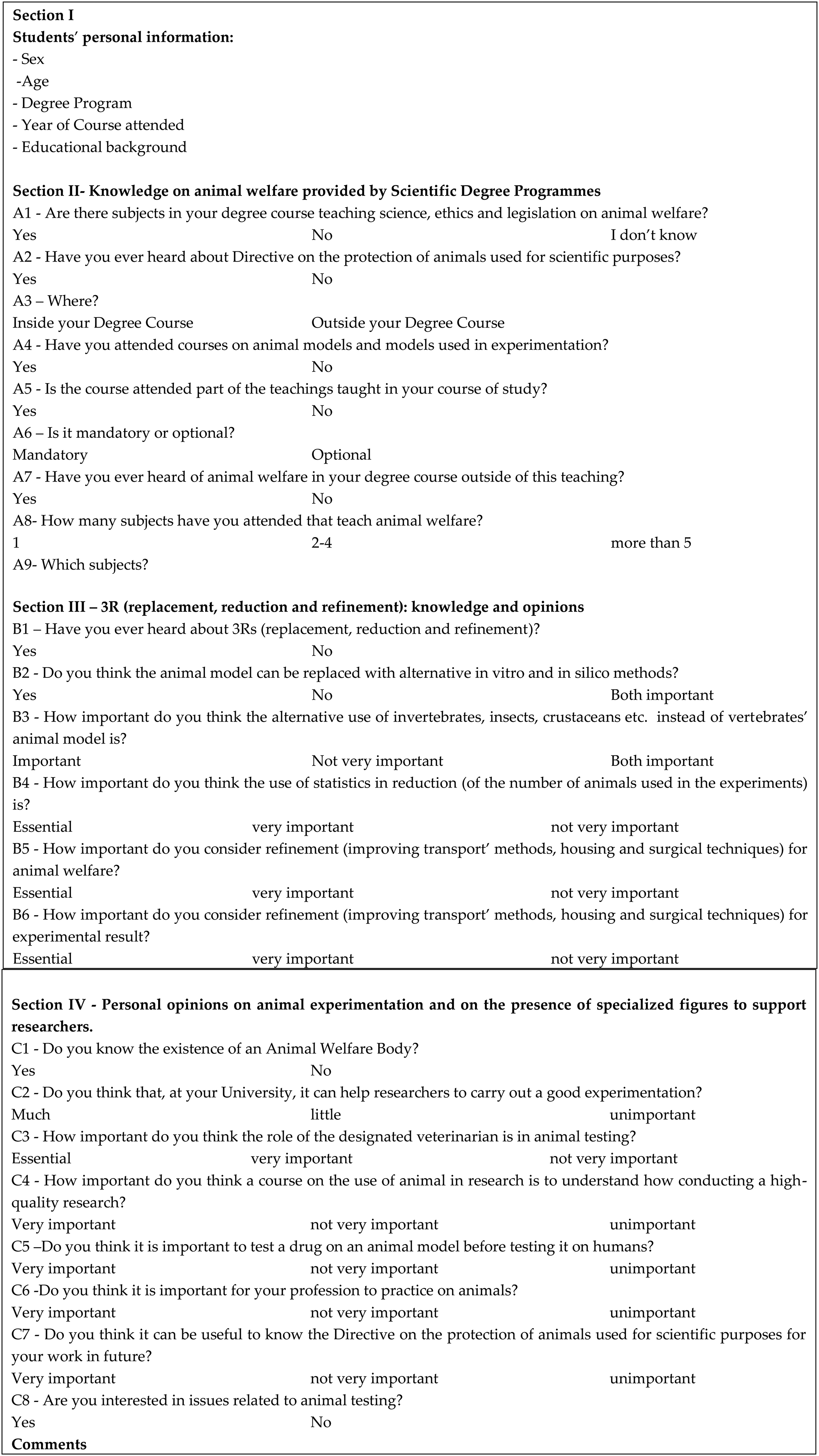
Questionnaire that was administered to the students.
Students invited to answer the survey were enrolled in 15 different Scientific Courses: four courses were Single Cycle Master's Degree Programmes (Veterinary Medicine, Medicine and Surgery, Pharmacy and Pharmaceutical Chemistry and Technology), nine were Bachelor's Degree Programmes (Agro-Zootechnical Science, Biological Science, Biomedical Laboratory Techniques, Biotechnology, Natural Science, Nursing and Midwifery, Physiotherapy, Psychological Sciences and Techniques of Cognitive Processes, Sport and Physical Exercise Sciences and Well-being) and two courses were Master's Degree Programmes (Human and Animal Health Biotechnologies, Experimental and Applied Biology) Table 1.
Scientific courses considered for the survey.

All students, in total 4014 of which 2658 were female and 1356 were male, were invited to participate in the survey through an email explaining the purpose of the survey and the anonymous and voluntary participation. The survey required no more than 15 min to be completed and the link remained open for 3 months (June–August 2020). In addition to the email invitation a reminder email was sent to nonrespondents 30 days after the first. Each student was allowed to complete the survey only once.
The questionnaire was divided into four sections (Figure 1).
Section 1 – students’ personal information
Section 1 aimed to collect students’ personal information including sex, age, Degree Program, year of Course and educational background; also, if they were graduated and what kind of Degree Courses they attended: Single Cycle Master's Degree Programme, Bachelor's Degree Programme and Master's Degree Programme.
Section 2 – knowledge on animal welfare provided by scientific degree programmes
Section 2 consisted of nine questions, eight of which were multiple choice questions, aimed at investigating the level of knowledge on animal welfare provided by Scientific Degree Courses. In this section students had to answer (A1) if their Degree Program provided courses on “Science, ethics and welfare legislation”, (A2) if they had heard about the “Directive on the protection of animals used for scientific purposes” and where (A3). Furthermore, they were asked (A4) if they had attended lessons on “Animal models and models used in experimentation,” (A5) if this subject was included in their Degree Course and (A6) if it was mandatory or optional. Finally, they were asked to indicate (A7) if they had ever heard of animal welfare in their degree course outside of this teaching, (A8) how many subjects teaching animal welfare they had attended and (A9) which ones. The latter question was open.
Section 3 – 3Rs (replacement, reduction and refinement): knowledge and opinions
Section 3 consisted of six multiple-choice questions aimed at investigating the students’ level of knowledge about the 3Rs (B1) and their opinion about their importance (B2–B6). In particular, (B2) students’ opinion regarding the replacement by alternative methods (B2) and by alternative organisms to vertebrate use (B3) was requested. In addition, (B4) their opinion about the importance of statistical analysis in reduction and the importance of refinement in order to improve animal welfare (B5) and experimental results (B6) was asked for.
Section 4 – personal opinions on animal experimentation and on the presence of specialized figures to support researchers
The fourth section consisted of eight multiple-choice questions concerning students’ opinions on animal experimentation and on the presence of specialized figures (professionals) to support researchers. In particular, they were asked if they had knowledge of the existence of an AWB (C1), their personal opinion about its importance for researchers at UniSS (C2) and the importance of the designated veterinarian in animal research (C3). In addition, their opinion about the importance of a course on the use of animals in research to understand how conducting high-quality research was asked (C4). Further questions concerning their personal view on the importance of testing drugs on animal models before testing them on human (C5), on animal-based practice (C6) and knowledge of the Directive 2010/63/EU (C7) for their profession and their interest (C8) on this topic were asked for. At the end of the survey, a field was left free for comments.
An emerging tool among communication engineers known as word cloud was used to weigh the terms most frequently used in students’ opinions. Accordingly, word clouds represent a new textual analysis tool where the weight of the words, which is rendered with characters of different sizes, is intended exclusively as the frequency of use within the text (the larger the character, the higher the frequency of the word). An online text analyzer (https://www.online-utility.org/text/analyzer.jsp) and a Free Word Cloud generator (https://monkeylearn.com/word-cloud/) were used to create Figure 7.
Results
Section 1 – students’ personal information
Data from this study were collected from 501 undergraduate students attending 15 Scientific Degree Courses at the University of Sassari (Figure 2).

Respondent students (%) classified by scientific course (A-Q).
A total of 73.7% of the sample were female (Figure 3(a)) and most of them (48.7%) were ≥24 years of age (Figure 3(b)).

Sex (3a) and age distribution (3b) of students responding to the survey.
The female sex was clearly the most represented in all study courses involved (Figure 4) while the youngest group was represented by biological science students (Figure 5).
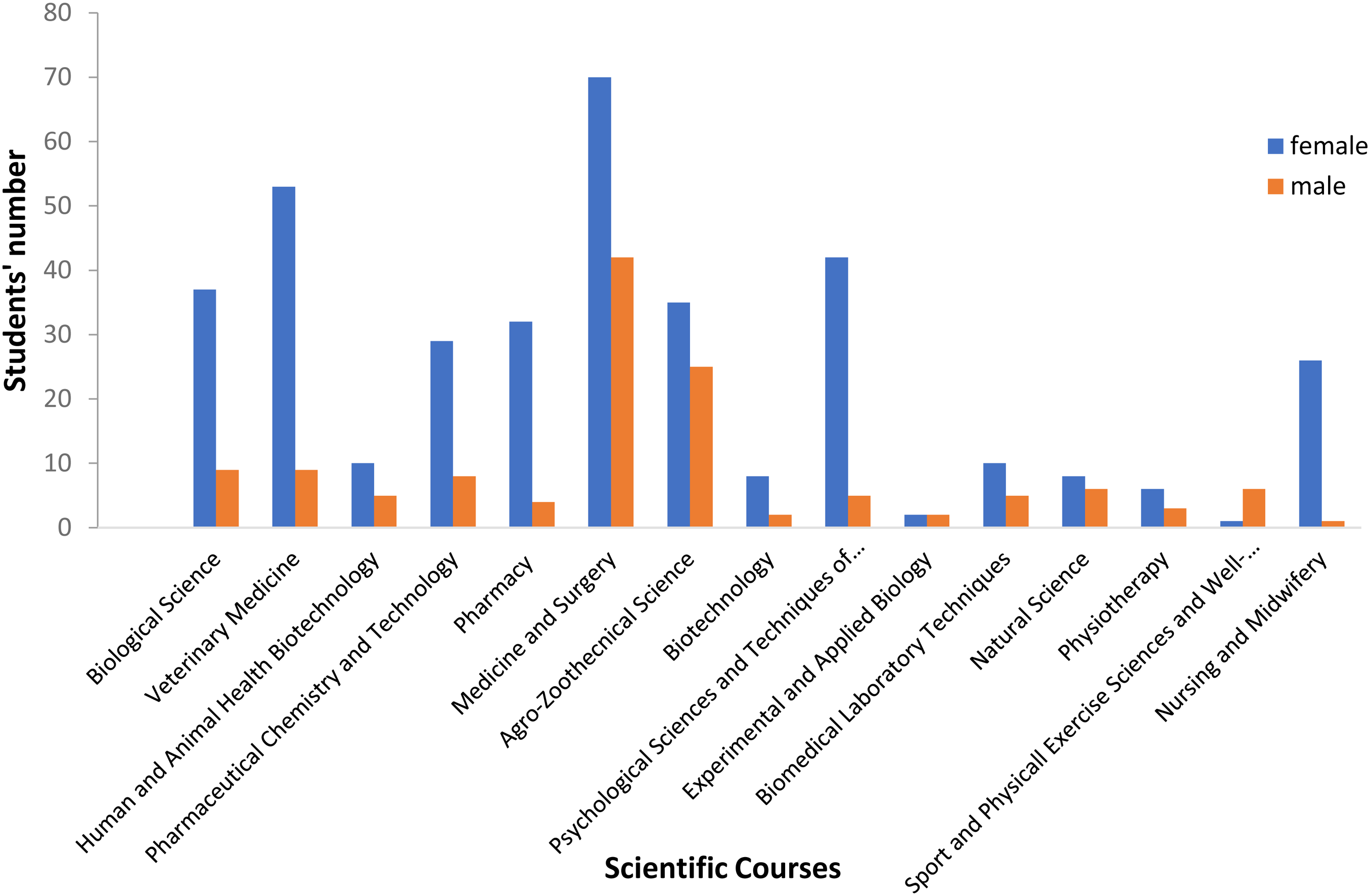
Students classified by sex per each scientific course.
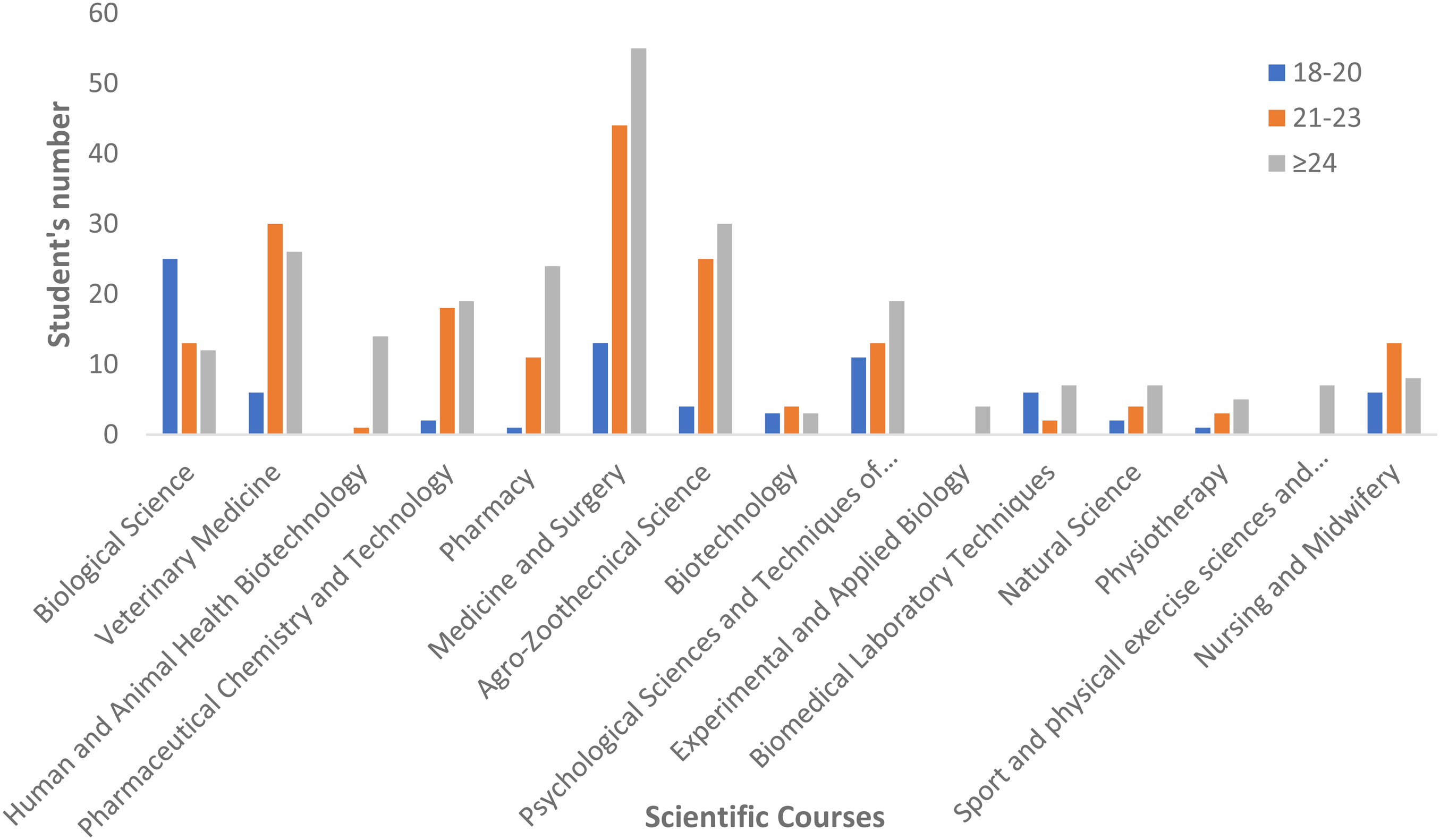
Age distribution of students responding to the survey.
In total, 24% of participants were attending the first year of a Single Cycle Master's Degree Programme (Figure 6) and 18.6% belonged to a University Degree Programme.
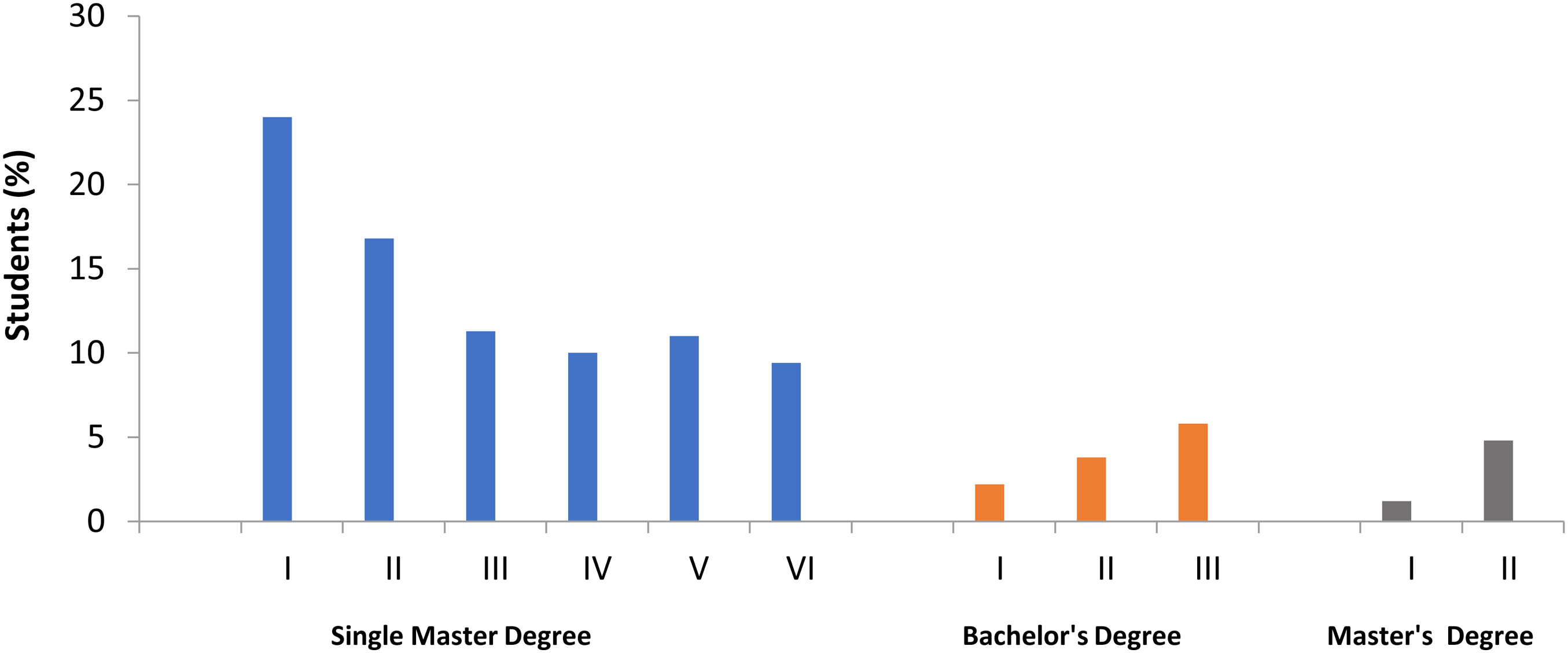
Students classified by year of course attended.
Section 2 – knowledge on animal welfare provided by scientific degree programmes
In total, 36.3% of students answered that in their degree course there were subjects teaching science, ethics and legislation on animal welfare; 45.3% replied there were no courses and 17.2% answered that they did not know (Table 2); among students who answered positively, 30.8% attended Veterinary Medicine and 28% Agro-Zootechnical Science.
Knowledge provided by scientific degree programmes on animal welfare.

Data shown in Table 2 indicate that 43.1% of interviewees attended at least one subject teaching Animal welfare, while 56.9% did not answer. Welfare topics were treated in subjects such as Animal welfare, Zootechnics and Pharmacology, but also Statistics, Animal models and Biology. Only in Physiotherapy, Psychological Sciences and Techniques of Cognitive Processes and Nursing and Midwifery there was no subject teaching welfare topics. Regarding the knowledge about the Directive on the protection of animals used for scientific purposes, the majority of the students (74%) had heard about it and 26.5% of these were informed during their Degree Course. In total, 17.4% of interviewed students had attended a course on animal research models during their Degree Course.
Section 3 – 3Rs (replacement, reduction and refinement): knowledge and opinions
About 3Rs knowledge, only 21.2% of the interviewees had already heard of it.
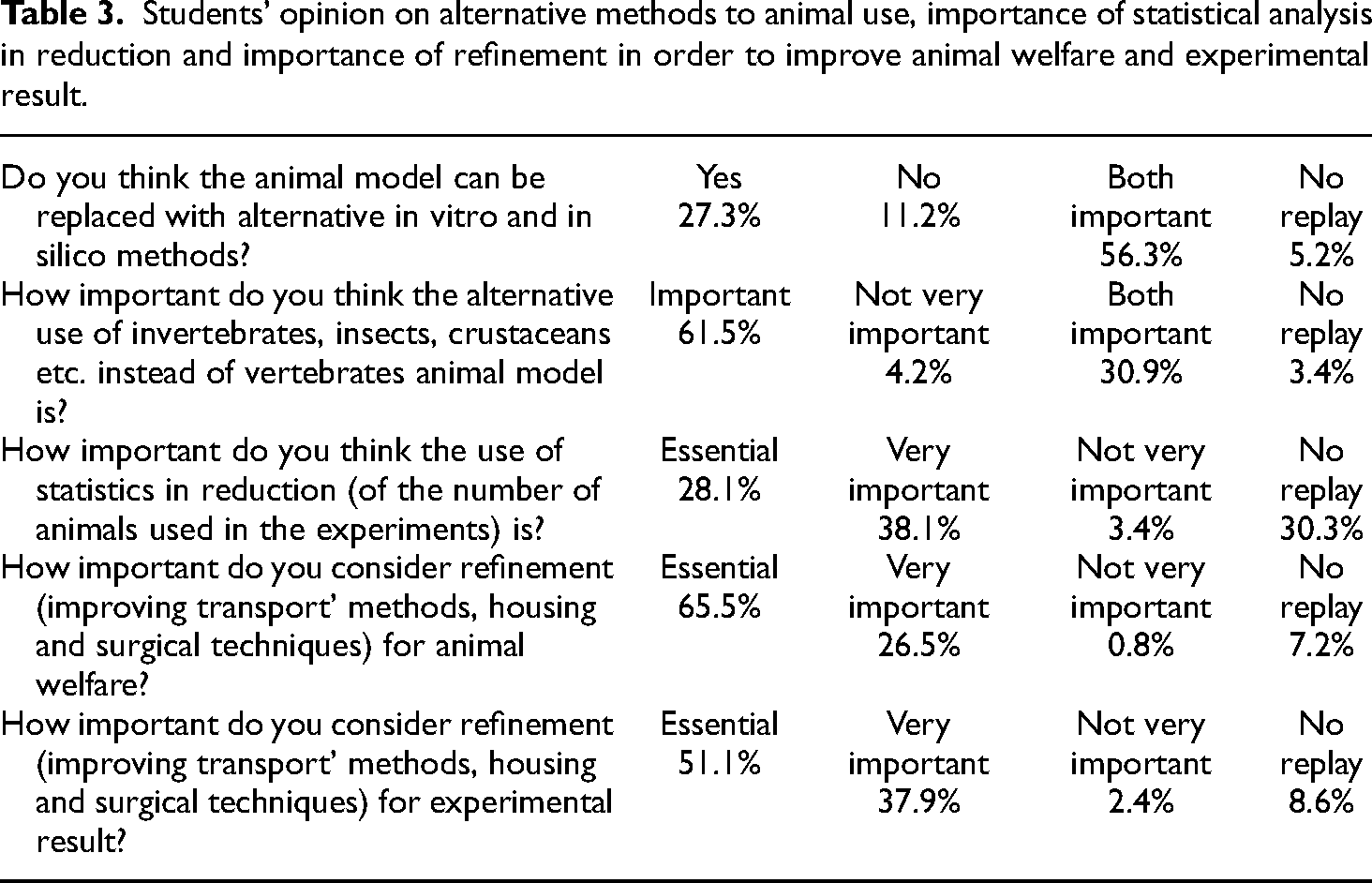
In Table 3 students’ opinions about replacement, reduction and refinement were reported. About the first question, on the use of alternative methods to animals, 27.3% of the students believed that the animal model could be replaced by in vitro and in silico methods while 56.3% believed that both were needed. Regarding the use of alternative organisms such as invertebrates, insects, crustaceans, etc., 61.5% of the students thought it was important, while 30.9% thought that both were needed. About the use of statistics to achieve a reduction of the experimental animals’ number almost all interviewees answered that it was essential (28.1%) or very important (38.1%) but 30.3% of the students did not answer to the question. Refinement (improving transport's methods, housing and surgical techniques) was also considered essential (65.5% and 51.1%, respectively) or very important (26.5% and 37.9%, respectively) in order to improve animal welfare and experimental results.
Students’ opinion on alternative methods to animal use, importance of statistical analysis in reduction and importance of refinement in order to improve animal welfare and experimental result.
Section 4 – personal opinions on animal experimentation and on the presence of specialized figures to support researchers
Regarding the presence of the AWB, 69.7% of the students were not aware of its existence but 73.7% thought that it could help researchers to carry out a good experimentation activity in this University (Table 4).
Personal opinions on animal experimentation and on the presence of specialized figures to support researchers.

Moreover, most of them (62.1%) considered the role of the designated veterinarian with expertise in laboratory animal medicine essential and 30.9% very important. Although students considered both animal models and alternative methods important, most of them thought it was important for their profession to practice on animals (51.5%) and to know the Directive on the protection of animals used for scientific purposes (73%).
In addition, 91% of students thought that a course on the use of experimental animals was important for top-quality research and 71.6% considered it very important to test a drug on experimental animals before testing it on humans.
Only 6% of the students interviewed commented on the survey. Of these, 25% would have liked to have an Animal experimentation course as a part of their Degree programme (in particular for Pharmaceutical Chemistry and Technology and Biology courses) because it is considered fundamental to their future profession, while another 25% declared to be against animal experimentation because it is unjust and unethical. The other 50% of students were divided between students in favour of animal experimentation conducted according to laws on animal care and use for scientific purpose (12.5%); students in favour, where possible, of using alternative methods when dealing with animals (12.5%), students interested on the topic that would like to be updated (9.4%), other asking to improve information to counteract misconceptions (6.3%), another 6.3% that did not know this issue and finally (3%) a student, after a course on animals used in experimentation, realized that there was attention to welfare.
The textual analysis of students’ opinions showed a percentage equal to 27.13% of interesting words in relation to this study (73.87% were instead represented by words with a generic meaning). As illustrated in the wordcloud (Figure 7), there were 17 recurring terms used by students, among them: animal (8.8%), experimentation (5.3%), welfare (2.5%), respect (1.9%), course (1.25%) and practice (1.25%). Some words like future, students and laboratory, had frequencies lower than 1%, while some terms, particularly important for this study, (i.e. training, methodology, regulations, replacement) were below 0.5%.

Terms most frequently used by students in their opinions (word cloud). The size of the font reflects the frequency of the word.
Discussion
This study represents the first attempt to explore the knowledge and opinion of students enrolled in different scientific courses towards animal welfare and topics such as animal testing and experimental animal welfare regulations. The idea of extending the questionnaires also to students of non-veterinary courses emerged from the need to know how important these topics were perceived by the student population attending scientific disciplines. In fact, to date, these topics were mainly aimed at veterinary students or regarding livestock animals.9,19,21,27
Unfortunately, the response rate of the students invited to participate in the survey was lower than the results obtained by other authors who developed a questionnaire with similar topics for veterinary students.28,29 This result was probably due to the email use that may not be a good way to reach the student population 30 and to the lack of interest in these topics by students from some scientific courses. In fact, while the highest response rates came from courses such as Veterinary Medicine, Human and Animal Health Biotechnologies, and Agro-Zootechnical Science, where these topics are believed to be more important, a much lower response rate came from health professions such as Nursing and Midwifery and Psychological Sciences and Techniques of Cognitive Processes where other topics (such as maternal and neonatal health, mental processes’ study ecc.) are considered more important.
The highest percentage of women in our study reflects the situation of the Italian University (CENSIS 2020) where several faculties such as Veterinary Medicine, which used to be a male-dominated field, are now attended by more than 70% women, 21 Moreover, even though the number of women enrolled to scientific courses is higher than the number of men 2658 vs 1356) the percentage of women who participated to the survey is higher than men.
Another reason may be due to a higher sensitivity by women towards topics such as animal welfare22,31,32 and consequently to a higher interest by women in a questionnaire on this topic.
About subjects concerning science, ethics and legislation on animal welfare, mainly Veterinary and Agro-Zootechnical students confirmed that these subjects were included in their curriculum. These results underline the key role of Veterinary Medicine in promoting animal welfare so that some subjects on Science, Ethics and Welfare Legislation are part of the core obligatory curriculum. These data were also confirmed by a recent study performed to monitor the evolution of animal welfare teaching in Veterinary 23 ; in this study, which included 57 Veterinary Education Establishment, the time spent teaching these subjects in undergraduate veterinary studies had increased over the past 6 years. This result is also a reflection of society's growing interest in pet animals which are considered family members and treated as such1,33 as well as increased attention to human health related to improved animal husbandry and welfare techniques in production.14,34
Regarding animal experimentation and the legislation that governs it, a very low percentage of respondents had attended courses on experimental and regulatory models and most of them had never heard of 3Rs concepts. The low percentage observed depends on the fact that animal experimentation has so far been seen as something involving researchers who learned about it based on experience. Since 2010 to date, legislation deals more with animal experimentation but there are only a few courses teaching experimentation models and 3Rs. 23 Anyway, this study shows that only a low percentage of students thought that animal models can be replaced by in vitro and in silico methods while most of them considered that both are important. These data confirm other studies in which the majority of the students would like traditional training methods to be paired with alternative approaches. 27 Currently, many alternative methods to laboratory animals (in vitro models, mathematical models, scientific video Journals, etc.) are used in research and teaching too. 35
In addition, most students considered important the use of invertebrates (i.e. insects e crustaceans etc., not included in current regulations, with the exception of live cephalopods) instead of vertebrates’ animal models.
The use of statistics in the reduction (of the number of animals used in the experiments) and the refinement (improving transport's methods, housing and surgical techniques) for animal welfare and experimental results were considered very important and essential, respectively. Although most of them did not know the existence of an AWB, they thought it could be important for the researchers of the University of Sassari to carry out a good experimentation activity. An important role was also assigned to the designated veterinarian, within the AWB, in animal testing.
These results underline and acknowledge the central role of the veterinarian in training and animal experimentation that agrees with the approach of the Federation of veterinarians of Europe: “Veterinarians have the knowledge and the skills concerning animal health, animal welfare and Vet Public Health, as well as for Experimental Animals. Our duty as veterinarians is not limited to diagnosis, treatment and prophylaxis. As experts on and advocates for animals and their rights, we must also strive for the implementation of the 3Rs concept (replace, reduce, refine)” (https://fve.org/publications/veterinarians-and-experimental-animals).
Furthermore, the result of this study showed the importance of a course on Animal Experimentation for the professional future of many students. In this regard, Pharmaceutical Chemistry and Technology and Biology students would like to have a course on animal experimentation in their curriculum. Furthermore, most of the respondents thought that a course on animals in research was important in order to understand how to conduct high-quality research.
According to European Directive 2010/63/EU, all personnel working with experimental animals should be educated to be competent to work with animals. 36 For this reason, in some European countries, a mandatory laboratory animal science (LAS) course has been introduced for every scientist seeking to perform animal experimentation.3,37 In Italy, according to Article 23, paragraph 2 of Legislative Decree 26/2014 of the Italian Government, staff who carry out procedures on animals for scientific purposes must be trained and certified according to criteria established by the Italian Ministry of Health. The criteria were issued through the decree of 5 August 2021 and the implementing rules were formalized by the Ministerial Directorial Decree of 18 March 2022. Researchers and students who intend to perform “procedures” on animals must be trained according to the Continuing Medical Education (C.M.E.) accreditation criteria. Members of animal welfare control bodies (OPBAs) must also obtain this certification, including the designated veterinarian.
The textual analysis of students’ opinions summarized in the wordcloud confirms the strong feeling of students on the issues of welfare and respect for animals used in experimentation and the need to include practical training in study courses. Unfortunately, knowledge on 3Rs, methodologies and regulations supporting animal welfare is still scarce. Also, for these reasons, including teaching activities on animal experimentation at the university level would be important for students wishing to undertake biomedical research studies in the future.
The answers to the questionnaire confirm the importance of the topic and what is perceived by students also as trend indicators of civil society opinion about animal welfare and care. The open answers and comments highlight student sensitivity to both scientific and ethical aspects of the issues addressed in this study and confirm the request for further training in scientific, legal and ethical fields.
In order to achieve a higher involvement of students, the survey could be preceded by a video to be published online aimed at students from different courses that thoroughly explains the study objective and relevance.
Conclusions
This is the first study, both at the national and international levels, that addresses these issues among all study courses in which using animals for experimentation is potentially envisaged. Overall, results confirm data available on veterinary course students while they definitely highlight a worse level of awareness referable to students from other courses. In both cases, targeted training interventions are warranted and, in some cases, necessary also in response to student requests. The extension of the research to courses from humanistic and social studies (i.e philosophers, socio-biologists, psico-biologists, etc) even limited to the problems inherent animal welfare in general, may represent the next step of this research to study in depth the attitudes towards animals welfare influenced by different psychosocial factors. This effort will be the basis for actions and interventions to protect and improve animal welfare.
Supplemental Material
sj-docx-1-sci-10.1177_00368504221150071 - Supplemental material for Student insights towards animal welfare science and law. Survey results from Sassari University, Italy
Supplemental material, sj-docx-1-sci-10.1177_00368504221150071 for Student insights towards animal welfare science and law. Survey results from Sassari University, Italy by Maria V Varoni, Pier A Serra and Eraldo Sanna Passino in Science Progress
Footnotes
Author contributions
Conceptualization was designed by M.V.V., P.A.S. E.S.P.; methodology was planned by M.V.V., P.A.S. E.S.P; formal analysis was performed by P.A.S. E.S.P; dissemination of the survey was done by M.V.V.; data curation was handled by M.V.V., P.A.S. E.S.P; writing-original draft preparation was performed by M.V.V., P.A.S., E.S.P. All authors have read and agreed to the published version of the manuscript.
Declaration of conflicting interests
The author(s) declared no potential conflicts of interest with respect to the research, authorship, and/or publication of this article.
Ethical approval
This study was conducted in accordance with the guidelines of the Declaration of Helsinki and approved by the local AWB (OPBA).
Funding
The author(s) disclosed receipt of the following financial support for the research, authorship, and/or publication of this article: This research was supported by the University of Sassari (Fondo di Ateneo per la Ricerca 2019); www.uniss.it.

Supplemental material
Supplemental material for this article is available online.
Author biographies
Maria V Varoni is associate professor in Pharmacology (Chemotheraphy). Her area of research concerns pharmacokinetic studies, environmental toxicant and antioxidant activity of natural substances.
Pier A Serra is full professor in Pharmacology. His research activity is divided between the study of the neurochemical mechanisms of neurodegeneration (in particular of Parkinson's disease) and the development of new technologies based on biosensors, for monitoring the chemistry of the central nervous system and of nutraceuticals useful for the prevention of neurodegenerative diseases.
Eraldo Sanna Passino is full professor in veterinary surgery disciplines. His recent research interests are represented by regenerative medicine (stem cells, reparative and growth factors) and by animal models in comparative surgery.
References
Supplementary Material
Please find the following supplemental material available below.
For Open Access articles published under a Creative Commons License, all supplemental material carries the same license as the article it is associated with.
For non-Open Access articles published, all supplemental material carries a non-exclusive license, and permission requests for re-use of supplemental material or any part of supplemental material shall be sent directly to the copyright owner as specified in the copyright notice associated with the article.
