




Abstract
Plastic debris is a complex and persistent environmental contaminant that has received a high amount of attention in the last few years. Understanding the sources, transport, fate, occurrence, and health risks of microplastics (MPs) in the environment is essential as millions of tons of plastic are manufactured and released into the environment. There is a high possibility that MPs will accumulate and retain within continental environments and have effects on the environment and human health. This review elucidates the outcomes of studies related to the prevalence, transport, fate, and health risks of MPs in soil and freshwater environments. The review shows that the sources of MPs are diverse and extensive and their occurrence, transport, fate, and health risks in the environment are affected by their physico-chemical characteristics and by natural factors. Implemented legislation or regulatory plans to reduce MPs contamination of the environment have been reviewed in this study. Moreover, management options are presented.
Introduction
Plastics with characteristic water insolubility and slow degradability have become a point of concern since their commencement in 1907 in the form of resins such as Bakelite.1,2 Globally, plastic production has increased from 1.5 million tons in 1950 to 367 million tons in 2020. 3 The increased production rate despite low recycling, and lack of degradation to harmless particles turned into a considerable problem, as most of the plastics end up in the environment. An estimated 31.9 million tons of 275 million tons of recorded plastic waste were mismanaged in 2010. 4 Mismanaged plastic waste undergoes chemical, physical, and biological processes and enters the ocean through rivers, surface runoff, and other related routes. 5 Estimations on global mismanaged plastic waste predict a possible increase of up to 155–265 million tons/year in 2060 compared to 60–99 million tons/year in 2015, with a higher contribution from Africa and Asia. 6 The potential entry of mismanaged plastic waste into the environment is higher in developing countries in the following order: China > Indonesia > the Philippines > Vietnam > Sri Lanka. 7
Ubiquitous plastic waste disintegrates into smaller particles known as “microplastic(s)” (MP(s)) when a size of <5 mm is reached. 8 This term was suggested and defined when the MPs were first identified as ocean contaminants in 2004. Since then, the term has been widely used by the scientific community. 9 More recently, many researchers have recommended narrowing the size range of MPs and categorizing them as macroplastics (<2 cm), mesoplastics (5 mm – 2 cm), microplastics (<5 mm), and nanoplastics (<1 mm). 10 Regarding the physical characteristics of MPs, their size, color, and shape are essential for their proper identification. MPs are a combination of different polymers (macromolecules composed of multiple repeating units called monomers) that can be converted into a range of desired products. 9
There are two main sources of MPs in the environment: primary and secondary sources. Primary sources include synthetic plastics produced in small sizes for a variety of applications, such as polyethylene microbeads (scrubbers) in household cleaners, cosmetic products, industrial abrasives for sandblasting and manufactured feedstock pellets.11,12 Despite the high efficiency of wastewater treatment, which can remove up to 95% of MPs, a significant number of MPs pass through filtration systems and enter terrestrial environments. 13 Secondary sources of MPs include small fibers or fragments originating from the natural biochemical degradation of large plastic products such as plastic bottles, plastic bags, fishing nets, microwave containers, and plastic household items in the environment. Secondary sources are considered to be the main sources of most MPs identified in marine environments. 8
Research on marine water MPs began over a decade ago; however, the origin of plastic fragments addressed land-based sources, especially freshwaters, as the main input route. 13 Although marine water covers >70% of the Earth, the biodiversity in soil and freshwater systems combined is five times greater than that in marine water. 14 Any contamination, specifically of MPs, in soil and freshwater systems may adversely affect the terrestrial ecosystem. Some observed and potential impacts of MPs in terrestrial ecosystems have resulted in legislation aimed at eliminating sources of MPs in the United States, Canada, and China Taiwan. 14 The transport of MPs to soil and freshwater systems might be harmful to flora, fauna, humans, and environmental health. 9 These aspects related to MPs, emphasized the need for a comprehensive review of research on MPs in soil and freshwater environment to understand their sources, global distribution, health risks, and recommendations for future regulations to manage contamination.
Given the knowledge gap regarding MPs in terrestrial and freshwater systems, this review focuses on the following aspects:
The description of MPs’ physico-chemical characteristics for precise identification, Sources, transport, and the fate of MPs in soil and freshwater systems, Globally reported occurrence of MPs in soil, rivers, streams, lakes, and groundwater, MPs effects on the environment and risks to human health, MPs related implemented regulations and systematic recommendations or requirements to overcome persistent MPs contamination
Soil and freshwaters are of particular interest in the review and it is considered beneficial to also review potential health risks, MP related regulations and solutions to provide all-rounded viewpoints on this topic. The novelty in this review is in the sense that it focuses on MPs pollution in soil and freshwater environments which have received less consideration compared to that of the marine water MP pollution, and insights through the human health risks, enacted regulations about MPs pollution, and importantly proposes recommendations and potential research; based on the detailed review of current MP pollution scenario.
Physico-chemical characteristics of microplastics (MPs)
MPs are identified in different compartments of the environment, based on their physical (size, shape, color, and number) and chemical (different polymers) characteristics, as presented in Figure 1. MPs can be classified according to their size ranges given in the introduction section. Films, beads, fibers, foams, pellets, and fragments are common shapes attributed to MPs. 15 They can also be classified by color, such as black, white, red, blue transparent, and others. 16 The concentration (number) of MPs in each classification is important. There are seven main categories of plastic polymers: polyethylene terephthalate (PETE or PET), high-density polyethylene (HDPE), polyvinyl chloride (PVC), low-density polyethylene (LDPE), polypropylene (PP), polystyrene or Styrofoam (PS), and miscellaneous plastics (acrylic, acrylonitrile butadiene, fiberglass, nylon, polycarbonate, polylactide, and styrene). 16 As shown in Figure 1, plastic polymers are widely used in everyday life, and plastic reuse and recycling are choices- and legislation-dependent.

Physico-chemical characteristics of microplastics (MPs) considered for their proper identification.
Sources
The sources were categorized based on their size at the time of production or at the time of their entry into soil or freshwater systems (Figure 2).
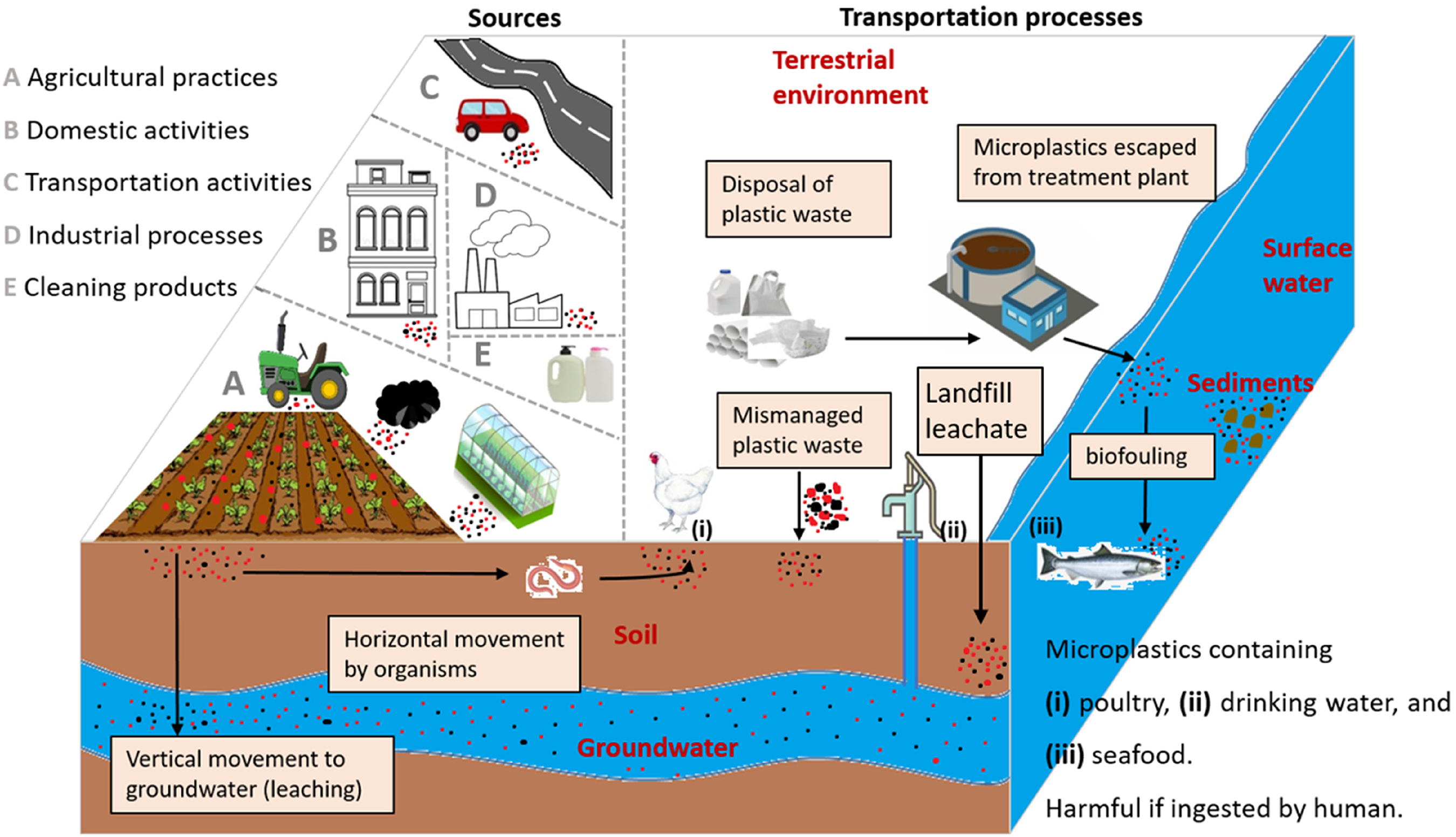
Conceptual representation of MP sources, transport, accumulation, and observed fate in terrestrial soil and fresh water systems. Sources of MPs are agricultural practices, scrubber containing cleaning products, domestic, transportation, and industrial activities. After inappropriate waste management, the plastic waste goes through physical and chemical stresses and become smaller particles MPs (represented by small dots). Black arrows and text boxes are presenting the processes involved in transport of MPs.
Primary sources include synthetic plastics produced in small sizes for a variety of applications.
Microbeads are used as exfoliants in certain personal care products, such as scrubs, soaps, toothpaste, shower gel, shampoos, facial creams, and liquid makeup. 17 In the United States, patents for skin cleaners containing polyolefin particles (size 74–420 µm and amorphous shape), described as exfoliants, include plastic polymers, PE, PP, and PS. 18 Approximately 6% of the liquid skin cleaning products in the European Union contain plastic microbeads, and PE accounts for 93% of the MPs used in these products. 19 In China, microbeads in facial scrubs are 20,860 particles/g with diameters ranging from 85 to 186 μm, which account for 0.03% of the plastic waste entering terrestrial soil and freshwater. 17 In Malaysia, microbeads have been found in toothpaste and facial cleaners with diameters ranging from 3 to 178 μm in granular shapes. 20 In the United Arab Emirates, 11 of 37 facial and body scrubs have MPs with diameters ranging from 12 to 273 μm. 21 Plastic microbeads are also used in medical applications, such as tooth polishing by dentists, and as transporters to deliver dynamic pharmaceutical agents. 18 After use, MPs from personal care and medical products can directly reach sewage and leak from pipelines and wastewater treatment plants. Primary MPs are also used in boring solutions for gas and oil exploration and in industrial abrasives, such as those used for air blasting to remove paint from metal shells and for cleaning different engines. 18 If any primary MP source products are disposed of inappropriately, they can enter soil and freshwater.
Secondary sources are considered to be the primary sources of most MPs identified in marine environments. 8 The general littering, landfills, packaging and construction industries are suspected of releasing MPs into soil and freshwater systems. 22 MPs were detected in leachate from landfills, both active and closed, with an abundance of 24.58 particles/L in southern China. 23 PET and polyester (PES) were the two dominant polymers observed in the water in reusable plastic bottles. Approximately 93% of the bottled drinking water contained MPs, which were collected from nine different countries. 24 The textile industry produces approximately 42 million tons of synthetic fibers annually, of which 80% are synthetic fibers belonging to PES. 25 Approximately 35% of the identified MPs in freshwater environments are microfibers from textile sewage. 8 Synthetic microfibers can enter the soil and freshwater systems through regular use, washing, and drying cycles of fabric and unintentional discharges from waste management practices or wastewater treatment because of chemical and mechanical stresses. LDPE films, used in substantial volumes to protect crops from suppressing weeds, increasing temperature, and retaining moisture in the soil (mulching), and compost applications, are significant sources of MPs in agricultural soil. 26 In 2016, approximately 4 million tons of mulch films were in the global market, and this value was expected to increase at a rate of 5.6% by 2030. 8 Recent studies have identified the ecological effects of MPs from mulch film residues on farmlands. Rubber is also considered to be a class of plastic polymers. 8 Among the recognized tire-derived MPs, 18% were transported to freshwaters and 2% to estuaries. 27
Transport and fate
Terrestrial soil and freshwater can act as sinks, retaining most of the MPs received. Some studies have shown that certain terrestrial and freshwater environments accumulate MPs in higher amounts than those in the ocean due to the closeness and amount of plastic inputs.28,29
The application of sewage sludge to agricultural soils may be an important source of MPs retained in the soil or transported horizontally to rivers via runoff and vertically to groundwater aquifers. 30 Retention within the soil is assisted by processes such as bioturbation, which draws particles away from the surface to the deeper layers of the soil. 30 Soil MPs ultimately affect the growth and reproduction of organisms in the soil and could transfer several pollutants to soil biota, thus affecting the soil ecosystem. 31 The movement of soil organisms could also assist in the transport of MPs between the layers. Agricultural and forest soils can retain plastic litter compared to urban land because of their permeability and lower overland flow. 29
The transport of MPs in rivers depends on river flow; they could be transported to the ocean or settle in the sinking sediments. 29 In lakes where sediment accumulation is high, it has been recommended that retention of MPs in sediments could lead to long-term burial. 32 The density and shape of MPs critically influence their transport and retention in the environment. Some plastic polymers have low densities and float, and some polymers are denser than water and naturally sink at the bottom. The densities of the plastic polymers are presented in Table 1. The density of polymers also changes with the growth of microorganisms and organic pollutants (biofouling), leading to their sinking and deposition. 33 Furthermore, size and shape are also crucial in the retention of MPs, whereas irregular shapes have a highly complex settling dynamic compared to that of spherical shapes. 33 This difference in particle behavior, which is dependent on size, shape, and density, illustrates the complexity of predicting and modeling the fate and transport of MPs in river environments. The transport of MPs within terrestrial soil, especially in freshwater systems, is highly dependent on hydrological characteristics, including the physical properties of the water body (water flow, water depth, topography, geological setting, and seasonal variations). 28
Densities of plastic polymers commonly found in terrestrial and freshwaters. Densities are arranged in an ascending order to ease comparison with water density, which is commonly 1 g/cm3.

aDensities values might vary because of biofouling.
Analyzing the fate of MPs in soil and freshwater environments is complicated because of the distinct properties of plastics in terms of size, shape, and texture, which influence their transport and fate in the environment. When MPs enter freshwater, they are rapidly covered by a microbial biofilm composed of algae, bacteria, and fungi, which can alter the physical and chemical characteristics of MPs. Biofilms are a significant food source for higher-trophic organisms, such as fish. In case the MPs covered by biofilms are consumed by fish, the fate of MPs in freshwater would inevitably change. 31 There is no appropriate fate for MPs; when they enter environmental resources, they might pose potential risks to humans, animals, and ecological health once they come in contact with them.
Mps distribution in soil and freshwater environments
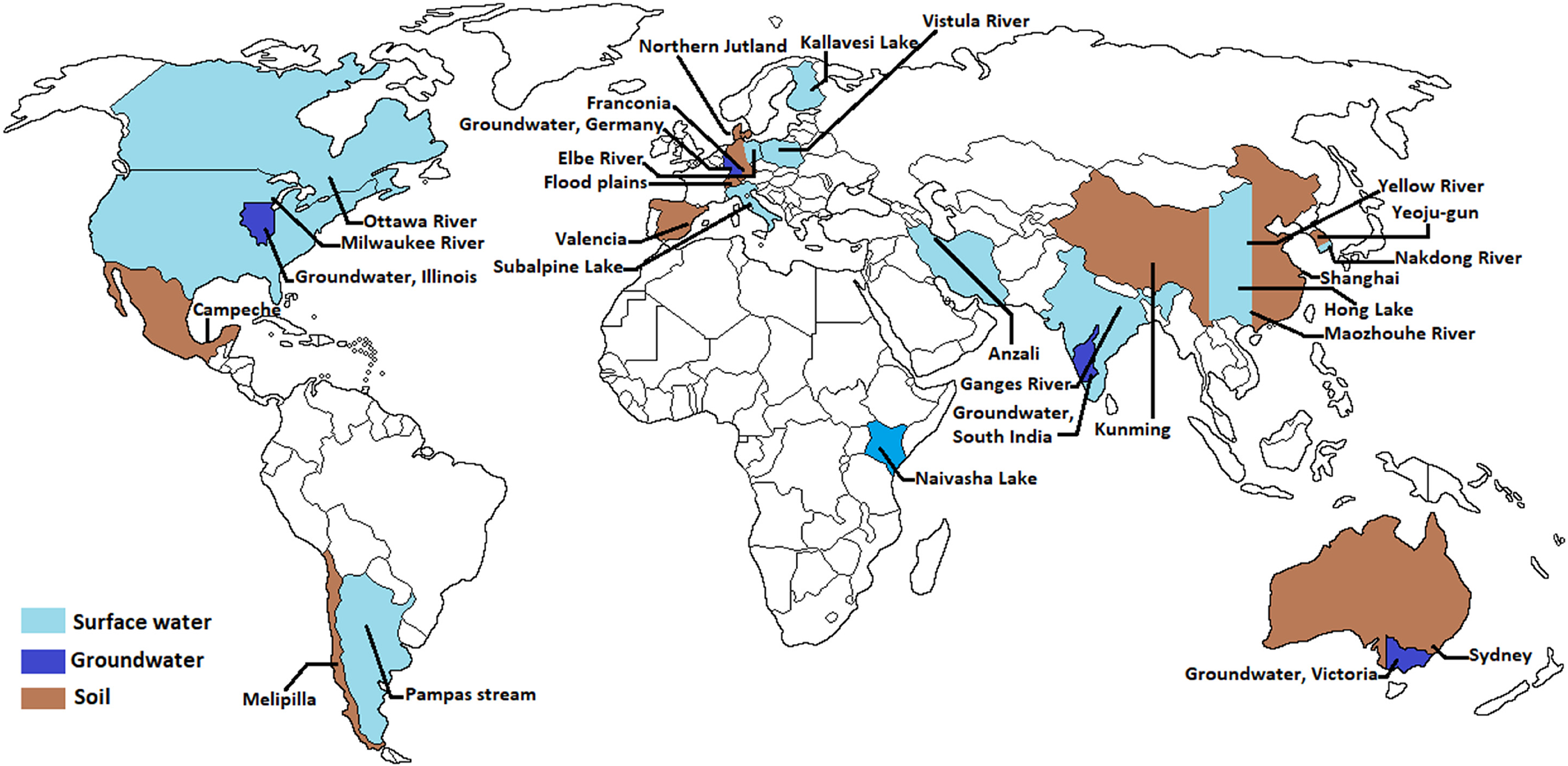
The worldwide distribution of MPs by country is presented in Figure 3. The illustration represents the MPs in soil and freshwaters including surface and groundwater. The countries are highlighted in the corresponding color.
Globally reported microplastics (MPs) in soil. Studies are first arranged chronologically and then alphabetically based on location.

abundance of MPs mg per kg.
mean value.
Globally reported MPs in freshwaters. Studies are first arranged chronologically and then alphabetically based on location.

In soil
Many studies have reported large numbers of MP fibers in sewage sludge and compost fertilizers, which are widely used in agricultural fields. 34 Soil MPs can also originate from the breakdown and weathering of plastic mulch films on farmland, fragmentation of plastic waste in landfills, litter, surface runoff, atmospheric deposition, and wastewater irrigation. 14 Once released into the soil, MPs may accumulate and affect the growth and biodiversity of soil organisms. Furthermore, MPs can be used as carriers to transfer several pollutants to soil biota, thus affecting the soil ecosystem. 23 These impacts emphasize the need to study the occurrence and distribution of MPs in the soil.
Soil MPs have been identified worldwide in different soils, including agricultural or farmland, home gardens, floodplains, and urban and industrial soils (Table 2). In previous studies, the depth of soil samples varied from 0–10 to 0–30 cm, which falls within the plowing layer in agricultural lands. The highest MP concentration of 236,000 pieces/kg was observed in farmland in Northern Jutland, Denmark, due to sludge application to farmland as a fertilizer. 35 The highest mass concentration of MPs, 67,500 mg/kg, was reported in industrial soil in Sydney, Australia, due to the entry of treated and untreated industrial waste into the soil. 36
Globally, the majority of polymers identified in farmland soils are in the form of PP and PE, whereas in industrial soils, it is PVC.36,43 The dominant shapes of MPs identified in the soil of different industrial and agricultural lands, in decreasing order, are fiber > fragments > film. The shape and polymer types of MPs are closely related to their source. Fibers are frequently monitored in soils where treatment sludge is applied as a fertilizer or where treated or untreated wastewater is used for irrigation. 38 Other fragments and films are mainly consequences of the fragmentation or breakdown of remains from large plastic products, such as plastic mulching sheets. 5 PP and PE polymers were dominant types of soil MPs in the studies reviewed, probably because they are the most demanded plastics globally. 8
In freshwater
The most recent literature reviews MPs in freshwater, including rivers, streams, lakes, and groundwater. Details of the physical characteristics and composition of the identified MPs in freshwater are given in Table 3.
Fibers were the most common shape found in the lake water, followed by fragments. The MPs in lake water were composed of PE, PP, PS, and PET, which were released from wastewater or wastewater treatment plants. The Elbe River in Germany and the Nakdong River in Korea have been identified to have high MP concentrations of 5570 pieces/L and 4760 pieces/L, respectively. The prominent MP shape in the Elbe River was spherical because industrial waste was released into the river directly or escaped from the treatment plant. 52 PP, PE, and PS were the MPs found in the Elbe and Nakdong rivers. River water from Canada, USA, China, Iran, Argentina, India, and Poland have shown comparatively lower concentrations of MPs, with fiber as the most common shape found in water, followed by fragments.44,48,49,53,55–57 The composition of the identified MPs in the above-mentioned rivers was PP, PE, PETE, PS, and PVC, showing that the sources of these MPs have different origins. Among the reported studies, we considered the relative frequency of shapes and compositions observed in freshwater on a global scale. The most frequently observed composition across the reported studies was PE > PP > PS > PVC > PET. The order of the five most abundant polymers can be explained by two factors: global plastic demand and density of the polymer. 61
The studies on groundwater MPs are very limited in number, and only a few have been published (Table 3). Groundwater MPs identified from 30 m deep wells in Germany. 58 Groundwater wells from a karst aquifer in Illinois, USA, and found that 16 of 17 samples were contaminated with MP fibers. 15 Due to the open nature of karst, it is suspected that septic release and leaching were the main sources of MPs. A maximum of 80 pieces/L MPs were identified in groundwater of South India with dominant shapes: pellets, foams, fragments, and fibers. 59 Highest MP concentration of 97 pieces/L was identified in groundwater from Victoria, Australia, owing to agricultural activities. 60 In these studies, the identified MPs were PE, PS, PP, and PVC, observably due to leachate from septic effluents, municipal waste dump sites, and agricultural activities. Freshwaters, including surface and groundwater, are used for domestic, industrial, and agricultural purposes and most vitally for drinking purposes, making freshwaters critical resources. 62
Mps effects on the terrestrial environment
The composition of MPs and their association with human activity can significantly alter the environment. The effects of MPs on terrestrial soil and freshwaters remain largely unexplored and represent a relevant area for future research. A study from Sydney, Australia, found that topsoil near roads and industrial areas might contain ∼ 7% of MPs by weight. The leaching of nonvolatile organochlorines from PVC and other chlorinated MP polymers causes geochemical changes in soils. 36 MPs may persist in soil for more than 100 years due to low light and oxygen. 11 Therefore, there is a high chance that MPs interact with soil flora and fauna by altering their biophysical environment, with potential concerns regarding their ability and soil function. 37
Earthworms and springtails have been shown to transport MPs within soil layers in both horizontal and vertical directions. 63 In the case of earthworms, MP contact is related to structural changes in their burrows, which are directly related to soil aggregation and function. 37 In springtails, alterations in the biophysical environment exaggerated their activity, which affects their gut microbiomes. 8 Thus, without clear proof of ingestion, springtails exposed to MPs had changed gut microflora. This microflora altered the isotopic signature of nitrogen and carbon, thereby showing adverse effects on growth and reproduction. 8 A study on nematodes showed that nematodes feeding on soil might suffer from obstruction in their digestive system and ultimately die due to soil contaminated by MPs. 64 Any change in soil microorganisms can alter the physical properties of soil, including bulk density, water holding capacity, and porosity. 33
Mps potential human health risks
MPs can have potential human health effects upon contact with the human body, directly through ingestion, inhalation, and dermal contact, or indirectly by ingesting plants and animals carrying MPs. The presence of MPs in human feces makes it a critical reason to study their potential health effects. 65 MPs have been observed to cause inflammation, hindrance, and accumulation in various organs. 63 The severity of health risks is mainly dependent on the duration of exposure to MPs and the susceptibility of the individual.
MPs can cause oxidative stress by releasing oxidizing chemicals, such as metals bound to their surface, and reactive oxygen radicals from the body of the host, which are released during the inflammatory response. 66 Limb and joint prostheses in humans containing MPs have been reported to release toxicants and free radicals owing to a severe inflammatory response.
Metabolism and energy balance may get disturbed by the exposure of metabolic enzymes to MPs. Previous research has shown that exposure to MPs increased lactate dehydrogenase enzyme in mice and fish, ultimately increasing their anaerobic metabolism. 67 In humans, MPs might have similar metabolic responses with an increase or decrease in energy.
Immune function disruption after exposure to MPs has been studied. Especially for genetically susceptible individuals, exposure to MPs is enough to disrupt immune function and lead to immunosuppression. 68 This effect is proved for tested organisms but, further investigations are required for the human immune system.
The translocation of MPs to distant organs and tissues through the circulatory system has been observed. Studies have reported that after inhalation and ingestion, MPs are translocated to organs such as the liver and spleen through the circulatory system in the tested organisms. 69 A human placental perfusion model showed that PS polymer particles crossed the placental barrier and were transported through diffusion by cellular transporter proteins. 70 After transportation to distant tissues, MPs might cause inflammation and disturb organ function. 68
Neurotoxicity has been reported in vivo after extended exposure to particulate matter, including MPs, due to the activation of immune cells in the brain. 71 Exposure to MPs resulted in increased AChE activity in the brain and increased levels of serum neurotransmitters. In this study, the MP polymer PS of size 40–70 nm induced toxicity and reduced metabolic activity because of increased bioactive compounds. 72
Significant reproductive toxicity by MPs has been reported in freshwater Hydra, Daphnia, and oysters due to oxidative stress and energy metabolism. 73 The carcinogenicity of MPs has been reported by Prata. 68 It has been suggested that continuing inflammation due to MP intake may stimulate cancer due to DNA damage. MPs might potentially have similar effects in humans; however, detailed research is required in this field.
In addition to the toxicity of ingested MPs, the indirect chemical toxicity caused by the release of additives should also be examined. MPs commonly contain chemical additives that are incorporated during the manufacture of plastic products. When ingested, MPs may release these chemicals into the digestive system since they are not chemically bound to plastic polymers. 68 MPs that can adsorb heavy metals are considered as routes for coexisting contaminants and increase their potential health risks. 31 However, further research is needed to clarify the role of MPs in joint toxicity with coexisting contaminants.
Mps related regulations
Plastic pollution is an undeniable issue, as the accumulation of plastics or MPs in soil and water has detrimental effects on the planet. Specific initiatives have been started to control MP pollution in freshwater and soil at international, regional, and local levels.
The Millennium Development Goals (MDGs) of the United Nations General Assembly agreed on the 2030 agenda for sustainable development on 25th September 2015. 74 Goal 12 and target 5 of the agenda state that waste generation shall be substantially reduced by 2030 through prevention, reduction, recycling, and reuse. This target refers to “all wastes” which also cover plastic waste. In 2015, Group 7 (G7, consisting of Canada, France, Germany, Italy, Japan, the UK, and the USA) discussed options to address marine plastic pollution and priority actions to address land-based sources. 75 This has also contributed to the reduction of plastic pollution in soil and freshwater. In 2016, the World Economic Forum (WEF) published an industry agenda titled “The New Plastic Economy: Rethinking the Future of Plastics”. It stated that plastic leads to environmental deterioration, as shortly after the first use, 95% of plastic packaging material (worth $80–120 billion annually) is lost to the environment. 76 Plastic packaging discharged from collection systems generates significant economic costs by reducing the productivity of vital natural systems, including that of water and soil.
A European Union (EU) Regulation; Registration, Evaluation, Authorization and Restriction of Chemicals (REACH), was adopted in 2006 to address the production and use of chemicals. 77 REACH also refers to plastic monomers and additives based on their molecular weights. In 2013, the European Commission released a Green Paper “to launch a broad reflection on possible responses to the public policy challenges posed by plastic waste”. 78 This green paper was the first systematic approach at the EU level, which refers to the problem of MPs in the environment and chemicals to improve the management of plastic waste.
Numerous national regulations have been enforced to reduce the amount of MPs in freshwater systems. Approximately 150 countries have implemented legislation aimed at reducing the use of single-use plastics (e.g. plastic bags, water bottles, cups, and straws). 79 In Canada, because of the significant presence of microbeads in lakes, the federal government has declared a ban on the production, sale, and import of personal care products containing MPs. 80 In the USA, the Microbead-Free Waters Act of 2015 was implemented in mid-2017. 81 Table 4 shows a summary of legislative initiatives related to reducing MP pollution in different countries of the world. However, most countries have started some initiatives but have not reported or implemented them yet.
Regulation initiatives related to MPs pollution in different countries of the world.
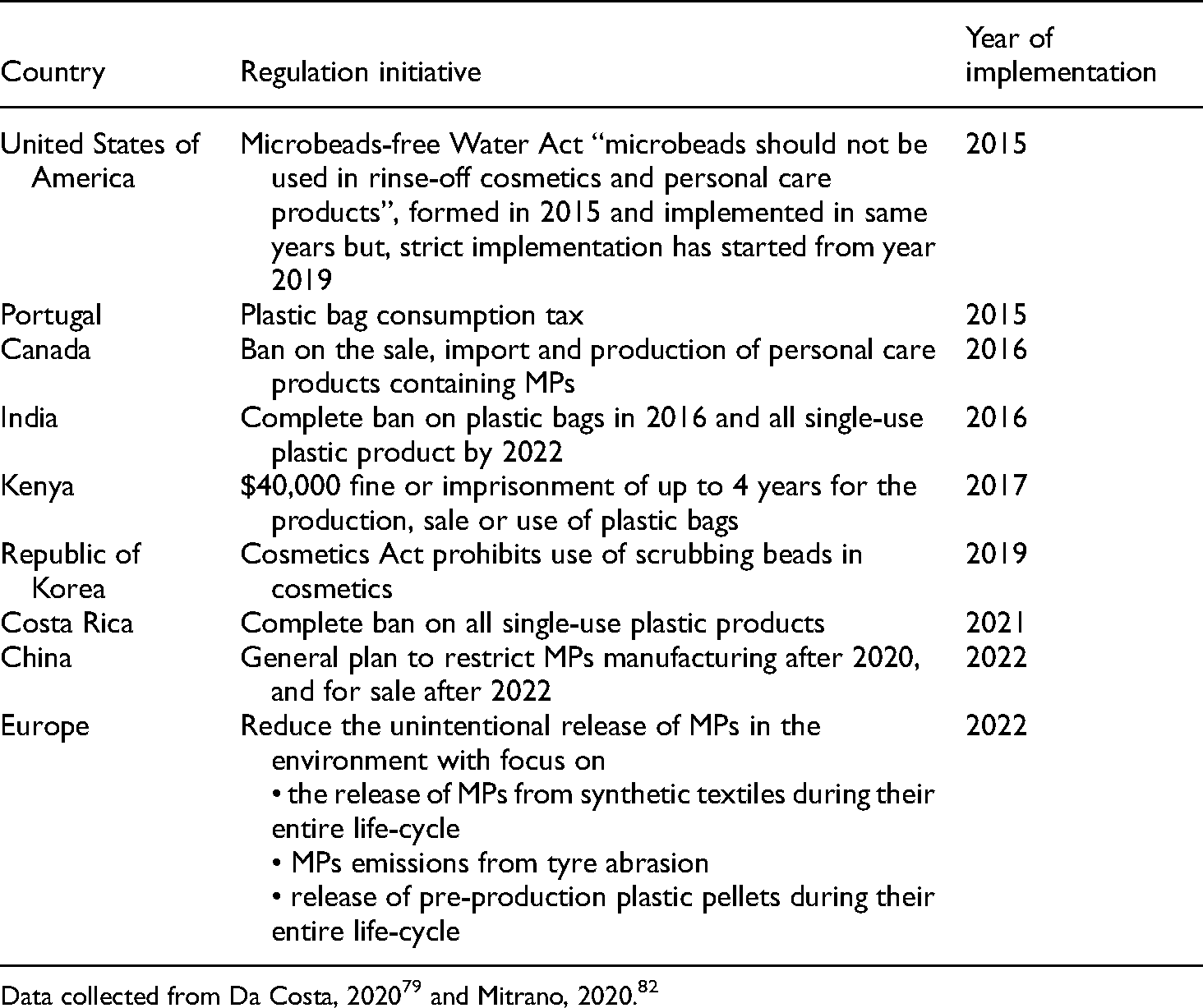
Overall, two MPs related legislations are in practice or planned to be practiced in the future: the ban on the manufacturing of products containing microbeads and the ban/charge on single-use plastics.
Mps related management options
Based on this literature review, it is clear that mismanaged plastic waste resulted in MPs in soil and freshwaters. Contact with MPs might cause severe health effects in humans. Therefore, reducing the production of short-lived, single-use plastic products is critical. Currently, certain sustainable approaches are in practice. Specific recommendations for reducing MPs in soil and freshwater environments are as follows:
It is essential to adopt a life cycle approach that includes reducing, reusing, recycling, and end-of-life disposal of plastics. Recycling should be the primary focus to improve plastic waste management instead of dumping in landfills or incineration. The collection and recovery of used plastics from waste tributaries and the environment, and their reprocessing for other uses, would help reduce greenhouse gases and save resources. Improving the efficiency of wastewater treatment plants to remove 99.9% of MPs is critical. In general, wastewater treatment plants can remove 95% of MPs, which is not efficient enough when large volumes are being treated and released into the environment. Additional advanced treatment methods (e.g. sequence batch reactor) are recommended to increase MP treatment efficiency. Single-use plastics, being the largest constituent of disposed plastic waste in the environment, should no longer be produced or must be replaced with bioplastics that have the greatest potential as a substitute. Bioplastics are produced from biomass and other renewable sources, making them a sustainable alternative. Effective legislation and law enforcement are urgently required for the management of the life cycles of plastics. For example, enforcing a penalty for the unselective disposal of plastic wastes to the environment and a complete ban on the use of primary MP products (e.g. microbeads in cosmetics) could reduce MP pollution. International organizations, governments, and stakeholders must convene to establish and strictly implement a long-term and sustainable plastic waste management plan since mismanaged plastic waste is a key contributor to MP pollution in the environment. Establish the standard guidelines for MPs in different environmental compartments like for drinking water, irrigation water, agricultural soil, and etc. Last but not least, there should be public awareness campaigns to focus on the 3R rule and provide economic benefits to the business communities that use sustainable alternative options instead of plastics.
Conclusions
MPs have become one of the most prevalent contaminants pervading all terrestrial environments. The variety of polymers and additives, as well as the diversity of their sources, transportation routes, and sinks, have made precise evaluation difficult. Among the limited research studies on MP pollution, the marine environment is the primary focus, and there is a need to fill the data gap regarding MPs in terrestrial soil and freshwater environments. In the literature, MPs have been found in terrestrial soil and freshwaters predominantly in fragments, fibers, and film shapes. The relative abundances of PE and PP polymers have been reported in previous studies. It is difficult to draw conclusions on size evaluations from different studies owing to differences in the targeted particle sizes. More studies on MP distribution, shape, and polymers are needed to better understand their health effects.
Footnotes
Acknowledgements
This work was supported by Basic Science Research Program through the National Research Foundation of Korea (NRF) funded by the Ministry of Education (No. 2019R1A6A1A03033167) and by Korea Environment Industry & Technology Institute (KEITI) through Measurement and Risk assessment Program for Management of Microplastics Program, funded by the Korea Ministry of Environment (MOE) (No. 2020003110010).
Author contributions
All authors contributed to the study conception and design. Material preparation, data collection and analysis were performed by Maimoona Raza, Jihye Cha, and Jin-Yong Lee. The first draft of the manuscript was written by Maimoona Raza and Jin-Yong Lee commented on previous versions of the manuscript. Authors read and approved the final manuscript.
Declaration of conflicting interests
The author(s) declared no potential conflicts of interest with respect to the research, authorship, and/or publication of this article.
Funding
The author(s) disclosed receipt of the following financial support for the research, authorship, and/or publication of this article: This work was supported by Basic Science Research Program through the National Research Foundation of Korea (NRF) funded by the Ministry of Education (No. 2019R1A6A1A03033167) and by Korea Environment Industry & Technology Institute (KEITI) through Measurement and Risk assessment Program for Management of Microplastics Program, funded by the Korea Ministry of Environment (MOE) (No. 2020003110010).
