



Abstract
Innovative product design is essentially an activity involving creative cognitive thinking. Therefore, research on the innovative design process and of methods, computer-aided innovation tools should be conducted based on systematic exploration based on the principles of innovative cognitive thinking. We aim to uncover some general principles that can serve as a systematic thinking framework for product designers, provide a feasible framework and method of innovative thinking for designers, and provide theoretical and methodological support for further development of computer-aided innovation platforms. This paper summarizes the sources and content of studies on the idea generation and design processes behind product innovation. Specifically, we break down the general innovative design process of products, outlining the cognitive mechanisms and propose an integrated application strategy that incorporates multiple methods. And taking “the solution program to the coking of oily sludge pyrolysis equipment” as an example, this paper demonstrated and verified the effectiveness and practicability of the method and strategy proposed. Based on the results on improvements in the equipment, the designers put forward some creative and implementable design schemes. The entire thinking process was relatively smooth and efficient. The example presented in this paper shows that the proposed method can effectively guide/assist/motivate designers to think creatively.
Introduction
Developing high-quality innovative products and introducing them into the market rapidly and efficiently are important for enhancing the competitiveness of enterprises in the market. Innovation, however, presents a challenge for large, medium-sized, and even some small enterprises, which can undermine their survival and development.1,2 With an aim to improve the quality and efficiency of product innovation, researchers have approached the principles of innovation from multiple perspectives. Studies have described and standardized the innovation environment, content, goals, and process in a systematic manner. Furthermore, scholars have outlined a large number of methods that can help product designers in their innovative thinking (e.g. brainstorming, theory of inventive problem solving (TRIZ), and creative template). Some of these methods have also been developed with the help of computer aided innovation (CAI) software and platforms such as MindMap, Function–Behavior–Structure (FBS) Modeler, Goldfire, Pro/Innovator, and Innovation Knowledge Cloud.3–6
However, the product development process is usually complicated. For this reason, it is difficult to complete the entire innovative design process with a single method. There may exist some weaknesses, such as designers’ overdependence on their own experiences and their accumulated knowledge in the targeted field, design methods that are only suitable for parts of the targeted field, or designs that are only partly innovative. Therefore, multiple methods are usually applied and integrated during the innovation process.6,7 At present, there are some studies on the integrated application of multiple methods, both in China and abroad. For instance, the functional analysis system technique (FAST) and TRIZ integrated tool application models proposed by Malkin et al. 8 organically incorporate the brainstorming component into multiple units of the model. The method of analysis proposed by Ko et al. 9 involves integrating and jointly applying 6W1H, function analysis, and trimming for achieving the innovative design of problem-oriented products. The fuzzy front-end model for generating innovative designs put forward by Runhua et al. 7 integrates the applications of resource analysis and a variety of methods such as quality function deployment (QFD), failure mode and effects analysis(FMEA), function–behavior–structure (FBS), TRIZ, and the analytic hierarchy process(AHP. Furthermore, Yan 10 proposed a strategic model that integrates innovative methods, incorporating TRIZ, FBS, the creative template, and other methods based on a systematic categorization of problem-oriented innovation. Finally, the process model of innovative product design put forward by Liu XM et al. 11 integrates QFD, TRIZ, and bionic design, and others.
At its core, innovative product design is a type of creative thinking ability. The creative design process involves a series of logical and non-logical thinking activities, such as comparison, analysis, induction, transformation, analogy, and association. By carefully considering their perceived design tasks (namely, the issues in need of innovation) and through creative problem-solving, designers give full play to their creativity. 7 To date, most of the existing integrated methods are based on the comprehensive applications that complement a single method's weaknesses, which are exposed during the innovative application process. This process involves the gathering of various methods instead of comprehensively taking into consideration the entire design process based on the designer's creative cognitive-thinking abilities. This leads to various insufficiencies in the existing approaches that integrate methods in specific application scenarios. These limitations include reduced ability to gather useful information, poor process data link-up, and invalid application methods. The existing computer-aided innovative (CAI) design software cannot completely replace the “human.” Usually, it cannot directly obtain the final product of the innovative design scheme. Rather, its main function is to guide/assist/encourage designers to think creatively. The process still requires a lot of “human” creative thinking but computers can guide the later experiments, simulations, and other support activities.6,12–14
Therefore, this paper aims to explore the sources of information and the ideas generating mechanism when it comes to innovative product design, from the perspective of cognitive thinking. We comprehensively review the existing studies on the innovative product designing process, with a particular focus on the evolution laws in the design process. We review the application characteristics of different methods and the thinking focuses of each thinking operating unit. We used a variety of methods and strategies to systematically summarize and compare method applications, to better assist designers in their innovative thinking.
Mechanism and process for generating innovative ideas
Sources of innovative ideas
As mentioned above, innovative product design refers to the process of converting, in a gradual manner, the perceived and relatively vague initial information regarding the design task into concrete ideas, plans, and finished products. From the perspective of information destination, innovative ideas are the result of knowledge interaction, integration, transfer, and conversion. This is achieved by combining their design experience, knowledge reserves, design tasks, and available external environmental resources. Information that is useful in generating ideas consists of two types: (1) the information stored in the designer's brain and (2) the external information that is available to the designer. This second information type can be further divided into four categories: working memory, long-term memory, task information, and environmental information. 15
When comparing different forms of thinking, innovative ideas are generated through logical thinking, such as comparison, classification, and induction, as well as through non-logical thinking such as images, association, and inspiration. Intuition, inspiration, and insight, three forms of non-logical thinking, are considered to be the fundamental sources of creative ideas. This is because they generate motivation, creativity, forward thinking, and the gathering of diverse types of information. Intuition is more likely to emerge in an unprepared state of mind, while insight and inspiration are the brain's responses to thinking and processing different forms of knowledge and experience. In particular, insight relies on reorganization, while inspiration emerges from crating associations.
The innovative idea generation process
To date, numerous studies have been conducted on the generation of innovative ideas around the world. The studies that received wide recognition were on the concepts of information processing, perceptual memory, and memory construction.16–19 In this paper, we draw on these three concepts, as well as on the notions of intuition, inspiration, and insight, which are more conducive to the generation of creative ideas. Then we construct a corresponding mechanism and process for the generation of innovative ideas from the perspective of the processing of innovative information by the human brain (Figure 1). The proposed mechanism and process is as follows. First, the designer absorbs information regarding the design task and available information from the external environment through his or her brain; this information is perceived and converted into sensory memories. Then, based on the design task in question, the designer triggers the relevant information in his or her sensory memories. Under such a stimulus, the designer further triggers the relevant information about his or her past design experience (long-term memories) to form working memories. Lastly, the designer's brain reconstructs the retrieved information to form innovative ideas in a comprehensive manner. It stores these innovative ideas as long-term memories or further processes them to form new sensory memories, which is a reciprocating operational process of thinking. In sum, it is a process in which the brain comprehensively processes the input stimulus information to achieve a benign conversion of such information and subsequently outputs the design results.
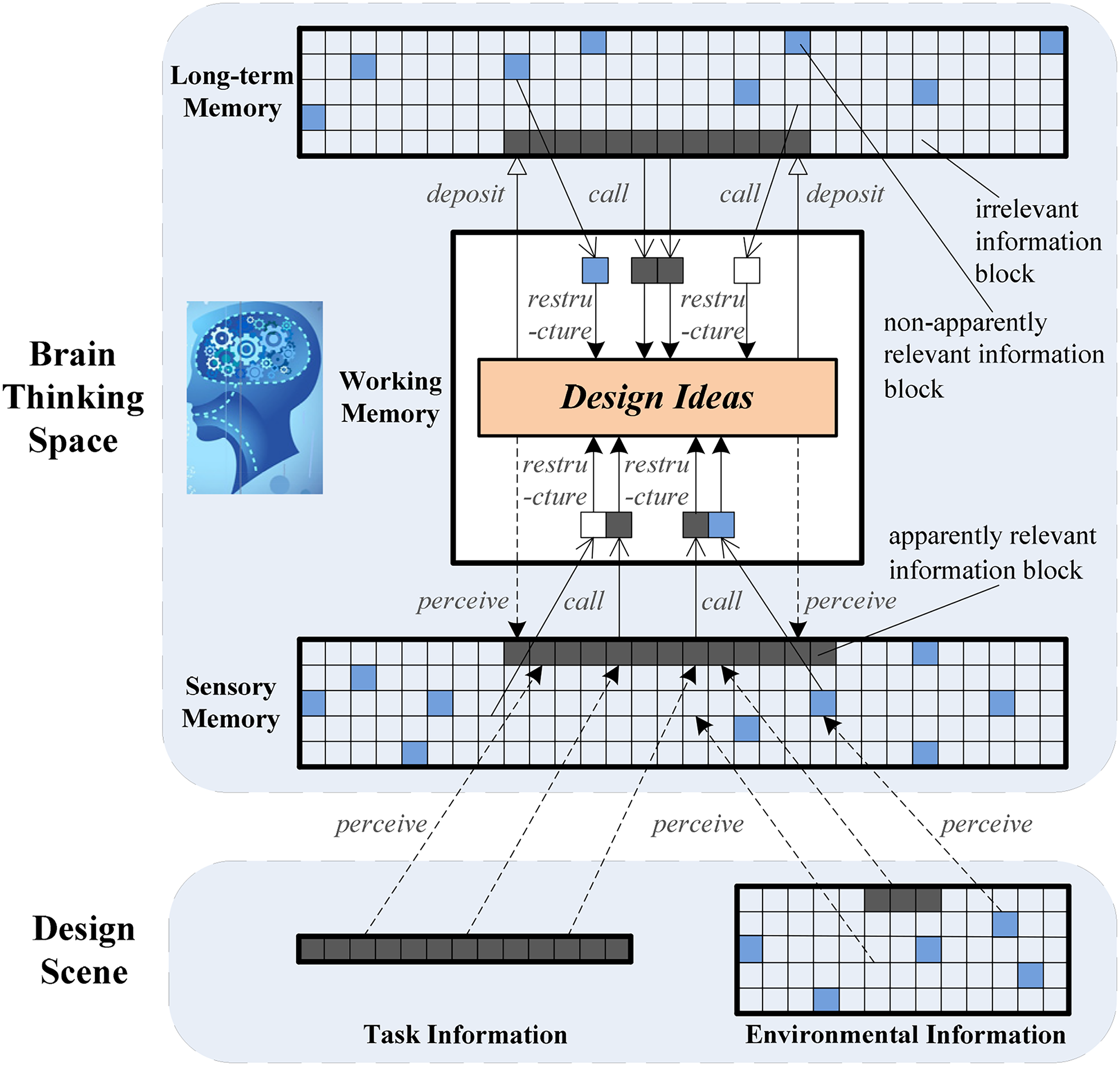
General process for the generation of conceptual information.
Stimulus information comprises internal information that designers possess prior to the design task, such as their previous design experience and knowledge reserves. It also comprises external information like details about the design task, market information, and technical information from the outside world. Stimulus information can be categorized into three types, according to the degree of correlation between stimulus information and design tasks: apparently relevant information, non-apparently relevant information, and irrelevant information. Apparently relevant information refers to the information units that can be determined with certainty to have a connection with the design task. Non-apparently relevant information refers to the information units whose connection to the design task cannot yet be determined. Irrelevant information refers to the information units that can be determined with certainty to have no connection with the design task.
In specific processes involving innovative thinking, designers should not only apply the apparently relevant information units in the stimulus information. They should also focus on the elements that will help realize the design or bring about technological breakthroughs (namely, applying non-apparently relevant information and irrelevant information). They should explore knowledge in other fields and transfer it for their use, to stimulate the generation of creative ideas.
Application of the innovative designing process
General innovative design process based on perceived products
The process of innovative product design covers three design stages: discovering and identifying problems in need of innovation, coming up with innovative ideas to solve the problems, and determining the final plan for innovation. Intuition, inspiration, and insight are involved in each of the three stages to help designers come up with innovative ideas like highly relevant problems, solutions, and plans. 6 Based on a comparative analysis of studies worldwide addressing each of the three stages of innovative product design, this paper divides the process of innovative product design into the following six major stages (see Figure 2): problem analysis, problem development, conceptual solution, domain solution, program evaluation, and combination optimization. These stages involve both divergent thinking and convergent thinking. Divergent thinking refers to non-logical thinking such as intuition, inspiration, and insight, aiming to spot more useful design information at the dimension of width. Convergent thinking focuses on logical thinking, with the goal to narrow the scope of thinking and enhance its quality and efficiency in order to evaluate, integrate, and transfer the acquired design information.

Process model for the operation of innovative thinking.
The thinking function in the stage of problem analysis in Figure 2 mainly aims to collect initial information about the design task and contextual information about the problem. It then sorts, classifies, and converts such information to identify new information that could be important. Problem development consists of further exploring the problem and uncovering useful information about the design task and its context. At this stage, the designer discovers root causes and key difficulties of the problem and deals with its structural characteristics. At the conceptual solution stage, the designer determines the type of problem in need of innovation, and finds solutions through innovative methods and tools, thus generating more context-specific information (including non-apparently relevant information from other fields, or even irrelevant information). Domain solution involves acquiring solutions within the targeted field. This is achieved through the designer's thinking process, in combination with his or her design experience and available design resources. At the program evaluation stage, the designer first classifies, sorts, evaluates, and filters the possible solutions, and then determines the solutions that are comparatively better. The combination optimization stage integrates, improves, and optimizes the comparatively better solutions, and determines the final innovation solution.
Application strategy for the integrated multi-method innovation
Based on comprehensive analysis and comparison of existing common innovative methods and their characteristics, combining the planned general process of innovative product design as well as the functions and thinking focuses of each thinking operating units, and in consideration of various elements that can help designers generate non-logical thinking like intuition, inspiration, and insight as much as possible, this paper proposed the application strategy of integrated multi-method innovation (shown in Figure 3) characterized with a cognitive mechanism.
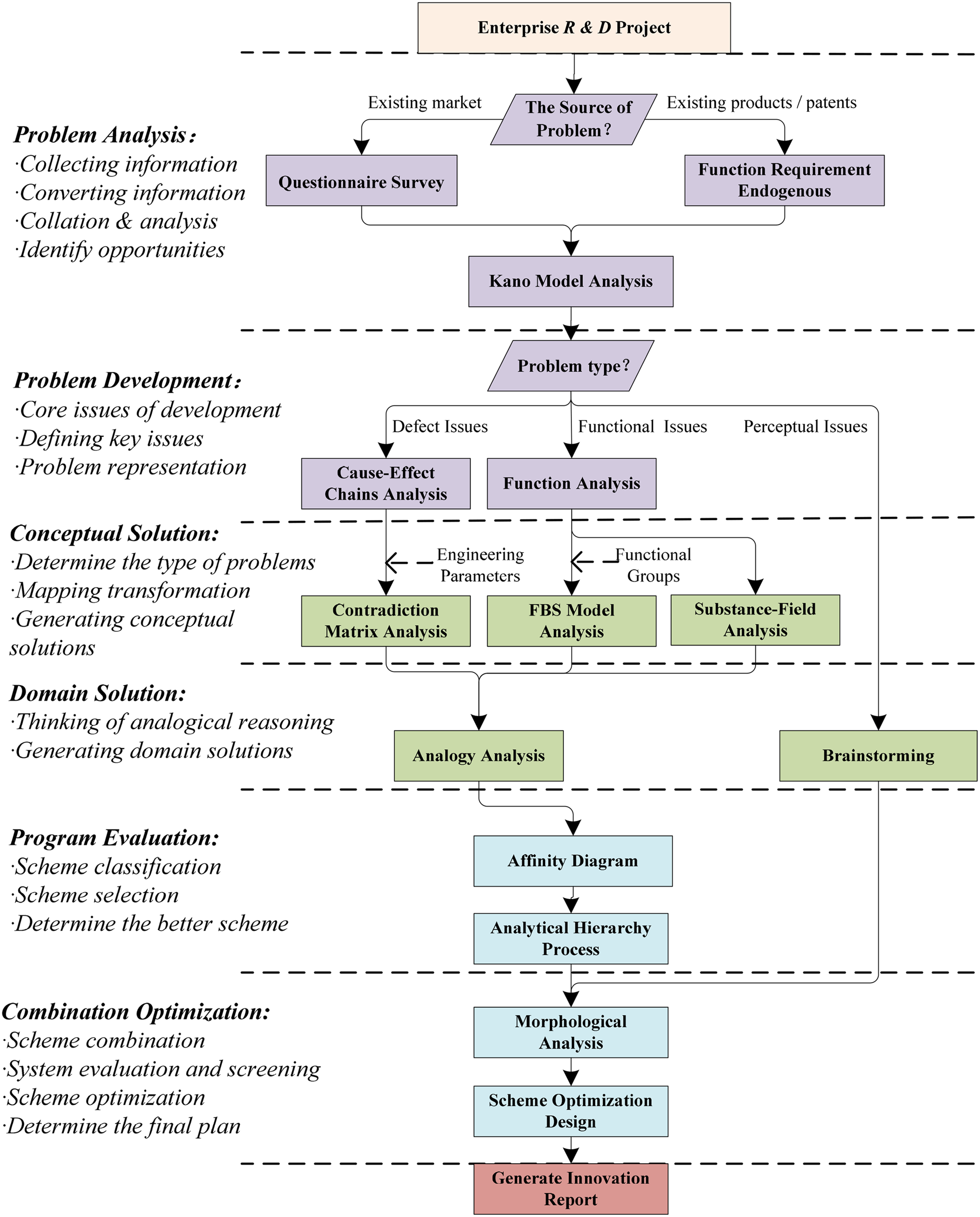
Strategy for innovative product design integrating multiple methods.
Problem analysis and problem development
Accurately identifying higher quality innovation problems is important for innovative product design. Systematic analysis of existing market information and existing product information is a better way to identify high-quality innovation problems. In this paper, we used a survey questionnaire to obtain market information. We used the function requirement endogenous method proposed by the author in a previous study to conduct our analysis. 20 To obtain more information about the new function and structure design requirements, the product evolution information was analyzed from multiple perspectives. Then, using combination of the Kano questionnaire and the Kano model demand classification evaluation table, 6 the demand information was systematically evaluated and screened.
In the stage of problem development, we divided the identified requirements into defect, functional, and perceptual issues to avoid the limitations caused by the extensive scope of innovation. These factors may otherwise affect the efficiency, quality, and success rate of product development. Therefore, we conducted a detailed classification of innovation issues. Defect issues refer to the research and exploration of problems such as functional structural failures and conflicts in existing products that have affected the performance of the products’ major functions. Functional issues refer to the development and improvement of new or existing products to perform new functions and to the replacement of their out-of-date functions with new ones. Perceptual issues refer to design that satisfies the aesthetic and tactile requirements, as well as user-friendly requirements of products.
In this paper, we use the cause–effect chains analysis to explore the root causes of defects. To analyze the function problem, we use the function analysis method, combined with the constructed function component chain diagram. Finally, we used brainstorming to solve perceptual issues.
Conceptual solution and domain solution
Conceptual solution is a mapping solution of the defect issues and function issues after problem development and analysis. It aims to direct further innovative thinking. We used 39 general engineering parameters from the TRIZ theory to standardize the defects. We then used the contradiction matrix to work toward the solution of the invention principle. The solution of functional problems includes two paths. (1)The first path is the use of the FBS model, that is, combining with the functional base to standardize the functional problems, and then combining the results with the available knowledge resources. We then carry out knowledge retrieval for the target function and maps to obtain the corresponding concept scheme. (2)The second path is the use of the substance-field analysis method. The problem function is first transformed into the problem substance-field model. Then, the corresponding standard solutions are obtained according to different types of problem substance fields.
The domain solution involves the combination of innovative products using the analogy method, conceptual scheme information, and other existing process information as analogy scenarios. It then combines the problem itself, the product characteristics, and their own design experience to carry out analogy-related thinking. This stimulates the generation of corresponding domain schemes. Brainstorming was used to solve the perceptual problems obtained from the problem development analysis.
Program evaluation and combination optimization
Program evaluation used the affinity diagram to classify the corresponding innovation schemes according to different innovation problems. Then, for each problem, after eliminating the absolutely unsuitable schemes, each scheme was evaluated and screened step by step according to the optimization criteria of AHP.
Combination optimization involves constructing the corresponding morphological matrix by using the morphological analysis method. It considers each problem as an independent element and the selected scheme as a morphology. Next, the morphological combination evaluation and screening analysis were carried out. Finally, the input and output logic of the function/structure of the optimal combination scheme was considered, so as to explore the existing/possible logic gaps, conflict, and other new problems. It also served to solve these problems (or directly carry out problem analysis operation), so as to make the corresponding optimization processing of the original scheme, such as supplement, correction, improvement, etc. Finally, the final product innovation scheme was generated.
Method application
Pyrolysis is one method that is effective for the treatment of oily sludge. When the oily sludge in pyrolysis furnaces reaches a temperature higher than 500°C, coke easily forms and adheres to the inner wall of the furnace tube and to the screw conveyer blade. As the coking layer becomes thicker, heat transfer resistance increases and heat transfer efficiency decreases. As a result, fuel consumption increases for the same outlet temperature. As the temperature of the furnace tube wall rises, the corrosion and high temperature oxidation of the furnace tube intensify. This can cause the tube to bulge and crack, which can lead to catastrophic accidents like furnace tube perforation. We use the example of oily sludge coking formed during the operation of third-generation pyrolysis equipment manufactured by a company (Figure 4). A technical research team was established to analyze relevant innovation issues with the method and strategy proposed in this paper, in an attempt to demonstrate the application process of the proposed method and verify its effectiveness.
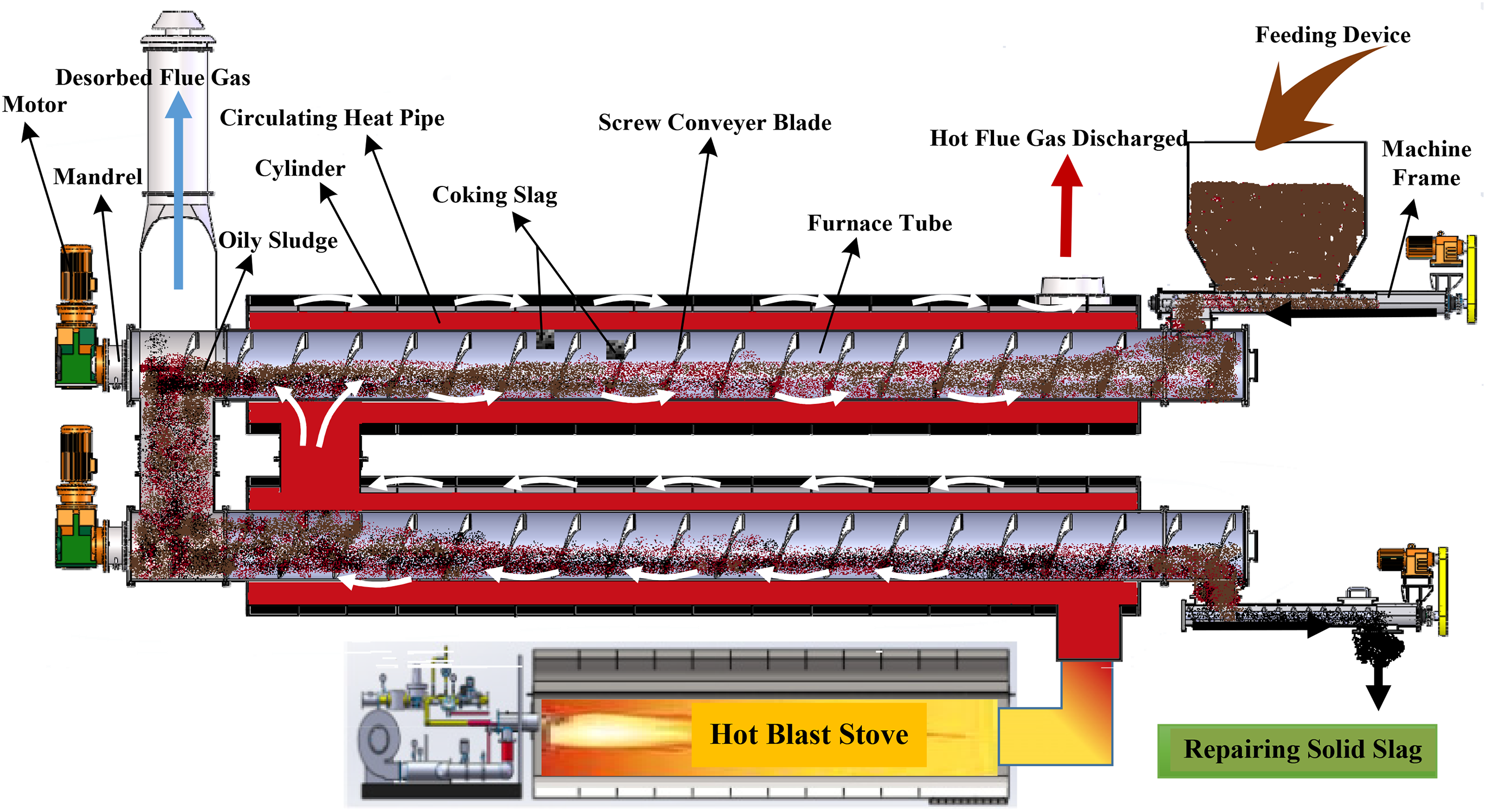
Schematic diagram of the third-generation pyrolysis equipment.
Problem analysis and problem development
Considering that the type of pyrolysis furnace users is fixed, the enterprise's after-sales service department had previously conducted customer surveys and has accumulated some details; the research team first analyzed the results of the product’s after-sales questionnaire conducted. The team members systematically sorted and analyzed the problems and technical requirements for solving it using the Kano model analysis method. The expected demand of “avoiding coking on the inner wall of the furnace tube and the screw conveyer blade” was obtained. This problem was determined as a defect issue as well as a new function for the development of a new product—a functional issue, in other words. To analyze problem development, the research team subsequently conducted a cause–effect chains analysis and a function analysis, together with an assessment of the third-generation oily sludge pyrolysis equipment of the company that was under manufacturing.
Making use of the cause–effect chains analysis method, the coking of oily sludge was taken to be the initial problem. The designers, combining their own experience and other acquired environmental information, explored the root causes of the initial problem. They spotted a series of reasons such as the high coking tendency of the oily sludge, the uneven heat transfer of heat pipes, and lack of detection devices, which are displayed in Figure 5. The analysis led to the discovery of five root causes in need of further exploration: the characteristics of oily sludge, the poor emission of stripped adhered flue gas, the lack of coke-scraping devices, the lack of detection devices, and the low rate of oily sludge pyrolysis.

Chain diagram of causal analysis of oily sludge coking.
The systemic functional model of the product was constructed based using the Functional Analysis method and by assessing the conditions of the third-generation oily sludge pyrolysis equipment (as shown in Figure 6). Two functions were found insufficient, namely the heating of the furnace tube through the circulating heat pipe and the heating of oily sludge through the furnace tube. In addition, five harmful functions became apparent. These included the generation of coke slag by oily sludge, the adhesion of coke slag to the furnace tube, the adhesion of coke slag to the screw conveyer blade, the pollution of outside air through the stripped adhered flue gas, and the pollution of outside air through the external heating flue gas. The researchers clarified the relations between the components in the system as well as the existing negative functions. They also explored the reasons behind the problems they had identified at multiple levels. By comprehensively considering the available resources for the system, the key areas of focus that would help address the problems were determined as follows: (a) adhesion of coke slag to the furnace tube and screw conveyer blade; (b) poor emission of the stripped adhered flue gas; and (c) lack of detection and coke-scraping devices. Among these factors, the adhesion of coke slag to the furnace tube and screw conveyer blade was determined to be the root cause of the two other major problems. Therefore, the first key area of focus was to address the reinforced effort.
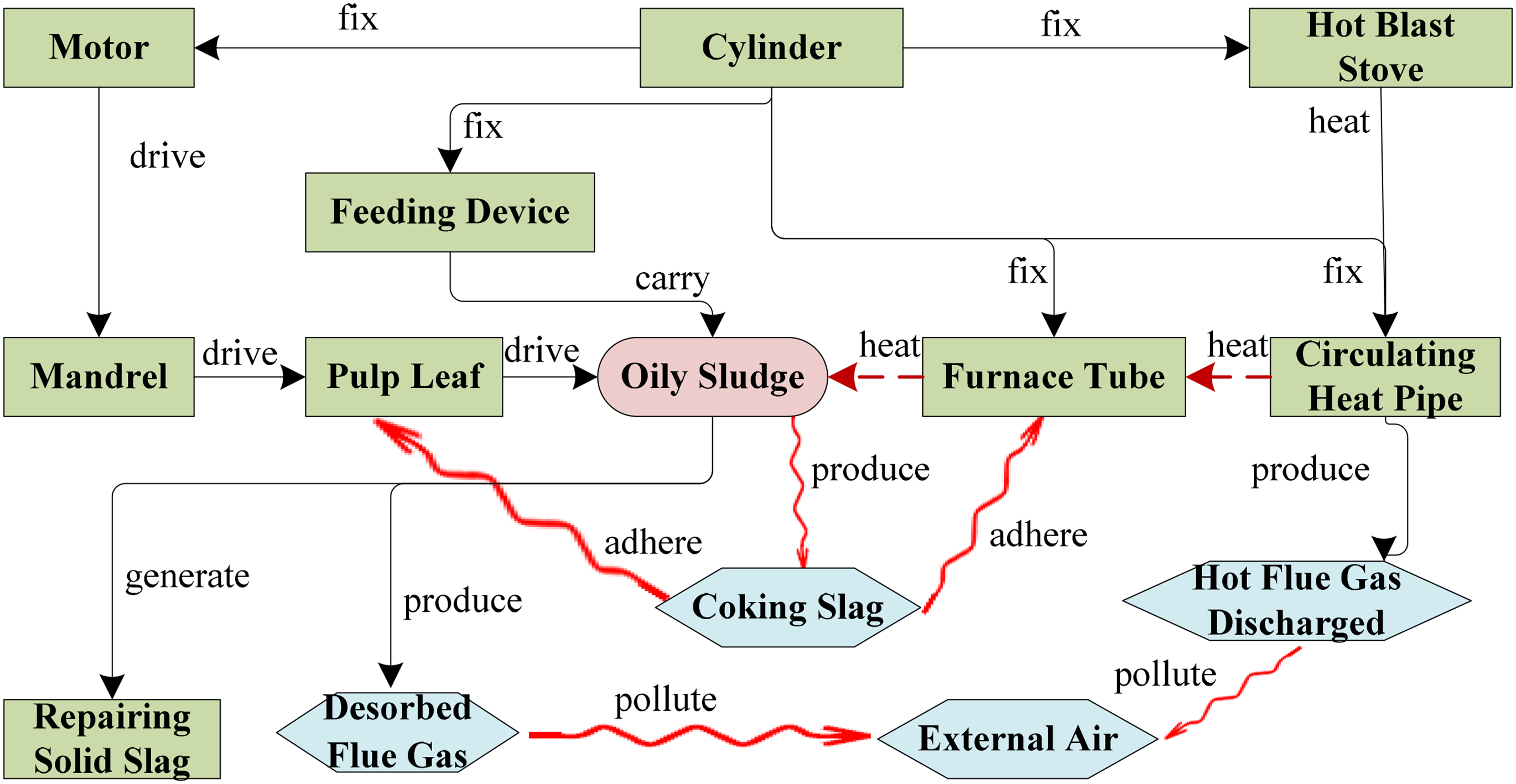
Systemic functional model of the oily sludge pyrolysis equipment.
Meanwhile, five conceptual solutions were determined for addressing the problems identified: (1) a conceptual solution that involves “offering continuous multi-hot spot heating to furnace tube with superconducting liquid heating pipes” was formulated to address the problem of “insufficient heating of oily sludge by furnace tube”; (2) a conceptual solution involving “spraying anti-adhesion coatings on the inner wall of the furnace tube and the screw conveyer blade” was proposed to solve the problem of “adhesion of coke slag to furnace tube and screw conveyer blade”; (3) a conceptual solution that involved “installing additional exhaust filters for stripped adhered flue gas at multiple locations within furnace tube” was devised to solve the problem of “poor emission of stripped adhered flue gas”; (4) a conceptual solution involving “adding coking monitoring, early warning and automatic coke-scraping devices in furnace tube” was devised to address the problem of “lack of detection and coke-scraping devices”; and (5) a conceptual solution, “throwing pyrolysis additives to oily sludge to optimize the pyrolysis treatment effect,” was proposed to address the problem of “low rate of oily sludge pyrolysis.”
Conceptual solution and domain solution
The substance-field model of the problem was constructed, which targeted two of the major problems identified in the systemic functional model analysis, namely the adhesion of coke slag to the furnace tube and the adhesion of coke slag to the screw conveyer blade. The model represents the harmful effects of the furnace tube on the coking of its screw conveyer blade under the influence of the mechanical field. S1.2.1 was selected to introduce external substances to eliminate harmful effects (Figure 7). The two following solutions were obtained. The first solution was to “wrap the solid slag after pyrolysis with tar to make slag balls, or mix stone balls and metal balls with the oily sludge. The oily sludge pushes the balls to move, which scrape the coke slags on the inner wall of the furnace tube and the screw conveyer blade through their friction.” The second one was to “install additional movable copy plates between the screw conveyer and the furnace tube. The copy plate will be driven to move because of the rotation of the screw conveyer and subsequently scrape the coke slags on the inner walls of the furnace tube”.
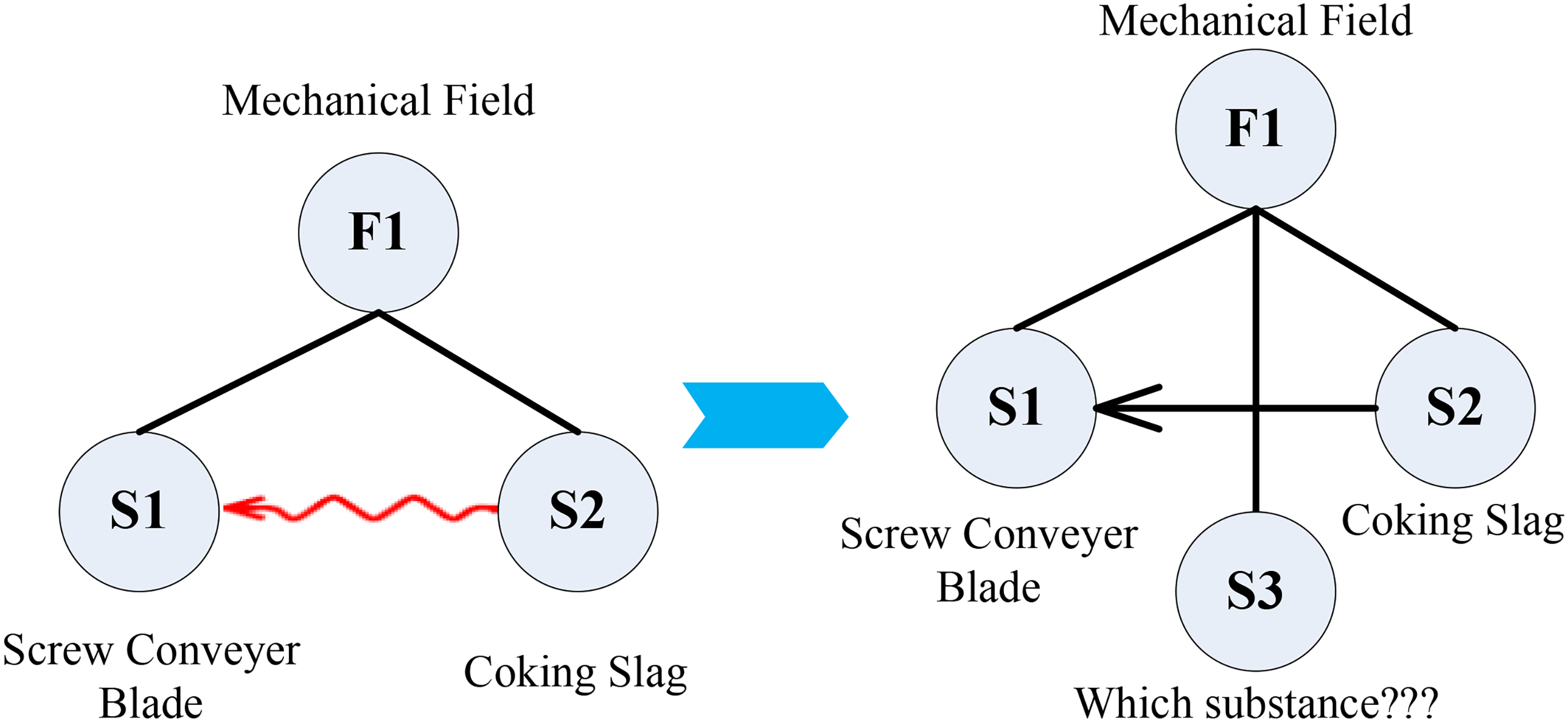
Introduction of external substances to eliminate harmful effects.
S1.2.4 and Field F2 were selected to offset the harmful effects (Figure 8). Two conceptual solutions were obtained. The first solution was to “add ultrasonic field within the furnace tube, whose ultrasonic vibration can reach and shatter the coke slags adhering to the inner wall of the furnace tube and the screw conveyer blade. Additionally, it will make the oily sludge fluffy and strengthen the heating of the oily sludge from inside to outside.” The second solution was to “add different electrodes between furnace tubes, screw conveyer blades and polar plates to promote the accumulation of tar particles towards the furnace wall and screw conveyer blade and thus relieve adhesion”.

Offsetting harmful effects with Field F2.
By analyzing the problem related to “the characteristics of oily sludge,” it can be inferred that the process and time of the heating of oily sludge can be prolonged for full pyrolysis effect, but that this will cause coking. The problem was standardized with the 2003 conflict matrix, leading to a technical contradiction in engineering: “No. 12 The durability of moving objects VS No. 31 Harmful side effects”. By looking at the 2003 conflict matrix, nine invention principles were found: “No. 40 Composite Materials, No. 3 Local Quality, No. 37 Thermal Expansion, No. 6 Universality, No. 11 In-advance Cushioning, No. 30 Flexible Shells and Thin Films, No. 4 Asymmetry, No. 39 Inert Atmosphere, and No. 14 Spheroidality-curvature.”
Making use of the principle No.37 of Thermal Expansion, materials (which have different thermal expansion systems in various layers) were adopted on the inner wall of the furnace tube and on the surface of screw conveyer blade. When the equipment worked to heat or stopped heating, the thermal expansion system on the outer layer was larger, resulting in a larger level of deformation. As a result, coking adhered to the surface and cracked. Applying the principle No. 30 of Flexible Shells and Thin Films, the screw conveyer with a core shaft was changed to a screw conveyer without shaft. A flexible iron chain was added to the center of the shaftless screw conveyer (the motor end was directly connected to make the screw conveyer and the chain rotate). Driven by the centrifugal force, the screw conveyer blade and iron chain scraped off and shook off the coke on the inner wall of the furnace tube and the screw conveyer blade. Based on principle No. 4 of Asymmetry, the furnace tube was designed in an elliptical structure, which is wider on the left and right sides. This design reduced the areas that cannot be influenced by the sludge flow thrust. It also helps shrink the active areas where air bags and sludge particles are suspended and increases the friction area of oily sludge, thus reducing the amount of coke generated.
Program evaluation and combination optimization
The research team made a summary of the 12 improvement programs proposed and evaluated their cost, feasibility, and implementation, if they were to be implemented. To do this, the programs are sorted into three categories: high, middle, and low standards. Next, the research team combined the plans with comprehensive scores over the median. They devised a comparatively optimized combination design scheme based on the four optimized solutions (Figure 9). These four solutions included mixing tar-wrapped solid slag balls/stone balls/metal balls after pyrolysis with oily sludge, adding movable copy plates between the screw conveyer and the furnace tube, designing the shape of the furnace tube into an elliptical structure that is wider on the left and right sides, and adopting shaftless screw conveyers and flexible iron chains.
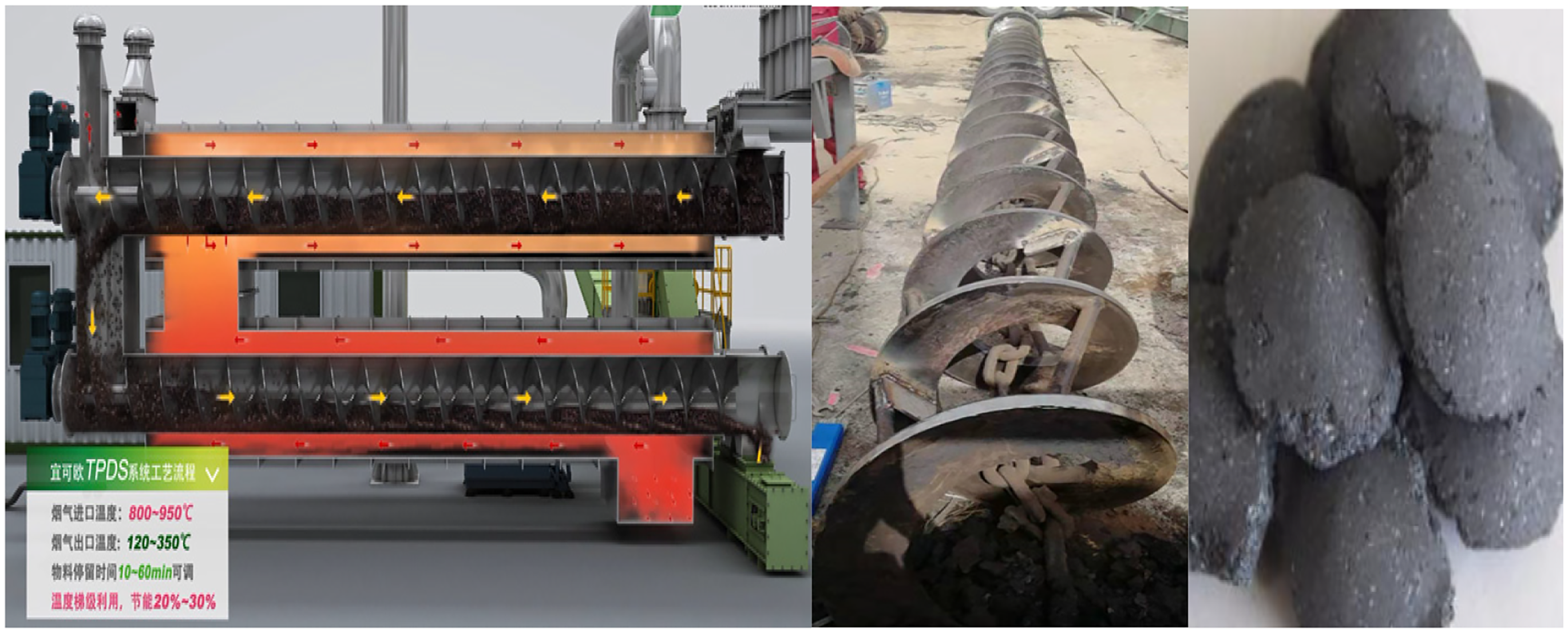
The improved prototype and its innovative internal structure.
Conclusion
Innovative thinking is at the core of innovative methods and CAI tools. In turn, innovative methods and CAI tools are expressions of effective and innovative thinking. Innovative methods are the ideological foundation and core manifestation of CAI tools. To study innovative methods and CAI tools, the general laws of innovative thinking must first be uncovered and summarized. Based on systematic research on the sources of innovative ideas, as well as the mechanism and process behind the generation of innovative ideas, this paper outlined the general process of innovative product design that incorporates multiple innovative methods. Taking “the solution program to the coking of oil sludge pyrolysis equipment” as an example, this paper demonstrated and verified the effectiveness and practicability of the method and strategy proposed. This paper is written with an aim to provide theories and a method application framework to support further development of CAI platforms and to help designers improve their product design in a systematic and targeted manner.
Footnotes
Acknowledgements

Declaration of conflicting interests
The authors declared no potential conflicts of interest with respect to the research, authorship, and/or publication of this article.
Funding
The authors disclosed receipt of the following financial support for the research, authorship, and/or publication of this article:
The authors received the financial support from the Science & Technology Ministry Innovation Method Program of China (No. 2016IM020100), and the Zhejiang Natural Science Foundation Program of China (No. LQ20E050017).