



Abstract
To investigate whether medical students acquire enough knowledge about thyroid cancer (TC). It was a cross-sectional study in a Chinese medical college based on a questionnaire about the knowledge of TC and thyroid self-examination. Medical students enrolled were grouped into preclinical medical students (PMS) and clinical medical students (CMS) according to their grades. A total of 337 questionnaires were distributed and 274 effective responses were collected with 129 from PMS and 145 from CMS. The percentage of thyroid self-examination in CMS was higher than that of PMS (55.8% vs 11.6%, p < 0.001). Generally, CMS had better comprehension of TC, including prognosis (97.2% vs 64.5%, p < 0.001), diagnosis (95.6% vs 33.1%, p < 0.001), and surgery indications (82.1% vs 58.1%, p = 0.001). There was no significant difference between PMS and CMS on the acquaintance of the risk factors. However, more CMS stated that the below 5% of thyroid nodules might turn malignant (45.5% vs 6.5%, p < 0.001), and more CMS suggested that people without nodules should receive TC screening tests (62.1% vs 41.9%, p = 0.001). Medical education on TC was effective in teaching clinical knowledge. Medical school should focus more on preclinical general health education and clinical practices education in the future.
Introduction
Thyroid cancer (TC) is the most common head and neck malignancy, its incidence is increasing rapidly due to the well facilitated diagnosing techniques, which rose from 2.40/100,000 in 2003 to 13.75/100,000 in 2012 in China with an elevation rate of 20% every year. It has become one of the most common cancers in China as well as many other countries.1–3 It is more common in women and urban areas, and has a unique pattern of distribution along with age, which rises dramatically after ages of 15 years and peaks at 50–54 years. Mortality of TC increases with age in population. 1
TC has a better prognosis than other cancers, and it is often detected during physical examination without any symptoms. The clinical manifestations are palpable nodules, with occasional lymph nodes metastases, dysphagia, hoarseness, and dyspnea in advanced TC. 4 Various risk factors correlate with its incidence, such as height, weight, cold weather, TSH levels, thyroiditis, and genetic mutations.5–11 To be noted, smoking and alcohol are correlated with decreases of TC incidence according to researches, but they can also lead to other diseases with worse prognosis.5,12,13
Despite the favorable prognosis, TC patients are usually reported to suffer from unnecessary cancer-related worries for the sake of cancer progression, traumas of surgery, recurrence, death, and children.14–16 A research conducted in Thyroid Cancer Canada support group among TC survivors demonstrated that their worries were of middle levels on average, which were relevant with age, time of diagnosis, disease progression, and marital status. 17 Another American survey of patients with well differentiated TC and favorable prognosis reported that over half of the patients showed worried about death, impaired quality of life, harms from treatments, recurrence, and family at risk. 18 More worries were revealed in patients with lower education.
With the rapid development of Chinese social media, medical students as future physicians play an important role in public education. Mastering the knowledge of TC can encourage them to better promote public awareness, and to offer more professional suggestions to people with suspected thyroid nodules. Currently, there are surveys of cancer knowledge among medical students on melanoma and human papillomavirus (HPV)-induced oral cancer.19,20 Both indicated that medical education could bring effective information about cancer features, but still warranted efforts in practical application and clinical reasonings. Nonetheless, according to our knowledge, there has not been relevant researches focusing on TC education or thyroid self-examination.
This study is the first cross-sectional questionnaire-based analytical research on the knowledge of TC and thyroid self-examination among medical students.
Methods
Study design and participants
It was a transversal and quantitative study based on a questionnaire designed by the researchers. Participants were recruited from Peking Union Medical College (PUMC), covering all the third- and fourth-grade medical students. The third-grade medical students who had not received clinical courses were grouped into preclinical medical students (PMS), and the fourth-grade medical students were grouped into clinical medical students (CMS).
The study was approved by the Ethics Committee of Peking Union Medical College Hospital (PUMCH).
Questionnaire design
The questionnaire covered the epidemiology, risk factors, self-examination, clinical diagnoses, and management of thyroid cancer. The database of Pubmed, Web of Science, and Scopus were searched using the terms “thyroid cancer” and “thyroid carcinoma,” and the latest and best matched researches were cited. The questionnaires were independently designed by two physicians of the Department of General Surgery in PUMCH, based on the above references and their experiences. The questionnaires were then revised by a senior professor and integrated into the final version, which were distributed and collected online.
Statistical analysis
All statistical analyses were conducted with IBM SPSS Statistics 23. Numerical variables were shown as average ± deviation (x ± s) and were processed by Shapiro-Wilke normality test. If the normality was justified, independent sample t-test was applied; if not, Mann-Whitney rank-sum test was applied. Categorical variables were shown as absolute and relative frequencies and were assessed by Chi-square and Fisher exact test. The level of significance is defined as p < 0.05 (95% confidence interval).
Results
This study was targeted toward PMS and CMS from PUMC, with a total of 337 students enrolled (PMS 151, CMS 186, Figure 1). There were 129 effective response questionnaires from PMS with a response rate of 85.4% and 145 effective responses questionnaires from CMS with a response rate of 78.0%. Fifty-two percent of the responded medical students were female, with no significant difference in performances compared with male peers (p = 0.148).

Study flow chart of this questionnaire-based research.
When enquired about thyroid self-examination, PMS and CMS responded differently (3.1% vs 11.0%, p < 0.001, see Table 1). The percentage of self-examination among CMS was higher than that among PMS (55.8% vs 11.6%, p < 0.001), but 80% (65/81) CMS among them did not perform regular examination. For those who did not examine thyroids regularly (including the ones who never examined and the ones who examined but not regularly), more PMS did not know how to examine thyroids (26.6% vs 5.4%, p < 0.001), and many CMS did not feel necessary (56.6%) or never thought about it (31.0%). As for other reasons, some deemed that the incidence of TC would be neglectable for them due to their young age. For those who ever examined their thyroid (including the ones who regularly examined and the ones who examined but not regularly), 97.5% (79/81) CMS learned it from medical school with only 13.3% (2/15) PMS acquiring the knowledge in the same way (p < 0.001).
Questionnaire analysis of thyroid self-examination.

CMS: clinical medical students; PMS: preclinical medical students; PUMC: Peking Union Medical College.
Fisher’s exact test.
Chi-square test.
False means “no” or “yes but not regularly.”
True means “yes” or “yes but not regularly.”
Assessing the awareness of TC, all CMS knew the existence of it while 3.9% PMS did not (see Table 2). Among the medical students who knew TC, there was significant difference in the knowledge of TC prognosis, with 97.2% CMS and 64.5% PMS who agreed on favorable prognosis for TC (p < 0.001), while a few PMS thought thyroid cancer had worse prognosis than other types of cancers (4.8% vs 0%, p < 0.001) and did not know its prognosis (21.0% vs 1.4%, p < 0.001). In both groups, there were over 1/3 of students whose relatives or friends had thyroid diseases (38.7% vs 34.5%, p = 0.526).
Questionnaire analysis on basic knowledge of TC.
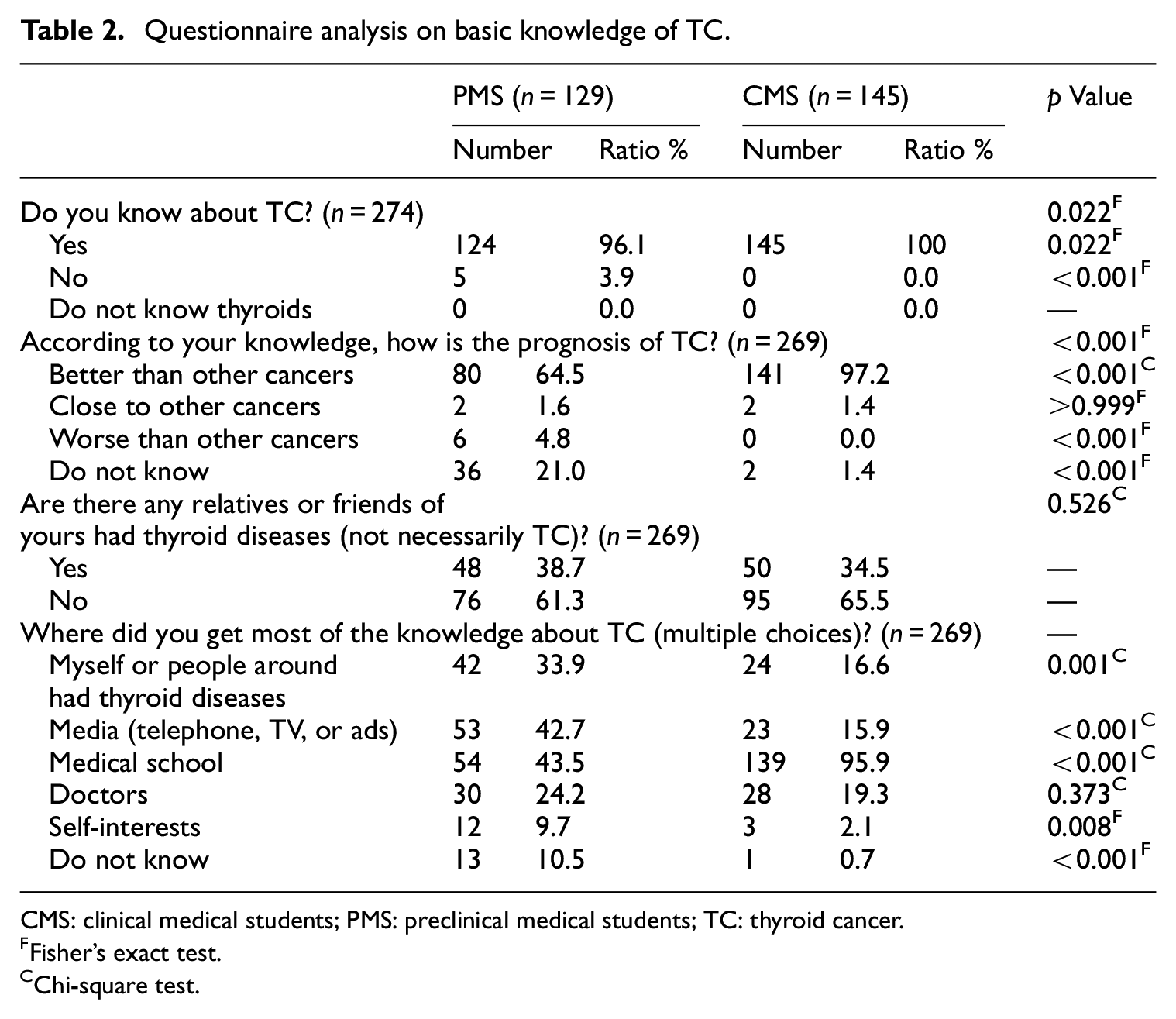
CMS: clinical medical students; PMS: preclinical medical students; TC: thyroid cancer.
Fisher’s exact test.
Chi-square test.
Considering their approaches to the knowledge of TC (see Table 2), most PMS acquired the main information from patients (themselves or others) of thyroid diseases (33.9%), media (61.3%), and self-interests (9.7%), barring those who knew nothing about the disease (10.5%). Most CMS get accessed to the knowledge through medical courses (95.9%).
When comparing the knowledge about the risk factors of TC (see Table 3), there was no significant difference between the two groups on alcohol, drinking, height, weight, stress, radiation, TSH levels, and “do not know.” However, more CMS selected cold weather (73.1% vs 16.9%, p < 0.001) and family history (91.7% vs 66.9%, p < 0.001). PMS and CMS also shared similar preferences on the malignancy of thyroid nodules, but more CMS thought that the malignancy ratio of thyroid nodules was below 5% (45.5% vs 6.5%, p < 0.001). Most CMS knew the role ultrasound played in TC diagnosis, which was more than that in PMS (95.6% vs 33.1%, p < 0.001). But more CMS suggested that even without symptoms or nodules, people still should check their thyroids under professional screening tests (62.1% vs 41.9%, p = 0.001).
Questionnaire analysis on risk evaluation of TC.
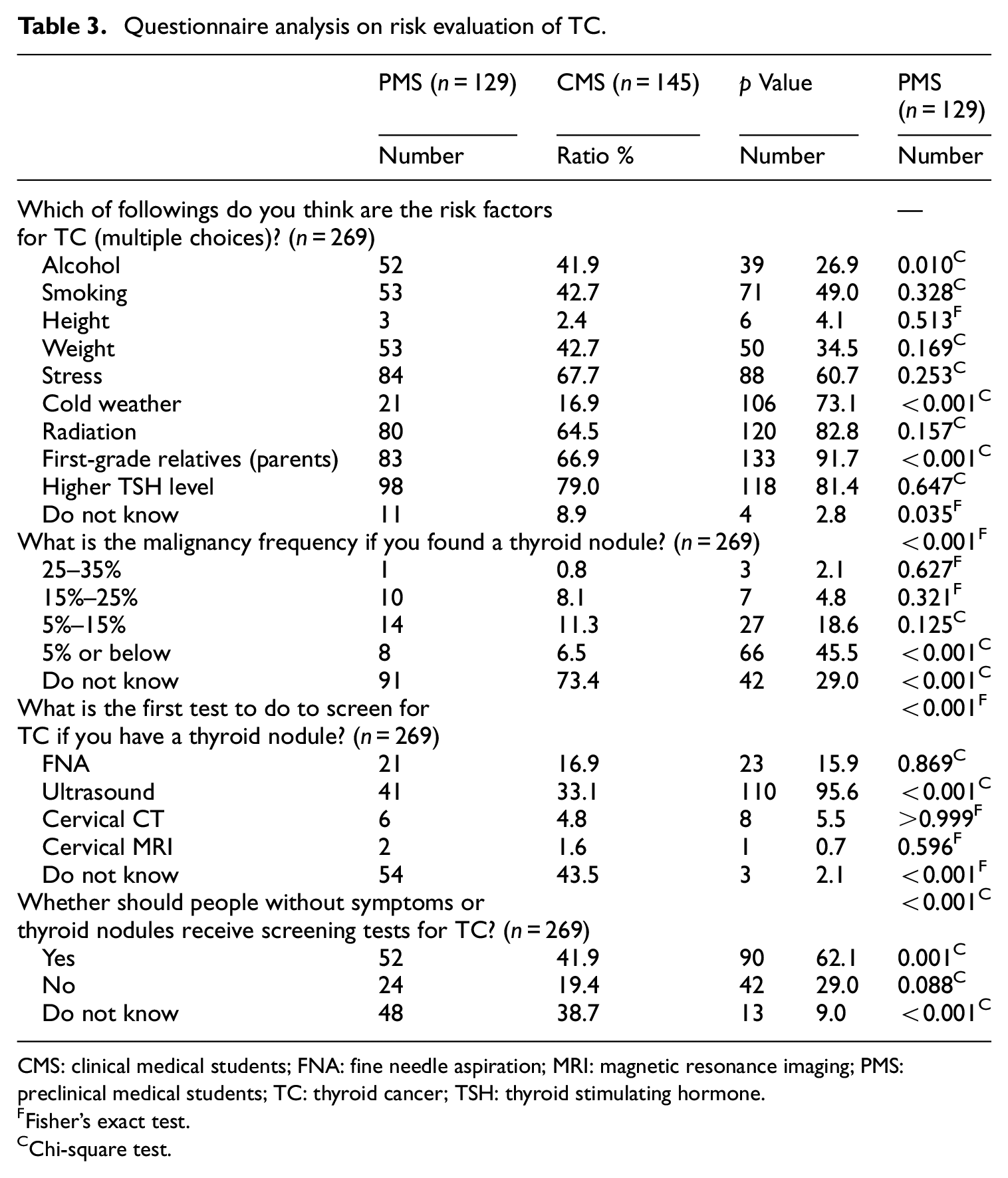
CMS: clinical medical students; FNA: fine needle aspiration; MRI: magnetic resonance imaging; PMS: preclinical medical students; TC: thyroid cancer; TSH: thyroid stimulating hormone.
Fisher’s exact test.
Chi-square test.
About TC treatment, more CMS chose not to perform surgery immediately after the diagnosis of TC (82.1% vs 58.1%, p = 0.001, see Table 4). Among those who answered “no” to this question, 84.0% CMS and 73.6% PMS knew there were observable microcarcinoma of thyroids (p = 0.094). More CMS knew that thyroiditis was correlated with higher incidence of TC (57.2% vs 42.7%, p < 0.001). In a word, when enquired about other treatments except surgery, CMS generally outperformed PMS.
Questionnaire analysis on TC management.
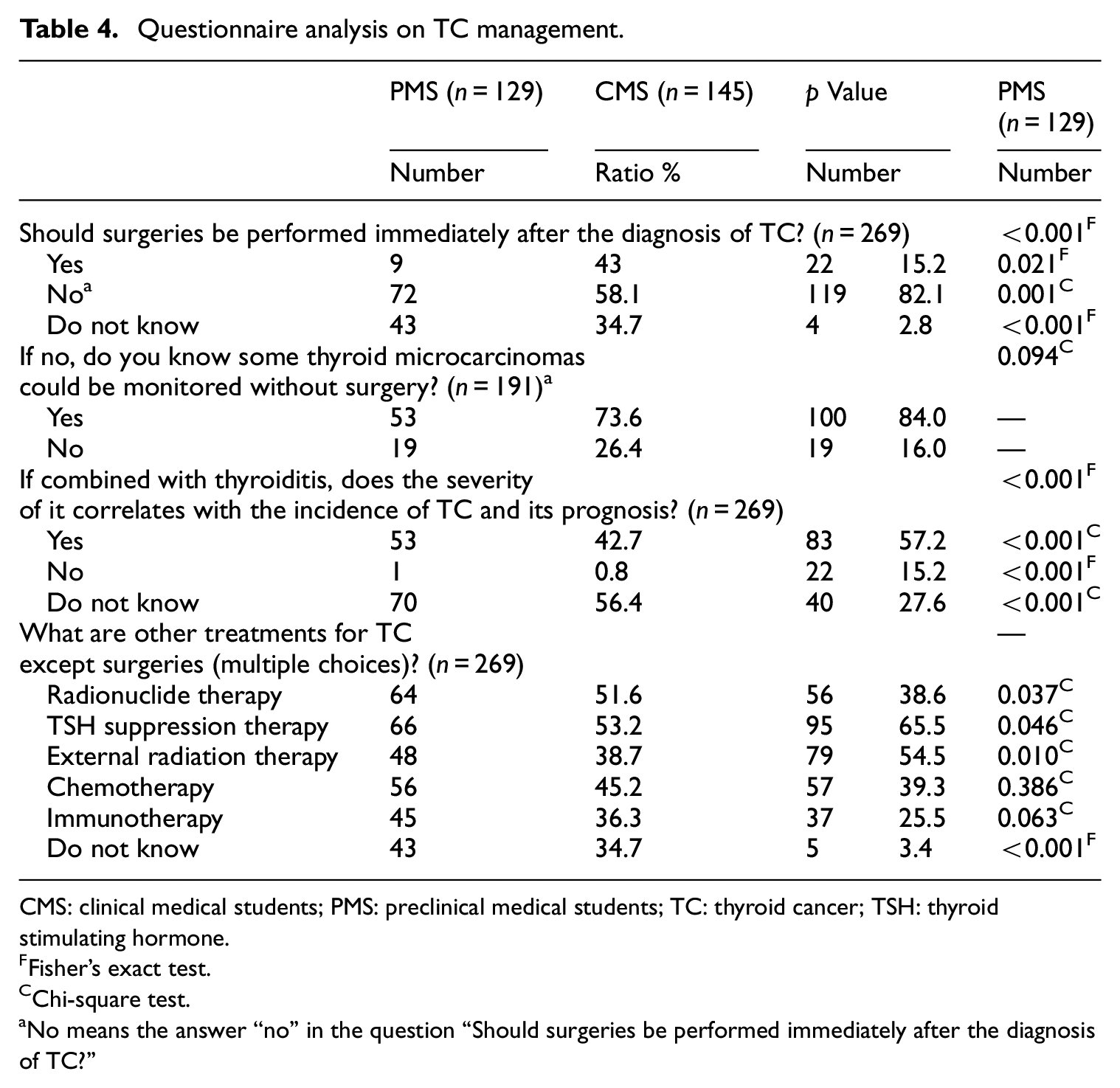
CMS: clinical medical students; PMS: preclinical medical students; TC: thyroid cancer; TSH: thyroid stimulating hormone.
Fisher’s exact test.
Chi-square test.
No means the answer “no” in the question “Should surgeries be performed immediately after the diagnosis of TC?”
Discussion
This is the first questionnaire-based study toward medical students to investigate how they mastered the features of TC and thyroid self-examination. The preliminary results demonstrated that most participants could grasp the general knowledge about TC, and CMS had superior performances considering diagnosis, treatments, and self-examination. Their knowledge mainly came from the medical courses. The results fully proved the efficiency of medical education in teaching TC.
CMS had a better performance in TC diagnosis, but many of them posed a more active attitude toward thyroid screening in asymptomatic people, which belongs to overdiagnosis according to current notions. 21 As the convenience of current diagnosing techniques, the issues of population screening for TC are attracting more attention. 22 South Korea launched a health screening program which increased the incidence of TC from 1999 to 2011 by 14 times, but no apparent benefits on mortality. 23 The similar situation also occurred in America, with consistently increasing diagnosis of earlier TC but constant mortality rate.24,25 And an editorial article from Lancet in 2017 indicated that TC screening should not be encouraged. 26 Besides, earlier intervention can also bring unnecessary harms and lawsuits. Therefore, thyroid screening in population should not be approved and healthy people without symptoms or thyroid nodules should avoid frequent screening tests for TC.
About the managements, CMS also had obvious advantages over PMS. The most effective strategy is surgery, and nowadays, physicians are more encouraged to perform the individualized regimens according to images and fine needle aspiration (FNA) cytology, as Bethesda system. 27 Nevertheless, there are certain probabilities of trauma pertaining to surgery. Surgeons are facing more challenges on how to set distinguish those patients with observable thyroid microcarcinomas. 28 Miyauchi 29 actively monitored 1179 low-risk TC patients without surgery for 47 months, and there were no TC-related mortality or distant metastases. Meanwhile, 92.0% of patients avoided thyroidectomy and only 4.3% decided to receive surgery based on their own choices without disease progression. Although over 1/3 patients reported cancer-related worries during the follow-up, 83% of patients were satisfied with this regimen, and their worries were relieved with time passing by. 30 Therefore, surgeons can actively monitor the patients if their TC fits the conditions for clinically observable microcarcinomas, which supports the above statements against early detection of TC. 28
The medical students performed generally well in the part of basic knowledge, however, those who could regularly examine their thyroids were scarce. 85.5% (230/269) of medical students were aware of how to self-examine thyroids, but only 41.7% (96/230) of them had ever examined themselves. Most medical students who did not examined themselves regularly chose “never thought about it” (39.4%) and “feel unnecessary” (39.4%), the percentage of which was higher in CMS. It denoted that as CMS learned more about TC, they might grow less careful. In line with this, most CMS presumed lower than 5% of malignancy for thyroid nodules, but researches revealed that 5%–15% of nodules might turn malignant. 31 Besides, some answers declared that they would not have TC because of young age. However, epidemiological studies reported that a relatively high proportion of teenagers were diagnosed with TC, though of good prognosis. 1 Our results also showed a high incidence of thyroid diseases among the medical students’ relatives and friends. Based on these results, medical students might be too optimistic to ignore the necessities of self-examination.
This study provided evidence to support the necessity and efficiency in TC education. CMS performed better in questions enquiring about TC characteristics, diagnosis, and treatments, but they tended to be less cautious because of the good prognosis of the disease. Furthermore, the health education was not enough for PMS, not to mention the public awareness of TC, which might lead to the improper management and unnecessary anxiety. The appropriate attitude toward TC should focus on self-examination, while unnecessary screening without any symptoms or nodules should be avoided. If there are nodules, one should seek professional advice from physicians and receive well-facilitated diagnosing tests without exaggerative worries. Doctors are entrusted with various responsibilities beside treatment, for instance, other non-therapeutic consultation like public health education, earlier diagnosis, and prevention, which seem more fundamental with such severe anxiety for TC. As future doctors, medical students are important in tackling and relieving this cancer-related worries through public health education. And they may take on a more indispensable role when they grasp enough knowledge of TC.
There are several limitations to this study. The study was confined to a single medical school in China with a relatively limited sample size, who might not well represent the whole population of medical students. The questionnaire about the basic knowledge and self-examination is self-designed with previous application, thus lacking parallel control from other studies as well as available evidence supporting the efficiency of this questionnaire. Besides, the questionnaire was distributed through the Internet, and the environment where the participants answered these questions were not unified. Also, whether they checked or searched for the answers was unknown to us and this limitation might lead to false better results.
Conclusions
This study is the first questionnaire-based study focusing on the features of TC and thyroid self-examination in medical school. Our results proved the significance of medical education in teaching TC theories, as CMS generally outperformed PMS in the comprehension of diagnosis and clinical managements. Nevertheless, CMS were over optimistic about TC and needed more awareness of cost-effectiveness in thyroid screening as well as the necessities of thyroid self-examination. Besides, PMS lacked basic understanding of TC, which urgently required more attention to preclinical general health education. Medical school should also concentrate more on the clinical practices and non-therapeutic experiences of TC in the future, to better promote the social effects of medical students on public health education.
Footnotes
Author contributions
Study design and manuscript were written by PL and XX. Questionnaires distribution and analytical analysis were conducted by JL, YN, and ZC. Manuscript was revised and by XX. Corresponding authors were XX.
Declaration of conflicting interests
The author(s) declared no potential conflicts of interest with respect to the research, authorship, and/or publication of this article.
Funding
The author(s) disclosed receipt of the following financial support for the research, authorship, and/or publication of this article: This research was supported by the National Natural Science Foundation of China (No. 32071436) and by a grant (2019ZLGC0111) from the Medical Education Reform Project of Peking Union Medical College, Beijing, China.
Ethics approval
All procedures performed in studies involving human participants were in accordance with the ethical standards of the institutional and/or national research committee and with the 1964 Helsinki Declaration and its later amendments or comparable ethical standards. The study was approved by the Ethics Committee of Peking Union Medical College Hospital (PUMCH).
Informed consent
Informed consent was obtained from all individual participants included in the study.

Availability of data and material
The datasets used or analyzed during the current study are available from the corresponding author on reasonable request.