



Abstract
To examine basic COVID-19 knowledge, coping style and exercise behavior among the public including government-provided medical cloud system treatment app based on the internet during the outbreak. Besides, to provide references for developing targeted strategies and measures on prevention and control of COVID-19. We conducted an online survey from 11th to 15th March 2020 via WeChat App using a designed questionnaire. As well as aim to diagnose COVID-19 earlier and to improve its treatment by applying medical technology, the “COVID-19 Intelligent Diagnosis and Treatment Assistant Program (nCapp)” based on the Internet of Things. Valid information was collected from 1893 responders (47.07% males and 52.93% females aged 18–80 years, with a mean age of 31.05 ± 9.86) in 20 provincial-level regions across China. From the responders, 92.90% and 34.81% were scaled pass and good and above scores for the knowledge about the novel coronavirus epidemic. 38.44% were scaled poor scores and only 5.40% were scaled good and above scores for appropriate behavior coping with the pandemic. Among the responders, 52.14% reported having active physical exercise in various places during the previous 1 week. For all the responders, appropriate behavior coping correlated positively with physical exercise (p < 0.05); the daily consumed time for getting the epidemic-related information correlated positively with the score for cognition on the epidemic’s prevention measures (r = 0.111, p < 0.01) and on general knowledge about the epidemic (r = 0.087, p < 0.01). Targeted and multiple measures for guidance on the control of COVID-19 among the public should be promoted to improve the cognition on basic knowledge, behaviors and treatment.
Introduction
The COVID-19 pandemic has profoundly altered the daily lives of large swathes of the global population in ways that would have been perhaps unimaginable just months ago. 1 Since the COVID-19 detection kit was put into use on January 16, 2020, the number of patients diagnosed with COVID-19 has been increasing day by day and the number of confirmed and suspected infections is still increasing. In response to the fast-spreading virus, states of emergency were declared worldwide resulting in community-wide lock-downs and “stay-at-home” orders. 2 Since COVID-19 is a novel infectious disease with a high mortality rate has a great impact on the mental health status of the general population. Residents’ unfamiliarity with the disease has made them worry, which might have led to anxiety, depression, and insomnia, have significantly impacted the quality of life and physical health of virus-infected patients as well as the general public. 3 The common influencing factors that alternate the behavior such as gender, monthly income, and physical exercise, residents with a lower education level were more likely to suffer from sleep disorders. 4 Since the sleep quality is sensitive to psychological status. 2 The physical exercise creates arousal and triggers the release of endorphins, noradrenaline, serotonin, and dopamine, which stimulate an individual’s spirit and can cause “exercise-induced euphoria,” which helps the exerciser feel peaceful, safe, and confident.5,6 The higher the education level was, the higher the knowledge level of COVID-19, which was consistent the finding of a previous study. 7 We designed an online questionnaire by referring to the health education manual of corona virus disease published by the China Health Education Center. 8 The questionnaire survey was conducted among 1893 residents in China from 11th to 15th March 2020 to understand residents’ cognition of basic knowledge of COVID-19, coping style and exercise during the epidemic period to provide a reference for relevant national departments to develop relevant disease prevention and intervention strategies during and after the epidemic period. This survey is divided into three parts which includes: (a) Disease characteristics, (b) Related risk factors, and (c) Disease prevention measures. Through this survey, we can get a semblance of the public’s awareness of the disease, coping styles and exercise behavior characteristics during the COVID-19 pandemic, aiming to provide a reference for relevant departments to make prevention and control and intervention decisions.
Materials and methods
Materials
This research plan surveys at least 20 provinces (each province 100 people). Before the survey, the survey staff from all over the country were given instructions for network survey. The online questionnaire was produced through the “Wenjuanxin” electronic platform (www.wjx.cn) and the website tool was connected through WeChat social networking app. The questionnaire was distributed by 1 or 2 local questionnaire issuers in each research province and through the mobile phone Tencent “WeChat” APP to forward the circle of friends and group contacts of friends to find volunteers to assist the investigators. The research staff will independently find the issuer of the next level to assist in the distribution of the questionnaire. However, due to the personal background of the survey staff and their social networks, the data collection will inevitably be biased. This has been reflected in the basic situation of the survey participants. Within 4 days of the online survey, the number of views of the questionnaire was 37,816, and a total of 2032 feedback questionnaires were received. Invalid and irrelevant questionnaires for this study were excluded, and a total of 1893 valid questionnaires were received, with an effective rate of 93.15%.
Methods
The questionnaire was designed based on medical, sports and psychological experts’ discussion and literature review. The survey included the participants’ gender, age, marital status, occupation, current location and other basic information, as well as their cognition of basic knowledge of the COVID-19, coping style during the epidemic period and exercise in the past week. The study plan, design, tools, data, and test support this study, which means it is justified accordingly.
Survey tool
In this study, a questionnaire on basic knowledge of COVID-19 was prepared based on relevant contents of “COVID-19 Transmission Route and Prevention Guide,”“COVID-19 Development and Risk Assessment” and “Novel Coronavirus Diagnosis and Treatment Plan” (Trial Third Edition) issued by The Center for Disease Control of China on January 28, 2020. This survey is divided into three parts: disease characteristics, related risk factors, and prevention measures. A total of seven items eight questions related to the disease: pathogenic virus (will be coronavirus 2019 – nCoV), virus-host (wildlife), route of transmission (droplet and contact transmission), the incubation time (generally 3–7 days, the longest do not exceed 14 days), the incubation period contagious (infectious) may exist, population susceptibility (generally) and the clinical symptoms (probably a dry cough, fever, poor spirit, malaise, poor appetite), among which are two routes of transmission. Relevant risk factors: six items in total six questions: Hygienic habits (not washing hands frequently), lifestyle habits (irregular work schedule, staying up late, overwork), basic diseases (self-past/present serious illness), environmental factors (in and out of crowds), protection Consciousness (without masks when going out), other unknown factors (such as low immunity). The preventive measures consist of seven items and eight questions: protective tools (selection of masks), personal hygiene (hand washing scenes, hand washing methods), environmental measures (avoid close contact with people), reasonable nutrition (balanced diet), and optimistic attitude (active self-supervision), living habits (regular work and rest), and physical fitness (active exercise), including two personal hygiene questions and one other question. The respondent answered correctly and scored 1 point, and the wrong answer counted 0 points, a total of 22 questions, a total score of 22 points. The higher the score, the better the basic knowledge of COVID-19.
Questionnaire on individual response modes during the epidemic period. This study refers to Lazarus’ theoretical division of coping styles 8 and the author’s previous research results. 9 How do you feel during the current COVID-19 outbreak? What are the countermeasures?” Finally, an initial scale of 32 questions coping style was formed. Likert’s 4-point scoring method was used in the scale: 1 = “I never do this,” 2 = “I sometimes do this,” 3 = “I often do this” and 4 = “I always do this.” Subjects are required to evaluate the conformity of each item according to their actual situation and add the scores of each item to obtain the total score. Through two pre-tests (240 people in each sample), some low-quality statements were deleted, and 16 questions were retained in the end. The questionnaire Cronbach’s alpha coefficient is 0.78, and the half-reliability is 0.77. Due to the rapid development of the epidemic to the pandemic, 50 subjects were retest only 3 days apart, with retest reliability of 0.95. Factor analysis used principal component extraction to obtain two factors. The two factors of individual coping styles during the pandemic period were concern about the outbreak problem and emotion. Coping Style questionnaire has a full score of 64. The higher the score, the more positive the response to COVID-19 individually.
Exercise questionnaires. The research object included the individual’s exercise attitude, exercise location, exercise frequency, duration of each exercise, exercise items, etc. in the past week. Using Golin’s 10 exercise behavior scoring method, the respondents were evaluated for exercise behavior, with a full score of 9. The higher the score, the more active the individual is.
Using medical apps technology for disease control, statistics, and treatment
The aim is to diagnose COVID-19 earlier and to improve its treatment by applying medical technology, the “COVID-19 Intelligent Diagnosis and Treatment Assistant Program (nCapp)” based on the Internet of Things. The basic information of the patient is registered online. Compared with the previous generations of mobile networks, the abilities of “cloud plus terminal.” 11 5G networks are significantly better. 12 It can also assist in asking questions; registering patients’ details; coordinating with patients, community doctors, and experts; and providing safe diagnosis treatment programs and two-way referrals (Figure 1). 11 This model contributes to prevent and control of COVID-19 and other sudden respiratory infectious diseases in China. Additionally, based on the WeChat nCapp 13 can coordinate the division of labor in the diagnosis and treatment of COVID-19 in one-, two-, and three-tier hospitals and perform three-level linkage among experts, primary doctors, and service providers. 11
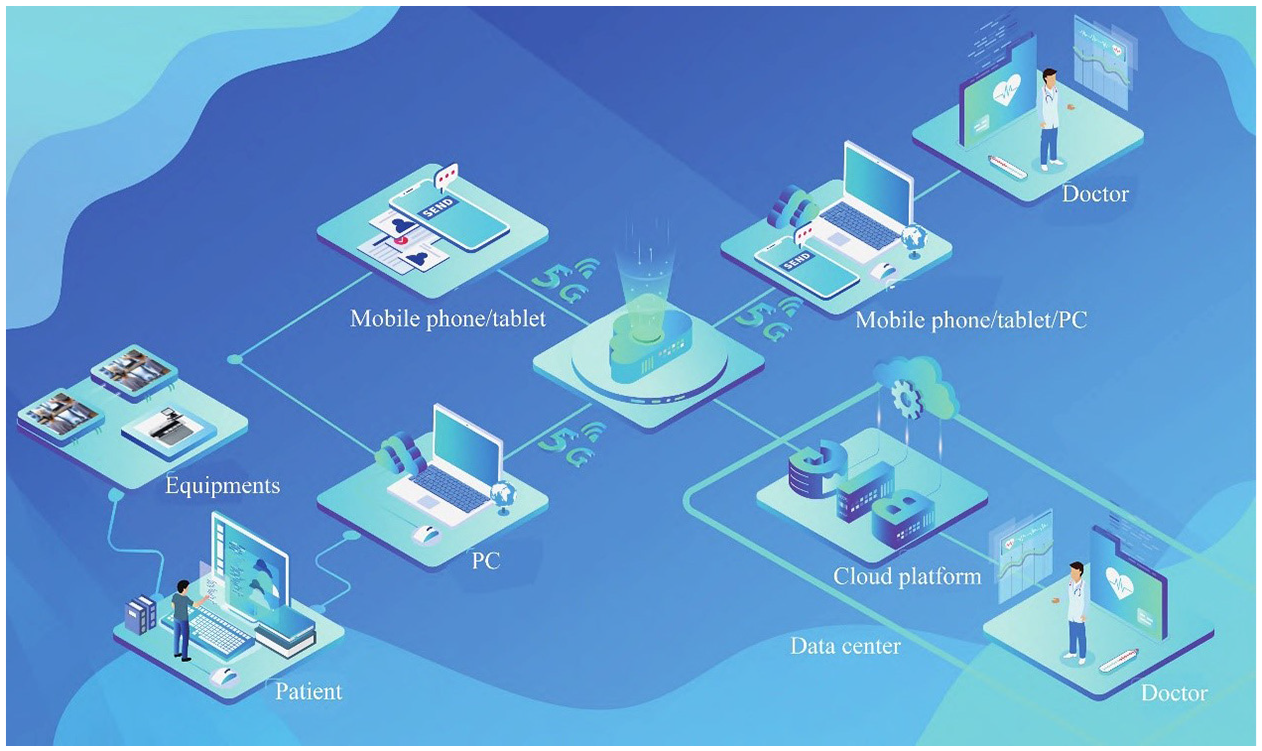
3-level linkage of nCapp technology assisted for COVID-19 diagnosis and treatment system. 11
The terminal is a physician’s smartphone that can implement the following eight functions in real-time online communication with the “cloud” through the page selection key. They are: (1) Patient registration, (2) Start the consultation, (3) Intelligent assisted diagnosis, (4) Intelligent assisted treatment, (5) Talent experts, (6) Self-control, (7) Map positioning, (8) Related information.
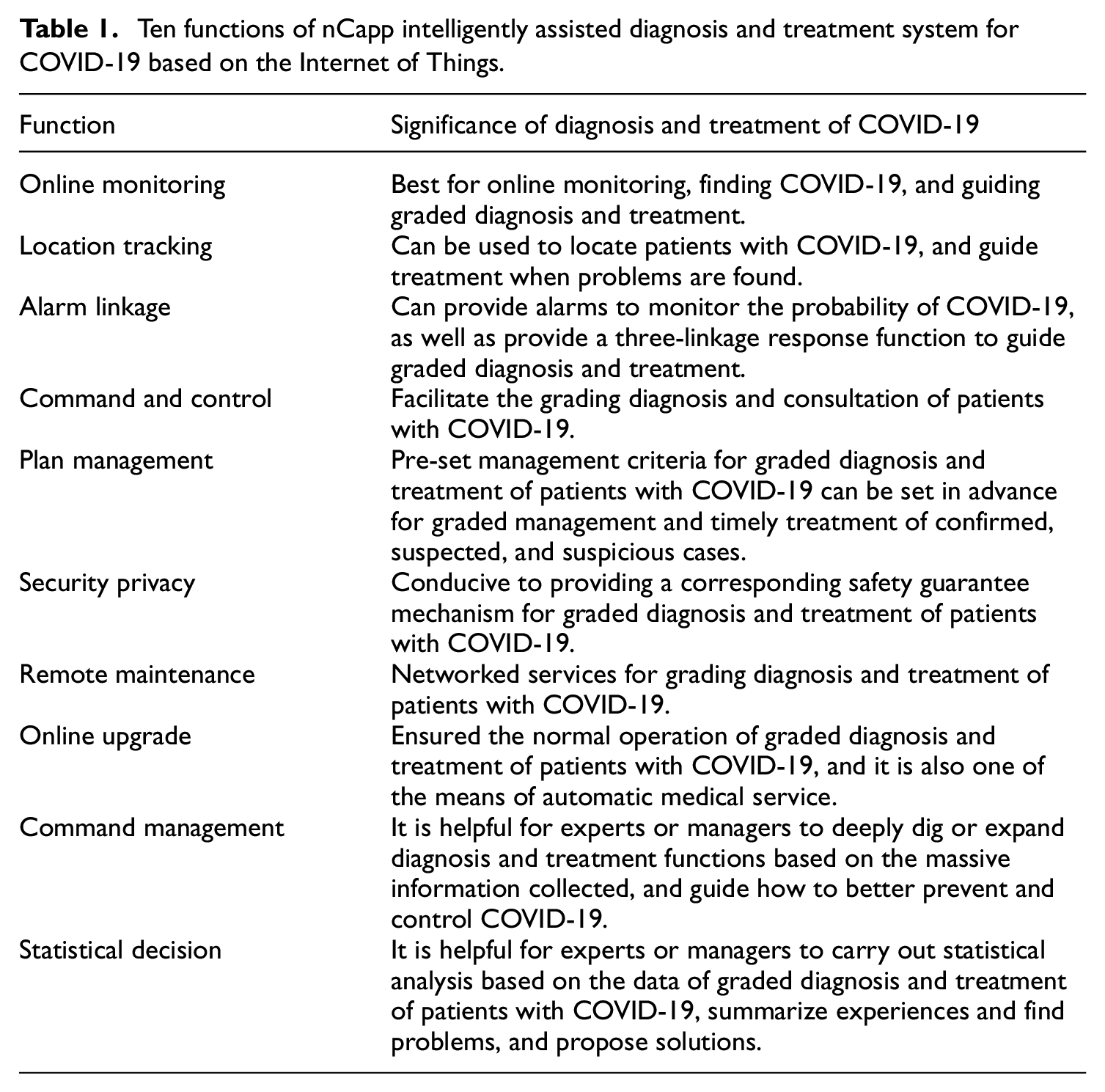
The patient/public selects the answer button, which transfers the data back to the cloud online. The nCapp currently used has been a scientific and accurate technology. However, it also requires close cooperation between users and managers. Compared with the traditional medical model, the application of nCapp assisted management of COVID-19 can better meet the requirements of P4 (predictive, preventative, personalized, and participatory) medicine. 5 Plan maintenance, remote maintenance, management command, and statistical decision-making functions can expand the deep mining and management of big data, subsequently, achieve management and timely intervention on acute infectious diseases and improve the effect of detecting and managing COVID-19. See Table 1 on how the app works on a real-time basis.
Ten functions of nCapp intelligently assisted diagnosis and treatment system for COVID-19 based on the Internet of Things.
Quality control
Just one set of surveys from the same Internet Protocol was approved and surveys were not accepted until all questionnaires had been conducted for under 120 s. No identifying information was requested from surveys.
Statistical analysis
SPSS 23.0 statistical software was used for descriptive analysis, correlation analysis, one-way ANOVA and independent sample T-test. A difference of 0.05 was statistically significant.
Results
Basic survey information
The age of the respondents ranged from 18 to 80, with an average age of (31.05 ± 9.86) years. There were 891 males (47.07%) and 1002 females (52.93%). Seventy-five (3.96%) of primary and secondary schools, 48 (2.54%) of senior high schools and technical secondary schools, 132 (6.97%) of junior colleges, 933 (49.29%) of bachelor’s degrees, and 705 (37.24%) of postgraduates or above. There are 666 students (35.18%), 768 civil servants (40.57%) and 147 employees (7.77%) in enterprises 93 employees (4.91%), 39 persons in charge (2.06%), 42 persons (2.22%) and 138 persons (7.29%) are unemployed. The geographical distribution is shown in Figure 2.

The geographical distribution of people.
Cognition of basic knowledge of COVID-19 among different populations
The survey subjects were scored on the basic knowledge of COVID-19. A score lower than P50 was a failure, and a score higher than P75 was a good score (Table 2). The survey results showed that 7.1% of the respondents failed in basic knowledge cognition, and 34.81% had good basic knowledge cognition or above. The average score of basic knowledge cognition was (16.54 ± 2.17), among which the average score was (7.05 ± 1.09) for disease characteristics, (3.59 ± 1.22) for related risk factors and (5.89 ± 1.13) for prevention. According to the demographic characteristics of the population, the survey samples were classified according to gender, age, education level, and occupation. The results showed that the difference in cognitive scores of different education levels and occupational basic knowledge was statistically significant (p < 0.05).
The COVID-19 basic knowledge that the public understands correctly.

The response of different populations to COVID-19
Respondents were given a COVID-19 coping style score, with a score below P50 indicating failure and a score above P75 indicating good coping style. The results showed that 38.44% of the respondents failed in coping style, while 5.4% scored good or above. The average coping style is (40.05 ± 6.51). There were no statistically significant differences in coping style scores among different genders, ages, education levels, and occupations.
Active exercise behavior of different groups
A total of 987 (52.14%) had taken active exercise in the week before the survey. A further survey of the active public survey showed that 524 (53.15%) exercised at home, 46 (4.63%) exercised in the gym, and 40 (4.07%) exercised in the sports center, with 322 (32.59%) People exercise in open spaces outdoors, and 55 (5.56%) people exercise in other locations. There were 458 (46.38%) exercise frequency of 1–2 times a week, 288 (29.22%) exercise frequency of 3–4 times a week, and 241 (24.39%) exercise frequency of more than 5 times a week. For 360 (36.50%) people, the single exercise duration was less than 0.5 h, 384 (38.93%) people for the single exercise duration was within 0.5 h, and 134 (13.63%) for the single exercise duration was within 1–2 h, 109 (10.95%) people exercised more than 2 h in a single exercise. The mean value of the exercise behavior of the survey samples was (3.25 ± 2.41) points. There was no statistical difference in the exercise behavior scores of respondents from different populations, education levels, and occupations. The exercise behavior scores of the 50-year-old group were significantly lower than those of other groups (p < 0.05).
Public concern about the pandemic
Daily attention to pandemic information time <0.5 h 495 people (26.14%), 0.5 h∼528 people (27.89%), 1∼2 h 333 people (17.59%), >2 h 540 people (28.53%), 1848 people (97.62%). Mainly through the Internet and media to obtain pandemic information.
The relationship between time of public attention, basic knowledge COVID-19, coping style, and exercise behavior
The results show that the public’s coping style is positively correlated with exercise behavior (r = 0.071, p < 0.05), the more positive the coping style, the higher the score of active exercise behavior. Time of pandemic concern was positively correlated with the cognitive dimension of prevention measures and with the cognitive score of basic knowledge of COVID-19 (r = 0.111, 0.087, p < 0.01).
Discussion
Analysis of the public’s knowledge of the basic knowledge of COVID-19
Survey results of this study show that the public has a certain understanding of the disease characteristics, related risk factors, and preventive measures (pass rate of 92.9%). However, many knowledge points need to be strengthened. For example, in the characteristic of the disease, the public has poor knowledge of “contact and transmission” of COVID-19 virus and “general susceptibility of the population.” Analysis of the reasons may be related to the continuous development of the pandemic situation, a clinical summary of disease characteristics, and continuous update of disease treatment guidelines, but some members of the public may not have updated relevant knowledge points in time. Wang et al. 14 and this study are related with some questionnaires, but mainly their prospective longitudinal study describes the psychological impact and mental health of the general population by two different survey. Wang et al. reported that there were total 1738 respondents during both survey; the study found that the mean IES-R score (from 32.98 to 30.76, p < 0.01) of the first- and second-survey respondents were above the cut-off scores (>24) for PTSD symptoms, suggesting that the reduction in scores was not clinically significant; there were no significant longitudinal changes in stress, anxiety, and depression levels (p > 0.05); compare the mean score between the first and second survey by t-test with majority respondents were women; Interestingly, physical symptoms and gastrointestinal symptoms were significantly associated with IES-R, DASS stress, anxiety, and depression score.
Therefore, after clinically discovering new disease characteristics, how to help the public to update disease knowledge promptly is also a challenge that needs to be solved urgently for the prevention and control of COVID-19. Among the disease-related risk factors, the public’s awareness that “irregular sleep and rest patterns, staying up late, overwork,”“severe diseases,”“entering and leaving crowded environments,” and “low immunity” may increase the risk of COVID-19 remains to be improved. Sleep quality is sensitive to psychological status. 2 In the preventive measures, the “balanced diet” can help prevent COVID-19 may needs further publicity. Studies have shown that scientific and reasonable eating habits and diet structure can reduce the morbidity and burden of diseases. 15 As the outbreak is taking place during the Chinese New Year holiday, many members of the public choose to stay at home to reduce the risk of infection. As a result, the diet tends to be oily and calorific. Moreover, due to the increase in indoor activity time, the decrease in physical activity. In addition to the high fat, high calories are easy to increase the burden of the body.
Analysis of coping styles and exercise behaviors of the public about COVID-19
This study found that 38.44% of respondents failed in coping styles, while only a small “%” of the respondents (5.4%) scored good or above in coping styles. There were no statistically significant differences in coping style scores for COVID-19 among different populations. The results suggest that the public response to COVID-19 needs to be further improved. Tong 16 showed that panic is the most important content in the acute stress response during the pandemic period, followed by the defense response, and the awareness of the epidemic has played an important role in regulating and inhibiting. A previous study of post-traumatic symptoms in survivors after a catastrophic earthquake associated active coping with well-being, while passive coping was often related to psychological distress. 17
However, we did not find any correlation between disease cognition and coping style. Studies have shown that the knowledge and skills acquired through health education cannot always be transformed into healthy behaviors. It is necessary to improve individual health beliefs to increase the enthusiasm of coping styles, 18 as a result, although the majority of the public’s perception of disease-related knowledge is good, this knowledge has not been converted into the public which could be effective for disease control and prevention behavior. This will inevitably affect the effective prevention and control of the current outbreak. The results of this study show that the 50–59 age group has the lowest exercise behavior score, which may be related to the relatively small sample size in this age group. According to the survey results, despite the current pandemic situation, some members of the public choose to exercise in gyms (4.63%) and sports (4.07%). There is also a body of work to suggest that physical activity/exercise can assist with reducing stress reactivity and enhancing resiliency.19,20 During the pandemic period of infectious diseases, such environments are prone to increase the risk of disease transmission due to crowd gathering or inadequate environmental disinfection. 21
Analysis of the relationship between public attention, basic knowledge, coping styles, and exercise behaviors in COVID-19
Public awareness of infectious diseases affects the incidence and prevalence of infectious diseases that are not sufficient. Studies have found that people with a good knowledge of infectious diseases are more willing to learn health knowledge and maintain good personal hygiene habits. 22 Abdelhafiz et al. 6 reported that the higher the education level was, the higher the knowledge level of COVID-19, which was consistent the finding of a previous study. Having little knowledge about the prevention and treatment of infectious diseases, the ability of self-maintaining health may be insufficient. The results of this study show that 97.62% of the public get information about COVID-19 through the media and the Internet. Therefore, making good use of media and Internet tools and strengthening publicity is one of the key points of the current prevention and control.
Therefore, combined with the public’s grasp of the basic knowledge of COVID-19, it is necessary to strengthen the use of different publicity methods and different publicity channels for the promotion of basic knowledge of COVID-19 and at the time of publicity focus on the latest disease characteristics including related risk factors. Health ministry and institutions can use simpler and more intuitive promotional pictures or manuals to help people with low education levels to effectively absorb relevant knowledge, thereby reducing the risk of disease transmission. At the same time, a more comprehensive and detailed interpretation and introduction of disease-related risk factors, prevention and control methods are needed.
In this study, it was found that there was no significant correlation between the public’s basic knowledge of emerging diseases and coping styles and exercise behaviors. But infectious diseases cause significant psychological distress, both in the general public and in health professionals. 23 Therefore, in the later stage of public health education of epidemic prevention and control, it is necessary to enhance public health belief, promote individual transformation from knowledge to practice, and increase public enthusiasm in disease response. The analysis of the correlation between public coping style and exercise behavior found that there was a significant positive correlation between coping attitude and the score of exercise behavior, that is, the more active coping style, the higher the score of exercise behavior, which was consistent with the previous findings of the author. 9
Conclusion
The “COVID-19 Intelligent Diagnosis and Treatment Assistant Program (nCapp)” nCapp currently used has been scientific and accurate technology. However, it also requires close cooperation between users and managers. Based on the Internet of things the study is limited by the sample size and sampling method of this questionnaire, the results of this survey may change as the sample size increases. Through this survey, we can get a glimpse of the public’s awareness of the disease, coping styles and exercise behavior characteristics during the COVID-19 pandemic, aiming to provide a reference for relevant departments to make prevention and control and intervention decisions. At present, all over China as well as the world is fighting strongly against the “COVID-19 Pandemic,” which is not only a battle against the virus but also to the ordinary people to spread health education information. the information is not just about the COVID-19 harm and seriousness but also about the severity and publicity of the importance of health communication, which may even have an impact and change on the public’s life philosophy/concept and lifestyle.
The study limitations
There were some drawbacks to this analysis. The sample size was comparatively limited, the percentage of each age group was unequal and there was a lack of information on the elderly. We removed residents who were not eligible to participate in the online survey. There are several limitations to our analysis. First, the sample was based on a network invitation rather than a face-to-face random sampling, and participants had to be able to use Internet resources. It is uncertain if our findings can be generalized to people who are unable to access the Internet. Second, we did not determine whether or not the respondents were interested in prevention; preventive personality can also mediate stress levels. Third, our research model was cross-sectional, so that improvements in psychiatric distress and its predictors could not be observed in the course of the COVID-19 pandemic.
Supplemental Material
sj-pdf-1-sci-10.1177_00368504211000889 – Supplemental material for An online survey and review about the awareness, coping style, and exercise behavior during the “COVID-19 pandemic situation” by implementing the cloud-based medical treatment technology system in China among the public
Supplemental material, sj-pdf-1-sci-10.1177_00368504211000889 for An online survey and review about the awareness, coping style, and exercise behavior during the “COVID-19 pandemic situation” by implementing the cloud-based medical treatment technology system in China among the public by Caihua Ma, Lingxin Ma, Abdulkader Helwan, Mohammad Khaleel Sallam Ma’aitah, Sayed Abdulla Jami, Siam Al Mobarak, Niranta Kumar Das and Md Ariful Haque in Science Progress
Footnotes
Acknowledgements
Thanks to Hospital doctors and nurses who are take care and give treatment in frontline and infectious diseases department. The authors would like to thank the medical responders to COVID-19 in China and the global supporters of the patients and populations affected. Technical writing assistance was utilized in the preparation of this manuscript.
Authors’ contributions
SAJ, CM, LM & SAM conceived and designed the study; All authors collected the data; SAJ, SAM, AH, MKSM and NKD checkout collected data for analysis; 1st authors wrote different parts of the manuscript; MAH, NKD & SAM revised the manuscript; SAJ drafts the manuscript. All authors approved the final version of the manuscript.
Declaration of conflicting interests
The author(s) declared no potential conflicts of interest with respect to the research, authorship, and/or publication of this article.
Funding
The author(s) disclosed receipt of the following financial support for the research, authorship, and/or publication of this article.
Ethical approval
The ethics committee of Ningxia Medical University approved this manuscript and design plan.
Availability of data and materials
By reasonable request, the author will provide data.
Author biographies
References
Supplementary Material
Please find the following supplemental material available below.
For Open Access articles published under a Creative Commons License, all supplemental material carries the same license as the article it is associated with.
For non-Open Access articles published, all supplemental material carries a non-exclusive license, and permission requests for re-use of supplemental material or any part of supplemental material shall be sent directly to the copyright owner as specified in the copyright notice associated with the article.
