




Abstract
The COVID-19 pandemic forced university-based language teachers to rely on technology for teaching. While the challenges of the rushed move to online teaching have been well documented, less is known about how teachers adapted to online teaching through professional development. This article focuses on the experiences of four English-language teachers in Indonesian higher education, who took part in an exploratory practice study for the integration of technology-enhanced pedagogical practices in teaching. In this article, we explore the pedagogical puzzles they explored with their students, the challenges faced by the teachers and the gains achieved by undertaking exploratory practice for integrating technology into language teaching in 2021. Drawing on data gathered through semi-structured interviews and focus group discussions, we identified that the application of exploratory practice principles enabled the participant teachers to tackle a variety of pedagogical puzzles related to online teaching and professional development. We also found that they overcame a variety of challenges and used potentially exploitable pedagogic activities to better understand students and their learning needs, which encouraged them to recognize students as partners in teaching. Further investments of resources and support are necessary to ensure that language teachers fully benefit from exploratory practice in terms of professional development during and beyond the pandemic.
Keywords
Introduction
The coronavirus (COVID-19) pandemic caused a swift shift from in-person teaching to online teaching delivery, widely known as emergency remote teaching (ERT), which has led to the rapid development of a scholarly body of work on ‘pandemic pedagogy’ (Hodges et al., 2020; Moorhouse and Kohnke, 2021). In the context of language education, the rushed nature of the move to online teaching created challenges for language teachers when adapting to the new pedagogical approach in various contexts due to limited resources (e.g. teachers’ technological and pedagogical practices, facilities, etc.) (Tao and Gao, 2022). Many studies on pandemic pedagogy have documented how the lack of preparation time for and limited experience of online teaching created significant issues for language teachers during lockdowns (Hodges et al., 2020), such as adapting teaching strategies to incorporate technological tools (Damşa et al., 2022), and difficulties in engaging students in online learning (e.g. Le et al., 2022). Furthermore, other technical issues are prevalent in the literature, such as low-speed Internet connections or uneven Internet access and developing technological literacy (Hodges et al., 2020; Le et al., 2022). Researchers have also argued that these challenges emerged from a lack of professional development programmes for online teaching and inadequate institutional and governmental support for language teachers’ move to remote, online delivery (Hodges et al., 2020; Le et al., 2022). Across the studies, the online learning environment was widely perceived as more challenging than face-to-face teaching delivery for the teachers and students (Baker et al., 2022).
As in many other countries, language teachers had to implement ERT to continue learning and teaching in Indonesia as face-to-face onsite learning and teaching were severely disrupted by the global pandemic. The pandemic also generated significant challenges for language teachers; research has reported that teachers experienced challenges in providing feedback on students’ learning and creating an interactive online learning process for ERT (Thaheem et al., 2021). Before the pandemic, Indonesia had significant regional disparities in terms of resources such as infrastructure (electronic devices, access to the Internet), support systems (government, family, supportive community of practice) and teachers’ and students’ technological literacy (Sundari et al., 2021). These differences impacted the experiences of teachers integrating technology-enhanced pedagogical practices (TEPPs) into online teaching in different Indonesian contexts.
While the challenges of the shift to online teaching have been well documented in the literature (MacIntyre et al., 2020; Moorhouse and Kohnke, 2021), little research has approached this crisis for language teachers as an opportunity to understand how teachers responded to students’ learning needs and incorporated TEPPs into their teaching during the pandemic. Consequently, this article focuses on the experiences of four English-language teachers in two Indonesian universities who were already participating in a collaborative inquiry project on technology-enhanced task-based learning and teaching (TETBLT) through exploratory practice (EP) when the pandemic hit. Drawing on qualitative data from interviews and focus group discussions gathered over a year, we discuss how EP helped the teachers respond to the challenges associated with teaching and learning online, and present EP as a means for English-language teachers to pursue agile and robust professional development that can provide support at times of acute change and significant disruption.
EP as a Means of Professional Development
EP is a form of practitioner research that encourages different participants (e.g. teachers, students) to participate in a collaborative endeavour to understand pedagogical ‘puzzles’ (Allwright, 2005). As such, EP encourages collaborative reflection among practitioners (teachers, students, researchers) to understand and improve the quality of classroom life (Allwright and Hanks, 2009), which is defined as ‘what teachers and learners understand, and/or try to understand, about their joint experience in classrooms, and these understandings are of greater intrinsic importance to them’ (Gieve and Miller, 2006: 23). The prioritizing of co-constructed understandings (puzzles) as opposed to measurable improvement is a key characteristic of EP (Allwright and Hanks, 2009). In other words, EP recognizes both students and teachers as ‘legitimate investigators’ of their language classroom context, who explore ‘puzzles’ while also using the target language (Hanks, 2015: 630). Allwright and Hanks (2009: 260) present seven principles to guide teachers’ efforts to conduct EP: The ‘what’ issues:
1. Focus on quality of life as the fundamental issue.
2. Work to understand it, before thinking about solving problems.
The ‘who’ issues:
3. Involve everybody as practitioners developing their own understandings.
4. Work to bring people together in a common enterprise.
5. Work cooperatively for mutual development.
The ‘how’ issues:
6. Make it a continuous enterprise.
7. Minimise the burden by integrating the work for understanding into normal pedagogic practice.
The purpose of EP is to work towards understanding (action for understanding) by integrating research into pedagogy (using everyday pedagogic activities), because ‘solving the problem may be successful but will not necessarily yield an explanation of why the problem happened in the first place’ (Hanks, 2017: 6). EP offers a distinction between a problem and a puzzle (Hanks, 2009): the first motivates teachers to look for ‘solutions’, while the latter refers to the why-questions (e.g. why do students have difficulties in organizing ideas of writing?) that motivate language teachers to invest efforts in resolving them (Consoli, 2022). Doing EP means that language teachers commence their inquiries with ‘puzzlement’ and explore identified puzzles within the classroom. EP encourages teachers to explore their own classroom life, ‘rather than relying on external researchers, as a way of developing understandings’ (Hanks, 2017: 232). EP is therefore a form of enquiry that is sustained by the teacher's intellectual curiosity (Allwright and Hanks, 2009; Hanks, 2017).
To address these puzzles, teachers may use everyday classroom practices – namely, potentially exploitable pedagogic activities (PEPAs) – to seek shared understandings with students, members of the class community (Allwright and Hanks, 2009). PEPAs include, but are not limited to, online teacher–students conferences, reflective journals, role-playing, and digital storytelling tasks that are the tool of data collection in EP. The information generated from these PEPAs offers a vital source of feedback that teachers can then use to adapt their practice.
Research has documented the positive impact of EP on language teachers’ professional development for technology-enhanced language teaching in a variety of contexts (Hanks, 2019). In the UK, Lecumberri (2018) used EP to investigate and understand her students’ attitudes towards the use of mobile phones in Spanish-language classrooms. Joint exploration via EP helped her encourage the students to be independent learners and promote the use of mobile phones as pedagogical tools. In Cyprus, researchers implemented EP projects to appreciate undergraduate students’ attitudes in using web-based sources for reading (Karanfil, 2018). In Brazil, Soares (2008) explored the integration of blog-based teaching in helping students’ language development through EP. These studies confirm that engaging language teachers with EP enables them to implement collaborative inquiries and to create a dialogical space with their students for the integration of TEPPs into language teaching.
Since the pandemic has created significant challenges for both language teachers and learners, engaging them with EP presents great opportunities for them to work together for creative solutions due to its emphasis on the importance of teachers and students working together to explore and understand pedagogical puzzles (Hanks, 2017). For this reason, the study addresses the following research questions in the context of ERT in Indonesian universities. The following questions will be addressed in the study:
What pedagogical puzzles did these English-language teachers address in their EP projects? What challenges did they report when implementing their EP projects? What did they gain by undertaking their EP projects?
Methodology
In this paper, we conducted a qualitative, multiple-case study on English-language teachers’ professional development regarding technology-enhanced language teaching in Indonesia. After gaining ethical clearance from the authors’ institutions, the participants were sampled purposively and recruited for participation in the inquiry because all the participants needed to be willing to conduct EP projects during the research process (Cohen et al., 2017; Duff, 2008; Guba and Lincoln, 1994; Richards, 2003).
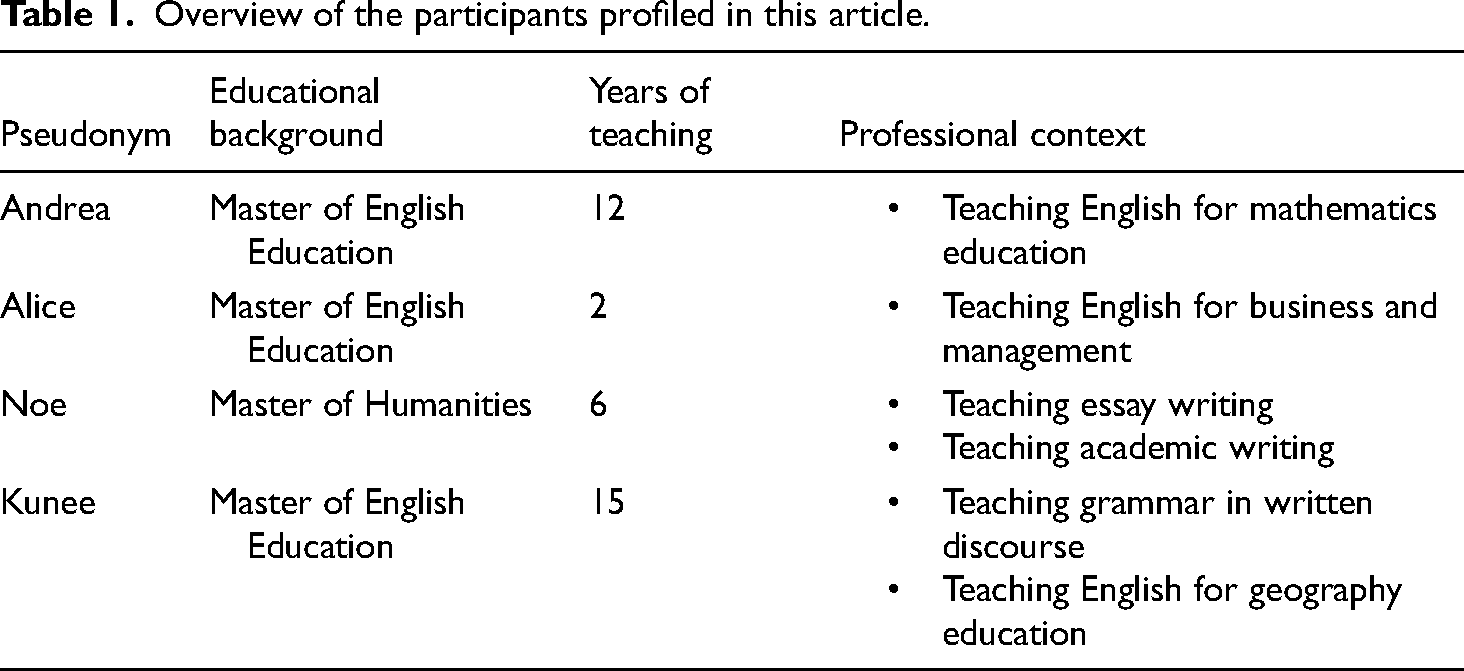
This paper reports on four Indonesian teachers’ experiences of implementing EP projects for the integration of TEPPs in language teaching. We chose these participants because they were from different universities in Indonesia (both private and state universities). Involving participants from different institutions helped develop rich understandings of varied experiences when undertaking EP to address a variety of pedagogical puzzles related to online teaching and professional development in different settings. As can be seen in Table 1, the four participants we profile in this article had different teaching experiences, ranging from two to 15 years of teaching. They had taught a variety of English language and specialization courses in teaching English to speakers of other languages (TESOL). All participants have been given pseudonyms.
Overview of the participants profiled in this article.
To answer the research questions, we collected data from the participants through three semi-structured interviews for each participant and two focus group discussions on their experiences of undertaking EP and collaborative inquiries (i.e. reflective journals and students’ collage-making) with their students to improve online teaching. Figure 1 illustrates the process of the participants conducting EP and data collection in this study. These interviews focused on the participants’ challenges when doing online teaching, their initial experiences (before participating in EP study), and the pedagogical improvement they gained from EP. In the interviews, participants were invited to share their prior teaching experiences, the challenges they experienced in integrating TEPPs, and discuss how they responded to these challenges. The focus group discussions allowed the participants to present their EP experiences, as well as reflect on how EP can work as a means of professional development. Since the study was undertaken during the pandemic, interviews and focus group discussions were conducted online via Zoom. Data collection was also conducted in Bahasa Indonesia (also known as Indonesian), a language spoken by the participants, because doing so helped to reduce language barriers and allow participants to share more freely in the research process.
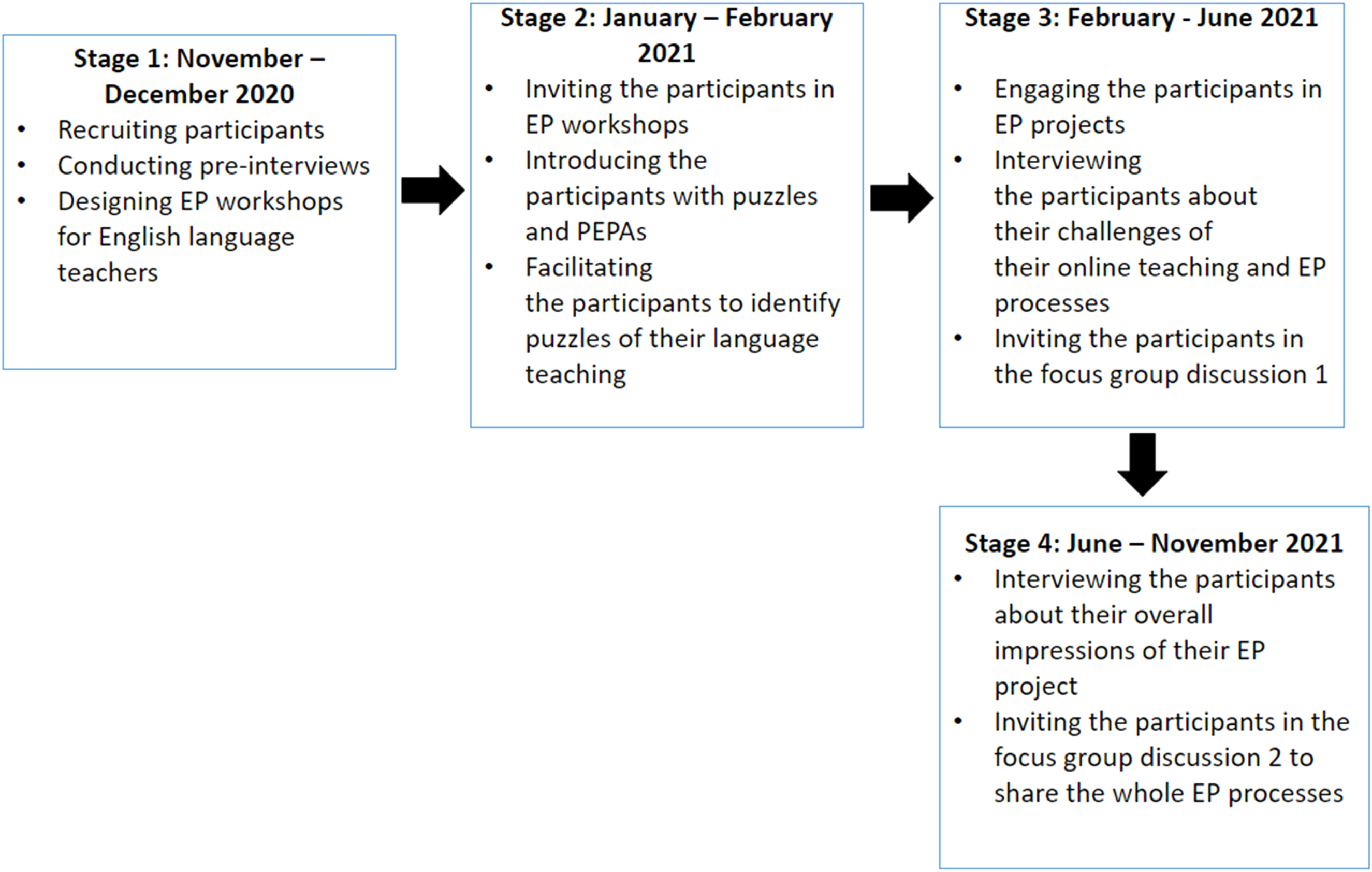
The participants’ exploratory practice project and data collection process.
In this study the authors had different roles in the research process. The first author was the doctoral researcher who supported the participants’ involvement in EP. The second and third authors are the first author's supervisors, who helped with analysis and interpretation of data for the specific research questions we designed for this article, as well as co-writing this manuscript.
The data were analysed in multiple stages, including: (a) transcribing spoken data from interviews and focus group discussions; and (b) identifying repeated patterns of data and categorizing them into themes (Braun and Clarke, 2012). After transcribing the data, the first author – a competent speaker of Bahasa Indonesia – translated the data from Bahasa Indonesia into English. All translated versions of data were checked by the participants to confirm their endorsement of the transcripts and their translations, and this process aimed to ensure the trustworthiness of the data collected in this study (Cohen et al., 2017).
The identification of themes during the data analysis involved multiple readings of the data and making notes, organizing these notes into emerging themes, and seeking relationships and clustering themes. To identify themes, we used a combination of deductive (theory-driven) analysis and an inductive approach, ‘a bottom-up approach and [it] is driven by what is in the data’ (Braun and Clarke, 2012: 58). All the collected data were coded by combining inductive and deductive approaches. In the phase of identifying themes, all coded data were reviewed to uncover similarities between codes. Before finalizing our themes, we used the research questions to guide our comparison of the identified themes through data-driven analysis (bottom-up approach) and theory-driven analysis (top-down approach). After this process, the recurring themes (final themes) that emerged from the analyses were matched to the research questions to examine how the results of the analysis addressed each research question.
Findings
Pedagogical Puzzles
Our analysis found that EP enabled the participants to articulate and address a variety of pedagogical puzzles in online teaching. While Kunee, Andrea and Noe were interested in exploring pedagogical puzzles related to the teaching of grammar as well as language skills such as speaking and writing, Alice used the opportunity to examine critical issues related to online language teaching including choosing teaching materials and student engagement.
Andrea
In the study, Andrea decided to implement a one-month EP project, ‘Being a Reporter’, through which she intended to work with her students on a pedagogical puzzle related to speaking. As illustrated in Figure 2, she designed her EP to involve students through synchronous and asynchronous online teaching. First, she presented the details of the collaborative exploration to the students in a synchronous meeting (via Zoom); in particular, she used a series of PEPAs (guided interview tasks, an online reflective task and a recorded video presentation task) for students to participate in the shared pursuit.
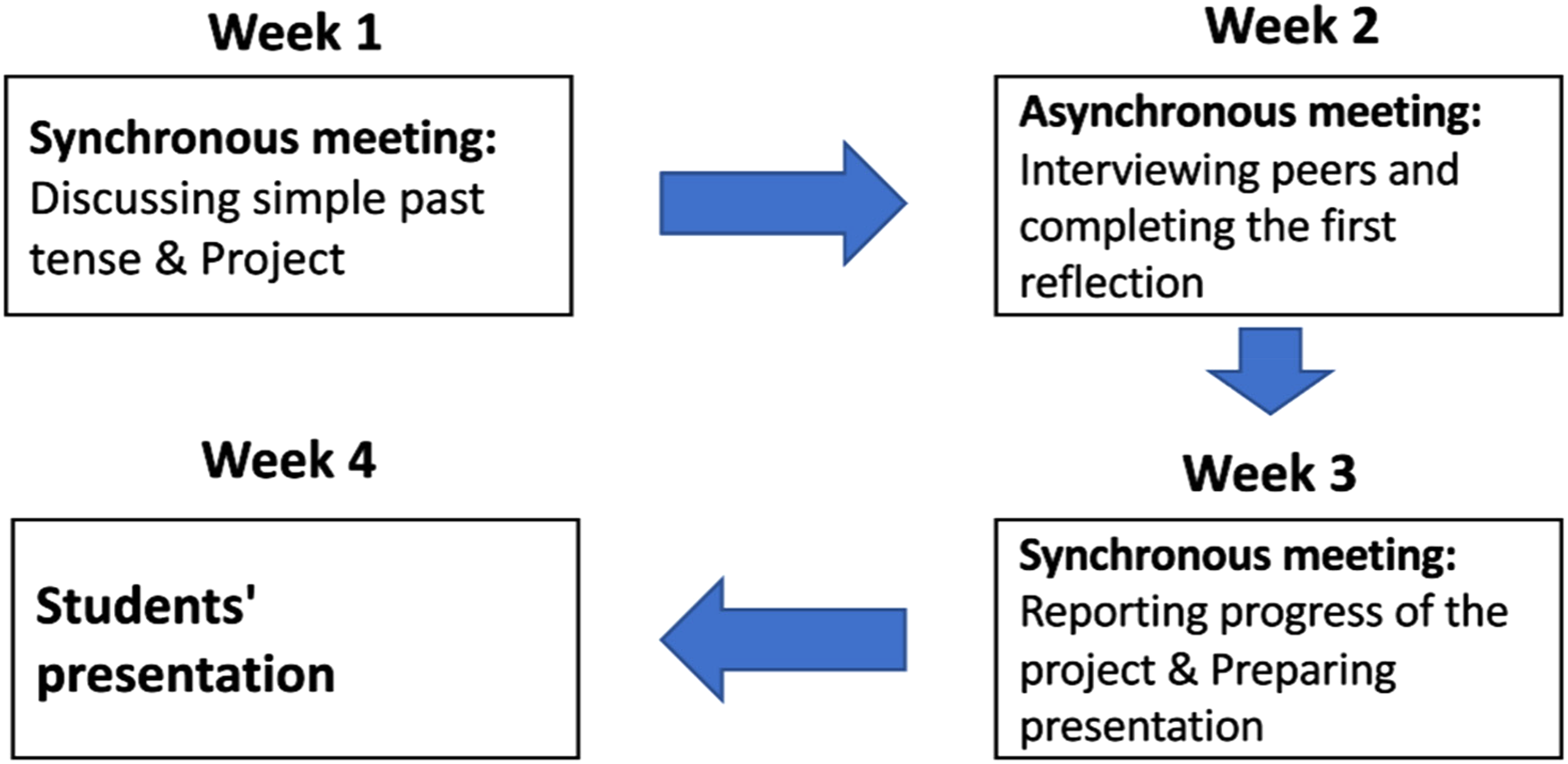
Andrea's exploratory practice project: ‘Being a Reporter’.
In the following week, the students carried out interviews with their peers to discuss their experiences of speaking English. During the interviews, they asked each other about their speaking experiences, specifically their feelings, challenges and strategies. The students were also asked to record the interviews and analyse what they learnt from each other, which they would then present to the group. In the third week, Andrea met the students online to discuss how to organize the online virtual presentations in Week 4. In the fourth week, the students recorded their presentations on the collaborative inquiry and shared these recordings on different platforms such as Google Classroom, Instagram TV and YouTube.
Noe
Unlike Andrea, Noe started her EP project with several puzzles related to her students’ writing. In a focus group discussion between her and other teachers, she outlined the following puzzles obtained from her students’ perspectives:
Why did I have difficulties understanding learning materials? Why can’t I ask when I am confused by learning materials? Why is the writing activity so hard for me?
With the data she collected from the discussion with her students and their reflective journals, she decided to adopt a systemic functional linguistics (SFL) genre-based pedagogy for online teaching. Working with her students, she adapted the pedagogical puzzle she was exploring into ‘Why can’t I translate SFL-genre pedagogy easily in my writing class?’
To address this puzzle, Noe employed several PEPAs with her students, including reflection, narrative tasks and collage-making. The reflective task encouraged her students to think about the difficulties they had in writing for sharing. To develop students’ understanding of the relevant challenges, she engaged her students in a narrative task, which required them to discuss their writing experiences in a short essay. It seems that her students significantly benefitted from this task because not only were they able to practise writing, but they also had the opportunity to articulate any problems to Noe. Collage-making, meanwhile, enabled her students to support their narratives with related pictures and photos to help elucidate their experiences of writing, as can be seen in Figure 3.

Noe's students’ works.
Alice
As the pandemic hit, Alice shifted her focus to using EP as an opportunity to develop her pedagogical competence for technology-enhanced language teaching because she was experiencing difficulties in delivering material online. In particular, she aimed to address the following pedagogical puzzles concerning online teaching:
Why do I find deciding which materials to include and how to deliver them in my online course challenging? Why don’t my students actively participate in online learning?
The first puzzle focused on a Business English (BE) course that she was teaching for the first time, meaning she had to start the course from scratch. Like many English-language teachers, she found it difficult to promote her students’ active engagement in the online learning process, so she wanted to tackle this as the second pedagogical puzzle in her EP project.
To address these puzzles with her students, she designed two PEPAs: online surveys and e-reflective journalling tasks. By conducting online surveys, she learnt what her students knew about the course, what they expected to learn from the course and their opinions of her teaching practice. She also asked her students to write online reflective journals to give her insight into their learning experiences. These journals provided Alice with valuable insights into the challenges her students experienced in learning. Below are some examples of Alice's students’ journal writing:
Why do I always feel nervous when speaking in public? When speaking English in public, I feel nervous. The fear of mistakes may be the cause. Thus, I became less confident and cannot express my opinion very well. (Student 1 journal) Why couldn’t I express my idea in the discussion or class? When it comes to discussion activity or class activity, I couldn’t express my idea properly like every word that I have prepared in my head suddenly go away. So that's why I’m not confident to speak/state my opinion in the class and being the centre of attention in the class always makes me panic like I feel anxious. So, I’m so sorry if I rarely respond to your questions in the BE class. (Student 2 journal)
While these questions prompted Alice and her students to invest more time and efforts in teaching and learning, Alice was still finding ways to achieve a mutual understanding of these pedagogical puzzles with her students.
Kunee
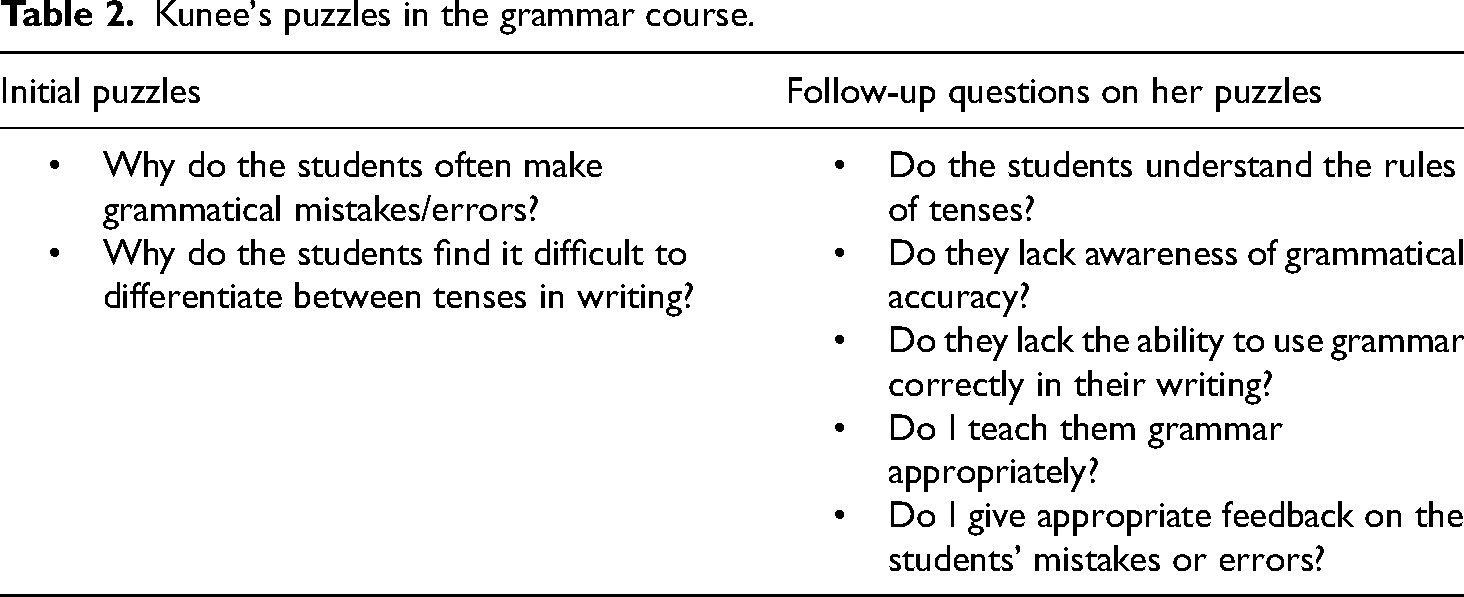
Like Alice, Kunee had yet to confirm a puzzle when social distancing measures were introduced. As documented in Table 2, Kunee's pedagogical puzzles were still evolving at the time. She started her EP with questions concerning her students’ ‘failures’ to demonstrate appropriate grammatical knowledge. Unfortunately, Kunee's negative framing deviated from the collaborative search for mutual understanding emphasized by EP, and she grew even more negative about her students and herself in her follow-up questions related to her pedagogical puzzles. She questioned whether her students understood relevant grammatical rules and doubted her ability to teach grammar. Such questioning placed significant burdens on her professional practice, which were not conducive to professional development.
Kunee's puzzles in the grammar course.
Challenges with Emergency Remote Teaching
As can be inferred from the pedagogical puzzles addressed by the participants, the teachers had different understandings of EP and its related activities such as PEPA, which posed problems for them to use EP effectively for professional development in this already challenging time. The analysis of interviews and focus group discussions also enabled us to identify the challenges that the participants faced in relation to regulating their emotions, accessing resources and promoting learning engagement when conducting EP for professional development.
During our follow-up interviews with the participants, the challenges they most reported experiencing were managing negative emotions such as feeling ‘unconfident’ or ‘insecure’, or finding the transition to online teaching ‘stressful’. Like many language teachers in similar situations, Andrea reported feeling ‘confused’ and ‘stressed’ because she was not ready for online teaching, compounded by the fact she had ‘never conducted any online teaching and used technology’ in her teaching before (Interview, 2020). She was particularly anxious about being ‘caught out’ by her students due to her lack of experience with technology, as is evident in the following excerpt:
Excerpt 1
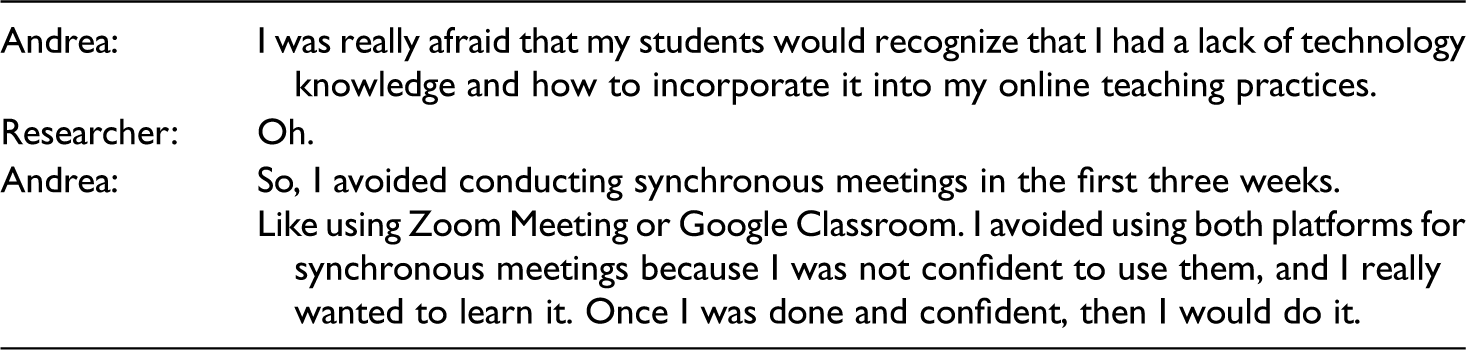
Andrea's anxiety was shared by other participants in the inquiry, including Noe. Before the university lockdown occurred, Noe had already been struggling to teach students with low learning motivation. As a language teacher educator, she noted that most of her students were also schoolteachers who were overwhelmed with full-time teaching and part-time studies. She also reported that ‘90 per cent of the students complained about being unable to attend face-to-face teaching due to the pandemic’ (Interview 2, 2021). The data indicate that access to technological and pedagogical resources was another significant challenge for the participants when delivering teaching online. The majority of the participants’ comments were related to technological facilities, preparation time and appropriateness of technological tools. Participants like Kunee did not believe that online teaching was as effective as in-person teaching. Kunee also noted that designing tasks in a virtual learning environment was challenging because online teaching and in-person teaching were different. The participants knew that they had to adapt to the new situation and find new ways of teaching, such as creating virtual role-playing (e.g. Andrea, Alice), undertaking collaborative and interactive virtual learning (e.g. Alice, Kunee) and designing virtual learning tasks (e.g. Noe, Andrea, Kunee).
The participants also noticed that students seemed to be unconfident, which impeded their ability to fully participate in a virtual learning environment (e.g. synchronous meeting via Zoom). The students were reluctant to articulate their ideas in front of the camera because ‘they became a centre of attention in Zoom by others, so they preferred to be quiet’ (Alice, Interview, 2021). Teaching students with low motivation also created serious challenges for Noe when trying to engage students in learning. Noe found that her students were quite negative about her online teaching because the majority wanted to have in-person teaching. Other challenges such as poor Internet connections further exacerbated students’ disengagement and lack of participation as well as the participants’ emotional stress and poor time management of online teaching.
The above-mentioned challenges undermined the participants’ use of EP for professional development. However, the data also suggest that these participants attempted a variety of methods to seize opportunities and maximize the positive impact of EP on their professional practice.
Opportunities
As previously mentioned, the sudden switch to online teaching created many challenges for language teachers, but it also presented unique opportunities for them to trial innovative responses in teaching. We contend that the participants enacted the principles of collaborative inquiry through EP in response to a variety of challenges (e.g. emotional, technological; Allwright and Hanks, 2009).
In Andrea's case, she learnt to develop online learning tasks through conducting EP. As mentioned earlier, Andrea implemented EP to ascertain ‘Why can’t my students speak English?’ (Andrea's EP document). She undertook her EP to engage her students in a fun, yet challenging, speaking project. She acknowledged that ‘I feel really surprised that most of my students were engaged in this project’, adding that her students felt much closer after interviewing one another. Her EP also provided opportunities for her students to understand what speaking in English involves and practise their English-speaking skills through PEPAs (e.g. interviewing and presentation tasks).
Like Andrea's positive experience with EP, Noe also reported that ‘undertaking EP is truly an eye-opener and helps create a better quality of classroom life’. When conducting EP, she felt that she needed some guidance on how to implement the genre-approach pedagogy. She did undertake efforts to have ‘more time digesting the concept [SFL] before teaching it to students’ (Focus group discussion, 2021). Conducting EP created opportunities for her to work with her students to improve classroom life. Ultimately, she concluded that her teaching should be adapted to local classroom situations and she should not use SFL-genre pedagogy as a prescriptive approach to teaching writing. She was enthusiastic about EP because she liked ‘the spirit of egalitarianism, that is closely related to my teaching philosophy … in which we [teacher and students] are also learners in the classroom’ (Focus group discussion, 2021). Noe now strongly believes that teachers should listen to their students’ concerns in the classroom, such as what they want to learn, how they learn and what they believe the role of a teacher is. EP not only helped her develop a good rapport with her students but also transformed her and her students into partners in learning and teaching.
Likewise, EP helped Alice realize that she was too ‘selfish’ in her teaching because she did not consider students’ learning needs when planning lessons. She had been ‘guessing and wondering’ when responding to her students’ problems with their English-language skills. Her concern shifted to whether she was ‘gambling’ in designing interventions or instructional activities for her students without their involvement. This concern about ‘gambling’ was to do with her interpretation of classroom situations or ‘judging’. In her final interview, Alice asserted that it was problematic for her to interpret classroom situations only from the perspective of teachers, not of students. After she engaged with EP, she gained a far better understanding of her students and teaching and began to ‘value her students’ voices’ and view them as partners in teaching. This is reflected in her thoughts below:
Excerpt 2:
If I have a problem or puzzle the students, it's better that I have to handle it by discussing or collaborating with my students, not the outsider of the classroom. I may need a second opinion from my colleagues, but students’ voices should be prioritised and heard to create a better classroom life.
(Focus group discussion, 2021)
Even Kunee, who had problems understanding what pedagogical puzzles meant for her in EP, began to see that it was problematic for her to know ‘nothing about my classroom life’. By listening to students who shared their learning challenges in a variety of PEPAs including an online survey, reflective journals, peer feedback and a grammar log, Kunee reflected on her efforts to integrate technologies into language teaching for professional development. However, she did find it difficult to check students’ work, reflective journals and grammar logs in the process. Her accounts suggest that both teachers and students need time to collaboratively address pedagogical puzzles in teaching (Allwright and Hanks, 2009). Nevertheless, Kunee actively explored ways to make her EP manageable and decided to use an online conference with students, with a one-on-one discussion to accommodate students if necessary, as PEPAs to address pedagogical puzzles together with her students. It was in one of the one-on-one meetings with her students that she recognized the value of her EP work for teaching:
Excerpt 3:
One of my students said that the way I gave examples of grammar tasks in the teaching-learning process was different from their assignments, which were more difficult to do … I became aware of this but what I wanted was that … I mean, hmm, giving a simple example could help them quickly understand the learning materials. But that was what happened in my grammar class.
(Interview, June 2021)
Kunee began to take task difficulty seriously when designing assessments so that she could avoid discrepancies between learning materials and assessment activities. Although she still found undertaking EP challenging, she appreciated the dialogical space it created for her and her students to collaborate in teaching.
Discussion
As can be seen above, Andrea, Noe and Alice were enthusiastic about undertaking EP projects to address a variety of pedagogical issues in online language teaching for professional development, whereas Kunee found the process challenging and overwhelming, especially when the pandemic hit. The pedagogical puzzles that they reported exploring in their EP projects were much more than what they could do together with their students. This observation suggests that the participants might need to develop an appropriate understanding of EP. They need to understand how seven principles for inclusive practitioner research can be used to integrate research and pedagogy (for more details, see Allwright and Hanks, 2009). However, the participants’ enthusiasm for tackling so many pedagogical puzzles was likely due to the new environment they found themselves in during the pandemic. This echoes the findings of previous studies that teachers will continuously adapt to changing events in their teaching mediated by technology (Moorhouse and Kohnke, 2021).
Similar to previous studies (Baker et al., 2022; Moorhouse and Kohnke, 2021), we found that the participants were most likely overwhelmed by the magnitude of the task of switching to online language teaching in such an unprepared, unsupported manner. Participants may have seen the potential of EP to help them overcome the challenges of online teaching, yet they undertook EP during the time they were adjusting to online language teaching, and, for this reason, the participants experienced a variety of issues when implementing EP projects. The participants also experienced technological and resource-related challenges when implementing online language pedagogical activities, including PEPAs, as also found by Damşa et al. (2022) and Le et al. (2022). The findings support Moorhouse and Kohnke's (2021) and MacIntyre et al.'s (2020) studies in concluding that a new challenging situation generates significant emotional stress for teachers. One participant (Kunee) even questioned the benefits of undertaking EP in response to the ERT caused by COVID-19, plausibly because she attempted to do too much in her exploration of pedagogical puzzles.
Despite the challenges that the participants reported experiencing, most participants believed that they had benefitted significantly in terms of professional development by undertaking EP. In most cases, they developed critical insights into the pedagogical puzzles that they aimed to understand together with their students even though the specific pedagogical puzzles that interested them shifted throughout the process. While constraints on time and resources did prevent the participants from fully benefitting from their EP, it is encouraging to see that they all recognized their students as close partners in learning and teaching. Even though Kunee appeared to be dissatisfied with EP, she valued the dialogical space that it created for her and her students to work together on addressing their shared pedagogical puzzles. While our methodological approach did not enable us to examine the impact of the participants’ EP on their students’ learning, it is still a critical finding that the participants were much encouraged to focus on building and sustaining collaborative relationships with their students. Although the COVID-19 pandemic created a crisis for university-based language teachers’ TEPPs, forming such partnerships with students will be key to the participants’ professional development. A pandemic may not be the optimal time to promote EP as a professional development strategy among language teachers, but EP does help bring language teachers and learners closer together in working out possible solutions to their shared challenges. This means that EP remains a valuable strategy for language teachers to explore pedagogic issues such as integration of TEPPs in teaching for professional development beyond the pandemic.
Conclusion
The positive impacts of EP on the participants’ professional development identified in our inquiry are highly encouraging because they demonstrate the potential for EP to be a successful strategy for language teachers to collaborate with language learners in pursuing and achieving professional development. Nevertheless, we are aware that introducing new professional development activities may create challenges for interested language teachers. It is critical for language teachers to have a supportive environment that includes a protected space for them to experiment with EP in implementing new pedagogical approaches such as technology-enhanced language pedagogy (e.g., Baker et al., 2022). Language teachers need time and space to explore pedagogical puzzles with their students even though they are already expected to use PEPAs as part of classroom routine activities. We hope that language teachers continue to undertake collaborative inquiries with students through EP beyond the pandemic, which creates a better quality of classroom life and improves teaching performance. Equipping language teachers with EP can allow them to be able to adapt to disruptions, changes and challenges in their professional practices in different contexts during and beyond the pandemic. Although this study is limited in terms of the number of participants involved in the study and its context (i.e. the pandemic), more efforts should be invested in professional development programmes that allow language teachers to undertake EP at a more manageable pace. More research should also be undertaken into how language teachers sustain their EP with their students to achieve professional development beyond the pandemic.
Footnotes
Author note
Junjun Muhamad Ramdani is currently affiliated with School of Education, University of New South Wales, New South Wales, Australia.
Declaration of conflicting interests
The author(s) declared no potential conflicts of interest with respect to the research, authorship, and/or publication of this article.
Funding
The author disclosed receipt of the following financial support for the research, authorship, and/or publication of this article: The research has been generously supported by the Indonesia Endowment Fund for Education (LPDP) and co-funded by Faculty of Ards, Design & Architecture research funding support, the University of New South Wales.
