




Abstract
Objectives:
Migrant and seasonal farmworkers work in rural areas where internet access may be limited. We assessed internet access, cost of access, and devices available to farmworkers through a statewide survey in North Carolina.
Methods:
During the 2023 agricultural season, we surveyed 1034 migrant and seasonal farmworkers during routine outreach visits in partnership with community health workers employed by 8 community health centers or by nonprofit health service agencies serving farmworkers in North Carolina. We surveyed participants aged ≥18 years by using time–venue sampling and surveyed up to 5 farmworkers at migrant housing locations. We weighted participants to the total population of farmworkers living in surveyed housing and calculated frequencies and percentages of internet access, internet speed, internet cost, available internet devices, and awareness and use of the Affordable Connectivity Program—a program that was run from 2021 through May 31, 2024, by the Federal Communications Commission to make internet access more affordable in the United States. We assessed predictors of internet access and ability to use online videos by using regression models.
Results:
Participants were predominantly Spanish-speaking men who lived in housing provided by farm owners. Among participants, 9.8% had internet connections with a cable or digital subscriber line, and 23.5% did not have consistent internet access. Most participants used cellular network internet (84.9%) and mobile phone devices (93.9%). Even among farmworkers who lived in their housing year-round, few had heard of (34.4%), applied to (4.8%), or used (2.0%) the Affordable Connectivity Program.
Conclusions:
Interventions are needed to increase internet access and digital inclusion for migrant and seasonal farmworkers in North Carolina. Development of state and county broadband infrastructure should consider farmworker housing.
Keywords
The internet has emerged as a basic utility that is essential for communication, well-being, education, and socioeconomic opportunities, and digital inclusion is increasingly recognized as one factor that influences the social determinants of health.1-5 Increasing the proportion of adults with broadband internet is an objective of Healthy People 2030. 6 As with other utilities, such as water and sewer services, where inequities have been patterned by race and political power, 7 evidence exists of a digital divide in internet access. 8 The roots of this digital exclusion stem from unequal distribution of resources by age, sex, race, ethnicity, position in the division of labor, position within a nation (eg, resident vs migrant), and education level, resulting in differential access to digital technologies. 5
The causes of digital exclusion align with conditions faced by migrant and seasonal farmworkers (hereinafter, “farmworkers” unless otherwise stated). Approximately 70 000 to 80 000 farmworkers reside annually in North Carolina. 9 Many live in employer-provided housing that can be isolated,10,11 and policy makers have not resolved issues of health inequities among farmworkers.12,13 Farmworkers are disproportionately affected by chronic health conditions and are under further mental and behavioral health strains because of social isolation and because they are disconnected from family and friends in their countries of origin. 14 Community health workers (CHWs) employed by migrant and community health centers, nonprofit organizations, free and charitable clinics, and public health departments provide health education to farmworkers, conduct health assessments, and connect farmworkers to health services. 9 Because of the critical role of CHWs as connectors to farmworkers, opportunities exist for CHWs to engage in research on farmworker health, from prioritization and design through data collection and interpretation. 12
Researchers have called for efforts to address digital inclusion in 8 domains: (1) reducing barriers through technology access, (2) improving internet access in public spaces, (3) addressing exclusionary and surveillance practices on the internet, (4) investing in technology in educational settings, (5) investing in health information technology, (6) promoting engagement with technology among older adults, (7) using libraries to promote digital inclusion, and (8) promoting digital literacy. 8 To our knowledge, no data have been published on the prevalence of internet services for farmworkers. 12 In addition, published data on devices that farmworkers typically use to access the internet are rapidly aging out of relevance,15,16 and to our knowledge, no data have been published on costs of internet access to farmworkers. 12
In this community-engaged and CHW-oriented research project, we sought to answer 4 key research questions: (1) What proportion of farmworkers have internet access? (2) What is the reported functional speed of internet service? (3) What devices are available for internet access? and (4) What is the cost of internet service, and who is responsible for payment of internet service? We also assessed awareness and use of the federal Affordable Connectivity Project 17 —a program that ran from 2021 through May 31, 2024, by the Federal Communications Commission to make internet access more affordable in the United States—among farmworkers in North Carolina, and we conducted exploratory analyses of factors associated with consistent internet access and video capacity.
Methods
Research Design
CHWs bridge gaps in health services by helping farmworkers overcome issues related to navigation of the health care system, transportation, language access, and culturally appropriate health education. CHWs support culturally relevant care in conjunction with health centers.18,19
CHWs funded by migrant health centers and the North Carolina Farmworker Health Program 9 identify and track farmworker housing locations by using local community knowledge and state housing registration lists. The North Carolina Farmworker Health Program has recognized 20 farmworker-serving health centers or clinics in the state. We determined that a reliable sampling frame of farmworkers or farmworker housing was not available in North Carolina. For migrant farmworkers, employers often provide housing, but not all housing units are registered with the state. As is common for populations where barriers to participation in surveys and no sampling frame exist, we used time–venue sampling: a form of convenience sampling focused on when a particular population will be in certain places. 20 Led by crop seasonality and geography, we partnered with 19 CHWs at 8 sites that employ CHWs to implement the survey during routine outreach to farmworker housing or at farmworker clinics during times when farmworkers and their families were not working. A bilingual research assistant also collected data, resulting in 20 data collectors.
Development of Instrument
CHWs administered surveys in the context of health education outreach and often in the evenings when farmworker participants were just back from agricultural work, sometimes while participants were performing evening tasks such as cooking meals or decontaminating from pesticide exposure. Thus, we aimed for the survey to be brief (5-7 minutes) to not hinder the work of CHWs. With that in mind, we developed the survey instrument by using best practices in questionnaire design, professional translation, input from our advisory board, and input from CHWs. We met with CHWs at the fall training session of the North Carolina Farmworker Health Program in October 2022 to brainstorm questions. Staff members at the North Carolina Farmworker Health Program later provided input and reviewed a draft of the survey. A bilingual research assistant pilot tested the survey with 5 people.
Measures
We reported the full survey codebook and measures online in our institutional repository. 21 Key outcomes included internet access (“Are you able to use the internet living here in this housing through wi-fi or your cell phone?”), type of internet (“What type of internet service do you use here?”), individuals responsible for internet service cost (“Who pays for the internet?”), cost of internet access (“How much do you pay per month for internet here?”), and the functional speed of internet access (“Is the internet here usually fast enough to watch an online video?”). We assessed devices by asking, “What devices do you have access to?” We assessed awareness of, application to, and use of the Affordable Connectivity Program. In response to the COVID-19 pandemic, North Carolina had implemented a state-supported emergency hotspot program, 22 and we assessed participation in that program.
We also assessed housing and demographic characteristics, including housing type, if the housing was for a family, presence of children, number of occupants in the housing unit, gender, country of origin, and race and ethnicity (“How do you describe your race?”), which allowed multiple response options. We also assessed migrant versus seasonal worker status (measured with the question “Do you live here year-round?”). We defined migrant workers as those who traveled to engage in agricultural work for part of the year and seasonal workers as those who lived in North Carolina year-round. To avoid sensitive questions, we did not ask for visa or immigration status, and we did not geocode the survey location.
Survey Fielding
Trained CHWs and a research assistant verbally administered the survey in English or Spanish by using an iPad with the Qualtrics Offline Survey application from May 31 through December 27, 2023. The survey period corresponded to the 2023 growing season, starting with blueberries in eastern North Carolina and ending with Christmas tree harvest in western North Carolina. Trained CHWs and a research assistant provided 1 family member at housing where a family lived or up to 5 participants at each migrant housing location with a bilingual study information sheet and, if requested by the participant and after the survey completion, information on the Affordable Connectivity Program. In addition, trained CHWs and a research assistant provided each participating housing site with a communal incentive (ie, a soccer ball, laundry detergent, or a first aid kit). We selected these incentives on the basis of input received from our advisory panel and CHWs. Trained CHWs and a research assistant also administered surveys at farmworker clinic events in locations where outreach was reversed (eg, special clinics for farmworkers). We allowed only participants aged ≥18 years to take the survey.
Analysis
Given that we collected a fixed number of surveys at each housing unit and that the housing units varied in size, up to barracks that housed 90 workers (mean, 8.9), we calculated design weights so that our sample represented the total number of people in the surveyed housing units, with the weight being the inverse of the probability of selection. 23 Specifically, we used the formula W = T/A, where T is the target population in the housing unit, A is the actual population surveyed in the housing unit, and W is the weight variable. We calculated weighted descriptive statistics, stratified by migrant vs seasonal status, given the effects of moving during the agricultural season on internet access. We treated missing data as missing at random and used pairwise deletion. In addition, we ran weighted unadjusted and adjusted regression models to determine which demographic factors were predictors of the key outcome variables. In these models, we used a mixed modeling approach to account for nesting of participants within housing units. We set a random intercept for the housing unit, and we used PROC MIXED and PROC GLIMMIX (SAS Institute Inc) for modeling to address dependence in the data. We conducted analyses with SAS version 9.4 (SAS Institute Inc). We used SPSS version 29 for Mac operating system (IBM SPSS Software) for data management. The East Carolina University and Medical Center Institutional Review Board approved the research protocol under an exempt determination (22-001454), and all participants verbally consented to participate.
Results
The research team surveyed 754 migrant farmworkers and 244 seasonal farmworkers. An additional 36 farmworkers who did not report migrant or seasonal status completed the survey, resulting in a total of 1034 farmworkers who completed the survey. Among the 1034 respondents, most were men (77.2%), of Hispanic or Latine ethnicity (98.6%), born in Mexico (95.0%), and Spanish speaking (98.0%) (Table 1). Men composed 94.2% of migrant farmworkers and 75.0% of seasonal farmworkers. Migrant farmworkers were almost exclusively born in Mexico (98.2%), but a larger percentage of seasonal farmworkers than migrant farmworkers were born in other countries, including Guatemala (6.6%) and Honduras (4.1%).
Demographic characteristics of migrant and seasonal farmworkers, North Carolina, 2023 growing season a
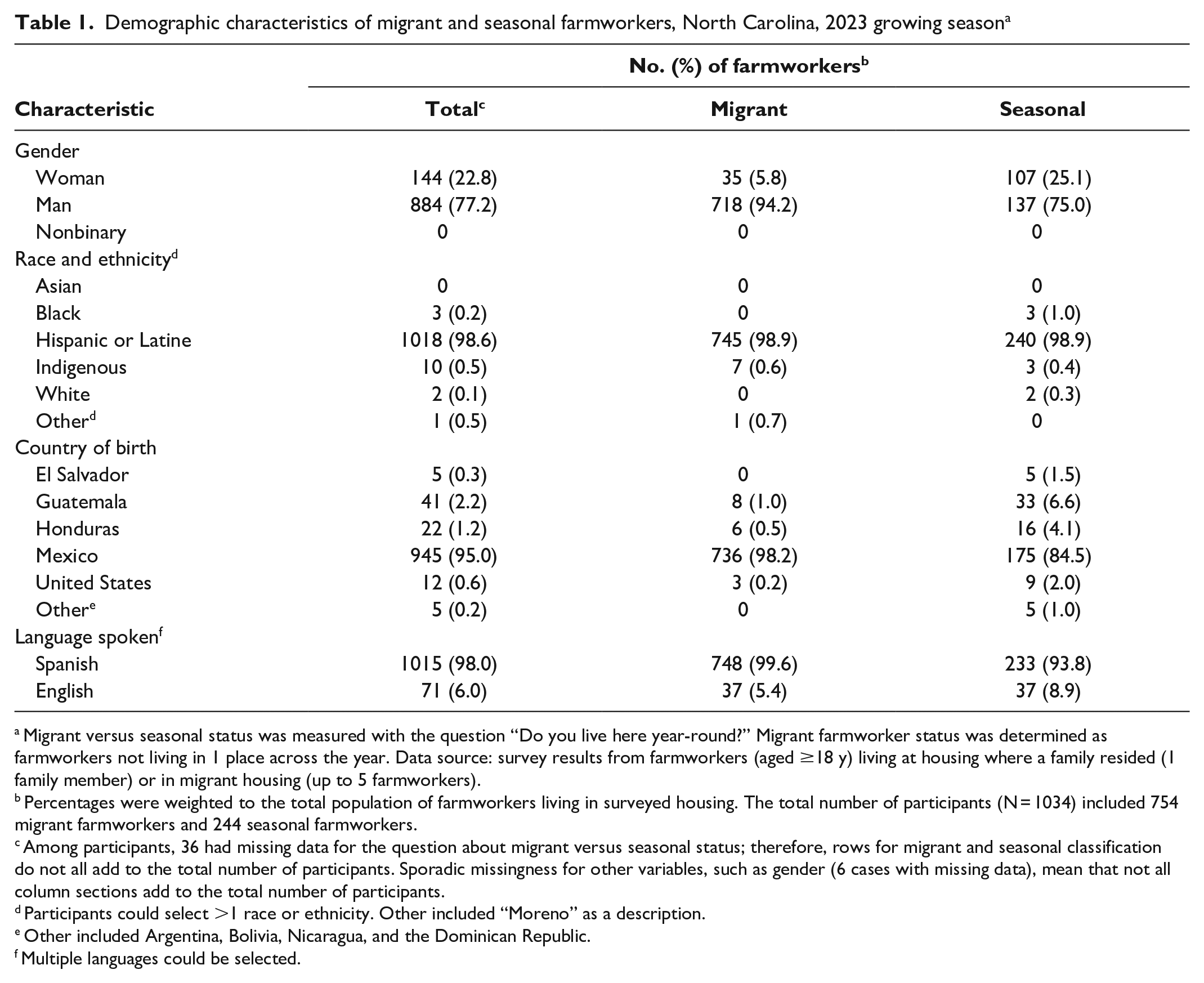
Migrant versus seasonal status was measured with the question “Do you live here year-round?” Migrant farmworker status was determined as farmworkers not living in 1 place across the year. Data source: survey results from farmworkers (aged ≥18 y) living at housing where a family resided (1 family member) or in migrant housing (up to 5 farmworkers).
Percentages were weighted to the total population of farmworkers living in surveyed housing. The total number of participants (N = 1034) included 754 migrant farmworkers and 244 seasonal farmworkers.
Among participants, 36 had missing data for the question about migrant versus seasonal status; therefore, rows for migrant and seasonal classification do not all add to the total number of participants. Sporadic missingness for other variables, such as gender (6 cases with missing data), mean that not all column sections add to the total number of participants.
Participants could select >1 race or ethnicity. Other included “Moreno” as a description.
Other included Argentina, Bolivia, Nicaragua, and the Dominican Republic.
Multiple languages could be selected.
Internet Access
Most farmworkers reported having consistent internet access (76.5%) (Table 2). However, nearly 1 in 4 farmworkers did not have consistent internet access, even after implementation of a state-supported emergency hotspot program in which 4.4% of farmworkers reported participating. Most farmworkers accessed the internet by using a cellular network (84.9%).
Internet access, functional speed, cost, and payment information reported by migrant and seasonal farmworkers, North Carolina, 2023 growing season a
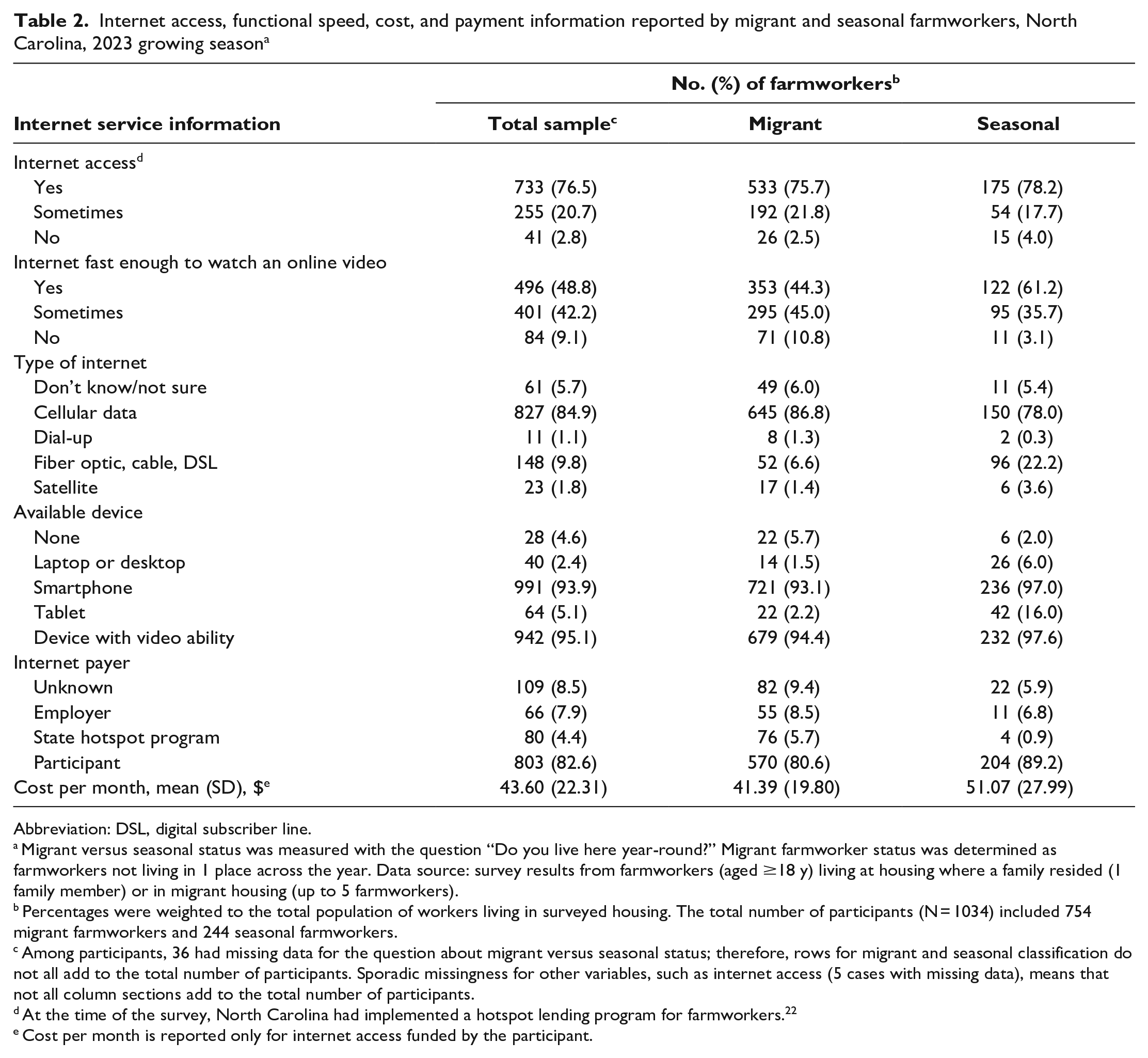
Abbreviation: DSL, digital subscriber line.
Migrant versus seasonal status was measured with the question “Do you live here year-round?” Migrant farmworker status was determined as farmworkers not living in 1 place across the year. Data source: survey results from farmworkers (aged ≥18 y) living at housing where a family resided (1 family member) or in migrant housing (up to 5 farmworkers).
Percentages were weighted to the total population of workers living in surveyed housing. The total number of participants (N = 1034) included 754 migrant farmworkers and 244 seasonal farmworkers.
Among participants, 36 had missing data for the question about migrant versus seasonal status; therefore, rows for migrant and seasonal classification do not all add to the total number of participants. Sporadic missingness for other variables, such as internet access (5 cases with missing data), means that not all column sections add to the total number of participants.
At the time of the survey, North Carolina had implemented a hotspot lending program for farmworkers. 22
Cost per month is reported only for internet access funded by the participant.
Internet Functional Speed
Approximately half of farmworkers (48.8%) with any internet access indicated that the internet speed was consistently fast enough to watch videos, and about 9.1% of farmworkers reported lacking fast-enough internet speed to watch videos at all (Table 2). A higher proportion of seasonal workers than migrant workers reported having sufficient speed to watch videos (61.2% vs 44.3%).
Internet Access Device
Most participants (>95%) had a device for accessing the internet; however, only 2.4% had a laptop or desktop device (Table 2). Most participants (93.9%) had a smartphone.
Internet Cost and Payment
Farmworkers reported spending a mean (SD) of $43.60 ($22.31) per month on internet, and this cost was higher for seasonal farmworkers than for migrant farmworkers ($51.07 vs $41.39) (Table 2). Most farmworkers (82.6%) paid for their own internet, and only 4.4% reported receiving internet access through North Carolina’s emergency hotspot program. Among all participants, 7.9% reported that their employer paid for internet service.
Affordable Connectivity Program
Awareness of the Affordable Connectivity Program was low (19.9%) among all participants (Table 3). Awareness was low among seasonal farmworkers who lived in their residence year-round (34.4%), although this percentage was higher than among migrant farmworkers (15.7%). Among all survey respondents, 2.6% had applied to the program and only 1.5% had used the program.
Self-reported awareness and use of the Affordable Connectivity Program (ACP) among migrant and seasonal farmworkers, North Carolina, 2023 growing season a
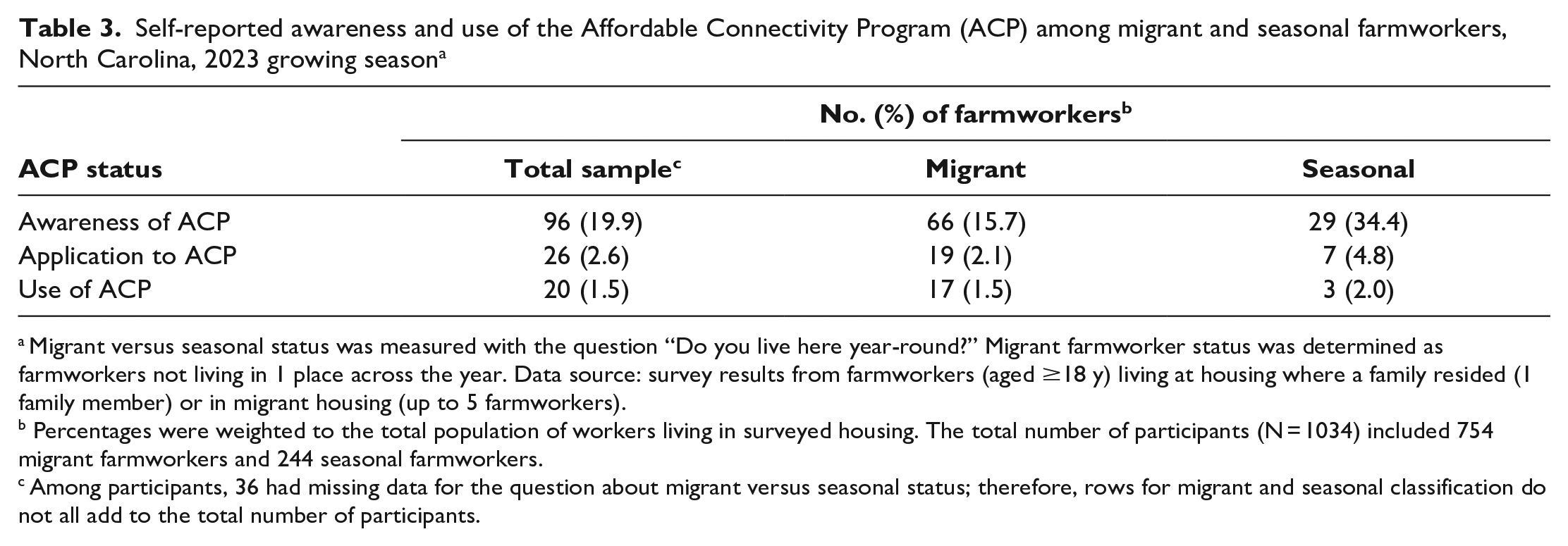
Migrant versus seasonal status was measured with the question “Do you live here year-round?” Migrant farmworker status was determined as farmworkers not living in 1 place across the year. Data source: survey results from farmworkers (aged ≥18 y) living at housing where a family resided (1 family member) or in migrant housing (up to 5 farmworkers).
Percentages were weighted to the total population of workers living in surveyed housing. The total number of participants (N = 1034) included 754 migrant farmworkers and 244 seasonal farmworkers.
Among participants, 36 had missing data for the question about migrant versus seasonal status; therefore, rows for migrant and seasonal classification do not all add to the total number of participants.
Factors Associated With Consistent Internet Access and Internet Video Capacity
In our assessment of associations among demographic factors, internet costs, type of internet, and devices and the availability of consistent internet access and having speed that consistently allowed for video capabilities, having a smartphone versus a laptop or desktop was one of few factors that was significantly associated with a greater likelihood of consistent internet access (odds ratio [OR] = 5.39; 95% CI, 1.36-21.30); however, this association was not significant in the adjusted model (Table 4). Seasonal farmworkers who lived in North Carolina year-round were significantly more likely than migrant farmworkers to report having internet with speeds that consistently allowed for videos (OR = 2.76; 95% CI, 2.01-3.79). Paying more for internet was associated with having internet speed that consistently allowed for videos (OR = 1.01; 95% CI, 1.00-1.02). In the adjusted model, being a seasonal worker (adjusted OR = 2.95; 95% CI, 2.02-4.31) and using cellular data (adjusted OR = 2.84; 95% CI, 1.21-6.67) were significant predictors of consistently being able to view videos.
Regression models used to determine which demographic and internet access responses predicted consistent internet access and internet video capacity among migrant and seasonal farmworkers, North Carolina, 2023 growing season a
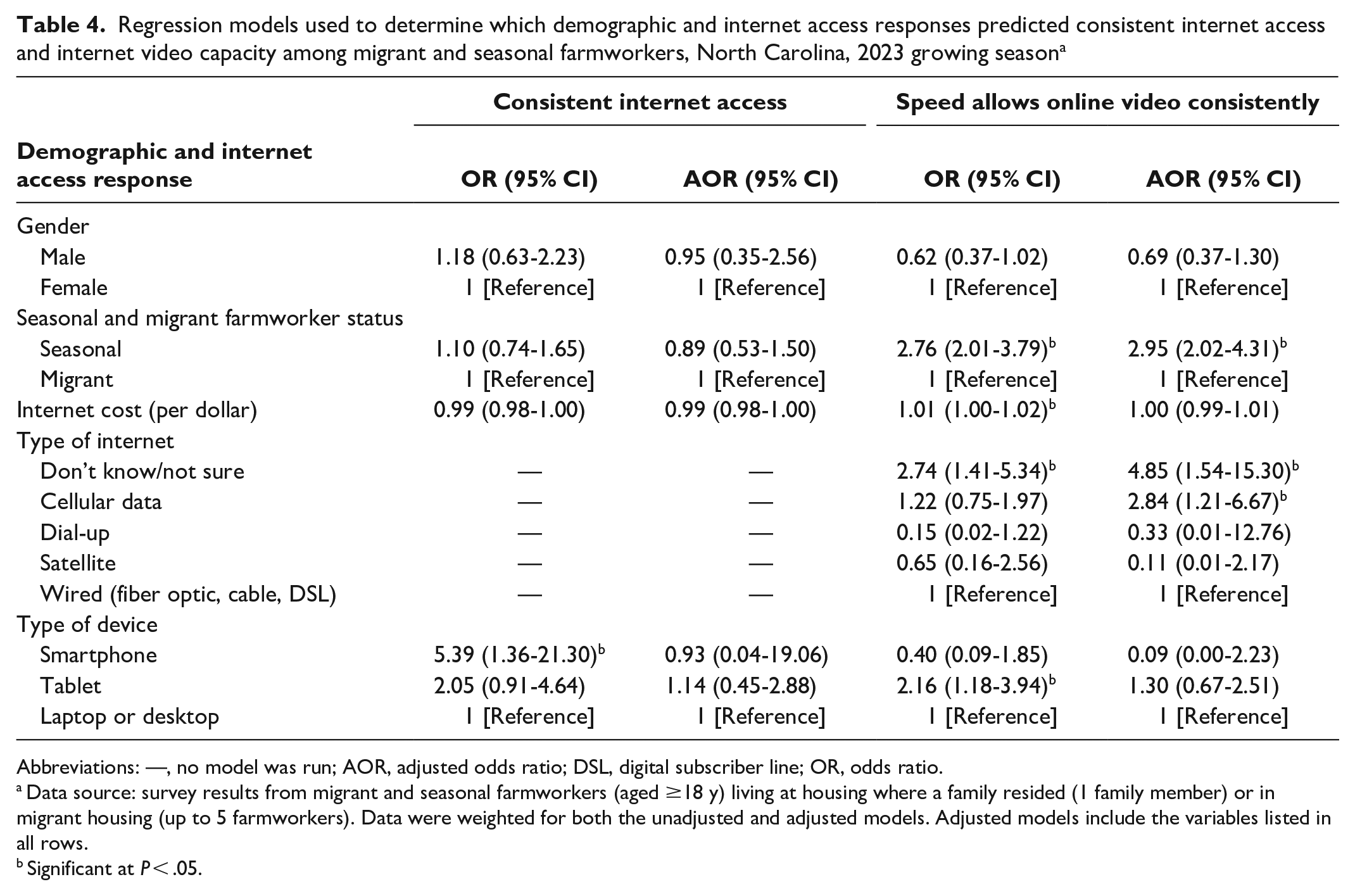
Abbreviations: —, no model was run; AOR, adjusted odds ratio; DSL, digital subscriber line; OR, odds ratio.
Data source: survey results from migrant and seasonal farmworkers (aged ≥18 y) living at housing where a family resided (1 family member) or in migrant housing (up to 5 farmworkers). Data were weighted for both the unadjusted and adjusted models. Adjusted models include the variables listed in all rows.
Significant at P < .05.
Discussion
In this large survey of migrant and seasonal farmworkers and their families across North Carolina, we found that, even after implementation of the Affordable Connectivity Program 17 and an emergency state hotspot lending program, 22 almost 1 in 4 farmworkers did not have consistent internet access in their housing. More than half of farmworkers (about 51%) did not have internet speeds that allowed for the consistent use of online videos. Most farmworkers in North Carolina who did have internet were using cellular data and mobile devices for internet access. Our results update previous work on what devices are available to farmworkers.15,16 We found that most farmworkers in North Carolina had access to a mobile device, typically a smartphone. Mobile health interventions may, thus, be able to leverage the use of these devices, albeit with a caveat from our findings about the lack of consistent internet access for a substantial portion of farmworkers.
Our data contrasted sharply with the general population in North Carolina. The 2018-2022 American Community Survey showed that about 90% of households had internet access and only 10% of households with internet used only cellular data without any other type of wired internet connection. 24 The same survey showed that 7% of households did not have a computer. 24
Important interventions can address digital equity in North Carolina and nationally. Our findings highlight the importance of these interventions and their potential to improve digital equity for farmworkers. One federal program designed to increase internet access by decreasing cost, the Affordable Connectivity Program (defunct at the time of this writing), 17 had low self-reported awareness and use; about 1.5% of participants reported using the program. Early iterations of the program were available only in English. A second program was implemented by the North Carolina Department of Health and Human Services in the form of an emergency hotspot/wi-fi lending program for farmworkers. This program reached thousands of farmworkers through connections with CHWs. 22 Federal agencies should prioritize planning for language access to commonly used languages in the United States in future programs. Both the Affordable Connectivity Program, as evidenced by its closure, and the state hotspot program have been limited by funding and, thus, are unlikely to be permanent solutions.
Our findings show the importance of other interventions to advance sustainable internet adoption, such as efforts to integrate farmworker housing into rural broadband planning efforts and efforts to engage farm owners in providing internet access. These findings can guide substantial investments in rural broadband by the federal and North Carolina governments. Previous work documented internet access on North Carolina farms, but our research showed that special consideration is needed for farmworker housing. 25
Given the importance of internet access to digital inclusion and as a determinant of other social determinants of health,2,3 our findings document important inequities in access to the internet and the services and information gained from internet access for farmworkers. For example, internet access is a critical issue of digital inclusion for the health and well-being of the agricultural workforce. 26 The internet affects participation in school among children of farmworkers, 27 access to health information for farmworkers, and connection with family in communities of origin. Farmworkers have described the value of being able to connect with family from afar to decrease feelings of isolation and loneliness and to stay connected. 22
Limitations and Strengths
Our study had some limitations. First, because no sampling frame of farmworkers or farmworker housing in North Carolina exists, this study did not use probability-based sampling. Second, the study was limited to North Carolina, which has geographic regions, ranging from the Appalachian mountains to the coastal plain, that support a variety of agricultural crops. Thus, results may not be generalizable to other places or areas of the state that were not surveyed. Third, the survey had to be brief to fit within the outreach routines of CHWs and, therefore, did not cover other important considerations of digital inclusion, such as knowledge of digital skills. Fourth, in the interest of time, we did not collect detailed information on age. Fifth, we did not address all predictors of internet access. Lastly, a few ORs had wide 95% CIs, likely because of the small numbers of participants in some categories.
Our study also had several strengths. First, to our knowledge, this is the first statewide survey of farmworkers to assess availability of internet access, speed, and cost. Second, the survey was designed with input from CHWs, an advisory panel, and state agency staff, which likely improved our recruitment of CHW data collectors and the ecologic validity of the survey. Third, the survey was implemented at 8 sites across the state with 19 CHWs and 1 research assistant participating as data collectors, thus indicating a broad reach across North Carolina agricultural crops and geographic regions.
Conclusions
Efforts to integrate the agriculture sector into broadband equity and planning are important, and farmworkers represent a population that should not be omitted from this work. Interventions to ensure robust internet access and digital inclusion efforts for farmworkers are needed. Although emergency and stopgap/temporary measures are important, new sustainable models for how to ensure broadband internet access in farmworker housing are needed.
Footnotes
Acknowledgements
The authors thank the amazing team of community health workers and data collectors who helped us with this project: Ana Beltran, Lea Dulcio, Jesus Gallardo, Leonardo Galvan, Josymar Garcia, Maria Guerrero, Mariana Hernandez, Marabella Hernandez Alvaro, Vicky Hernandez, Yanira Hernandez, Brayan Madero, Sandra Mendez, Randy Pacheco, Michelle Pelayo, Genesis Ramirez, Cecilia Sanchez, Walkyria B. Sessions, Janeth Tapia, Neissly Tapia, and Nereyda Valencia. This project would not have been possible without the advice and input of our advisory panel.
Disclaimer
The views, findings, conclusions, or recommendations expressed in this publication do not necessarily represent those of the Institute of Museum and Library Services.
Declaration of Conflicting Interests
The authors declared no potential conflicts of interest with respect to the research, authorship, and/or publication of this article.
Funding
The authors disclosed receipt of the following financial support for the research, authorship, and/or publication of this article: This project was made possible in part by the Institute of Museum and Library Services (LG-252351-OLS-22). Additional staffing support was funded by the East Carolina University Department of Health Education and Promotion.
