



Abstract
Against their traditional ideologies, some center-right parties in Western Europe have shifted from defending familistic institutions to enacting defamilialization policies. The literature has explored how the misfit between changing postindustrial contexts and familistic institutions generates functional and electoral pressures that directly trigger this change. In contrast, this article argues that this transformation depends on successful reforms by previous center-left governments. Traditional electoral constituencies and partisan-rooted policy ideas change slowly, leading to initial center-right resistance. However, eventual defamilialization by progressive actors creates feedback effects, such as new mass and employer constituencies and policy learning, influencing conservative actors to change their stance. This argument is supported by comparing six familistic welfare states over four decades using novel and multiple data sources. While defamilialization preceded center-right change in Germany, the Netherlands, Portugal, and Spain, interministerial compromises in Austria and government instability in Italy prevented left-led transformative reforms, maintaining the center-right in a familistic position.
The postwar decades of welfare state development witnessed discernible differences in policy reform across party families and welfare regimes. More recently, the partisan politics of the welfare state has become more complex and unpredictable. The case of cross-party convergence toward employment-oriented family policy has garnered considerable attention. Initially, conservative forces shaped the welfare states of Continental and Mediterranean Europe after the “male-breadwinner” family model, restricting women's ability to engage in paid employment through inadequate care services, gender-biased contributory social protection, and parental leave and benefits incentivizing long maternal career breaks. 1 In contrast, since the 1990s, many Christian-democratic and conservative parties have shifted to “defamilialization” policies.
Following Leitner, I define defamilialization policies as those that aim to unburden the family from care responsibilities, for instance, by expanding care services for children and the elderly and tailoring family-related leave and benefits to the needs of working parents. 2 Consequently, defamilialization supports women to engage in paid labor but not necessarily incentivizes men to endorse care tasks. By introducing these policies, many center-right parties have transitioned from male-breadwinner to dual-earner family model support.
These developments challenge classical Power Resources theories predicting that “parties matter” in shaping social policy output. 3 Employment-oriented defamilialization might not challenge the gendered division of unpaid care work within households, creating a “double burden” for working mothers. 4 In more recent and future reforms, parties may also converge toward “degenderization” purposes, encouraging men to assume caregiving responsibilities. 5 Nevertheless, despite its limitations, the consolidated embracement of defamilialization by the center-right represents a paradigmatic departure from their historical conception of the traditional male-breadwinner family as the fundamental social unit. 6 This has spurred a significant scholarly effort to understand what drives parties’ position change on the welfare state and the broader role of party politics in welfare reform. 7 This article aims to contribute to this research agenda by addressing the conditions under which center-right parties transition from implementing familistic to defamilialization reforms.
The existing literature offers contrasting views on whether partisanship persists or is diminishing in welfare reform. On the one hand, authors explaining cross-party convergence argue that center-right and center-left defamilialization are not guided by common motives. Rather, the center-right would endorse traditionally left-wing defamilialization because of the “misfit” between familistic welfare states and a changing postindustrial environment. 8 Some studies understand family policy change as a strategy to attract voters holding progressive gender values and seeking policy solutions for their work-life balance needs. 9 Others interpret that this change is guided by nonpartisan policy ideas about the management of a service economy where female employment plays an increasingly crucial role. 10
On the other hand, other studies hold that robust party effects persist in shaping welfare reform despite these contextual transformations. It can be argued that altering core party values in policy platforms is electorally risky and that policy ideas exhibit partisan ties and are subject to slow changes. 11 Moreover, there is substantial empirical variation in the timing and extent to which center-right parties alter their familistic stance amid similar economic and public opinion contexts.
This article dialogues with existing theories by developing a novel two-step sequential argument. Firstly, it argues that partisanship is more persistent than recently conceived. Hence, an institutional misfit would initially generate left-right conflict, rather than fostering consensual reform adoption. In the case of family policy, the rise in female employment and evolving gender attitudes present an opportunity for progressive parties to pursue defamilialization against the opposition of conservative parties. Secondly, building on Pierson's work, I argue that policies generate a variety of “feedback effects,” shaping future politics. 12 Adapting this concept to more recent studies, left-led defamilialization can trigger electoral incentives and new policy ideas by turning public opinion more progressive and garnering support from employers and experts through favorable economic outcomes. Hence, the relative success of progressive actors introducing defamilialization initiatives would contribute to explaining cross-national variation in family policy under center-right parties.
Empirically, this study analyzes and compares defamilialization reform trajectories spanning forty years in six familistic countries of Continental and Mediterranean Europe. It elaborates rich case descriptions based on a systematic collection of family policy reforms, a selection of archival political and legal documents, and descriptive statistics. Primarily, the study relies on the comparison of six cases to reveal that center-right parties only alter their familistic stance following successful defamilialization initiatives by the left. Additionally, each within-case analysis leverages novel empirical data to trace how center-left reforms generated diverse feedback effects, influencing the positional change of the center-right. In short, the arrival of left-wing parties to government initiated this transformation earlier in the Netherlands than in Germany and earlier in Spain than in Portugal. In contrast, interministerial cross-party compromises in Austria and political instability in Italy hindered strong reforms, thereby maintaining the center-right in a familistic position.
The next section explores Power Resources approaches and feminist analyses of the welfare state to understand the gendered implications of center-right defamilialization. The third section reviews previous studies arguing for and against the persistence of partisanship in family policy reform, encompassing electoral and ideational-economic dimensions. The fourth section advances the two-step argument by adapting the concept of feedback effects to these two dimensions. After explaining the research design in the fifth section, the sixth to ninth sections narrate the six country cases, and the final section concludes.
The Puzzling Shift from Male-Breadwinner to Defamilialization Policies
Classic Power Resources theorists attributed variations in early welfare state development to the strength of distinct party families, conceptualized as coherent ideological entities tethered to enduring social cleavages. 13 According to this theory, as social-democratic parties consistently represent working-class interests, their governments would produce strong and universal “decommodification”—relaxing individuals’ welfare dependence on market relations. 14 In practice, social-democratic dominance in Scandinavia resulted in universal and generous unemployment and pension benefits. Meanwhile, Christian-democrats and conservatives in Continental and Mediterranean Europe established hierarchical social protection systems.
Feminist scholars have criticized these early analyses for neglecting gender and the way in which the welfare state may perpetuate the gendered division of unpaid care work, thereby reinforcing women's subordinated social citizenship status and economic dependence. 15 Comparative studies unveiled that the degree to which welfare states are modeled following male-breadwinner family assumptions impacts women's paid employment prospects and their individual entitlement to social rights. 16 The concept of “defamilialization,” in contrast to “decommodification,” has been used to study how policy bundles impact gender relations and opportunities. Originally, defamilialization referred to policies that relax women's dependence on the family. 17 However, it is commonly applied to analyze how welfare states redistribute care responsibilities away from the family realm, potentially enabling female economic emancipation. 18 Following the definition by Leitner, familialization policies “support the family in its caring function,” while defamilialization policies seek to alleviate these responsibilities. 19
In the “familistic” welfare states of continental Europe, long care leave incentivized mothers’ extended periods of childrearing, universal family benefits supported single-earner households with children, and subsidiary services preserved care responsibilities in the private sphere. 20 Meanwhile, Mediterranean countries lacked generous financial support and extended time rights for family formation, but their scarce care services shaped a rather “unsupported” version of familism, placing care responsibilities on women without additional policy support. 21 In contrast, parental leave of moderate length and the extensive provision of care services for children and the elderly followed a defamilialization purpose in Scandinavian countries, transferring care responsibilities from families to the state or the market and thereby fostering female employment. 22 While parental leave design is complex, it has been shown that length's negative impact on female career outcomes follows a U-shape—with an optimal length of around seven months—and that increasing replacement rates relatively improves the gender distribution of take-up. 23
Partisan explanations for welfare state variation have been extended to encompass these policy fields and their gender implications. Van Kersbergen demonstrated how conservative and Christian-democratic parties have historically held traditional views on the social order and gender roles, embodying these ideas into the familializing policies of the Dutch, Italian, and German welfare states. 24 Meanwhile, conservative dictatorships in Portugal and Spain suppressed female emancipation through policy and legal means. 25 In contrast, it has been argued that social-democratic parties in Scandinavia expanded childcare services and female public employment opportunities because of their liberal stance toward social relations, their sensitivity to gender equality, and their linkage with organized women. 26 Korpi, Ferrarini, and Englund have argued that we should continue to expect partisan differences in the present, since parties’ “differing values and goals” affect the policies they implement concerning work and care. 27
However, early partisan explanations about early welfare state development have been challenged by the increasing convergence in policy output across party families, particularly in the field of family policy. 28 Although the male-breadwinner model never fully depicted social realities, rising female employment, evolving gender roles, and the onset of work-family conflict have created a “misfit” with welfare states crafted under male-breadwinner assumptions. 29 In this context, many conservative and Christian-democratic parties have moved away from male-breadwinner policy assumptions and embraced employment-oriented defamilialization policies. Through defamilialization reforms under their governments, such as increased childcare availability or adapting family-related leave and benefits to the needs of dual-earner households, welfare states have performed what Lewis has conceptualized as a “pendulum shift” toward what might be termed an “adult-worker family,” increasingly favoring mothers to engage in paid work. 30
However, the shift from male-breadwinner to dual-earner family assumptions may perpetuate an uneven gendered division of unpaid care work, imposing a “second shift” for working mothers. 31 Echoing Fraser, some scholars argue that the promotion of universal-breadwinner models—rather than universal-carer models—prioritizes employment over caring relationships and devaluates activities traditionally performed by women. 32 In addition, the abandonment of the male-breadwinner model has been occasionally incomplete, perpetuating gender inequality through employment segregation in occupations and contractual forms. 33 In this regard, part-time employment has been commonly used to facilitate mothers’ employment without questioning their assumption of childrearing responsibilities, with the most pronounced implementation in the Netherlands. 34
Although limited, the widespread adoption of defamilialization policies by center-right parties marks a notable shift from male-breadwinner to dual-earner models, challenging traditional Power Resources theories. Meanwhile, it remains ambiguous whether these parties have embraced “degenderization” or “demotherization” objectives. 35 These concepts address how policies reallocate care responsibilities between genders. Degenderization analyses typically focus on paternity leave and other initiatives seeking to incentivize fathers’ involvement in caregiving, increasingly introduced in more recent times. 36 While there is potential for center-right parties to embrace degenderization objectives, this study attempts to contribute to the existing literature by exploring the more consolidated transition from familistic to defamilialization policies.
The Electoral and Functional Dimensions of Family Policy Partisanship
The adoption of defamilialization policies by center-right parties challenges classic Power Resources theories, sparking a robust body of literature that seeks to explain the fading partisan nature of family policy reform. In contrast, numerous scholars argue that parties continue to significantly influence welfare reform output, also in this policy area. The arguments from both perspectives can be divided between those focused on electoral strategies and those centered on economic imperatives.
A burgeoning strand of literature has argued that parties may deviate from their traditional platforms for electoral purposes. 37 Shifts in the size and preferences of voter groups would fade industrial class-party linkages, leading strategic parties to reposition themselves on the policy spectrum. Defamilialization would become an interesting electoral strategy amid changing gender roles and the growing share of progressive middle-class professionals. 38 Moreover, Emmenegger and Manow have argued that the emerging needs of working mothers and secularization would spark party competition for women's votes, not anymore biased to Christian-democratic parties. 39
What follows is that differences across electoral contexts may explain the varied behavior of center-right parties. Studies argue that a more conservative public opinion in Italy inhibits electoral competition for defamilialization policies, unlike in Spain or Germany. 40 Morgan traces how Christian-democrats in the Netherlands and Germany drastically renewed their family policy program after losing support from women and urban voters, 41 an argument explored for Germany by additional case studies. 42
However, there are also reasons to expect enduring partisan differences in electoral platforms. Changing policy positions to attract new voters risks a backlash from traditional constituencies for perceived ideological betrayal. Hence, mobilizing the traditional voter base may be a better electoral strategy than persuading swing voters through changes in policy proposals. 43 Furthermore, ideological change is impeded by various factors, such as party activists safeguarding the traditional identity of their organization. 44 In ultimate stance, while parties may alter their positions on a range of issues, they seldom do so in the realms that constitute their “core” ideology, such as the family institution for conservatives and Christian-democrats. 45
A distinct departure point has been to de-emphasize the role of party politics in welfare reform, turning to explore how policymakers perceive the economic “function” of social policies. Scholars have long addressed the role of the welfare state in fostering firm competitiveness, job creation, and economic growth. 46 Moreover, in a world marked by complexity and uncertainty, policy reforms with socioeconomic aims are mediated by ideas about their potential outcomes. 47 From this standpoint, scholars have addressed how experts, international organizations, and business groups influence governments to adapt the welfare state to changing socioeconomic conditions.
In this case, the growing significance of female human capital may render defamilialization attractive to employers and governments. Fleckenstein et al. argued that defamilialization in the United Kingdom and Germany follows from the rising employment rates of highly skilled women. 48 Moreover, Seeleib-Kaiser has addressed how German employers influenced parties toward defamilialization by developing interpretative frameworks to effectively respond to structural changes. 49 Skorge and Rasmussen show that smaller gender gaps in higher education are associated with more generous leaves only in countries with corporatist institutions, which serve to channel employers’ demands. 50 In addition, in a context of low fiscal resources, a Social Investment argument can also convince governments to pursue defamilialization, as female labor contributions increase public revenues. This has been put forward especially by international organizations like the European Union and OECD. 51
Yet, there are also reasons to believe that ideas about the adequacy of policies to meet economic objectives have a partisan element that is resistant to change. Ideas regarding the potential effects of policies are also shaped by broader assumptions about human behavior and macroeconomic management, embedded in world visions and party ideology. 52 This links seemingly technical problem-solving to broader orientations that vary across parties. As a result, parties differ on instrumental means even when they share economic objectives, such as addressing stagnation and unemployment. 53 For instance, research on policy transfer across countries reveals that governments are more likely to imitate a policy if this has been approved by an ideologically similar party. 54
Beyond divided theoretical arguments, there is also mixed empirical evidence about whether parties continue to “matter” for welfare reform in a changing electoral, ideational, and economic environment. Research continues to find party effects on family policy fields such as leave design or childcare spending. 55 Furthermore, Bürgisser argues that partisanship strongly shapes recent family policy developments in Southern Europe. 56
Finally, from a comparative perspective, the relatively common nature of socioeconomic shifts contrasts with the variety of national welfare trajectories. Variation persists also when considering public opinion. As it will be shown later, the Dutch center-right diverged from familism in the 1990s, unlike their German counterparts, despite facing a similar economic and public opinion context. Moreover, the Portuguese public opinion was more conservative than the Italian in the 1990s, but the center-right turned to support working mothers only in the former case. This unexplained variation calls for further research into the intermediary steps between socioeconomic shifts and parties’ policy decisions.
Feedback Effects and the Sequence of Defamilialization Politics
This article aims to contribute to our understanding of the dynamic role of partisanship in welfare reform. Particularly, it addresses the conditions under which center-right parties implement defamilialization reforms. It does so by updating the classic idea of feedback effects to encompass electoral and ideational-economic drivers of party policy decisions. The main argument follows a sequential two-step process. Firstly, center-left parties will leverage postindustrial changes to attempt to introduce defamilialization policies against center-right opposition. Secondly, their eventual implementation would generate feedback effects capable of convincing previously opposing parties to pursue a similar path. Therefore, the relative success of progressive actors in implementing defamilialization will explain cross-country differences in the timing and the extent to which center-right parties switch to similar policies.
In line with existing literature, the sequence starts with the institutional misfit emerging between stable familistic institutions and the demise of an industrial and male-breadwinner society. 57 As argued by previous scholarship, variation in the timing and magnitude of postindustrial changes contributes to explaining the politics of defamilialization. However, in contrast to current perspectives, I argue that parties’ political positions can be initially persistent even amid functional pressures and changes in the electoral landscape. Hence, contextual shifts will spark partisan conflict between those defending existing institutions and those advocating for reform, rather than generating consensual policy adaptation.
For the case of family policy, my first expectation is that a misfit between postindustrial transformations and familistic institutions would enable center-left parties to push for defamilialization, given their more progressive ideology and their linkages to the feminist movement. Meanwhile, conservative parties will initially attempt to defend the familistic status quo. Against initial conservative opposition, the success of progressive parties hinges on their control over policymaking institutions with jurisdiction over family policy, typically the ministries of family, women's, or social affairs. Their policymaking ability also depends on their relative parliamentary and executive power, which may range from leading an absolute majority government to being a junior coalition partner, along with other institutional conditions such as the absence of strong veto powers and a minimum level of political stability. 58
In the second stage, once a party manages to introduce transformative policies, these would generate positive feedback effects. As theorized by Pierson, policies endow administrative capacities and information to political elites, provide resources to interest groups, and bring about changes in the daily lives of the population. 59 Only substantial reforms that modify policy objectives, akin to what Hall conceptualized as “second order changes,” have this potential. Meanwhile, minor policy adjustments are unlikely to generate significant feedback effects. 60
Hence, my second expectation is that if the center-left successfully implements relevant defamilialization policies, these will be followed by a significant change in the policies of subsequent center-right governments. To adapt the argument to contemporary studies on party policy decisions, the concept of feedback effects can be divided into ideational-economic and electoral dimensions.
Returning to party competition, defamilialization reforms can create new policy constituencies, as argued by Pierson for pensioners. 61 Measures like increased childcare availability or better-paid leaves enable families to pursue dual-earner arrangements. Working parents would then demand the maintenance and improvement of the policies from which they benefit. In a broader sense, defamilialization policies have been proven to shift public opinion in support of new gender roles and further measures of defamilialization. 62 In addition, policies supporting female emancipation can also contribute positively to feminist mobilization within and outside parties, which can become a powerful political tool to demand further policy changes from the government. 63
Turning now to the role of ideas, successful defamilialization reforms can induce policy learning. Skeptical elites and experts may become interested in policies that have a demonstrated positive impact in their context, such as increased female employment, enhanced human capital returns for businesses, and higher state revenues from labor contributions. 64 Some may argue that center-right parties can directly apply successful policies from other countries, without the need for a national left-wing initiative. However, cross-country policy learning is challenging because of contextual differences in economic structures, labor market compositions, and institutional legacies. 65 A related reason in the administration realm is that new policies create legislative templates that foster their own expansion or replication. 66 For instance, while leave reforms or childcare programs may be initially complex to design, their implementation provides tools for future legislators to replicate or reinforce them.
Figure 1 summarizes the theoretical framework vis-à-vis the existing literature. Solid lines represent the existing conception that a misfit between postindustrial changes and familistic institutions can directly prompt the center-right to adopt defamilialization policies. Dashed lines indicate my expectation that this misfit will initially empower center-left parties to champion these reforms. Their eventual success would incentivize the center-right to embrace similar policies through processes of policy learning and the emergence of new policy constituencies.
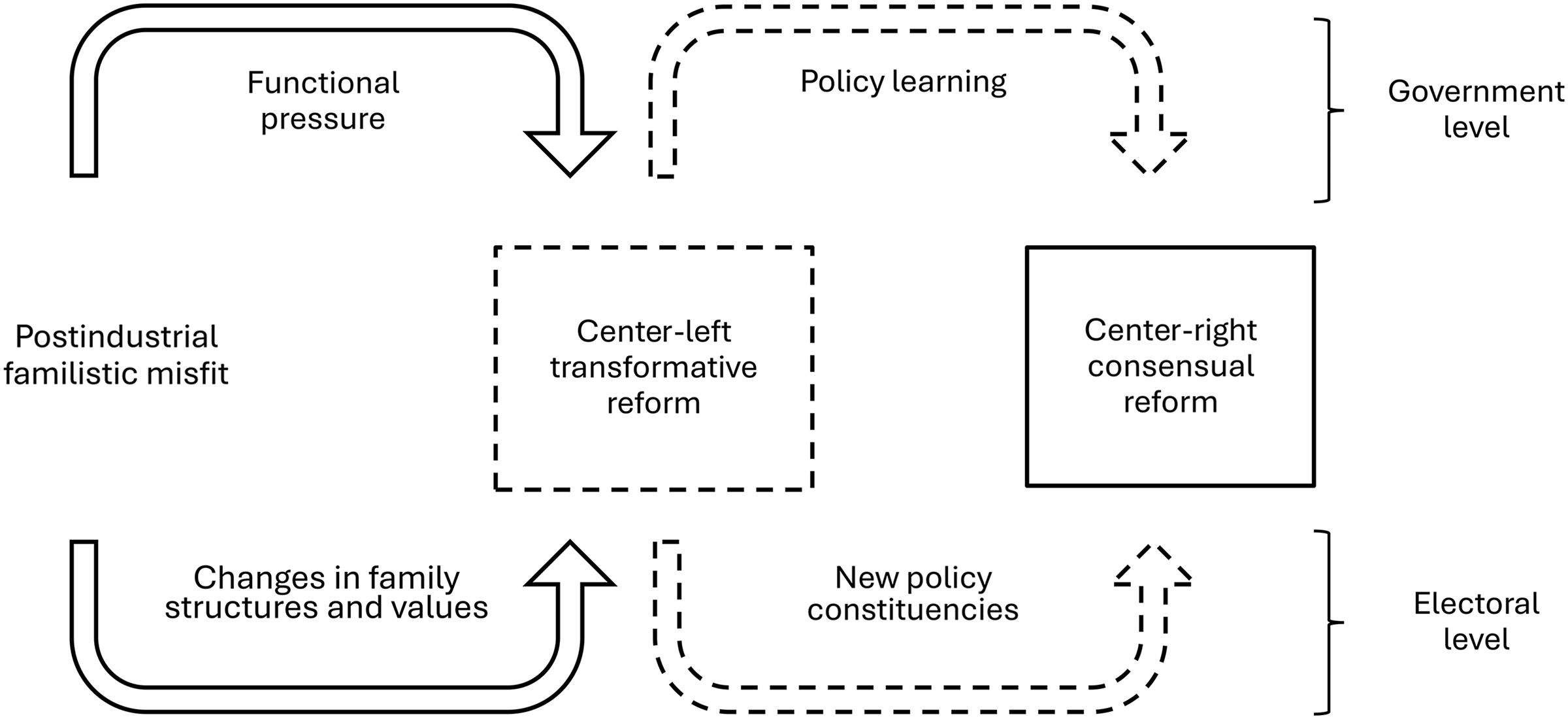
The sequence of defamilialization politics. Source: Author's elaboration.
Exploring Political Trajectories Empirically
This study follows the comparative sequential method. 67 Namely, it compares and analyzes six national sequences of policy implementation across electoral and socioeconomic contexts. The study covers forty years of reforms across the six most familistic countries in Continental and Mediterranean Europe: Austria, Italy, Germany, the Netherlands, Portugal, and Spain. It follows the trajectory of the main center-right party in each country: the Austrian People's Party (ÖVP), Italy Strong (FI), the German Chirstian-democratic Union (CDU), the Dutch Christian Democratic Appeal (CDA), the Portuguese Social-Democratic Party (PSD), and the Spanish Popular Party (PP).
The case selection follows a most-similar design logic. The six countries have predominantly been under the influence of conservative forces, whether Christian-democratic parties or dictatorships aligned with the Catholic Church. 68 Because of the conservatism of their government, these were the most familistic welfare states by the 1980s. 69 For instance, Table A.1 in the supplementary material shows the absence of childcare services at that time, in contrast to Scandinavian or Francophone countries. This similar departure point in the political system and welfare legacies provides a consistent baseline to study under which conditions center-right parties become rebels of the familistic institutions they had previously built.
In contrast, countries without deeply rooted familistic institutions and political practices are unlikely to exhibit similar political dynamics. The dominance of left-wing forces in Scandinavian countries had established gender-friendly defamilialization policies by the 1970s. 70 In France, the state-church conflict resulted in the state assuming responsibility for service provision and family support, a weak Christian-democratic party, and a secularized society. 71 As a result, it soon developed a cross-partisan pronatalist tradition, rather than a strongly familistic one. 72 This different starting point can help explain why center-right parties have been less averse to defamilialization policies in these regions earlier on, as similarly argued by Morgan. 73 Moreover, the selected countries are parliamentary democracies with (quasi) proportional electoral rules and multiparty systems. In contrast, presidential systems like those in France or the United Kingdom may not exhibit the same coalitional dynamics, potentially skewing the explanatory power of interparty interactions across different cases.
However, similar departure points in these six countries contrast with diverging outcomes. While the selected center-right parties shared a familistic position during the 1980s, the timing of their shift away from the male-breadwinner model varies widely. This change occurred in the 1990s in the Netherlands and Spain, but it took longer in Germany and Portugal. Meanwhile, the Austrian and Italian center-right continued to endorse familistic policies even as this article was being written. I focus on this essential difference between preserving a male-breadwinner model or adopting defamilialization, although further variation remains in these countries’ promotion of female full-time (rather than part-time) employment, fathers’ childrearing involvement, and their selection of policy instruments.
The comparative sequential method ideally involves between-case comparison and within-case analysis. In this study, the selection of a relatively large number of cases prioritizes comparison over analysis. This strategy enhances external validity, facilitating the identification of “necessary conditions” applicable across a broader case spectrum. With these, I refer to the factors present in countries where the center-right has adopted defamilialization policies but absent in countries where it did not. Based on the expectations outlined above, this study attempts to identify (1) whether institutional misfits lead to defamilialization by center-right, or rather to center-left defamilialization initiatives confronting conservative resistance, and (2) whether eventual left-wing success is followed by similar policies under center-right governments, or rather by persistent familism.
On the other hand, analyzing each country sequence with novel data provides evidence for the feedback effects connecting the center-left defamilialization reform with the center-right position change. I do not pretend to unravel the causal relationship between policies and party decisions, an objective only deeper process-tracing studies could accomplish. However, each case analysis provides middle-range evidence for these effects, providing a plausible explanation for the new pattern found through the comparative analysis.
Country sequences encompass three dimensions: political parties, family policy reforms, and the electoral and functional context. Parties are grouped into center-left and center-right, following a stylized approach. With the “center-right,” I refer to Christian-democratic and conservative parties, deliberately differentiating them from “center” liberal parties because of their divergence in family values and policies. 74 With the “center-left,” I refer to the social-democratic family. In each country case, I specify to which political family is each party commonly ascribed to, also including liberal, green or far-right parties.
This study has systematically collected data on family policy reforms through existing databases, including the Comparative Family Policy Database (1961–2010), Leave Network annual reports (2005–20), and the Social Policy Indicators Database (1990–2015). 75 From the wide range of policies with an effect on work-family models, I focus on leave, benefits, and Early Childhood Education and Care (ECEC) because they have been widely studied as significant markers of (de)familialization. 76
Each reform was reviewed to determine whether it exhibited a familialization or defamilialization intention. The effect of family-related benefits and tax exemptions depends on their design. Universal benefits are familializing because they financially support the caring role of the family. However, the opposite occurs with benefits conditional on employment. 77 Increasing the availability of ECEC through public or private programs entails defamilialization. Although ECEC responsibility is devolved to regional authorities in Austria, Italy, Germany, and Spain, national governments have the capacity to establish financial resources, which then can be complemented. 78
Leave policy is more complex to analyze. Research indicates that transferable parental leave is predominantly used by mothers, whereas fathers’ take-up increases only slightly with payment levels. 79 Hence, long leave time available for mothers familializes, as it encourages mothers to take long career breaks. 80 Yet, a minimum length period is necessary for mothers to ease family transitions in the labor market. Following Dearing's review of its impact on mothers’ career outcomes, I set the ideal duration of leave available for mothers at seven months. 81 Leave reforms defamilialize if they approach this duration or increase payment levels. Additionally, providing incentives or reserved leave time for fathers potentially redistributes care work across genders, challenging male-breadwinner models. Hence, I consider them defamilializing because they contrast with classic right-wing ideology, although its implications exceed a strict reading of the concept, entering the degenderization realm. Figures A.2 and A.3 in the supplementary material review the time available for mothers and time reserved for fathers throughout the period under study.
Information on policy reforms was combined with the WhoGov database to identify the party responsible for the policy change, 82 although information on the reform's authorship and justification is highly enriched for each case.
Following the theoretical discussion above, context is divided between electoral and functional factors. Consistent with a feedback effects approach, the focus is placed both on how context influences political dynamics around reforms and on how reforms, in turn, modify their socioeconomic and political context. Electoral factors encompass public opinion, voters’ behavior, and the mobilization of policy beneficiaries and feminist groups, whereas functional factors stem from the development of structural economic changes, female employment, and the positions of businesses and experts. As mentioned, a postindustrial misfit emerges when there is a relevant transformation of these factors vis-à-vis stable familistic institutions.
Evidence on how policies create feedback effects has been gathered through a rich array of empirical material. Direct policy outcomes from reforms are extracted from existing studies. For reforms whose outcomes have not been researched, I approximate their effects through labor market data from the OECD and public opinion data from the European Values Survey. Moreover, employer preferences are elucidated through documents published by employer associations. To comprehensively grasp party stances on family policy, this study also incorporates selected congress debates, party position papers, electoral manifestos, and coalition agreements. These various sources are then combined to construct six national trajectories, shedding light on the reciprocal interaction between party decisions and their societal context.
The Volte-Face of Christian-Democratic Family Policy in Germany and the Netherlands
Germany and the Netherlands have historically harbored male-breadwinner wage-tax systems and subsidiary public service provision, reflecting a Christian-democratic ideology that seeks to safeguard traditional family relations and a conservative social order. 83 However, these familistic welfare states faced growing pressures since the 1970s and 1980s due to economic crises, increased global competition, financial constraints, and the rise of neoliberal thinking. 84 Furthermore, female employment growth and feminist mobilization began to infuse women's emancipation demands into the political system. 85 However, external changes alone were insufficient to dilute the partisan nature of welfare reform. In both cases, Christian-democrats championed familism until the center-left was able to implement transformative reforms from the government.
In the Netherlands, social accords following the economic crises of the 1970s promoted flexible contracting, causing a rapid surge in female employment from 35 to 45 percent between 1985 and 1990 (Figure 2 and Figures A.4 and A.5 in the supplementary material). Although most of women's jobs were part-time, growing female labor market participation brought work-life conflict to the political agenda, spurring female parliamentarians from the center-left Labor Party (PvdA) to advocate for the expansion of ECEC services. However, leaders from the center-right Christian-democratic Appeal (CDA) opposed it, arguing that such a policy would constitute an undesirable state intervention in the family realm. 86 Traditionalist family policy prevailed during the first Lubbers cabinet (1982–89), composed by the CDA and the center-right liberal People's Party for Freedom and Democracy (VVD). These center-right coalition cabinets even reduced childcare subsidies by 1984.
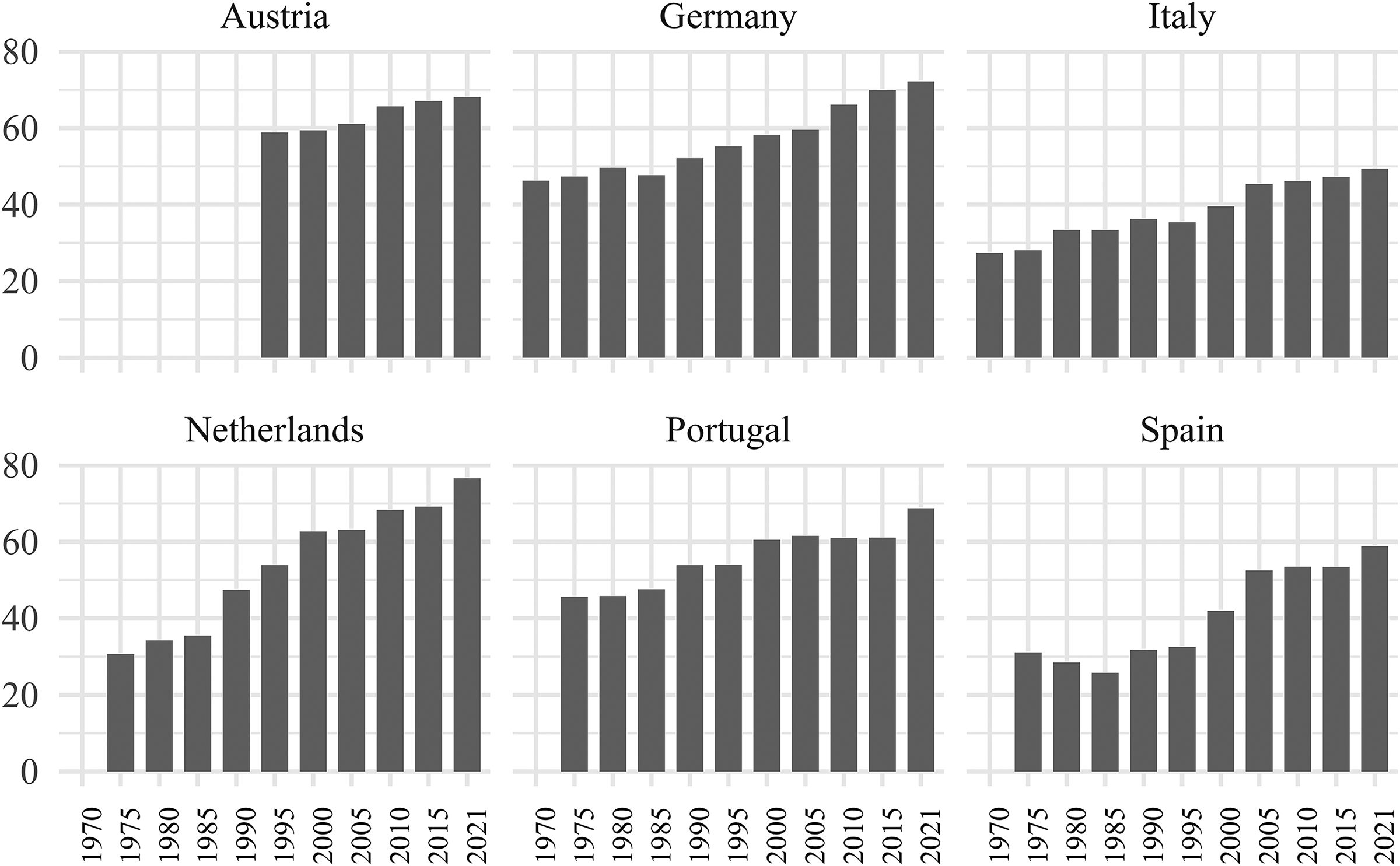
Female employment rates from 1970 to 2021. Source: Author's elaboration with OECD data.
However, the third Lubbers cabinet included the PvdA as a junior partner, which was able to introduce relevant reforms from the Minister of Welfare against the resistance of the CDA. The government approved an extension of maternity leave from twelve to sixteen weeks, and it implemented a private childcare stimulation scheme for children under three. One must note that childcare in the Netherlands is funded by the central state rather than the regions. While falling short of the PvdA's original proposal for guaranteed public childcare, this measure tripled the public budget for ECEC and raised enrollment rates from 2 to 8 percent between 1990 and 1993. 87 Although most places were part-time, mirroring the scarcity of female full-time employment in the Netherlands, numerous observers signal this cabinet as a critical moment of path departure from familism. 88
The path departure was reinforced by the following Kok cabinet (1994–2002). The PvdA and the liberal VVD extended parental leaves for part-time workers, incentivized employers to provide higher replacement rates, introduced a two-day paternity leave, and invested heavily in ECEC by creating new centers and compensating employers’ investments. As part of a broader social dialogue, women in part-time jobs were further secured by assimilating their rights to full-time jobs and establishing the right to adjust working time. This helped reinforce mothers’ roles as workers, but it also perpetuated the limited “one and a half breadwinner” paradigm that was promoted through the part-time female employment strategy. 89
This decade of reform produced significant feedback effects on society, the economy, and political and social actors. Vlasblom and Schippers show that institutional change reduced the motherhood penalty on employment, in contrast to the familistic policies introduced in Germany during the same period. 90 Between 1990 and 2002, total female employment grew from 45 to 69 percent (Figure 2). Simultaneously, public opinion shifted, with a majority now disagreeing with the statement that a child suffers if their mother works (see Figure 5 below). Moreover, employers radically switched from opposing ECEC to considering “that good childcare was in [their] own best interest,” as declared by an employers’ organization representative in an interview with Yerkes. 91
These feedback effects led the CDA to walk a gradual shift in its stance on the family institution and female employment. Although CDA parliamentarians opposed the defamilialization policies by the Kok government, the CDA Scientific Institute began advocating in favor of work-life reconciliation policies. 92 Moreover, childcare expansion found its place in their political manifesto, and leadership changes opened positions for politicians with more progressive views, many of whom were women. 93
The CDA returned to government from 2002 to 2007 by forming a coalition with the VVD and the far-right List Pim Fortuyn as junior partners. On this occasion, the Balkenende administration endorsed multiple policies to enhance work-family reconciliation, marking a significant departure from family policy under Lubbers. With the CDA controlling the Ministry of Welfare and the Ministry of Social Affairs and Employment, the government sought to improve the replacement rates of employees on parental leave and restructured the three-tiered ECEC system into a network of private centers subsidized by public vouchers. Despite the feminized part-time employment equilibrium remaining unquestioned, these policies marked the consolidation of the Dutch Christian-democrats’ shift from defending familism to enacting defamilialization initiatives.
In Germany, the path departure also began with a center-left government and was later continued by the center-right. Calls to forsake the male-breadwinner strategy emerged amid economic stagnation, declining fertility rates, and elevated unemployment rates (see Figure 3, and Figure A.5 in the supplementary material). However, the lengthy Kohl cabinets (1982–98)—pertaining to the center-right Christian-democratic party (CDU)—implemented a familistic labor-shedding strategy by approving a three-year parental leave with a two-year low-pay benefit that was almost exclusively taken by women. 94 Moreover, the Christian-democrats even resisted compliance with the 1996 European directive seeking individual leave rights for fathers with nonworking spouses. The only exception was a legal right to childcare for children aged three to six years, but this was granted as compensation to East Germany for restricting abortion rights after reunification. ECEC in Germany is a regional competence, and the national government delivers funding and sets up general regulations for the regions (Länder). Still, in this case funding was not provided, and its implementation was, at best, limited. 95
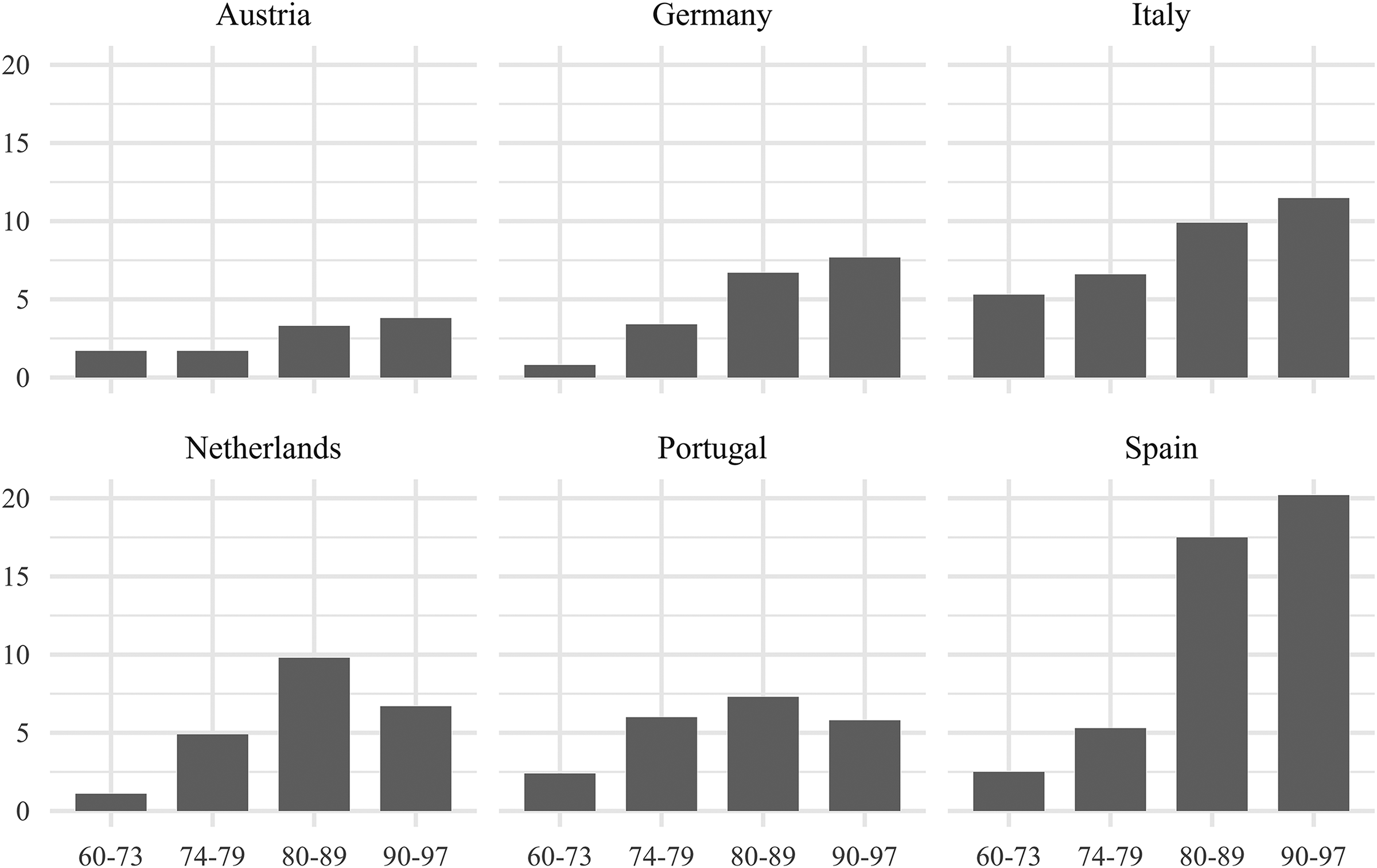
Average unemployment rates, 1960–97. Source. Author's elaboration with OECD historical data.
These policies contrast with the policies approved during the subsequent red-green coalition, composed by the center-left social-democratic (SPD) and green parties. The coalition, governing between 1998 and 2005 responded to these contextual changes with unprecedented defamilialization. SPD politicians and bureaucrats from the Family Ministry set the agenda for a progressive and “sustainable” family policy, developing evidence and garnering civil society support by including unions and employers into a platform named “Alliance for Families.” 96 In policy terms, the government secured an agreement with the Länder to provide €4 billion to expand full-day ECEC centers despite a climate of budgetary constraints. Moreover, a parental leave reform introduced a shorter, better-paid option, allowing both parents to go on leave simultaneously and extending the amount of working time that could be combined with parental benefits. Figure A.2 in the supplementary material shows that the reform reduced the number of weeks of leave available for the mother. A further reform was planned but not introduced because of snap elections.
The reforms of the Schröder cabinets generated visible feedback effects on the socioeconomic and political landscape of Germany. Studies indicate that these reforms positively impacted female employment and public sentiments regarding progressive family models. 97 Meanwhile, unions and employers became active participants of the platform in support of modern family policy, publishing joint documents with the government demanding further childcare and leave reforms. 98
During the Schröder cabinet, the CDU constantly opposed the defamilialization measures by the SPD. 99 However, their manifest economic benefits and their support among society and employer associations influenced the party, which started to moderate its traditional family ideas in party congresses. When the CDU returned to power in a grand coalition with the SPD, the change in Christian-democratic family policy took effect. The coalition agreement included the leave reform planned by the SPD, but the Family Ministry fell under the CDU. 100 The new CDU family Minister supported the reform despite opposition from its parliamentary group, and it was approved with slight modifications from the original proposal. The parental allowance was shortened to one year and shifted from flat-rate to earnings-related benefits. Moreover, the ECEC strategy continued through an additional €2.14 billion for the Länder and a legal entitlement to a childcare place to technically become effective by 2013.
Limits remain to secure dual-earner models, particularly for the Netherlands, where the feminized part-time employment solution seems a path-dependent equilibrium difficult to break. However, subsequent years did not witness German or Dutch Christian-democratic parties returning to familializing policies. The most significant challenge arose from the Christian-Social Union (CSU), the CDU's Bavarian sister party, often considered to the right of the CDU. This party advocated for a family benefit contingent on abstaining from childcare usage. However, the reform was deemed unconstitutional, and the subsequent grand coalitions continued expanding childcare facilities and implementing technical improvements in leave design. Meanwhile, austerity had a limited impact on German ECEC investment, although it briefly interrupted the Dutch expansionary path (Figure 4). Nevertheless, the consensus favoring defamilialization persisted in the Netherlands throughout the diverse coalitions that followed.
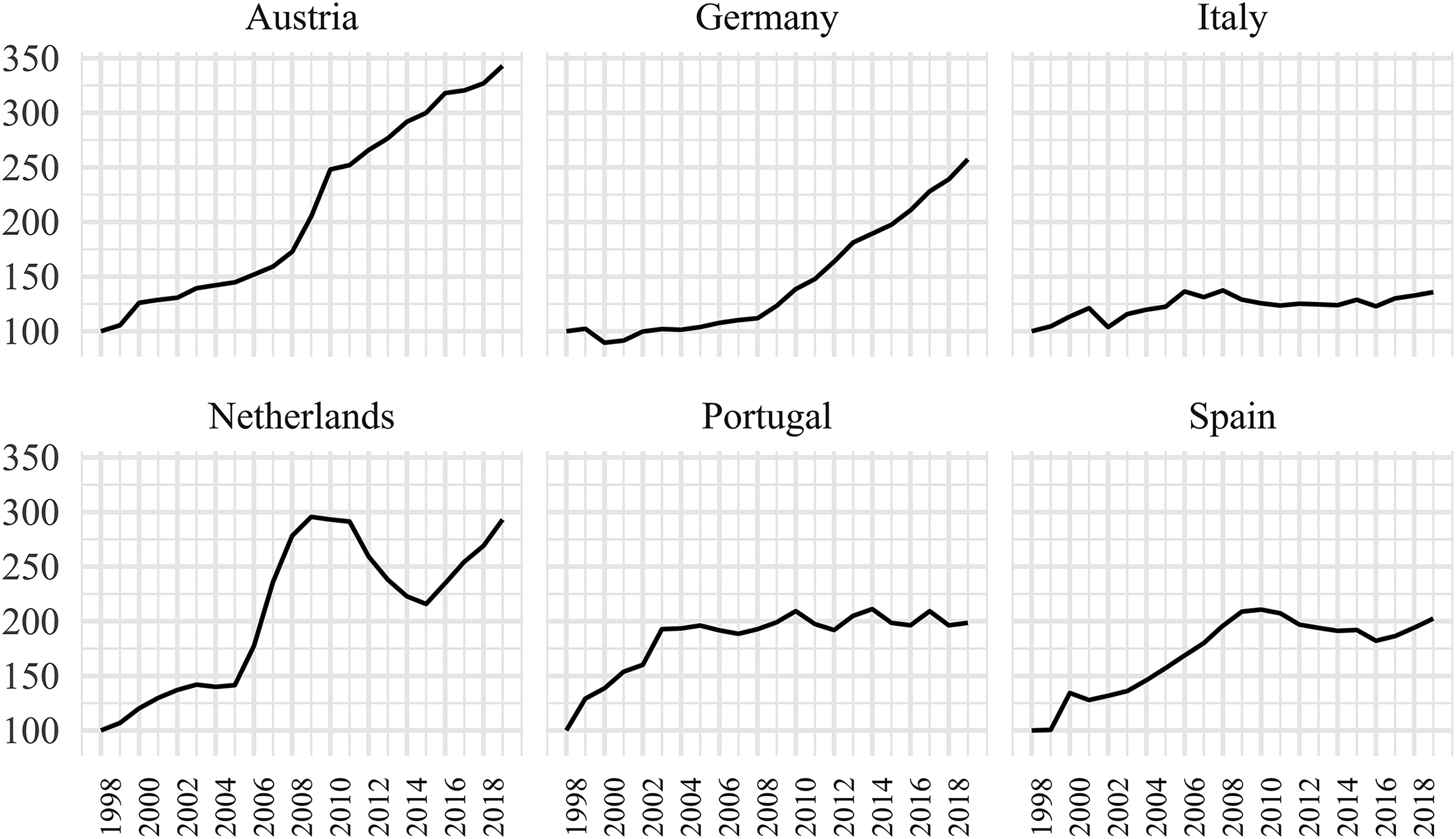
Index of nominal childcare expenditure set at 1998. Source: Author's elaboration with OECD data.
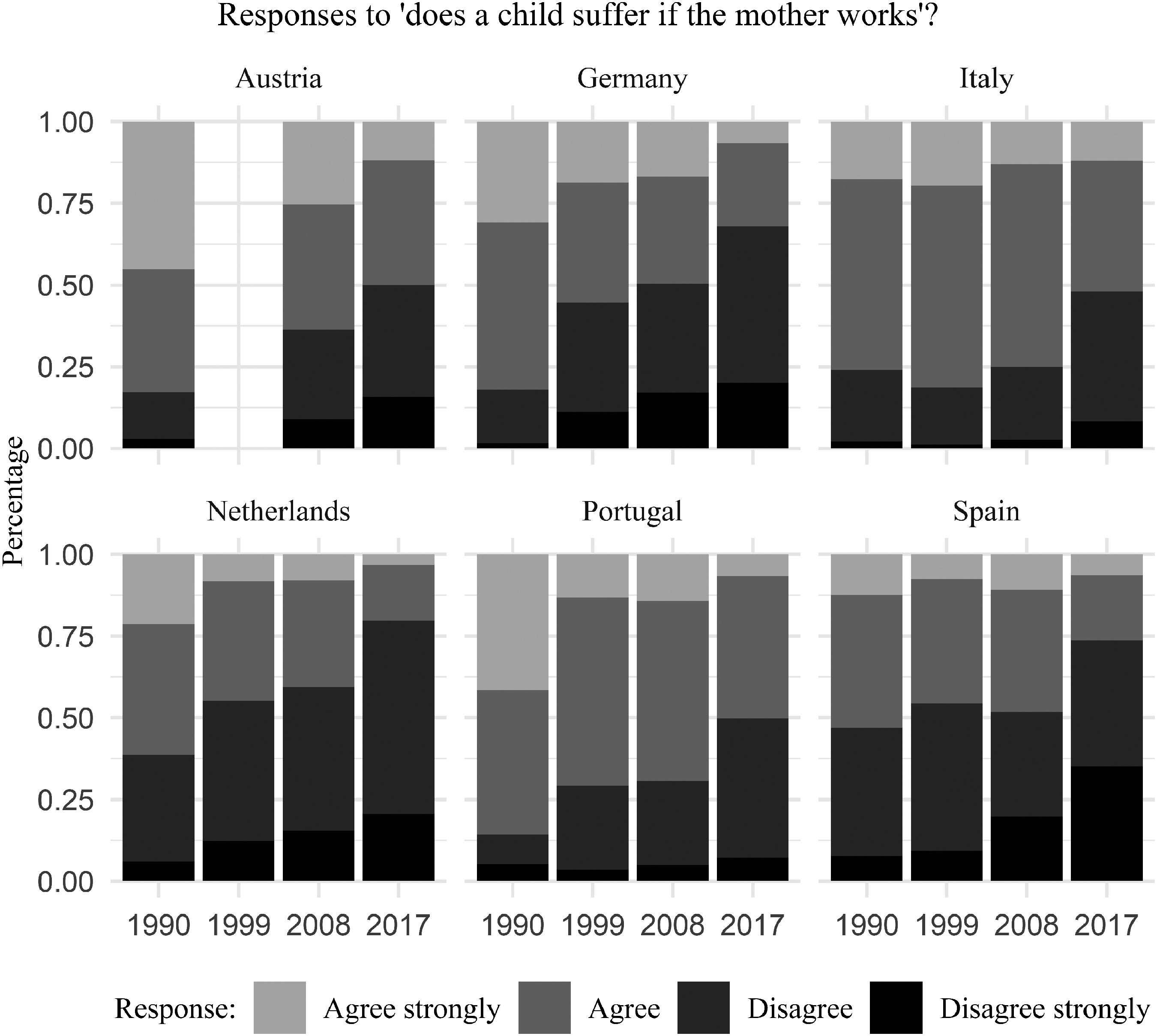
Public opinion on progressive family values, 1990–2017. Source: Author's elaboration with data from the European Values Survey.
Austria: Interministerial Compromises and Persistent Familism
The postwar dominance of the center-right conservative Austrian People's Party (ÖVP) shaped a conservative welfare state marked by limited childcare availability and generous universal family allowances. 101 By 1970, female employment had dropped from one of the highest in Europe in 1945 to one of the lowest. 102 However, the Austrian political system has historically featured joint involvement of major political parties in government, consensual grand coalitions, and a significant social concertation. 103 Moreover, since 1983, the Austrian center-left Social-democratic Party (SPÖ) only accessed government where jurisdiction over family policy was divided across ministries, some of them controlled by right-wing parties. As a result, consensual policy packages in grand coalition cabinets led to a reform “slowness,” yielding gentler, piecemeal alterations that failed to elicit robust feedback effects. The inability of the SPÖ to secure strong defamilialization reforms led the center-right to maintain a familistic profile.
Between 1986 and 1999, the progressive aspirations of the SPÖ, at the helm of the Women's Ministry, were strongly limited by the conservative stance of the ÖVP, which held sway over the Family Ministry. While the ÖVP successfully doubled the unpaid parental leave from one to two years, the SPÖ was merely able to reserve six out of the twenty-four months for fathers. 104 The result was a more familistic leave design, as the lack of financial incentives led to a very low uptake by men, whereas most mothers extended their leave from twelve to eighteen months. Evidence suggests that the leave reform had negative effects on mother's employment and positive effects on birth rates. 105 Moreover, the SPÖ Ministry failed to expand ECEC centers. Similarly to Germany, ECEC in Austria is a regional competence, but the national government delivers funding to the regions. The attempt from the center-left Ministry encountered resistance from the ÖVP in regional governments, and enrollment rates stagnated at 3 to 5.2 percent between 1993 and 2003. 106 In addition, the ÖVP managed to increase transfers for large families and people out of employment for care responsibilities.
During the 1990s, despite the absence of defamilialization policies, postindustrial transformations challenged conservative institutions. Female employment grew similarly to Germany and the Netherlands, with EU recommendations urging reforms. However, amid the absence of endogenous feedback effects, these external pressures were disregarded by the coalition governments of ÖVP and the far-right Freedom Party of Austria (FPÖ) (2000–2007). The right-wing coalition government bolstered support for the male-breadwinner model by transforming a contribution-based leave into a flat-rate universal means-tested child benefit. Furthermore, families with a single earner or a very low-income second earner benefited from transfers and tax cuts, while supplementary allowances were introduced for large families.
When the government turned again into a grand coalition in 2007, there were no robust defamilialization policies to build on, in contrast to Germany and the Netherlands. Families lacked access to leaves supporting dual-earner models, and ECEC enrollment stood at 8 percent. Amid the continuation of lack of strong feedback effects, the ÖVP remained entrenched in a familistic position. Again, cross-party compromises prevented a comprehensive parental leave reform away from the contested universal child benefit. A shorter and better-paid leave option was introduced, but the reform preserved the “choice” for families to pursue male-breadwinner models. The only exception was the success of the SPÖ in securing funding for the regions to promote childcare, raising enrolment to 20 percent by the end of the grand coalition in 2017, which remains a comparatively low figure (see Table A.2 in the supplementary material).
Overall, the inability of the SPÖ to form a cabinet without the center-right and the capacity of the ÖVP to preserve a familistic choice through the ministries under its control prevented the introduction of strong defamilialization initiatives. In the absence of strong feedback effects, persisting partisan ideological disparities remain. More recently, the right-wing coalition government starting in 2017 continued to pursue a familistic trajectory by expanding tax deductions for large families. In the future, one can speculate that the eventual growth of ECEC availability and a parental leave reform supporting dual-earner families has the potential to yield positive economic returns and spur the demand for further defamilialization policies, prompting the ÖVP to reconsider its position.
A Rapid Conservative Adaptation in Spain and Portugal
As in Germany and the Netherlands, center-right parties in Spain and Portugal only shifted away from familism when defamilialization occurred under center-left governments. However, while in Continental Europe familistic institutions were built and dismantled by the same political actors, in the Iberian cases these institutions originated in dictatorships but were modified by political parties in democracy. Dictatorial familism was also different in kind, as it lacked generous transfers and it was rather based on religious control and the legal subordination of women to patriarchal authority. 107 This shaped an “unsupported” version of familism that crucially relied on solidarity within the extended family. 108
During the 1970s and 1980s, the Iberian economies faced global economic challenges such as stagflation and fiscal pressure. However, the most significant threat to familistic institutions came from the erosion of the political means of domination of authoritarian regimes. Democracy unlocked a powerful outcry for civil liberties and gender equality, which steered the dismantling of patriarchal legislation and the establishment of basic labor regulations for working men and women. 109 Still, the welfare state remained familistic and underdeveloped, awaiting reform under the democratic governments that emerged following the stabilization of party systems in the early and mid-1980s. 110 In Portugal, conservatives did not walk a defamilialization path until the reforms came to be implemented by left governments. In Spain, the positional change of the conservative party is also visible, although it took place before they were able to govern.
Those meant to be the main center-left and center-right parties of the Spanish political system had clear ideological differences regarding family relationships and gender roles. The center-left Socialist Party (PSOE), hitherto clandestine, was formed by a progressive political youth and linked with the feminist movement. The center-right conservative Popular Alliance (AP), founded by former officials from the Francoist regime, manifested its allegiance to conservative Catholic principles and traditional morality.
The dominance of center-left governments between 1982 and 1996 ensured broad defamilialization reforms with relevant feedback effects in society. Universal family benefits were turned means-tested. Tax benefits for married couples and mandatory joint taxation were abolished, which proved to mitigate the impact of childbirth on women's employment. 111 The 1990 Education Act ensured full-time universal childcare for children aged three to six years, with an evidenced positive impact on female employment. 112 Although education delivery is the responsibility of Spanish regions, these receive their fiscal resources from the taxes collected by the central state, except for the Basque country. Maternity leave was extended from fourteen to sixteen weeks while replacement rates grew from 75 to 100 percent, accompanied by a one-year job return guarantee and four-day fully paid paternity leave. Finally, the legalization of divorce and abortion, contraception regulation, and the creation of the Women's Institute supported female empowerment and provided institutional avenues for the feminist movement.
While in opposition, the AP opposed all gender equality and defamilialization measures, except for the retrenchment of family transfers. 113 However, the above-mentioned feedback effects accelerated the economic and cultural transformation of Spanish society, prompting the center-right to embark on a process of modernization. By the end of the 1980s, the landscape of women's education, professional prospects, and life ambitions had undergone profound transformations, and a conservative discourse proved to be inefficient after four consecutive electoral defeats. AP reorganized into the Popular Party (PP) in 1989, remarkably moderating its political discourse and opening leadership positions for young and female members. 114 Despite the party continuing to support Christian family values and maintaining an overall church-goer constituency, it also changed its political position by turning its attention to economic issues and recognizing the value of female employment. 115
As soon as the PP reached government (1996–2004), it picked up on the defamilialization agenda set up by the socialists, although with a liberal character. Going beyond the EU 1996 directive, the conservative government passed the Law on Work-Life Balance, which made some weeks of maternity leave transferable to fathers and introduced the right to work part-time. A benefit for children under three was introduced, but it was made conditional on the employment of the mother. Finally, public financing for ECEC for children aged zero to two years from the national government was partly substituted by deregulation and subsidies for private providers, which maintained childcare enrollment growth but in the private sector.
The Portuguese center-right also suffered a visible transformation following left-wing defamilialization initiatives. After democracy, the position of the Conservative Party (PSD) was clearly on the “center-right” in economic and cultural terms, but a catch-all strategy and the left-wing spirit of the transition blurred the ideological position of the party, which even received the name of “Social-Democratic Party.” 116 Nevertheless, the reforms of the center-right governments (1985–95) contrast with those of the Spanish center-left during the same period despite facing similar or even stronger pressures against the familistic institutions inherited from the dictatorship. Although it extended maternity leave entitlement for women with short working histories in 1988, it did so to allegedly protect the institution of maternity more inclusively. 117 Furthermore, the government complied with the EU 1996 parental leave directive only at the minimum level, by raising maternity leave from 12.9 to 14 weeks and establishing two paternity days. Overall, observers conclude that the decade was marked by a conservative agenda in social and labor policy. 118
In contrast, the cabinets of the center-left social-democratic Guterres (PS), between 1995 and 2002, implemented policies to promote female employment opportunities and a gender redistribution of household duties. The most relevant was the leave reform that the Ministry of Social Affairs approved after gathering consensus from different governmental commissions, social partners, and civil society actors. The bill expanded maternity leave to seventeen weeks and introduced a paternity leave of five days and a voluntary unpaid three-month parental leave. As a result, the proportion of eligible fathers taking leave grew from 11 to 38 percent between 2000 and 2003. 119 Moreover, the government made great progress in ECEC expansion, which is a centralized national competence in Portugal. Public expansionary efforts resulted in a massive 30 percent increase in childcare centers between 1999 and 2005, with full-time opening hours which greatly contrast with Continental Europe. 120 By also recalibrating family allowances with redistributive purposes, policies under the Guterres government generated feedback effects that facilitated the work-life balance demands of working mothers. 121
While in opposition, the PSD underwent leadership and discursive shifts. PSD manifestos transitioned from a mere endorsement of work-life reconciliation in 1999 to dedicating an entire chapter with specific proposals. 122 Moreover, policy reforms vividly illustrated the party's departure from its previous ambivalence toward working mothers’ needs. A short-lived coalition between the PSD and the center-right Christian-democratic party (2003–5) reinforced the defamilialization path by expanding the reform agenda initiated by the previous government. It also maintained growing investment and enrollment growth in ECEC. 123 Moreover, it reinforced the maternity leave reform by making five days of paternity leave mandatory and introducing the possibility of taking unpaid part-time leave for a longer period. Finally, it institutionalized public commitment to work-life reconciliation by introducing it in Article 67 of the Constitution. These policies contrast with prior PSD governments, manifesting a cross-party consensus about providing welfare state support for dual-earner models and female employment.
During the following years, Iberian center-right parties did not withdraw support from defamilialization policies. The recent family policy trajectory is arguably more influenced by the availability of financial resources than by partisanship. The 2008 crisis and the austerity aftermath forced PSOE and PS to cut ECEC investments and refrain from improving parental leaves. Although Portuguese and Spanish conservatives initially maintained those cuts, economic recovery allowed them to increase nominal ECEC expansion since 2013 and 2017 respectively (Figure 4). The Portuguese conservatives also attempted to maintain ECEC enrollment growth amid falling investment by relaxing regulations on child-to-staff ratios. Moreover, the Spanish PP more than doubled paternity leave from two to five weeks, while the Portuguese PSD raised the compulsory days of paternity leave to fifteen.
Italy: Weak Reforms Efforts against Entrenched Familism
Under Christian-democratic dominance, the Italian welfare state adopted a familistic character through subsidiary service provision and conservative family transfers, although the latter were undermined already by the 1960s. 124 The meager financial backing to male-breadwinner family models typifies this as another instance of unsupported familism, giving relevance to informal family networks. 125 During the 1980s, the center-left Socialist Party participated in government coalitions with the center-right Christian-democrats. However, the lack of changes in female employment patterns (Figure 2) or public opinion (Figure 5) prevented the emergence of a relevant misfit capable of incentivizing the center-left to impulse defamilialization reforms.
The implosion of major political parties due to rampant corruption scandals in the 1990s facilitated a new model of government alternation between left- and right-wing coalitions. Hence, akin to Iberian cases, the architects of familistic policies were replaced by new stakeholders grappling with the decision to uphold or overhaul these institutions amid postindustrial changes. In this case, the new main center-right party, the conservative Italy Strong (FI), consistently upheld a familistic stance. As in Austria, endeavors by left-wing actors to instigate defamilialization reforms floundered, although this time due to political instability and short-lived governments.
Center-left government coalitions housing former Communists and Catholic centrists governed Italy between 1996 and 2001. Defamilialization demand heightened because of European recommendations and growing concerns about aging and declining fertility rates. 126 However, political instability hindered policy implementation, with three prime ministers and four governments in five years. Influenced by the EU 1996 directive, fathers gained individual entitlements to parental leave, and paid maternity leave was made available for uninsured mothers. Nevertheless, men's uptake remained anecdotal owing to low replacement rates and employers’ resistance. 127 Additionally, the government introduced the first comprehensive national ECEC program for children aged zero to three years by establishing a universal right to education and allocating funds for experimental childcare initiatives, but insufficient funding hindered its realization. 128 The lack of robust reforms led to minimal feedback effects in female employment, ECEC enrollment, and public opinion shifts through the 1990s (Figures 2 and 5).
Under the following right-wing coalition, captained by FI and including the far-right Northern League and National Alliance parties, the government's approach to welfare reform diverged notably from prior defamilialization attempts. This is evidenced by two white papers asserting that responsibility for welfare provision should not lie in the state but in the voluntary sector, employers, and families. 129 This stance reflected a deliberate shift toward familism, accentuating traditional caregiving norms centered on motherhood and extended family structures. This ideology manifested in an ambivalent ECEC strategy. While national funding was allocated to support the expansion of childcare centers, a concurrent decentralization reform devolved ECEC responsibility to the regions, rendering the program unconstitutional. Consequently, the impact on ECEC availability remained minimal. 130
In contrast, the subsequent center-left coalition governing between 2006 and 2008 made another attempt to bolster dual-earner models, but the coalition’s short-lived tenure limited substantial reform. The sole success was a €700-million ECEC investment program delivered to regional authorities, aimed at meeting the EU Barcelona targets by 2010, along with an initiative for two-year-olds’ preschool access. However, setbacks occurred as the ensuing right-wing coalition (2008–11) slashed ECEC funding by a billion euros between 2008 and 2011, according to OECD data (see also Figure 4). Meanwhile, the government proved its familistic stance by allocating new funds to family allowances despite the prevailing austerity context. Moreover, another White book on the “new” welfare reinstated the principle of subsidiarity through the promotion of a “welfare society.” 131 Finally, although the Ministry of Equality published a document supporting female employment, work-life balance was framed as a workplace management issue, merely encouraging employers to adopt flexible contracts and collective agreements measures. 132
Since 2011, the mainstream center-right only regained power in 2022. Before that year, defamilialization reforms such as increased ECEC availability, family vouchers, a 10-day fully paid paternity leave, and a universal income support allowance, were implemented under technocratic, center-left, and “populist” governments. However, it is still too early to assess the potential impact of these measures on the position of the center-right FI, especially considering its reduced electoral significance compared to far-right parties and the demise of its leader Silvio Berlusconi, given the party's strongly personalistic nature.
Discussion and Conclusion
Historical research has documented the influence of conservative forces in shaping the welfare states of Continental and Mediterranean Europe according to a male-breadwinner model. Recent scholarship has explored how postindustrial changes, such as female employment and new gender roles, have put pressure on familistic institutions from the 1970s onward. Numerous studies have argued that these contextual transformations prompt changes in party behavior, triggering center-right parties to switch to defamilialization reform. In contrast, this investigation reveals that it was center-left parties that pursued reforms against the persistent resistance from center-right parties. Only after these reforms were implemented have conservative parties shifted their position. This pattern reveals that center-right parties’ position toward family policy is influenced by the legislative activity of precedent governments, setting the stage for a renewed exploration of the role of partisanship in changing welfare state contexts.
This article offers a two-step sequential argument supported by a six-case comparison spanning forty years. Firstly, party positions toward family policy are subject to slow and difficult ideological changes. As a result, the pressure exerted by postindustrial changes on familistic institutions will initially spark partisan conflict: while it creates an opportunity for left-wing governments to introduce transformative defamilialization policies in line with their ideology, center-right parties initially preserve their conservative stance. The analysis shows that this occurred in the Netherlands and Spain in the 1980s and in Germany and Portugal in the 1990s, a variation that coincides with the different timing to which the center-left accessed government after postindustrial transformations.
Secondly, eventual defamilialization reforms engender positive feedback effects by empowering working mothers, influencing public opinion, and garnering support from employers. Available surveys, selected documents, and existing studies on policy outcomes provide substantial support for this contention. In turn, party documents indicate that these feedback effects coincide with a change in the center-right's position on family policy. Although variation persists in their compromise to full-time female employment and father's childrearing involvement, there is a manifest contrast between their initial familistic stance and the defamilialization policies implemented during their subsequent participation in government. These include ongoing ECEC expansion and further accommodating leaves and benefits to the needs of working mothers and dual-earner families.
In contrast, political instability shortened the tenure of left-wing governments in Italy, hindering the implementation of effective policies. In Austria, consensual policy packages from ministries with different partisan affiliations preserved the option for families to “choose” male-breadwinner models. In both nations, the feeble or equivocal nature of defamilialization reforms exerted weak feedback effects on the socioeconomic landscape, failing to significantly diminish the center-right's familistic stance.
As a result, the between- and within-case analyses support the notion that the center-right's conservative stance on family policy, while initially resistant to contextual changes, is sensitive to feedback effects from left-led defamilialization policies. Hence, successful reforms by left-wing actors significantly contribute to explaining cross-country variations in the politics of family policy.
This empirical pattern bears three theoretical implications for the study of the politics of family policy and the welfare state more broadly. Firstly, it encompasses and extends existing theories within a comprehensive theoretical framework. By dividing feedback effects into electoral and economic-ideational dimensions, it adapts this classic concept to contemporary research while also embedding recent findings into a broader historical process. Secondly, it proposes a novel comparative argument to explain in which cases center-right parties shift to implement defamilialization policies, and when they remain familistic. Thirdly, this argument may apply to the broader question of whether “parties matter” for welfare state reform in fields beyond family policy. The idea that institutional misfits open partisan conflicts, but eventual transformative policies trigger partisan consensus via feedback effects, may also explain cross-national differences in party behavior based on the outcome of this initial conflict.
Does the argument travel to other contexts? An overview of other cases shows supportive evidence for it, although timing and context-specific manifestations vary. In Sweden, strong support for dual-earner models and female employment under social-democratic dominance was followed by right-wing governments characterized by a market-based orientation, rather than by a familistic stance. 133 Moreover, in the United Kingdom, the turn of the Labour party to policies supporting working mothers around the 1990s was imitated by the Conservatives and Liberal-democrats in the 2000s. 134 In France, the historical role of the state in service provision and the weakness of Christian democracy fostered an early cross-partisan consensus supporting working mothers. 135 While the latter is not a case of defamilialization by a left-wing party, it is a political conflict whose resolution may have produced feedback effects on center-right family policy.
The argument presented here suggests new research directions in various policy areas and party ideologies. Future research could investigate whether continuous defamilialization feedback effects can also shift far-right parties away from familism, potentially explaining differences in far-right positions between Northern and Continental Europe. 136 Moreover, studies could also explore whether similar dynamics apply to other policies, and if they function in the opposite partisan direction. For instance, they could investigate whether austerity by conservative parties precedes similar policies under center-left governments.
Supplemental Material
sj-pdf-1-pas-10.1177_00323292241266390 - Supplemental material for Partisan Politics and Feedback Effects: Comparing Defamilialization by Center-Right Parties across Six Familistic Countries
Supplemental material, sj-pdf-1-pas-10.1177_00323292241266390 for Partisan Politics and Feedback Effects: Comparing Defamilialization by Center-Right Parties across Six Familistic Countries by Manuel Alvariño in Politics & Society
Footnotes
Acknowledgments
This article benefited from the comments of seminar participants at the Social Investment Working Group and from the feedback from the editorial board of this journal. I am grateful to Anton Hemerijck and Margarita León for discussing the article with me; to Steven Ballantyne, Johannes Karremans, and Joan Miró for their comments on previous versions of this article; and to Luca Cigna, Mariana Carmo Duarte, Janna Goijaerts, Sven Schreus, and Tiago Vieira for their help in the research process.
Declaration of Conflicting Interests
The author declared no potential conflicts of interest with respect to the research, authorship, and/or publication of this article.
Funding
The author(s) disclosed receipt of the following financial support for the research, authorship, and/or publication of this article: This work has received funding from the European Research Council (ERC) under the European Union's Horizon 2020 Research and Innovation Programme (grant agreement no. 882276).
Supplemental Material
Supplemental material for this article is available online.
Notes
Author Biography
Supplementary Material
Please find the following supplemental material available below.
For Open Access articles published under a Creative Commons License, all supplemental material carries the same license as the article it is associated with.
For non-Open Access articles published, all supplemental material carries a non-exclusive license, and permission requests for re-use of supplemental material or any part of supplemental material shall be sent directly to the copyright owner as specified in the copyright notice associated with the article.
