




Abstract
Science and expertise are frequently invoked to legitimize policy decisions. However, while prior research suggests broad support for expert-led governance, it often overlooks how citizens differentiate between types of experts and how political beliefs shape these perceptions. This study examines how institutional affiliations of experts—universities, government, and think tanks—influence citizens’ perceptions of legitimacy in political decision-making. Drawing on two pre-registered factorial survey experiments embedded in a survey from Finland (N = 2546), we investigate (1) differences in how actors affect decision-making legitimacy, and (2) how these effects differ depending on the type of issue, outcome favourability and issue salience. Our results show that proposals involving university researchers frequently gain legitimacy, but the exact effects hinge on the type of issue, outcome favourability, and salience. These findings contribute to a more nuanced understanding of how citizens perceive the role of expertise in democratic governance.
Introduction
In contemporary democracies, expert knowledge plays an increasingly central role in political decision-making. Ideally, policy solutions are shaped through the interaction between expertise and politics, where experts provide specialized insights and political actors interpret and implement them within broader ideological frameworks (Bandola-Gill, 2021; Daviter, 2015; Holst and Molander, 2019). As evidence-based governance have become more prominent, legitimacy is increasingly rooted not only in democratic procedures but also in the perceived credibility and impartiality of expert input (Bickerton and Accetti, 2017; Esmark, 2020). This approach is generally well-received by the public, as citizens tend to view policies developed in collaboration with experts as more legitimate (Bengtsson and Mattila, 2009; Bertsou, 2022; Bertsou and Caramani, 2022; Rapeli, 2015; Strebel et al., 2019; Vittori et al., 2023a).
However, much of the existing work relies on broad survey items that do not clarify who the “experts” are, what policy areas they should influence, or at what stage of decision-making. Moreover, the consistent use of the positively connoted and abstract terms such as “experts” may have led to an overestimation of pro-expertise attitudes (Panel et al., 2024). Crucially, it remains unclear whether the perceived legitimacy of expert-driven policies depends on whether the expert is affiliated with, for example, a university, a government agency, or a think tank. In other words, we still lack a systematic understanding of how the institutional affiliation of epistemic authority shapes legitimacy beliefs of policies among citizens.
It is also unclear how perceptions of legitimate expertise and policy preferences interact when citizens evaluate decision-making. Previous research has shown that the influence of expertise on public opinion varies across policy domains and is shaped by individuals’ ideological orientations (Bertsou, 2022; Lavezzolo et al., 2021; Panel et al., 2024). Moreover, previous research shows that citizens perceive policies as more legitimate when they deliver desirable outcomes, prioritizing the outputs of decision-making rather than whether the procedures were inclusive, well-reasoned, or transparent (Arnesen, 2017; Strebel et al., 2019). These findings show that public evaluations of expert input is shaped by factors such as the nature of the issue (van de Wardt et al., 2014), the perceived outcomes (Arnesen, 2017; Esaiasson et al., 2019), and the salience of issues (de Blok, 2023; Dennison, 2019, 2020).
This study addresses these gaps by examining the following two research questions: (1) how different types of expertise affect perceived decision-making legitimacy and (2) how the effects of different types of expertise hinge on the type of issue, outcome favourability, and issue salience.
We use two pre-registered factorial vignette experiments performed as part of a nationally representative Finnish survey (N = 2546) to assess how the institutional affiliation of epistemic authorities (e.g. government, university, and think tank) influences public’s legitimacy perceptions. These two experiments allow to evaluate the role of experts in both routine and high-stakes policy contexts. The first experiment presents a neutral scenario involving the publication of a research report, while the second explores a controversial proposal to ban demonstrations, directly challenging core democratic norms.
This contrast helps to clarify the normative boundaries of expert involvement in democratic governance by revealing how the political sensitivity and democratic significance of the decisions at hand influence public perceptions. Expert authority can be invoked to justify actions in high-stakes situations, including policies that erode democratic norms. For instance, during the COVID-19 pandemic, expert knowledge was instrumental in persuading citizens to accept restrictions that limited democratic freedoms (Arceneaux et al., 2025). This suggests that expertise authority may have an important role also in democratic backsliding, a process in which elected leaders exploit democratic mechanisms to weaken constitutional checks and erode liberal democracy (Grillo et al., 2024). Accordingly, experts, while lacking direct decision-making power, can exert significant influence by justifying or persuading acceptance of policies, especially in high-stakes situations, where that undermine democratic norms.
Our findings suggest that involving university researchers can boost decision-making legitimacy, whereas the effect of think tanks resembles the Finnish government acting on its own. This shows that it is imperative to recognize that there are differences between types of experts. Furthermore, our results suggest that the impact of experts hinge on both the type of issue, outcome favourability and issue saliency, which shows that it is important to recognize the context of the expert into decision-making.
The article is structured as follows. First, we introduce the conceptual framework, focusing on how legitimacy of expertise and political perspectives interact to shape public perceptions of decision-making. We then present our analytical approach, detailing the data, vignette experiments, variables, and statistical methods. Finally, we summarize our empirical findings, discuss their implications for debates on expertise and democracy, and consider the study’s limitations and future research directions.
Expertise and decision-making legitimacy
A growing body of research has examined citizens’ preferences for political decision-making. A consistent finding is increasing public support for granting a greater role to nonpartisan experts to supplement, or even replace, elected political representatives (Bengtsson and Mattila, 2009; Bertsou, 2022; Bertsou and Caramani, 2022; Font et al., 2015; Hibbing and Theiss-Morse, 2002; Lavezzolo and Ramiro, 2018; Pilet et al., 2024; Rapeli, 2015; Strebel et al., 2019; Vittori et al., 2024; Vittori et al., 2023a, 2023b). This has fuelled renewed academic debate over the role of technocracy, namely the favourable attitudes towards the notion of technical experts having control over society (Bertsou and Caramani, 2022; Bickerton and Accetti, 2017; Esmark, 2020).
While the ideal of a “pure” technocracy imagines unelected, nonpartisan officials making decisions independently of party politics, this model rarely exists in practice (Bertsou and Caramani, 2020; Lavezzolo et al., 2021). In reality, experts seldom wield autonomous decision-making power. Instead, they typically act as intermediaries, implementing goals shaped by democratic mandates or advising political actors within partisan frameworks (Aula and Koskimaa, 2024; Bandola-Gill, 2021; Daviter, 2015; Osborne, 2004; Vittori et al., 2024). Within this framework, expertise is seen as a source of legitimacy, 1 enhancing procedural quality and fostering trust by enabling more effective governance (Bickerton and Accetti, 2017; Esmark, 2020).
Given the ongoing academic debate about the role of expertise in decision-making, it is important to examine how expert involvement affects the legitimacy of decisions and whether the type of expertise governments engage in influences policy development. Previous scholarship indicates that among the public, expertise in political decision-making is evaluated based on the perceived source credibility (Druckman and McGrath, 2019; Gauchat, 2012; Lupia, 2013), which signals to the public that experts are competent, politically neutral, and objective (Gauchat, 2012; Lupia, 2013). When individuals feel that experts are not driven by a commitment to truth or are politically biased, they are more likely to question their advice (Bandola-Gill, 2021; Druckman and McGrath, 2019).
Owing to this, experts are demanded to produce not only policy-relevant and methodologically robust knowledge that meets the standards of scientific rigour but at the same time maintains a strategic distance from politics to calibrate proximity to policymakers without compromising on independence (Bandola-Gill, 2021). Through these actions, experts can enhance procedural quality and foster public trust, thereby strengthening their legitimacy even in politically charged environments (Bickerton and Accetti, 2017; Esmark, 2020). Yet, critics argue that a growing influence of experts in decision-making can undermine democratic legitimacy, if it weakens responsiveness to citizens’ demands or marginalize citizen participation (Bickerton and Accetti, 2017; Esmark, 2020; Holst and Molander, 2019; Lavezzolo et al., 2021).
Intellectuals and expert organizations—such as universities and think tanks—today play a central role in shaping political decisions (Doberstein, 2017; Osborne, 2004). Their legitimacy rests on institutionalized evidence cultures within these organizations, which provide credibility and establish norms for knowledge production (Bandola-Gill, 2021). Nevertheless, such actors may not be considered equal in the public eye. For instance, Doberstein (2017) finds that academic institutions are considered to be the most credible among government policy professionals, ranking above think tanks and advocacy groups. Similarly in Finland, universities and academic researchers are consistently rated as highly trustworthy among the public (Saarinen et al., 2020). University researchers in the eyes of the public embody norms of impartial, technocratic authority, and can therefore legitimize policy decisions.
By contrast, experts affiliated with think tanks often elicit more ambivalent responses, as such affiliations raise concerns about bias and undermine the perceived neutrality and representativeness of their contributions to policymaking. One reason for this scepticism is that citizens may have an unclear understanding of what think tanks are, given their diversity: Although think tanks are supposed to be organizations dedicated to applied policy research, they constitute a heterogeneous category encompassing academic-style institutes, advocacy organizations, and private consultancies (Kelstrup, 2020; Lounasmeri, 2020; Ruser, 2018). While formally autonomous, many think tanks have ideological affiliations that may influence how their expertise is evaluated by the public (Kelstrup, 2020; Osborne, 2004; Ruser, 2018). This dynamic is particularly pronounced in Finland, where numerous think tanks maintain visible ties to political parties and interest groups across the ideological spectrum, which is a characteristic that sets Finland apart even from other Nordic countries (Lounasmeri, 2020). These contextual characteristics likely contribute to a general scepticism towards think tanks, which in turn may explain why they are assigned lower legitimacy, especially compared with university-based researchers. Based on this, we propose the following hypotheses: 2
In addition to the direct impact of different types of experts, there is a need to examine what factors can shape this impact. There is in particular a limited understanding of how the nature of the issues involved affect the role of expertise in the eyes of citizens. We discuss these dynamics in the following.
Policy issue preferences and the role of experts
Recent research at the intersection of political attitudes and support for expertise in decision-making highlights deep and persistent tensions. While political actors increasingly seek to legitimize their claims by appealing to seemingly objective scientific knowledge (Lehtonen and Ylä-Anttila, 2024; Qadir and Syväterä, 2021), science and expertise are also strategically mobilized to undermine opponents, for instance, through accusations of lacking scientific credibility or by politicizing science itself (Bolsen and Druckman, 2015; Kukkonen and Malkamäki, 2024). This reveals a dual logic in which expertise is used selectively to bolster political arguments when advantageous, yet its credibility can also be contested when considered advantageous (Bolsen and Druckman, 2015; Lehtonen and Ylä-Anttila, 2024; Qadir and Syväterä, 2021).
These tensions surrounding science and expertise are not confined to elite discourse as they also shape how the public evaluates the role of expertise in political decision-making. The legitimacy of expertise may in particular be contested when policy proposals do not align with peoples’ preferences concerning the issues involved. People may readily dismiss arguments and evidence simply because they contradict pre-existing beliefs (Druckman and McGrath, 2019; Kunda, 1990). This dynamic is captured by the concept of motivated reasoning, which refers to the tendency to seek out sources or evidence that supports their views, interpret information in a way that aligns with their pre-existing beliefs, and dismiss contradictory evidence (Baekgaard et al., 2019; Druckman and McGrath, 2019). Peoples’ choices are therefore not only based on an impartial weighing of competing alternatives (Arceneaux, 2012; Druckman and McGrath, 2019).
Given the intentional use of expertise and science to both support and challenge political agendas, this study’s second goal is to explore how respondents’ issue preferences moderate their perceptions of the credibility of epistemic actors and, by extension, the legitimacy of policy proposals derived from them. We analyse how attitudes to political issues moderate how experts influence decision-making legitimacy in three ways.
First, we examine whether the type of policy issue influences perceptions of the legitimacy of experts and their policy proposals. We here focus on differences between sociocultural and socioeconomic issues, 3 where the former is often argued to be more divisive today (Bornschier, 2010; Inglehart et al., 2017; Johnston and Ollerenshaw, 2020). In Finland, as in many other countries, sociocultural issues such as immigration and climate change have become key points of division in political discourse (Grönlund and Söderlund, 2024; Ilmarinen et al., 2022). When compared with more stable socioeconomic issues, these sociocultural issues are today on top of the political agenda and create fierce divisions between opponents and proponents. Since people are more likely to have stable attitudes on such divisive issues (Krosnick, 1988), it is less likely that the involvement of experts will be enough to make them change their minds. We therefore hypothesize as follows:
Second, we evaluate how outcome favourability influences the perceptions of experts and their policy proposals. Previous research indicates that outcome favourability is a strong predictor of decision-making legitimacy (Arnesen, 2017; Christensen et al., 2020; Esaiasson et al., 2019). While the notion that citizens are more likely to accept policies that they favour is hardly surprising, this also entails that other factors are less likely to influence the acceptance, since outcome favourability tends to override other procedural aspects—including the credibility of the experts involved (Arnesen, 2017; Esaiasson et al., 2017). Outcome favourability is thus linked to motivated reasoning and entails that people tend to have a singular focus on favourable outcomes. Based on this, we propose the following hypothesis:
Finally, we explore how the perceived salience of an issue shapes individuals’ views on the legitimacy of expertise and the policies derived from it. Here, issue salience refers to the prominence or importance given to a particular issue (de Blok, 2023; Dennison, 2019, 2020). Previous research has shown that increased issue salience motivates people to engage in the systematic processing of policy-relevant information (Ciuk and Yost, 2016). This increased issue knowledge is also likely to entail that people have stronger policy preferences that are not easily altered (Weaver, 1991). Since this impact of issue salience on preferences is likely to entail that other considerations are less impactful, we hypothesize as follows:
By examining these hypotheses, we aim to better understand how the nature of policy issues, issue preferences, and issue salience shape perceptions of experts and their involvement in political decision-making.
Research design, data, and variables
This study was pre-registered with hypotheses, data collection, and analyses at OSF: https://osf.io/mv2fr/?view_only=4067af8c47a84311884482a4b72100fc. Replication data and syntax are available at https://osf.io/6rfqu/?view_only=825bc4b9d74f400191557073ac18f3aa. In the Supplementary Material, we describe all deviations from the pre-registration following the recommendations of Lakens (2024), describing each deviation and evaluating its consequences for the severity of the test and the validity of the inferences.
The case of Finland
Our study is situated in Finland, which provides a suitable location for examining the role of experts in political decision-making. Finland constitutes a stable representative democracy with a consensual political culture (Karvonen, 2014; Von Schoultz and Strandberg, 2024). Different types of experts have traditionally been highly valued and have formed an engrained part of the political decision-making (Bäck et al., 2016, 2024). While polarization has generally been low, this may be changing as new issues such as immigration and climate change are becoming increasingly contentious in political discussions (Grönlund and Söderlund, 2024; Isotalo et al., 2020; Kawecki, 2022).
Today this polarization is also more visibly reflected to trust in the government. According to our survey, 58% of Finns are dissatisfied with the performance of the current Petteri Orpo’s government, which is in line with other recent surveys in Finland (e.g. KAKS (2025)). This largely reflects political orientation: 73% of right-wing government supporters trust the government’s abilities, while 80% of left-wing opposition supporters are at least somewhat dissatisfied. All of this suggests that the explanations that we examine are all likely to affect how people judge violations of democratic norms.
Data
We examine our hypothesis using two survey experiments embedded in the Democracy, Knowledge, and Expertise survey, which was conducted during February and March 2025 and includes 2546 respondents. The survey was distributed to an online panel Citizen’s Opinion (www.kansalaismielipide.fi), which is administered by the Finnish Research Infrastructure for Public Opinion (FIRIPO; www.firipo.fi). About 80% of the participants in the panel were recruited via different probability samples, while the remaining participants were recruited via non-probability sampling. A particular effort was made to recruit hard-to-reach groups in society to ensure that samples reflect the total population (i.e. Finnish adults). As shown in the Supplementary Material (S2), there are some deviations from the target population, since especially those with low education are underrepresented. We nonetheless proceed without weighting the analyses, since our main target is to establish effects in the sample, and the use of weights entails considerable loss of statistical power (Miratrix et al., 2018). In the robustness test, we show that this choice does not affect our main results, since most estimates are similar (see online Supplementary Material S7.1), but the weighted results have broader confidence intervals, which is in accordance with the results of Miratrix et al. (2018).
The survey was distributed to about 3500 respondents who were requested to complete the survey online via Qualtrics. Based on advice from FIRIPO, we expected this to yield about 1500 respondents who would complete the survey. 4 In the end, this target was exceeded by some margin, since 2546 respondents filled in the survey (response rate 72.4%). Our study is therefore well-powered to detect even small effect sizes. The dataset also includes some observed variables that have been collected beforehand by the panel provider. This includes time constant variables such as age and gender, slowly changing variables such as education and municipality and some attitudinal variables that were measured in late 2024. These variables are only used for robustness tests in this study.
Two survey experiments
Our analyses are based on two factorial vignette experiments, where in each we randomized three treatments to examine how respondents evaluate the perceived legitimacy of expert input into political decision-making. In the online Supplementary Material (S3), we show that this randomization is successful since there is a uniform distribution of respondents across treatments.
Table 1 includes a brief description of the two experiments, hereafter referred to as Study 1 and Study 2, which share some core elements. 5 Both include a treatment of expert actors: a university research group, the Finnish government, or a think tank. This allows for a comparison of how institutional affiliations influence public perceptions of experts. Given the government’s prominence, we use the Finnish government as the baseline category in our analyses. The government serves as the baseline category because it embodies the normative ideal of representative democracy, wherein elected officials formulate policy proposals autonomously, usually without external influence. In this context, this study seeks to evaluate the extent to which the inclusion of expert actors alters perceptions of decision-making legitimacy relative to this benchmark.
Description of Study 1 and Study 2.
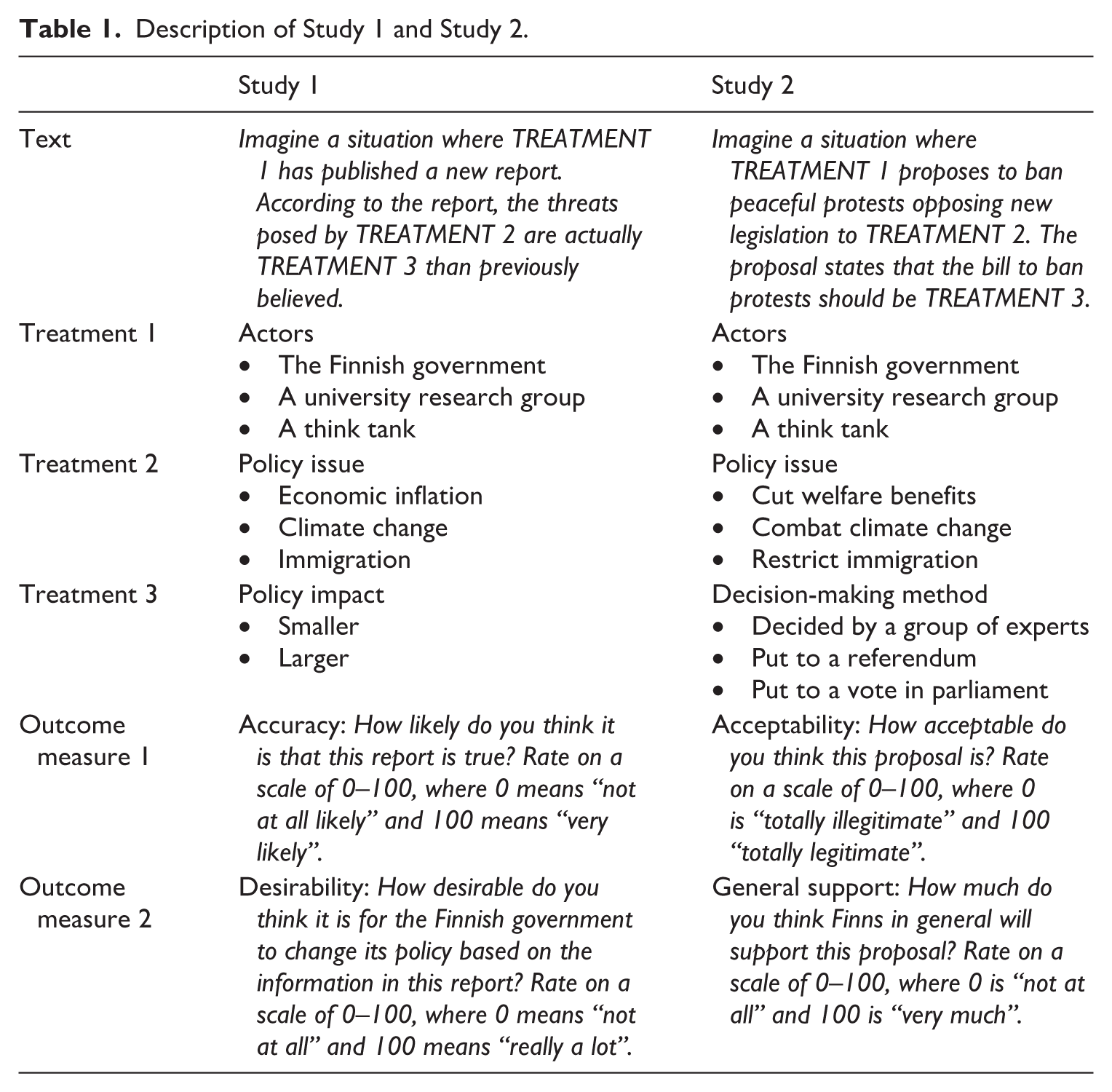
We also manipulate the policy issue under consideration in both, although there are slight variations in the included non-divisive issues. The studies also differ in their treatment combinations and outcome measures, enabling a more nuanced analysis of how expert involvement shapes various dimensions of legitimacy.
These two studies present policy scenarios that differ significantly in tone and political sensitivity, offering a valuable framework for examining the legitimacy of expert involvement in democratic governance. Study 1 presents a neutral situation involving the publication of a research report, contributing to the initial stages of the policy process without advocating for specific actions. By contrast, Study 2 examines a more controversial proposal to ban demonstrations, an idea that challenges established democratic norms. Here, experts are depicted as policy entrepreneurs directly advocating for specific measures.
This contrast allows to explore whether the perceived legitimacy of expert involvement holds across both routine and high-stakes political contexts. Thus, by including these very different scenarios, we can explore whether the expected effects operate in a similar manner in very different situations and thereby increase the generalizability of the findings. It also enables us to disentangle the specific conditions under which expert-driven governance is viewed as legitimate, depending on whether experts are seen as neutral informants or as active participants in political decision-making. Especially, the studies shed light on whether different types of expert actors can influence citizens’ willingness to tolerate illiberal or anti-democratic measures (Frederiksen and Skaaning, 2023; Saikkonen and Christensen, 2023), highlighting the complex and contested nature of epistemic authority in democratic decision-making. 6
Each study includes two outcome measures, each of which is intended to cover aspects of decision-making legitimacy. We chose this approach over using the same outcome measures in both studies, since including several measures allow us to assess whether the results are similar across all aspects and provide a more nuanced evaluation of the effects. The four measures focus on how respondents consider the accuracy of the proposal (How likely do you think it is that this report is true?), the desirability of the proposal (How desirable do you think it is for the Finnish government to change its policy based on the information in this report?), the acceptability of the proposal (How acceptable do you think this proposal is?) and general support for the proposal (How much do you think Finns in general will support this proposal?). The measures were inspired by previous studies using similar measures to probe different aspects of decision-making legitimacy (Christensen et al., 2020; Persson et al., 2013; Šerek et al., 2021; Werner and Marien, 2022). The main difference is that our respondents score the outcome measures on a slider scale of 0–100, since such feeling thermometers allow respondents to express nuanced differences on emotional responses (Marcus et al., 2017), despite their potential weaknesses (Liu and Conrad, 2016).
Methods
In H1a and H1b, we focus on examining the direct effects of the actor treatment. We use “The Finnish Government” as a reference category, since this is the baseline situation in which government agencies develop policy proposals without involving external expertise. Our intention is then to examine how involving different types of experts alters the perceived legitimacy. In H2–H4, we examine the extent to which these effects differ across the type of issue, outcome favourability, and issue salience. To establish the treatment effects, for each outcome we performed a linear regression analysis including all treatments and their interaction terms. This is in line with the advice of Muralidharan et al. (2025), since this allows treatment effects to be estimated allowing for heterogeneity across the other treatments. For H3 and H4, we include interactions with the dummies indicating outcome favourability and issue salience. We show the results in figures while we include all regression models in the online Supplementary Material (S5).
For H2 on differences in effects depending on whether the issue is a sociocultural issue or not, we examine this by analysing whether the effects of the actor treatment differ across the policy issue treatment in the two vignettes. We consider climate change and immigration policies as examples of sociocultural issues in both studies, while inflation (Study 1) and welfare cuts (Study 2) are considered as more traditional political issues that are nonetheless still salient in contemporary Finnish politics. We also examine this with a simple dummy variable indicating whether the issue is sociocultural or not (see online Supplementary Material S6), but present the differences across policy issues in the main text.
Table 2 shows key descriptive information on all the key variables.
Descriptive information on key variables.

For H3 on differences across outcome favourability, we examine whether the effects of the actor treatment differ depending on whether the outcome described in the vignette aligns with the respondents’ stated preferences for the issue. To this end, we constructed a dummy variable indicating outcome favourability, which is based on respondents’ position on corresponding policy issues. 7 For each vignette, we coded the outcome as favourable if the respondent’s existing policy views aligned with the direction of the proposed solution. In Study 1, this meant alignment between the respondent’s beliefs and the randomized impact treatment (smaller/larger). In Study 2, we coded respondents as having outcome favourability if their prior beliefs indicated that they supported the policy that the demonstration in the scenario was against, indicating consistency between their prior beliefs and the policy recommendation.
For H4 on differences across issue salience, we examine whether the effect of the actor treatment differs depending on whether respondents consider the issue salient or not. Respondents were asked to identify the three most salient issues from a list of eight policy issues: abortion rights, immigration, gender-neutral marriage, climate change, social security, the organization of public services, capital taxation, and inflation. 8 Based on this, we created a dummy variable to indicate whether the respondent identified the policy issue featured in the vignette as one of the three most salient issues.
Results
In this section, we first present the results from Study 1, followed by those from Study 2. We then conduct robustness tests for both studies before discussing the implications of the results for our hypotheses.
Study 1: Experts in routine policy context
Figure 1 presents violin plots for the two outcome variables, illustrating both the median and the distribution of responses. The mean scores were Accuracy = 60.4 (SE = 0.54) and Desirability = 58.4 (SE = 0.59). Notably, the plots reveal substantial variability around these central tendencies.
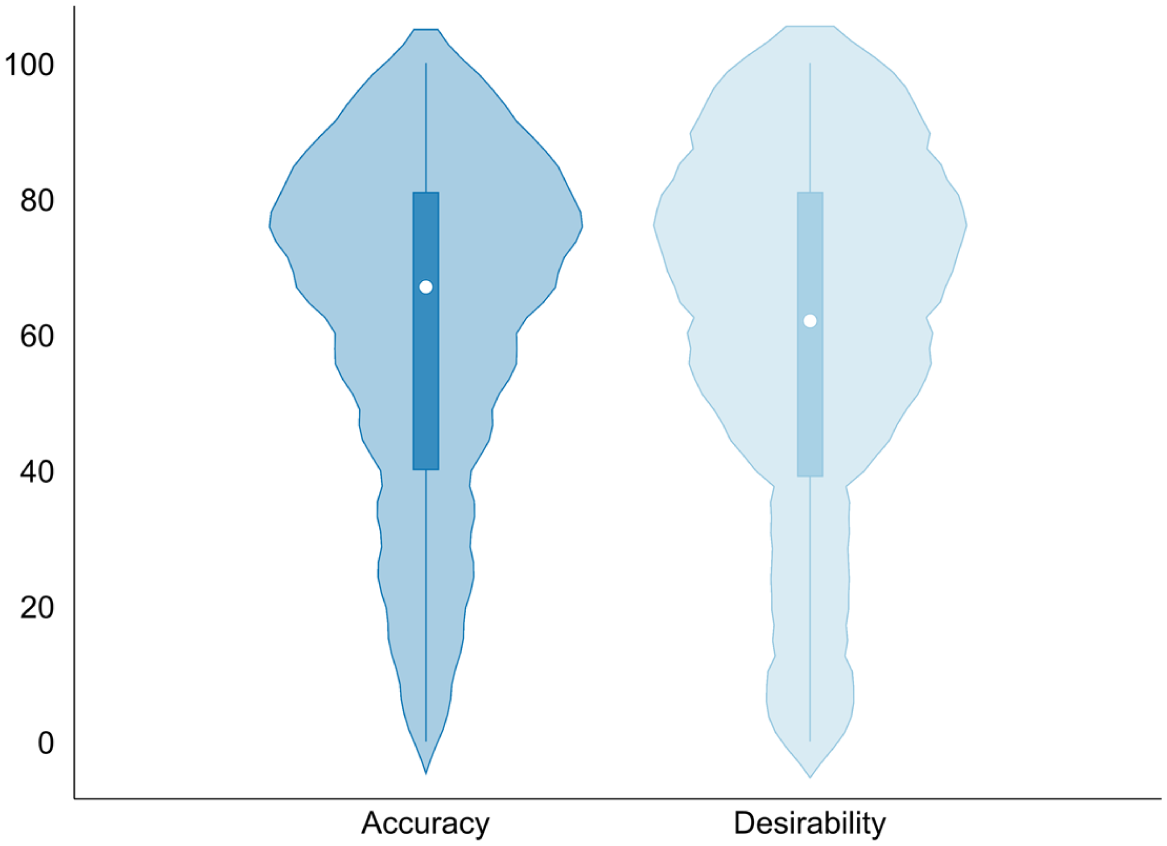
Violin plots showing distribution of responses for accuracy and desirability.
To examine H1a and H1b, the results for the actor treatment are visualized in Figure 2, which shows the mean outcome scores across actors involved. For all results, we compare the differences for university researchers and think tank to when the proposal comes from the Finnish government, which acts as the baseline.
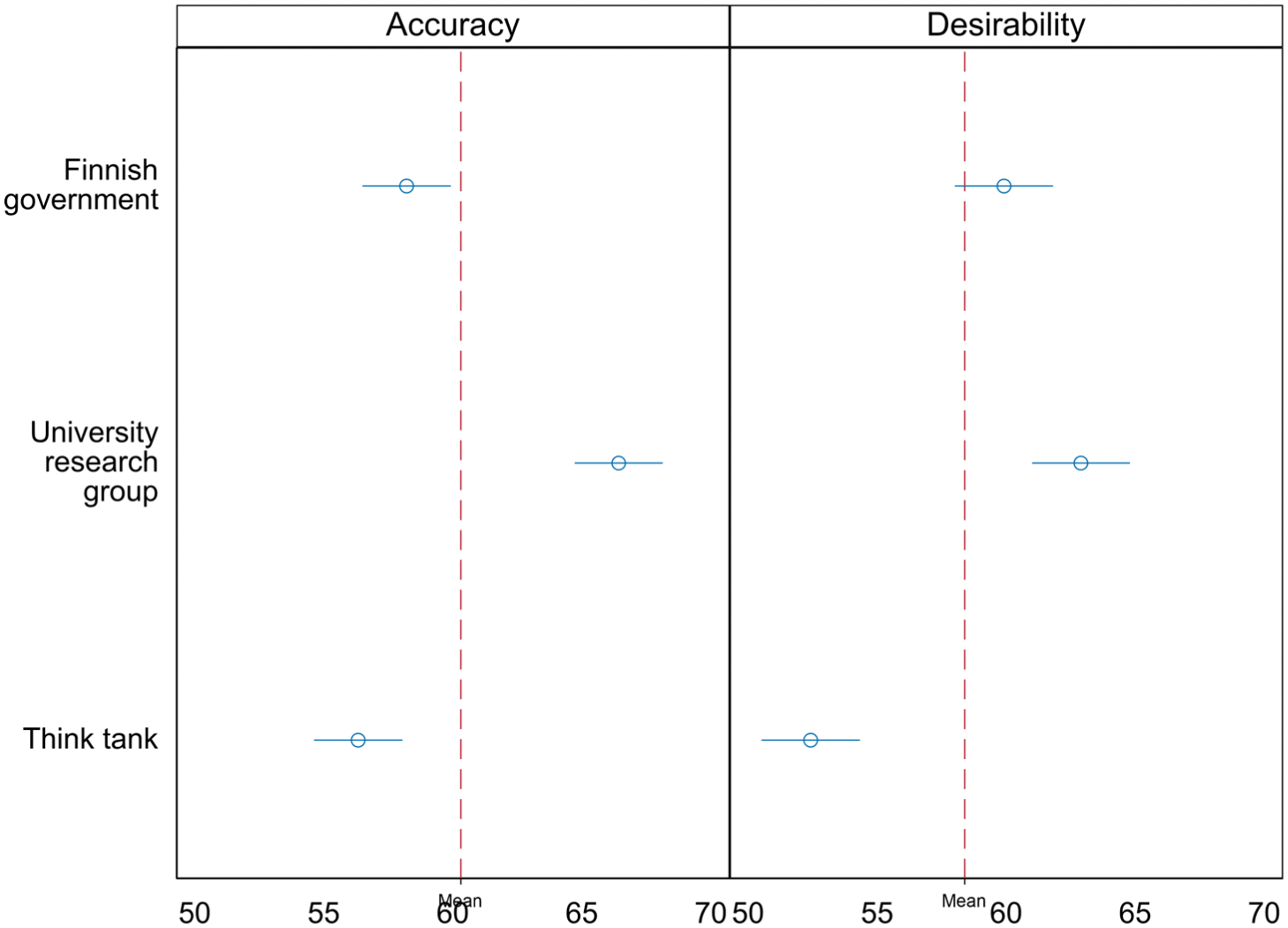
Differences in ratings depending on actor involved, Study 1.
The average Accuracy rating increases by about 8 points on the 0–100 scale when the proposal is made by university researchers (diff = 8.2, p > 0.001). When the proposal comes from a think tank the average rating is lower, but the difference compared with the proposal coming from the Finnish government is not significant (diff = −1.9, p = 0.129). For Desirability, the rating is about 3 points higher when university researchers make the proposal compared with when the Finnish government makes the proposal (diff = 3.0, p = 0.030), and here the difference for think tanks is also significantly lower (diff = −7.5, p < 0.001). Hence, proposals from university researchers receive higher decision-making legitimacy in line with H1a, while there is some support for the idea expressed in H1b that proposals from think tanks have lower decision-making legitimacy.
H2 concerns whether the effect of the actor varies depending on whether the issue is sociocultural. To illustrate, we consider the proposal concerning climate change and immigration as examples of sociocultural issues. Figure 3 shows that actor differences indeed depend on the issue involved.
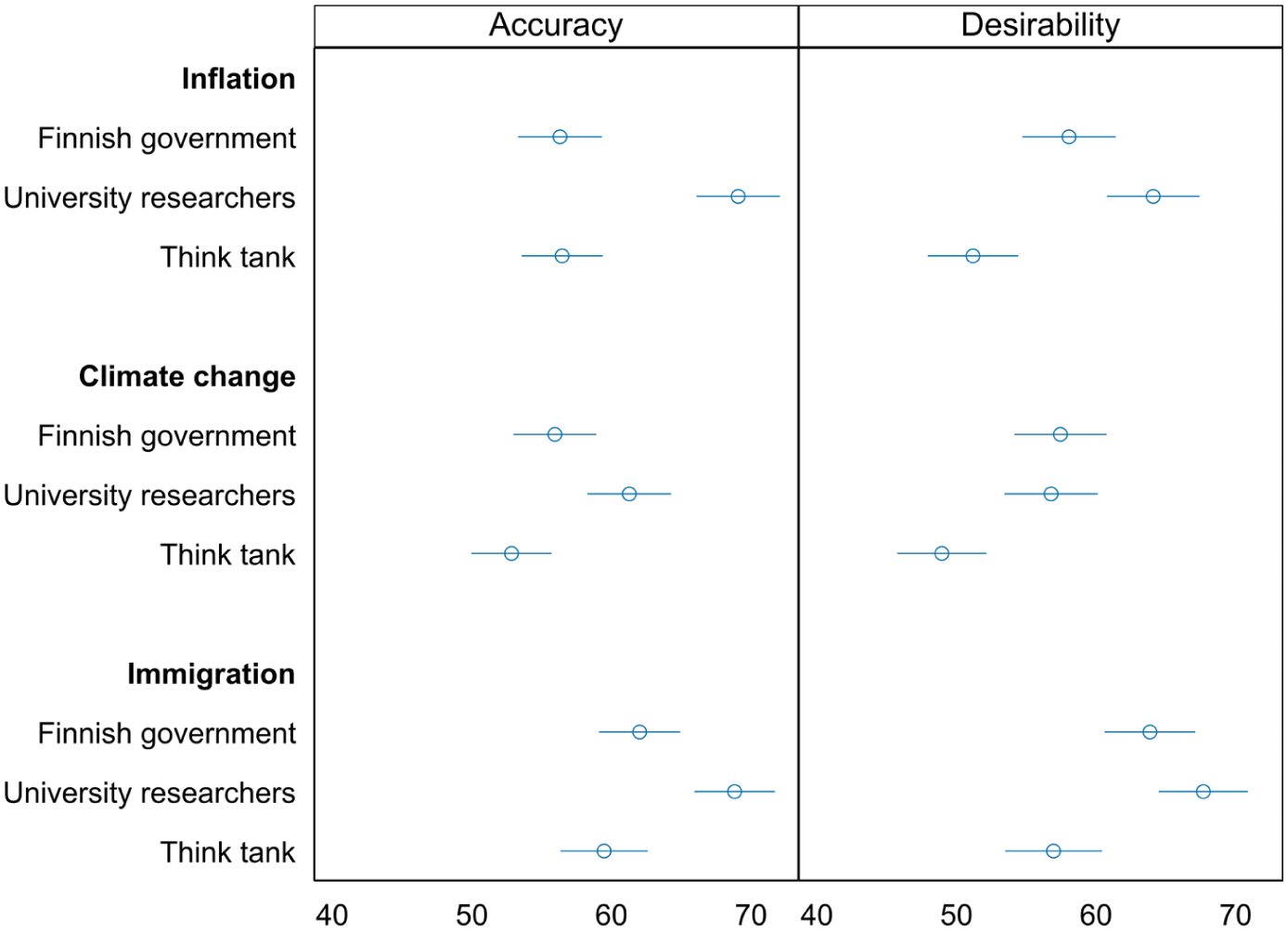
Differences in ratings depending on actor and issue involved, Study 1.
For the Accuracy measure, the differences are significantly higher when the proposal comes from university researchers for all three policy issues (inflation = 12.8, p < 0.001; climate change = 5.3, p = 0.013; immigration = 6.8, p = 0.001). The differences in effects are weaker for the sociocultural issues climate change (contrast = 7.4, p = 0.015) and immigration (contrast = 6.0, p = 0.047) when it comes to university researchers. For think tanks, none of the effects are significant for either policy issue (inflation = 0.2, p = 0.941; climate change = −3.1, p = 0.142; immigration = −2.5, p = 0.243), and there is no evidence that the effects differ for sociocultural issues compared with inflation (climate change contrast = −3.3, p = 0.277; immigration contrast = −2.7, p = 0.375).
For the Desirability measure, proposals from university researchers get higher ratings when it comes to inflation (diff = 6.0, p = 0.012), but not for climate change (diff = −0.7, p = 0.780) or immigration (diff = 3.8, p = 0.10). The differences in effects are significant when comparing inflation to climate change (contrast = −6.7, p = 0.048), but not when comparing to immigration (contrast = −2.2, p = 0.509). For think tanks, there are negative effects for all policy issues (inflation = −6.9, p = 0.004; climate change = −8.5, p < 0.001; immigration = −6.9, p = 0.004), and there is no evidence that the effects differ when comparing inflation to the sociocultural issues (climate change contrast = −1.6, p = 0.628; immigration contrast = −0.0, p = 0.994). 9
There is therefore mixed support for H2, since most results suggest that the type of issue matters for proposals from university researchers, but not for think tanks.
Following this, we turn to examining how the policy preferences of respondents moderate the impact of actors. For H3, we examine the moderating effect of outcome favourability, while H4 concerns issue salience. Figure 4 shows the differences depending on outcome favourability.
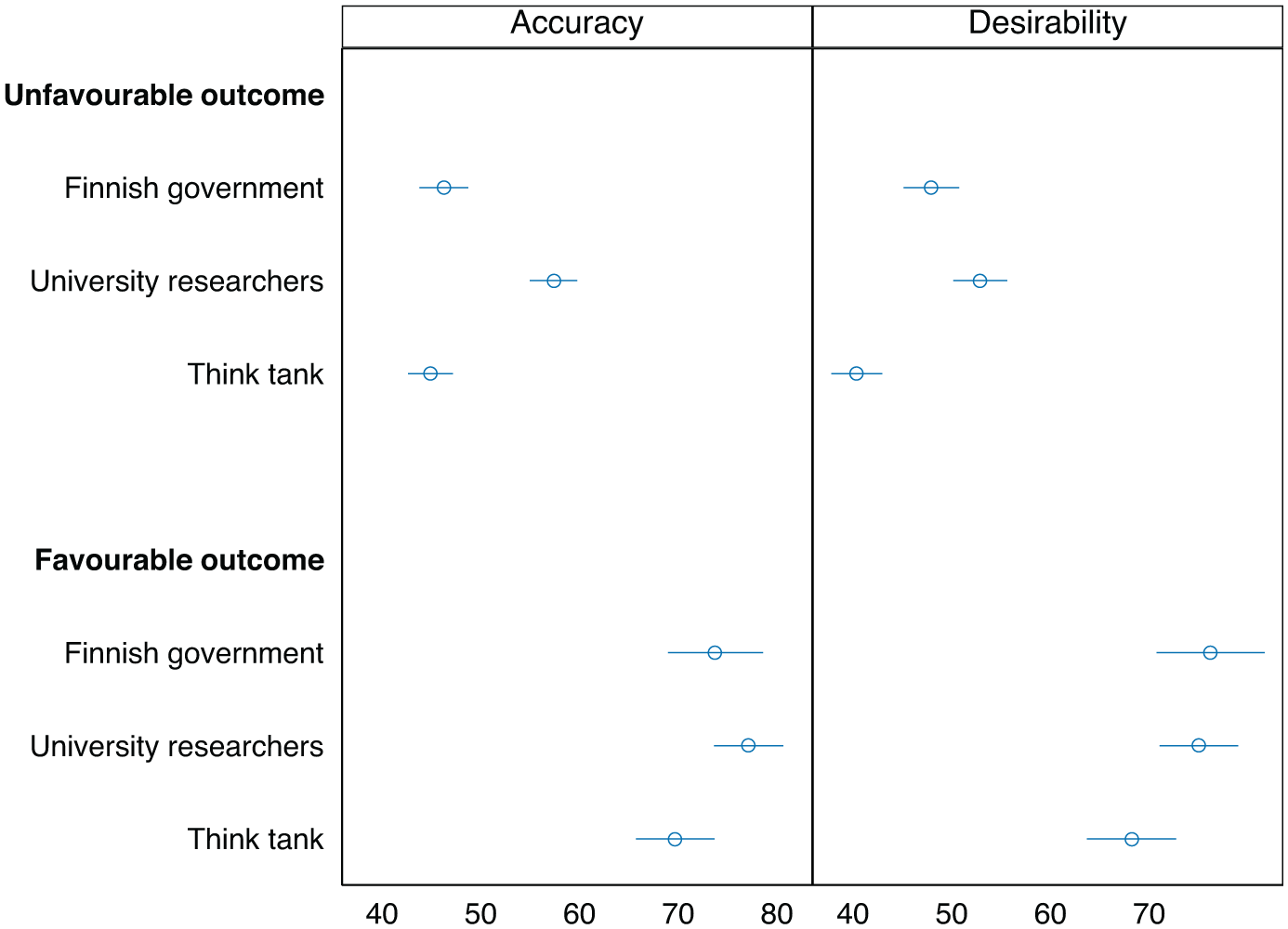
Differences in ratings depending on actor and outcome favourability, Study 1.
Respondents unsurprisingly tend to prefer favourable outcomes, as is evident by the higher ratings given when there is outcome favourability. But more interesting are the differences between actors depending on outcome favourability. There is a statistically significant difference in the effects for Accuracy, depending on whether the outcome is favourable or not (contrast = −7.7, p = 0.028), whereas there are no significant differences for think tanks. For Desirability, the effect of involving university researchers is significant when the outcome is unfavourable, but here the differences in effects are not statistically significant (contrast = −6.1, p = 0.124). For think tanks, the differences are statistically significant for both outcomes, but the slight differences in effects depending on outcome are not statistically significant (contrast = −0.5, p = 0.912). Hence, there is again mixed evidence for the proposition that outcome favourability diminishes the effect, since it only applies to proposals from university researchers.
Figure 5 shows the results for H4 on the impact of issue salience.
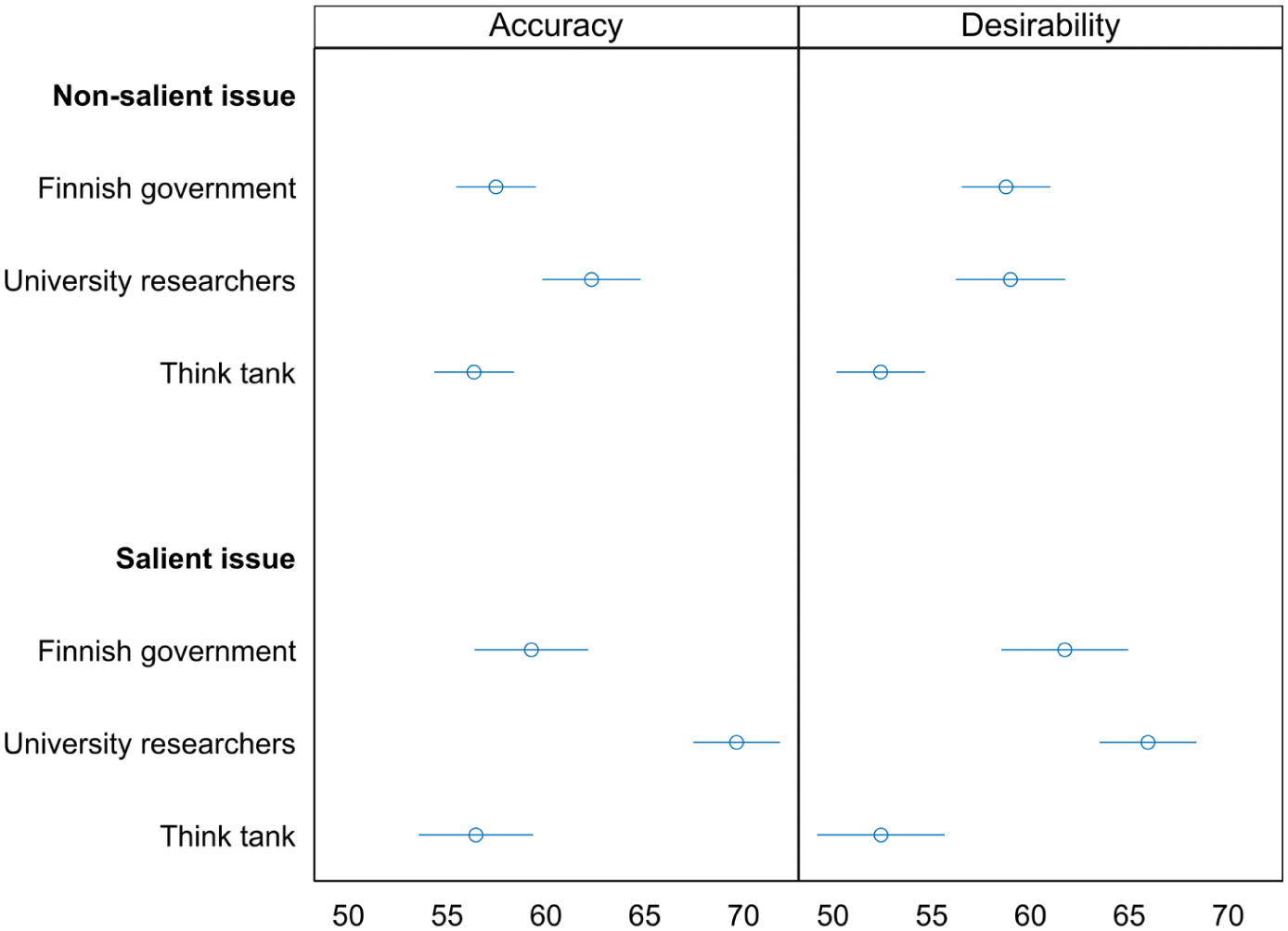
Differences in ratings depending on actor and issue salience, Study 1.
Proposals coming from university researchers have a stronger effect on Accuracy when the issue is salient (contrast = 5.5, p = 0.024), while the differences are not significant for think tanks (contrast = −1.7, p = 0.504). For Desirability, proposals from university researcher get higher ratings when the issue is salient, but the difference compared with the effect for non-salient issues is non-significant (4.0, p = 0.147). Proposals from think tanks have negative effects for both salient (−6.3, p < 0.001) and non-salient issues (−9.3, p < 0.001), but the differences in effects across saliency is non-significant (contrast = −3.0, p = 0.297). There is therefore no support for H4 in Study 1.
Study 2: Experts in high-stakes policy contexts
Figure 6 shows how the two outcome measures in Study 2 receive lower scores, when compared with Study 1 (mean Acceptability = 22.9, SE = 0.56; mean General Support = 35.4, SE = 0.48). Considering that Study 2 includes a proposal to ban legal demonstrations, which runs counter to basic democratic norms, we consider this as evidence that respondents noticed that this scenario involves a more controversial proposal.
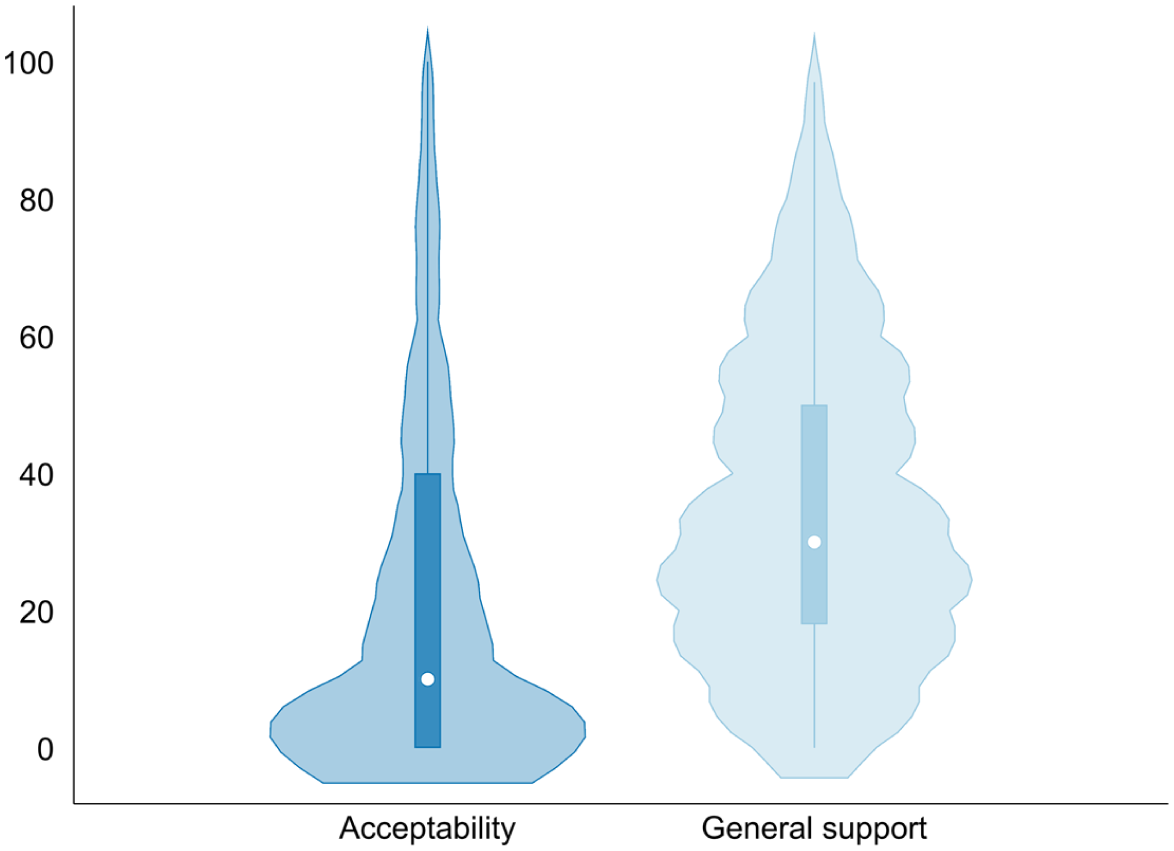
Violin plots showing distribution of responses for acceptability and general support.
For H1a and H1b, the results in Figure 7 show that the differences are less pronounced in Study 2 compared with Study 1. For Acceptability measure, the difference is significantly larger when university researchers make the proposal (diff = 4.5, p = 0.001), while the difference when the proposal comes from a think tank is small and not significant (diff = 0.1, p = 0.938). For General Support, the differences are not significant for both university researchers (diff = 1.5, p = 0.201) and think tanks (diff = 1.4, p = 0.232). There is therefore only limited support for H1a and no support for H1b in Study 2.
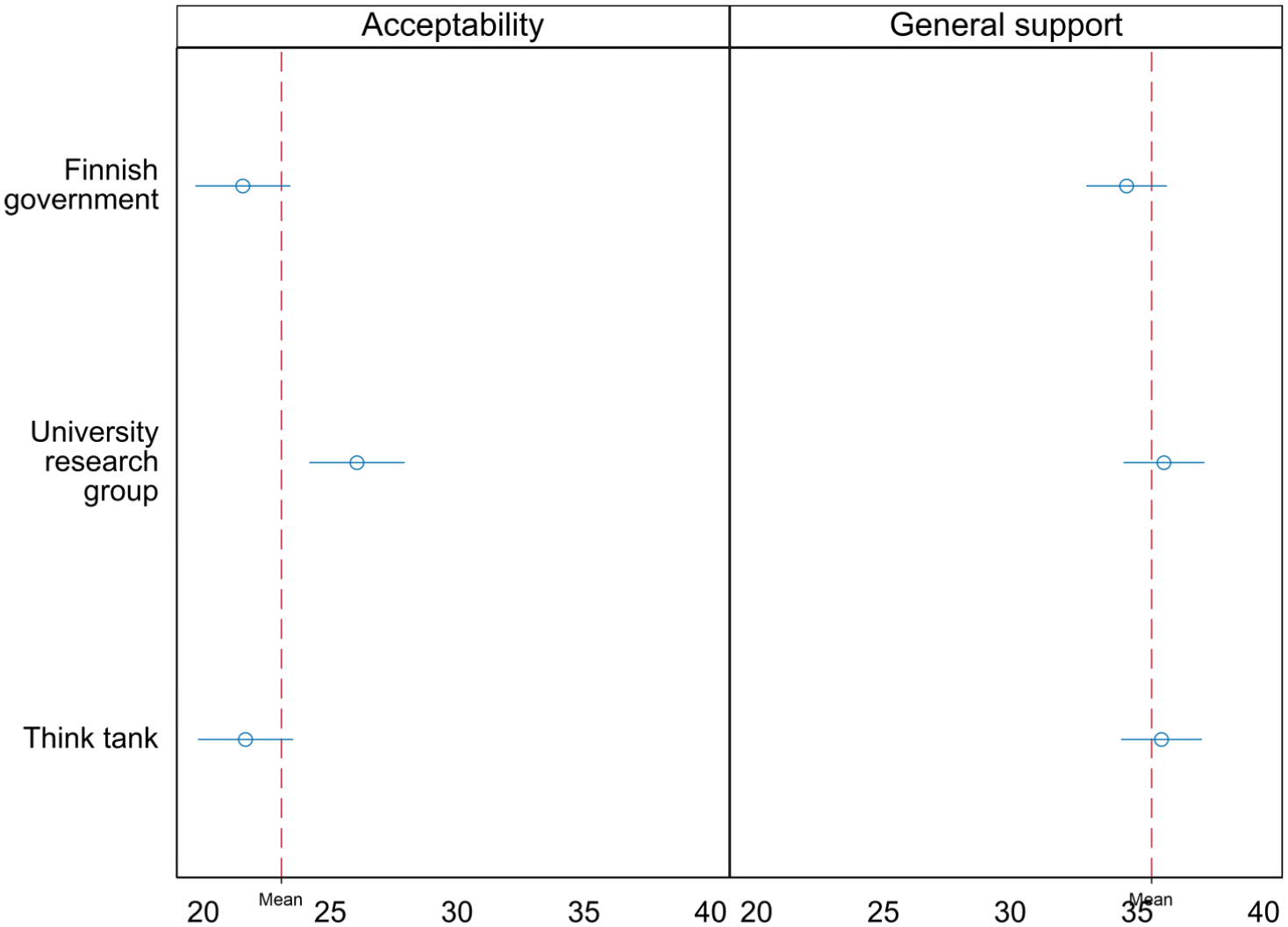
Differences in ratings depending on actor involved, Study 2.
H2 tests whether the effect of the actor varies depending on whether the issue is sociocultural. As shown in Figure 8, for Acceptability, the differences are significant when proposals on climate change come from university researchers (diff = 8.3, p < 0.001), but not for the other two issues, namely welfare cuts (diff = 3.0, p = 0.205) and immigration (diff = 2.0, p = 0.407). When the proposal comes from think tanks, there are no significant differences (welfare cuts = 1.1, p = 0.624; climate change = 2.3, p = 0.334, immigration = −3.1, p = 0.181). None of the differences in effects for either university researchers or think tanks are significant at a conventional p < 0.05 level. This is also the case for General Support, where there is no evidence that effects differ depending on the nature of the issue. There is therefore no support for H2 in Study 2.
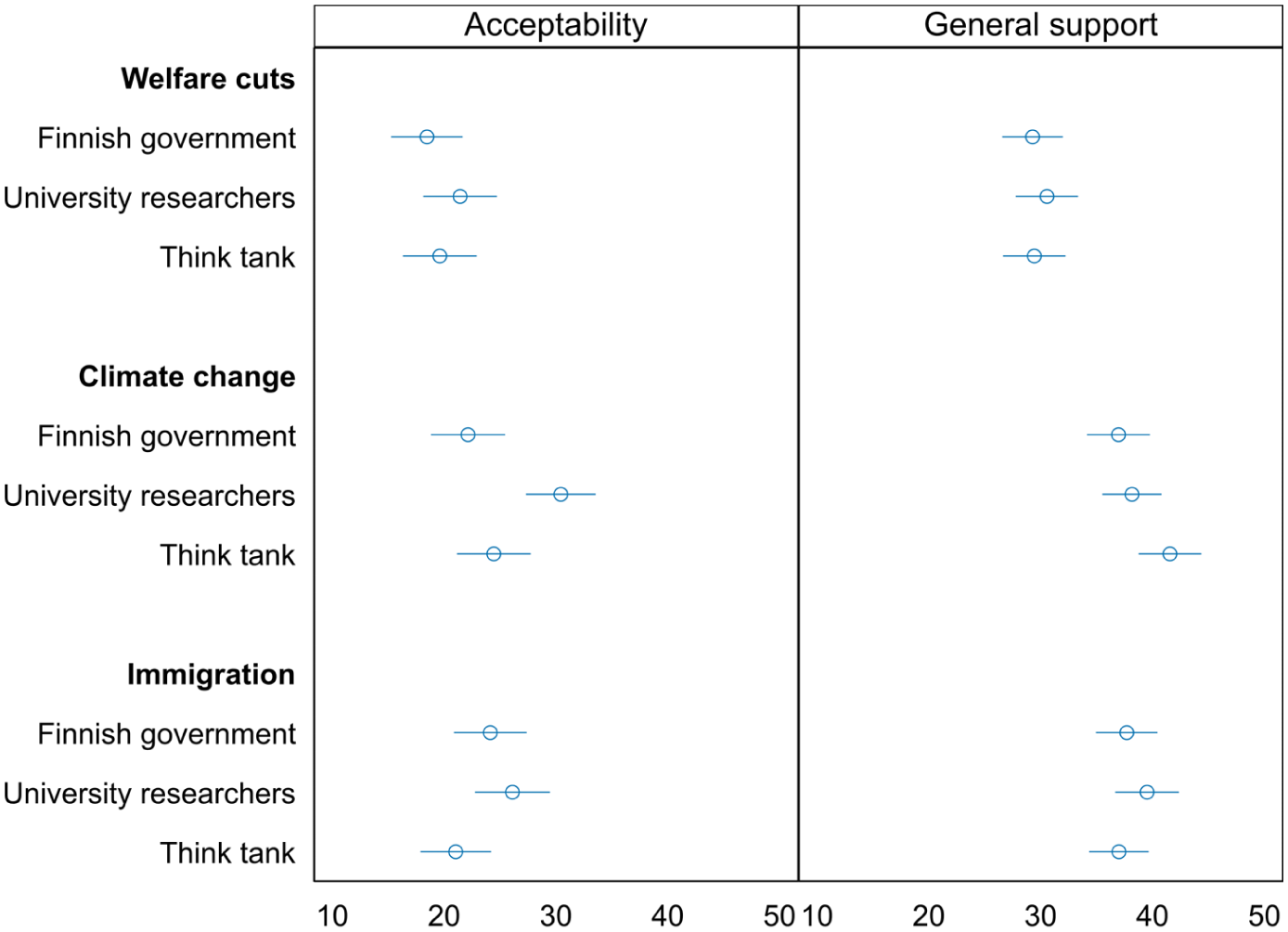
Differences in ratings depending on actor and issue involved, Study 2.
For H3 considering outcome favourability, Figure 9 shows that it has a positive effect on Acceptability when unfavourable proposals come from university researchers rather than the Finnish government (5.5, p < 0.001), but the difference in effects is not statistically significant (contrast = −2.1, p = 0.512). For General Support, it even has a weak negative effect when a favourable proposal comes from university researchers (−0.4, p = 0.864), but again the differences in effects are not statistically significant. For think tanks, there is no evidence in favour of the hypotheses. There is a positive effect on General Support when favourable proposals come from think tanks, but the difference in effects falls short of statistical significance (contrast = 4.8, p = 0.085), and the positive effect of favourability runs counter to the hypothesized effect.
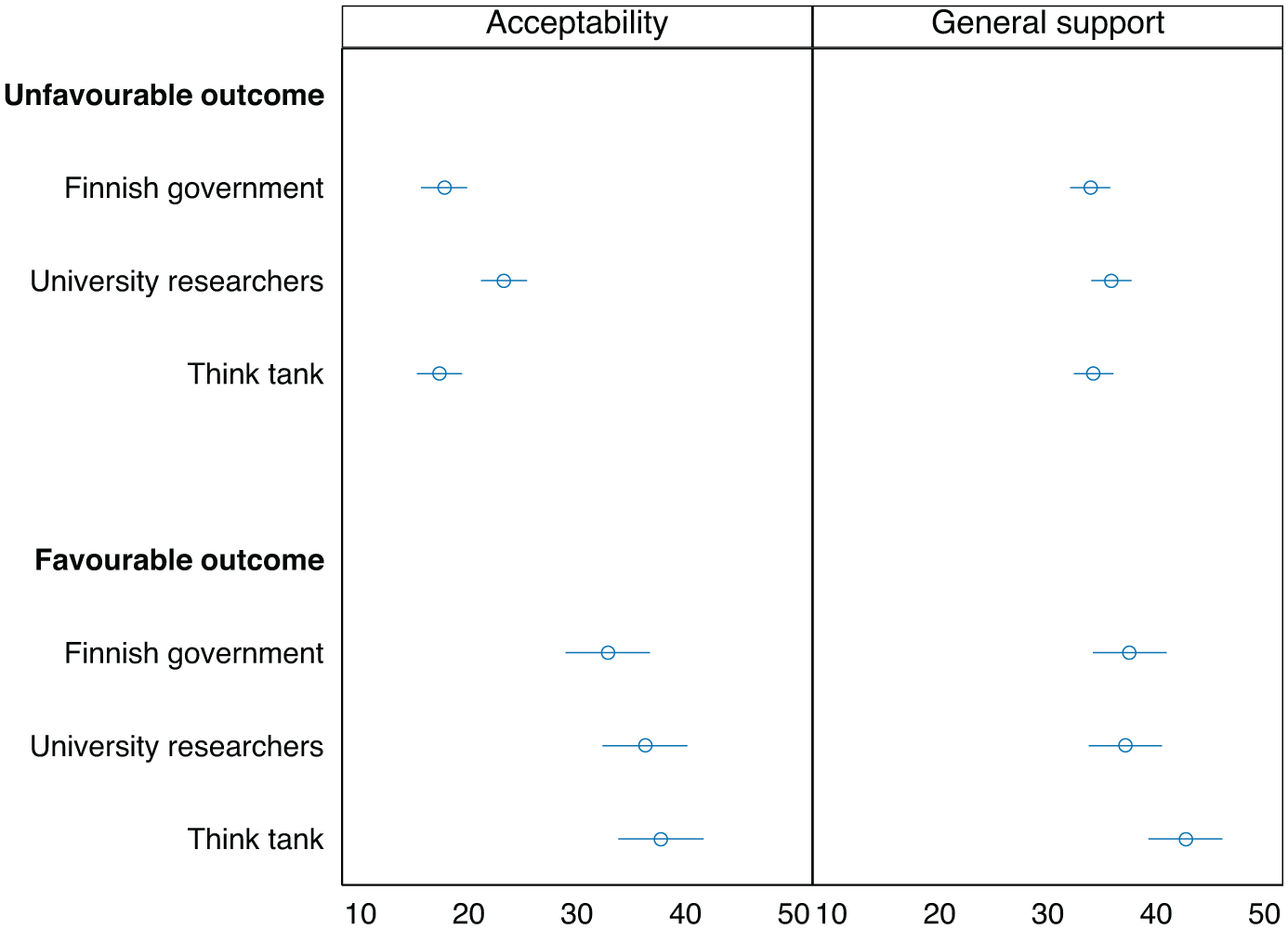
Differences in ratings depending on actor and outcome favourability, Study 2.
For H4 on issue salience, proposals from university researchers have positive effects on Acceptability for both non-salient (5.7, p = 0.004) and salient (4.1, p = 0.028) issues, but the differences in effects are not significant (contrast = −1.6, p = 0.547). For think tanks, there is no evidence of significant differences in effects across saliency (contrast = −2.9, p = 0.280). For General Support, there is no evidence of significant differences in effects for either university researchers (contrast = 2.0, p = 0.388) or think tanks (contrast = −1.1, p = 0.618). Therefore, there is no support for H4 in Study 2 (Figure 10).
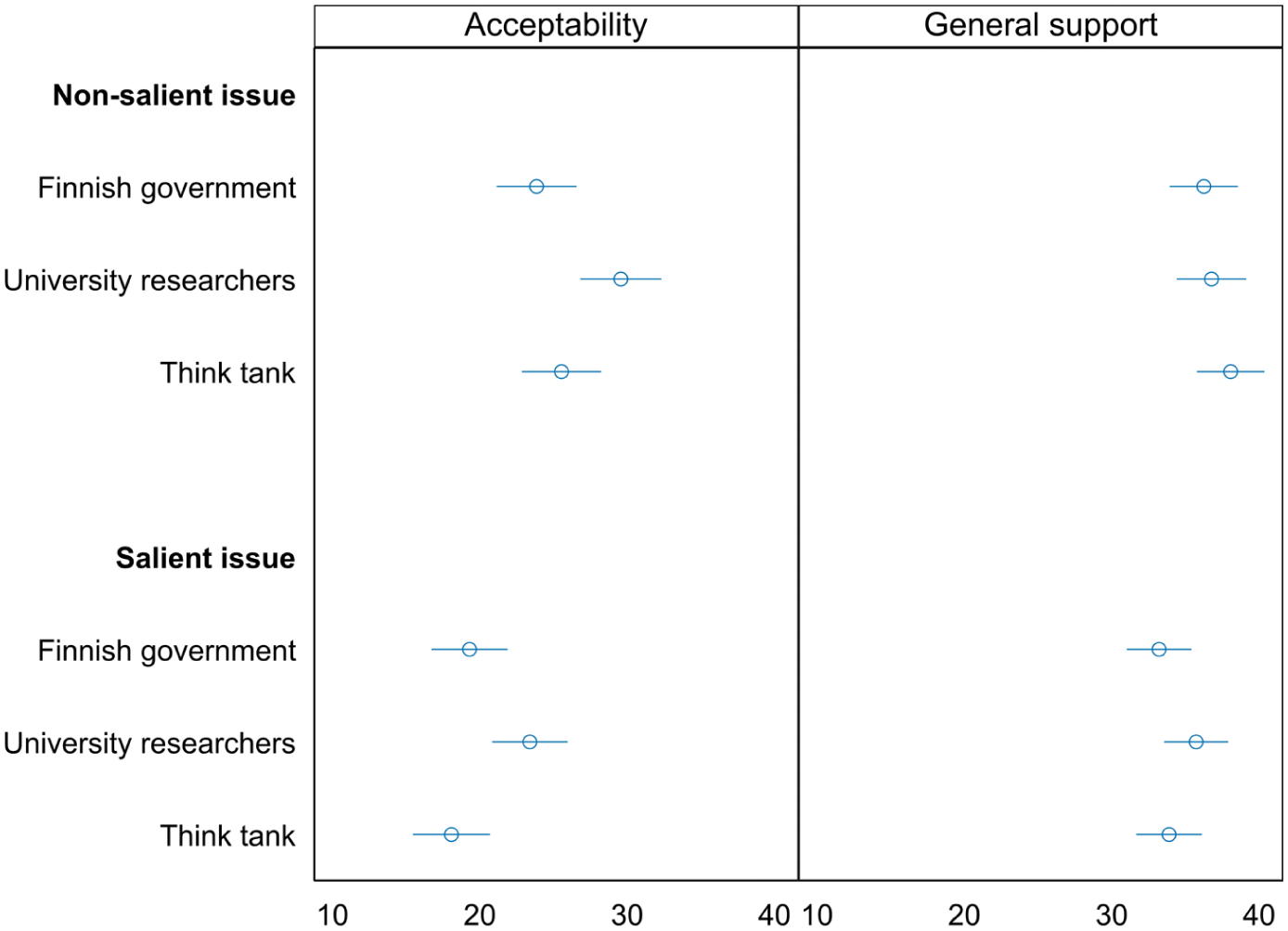
Differences in ratings depending on actor and issue salience, Study 2.
Robustness tests
We ran four alternative analyses to our main results to examine their robustness. First, as noted previously our main interest are in sample effects, which is why we decided not to use weighting for our analyses (Miratrix et al., 2018). Nevertheless, we wanted to examine whether our results were affected by this choice and therefore compare the results from an unweighted model and a weighted model (see Figure S4 in the Supplementary Material). The differences between the two are of minor importance, which entails that it is unlikely that our results are affected by the sample composition.
Second, the results could be affected by respondents not paying attention to the survey and the vignettes (Abbey and Meloy, 2017; Berinsky et al., 2014). To examine this possibility, we used an attention check where respondents were instructed to select a specific category (“Disagree”) in a question. Of the 2513 respondents, 188 failed to select the correct category, indicating that they were not paying attention. While it is not recommended to exclude inattentive respondents a priori (Alvarez et al., 2019), it is important to examine the implications of this problem. We therefore tested whether this affected our results. As the results in Figure S5 in the Supplementary Material show, the results were unaffected by excluding inattentive respondents. Our results are therefore unlikely to be affected by this.
Third, as noted above, there are reasons to believe that government supporters are more supportive of government proposals, whereas opposition supporters are more open to proposals coming from other actors. Although this goes beyond our current aspirations, we wanted to examine the extent to which this affects our results. The results, shown in Figure S6 in Supplementary Material S7.3, as might be expected show that involving university researchers does not have a significant effect among government supporters, but it does for those who do not support government, whereas the results for think tanks are similar. This shows that it might also be important to consider partisan attitudes to understand the implications for involving different types of experts. Furthermore, it shows that involving university researchers may increase the legitimacy of policy proposals even among those who do not support the government.
Finally, we wanted to explore the effect heterogeneity of the results, since previous studies indicate that there are differences in the evaluation of involvement of experts (Bertsou and Pastorella, 2017; Bertsou et al., 2025; Fernández-Vázquez et al., 2023; Font et al., 2015; Lavezzolo et al., 2021). While effect heterogeneity does not invalidate our results, it may point out interesting avenues for future research. We here examined effect heterogeneity across three key sociodemographic variables of age, gender, and educational attainment, and three key attitudinal variables of left–right ideology, political interest, and political trust. The results reported in Figures S7–S12 show that there are differences in the levels of ratings for some of the factors examined, mainly education, left-right ideology, and political trust. However, differences in effects are less pronounced. To assess the extent to which this heterogeneity affects our main results, we fitted an alternative model where we adjust for all these covariates. The results, shown in Figure S13, show that the main results are similar even after this adjustment, meaning that our reported results remain valid. Nevertheless, future research should examine further differences in how social groups evaluate the involvement of experts.
Discussion of results
The results support H1a, since the differences are significant for three of the four measures included in the two studies. This shows that proposals from university researchers are on average considered more accurate, desirable, and acceptable, even for more controversial decisions such as banning protests. H1b is only partly supported, since only one of the measures has a significant difference in the expected direction. Nevertheless, there is at least some evidence to suggest that Finns are less eager for policies to change when proposals come from think tanks.
H2 on differences depending on the nature of the issue is partially supported, since some effects are weaker for university researchers when proposals concern sociocultural issues, while there is nothing to suggest that the effects differ for think tanks depending on the nature of the issue.
H3 is also partly supported, since outcome favourability depresses the effect of proposals coming from university researchers, but it matters less for proposals from think tanks. It is here noteworthy that at least some of the evidence seems to suggest that proposals which entail unfavourable outcomes are more acceptable when they come from university researchers.
H4 is rejected, since there is no evidence that issue salience weakens the actor’s effect. For proposals from university researchers, the evidence in Study 1 suggests that the effects are stronger for salient issues, but this pattern does not hold in Study 2. For think tanks, there is no evidence to suggest that saliency influences their impact.
The results are generally less clear-cut for Study 2, which suggests that the mechanisms that we observe here mainly apply for more mundane political decisions, whereas they matter less for more controversial decisions where democracy is at stake. Nevertheless, even here we do observe some signs that involving university researchers can help achieve even controversial goals. This underlines the importance of distinguishing between different types of experts.
Conclusion
Our analyses reveal important insights. First of all, our results demonstrate that involving experts in political decision-making can enhance perceptions of legitimacy, which is consistent with previous research showing that citizens trust experts more than elected representatives (Bertsou, 2022; Bertsou and Caramani, 2020; Lavezzolo and Ramiro, 2018; Vittori et al., 2024; Vittori et al., 2023a, 2023b). These results reinforce previous findings that indicate a shift in Finland towards more favourable attitudes regarding expertise-driven decision-making (Bengtsson and Mattila, 2009; Koiranen & Saarinen, 2025; Rapeli, 2015). Our findings are also consistent with the growing salience of scientific and technocratic rhetoric within Finnish parliamentary politics (Qadir and Syväterä, 2021), party organizations (Aula and Koskimaa, 2024), and the public sphere more broadly (Kukkonen and Malkamäki, 2024). This suggests that political elites may be turning to expert-based argumentation as a response to a public demand for knowledge-based decision-making in political matters.
However, our results also underscore a crucial nuance: the impact of expertise on decision-making legitimacy is not uniform as it depends significantly on the type of the experts involved. Specifically, policy proposals associated with university researchers consistently enhance perceptions of legitimacy more than those coming from the Finnish government or think tanks. Input from think tanks, on the contrary, does not have the same positive effects. While think tanks often present themselves as independent actors, and their credibility may be undermined by their reliance on external funding and their institutional entanglements (Doberstein, 2017; Kelstrup, 2020; Lounasmeri, 2020).
This highlights a critical, yet often overlooked, dimension in studies of expertise legitimacy. Much of the existing research relies on broad survey questions that fail to specify who the “experts” are, potentially inflating general support for expert-based governance (Panel et al., 2024). By contrast, our findings demonstrate that the legitimacy conferred by expert involvement is conditional as it is closely tied to perceptions of the expert's institutional affiliation. These insights suggest that future studies should move beyond generic references to “experts” and instead distinguish more precisely between diverse types of expertise to better capture public attitudes towards technocratic legitimacy.
This pattern reinforces prior research on source credibility, which highlights trustworthiness and impartiality as central to whether expertise is accepted by the public (Gauchat, 2012; Lupia, 2013). This ambiguity underscores the need for future research to adopt a more precise taxonomy of think tanks—just as this study has attempted to disaggregate the notion of “experts.” Experimental approaches that explicitly differentiate between types of think tanks could yield more accurate insights into how institutional affiliations influence public perceptions of legitimacy (Doberstein, 2017).
Even if the effects of think tanks differ from university researchers, it is nonetheless worth noting that we do not consistently find the expected negative effects for think tanks when compared with the Finnish government. This suggests that, in the eyes of the public, think tanks are perceived as roughly on par with governmental actors in terms of decision-making legitimacy. Notable is that public perceptions of the government exhibit pronounced partisan polarization as most government supporters express confidence in its capabilities, and a clear majority of opposition supporters regard these capabilities as weak, a finding also supported by other surveys (KAKS, 2025). This pattern is reflected in findings showing that opposition supporters are generally less satisfied with research reports published by the right-wing government (see online Supplementary Material S7.3).
This finding may also indicate that citizens do not readily associate think tanks with clear partisan interests—at least not in the context of our experimental treatments. Moreover, the similarity in perceived legitimacy between think tanks and government actors may stem from the ambiguous nature of the term “think tank” itself. In Finland—as in other Nordic countries—the think tank landscape is highly heterogeneous, encompassing politically affiliated organizations, interest group-backed institutions, and publicly funded, ostensibly neutral research bodies (Kelstrup, 2020; Lounasmeri, 2020). Hence, it is likely that “think tank” carries diffuse or unclear associations for our respondents, and even the general public.
Our results also demonstrate that the effects of involving experts hinge on the issues involved. Specifically, we find partial support for H2, since the effects for university-affiliated experts are weaker when the policy issue concerns sociocultural issues such as climate change or immigration. Interestingly, this dampening effect is not observed for think tank affiliations. Although the moderating effect of issue type was not as pronounced as initially hypothesized, our findings suggest that expertise is less influential in legitimizing decisions when the subject matter is deeply divisive. There is tentative evidence that respondents discount think tank based expertise in these cases, possibly due to perceptions of bias or ideological entrenchment. These patterns point to a nuanced dynamic: the perceived legitimacy of expertise is not only contingent on institutional affiliation but also on the political sensitivity of the issue itself. This aligns with earlier research indicating that the credibility and influence of expertise tend to decline in policy contexts where public opinion is highly polarized (Bertsou, 2022; Panel et al., 2024; Vittori et al., 2023a). Future studies should continue to explore these conditional effects, particularly in relation to the growing politicization of scientific and policy expertise.
Our analyses of how outcome favourability shapes perceptions of expertise and the legitimacy of policy decisions yield particularly valuable insights. Consistent with prior research (Arnesen, 2017; Christensen et al., 2020; Esaiasson et al., 2019), we find that outcome favourability is a strong predictor of respondents’ willingness to accept authoritative decisions. Furthermore, partly confirming H3, our results show that the influence of expert affiliation is significantly weakened when respondents view the policy outcome as desirable. In other words, when people agree with the substance of a policy, the institutional source of expertise matters far less for its perceived legitimacy.
More intriguingly, the involvement of university-affiliated experts can make unfavourable outcomes more acceptable, suggesting that university expertise may be helpful for increasing public acceptance of unpopular decisions and also decisions made by unpopular leaders. This highlights an important asymmetry: expertise is most influential not when it affirms existing preferences, but when it challenges them. These findings contribute to a more nuanced understanding of how outcome favourability and motivated reasoning interact in shaping public attitudes towards expertise partly challenging some theories related to the motivated reasoning mechanisms (Druckman and McGrath, 2019). Future research should continue to explore the conditions under which expertise can mitigate resistance to policy outcomes, particularly in contexts where legitimacy is most at risk.
While H4 was not confirmed, our analyses still offer nuanced insights into the role of issue salience (de Blok, 2023; Dennison, 2019, 2020) in shaping perceptions of expert legitimacy. These mixed results indicate that while university-affiliated experts appear particularly effective in boosting trustworthiness when addressing salient issues as seen in Study 1, this pattern does not hold in Study 2, where their positive impact remains consistent but is unaffected by issue salience. Similarly, although university researchers receive higher ratings in terms of policy acceptability and general support, these effects are not significantly moderated by salience. By contrast, think tanks consistently elicit negative reactions in terms of acceptability, regardless of how prominent the issue is, and their influence on general support remains minimal across contexts. This ambivalence in findings may reflect limitations in our measurement strategy, since our salience variable may be too broadly defined. Stronger patterns may be found if restricting salience to the single most salient issue identified by respondents. Nevertheless, against our preconceptions, the evidence suggests that university researchers are more capable of legitimizing decisions on high-salience topics, whereas salience does not appear to strengthen the legitimacy of think tank-affiliated proposals.
Finally, and although we are unable to provide definitive insights, it is nonetheless worth highlighting that our results also indicate that expertise may help boost public acceptance of undemocratic measures. While Study 1 presents a routine scenario, a government-commissioned research report, Study 2 deals with a highly charged proposal to ban public demonstrations, directly challenging democratic norms. This contrast allowed us to observe how expert legitimacy fluctuates across low- and high-stakes contexts. While our findings reveal that approval scores are lower when undemocratic measures are involved, they also show that expertise can help boost approval of these measures. This raises important normative questions about the role of expertise in potentially facilitating public support for undemocratic policies. Expertise does not necessarily serve the common good.
These findings come with some caveats. The Finnish context presents unique characteristics that may limit the generalizability of our results to other countries. There is a need for more comparative research to assess the extent to which the results travel beyond Finland. Another potential limitation concerns the methodological approach. While the experimental design employed is well-suited for analysing complex political preferences, it constrains the number of attributes and issue dimensions that can be examined simultaneously. As such, our findings capture only a subset of the broader dynamics at play. Moreover, the two vignettes and their outcomes show crucial differences and thereby highlight the need for more detailed research into when experts influence perceptions and which aspects of decision-making legitimacy they affect. This is especially so since our robustness tests also indicate that results differ depending on respondents’ characteristics, including political attitudes. Accordingly, future research should explore whether distinct types of expertise affiliations, a broader range of policy domains, or additional attitudinal cleavages similarly shape perceptions of legitimate policymaking—and critically, under what conditions such effects are amplified or mitigated.
Despite these limitations, our results contribute to the growing number of studies examining the role of experts in democratic governance. Overall, our findings suggest that involving especially university-affiliated researchers in policymaking can enhance the perceived legitimacy of political decisions—even, controversially, in cases that involve restricting fundamental democratic rights.
Supplemental Material
sj-docx-1-psx-10.1177_00323217261450951 – Supplemental material for Experts, Experts Everywhere! Survey Experimental Evidence on How Involving Expertise Affects Decision-Making Legitimacy
Supplemental material, sj-docx-1-psx-10.1177_00323217261450951 for Experts, Experts Everywhere! Survey Experimental Evidence on How Involving Expertise Affects Decision-Making Legitimacy by Ilkka Koiranen and Henrik Serup Christensen in Political Studies
Footnotes
Ethical considerations
The survey was distributed to an online panel Citizen’s Opinion (www.kansalaismielipide.fi), which is administered by the Finnish Research Infrastructure for Public Opinion (FIRIPO;  ).
).
Consent to Participate
All participants provided written informed consent prior to participation.
Funding
The authors disclosed receipt of the following financial support for the research, authorship, and/or publication of this article: This research was supported by The Finnish Cultural Foundation under Grant 00242676 and The Kone Foundation Grant 202409118. Collection of the data was funded by the Department of Social Research at University of Turku.
Declaration of conflicting interests
The authors declared no potential conflicts of interest with respect to the research, authorship, and/or publication of this article.
Data availability statement
Supplemental material
Supplemental material for this article is available online.
Notes
Author biographies
References
Supplementary Material
Please find the following supplemental material available below.
For Open Access articles published under a Creative Commons License, all supplemental material carries the same license as the article it is associated with.
For non-Open Access articles published, all supplemental material carries a non-exclusive license, and permission requests for re-use of supplemental material or any part of supplemental material shall be sent directly to the copyright owner as specified in the copyright notice associated with the article.
