




Abstract
This study investigated how psychopathic traits relate to job satisfaction and burnout in police officers. 101 Polish officers completed self-report measures for psychopathic traits, burnout, and job satisfaction. Findings indicate strong negative correlations between all psychopathy subscales and emotional exhaustion. Depersonalization also showed weak negative correlations with affective and cognitive responsiveness, and interpersonal manipulation. Conversely, personal accomplishment had moderate positive correlations with affective responsiveness and interpersonal manipulation. All psychopathy subscales strongly and positively correlated with overall job satisfaction. Results suggest that subclinical psychopathic traits may act as a protective factor against burnout and positively influence job satisfaction in police work.
Introduction
The phenomenon of burnout increasingly affects police officers each year, negatively impacting both their physical and psychological health (Gomes et al., 2022; Martinussen et al., 2007; Rudnicka, 2016). It can diminish work effectiveness and contribute to the development of addictions, anxiety, depression, and anxiety-depressive disorders (Maslach et al., 2001). Despite over 70 years of research, a universally agreed-upon definition of burnout remains elusive. Generally, it is associated with a prolonged response to chronic work-environment-related stressors. While the nature of one’s work plays a crucial role, individual factors, such as personality traits, must also be considered.
In police work, three distinct phases of burnout can be identified. The first phase, emotional exhaustion, is characterized by feelings of discouragement, anger, sadness, and dissatisfaction with one’s job. At this stage, somatic symptoms such as headaches, sleep disturbances, and gastrointestinal hypersensitivity may also emerge. The second phase involves deterioration in interpersonal relationships, leading to a decline in the quality of interactions with colleagues and others. Police officers in this stage may develop a more negative or indifferent attitude towards people. The final phase, reduced personal accomplishment, manifests as a sense of weakness in one’s professional role. Officers at this stage often experience self-doubt, perceiving themselves as lacking knowledge and skills. They may feel misunderstood, incompetent, and powerless, leading to resignation and helplessness. Burnout symptoms are significantly correlated with depressive symptoms, particularly in the context of emotional exhaustion. However, the key distinction between burnout and depression lies in their scope: depression affects all areas of life, whereas burnout is initially linked to the professional domain (Bakker et al., 2000).
Policing requires both physical and psychological resilience, which can be developed through specialized training and courses. Human resources professionals responsible for recruitment should assess candidates’ personality traits, as individual differences. For example—self-evaluation—plays a critical role in burnout susceptibility. Research indicates that officers with low self-evaluation are at a significantly higher risk of burnout. Similarly, individuals with excessive dedication to work, perfectionistic tendencies, and difficulty separating professional and personal life are more prone to burnout as well (Maslach, 1998). A study involving 127 police officers found that 51.97% exhibited some form of burnout (Nowosad, 2021). It is considered a concerning statistic with broad societal implications Compared to other high-stress professions—such as firefighters, nurses, teachers, forensic pathologists, and social workers—police officers experience the highest levels of burnout. Several occupational stressors contribute to burnout risk in police work. These include excessive workload, staff shortages, inadequate equipment, poor relationships with superiors, and shift work. Additionally, police officers frequently encounter traumatic situations, such as direct involvement in violent incidents, death investigations, missing person cases, and delivering death notifications to families (Davies et al., 2022). Such exposures qualify policing as one of the most highly stressful professions.
Job satisfaction is a key factor influencing both individual well-being and the broader functioning of society, as it can significantly enhance—or, conversely, diminish—a person’s overall quality of life. Job satisfaction is shaped by the factors that motivate an individual as well as the mechanisms by which that motivation is maintained. This concept is particularly relevant in professions characterized by elevated levels of stress and psychological strain, such as healthcare and police work (Zaborowski, 2003). Job satisfaction among police officers is influenced by a range of factors. Direct determinants include an employee’s interests, personality traits, and opportunities for professional development, while indirect factors encompass workplace challenges, competence, experience, and relationships with supervisors (Purba and Demou, 2019). Personality variables play a significant role, but demographic characteristics such as gender, age, and ethnicity also contribute to job satisfaction levels. Beyond individual personality traits, broader socio-demographic variables—including self-assessment, social status, and family life—also shape job satisfaction. In a 2009 survey on job satisfaction among Polish workers, a representative sample of 1096 economically active individuals was examined. The results indicated that 78% of respondents expressed satisfaction with their work, while 11% reported dissatisfaction, and another 11% provided mixed assessments (CBOS, 2009). A comparison with earlier research conducted by CBOS in 2006 indicates that the percentage of economically active individuals expressing job satisfaction has increased over time. However, findings from Sedlak & Sedlak (Kulikowski, 2014), a Polish consulting firm specializing in human resource management, suggest that only one in three Poles reports being satisfied with their job. Personality traits are also closely linked to job satisfaction. Among the most influential traits are adaptability, emotional stability, a sense of control, and goal orientation. These attributes contribute to an individual’s ability to navigate workplace challenges and sustain motivation in their professional life. To better understand the factors influencing job satisfaction, researchers often distinguish between cognitive, emotional, and intentional components. The cognitive component encompasses an individual’s beliefs, opinions, and knowledge regarding their work. The emotional component pertains to feelings and emotions, particularly how they are expressed in the workplace. Lastly, the intentional component refers to the deliberate actions taken by individuals to enhance their work performance and overall job satisfaction (Zoledowska, 2005).
In contemporary psychological and psychiatric research, psychopathy is no longer regarded as a discrete diagnostic category but rather as a dimensional construct. It is conceptualized along a continuum, with severe manifestations at one end representing a pathological personality disorder, while subclinical psychopathic traits may be present in the general population without necessarily resulting in antisocial or criminal behaviour (Boduszek et al., 2018). As Hare notably noted, “Not all psychopaths are in prison—some are in the boardroom” (Hare, 2002; cited in Babiak et al., 2010: p. 74). This observation has led to the identification of “successful psychopaths,” also referred to as “industrial psychopaths” or “corporate psychopaths”—individuals who exhibit psychopathic traits yet function effectively in “prosocial” professions. Despite extensive research on psychopathy in forensic and clinical settings, its manifestations in workplace environments remain underexplored. However, existing studies indicate that the likelihood of encountering psychopathic traits increases at higher levels of the corporate hierarchy (Boddy, 2010). This finding is particularly significant given that clinical psychopaths make up approximately 1% of the population, whereas subclinical psychopathic traits are estimated to be present in 5–15% of individuals (LeBreton et al., 2006). There is a growing body of evidence indicating that psychopathic traits can be observed amongst several non-criminal groups including politicians, military personnel, fire-fighters and law enforcement officers (Benning et al. 2018; Hassall et al. 2015; Lilienfeld et al., 2012).
Several theories attempt to explain the underlying mechanisms of psychopathy, with particular emphasis on affective, cognitive, and neurobiological deficits. Affective deficits are evident in psychopaths’ impaired emotional processing, particularly in their ability to experience guilt, remorse, or empathy (Lykken, 1995). Cognitive deficits have also been identified, with research suggesting that psychopathy is associated with impairments in executive functioning, which affect response inhibition, decision-making, and impulse control (Patterson and Newman, 1993). The Psychopathic Personality Traits Model (PPTM; Boduszek et al., 2018) is a novel framework for understanding and assessing psychopathy. The PPTM consists of four core components: affective responsiveness, cognitive responsiveness, interpersonal manipulation, and egocentricity. This model integrates both affective and interpersonal dimensions of psychopathy, offering a broader and more nuanced perspective. In contrast to the Psychopathy Checklist–Revised (PCL-R), which primarily emphasizes antisocial and criminal behaviour, the PPTM focuses on personality traits associated with psychopathy regardless of the individual’s age, gender, cultural background, or criminal history. It is grounded in research on both clinical and non-clinical populations, making it a versatile tool for examining psychopathic traits across diverse contexts. The Psychopathic Personality Trait Model (PPTM) delineates four core components that collectively define psychopathic personality traits. Firstly, affective responsiveness highlights a notable deficiency in emotional empathy, where individuals exhibit a distinct lack of appropriate feelings and emotions in scenarios that would typically elicit such responses in neurotypical individuals. This is distinct from, though often co-occurring with, cognitive responsiveness, which refers to an impaired capacity to comprehend and interpret the emotional states of others. This particular deficit significantly hinders the ability to form genuine and meaningful interpersonal connections. Thirdly, interpersonal manipulation describes a pronounced inclination to deceive and exploit others, consistently employing cunning tactics to achieve personal objectives, often at the expense of those around them. Finally, egocentricity rounds out the model, characterized by an overwhelming preoccupation with one’s own interests and convictions, leading to a pervasive disregard for the needs, feelings, and concerns of others. These four intertwined components provide a comprehensive framework for understanding the multifaceted nature of psychopathic personality traits.
Recently, there has been increasing interest in the identification of psychopathic traits and their potential adaptive functions across various professional domains, including business, medicine, emergency services, and law enforcement (Babiak et al., 2010; Hall and Benning, 2006; Smith and Lilienfeld, 2013). In the context of law enforcement, personality assessments have suggested that certain psychopathic traits—such as reduced emotional reactivity, low stress sensitivity, and fearlessness—may enhance an individual’s capacity to perform police duties more effectively (Bakker and Heuven, 2006; Schaible and Gecas, 2010). Despite the critical nature of policing and the high-stress environment in which officers operate, there remains a notable dearth of research specifically examining the interplay between psychopathic traits, job satisfaction, and burnout within this profession. Existing literature often explores these constructs in isolation or focuses on broader personality traits. However, the unique demands of law enforcement—including exposure to trauma, moral dilemmas, and the exercise of authority—could potentially interact with psychopathic traits in ways that significantly impact an officer’s job satisfaction and vulnerability to burnout. Understanding this complex relationship is crucial for developing targeted interventions, improving officer well-being, and ultimately enhancing public safety, yet this specific area remains largely unexplored in academic and empirical studies. Thus, the aim of this study is to examine whether the psychopathic personality traits are related to job satisfaction and the risk of burnout among police officers.
Method
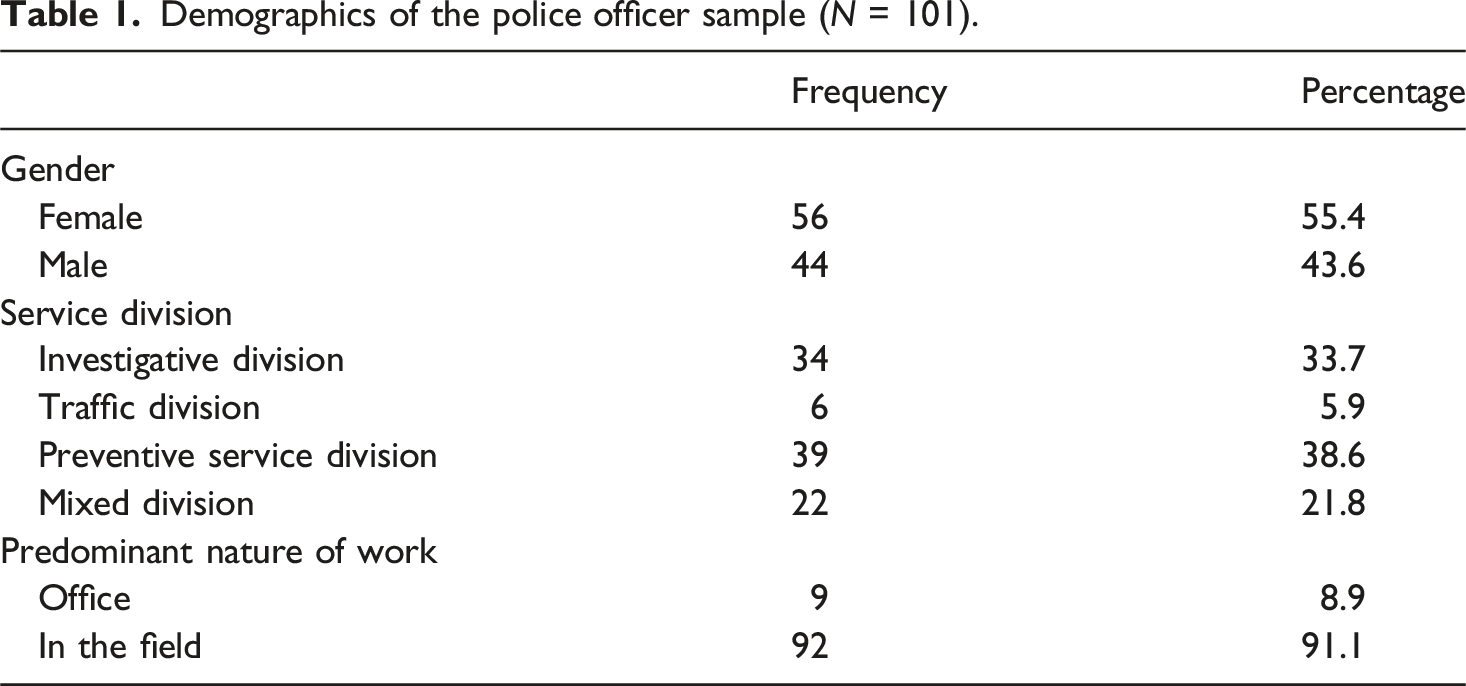
Participants
Demographics of the police officer sample (N = 101).
Procedures
The questionnaires were administered online via Google Forms to ensure confidentiality. To maintain participant anonymity, no identifying information was collected. Prior to completing the questionnaire, participants received an information sheet and provided informed consent. Upon completion, they were given access to helpline numbers and websites for support related to the topics covered in the study. The study was subjected to institutional ethical procedures and conducted in accordance with the ethical standards of the host institution research committee and with the 1964 Helsinki declaration and its later amendments or comparable ethical standards.
Materials
Psychopathic Personality Traits Scale – Revised (PPTS-R; Boduszek et al., 2022) is a self-reported 28-item measure designed to assess psychopathic traits in forensic and non-forensic populations. PPTS-R consists of four subscales: Affective Responsiveness, Cognitive Responsiveness, Interpersonal Manipulation, and Egocentricity. All responses are indexed using a 5-pointLikert scale (Strongly agree = 4, Agree = 3, Sometimes Agree = 2, Disagree = 1, Strongly disagree = 0). The affective responsiveness subscale assesses lack of empathy and emotional shallowness (higher scores suggest greater deficits in affective responsiveness). Cognitive responsiveness subscale refers to the ability to understand others’ emotional states, mentally represent another person’s emotional pro-cesses, and engage with others emotionally at a cognitive level (higher scores indicate greater deficits in cognitive responsiveness). The interpersonal manipulation subscale is used to measure characteristics such as superficial charm, grandiosity, and deceitfulness (higher scores indicate an increased ability to manipulate others). Egocentricity subscale measures an individual’s tendency to focus on one’s own interests, beliefs, and attitudes (higher scores suggest increased egocentricity). Cronbach’s alpha for PPTS-R = 0.89.
The Maslach Burnout Inventory (MBI; Maslach and Jackson, 1981) is a widely used tool for measuring burnout. It consists of 22 items that assess three dimensions based on Maslach’s conceptual framework: Emotional Exhaustion (feeling emotionally overextended and drained by work - higher scores = more burnout); Depersonalization (developing an unfeeling, detached, or cynical attitude toward work and those served - higher scores = more burnout); Personal Accomplishment (feeling a lack of competence and successful achievement in one’s work - lower scores = more burnout). MBI items are scored on a seven-point Likert scale, ranging from 0 (“never”) to 6 (“daily”). Cronbach’s alpha for MBI = 0.85.
The Job Satisfaction Scale (SSP; Zalewska, 2003) is designed to measure overall job satisfaction. The scale comprises five statements related to general work experience, requiring subjective evaluation by respondents. Responses are provided on a 7-point Likert scale, where 1 = “strongly disagree” and 7 = “strongly agree.” Cronbach’s alpha for SSP = 0.86.
Results
Descriptive statistics for continuous variables.
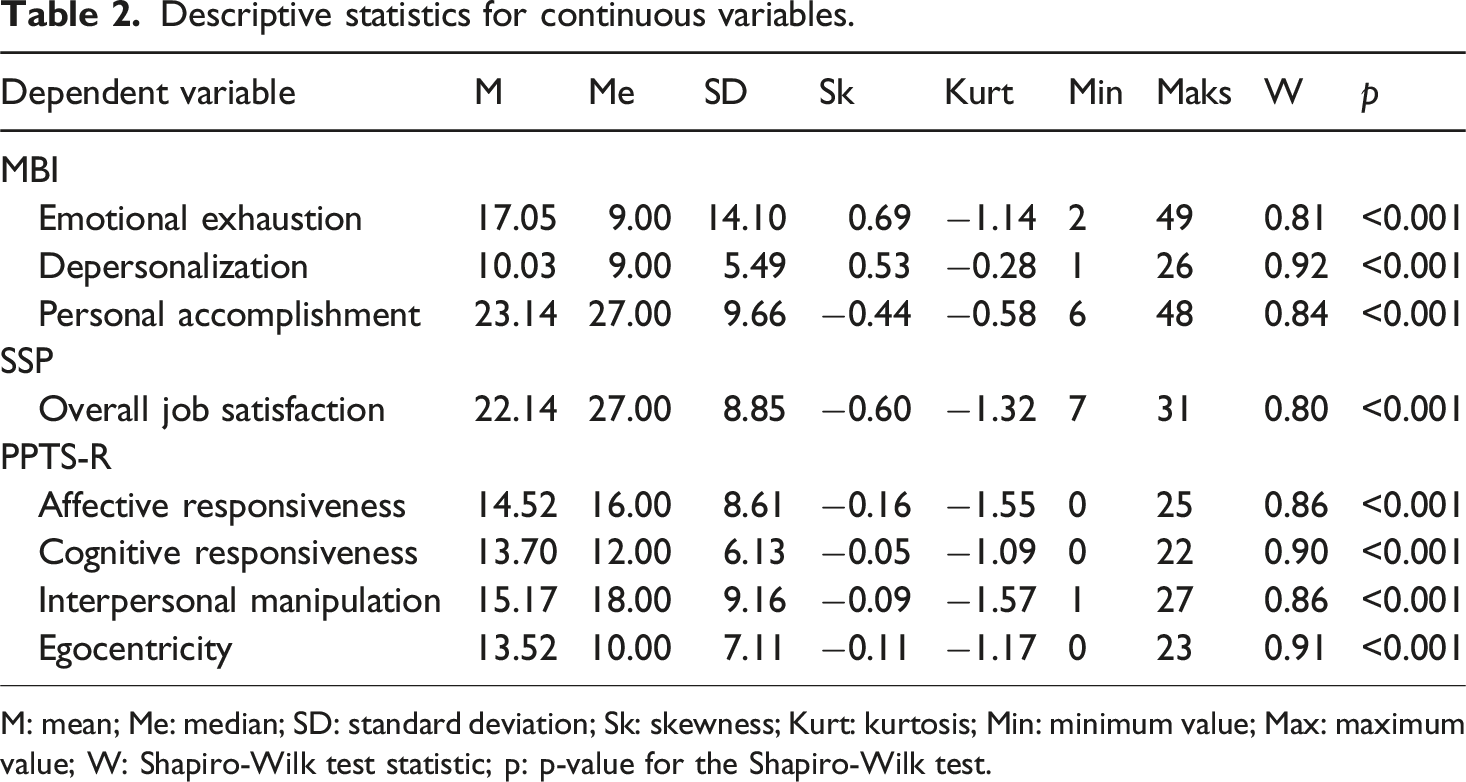
M: mean; Me: median; SD: standard deviation; Sk: skewness; Kurt: kurtosis; Min: minimum value; Max: maximum value; W: Shapiro-Wilk test statistic; p: p-value for the Shapiro-Wilk test.
Correlation between psychopathic personality traits and the risk of burnout in a group of police officers.
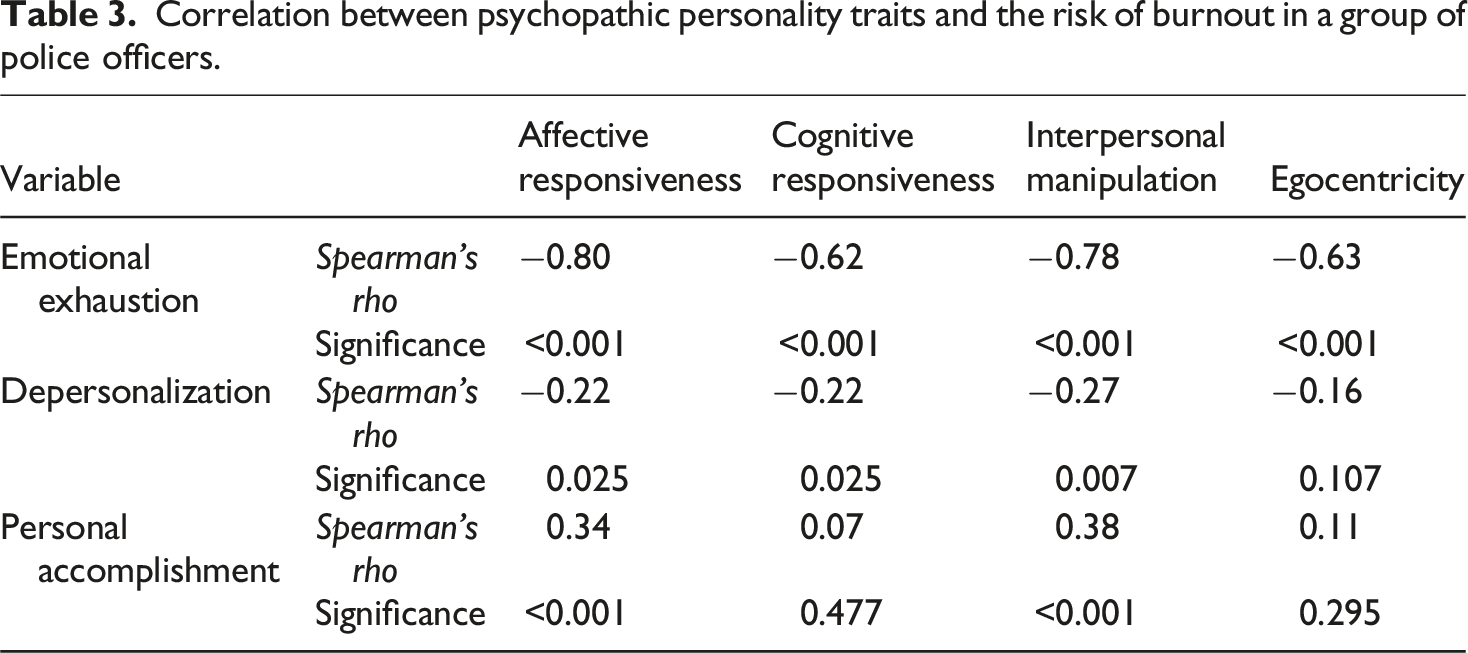
Emotional exhaustion was negatively strongly correlated with all subscales of PPTS-R suggesting that higher levels of psychopathic traits are associated with a reduced risk of emotional exhaustion among police officers. Depersonalization exhibited statistically significant negative weak correlations with affective responsiveness, cognitive responsiveness, and interpersonal manipulation. This indicates that these increased psychopathic traits are linked to a lower risk of depersonalization. The personal accomplishment scale demonstrated a statistically significant, moderate positive correlation with affective responsiveness and interpersonal manipulation. This suggests that increased tendencies in these traits are associated with a reduced risk of burnout in the domain of perceived personal accomplishment. The remaining correlations were not statistically significant.
Correlation between psychopathic personality traits and job satisfaction among police officers.
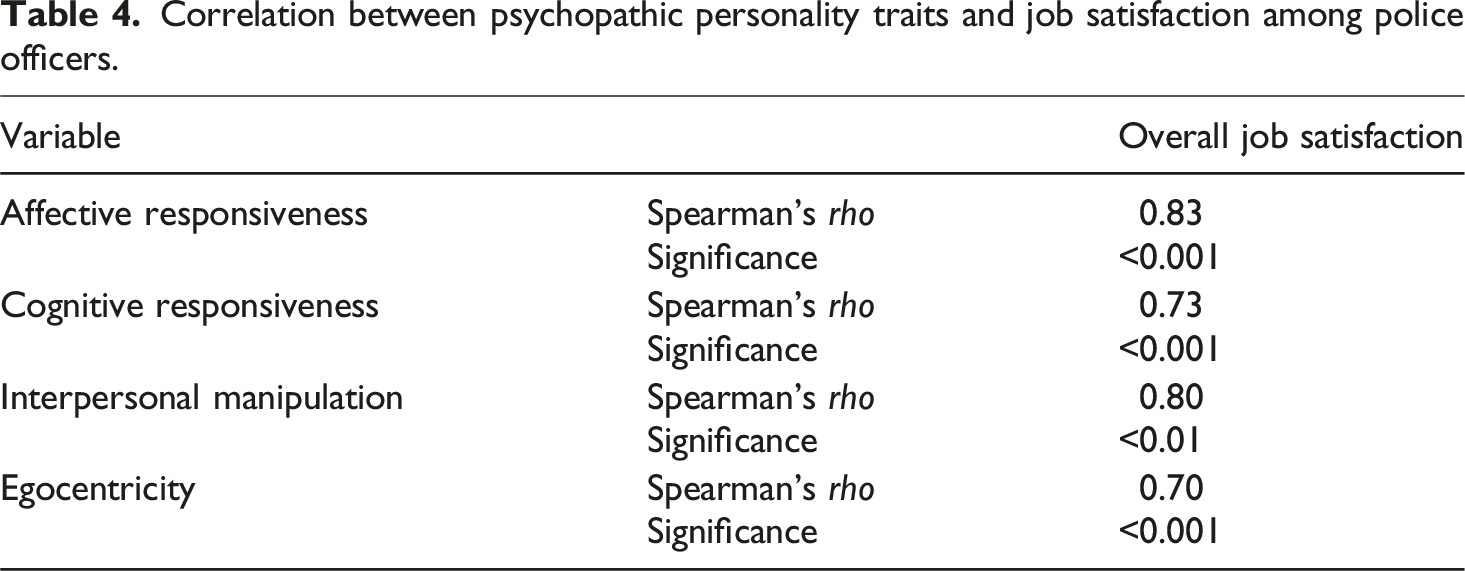
Job satisfaction was found to be strongly and positively correlated with all subscales of PPTS-R indicating that higher levels of psychopathic traits within the studied group were associated with greater job satisfaction.
Discussion
The present study aimed to investigate the relationship between psychopathic personality traits, job satisfaction, and the risk of burnout among police officers. Our findings reveal several significant correlations that contribute to the nascent understanding of how subclinical psychopathic traits may influence well-being and professional experience in high-stress occupations such as policing. Strong negative correlation was observed between all four subscales of the Psychopathic Personality Traits Scale-Revised (Affective Responsiveness, Cognitive Responsiveness, Interpersonal Manipulation, and Egocentricity) and Emotional Exhaustion, a core dimension of burnout. This suggests that higher levels of psychopathic traits are associated with a reduced propensity for emotional exhaustion among police officers. This finding aligns with the theoretical conceptualization of psychopathy, which posits a diminished capacity for emotional reactivity and stress sensitivity (Bakker and Heuven, 2006; Schaible and Gecas, 2010). Police work inherently involves exposure to traumatic events and chronic stressors (Davies et al., 2022), which are significant contributors to burnout (Maslach et al., 2001). The emotional detachment characteristic of psychopathic traits may act as a protective mechanism, buffering individuals from the emotional toll of such exposures, thereby reducing feelings of being emotionally overextended and drained by work.
Furthermore, Depersonalization, another dimension of burnout, exhibited statistically significant negative weak correlations with Affective Responsiveness, Cognitive Responsiveness, and Interpersonal Manipulation. This indicates that increased psychopathic traits are linked to a lower risk of developing a cynical or detached attitude towards work and those served. This result further supports the notion that the affective and interpersonal deficits associated with psychopathy might render individuals less susceptible to the emotional burden that often leads to depersonalization in demanding professions. The absence of a significant correlation with Egocentricity for depersonalization suggests that while self-focus is a psychopathic trait, it may not directly influence the development of a detached attitude towards others in a professional context in the same way that emotional and manipulative aspects do.
Conversely, Personal Accomplishment, the third dimension of burnout, showed a statistically significant, moderate positive correlation with Affective Responsiveness and Interpersonal Manipulation. This counter-intuitive finding suggests that increased tendencies in these psychopathic traits are associated with a reduced risk of burnout in the domain of perceived personal accomplishment. While burnout is typically characterized by a lack of personal accomplishment, our results imply that individuals with higher affective unresponsiveness and manipulative tendencies might maintain a stronger sense of competence and success in their work. This could be attributed to their egocentric focus and manipulative tendencies, which might lead them to prioritize their own success and effectively navigate professional challenges, potentially at the expense of others or without experiencing the self-doubt often associated with reduced personal accomplishment in neurotypical individuals. This finding warrants further exploration to understand the underlying mechanisms.
Perhaps one of the most striking findings of this study is the strong and positive correlation observed between all subscales of PPTS-R and overall job satisfaction. This indicates that higher levels of psychopathic traits within the studied group of police officers were associated with greater job satisfaction. This result challenges conventional notions that psychopathic traits are solely detrimental and supports the emerging concept of “successful psychopaths” or “corporate psychopaths” (Babiak et al., 2010). In a profession demanding resilience, decisiveness, and the ability to operate under pressure, certain psychopathic characteristics—such as fearlessness, a lack of empathy, and a focus on personal gain—might inadvertently contribute to a perception of greater job satisfaction. These traits could enable officers to navigate the inherent stressors and moral dilemmas of policing with less emotional distress, leading to a more positive overall assessment of their work experience. This aligns with previous research suggesting that certain psychopathic traits may enhance an individual’s capacity to perform police duties more effectively (Bakker and Heuven, 2006; Schaible and Gecas, 2010).
It is crucial to interpret these findings within the dimensional framework of psychopathy (Boduszek et al., 2019, 2021), recognizing that we are examining subclinical traits in a non-forensic population. The presence of these traits does not necessarily imply antisocial or criminal behaviour but rather a unique constellation of personality characteristics that may confer certain advantages in specific professional environments. The police service, with its hierarchical structure and exposure to challenging situations, might inadvertently select for or foster the development of certain psychopathic traits that are perceived as adaptive within that context.
Despite the implications of these findings, several limitations should be acknowledged. The sample size of 101 police officers, while providing valuable insights, may limit the generalizability of the results. Future research should aim for larger and more diverse samples to confirm these correlations. Additionally, the cross-sectional design of the study prevents the establishment of causal relationships. Longitudinal studies would be beneficial to understand whether psychopathic traits lead to reduced burnout and increased job satisfaction, or if these professional experiences influence the expression or development of such traits over time. The reliance on self-report measures for psychopathic traits, burnout, and job satisfaction also introduces the potential for social desirability bias. Future studies could incorporate multi-source data, such as supervisor ratings or behavioural observations, to triangulate findings.
In conclusion, this study provides compelling evidence that subclinical psychopathic traits may serve as a protective factor against burnout, particularly emotional exhaustion and depersonalization, and are positively associated with job satisfaction among police officers. These findings highlight the complex and sometimes paradoxical interplay between personality and professional well-being in high-stakes environments. Further research is needed to fully elucidate the adaptive and maladaptive aspects of psychopathic traits in various professions and to inform targeted interventions for promoting mental health and job satisfaction among police officers.
Footnotes

Funding
The authors received no financial support for the research, authorship, and/or publication of this article.
Declaration of conflicting interests
The authors declared no potential conflicts of interest with respect to the research, authorship, and/or publication of this article.