




Abstract
Policing in the United Kingdom can be challenging. The organisational (i.e., within the police force) and operational (i.e., when working in the field) stressors that police officers encounter can negatively impact their mental health. To investigate this 54 currently serving police officers completed an online survey. Most participants typically felt organisational and operational pressures led to a decline in their mental health, regardless of their years in service. This means that participants in their first year and those with over 25 years in service typically reported similar work-related stressors. This paper provides a qualitative overview of work-related stressors.
To be an effective police officer requires a multipurpose skillset. Some examples of these skills include the ability to provide public reassurance, dealing with crime control and emergency responses, peacekeeping and conducting criminal investigations (Bowling, 2007; Reiner, 2010). In order to maintain sufficient standards (Bowling, 2007) police officers must be appropriately trained, resilient to the demands of the job, and be willing to seek support when necessary. Police officers are regularly exposed to occupational stressors. These include exposure to traumatic incidents such as attending motor vehicle accidents, securing crime scenes involving dead bodies, arriving at domestic violence situations, and dealing with, dangerous criminals, as well as dealing with increasing levels of administration and bureaucracy in a profession which is often both under-funded and under-resourced (Carlier et al., 2000; Maguire and Sondhi, 2022). Unsurprisingly, such demands lead to an increased staff turnover (Charman and Bennett, 2022).
The demands on policing in the UK are changing. Reports of rape and serious sexual offences in England and Wales have grown rapidly (Maguire and Sondhi, 2022). In Northern Ireland, police officers are still tackling the demands of paramilitary threats (Richard and Bakke, 2021). Meanwhile in Scotland, the number of serving police officers has fallen to its lowest number since 2008 (Scottish Government, 2022). Additionally, over the last decade, police officers have been increasinlgy exposed to members of the public in a mental health crisis who need to be supported or detained (Kane et al., 2018). In the UK, this is partly the result of the Policing and Crime Act 2017 (section 80) which provides police officers the legal rights to intervene during a crisis. All of the above mentioned factors have the potential to negatively impact on the mental health of police officers.
Given their increased exposure to trauma, stress, and critical incidents (Jenkins et al., 2019; Neylan et al., 2002; Webster, 2013), it is not surprising that the wellbeing of police officers is generally quite poor (Foley et al., 2022; Gavin and Porter, 2024). Exposure to traumatic or critical incidents can lead to serious mental health problems, and to the diagnosis of specific mental disorders such as depression, post-traumatic stress disorder and anxiety (Copenhaver and Tewksbury, 2018; Foley and Massey, 2020; Green, 2004). Within the first 2 years of their job, approximately 92% of police officers deal with critical incidents (Inslicht et al., 2011; Wagner et al., 2019). Despite this, many police officers avoid discussing their mental health over fear of being marginalised (Bell and Eski, 2016; Porter and Lee, 2023). Support is, however, made available to police after a critical or traumatic incident. This is typically through a welfare led process known as Trauma Risk Management ‘TRiM’, through the ‘Emergency Services Trauma Intervention Programme ‘ESTIP’ or through Critical Incident Stress Management ‘CISM'.
TRiM is a UK based peer-support programme designed to reduce the stigma towards mental health in the armed forces and police service (Frappell-Cooke et al., 2010; Greenberg et al., 2008). It is often used after exposure to a critical or traumatic incident, due to the knowledge that exposure to traumatic events can lead to the development of long-term psychological problems. The evidence base for TRiM is promising. Watson and Andrews (2018) found that police officers who have used TRiM reported fewer symptoms of PTSD, reduced stigma, and healthier help-seeking behaviour than the control group. Support should, however, be available on a day-to-day basis instead of simply being a reaction to traumatic incidents (Van der Velden et al., 2010).
The ESTIP is a specialised support initiative designed to assist emergency service personnel (such as firefighters, police officers, paramedics, and other first responders) who experience trauma and stress as part of their job. Some key aspects of the ESTIP include: peer support networks, trauma support and intervention (i.e., immediate and ongoing psychological support for emergency service workers who have been exposed to traumatic events), training and education (i.e., how to recognise signs of trauma, stress management techniques, and methods for maintaining mental health resilience). It also educates managers and colleagues on how to support peers who may be experiencing trauma. The primary goal of ESTIP is to enhance the wellbeing and mental health of emergency services personnel, ensuring they receive the necessary support to cope with the demands of their profession and to maintain their ability to perform their duties effectively.
CISM has been increasingly adopted by police forces worldwide as a comprehensive crisis intervention program (Everly et al., 2000). It aims to reduce acute psychological distress from traumatic incidents and prevent long-term post-traumatic effects. Engaging with CISM can help to develop techniques that work to mitigate psychological distress and promote mental wellbeing (Everly et al., 2002).
Police officers are also exposed to prolonged work-related stressors. These include shift work, long hours, a lack of support from senior managers, excessive workloads, and increased administration (Gavin and Porter, 2024; Kirschman et al., 2015). Police officers recognise organisational stressors as being oppressive, unnecessary, unavoidable, and uncontrollable (Purba and Demou, 2019), and research suggests that they may pose a greater threat to the mental health of police officers than operational stressors (Brough, 2004; Galanis et al., 2019).
This paper considers the impact of the policing role on the mental health of serving police officers throughout the UK. Specifically, it focuses on the organisational and operational stressors associated with the job, and the impact this has on the individual (i.e., the occupational impact).
Method
Ethics
Ethical approval was obtained from the ethics committee at the University of the West of England (UWE) Bristol. All procedures followed were in accordance with the ethical standards of the responsible committee on human experimentation (institutional and national) and with the Helsinki Declaration of 1975, as revised in 2000. Informed consent was obtained from all participants for being included in the study.
Design and procedure
This research involved a series of qualitative and quantitative questions examining mental health and policing. It was built upon the premise that mental health in UK policing was problematic and consequently, serving members would welcome the opportunity to discuss this. Our approach was consistent with previous studies investigating police officers’ lived experiences of mental health problems (i.e., Porter and Lee, 2023). To allow participants to more openly discuss how their mental health has been impacted by their job, we used an anonymous online survey. We felt that this would allow officers to provide a true reflection of their experiences.
A call for UK police officers was placed on the researchers' social media platforms (e.g., Twitter and LinkedIn), and was subsequently advertised through snowball sampling. Those who were interested in learning more about the research were invited to click on the survey link taking them to an online information sheet outlining the core objectives. Those who wished to take part provided consent and were invited to answer a series of questions regarding mental health and policing. Participants were informed that the survey would take up to 20 minutes of their time.
The findings in this paper are part of a larger dataset and include a series of qualitative and quantitative questions. To allow us to gain an understanding of how policing has impacted the mental health of officers, we asked participants to rate their mental health prior to joining the police, and to rate their current mental health using a 7-point Likert scale (ranging from 1 - extremely poor to 7- extremely good). The questions used to inform the qualitative analysis were to “briefly describe your career in the police” and “how has your job impacted your mental health?”. These questions were also used by Gavin and Porter (2024) in their examination of the mental health of members of An Garda Síochána in Ireland.
Participants
54 police officers (ranging in rank from Police Constable ‘PC’ to Detective Inspector) from the UK took part in this study. Participants (30 male, 24 female) had experience in various roles including intelligence, response, sex worker liaison, TRiM leader, terrorism, domestic violence, and hate crime. Most officers discussed having undertaken multiple roles throughout their career. The length of service of participants ranged from 1 year to 25 years.
Thematic analysis
The authors adopted an inductive approach to this research. This allowed them to identify operational and organisational stressors, and their impact on police officers, at the outset. Inductive reasoning is open-ended and exploratory, especially at the beginning of the research process, and its use involves the researcher inferring the implication of their findings for the theory that prompted its use (Bryman, 2016; Given, 2008). From the data we then conducted a thematic analysis which provided a method for identifying, analysing and reporting themes within the data (Braun and Clarke, 2006; Clarke and Braun, 2021). This was a six-stage process comprised of the following: familiarisation with the data, generation of codes, searching for themes, reviewing themes, defining and naming themes, and producing a final report (Braun and Clarke, 2006).
The process involved a superficial reading of the texts for familiarisation. In this phase, the researchers independently took notes of their reflections, bearing in mind that each rereading could reveal new interpretative ideas. Developing themes were identified, starting from the notes taken during the first phase, and initially discussed. Together we then formulated subthemes and agreed upon terminology and meaning. Finally, we clustered subthemes and used them to create a thematic map as outlined below. The thematic analysis was carried out by both authors, as coding with another, and comparing analytic observations, can lead to enriched coding (Braun and Clarke, 2021).
Results
Police officers rated their mental health more positively before (M = 5.41, SD = 1.31) joining the police, compared to how they felt currently (M = 3.93, SD = 1.56), t(45) = 5.29, p < .001, dRM, pooled = −0.60, 95% CI [-1.00, −0.21]. This is not surprising as many participants reported that since starting their policing role, they had been exposed to higher stress levels on a regular basis.
Three core topics were identified in relation to the mental health impacts of policing: (i) organisational stress, (ii) operational stress, and (iii) the occupational impact. The organisational stressors relate to the organisational administration, management, structure, and processes. The operational stressors are associated with the nature of police work, including job-related violence, exposure to trauma, and burnout. Finally, the occupational impact refers to the mental health impacts of the organisational and operational stressors police officers face.
Below we have included a thematic map for each topic with the sub-themes associated with them.
Organisational stress
A thematic analysis based on organisational stress was conducted for two reasons. Firstly, several police officers discussed how organisational stress or pressures related to their declining mental health. Secondly, this allows us to discuss recommendations for improving policing mental health. As presented in Figure 1, organisational stress included the work-related problems associated with policing (i.e., a lack of support and resources) and how this impacts behaviour (i.e., mental health stigma, bullying, and harassment) resulting in feeling underappreciated by both the police force and the public. Thematic network displaying the key components of organisational stress in the UK Police Forces.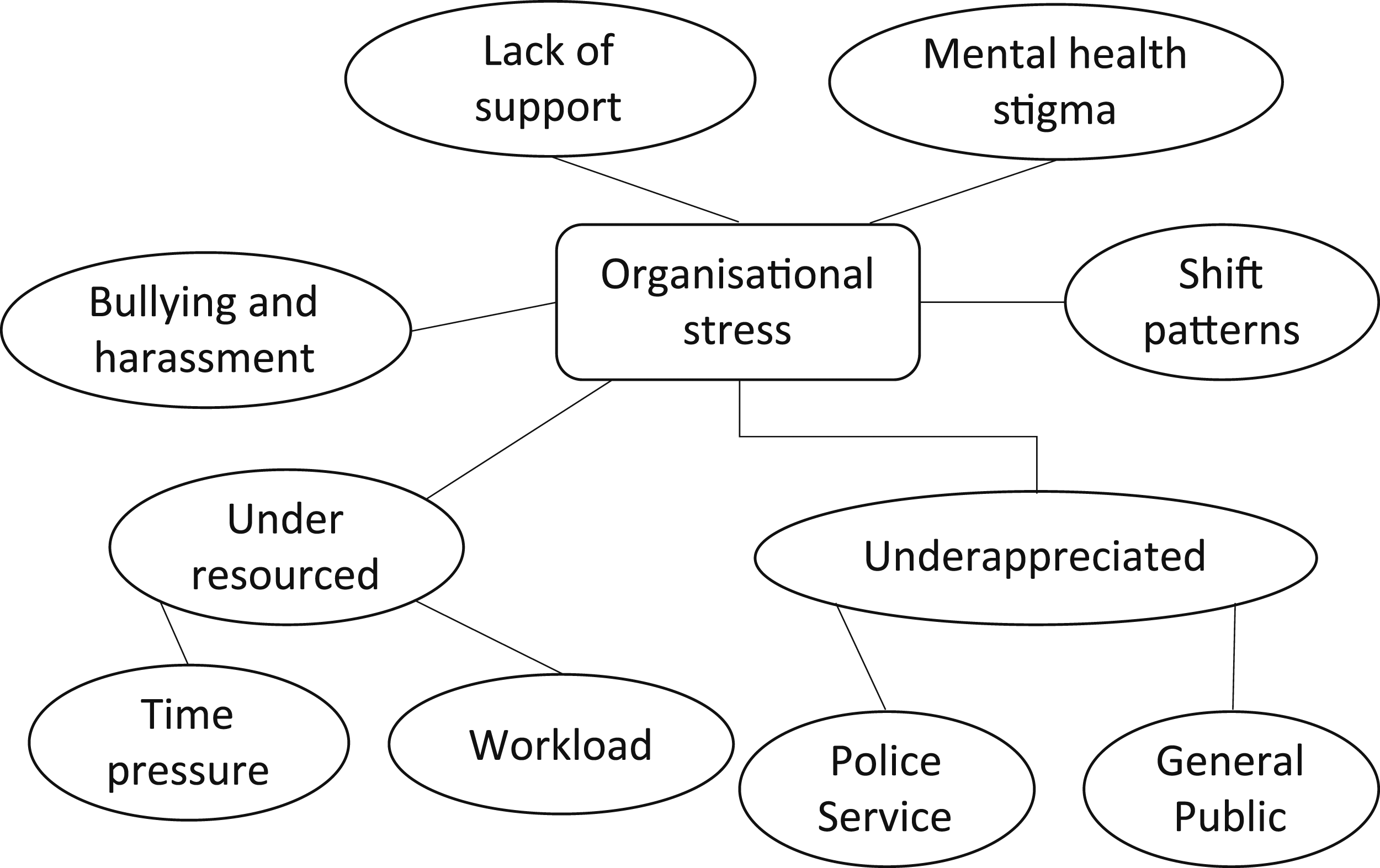
Lack of support
A lack of support from management and leadership leads to additional job pressures which can impact the mental health of staff. This was reported by various police officers throughout different stages of their careers. “The constant pressures from all angles and the non-existent support internally is a recipe for disaster. The job is broke, and MH in Policing is getting worse.” [Inspector, male, 23 years’ service]
Only one person specifically discussed having a supportive line manager and how this was instrumental in maintaining positive mental health. “Whilst having dealt with some traumatic incidents during the course of my service, the main influencer on mental well-being has been made by direct line management within the job.” [Crisis and hostage negotiator, male, 23 years’ service]
Mental health stigma
A policing culture that leads to mental health being perceived as a sign of weakness is often reported by UK police officers (Porter and Lee, 2023). We found similar reflections where police felt that they needed to get on with the job without any support for their wellbeing or mental health. “…The stigma around mental health is still so prevalent that I don’t feel I would have the support to get help, so I continue, day after day, coping a day, sometimes an hour at a time. I deal with everyone else’s problems, no matter how big or small, I deal with horrific deaths, get assaulted and abused and we keep going. That’s how it is.” [Response Officer, female, 14 years’ service]
This was also reflected in responses from more junior police officers, and from those in different roles (i.e., from response policing to intelligence gathering). “….The culture that crying is weakness.” [PC, female, 6 years’ service]
Shift patterns
The unsocial hours required of police officers lead to problems with their mental health, which can impact their ability to sleep and socialise with family members and friends (discussed specifically in occupational impacts). “…The shift pattern affects my ability to sleep which in turn affects my mental health. You are expected to attend incident after incident with no consideration to how these may have affected the police officer.” [PC, female, 2 years’ service]
Despite the unsocial hours being a requirement of policing, the impacts of this were reflected by police officers at different stages of their careers. This shows that regardless of length of service, some police officers simply do not adjust to changing patterns in shift work. “I would say that my job has negatively impacted my mental wellbeing. …Coping with the shift work, high demand of attendance at emergency incidents, never being able to finish a task or investigation to a standard I am satisfied with, minimal support from supervisors when trying to manage my time better…” [PC, female, 6 years’ service]
Underappreciation
Feeling underappreciated by both the police service and the public can be problematic as it leads to reduced morale and low job satisfaction, and the emergence of an ‘us versus them’ mentality (Brough et al., 2016). Many police officers discussed how actions of the public, the media, and government have resulted in difficulties with the trust of outsiders (i.e., those who are not members of the policing community). “Policing has damaged my previously positive outlook, though I wouldn't say it’s completely gone. I still believe there's good people in the world but I'm majorly cynical of those outside of my policing bubble. This is due to a combination of factors, namely the jobs I've dealt with, the communities I've policed and the increasingly anti-policing rhetoric pushed by the Government and Media.” [Detective Sergent, male, 7 years’ service]
Many police officers reported feeling underappreciated by their line managers and felt that this was made worse by the known understaffing problems UK police officers face. “Personally, I do not feel any appreciation from line managers and in fact the harder you work the more you are expected to take on other people's work. When you do a great job you hear nothing about it but as soon as you do something small that your line manager disagrees with, even if it's not a mistake per se, you are pulled up on it. It does really take a toll on your mental health, motivation and job satisfaction.” [PC, female, 4 years’ service]
Workload
The UK police are under-resourced which leads to increased workloads and problems with burnout which can result in more serious mental health problems. “I feel that you are just expected to get on with it and are expected to know everything even if it’s not something you have dealt with before. For example case files! Often I would go home and work from home as a way to get work done to manage stress level. This often leads to burn out and mental struggles as work begins to take over life.” [PC, female, 1 year service]
Workload pressures has meant that staff feel unable to do their job well. “I have suffered as a result of my MH from Policing. Be that burnout from doing too much and thinking too much about my workload to being brought to tears as a result of incidents I have attended including RTCs or suicidal persons.” [PC, male, 4 years’ service].
Bullying and harassment
Bullying and harassment was discussed by several participants. The negative impacts on their mental health and their ability to perform their job are concerning. “…Having experienced bullying and harassment in the job and standing up for myself, it's been isolating. I became the target of group bullying, harassment, and had opportunities taken away from me.” [Special Constable, female, 3 years’ service]
The impact of bullying has also been reflected by those in management positions with longer lengths of service. “… bullying is all too common and the understandable desire to ensure accountability in policing leads to criminal and conduct investigations which last years, often with no outcome…” [Inspector, male, 25 years’ service]
Operational stress
A thematic analysis based on operational stress was conducted, as police officers discussed the impact of organisational stress differently from how they perceived operational stress. As presented in Figure 2, operational stress results in negative impacts on mental health, leading to a lack of resilience, burnout, and sick leave. One explanation for this is the exposure to trauma or desensitisation. Thematic network displaying the key components of operational stress in the UK Police Forces.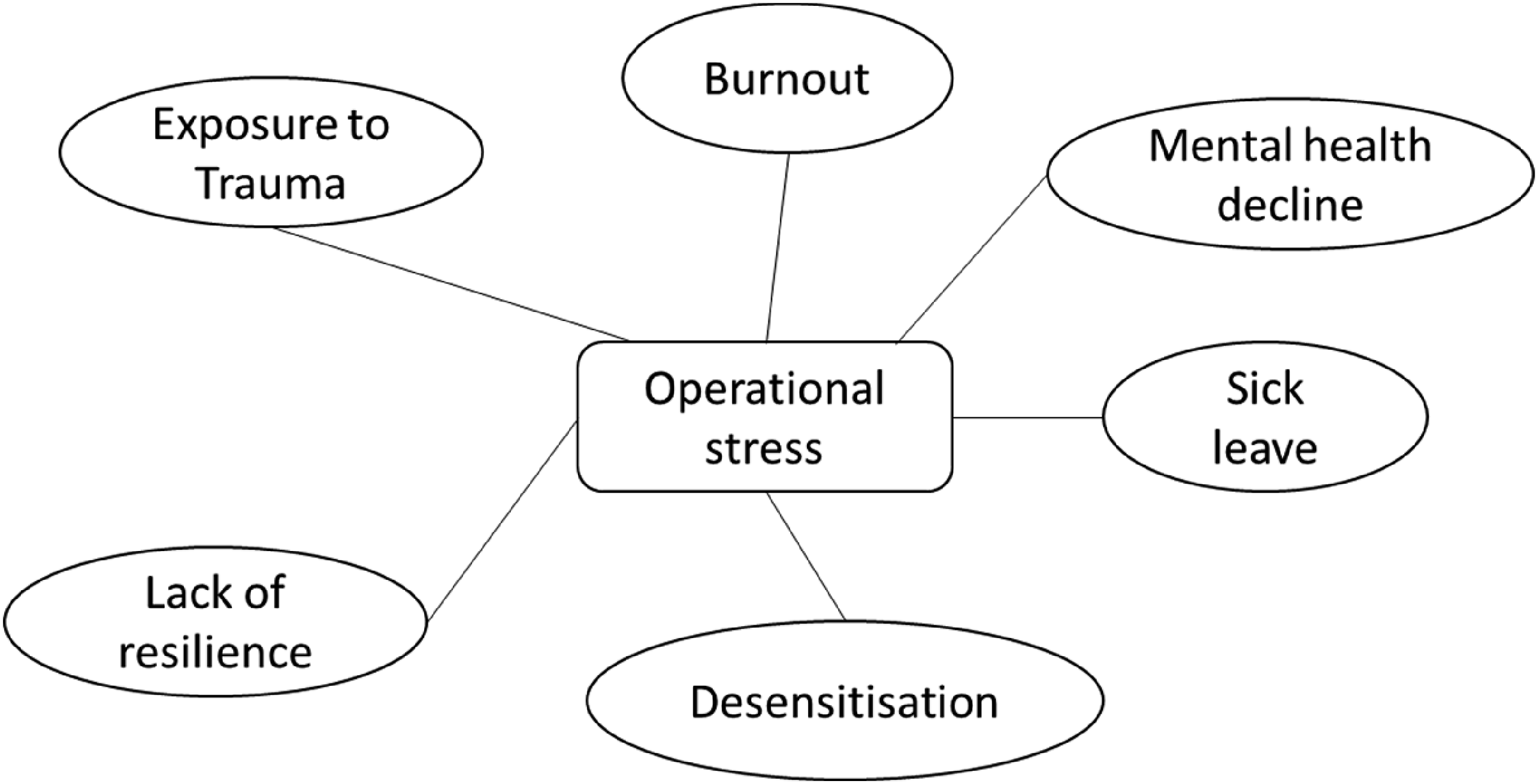
Burnout
It is not surprising that participants were suffering from burnout due to operational stressors. This impacts on the ability of police officers to do their jobs and also impacts on their home life. “I am cynical, I distrust most people, I am anxious, sad, irritable most of the time. I have absolute burnout. I am running completely on empty as work demand more and more from us, I am able to give less and less to my family…” [Response Officer, female, 14 years’ service]
Mental health decline
A decline in the mental health of some participants was found, regardless of their length of service. “I am much more fragile than I used to be.” [Detective Sergent, male, 14 years’ service]
A more junior police officer discussed how his mental health was declining because of the media and the general public. “Before the police I did struggle with mental health however during training all my anxiety seemed to disappear. When I started this remained the same until around a year ago and it has plummeted ever since. It is so hard to ignore the media, be abused every single day for something you and your family have so much pride in me doing.” [PC, female, 3 years’ service]
Sick leave
As a result of declining mental health and burnout many police officers have had to take sick leave. The impact of the policing role and mental health is concerning, but has been consistently reported (Porter and Lee, 2023). “…I have periods off with work related stress, I’ve unintentionally self-injured whilst coping with physical symptoms of this and had counselling.” [Inspector, male, 25 years’ service]
Desensitisation
Feeling numb or de-sensitised to traumatic incidents is common in policing. Many of the officers in our research were aware that they had difficulties with emotional processing, feelings of numbness, and becoming de-sensitised. “Devoid of emotion. De-sensitised to most things people outside of the police would find shocking. More than likely suffering with some form of depression or PTSD.” [Constable, male, 10 years’ service]
However, other experienced police officers were aware that they had changed, but did not seem to understand why this was the case. “The only thing that concerns me is that I am seemingly no longer affected by any situations in front of me. I deal with it objectively, and more often than not chat to my wife about how I feel.” [Special Constable, male, 15 years’ service].
Lack of resilience
Resilience is the capacity to withstand or to recover quickly from difficulties (including exposure to trauma). “I do feel very stressed due to a combination of workload and depression, and really struggle to keep motivated and get through each day. I love my job, I love helping people, but it takes everything to do it.” [PC, male, 1 year service]
Fear of harm
The fear of harm encompasses fear of physical threat as well as fear of complaints from members of the public. “…the fear of a member of the public making a complaint and being under investigation, team dynamics, not having enough time to decompress following a serious incident. One of the main contributors to my mental health being fragile was not being able to nourish my body enough based on the physical demands. Not having access to water or the toilet when I needed to.” [PC, female, 6 years’ service]
This has clear impacts on the mental health of police officers, especially over a prolonged period. “I am not the same person I was when I joined. The things I have seen, the harm people want to cause me and the way the public and media view me because of my job has taken its toll.” [Sergent, male, 16 years’ service]
Exposure to trauma
Exposure to trauma was reflected across different aspects of policing roles. Some police officers focused on the incidents they have responded to, such as road traffic accidents or the aftermaths of a domestic violence situation. Others reflected on the difficulties of working with members of the public (and their families) who have reached a mental health crisis point. “…being untreated and refusing help from mental health services they go on a downward spiral and often try to act on suicidal ideations or try and self-harm in some way. The people I communicate with and their family members, especially when I have spoken to a suicidal person affect me tremendously because I build rapport with people and this is extremely difficult to take home especially if I have dealt with a death by suicide that day. It is so common but it is also tragic at the same time…”[Emergency communications operator, female, 2 years’ service]
Secondary trauma was also discussed as having an impact on police officers’ mental health. Those who discussed this often explained that secondary trauma was different to exposure to traumatic incidents such as responding to violent offences. “It has had a huge effect. I have dealt with all kind of incidents, from baby deaths and homicides. Homicides in adults, violent offences. The biggest impact is the secondary trauma of having to relive other victims pain and hearing accounts given by victims of the most horrific crimes in great detail every day.” [Detective Sergent, male, 14 years’ service]
Occupational impacts
A thematic analysis based on the occupational impacts of the policing role was conducted. As presented in Figure 3, the occupational impacts of the job can result in difficulties with home life and mental health, including exposure to suicide. The coping strategies, use of TRiM, and positive impacts are also discussed. Thematic network displaying the key components of occupational impacts of stress in the UK Police Forces.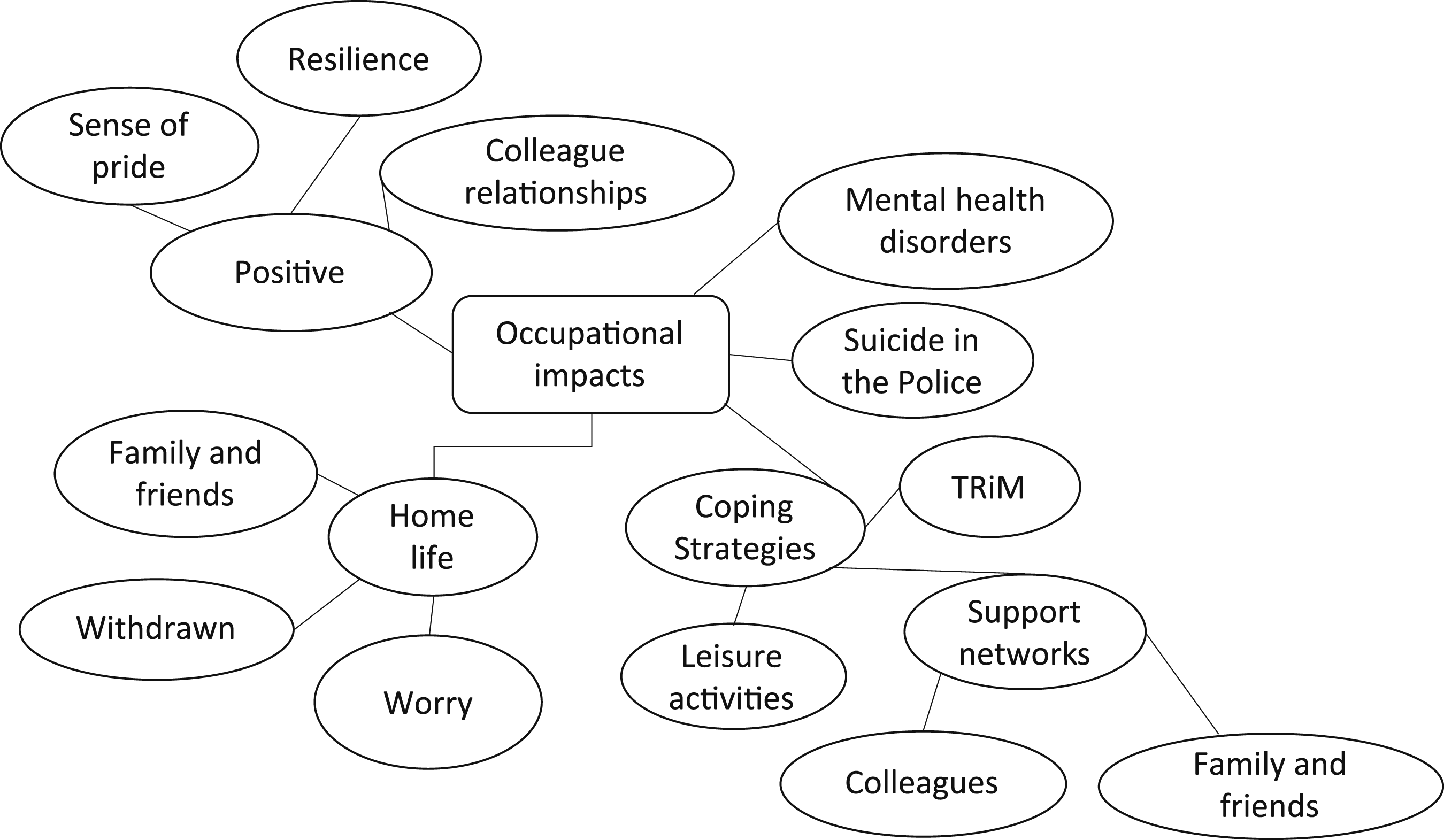
Positive impacts
Only a few police officers reported positive impacts of their occupation. Those who did were most often in their first few years of service. “Generally, positively due to feeling like in a “real” job and making a difference. Generally, enjoy work more than previous jobs. Short term more likely to suffer after particularly distressing incidents but feel this is not impacting my overall MH.” [PC, female, 3 years’ service]
Mental health disorders
Several police officers discussed how they have personally suffered from mental health disorders as a result of their service. Typically these disorders included depression, anxiety, and PTSD, all of which are consistent with previous research (Foley and Massey, 2020; Green, 2004; Porter and Lee, 2023). “Attending serious and highly emotive incidents has caused PTSD. I have had flash backs from fatal incidents I have attended. I struggled mentally after a highly emotive murder. I also struggled with a serious sexual assault case.” [PC, female, 3 years’ service]
Suicide in the police
Suicide within police forces was discussed in this research spontaneously, without any prompting questions. (similar to Porter and Lee, 2023). Future research should examine the mental health impacts of colleague suicide on police officers. “Stress, burnout, anxiety all caused by suicide of a colleague, massive workloads and intense pressures in a heavily negative environment…” [Inspector, male, 14 years’ service].
Coping strategies
Police officers who appeared better able to cope with the demands of the job were focused on discussing the coping strategies they learned during training. This was particularly true for newer officers. Interestingly, only a few police officers discussed coping strategies, but this was despite no direct questions or prompts designed to elicit this information. This demonstrates that some particiapants were aware of the importance of focusing on effective coping strategies for maintaining their own wellbeing. “Since starting my job I have been exposed the much higher stress levels on a regular basis. This took some adjustment however, I would say I now feel a lot more comfortable dealing with incidents I once found quite daunting. During training I was constantly told you need to find ways of managing your stress levels by finding distractions such as working out or a hobby. So this is what I have done consistently since starting the job.” [PCSO, male, 2 years’ service]
Support networks
Police officers who appeared more resilient used their support networks to process and deal with exposure to trauma. This included using colleagues, friends, and family members. “I’ve been fortunate to have a good group of colleagues around me whilst undertaking duties so I feel my mental health has not suffered.” [Special Constable, male, 15 years’ service]
TRiM
Police officers who reported difficulties with exposure to traumatic incidents felt that TRiM was useful for helping them to address their anxiety. “Earlier in my career, I experienced several traumatic incidents whilst working which led to me suffering from CPTSD, leading to panic attacks and anxiety. I have worked through a course and TRiM to address this, and haven't suffered any panic attacks recently…” [PC, male, 3 years’ service]
Home life
The impacts of the policing role on home life is often negative, with police officers recalling how they feel anxious or worried about the job even when they are not on shift. “Since joining the job I’ve developed an underlying sense on anxiety even when I’m not at work. Sometimes this can be for absolutely no reason at all, I can be sat at home feeling anxious and sick for no reason. Other times I could be on leave worrying about what I’m going to come back into. Are there any emails or complaints I’ve picked up whilst being off of work etc etc. Generally feeling hyper vigilant in crowded spaces and finding myself almost over stimulated in busy environments outside of work… Sometimes I find I struggle to get myself out of bed.” [PC, male, 6 years’ service]
Other police officers reflected on how dealing with traumatic incidents in a time-pressured event leads to difficulties with emotional processing. This results in difficulties associating with friends and family members when not on shift. “Attending serious incidents can be distressing and traumatising. Sometimes the people involved can be similar ages or in similar circumstances to family members. This leads to overthinking about past incidents, especially those involving death or serious injury.. I find that the job has blunted my emotions and sometimes leaves me treating friends and family differently. I lack motivation to go out and do things I used to enjoy at weekends or days off.” [Road traffic officer, male, 4 years’ service]
Discussion
Policing is a challenging job (Purba and Demou, 2019), which has been made more difficult with a public mental health crisis (Xanthopoulou et al., 2022), under-resourcing (Brunetto et al., 2023), and changes in how the media portray policing (Jackman et al., 2021). In UK, policing research experts have focused on the mental health of former police officers (Porter and Lee, 2023), those who have voluntarily resigned (Charman and Bennett, 2022) or those within specific roles (Jackman et al., 2021).
This paper has focused on the mental health impacts of policing on current police officers across the UK. Participants were invited to discuss their views on how the job impacted their mental health. The three key topics discussed related to organisational stress, operational stress, and the occupational impact this has on police officers. The roles of participants varied from response policing to terrorism specialisms. Due to the variation in roles that police officers have within their careers (Porter and Lee, 2023) we decided not to focus on any specific role.
Understanding the role of organisational stress is important as this can lead to specific mental health problems in police officers (Purba and Demou, 2019). Consistent with other research (Charman and Bennett, 2022), we found that shift patterns, time pressures, and workload led to increased stress. Unsurprisingly, this led to officers being unwilling or feeling unable in some cases to seek support.
Bullying and harassment was reported by new and experienced officers across various levels of seniority. This is consistent with other research highlighting discriminatory behaviour from managers, which can contribute to police officers resigning (Charman and Bennett, 2022). In addition to negative behaviour towards staff, a general lack of support from management was found (although one participant did not feel this way). One explanation for this is a perceived generational clash between experienced and new staff (Porter and Lee, 2023).
Most police officers discussed feeling unsupported by the management team, and this was reflected from those early in their careers right through to police officers with more than 20 years of service. Some police officers indicated that the lack of support has become worse over the years. Although there was an acknowledgement of the support available through TRiM, others raised doubts over how effective the current support options really are. This was also reflected in Maguire and Sondhi’s (2022) research. Part of the reason why police officers struggle with their mental health is due to exposure to traumatic incidents (Foley et al., 2022), while others argue they simply do not have the time to seek out support. This is consistent with the concerns raised around resourcing and workload.
Participants referred to being overworked, that is a concern consistently raised in research into the mental health of police officers in England and Wales (Charman and Bennett, 2022; Maguire and Sondhi, 2022). The Conservation of Resources Theory has become one of the major approaches used for understanding the impact of motivation on both burnout and traumatic stress in the workplace (Hobfoll, 2011). According to this theory, employees make choices about work engagement based on their access to physical, psychological, social, organisational, and personal resources (Hobfoll, 2011). The core principle is that “individuals (and groups) strive to obtain, retain, foster, and protect those things they centrally value” (Hobfoll et al., 2018, p. 106). This is important for policing, because when perceived operational support is low, police officers may suffer with increased stress, which may then negatively impact their resilience and compromise their performance (Brunetto et al., 2023). Many of the police officers in our research felt that they did not have access to adequate resources, and were not supported by the leadership or management team.
Operational stressors are associated with the nature of police work, including job-related violence, exposure to trauma, burnout, and operational impacts of this (Jackman et al., 2021). Most police officers provided examples of traumatic incidents they had responded to, including to distressed members of the public who had no access to mental health specialists. This was also reflected when officers discussed their exposure to secondary trauma through working with members of the public suffering from mental health problems.
Unsurprisingly, the police officers in our research discussed burnout, difficulties with resilience, a decline in their mental health (while at work) and increased sick leave. When working with members of the public many police officers reported a fear of harm, either through physical harm or through the consequences associated with public complaints. This was exacerbated by the fear of the media and feelings of underappreciation from the public and the wider police force. This is concerning as job satisfaction is one of the major factors influencing police officers’ decision to voluntarily resign from work (Charman and Bennett, 2022).
Compassion fatigue or depersonalisation is often associated with high-intensity careers such as policing (Maguire and Sondhi, 2022). In our research, we found this was the case, although many officers referred to the exposure to trauma leading to desensitisation. Police officers often felt that they could not connect with victims or criminals after a prolonged period within that sector. When asked why they had voluntarily left the English or Welsh police force, 65% of participants reported that this was due to the impact of the job on their personal lives (Charman and Bennett, 2022). Our findings show home life is impacted by the job leading to police officers becoming more withdrawn, having difficulties connecting with friends and family, and carrying an increased sense of worry. Balancing home and work life is a common problem in policing (Maguire and Sondhi, 2022; Porter and Lee, 2023), although younger police officers appear to prioritise a healthier work-life balance (Williams and Sondhi, 2022).
Conclusion
In conclusion, we found that despite the modifications to UK policing in recent years (i.e., increased recruitment, educational demands, structural changes), organisational stress, operational stress, and the occupational impact of the job are negatively affecting most police officers. Even police officers who appear more resilient have reported difficulties with their mental health as a direct consequence of the job. It is important to note that our data focused on police officers more generally. This does not allow us to focus on specific job-related factors which may impact mental health. Nor does it determine the difference between rural and urban-based police officers. It is possible that specific jobs within policing will lead to greater (or lesser) organisational and/or operational stressors. Future research could examine these areas.
Footnotes
Declaration of Conflicting Interests
The author(s) declared no potential conflicts of interest with respect to the research, authorship, and/or publication of this article.
Funding
The author(s) received no financial support for the research, authorship, and/or publication of this article.
