



Abstract
Early psychological health studies in policing often focused on trauma and critical incidents (CIs). More recent research builds a compelling argument that significant causes of psychological harm stems from other operational and organizational factors. The current study uses survey data from a large sample of Australian police (N = 1763), producing strength metrics derived from mediated regression analyses. The relationships between stressors (trauma and CIs, operational and organizational) and psychological health (psychological distress and burnout) were studied. For the relationship between stress and psychological distress, compared to trauma stress, the relationship with organizational stress was three times stronger and the relationship with operational stress was two and half times stronger. No direct relationship between trauma stress and burnout was found. It was fully explained by organizational and operational stress. The findings suggest police leaders must consider the direct and combined impacts of different stressors on the psychological health of their staff.
Keywords
Introduction
Across the last decade, it has been increasingly acknowledged that police work can have significant and adverse psychological impacts on those who serve in the police profession (Carleton et al., 2020; Regehr et al., 2019). Officer wellness has attracted more research interest and is now recognised by many police agencies as an area of priority (Edgelow et al., 2022; Phythian et al., 2023). Earlier studies often focused on the relationship between adverse psychological outcomes stemming from trauma and critical incidents (CIs) (Jorgensen & Elklit, 2022; McCreary et al., 2017). This is unsurprising given that police work is somewhat uniquely characterised by these types of job demands. Officers experience both greater quantity and higher frequency of trauma and CIs compared to employees in most other professions (Phythian et al., 2023). Recently, it has been more readily recognised that CIs and traumatic experiences are not the only, and perhaps not even the most impactful, workplace experiences that are causing elevated rates of mental health concerns across police cohorts (Carleton et al., 2020; Violanti et al., 2017).
Beyond trauma and CIs, the contribution of operational and organizational stressors in driving the high rates of psychological ill-health in policing is evidenced through empirical research (Queirós et al., 2020). This has begun to draw attention to the need to better understand the relative contribution of different sets of stressors found in the police context. While the term operational stress is often exclusively used to refer to trauma and CIs, it can also be used to encompass a broader range of operational-related factors. In this study, the term operational stress is defined using this more expansive definition. It captures stressors associated with doing the job of policing (e.g., fatigue resulting from shift work or the challenges of work-life balance) (Carleton et al., 2020; McCreary et al., 2017; Purba & Demou, 2019). For this study, trauma and CIs are considered as a separate category of stress so that the unique impacts of trauma and CIs and other types of operational stress can be disentangled. A third group of stressors, which are also included in the current research, relates to organizational factors. Reference to organizational stress is used to capture stress resulting from the organizational police culture and the experience of working within the organizational, bureaucratic structure of police agencies (Carleton et al., 2020; McCreary et al., 2017; Purba & Demou, 2019).
The current study builds on the work of Carleton et al. (2020) who undertook proportional harm research with a sample of Canadian public safety personnel (including police). This research concluded that, even after accounting for the experience of potentially psychologically traumatic events (PPTEs), occupational stressors (measured as other operational and organizational stress) were strongly related to mental health disorder symptoms. Few other researchers have provided, for those employed in the public safety profession, such definitive quantification of the direct and indirect proportional contribution of different categories of stressors on psychological outcomes. Replication and extension of this type of research is important to test the generalisability of these findings. Research examining different types of psychological outcomes that are associated with distinct sources of stress and undertaking research with police cohorts from other countries is needed.
As such, the current study was conducted with a large sample of Australian police. Quantification of the relationship between different types of police stressors (including trauma and CI stress, operational stress and organizational stress) and the psychological outcomes of burnout and psychological distress are examined in this study. This is important given that previous research has focused on the symptomology of diagnosable mental health conditions, which is at the more extreme ‘illness’ end of a mental health continuum. Carleton et al.’s (2020) research focused exclusively on mental health conditions, including posttraumatic stress disorder (PTSD), generalized anxiety disorder (GAD) and major depressive disorder (MDD). In the current study, psychological health or harm refers to both burnout and psychological distress. Burnout ‘is a syndrome conceptualized as resulting from chronic workplace stress that has not been successfully managed’ (World Health Organization, 2019, pp. QD85). It is a condition that is specific to, and stemming from, the experience of stress in an occupational context that includes feelings of exhaustion and energy depletion (World Health Organization, 2019). Psychological distress encompasses feelings of nervousness, agitation, psychological fatigue and depression’ (Coombs, 2005).
It is proposed that contemporary approaches to wellness are being driven by leadership decisions in police agencies that are based on ‘assumptions’ or ‘best guesses’. There is little evidence that approaches to wellness or subsequent design and delivery of interventions in police agencies are being driven or informed by a comprehensive, systematic, and analytic approach to quantifying the diversity of factors that are likely to be driving psychological ill-health across police cohorts. Therefore, extending existing research the current study provides a methodology and analytic approach that produces relatively simple strength metrics. Strength metrics capture the strength of relationships found between specific causes of harm (i.e. stressors) and subsequent harm outcomes (i.e. burnout and psychological distress). They can be used to prioritize what stressors should be targeted to improve wellbeing across police agencies. Through this research, we demonstrate how strength metrics might be used by leaders to make better evidence-informed decisions. These metrics provide leaders with information about which stressors should be reduced based on the relative strength of their relationships with poor psychological outcomes.
Proportional Contribution of Stressors on Harm Outcomes
Trauma and Critical Incidents
It remains essential to continue to increase our knowledge of how traumatic and CI events impact on police personnel. These events include aspects of a first responder’s job that may be dangerous (e.g., a threat to one’s life) or may cause significant distress (e.g., witnessing a death) (Weiss et al., 2010). Exposure to CIs begin in the first year of service and yearly incidence exposure rates can range from 46% to 92% (Wagner et al., 2020). A systematic literature review, involving 67 studies examining the prevalence of mental ill-health in policing, reported that one in seven police personnel meet the criteria for PTSD and depression diagnoses (Syed et al., 2020). These diagnoses are often attributed to trauma and CIs (Syed et al., 2020).
The frequency and severity of different types of CIs and traumatic events in police populations and their relationship to wellbeing and mental health is a popular area of research. Research conducted by Wagner et al. (2020) found that incident-specific factors, that is, type and frequency of exposure, both need to be considered when considering officers who are more or less likely to be diagnosed by PTSD. However, not all types of CIs result in equal levels of stress or traumatisation. Experiences such as the physical dangers of policing to themselves and colleagues are reported to be some of the most stressful and impactful types of events (Drew & Martin, in press; Hartley et al., 2013; Jorgensen & Elklit, 2022). Other types of critical incidents or traumas may be more routine, they may not be perceived by officers as being as severe and as such, do not result in significant stress (Weiss et al., 2010).
As already highlighted, understanding the role of trauma and CIs is important. It would be ill-advised to discontinue or divest in interventions designed to support officers who either experience significant CIs and trauma or are impacted by the cumulative nature of these experiences. However, a focus on trauma and CIs as the only cause of harm in policing is somewhat limiting, particularly when considering what options are available to prevent psychological injury from such exposures. CIs are a non-modifiable demand on police, they form part of the work that police do and cannot be removed, regardless of the harms they might cause. Wellness interventions focused on trauma and CIs are inevitably restricted to approaches that prepare officers to face these types of events. Robust systems and supports must also be in place following such experiences to reduce the likelihood of adverse psychological outcomes or promote faster and more effective recovery. Given the unavoidability of trauma and CIs, police agencies have made significant investment in programs that are designed to increase officers’ resiliency in preparation for the experience of trauma and CIs and to better manage stress when trauma and CIs are experienced (Anderson et al., 2020; Antony et al., 2020). Consideration of only trauma and CIs as harmful elements of police work largely limits options for interventions to reactive approaches,with few options available for primary prevention (Drew et al., 2023).
If we are to utilise primary prevention wellness initiatives in policing, which involves eliminating or significantly reducing factors that cause harm (LaMontagne et al., 2016), this will demand a comprehensive analysis of other types of stressors that impact on police. The first step is to gain an understanding of whether there are factors within the police context that are also causing harm, beyond trauma and CIs. In addition, it is critical to determine whether such factors are ones that can be better controlled and/or modified by police agencies. Is there an opportunity for leaders to reduce or eliminate factors over which they have influence in the workplace before they can adversely impact on officer health?
Operational and Organizational Stress
It is increasingly common for research conducted with police to find that a broad range of operational and organizational stressors are stressful (Purba & Demou, 2019). In turn, stress stemming from these experiences is strongly associated with adverse psychological outcomes (Purba & Demou, 2019).
Operational stress is sometimes used synonymously to refer to trauma and CIs. However, operational stress can be conceptualized beyond this narrow focus. Operational stress refers more wholistically to stressors that are associated with doing the job of policing (Carleton et al., 2020; Edgelow et al., 2022; McCreary et al., 2017). It captures challenges such as achieving a work-life balance, fatigue that can result from shift work and over-time, and negative comments from the public (Carleton et al., 2020; McCreary et al., 2017). This broader definition of operational stress is used in the current study.
Organizational stress refers to factors that are associated with the organizational culture of the police environment. It is stress felt or perceived to be experienced because of working within a police agency and/or more broadly, the police profession (Carleton et al., 2020; Edgelow et al., 2022). Organizational stressors include factors such as leaders over-emphasising the negatives, the feeling that different rules apply to different people (e.g., favoritism), staff shortages, and bureaucratic red tape (Carleton et al., 2020; McCreary et al., 2017).
Studies of emergency services personnel thatcompare trauma and organizational stress directly, often report that occupational stressors (including both operational (other than trauma and CIs) and organizational factors combined) are dominant causes of poor psychological outcomes (Brough, 2004; Kop et al., 1999). Even when examining outcomes such as PTSD, a condition typically associated with the experience of a trauma or CI, the work environment has a strong association with this type of diagnosis (Maguen et al., 2009).
Implications for Police Leaders and Their Agencies
Despite growing evidence of the importance of organizational and operational stressors in understanding police wellbeing, it is interesting that the predominant translation of police stress and psychological health literature continues to focus on the impacts of trauma and CIs. Workplace interventions that aim to address a broader range of operational and organizational factors are lagging behind interventions that mostly target stress reactions from trauma and CI events (Patterson et al., 2014; Polkinghorne & Drew, 2021). It seems that police agencies simply fall back to the traditional view that it ‘makes sense’ that the traumatic nature of policing is the most significant and predominant reason for poor psychological health across police cohorts. Police agencies fail to adequately acknowledge the contribution of a full range of stressors on health outcomes and in turn, investment by agencies in designing wellbeing strategies and interventions is myopic.
Organizational and other types of operational stressors are squarely within the mandate and control of police leaders. Leaders create and implement the policies, procedures and structures in police agencies and are key actors in its culture. As discussed, growing evidence suggests that it is these factors, designed and executed by leaders, that are significantly impacting psychological health. Police agencies and leaders are likely to be more strongly positioned to improve wellbeing than they currently recognise, particularly if they expand their focus beyond trauma and CIs (Drew et al., 2023; Edgelow et al., 2022). One of the most pressing priorities for leaders, who seek to improve the psychological health of their staff, must surely be to reform and build workplaces that reduce operational and organizational sources of stress.
Current Study
The current research focuses on the quantification of the causes of harm (measured as three groups of stressors, including trauma and CIs; operational; and organizational stress) and psychological harm outcomes (measured as psychological health encompassing burnout and psychological distress). The measurement of burnout and psychological distress expands the original work undertaken by Carleton and colleagues (2020) who focused on diagnosable mental health conditions. The current study provides the opportunity to undertake qualitative comparison with Carleton et al.’s (2020) findings, extending knowledge as to the relationships between stressors and an expanded number of psychological outcomes.
Except for Carleton et al.’s (2020) work, limited research has been undertaken on quantifying either the direct relationship between PPTEs and other operational and organizational stressors on psychological outcomes or the interrelationship between stressors and outcomes. The current study is the first to quantify the proportional contribution of causes of psychological harm with a cohort of Australian police. It is hypothesized that all three types of stress will be predictive of burnout and psychological distress. The research will explore, within single explanatory models, the comparative strength of relationships, between each set of stressors and each outcome. The study further explores whether the relationships between trauma and CI stress and burnout and psychological distress can be explained by the experience of stress stemming from organizational and operational factors.
To successfully translate the findings of this study into practical outcomes, demonstration of how metrics from this research can be used by police leaders is important. Using mediated regression analysis, this study demonstrates how to approach the quantification of the impact of stressors on psychological health. It provides an example of how to construct an evidence-base on which leaders can make better informed decisions. It will enhance the capacity of leaders to prioritise more effectively and accurately the causes of harm that require immediate intervention. The metrics provided, explained through standardised beta coefficients, can be used by police leaders and their agencies to inform decisions about what stress inducing factors cause the most psychological harm and in turn, should be targeted through wellness strategies and interventions. Leaders can work to better eliminate, modify, or reduce the predominant causes of stress in their agencies.
Methods
Data and Procedure
This study utilises data from a survey of 1763 police officers employed by a large, state-based police organisation in Australia. Data was collected through an online survey which contained 111 questions divided into six sections. The questions were focused on experiences and perceptions of workplace stressors, workplace experiences and psychological outcomes. The focus of this study is on three sets of variables capturing stress, psychological distress and burnout. The survey was undertaken as part of an Australian Research Council (ARC) Linkage Grant (LP200200834).
All personnel in the participating police organisation were invited to participate in the study. To attract participation, an email containing a survey link was sent to all personnel by the Commissioner of the police organisation. Further emails were distributed by the Presidents of the Police Unions who service the police agency.
The research received ethics approval through the Human Research Ethics Committee (HREC), Griffith University (GU Ref: 2021/793). Approval to conduct the research was also provided by the agency through an internal Research Committee. The officers were advised that the survey link took them to a survey platform that was externally hosted (i.e. University survey platform). Officers were informed that their survey responses could not lead to identification and further, individual survey responses would at no time be provided to the police agency. The agency would only receive reports that included summary data.
The survey link was active for 40 days between March and May 2022, and 4164 participants accessed the survey link. Of those, 2174 completed the survey in full, while 1991 partially completed the survey. The research team retained only partially completed surveys where the participant had completed at least three sections (n = 312). These partially completed surveys were cross-checked for duplicates (n = 35) and the duplicates were removed from the sample. The final useable sample comprised 2446 surveys, including both sworn police officers and non-sworn police employees. This represented a 58.7% completion rate. Of this final sample, 72.1% reported being a police officer (n = 1763). This represented 14.8% of sworn police officers employed in the agency in which the study was undertaken. This study is based on the sworn police officer cohort.
Measures
This study examines the mediating effect of operational and organizational stressors on the relationship between trauma and (a) burnout and (b) psychological distress. To conduct these analyses, five scales were used.
Dependent Variables
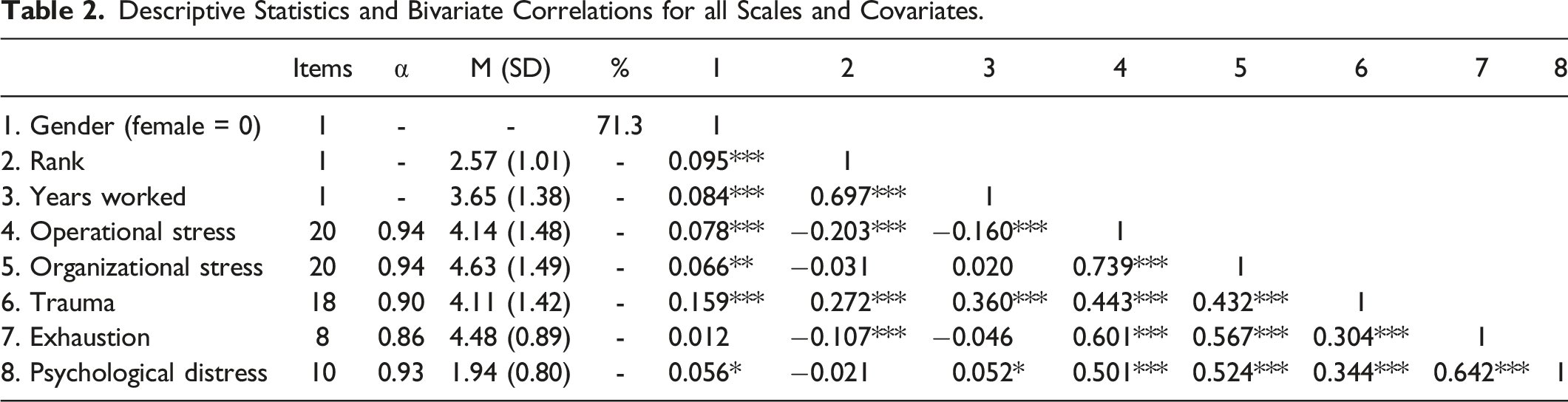
Two dependent variables were employed to conduct the analyses. The first dependent variable was burnout. The exhaustion sub-scale of the Oldenburg Burnout Inventory (OLBI) was used to measure feelings of exhaustion related to the experience of chronic work-related stressors (Demerouti et al., 2003). The scale had eight items with each item rated on a rating scale ranging from 1 (very strongly disagree) to 7 (very strongly agree). Higher scores on the scale indicated stronger agreement with each statement. An examination of the mean scores of the exhaustion scale shows that overall, participants reported a mid-point level of exhaustion (Scale Mean = 4.48; SD = 0.89; α = 0.86).
The second dependent variable was psychological distress. The Kessler Psychological Distress (K10) scale (Kessler et al., 2002) was used. The K10 is ‘a short measure of non-specific psychological distress based on questions about the level of nervousness, agitation, psychological fatigue and depression’ (Coombs, 2005). Each of the ten items on the scale were rated from 1 (none of the time) to 5 (all of the time). Higher scores on the scale indicated greater psychological distress. An examination of the mean scores of the psychological distress scale shows that overall, participants reported feeling distressed a little of the time (Scale Mean = 1.94; SD = 0.80; α = 0.93).
Independent Variables
Principal Axis Factor Analysis.
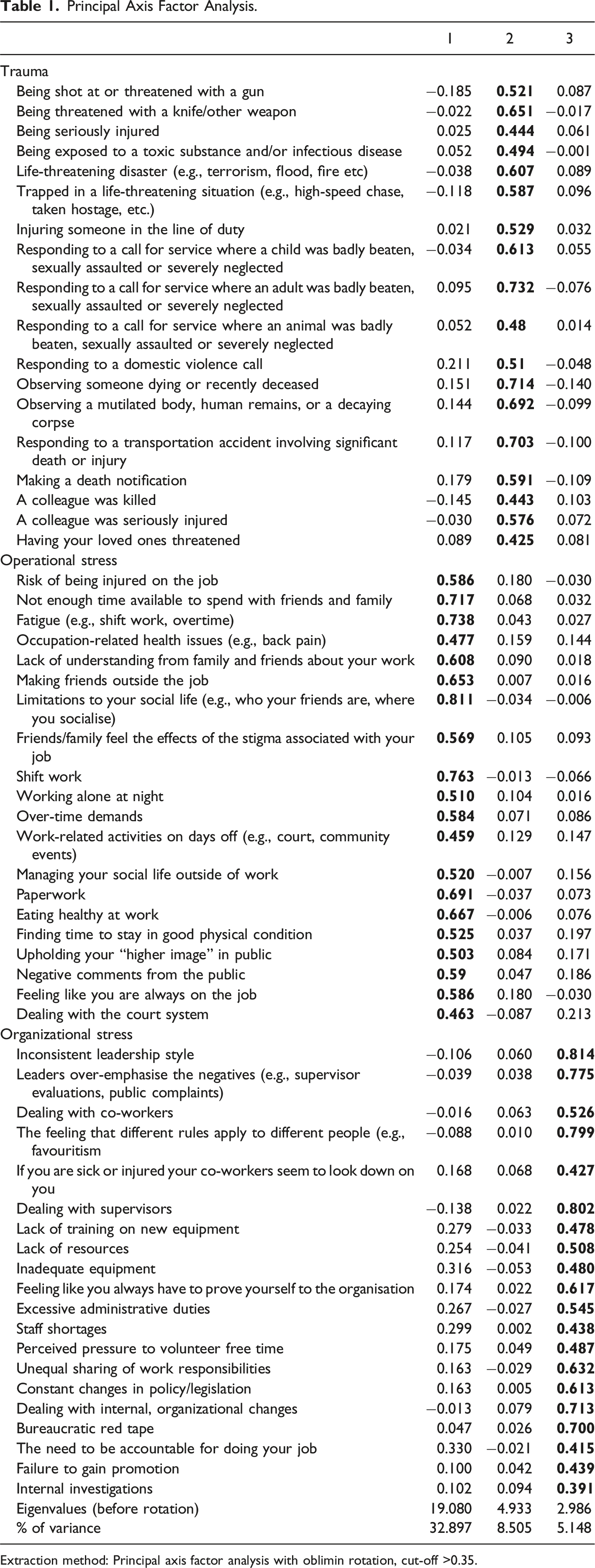
Extraction method: Principal axis factor analysis with oblimin rotation, cut-off >0.35.
Operational Police Stress
This variable was measured using the Operational Police Stress Questionnaire (PSQ-Op) developed by McCreary and Thompson (2006). The original scale comprised 20 items, however after conducting a PAF analysis, one item that was in the original organizational police stressors scale, namely “Dealing with the court system”, loaded onto the operational stressors scale. As such, it was included in the operational police stress scale. In addition, the variable denoting “Traumatic events (e.g., MVA, domestics, death, injury)” was removed from the scale to avoid potential multi-collinearity issues with the trauma/CIs scale. The final scale measuring operational police stress included 20 items. These items measured stress specific to police operational practices, such as shift work and dealing with negative sentiment about the police from members of the public. Participants were asked if they had experienced each type of stressor (coded as 1). Those who had experienced the stressor were asked how stressful each stressor was (ranging from 2 = no stress at all to 8 = a lot of stress). Higher scores on the operational police stress scale indicated stronger feelings of stress resulting from operational police stressors (M = 4.14; SD = 1.48; α = 0.94).
Organizational Police Stress
To measure this variable the Organizational Police Stress Questionnaire (PSQ-Op) developed by McCreary and Thompson (2006) was used. McCreary and Thompson’s (2006) original scale included 20 items. Two more variables were added, “Failure to gain promotion” and “Dealing with internal, organizational changes.” After conducting a PAF, two items were removed. “Too much computer work” was removed from the scale due to weak item loading. As mentioned, the item measuring “Dealing with the court system” was considered an operational stressor as it loaded strongly with the operational stress items. The final organizational stress scale comprised 20 items. The scale included issues such as insufficient resources and/or training and work-based pressures. Similar to the operational stress scale, participants were first asked if they had experienced each stressor (coded as 1). Those who had rated how much stress each event had caused them (ranging from 2 = no stress at all to 8 = a lot of stress). Higher scores on the organizational police stress scale represented stronger feelings of stress resulting from organizational police stress (M = 4.63; SD = 1.49; α = 0.94).
Trauma
Trauma was measured using an adapted version of Weiss et al.’s (2010) Critical Incident History Questionnaire. The variable was measured using 18 items that sought to capture the experiences of police with various critical incidents and the level of stress officers felt as a result of each incident. The types of critical incidents included in the scale related to aspects of a first responder’s job that may be dangerous (e.g., a threat to one’s life) or that may cause significant distress (e.g., witnessing a death) (Weiss et al., 2010). Each statement was followed by a series of responses asking participants to state whether they had experienced each event (coded as 1). If experienced, the participant rated the level of stress it had caused. Levels of stress were measured on a 7-point Likert scale ranging from no stress at all (2) to a lot of stress (8). A higher score on the trauma scale indicated stronger feelings of trauma resulting from critical incidents (M = 4.11; SD = 1.42; α = 0.90).
Covariates
Descriptive Statistics and Bivariate Correlations for all Scales and Covariates.
Analytic Strategy
The hypothesised model was tested using Hayes’ PROCESS macro model 4 (simple mediation) in SPSS v.27. Unlike the traditional mediation model put forth by Baron and Kenny (1986), Hayes’ (2017) model enables the simultaneous test of both direct and indirect effects in the same model. Specifically, the PROCESS model calculates direct, indirect, and total effects, in addition to confidence intervals. While direct effects pertain to the association between the independent variable on the dependent variable (expressed as path c’), indirect effects represent the effect of the independent variable on the dependent variable via the mediating variable (expressed as paths a and b). Path a denotes the effect of the independent variable and the mediator, and path b is the effect of the mediator on the dependent variable when controlling for the effect of the independent variable. The total effect is the sum of both the direct and indirect effects (Preacher & Hayes, 2004). Mediation exists when the indirect effect is statistically significant.
Results
Regression Results for the Mediation Model with Exhaustion as the Outcome Variable.
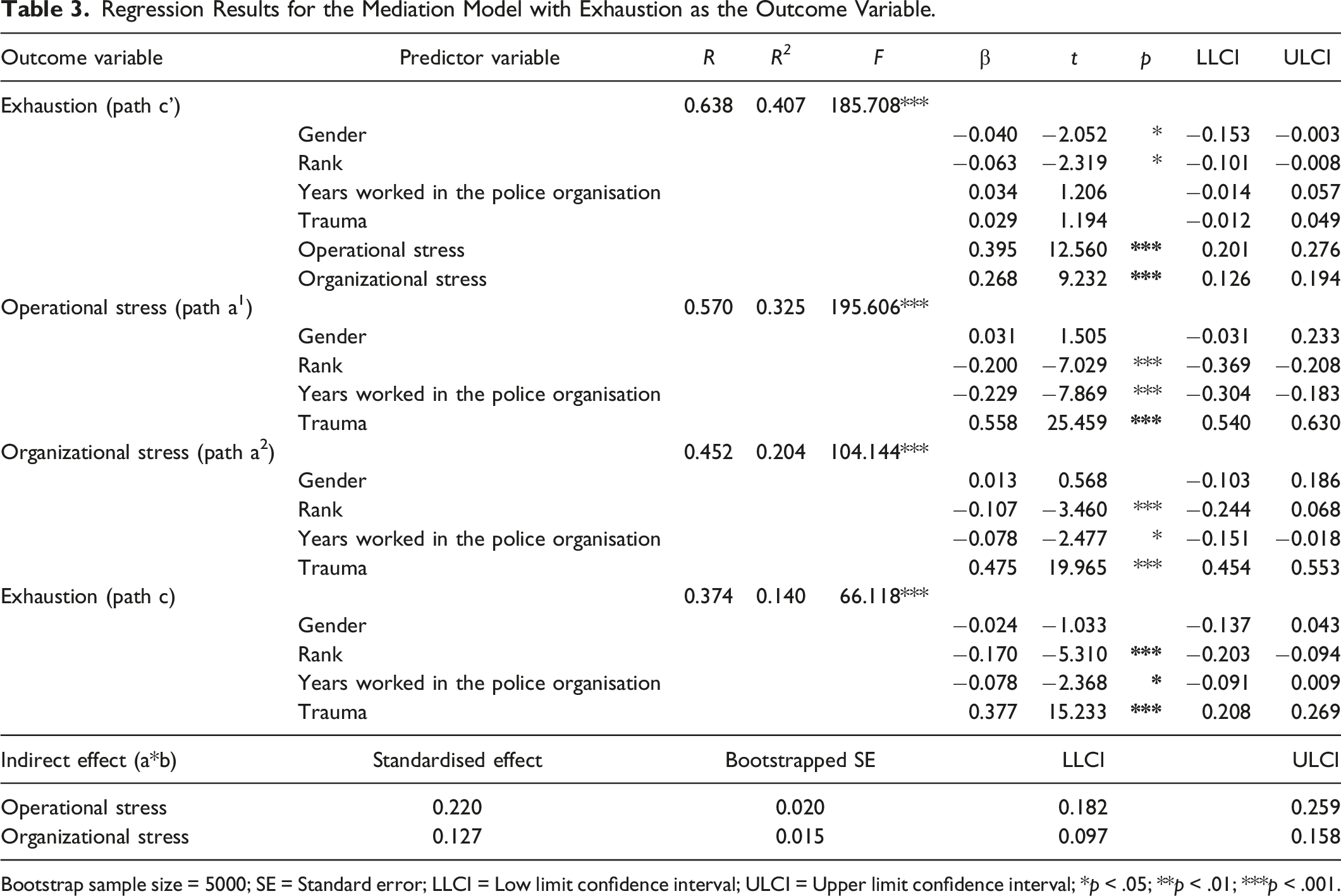
Bootstrap sample size = 5000; SE = Standard error; LLCI = Low limit confidence interval; ULCI = Upper limit confidence interval; *p < .05; **p < .01; ***p < .001.
Burnout
Testing the effects of the three independent variables on exhaustion, findings showed significant direct effects of organizational stress (β = 0.268, p < .001) and operational stress (β = 0.395, p < .001) on burnout. However, trauma was not significantly and directly related to burnout (β = 0.029, p = .233). There were a series of covariates that were significantly associated with burnout. Specifically, those in a higher rank were less likely to feel burnout (β = −0.063, p < .05) compared to lower ranked officers and males were less likely to report burnout when compared to females (β = −0.040, p < .05) (see Table 3).
When examining the indirect effects, findings suggested full mediation, with trauma associated with burnout via the mediating effects of both organizational stress (β = 0.127, SE = 0.015, 95% CI ranging from 0.097 to 0.158) and operational stress (β = 0.220, SE = 0.020, 95% CI ranging from 0.182 to 0.259; see Figure 1). These findings indicate that the association between trauma and burnout is explained by the level of organizational stress and operational stress participants reported experiencing. The absence of zero in both confidence interval ranges supports the hypothesis that operational stress and organizational stress significantly mediate the relationship between trauma and burnout. Path diagram showing the mediating effects of organizational stress and operational stress on the association between trauma and exhaustion.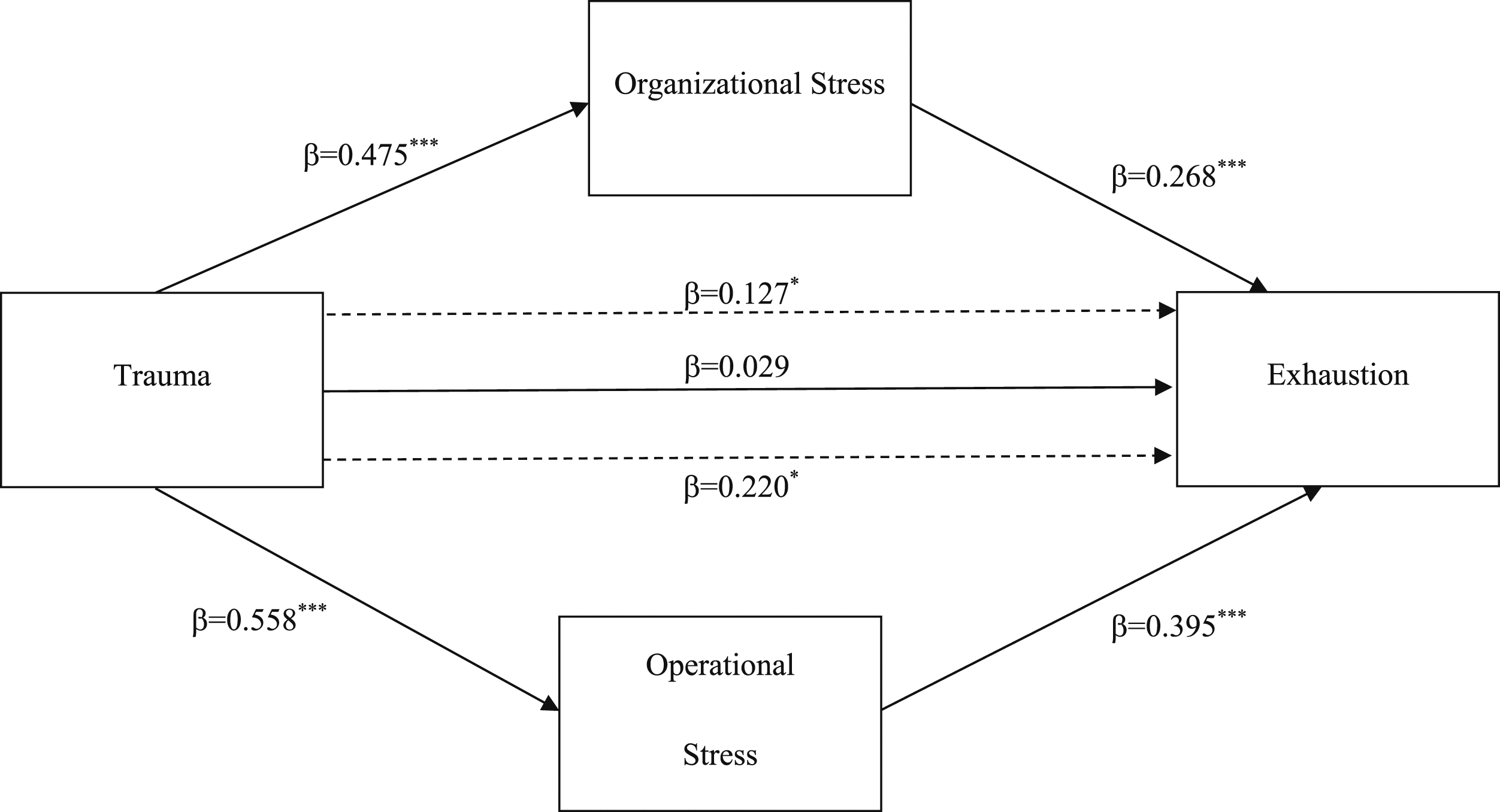
Psychological Distress
Regression results for the mediation model With psychological distress as the outcome variable.
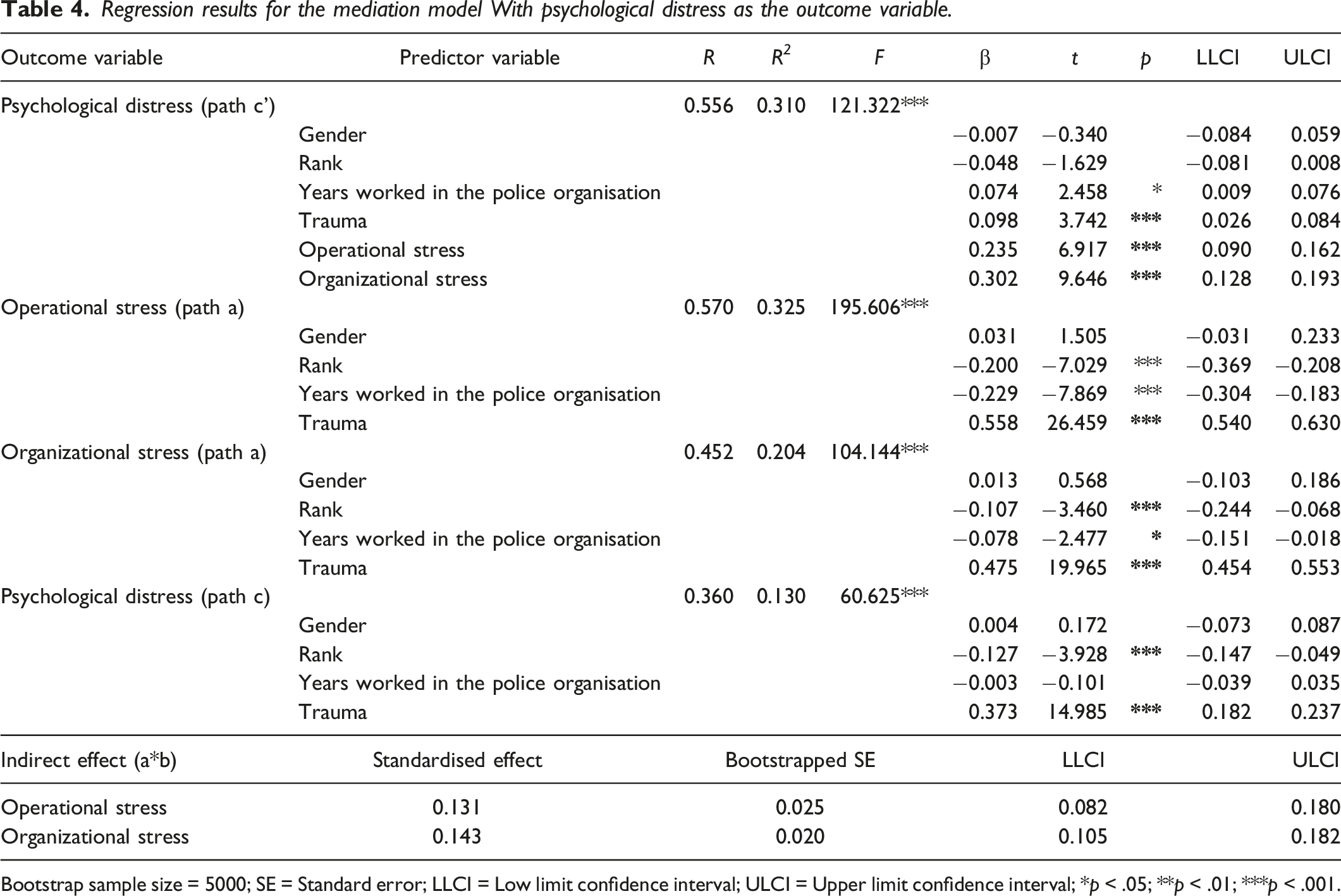
Bootstrap sample size = 5000; SE = Standard error; LLCI = Low limit confidence interval; ULCI = Upper limit confidence interval; *p < .05; **p < .01; ***p < .001.
An examination of the bootstrap analyses revealed that a significant indirect effect exists between trauma and psychological distress through both (a) operational stress (β = 0.131, SE = 0.025, 95% CI ranging from 0.082 to 0.180) and (b) organizational stress (β = 0.143, SE = 0.020, 95% CI ranging from 0.105 to 0.182; see Figure 2). This suggests partial mediation. The absence of zero in both confidence interval ranges indicates that both operational and organizational stress significantly mediated the association between trauma and psychological distress. These findings suggest that participants who experience trauma were more likely to report psychological distress due to the experience of organizational and operational stress. Path diagram showing the mediating effects of organizational stress and operational stress on the association between trauma and psychological distress.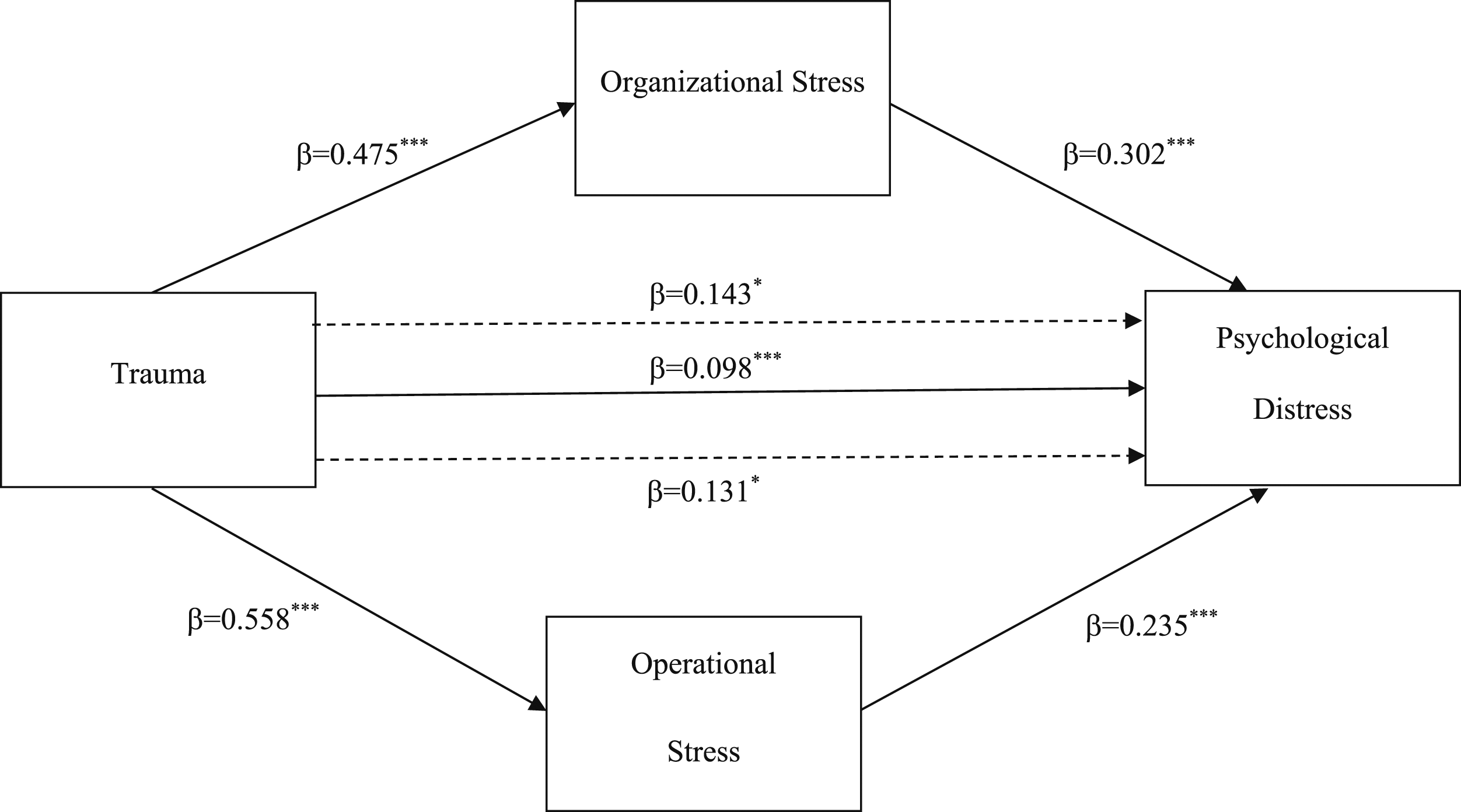
Discussion
The overarching aim of the current research was to quantify the relationship between different categories of stressors that were conceptualised as causes of harm (trauma and CIs stress, operational stress and organizational stress) and psychological health outcomes (burnout and psychological distress). Two key questions guided the research. The first question sought to understand which set of stressors had the strongest, direct relationships with psychological health outcomes. The second question focused on how different sets of stressors work in combination to predict psychological health. As such, two models were tested in the current study. All three sets of stressors, including trauma and CI stress, operational stress, and organizational stress, were included in both models. In model one, burnout was the outcome of interest and in model two, psychological distress was examined.
A key driver of the research stemmed from the growing awareness that CIs and traumatic experiences in policing are not the only, and perhaps not even the most impactful, workplace experiences that can cause elevated rates of mental health concerns (Carleton et al., 2020; Violanti et al., 2017). Others have noted that research on the unique impacts of PPTEs and other operational and organizational stressors is limited. More research was needed to understand the experience of how trauma and CIs interact with other stressors to influence mental health outcomes (Carleton et al., 2020).
Proportional Contribution of Stressors on Psychological Outcomes
Findings from the current study revealed the important role that both organizational and operational stressors play in the experience of psychological distress and burnout. In doing so, this research provides further support for the growing evidence base that a comprehensive understanding of the psychological health of police must consider stressors beyond trauma and CI stress (Carleton et al., 2020; Kop et al., 1999; Maguen et al., 2009; Purba & Demou, 2019). An understanding of the role and impact these stressors have on police personnel is fundamental to the ability of policing organizations to support their staff and in turn, improve key organisational objectives such as staff retention and better job performance (Phythian et al., 2023).
In terms of the importance of organizational and operational stressors compared to trauma and CI stress, this study has made an important contribution to knowledge. For the outcome of psychological distress, the findings of the current study indicate that all three sets of stressors have significant, direct relationships with this outcome. However, it should be noted that organizational and operational stress were found to have the strongest predictive relationships with psychological distress compared to trauma and CI stress. Organizational stress was most strongly related to psychological distress; specifically, it was three times stronger than the effects of trauma and CIs. Operational stress was almost two and half times more strongly related to distress when compared to trauma and CIs. These findings are similar to Carleton et al.’s (2020) research, which found that the strength of relationships between mental health outcomes and organizational and operational stressors were in many cases twice as strong as relationships found for PPTEs. In the present study, organizational stress had an almost 1.3 times stronger relationship with psychological distress compared with operational stress.
With respect to the comparative importance of organizational stress, operational stress and trauma and CI stress in explaining burnout, the study produced some very interesting and unexpected results. As with the findings reported for psychological distress, it was hypothesised that all three sets of stressors would be directly and significantly related to burnout. However, while organizational and operational stress both had significant, direct predictive relationships with burnout, trauma and CI stress did not. Burnout in policing is most likely to manifest from occupational stressors (McCarty et al., 2007) with these findings indicating that operational stress compared to organizational stressors has the strongest relationship. The strength of the relationship between operational stress and burnout was almost one and a half times the strength of the relationship found for organizational stress and burnout. The role of organizational and operational stress as mediators in the relationship between trauma and CIs and burnout is explored in the following discussion.
Trauma Stress and Harm Outcomes: The Mediating Role of Organizational and Operational Stress
The findings of the current study shine a spotlight on the role of occupational stressors in understanding the relationship between trauma and CI stress and the wellbeing of police officers. This research provides strong support for the conclusion that occupational factors, are not only more strongly related to psychological distress and burnout compared to trauma and CI stress, but that the impact of trauma and CI stress can be explained by organizational and operational stress. This was the case entirely for burnout and partially for psychological distress. Taken together, the findings of this study indicate that police agencies and their leaders have more influence over the impacts of trauma and CI stress than perhaps was previously known. As discussed earlier, options for psychological care related to trauma and CIs are limited to preparing officers for these types of unavoidable events and ensuring that supports are available after such experiences (Anderson et al., 2020; Antony et al., 2020). This research indicates that the impact of trauma and CIs can be positively influenced through addressing operational and organizational stress that is caused by factors largely under the control of agencies and their leaders. It is the structure, processes and policies created by the police agency through its leaders that are highly predictive of burnout and psychological distress. This is critically important in informing the formulation of wellbeing strategies and the design of interventions that simultaneously address all three categories of stressors that impact on police wellbeing.
Practical Implications and Recommendations
Results of this study are clear; police leaders can play a significant role in mitigating negative psychological outcomes and reducing prevalence rates of mental health concerns across policing cohorts. Operational and organisational stressors, at least to some degree and certainly more so than trauma and CI stress, are constructed, controlled, and sustained by leaders and their agencies. For this reason, the findings of this research should be considered in a positive light. Leaders who address operational and organizational factors that are causing stress will not only improve wellbeing of their staff but also, in turn, will positively influence the achievement of organizational objectives, such as better retention of staff and improved employee performance.
Tackling operational and organizational factors that lead to stress constitutes a primary prevention approach to police wellbeing. Leaders have the opportunity to identify and remove (or at least reduce) factors in the workplace that are likely to cause harm, before they adversely impact on officer health (Drew et al., 2023). A focus on operational and organizational stressors will address the current reliance of police agencies on tertiary or at best, secondary interventions that are the only available options when addressing trauma and CIs. Rather than placing the preponderance of responsibility for psychological health on individual officers’ preparedness and ability to cope with trauma and CIs, this research demonstrates what might be achieved by considering how police wellbeing can be addressed through workplace reforms. This research provides leaders with a clear mandate that their actions when directed at modifying the workplace, addressing the causes of organizational and operational stress, will lead to positive and impactful outcomes for the psychological health of their staff.
The findings of this study provide police leaders with the knowledge they need to make more effective and efficient decisions that will lead to better health outcomes for individual officers and their agencies. Based on this research, leaders who seek to design maximally effective strategies for reducing burnout and psychological distress in police cohorts need to prioritise interventions that target operational (particularly, for burnout) and organizational (particularly, for psychological distress) factors that are causing stress amongst officers. Through the construction of simple strength metrics this research provides leaders with quantifiable data on the proportional contribution of causes of harm in respect to the psychological health of their officers. The construction of strength metrics provides leaders with a clear and data driven approach to more effectively allocating resources to those causes of harm that must be prioritised given their impact on wellbeing.
In summary, this study suggests that workplace reforms to eliminate or significantly reduce operational and organizational factors causing stress must be considered by agencies given the strength of their relationship with wellbeing outcomes. In this way, workplace reforms can be considered as part of a more wholistic agency approach to wellbeing interventions. Workplace reforms that focus on policies, procedures and processes that cause occupational stress will be important additions to existing approaches to police wellbeing. Workplace reforms that specifically target wellbeing should be considered by police agencies as a foundational pillar in the suite of interventions being used to reduce the often alarming rates of mental ill-health, burnout and psychological distress reported by their officers.
Limitations and Directions for Future Research
The current research has several limitations. The survey was voluntary and was collected from a single, large police agency in Australia. As such, the limitations associated with a convenience sample should be recognised and limits to the generalizability of results based on findings from both a single agency and one located in a specific geographic region should be considered. The current research is largely consistent with similar, previous research and specifically the work of Carleton et al. (2020). However, the research undertaken by Carleton et al. (2020) was also conducted with a specific national population, that is a Canadian sample. Future research should be undertaken in countries outside of Canada and Australia. In particular, research in countries such as the United States who have more violent crime, including gun crime, should be undertaken. This would provide insight into whether occupational stress remains as important in explaining burnout and psychological distress in police cohorts when police are operating in environments that potentially expose them to greater numbers of critical incidents involving violence and/or increased threats to physical harm of themselves and others. An important avenue for future research is longitudinal studies of police. This would provide more insight into temporal experience of trauma and CIs, organizational and operational stress and their impacts on psychological outcomes. Gaining a better understanding of whether the impact of trauma and CIs exacerbates organizational and operational stressors or vice versa would significantly contribute to current knowledge. Future studies could focus on the importance leaders attribute to their role in managing occupational stress for improving staff wellbeing and whether they have the knowledge and skills to build healthier workplaces.
Conclusions
Leaders who seek to support the psychological health of officers will contribute to meeting agency responsibilities under workplace occupational health and safety legislation and regulations, and more specifically, workers compensation laws that have been introduced in many parts of the World (Gordon & Holder, 2024; International Association of Chiefs of Police (IACP), 2024; Safe Work Australia, 2024). Increasingly leaders have legal responsibilities for identifying and addressing workplace factors that cause not just physical but also, psychological injuries (SafeWork Australia, 2024; Warren, 2018). Further, the psychological health of staff is critical in achieving organizational objectives, such as improved staff retention and both, individual and agency performance. Based on this research, achieving these objectives will require leaders to better understand the proportional impacts of different categories of stressors on staff wellbeing.
This research has contributed to disentangling the contribution of trauma and CIs, operational and organizational stressors in the experience of adverse psychological outcomes. This study has provided an empirical, data-driven foundation for police leaders, to consider their role more accurately and their potential impact on the creation and ongoing maintenance of healthy police workplaces. The research has addressed the limited research attention that has previously been given to providing police leaders with clear and simple metrics that capture this proportionality of harms to outcomes. With the findings of the current research, leaders are now better positioned to design and implement wellness interventions and direct resources to areas of most need. This study goes some way in answering why a high prevalence of psychological ill-health in police cohorts continues to persist. It provides a positive way forward by identifying the factors that are most responsible for psychological harms, provides a new option for addressing the impacts of trauma and CI stress, and gives police leaders a roadmap that will better support and sustain healthy police workplaces.
Footnotes
Acknowledgements
The authors wish to acknowledge the support and assistance from an Australian policing agency in undertaking this research. The views expressed in this publication are not necessarily those of the Australian Policing Agency and any errors of omission or commission are the responsibility of the authors. The authors thank the officers who participated in the study and also, acknowledge and thank the Police Unions who assisted in the distribution and promotion of the statewide survey.
Declaration of Conflicting Interests
The author(s) declared no potential conflicts of interest with respect to the research, authorship, and/or publication of this article.
Funding
The author(s) disclosed receipt of the following financial support for the research, authorship, and/or publication of this article: Grant funding for this project was obtained via an Australian Research Council Grant (Linkage): “An early warning system for police workplace health and performance” (LP200200834).
