




Abstract
The aim of this review is to identify and critically examine existing research relating to secondary trauma and Post-Traumatic Stress Disorder (PTSD) within UK police officers. A systematised literature review was conducted which identified 20 studies in police officers from Scotland, England, Wales and Northern Ireland. These studies comprised of terrorist incidents, mass disasters, general policing duties and officers working in rape and child abuse investigations. Key themes emerged regarding understanding the impact of trauma, the influence of police culture and understanding coping mechanisms. It also found a number of methodological limitations within the studies which are likely to have impacted on the results. This review highlighted that trauma in UK policing is still not understood and there is a stigma associated with officers seeking help. Recognising the impact of trauma on police officers and how trauma has affected them is crucial to ensure an effective and compassionate workforce which delivers a better service to the public. It is hoped that this review will address gaps in existing knowledge within the literature, consider implications for practice, as well as recommendations to be taken forward in this crucial area of research.
Keywords
Introduction
The concept of secondary trauma has been widely studied over the last 30 years and can be considered as exposure to trauma through the first-hand account or narrative of a traumatic event by another (Cieslak et al ., 2014; Figley, 1995), and has been described as an occupational hazard of working in a caring profession (McCann and Pearlman, 1990; Nimmo and Huggard, 2013). In extreme cases this subsequent cognitive or emotional representation of an event may result in symptoms and reactions that parallel PTSD, such as re-experiencing, avoidance and hyperarousal (Cieslak et al ., 2014; Figley, 1995). The impact of secondary trauma has been studied within a number of professions such as social/child protection workers (Bride, 2007; Conrad and Kellar-Guenther, 2006), therapists and counsellors (Baird and Jenkins, 2003; Craig and Sprang, 2010; Kadambi and Truscott, 2007; Pearlman and Mac Ian, 1995; Sodeke-Gregson et al ., 2013) and medical professionals (Duffy et al ., 2015; Kellogg et al ., 2018; Regehr et al ., 2003), yet few studies relate to policing, or particularly policing within the United Kingdom (UK). There are a number of key concepts that relate to secondary trauma which are frequently used interchangeably (Bober and Regehr, 2006; Newell and MacNeil, 2010; Nimmo and Huggard, 2013; Sabin-Farrell and Turpin, 2003) such as Burn-out (Freudenberger, 1974, 1975; Maslach 1976), Vicarious Trauma (McCann and Pearlman, 1990), Compassion Fatigue (Joinson, 1992) and Secondary Traumatic Stress (Figley, 1995).
Research on secondary trauma in policing has predominately related to studies on those officers that investigate ‘non-contact’ offences, such as those investigating internet or digital offences against children (Bourke and Craun, 2014; Burns et al ., 2008; Burruss et al ., 2018; Krause, 2009; Perez et al ., 2010; Powell et al ., 2014). The study of police officers who investigate ‘contact’ offences such as those who engage with traumatised victims on a daily basis (especially victims of sexual or child abuse) has yet to be properly explored and understood. The impact of this type of work on those who investigate these crimes, often referred to as ‘secondary investigators’ is an important piece of work to undertake as these are considered some of the most stressful and challenging cases to investigate (Bober and Regher, 2006; Carlier et al ., 2000; Dane, 2000; Roach et al ., 2017, 2018; Skogstad et al ., 2013) as well as ‘high risk’ roles within UK policing (College of Policing, 2018; Graham et al ., 2020; Hesketh and Tehrani, 2019).
This review will only focus on UK policing and not international research which could be considered relevant to this area of study. This is a deliberate omission as this review seeks to address the gap in the literature regarding understanding the causes of secondary trauma and PTSD in UK policing only.
Methodology
A systematised literature review was chosen as it seeks to include the key aspects of a systematic review process (detailed search, appraisal and synthesis of available research), but due to their only being one reviewer it cannot be considered a full systematic review (Barr-Walker, 2017; Day and Petrakis, 2017; Grant and Booth, 2009).
Eligibility criteria
Studies were included based on the following inclusion criteria. They must (a) contain empirical research on either secondary trauma or PTSD; (b) relate to police officers within the United Kingdom (UK); (c) be peer reviewed; (d) examine potential causes of trauma or PTSD, but not treatment; (e) not be mixed population studies (for example police officers and firefighters) and (f) be in the English language. Consideration was given to the potential limitations of only using articles relevant to UK policing and only articles that were peer reviewed (Griffiths and Norman, 2005; Kennedy, 2007), but in order to gain a detailed and critical understanding of the issue being explored within the UK, only research that was relevant to UK policing which had been critiqued and validated by peers was included within this literature review.
Search strategy
A Systematised review of the literature was conducted to identify relevant articles. Sixteen social science and medical electronic databases were individually searched, and grey literature was excluded. For each database, advanced searches were used utilising relevant Boolean logic search parameters. Speech marks were used to ensure searches did not highlight individual words within the search terms (i.e. not just ‘stress’ in post-traumatic stress disorder). Four categories of search terms were used as part of the search strategy in order to retrieve relevant literature. These were (1) secondary trauma, (2) secondary trauma and police, (3) post-traumatic stress disorder and (4) post-traumatic stress disorder and police, as well as the variations in their spelling (i.e. PTSD, Posttraumatic stress disorder, post traumatic stress disorder).
These searches initially highlighted 2478 articles on both PTSD and/or primary/secondary trauma in policing. Three additional papers were found after the search was completed but whilst writing up the review (Brewin et al ., 2020; Burnett et al ., 2019; Gray and Rydon-Grange, 2019), so were added to this literature review. After duplicate records were removed this left 1340 articles which were initially examined through reading the titles and abstracts. In addition, reference lists of identified studies were then manually searched for additional relevant articles. When this screening was completed 235 articles were left to be fully examined for relevance, which were then included or excluded as appropriate using the eligibility criteria. Based on the inclusion criteria, 215 articles were excluded, and 20 articles were selected in the final sample (Figure 1).
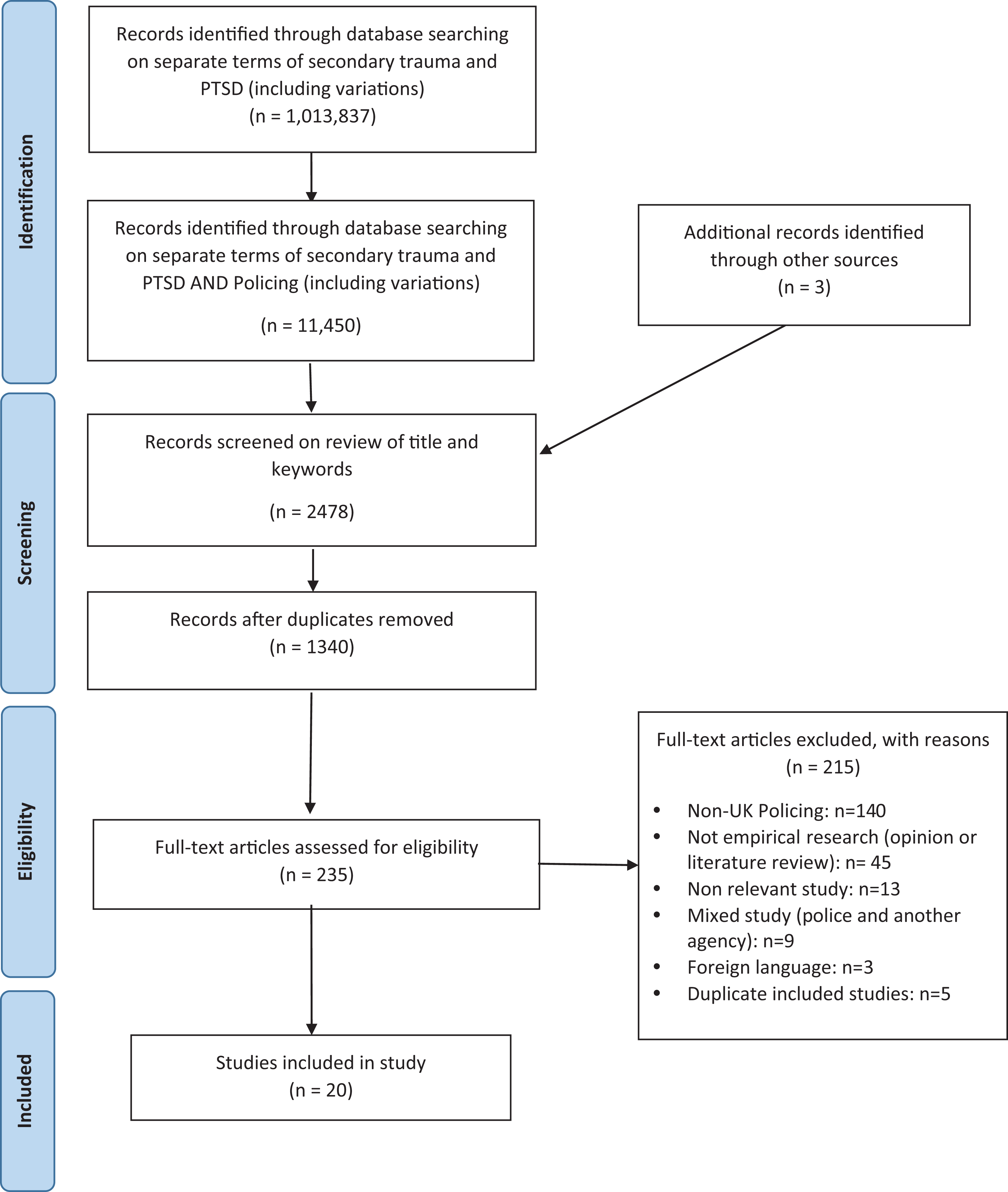
PRISMA diagram of database searches.
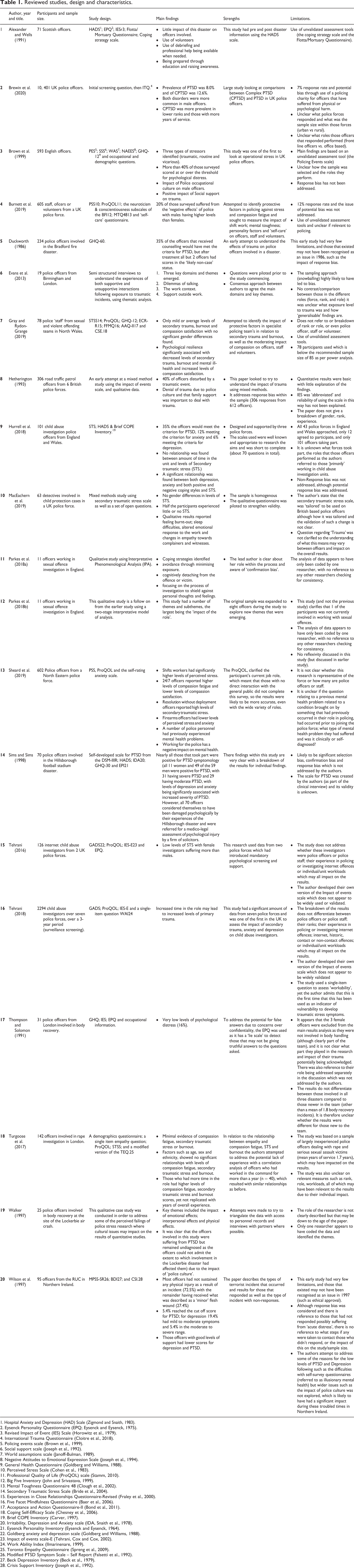
Table 1 presents an overview of the 20 eligible studies, including types of study and design, main findings, strengths and limitations. 1
Reviewed studies, design and characteristics.
1. Hospital Anxiety and Depression (HAD) Scale (Zigmond and Snaith, 1983).
2. Eysenck Personality Questionnaire (EPQ; Eysenck and Eysenck, 1975).
3. Revised Impact of Event (IES) Scale (Horowitz et al., 1979).
4. International Trauma Questionnaire (Cloitre et al., 2018).
5. Policing events scale (Brown et al., 1999).
6. Social support scale (Joseph et al., 1992).
7. World assumptions scale (Janoff-Bulman, 1989).
8. Negative Attitudes to Emotional Expression Scale (Joseph et al., 1994).
9. General Health Questionnaire (Goldberg and Williams, 1988).
10. Perceived Stress Scale (Cohen et al., 1983).
11. Professional Quality of Life (ProQOL) scale (Stamm, 2010).
12. Big Five Inventory (John and Srivastava, 1999).
13. Mental Toughness Questionnaire 48 (Clough et al., 2002).
14. Secondary Traumatic Stress Scale (Bride et al., 2004).
15. Experiences in Close Relationships Questionnaire-Revised (Fraley et al., 2000).
16. Five Facet Mindfulness Questionnaire (Baer et al., 2006).
17. Acceptance and Action Questionnaire-II (Bond et al., 2011).
18. Coping Self-Efficacy Scale (Chesney et al., 2006).
19. Brief COPE Inventory (Carver, 1997).
20. Irritability, Depression and Anxiety scale (IDA, Snaith et al., 1978).
21. Eysenck Personality Inventory (Eysenck and Eysenck, 1964).
22. Goldberg anxiety and depression scale (Goldberg and Williams, 1988).
23. Impact of events scale-E (Tehrani, Cox and Cox, 2002).
24. Work Ability Index (Ilmarinenare, 1999).
25. Toronto Empathy Questionnaire (Spreng et al., 2009).
26. Modified PTSD Symptom Scale – Self Report (Falsetti et al., 1992).
27. Beck Depression Inventory (Beck et al., 1979).
28. Crisis Support Inventory (Joseph et al., 1992).
Overview of findings
Each of the 20 studies were critically examined and as topics emerged, themes and subthemes were highlighted and documented. A number of sub themes soon became apparent such as the importance of humour within the role (Alexander and Wells, 1991; Evans et al ., 2013; Thompson and Solomon, 1991); being a volunteer (Alexander and Wells, 1991; Tehrani, 2016; Thompson and Solomon, 1991); being mentally prepared through raising awareness, education or training (Alexander and Wells, 1991; Hetherington, 1993; Tehrani, 2018; Thompson and Solomon, 1991; Turgoose et al ., 2017) and the positive aspects of the role (Alexander and Wells, 1991; Parkes et al ., 2018b). There were however three main themes which occurred consistently throughout the papers which related to the impact of trauma, the influence of police culture and understanding coping mechanisms. These appeared to have the greatest impact on how an individual would cope with traumatic events.
Understanding the impact of trauma
Policing has been widely accepted as a stressful and traumatic occupation (Asmundson and Stapleton, 2008; Gershon et al ., 2009; Skogstad et al ., 2013) yet the findings regarding the impact of trauma on the officers within these studies was mixed, with a number of studies showing no increased levels of trauma.
Seven studies related to police officers performing a body recovery role following a mass disaster, terrorist incidents or dealing with death on the roads. Wilson et al . (1997) looked at the impact of terrorist related incidents on police officers in Northern Ireland and found that only 5.4% had levels of probable PTSD or moderate to severe depression. Three other studies (Alexander and Wells, 1991; Duckworth, 1986; Thompson and Solomon, 1991) showed no increases in anxiety, depression or PTSD. These results were surprising as these officers would have dealt with some of the most unpleasant and traumatic events imaginable in policing (terrorist incidents including bomb explosions, mortar/missile and grenade attacks; body recovery of those submerged in water for a period of time, burned or disarticulated). These experiences are certainly beyond that normally experienced within policing, yet even when exposed to these traumatic events these rates of PTSD and depression are less than or similar to the prevalence rates within the UK population of 5% for PTSD and 3% for depression (Baker, 2020). Hetherington’s (1993) study of traffic officers dealing with fatalities on the roads found that 40% of officers stated that they had experienced at least one event in their careers that had affected them, yet the quantitative results showed only moderate distress. This is notable as the qualitative data however showed significant symptoms of avoidance and intrusion mirroring PTSD symptomology in some officers. The remaining two studies (Sims and Sims, 1998; Walker, 1997), both evidenced clinical levels of PTSD, depression and anxiety. Walker (1997) demonstrated that some officers were suffering from symptoms associated with PTSD (re-experiencing, intrusive thoughts, detachment), but they remained undiagnosed, which Walker argued was due to the officers not being able to admit to themselves or others the extent to which their participation in the Lockerbie disaster had affected them. The research by Sims and Sims (1998) showed significant levels of trauma in the police officers who were involved in the Hillsborough football stadium disaster, but should be treated with a degree of caution, as the officers already considered themselves to have been damaged psychologically by their experiences from the disaster and were referred for a medico-legal assessment of psychological injury by a firm of solicitors.
Thirteen studies related to the impact of work-related or secondary trauma, with eight focusing on police officers investigating sexual offences and child abuse, and five relating to ‘general’ policing (officers involved in a number of policing roles). The findings of the studies relating to police officers investigating sexual offences and child abuse again was mixed. Hurrell et al . (2018) found 35% the officers would meet the criterion for PTSD, with 12% meeting the criterion for anxiety and 6% meeting the criteria for depression. MacEachern et al . (2019) found more than half of those involved in their study had symptoms of secondary traumatic stress, with 115 with symptoms in the high or severe range. Parkes et al . (2018b) found that a number of those in their study were at risk of PTSD due to the negative impact of the role they were performing. Gray and Rydon-Grange (2019); Tehrani (2016) and Turgoose et al . (2017) however all found that levels of secondary trauma were low, or average compared to the UK population. In general policing populations only two showed any indicators of psychological distress, with Brown et al . (1999) reporting that more than 40% of those surveyed scored at or over the threshold for psychological distress and Brewin et al . (2020) reporting the prevalence of PTSD was 8.0% and of CPTSD was 12.6%, within their study of 10,401 officers. However, the findings of Sheard et al . (2019) gave mixed results and both Burnett et al . (2019) and Evans et al . (2013) found little or no distress in officers.
In some studies, there were clearly some differences regarding the impact of trauma between officers undertaking different roles. Brown et al . (1999) identified that dealing with victims of rape and child abuse may lead to vicarious trauma needing professional intervention. Sheard et al . (2019) demonstrated that firearms officers had lower levels of perceived stress and anxiety than other roles, with uniform response officers (referred to as 24/7 officers) reporting higher levels of compassion fatigue and lower levels of compassion satisfaction than several other roles. Perhaps surprisingly office-based staff (resolution without deployment officers) also reported higher levels of secondary traumatic stress than those in other roles. They also found that those officers working shifts had significantly higher levels of perceived stress, than those who did not work shifts.
Taken at face value a number of these studies would suggest that there is minimal impact on officers when dealing with trauma, however Hetherington (1993), suggested there that the impact of organisational culture (denial of trauma) which may have impacted on the results. This is supported by Walker (1997) who identified that officers could not admit how their roles recovering bodies from the Lockerbie disaster had affected them, which meant that their mental health conditions remained undiagnosed and the officers failed to get the help and support that they needed. The impact of police culture on the validity of the results within some of these studies is potentially significant as it may be that some officers are ‘hiding’ their true experiences from others due to potential stigma associated with admitting they are suffering and asking for help. Worryingly however, some officers may be in denial or unaware of how the traumatic nature of the role has affected them, which may prevent them from recognising the impact of trauma and seeking help when they need it.
The impact of police culture, whether it be a fear of appearing ‘weak’, an inability to trust researchers, a fear of a breach of confidentiality, or the inability to ask for or seek help when needed may in some way explain the findings found in the studies.
Understanding the influence of police culture
Police culture has also been extensively studied (Chan, 1996; Cockcroft, 2013; Loftus, 2010; 2012; Reiner, 2010; Waddington, 2008; Westmarland, 2016) with both the positive and negative aspects to police culture being widely debated. The influence on police culture on policing studies is arguably the biggest factor to consider when conducting research in policing as the negative aspects (such as not being seen to show weakness, and concerns regarding confidentiality) are likely to have a significant impact on the accuracy of the results (Alexander and Wells, 1991; Brown et al ., 1999; Burnett et al ., 2019; Duckworth, 1986; Evans et al ., 2013; Parkes et al ., 2018a, 2018b; Tehrani, 2016; Thompson and Solomon, 1991; Walker, 1997).
Evans et al . (2013) found mixed views towards talking to others about their experiences, with one central theme being ‘talking is risky’. This was believed to be because emotional expression and seeking support were perceived as being ‘weak’ and going against the ‘macho’ culture of policing as officers were just expected to ‘get on with the job’. Burnett et al . (2019) supported the impact of culture arguing that police culture is still prevalent today due to the ‘masculine ideals of emotional self-control’ impacting on the responses as officers may fear that by answering questions honestly their careers may suffer. Parkes et al . (2018a, 2018b) found that there was a culture of ‘invincibility’ within the role, with officers not being able to discuss feelings when unable to cope. Worryingly some of these comments related to the officers’ supervisors, which would significantly impact on their ability to cope with the potentially traumatic nature of the role. They also highlighted that there was still a culture of ‘getting on with the job’, which made it difficult to normalise the trauma experienced through undertaking such work.
However, police culture is not always negative and can in certain circumstances can provide support to officers. Both Alexander and Wells (1991) and Walker (1997) emphasised that the positive aspects of police culture meant that there was a strong ‘esprit de corps’, with feelings of loyalty and a sense of belonging amongst the officers. Tehrani (2016) considered that a possible reason for the participants having lower levels of traumatic stress symptoms than expected, was the supportive organisational culture that had introduced mandatory psychological screening and support for the teams, including pre-deployment screening, six monthly screening and an hour of individual support. This allowed for individual concerns to be highlighted early, leading to officers feeling supported and forming closely knit teams. Thompson and Solomon (1991) explained that the relatively low scores of distress in their study may be due to those involved being volunteers and the supportive leadership and managerial culture within the group, where debriefing sessions were undertaken allowing the officers to openly talk about their reactions to the incident. This compassionate approach meant that supervisors had the welfare of officers constantly on their minds with officers being reminded of their volunteer status and the ability to withdraw from the role at any time. This continued with the team working and dining together with little regard to rank between the supervisors and their team.
The impact and nature of the trauma, as well as the influence of police culture on an individual officers ability to cope with trauma is clearly significant, yet as we have seen from these studies, not all officers are affected in the same way. The coping mechanisms both at an individual and organisational level can make a considerable difference to how someone processes and recovers from both primary and secondary trauma.
Understanding coping mechanisms
Coping strategies in policing have been widely studied with poor coping skills being seen as an important factor in how someone deals with the impact of stress and trauma (Anshel, 2000; Can and Hendy, 2014). Maladaptive coping strategies such as excessive alcohol use is widely used in some parts of policing as part of an occupational culture to deal with the traumatic nature of the role (Davey et al ., 2001; Menard and Arter, 2013; Violanti, 1999). Whilst in moderation this may be accepted means of socialising with others to talk through and debrief a shared experience (Leino et al ., 2011; Lindsay and Shelley, 2009) when used to excess, it may lead to significant harm including increased risk of suicidal ideation (Pienaar and Rothmann, 2005; Violanti, 2004).
The studies as part of this review found a number of positive and supportive coping mechanisms that were used to deal with the traumatic nature of their work. These included focusing on the positive aspects of the role (Alexander and Wells, 1991; Parkes et al ., 2018b) and being prepared for the traumatic events through education and raising awareness (Alexander and Wells, 1991; Hetherington, 1993; Tehrani, 2018; Thompson and Solomon, 1991; Turgoose et al ., 2017). One of the most important coping mechanisms which was highlighted was the impact of both peer and social support, which has been widely studied with a number of researchers highlighting its importance after a traumatic event (Brewin et al ., 2000; Graf, 1986; Ozer et al ., 2003; Patterson, 2003; Stephens et al ., 1997; Van Hasselt et al ., 2019).
Ten of the 20 studies specifically mentioned peer or social support, with all but one of them highlighting their positive impact in managing the effects of trauma. Evans et al . (2013), emphasised the differences between both supportive and unsupportive social interactions, informal and formal mechanisms of social support and actual and perceived support between police officers. They highlighted that although officers may not always want to talk about the traumatic events which have occurred (as talking was sometimes seen as ‘risky’) the use of humour and banter was seen as an important way of both giving and receiving social support, which was supported by Alexander and Wells (1991); Hetherington (1993); Thompson and Solomon (1991) and Walker (1997). This was expanded upon by Alexander and Wells (1991); Brown et al . (1999); Hetherington (1993); Parkes et al . (2018a); Tehrani (2016, 2018); Thompson and Solomon (1991) and Walker (1997) who all agreed that whilst both peer and social support were important, an understanding by their peers and supervisors of what they may be going through was the most important aspects in coping with the trauma. They suggested that the ability to go through a debriefing with others was important in order to normalise an individual’s trauma and any adverse feelings that they may be experiencing. The importance of talking to family was also highlighted by Hetherington (1993); Thompson and Solomon (1991) and Walker (1997) with some officers indicating that support from their spouses was crucial with dealing with their trauma and make sense of their experiences. However, whilst peer and social support were generally seen as supportive, Parkes et al . (2018b) evidenced that participants indicated a reluctance to seek support from peers or supervisors, until they had reached breaking point. More than half of those in the study also felt that they could not talk to those close to them, for fear of contaminating them with details of the traumatic nature of their role.
Methodological issues within the studies
A number of the studies had methodological issues in their design which may have impacted on the results. These included mixed populations within a study, use of adapted or not validated questionnaires to measure results, large numbers of questions, and not acknowledging the impact of ‘bias’ within the studies.
Mixed populations
Policing is not a homogeneous organisation and consists of a number of different ranks and roles which will lead to differing levels of exposure to both primary and secondary trauma on a daily basis. The studies that used mixed populations within their research were predominately those within the last few years, as earlier studies focused on homogenous samples such as those involved in body recovery and mass disasters. Those studies which conducted research on officers and staff working with child abuse, sexual offending or domestic abuse teams within individual forces, had varied populations as officers were described as working with direct and/or indirect contact with both child and adult crime victims or offenders, online child sexual abuse, domestic violence teams, Public Protection Units (PPU), Child Sexual Exploitation (CSE) teams and Criminal Investigation Division (CID) teams. Only Sheard et al . (2019) highlighted the differences between individual policing roles who took part in their study. Importantly they also presented the results individually for each role which highlighted the differences, such as firearms officers having significantly lower perceived stress than some other roles such as response and safeguarding officers.
The reporting of individual ranks and roles in policing is particularly important as it allows an assessment of the impact of trauma in different roles, and a greater understanding of why some roles may suffer less trauma than others (i.e. do firearms officers have greater support regarding traumatic incidents than safeguarding officers?) This enhanced understanding of individual ranks and roles within policing will allow the development of greater support and treatment for those officers in roles which are impacted by trauma the most.
The use of questionnaires
The limitations regarding the use of questionnaires for research has been widely documented within a number of studies. All the quantitative and mixed methods studies were cross sectional in design, which meant that the results only captured what was happening at the moment in time and the context behind the results could not be obtained. Additional limitations regarding the use of questionnaires include those answering may not understand what is being asked, or perhaps particularly relevant to policing they may not answer honestly
Seven studies also used adapted or not validated questionnaires, which may have impacted on the validity of the results. Hurrell et al . (2018) however did recognise the potential limitations of questionnaires and the importance of having an accessible survey which was short (due to the demands already placed on the officers’ time) and that was completely anonymous and confidential. The importance of confidentiality has already been discussed within a cultural context, yet it is also important that surveys are easily accessible outside the work environment which may satisfy additional concerns regarding confidentiality and should be as brief as possible as officers are more likely to take the time to complete. There is also potentially the impact of bias within questionnaires due to those that answer, or perhaps more importantly do not answer quantitative studies.
The introduction of bias
‘Bias’ is defined by as ‘a systematic error in data collection or analysis, caused by inadequate technical procedures’, and is usually linked to a lack of objectivity by the researcher (Payne and Payne, 2011). Bias should clearly be addressed in individual studies, but only 8 of the 20 studies considered bias or reflexivity in any way (Brewin et al ., 2000; Brown et al ., 1999; Hetherington, 1993; Hurrell et al ., 2018; MacEachern et al ., 2019; Parkes et al ., 2018a; Sheard et al ., 2019; Wilson et al ., 1997).
Discussion
The aim of this review was to obtain a detailed understanding of existing literature in relation to secondary trauma and PTSD in police officers within the UK, and critically examine how these findings may impact on those officers performing a number of roles. The discussion thus far has focused the need to have a greater understanding of the nature of trauma in policing, the impact of culture within the organisation, as well as understanding coping mechanisms, all of which can greatly impact both positively and negatively on an individual’s response to trauma.
From the studies relating to primary trauma it is apparent that there was either no trauma or minimal impact on the officers involved. These results are based primarily on older quantitative studies, but it is perhaps worthy of note that those studies that also had qualitative research found that there are clearly signs of trauma amongst some officers, with potentially behaviours linked to avoidance and intrusion remaining undiagnosed and hidden due to the impact of police culture (Hetherington, 1993; Walker, 1997). The studies relating to secondary or work-related trauma had results which appeared lower than the authors expected with only four (Brewin et al ., 2020; Brown et al ., 1999; Hurrell et al ., 2018; Parkes et al ., 2018b) showing signs of psychological trauma.
A number of reasons were given by the various authors regarding why there were no signs of trauma in both the primary and secondary trauma studies. Some related to those involved being volunteers and having had the time to mentally prepare for what they were about to experience. Others referred to how supportive supervisors, peers and family members may have reduced the impacts of trauma, but what appeared to be the main factor in whether the results were accurate on not, and whether an individual recovered from a traumatic event was the influence of police culture, and the ability to be honest about the impact of what they had experienced.
Culture is clearly significant in policing, with how an officer deals with the impact of trauma an important area of study. Some of the studies in this review evidenced the positive impact of police culture such as a strong sense of ‘esprit de corps’, and feelings of loyalty and a sense of belonging amongst the officers which can help officers through traumatic incidents (Alexander and Wells, 1991; Tehrani, 2016; Thompson and Solomon, 1991; Walker, 1997). However, a number of the studies also highlighted the negative aspects of culture such as officers should not talk (or be honest) about the impact of trauma and be able to ‘take everything in their stride’ (Alexander and Wells, 1991; Brown et al ., 1999; Burnett et al ., 2019; Duckworth, 1986; Evans et al ., 2013; Parkes et al ., 2018a, 2018b). The impact of culture in policing has significant implications for research, particularly regarding the validity of the studies and how officers deal with trauma exposure. If an officer cannot be honest regarding the impact of trauma, they may feel isolated and alone, and turn to maladaptive strategies (such as drugs and alcohol) in order to cope, as well as not seeking help when needed. This has far reaching ramifications for not only the officers themselves but also for their families, colleagues and policing in general.
The importance of peer and social support, particularly through supportive supervisors and managers has been well evidenced within these and other studies, with the ability to talk to others with a shared understanding of what you have gone through highlighted as a positive aspect of police culture. When officers are in a supportive and in a ‘safe’ environment, peer and social support are strong protective factors against secondary trauma and PTSD. However, what is clear from the studies is that not only do the officers need to be ready to talk/disclose what they have gone through, but they also need to be comfortable in doing so. Humour and banter are sometimes used to break down the barriers and as a way of giving and receiving peer or social support in a more informal setting (Alexander and Wells, 1991; Brown et al ., 1999; Evans et al ., 2013; Parkes et al ., 2018a; Tehrani, 2016, 2018; Thompson and Solomon, 1991), with some studies evidencing the importance of having the more formal debriefing processes following traumatic events as well as the informal coping mechanisms (Alexander and Wells, 1991; Hetherington, 1993). Although a number of the studies highlighted the importance of peer and social support, very few actually quantitively measured its impact, which is a recommendation for future research.
The methodological issues that have already been highlighted may have impacted on the results leading to the unexpected findings relating to the impact of trauma. The use of questionnaires, impact of bias and the use of mixed populations within policing are important areas that need to be highlighted and addressed within research, as they can give misleading and conflicting results. There are various roles within policing which will all have a differing level of trauma on a daily basis. It is therefore important that future studies which look at stress and trauma in policing use homogeneous populations rather than heterogeneous ones. However, if heterogeneous samples are to be used, it is imperative that results are presented for individual groups, so it is clear which roles may be especially traumatic. This will lead to a better understanding of the impact of individual roles and ‘why’ some police officers are suffering more than others, which will lead to better support and treatment for officers who are suffering the most.
Limitations of this study
There are a number of limitations of this study that need to be considered.
The first is that as this is a systematised review it was conducted by a single author, which may lead to an element of bias in both the final screening of the studies selected and as well as the categorisation of the themes identified. There was an attempt to mitigate this potential risk of bias through a thorough search strategy and making contemporaneous note of identified themes as they emerged.
Second, the search strategy and eligibility criteria may also be seen as limitations. Although 16 electronic databases were individually and extensively searched, there will be others that were not accessed. In addition, due to the inclusion/exclusion criteria applied there were a number of studies from outside the UK, studies involving mixed populations and those not in an English language were deliberately excluded. This was because they did not focus on UK police officers, but they may contain valuable research and insights into trauma, which could be relevant to UK policing.
A final potential limitation is that grey literature was deliberately excluded with only empirical research that was peer reviewed included in the final studies under review. This was a deliberate exclusion as it was felt important in order to get a detailed and critical understanding of the issues to be explored, only research that has been critiqued and validated by peers should be included within this literature review.
Implications for practice and areas of further research
The findings of this research may have implications for practice when treating police officers, as the traumatic nature of policing is clearly still unclear and not understood. There needs to be a better understanding of trauma in policing, both in order to support and treat officers suffering but also in order to break the stigma and cultural issues associated with asking for help. This review has raised a number of questions for future research. Is policing unique in that the way that officers respond and deal with trauma? Does the nature of the trauma, the impact of culture and how officers cope compared to other occupations present new challenges in how police officers should be treated by clinicians?
It is therefore recommended that there needs to be a more evidence informed understanding of the impact of trauma in policing, with future studies being conducted on homogeneous populations (within an individual force) so as to get a better understanding ‘why’ certain roles may impact on officers more than others, and add to generalisability of any findings. These studies should be confidential and be easily accessible outside policing systems, with quantitative research using short validated (and not adapted) assessment tools, so the results can be properly interpreted and understood. Although a number of the studies in this review highlighted the importance of peer and social support, very few actually quantitively measured its impact, which should also be included in future studies.
Finally, future research should consider the use of ‘mixed methods’ using both quantitative and qualitative data to get a better understanding of the issues being experienced by police officers within the UK.
Conclusions
From conducting this review, it is clear from the limited studies that more research is needed in order to understand trauma in UK policing. There are a number of gaps in the research, but most notably is the impact of trauma on individual roles in UK policing.
Whilst it is clear that a positive police culture can build resilience amongst officers, through a sense of bonding and a shared understanding of what each other has gone/is going through, the negative side of police culture can lead to issues of mistrust regarding how they are feeling which can in some circumstances lead to secondary trauma or mental health conditions. Policing as an organisation and supervisors in particular, have a significant part to play in rebuilding police culture. This includes breaking the stigma of talking about how an officer feels and making policing into an organisation where officers can discuss and share their feelings openly and freely without concerns regarding a breach of confidentiality or losing their job.
Understanding coping mechanisms within policing is also vital in recognising how to reduce symptoms after a traumatic event. It is apparent from the studies that not all officers will be affected by the same incident and that what works as a coping mechanism is individual for each person, with officers knowing that support is there when they are ready to. This is an important aspect of the research as the ability to talk when ready can reduce trauma when implemented properly or increase trauma when culturally talking about trauma is not perceived to be a safe thing to do. Although a number of the studies highlighted the importance of peer and social support, very few actually quantitatively measured its impact, which is why it is amongst the recommendations for future research.
In order to compensate for some of the methodological weaknesses, and to start to understand the nature of police trauma it is suggested that future studies should be conducted on homogeneous populations within policing with short, validated questionnaires as part of a larger mixed methods design. The potential impact of bias and the fact that it has not been considered is evident in a number of studies. Whilst this may be expected for the older and more targeted studies the level of more recent studies not considering bias or reflexivity where appropriate was surprising and may call into question some of the findings. The importance of using qualitative (or mixed methods) methodology rather than just quantitative is also apparent and future studies should take this into account, in order to get a greater understanding of the unique aspects of policing.
Finally, it is hoped that this literature review will address gaps in existing knowledge, highlight implications for practice and the recommendations will be taken forward in future research.
The need to understand the impact of trauma and mental health conditions in UK police officers is a critical but under researched area, so future studies should look at individual roles in policing including those considered to be high risk, such as that investigate rape and child abuse.
Footnotes
Declaration of conflicting interests
The author(s) declared no potential conflicts of interest with respect to the research, authorship, and/or publication of this article.
Funding
The author(s) disclosed receipt of the following financial support for the research, authorship, and/or publication of this article: This study is partly funded by the Metropolitan Police Service. The author confirms that there are no issues regarding ownership or publication.
