



Abstract
This study aims to explore police students’ self-rated mental health and physical activity levels and the relationship between them. Based on longitudinal and cross-sectional data (N = 722), two scales on mental health orientation were developed. The scales and levels of physical activity were analyzed using t-test, ANOVA, and X 2 . During police education, (1) the level of physical activity decreases for men, (2) there is a decline in positive health orientation for both sexes, and (3) women report a more negative health orientation. This raises questions regarding whether “enough” is done to provide police students with sufficient conditions for improving their health.
Introduction
For police officers, the importance of mental and physical health, as well as individuals’ habits regarding physical activity, are emphasized in several studies (see Anderson et al., 2001; Annell, 2015; Krugly et al., 2022; Larsen, 2018; McGill et al., 2015; Swedish Police Authority, 2019). Mental and physical health are important not only in relation to individual police officers’ well-being and work ability but also in consideration to the physically and mentally demanding work tasks related to police work, such as: driving vehicles, discharging firearms, defensive tactics, civilian or partner rescue, vaulting obstacles, delivering death notifications to next of kin, and pursuing and apprehending suspects (Anderson et al., 2001; Annell, 2015; Larsen, 2018; McGill et al., 2015; Schilling et al., 2019; Tomes et al., 2020a, 2020b).
However, many reports have indicated that Swedish police officers suffer from higher mental illness than the general population in Sweden (see Ekeberg et al., 2006; Elgmark et al., 2013; Swedish Work Environment Authority, 2012). Moreover, although the importance of exercise habits is important in general and particularly important for police officers on patrol duty, both physical training and physical fitness seems to deteriorate with each passing year working as a police officer (Macmillan et al., 2017). In comparison to other workgroups, statistics reveal that police officers are more likely to be on sick leave, which is mainly related to mental illnesses such as stress and anxiety (Swedish Work Environment Authority, 2012).
According to research (Krugly et al., 2022; Larsen, 2018), being psychologically and physically prepared for their vocation is of great importance for police students. Additionally, according to the Swedish Police Authority educational plan (2020), the Swedish police education should (1) provide students with sufficient tools to handle mentally demanding tasks, (2) condition students to develop and maintain advantageous exercise habits during education, and (3) ensure that the physical status of the students be higher after completing police education.
However, there is a lack of knowledge regarding police students’ mental and physical health, as well as their exercise habits. To the best of our knowledge, there is no study on this topic from a Swedish perspective. This lack of research is concerning and may lead to incorrect conclusions regarding whether the Swedish police education is doing “enough” to prepare students for a mentally and physically demanding occupation. Furthermore, it can eventually lead to a certain tradition-bound educational culture becoming prevalent in the Swedish police education and also inconsistent with the ambitions of the Swedish Police to be diversified and heterogeneous (Swedish Police Authority, 2021). If such a culture arises, this may result in systematic disadvantages for certain groups of students (e.g., those who are physically unfit or have insufficient knowledge about health and physical training). Against this background, the purpose of this paper is to explore police students’ self-rated mental health and level of physical activity, and the relationship between their mental health and level of physical activity. Consequently, this paper will make two contributions. First and foremost, given the Swedish setting, this study enhances existing knowledge about mental health, training habits, and exercise habits among police students. Second, this study adds new knowledge regarding how the Swedish police school successfully prepares students for a physically and mentally demanding work, by assessing how mental health, training habits, and exercise levels differ during police education (i.e., from the first to the fifth/last semester).
Police education in Sweden
The police education in Sweden is a commissioned education that is offered by five universities on behalf of the Swedish Police Authority. The studies normally require four semesters (2-years) of full-time studies. After completing their studies, police students are undertaking a 6-month paid traineeship (i.e., a fifth semester) where the students are assigned by the Swedish Police Authority to one of the local police districts. Once they are trainees, the training is carried out with experienced and specially trained police officers as supervisors (see Swedish Police Authority, 2019, 2020).
During the first year of education, the students receive a general introduction to policing, and they learn about, for example, crime prevention, criminal law, and basic criminal investigation. They also receive education and training in both police skills, such as conflict resolution, communication, and self-defense (see Swedish Police Authority, 2019, 2020), and physical skills (Krugly et al., 2022). In their second year, students are taking more advanced courses in, among other things, criminal investigations (e.g., forensic science) and conflict resolutions (see Swedish Police Authority, 2019, 2020). In addition, the students’ physical ability is examined, which includes a few physical tests that must be passed before they begin their paid traineeship (Krugly et al., 2022).
Mental health orientation and physical activity
In this study, one particular aspect of mental health is focused on, that is, mental health orientation. Mental health orientation is defined as individuals’ positive and negative self-perceived experiences of one’s own value, ability, and sense of belonging. Previous research suggests a relationship between an advantageous mental health orientation and higher levels of physical activity (see Abdin et al., 2018; Buecker et al., 2020; Cooney et al., 2013). This relationship has received much attention, especially considering that physical activity can be linked to a sense of coherence, which is an important part of people’s lives (Antonovsky and Kats, 1970; Kuuppelomäki and Utriainen, 2003; Myrin and Lagerstrom, 2006; Read et al., 2005; Wainwright et al., 2008). However, both the relationship between mental health orientation and physical activity is complex to study, and more studies are therefore required (Monma et al., 2017; Moyers and Hagger, 2020).
Several studies have examined both, police officers’ (see Kukić et al., 2018; Vuković et al., 2020; see also the Police Journal: Theory, Practice and Principles, 2022) and police students’ physical fitness and mental health (see Lockie et al., 2018a, 2018b, 2019a, 2019b, 2020a, 2020b, 2020c; Orr et al., 2016, 2018; Tomes et al., 2020a, 2020b). These studies highlight the importance of further exploring physical fitness and mental health, both among police students and police officers. There are several reasons for the call for more research; however, one of the most important is to know whether police students are prepared for this profession after their education. Consequently, this knowledge will reveal whether police education is doing “enough” to prepare the students for a mentally and physically demanding profession. This becomes crucial given that previous research has shown that the level of physical fitness appears to deteriorate among police officers with each year of service (MacMillan et al., 2017; see also Orr et al., 2018). As such, it is critical that the physical fitness of graduating police students is as high as possible. Further, it is also important that police education provides students with sufficient tools and conditions to develop advantageous exercise habits (Krugly et al., 2022). The latter aspect is of particular interest in Sweden, where the national goals state that police students’ physical fitness should improve during their education (Swedish Police Authority, 2020). Even if this is a national goal, little is known regarding the level of physical activity and mental health among police students and whether their mental health orientation changes during police education.
Method
The data contains police students’ answers to a self-rated questionnaire about their levels of physical activity and mental health. The data for this study was gathered between 2019 and 2021, and comprises four data collection points from two police academies in Sweden. All data was used in line with the approved ethical application (ref. no. 2019-05303), and handled confidentially in accordance with rules and prevailing ethical practice. As such, the respondents cannot be identified.
Participants
The study participants comprised 722 police students. During the data collection period, most students were able to complete the questionnaire on more than one occasion, which means that the data comprised more than 722 responses. More precisely, the data comprised 785 unique responses: women n = 269 (34.3%), men n = 513 (65.3%), and other n = 3 (0.4%). The number of students in each term was as follows: semester 1, n = 306 (39%); semester 2, n = 164 (20.9%); semester 3, n = 150 (19.1%); semester 4, n = 87 (11.1%); semester 5 n = 49 (6.2%); and missing values, n = 29 (3.7%). The students’ ages varied between 19 and 53 (M = 29, SD = 7.091). Their height varied between 157 cm and 199 cm (M = 177.7, SD = 8.66); their weight were between 52 kg and 135 kg (M = 79.5, SD 12.56); and their BMI varied between 19.33 and 35.14 (M = 25.06, SD = 2.69), but there were only small differences in BMI between the semesters: semester one (M = 24.73), semester two (M = 25.38), semester three (M = 25.05), semester four (M = 25.35), and semester five (M = 25.42).
Materials
The questionnaire used in this study was based on the Swedish national health-survey (version 2018) and included questions on three general areas. The first area included background information, such as their age, gender, and what semester they were in. The second focused on the students’ level of physical activity, measured using two different variables: physical training and everyday exercise. Physical training was defined as exercise activities that leave one breathless and sweating. In contrast, everyday exercise was defined as moderately strenuous physical activity that makes one breathe slightly more forcefully than normal, for example, walking at a brisk pace, gardening, cycling, or swimming. The third area focused on mental health, specifically on one particular aspect, that is, positive and negative mental health orientation.
Procedure
The questionnaire was distributed by email once every semester to all police students admitted to police education in the two academies. All participants were required to provide their consent to participate in the survey. SPSS (version 25) and AMOS (version 25) were used to analyze the collected data.
Design
The analysis in this study was conducted in two steps. First, both exploratory and confirmatory factor analyses were used to create scales for mental health orientation. Cronbach’s alpha, convergent validity, and average variance extracted (AVE) were calculated to establish the scales’ validity. Second, the created scales were thereafter used as outcome variables in t-test, X 2 test, and ANOVA. Effect size measurements (Cohens’ d, Crames V, and Phi) were calculated and interpreted based on well-established guidelines (see Akoglu, 2018; Cohen, 1988; Fritz et al., 2012; Kim, 2017).
Exploratory factor analysis (EFA)
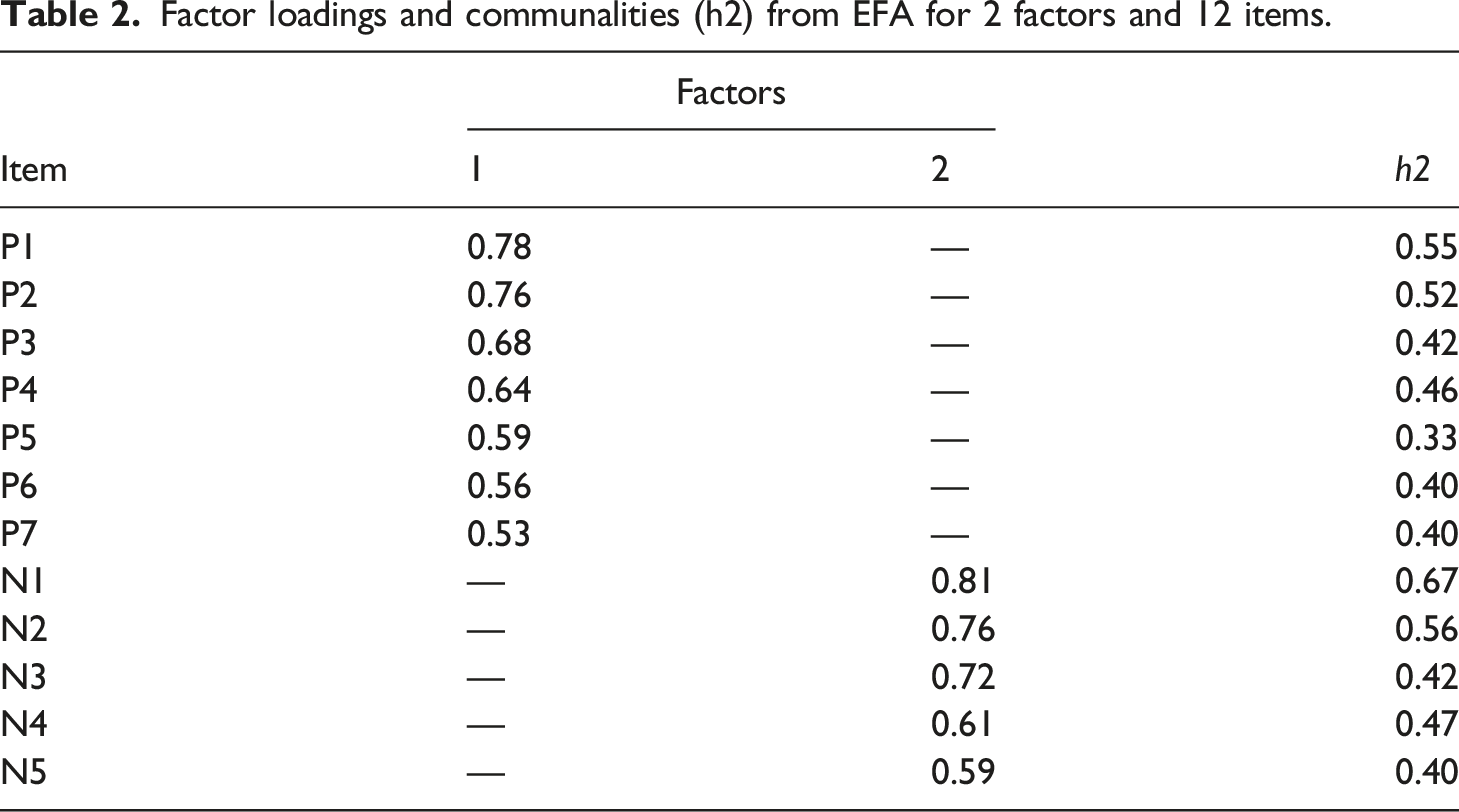
The EFA was conducted in SPSS (version 27) by an extraction from principal components and promax rotation, as a correlation between the factors was expected. No fixed factor assumptions were used, and items with a factor loading <0.50 and with communalities (h 2 ) < 0.30 were excluded from the analysis.
Items and shortenings of positive (P) and negative (N) mental health orientation.
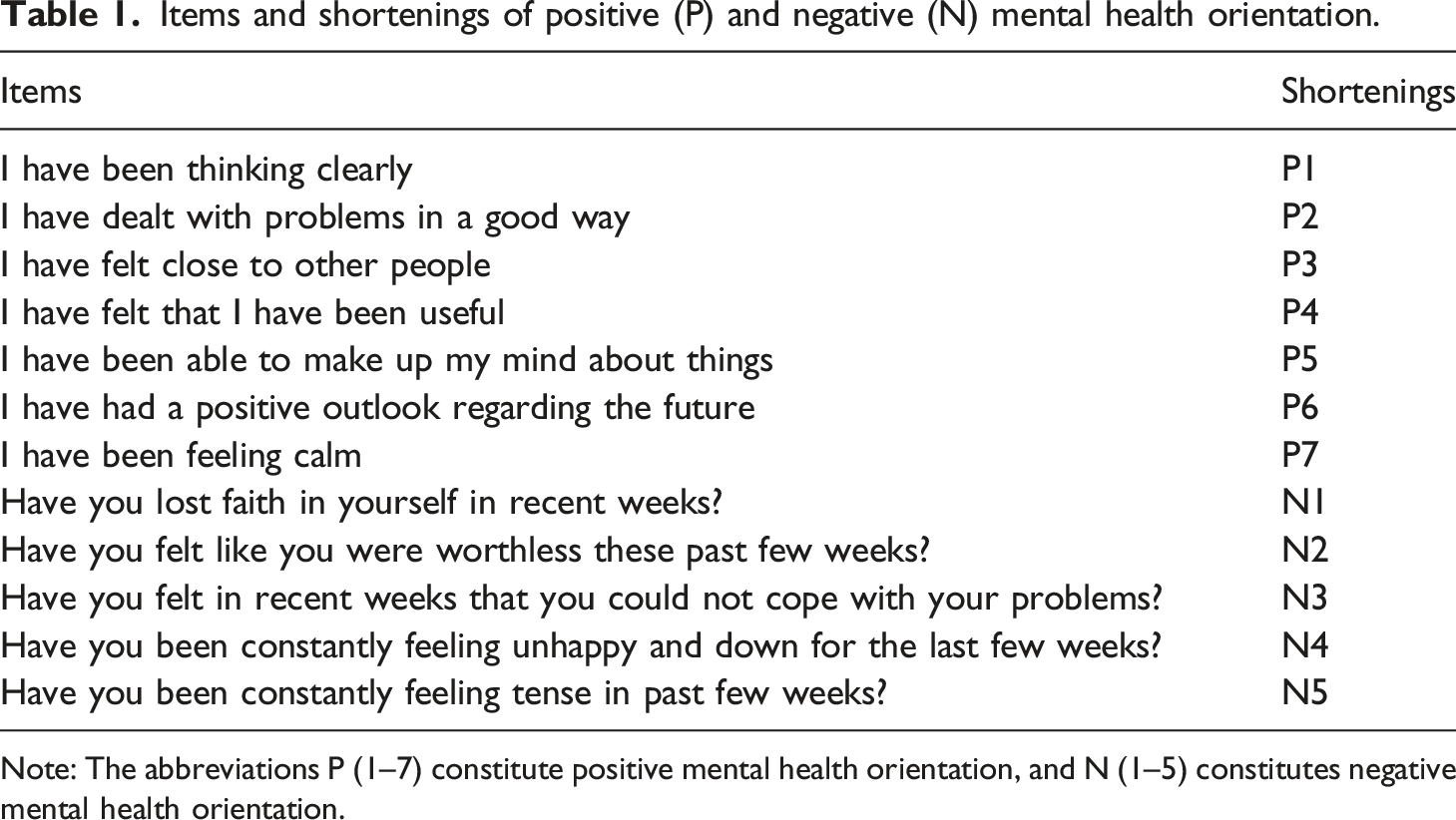
Note: The abbreviations P (1–7) constitute positive mental health orientation, and N (1–5) constitutes negative mental health orientation.
Factor loadings and communalities (h2) from EFA for 2 factors and 12 items.
Confirmatory factor analysis (CFA) and its reliability and validity
The CFA was conducted in AMOS version 26 (see Arbuckle, 2019). All available data were used, and the maximum likelihood (ML) estimation method was used in the analysis. The reliability of items and scales was evaluated based on reliability coefficients (R 2 ), Cronbach’s alpha (α; ≥0.70) (Cronbach, 1951), and factor loadings (≥0.50) (see Hair et al., 2010, 2017; Nunnally and Bernstein, 1994). The construct validity was evaluated through convergent validity and was examined by calculating the AVE and composite reliability (CR). The AVE “measures the amount of variance that is captured by the construct in relation to the amount of variance due to measurement error” (Fornell and Larcker, 1981, p. 45), and ≥0.50 was used as a guiding value. Regarding CR, a value ≥0.70 was used as a guideline, as this value indicates adequate reliability of individual factors (Fornell and Larcker, 1981).
CFA with convergent validity measurements.
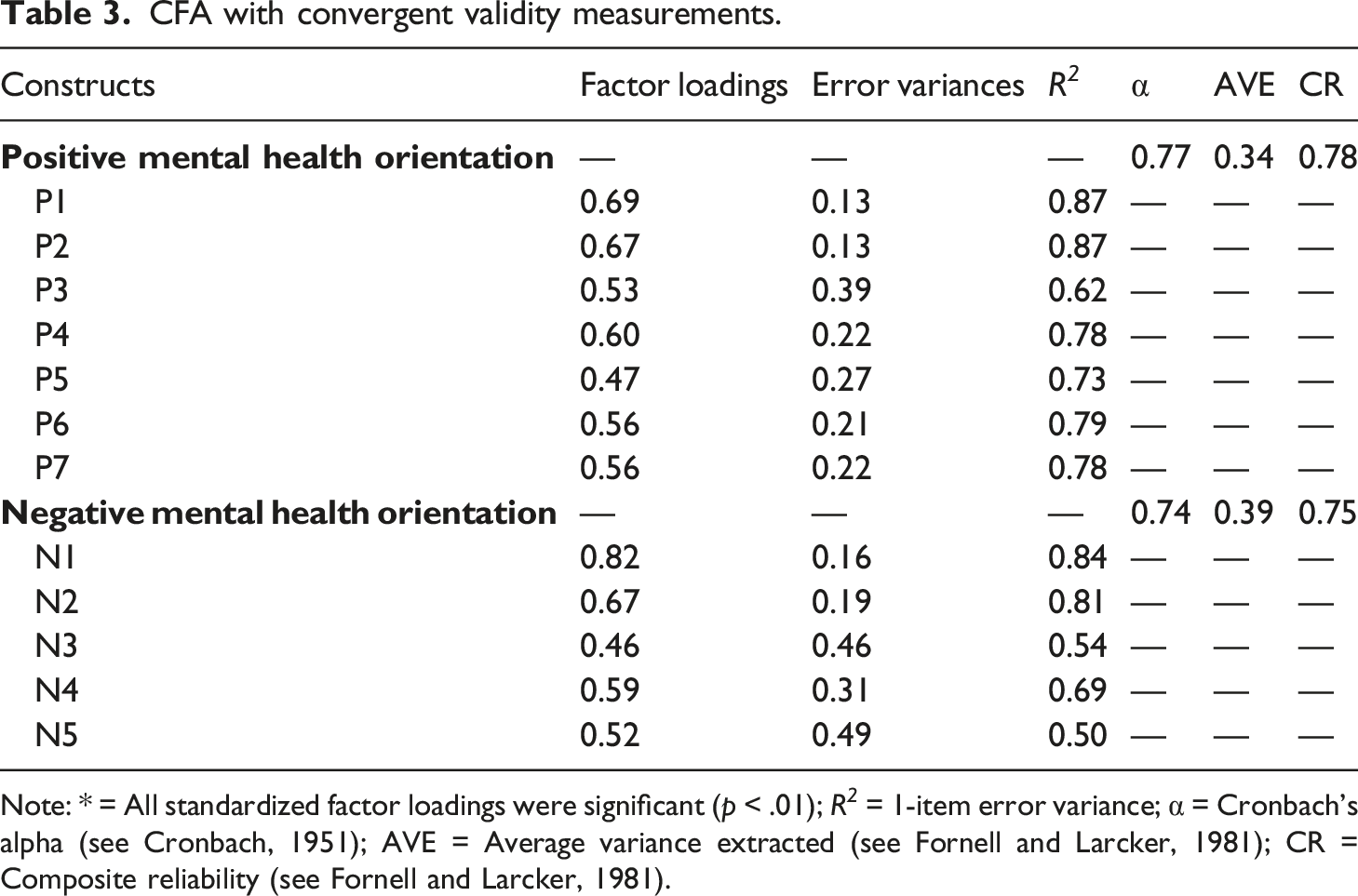
Note: * = All standardized factor loadings were significant (p < .01); R 2 = 1-item error variance; α = Cronbach’s alpha (see Cronbach, 1951); AVE = Average variance extracted (see Fornell and Larcker, 1981); CR = Composite reliability (see Fornell and Larcker, 1981).
Data analysis
Based on the scales developed in the EFA and CFA, that is, positive and negative mental health orientations, t-tests were used to explore differences across men and women. In the t-tests, the independent variable was gender, and the dependent variables were positive mental health orientation and negative mental health orientation. Effect sizes were calculated and interpreted based on the guidelines from Cohen (1988), that is: small (d = 0.2–0.4), intermediate (d = 0.5–0.7), and large (d = 0.8–≥ 1.0).
Gender and semester differences in the students’ self-rated physical training and everyday exercise were analyzed using X 2 test. In the analysis, gender and semester were independent variables, and the level of physical training and everyday exercise were dependent variables (both were dichotomously coded). The effect sizes were calculated with Cramers V and Phi and interpreted based on the guidelines from Akoglu (2018), that is: very strong (>0.25), strong (>0.15), moderate (>0.10), weak (>0.05), and no or very weak (>0).
Results
Differences across gender and semester for positive respective negative mental health orientation
In general, all students showed a favorable mental health orientation, as the value of negative health orientation was low (M = 1.58, SD = 0.50), whereas positive health orientation was high (M = 4.23, SD = 0.38). However, there was a significant gender difference (t[486.71] = −4.552, p = <.001) with an almost medium effect size (d = 0.49). Women had a more negative mental health orientation (M = 1.69, SD = 0.54), whereas men demonstrated less negative mental health orientation (M = 1.52, SD = 0.47). Regarding positive mental health orientation, men demonstrated a slightly higher value (M = 4.25, SD = 0.38) compared to women (M = 4.20, SD = 0.37). However, there was no significant gender difference for positive mental health orientation (t[780] = 1.819, p = .069), and Cohens d was small (d = 0.38).
Descriptive data for positive and negative mental health orientations.
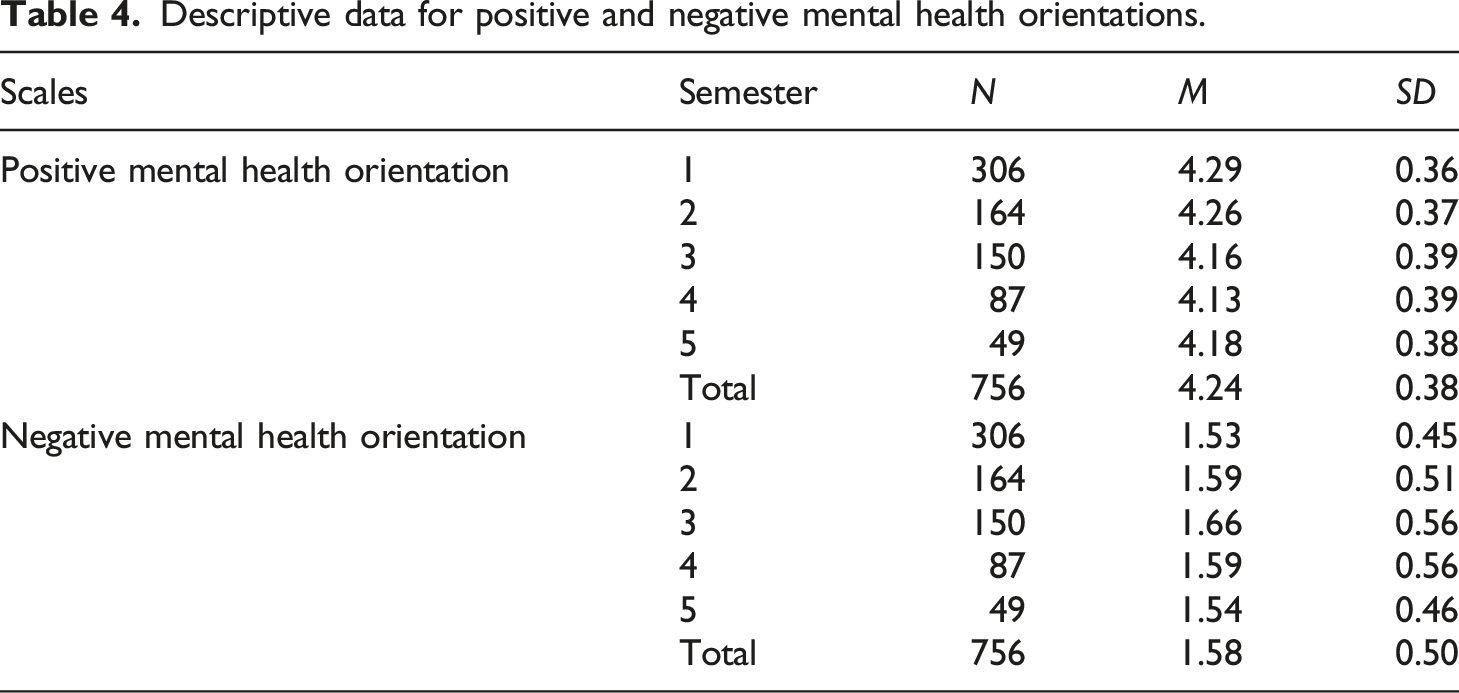
There was no difference for negative mental health orientation F(4,751) = 1.798, p = .127, and in addition, no differences were observed after controlling for gender.
Gender differences in physical training and everyday exercise
An X 2 test showed that more women (65.1%), compared to men (57.3%), conducted physical training for more than 2 hours per week, X 2 (1, N = 782) = 4,411, p = .036. The difference was small, Cramers V = 0.075. In addition, an X 2 test demonstrated that more women (59.5%) compared to men (48,1%) conducted everyday exercise for more than 2 hours per week, X 2 (1, N = 782) = 9,079, p = .003. The difference was moderate, Cramers V = 0.108.
Differences in physical training between semesters
The result from an X
2
test showed that the amount of physical training did not differ across semesters, X
2
(4, N = 785) = 8,029, p = .091, V = 0.103. However, a trend was observed that indicated that students conducted physical training to a higher extent in semester 1 and thereafter, the level of physical training seemed to decrease continuously (see Figure 1). The percentage of police students that conduct physical training for more than 2 hours per week, presented separately for semesters 1 to 5.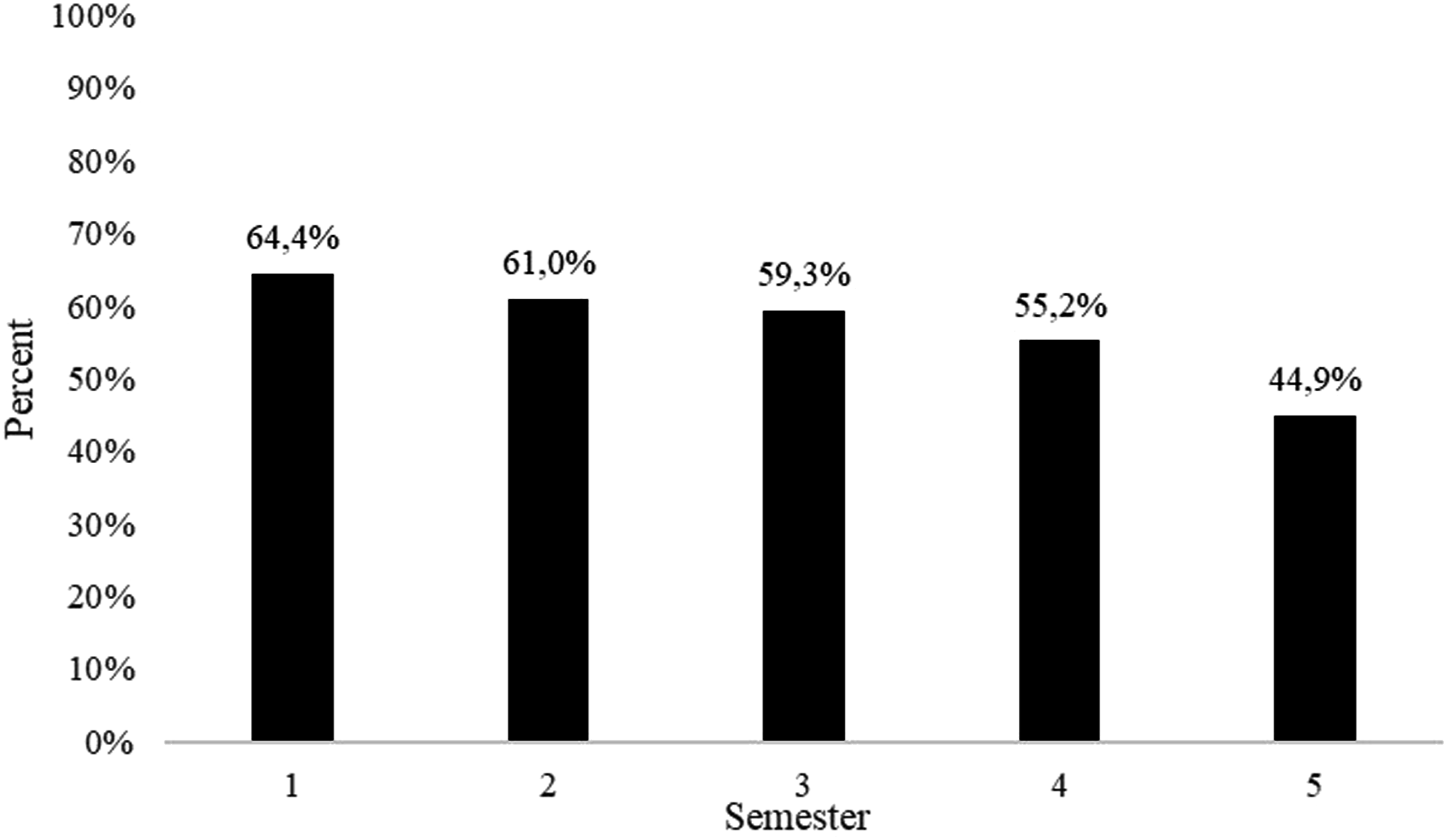
However, when controlling for gender, the aforementioned trend only remained for men. An X
2
test showed that men’s physical training decreased throughout their education (X
2
(4, N = 493) = 11,506, p = .021, V = 0.153). Based on the results from a Bonferroni correction, students in semester 1 conducted physical training for more than 2 hours per week to a higher degree compared to students in semester 5 (see Figure 2). There was no significant difference for women, X
2
(4, N = 260) = 1.119, p = .891, V = 0.066. The percentage of police students that conduct physical training for more than 2 hours per week, presented separately for semesters 1 to 5 and gender.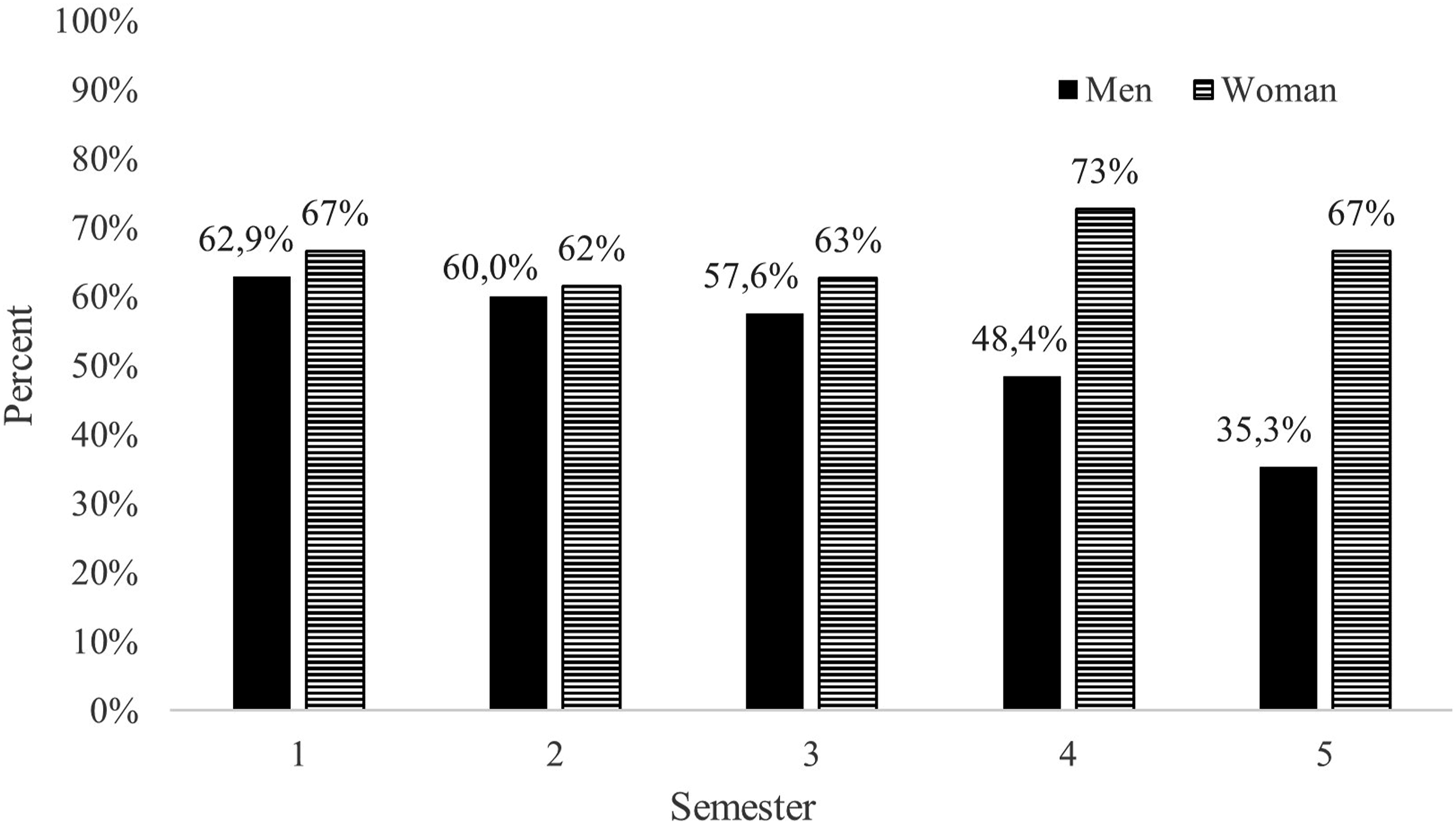
Differences in everyday exercise between semesters
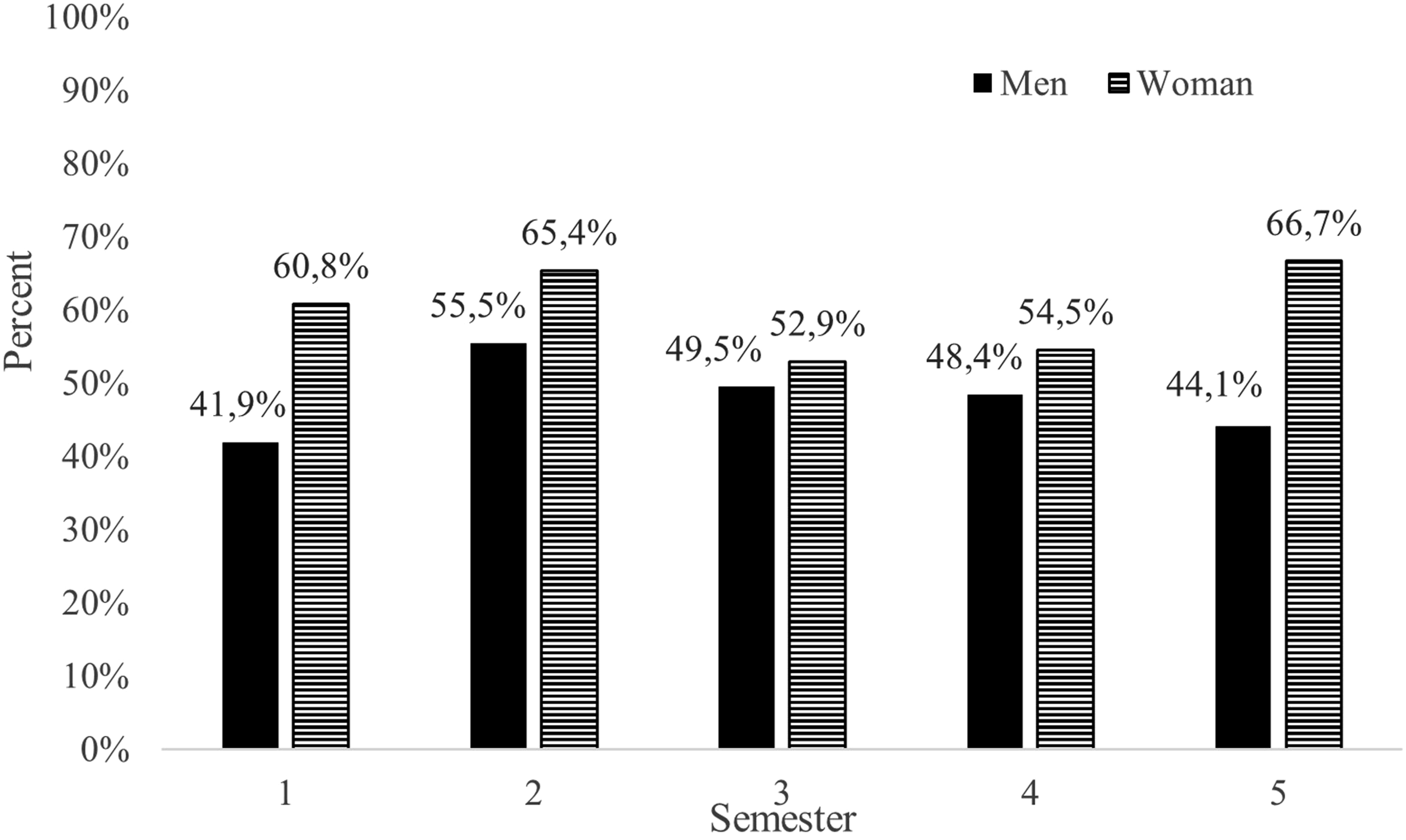
Regarding the level of everyday exercise (see Figures 3 and 4), there were no significant differences in general between semesters (X
2
(4, N = 785) = 3,860, p = .425, V = 0.071) or after conducting the analysis for men (X
2
(4, N = 493) = 5,437, p = .245, V = 0.105) or women (X
2
(4, N = 260) = 2,272, p = .686, V = 0.093). The percentage of police students that conduct everyday exercise more than 2 hours per week, presented separately for semesters 1 to 5. The percentage of police students that conduct everyday exercise for more than 2 hours per week, presented separately for semesters 1 to 5 and gender.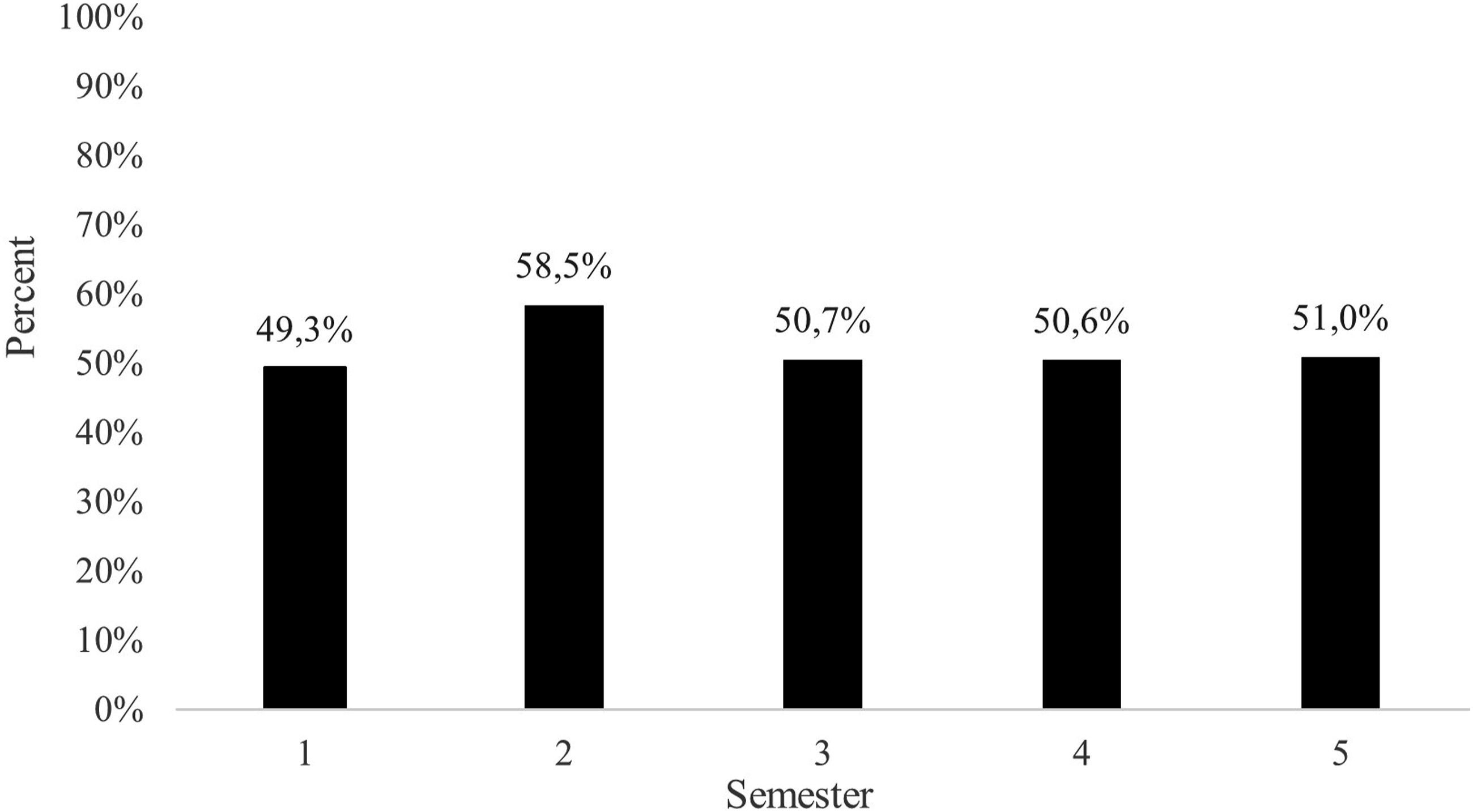
The relationship between physical training, everyday exercise, and positive respective negative mental health orientation
Descriptive data for t-tests’ results.
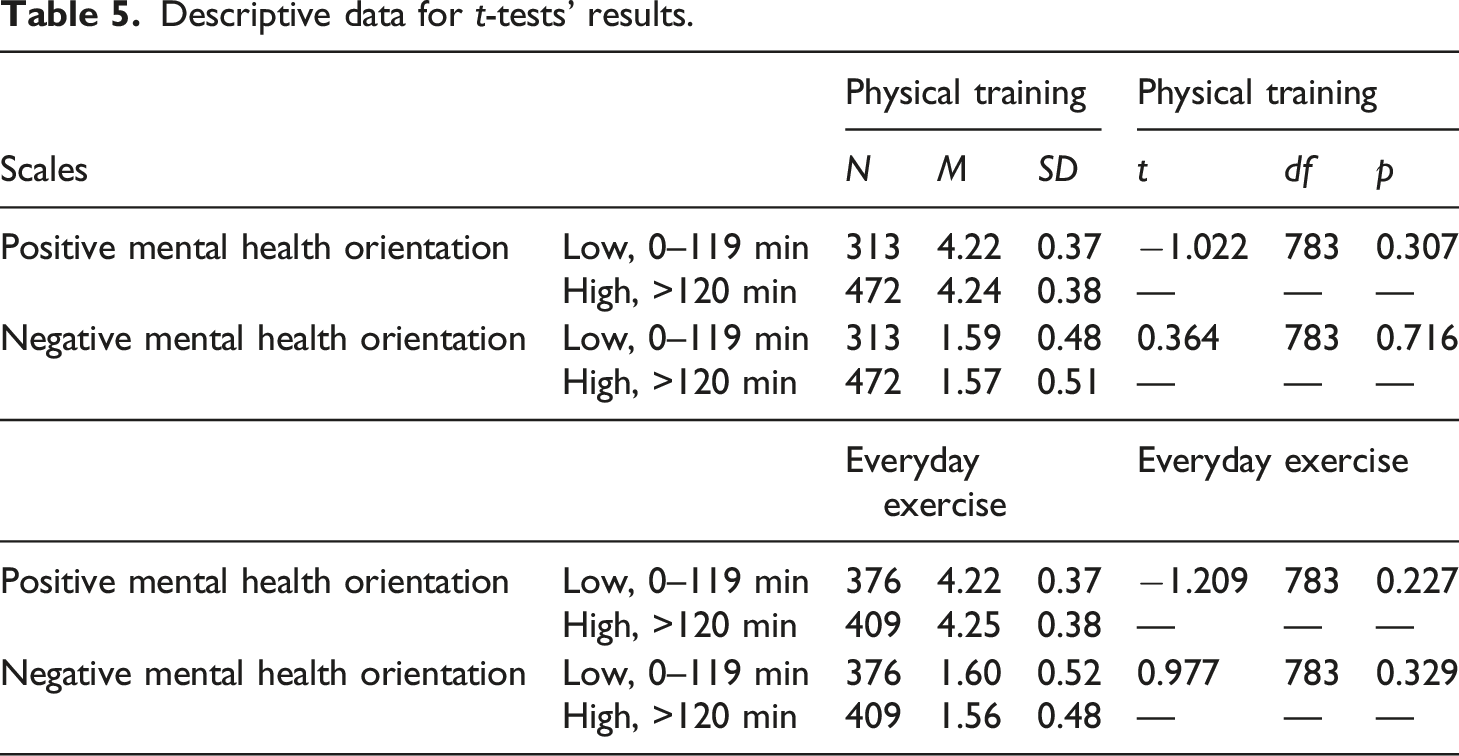
The analyses showed that there were no significant interaction effects for positive mental health orientation, F(4, 733) = 1,004, p = .404), or for negative mental health orientation, F(4, 733) = 1,699, p = .148).
Discussion
It is well established that physical activity has an important and positive impact on mental health and resilience to stress-induced ill-health (see Abdin et al., 2018; Buecker et al., 2020; Cooney et al., 2013). This research contributes to a growing body of knowledge regarding mental health and the level of physical activity among police students in Sweden. This was achieved by exploring negative and positive mental health orientations and the self-reported physical training and everyday exercise among police students in Sweden. This study also sheds light on the relationship between mental health orientation and everyday exercise and physical training.
The national goals of Swedish police education state that all students should be prepared for mentally demanding tasks and that student’s physical status should improve during police education (Swedish Police Authority, 2020). The results in this study are inconsistent with these goals, showing that: (1) the levels of physical training for men are higher in semester one compared to semester five; (2) there are gender differences showing that women, through education, had an overall more negative health orientation; and (3) the positive mental health orientation are higher in semester one compared to semester four for both men and women.
Since previous research (see Abdin et al., 2018; Buecker et al., 2020; Cooney et al., 2013) has suggested a strong relationship between physical fitness and mental health, men’s lower level of physical training in semester one, compared to semester five, may indicate a future risk factor for their overall health. Moreover, the female students had a more negative health orientation in general, which, however, did not differ from semesters one to five. Whether this is due to the female students keeping the physical training at the same level throughout the police education cannot be concluded from this study. However, it is known that physical activity works as a protective factor against negative health (see Abdin et al., 2018; Buecker et al., 2020; Cooney et al., 2013).
This study has, however, some limitations. First, it is important to note that all data is based on students’ self-rated levels of physical activity and mental health. For future research, accelerometers or app-based software could be used to get more precise data on an individual’s level of physical activity. Using these kind of measures have great potential both for collecting data and as part of physical activity interventions (see Oliver et al., 2022). Second, the study would have benefitted from a larger and more equally distributed sample size to make better comparisons across gender and semester for physical activity and mental health orientation. Third, the data in this study is both longitudinal and cross-sectional; however, a large longitudinal dataset could enable a method to better resolve changes in physical activity and mental health orientation over time. In addition, another aspect that is of interest is to better understand the demands of the police profession regarding physical and mental health. This would provide more enhanced prerequisites to structure the learning environments and set the goals for the curriculum within police education.
Conclusion
Swedish police education should prepare students for physically and mentally demanding work. However, as this study concludes that both levels of physical activity and mental health orientation are higher during the first semester compared to the fifth/last semester during police education, it raises questions about whether police education is doing “enough” or providing the students with the adequate conditions for improving their mental and physical health.
Footnotes
Acknowledgments
We would like to acknowledge Arne Rosendal Hansen and Olof Hansson for their valuable contributions with data collection.
Declaration of conflicting interests
The author(s) declared no potential conflicts of interest with respect to the research, authorship, and/or publication of this article.
Funding
The author(s) disclosed receipt of the following financial support for the research, authorship, and/or publication of this article: This research was supported by the Centre for Police Research and Development at Linnaeus University and by the Department for Police Work at Malmö University.
