




Abstract
Little is known about the physical and mental health among police students. Based on data on Swedish police students’ physical fitness (N = 1736) and mental health (N = 407), the results show that: (a) there are gender differences; (b) the physical fitness changes during police education; in general, the students get stronger but less flexible, and the aerobic endurance increases for women but decreases for men; and (c) students’ self-reported physical activity and mental health affect their perceived police ability differently in relation to gender. Consequently, this study questions if the Swedish police education is preparing the students adequately for their future profession.
Introduction
The police force constitutes a vital societal function. Working as a police officer places great demands on the individual on-duty and includes both physical and mental strain. A police officer should be able to perform a wide variety of tasks that are both physically and mentally demanding such as driving vehicles, discharging firearms, defensive tactics, civilian or partner rescue, vaulting obstacles, delivering death notifications to next of kin, and pursuing and apprehending suspects (see Anderson et al., 2001; Annell, 2015; Larsen, 2018; McGill et al., 2015; Schilling et al., 2019; Tomes et al., 2020a, 2020b). This is further highlighted in a report from the Swedish government concerning the future police education in which they state that health-related fitness (i.e., both physical fitness and mental health) is essential when working as a police officer (Swedish Police Authority, 2019). Reasons for this statement are the many reports showing that Swedish police officers have been identified to suffer more often from both mental and physical illness in comparison to the general population in Sweden (Ekeberg et al., 2006; Elgmark et al., 2013; Swedish Work Environment Authority, 2012). For example, in a study of the Swedish police force, 43% reported having pain in the lower back, which is approximately 15% higher than the general population (see Elgmark et al., 2013). Furthermore, statistics show that police officers are, in relation to other workgroups, more often on sick leave, usually due to mental illness such as stress and anxiety (Swedish Work Environment Authority, 2012).
The physical fitness and mental health among police officers have been quite thoroughly studied (e.g., Achim, 2018; Gerber et al., 2013; Habersaat et al., 2015; Lagestad, 2011; Larsen, 2018; MacMillan et al., 2017). There is a number of studies concerning musculoskeletal disorders and injuries among police officers (Burton et al., 1996; Filtness et al., 2014; Jahani et al., 2002; Larsen et al., 2018; Nabeel et al., 2007; Ramstrand and Larsen, 2012). Some explain the musculoskeletal disorders by the carried mandatory equipment (Filtness et al., 2014; Ramstrand et al., 2016), and insufficient physical fitness (Nabeel et al., 2007). In fact, studies show that police officers with higher physical fitness and high level of physical activity have a reduced risk of chronic illness, chronic pain and risk of injury (Jahani et al., 2002; Nabeel et al., 2007; Orr et al., 2016; Robinson et al., 2016; Tomes et al., 2020a, 2020b). Orr et al. (2016) demonstrate, for example, this by showing that police students with low scores on leg strength have three times higher risk of injury during education than those who have the highest scores. Furthermore, it is in research well known that physical activity is related to wellbeing and is an important protective factor against stress in particular, and mental illness and sick leave in general (Amlani and Munir, 2014; Emeny et al., 2012; Hamer, 2012; Knapik et al., 2001; Puetz, 2006).
However, despite the proclaimed importance of police officers’ physical fitness and mental health, little is known about the physical and mental status among police students. Some exceptions are the studies by Orr et al. (2016, 2018), Tomes et al. (2020a, 2020b) and Lockie et al. (2018a, 2018b, 2019a, 2019b, 2020a, 2020b, 2020c), in which especially Lockie and colleagues highlight the importance of studying police students during their education. They argue that it is essential to know how prepared the students are, both mentally and physically, for the profession. In general, the studies originate from the United States, and explore the validity of physical test protocols as well as how the results of fitness tests are related to gender and age. Furthermore, the study by Orr et al. (2018) indicates that the physical fitness among police students is somewhat higher than police officers. Given that the physical fitness seems to deteriorate continuously for each year in the profession (MacMillan et al., 2017), it is important that police students have as high physical fitness as possible when graduating. This idea can also be found in the goals of the national Swedish police education (Swedish Police Authority, 2020), herein it is stated that the physical fitness (e.g., aerobic endurance and strength) of police students should improve during their education; however, there are, to the best of our knowledge, no studies in this matter.
Given the importance of physical fitness and mental health within the police profession as well as the national goals of the national Swedish police education, this study aims, from a Swedish perspective, to: (a) explore physical fitness and mental health among police students in relation to gender; (b) analyze how their physical fitness change from first to third semester; and (c) analyze how their self-reported physical activity and mental health affect their perceived police ability. As such, this study will make three contributions. First, given the Swedish context, this study contributes with further knowledge on physical fitness and mental health among police students in another country than the United States. Second, by analyzing physical fitness in relation to gender and how the level of fitness changes from first to third semester, this study contributes with new knowledge on how the Swedish police education is succeeding in preparing the students for a physically demanding profession. Thirdly, this study contributes with new knowledge on the effect physical activity and mental health can have on students’ perceived police ability.
Method
A cross sectional design was used in this study. The data on which this study rests is gathered from two universities, offering police education, in Sweden during the time period of 2007–2020 and consists of two data sets, which contain information on both physical and mental health. Together, these data sets form a picture of Swedish police students’ health. The first contains data on physical fitness measured using a test-battery, whereas the other has been collected by using a questionnaire in which the students have reported their level of physical activity, mental health and perceived police ability. All data were used in line with the approved ethical application by the Swedish Ethical Review Authority (ref nr. 2019-05303), and handled in accordance with prevailing rules and ethical practice.
Participants
The first data set, which includes retrospective data on physical fitness, consists of 1736 police students (women n = 553, men n = 1183). This data set includes all police students who were admitted to one university between 2007 and 2017. The age of the participants varied between 20 and 46 (M = 26.29, SD = 4.91). The second data set, which includes data on self-reported physical activity, mental health and perceived police ability, consists of 407 police students (women n = 129, men n = 276, other n = 2) from both universities. These participants were admitted between 2018 and 2020, and their age varied between 19 and 53 (M = 28.72, SD = 6.86).
Data collection
The first data set derived from compulsory examinations during the first and third semester in which the students were tested with regards to: (a) flexibility, (b) strength, (c) agility, and (d) aerobic endurance. In all, there were 14 tests; for specifications see below. The test procedure was standardized by: (1) always doing the tests in the same order, that is, flexibility, strength, agility, and aerobic endurance; (2) not allowing the students any warm-up and/or stretching on their own before the examination started; (3) doing a predetermined and time-limited warm-up before the flexibility tests (a 3 min jog), and after these tests, they were allowed to warm-up individually for 10 min before conducting the remaining tests; and (4) using validated test equipment/materials.
The material from the second data set was collected through a digital questionnaire which was distributed by e-mail. The questionnaire was developed in a pilot project (see Krugly, 2020), and it consisted of background questions (age and gender) and included three scales: (1) physical activity, (2) mental health, and (3) perceived police ability.
Flexibility tests
All flexibility tests were graded by test leaders according to a modified scale (see Carlstedt, 1993: 37; see also Norring and Olsson, 1995). The grading scale ranged from 0 to 6 and was coded as follows: (a) below normal flexibility (score 1–2), (b) normal flexibility (score 3–4), and (c) above normal flexibility (score 5–6).
The flexibility tests were conducted as follows: • Hamstrings, the participant lied supine on a mat. The participant was then instructed to lift the test leg with an extended knee as high as possible. The results of both legs were recorded (see Cook et al., 2006). • Iliopsas, the participant lied on a wooden vaulting box with one leg hanging outside the rim and the other leg flexed to the chest. The lower back had to be touching the wooden vaulting box. The position of the femur angle of the hanging leg was recorded. The results of both legs were recorded. This test is a modified Thomas test (see Clapis et al., 2008). • Multiple joint test, the participant was instructed to stand “shoulder width,” barefooted and do a squat with their toes pointing straight forward, without raising their heels. From this position, the arms were brought down towards the floor and, if possible, behind the back without raising the bum. The test leaders recorded how well the participant performed the squat and if they also were able to move their arms down and backwards while keeping their balance without raising their heels or bum (see Butler et al., 2010). • Shoulder joint, the participant was instructed to raise one hand over the head and put the other hand behind their back. Thereafter, they were asked to overlap their hands. The test leaders recorded the distance between the hands or how well the hands overlapped. This test is modified from Cook et al. (2006).
Agility tests
Two agility tests were used: Harres test and L-run test (three-cone-drill). Both tests are commonly used to test agility (Alesi et al., 2014; Bellardini et al., 2009; Sheppard and Young, 2006; Stewart et al., 2014), and have showed a high level of reliability and validity (Alesi et al., 2014; Stewart et al., 2014). As both tests measure agility, the participants were free to choose either test based on their personal preferences.
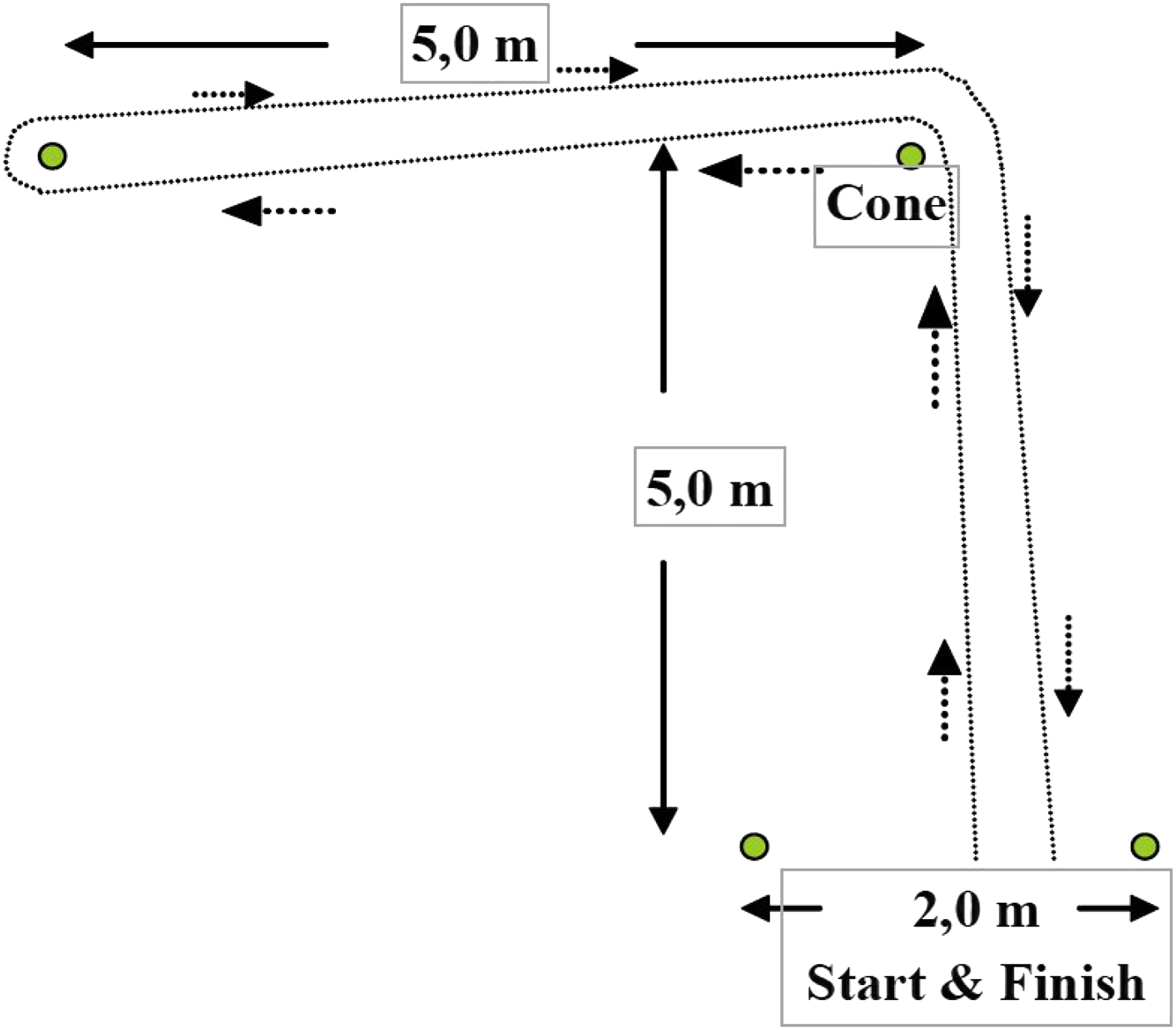
The two tests are performed in the following ways: (a) the Harres test includes a forward roll on a mat, sprint accelerations, change of directions, jumps over hurdles (76 cm) with subsequent crawling under the same hurdles (see Figure 1); (b) the L-run test is performed as a predetermined L-shaped sprint with change of directions (see Figure 2). The results from both tests were recorded in seconds. Graphic illustration over Harres test. Graphic illustration over L-run test.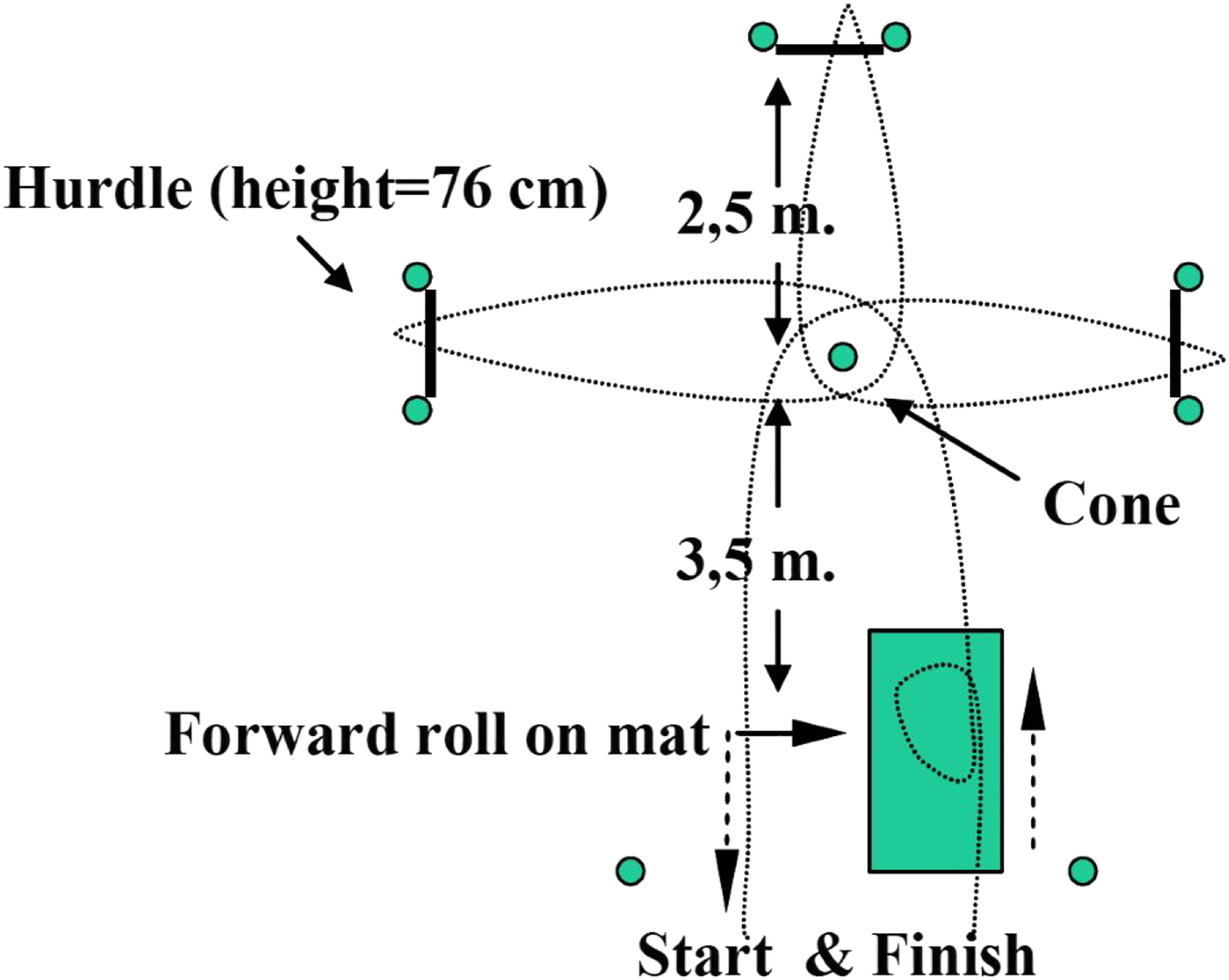
Strength tests
Grip strength.
A hand dynamometer was used to measure the participants’ upper body extremity strength. This test has high validity and test-retest reliability (Dawes et al., 2017; Wind et al., 2010). The participants were instructed to set the dynamometer to fit the second phalange, and to hold the elbow at 90° next to the body. From that position the participant pressed the dynamometer as hard as possible and simultaneously straightened the elbow while keeping the elbow next to the body. The results of both hands were recorded in Newton.
Standing long jump.
Standing long jump is a test which has been shown to have good reliability in relation to relative strength in the lower extremities (Krishnan et al., 2017; Maulder and Cronin, 2005), and for coordination of body movement (Bellardini et al., 2009). Standing on both feet, hands free, the participant jumped as far as they could, and landed on a gymnastic mat. The distance was measured from the starting line to the part of the body that landed closest to the starting line. The result was recorded in centimeters.
One-minute push-ups.
This test is used to measure upper body strength endurance and has high validity and reliability (Baumgartner et al., 2002; Dawes et al., 2017; Sörensen et al., 2000). The participant was instructed to perform as many push-ups as possible for one minute. They were allowed to stop and rest during the test. They started with both feet on the floor and on straight arms with their hands shoulder-width apart and in line with their shoulders. A small soft-tennis ball (10 cm) was placed on the floor, directly under the sternum on a line between the hands. During the test, the participant was required to touch the ball in every single push-up and thereafter return to the starting position with straight elbows. The number of correctly performed push-ups was recorded.
One-minute sit-ups.
This test is used for measuring strength endurance in the trunk and hip muscles, and has shown high validity and reliability (Dawes et al., 2017; Diener and Golding, 1992). The participant was instructed to perform as many sit-ups as possible for one minute. They were allowed to stop and rest during the test. The test starts with the participant lying supine on a mat with both feet touching the mat and with knee flexion at 90°, the arms crossed over the chest, and the shoulder blades touching the mat. During the test, the participant was required to flex the trunk and straighten the arms until the wrists touch the kneecaps. After the participant had touched the kneecaps, they returned to the starting position and repeated the movement. The number of correctly performed sit-ups was recorded.
Continuous multistage fitness test (VO2-max)
Continuous multistage fitness test is a commonly used test for measuring aerobic endurance and has high validity for estimated VO2-max in adults (Ramsbottom et al., 1988). The test is easy to perform and administrate, time-effective (Mayorga-Vega et al., 2015), and also commonly used at Police Academies (Dawes et al., 2017). The continuous multistage fitness test consists of repeated 20-m shuttle runs with a progressively increasing running speed. The running speed at the start of the test corresponds to a slow jog (8 km/h) and increases with 0.5 km/h for every level (Brewer et al., 1988). The VO2-max is then calculated based on the following formula:
The aim of the test was for the participant to complete as many levels and shuttles as possible. The running speed was controlled by a series of beeps pre-recorded in an app (Fitness Test Pro). The participant had to touch the line at the end of every 20-meter run before or at the sound of the beep. If the participant was not in pace with the beep, they received a warning and needed to first touch the missed line and thereafter catch up with the pace. If the participant missed two shuttles in a row, they were stopped, and the final result was recorded.
Self-reported physical activity
The scale physical activity consists of three items: (1) During an ordinary week, how much time do you spend performing physical activity (e.g., running, aerobics or playing ball games) that makes you breathe heavily?; (2) During an ordinary week, how much time do you spend doing daily activities (e.g., walking, bicycling or gardening) that last for at least 10 min each time?; and, (3) During a normal day, how much time do you spend sitting (hours)? A Likert scale was used, ranging from 1 (lowest score) to 6 (highest score). The internal consistency was somewhat low (α = .31).
Self-reported mental health
The scale consists of four items and is based on the participants’ self-reported mental health during the previous two weeks. The items are as follows: (1) I have had a positive view of the future; (2) I have felt useful; (3) I have dealt with my problems in a good way; and (4) I have felt close to other people. The scale was measured on a Likert scale with five response alternatives, ranging from 1 (always) to 5 (never). The internal consistency was satisfying (α = .66).
Perceived police ability
The scale perceived police ability consists of three items: (1) My physical fitness is sufficient for working as a police officer; (2) My mental abilities are sufficient for working as a police officer; and (3) My social skills are sufficient for working as a police officer. The scale was measured on a Likert type scale with five response alternatives, ranging from 1 (I strongly disagree) to 5 (I strongly agree). The internal consistency was satisfying (α = .64).
Data analysis
The analyses used for the first data set, include descriptive statistics, χ2-test and both independent and dependent t-test. All analyses were conducted in SPSS (version 25) and the alpha level was set at .05.
To analyze gender differences in flexibility, the χ
2
-test was conducted using z-test and Bonferroni correction. Gender was the independent variable and the results from the flexibility test were the dependent variable. The effect size was then calculated with Cramer’s V (ϕ
c
). Additionally, to analyze differences in flexibility between the first and third semester, a Mann-Whitney U test was conducted, and the effect size (r) was estimated based on the following formula:
For the other tests (i.e., strength, agility and aerobic endurance), t-tests were used and the effect sizes (d) were estimated based on the following formula:
The analyses used for the second data set include descriptive statistics and linear regression analyses. In the linear model, we both controlled for gender by doing two separate analyzes, and used two predictors, that is, the scales physical activity and mental health. The outcome variable was the scale perceived police ability.
Results
The results will now be presented in five parts. In the first four parts, the results from the first data set are presented and include descriptive presentations of the data, mainly in the form of three tables. Thereafter, the results from the gender analyses are presented. The fourth part contains the results from the analysis of the differences between the first and third semester. In the final part, we present the results on how police students self-reported physical activity and mental health predict their perceived police ability.
Descriptive statistics of the flexibility among police students
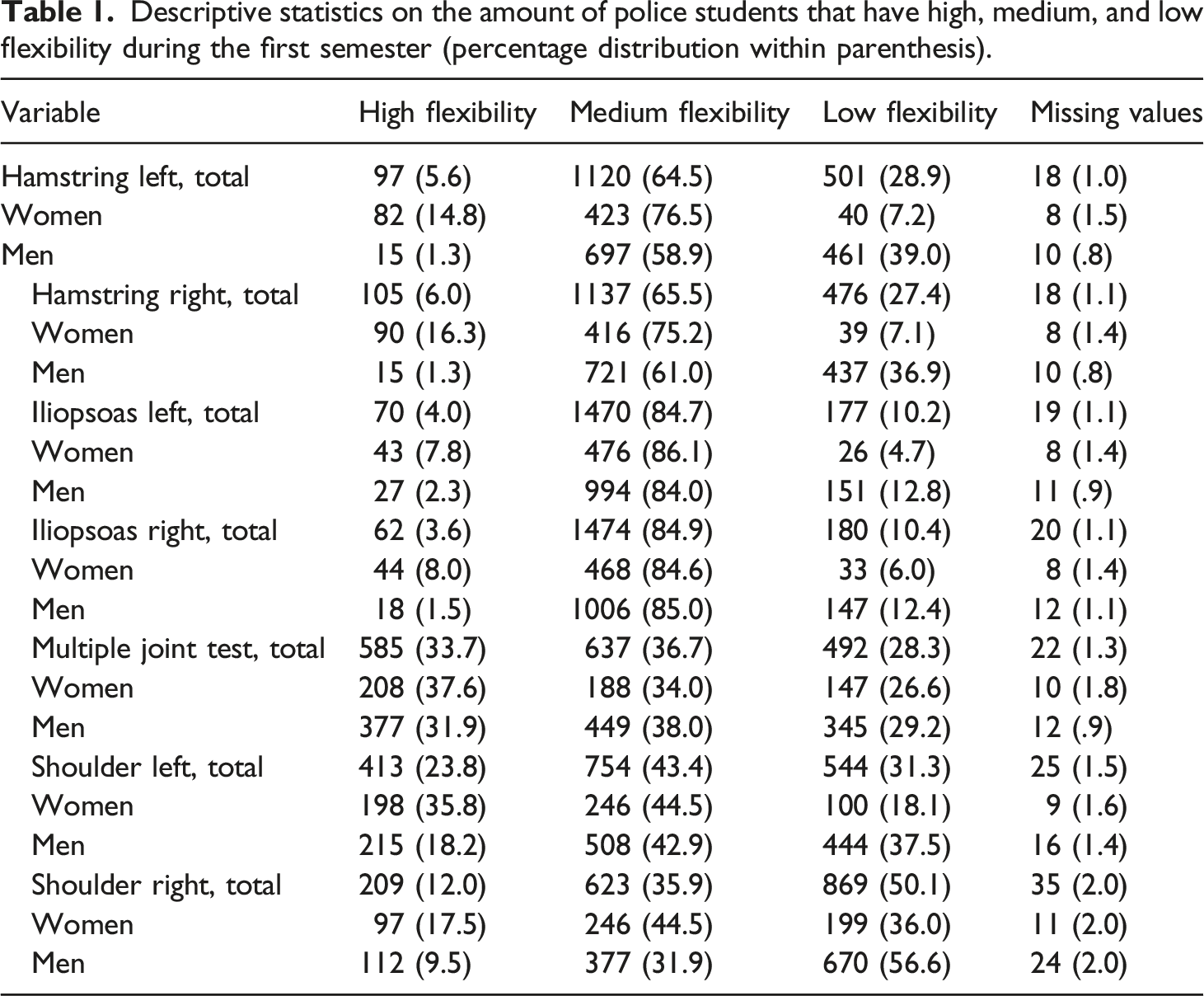
Descriptive statistics on the amount of police students that have high, medium, and low flexibility during the first semester (percentage distribution within parenthesis).
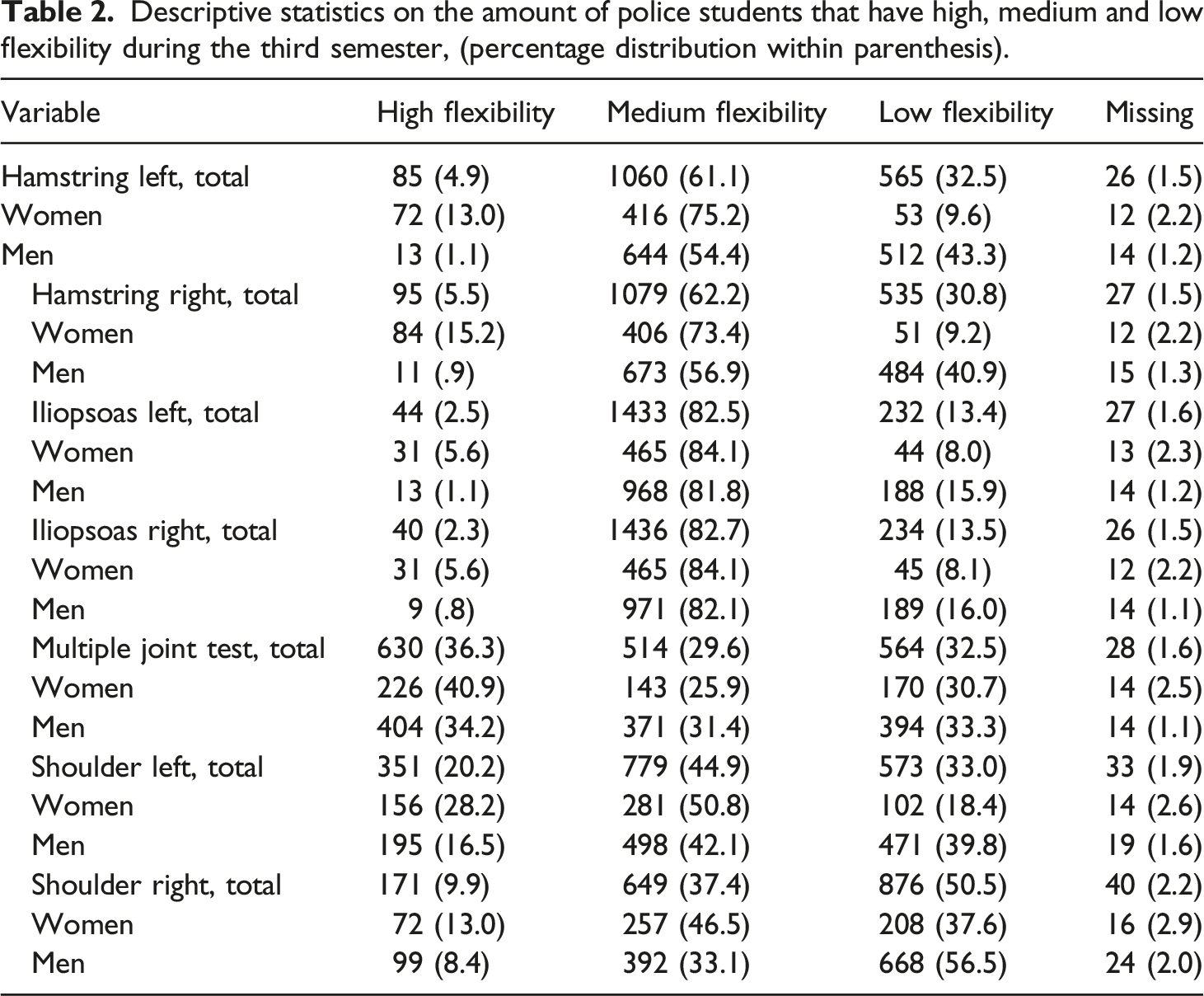
Descriptive statistics on the amount of police students that have high, medium and low flexibility during the third semester, (percentage distribution within parenthesis).
Descriptive statistics of strength, agility and aerobic endurance among police students
Descriptive statistics including mean and standard deviation (within parentheses) for the strength tests, agility test, and aerobic endurance test. The data are presented separately for both the first and third semester, and gender.
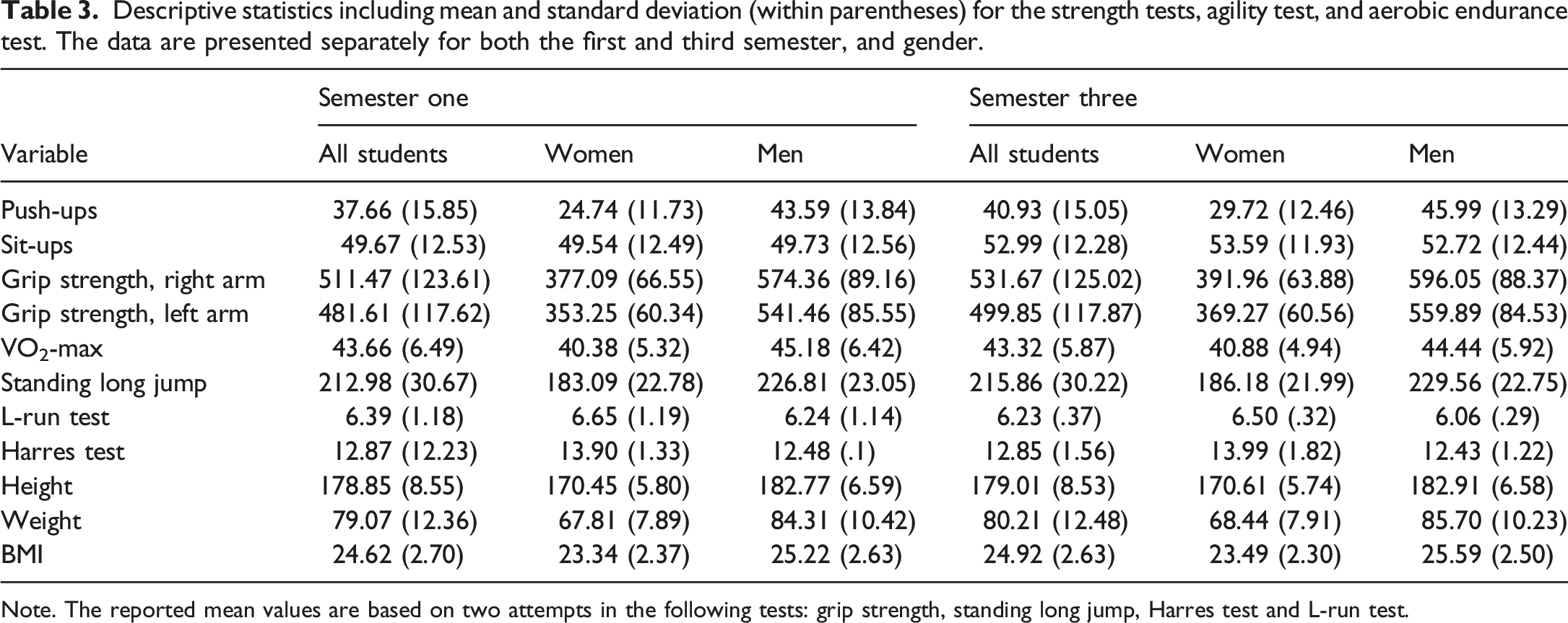
Note. The reported mean values are based on two attempts in the following tests: grip strength, standing long jump, Harres test and L-run test.
Gender differences in physical fitness during the first and third semester among police students
Gender differences and differences between the first and third semester for physical fitness presented separately for men and women.
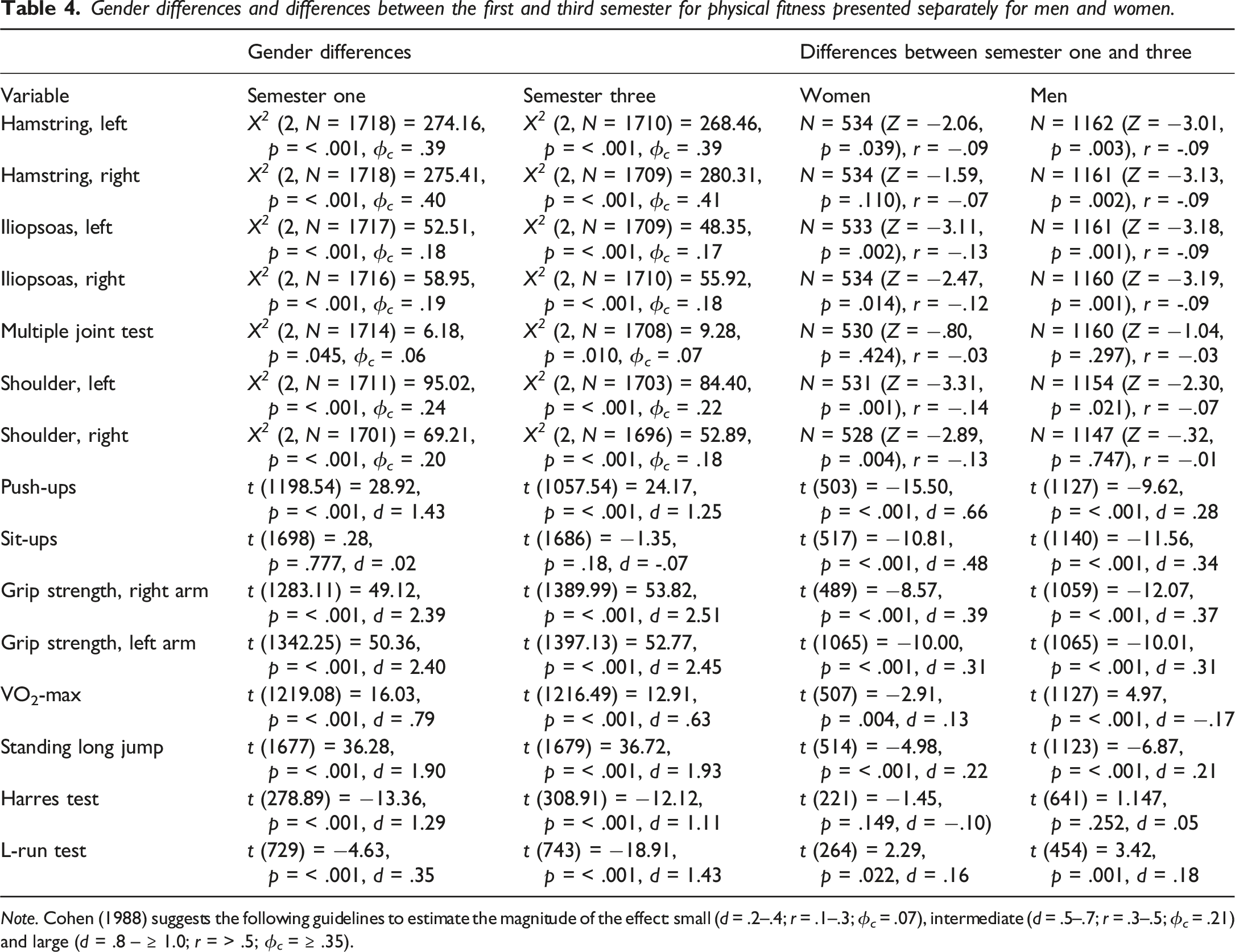
Note. Cohen (1988) suggests the following guidelines to estimate the magnitude of the effect: small (d = .2–.4; r = .1–.3; ϕ c = .07), intermediate (d = .5–.7; r = .3–.5; ϕ c = .21) and large (d = .8 – ≥ 1.0; r = > .5; ϕ c = ≥ .35).
Differences in physical fitness between the first and third semester among police students
The results from Wilcoxon signed-rank tests show that there are significant differences in physical fitness between semester one and three. As presented in Table 4, both women and men become significantly less flexible when tested in the third semester. There are, however, exceptions: two for men (shoulder right and multiple joint test) and two for women (hamstring right and multiple joint test). Moreover, the results from the paired sample t-tests show that there are significant differences between semester one and three. For all variables, except for aerobic endurance and Harres test (ns.), both women and men improved their results. With regards to aerobic endurance, women significantly improved their results while men significantly deteriorated. As illustrated by the effect sizes in Table 4, women (M d = .30, SD = .25) improved their results slightly more in relation to men (M d = .22, SD = .20).
The relationship between gender, physical activity, mental health, and perceived police ability
Linear model of two predictors (physical activity and mental health) of perceived police ability.
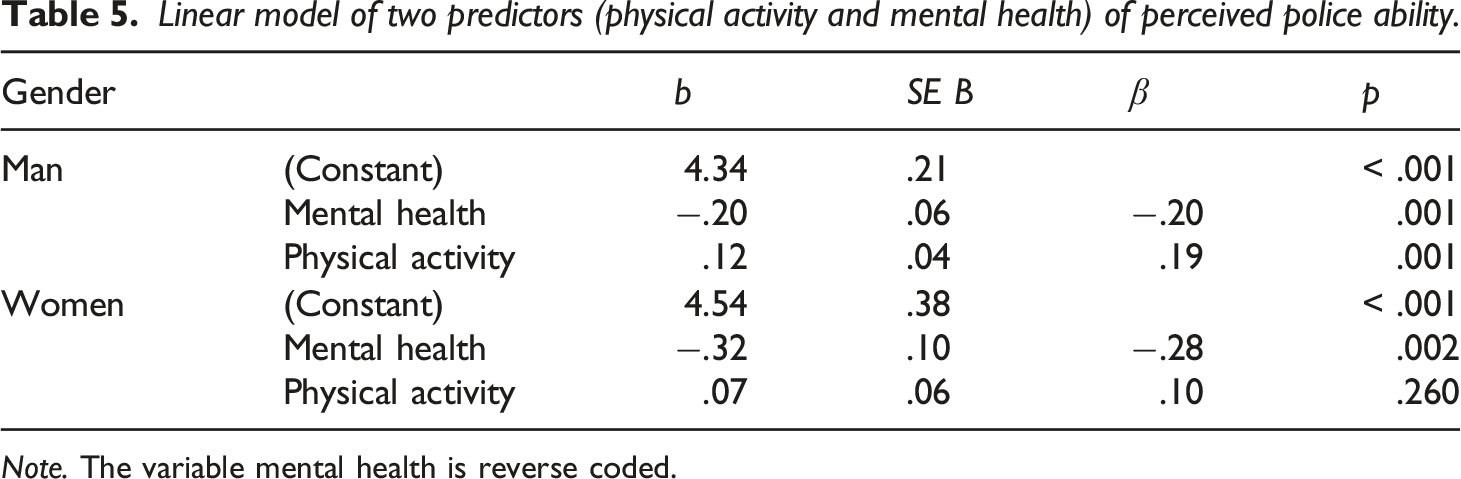
Note. The variable mental health is reverse coded.
Discussion
This study contributes to an increased body of knowledge in a limited field of research. This was accomplished by exploring and analyzing the physical fitness and mental health among police students in Sweden. More precisely, the study contributes with new knowledge on the level of physical fitness among Swedish police students as well as how different aspects of physical fitness varies across gender, and how the level of fitness change differently for men and women during their education. Furthermore, this study provides new insights on how the students’ self-reported physical activity and mental health affect their perceived police ability.
This study supports previous research in that there are gender differences with regards to police students’ physical fitness throughout the education (see Lockie et al., 2018b; see also Lockie et al., 2019a, 2020b). Furthermore, and in line with the national goals of the Swedish police education (Swedish Police Authority, 2020), this study also shows that the police students’ physical fitness seems to improve during education. The fact that the students’ strength and agility improve during education is positive and important, especially since research has highlighted that physical fitness seems to deteriorate continuously when working as a police officer (MacMillan et al., 2017), and that a higher level of physical fitness is associated with wellbeing as it is a protective factor against illness, both physical and mental (see Amlani and Munir, 2014; Emeny et al., 2012; Hamer, 2012; Knapik et al., 2001; Puetz, 2006). However, even though this study provides evidence on that the students’ strength and agility improve during education one should note that: (1) these improvements are, according to Cohen (1988), quite small; (2) the flexibility of the students deteriorates; and (3) the aerobic endurance seems to decrease for men and only improve to a small degree for women.
The result of the physical fitness among Swedish police students raises some important questions about the Swedish police education. Given the goal to improve the physical fitness (e.g., aerobic fitness and strength) of police students (Swedish Police Authority, 2020), and considering that police students during their education only improve slightly in some of the tests, one might call into question if the Swedish police authority is doing “enough” to provide the students with sufficient tools and preconditions to maintain and improve their physical fitness. This questioning – of doing “enough” – is supported by previous research that highlights and demonstrates the importance of physical fitness in policing (Achim, 2018; Gerber et al., 2013; Habersaat et al., 2015; Lagestad, 2011; Larsen, 2018; MacMillan et al., 2017). These studies show how important the police education can be for preparing the students for a physically and mentally demanding work (Anderson et al., 2001; Annell, 2015; Larsen, 2018; McGill et al., 2015). Physical ability can be one of the important aspects connected to handle work tasks in a professional way. Moreover, deal with common challenges related to police work such as stress and shift work (see Anderson et al., 2001). Consequently, by providing police students with good opportunities to develop their physical fitness during their education, the physical and mental health among police students will likely increase (see Amlani and Munir, 2014; Emeny et al., 2012; Puetz, 2006), and, as suggested by Lockie et al. (2019a), increase the number of students completing the education. As such, we suggest that the police education: (a) create sufficient preconditions for police students to maintain and improve their physical fitness during education (see e.g., Lockie et al., 2018b; 2019a; 2020b); and (b) design the curriculum for the police education so that it ensures that police students regularly participate in physical training, and that their physical ability is tested regularly so that they before graduation meet national determined requirements, which are missing today. Clear requirements in the curriculum would ensure that all police students at least have a common minimum level.
Another important question that can, and should, be raised in relation to this study is how police students can maintain their physical fitness as police officers after graduation. In line with previous research (MacMillan et al., 2017; Sörensen et al., 2000), we suggest that physical fitness tests should not only be performed by police students during their education, but also by police officers on a regular basis. There are several reasons to regularly perform physical fitness tests. First, such tests can be used as a screening procedure to both identify and prevent injuries and sickness (see Orr et al., 2016; Nabeel et al., 2007; Tomes et al., 2020a; Tomes et al., 2020b), as well as identify police officers who do not meet the necessary physical requirements for patrol duty. Second, testing police officers’ physical abilities on a regular basis could make them more aware of their own physical status (see MacMillan et al., 2017).
In addition to the aforementioned reasons, the results from the present study also suggest that performing regular physical fitness tests potentially can contribute to that students feel compelled to exercise, and therefore as a result maintain a desirable level of physical fitness. Based on this reasoning, we argue that the same would most likely happen to police officers; that is, if they needed to regularly perform physical tests, they would more likely maintain a desirable level of physical fitness. There are several tests that are suitable for police officers (see Anderson et al., 2001). However, we argue that the tests altogether need to evaluate police officers’ physical health in general, and the physical abilities that are important for their job specifically. We therefore suggest that fitness tests for police officers should include tests of their flexibility, aerobic capacity (by running), strength, and agility. These abilities are important for police officers in general (Anderson et al., 2001), and they are also a good indicator of health (Lockie et al., 2020c; Mayorga-Vega et al., 2015; Sheppard and Young, 2006). Research has, for example, indicated that flexibility is a main component in preventing lower back pain (Larsen, 2018; Larsen et al., 2018; McGill et al., 2015), which is common in the police profession, at least in Sweden (Elgmark et al., 2013).
The positive effects of promoting physical fitness and mental health during police education can be further supported by the results of this study, especially since the results show that two variables for men (i.e., self-reported physical activity and mental health), and one variable for women (i.e., self-reported mental health) affect their perceived police ability. Consequently, this finding suggests that a higher level of mental health can among both women and men have a positive effect on students’ perceived police ability. But with regards to the level of physical activity there is, as aforementioned, a gender difference. The level of physical activity seems to be more important for men than women in relation to their own perceived police ability. As such, this stresses the significance of mental health and physical activity as important factors for police students in relation to their future work (i.e., perceived police ability) (see Achim, 2018; Gerber et al., 2013; Habersaat et al., 2015; Lagestad, 2011; Larsen, 2018; MacMillan et al., 2017). However, more research is needed to both explore the relationship between physical activity, mental health, and perceived police ability, and explain the indicated gender differences.
This study is, however, not without limitations that might have influenced the results obtained. For example, since data on physical fitness derive from compulsory examinations during the first and third semester, it is possible that students stop when they reach the preset requirements. Hence, there is a risk that the students do not perform at their maximum. As such, the level of physical fitness among the students might be underestimated.
Footnotes
Declaration of conflicting interests
The authors declared no potential conflicts of interest with respect to the research, authorship, and/or publication of this article.
Funding
The author(s) disclosed receipt of the following financial support for the research, authorship, and/or publication of this article: This research was supported by the Centre for Police Research and Development at Linnaeus University in Växjö.
