



Abstract
We aimed to investigate how a ball regulation change, implemented in U15 girls’ handball games, now affects game performance and shooting plays. Over 14 matches (28 observations), we included all the attacks (n = 813) and shooting plays (n = 589) with the conventional ball and all the attacks (n = 821) and shooting plays (n = 618) with the new ball performed by both teams. We used notational analysis to compare the game performance and shooting plays in these two conditions. Our main results were as follows: (i) the attack efficacy was higher with the new ball (41.9%) than with the conventional ball (36.1%); and (ii) the prevalence of the three-line defensive system was higher with the new ball (10.5%) than with the conventional ball (2.7%). It can be inferred that the new ball enabled backcourt players to execute more powerful middle- and long-range shots, leading to their adoption of deeper defensive tactics that were effective in halting advancing backcourt players. Moreover, implementing new ball regulations resulted in a significantly higher frequency of shots targeted at the upper third of the goal frame (44.4%) compared to those observed with the conventional ball (35.8%). This implies that the introduction of the new ball enhanced precision control over shot placements, resulting in an increased player preference for targeting the upper course. Lastly, goalkeepers’ saving rates decreased under the new ball, highlighting the need for technical and tactical coaching, tailored to goalkeepers. In summary, implementing the new ball regulations had a positive impact on Japanese U15 girls’ handball performance.
Introduction
An essential aspect of handball is the player’s grip on the ball (Karišik et al., 2018; Tanggaard et al., 2016). Conventionally, resin has been used to enhance ball grip strength, resulting in improved throwing accuracy and skill development (Karišik et al., 2018). However, resin tends to adhere to surfaces such as gymnasium floors and soil, resulting in needs for cleaning and other expensive issues. Consequently, numerous gymnasiums in Japan and worldwide have prohibited the use of resin in handball, affecting players of all age groups from elementary school students to adults (Japan Handball Association, 2018, 2022a, 2022b, 2023; Handball Planet, 2016). Given the primary focus on the safety and promotion of handball, specifically among youth players, there has been a need to explore alternatives to resin-free balls. In response to this demand, the International Handball Federation (IHF) introduced new ball regulations in 2019, which include ‘Handballs played with resin’ and a new category ‘Handballs played without resin,’ which is play with a new resin-free ball (International Handball Federation, 2019).
In February 2020, the Japan Handball Association (JHA) took a significant step forward by changing the official ball used in U15 girls’ competitions (Japan Handball Association, 2020). They replaced the previous ball, which was a “size 2” handball played with resin (hereinafter called “the conventional ball”) that had a circumference of 540–560 mm and a mass of 325–375 g, with a “size 1” new resin-free ball (hereinafter called “the new ball”). The new ball has a smaller circumference of 490–510 mm and a lighter mass of 290–315 g. Additionally, the new ball features a thicker inner cushion sponge, which is a highly absorbent surface material that enhances grip and friction even when the ball is sweaty (Mikasa, 2021; Molten, 2021). Owing to this ball regulation change, the ball for the U15 girls was reduced, the mass was lighter, and the material gripped more easily.
De la Rubia et al. (2023) investigated sex differences in throwing velocity between a resin-free ball and balls with resin during short-distance actions. Their main findings revealed significant differences in throwing velocity between the resin-free ball and the conventional ball with resin in short-distance actions. Women reached higher velocities with the resin-free ball and the conventional ball with resin than with the conventional ball with no resin. Furthermore, throwing accuracy and effectiveness were not influenced by the ball type or throwing distance. While inconsistent results were identified in relation to throwing velocity based on ball type, sex, and throwing distance, accuracy and effectiveness were not affected by ball type. These results indicate that the resin-free ball was not perceived as just a modification of the conventional ball but rather as an improvement on the conventional ball, at least for throwing.
Individuals with larger hands and finger surface areas may have an advantage in securely handling the ball and transmitting greater force to it (Vila & Ferragut, 2019; Visnapuu & Jürimäe, 2007; Yamashita, 2006). Consequently, when the ball size was reduced, making it easier to grip, throwing velocity is apt to have been influenced (Fasold et al., 2021) with related effects of various aspects of performance, including shooting, passing, and turnover, thereby potentially altering the overall dynamics of the game. In this context, Oliver and Sosa (2013) investigated the surface area on the ball between the thumb, middle finger, and little finger of female handball players. Their findings revealed that this surface area was smaller than for that of the regulation ball for U16, U18, and senior players. Consequently, these results supported the prediction of better play with the smaller ball size for each player category. In a previous study on the impact of ball size reduction, Shimoharai et al. (2019) found a significantly higher success rate in positional attacks with smaller balls, and, when the ball size was increased for U15 boys, positional attack efficacy decreased (Semba et al., 2016).
In this context, there have been comprehensive studies in individual and team sports, respectively, that demonstrated the need to adapt sports equipment and rules to young athletes’ developmental characteristics (Buszard et al., 2020; Ortega-Toro et al., 2018; Timmerman et al., 2015). Birrento Aguiar et al. (2023) emphasized that the implementation or modification of game rules should be supported by rigorous scientific studies. They argued that it is the responsibility of sports scientists to provide empirical data to enable sports federations to make evidence-based decisions regarding rule changes and equipment modifications. However, there is no strong data related to the impact of manipulating regulation and practice environment constraints in youth sports.
Past findings generally suggest that alterations in ball size, surface material and regulations can influence game performance and shooting plays, but there is very limited research to date examining the impact of introducing resin-free balls in U15 handball. Therefore, our aim in this study was to investigate how the new ball regulation change, implemented in U15 girls’ handball games, affects game performance and shooting plays. This knowledge should assist the design and implementation of training and coaching methods for U15 girls.
Method
Participants
In this study, we analyzed the performance of competing teams playing 14 matches (n = 28 observations) in Japanese handball competitions. Seven matches were from the 2021 Japanese U15 Girls’ Championship (n = 8 teams), which were played with the conventional ball before the ball regulations changed. The other seven matches were from the 2022 Japanese U15 Girls’ Championship (n = 8 teams), which were played with the new ball after the ball regulations changed. To ensure similar competitive abilities of the two teams, we selected quarterfinal or later matches in both tournaments. Observations included 1634 attacks (813 for the conventional ball and 821 for the new ball) and 1207 shooting plays (589 for the conventional ball and 618, for the new ball). We obtained approval and support from the JHA to collect the match videos, but no informed participant consent or Institutional Review Board approval were needed for this study, as all data involved natural public behavior with no experimental manipulations.
Variables
The variables studied in relation to ball regulation changes were selected based on expert criteria established by two handball coaches licensed by the Japan Sports Association and the German Olympic Sports Confederation, both of whom hold PhDs in coaching science.
Game Performance
Overview of Attack
To provide an overview of attack performance, we gathered the following metrics: (a) the total number of attacks performed per team and match; (b) the total number of goals scored per team and match; and (c) turnovers (defined as attempts that did not result in a shot). We then computed secondary metrics: (a) the attack efficacy (calculated as goals scored divided by the total number of attacks multiplied by 100%); (b) shot efficacy (calculated as goals scored divided by the total number of shots multiplied by 100%); and (c) turnover rate (the number of turnovers divided by the total number of attacks multiplied by 100%) (Semba et al., 2016).
Defensive System
We classified the defensive system into six categories: (a) 1-line defense (6:0 defense); (b) 2-line defense (5:1 defense or 4:2 defense, 3:3 defense); (c) 3-line defense (3:2:1 defense); (d) transition defense; (e) defense during two minutes suspension (situations involving the defensive team with at least one player sanctioned with two minutes suspension); and (f) other defensive strategies (including man-to-man defense or combined defensive system such as one or two players are defended on man-to-man defense and the other defenders defend on zone defense). We recorded the frequency of occurrence for each category and computed the respective occurrence rates (Inoue et al., 2015).
Game Phase
We classified the game phases during which a team may register a turnover into three categories: (a) fast break (including attacks that occur before all players are in their respective positions); (b) positional attack (initiated after players have transitioned into their designated defensive/attacking positions) (Komata et al., 2019); and (c) set pieces (based on Ferrari et al., 2022) or actions that start by a stopped ball situation (e.g., direct or indirect free throw, corner throw, throw in, or shots taken directly from a rebounded ball) that imply a short and rapid finalization of the offensive process involving less than three passes between the players. In this study, we defined set pieces as only one pass between the players). We registered the occurrences in these three categories and computed their respective occurrence rates.
Type of Turnovers
We classified turnovers into nine categories: (a) Entering the goal area, (b) too many steps, (c) illegal dribbling, (d) kicking, (e) offensive fouls, (f) errors in pass catching, (g) dribble steals, (h) interceptions, and (i) passive play (Semba et al., 2016). We recorded the occurrence of each category and computed their respective frequency rates.
Shooting Play
Shooting Area
We classified the shooting area into six sections: (a) wing, (b) pivot, (c) breakthrough, (d) middle, (e) long-range, and (f) 7-m throw (Figure 1). We counted the occurrences of each category and calculated their respective occurrence rates (Semba et al., 2016). Shooting Area.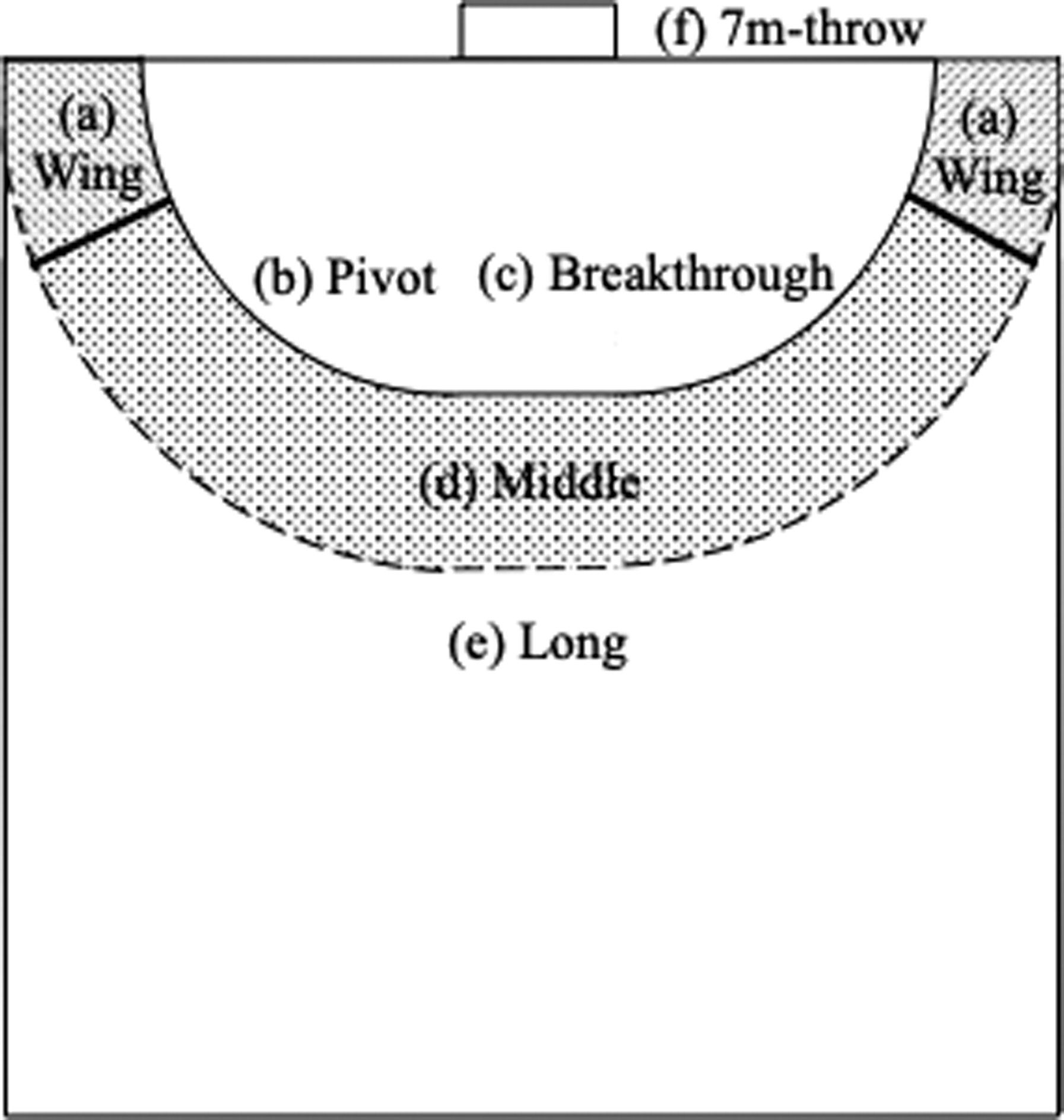
Shot Placement (Horizontal Sections)
We classified the horizontal shot placement into four categories: (a) upper, (b) middle, (c) lower, and (d) lob (Figure 2). Shots taken by attackers who were blocked by the opponent’s defender or who did not reach the goal were excluded from the recorded shot placement. Shot Placements in Horizontal Sections.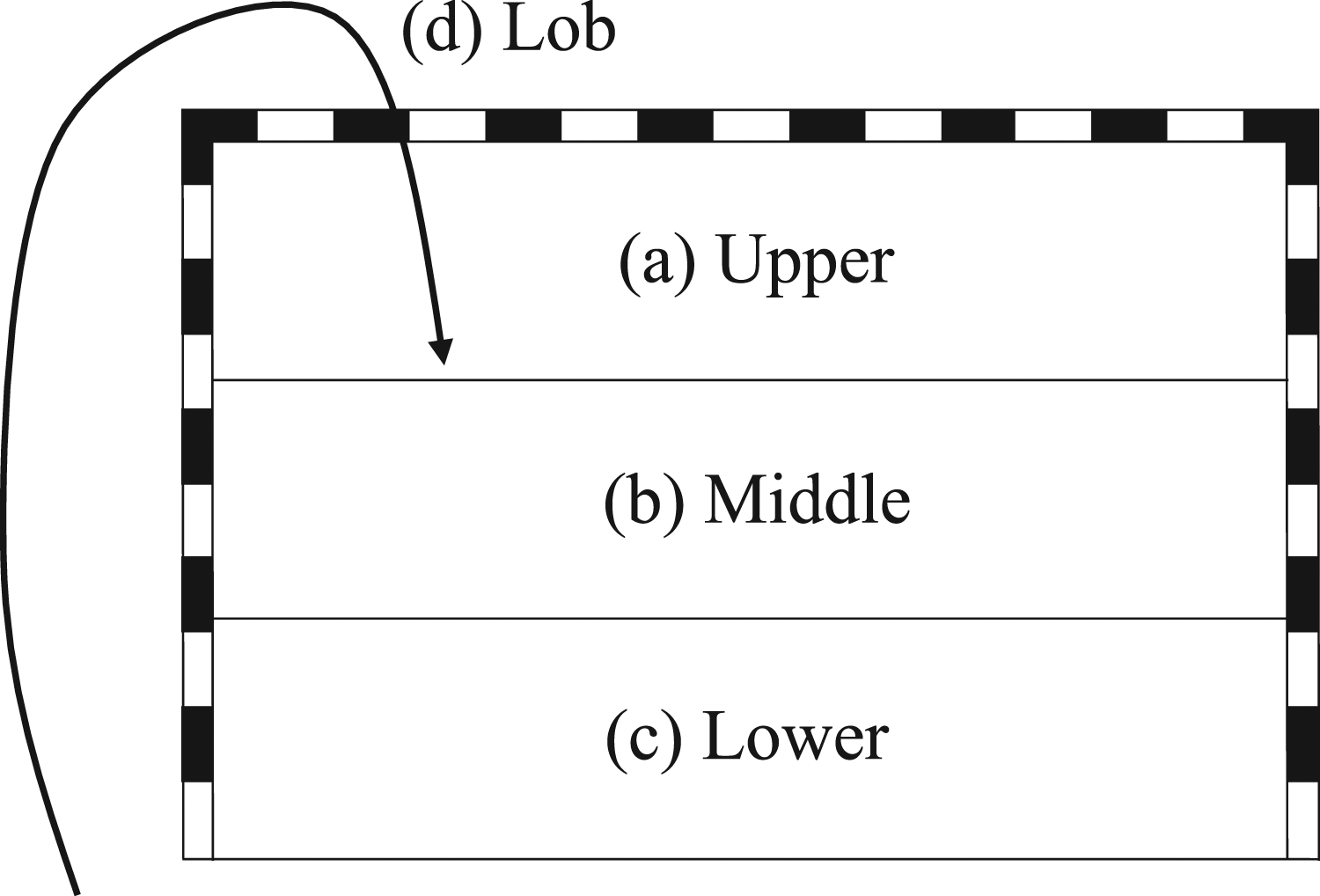
Shot Placement (Vertical Sections)
We classified the vertical shot placement into three categories based on the goalkeeper’s perspective: (a) shots toward the shooter’s non-dominant side, (b) shots toward the center, and (c) shots toward the shooter’s dominant side (Hansen et al., 2017) (Figure 3). Shots taken by attackers who were blocked by the opponent’s defender and did not reach their goal were excluded from the recorded shot placement. Shot Placements in Vertical Sections for Right Handed Players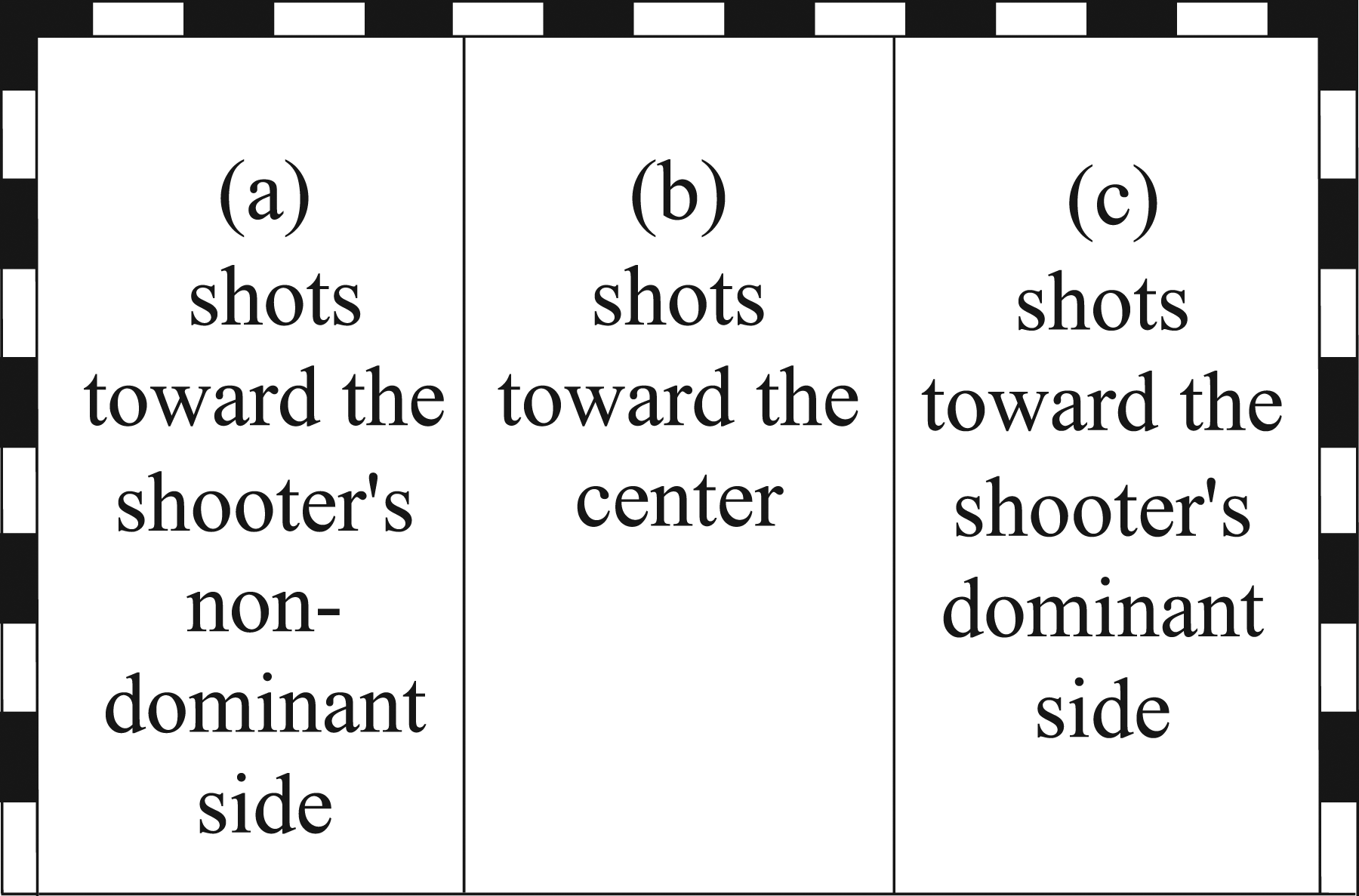
Shot to the Head of the Goalkeeper
We classified shots directed toward the goalkeeper’s head as either hit or no hit and calculated the occurrence rates for each category. Recognizing the impact of ball regulation changes on the occurrence of potentially hazardous play by goalkeepers, we added a new variable to this study.
Shot Results
We classified shot outcomes into three categories: (a) goals, (b) saves made by the goalkeeper, and (c) shots off goal, and calculated their respective occurrence rates (Hatzimanouil et al., 2017).
Procedure
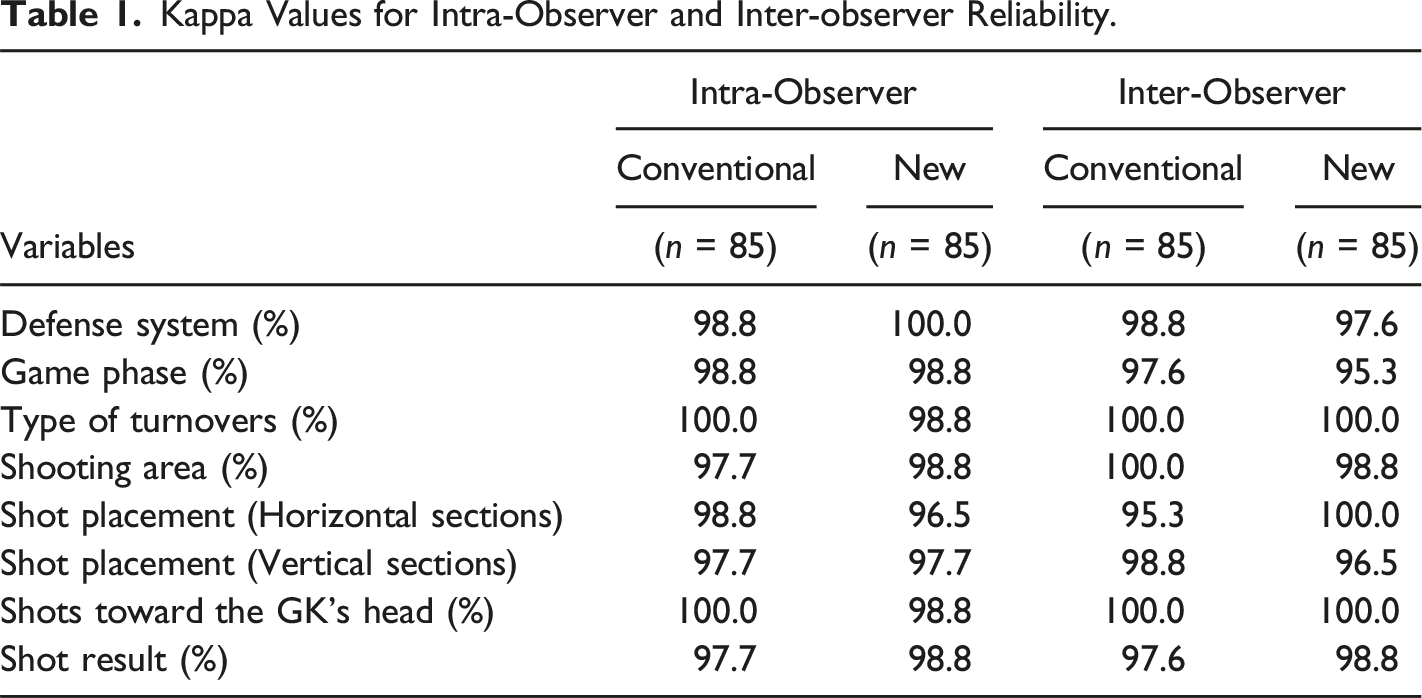
Kappa Values for Intra-Observer and Inter-observer Reliability.
Statistical Analyses
Statistical analyses involved parametric (temporal variables) and nonparametric (spatial variables) data, and they necessitated two distinct statistical approaches. First, we applied an independent samples t test to assess the significant differences before and after the ball regulation change, and we calculated effect size (ES) values using Cohen’s d and Cohen’s (1988) guidelines for categorizing effect sizes as small (0.2), medium (0.5), or large (0.8). Spatial variables were presented as counts and percentages. Then, to examine the impact of ball regulation changes, we used Crosstab Commands with Pearson’s chi-square tests and residual analyses to assess distribution differences. In cases where the expected cell frequencies were less than five and accounted for more than 20% of all cells, we employed Fisher’s exact test (Montecarlo’s adjustment). ES values were calculated using the phi coefficient (φ) and Cramer’s V with degrees of freedom equal to 1 or greater than 1, respectively. The substantial effects for φ were divided into more fine-graded magnitudes as follows: 0.10 ≤ φ < 0.30 corresponded to a small effect size, 0.30 ≤ φ < 0.50 corresponded to a medium effect size, and φ ≥ 0.50 corresponded to a large effect size (Cohen, 1988). The substantial effects for V for 2 degrees of freedom were divided into more fine-graded magnitudes as follows: 0.07 ≤ V <0.21 corresponded to a small effect size, 0.21 ≤ V <0.35 corresponded to a medium effect size, and V ≥0.35 corresponded to a large effect size (Cohen, 1988). All statistical analyses were performed using IBM SPSS statistical software for the iMac, version 29.0 (IBM. Corp; Armonk. NY) and the significance level was set at 5% for all statistical analyses.
Results
Game Performance
Overview of Attack
Overview of Attack Performance.
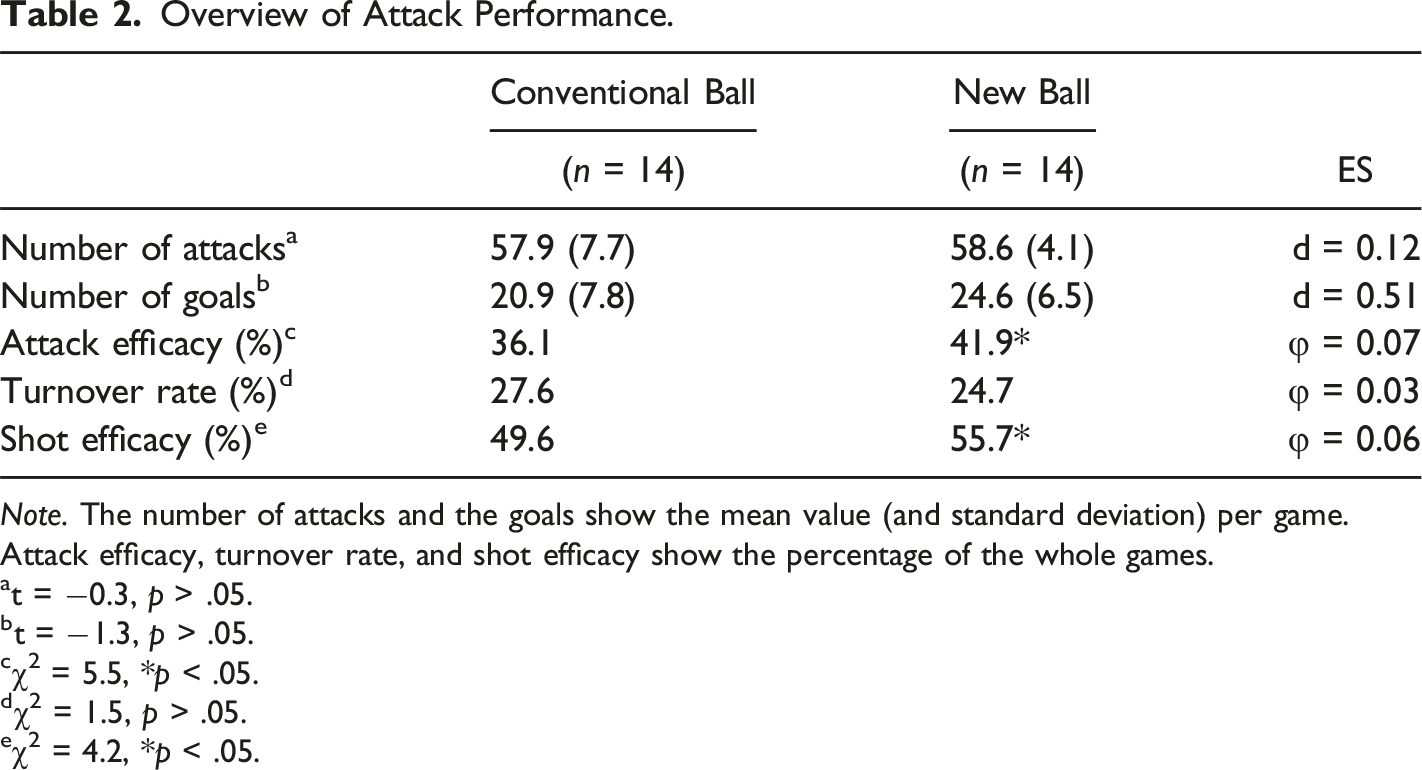
Note. The number of attacks and the goals show the mean value (and standard deviation) per game.
Attack efficacy, turnover rate, and shot efficacy show the percentage of the whole games.
at = −0.3, p > .05.
bt = −1.3, p > .05.
cχ2 = 5.5, *p < .05.
dχ2 = 1.5, p > .05.
eχ2 = 4.2, *p < .05.
Defensive System
Defensive System Performance.
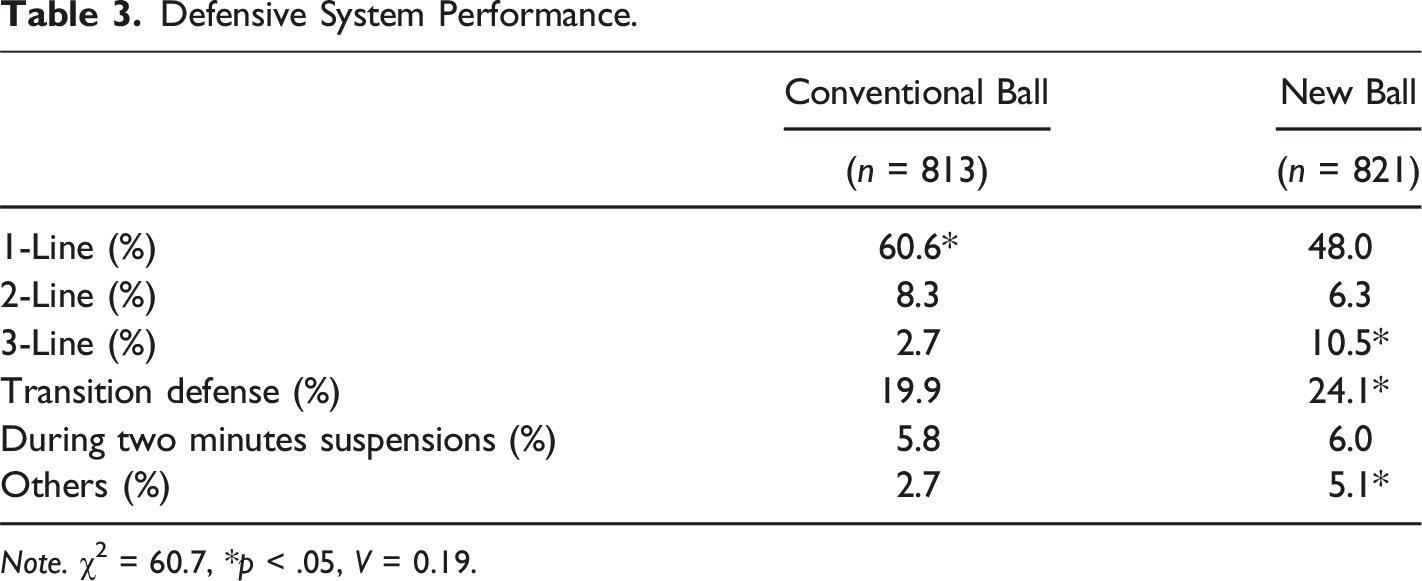
Note. χ2 = 60.7, *p < .05, V = 0.19.
Game Phase
Game Phase Performance.
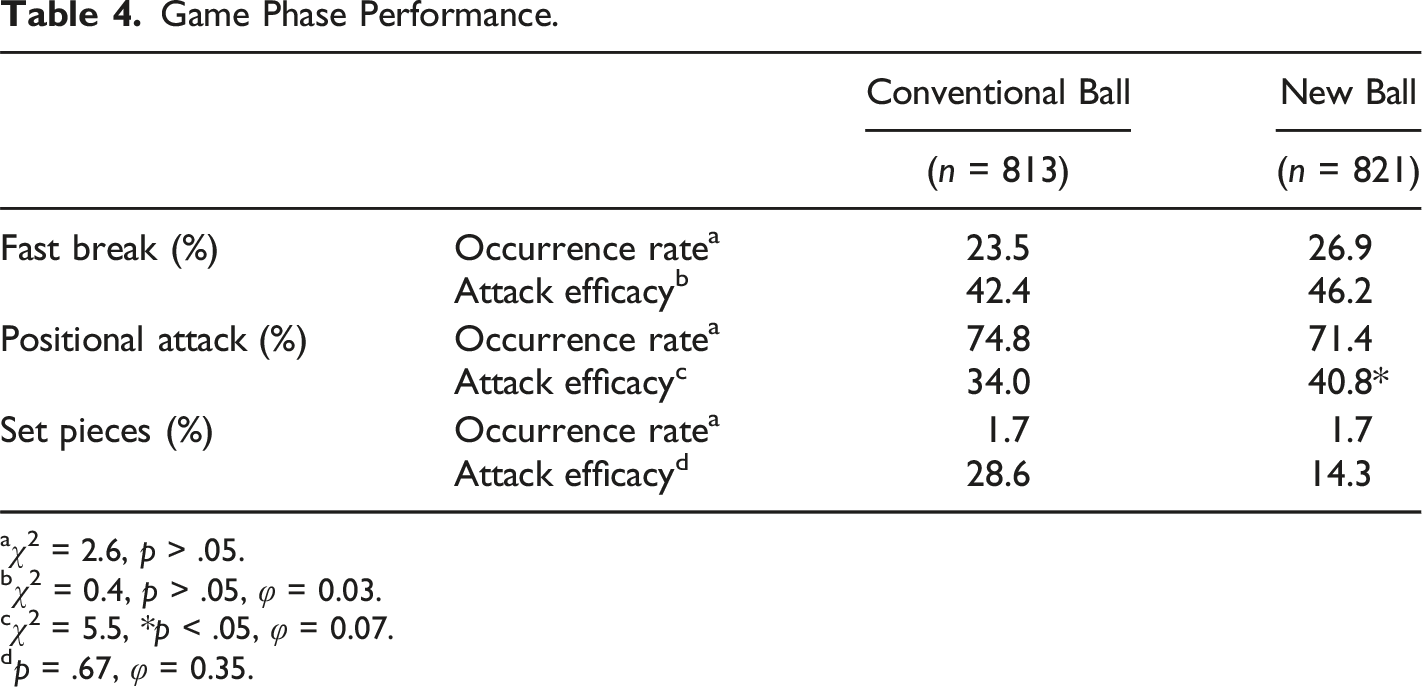
aχ2 = 2.6, p > .05.
bχ2 = 0.4, p > .05, φ = 0.03.
cχ2 = 5.5, *p < .05, φ = 0.07.
dp = .67, φ = 0.35.
Type of Turnovers
Type of Turnovers.
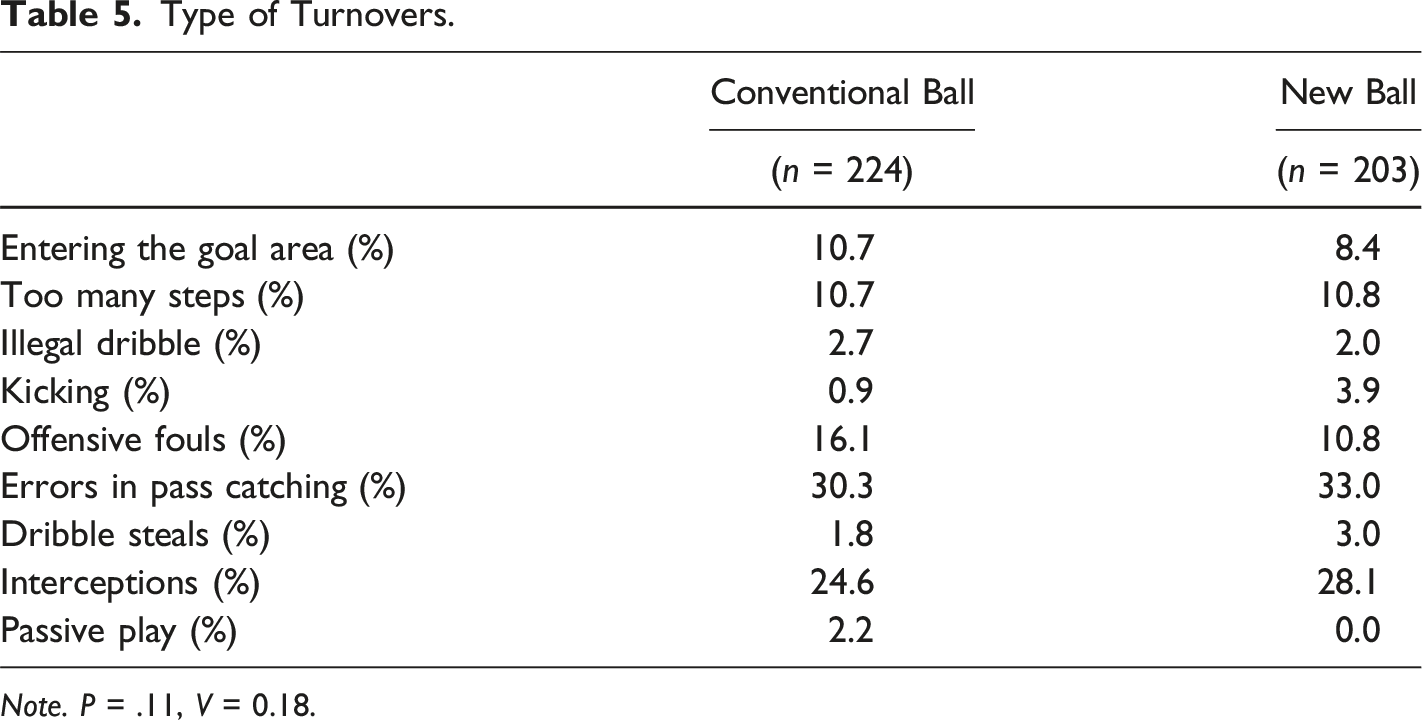
Note. P = .11, V = 0.18.
Shooting Play
Shooting Area
Shooting Area.
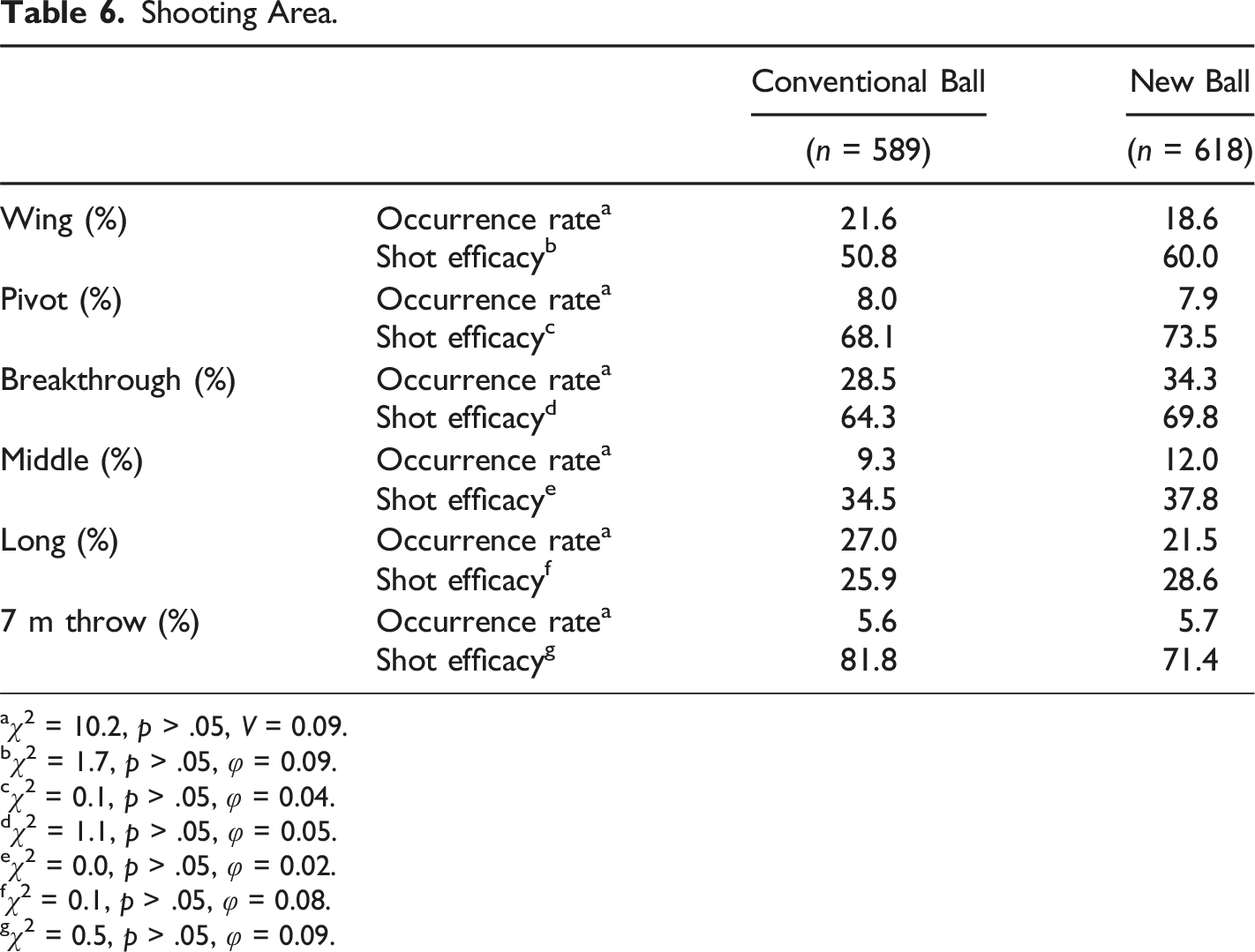
aχ2 = 10.2, p > .05, V = 0.09.
bχ2 = 1.7, p > .05, φ = 0.09.
cχ2 = 0.1, p > .05, φ = 0.04.
dχ2 = 1.1, p > .05, φ = 0.05.
eχ2 = 0.0, p > .05, φ = 0.02.
fχ2 = 0.1, p > .05, φ = 0.08.
gχ2 = 0.5, p > .05, φ = 0.09.
Shot Placement (Horizontal Sections)
Shot Placement (Horizontal Sections).
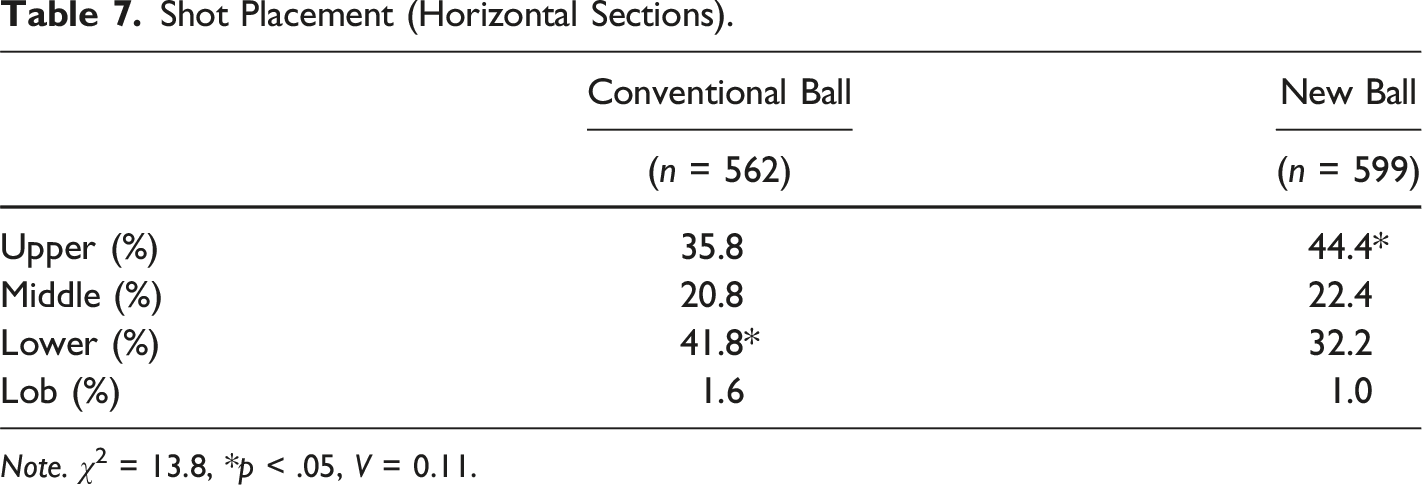
Note. χ2 = 13.8, *p < .05, V = 0.11.
Shot Placement (Vertical Sections)
Shot Placement (Vertical Sections).
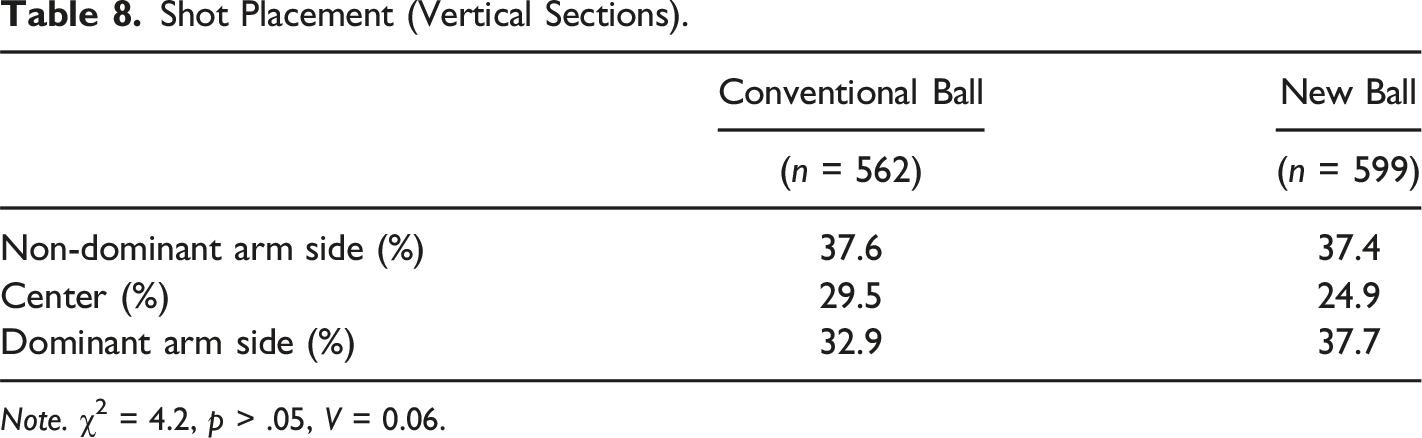
Note. χ2 = 4.2, p > .05, V = 0.06.
Shots toward the Goalkeeper’s Head
Shot to the Head of the Goalkeeper.
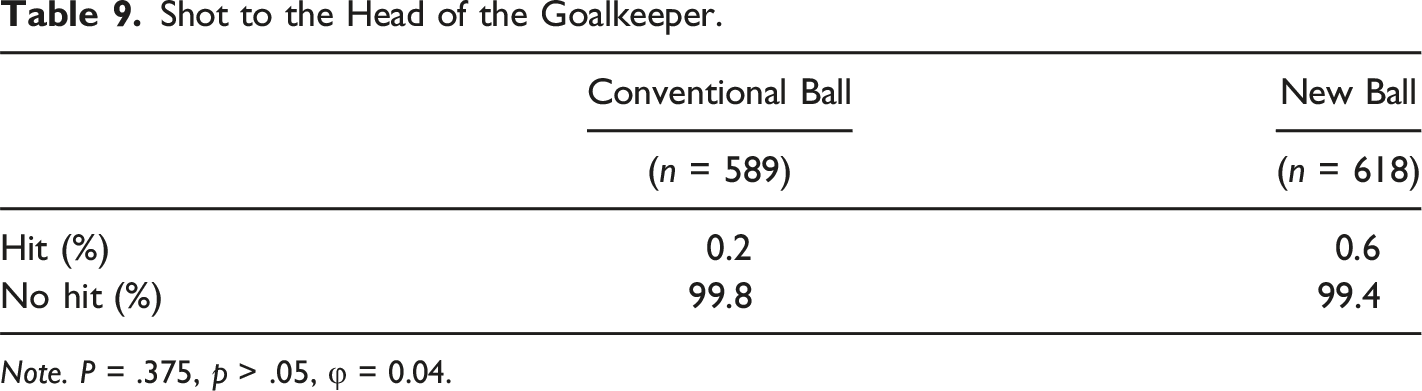
Note. P = .375, p > .05, φ = 0.04.
Shot Results
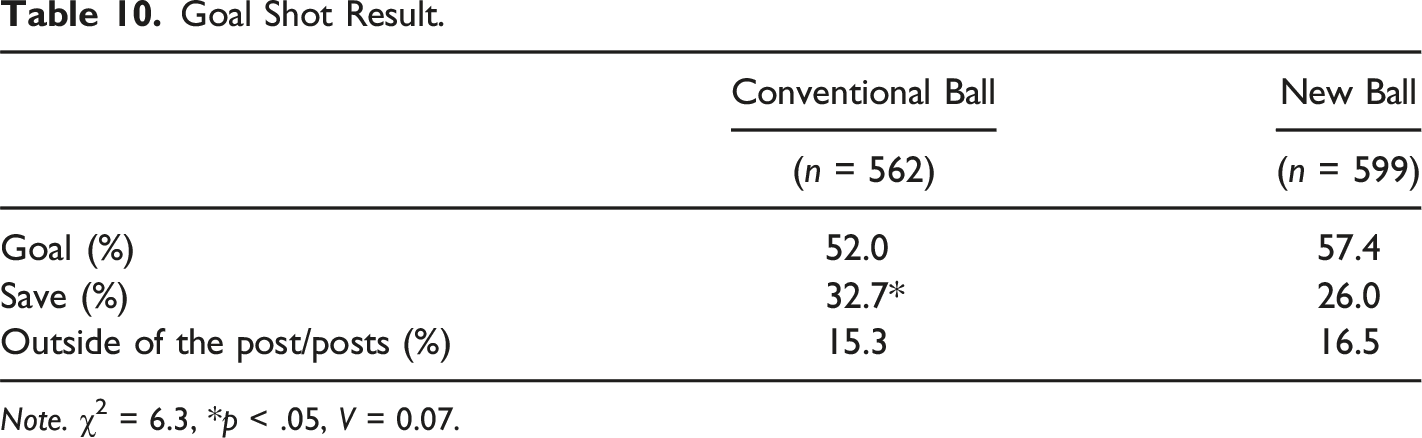
Goal Shot Result.
Note. χ2 = 6.3, *p < .05, V = 0.07.
Discussion
Changes in Overall Attack Performance
In this study of changes in youth players’ handball performances before and after a change in the ball regulation, we found that attack efficacy significantly increased with the new ball (41.9%) compared with the conventional ball (35.9%) during the period of these match observations (Table 2). This finding aligns with a previous analysis of a tournament in which the game ball size was reduced from size 2 to size 1 (Shimoharai et al., 2019), indicating that improved attack efficacy is associated with downsized game balls. Furthermore, the attack efficacy when using the new ball substantially surpassed that of top-level U15 female players in 2017 (35.1%) and was comparable to that of Japanese top-level U18 female players (41.5%) (Komata et al., 2019). Considering the tendency for attack efficacy to increase with higher competitive levels (Aida et al., 1995), attack capabilities seem to have been improved with the introduction of the new ball regulations. The attack efficacy during positional attack was significantly higher with the new ball (40.8%) than that with the conventional ball (34.0%), as shown in Table 4. However, there was no significant difference in the occurrence rate of organized attacks before and after the ball regulations. Therefore, the accuracy of the organized attacks seem to have improved with the new ball.
Shot efficacy was significantly higher when using the new ball (55.7%) than when using the conventional ball (49.6%) (Table 2). The shot efficacy in games with the new ball greatly exceeded that of the Japanese top-level U15 female players (48.1%) and even outperformed Japanese top-level U18 female players (53.1%) (Komata et al., 2019). This improvement could be attributed to scaling the ball to be smaller, lighter, and more grippable (Buszard et al., 2016; Fasold et al., 2019), all of which enhance players’ ball-handling abilities and subsequently increase shot efficacy. These improvements likely impacted overall improvements in attack efficacy. There were no significant differences from ball regulation changes in ball turnover rate or the type of turnovers as shown in Tables 2 and 5.
Changes in Defensive Systems
When analyzing alterations in the occurrence rates of opposing defensive systems before and after the ball regulatory adjustment, significant trends emerged (Table 3). There was a substantial reduction in the incidence of the 1-line defense, whereas there was a significant increase in the 3-line and transition defenses when playing with the new ball. This pattern can be partly attributed to the enhanced ball-handling capabilities of the newer ball. Changes to the dimensions and grip qualities of the balls seem to have empowered backcourt players to execute more forceful long- and mid-range shots, leading to the diminished utilization of the 1-line defense. This transformation can be construed as affording backcourt players greater latitude within the context of 6:0 defense tactics. The 6:0 defense strategy is characterized by positioning players near the 6-m line, without overcommitting to advanced positioning vis a vis an individual attacker (Aida, 1994). Our results suggest an upsurge in the adoption of a 3:2:1 defense when using the new ball; this is an assertive defensive approach that is renowned for its effectiveness in thwarting advancing backcourt players.
This swift predominance of a deeper defensive system (3:2:1; 5:1) when playing with the new ball may be attributed not only to the increased throwing efficacy of backcourt players from the 9-m line but also to the coaching strategy employed, possibly in alignment with the JHA player development policy. The JHA emphasizes measures that restrict opponent attacks, curtail opponent activities, and employ anticipatory defensive tactics. This approach is particularly relevant during the developmental phases for U15 and U18 players (Japan Handball Association, 2009). Our data does not definitively establish a direct link between this swift defensive system change and the introduction of the new ball. However, there was an increase in shot efficacy for middle and long-range shots, typically taken by backcourt players (Table 6) (Marczinka, 2021) which may have resulted from teams’ earlier defensive strategies involving deeper player positioning and creating more space for shots near the goal.
Changes in Shooting Plays
There were notable differences in the shot placement of the horizontal sections, with more shots aimed at the upper lane with the new ball compared to shots taken with the conventional ball and with significantly fewer shots directed at the lower course (Table 7). Since the new ball has been shown to allow players greater control over the direction of shots, shooters scored better by accurately aiming their shots upward toward the goal. The increase in the number of players who target the upper course is proper tactical intention since the average height of Japanese 15 year-old female students is 156.5 cm (Ministry of Education, Culture, Sports, Science and Technology, 2022) limiting them in being able to protect the upper half of a two meter high handball goal.
Although there was no significant change in the proportion of dangerous shots to the goalkeeper’s head due to ball regulation changes, save rates of goal shots decreased significantly (Table 9). Compared with the consistent 30%-range save rate previously observed in various age groups including from U18 to senior in women’s handball (IHF, 2022a; IHF, 2022b; Valentin & Gheorghe, 2017), the save rate with the new ball appears to be lower (26.0% - Table 10), potentially favoring field players over goalkeepers. Thus, while goalkeepers should commence tactical training from the age of 14 (Hungarian Handball Federation, 2019, p. 17), considering Japan’s inadequate environment for goalkeeper development (Nagano, 2023), goalkeeper development training should be offered to the U15 age group.
Impact on Player Development and Skill Acquisition
Introducing of the new ball regulations appears to have significant implications for player development and skill acquisition among U15 girls in handball. The observed improvements in attack efficacy, shot efficacy, and changes in defensive strategies suggest that the new ball facilitates enhanced performance levels at younger ages. This acceleration of skill development could have long-term effects on player trajectories and the overall standard of play in women’s handball in Japan, aligning with research on equipment scaling in youth sports (Buszard et al., 2016).
The increased attack and shot efficacies with the new ball, which are comparable to or even surpass those of older age groups, indicate that U15 players can now execute more advanced techniques earlier in their development. This early mastery of skills could potentially lead to more rapid progression in tactical understanding and decision-making abilities, as suggested by past investigators’ studies of skill acquisition in youth sports (Côté et al., 2009). However, it is important to consider whether this accelerated development might also lead to potential problems, such as early specialization or increased pressure on young athletes, concerns that have been previously raised in sports psychology literature (Malina, 2010).
As we consider these impacts, it becomes crucial to monitor long-term player development trajectories and adjust coaching methodologies accordingly. Future research should explore how these early performance improvements translate to later stages of player development and whether they result in sustained advantages at senior levels of play, following models of long-term athlete development (Ford et al., 2011).
Limitations and Directions for Future Research
We observed statistically significant but small effect size values for several variables of interest (i.e., attack success rate and shooting accuracy), with ES ranging around or below V = 0.2, φ = 0.1, and φ = 0.35 as seen in Table 4. Thus, the practical significance of these changes associated with ball regulation changes may be limited. Factors not considered in this study may also contribute to game performance and shooting outcomes, including individual player skills, coaching strategies, and team dynamics, which we did not comprehensively examine. Furthermore, we primarily employed observational data and did not consider other factors such as player feedback, coach interviews, or in-depth biomechanical analyses. Future investigators might use multiple data sources and methodologies to provide a richer understanding of the nuances associated with ball regulation changes.
Another significant limitation of this study was potential variability in the age distribution of participants when considering observational data of player performance in the two tournaments. While the overall age range (U15) remained constant, the specific age composition within that range might have differed between the 2021 and 2022 samples. For instance, there could have been a higher proportion of players closer to 15 years old in one year compared to the other. This subtle age distribution difference, especially considering the relative age effect, could have influenced the observed differences. The impact of age variability is particularly noteworthy because even small age differences can be significant in youth sports. A player who is several months older might demonstrate more advanced skills due to additional physical development and training time, regardless of the type of ball used. This effect could potentially confound our analysis of how the different balls impact performance. Future studies should aim to control for age more strictly, perhaps by tracking the same cohort of players over time or by ensuring a more balanced age distribution across the compared groups.
Conclusion
Our results showed that U15 female handball players’ attack efficacy and shot accuracy were higher when using the new ball than the conventional ball. The introduction of the smaller and easier-to-grip ball material improved ball handling, resulting in higher success rates for both attack play and shooting. In addition, the prevalence of the 3-line defensive system was higher with the new ball than with conventional ball, suggesting that the new ball enabled backcourt players to execute more powerful middle- and long-range shots, leading to the adoption of deeper defense tactics to halt advancing backcourt players. Moreover, the new ball regulations resulted in a higher frequency of shots aimed at the upper half of the goal than when shooting with the conventional ball. This implies that the introduction of the new ball enhanced the control precision of shot placement, resulting in an increased preference among players for targeting the over shot placements. Lastly, the goalkeepers’ saving rates decreased with the new ball, highlighting the need for tailoring technical and tactical coaching to goalkeepers’ heights. Accordingly, we found that the implementation of the new ball regulations has had a positive impact on the game performance of Japanese U15 girls. In further investigations, researchers should analyze international competitions comparing play contexts that differ from those in Japan, recording throwing velocities of U-15 girls in each ball regulation or establishing relationships between ball dimension and anthropometry of players.
Footnotes
Acknowledgements
We thank the editors and reviewers for their constructive comments, which helped to improve all parts of the article. We are also grateful to Yusei MAKIHIRA for contributing to this study.
Declaration of Conflicting Interests
The author(s) declared no potential conflicts of interest with respect to the research, authorship, and/or publication of this article.
Funding
The author(s) disclosed receipt of the following financial support for the research, authorship, and/or publication of this article: This work was supported by the Japan Society for the Promotion of Science (22K17691).
