



Abstract
Typical visual perception includes an attention bias toward right hemisphere mediated global, holistic cortical processing. An atypically local, detail-oriented focus of attention is characteristic of left hemisphere processing and is often observed in patients whose field of attention is restricted by certain types of neurocognitive impairment. We designed the present pair of studies to induce a local attentional focus to observe its consequences on neurocognitive measures of visuospatial processing. In Experiment I, participants wore glasses mimicking simultanagnosia, a disorder of visual attention, to induce a narrowed, atypical attentional style while they completed visual neuropsychological tasks. This simulation impaired participants’ capacities to visually synthesize and efficiently reproduce Complex Figure stimuli as measured with the Boston Qualitative Scoring System (BQSS), and it induced an atypical attentional style on Rorschach Performance Assessment System (R-PAS) responses. In Experiment II, participants wore glasses designed to provoke differential hemispheric activation, also hypothesized to influence style of visual attention; but this manipulation did not influence neurocognitive task performance. We discuss implications for the interpretation of BQSS and R-PAS scores and offer directions for future research.
Keywords
In general, people get “the big picture” and “see the forest for the trees” rather than getting “lost in the details” or “bogged down in minutiae.” On experimental tasks permitting the use of broad (global) or detailed (local) visual attention, people show a bias toward attending to stimuli globally (Navon, 1997). However, several factors may influence this bias, including mood states (Zadra & Clore, 2011), neurocognitive impairments (Dalrymple et al., 2013), and hemispheric specialization (Brederoo et al., 2017). In the pair of studies we present, our focus was on experimentally manipulating the latter two factors, deliberately narrowing the visual field in Experiment I and deliberately lateralizing the visual field in Experiment II, to reverse typical cognition to induce local over global processing and observe its influence on hypothesized target variables from complex neurocognitive tasks.
Simultanagnosia and Narrowed Visual Processing
Impairments of visual attention may be useful analogues of individual differences in attentional style that contribute to local versus global visual processing. For instance, simultanagnosia, which was originally named because it seemed individuals with the condition only attended to one object in their environment at a time despite intact optical mechanisms and visual acuity (Dalrymple et al., 2013), is caused by brain damage to parietal and occipital areas associated with attentional and visuospatial processing. The result is severe functional impairment (Chechlacz et al., 2012) from what has been described as “shaft vision” (e.g., Tyler, 1968) or “searchlight vision” (e.g., Trobe, 2001). Indeed, these latter terms appear to equally or better account for the symptoms of simultanagnosia as an impairment in the scope or aperture of one’s spatial window of attention rather than an impairment in the number of objects that can be seen at one time (e.g., Dalrymple et al., 2013; Rennig & Karnath, 2016).
Several investigators have shown how simultanagnosia-like visual processing can be induced in nonclinical participants (e.g., Dalrymple et al., 2010, 2011a, 2011) by having them look at visual stimuli through a narrow aperture visual window that impairs efficient visual scanning and the global processing of stimuli. Dalrymple et al. did this using computer-presented visual scenes that could only be seen through a narrow window on that scene. The “small” (1° × 1°) and “large” (2° × 2°) visual windows used by these authors either moved in a gaze-contingent manner via eye-tracking software or by hand-guided computer mouse, which produced equivalent effects when revealing only a glimpse of the underlying object or scene being viewed.
Other authors also have applied this type of visual window methodology to studying simultanagnosia and inducing its analog in healthy controls using a range of window size apertures (e.g., Khan et al., 2016) or to study impaired processing of facial expression in autism spectrum disorder (e.g., Evers et al., 2017), which is another disorder thought to have an atypically local bias relative to global processing. Still other researchers have used the narrow visual window method with nonpatients to study emotion recognition (e.g., Kim et al., 2022) or accurate decoding of inherently ambiguous facial expressions (Neta & Dodd, 2018). We use a version of this methodology in Experiment I, moving from decoding computerized visual stimuli to its real-world consequences for neurocognitive performance tasks.
Hemispheric Specialization
Hemispheric specialization also influences global and local perceptual biases such that the right hemisphere (RH), implicated in visuospatial processing generally, is specialized for global, holistic perception, and the left hemisphere (LH) is specialized for local elements of a percept. This pattern has been demonstrated in past neuroimaging studies, case studies of unilateral brain lesions, and behavioral tasks performed by healthy participants (Brederoo et al., 2017; Delis et al., 1986; Hervé et al., 2013).
In the present study, we considered eight models of functional hemispheric asymmetry when formulating hypotheses for Experiment 2. Six of these were described in Dien’s (2008) thorough review of the evidence for each model. Briefly, in the content model, the LH is specialized for verbal-linguistic material and the RH for visuospatial content. In the relations model, the LH encodes and processes categorical distinctions, while the RH focuses on quantitative differences. The organization model is primarily concerned with the perception and representation of imagery, particularly faces, with the LH being analytic and primarily encoding components of stimuli and the RH being configural and primarily processing spatial relationships, thus encompassing a local-global or an “analytic” versus “holistic” dimension (Dien, 2008, p. 296). In the learning model, the LH is specialized for familiar, routinized processing, whereas the RH is better suited to processing novel experiences requiring new skills or knowledge. In the spatial frequency model, the LH is best suited for focal, closely spaced, or high spatial frequency patterns, while the RH is best suited for diffuse, blurred, or low spatial frequency patterns. This model has the clearest association with the local versus global dimension, with the LH primarily attending to focal elements of a stimulus and the RH attending holistically to it.
Dien’s (2018) own model, the Janus model, divides the hemispheres by temporal orientation, with the LH considered to be primarily “proactive,” predictive, and involved with generating possible future models, while the RH is primarily “reactive” (p. 305) and responsible for integrating present and past information to detect deviations, anomalies, and surprising information that needs resolution. As such, the LH is specialized for planning, envisioning the future, testing hypotheses, and generating internal predictions, while the RH is specialized for improvisation, hindsight, trial-and-error learning, and responsivity to unforeseen external events.
Tops et al. (2017) proposed the seventh model, dividing the brain into dorsal and ventral functional areas in addition to LH and RH functions. They view dorsal regions as primarily responsible for prediction and oriented to internal content, whereas ventral regions are primarily responsible for reaction to external content. They also view novel, present-moment information processing as right lateralized, whereas familiar and future-oriented processing are left lateralized. Combining these dimensions to form four quadrants, the left dorsal region is most oriented toward prediction and internal processes, while right dorsal regions are oriented toward prediction but also sensitive to present-moment context. Right ventral regions are most oriented toward novel, external, and present-moment experience; and left ventral regions take an intermediate position between prediction and reaction to external stimuli.
The eighth model is the most distinct from the others, as it addresses the cortical neurobiology of attachment, as described by Schore (2001, 2014, 2018). Schore argued that the RH is dominant for nonverbal, implicit, emotional, and interpersonal processing, including attachment processes, whereas the LH is associated with explicit verbal processes. Schore argued that cortical self-regulatory functions, particularly those interacting with the limbic system, are right lateralized, with implicit, nonverbal emotion regulation ability learned in relationships to early caregivers in the first years of life when the RH is undergoing an asymmetrical “growth spurt” (Schore, 2001, p. 21). Right lateralization for preverbal emotional and interpersonal processes continues throughout the lifespan (Schore, 2014).
Stimulus Attribution Tasks and Hemispheric Specialization
In several past studies, investigators found that hemispheric specialization influenced performance on stimulus attribution tasks (see Christman, 2022, for a review). For instance, Brugger and Regard (1995) used a tachistoscope to present inkblot stimuli to one visual field at a time and found that participants gave more responses when they processed inkblots primarily in the RH. Christman et al. (2009) demonstrated that mixed-handed participants showed more spontaneous reversals in their perception of ambiguous figures, and similarly saw more percepts in inkblot stimuli, than strong-handed participants, suggesting increased interaction between the hemispheres in mixed-handed-people.
Although not previously applied to manipulating performance on visual tasks, Schiffer (1997) reported a method for differentially stimulating each hemisphere with eyeglasses that occlude large portions of the left or right visual field leaving open just a small visual window to the far left of the left eye or the far right of the right eye. These glasses provide monocular vision only and preferentially provide information to the opposite visual field and contralateral brain region. These glasses provoked lateralized activity in the visual cortex on fMRI (Schiffer et al., 2004), and predicted responses to lateralized treatment for depression (e.g., Schiffer et al., 2008).
Experiment I
Overview
Following prior research using a narrow visual window, in Experiment I we used a within participant design to simulate simultanagnosia using pinhole aperture eyeglasses to induce a local, left hemispheric bias in visual processing relative to normal vision. To assess the results of this manipulation, we had participants complete (a) the Rey-Osterrieth (ROCF) and Modified Taylor Complex Figure (MTCF) tasks, scored using the Boston Qualitative Scoring System (BQSS; Stern et al., 1999), and (b) the Rorschach inkblot task, administered and scored using the Rorschach Performance Assessment System (R-PAS; Meyer et al., 2011). The ROCF is a commonly used neuropsychological test of visuospatial construction and memory (Osterrieth, 1944; Rey, 1941), and the MTCF is an alternate form for it (Hubley et al., 2003). Case studies of patients with simultanagnosia have suggested that their visuospatial attentional deficits severely affect the rate at which they can complete these measures (Levine & Calvanio, 1978).
The Rorschach is widely used to assess personality and psychopathology, but like many neurocognitive tests, it also presents respondents with complex visual stimuli to analyze and describe (Muzio, 2016). Each response or percept generated to the inkblots can be classified by its location, or where it resides on the inkblot, including whether the respondent made use of the whole inkblot, coded W, a non-whole but common detail location, coded D, or an uncommonly used detail location, coded Dd (Meyer et al., 2011). Consistent with the literature suggesting a bias toward global versus local visual perception, wholistic W responses are most common among adult respondents (Berry & Meyer, 2019).
We hypothesized that a narrow visual window relative to normal vison would induce an atypical local, detail-oriented attentional style on both tasks. On the Complex Figures, this would lead to longer completion times and poorer accuracy, and on R-PAS, it would result in more percepts located in small or unusual detail areas (Dd) as opposed to encompassing the whole stimulus (W). Secondarily, we hypothesized that the manipulation would contribute to changes in other variables that correlate with Dd. Based on logical considerations, we expected that the restricted visual window would make participants less likely to attend to both sides of the inkblots simultaneously and therefore prone to identify fewer symmetrically paired objects and less likely to engage in complex, integrative visual activity, as assessed by aggregated R-PAS measures of complex perceptual integration.
Method
Participants
Following an a priori power analyses to determine the sample size needed to detect a medium effect, we recruited 44 psychology undergraduates who were compensated with course credits; 29 identified as female and 15 as male. Participants were recruited for Experiments I and II concurrently and all provided written informed consent. We excluded participants younger than age 18 and those who required eyeglasses to view the stimuli at a typical viewing distance. To control for potential moderating effects of handedness in Experiment II, we included only right-handed participants (Voyer et al., 2012). These two studies were approved by the University of Toledo Review Board (protocol number: 300,097-UT). Age and ethnicity data are available only for all enrolled participants. They had a mean age of 19.4 years (SD = 2.4, range 18–36) and most were white (62%) or Black (22%).
Assessment Measures
Complex Figures
The ROCF and MTCF are commonly used neuropsychological tests of visuospatial construction and memory (Hubley et al., 2003; Osterrieth, 1944; Rey, 1941), though, in this study, we only used the copy condition and did not assess memory. Stimuli were on the upper half of a sheet of paper, with the lower half for drawing. Scoring with the BQSS has demonstrated strong interrater and internal consistency reliability and acceptable convergent validity with measures of executive function (Stern et al., 1999). We used five BQSS measures. Fragmentation measures disjointed reproductions that indicate “difficulty appreciating the gestalt of a complex visual stimulus” (Stern et al., 1999, p. 144) and is coded when a feature typically drawn as a continuous element is instead drawn in a discontinuous way. Planning measures the capacity to identify and appropriately sequence the steps required to reproduce the figures by coding the “piecemeal, fractionated” reproductions common in patients with right-hemisphere lesions (Stern et al., 1999, p. 144). Organization is the sum of Fragmentation and Planning and is a broad measure of the capacity to synthesize and integrate visual information. Reduction occurs when the figure drawn is substantially smaller than the original. In the present experiment, it could be adaptive for participants viewing the Complex Figures through a small aperture to reduce its size as a way to simplify the task. Completion Time in seconds, up to a maximum of 180, was recorded because impairments of visuospatial attention increase the time required to complete Complex Figure drawings (e.g., Levine & Calvanio, 1978). Timing is recommended in the BQSS, although it is not formally scored.
Rorschach Measures
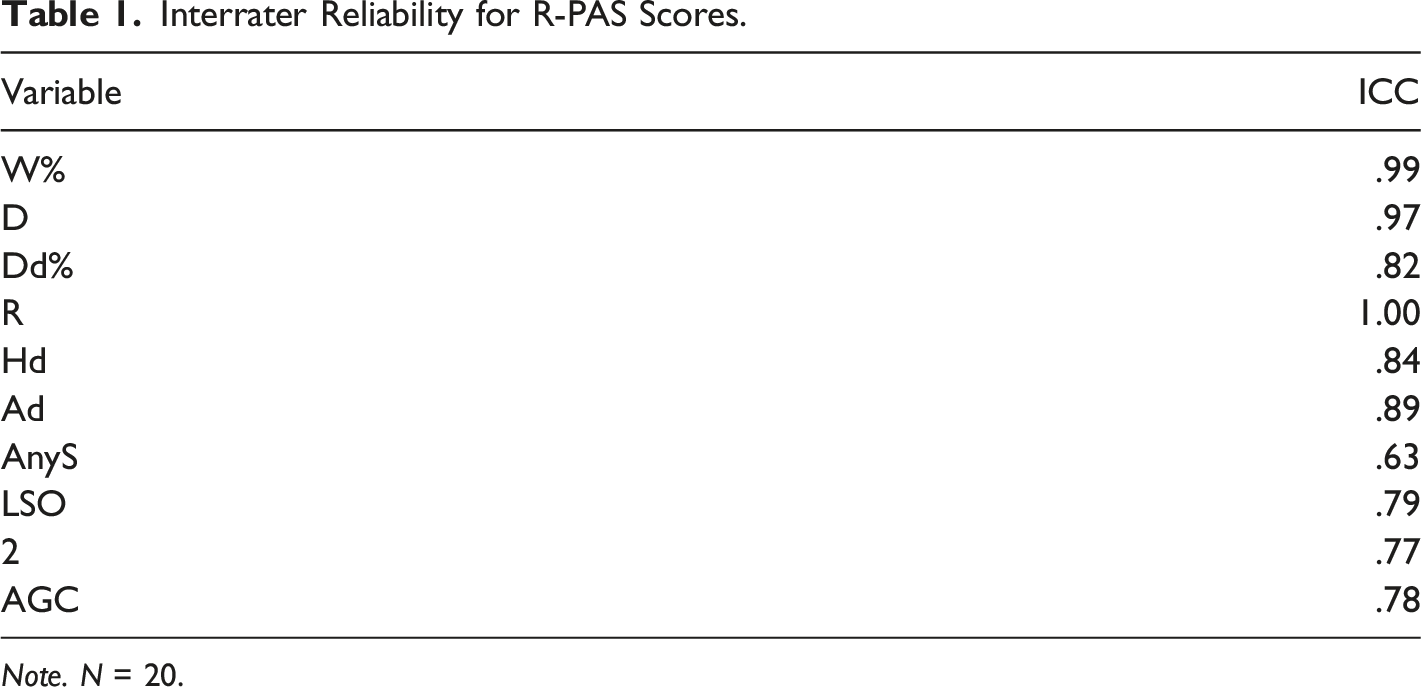
R-PAS variables used in Experiment I are described below, drawing primarily from Meyer et al. (2011) and Mihura et al. (2013). R-PAS scales have generally demonstrated good to excellent interrater reliability and each variable included in Experiment I has shown excellent interrater reliability (Schneider et al., 2022).
Location: W, D, and Dd
The location scores indicate whether a respondent made use of the whole inkblot (W), a common detail area (D), or an uncommon detail area (Dd). From a response process foundation, these scores illustrate the respondent’s general attentional style in perceiving their environment, with W indicating a global and encompassing perception, D a discrete but conventional perception, and Dd showing effortful, focused, and narrow attention (Meyer et al., 2011). Although some data support these interpretations (e.g., Rabin et al., 1954), the research is sparse and meta-analytic empirical support is lacking (Mihura et al., 2013). Each variable was computed as a percentage of the total number of responses (R) in a protocol.
Pair
A pair is coded when respondents identify the same object residing on both sides of the vertically symmetrical inkblot. In R-PAS it is a supplemental variable.
Location, Space, and Object Quality Complexity (LSO)
LSO is an aggregate score of visual complexity comprised of location use (coded W, D, and Dd), use of the background white cardstock (AnyS), the synthesis of response objects into meaningful relationships (Sy), and vagueness for response objects lacking any clearly defined shape (Vg). Responses encompassing Sy and W or AnyS are the most cognitively complex or integrated, while those with Vg and no Sy are the least complex. The LSO Complexity score is a supplemental variable that is a component of the broader Complexity variable.
Rorschach Correlates of Dd
To help identify other variables that may be influenced by a narrowed attentional style, we examined correlates of Dd with other assigned codes in two datasets, the 145 English full-text nonpatient protocols used in the R-PAS norms (Meyer et al., 2011) and the 258 patients described by Meyer (1997) that remained after modeling R-PAS administration to limit variability in R. The codes most positively correlated with Dd in both datasets were R, D, human detail content (Hd), animal detail content (Ad), Pair, and AnyS. 1 Dd was negatively correlated with W in patients but much less so in nonpatients (rs = −.49 and −.13). Dd also was positively correlated with aggressive content (AGC) in the nonpatients, but this variable was not coded in the patients. Pair and Dd were positively correlated and we expected Dd to be higher in the pinhole glasses condition. However, we still expected Pair to be lower in that condition because the glasses make it so hard to see both sides of the inkblot simultaneously.
AGC is coded for response contents that are harmful, dangerous, or threatening and serves as an index of danger-related imagery on the respondent’s mind (Gacono et al., 2005; Meyer et al., 2011). AnyS combines the Space Reversal (SR) and Space Integration (SI) scores, which are assigned when a respondent identifies an object in the white space rather than the ink (SR) or integrates the white space with the ink (SI). SR measures creativity, oppositionality, or independence strivings, and SI measures complex and synthetic thinking. AnyS is not interpreted on its own because SR and SI have different interpretations and empirical correlates (Mihura et al., 2018). The detail contents (Hd and Ad) are assigned to responses that include discrete body parts, most commonly heads or faces. Detail contents are considered evidence of incomplete representations of others, although in R-PAS they are not interpreted on their own. R can indicate multiple factors, including mental flexibility, motivation, and complexity.
Procedures
Experimental Glasses
Like an ophthalmological single pinhole occluder, we constructed glasses to simulate narrowed visual attention by mounting a 3 oz plastic cup onto a pair of safety glasses, with the rest of the lenses occluded by duct tape (see Figure 1). The cup was mounted with Velcro so respondents could adjust it as needed. An aperture was cut into the end of the cup with a 3 mm diameter drill bit that provided a roughly 3.2° viewing window. Based on their dominant eye, participants chose right or left eyeglasses, though all chose the right eye. Simultanagnosia Single Pinhole Glasses.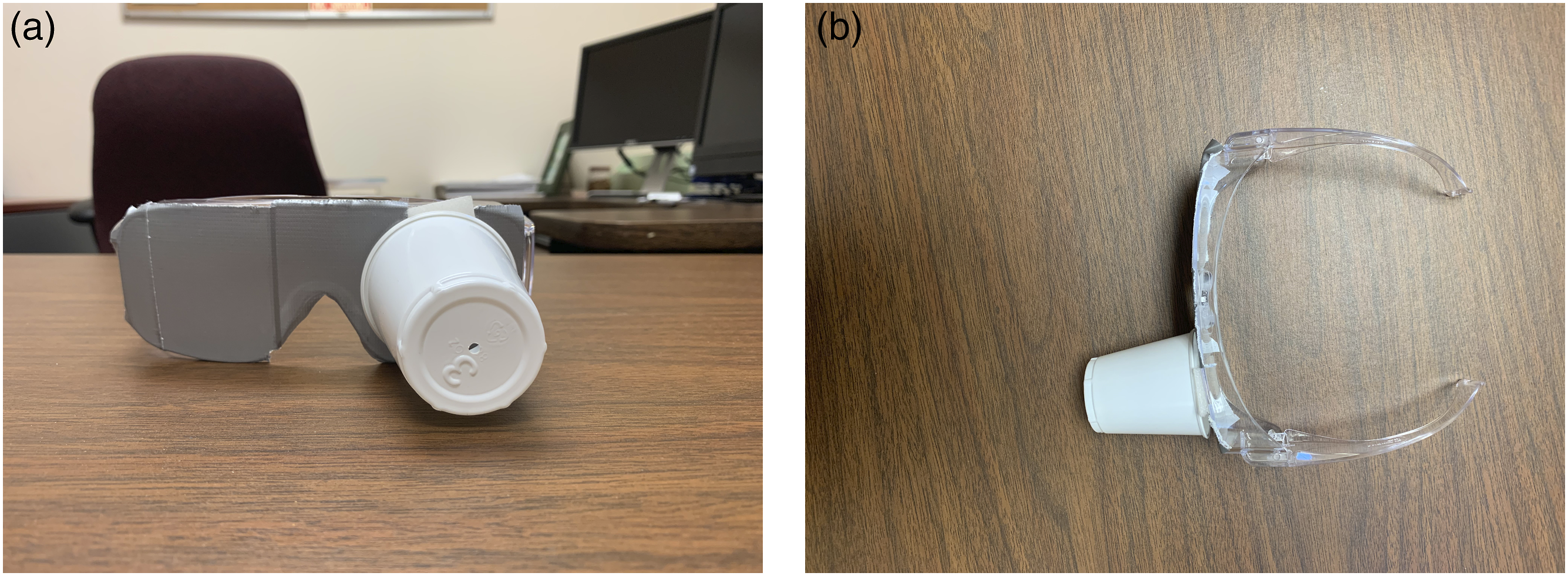
To help maintain generalizability of results to the typical testing situation, participants were not required to view the Complex Figures or hold the inkblots at a standardized distance from their faces. However, variability in viewing the Complex Figures was limited, as that portion of the testing took place with participants seated at a desk with the roughly 5″ × 4.5″ stimuli and drawing pens positioned in front of them about 16″ from the eye, which produces a viewing window of about 0.9″. By leaning back, the eye distance could increase to at most about 21″ or 22″, to produce a viewing window of roughly 1.2”. For the Rorschach, the participant and assessor sat side-by-side and the participant had greater freedom of movement. If they held the inkblots at a conventional distance of about 18 inches from the eye, the aperture produced a viewing window of about 1″ on the stimulus, with the stimuli ranging in size from 5″ × 5″ to 7.5″ × 6”. However, participants could stretch their arms and move the stimuli further away to increase their viewing field, as all or almost all did, increasing the viewing window up to about 1.7″ in diameter when the eye distance was at 30″ or 31″.
Test Administration
Participants completed half of the R-PAS administration wearing glasses, and the other half normally, with the starting condition randomized. Administration has an initial Response Phase followed by a Clarification Phase, and participants switched conditions after completing half of each phase (i.e., after five of the ten Rorschach cards). Participants then completed the copy condition of the Complex Figure drawings with and without the glasses, with order and figure counterbalanced. Participants used colored pens, changing colors in a fixed order every 30 seconds. This permitted raters to determine the order in which the elements of the figures had been drawn to code the Planning score. Participants were allowed a maximum of six 30-second intervals to complete the figures, which artificially truncated the Time variable.
Scoring
To allow for within-subjects comparisons of Rorschach scores, half-protocol standard scores were calculated for each variable using the 640 adult and 346 child and adolescent normative protocols described by Meyer et al. (2018). The standard scores thus indicate deviations from normative expectations for responses to just the five relevant inkblots used for each portion of the administration.
Interrater Reliability
For Complex Figure scoring, two raters practiced with two subsets of protocols and discussed disagreements. They then independently scored both figures from 14 participants to assess reliability. Single rater exact agreement intraclass correlations (ICCs) were computed for these 28 figures. ICCs are considered poor at .39 and below, fair from .40 to .59, good from .60 to .74, and excellent from .75 to 1.00 (Cicchetti, 1994). The remainder of the Complex Figure drawings were scored by one of the two raters.
Across Experiments I and II, we collected 87 R-PAS protocols, with 67 obtained by the first author and the remaining 20 collected by five other assessors. To assess coding reliability, the first author scored the latter 20 protocols, and single rater ICCs were computed.
Statistical Analyses
We used paired samples t-tests to compare differences in Rorschach and BQSS scores between conditions. Normative count scores for Rorschach variables were square root transformed whenever skew was greater than 1.0. Effect sizes were computed following the recommendations of Dunlap et al. (1996), using means and standard deviations but not the degree of correlation between the paired variables to compute d. Because of this, the relative magnitude of the d values can differ from the relative magnitude of t values.
After results were obtained, three post hoc analyses using paired samples t-tests were conducted to further explore the pattern of results across glasses conditions. First, we computed a WD% score to measure use of conventional inkblot locations (i.e., whole and common detail locations). Second, we controlled for differences in R across groups by computing percentages for Hd, Ad, AnyS, LSO, Pair, and AGC. Third, to further examine Hd responses, we coded a Face content variable, and computed Face% and (Hd – Face)% scores to separate face content from use of human details with face content excluded. Because face content is not scored separately from Hd imagery (Meyer et al., 2011), we computed proxy standard scores using five-card means and standard deviations for this variable coded from Experiment II participants. As a final post hoc test, we correlated BQSS scores with completion time in each condition.
Results
Interrater Reliability
Interrater Reliability for R-PAS Scores.
Note. N = 20.
BQSS Results
Paired Samples t-Tests for BQSS and R-PAS Scores With Pinhole Glasses (G) or Standard Vision (S).
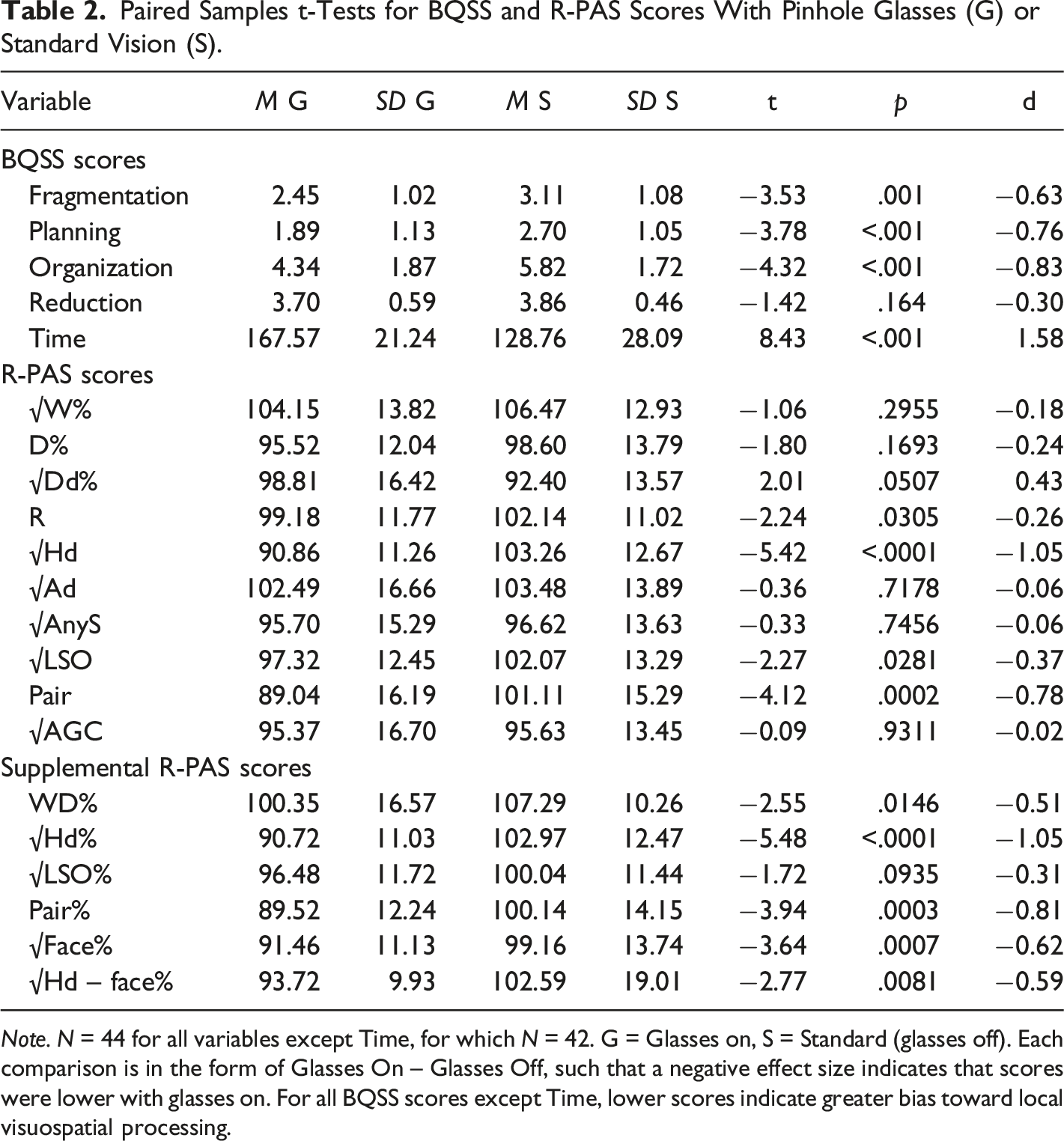
Note. N = 44 for all variables except Time, for which N = 42. G = Glasses on, S = Standard (glasses off). Each comparison is in the form of Glasses On – Glasses Off, such that a negative effect size indicates that scores were lower with glasses on. For all BQSS scores except Time, lower scores indicate greater bias toward local visuospatial processing.
R-PAS Results
Regarding the primary hypotheses, participants’ use of the whole inkblot and common detail areas did not differ when wearing the glasses versus standard viewing. Participants used more unusual locations wearing the glasses than not, with a medium effect size.
Consistent with hypotheses, LSO and Pair scores were lower when participants wore the glasses, with small to medium and large effects, respectively. Contrary to hypotheses, the glasses led participants to give fewer responses and fewer human detail responses, with small and large effect sizes, respectively. Other differences were nonsignificant, contrary to hypotheses (ps ≥ .3).
Post Hoc Results
The post hoc t-tests showed participants were less likely to use conventional inkblot locations (WD%) while wearing the glasses. Computed as percentages, participants no longer showed clear differences in the visual complexity of their responses (LSO%), but they continued to show significant differences in human detail content (Hd) and pairs of objects. Participants wearing the glasses also saw fewer faces. Although this effect did not exhaust the Hd difference, it accounted for most of it. BQSS scores were correlated with completion time with glasses off (rs from −.30 to −.41, ps from .047 to .007) but not with glasses on (max r = −.10, min p = .522).
Discussion
In participants’ Complex Figure performance, the simultanagnosia-simulating glasses impaired visuospatial processing and induced a bias toward local versus global perception. Participants showed disproportionate attention to local details of the Complex Figures at the expense of more typical, efficient, and accurate global visual processing.
The effect of the pinhole glasses on the key BQSS outcome, Organization, was large. Rounded to the nearest point, the normative sample described by Stern et al. (1999) shows the average Organization score has a T-score of 53 under normal vision but a T-score of 36 or 40 (using the female vs. male norms) when wearing the glasses. That is, the glasses induced mild-to moderate-range impairments in participants’ capacities to visually synthesize and efficiently reproduce the Complex Figure stimuli, largely due to a shift to disproportionately local processing. An even larger difference between conditions emerged for completion time. With a time limit of 3 minutes, participants took almost 40 seconds longer on average while wearing the glasses than while unobstructed, though this did not confound other scores.
The simultanagnosia glasses also affected some aspects of Rorschach performance. Participants were more likely to use uncommon detail (Dd%) locations (p = .0507) in constructing their responses while wearing the glasses than when viewing the stimuli unobstructed. Surprisingly, participants were not less likely to use the whole inkblot (W%) and did not differ in their use of common detail (D%) locations. However, post hoc analyses with the aggregate variable WD% supported the conclusion that the simultanagnosia glasses shifted participants’ responses to less conventional inkblot locations.
Participants’ LSO and Pair scores were significantly lower while wearing the glasses, indicating responses tended to have more simplistic visual structure and focused on one side of the inkblot rather than making use of symmetrical pairs of objects. Results of post hoc analyses suggest that the difference in LSO between conditions is in part related to participants giving fewer responses while wearing the simultanagnosia glasses.
While wearing the glasses, participants unexpectedly saw fewer Human Detail responses. Post hoc analyses suggested this difference was partly explained by a tendency to see fewer faces, though non-face human detail content also was less frequent when participants wore the glasses. These effects, while not hypothesized, may reflect the holistic, configural nature of face and body recognition, and are consistent with a suppression of RH processing (Dien, 2008). Three other scores associated with Dd, Animal Detail, Aggressive Content, and use of white space, did not vary across conditions. Of the five variables hypothesized to increase with the glasses on because of their correlations with Dd, including R, Hd, Ad, AnyS, and AGC, none responded as hypothesized to the experimental manipulation. This suggests the glasses affected the visual structuring of responses without modifying the associated psychological processes and personality characteristics that typically are found in people with elevated Dd scores, including productive responsivity, partial or incomplete object representations, oppositionality, detail integration, and aggressive or threat related preoccupations.
Experiment II
Overview
In Experiment II we used eyeglasses matching Schiffer’s (1977) specifications to differentially activate the left or right hemispheres in a within subjects design. These types of glasses have primarily been used to examine differences in hemispheric reactivity and emotional valence (Morton, 2003; Schiffer, 1997; Schiffer et al., 2007), but they also provoke differential hemispheric effects in visual processing. Given models showing LH involvement in local, detail-oriented perception and RH involvement in global, holistic perception, we hypothesized LH activation would attenuate the typical bias toward holistic visual perception. To test this, we gave participants both the Rorschach task and a chimeric faces test that is commonly used to measure lateralized processing of emotion and face recognition (Voyer et al., 2012).
On the Rorschach, we expected an increase in the frequency with which percepts would be visually located in small or unusual detail areas (D, Dd) as opposed to the whole stimulus (W) with LH activation. We also made tentative hypotheses based on our review of the lateralization literature, anticipating that preferential activation of the LH would be associated with more scores involving analysis, attention to detail, and integration (Cg, LSO), and nonwhole partial percepts (Hd, Ad). In contrast, preferential activation of the RH would be associated with scores involving reactive use of the inkblot color (WSumC), disinhibited imagery (CritCont%), spatially diffuse imagery (Vg%), and disturbed self- and other-representations (PHR and MAP).
Method
Participants
Based on an a priori power analysis for detecting a medium effect, we recruited 43 undergraduates (26 female, 17 male) following the same procedures as in Experiment I. Thus, we included only participants who were right-handed, age 18 or older, and could view the stimuli without eyeglasses.
Measures
Chimeric Faces Test
The chimeric faces test is a test of hemispheric asymmetry, based on an established right-hemisphere bias in facial processing (Heller & Levy, 1981; Voyer et al., 2012). We used a common version of the test, with electronically presented stimuli obtained from the authors (Workman et al., 2000, 2006). Each pair of facial stimuli was a composite of a neutral face and that face displaying anger, disgust, fear, happiness, sadness, or surprise, with the affective expression in the left visual field on one image and the right on the other. Stimuli were presented with the following instructions: On the following screens you will see two images of faces, one above the other. For each, you will be asked to indicate which face is showing the stronger emotion. You will have three options: Top, Bottom, or Can’t decide.
We selected Bourne’s (2008) subset of 24 faces in two alternate 12-item test forms, allowing us to administer one form in each eyeglass condition. Items were scored −1 for left-hemisphere preference (i.e., the right sided version of the face is seen as more emotional than the left sided version), zero for can’t decide, and +1 for right-hemisphere preference; and scores were averaged across items.
R-PAS Measures
The variables W, D, Dd, Hd, Ad, and LSO used in this study were described in Experiment I (Meyer et al., 2011; Mihura et al., 2013). New scores are described here.
Cg
The Clothing score is assigned when the content of a response includes articles of clothing. Clothing responses suggest attention to detail or a focus on appearances. Clothing is not interpreted individually in R-PAS, and Cg does not have direct empirical support, except by its inclusion in aggregated indices of other validated variables, such as Complexity and the Vigilance Composite.
CritCont%
The Critical Contents percentage score indicates the degree to which the respondent’s percepts include anatomy, blood, explosions, fire, sexual content, or themes of aggression, damage, or dysphoria. Validity evidence supports this score for assessing three constructs: general psychopathology, traumatic imagery, and dramatic efforts at malingering.
MAP
The Mutuality of Autonomy Pathology score indicates controlling, malevolent, or destructive relationship themes. MAP has empirical support as a measure of the quality of a respondent’s interpersonal schemas.
PHR
The poor human representation code is assigned when human representations are distorted, illogical, damaged, or malevolent. The PHR score has empirical support as a measure of interpersonal competency and capacity for relatedness.
Vg%
Vague responses involve percepts that do not have specific form requirements, such as paint splotches or smoke. Such responses involve a vague, diffuse, impressionistic, or avoidant style of processing the inkblot stimuli. Vagueness has strong response process support as a measure of impressionistic or unsophisticated processing of the inkblot stimuli, and has decent empirical support (Ales et al., 2020; Mihura et al., 2013).
WSumC
Use of color in percepts indicates receptivity and reactivity to compelling environmental stimuli. WSumC indicates the degree to which ink colors infused responses, with greater weight given to responses that rely more heavily on color than on form. It has some empirical support as a measure of emotional reactivity (Charek et al., 2016; Mihura et al., 2013).
Procedure
Experimental Eyeglasses
Eyeglasses were constructed based on Schiffer’s (1997) specifications (see Figure 2). Adhesive tape occluded 80% of the wearer’s visual field, including one full eye, such that the wearer had to gaze far to the left or right with one eye to process stimuli. Although participants could move their heads and the inkblots to help them see the full stimuli, the occluded lenses ensured that only a small portion of the visual field of one eye was available at any time relative to participants’ own heads. The glasses that permitted vision in the participants’ left visual field were right-lateralizing glasses and vice versa. Lateralizing Glasses.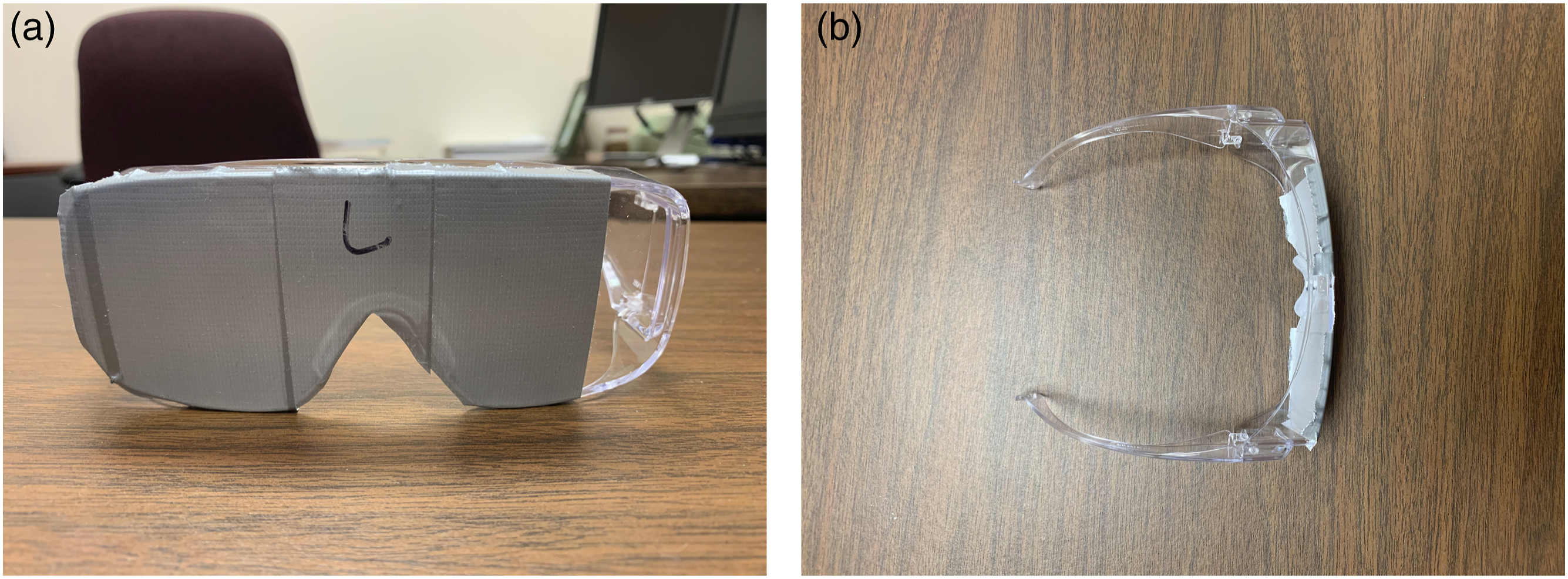
Test Administration
For R-PAS administration, half of the task was completed in each eyeglass condition, with order counterbalanced. As in Experiment I, condition was held constant across Response and Clarification Phases for each set of five cards. Participants then completed the computerized chimeric faces test. Because the glasses made it somewhat difficult to operate a computer mouse, participants gave verbal responses, which the examiner selected. Participants completed one form of the test in each lateralizing condition.
Statistical Analyses
One-sample t-tests determined if scores in the two conditions were significantly different from zero, expecting a positive mean above zero as a typical laterality effect. Paired samples t-tests examined the difference in chimeric faces scores between glasses conditions.
As in Experiment I, half-protocol standard scores were computed for within-subjects comparisons of Rorschach scores, count scores were square root transformed when skew was greater than 1.0, and paired samples t-tests compared score differences in conditions. In addition, effect sizes were computed following Dunlap et al. (1996) and single rater exact agreement ICCs were computed to assess coding reliability for R-PAS scores.
After results were obtained, post hoc analyses investigated the possibility that both glasses interrupted smooth interhemispheric communication. We speculated this might decrease the number of responses given, R, because of evidence that increased interhemispheric communication facilitates more responses in stimulus attribution tasks (Brugger & Regard, 1995; Christman, 2022; Christman et al., 2009). Because control participants from Experiment I also completed the faces test, we compared them to all participants in Experiment II on the variables used in this study in addition to R.
Results
Interrater Reliability
Interrater Reliability for R-PAS Scores.
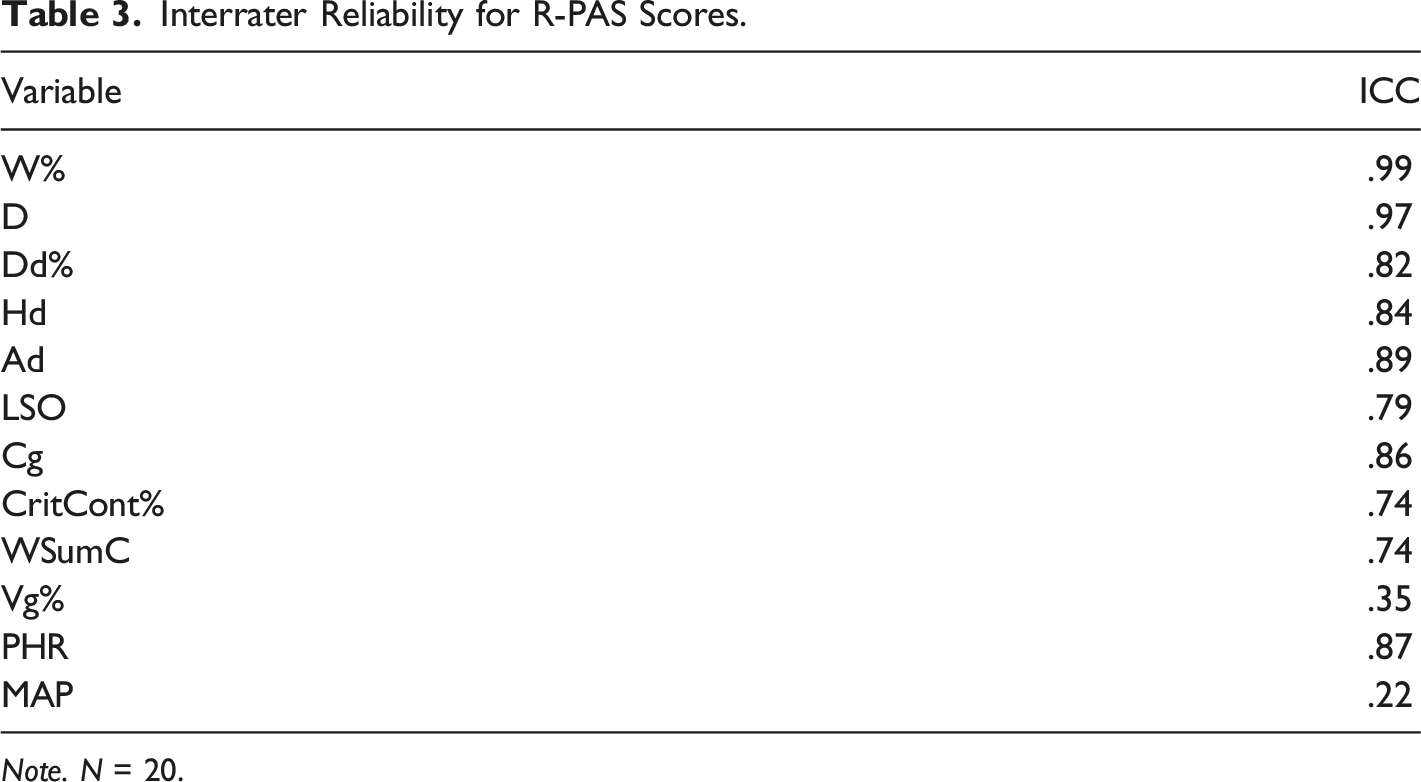
Note. N = 20.
Condition Results
Paired Samples t-Tests for R-PAS Scores With Lateralizing Glasses.
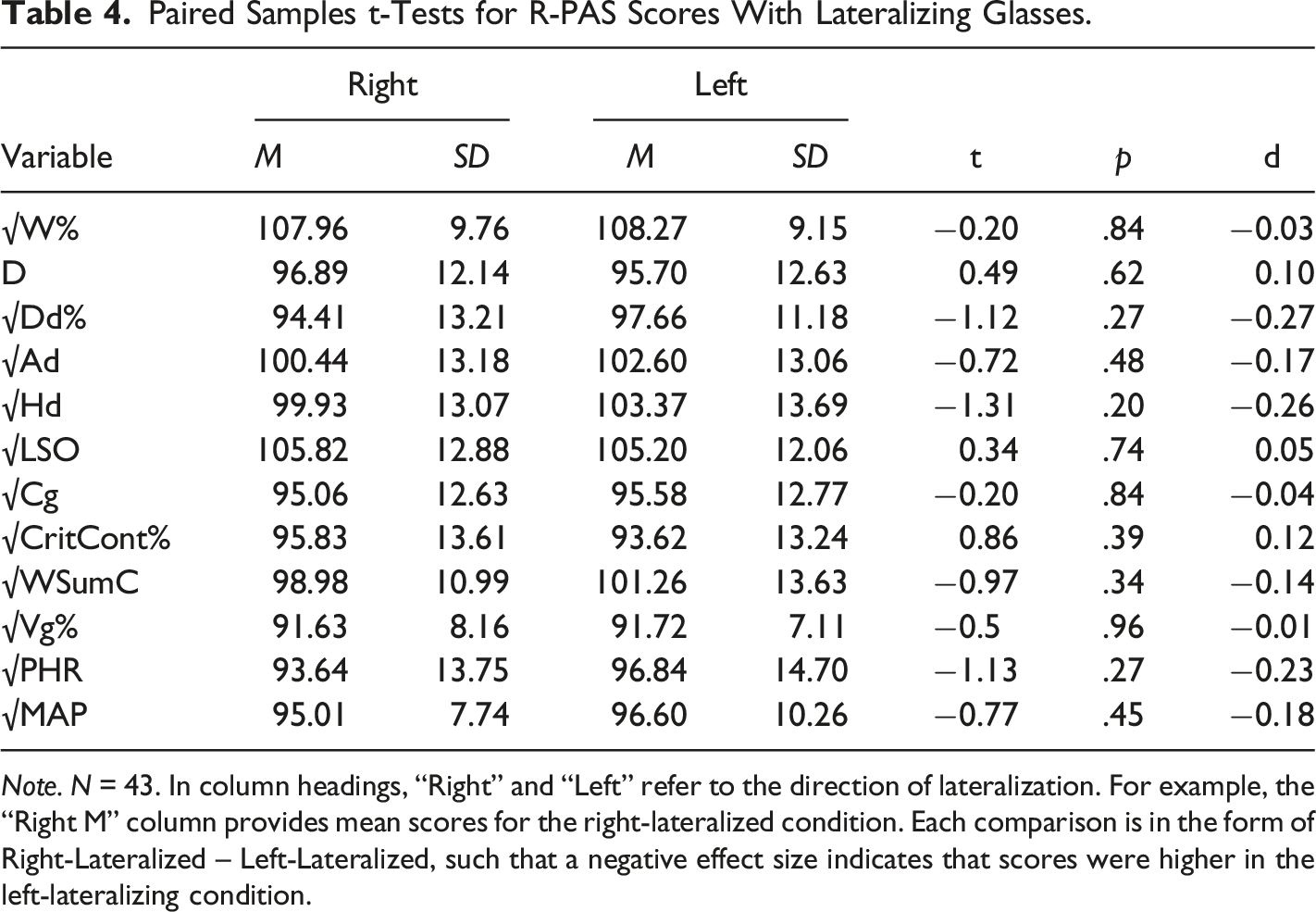
Note. N = 43. In column headings, “Right” and “Left” refer to the direction of lateralization. For example, the “Right M” column provides mean scores for the right-lateralized condition. Each comparison is in the form of Right-Lateralized – Left-Lateralized, such that a negative effect size indicates that scores were higher in the left-lateralizing condition.
The post hoc analyses indicated no significant differences in chimeric faces scores (p = .790) or in the R-PAS scores (ps > .120). This suggests that both glasses conditions had no effect on participant responses, including their overall responding to the Rorschach.
Discussion
Experiment 2 was designed to produce biases in participants’ visual processing by provoking differential activation of each hemisphere, and in particular to produce a local bias by differentially activating the LH, to investigate its impact on the chimeric faces and Rorschach tasks. Contrary to expectation, the lateralizing glasses did not influence participants’ judgments of chimeric faces, use of inkblot locations, or other Rorschach scores hypothesized to be sensitive to lateralized processes. Chimeric faces scores in both conditions showed a typical RH bias, suggesting that the lack of effects is related to a failure of the lateralizing glasses to provoke differential hemispheric activation. Post hoc analyses also found no differences between Experiment 2 participants and Experiment I controls, suggesting that using the glasses did not impede interhemispheric communication.
General Discussion
In typical visual perception, people process global, holistic features over local details. In Experiment 1, we examined the use of a novel simultanagnosia simulation to induce an atypically narrow, local style of visual attention and processing when completing neurocognitive tasks. In Experiment 2, we used visual field lateralizing eyeglasses to evaluate the effects of asymmetrical hemispheric processing on two neurocognitive tasks.
As expected, the simultanagnosia simulation substantially affected participants’ attempts to accurately perceive and reproduce Complex Figures. This was reflected in their much longer completion times and poorer BQSS scores on Fragmentation, Planning, and Organization, with medium to very large effects, including a large effect on Organization, the key BQSS score.
The pinhole manipulation had a less consistent impact on the diverse Rorschach variables we considered. Participants wearing the glasses gave fewer responses with conventional locations (WD%) and more uncommon detail locations (Dd%). In addition, the glasses induced fewer responses overall (R), fewer instances when the same objects were seen simultaneously on both sides of the inkblot (Pair), fewer responses with complex visual structure (LSO), and fewer partial human representations (Hd). Post hoc analyses suggest that the difference in visual complexity (LSO) across conditions is attributable partly to the reduction in number of responses while wearing the glasses, and that the decrease in Hd was associated with a lower frequency of human face responses. Effect sizes for significant effects in R-PAS scores were generally medium or small to medium, except for large effects on the Pair and Hd scores.
The simultanagnosia single pinhole glasses in Experiment 1 manipulated the size of the participants’ visual fields, and the hypotheses supported by the results were those most closely related to visual processing. Conversely, hypotheses for codes variables we selected because of their correlation with Dd in two independent datasets were consistently not supported. Presumably, Dd responses generated under typical testing conditions are related to psychological processes and personality characteristics other than the simple visual field effects we manipulated. Of the variables we studied, people with many Dd percepts because of their limited visual field give less R, WD, Hd, Pair, LSO, and Face percepts. However, people with many Dd percepts because of their personality, particularly if they are patients, give more R, D, SR, SI, AnyS, Hd, Ad, Pair, and AGC, and less W. Thus, R, D, Hd, and Pair have opposite associations with Dd in the pinhole condition relative to standard conditions. Face might also, but it was not coded in the correlation databases.
The discrepancy in Complex Figure and R-PAS score effect sizes may be due to several factors. The Rorschach, unlike the Complex Figures, involves a variety of internal processes, such as naming, describing, cognitive problem solving, and memory, that do not draw on visuospatial processing. The basic task requirements are also quite different. Rorschach responses require constructing an image from the stimuli, whereas the figure tasks require accurate processing and reproduction of the stimuli. Furthermore, unlike the Complex Figures, the Rorschach does not include time pressure, allowing participants to scan the inkblots slowly to build and report a complete mental image. Participants also typically held the Rorschach cards far from their faces to get a larger viewing window on the inkblots, while drawing seated at a desk prevented this from occurring nearly as much during the Complex Figures. Finally, this study relied on five-card Rorschach sets in each condition, rather than using all ten cards as is typical of R-PAS protocols. Psychometrically, this reduction in length reduces reliability and validity (Eblin et al., 2018), which also likely weakened R-PAS effect sizes.
In Experiment II, the results of the chimeric faces task suggest that the lateralizing glasses did not provoke lateralized brain activation as intended. Participants showed a typical RH face bias regardless of condition. Similarly, none of the R-PAS scores hypothesized to be sensitive to lateralized processes showed significant differences across conditions.
Limitations and Recommendations for Future Research
Among the limitations associated with these results is that our efforts to maximize generalizability to typical assessment conditions prompted us to use pinhole glasses in Experiment 1 rather than the computerized visual window used by simultanagnosia researchers and to use lateralizing glasses rather than, for instance, a tachistoscope in Experiment 2. Although the pinhole simultanagnosia glasses designed for Experiment 1 succeeded in inducing an atypical, narrowed style of visual attention, our methods differed from other methods of simulating simultanagnosia in important ways. For instance, visual stimuli were not fixed at standardized distances from participants’ eyes, nor were participants restricted from moving their heads to take in a broader visual perspective. Participants often held the Rorschach stimuli at arms-length to diminish the effect of the glasses. Participants had less ability to gain distance when drawing the Complex Figures seated at a desk. At a comfortable distance of 18″ inches, the 3.2° aperture of the glasses permitted a viewing window of about 1″ in diameter on the inkblot. At an arms-length distance of 30″, this allowed for 1.68″ on the stimulus, a substantial difference on inkblots that can measure as little as 5″ across.
The glasses also used a larger viewing window than in Dalrymple et al., 2011a, 2011 simulations of simultanagnosia, though it was smaller than in Khan et al.’s (2016). Our use of a 3.2° window also fits the literature suggesting simultanagnosia patients have 1.25°–4° of visual window (e.g., Dalrymple et al., 2010). In pilot testing the glasses, we noted that a 1° or 2° window made the inkblots very difficult to view. We feared participants might not be able to find their percepts again after giving responses, making a standard Clarification Phase difficult or impossible. The larger window may have reduced the size of effects observed in Experiment 1. In addition, the visual window produced by the glasses was not as sharply demarcated as windows produced by computerized methods, such that a greater degree of peripheral vision may have been available to our participants than to those in other simultanagnosia simulation studies.
Our hypotheses for Experiment II were tentative, in part because of the broad diversity of models in the literature. Hypotheses regarding visuospatial processing were comparatively strong, but hypotheses based on Schore’s (2014) model were speculative. Furthermore, although the Rorschach task is more visual in nature than many other testing methods, the response process is mediated by verbal communication and many other factors. As such, the Rorschach task should not be expected to be heavily lateralized, and neuroimaging shows it encompasses bilateral full brain activation (Giromini et al., 2017). Our use of a lateralizing method that permitted unlimited viewing time may also have impacted results. Although presenting inkblot stimuli by tachistoscope is very different than typical administration, it would have offered a more reliable method of lateralizing visual processing. Our lateralizing method occluded vision in one eye and restricted it in the other and restricting it similarly in both eyes may have more reliable effects. Additionally, activating the left or right visual cortex through these glasses does not necessarily activate other brain regions in a lateralized fashion.
Experiment 2 participants showed a typical bias of seeing the left side of the chimeric faces as more affective, reflecting RH involvement in face recognition. However, the effects were notably smaller than the large effects typically shown by chimeric face tests in the literature (Voyer et al., 2012). Our use of a shortened test relative to others using the same stimuli (Bourne, 2008) may have reduced the test’s reliability and weakened the effect. However, Voyer et al. (2012) also noted that their effect size estimates were likely inflated because almost half of their effect sizes were obtained from paired sample results where the degree of correlation between paired observations increased the calculated effect size.
Finally, the interrater reliability achieved for R-PAS scores was variable for those scores used in Experiment II. For two of these variables, ICC values fell into the poor range, limiting the conclusions that can be drawn about the results using those variables.
Conclusion
The present study provides an illustration of some of the ways in which neurocognitive test performance can reflect an atypical, local style of visual attention. On the ROCF and MTCF, a simulation of impaired visual attention produced deficits in efficient visuospatial construction and typical awareness of the gestalt of the stimuli, as well as substantial slowing in reproducing the figures. On the Rorschach, this simulation resulted in an increased use of atypical inkblot locations, a loss of appreciation for the symmetry of the inkblots, a decrease in the visual complexity of responses, and an overall difficulty generating responses. This implicates visual attentional style as a neuropsychological mechanism underlying these test scores.
One of the more surprising results from this study is the lack of effect of simultanagnosia simulation on the R-PAS W score. One complication of the W score is that depending on the specific inkblot, a response that makes use of the whole inkblot can be straightforward, even simplistic, or it can be a complex, integrative act. The lack of effect on the W score in Experiment I may have been related to an increase in simplistic, low-effort W responses. This confounding factor could be eliminated, and its effects studied, using a per-object, rather than per-response, method of coding inkblot location use, as described by Berry and Meyer (2020).
Footnotes
Declaration of Conflicting Interests
The author(s) declared the following potential conflicts of interest with respect to the research, authorship, and/or publication of this article: The second and sixth authors are part of a company that sells the manual for using the Rorschach Performance Assessment System (R-PAS) and associated products. All other authors declare that they have no conflict of interest.
Funding
The author(s) received no financial support for the research, authorship, and/or publication of this article.
