



Abstract
Social media has been an increasingly utilized communication tool
Keywords
Introduction
Self-esteem is recognized as an important personal attribute for adolescent athletes (Jung et al., 2016; Kang et al., 2015), among whom higher self-esteem has been correlated with lower stress, anxiety, and depression, and greater happiness, competence, and athletic performance (Baumeister et al., 2003; Gotwals et al., 2003). Self-esteem is shaped not only by self-perception of personal worth but also by external evaluations that evolve organically within the context of interpersonal relationships (Leary et al., 1995). Despite this recognition of the significance of interpersonal networks during adolescence for improving self-esteem (Valkenburg et al., 2017), youth athletes frequently face temporal and spatial limitations to interpersonal relationships while they are juggling academic responsibilities and sports participation (Smith, 1986).
In most modern cultures, adolescents grow up with new media technologies that expand interpersonal interactions beyond physical spaces. Individuals can accelerate the formation of social networks by sharing photos, updating their status, and engaging in comments on social media (Boyd & Ellison, 2007). Social media is a decentralized internet-based interpersonal communication channel that enables mass communication and facilitates perceived user interactions (Carr & Hayes, 2015). Youth athletes attempting to balance academics and sports demands have begun to use social media to share their experiences both on and off the field, connecting them with a variety of other people and fostering new relationships while strengthening old ones (including coaches, parents, and teammates) (Dunn et al., 2021). In addition, social media offers adolescents a convenient and powerful means of self-presentation to others (Baumeister & Hutton, 1987; Yang et al., 2017). Self-presentation plays a crucial role in shaping one’s identity and establishing a social reputation (Leary & Kowalski, 1990). Features of social media platforms empower and challenge adolescents to enhance their self-presentation on online environments (Hollenbaugh, 2021; Walther, 2007). Previous investigators have shown a positive association between self-presentation on social media and self-development (Metzler & Scheithauer, 2015; Twomey & O’Reilly, 2017). However, much of the prior research on social media use in sports has focused on its negative effects on athletes, including increased sports anxiety, mental fatigue, and abusive behaviors (Encel et al., 2017; Fortes et al., 2021; Sanderson & Weathers, 2020).
Yet, since social media is a platform for diverse interactions, it may also positively impact young athletes’ self-esteem. Particularly within the Korean context of a collectivistic culture, social media users tend to engage more in self-presentation to convey desired impressions (Yoo et al., 2012). In collectivistic cultures, the formation of self relies heavily on relational factors such as others’ opinions and evaluations (Cho, 2010). These cultural contexts place high importance on social media expressions and responses in forming adolescents’ self-esteem. Therefore, we aimed in this study to empirically examine the relationship between adolescent athletes’ self-presentation on social media and their self-esteem, as potentially moderated by self-perceived responsiveness.
Self-Presentation on Social Media and Self-Esteem
Social media are internet-based networks or platforms through which individuals can selectively present themselves to audiences who respond to user-generated content (Carr & Hayes, 2015). In comparison to face-to-face interactions, online interactions can provide greater opportunities for ideal self-presentation through features such as asynchronicity, editability, and reduced communication cues (Walther, 2007). Asynchronicity allows individuals to control their self-presentation at preferred times; as it does not require immediate attention and responses from others, asynchronous comments give users time to shape their desired identity and self-presentation. On social media, nonverbal cues are minimized, which enables users to intentionally withhold their physical characteristics and unintentional actions (Walther, 2007). Also, compared to anonymous online environments, social media networks impose certain limitations on exaggerated self-presentations. Since users’ real names and information are publicly visible to others, authentic selves are revealed when interacting with real offline relationships (Zhao et al., 2008). In other words, in institutional contexts where real names are mandated, individuals anticipate long-term ongoing relationships with their social media friends, which encourages them to express themselves honestly rather than give only favorable impressions (Ellison et al., 2007).
Given these technological features, prior research on impression management in computer-mediated communication (CMC) and self-presentation on social media has suggested two distinct self-presentation strategies (Gao et al., 2023; Kim & Lee, 2011; Niu et al., 2015). In one strategy, positive self-presentation refers to minimizing negative impressions of oneself by selectively exposing one’s identity to other users to form an ideal image of oneself. This can be achieved through posting solely “happy” status updates or sharing stunning images, along with favorable information (Kim & Lee, 2011). In another strategy, honest self-presentation entails the nonselective posting of personal information, ideas, and sentiments in a manner that is true-to-self. This second, honest, strategy can include uploading both positive and negative emotions, as well as unaltered photographs (Gao et al., 2023; Yang et al., 2017; Yang & Brown, 2016). Based on Walther’s (1996) hyperpersonal model, initially developed in the context of the CMC and later extended to social media, several studies have investigated the relationship between social media self-presentation and well-being/self-development (Gonzales & Hancock, 2011).
According to the hyper-personal model, users can upload or update content that highlights their positive aspects, thereby confirming these qualities and enhancing self-esteem (Gonzales & Hancock, 2011). However, there has been relatively less research conducted on the impact of honest self-presentation on the presenter’s self-esteem (Yang et al., 2017). In the field of psychotherapy, individuals who genuinely express their negative experiences and emotions through writing have been found to better acknowledge and mitigate factors that threaten their self-worth, resulting in a more positive self-perception (Bolton et al., 2004). Moreover, there is a positive relationship between authenticity and perceived self-worth (Harter, 2012). These findings suggest that honest self-presentation may be related to higher self-esteem.
In sum, adolescent athletes who are familiar with online interactions can effectively manage their impressions through the various technological features that characterize internet interactions. They can also honestly present their genuine emotions and experiences on social media platforms (Frederick & Clavio, 2015). Based on the hyper-personal model and clinical psychology research showing such open strategies were associated with higher self-esteem, we examined the hypothesis that both positive self-presentation and honest social media self-presentation would be positively related to adolescent athletes’ self-esteem.
Positive self-presentation would positively predict the self-esteem of adolescent athletes.
Honest self-presentation would positively predict the self-esteem of adolescent athletes.
Perceived Responsiveness of Others: A Potential Moderator
As noted, a substantial body of self-presentation research has emphasized the importance of social interaction in enhancing or diminishing the presenter’s self-esteem (Leary & Kowalski, 1990; Mead & Schubert, 1934). However, the online environment differs from face-to-face situations in terms of the nature of social communication. For example, in asynchronous communication, the interaction between the presenter and the receiver does not occur immediately, and the receiver’s response may be simplified through streamlined features such as the ability to post simple “likes” or “heart” icons (Boyd, 2010). Furthermore, as self-presentation content is exposed to a great many individuals on social media, the user may be able to observe diverse responsiveness from others without physical or temporal constraints to the interaction (Brake, 2012). In other words, adolescent athletes who must balance their role as a student and an athlete have opportunities to expand their social networks through social media, gaining access to diverse perspectives through the responses to the content they share.
Previous investigators revealed positive associations between social support (e.g., the number of likes a person receives on social media) and self-esteem (Gao et al., 2023; Zell & Moeller, 2018). However, individual perceptions of the responses of social media friends (i.e., followers) have received limited research attention. Reis and Gable (2015) found that presenters subjectively interpreted responses from recipients in any interaction situation, and this can also apply to online interactions. In a face-to-face situation, perceived responsiveness has been shown to account for the extent to which an individual perceives that close others understand them, value their choices and opinions, and care for them (Reis & Gable, 2015). In the social media context, this is constrained by one user’s perception of understanding, respect, and care for them based on the response they receive from other users.
It has been suggested the high level of perceived others’ responsiveness to one’s communication is linked with the communicator’s enhanced self-esteem (Carr, 2013; Rouquette et al., 2021a, 2021b, 2021). Specifically, these investigators have shown that when young athletes have perceived positive responsiveness from their significant others, they have tended to experience increased self-esteem and a heightened sense of pride in their achievements. Additionally, several researchers have reported similar findings within social media. For example, Bazarova et al. (2015) found that responses to social media content contributed to users’ life satisfaction
We selected perceived responsiveness as a moderator variable in this study. While some researchers have shown a positive relationship between self-presentation and self-esteem (Gil-or et al., 2015; Michikyan et al., 2015), others have not (Metzler & Scheithauer, 2015; Twomey & O’Reilly, 2017). Memon and his colleagues (2019, p. 3) claimed that “inconsistent findings in past studies about the effect of the same Antecedent (independent variable) on the outcome can also be a strong case for testing a moderator.” Furthermore, unlike self-presentation determined at the individual level, the level of responsiveness to self-presentation varies within a social context. This implies that when individual expectations of self-presentation on social media do not align with corresponding responses, concerns about impression management may increase, potentially threatening self-esteem. Conversely, obtaining desired responses from great numbers of people might enhance one’s self-worth. Thus, we formulated these further hypotheses regarding presumed moderating effects on the relationship between social media self-presentations and self-esteem among adolescent athletes.:
Perceived responsiveness would strengthen the positive relationship between positive self-presentation and self-esteem.
Perceived responsiveness would strengthen the positive relationship between honest self-presentation and self-esteem.
Method
Participants and Procedure
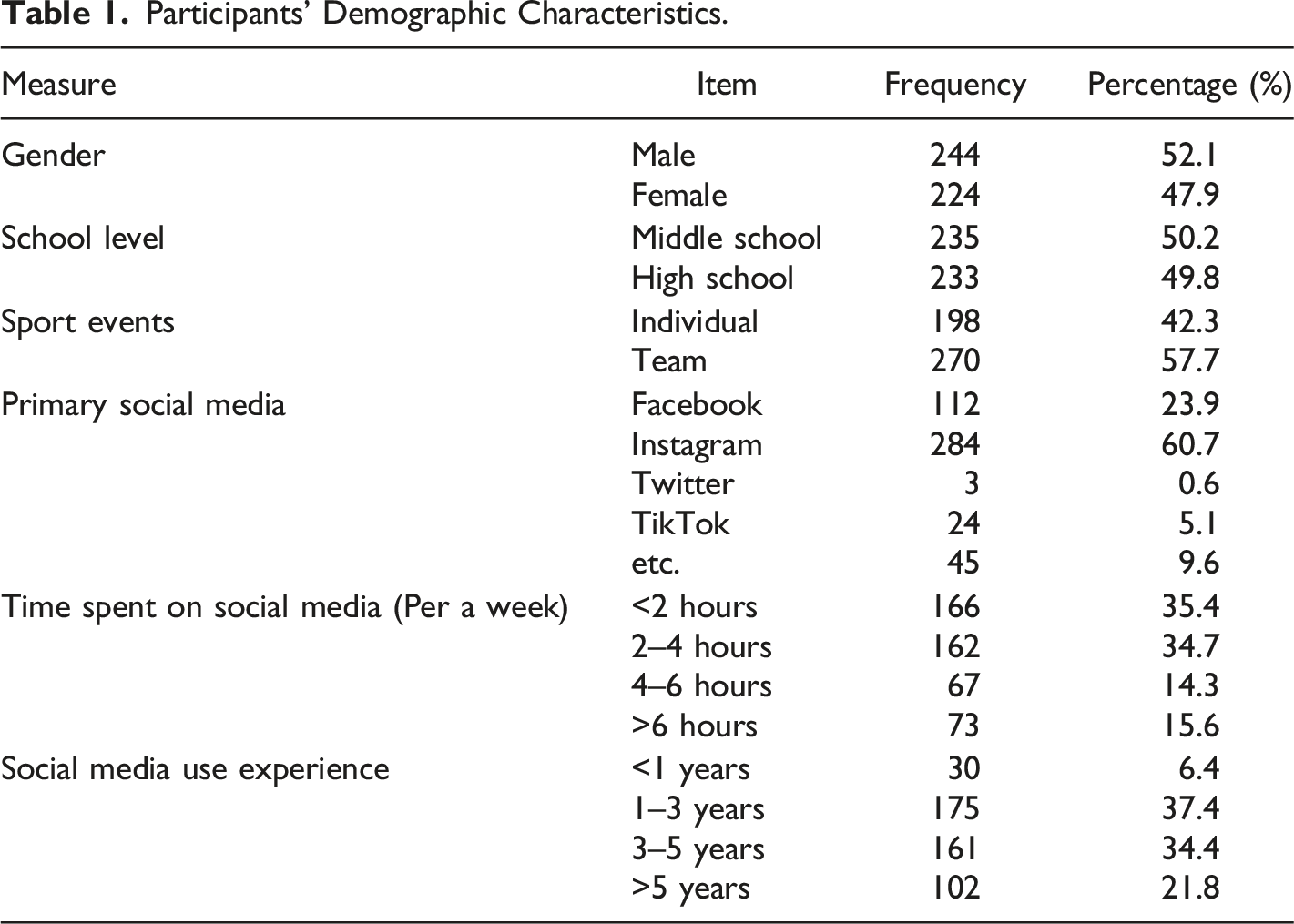
We recruited participants through purposive sampling of middle and high school athletes registered with the Korean Sport and Olympic Committee. We informed coaches and one of the athlete’s parents
Participants’ Demographic Characteristics.
Measures
Positive Self-Presentation
Positive self-presentation refers to the extent to which an individual selectively shows favorable aspects of oneself on social media. The Positive Self-Presentation Index that we used in this study was developed by Kim and Lee (2011). It consists of six items (e.g., “I post photos that only show the happy side of me”; “I avoid writing about negative things that happen to me when I update my status”) that respondents rated on a Likert scale ranging from 1 (strongly disagree) to 5 (strongly agree). In previous studies (Gao et al., 2023; Kim & Lee, 2011), the internal consistency for this scale was shown to meet with Cronbach alpha coefficients of .72 and .84 respectively.
Honest Self-Presentation
We obtained five items from the Social Media Self-Presentation Scale (Yang et al., 2017) to measure honest self-presentation. Honest self-presentation refers to the extent to which the user reports a genuine representation of the self on social media (e.g., “I am sincere when I reveal my own feelings on social media”; “My social media posts about my feelings are honest”). Respondents rated the items on a 5-point Likert scale ranging from 1 (strongly disagree) to 5 (strongly agree). Cronbach’s α in a previous study (Yang et al., 2017) was .74.
Perceived Responsiveness
To measure the student athletes’ perceptions of exhibited responsiveness by their followers on social media, we used the items of the Perceived Partner Responsiveness Scale (Laurenceau et al., 1998) with slight revisions to fit the social media context. The instructions for each item began with the phrase “My friends on social media…”. Previous studies investigating perceived partner responsiveness on social media have commonly suggested this practice (Reis et al., 2017; Walsh et al., 2020). The scale consists of six items that respondents rated on a 5-point Likert scale, ranging from 1 (strongly disagree) to 5 (strongly agree). The internal consistency (Cronbach’s α) of the perceived responsiveness scale was found to be .86 in previous study (Laurenceau et al., 2005).
Self-esteem
We used the Rosenberg Self-Esteem Scale (RSES) (Rosenberg, 1965) to measure participants’ self-esteem in this study. The RSES consists of five positive questions (e.g., “I think I have a good point”) and five negative questions (e.g., “I do not have much to boast about” that respondents rated on a 5-point Likert scale ranging from 1 (strongly disagree) to 5 (strongly agree). Considering the problem of the reverse scoring method (Podsakoff et al., 2003), we used only five positive questions in this study. Item reliability (Cronbach’s α) was .88 in a previous study with Korean adolescent athletes (Jung et al., 2016).
Data Analysis
For all data analysis, we used the Statistical Package for the Social Sciences (SPSS, Version 26.0), PROCESS macro 4.0, and AMOS 21.0. First, we calculated descriptive statistics and a bivariate correlation analysis to identify the overall characteristics (mean, standard deviation, skewness, and kurtosis) and the correlations among the measurement variables. Second, to verify the validity of each measurement tool and entire measurement model including the key variables, we performed a confirmatory factor analysis (CFA) with maximum likelihood estimation and an internal consistency analysis (Cronbach’s α). In the present study, the following cutoff values, based on previous research criteria (Hu & Bentler, 1999), were employed to evaluate goodness-of-fit: non-significant χ2 (df) (p > .05), comparative fit index (CFI) > .90, Goodness-of-Fit (GFI) > .90, standardized root mean square residual (SRMR) < .08. Additionally, we assessed convergent and discriminant validity of the measured variables to confirm the construct validity. Convergent validity was estimated based on average variance extracted (AVE) and composite reliability (CR). AVE measures how much variance is accounted for by a construct in relation to the amount of variance due to measurement error, and CR serves as an indicator of the shared variance among the observed variables used to represent a latent construct (Fornell & Larcker, 1981). The adequacy criteria were set as AVE values greater than .50 and CR values greater than .70. Discriminant validity was assessed by examining the square correlation between factors, with each factor considered adequate if the squared correlation was lower than the AVE (Shrestha, 2021). Third, we performed simple moderation analysis to verify the moderating effect of perceived responsiveness by using PROCESS macro model 1. This allowed the identification of statistical interactions between the predictor (self-presentation on social media) and moderator (perceived responsiveness) variables, and the strength and direction of their collective effect on the outcome variable (self-esteem) (Judd et al., 2001). To probe statistically significant interaction effects, we examined the ∆R2 value and then calculated the conditional effects at different levels of the moderator (M–1SD, M, and M + 1SD). Considering the unique contribution of each type of social media self-presentation (positive, honest), we separately examined the moderating effects of perceived responsiveness on the relationship between social media self-presentation and self-esteem for each. Finally, we set statistical significance level at α = .05.
Results
Descriptive Statistics and Bivariate Correlations
Descriptive Statistics and Bivariate Correlation.
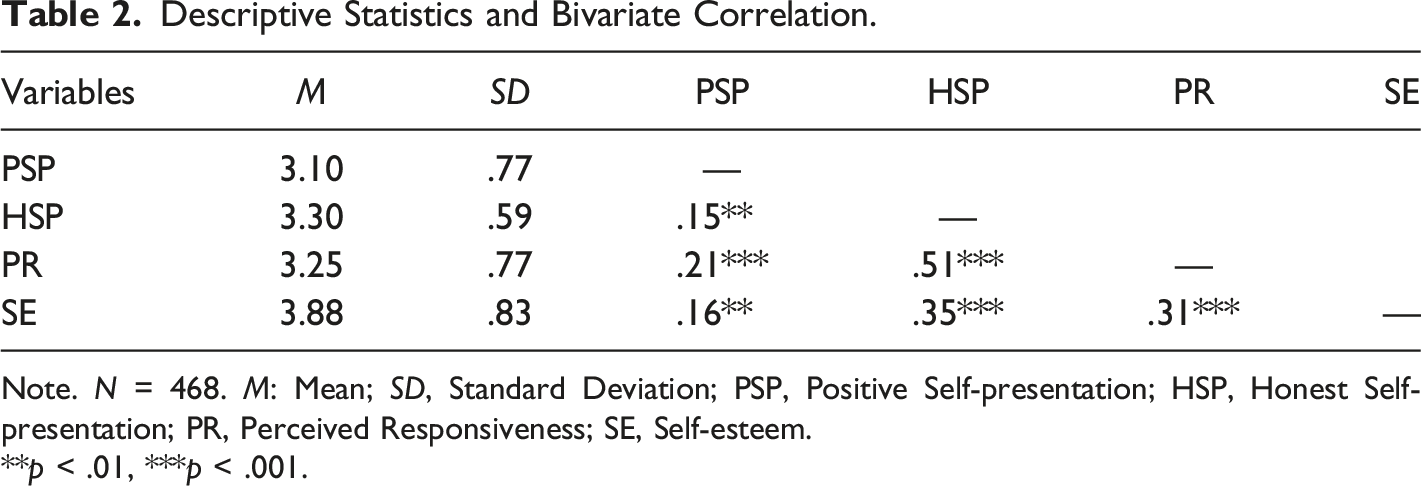
Note. N = 468. M: Mean; SD, Standard Deviation; PSP, Positive Self-presentation; HSP, Honest Self-presentation; PR, Perceived Responsiveness; SE, Self-esteem.
**p < .01, ***p < .001.
Measurement Model
The CFA for each measurement tool were demonstrated as follows: First, for positive self-presentation, the model fitness was acceptable (χ2 = 37.69, df = 5, χ2/df = 3.01, p < .001, CFI = .96, GFI = .97, SRMR = .04) and Cronbach alpha coefficient was .81 when one item (item number 2) with a standardized factor loading <.5 was excluded. Second, the CFA for honest self-presentation indicated satisfactory goodness-of-fit (χ2 = 36.72, df = 2, χ2/df = 18.36, p < .001, CFI = .92, GFI = .96, SRMR = .05), further we deleted one item (item number 3) with factor loading of less than .5. This scale had good reliability (Cronbach’s α = .74). Third, the CFA for perceived responsiveness exhibited an acceptable fit (χ2 = 101.47, df = 9, χ2/df = 11.27, p < .001, CFI = .96, GFI = .93, SRMR = .03), and Cronbach’s α was .87. Lastly, the CFA for self-esteem revealed acceptable construct validity of RSES (χ2 = 57.38, df = 5, χ2/df = 11.48, p < .001, CFI = .97, GFI = .95, SRMR = .03). Items’ reliability (Cronbach’s α) was .89. Furthermore, the results of a CFA for the entire measurement model including 20 observational variables for four latent variables demonstrated excellent fit (χ2 = 495.10, df = 164, χ 2 /df = 3.01, CFI = .94, GFI = .90, SRMR = .05). All standardized factor loadings for the items in the measurement model were significant with .52–.89 (p < .001), which means that the latent variables included in the model explain the data well. The AVE and CR values for each variable ranged from .46 to .78 and .77 to 95, respectively. Although the AVE values for the positive self-presentation and honest self-presentation did not meet the cut-off (>.5), Fornell and Larcker (1981) suggested that it can be acceptable if the CR values are above .7. Therefore, the convergent validity for each construct could be considered as acceptable. Additionally, we found that discriminant validity was adequate, as the calculated AVE values were higher than the square correlation coefficient values for each latent variable.
Moderating Analysis
The PROCESS Macro Model, proposed by Hayes (2022) in regression analysis by the simultaneous input method, was employed to investigate the effect of social media self-presentation and perceived responsiveness on self-esteem, and confirm the moderating role of perceived responsiveness. The PROCESS Macro Model has the advantage of eliminating multicollinearity by automatically providing the mean-centering function of an independent variable and moderating variable. Furthermore, the method can verify in more detail the significance of the simple slope, which is the effect of the independent variable on the outcome variable according to the moderating variable (Hayes, 2022).
Relationship Between Positive Self-Presentation and Self-Esteem, and the Role of Perceived Responsiveness
Interaction Effects of Positive Self-presentation and Perceived Responsiveness.
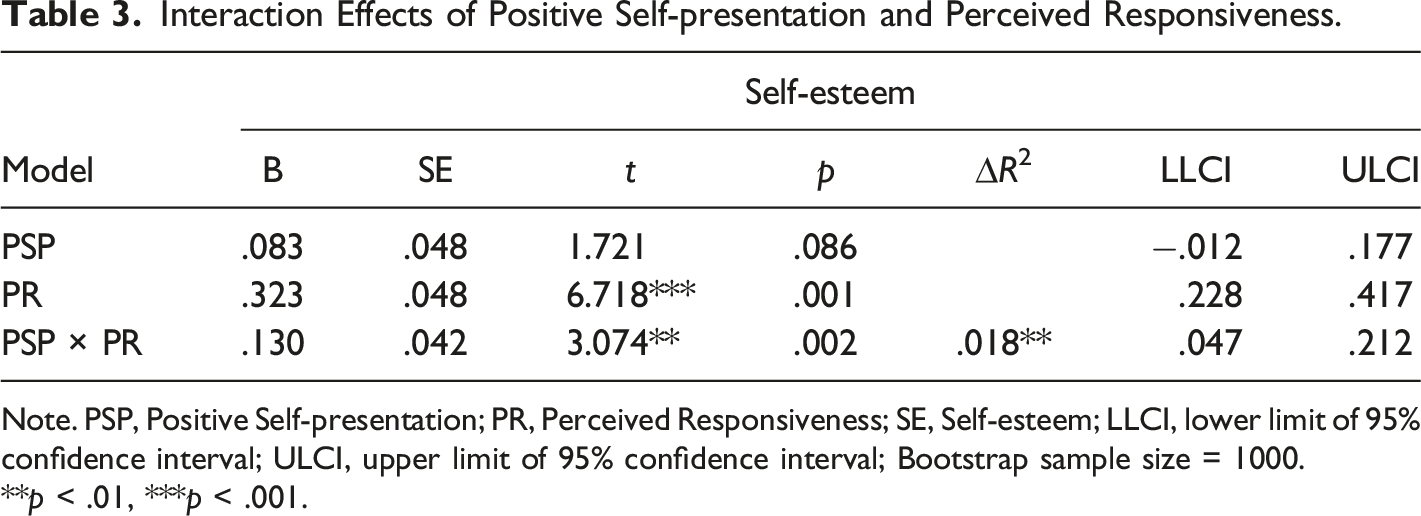
Note. PSP, Positive Self-presentation; PR, Perceived Responsiveness; SE, Self-esteem; LLCI, lower limit of 95% confidence interval; ULCI, upper limit of 95% confidence interval; Bootstrap sample size = 1000.
**p < .01, ***p < .001.
Condition Effects of Positive Self-presentation at Level of Perceived Responsiveness.
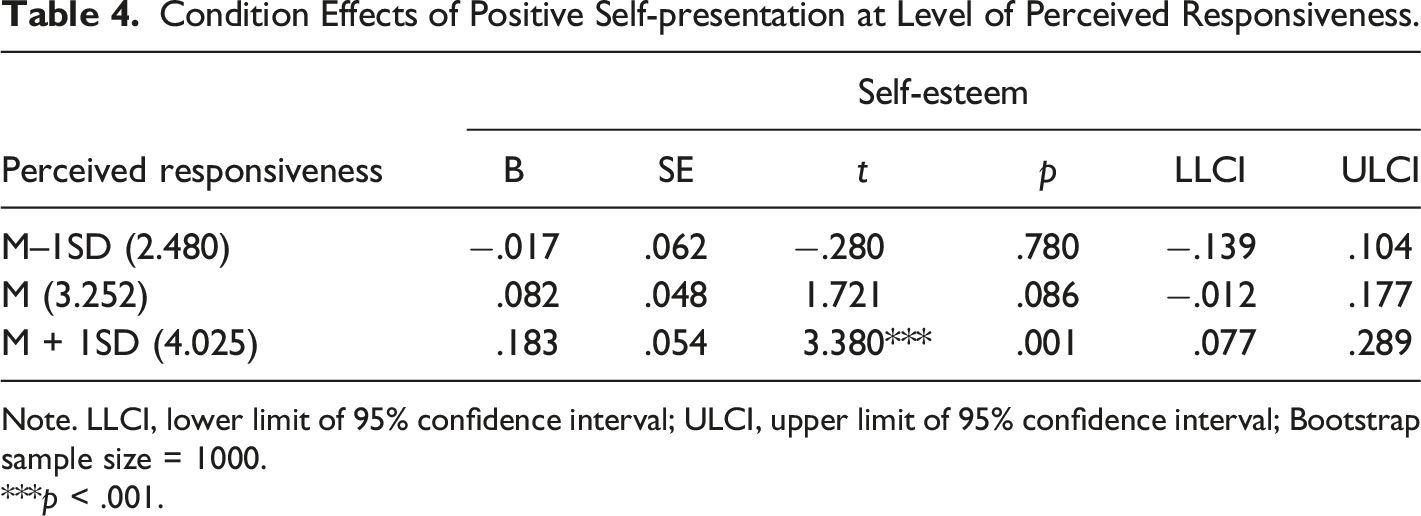
Note. LLCI, lower limit of 95% confidence interval; ULCI, upper limit of 95% confidence interval; Bootstrap sample size = 1000.
***p < .001.
Finally, the effect of positive self-presentation on self-esteem, depending on the perceived responsiveness level, was visualized in Figure 1 using a pick-a-point approach to confirm the interaction pattern. Moderating Effect of Perceived Responsiveness on the Relationship Between Positive Self-presentation and Self-esteem.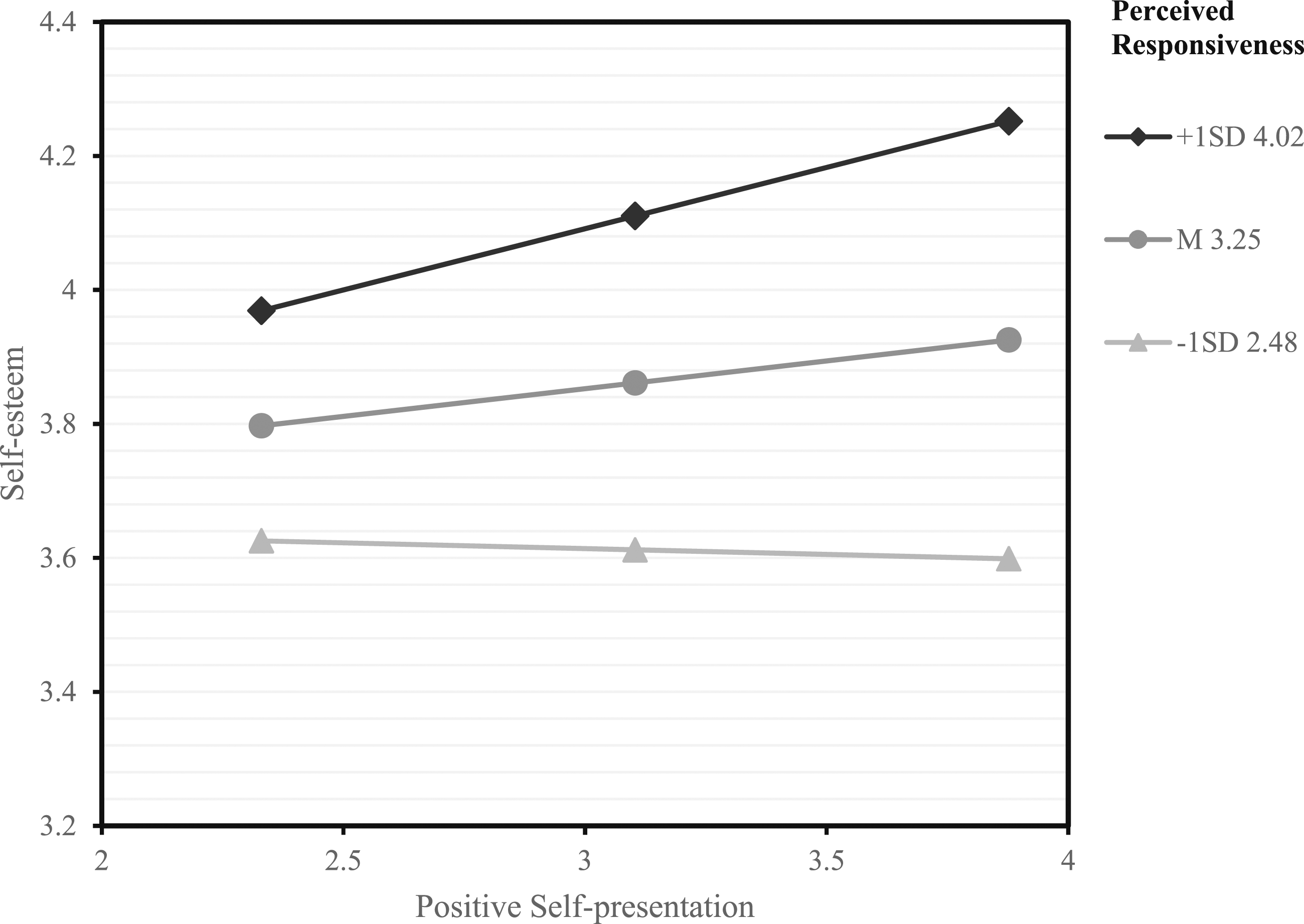
Relationship Between Honest Self-Presentation and Self-Esteem, and the Role of Perceived Responsiveness
Interaction Effects of Honest Self-presentation and Perceived Responsiveness.
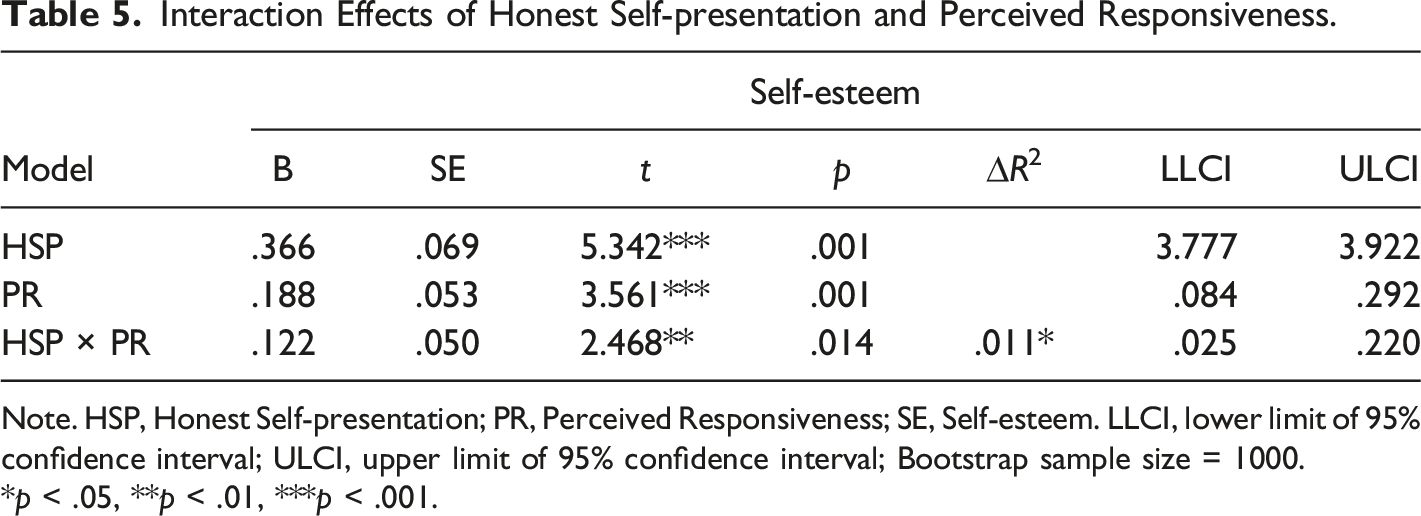
Note. HSP, Honest Self-presentation; PR, Perceived Responsiveness; SE, Self-esteem. LLCI, lower limit of 95% confidence interval; ULCI, upper limit of 95% confidence interval; Bootstrap sample size = 1000.
*p < .05, **p < .01, ***p < .001.
Condition Effects of Honest Self-presentation at Level of Perceived Responsiveness.
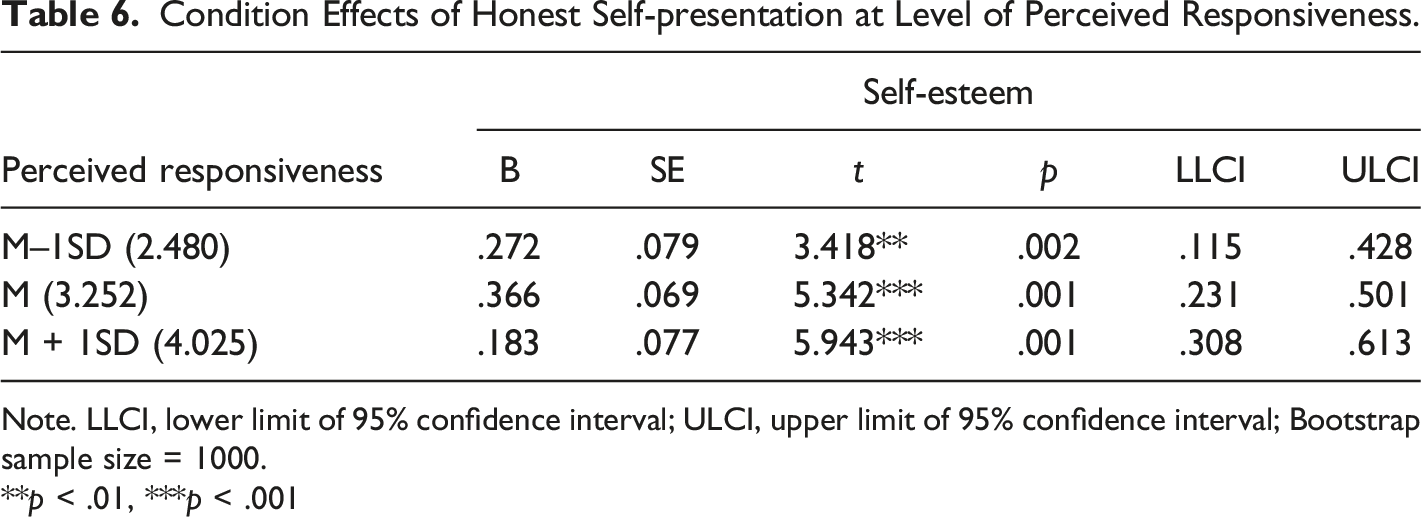
Note. LLCI, lower limit of 95% confidence interval; ULCI, upper limit of 95% confidence interval; Bootstrap sample size = 1000.
**p < .01, ***p < .001
Figure 2 illustrates the moderating effect, confirming the interaction pattern, and allowing a visualization of the association between honest self-presentation and self-esteem according to the level of perceived responsiveness. The higher the perceived responsiveness, the stronger was the relationship between honest self-presentation and self-esteem. Moderating Effect of Perceived Responsiveness on the Relationship between Honest self-presentation and Self-esteem.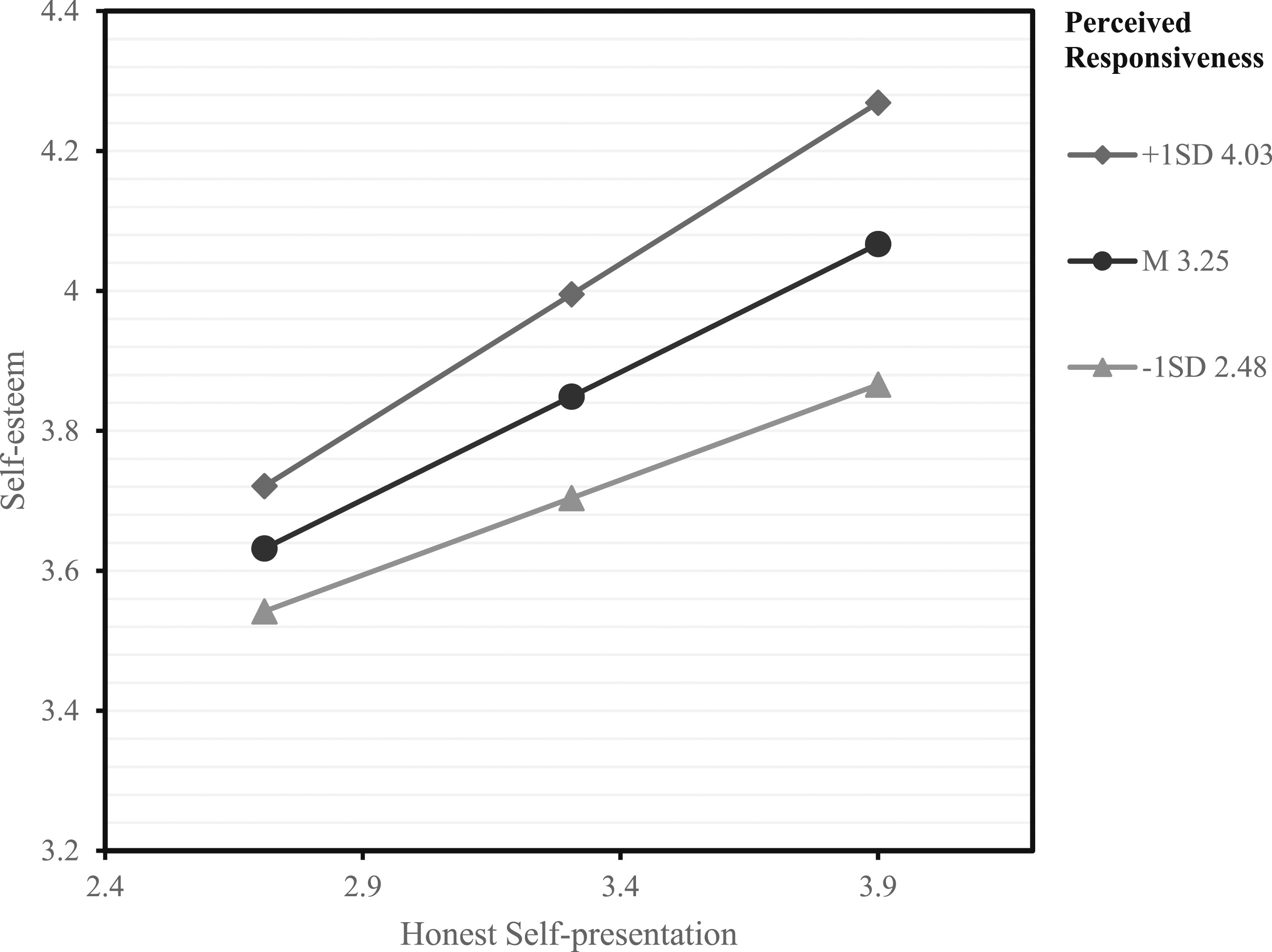
Discussion
Overall, we found partial support for our hypotheses that positive and honest self-presentation on social media by adolescent athletes would result in higher self-esteem and be moderated by perceived responsiveness.
Positive Self-presentation and Self-esteem
We did not find the relationship between positive self-presentation on social media to be significantly related to higher self-esteem, but the relationship was significant when the level of perceived responsiveness by others was high. This finding differs from some previous studies in which findings suggested that self-esteem could be improved by selectively presenting oneself positively on social media (Kim & Lee, 2011; Metzler & Scheithauer, 2015; Yang et al., 2017). However, previous research on the link between social media use and self-esteem yielded mixed results (Gonzales & Hancock, 2011; Meeus et al., 2019). In response to these inconsistencies across studies, scholars have noted the important role of cognitive appraisal of responses evoked from social media users, and they have called for a more fine-grained approach to investigating the third variable that would facilitate this relationship (Meeus et al., 2019; Yang et al., 2017). In turn, we found that positive self-presentation significantly predicted self-esteem only when the level of the young athletes’ perceived responsiveness by others was high.
Drawing from Goffman’s (1959) theory of impression management, individuals typically consider the normative and evaluative aspects of others when presenting their desired image. Given that the participants in this study were adolescents, their perspective-taking ability for inferring others’ perspectives was heightened, and they concurrently sought feedback and validation from their peers (Hollarek & Lee, 2022). Compared to non-athletes, young athletes have tended to be more concerned about how they are perceived physically and aesthetically by others (Prapavessis et al., 2004). As a result, our findings suggest that our participants may have employed strategies to enhance their attractiveness and athletic image on social media platforms. This behavior could be driven by the need for recognition and approval from peers. Given the potential repercussions of an exaggerated need for approval during adolescence (Ellis, 2002), it is advisable to avoid pursuing positive self-presentation driven by irrational beliefs. In addition, since this strategy proved to be significantly related to higher self-esteem only when accompanied by supportive responses on social media, we recommend that adolescent athletes focus more on their self-presentation of a positive sense of self, rather than relying entirely on the uncontrollable responsiveness of others.
Honest Self-presentation and Self-esteem
We found that honest self-presentation by adolescent athletes had a significant positive association with their self-esteem. Additionally, the level of perceived responsiveness significantly strengthened the relationship between honest self-presentation and self-esteem. Consistent with prior studies, these findings suggest that honest self-presentation can contribute to the development of a sense of self, making individuals feel valuable and increasing their self-worth (Yang & Brown, 2016). Yang et al. (2017) mentioned that presenting an authentic image could be liked to higher self-esteem as it focuses on one’s current emotions and thoughts, rather than their concerns or anxiety. Metzler and Scheithauer (2015) noted that adolescents who express their true selves on social media like Facebook tended to have high self-esteem, and it has been considered beneficial in counseling and psychotherapy to present one’s genuine self to others (Pennebaker, 1997).
By sharing their daily lives outside the field on social media, adolescent athletes could reveal aspects of themselves beyond their identity as athletes. Therefore, our findings suggest that encouraging them to express not only their experiences as athletes but also various other facets of their self on social media could contribute to their development of a stable self-esteem. Moreover, in contrast to a positive self-presentation, an honest self-presentation was associated with self-esteem even without a high level of perceived responsiveness by others (which is hard to control in the social media environment).
The Moderating Effect of Perceived Responsiveness by Others
A main finding in this study was the moderating effect of perceived responsiveness between types of self-presentation on social media and self-reported self-esteem. Based on the assumption that the individuals presenting themselves on social media are consciously responsive to their content due to attempts at impression management, we hypothesized that the adolescent athlete, regardless of their self-presentation strategies (e.g., positive or honest), would report strengthened self-esteem when they encountered positive responsiveness from other social media users. In other words, the more positively youth athletes perceived their friends’ (followers) responses to their self-presentation, the higher their self-esteem. We interpreted this finding to be consistent with the results of previous studies in showing that reactions to social media can be associated with individuals’ psychological well-being and self-development (Bazarova et al., 2015; Davis, 2013; Meeus et al., 2019; Zell & Moeller, 2018). Individuals who perceived that several people are viewing their status updates on social media or who receive emotional support and advice were more apt to evaluate themselves positively (Greitemeyer, 2016). Conversely, individuals who failed to receive encouraging responses to their status tended to be disappointed and depressed (Gao et al., 2023; Zell & Moeller, 2018).
Perceived responsiveness, in essence, refers to how individuals subjectively interpret the recognition, understanding, and care they receive from others (Reis & Gable, 2015). Particularly, in environments like social media, where the range of responsiveness from diverse individuals is extensive, the impact of self-presentation on self-esteem can vary with how they perceive and interpret others’ responsiveness. Thus, we show, in these data, the moderating role of perceived responsiveness in the relationship between social media self-presentation and self-esteem among student athletes who have faced limited opportunities for relationship formation due to busy schedules. This research establishes a foundation for those caring for these adolescents (e.g., parents, coaches, or sport psychologists) to express support and care towards them, even within online environments beyond the offline experience. For instance, it can be an effective mediation strategy to monitor and discuss together the content adolescents share on social media (Daneels & Vanwynsberghe, 2017). Furthermore, these results underscore the necessity for appropriate training of youth athletes to prevent them from misinterpreting the others’ responsiveness on social media.
Limitations and Directions for Future Research
We identified several limitations in the current study. First, we utilized data collected through self-report and various social media channels. We acknowledge that the number of social media platforms is increasing with evolving technologies, and that presentation strategies and patterns may differ, depending on the characteristics of each platform (Hollenbaugh, 2021). Additionally, it is not ideal to understand self-presentation phenomena solely through self-report questionnaires (Goffman, 1959). Future researchers should consider the functions of each social media platform, and they should utilize both content analysis and interview to best understand whether self-presentations are positive or honest. Second, although our results were statically significant, there are limitations in the ability to infer causal relationships from this a cross-sectional design and correlational data. To clearly understand causal relationships between these variables, longitudinal investigations would be useful. Finally, we designed this study to investigate the positive relationships between types of self-presentations on social media and self-esteem. Future, researchers might address how using social media relates to diverse outcomes (e.g., relationship with others, well-being, and peak performance) for sports participants.
Conclusion
In conclusion, our results suggest that the association between positive self-presentation and self-esteem, as expected, depended on the level of perceived responsiveness by others. For honest self-presentation, the impact on self-esteem remains significant regardless of the level of others’ responsiveness, and the strengthened moderating effect of perceived responsiveness from others is also noteworthy. These findings empirically confirm the role of perceived responsiveness from others as a moderator between self-presentation on social media and the presenter’s self-esteem. We anticipate that this contribution extends to the broader literature on online interactions beyond face-to-face contexts. Furthermore, these findings emphasize the need for coaches and parents who have close relationships with young athletes, even if they are not familiar with online environments, to pay attention to how athletes portray themselves and perceive feedback within the realm of social media. Future studies are needed to further investigate variables related to online social interactions and self-development at individual, interpersonal, and group levels.
Footnotes
Declaration of Conflicting Interests
The author(s) declared no potential conflicts of interest with respect to the research, authorship, and/or publication of this article.
Funding
The author(s) received no financial support for the research, authorship, and/or publication of this article.
