



Abstract
Affective responses have been considered key determinants for exercise adherence, but research on affective responses to stretching activities is scarce. Given the role of these responses in exercise adherence, our aim in this review was to explore (a) the utility and feasibility of core affect in stretching-related activities as measured by the Feeling Scale (FS) and/or the Felt Arousal Scale (FAS); (b) the timing of administering these scales; and (c) the scales’ applicability and interpretability in this context. Inclusion criteria for studies in this review were experimental and non-experimental studies written in English that based affect assessment on the FS and/or FAS and that applied these scales to participants engaged in physical activity, individually or in groups. We also considered studies that focused on stretching activities that were either isolated or components of a class/activity and studies that used healthy participants of any age. Exclusion criteria were populations with mental health problems, cancer, diabetes, hypertension, cardiovascular disease, or diseases likely to alter pain perception or be associated with chronic pain, instrument validation studies, gray literature, and systematic reviews. We searched PubMed, SPORTDiscus and PsycINFO databases, and we added studies retrieved manually from reference sections while following PRISMA guidelines. We used the Effective Public Health Practice Project tool for judging methodological quality of research articles. Our final analyses were based on 12 empirical studies published between 2003 and 2021with a total of 718 participants. Both scales were found to be useful and feasible in the most usual places for exercise, but core affect results cannot be properly interpreted due to variability of study protocols and the absence of guidelines for adequate baseline assessment. Most studies recorded affect responses pre-session, during session, and post-session. We observed no standardized timing or frequency of assessment, and there was high heterogeneity among stretching protocols. Currently, research in core affect assessment of stretching-related activities lacks sufficient methodological quality to draw generalizable conclusions.
Introduction
There is now irrefutable evidence of the effectiveness of regular physical activity (PA) in the primary and secondary prevention of several chronic diseases (e.g., cardiovascular disease, diabetes, cancer, hypertension, obesity, osteoporosis, depression, and anxiety) and premature death (Warburton & Bredin, 2017; Warburton et al., 2006). Still, 36.2% of adults in Europe aged 18 and over were not sufficiently active in 2017 (Nikitara et al., 2021) in that they did not meet the World Health Organization recommendations of at least 150 minutes of moderate-intensity, or 75 minutes vigorous-intensity physical activity per week. If current trends continue, the 2025 global physical activity target (a 10% relative reduction in insufficient physical activity) will not be met (Guthold et al., 2018). These circumstances reveal the importance of understanding how to successfully increase PA levels among the general adult population.
Several psychological frameworks in exercise psychology have been put forth to explain and increase sustainable PA behavior, including social cognitive theory (Bandura, 1998), the theory of planned behavior (Ajzen, 1991), and the transtheoretical model of behavior change (Prochaska & Velicer, 1997), just to name a few. However, these theories have been criticized for their heavy emphasis on cognitive and reasoned bases of behavior that overlook or reject the contribution of non-rational processes in decision making (Ekkekakis & Zenko, 2016; Rebar et al., 2016). Thus, during the last decade, affect, an umbrella term for general valenced experiential responses (i.e., core/basic affect), emotions, and mood (Ekkekakis & Petruzzello, 2000), has been increasingly represented as a central aspect of behavior maintenance/change that is grounded on hedonic assumptions. Affect has been explored either as a reflective process (e.g., affective judgments, like enjoyment) or an automatic process (e.g., affective association) in several dual-process theoretical approaches related to exercise and/or health-related behavior. These include the Affective-Reflective Theory (ART; Brand & Ekkekakis, 2018), the Physical Activity Adoption and Maintenance model (PAMM; Strobach et al., 2020), the Affective and Health Behavior Framework (AHBF; Williams & Evans, 2014), and the Theory of Effort Minimization in Physical Activity (TEMPA; Cheval & Boisgontier, 2021), as examples. Particularly in the AHBF, the immediate affective response (e.g., during running) and the post-behavior affective response (e.g., immediately after a workout) are considered key determinants of healthy behavior. This affective response can be understood as core affect (i.e., an elementary non-reflective feeling consciously available), and it has demonstrated relevant predictive value for exercise adherence (Rhodes & Kates, 2015; Rodrigues et al., 2020; Williams, 2008). However, exercise prescription guidelines emitted by international entities have failed to describe how to assess individual affective states, judgments, or associations, or how to adjust exercises or exercise sessions to promote a better affective response (e.g., American College of Sports Medicine).
Basic affective responses to exercise have been commonly, easily, and reliably assessed by the Feeling Scale (FS; Hardy & Rejeski, 1989) and the Felt Arousal Scale (FAS; Svebak & Murgatroyd, 1985), depicting the participant’s affective valence (perceived pleasure/displeasure) and arousal (perceived activation), respectively (Evmenenko & Teixeira, 2020). Importantly, affective responses can be plotted into the circumplex model of affect (Ekkekakis et al., 2011; Russell, 1980), which allows tracing the responses in different exercise modalities or activities, thus permitting the assessment of affective responses to emerge as a powerful means for exercise professionals to refine their prescriptions. To date, affective responses to exercise have been mainly studied in aerobic and resistance exercises (Cavarretta et al., 2019; Evmenenko & Teixeira, 2020), with only scarce attempts to apply them to stretching activities (e.g., yoga, tai-chi, Pilates) that have recently gained worldwide popularity (Thompson, 2022; Yeh et al., 2008, 2009). This is important, not only because stretching activities have long been used within many physical exercise activities to increase range of motion around a joint (Opplert & Babault, 2018; Riebe et al., 2018), but also because they are usually employed and integrated in exercise warm-up or recovery stages, or even as the main component of several group fitness classes. Stretching exercises are directly related to improvements in self-rated sleep quality (Smith et al., 2007; Telles et al., 2012; Yoshihara et al., 2014), flexibility and dynamic balance, muscular endurance (Cruz-Ferreira et al., 2011), and cardiorespiratory fitness (Fernández-Rodríguez et al., 2019), and they have been associated with or led to improvements in self-esteem, health-related quality of life, and mood (Smith et al., 2007; Telles et al., 2012; Yoshihara et al., 2014) and to reductions in perceived stress, anxiety, depression (Wang et al., 2010), and pain (Miyamoto et al., 2013). Stretching activities are considered to be secure, accessible, and engaging (DiGiacomo et al., 2010), and they are likely contributors to good physical activity adherence rates (Chao et al., 2014; Yeh et al., 2009).
In this context, understanding how to promote perceived pleasurable experiences from engagement in stretching activities may allow participants a better adjustment to these activities and their desired outcomes by supporting exercise engagement and adherence. More specifically, analyzing known challenges to the specific use of the FS and FAS for assessing affect might include attention to (a) the utility and feasibility of core affect assessment with these tools when applied to stretching-related activities, (b) the timing of assessments with these tools, and (c) the contextual applicability and interpretability of these measures. We focused this systematic literature review on these themes.
Method
We prepared this review by following recommendations suggested by the Preferred Reporting Items for Systematic Reviews and Meta-Analyses (PRISMA) protocol (Page et al., 2021), and registered our review in the international Prospective Register of Systematic Reviews (PROSPERO) with the following number: CRD42022329331. We were also guided by the Population, Intervention, Comparison, Outcomes and Study (PICOS) strategy. Both the PRISMA guidelines and the PICOS tool are endorsed by the Cochrane Collaboration (Higgins & Green, 2011; Methley et al., 2014), and PROSPERO registration has been widely endorsed for transparency purposes (Booth et al., 2012). The means by which we adhered to these varied guidelines is detailed below.
Eligibility Criteria
We adopted the following inclusion criteria for studies in this review: (a) experimental and non-experimental studies; (b) studies written in English; (c) studies that based affect assessment on the FS and FAS and applied these scales to both individual and group physical activity settings; (d) studies that strictly used stretching activities that were either isolated or components of a class/activity; (e) studies with participant samples of any age (young adults, adults, older adults); and (f) studies focusing on apparently healthy individuals. Exclusion criteria were as follows: (a) study populations with mental health issues; (b) study populations with cancer, diabetes, hypertension, cardiovascular disease, or diseases likely to alter the perception of pain or with chronic pain; (c) instrument validation studies; (d) gray literature (e.g., thesis, conference abstracts, reports); and (e) systematic reviews. Level I study screening included a review of all titles and abstracts to check those against eligibility criteria. Full-text publications of any studies not eliminated at Level I were retrieved for complete review at Level II screening; this involved reading the full-text publication to determine that all eligibility criteria were met, and no exclusion criteria were applicable.
Information Sources and Search Strategy
A wide search of scientific papers was conducted from January 2022 until February 2022, on the following databases: PubMed (host: MEDLINE; last search run February 2022), SportDISCUS (host: EBSCO; last search run February 2022) and PsycINFO (host: EBSCO; last search run February 2022). The search used the following entries: “physical activity”, “physical exercise,” “Feeling Scale,” “Felt Arousal Scale,” “flexibility,” and “stretching.” These keywords were searched separately and in various combinations with the use of conjunctions such as “AND” and “OR,” organized according to PICOS strategy. Bibliographic references from related studies and other sources were also examined to include studies that potentially met the inclusion criteria (last search conducted February 2022).
Data Collection and Data Items
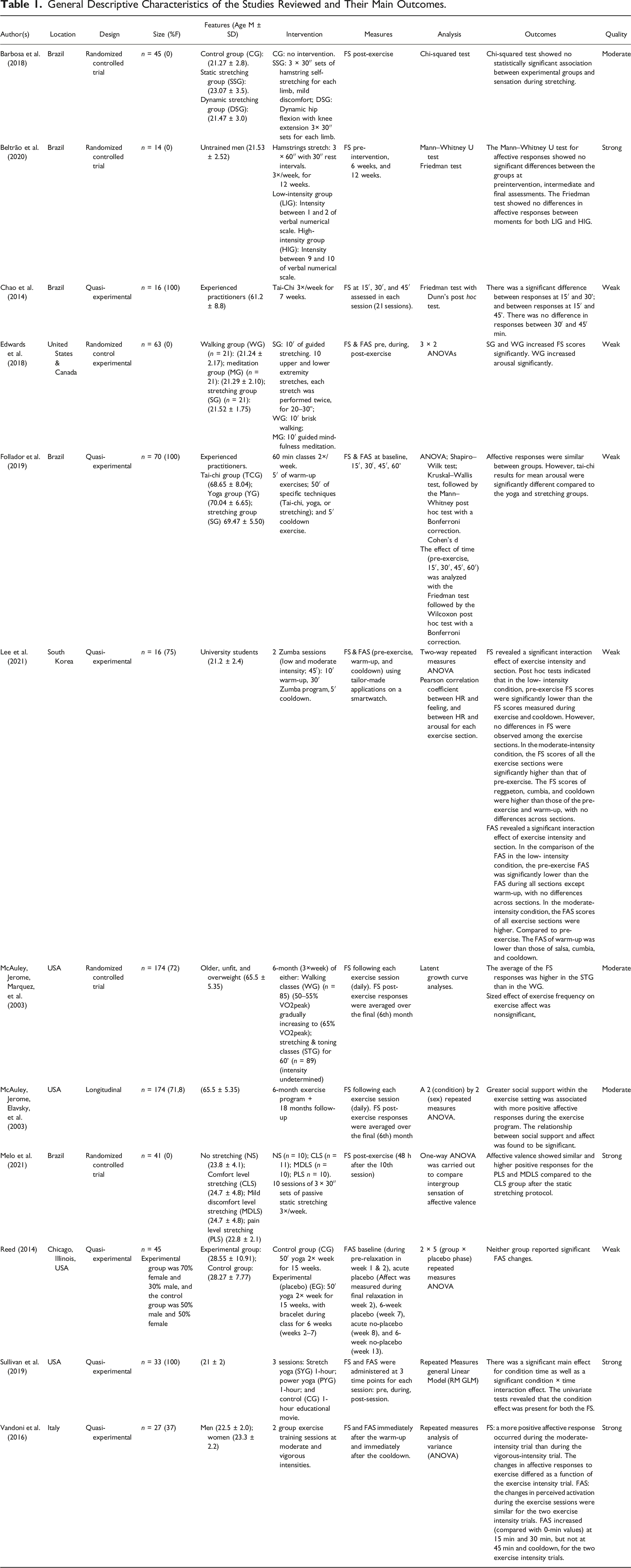
General Descriptive Characteristics of the Studies Reviewed and Their Main Outcomes.
Study Risk of Bias Assessment
The methodological quality of the selected studies was assessed using the Effective Public Health Practice Project (Thomas et al., 2004). This tool has empirical support for its utility in screening research articles (e.g., Armijo-Olivo et al., 2012), and it has been used in other physical activity contexts (e.g., Panão & Carraça, 2020; Thomas et al., 2020; Veldman et al., 2021). This quality assessment tool for quantitative studies is adjusted for experimental and non-experimental studies. This instrument comprises 22 questions assessing the quality of a study according to the following dimensions: selection bias, study design, confounders, blinding, data collection methods, withdrawals and drop-outs, intervention integrity, and statistical analyses. Two independent reviewers made this quality assessment. When reviewers disagreed, the results were compared, and the discrepancies were resolved by a third and external reviewer. All reviewers were debriefed and trained prior to the use of the quality checklist. Cohen’s inter-rater agreement presented an almost perfect agreement (k = .806; McHugh, 2012).
Results
Study Selection
During the database search (see Figure 1), we identified a total of 141 titles. By analyzing bibliographical references from other sources, we added two additional potentially relevant studies. Three records were excluded as duplicates. We then screened these 140 records and excluded another 94 articles after reading their titles and realizing that the authors had different motives for their studies than those we intended. We carefully read the abstracts of the remaining 46 papers, and after this screening, we reduced the number by another 27 papers. We then read the full text of the 19 remaining papers and finally excluded seven of these that did not analyze affective responses in stretching activities. This left us with a final sample of 12 papers that we selected for thorough analysis. Flow Chart for Study Selection.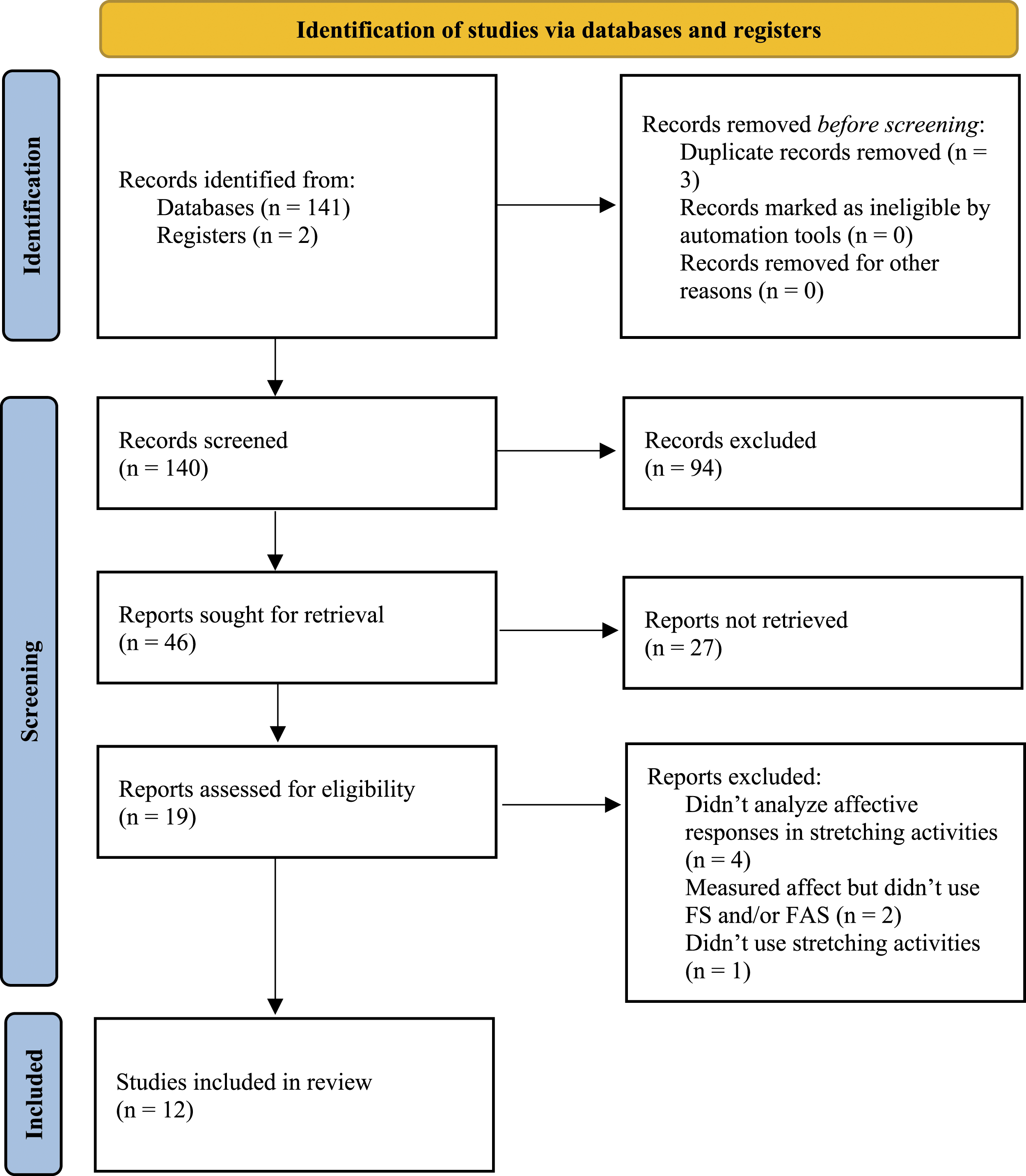
Study Summaries
The present review includes 12 empirical studies that evaluated participants’ affective responses in stretching-related activities that were published or accepted for publication up to February 2022. Table 1 represents a synthesis of the data extracted from these selected studies, listed alphabetically by the first author’s last name.
Study Characteristics
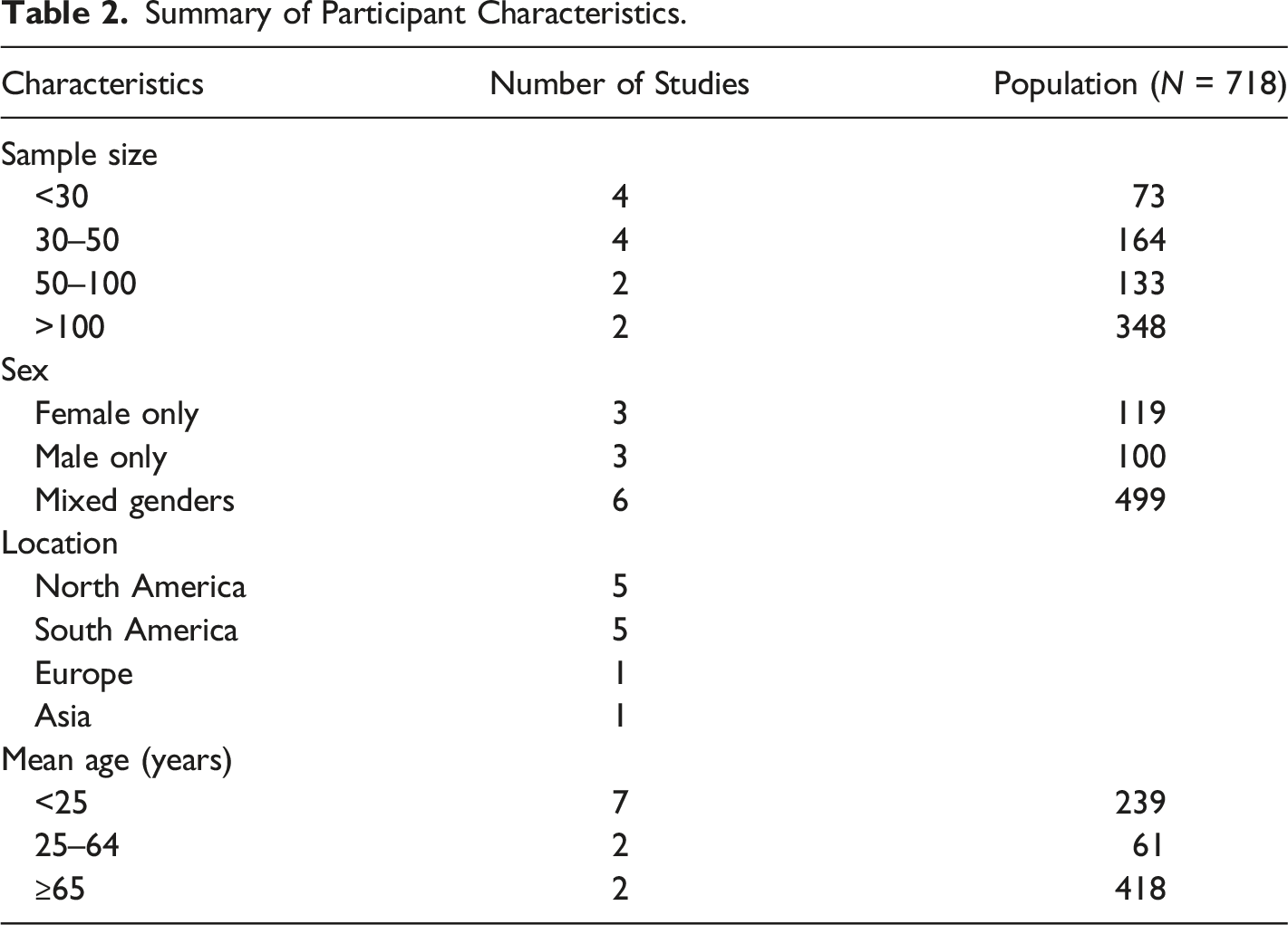
Summary of Participant Characteristics.
Risk of Bias in Studies
We assessed the studies’ methodological quality according to the Effective Public Health Practice Project (Thomas et al., 2004). Strong quality scores were due to better study design with fewer participant withdrawals and dropouts. Participant selection bias, confounding variables, and failures to anonymize aspects of the study from participants or evaluators were the bases for the weakest quality scores. Final tallies for the studies’ quality score category levels were as follows: (a) strong (4 studies), (b) moderate (3 studies), and week (5 studies). See Table 1.
Categorical Descriptions of Study Characteristics
Exercise Mode
Among 12 studies in which participants engaged in stretching exercises, three studies involved individual stretching exercises (Barbosa et al., 2018; Beltrão et al., 2020; Melo et al., 2021), and seven involved stretching performed in group yoga classes (Follador et al., 2019; Reed, 2014; Sullivan et al., 2019), tai-chi (Chao et al., 2014; Follador et al., 2019), and guided stretching (Edwards et al., 2018; Follador et al., 2019; McAuley, Jerome, Elavsky et al., 2003; McAuley, Jerome, Marquez et al., 2003). Two studies included mainly aerobic exercise (Lee et al., 2021; Vandoni et al., 2016), in which we only analyzed those session moments when flexibility was assessed (i.e., pre-exercise, warm-up, and cooldown).
In the stretching classes/exercises, investigators used distinct approaches and types of contraction (i.e., static, dynamic, passive, active): Follador et al. (2019) used 16 static stretching exercises both in the upper and lower extremities; Melo et al. (2021) included static passive stretching for hamstring muscles; Beltrão et al. (2020) used static passive stretch exercise for the hamstrings; and Barbosa et al. (2018) divided groups according to static or dynamic hamstring stretches. In other studies, the type of stretch was not described (Edwards et al., 2018; Lee et al., 2021; McAuley, Jerome, Marquez et al., 2003; Vandoni et al., 2016).
Type of Study
Among all 12 studies included in this review, only one was not experimental (McAuley, Jerome, Elavsky et al., 2003). This study was an 18-month follow-up of McAuley, Jerome, Marquez et al. (2003). Five studies were randomized controlled trials (Barbosa et al., 2018; Beltrão et al., 2020; Edwards et al., 2018; McAuley, Jerome, Marquez et al., 2003; Melo et al., 2021), and six were quasi-experimental (Chao et al., 2014; Follador et al., 2019; Lee et al., 2021; Reed, 2014; Sullivan et al., 2019; Vandoni et al., 2016). In studies using a control/comparison group, groups were either divided by exercise mode (Barbosa et al., 2018; Edwards et al., 2018; Follador et al., 2019; McAuley, Jerome, Elavsky et al., 2003; McAuley, Jerome, Marquez et al., 2003) or exercise intensity (Beltrão et al., 2020; Melo et al., 2021). Reed (2014) compared two conditions (placebo vs. experimental) performing the same activity (introductory Hatha yoga).
FS/FAS Measurement Procedures
In only four studies did experimenters provide FS/FAS instructions and prior participant training for familiarity of the questionnaires (Beltrão et al., 2020; Chao et al., 2014; Follador et al., 2019; Vandoni et al., 2016). Measurement timings differed across studies, with five studies applying affective measurements only after the exercise session (Barbosa et al., 2018; Beltrão et al., 2020; McAuley, Jerome, Elavsky et al., 2003; McAuley, Jerome, Marquez et al., 2003; Melo et al., 2021), and all the remaining seven studies evaluating affective responses at baseline, during (the session, not during the stretching position), and post-session (Beltrão et al., 2020; Chao et al., 2014; Edwards et al., 2018; Follador et al., 2019; Lee et al., 2021; Reed, 2014; Sullivan et al., 2019; Vandoni et al., 2016). Across studies there was no apparent standardization of the time of assessment or number of measurements used in the protocol/session.
Intensity Control
Intensity of stretching varied from light to moderate, and seven studies used different instruments to control intensity. Three monitored intensity objectively through heart rate with a smartwatch (Edwards et al., 2018; Lee et al., 2021) or a heart monitor throughout the exercise session (Vandoni et al., 2016). Six studies measured intensity subjectively, with ratings of perceived exertion (Borg, 1982) used in four studies (Chao et al., 2014; Edwards et al., 2018; Follador et al., 2019; Vandoni et al., 2016), the scale of perceived effort in flexibility (PERFLEX; Dantas, 2008) used in one (Melo et al., 2021), and the Verbal Numerical Scale (Ferreira-Valente et al., 2011) also used in one (Beltrão et al., 2020). Barbosa et al. (2018) did not measure intensity, but asked participants to perform the stretching exercises until they felt mild discomfort. Sullivan et al. (2019) designed two yoga sessions differently, so that the power yoga session had a higher intensity and faster pace than the stretch yoga session. Three studies did not present intensity data (McAuley, Jerome, Elavsky et al., 2003; McAuley, Jerome, Marquez et al., 2003; Reed, 2014).
Transitional Affective States Plotted on the Circumplex Model
Follador et al. (2019), Lee et al. (2021), Sullivan et al. (2019), and Vandoni et al. (2016) assessed participants with both the FS and the FAS, and they plotted participants’ affective responses on the circumplex model. These four studies registered scores in two quadrants: low-activation pleasure (e.g., calmness, relaxation) and high-activation pleasure (e.g., energy, vigor). Follador et al. (2019) had three intervention groups perform tai-chi, yoga, or stretching, and they found that participants’ affective valence and arousal shifted from the low-activation pleasure quadrant (baseline) to the high-activation pleasure quadrant. Lee et al. (2021) asked participants to perform two low intensity and moderate intensity Zumba sessions, and they found that warm-up responses occurred in the low-activation pleasure quadrant for both intensities. Cooldown measures remained in the low-activation pleasure quadrant for the light intensity Zumba session and rose to the high-activation pleasure quadrant for the moderate intensity session. Sullivan et al. (2019) performed three interventions with the same participant group (power yoga, stretch yoga and control). In stretch yoga and control sessions, participants responses were only in the low-activation pleasure quadrant in all session stages (warm-up, fundamental stage, cooldown). In the power yoga session, participant responses were in the low-activation pleasure quadrant for baseline and post-session responses, but they were in the high-activation pleasure quadrant during the fundamental stage. In the study of Vandoni et al. (2016) the participants performed two group exercise sessions (moderate or vigorous intensity), but only the warm-up and cooldown measures were considered for this review. Warm-up affective responses were registered in the low-activation pleasure quadrant for both groups. While the moderate intensity group kept the same results in the cooldown measures as in the warm-up, the vigorous intensity group increased to the high-activation pleasure quadrant.
Discussion
We sought in this review to assess whether affective responses measured with the FS and FAS in stretching activities in an ecologically natural physical activity context were useful and reflected any standardized methodological procedure. There was sufficient literature meeting our inclusion criteria and search and screening processes (n = 12 studies) to generate summary impressions and recommendations for future research. Among these 12 studies our quality assessment found four studies to be weak methodologically, three to be of moderate methodological quality, and five to have strong methodological quality. Participants had no problems comprehending the FS and FAS, despite their having undergone no familiarity training in most studies. As for the core affect assessment, there was no standardized timing (within a session or in relation to the stretch position) or frequency of assessment. Given this heterogeneity in assessment procedures in the protocols of these studies, several limitations emerge to our understanding of the overall trends or findings of prior research involving affect assessment in stretching activities. Additionally, an apparent disregard among these investigators of the conditions needed to effectively assess core affect (e.g., timing) highlights the need for future investigators to use standardized procedures that will allow accurate measurements, cross study comparisons, and a clear interpretation of the participants’ affective responses.
Timing has been shown to matter when assessing affect during aerobic and resistance exercise (Andrade et al., 2022; Cavarretta et al., 2019; Ekkekakis et al., 2011). According to the AHBF, the way a participant feels during the exercise is markedly different and often has an opposite valence to how they feel after the exercise. Indeed, while there is great variation in how individuals respond affectively during physical activity (Ladwig et al., 2017), post-physical activity affect is known to improve almost universally. This phenomenon is known as the “affective rebound effect” (Cavarretta et al., 2019; Ekkekakis et al., 2005, 2011), and it has been reported in resistance training (Cavarretta et al., 2019; Emanuel et al., 2021) and particularly in aerobic exercise, wherein a high percentage (>95%) of participants experience a positive affective response after the cessation of exercise (Ekkekakis et al., 2011). This should also be the case in stretching activities, due to the discomfort caused by the intrinsic characteristics of muscles under stretch. Yet, no study or methodological consideration of this issue was found in this review. This methodology gap in affect response measurement for stretching does not permit us to properly summarize results from studies reviewed in this article. For example, some of the included studies reported only post-exercise session measurements, while others, measured affect during the session/segment of the stretching activity (but none measured affect while the muscle was stretched); in other cases, assessments were made prior to and after the exercise session, excluding data regarding the affective panorama interpretation throughout the session. This poses a concern in interpreting data regarding the affective response to stretching exercise, since core affect can only be experienced in vivo, or in close proximity to the activity (Stevens et al., 2020; Zenko et al., 2016). Importantly, affect recall (i.e., affect assessment via memory of previous feelings subjected to cognitive appraisal) does not reflect core affect that emanated from exercise. Without this consideration, there may not be an accurate assessment of the in-session pleasure perception that, in past research, has been a relevant predictor of physical activity intention and later behavior (Rhodes & Kates, 2015). Given the absence of methodological standardization in core affect assessment and the apparent heterogeneity of these past approaches to studying stretching exercises, finding the best moment to assess the pleasure/displeasure responses in stretching activities should be a direct focus in future research.
Another relevant assessment variable is the frequency/number of assessments. To achieve an accurate assessment of the affective response, the FS and FAS should be used at regular intervals, balancing the accurate representation of affect during the session (or segments of the sessions; or some specific exercise modes) without burdening the participant with excessive assessments. When obtained in this way, this series of results can be plotted in the circumplex model of affect, thus allowing a deeper understanding of the affective response fluctuations across the session/activities. When this approach was used in four of the studies in this review, affective responses generally fell into both the low-activation pleasant quadrant and the high-activation pleasant quadrant, depending upon the intensities of the activity (e.g., light or moderate intensity), the distinct moments of the session (e.g., warm-up; cooldown), and the timings of the assessment in relation to the stretch (e.g., after, but not immediately after the stretch).
As seen here, the balance of assessments may vary with the exercise mode, duration, and intensity, among other variables. Still, the studies reviewed showed high heterogeneity in the number of affect assessments, which varied from one (Barbosa et al., 2018; McAuley, Jerome, Elavsky et al., 2003; McAuley, Jerome, Marquez et al., 2003; Melo et al., 2021) to seven (Lee et al., 2021) during the exercise sessions. Although the number of assessments can be set differently given each study’s aim and needs, the overall impression from this review is that discrepancies in the number of assessments performed creates challenges for making comparisons between studies and raises concerns regarding possible interpretations of affective response results. This problem may be increased by the fact that protocols used in these studies of stretching exercises involved a wide variety of exercise settings, including individual stretches versus group classes, and variance in warm-up versus and cooldown sections. Also, the investigators used diverse types of muscle contraction (i.e., static, dynamic, passive, active). Again, future researchers should attend to the development of methodological guidelines that allow an adjusted number of assessments to improve core affect evaluations.
On another relevant note, no problems were reported regarding the use and participants’ comprehension of the FS/FAS. This finding points to the feasibility/suitability of these scales for stretching activity and usual exercise contexts (e.g., health club activities), aligning this literature with what has been previously suggested in a related review in physical activity settings (Evmenenko & Teixeira, 2020). However, two issues must be considered regarding the scales’ feasibility in stretching activities. First, the fact that no measure has been taken during the stretch limits this interpretation, given that it may be easier to apply the scales while the exerciser is at rest (e.g., between stretches) versus during the stretch effort. Additionally, some stretching modes, like dynamic stretching, may not allow the scales’ application during the exercises, a consideration that must be contemplated when interpreting future efforts on the understanding of contextual feasibility. Second, the correct application and understanding of these scales is an important consideration. Duda (1998), Evmenenko and Teixeira (2020), and Zenko and Jones (2021) recommended that researchers and participants have prior training in scale administration to achieve consistent results. Among the studies reviewed here, four reported some previous participant training in the use of these scales (Beltrão et al., 2020; Chao et al., 2014; Lee et al., 2021; Vandoni et al., 2016), but no study reported experimenter training in this use. Given the specificity of these scales (and generally all perceptual scales; Haile et al., 2015), prior training in their use and interpretation should be standard procedure; this would help assure the quality of the assessments and the obtained data. This need may be particularly relevant in studies in which other scales are used in proximity (e.g., ratings of perceived exertion) to preclude participant confusion as, for example, in distinguishing between perceived effort and perceived activation/arousal. However, the needed extent of this training must be explored in future research, given that most studies included in our review did not mention the participants’ or applicants’ prior training in interpreting or applying these scales, and yet no negative reports on the use of the scales were made. This raises some concerns, as it is difficult to assess if this absence of information on the scales’ application and interpretation is due to effective or ineffective training in their use. Although at this point the feasibility/suitability of the scales seems adequate, additional studies are needed to substantiate this assumption.
Limitations and Directions for Further Research
Although this review addressed a relevant and understudied aspect of affect assessment of stretching exercise/activity, future investigators should address methodological weaknesses we identified. First, there are a low number of studies that have specifically addressed affect responses to stretching activity, and there is high heterogeneity of experimental designs, research methods, and stretching activities and intensities, all of which limit the ability to summarize and interpret research results to date. In fact, it is still unclear how and when to assess core affect during stretching activities. For example, no study in this review explored the affective rebound when affect responses are measured after versus during stretching activities. While advancements in assessment procedures may take some time to be reflected in future research efforts, some attention can be given to the results of those studies who recorded the specific moment when the evaluation took place. However, because of these methodological problems in affective response assessment for stretching, we could not ascertain a summary perspective or interpretation of research to date in this field, and could only highlight priorities for future research.
Conclusion
In summary, our findings indicated that core affect assessments with the FS and FAS in stretching-related activities still lack sufficient methodological support to generate summary impressions from research to date. Albeit with some reservations, we did find the administration of the FS and FAS to be feasible and useful in the most common contexts of research practice in this field, although no measurement was made during the stretch. Future investigators should design studies to discover and develop how, when, and how often affective responses assessment in stretching activities should occur. Most importantly, future research should address how positive affect associated with stretching activities affects future engagement or adherence in physical activity.
Footnotes
Acknowledgments
The authors would like to thank the external researcher Vasco Bastos for the support given in the quality assessment check made through the Effective Public Health Practice Project tool.
Author Contributions
Both authors contributed to the study conception and design. The idea of this systematic review belongs to Diogo Teixeira. The literature search, data analysis, and the draft were performed by Leonor Henriques, and the final critical revision was made by Diogo Teixeira.
Declaration of Conflicting Interests
The author(s) declared no potential conflicts of interest with respect to the research, authorship, and/or publication of this article.
Funding
The author(s) received no financial support for the research, authorship, and/or publication of this article.
