




Abstract
Farmers’ low adoption rate of improved common bean varieties is the root cause of other challenges that stakeholders in Malawi's common bean value chain face in marketing, seed production, processing, and consumption. As a result, it is ideal to address the issue of low uptake by encouraging farmers to adopt improved varieties to make more significant contributions to the common bean value chain. The study's main objective was to assess the impact of multi-stakeholder platforms (MSPs) and farmers’ attitudes on the uptake of improved common bean varieties. According to the findings of the KAP survey, there is a correlation between farmers’ knowledge, attitude, and uptake of improved common bean varieties. Using a probit model, the paper discovered that farmers in the project area's intervention site had a 25% higher probability of uptake than farmers in the counterfactual site. Farmer households that were members of MSPs were more likely to participate than farmer households that were not members of any MSP. Meanwhile, farmers who were negative or neutral about the accessibility and affordability of improved common bean varieties were less likely to uptake them than those who were positive. According to the findings, farmers with a neutral attitude toward the yield potential of the improved common bean varieties had a lower probability of uptake than farmers with a positive attitude. Therefore, the study recommends MSP-based initiatives as one way to promote the uptake of improved common bean varieties.
Keywords
Introduction
Agricultural stakeholders in Malawi involved in the common bean value chain face numerous challenges (Malawi Government, 2022). One of the core problems is the low uptake of the improved common bean varieties by smallholder farmers (KIT, 2020). Realizing that the problems of the stakeholders are interconnected, various agricultural policies are encouraging multiple stakeholders to collaborate in addressing the challenges to achieve a large impact in a short period (Malawi Government, 2022). One area where various stakeholders are collaborating is to increase the uptake of improved common bean varieties. Seed is one of the most important resources in agricultural product production because the quality of the seed determines yield quality and quantity, which tends to affect other stages of the value chain (Atsriku, 2020).
Breeders from various institutions in Malawi have developed over 30 improved varieties of common bean to address some of the production and marketing challenges that farmers face (Katungi et al., 2017). Still, more farmers are not adopting the improved varieties instead they are cultivating the same old varieties which are creating problems for other stakeholders in the value chain (Dzanja et al., 2019). For example, low adoption of improved common bean varieties results in poor output quality and quantity, which has an impact on pricing, exportation, and nutritional value. As a result, stakeholders such as processors, seed distributors, and off-takers are unable to obtain desired varieties from farmers. That is why encouraging farmers to adopt improved common bean varieties is critical to addressing the challenges of most stakeholders, which can be easily addressed through multi-stakeholder platforms (MSP) (De Janvry et al., 2019).
In Malawi, through MSPs, improved common bean varieties have been disseminated for farmers to uptake. One way the stakeholders have used this is through participatory variety evaluation (PVE) approaches (Ngozi, 2016). To enhance the uptake of improved common bean varieties, there must be two-way communication in which agricultural stakeholders share information about improved varieties and farmers provide feedback (Ntare et al., 2008). To get good feedback from farmers, a full evaluation of improved varieties is required, which also includes assessing the effect of farmers’ knowledge, attitude, and other factors on the uptake of improved varieties (Debara and Gebretsadik, 2017). The PVE approaches benefit not only farmers but also other agricultural stakeholders such as breeders, seed producers, seed suppliers, and processors. Through the PVE approaches, stakeholders can gain knowledge of different farmers’ variety preferences, the top priority attributes farmers look for in common bean varieties, and factors that can help farmers uptake the varieties (Ouma et al., 2011). Farmers, on the other hand, are exposed to new varieties and able to uptake varieties with desirable attributes (Ng'ambi and Maliro, 2004).
The main objective of the paper was to assess the effectiveness of MSP-based PVE approaches on the uptake of the improved common bean varieties. The study further assessed the effect of farmers’ knowledge and attitude on the uptake of improved common bean varieties. The improved common bean varieties that the paper focused on were DRK47, NUA45, VTTT924/4-4, CAL96, and G11982 varieties.
Material and methods
Data source
The study collected quantitative data from intervention and counterfactual sites of a project in Malawi to transform seed systems to respond to common bean varieties via MSPs. The soil composition and weather in the area provide an ideal environment for common bean production.
The sample size was calculated using the formula below:
After inputting a design effect of 2, considering that the study is using a multistage sampling technique and adding 10% of non-respondents, the sample size was finally 724 farmer households. However, the study managed to collect 797 farmer households from both counterfactual and intervention areas.

Theoretical framework
Technology acceptance model
The technology acceptance model is a theory that explains human behavioral intentions when deciding whether to accept newly introduced technologies. According to the theory, people's attitudes (C) toward the perceived usefulness (u) and ease of use (v) of new technology have some influence on their decision to accept the technology. For example, after introducing new and improved common bean varieties, farmers are not guaranteed to accept and cultivate them. Farmers’ attitudes toward improved common bean varieties may differ because humans are diverse. Some farmers may begin cultivating improved varieties after learning that they can get a higher yield in quantity after harvest. Other farmers may be interested in the improved varieties that are easily accessible and reasonably priced. The technology acceptance model theory goes on to explain that, in addition to the internal variables of attitude, acceptance of new technology is influenced by external variables (b), including social factors such as age, gender, and location (McCormack et al., 2022) (Figure 1).
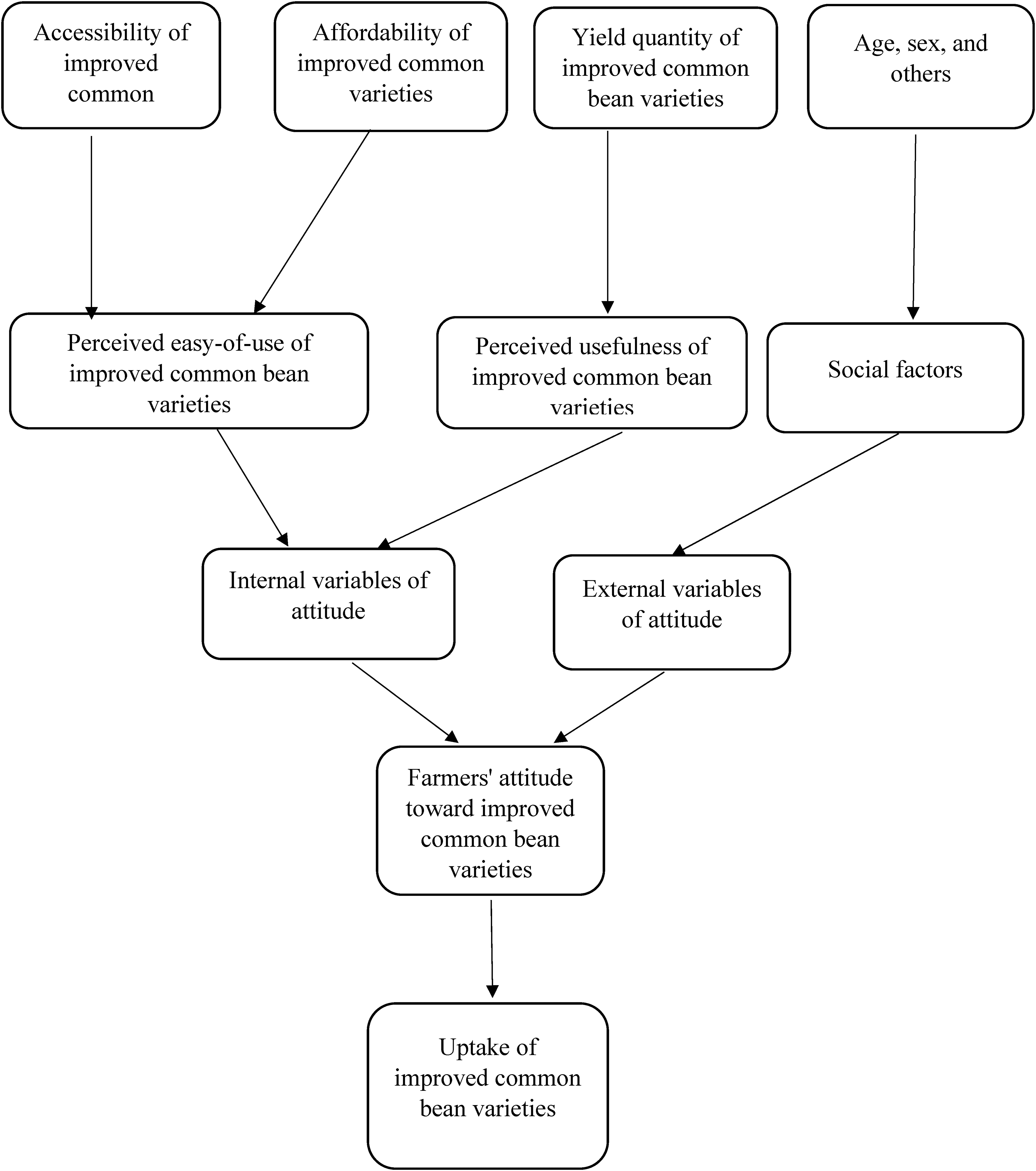
Concept behind technology acceptance model (McCormack et al., 2022).
The equation of uptake (acceptance) of improved common bean varieties can be written as follows: Z = Uptake (acceptance) of improved common bean varieties S = Knowledge of improved common bean varieties C = Attitude towards improved common bean varieties which comprises internal (u & v) and external (b) variables. In which “u” represents the perceived usefulness of improved common bean varieties and “v” represents the perceived easy-of-use of the improved common bean varieties. I = other factors that influence the uptake of common bean varieties.
Therefore,


Empirical framework
KAP survey analysis
As part of the descriptive analysis, the study adopted the KAP survey analysis procedure to assess the correlation among farmers’ knowledge, attitude, and practice of improved common bean varieties.
Knowledge
Knowledge was defined as farmer households knowing at least one improved common bean variety among the five varieties the study is focusing on. The variable of knowledge had binary outcomes of “yes” and “no,” where “yes” represents farmer households that were at least aware of one improved variety among the five improved varieties on which the study is focusing. Whereas “no” represents those farmer households that were not aware of any improved common bean varieties (Chuang et al., 2020).

Attitude
According to the study, farmers’ attitudes towards improved common bean varieties were assessed using three variables, where farmers were asked to rate each variable on a scale that had six options (McCormack et al., 2022).
Uptake
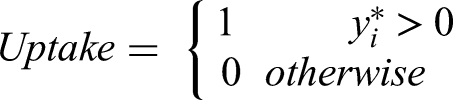
Since the introduction of the improved common bean varieties, certain farmers have been able to cultivate some of the improved common bean varieties in previous seasons. However, due to various factors, some farmers had never cultivated the improved common bean varieties. Therefore, the variable of uptake had binary outcomes of “yes” for those farmers that have at least cultivated one improved variety and “no” for those farmers that have never cultivated the improved common bean varieties (Bwambale, 2015).
Probit model for assessing uptake
To assess the effect of knowledge and attitude on the uptake of improved common bean varieties in MSP and non-MSP areas, the study used a probit model. The dependent variable was the uptake of improved common bean varieties among smallholder farmer households. The research adopted the probit model due to the binary outcomes of the dependent variable. The following is the equation of the probit model.

Results
Descriptive analysis for uptake
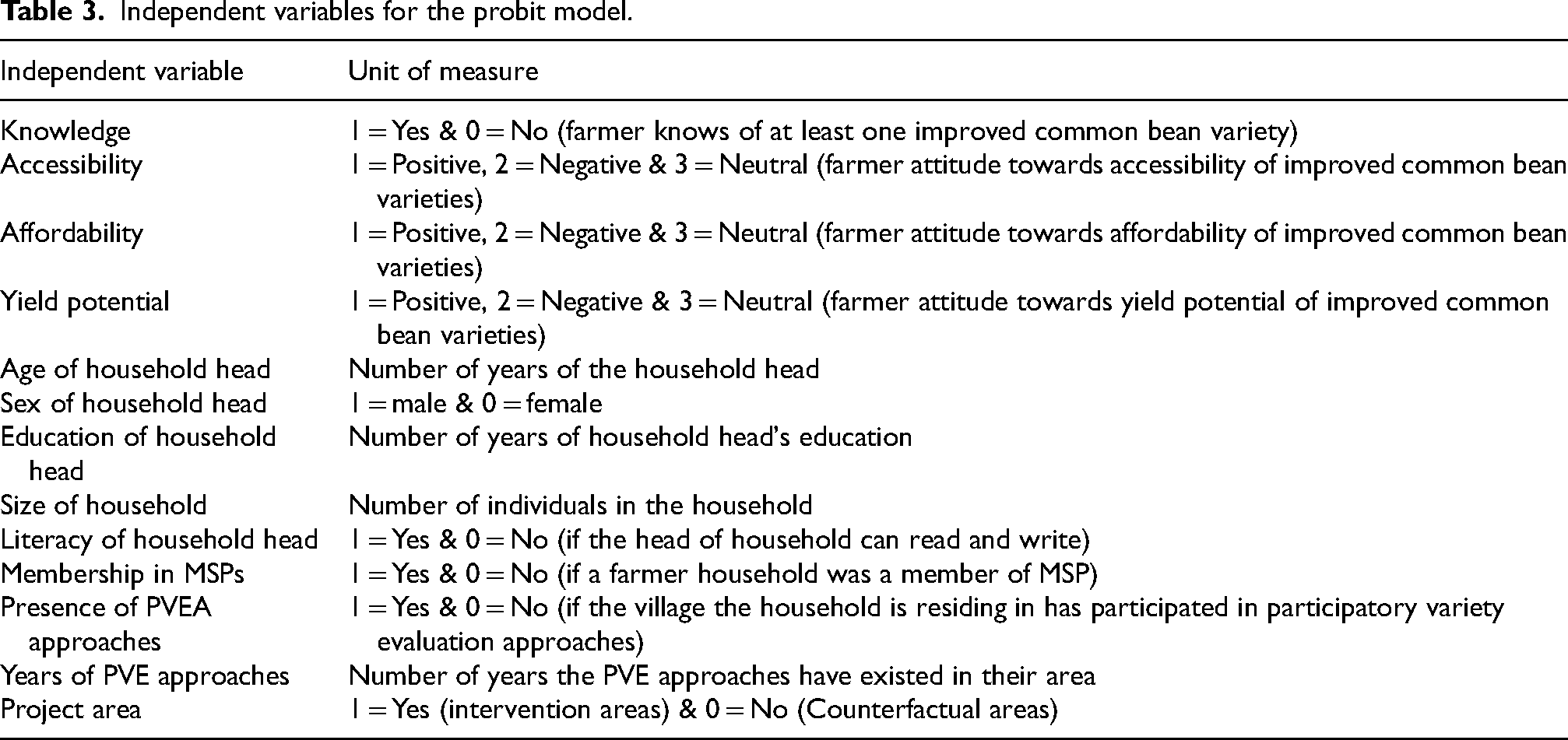
The table shows the percentage of farmers’ knowledge of improved common bean varieties. Out of the five varieties listed, only three were known by more than half of the farmers. The highest known variety was NUA45 at 64%, followed by G11982 at 28%. The remaining varieties had very low levels of awareness, with CAL96 being the least known at only 0.1% (Tables 1 to 6).
Sample distribution.
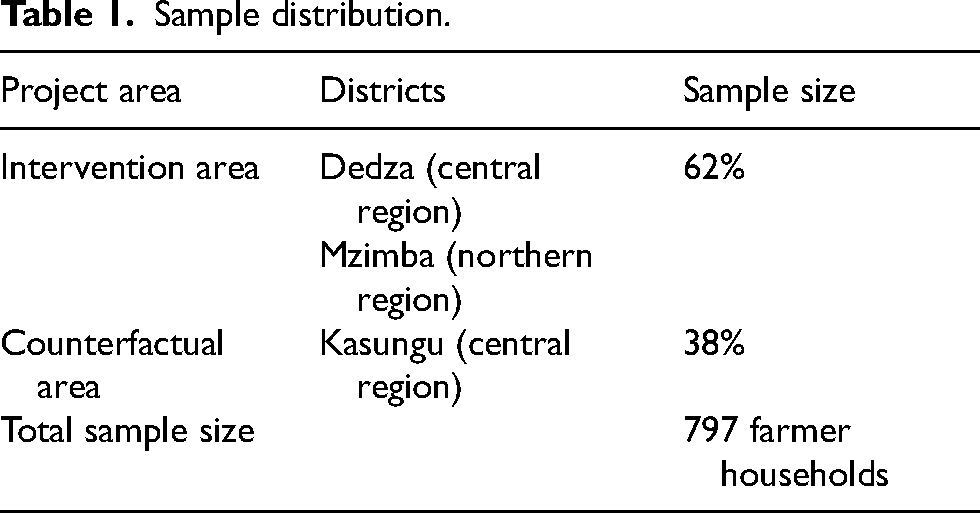
Farmers’ attitude towards improved common bean varieties.
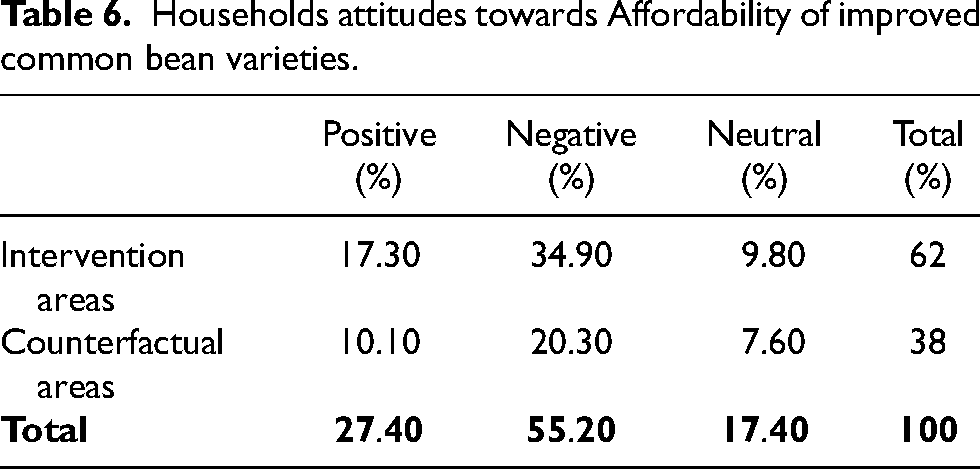
Independent variables for the probit model.
Knowledge of improved common bean varieties.
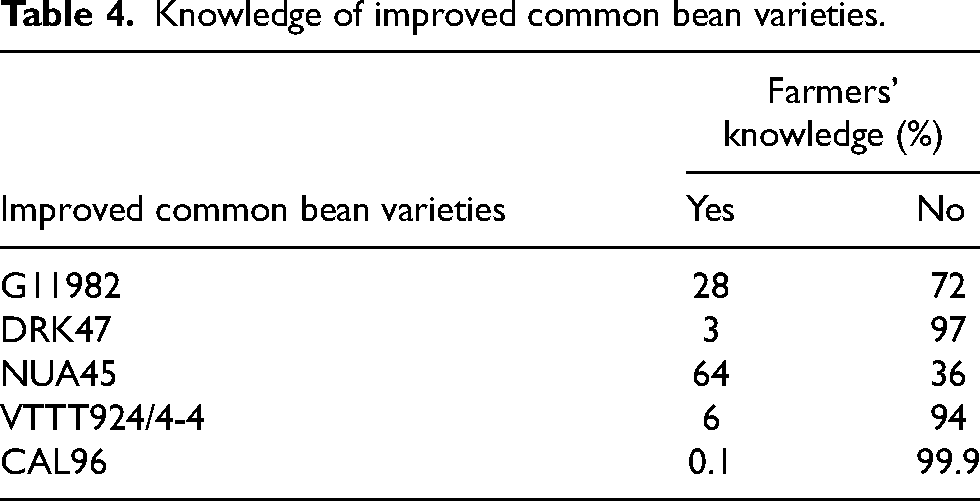
Attitude of the households toward improved common bean varieties.
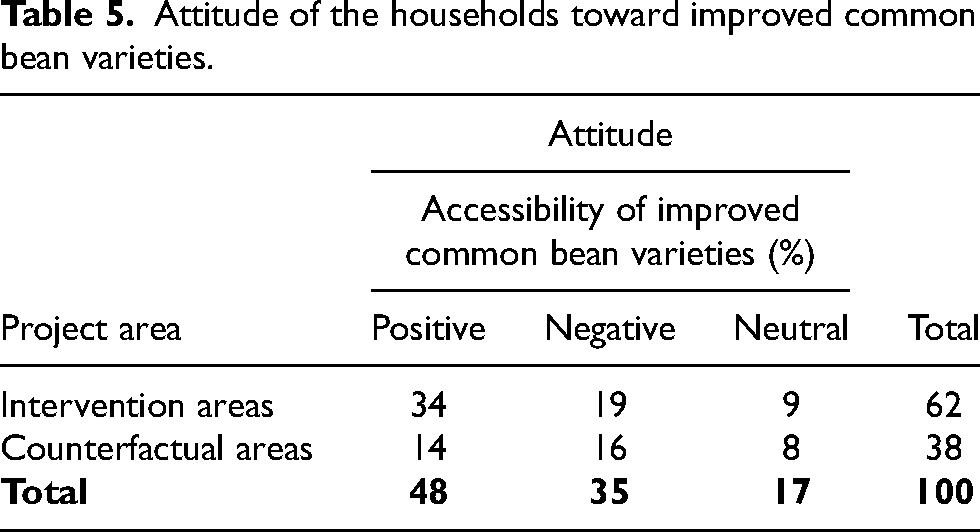
Households attitudes towards Affordability of improved common bean varieties.
KAP survey analysis
Among the households in intervention areas, 34% have a positive attitude toward the accessibility of improved common bean varieties, while 19% have a negative attitude and 9% are neutral. In contrast, households in counterfactual areas have a lower positive attitude (14%) and a higher negative attitude (16%). The total results show that 48% of households have a positive attitude toward the accessibility of improved common bean varieties, while 35% have a negative attitude and 17% are neutral.
Affordability of improved common bean varieties
The results indicate that 17.3% of households in the intervention areas had a positive attitude towards the affordability of improved common bean varieties, while 34.9% had a negative attitude and 9.8% had a neutral attitude. In contrast, only 10.1% of households in the counterfactual areas had a positive attitude, while 20.3% had a negative attitude and 7.6% had a neutral attitude. Overall, the study found that 27.4% of households had a positive attitude toward the affordability of improved common bean varieties, while 55.2% had a negative attitude and 17.4% had a neutral attitude.
Yield potential of improved common bean varieties
Table 7 presents the yield potential of improved common bean varieties in intervention and counterfactual areas. Out of the total respondents, 83% of farmers from both intervention and counterfactual areas had a positive view of the yield potential of improved common bean varieties, while only 5% had a negative view.
Potential yield of improved common bean varieties.
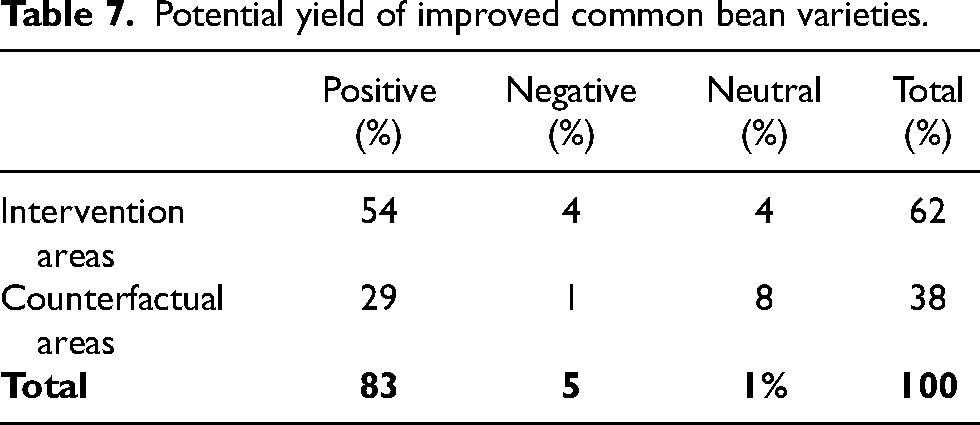
Table 8 shows the correlation between the KAP (knowledge, attitude, practice) survey variables and the project area. The results indicate a significant association between project area and knowledge, attitude (accessibility and yield potential), and practice (uptake) with p-values less than 0.05. However, there is no significant correlation between affordability and project area, with a p-value greater than 0.05.
Correlation between KAP survey variables and project area.
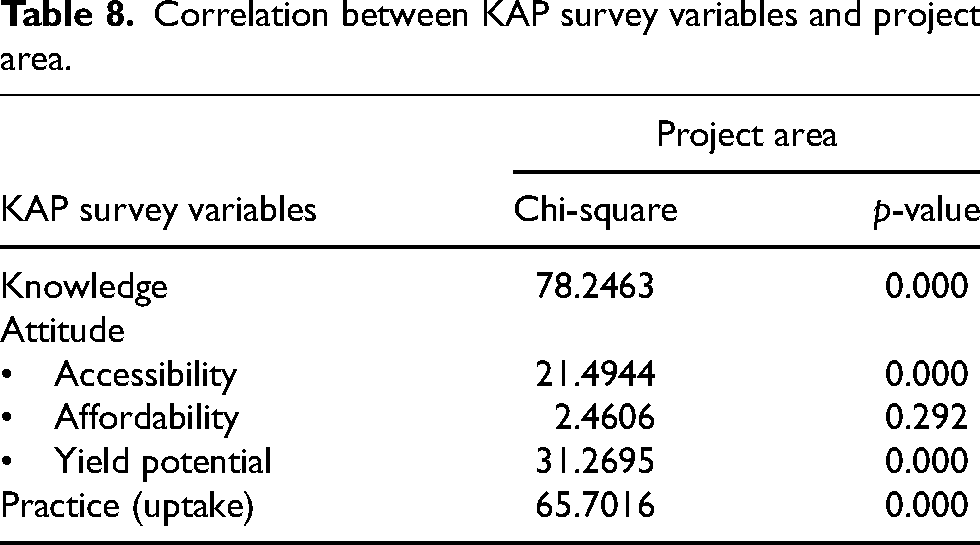
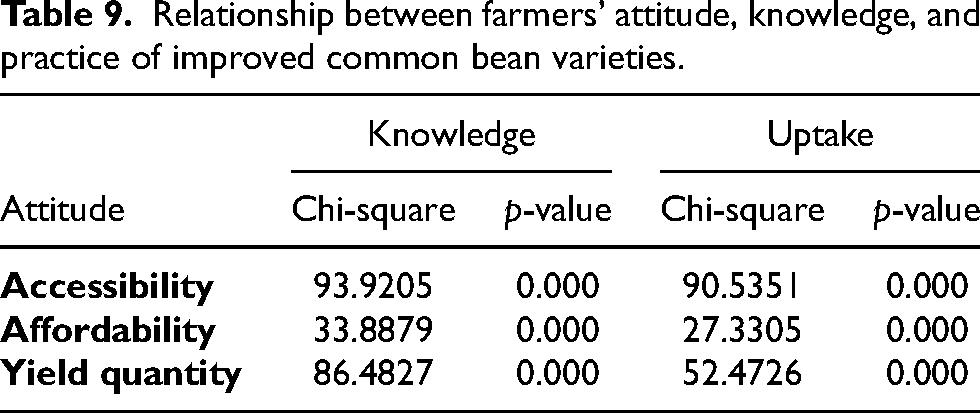
Table 9 shows the results of the relationship between farmers’ attitudes towards improved common bean varieties and their knowledge and uptake of the same. The chi-square test and p-values indicate a significant relationship between farmers’ attitude and their knowledge and uptake of improved common bean varieties. Specifically, accessibility and yield potential had the strongest correlation with knowledge and uptake, followed by affordability.
Relationship between farmers’ attitude, knowledge, and practice of improved common bean varieties.
Probit model for assessing uptake
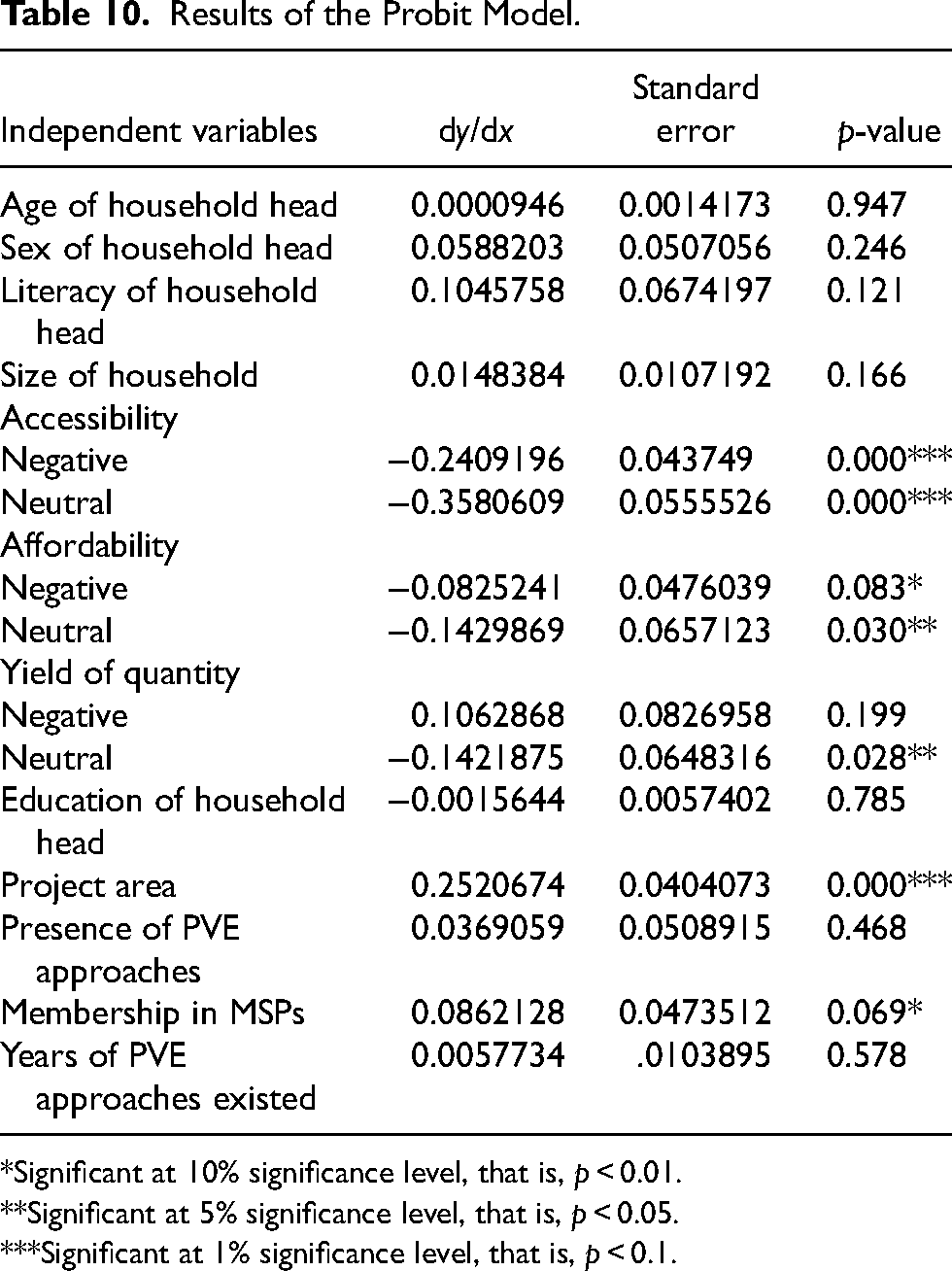
Table 10 presents the results of a probit model used to assess the uptake of improved common bean varieties based on various independent variables. The model indicates that the accessibility of improved common bean varieties in negative and neutral attitudes, affordability in neutral attitudes, project area, and membership in MSPs are significant predictors of the uptake of improved common bean varieties at a 1% level of significance. Age, sex, literacy, size of the household, yield quantity in neutral attitudes, education of the household head, presence of PVE approaches, and years PVE approaches existed were not significant predictors of the uptake of improved common bean varieties.
Results of the Probit Model.
Significant at 10% significance level, that is, p < 0.01.
Significant at 5% significance level, that is, p < 0.05.
Significant at 1% significance level, that is, p < 0.1.
Discussions
KAP survey analysis
Knowledge on improved common bean varieties
The study allowed households to identify improved common bean varieties of which they were aware. The results revealed that a large percentage of the households were aware of the NUA45 variety, with 68%, followed by 28% of the G11982 variety. In summary, the results show that 73% of the households at least knew of one improved common bean variety; the study has further found out the extent of household awareness. The results also show that among those households that knew improved common bean varieties, overall, the majority were those households that knew only one variety of improved common beans.
Attitude towards improved common bean varieties
To assess attitudes towards the improved common bean varieties, households of common bean farmers were asked a few questions on accessibility, affordability, and yield quantity (McCormack et al., 2022). The results show that the majority of the households had a positive attitude towards the accessibility and yield quantity of improved common bean varieties. Whereas, concerning the affordability of the improved common bean variety, a large percentage of the households had a negative attitude.
Uptake of improved common bean varieties
The results revealed that 65% of the households had once cultivated at least one variety of the improved common bean.
How farmers’ attitudes related with knowledge and practice of improved common bean varieties
In theory, farmers’ knowledge of agricultural technologies influences their attitudes, which in turn influences their actions, such as whether they accept the technology or not (Hasan et al., 2019). The results of the study related to the theory behind the relationship between farmers’ knowledge, attitude, and uptake. The correlation of three variables defining farmers’ attitudes towards improved common bean varieties, that is, accessibility, affordability, and yield quantity, were found statistically significant to farmers’ knowledge and practice of improved common bean varieties at a 1% significance level. The study further did correlation of the KAP survey variables, and all key variables were also significant at a 1% significance level, except for farmers’ attitudes towards the affordability of improved common bean varieties.
Probit model interpretations
Access to agricultural inputs varies from one farmer's household to the next because of some factors. In some scenarios, farmers’ access to agricultural inputs such as seeds is determined by their proximity to agricultural input markets (Ng'ambi and Maliro, 2004). According to the study, 54% of households with a nearby market where agricultural inputs are sold had a positive attitude toward access to improved common bean varieties, while 31% and 15% had a negative and neutral attitude toward access to improved varieties, respectively. Based on the findings of the study, both farmers’ households with a negative or neutral attitude toward the accessibility of the improved common bean varieties have a lower probability to uptake of the improved common bean varieties by 24% and 36%, respectively, compared to those that have a positive attitude towards the accessibility of the improved common bean varieties. This highlights the importance of improving the availability of new varieties to farmers through improved seed systems, including distribution networks.
The study found that only 27% of the farmers had a positive attitude toward the affordability of improved common bean varieties. Whereas 55% of the households had a negative attitude and 17% of the households were neutral toward the affordability of improved common bean varieties. However, households with a negative or neutral attitude had a lower probability of uptaking improved common bean varieties by 8% and 14%, respectively, than farmers with a positive attitude. Meanwhile, in terms of yield potential, the study found 82% of the households had a positive attitude toward the yield potential of improved common bean varieties. Households with a neutral attitude toward the yield potential of the new varieties have a 15% lower probability of uptaking improved common bean varieties than those farmer households with a positive attitude toward yield potential.
The study collected data from farmer households in intervention and counterfactual areas of the MSP project. The results revealed that farmer households in intervention sites had a 25% higher probability of uptaking the improved common bean varieties as compared to those in counterfactual areas. Farmers in intervention sites had the added advantage of being exposed to the improved common bean variety through PVE approaches implemented in those areas. Farmers’ willingness to accept and try new technologies is mostly influenced by technology exposure by implementers (McCormack et al., 2022). The study further found that farmer households that were members of MSPs had a 9% higher probability of uptake of improved common bean varieties as compared to farmer households that were not members of any MSP.
Conclusion and recommendations
The descriptive analysis and probit model were used in the study to assess the effect of MSPs, farmers’ knowledge, and attitudes on the uptake of improved common bean varieties. The KAP survey was carried out to ascertain the correlation between farmers’ knowledge, attitude, and adoption of improved common bean varieties. The chi-square test revealed a correlation between the three variables, which was significant at the 1% significance level. The study also discovered that having a farmer's household in an intervention site and being a member of MSP increases the uptake of improved common bean varieties. Aside from other factors, farmers’ attitudes have been shown to influence the adoption of improved common bean varieties.
Therefore, the study recommends MSPs as one way to promote the uptake of improved common bean varieties. The study further recommends policies that encourage and ensure the accessibility and affordability of improved common bean varieties in local areas, making it easier for smallholder farmers to access them when needed.
Footnotes
Declaration of conflicting interests
The authors declared no potential conflicts of interest with respect to the research, authorship, and/or publication of this article.
Funding
The authors disclosed receipt of the following financial support for the research, authorship, and/or publication of this article: This work was supported by the Feed the Future Innovation Lab for Legumes Research.
