




Abstract
Agricultural development aiming to empower and engage women has become a staple of most agrarian development programs. These gender-focused development programs are commonly referred to as gender-targeted development. Lao People's Democratic Republic is one country experiencing an increased focus on gender-targeted agricultural development. However, a limited understanding of cultural and gender-specific factors influencing the engagement of Laotian women continues to impact the successful implementation of these programs. This study examines the advantages of gender-segregated training through pre- and post-training knowledge, attitude and practice surveys. While no definitive conclusion was reached regarding the effects of gender-segregated or gender-mixed training, the study highlighted key factors that influence women's engagement, including domestic responsibilities and gender inequity in agricultural extension. The study revealed that domestic responsibilities significantly impact the engagement of women, with a majority (51.5%) of women participants with children bringing them to the training sessions. In contrast, only 12.1% of men with children brought them to their session, and they did so only to gender-mixed sessions where they could rely on their wives for childcare assistance. Men in the study experienced significant knowledge changes in gender-mixed training, whereas women exhibited no significant difference in knowledge acquisition between gender-segregated and gender-mixed sessions. Significantly, the investigation uncovered that gender gaps in education in Laos have reduced women's readiness for training, evidenced by the significantly lower starting scores of women. The findings of this study demonstrate the importance of future research in Laos and the application of participatory research approaches. A deeper understanding of the factors influencing the engagement of women in development programming will ultimately enhance the long-term success of gender-targeted development programs in Northern Laos and the Mekong Subregion, thereby contributing to improved gender equity and women's empowerment.
Introduction
The global underrepresentation of women in agricultural development and extension programming has become a pressing concern for the success of international development (Cook et al., 2021; Ragasa, 2014; Tijani and Yano, 2007). The lack of representation of women in agricultural development programs can be attributed to numerous factors. These include the tendency to overlook the significance of women in farm management, contextual gender inequity in education that restricts women's opportunities and the time poverty of women which limits their ability to attend development programs (Akter et al., 2017; Cook et al., 2021; Khan et al., 2021; Lyon et al., 2017). Specifically, women face substantial barriers, such as limited land ownership, insufficient control over household or farm capital, lower rates of literacy, restricted access to essential resources, minimal decision-making authority and inadequate access to training, development resources and veterinary or agrarian services (Akter et al., 2017; Glazebrook et al., 2020; Kaaria et al., 2016). Additionally, studies examining the daily responsibilities of women indicate that they face a disproportionate burden of time poverty due to their increased domestic, farm and childcare responsibilities (Akter et al., 2017; Kaaria et al., 2016; Khed and Krishna, 2023). Consequently, a review of existing development programs is required to address the current gender imbalance in agricultural development and extension programming.
Lao People's Democratic Republic (hereby Lao or Laos), an agriculturally dependent country in Southeast Asia, is a recipient of international foreign aid. Given the importance of the agricultural sector in the Lao economy and the wellbeing of smallholder farming families, numerous national and international development programs prioritise the importance of improving rural and agricultural productivity in Laos (Nanhthavong et al., 2020). Recognising the significance of the agricultural sector, these programs aim to bolster the success of agricultural productivity, food security and farm-based incomes in Laos (Nanhthavong et al., 2020).
In addition to agricultural development, gender inequality is a significant issue in Laos, with the country ranking 108th out of 128 analysed countries on the Women's Economic Opportunity Index (United Nations Development Programme, 2021). Within the agricultural sector specifically, women in Laos face even greater inequity, as highlighted in the Gender Equality Strategy Report for 2022–2026, which identifies the gender wage gap as particularly prominent in handicraft and agricultural labour (United Nations Development Programme, 2021). Limited research on gender-targeted development programming in Laos has led to significant knowledge gaps regarding the current successes and limitations of these programs. However, some known limitations include women's time poverty, undervaluation of non-cash household tasks and limited access to resources (Akter et al., 2017; Douangphachanh et al., 2021). This investigation uses knowledge, attitude and practice (KAP) surveys and pre-training surveys to identify factors that may influence the attendance and success of women in agricultural extension programs in Northern Laos. Understanding the factors that facilitate and limit women’s participation in agricultural development and extension is crucial for designing and delivering successful gender-targeted agricultural development programs in Laos and the region.
The evolution of gender and development in agricultural development
Agricultural development has been a central aspect of global development agendas for centuries (Barrett et al., 2010). The significance of subsistence farming to the livelihoods of many low- and middle-income countries has promoted the need to explore agriculture as a tool for development (Barrett et al., 2010; Irz et al., 2001; Legg, 2017). In more recent years, gender-targeted development has become a key focus in agricultural development, with many programs emphasising gender equality and women's empowerment. While it has not been formalised in development discourse, the term gender-targeted development is often used to describe programs aiming for gender inclusion and women’s empowerment.
The increasing emphasis on women's empowerment stems from the growing awareness of the disproportionate impact of poverty on women (Bradshaw et al., 2017; Chant, 2006; Chant and Sweetman, 2012). Historically, gender-targeted development programs focused solely on ‘gendered’ issues including maternal health, reproductive health or women's safety. This aligned with the first ‘wave’ of the gender and development movement, ‘Women in Development’ (WID), which viewed the primary goal of gender-targeted development programs as allocating funds and resources to enhance women's active participation in development efforts (Dale, 2020). Later criticisms of WID noted that instead of mainstreaming gender-targeted development, it was only encouraged in fields that were considered ‘gendered’ (Dale, 2020). The risk of not integrating gender considerations into all aspects of development, and not just those considered gendered, is that these programs may overlook or ignore gender inequity across all fields.
Eventually, WID evolved into the second wave of the movement, ‘Women and Development’ (WAD). WAD engaged with some of the earlier critique of WID by suggesting that the disproportionate impacts of poverty on women was not a result of limited inclusion in development programming, but rather limited recognition or understanding of the role of women in development (Anyidoho, 2021). While this was a significant shift, WAD still failed to understand the intersectionality of gendered experiences and often prioritised Western feminist values (Bruno, 2006). This failure was significant to programming in rural communities as programs often failed to acknowledge the roles of women in agriculture. Instead, these programs often applied Western-centric feminist theories that promoted women's labour, usually to women who were already working albeit usually in unpaid agricultural tasks (Anyidoho, 2021).
Finally, WAD progressed into ‘Gender and Development’ (GAD), the final ‘wave’ in the movement (Bruno, 2006). The value of GAD is that it promoted programs that recognised the socio-cultural significance of women's roles within their community (Anyidoho, 2021, Bruno, 2006). The emergence of GAD was important as it encouraged development programs to view development as a tool to empower women within their community roles, ultimately leading to gender mainstreaming, which is now central to many gender-targeted agricultural programs (Ricker, 2022).
Gender-targeted development programming is vital, as the field of agriculture commonly reinforces gender inequality (Moglia et al., 2020). Significantly women's labour is undervalued despite women often being responsible for many non-cash household and farm tasks that are crucial to family survival and food security (Douangphachanh et al., 2021; Moglia et al., 2020). Therefore, the increasing emphasis on gender-targeted development in agricultural programming aims to recognise women's roles in smallholder farming households and empower them within those roles.
Materials and methods
This study involved two surveys performed in February 2020, by a team from The University of Sydney (USYD) in cooperation with the Department of Livestock and Fisheries (DLF) in Laos.
Site selection
This investigation was conducted in two districts and four villages in Luang Prabang (LPB), a province in Northern Laos. Provincial, district and village selection for this investigation was based on advice from the DLF team and related to ease of access and a history of collaboration. Each of the selected villages had previously engaged in two USYD projects conducted in collaboration with the DLF and funded by the Australian Centre for International Agricultural Research (ACIAR) (Project Codes AH/2011/014 and AH/2012/067).
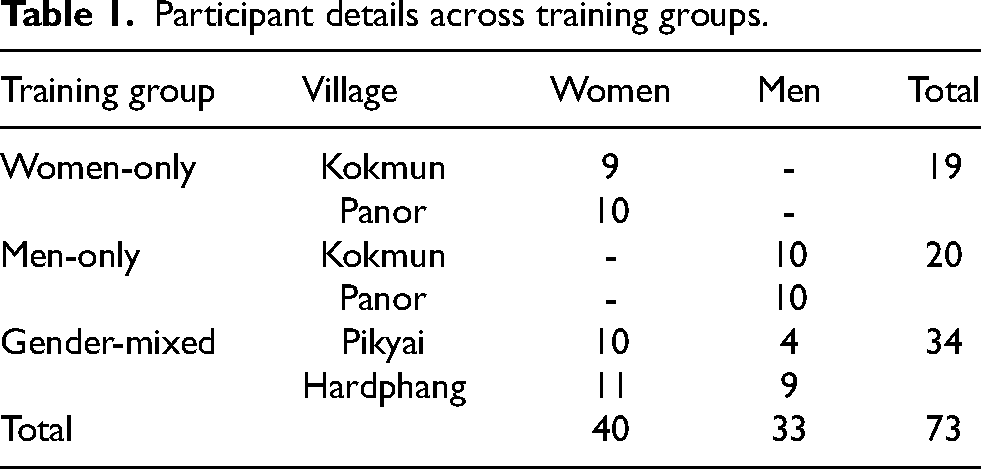
Participant selection aimed to broadly sample the population within each village. Selection criteria included participant availability, previous cooperation with local District and Provincial Agriculture and Forestry Officers (DAFO/PAFO) and ease of access. See Table 1 for participant details.
Participant details across training groups.
Sampling technique
The pre-training survey collected information about participants and their families, while the KAP survey examined participant knowledge of livestock nutrition, attitudes towards livestock nutrition and livestock feeding practices. The purpose of the KAP survey was to analyse trends in gender-targeted training techniques.
Pre-training survey
The pre-training survey collected information on the surveyed individual, their survey experience and the smallholder farm. It included questions about the participant's age, gender and the presence of others during the survey. Additionally, inquiries were made about smallholder farm responsibilities to determine which family members were responsible for household and farm tasks. The pre-training survey took approximatley15 minutes per participant and consisted of 21 questions.
Two Laotian DLF team members and the lead author conducted the survey. Survey questions were initially written in English and then translated into Lao for administration. Answers were recorded on a paper survey in Lao and transcribed into a spreadsheet for analysis. The raw data was initially collected in Lao and later translated to English.
Knowledge, attitude and practice surveys
Villages were categorised as either gender-segregated (women-only and men-only) or gender-mixed (men and women together) training groups (Table 1). Before training, the pre-training survey and the KAP surveys were administered to the entire training group. Subsequently, the same KAP survey was conducted after the training to assess whether the acquired knowledge from the training had influenced participant KAP responses. Gender-segregated sites had designated areas for women and men to complete the surveys and training, with different staff assigned to each group. In gender-mixed sites, participants of both genders interacted during surveys and training sessions.
The KAP survey used in this study was based on previous surveys conducted during ACIAR-funded projects by USYD and DLF (Matsumoto et al., 2017; Nampanya et al., 2010). The survey consisted of 30 questions divided into three sections, each containing 10 questions per section, five multiple-choice and five true and false questions. The sections covered ‘farmer knowledge’, assessing understanding of livestock nutrition; ‘farmer attitudes’, exploring perspectives on the importance of proper nutrition for livestock; and ‘farmer practices’, focusing on practical inquiries about implementing nutrition strategies for livestock.
The survey questions were initially written in English and then translated into Lao. The DLF staff conducted the surveys in Lao and recorded the responses in the same language. The lead author entered the survey responses into Excel. No back translation was needed as the survey questions were closed answer responses.
Data analysis
Pre-training survey
The analysis of the pre-training survey aimed to identify patterns in responses from men and women. Analysis involved two main phases: data entry and data analysis. Data entry included transferring the paper survey data into Excel, as well as cleaning and coding the data.
Quantitative pre-survey data was utilised for simple descriptive statistics such as mean and range of responses, as well as to calculate the frequency and percentage distribution of the responses. The primary focus of this investigation was to examine the trends observed in the KAP survey consequentlysimple statistical analysis was employed for the analysis of the pre-survey data.
Knowledge, attitude and practice surveys
The KAP data was analysed by coding the responses numerically. Two coding matrices were created to measure changes in farmer KAP before and after the training. The knowledge section used a scoring system to calculate participants’ scores based on correct answers before and after the training. In contrast, the attitude and practice sections were not categorised as ‘correct’ or ‘incorrect’. Instead, the coding aimed to determine whether the training had influenced the farmers’ responses. This approach differs from traditional KAP surveys that assign a value to responses in the attitude and practice sections, like the knowledge section (Matsumoto et al., 2017; Rahman et al., 2021). The deviation from traditional methods is rooted in decolonial feminist theory, which recognises that practitioners and researchers in international development should not determine the correctness or goodness of farmers’ chosen attitudes and practices (Lugones, 2016). Therefore, this investigation aimed to identify the impact of training programs on farmers’ choices in their responses rather than evaluating the correctness of their attitudes and practices.
In the knowledge section, correct responses were scored as ‘1’, while incorrect responses or non-responses were scored as ‘0’. This section helped analyse the improvement in farmer knowledge. In the attitude and practice sections, numerical codes were assigned to each possible answer. For multiple-choice options, the codes ranged from 1 to 6 (a to f). True or false answers were coded as 1 for true, 2 for false and 3 for ‘I don’t know’. Participant responses were compared before and after the training. If a farmer selected the same answer for each question, they were assigned a code of ‘0’. However, if they chose a different answer after the training, they were scored with a code of ‘1’.
Paired t-tests analysed differences in farmers’ KAP responses before and after training. Two-sample t-tests assessed training impact on KAP responses in gender-segregated and gender-mixed groups. These tests evaluated differences and the influence of the gender-targeted training programs.
Results
General information
A majority (51.5%) of women participants brought their children to the survey and training sessions. Conversely, 12.1% of surveyed men brought their children to the session. In all cases where children accompanied men, they attended the gender-mixed training session, where the mother of the children was also present to help supervise.
Farm management details
Men were identified as the primary decision-makers for farm purchases, including livestock feed and larger farm acquisitions. In both training groups, women identified men as the decision-maker, with 39% attributing sole responsibility to men and 29% considering it a shared responsibility between men and women. Conversely, 56% of men believed that these financial decisions were exclusively the responsibility of men. Regarding financial decisions related to the purchase and sale of livestock, the majority (59%) of women believed that these decisions were shared between men and women. In contrast, the majority (56%) of men believed that livestock purchase and sale were solely the responsibility of men.
Women spent an average of 3 hours daily on livestock husbandry. In comparison, men spent 4 hours daily on livestock husbandry. Additionally, women assigned an average of 6 hours daily to domestic tasks, such as cooking, cleaning and caring for children. In contrast, men reportedly spent 4 hours per day on domestic tasks, also spending this time cooking, cleaning and caring for children.
Knowledge
Both men and women demonstrated improved knowledge scores following training. Figures 1 and 2 1 illustrate the pre- and post-training knowledge score changes of women in the gender-mixed and gender-segregated training groups, while Figures 3 and 4 2 present these changes for men.
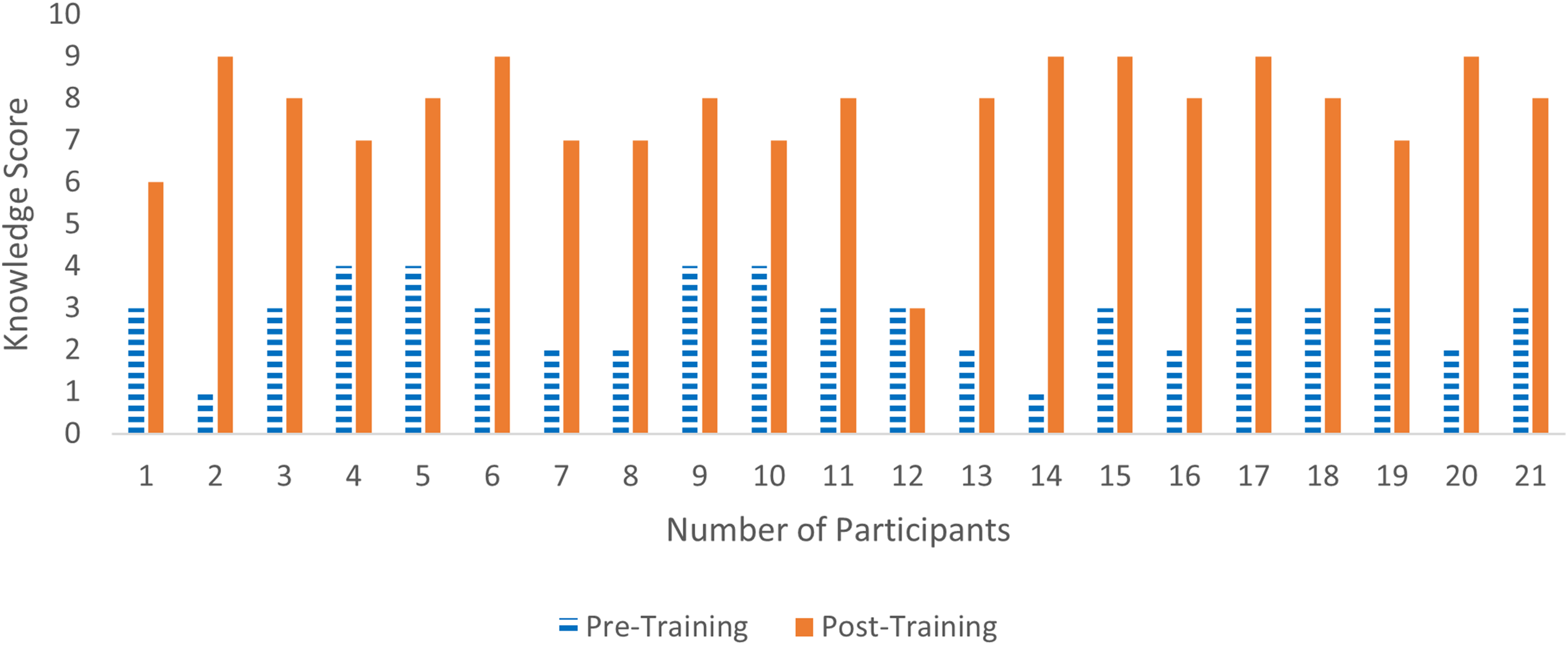
Pre- and post-training knowledge scores of women from the gender-segregated training group.
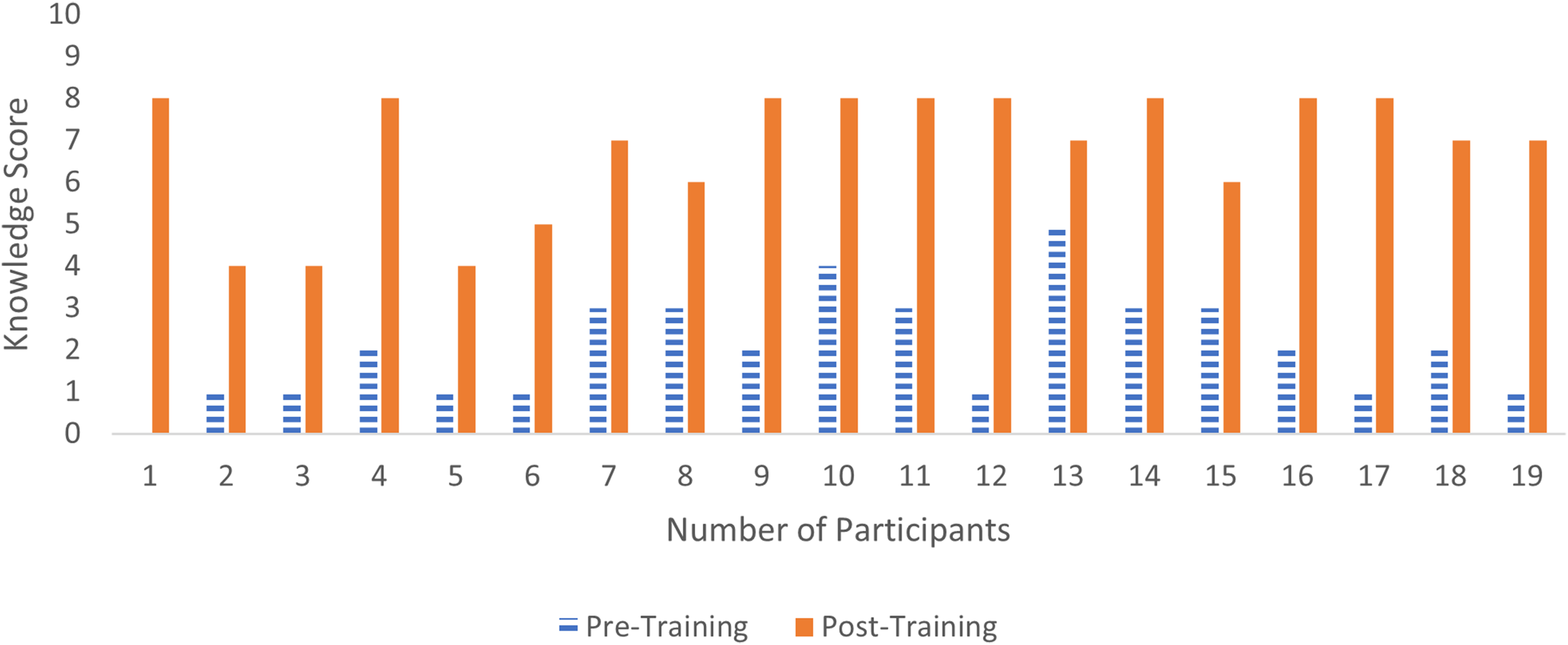
Pre- and post-training knowledge scores of women from the gender-mixed training group.
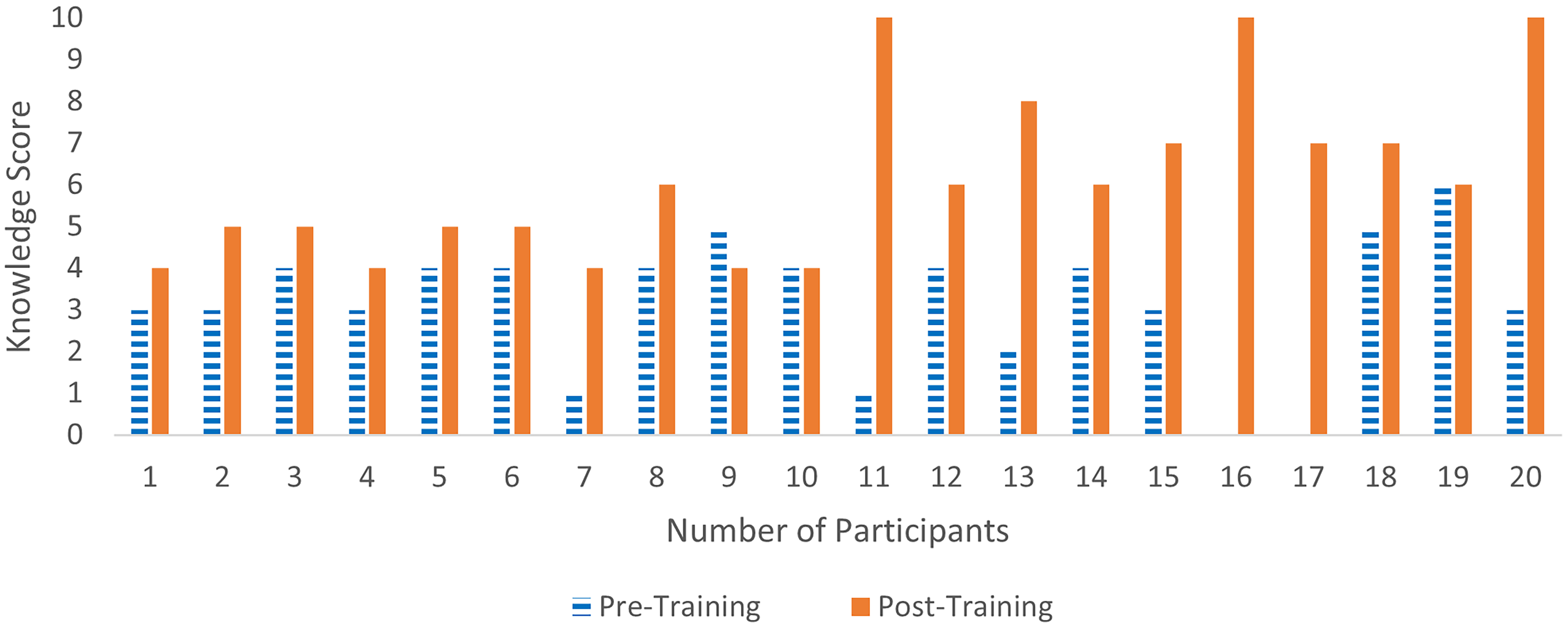
Pre- and post-training knowledge scores of men from the gender-segregated training group.
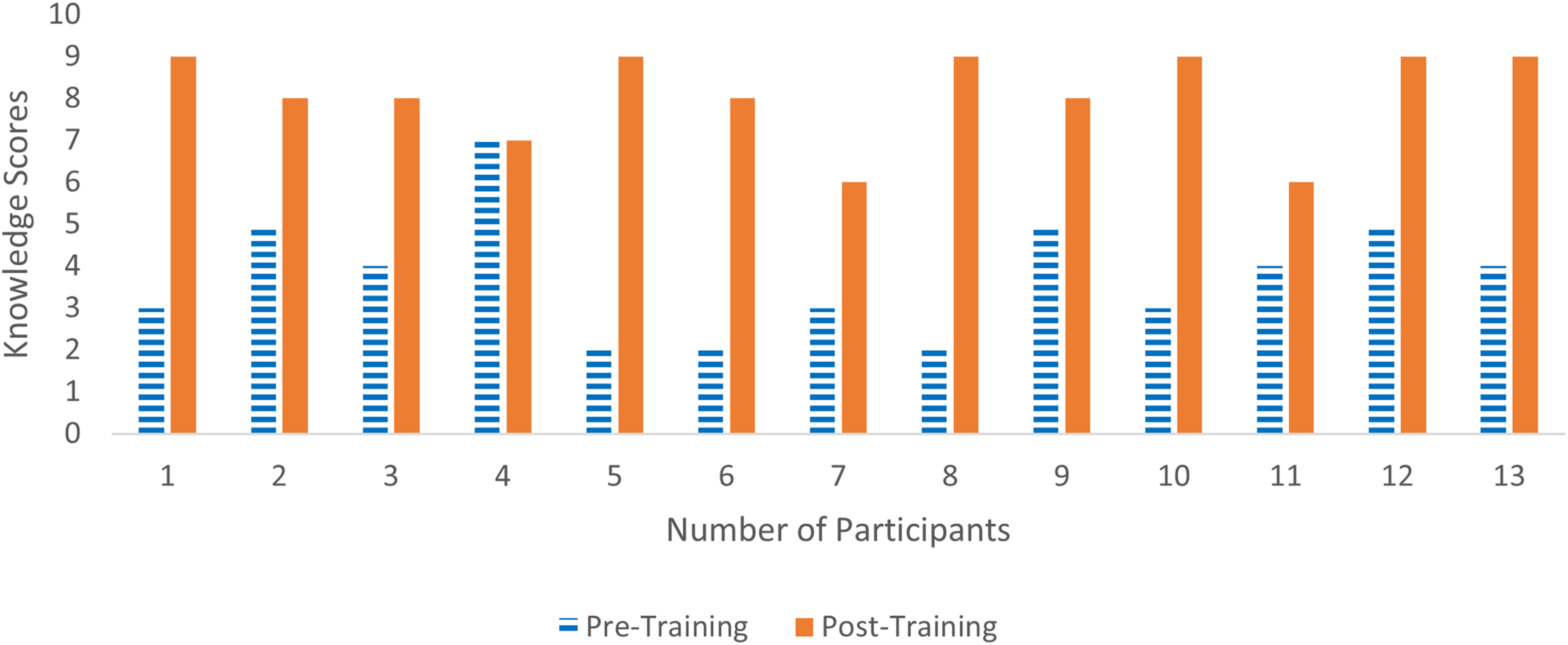
Pre- and post-training knowledge scores of men from the gender-mixed training group.
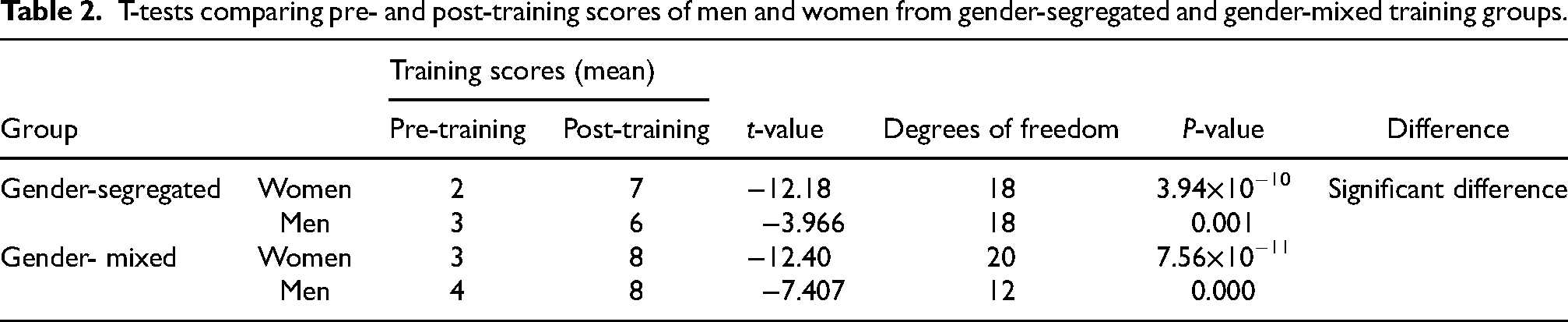
Three t-tests were conducted to assess significant differences each was repeated to examine responses for men and women. The first t-test examined the pre- and post-training responses of participants in the gender-segregated sessions (see Table 2), the second analysed the pre- and post-training responses of participants in the gender-mixed training group (see Table 2) and the third focused on the difference between the post-training knowledge scores of participants in the gender-segregated and gender-mixed groups. The t-test results for men and women in the gender-segregated and gender-mixed groups showed a significant difference in knowledge acquisition scores post-training. However, the t-test comparing the mean post-training scores of women in the women-only and gender-mixed groups found no significant difference (t = −2.02, df = 38, p = 0.05) between their knowledge scores, while the t-test comparing the final knowledge scores of men in the men-only training group and the gender-mixed training group indicated a significant difference between the two groups’ final scores (t = −3.672, df = 30, p = 0.001), indicating that men performed better in post-training knowledge scores if women were present during the training.
T-tests comparing pre- and post-training scores of men and women from gender-segregated and gender-mixed training groups.
Four t-tests were conducted to compare knowledge changes between men and women across the different training groups: (1) pre-training knowledge scores of women and men in gender-segregated groups, (2) post-training knowledge scores of women and men in gender-segregated groups, (3) pre-training knowledge scores of women and men in gender-mixed groups and (4) post-training knowledge scores of women and men in gender-mixed groups.
The t-tests comparing the average pre-training scores of women and men in gender-segregated training, as well as the average pre-training scores of women and men in the gender-mixed training, showed a significant difference (t = −2.292, df = 36, p = 0.027 and t = −2.488, df = 32, p = 0.018, respectively). However, the two post-training t-tests comparing the scores of women and men in gender-segregated trainings, as well as the post-training scores of women and men in the gender-mixed training, did not show a significant difference (t = 1.526, df = 36, p = 0.135 and t = −0.796, df = 32, p = 0.431, respectively).
Attitudes and practices
Women experienced an average attitude change of 5 after the training. The question addressing challenges in providing adequate nutrition to livestock resulted in the largest change, with 78% of women modifying their initial responses. Women achieved an average practice change score of 3. The question with the highest change focused on farmer willingness to pay for a feed supplementation lick block.
Men experienced an average attitude change of 3 after the training. The question addressing the challenges farmers face in accessing feed supplementation resulted in the most significant shift, with 67% of men changing their responses. In terms of practice change, men achieved an average change score of 2.
Notably, 38% of men changed their answer to say they would consult their wife after the farmer training, demonstrating an improvement in recognising the decision-making power of women on farm. Among men who made this change, 60% were from the gender-mixed training program.
Discussion
Extensive research is needed to understand the household and farm responsibilities of women in Laos (Akter et al., 2017; Millar, 2009; Sharma et al., 2021). Country- and context-specific research on gender relations in Laos is crucial, given the country's unique characteristics, including ethnic diversity and the influence of communism and religion (Faming, 2018; Rehbein, 2017; Rehbein, 2022). Despite this need, there is currently limited literature on the roles and responsibilities of Laotian women, due to the overall scarcity of published academic research on culture and practice in Laos (Rehbein, 2017). Gaps in knowledge about the roles and experiences of Laotian women negatively affect the design of development programs and their effectiveness in achieving successful gender-targeted adaptation (Akter et al., 2017; Irani and Vemireddy, 2021). The findings of this research are essential for enhancing our country-specific knowledge to advance gender-targeted development in Laos.
This investigation examines factors that may impact women's engagement with agricultural development programs and training resources. This study identified three core factors impacting the successful engagement of Laotian women with agricultural development programming: (1) women's domestic responsibilities, (2) the influence of gender-mixed training and the (3) cultural exclusion of women from traditional education. The significance of each of these points is detailed below as well as recommendations for change based on these findings.
The influence of female domestic responsibilities
This investigation revealed that the surveyed women take on greater domestic responsibilities compared to their male counterparts. While this finding aligns with studies across the region, this result highlights the specific activities for which women in Northern Laos are responsible (Akter et al., 2017; Irani and Vemireddy, 2021; Lyon et al., 2017). Notably, the pre-training survey found that women are primarily responsible for childcare, spending an average of two additional hours on childcare responsibilities compared to men. As well as the additional hours spent, the survey also found that women were more likely to bring their children to training sessions compared to their husbands. The lead author noticed instances during the training session where women had to leave early or were unable to fully concentrate due to attending to the needs of their children. This included breast-feeding younger children or managing the restlessness of older children. The survey data also indicated that women's engagement can be affected not only by their own children but also by the presence of other women's children at the same session. In the pre-training survey, even women without children of their own reported being part of survey groups consisting of women and children. The communal dynamics of Lao society mean women tend to sit together and interact as a larger group, therefore if one woman is distracted by her children, the same child mayalso interfere with the training of other women. Globally, studies on women's time poverty has revealed that women's responsibility for childcare significantly impacts their allocation of time for other tasks (Irani and Vemireddy, 2021; Martey et al., 2022). Further, the burden of childcare often leads to women neglecting activities that could benefit their own development (Irani and Vemireddy, 2021).
The findings of this study are important as it indicates that children are likely to be present during gender-targeted extension activities in Laos, thus highlighting the need for future development initiatives to consider the responsibilities of women and the potential engagement of their children in extension sessions. Research about the successful engagement of young mothers in health programs has found that co-designing program sessions with the target women was a tool to ensure the session was tailored to the needs of the mothers and their children (Makama et al., 2024). Research conducted in India on female time poverty emphasised the importance of investing in childcare within development programs to ensure women's availability for training sessions and to alleviate the burden of balancing childcare responsibilities with program attendance (Irani and Vemireddy, 2021). Lao community dynamics and the findings of this investigation strongly suggest that the situation in Laos is similar, though it has not previously been documented in the same detail as other regions. Observational anecdotes and survey responses from this investigation alongside the first authors’ long-standing work experience in Laos have demonstrated that in rural areas, there is a lack of adequate childcare options available to the Lao community. Consequently, these research findings underscore the urgent need for development programs to facilitate childcare to better allow women to attend extension and training sessions. The findings of this study highlight the multitasking challenges faced by Laotian women who juggle childcare responsibilities alongside their engagement in agricultural development.
The influence of gender-mixed training
This investigation found a significant increase in the knowledge scores of men and women participating in gender-segregated and gender-mixed training groups. The pre- and post-training scores showed significant improvements for all participants, demonstrating the effectiveness of the training in enhancing knowledge on livestock nutrition. To the best of the authors’ knowledge, these findings are the first of their kind to examine the impacts of gender-segregated and gender-mixed training and extension in Laos. This is particularly significant given the limited research on gender inclusion in the Laotian education system (Berge et al., 2017). While there is a long history of research into the impacts of co-ed and single-sex educational institutions globally, this research has not been conducted in Laos (Trowler, 2010).
Notably, this study found a significant difference in the final knowledge scores of men in the gender-segregated and gender-mixed training groups, with the latter achieving higher scores. This is a substantial finding as it suggests that Laotian men performed better in training environments where women were present. Despite the extensive literature about gender-mixed education globally, there is no definitive conclusion regarding the impact of single-sex and gender-mixed education (Pahlke et al., 2014; Singh et al., 1998). While more research is needed to determine if women help men to perform better in training and extension, this study provides an initial analysis of the impact of gender-mixed training in Northern Laos. This investigation serves as a valuable starting point, but further research with increased sample size and comprehensive methodologies is needed.
In addition to improving knowledge acquisition, this study observed that gender-mixed training changed men's attitudes towards the engagement of women. Among the men who changed their response to support consulting women in farm decision-making, 60% attended the gender-mixed sessions. This finding indicates that by attending sessions with women, men are more likely to recognise the roles and responsibilities of women. Historically, co-education in public schools was utilised in an attempt to challenge gendered stereotypes and inequality (Morales and Bonada, 2024).
In recent years, the inclusion of men in women's empowerment programming has been recommended due to the increased awareness it provides men about the experiences of women (Mukherjee and Kumar, 2024; Wheaton, 2019). These calls suggest that when men gain new insights into the experiences of women they are more likley to activley address gender inequality (Mukherjee and Kumar, 2024). Despite these calls, there is limited research on the successful engagement of men in gender-targeted development in Laos. The findings of this study suggest that providing gender-mixed training in Laos may enhance men's successful engagement in gender-targeted development so that they can help address gender inequity, no longer treating it as a ‘women's-only’ issue.
The influence of cultural exclusion of women from traditional training
The findings of this investigation, in conjunction with previous studies, highlight the persistent gender inequity in education and training in Laos. The gender comparative t-tests revealed that women in both training groups had significantly lower pre-training knowledge scores compared to men. This discovery is consistent with findings from previous KAP studies in Laos across various topics such as agriculture, health and reproductive health (Matsumoto et al., 2017; Phongluxa et al., 2020; Rahman et al., 2021).
The significant difference in starting scores between women and men in this investigation underscores the lack of knowledge transfer within the community. The fact that men had significantly higher starting scores suggests that men had more knowledge about livestock nutrition and that they had not shared with women in their community. This finding aligns with research on women's education, which emphasises the importance of educating girls and women as they are more likely to share their knowledge with others and contribute to community development (Bang et al., 2018; Lloyd and Young, 2009). Previous studies have suggested that a benefit of engaging women is the fact that once women understand the need for change, they are more likely to facilitate its implementation (Bang et al., 2018). Known as the ‘girl effect’, research shows that investing in girls’ education has positive impacts on health outcomes, poverty reduction, community awareness and gender equality (Lloyd and Young, 2009). Specifically, this study found that men improved their post-training knowledge scores if women were present. This finding further supports the concept of the ‘girl effect’, demonstrating that Laotian women's participation in agricultural training results in women's knowledge improvement as well as that of men. This finding further advocates for the inclusion of women in development programming in Northern Laos and highlights the need for future research on successful gender-targeted development programming.
Importantly, the study also revealed that there was no significant difference in the post-training scores of men and women. This indicates that once women were actively engaged in the training, they were able to acquire knowledge at a similar pace as men. This finding highlights the significance of focusing on engaging women, as it suggests that once they are actively involved, they can effectively apply the training to enhance their understanding of key agricultural concepts, and that this can assist in successful community practice and knowledge change.
Recommendations for change
A key finding of this study is the need for co-designed research and practice. The lack of published research on the experiences of rural women in Northern Laos has been emphasised in this paper. Specifically, the patriarchal perceptions of agriculture have resulted in limited literature about the roles and responsibilities of Laotian women on smallholder farms. While this lack of knowledge has had a significant impact on the cultural sensitivity and success of development programming, it also presents an opportunity for future co-creation of data with target communities.
The benefit of participatory research when working with marginalised groups has long been recognised (Chakma et al., 2023; Jackson et al., 2023). The application of research methodologies that promote co-creation of knowledge are known for their success in accurately reflecting community experiences (Chakma et al., 2023). Further, community research shifts from traditional top-down research that can be colonial in nature. Given the long history of colonialism in Laos and the minimal research on Laotian women's experiences of development, the application of a participatory approach to research and practice is advised for future development programming.
Conclusion
The pre- and post-training data collected in this study revealed that both men and women need more training on livestock nutrition. Additionally, these results indicated that women have previously received insufficient training and have been poorly engaged in agricultural development programming, thus resulting in their significantly low pre-training scores. While this investigation does not provide a definitive answer regarding the impact of gender-mixed or gender-segregated training, it does highlight the disadvantages faced by women in traditional agricultural development training and outreach settings in Northern Laos. These disadvantages include the added responsibilities of childcare and domestic tasks, which can affect their ability to attend training sessions or fully engage while present. Further, this investigation noted the significance of limited access to education for women and their limited pre-knowledge prior to training. Furthermore, the study suggests that men benefit from the presence of women in training sessions. The findings of this study should be applied to future research projects on women's engagement in agricultural training to ensure that the sector has a better understanding about the factors that influence successful gender-targeted programs. This will ultimately help to promote gender equity in the Lao agricultural sector, improve women's and community knowledge and provide women more opportunities to engage with agricultural development programs.
Footnotes
Acknowledgements
This study received financial support from Four Seasons, via their Business Partnership Platform (BPP) Project ‘Enhancing Livelihoods of Smallholder Farmers in Laos’ funded by the Department of Foreign Affairs and Trade (DFAT). The authors would like to thank Chick Olsson and the Four Seasons team for their support of this project as well as the Mekong Livestock Research group. In addition, the authors would like to thank the project staff from the Laotian Department of Livestock and Fisheries (DLF), for their support with data collection with special thanks to Mr Bouakeo, Mr Khamphoud and Mr Kong. They would like to acknowledge the passing of Mr Khamphoud and recognise his invaluable contributions to his team, some of which are reflected in this paper. Finally, this study could not be conducted without the generous commitment of the farmers in Luang Prabang, and their cooperation is gratefully acknowledged.
Consent to participate
Informed consent was obtained from all participants in this investigation, including consent for the results of this investigation to be published.
Data availability
The datasets generated in this investigation are not publicly available due to reasons of participant privacy and confidentiality.
Declaration of conflicting interests
The authors declared no potential conflicts of interest with respect to the research, authorship, and/or publication of this article.
Ethics approval
This investigation was approved by The University of Sydney Ethics Committee for Human Research (reference number 2014/783) and Animal Research (reference number 2019/1526).
Funding
The authors disclosed receipt of the following financial support for the research, authorship, and/or publication of this article: This work was supported by Four Seasons as part of their Business Partnership Platform (BPP) project ‘Enhancing Livelihoods of Smallholder Farmers in Laos’ jointly funded by the Department of Foreign Affairs and Trade (DFAT) and Four Seasons. Author Francesca Earp received research support from Four Seasons.
