



Abstract
In the realm of agricultural research, considerable attention has been directed toward the adoption of hybrid seeds; however, the evolution of adoption behaviors over time remains an area of limited comprehension. This study contributes to the existing literature by elucidating the determinants that underlies the dynamic of hybrid seed adoption among smallholder chilli farmers in Indonesia. By categorizing adoption into four distinct phases—non-adoption, late-adoption, continual-adoption, and dis-adoption—a nuanced understanding of the phenomenon is sought. Leveraging a two-period panel dataset encompassing chilli farmers, we employ a multinomial logit model to explicate the dynamic adoption behaviors exhibited by these farmers. Our empirical findings bring to light a notable divergence in the variables associated with continual-adoption as opposed to those linked with late-adoption. This distinction underscores the heterogeneous nature of adopters and emphasizes the need for tailored strategies for each category. Specifically, we unearth a positive correlation between membership in a farmer's group and the propensity for continual-adoption, concurrently mitigating the likelihood of non-adoption. The implications drawn from our study underscore the intricate nature of adoption stages, thereby providing valuable insights to inform the design of targeted adoption policies that cater to the distinct strategies required for varying adoption categories.
Keywords
Introduction
Seeds are the foundation of agriculture, and their quality and characteristics play a crucial role in determining crop productivity (Haug et al., 2023; Louwaars and Manicad, 2022; Nabuuma et al., 2022). In order to optimize crop yields and quality, researchers have developed improved seed varieties that exhibit superior traits such as high yield potential, disease resistance, and improved tolerance to environmental stresses (Custodio et al., 2023; Sharma et al., 2023). One of these improved seed varieties, recognized as hybrid seeds, has gained popularity among farmers worldwide (Almekinders et al., 2021; Smale et al., 2018). The adoption of the hybrid seeds has played an essential role in rural development by increasing crop productivity. Research shows that hybrid seeds have superior characteristics compared to traditional open-pollinated (OP) 1 and saved seeds 2 (Mastenbroek et al., 2021; Michelson et al., 2023). Hybrid seeds contribute to higher and more stable crop yields, lower losses caused by pests and reductions in the negative impacts of disease and adverse weather conditions. Notably, hybrid seeds present a lower-risk alternative to traditional OP seeds, owing to their capacity to withstand climatic fluctuation (Lybbert, 2006). However, it is important to acknowledge that this technology is often perceived as more expensive, as it entails the cost of purchasing seeds and involves more intensive and costly cultivation practices (Kuntariningsih and Mariyono, 2013). Overall, the promise of higher incomes and enhanced livelihoods for smallholder farmers is inherent in the yield advantages offered by hybrid seeds over OP or saved seeds (e.g., Kuntariningsih and Mariyono, 2013; Salam and Sarker, 2023; Tripathi et al., 2023; Wongnaa et al., 2022).
Despite decades of research attesting to these, the adoption rates of hybrid seeds in many developing countries remain disappointingly low, with farmers persisting in the use of OP seeds or saved seeds (Ali, 2006; Gharib et al., 2021; Mastenbroek et al., 2021; Sayekti et al., 2021). Even though saved seeds are obtained from the harvesting of hybrid seeds, the performance of the saved seeds is utterly different from the originals because they are not designed for re-planting (Ali, 2006; Michelson et al., 2023). From an agronomic perspective, farmers using OP or saved seeds face problems of inconsistency in yield and quality (van Gastel et al., 2002). Additionally, the use of saved seeds entails risk, primarily stemming from suboptimal seed storage conditions (da Silva Dias, 2010). In light of these considerations, it becomes apparent that the prevalence of farmers who persist in using non-hybrid seeds or even shift away from hybrid seeds is a complex phenomenon warranting a thorough exploration of farmers’ adoption behaviors. Recognizing the adoption of hybrid seeds as an evolving process underscores the imperative for scientific evidence to inform policies aimed at bolstering adoption rates and, subsequently, advancing rural welfare.
This article investigates the dynamics of adoption behaviors related to hybrid chilli seeds among smallholder farmers in Indonesia. The transformation underway in agricultural systems, coupled with the expansion of modern food retail outlets such as supermarkets and convenience stores (Hernández et al., 2015; Neven et al., 2009; Reardon et al., 2009; Reardon et al., 2012) presents an evolving landscape that could provide additional incentives for farmers to embrace hybrid seeds. For example, Sahara et al. (2015) have established that participation in modern marketing channels necessitates the utilization of hybrid seeds, owing to their capacity to yield superior-quality and more standardized chilli products when contrasted with OP and saved seeds. In locales where access to modern retail markets remains limited, farmers may find themselves devoid of the price and profit incentives requisite for the continued cultivation of hybrid seeds. This underscores the nuanced nature of hybrid seed adoption, with farmers embracing them at different junctures and, intriguingly, sometimes discontinuing their usage despite earlier adoption. Furthermore, the intricate interplay of diverse factors underscores the need for an in-depth comprehension of seed selection dynamics to inform policies and design support systems. It is imperative to recognize that technology adoption is a dynamic process that unfolds over time (Barrett et al., 2010; Doss, 2006; Ghadim and Pannell, 1999). Notwithstanding the significance of this issue, there remains a dearth of studies that delve into the continuity of seed choices, particularly the transitions between hybrid seeds and OP/saved seeds, within Southeast Asia and, more specifically, Indonesia (Barham et al., 2004; Srisopaporn et al., 2015).
In addressing these knowledge gaps, this study leverages two rounds of panel data, collected in 2010 and 2016, derived from an extensive survey of chilli farmers in Indonesia. The 2016 survey reunites with the same chilli farmers who participated in the 2010 survey, allowing for a comprehensive investigation. Our research objectives encompass: (1) profiling the characteristics of farmers who adopt and discontinue the use of hybrid chilli seeds; and (2) unraveling the multifaceted factors that underpin farmers’ persistence in adopting hybrid chilli seeds. Additionally, we scrutinize the impact of gender roles on hybrid seed adoption and discontinuation, with an eye on potential heterogeneity in this context. A multinomial logit (MNL) model is employed to classify farmers into four distinct adoption categories: non-adoption, late-adoption, continual-adoption, and dis-adoption, offering a nuanced understanding of the intricate dynamics governing hybrid seed adoption.
Dynamic of technology adoption: a literature review
Research on the adoption of agricultural innovations has been a compelling and vital area of study. It holds the promise of providing effective strategies to enhance farm productivity and alleviate poverty in rural regions. However, a persistent challenge in this field is the often-disappointing motivation of farmers to adopt these innovations. One notable gap in the existing literature is the assumption that farmers’ adoption behavior is a static, irreversible practice. This perspective tends to overlook the dynamic nature of farmers’ adoption patterns. In reality, farmers frequently exhibit dynamic behaviors, including switching between technologies (Chen et al., 2022), varying durations of adoption (from short to long) (Maggio et al., 2021), engaging in early- or late-adoption, or even reverting to older technologies (dis-adoption) (Grabowski et al., 2019; Ruzzante et al., 2021; Setoun Sissinto-Gbenou et al., 2022). In the context of this study, we focus on understanding the dynamic nature of hybrid seed adoption behaviors among small-scale farmers in Indonesia. We recognize that these adoption practices are not static and can vary among non-adopters, continual-adopters, dis-adopters, and late-adopters. By delving into these changing adoption dynamics, we aim to provide a more comprehensive and nuanced perspective on how farmers engage with hybrid seed adoption, shedding light on the complex and evolving nature of agricultural innovation adoption in rural Indonesia
A growing body of literature has analyzed the factors explaining farmers’ seeds choices. Firstly, we consider the influence of the number of household members, which has been widely studied (e.g., Burton et al., 2008; Ruzzante et al., 2021; Teklewold et al., 2013; Tey et al., 2013). Households with more members are more likely to adopt the technology (Burton et al., 2008; Teklewold et al., 2013; Tey et al., 2013), particularly in vegetable production, which needs more labor than cereal production (Minot and Roy, 2007). Having farming as a main occupation, for both household heads and spouses, is associated with the adoption of technology (e.g., Whatmore, 1991); this is related to the time allocated to on-farm and off-farm activities. If the main occupation of the households’ heads, and their spouses, is farming, they will be more focused on managing their farms. However, having an off-farm occupation also means that they have other income sources (Hill, 1993), which is very important in minimizing the risks of being insecure while adopting the new technology. The spouse's occupation is also crucial because it may be a substitute for, or be complementary to, the household head's main occupation because a gendered division of labor still exists in households (Whatmore, 1991).
The education of the household's head and spouse is also a vital factor because it is related to the farmer's entrepreneurial ability (Feder et al., 1985). Technological changes may require farmers to have entrepreneurial ability, which it is defined as the ability to perceive, interpret, and respond to new technology, with regard to the risks (Feder et al., 1985). Consequently, farmers’ education is vital in technology adoption and has been a focus in most adoption studies (e.g., Ali et al., 2015; Awotide et al., 2012; Boahene et al., 1999; D'Souza et al., 1993; Kouser and Qaim, 2011).
Production assets, including land assets, are one of the factors identified as the biggest constraint on technology adoption among smallholder farmers. Previous studies suggest that adequate production assets increase the economic scale of production (Feder et al., 1985). Most recent research also reveals that fragmented landholding constitutes a significant hindrance to the adoption process (Firdaus and Ahmad, 2010).
Even though hybrid seeds do not need substantial investments, farmers in developing countries, particularly smallholder farmers, often do not have savings, or access to credit, to make these investments and purchase required inputs. In this case, off-farm income could typically support a farmer's household income (Hill, 1993), so it could contribute to the adoption process. Off-farm income has been shown to significantly influence the adoption decisions related to the Bt hybrid eggplant in India (Krishna and Qaim, 2007).
Technology adoption studies are often considered as gender-neutral or are focused on men, even though each gender might have a different point of view (Doss and Morris, 2000). Also, many technology adoption studies are frequently modeled using only the household head's characteristics or by having a dummy variable for gender (Doss, 2006). In these analyses, it is assumed that adoption preferences of the members of the households are represented by the household's head, which potentially under-evaluates the female's contributions to adoption in male-headed households. Because of these assumptions, farmer's support systems for agricultural technology diffusion generally do not target women because the household heads are usually men, particularly in Southeast Asian countries. In these countries, men frequently represent their households in formal village activities, including in decision-making processes within communities (Peterman et al., 2011; Toumbourou and Dressler; Van de Fliert, 1999). Since some important agricultural-related strategies are decided on within the community or within farmer's groups, women farmers may not have the same opportunities to participate in the decision-making process (Akter et al., 2017). In order to understand women's contributions to dynamic adoption behaviors, this study extends the literature by considering wives’ characteristics within households in influencing seed choices. Understanding the influencing factors could provide insights into technology extension and dissemination to target more potential adopters, including women, to increase the adoption rates of hybrid chilli seeds.
Methodology
Study sites and data collection
In order to capture the nuanced dynamic of technology adoption behaviors, this study uses a two-round panel survey encompassing 297 chilli farmer households across three districts (Garut, Tasikmalaya, and Ciamis) in West Java Province, Indonesia. Data were collected in 2010 and 2016.
In the initial survey, the sample selection process was meticulously designed using multistage random sampling. West Java Province was chosen as the study's focal point due to its prominence as the largest chilli-producing province in Indonesia in 2010. The three districts—Garut, Tasikmalaya, and Ciamis—were purposively selected based on their pivotal roles as major chilli-producing districts within the province. Subsequently, sub-district levels were chosen via systematic random sampling, taking into account the average chilli production from 2004 to 2008. This methodical approach resulted in the selection of 14 sub-districts. Within each sub-district, three villages were randomly chosen, and from each village, 12 chilli farmer households were randomly selected. This comprehensive sampling strategy led to the involvement of 602 chilli farmer households in the initial survey.
For the second survey in 2016, a revisit to the original survey sites was conducted to confirm the continued residence of the respondents in the same villages. This meticulous verification process identified 574 chilli farmer households from the first round. However, only 251 farmers from the initial sample were found to be actively engaged in chilli cultivation in 2016. These 251 farmers, who consistently produced chilli over the years, form the dataset for this study's in-depth analysis of adoption dynamics. It is essential to note that due to data limitations, the study exclusively focuses on farmers’ adoption patterns in 2010 and 2016, without delving into considerations of seed types used outside of these specific timeframes.
After data cleaning, this analysis uses 297 observations from 41 villages. Among the 297 chilli farm households scrutinized, 181 households embraced hybrid seeds in 2010. However, over time, only 133 of these households persisted as continual adopters by still planting hybrid seeds in 2016, while 48 households opted to discontinue their hybrid seed usage. In contrast, among the 166 households that did not use hybrid seeds in 2010, 27 households transitioned to adopting hybrid seeds in 2016, while 89 households maintained their reliance on conventional seeds (as illustrated in Figure 1).
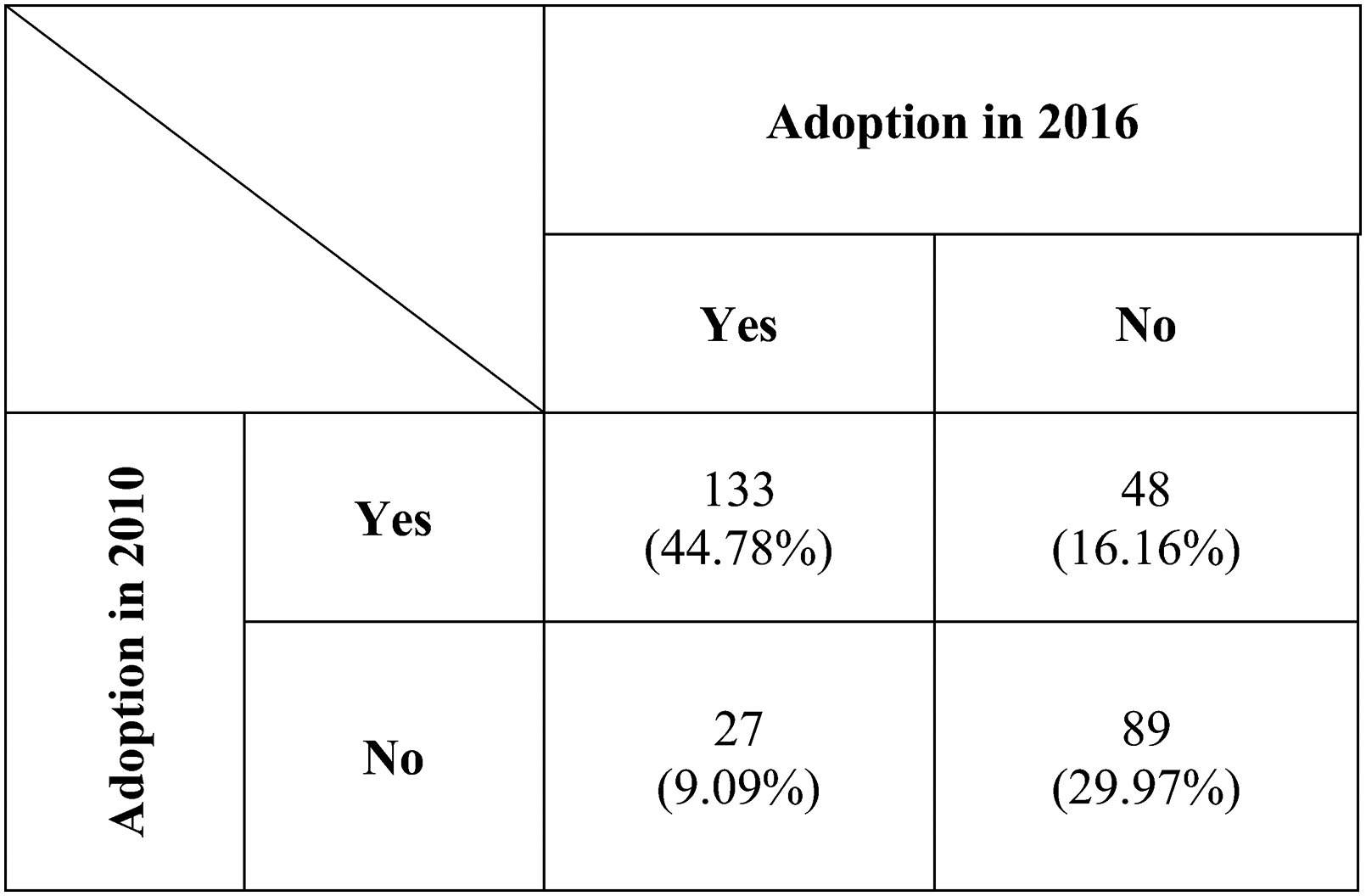
Dynamics of hybrid seed adoption by chilli farm households.
Multinomial logit model
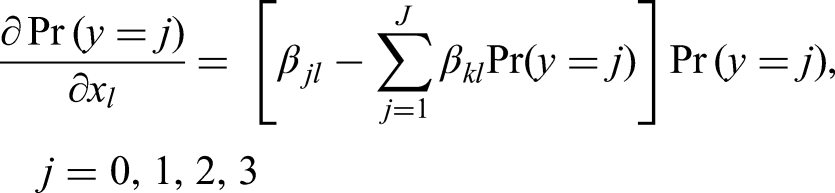
This study employs a MNL model to explore factors explaining four distinct adoption categories: (1) continual-adopters, who planted hybrid seeds in both 2010 and 2016; (2) late-adopters who planted OP/saved seeds in 2010 and then switched to hybrid seeds in 2016; (3) non-adopters, who only planted OP/saved seeds in both 2010 and 2016; and (4) dis-adopters, who used hybrid seeds in 2010 but used OP/saved seeds in 2016. The MNL model allows evaluation of the determinants that are associated with each of these each category, as used in the previous studies (e.g., Burton et al., 2008; Hasibuan et al., 2021; Läpple and Van Rensburg, 2011; Nguyen-Van et al., 2016; Nkamleu and Kielland, 2006).
Let


Results
Descriptive statistics
Table 1 explains the variables used for analysis and the descriptive statistics related to farmers. Table 2 presents the descriptive statistics of farmers by adoption categories. Among the household characteristics, farmer's occupation is a central consideration. Farming is the main occupation of the majority of household heads in the four adoption categories.
Descriptive statistics of the sample.
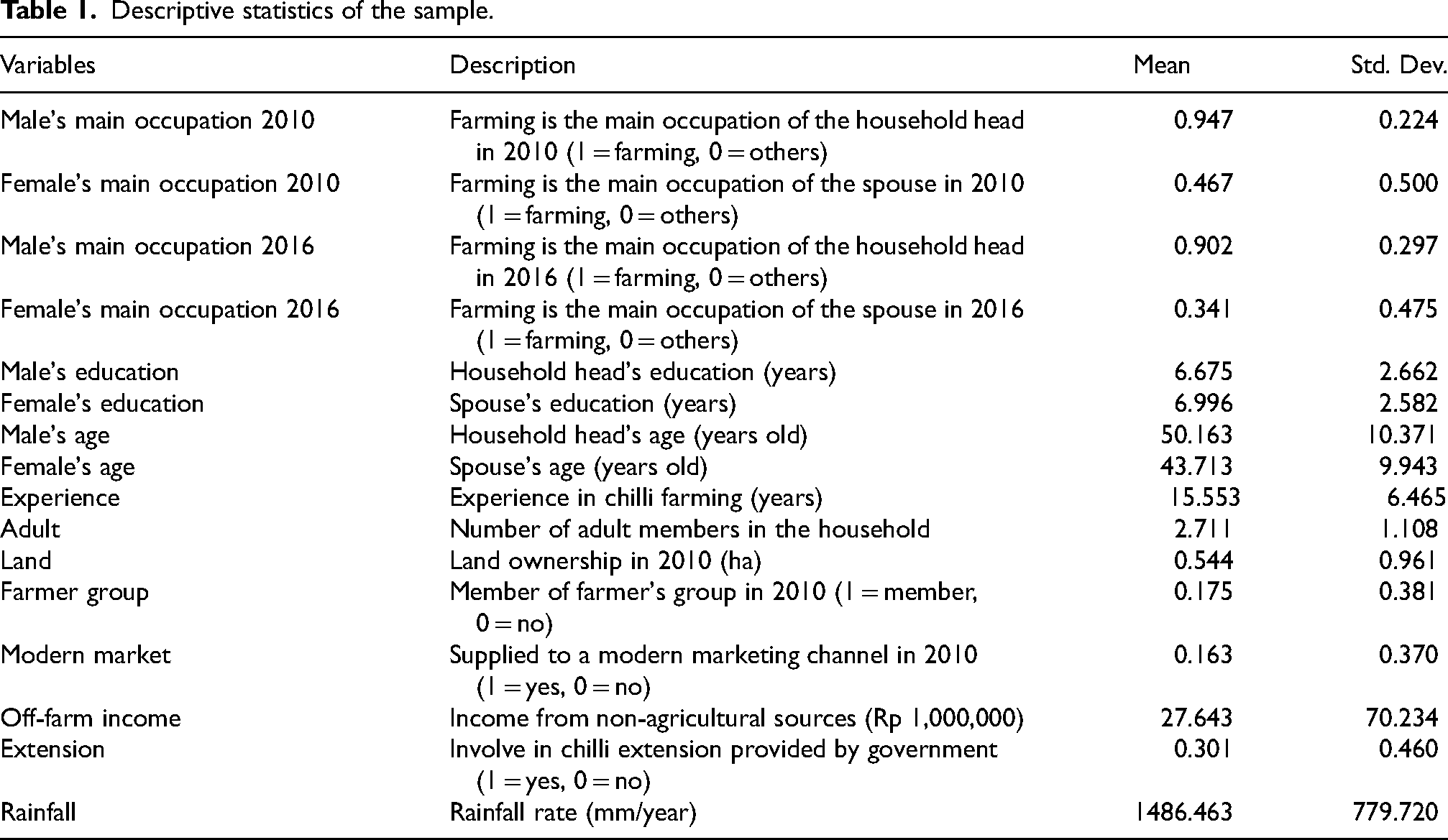
Descriptive statistics on farmers by adoption categories.
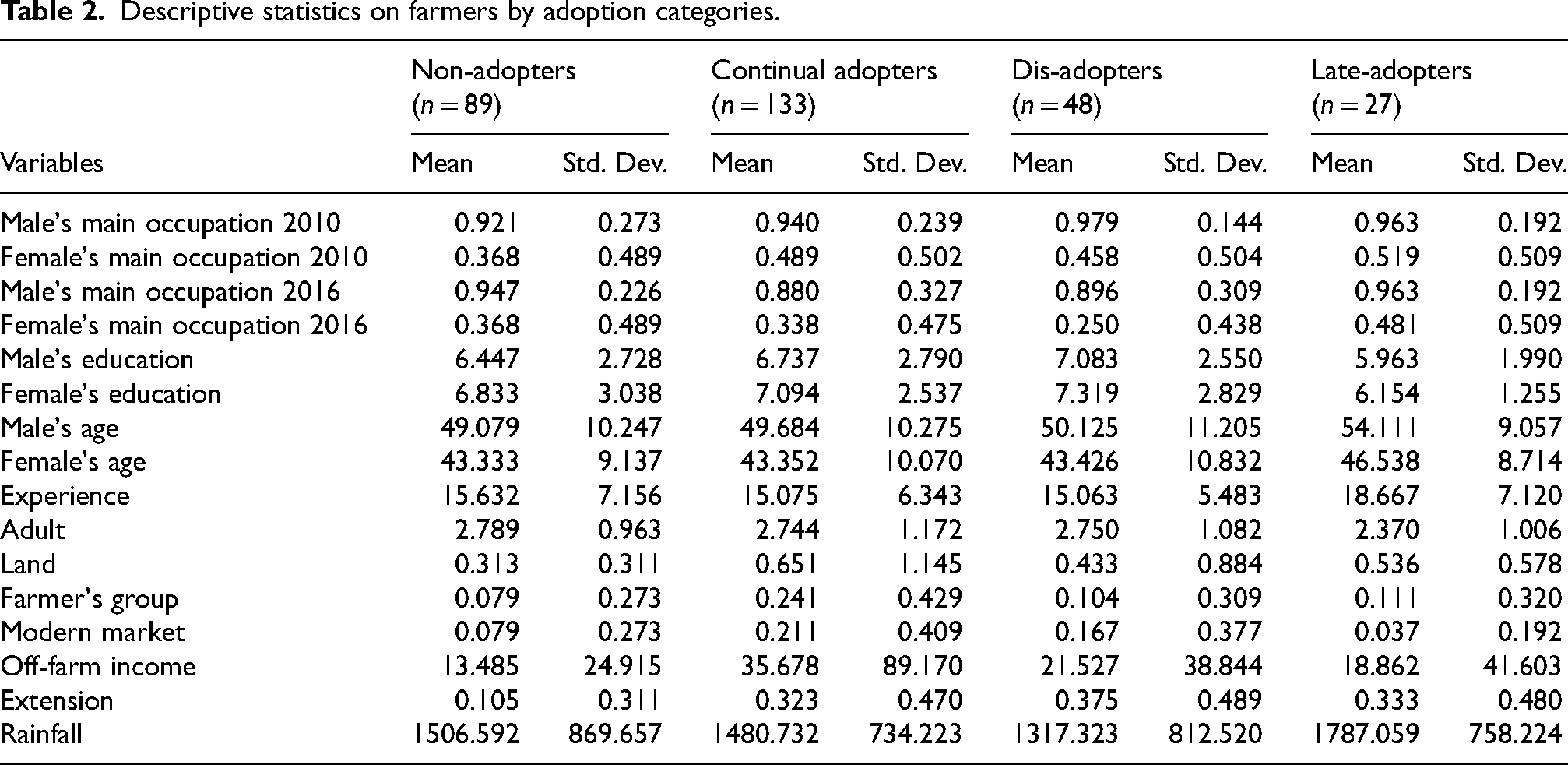
As expected, farming is not the main activity of wives. Females typically participate in agricultural activities less than males do in Indonesia. For males, farming as their primary occupation in this sample decreased by 4.8% between 2010 and 2016, while farming as an occupation among females decreased by 11%. This finding is in line with trends in farming as an occupation in Indonesia, which was reduced by 1.49% from 2010 to 2014; a 1.54% decrease for males and a 1.42% decrease for females (Ministry of Agriculture, 2015).
The decreasing numbers of people who had farming as their main occupation may also be concerning if it is associated with decreasing interest in on-farm jobs, especially for young adults. The average household head's age, and that of their wives, in this sample, is 40 to 50 years, which is not young. Farmer's education may also be related to the decreasing proportion of people choosing farming as an occupation in rural areas. The average education level of farmers in this sample is relatively low, averaging 6 years for both household heads and their spouses, indicating completion of only primary school education. Nevertheless, they possess a substantial level of experience in chilli farming, boasting an average of 15.5 years.
In terms of access to a key input, households’ land ownership on average is 0.5 hectares, meaning that, in general, our sample is smallholder farmers. Some farmers may rent land to cultivate chilli, but the more land they have, the wealthier they are. This is also in line with the average farmers’ income. Continual-adopters seem to have more land and more off-farm income, indicating that they are wealthier than other adopter categories.
In this study, access to technology information and modern marketing channels are reflected by the indicators of being members of a farmer's group, 3 engagement in supplying to modern marketing channels and participation in an extension program. In this sample, the rates of farmers’ group membership and engagement with modern marketing channels are meager (less than 20%); generally, higher rates are found in the continual-adopters category. Supplying to modern market channels in 2010, which required the use of hybrid seeds, does not guarantee continuity of adoption, because 17% of the sample were still dis-adopters in 2016. This indicates that disseminating technology and marketing information is still below the necessary target.
Multinomial logit estimation
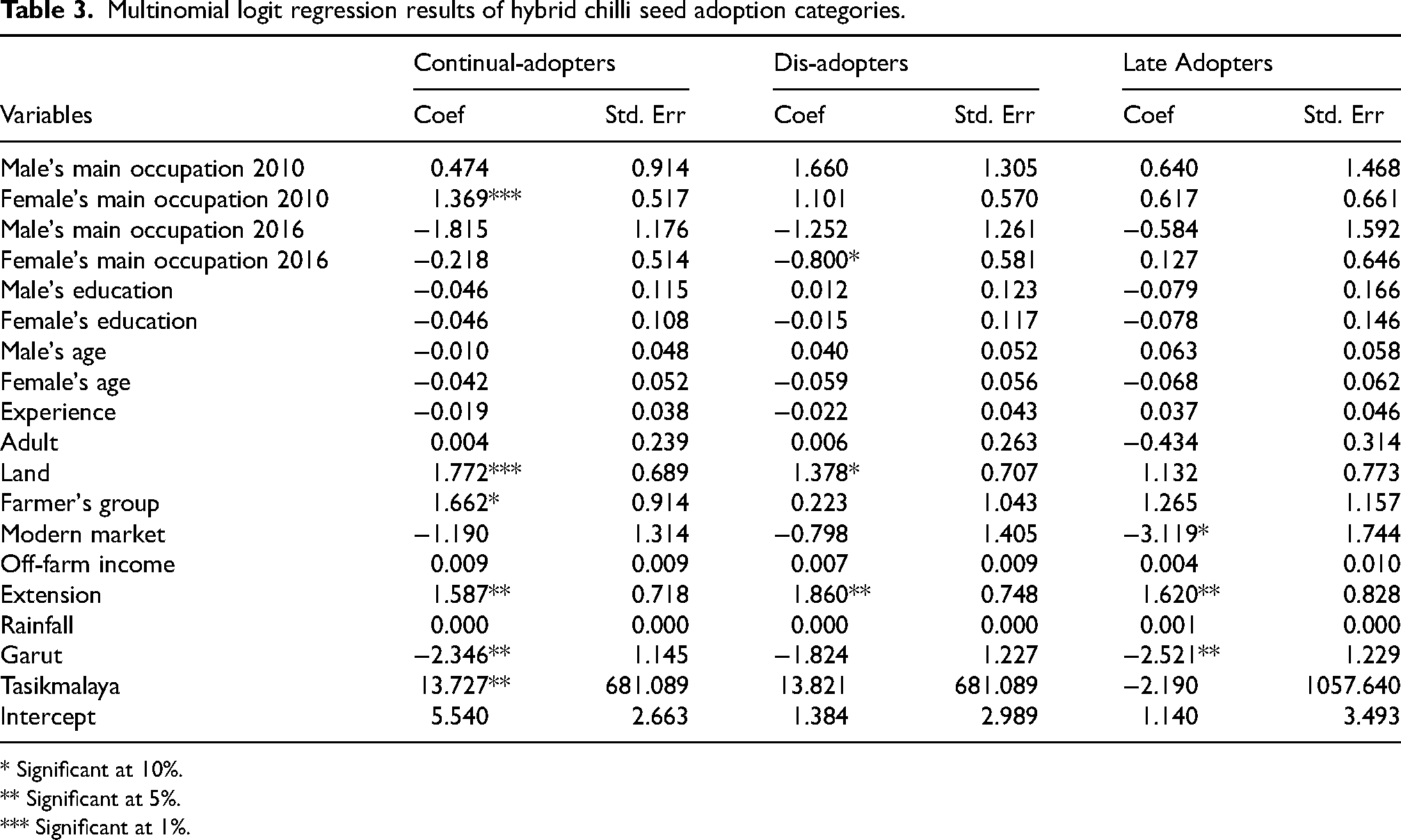
The MNL model is a widely used regression technique for analyzing nominal outcomes. However, it comes with certain assumptions and limitations, one of which is the assumption of Independence of Irrelevant Alternatives (IIA), as highlighted in many studies (e.g., Hasibuan et al., 2021; Nguyen-Van et al., 2016). IIA means that the relative odds of choosing one alternative over another should not be affected by the presence or absence of additional alternatives. To assess whether the IIA assumption holds, statistical tests are available. However, it's worth noting that these tests are often considered unreliable, as pointed out by Cheng and Long (2007). Therefore, in this study, we have chosen to employ the MNL model to examine the adoption categories, in line with the approach taken in previous studies (Barham et al., 2004; Läpple and Van Rensburg, 2011). This approach has been found to work effectively in uncovering significant differences between adoption categories, offering a robust methodology to investigate and understand the dynamics of hybrid seed adoption among small-scale farmers in Indonesia (Table 3).
Multinomial logit regression results of hybrid chilli seed adoption categories.
* Significant at 10%.
** Significant at 5%.
*** Significant at 1%.
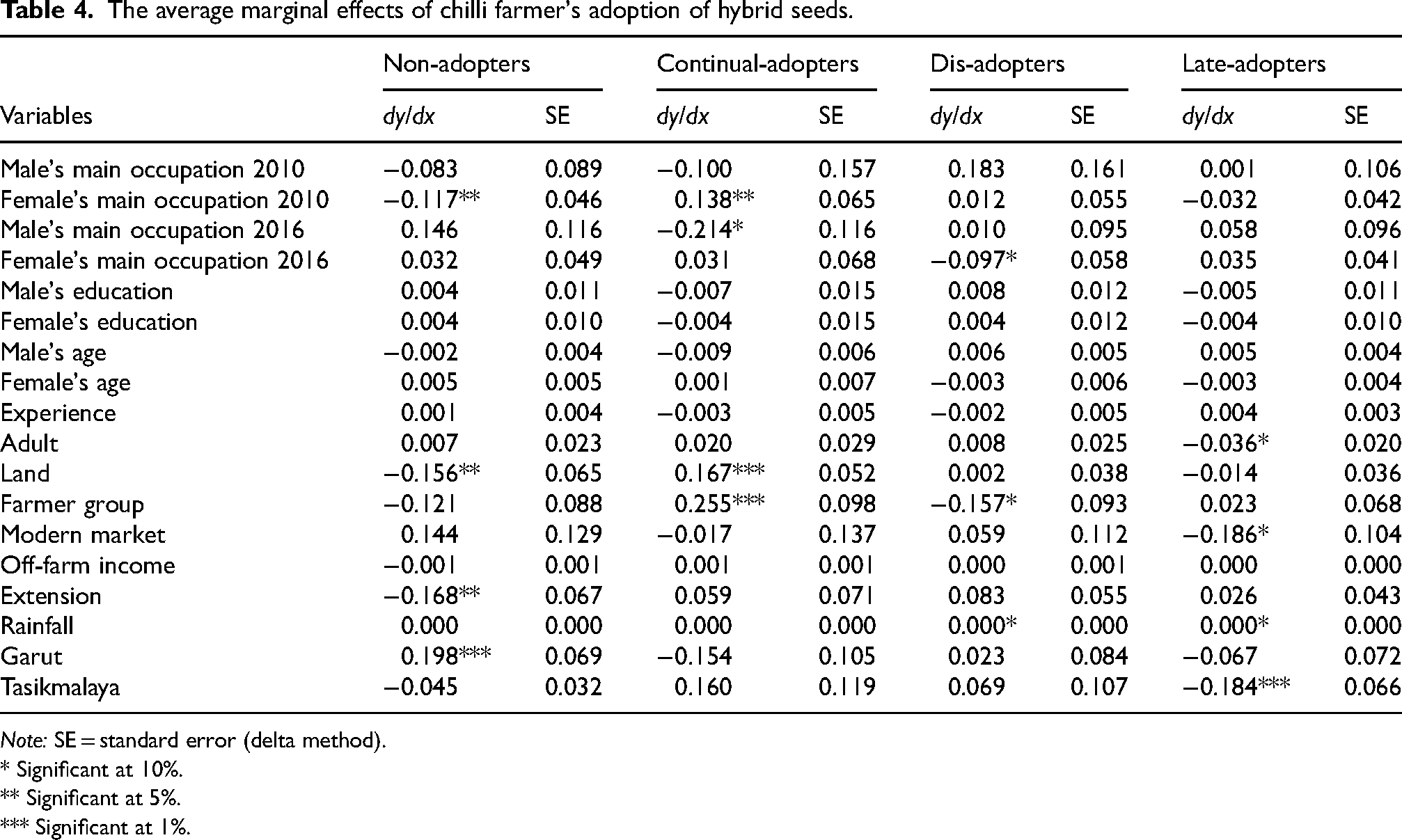
To facilitate more accessible and practical interpretations, we have computed the average marginal effects, which are presented in Table 4. These results reveal that different factors are associated with each category of adoption behaviors. For instance, the factors influencing a farmer's decision to become a continual adopter are distinct from those influencing the choice to be a late-adopter.
The average marginal effects of chilli farmer's adoption of hybrid seeds.
Note: SE = standard error (delta method).
* Significant at 10%.
** Significant at 5%.
*** Significant at 1%.
Furthermore, it is noteworthy that the primary occupations of female farmers in 2010 played a substantial role in determining whether they became non-adopters or continual adopters. However, in 2016, the occupation of female farmers no longer appears to influence the decision to be a non-adopter or a continual adopter. Instead, it is more likely to decrease the probability of becoming a dis-adopter. Additionally, male farmers in 2016 showed a decrease in the probability of being continual adopters. These findings illuminate the evolving dynamics of adoption behaviors among female farmers over time and underscore the need for a nuanced understanding of the factors influencing hybrid seed adoption among small-scale farmers in Indonesia. This suggests that gender plays a role in shaping adoption behaviors, with female farmers exhibiting a higher tendency to sustain the adoption of hybrid seeds.
Moreover, a larger land ownership and membership in a farmers’ group emerge as pivotal factors significantly increasing the likelihood of being continual-adopters. Conversely, these factors diminish the probability of being a non-adopter and a dis-adopter. This underscores the substantial impact of land ownership and group membership in fostering consistent adoption of hybrid seeds, potentially driven by enhanced resources and knowledge sharing within farmers’ group. Additionally, participation in chilli extension programs provided by the government decreases the probability of being non-adopters, indicating a notable contribution of government extension services in promoting hybrid seed utilization. This contribution manifests in increased probabilities for farmers to become continual adopters, late adopters, and even dis-adopters relative to non-adopters.
As anticipated, engagement in modern marketing channels in 2010 is negatively and significantly associated with late-adoption. This suggests that farmers involved in modern marketing channels tend to adopt hybrid seeds earlier, likely motivated by the demand for higher-quality produce in these channels. Lastly, the precipitation rate appears to contribute to an increased likelihood of farmers being both dis-adopters and late adopters. These findings provide valuable insights into the complex interplay of demographic and contextual factors that influence farmers’ adoption behaviors in the context of hybrid seed adoption among small-scale farmers in Indonesia.
Discussion
The finding that factors influencing non-adopters, continual-adopters, dis-adopters, and late-adopters are significantly different aligns with previous research, such as the study conducted by Läpple and Van Rensburg (2011). This underscores the notion that each adoption category has a unique set of factors shaping their decision-making processes. Importantly, this indicates that late-adopters, continual-adopters, non-adopters, and dis-adopters cannot be approached with a one-size-fits-all strategy. Instead, they require tailored interventions and support measures because they exhibit distinct adoption behaviors influenced by different factors. This valuable insight has practical implications for policymakers, as it highlights the need to design programs and initiatives that target farmers within each adoption category in a customized and effective manner. Such an approach can lead to more successful adoption of agricultural innovations, like hybrid seeds, among diverse groups of small-scale farmers in Indonesia.
This study sheds light on the complex relationship between farmers’ characteristics and their adoption behaviors concerning hybrid chilli seeds. Notably, female farmers whose primary occupation was farming in 2010 displayed a higher likelihood of being continual-adopters, aligning with a significant negative impact on dis-adoption (Zepeda and Castillo, 1997). However, the influence of males’ main occupation was only significant for continual-adopters, and it exhibited a negative sign. These results persist in 2016, suggesting a strong link between being a female farmer primarily engaged in farming and the sustained adoption of hybrid chilli seeds, in line with previous research (e.g., Fisher and Carr, 2015; Malabayabas et al., 2023).
The role of women in household decision-making and their involvement in managing income and expenditures may contribute to this trend. Furthermore, in areas where farming remains the primary occupation of households, women often participate in crucial decisions regarding labor, harvest sales, and negotiations with traders (Akter et al., 2017; Kusujiarti and Tickamyer, 2012). Given that hybrid seeds offer opportunities for high-value market channels with better prices, the involvement of women in the marketing process may influence the household's decision to continue cultivating hybrid chilli seeds and reduce the likelihood of dis-adoption. Additionally, hybrid chilli seeds may align more closely with the preferences of female farmers compared to other seed types, as research has shown that adapting technology to suit women's preferences encourages their willingness to use and expand it (Murage et al., 2015).
However, it's worth noting that existing hybrid chilli seed dissemination programs generally target households and often neglect gender-specific considerations (Van de Fliert, 1999). Since household heads are typically male, these programs predominantly involve male farmers. Consequently, training for male farmers only is not efficient particularly in technology adoption strategy (Peralta, 2022). This study suggests that a more inclusive approach, specifically targeting women through training or female-specific extension services, could significantly impact the adoption of hybrid chilli seeds.
In terms of other household characteristics, the number of adult members in the household was unexpectedly negatively associated with late-adoption, possibly due to off-farm job opportunities reducing the available family labor for on-farm work. Land ownership emerged as influential, with higher land ownership positively affecting continual-adopters and negatively impacting non-adopters (e.g., Barham et al., 2004; Dercon and Christiaensen, 2011). Owning more land provides farmers with flexibility in allocating land for hybrid chilli seeds without sacrificing staple food crop production. It also offers risk-averse farmers the ability to plant multiple crop types, thereby reducing risk and securing income. Additionally, larger land holdings may result in higher returns due to economies of scale, incentivizing farmers to adopt hybrid chilli seeds (Srisopaporn et al., 2015).
Membership in a farmer's group emerges as a crucial factor associated with a significantly higher probability of being a continual-adopter of hybrid chilli seeds. In the context of Indonesia, farmer's groups serve as vital channels for the dissemination of agricultural technology and government assistance, often bypassing individual farmers (Hasibuan et al., 2023; Kusujiarti and Tickamyer, 2012). Consequently, membership in a farmer's group can be viewed as a proxy for active engagement with extension services and access to valuable information. This finding is consistent with evidence from other regions, such as Uganda and Thailand, where farmers’ access to extension services has been shown to enhance technology adoption and encourage the continued adoption of innovations (Pan et al., 2018; Srisopaporn et al., 2015). Therefore, this study underscores the importance of promoting farmer participation in farmer's groups and utilizing these platforms for the dissemination of technological information.
Furthermore, participation in extension services significantly increases the likelihood of farmers adopting hybrid seeds, encompassing continual adopters, dis-adopters, and late adopters in comparison to non-adopters. This observation underscores the substantial impact of government-supported services, particularly through extension programs, in contributing to the widespread adoption of hybrid seeds. The finding reinforces the critical role of government extension services in facilitating the adoption of new agricultural technologies in developing countries, as emphasized in previous research (e.g., Salam and Sarker, 2023; Tanko et al., 2023; Zeleke et al., 2023). However, considering the relatively low participation rate of chilli farmers in extension services (only 30.1%), this factor emerges as a potential barrier to the adoption of hybrid chilli seeds. Therefore, enhancing and strengthening extension programs presents a promising avenue to overcome this barrier and promote the widespread use of hybrid seeds in chilli farming.
Participation in modern marketing channels plays a pivotal role in influencing farmers’ adoption behaviors regarding hybrid chilli seeds. Farmers engaged in supplying these channels cultivate hybrid chilli seeds to meet the requirements of these markets. This trend aligns with the broader development of the supermarket industry, characterized by contractual arrangements between agribusiness firms and smallholders in many developing countries (Sahara and Gyau, 2014; Winters et al., 2005). The study's findings demonstrate that farmers involved in modern marketing channels in 2010 were less likely to be late-adopters, as they had already been cultivating hybrid chilli seeds since that time. This underscores the reciprocal relationship between modern marketing channels and the adoption of hybrid chilli seeds. Supporting and encouraging farmers to participate in these modern marketing channels not only meets market demands but also contributes to the sustained adoption of hybrid chilli seeds. In summary, this study underscores the importance of linking modern marketing channels with the adoption of hybrid chilli seeds, highlighting the need for policies and interventions that facilitate farmers’ engagement in these markets to ensure the continual-adoption and success of hybrid seed cultivation among small-scale farmers in Indonesia.
Lastly, our analysis reveals a notable impact of climate factors on the probability of farmers becoming dis-adopters and late-adopters. Intriguingly, the precipitation rate in 2016 increases the likelihood of farmers being both late-adopters and dis-adopters. Given the marked contrast between these two groups, this finding suggests that an increase in precipitation rates elevates the probability of non-hybrid adopters in 2010 transitioning to hybrid adopters in 2016, as well as increasing the likelihood of hybrid adopters in 2010 becoming non-adopters in 2016. This implies a perception that hybrid seeds perform better in high precipitation conditions for late adopters and, conversely, that non-hybrid seeds are favored by dis-adopters. Considering the substantial influence of climate conditions, particularly rainfall rates, on chilli production (Kuntariningsih and Mariyono, 2013) and the inherently more intensive input requirements of hybrid chilli (Mariyono, 2017), the dis-adoption behavior associated with increasing rainfall rates may indicate a shift toward lower-cost chilli farming practices. Conversely, farmers with more substantial capital may transition from non-hybrid to hybrid seeds in response to increasing rainfall, as hybrid seeds are often designed for enhanced performance across various climate conditions, including high rainfall rates (Akimowicz et al., 2022; Tripathi et al., 2023). This finding aligns with the results reported by Sayekti et al. (2021), who similarly observed an increased utilization of hybrid seeds during the rainy planting season. However, further investigation is necessary to thoroughly assess this hypothesis.
Conclusion
This study assessed the possible factors associated with the adoption of hybrid chilli seeds from the perspective of adoption continuity over 6 years. To detect those factors, the MNL model is employed to differentiate mechanisms and link these factors with the multiple categories of dynamic adoption behaviors, including non-adopters, continual-adopters, dis-adopters, and late-adopters. A two-period panel data set of chilli household producers in Indonesia is used to identify the continuity of hybrid chilli seed adoption.
Our results show that several essential factors are associated with continual-adoption and these are different from those associated with late-adoption. This implies that only distinguishing between adopters and non-adopters masks the complexity of the factors influencing adoption and the awareness of the behavior of all four adoption categories is necessary to accurately understand what motivates farmers’ choices in relation to hybrid seed adoption. This indicates that it would be necessary for hybrid seed programs to pay attention to the different factors influencing the differing behaviors of farmers concerning hybrid seed adoption. Policymakers, in addition to stimulating adoption, should also work on encouraging early-adopting farmers to commit to growing hybrid chilli seeds in the longer term.
The major finding of this study is that farming as females’ main occupation is positively related to the continual-adopters category and is likely to reduce the possibility of being a dis-adopter. This insight indicates that females play an essential role in the decision to use hybrid seeds. As one of the primary sources of technological information, being a member of a farmer's group and participation in extension services also show a relationship with being a continual-adopter, a late-adopter and a dis-adopter. Land ownership also has positive and significant impacts on continual-adoption, and an increase in rainfall rates is linked to dis-adoption and late-adoption behaviors. This implies that both assets and climate factors play essential roles in the dynamic adoption patterns of hybrid chilli seeds.
These findings suggest that the impact of hybrid chilli seeds will be greater if more females are involved in hybrid seed programs. This would be aided by increasing the targeting of extension services to women; such targeting is currently quite limited in Indonesia. It is also necessary for the hybrid seed industry to encourage farmers to be active in farmers groups’ activities and to provide hybrid chilli seed information, or provide supported training, to sustain the continuity of hybrid chilli seed adoption. Supporting farmers to engage with modern marketing channels should also be one of the strategies; for example, providing hybrid chilli seeds that can be paid for when farmers receive payment from the modern marketing channels. Giving credit to low-income and landless farmers could also provide an incentive to be a continual-adopter.
However, this study has some limitations. Given that this study only accounts for a small sample and had only two-round surveys with 6 years lag and the model presented in this study ignores the farmers’ decision in between those surveys, the results may not represent the larger area of Indonesia. Focusing on farmers’ reasons for being non-adopters and, more importantly, dis-adopters could give insights for policymakers to focus on. Future research endeavors should delve into the impact of adoption on the welfare of households and conduct a more in-depth examination of the role of climate factors in influencing adoption behaviors. This nuanced understanding would contribute to policymakers’ ability to refine and focus on hybrid seed adoption programs for greater effectiveness.
Footnotes
Declaration of conflicting interests
The authors declared no potential conflicts of interest with respect to the research, authorship, and/or publication of this article.
Funding
The authors disclosed receipt of the following financial support for the research, authorship, and/or publication of this article: This work was supported by the Australian Centre for International Agricultural Research (ACIAR) (Indohort Project AGB/2009/060) ‘Improving market integration for high-value fruit and vegetable production system in Indonesia’.
