



Abstract
Private sector-based seed system development remains a key development intervention in Sub-Saharan Africa. Seed system interventions promoting the adoption of improved varieties through the private sector generally follow a linear, market-oriented technological adoption logic. A qualitative case study of the sorghum seed system in Kenya, Uganda, and Tanzania demonstrates that this model may not be able to drive the broad-scale adoption of improved sorghum varieties and to generate significant benefits for small sorghum-farming households. The findings suggest that the agro-ecological, social, and political-economic contexts critically determine the role improved varieties and the private sector can play in rural development. Improved sorghum varieties promoted by both the public and private sectors may not suit the needs, preferences and contexts of farming households. Seed companies hold sorghum as an add-on in their portfolio, investing less resources and research into sorghum compared to more profitable crops such as vegetable and maize seeds. Significant political-economic obstacles exist that favor the support of cash crops such as maize and rice, limiting the growth and development of the private sector in the sorghum seed system. We conclude that future interventions should build on approaches that aim to develop more diverse channels of seed delivery in both the formal and informal seed systems, adopt a livelihoods perspective to evaluate the costs, benefits, and risks associated with the adoption of new technologies, and acknowledge that seed system interventions are only one out of a portfolio of interventions to generate rural development.
Introduction
Low agricultural productivity and production of cereals persist in many developing countries, particularly Sub-Saharan Africa (SSA). In response, the international community has focused much of its attention on and support to market-oriented interventions mostly targeted at formal seed systems, which are characterized by the deliberate organization of the seed value chain from development, production, certification, varietal release and distribution of certified varieties (Almekinders et al., 1994). 1 Drawing from Toenniessen et al. (2008), Scoones and Thompson (2011) and Westengen et al. (2019), a broad theory of change of market-oriented technology adoption is identified, which is used by organizations such as the Alliance for a Green Revolution in Africa (AGRA) and various international agricultural research centers (IARCs) such as the Consultative Group on International Agricultural Research (CGIAR) (AGRA, 2021; CGIAR Consortium Office, 2015; CGIAR System Organization, 2021). The three key elements of this theory of change are to increase farming households’ yields by planting new varieties, increase farming households’ yields through enhanced soil productivity using fertilizers and soil management practices, and develop and improve input and output markets which allow farming households to generate profits from surplus production (Toenniessen et al., 2008, 236). A central intervention using this theory of change is the increased support of the private sector in developing and disseminating improved varieties, which is assumed will help to transform the presumably inefficient and poorly organized seed systems to formal, private-sector led seed systems (Morris, 1998). The main objective of many of these interventions is to deliver improved varieties through private sector delivery channels such as national and transnational seed companies and agro-dealers (CGIAR System Organization, 2021; Scoones and Thompson, 2011). In this context, there has been a call for a new Green Revolution in SSA by promoting the adoption of improved varieties and use of quality seeds, fertilizers and irrigation. Most prominently, AGRA and the CGIAR seek to promote the ‘acceleration’ of private sector involvement in the development and delivery of improved varieties such as maize, rice and sorghum (see e.g. AGRA, 2019; Bill and Melinda Gates Foundation, 2020; CGIAR System Organization, 2020, 2021; ICRISAT, 2021; for specific CGIAR initiatives see CGIAR, 2021a, 2021c, 2021b; Crops to End Hunger, 2021). 2 To do so, these organizations collaborate not only with small- and medium-scale private sector partners, but also with large-scale, transnational corporations, such as partnerships between AGRA and Syngenta (Syngenta Foundation for Sustainable Agriculture, 2019); Corteva AgriScience and the CGIAR research programs on Grain Legumes and Dryland Cereals (GLDC), Rice (RICE), and Maize (MAIZE); and Bayer Crop Science and GLDC and RICE (CGIAR, 2019).
Despite the growth of private sector involvement in the development and delivery of improved seeds, its impacts continue to be limited in terms of reaching small-scale producers at scale (both in terms of volume as well as area covered), diversity of crops and variety, and the variety of goods and services delivered (Walsh and Sperling, 2019). The informal seed system remains the dominant source of seeds for the majority of small-scale producers in SSA and of critical importance in supplying farming households with seeds and crops for food security (Sperling and McGuire, 2010).
The linear, market-oriented technological adoption logic underlying many private sector-based seed system interventions is reflected in Morris (1998) maize seed system model, which is the dominant approach for analyzing seed systems in low- and middle income countries. The model envisions a fixed development pathway from an informal seed system to a commercial (mature) one to deliver improved seeds. The underlying logic of this model is that the delivery of quality seeds, such as improved or hybrid seeds, will trigger agricultural development through improved productivity and marketability of crops, contributing to various development outcomes such as poverty reduction and improved food security. Crucial assumptions underlying the model include the sustained adoption of these new seed technologies over time as well as the existence and support of adoption through commercial agro-dealer networks which are linked to private seed companies (Scoones and Thompson, 2011). Alternative approaches, promoted by a limited number of non-government organizations (NGOs), donors, and development practitioners and academics, focus on locally-driven and community-based initiatives, but continue to remain largely on the margins of seed system approaches (McGuire and Sperling, 2016). These approaches include seed sovereignty as part of the food sovereignty agenda (Bezner Kerr, 2013; Kloppenburg, 2010, 2014), community seed production (see Walsh et al., 2015 for an overview), and the integrated seed system development (ISSD) approach (Thijssen et al., 2013).
It is questionable whether the maize seed system model proposed by Morris (1998) is applicable to other seed systems, especially those that are less commercial, involve less commercial crops, are grown in more marginal areas, and are dominated by more vulnerable segments of the population (particularly women and the poor) (Scoones and Thompson, 2011; Smale et al., 2011). Delivering quality seeds of improved varieties of less commercial crops such as sorghum through the private sector faces several challenges. These crops generally are characterized by lower quantity demanded partially due to the inexpensive alternative of farmer-saved seed, fluctuating seed demand depending on yields in the previous season and availability of cash, costs of seeds, and inefficiencies in input and output markets (Almekinders and Louwaars, 2002; Louwaars et al., 2013; Nagarajan et al., 2007).
Against this background, this paper identifies three key hypotheses driving private sector-based interventions in seed systems:
The objective of this paper is to scrutinize these hypotheses using the example of the sorghum seed systems in Kenya, Uganda, and Tanzania. In these countries, sorghum plays an important role in household consumption, using predominantly landraces and other local varieties (ASARECA/KIT, 2014; Kiambi and Mugo, 2016; Mubangizi et al., 2012). In this paper we advance three arguments, corresponding to the three hypotheses. First, we argue that localities and agro-ecological, social, and political-economic contexts critically determine the role improved varieties and delivery through the private sector can play in agricultural development. Sorghum producers in the study countries tend to be located in drier, more risk-prone areas which are disproportionately affected by climatic shocks, pests and diseases, and socio-economic shocks such ethnic and trans-boundary tensions and conflict (see e.g. Rockmore, 2020; Schilling et al., 2014; Sewando et al., 2016). Second, we demonstrate that the private sector, both processors and seed companies, plays only a relatively small role in the sorghum seed system in the three countries. Seed companies hold sorghum varieties mainly as a secondary crop in their portfolio since the margins of sorghum seeds compared to those of vegetable and maize seeds are low. The much-expected demand-pull from processors such as the industrial brewery sector or flour milling also remains insufficient to drive the demand for quality seed of improved sorghum varieties. Finally, and third, we assert that significant political-economic obstacles exist to ‘nudge’ the institutional environment into an enabling force for the growth and development of the private sector in the sorghum seed system. Government policy-making and funding in all three countries are focused on cash crops such as maize and rice, making sorghum a minority crop with limited government and research support. We conclude that alternative seed system approaches should be strengthened that make the context-specificity, rural households’ livelihoods, and political economy considerations part and parcel of the design and implementation of interventions in order to generate alternative and multiple impact pathways to achieve development outcomes such as SDG 1 (No Poverty) and SDG 2 (Zero Hunger).
Material and methods
Data collection
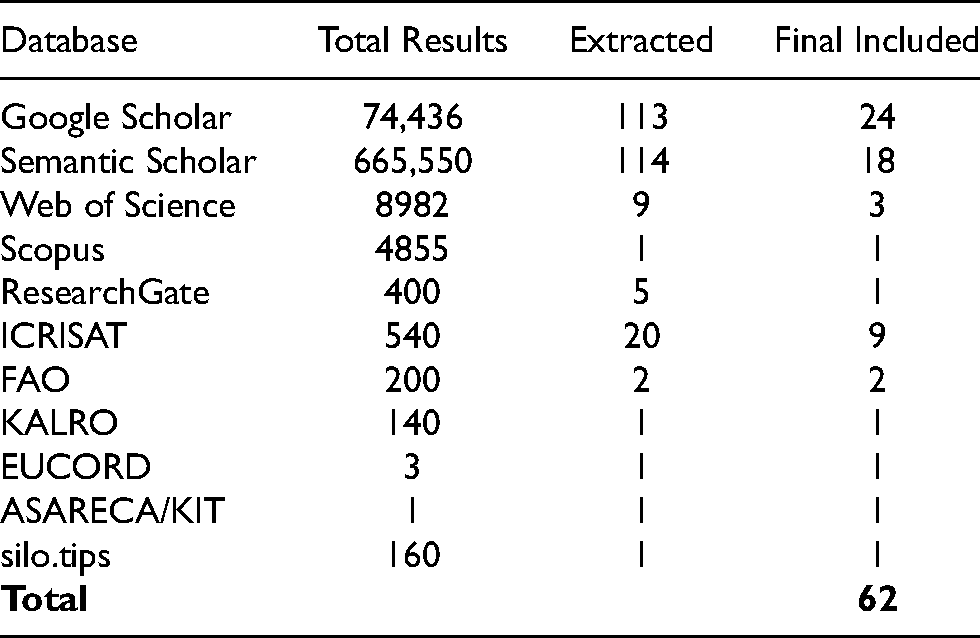
This paper is based on a literature review on sorghum seed system research in Kenya, Uganda, and Tanzania, as well as virtual key informant interviews (KIIs) with sorghum seed system experts in the three countries. 3 For the literature review, we followed a multi-track retrieval approach, relying on both academic and grey literature, including qualitative and quantitative studies across different disciplines. The academic literature search was conducted in the bibliometric databases such as Google Scholar, Semantic Scholar, and Web of Science (see Table 1 for an overview). The grey literature search was conducted in Google Search and relevant institutions in the field, such as CGIAR/ICRISAT databases, Integrated Seed Sector Development (ISSD), the African Seed Access Index (TASAI), the Food and Agriculture Organization of the United Nations (FAO), and the Association for Strengthening Agricultural Research in Eastern and Central Africa (ASARECA). The search used the following search strings: sorghum, sorghum seed*, private sector, breeding, adoption, income, value chain, Kenya, Uganda, Tanzania. The following criteria were used to select publications: (1) use of primary or secondary data; (2) sorghum was (one of) the main focuses; (3) articles published in English; (4) dated between 1960 and 2021; and (5) purely breeding-oriented research as those published in natural science journals were excluded. In total, this literature review includes 32 journal articles and 30 grey literature publications (see supplementary material). The data extraction process included extracting relevant information from each publication by entering it into a data extraction form outlining the target group and geography, methodology, and main findings with regards to (a) the sorghum seed system globally and in East Africa, (b) sorghum production, marketing challenges and growth prospects of the sector, and (c) public and private sector involvement (interventions and outcomes). The literature review was complemented by a review of relevant agricultural policies in the three countries.
Overview of results of the literature search.
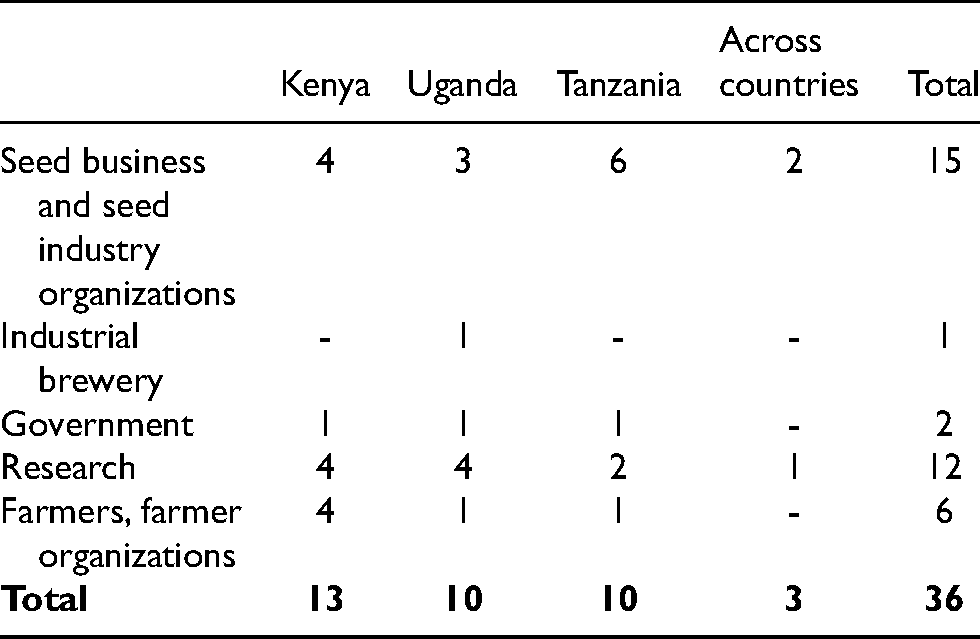
The findings from the literature search were complemented with virtual qualitative interviews with key stakeholders from seed businesses, industrial brewery 4 , government, research, and farmer organizations. The sampling of key informants relied on purposive and snowball sampling. The identification of key informants using purposive sampling relied on the literature review, whilst these key informants further recommended additional stakeholders to interview (snowball sampling). Interview questions covered themes such as the general perception on the sorghum seed system in the country, farming households’ needs and preferences for sorghum varieties, the role of the private and public sectors, and opinions on the future of the sorghum seed system. Table 2 summarizes the number of KIIs conducted across the three countries and type of sector.
List of key informants across countries and sectors.
Data analysis
The data analysis of the literature and KIIs consisted of four steps. The first step involved the (re)reading of the interview transcripts and literature to identify emerging themes. The second step incorporated the development of the coding framework, identifying a range of codes and sub-codes according to different categories, such as types of stakeholders, constraints and enablers to sorghum seed system development, demand and supply factors, informal and formal seed systems, governance and laws/regulations, economic performance, and social impact. We employed a combination of inductive and deductive approaches to develop the coding framework. The deductive approach involved identifying codes and sub-codes prior to the coding exercise based on the initial readings of the literature and first impressions generated through the KIIs. The inductive approach was conducted under the third step (coding of the data), which allowed for the emergence of new themes, codes and sub-codes. The coding of the data was conducted using the qualitative data analysis software MaxQDA. The fourth step involved exploring differences in outcomes, similarities and contradictions between locations, types of publications, stakeholder types, and comparing themes and relationships identified in primary data with findings from secondary sources.
Results
Hypothesis 1: Improved varieties are better for farming households and desired by them
A central hypothesis driving seed system interventions is that improved crop varieties are better for farming households in terms of yields and productivity, and hence are desired by the target group (see e.g. CGIAR Excellence in Breeding Platform, 2021; HarvestPlus, 2020). However, we find that these varieties may not suit the needs, preferences and contexts of farming households.
First, sorghum producers in Kenya, Uganda, and Tanzania are mostly located in the arid and semi-arid areas, which are characterized by low levels of annual rainfall, climate-dependent livelihoods, high susceptibility to droughts, flooding and climate change, economic and political marginalization, and high levels of poverty (Birch, 2018; Crawford and Terton, 2016; Echeverría et al., 2016; Orr et al., 2016). 5 As a result, the sorghum seed system is exposed to high levels of environmental, economic and social stresses, i.e. it is prone to seed system insecurity (Sperling et al., 2011). The results demonstrate the critical importance of the informal seed system to rural livelihoods, the well-adaptedness of (local) sorghum varieties to the conditions in arid and semi-arid environments (i.e. high tolerance to drought and pests and diseases), and the cultural importance of sorghum to many communities (Kiambi and Mugo, 2016; Labeyrie et al., 2016; Scurrah-Ehrhart, 2007). KIIs across sectors and countries highlighted that the adoption of improved sorghum varieties is associated with an increase in risks taken on by farming households. The risks consist of uncertainty about the performance of the new variety and the need to buy inputs and seeds the following seasons to maximize yields, changing on-farm production costs and profitability. Interviewees stressed that farming households in the three countries are highly risk averse as their livelihoods are extremely vulnerable to external environmental and economic shocks, and hence are reluctant to plant a new sorghum variety to ensure food security. To reduce these risks, one researcher from Kenya indicated that some farming households use half of their assigned sorghum plot to plant a commonly-used (local or improved) variety, whilst the other half is planted with the new variety. Similarly, Schipmann-Schwarze et al. (2014) find that farming households do not substitute local with improved varieties, but instead grow them in addition.
Second, despite recent commercialization efforts, sorghum is primarily used as a food security crop, particularly in the arid and semi-arid regions in the countries, whilst surplus is sold in local markets. KIIs across sectors and countries confirm that farming households’ needs for sorghum seeds are determined by a combination of price, need for inputs such as fertilizer, pesticides and labor, and the households’ end-use of sorghum, distinguishing between sorghum as a food security crop or as a cash crop primarily for the emerging brewing industry in East Africa (AGRA, 2016; Orr et al., 2016, 2017, 2020). The dominance of sorghum for food security limits the demand for improved sorghum varieties (discussed below).
Third, farming households in the three countries generally prefer local varieties over improved varieties for home consumption for reasons of taste (for ugali/porridge, bread or local brew); color (brown or red sorghum preferred over white sorghum; white sorghum may be consumed in times of food scarcity); resistance to pests and diseases, particularly bird attacks due to higher levels of tannin; and adaptability to environmental conditions, particularly drought (ASARECA/KIT, 2014; Muui et al., 2013; KIIs). Informants from Uganda across sectors repeatedly emphasized that households prefer the consumption of brown ugali because of its taste/texture/color as well as its higher level of tannin to reduce the incidence of bird attacks. Improved varieties are often more susceptible to bird damage (ASARECA/KIT, 2014; Monyo et al., 2004; Muui et al., 2013; Ochieng et al., 2011). One interviewed representative of a farmer organization in Kenya indicated that half the sorghum planted this season (2020/2021) has been eaten by birds as the variety supplied by a brewing company is relatively sweet. These losses are borne by farming households and not the company, which has negatively affected the acceptability of these sorghum varieties. Evidence suggests farming households value varieties that are drought resistant and early maturing (see e.g. Monyo et al., 2004; Mrema et al., 2017; Timu et al., 2014). For example, Monyo et al. (2004, 15) find that 50% of the sampled households that grow improved varieties (n = 380) consider drought resistance a positive trait of the improved variety they grow, whilst 46% cited early maturity a positive trait. Similarly, 56% of the sampled households that grow local varieties (n = 189) deem drought resistance an important trait of the local variety they grow, and 30% regard early maturity a positive trait. However, at the same time, 46% of the sampled households that grow local varieties consider late maturity a negative trait of the local variety they grow. Unfortunately, the authors aggregate the findings of local varieties, making it impossible to distinguish which local varieties are deemed to be early and late maturing. This finding suggests that more research is needed to distinguish between different types of local and improved varieties, farming households’ preferences for specific traits, and rankings of traits most important to farming households.
There has been increasing interest by the private sector and IARCs to develop and disseminate sorghum hybrids to farming households due to their superiority in yield and productivity. Yet, the results question to what extent sorghum hybrids can significantly improve the livelihoods of farming households in the arid and semi-arid contexts in East Africa where it is usually grown. Private sector representatives (processor, seed companies and industry organizations) across the countries and a researcher emphasized that hybrid sorghum requires the intensive application of inputs, whilst one interviewed seed company active across the region highlighted that the price of sorghum hybrid seeds is more than 2.5 times higher than that of conventional open pollinated varieties (OPVs), making it significantly less accessible to smallholder households who often lack income and access to input markets. In fact, two interviewed seed companies stated that their sorghum hybrid division caters mostly to large-scale farmers with limited advances to smallholder households.
Fourth, various studies have reported low adoption and dis-adoption of released sorghum varieties resulting from a mismatch between a breeding focus on industrial traits for markets and farming households’ preferences for traits such resistance to bird attacks, taste, affordability of seeds, access to seeds, and knowledge about different varieties (AGRA, 2016; Kaliba et al., 2020; Mrema et al., 2017; Orr and Muange, 2015; Simtowe and Mausch, 2019). Kaliba et al. (2020) find that the heterogeneity among sorghum producers is generally ignored in favor of a one-size-fits-all approach, contributing to low levels of adoption and limits to scaling improved sorghum varieties. Consequently, the adoption of improved sorghum varieties remains strikingly low and understudied. Generally, few systematic adoption studies at the national level exist for the three countries. 6 In eastern Kenya, Mwangi et al. (2021) find that 57% of the sampled households adopted an improved sorghum variety. Chimoita et al. (2017) find a 58% adoption rate of improved sorghum in Embu County in Kenya. However, the sample size is small with only 129 households included. In Uganda, Gierend et al. (2014) estimate the cumulative adoption rate of improved sorghum varieties to be 18% and 14% in Teso and Karamoja sub-regions, respectively. These rates were even lower ranging between 2% to 6% when individual variety adoption was considered. In Tanzania, Schipmann-Schwarze et al. (2014) find that only 27% of the sampled farming households adopted an improved sorghum variety. Simtowe and Mausch (2019) find rates of adoption ranging from 23% to under 1%. In addition, the authors demonstrate that farming households choose to dis-adopt improved sorghum varieties resulting primarily from limited access to input and output markets. They find rates of dis-adoption in Tanzania ranging from 21% to 58% of the sampled households. Furthermore, the low adoption of improved varieties can be partially attributed to the low differential performance of improved varieties vis-à-vis local varieties (AGRA, 2016; Schipmann et al., 2013; Waithaka et al., 2019; Walker and Alwang, 2015). For example, Schipmann et al. (2013) find no significant difference in yields between local and improved sorghum varieties in Central Tanzania.
Hypothesis 2: The private sector is critical in driving the adoption of improved varieties
Another central hypothesis in seed system interventions is that the private sector is driving the smallholders’ adoption of improved varieties. The assumed channels of impact are that international or national agricultural research institutes develop improved sorghum varieties, whilst seed companies and agro-dealers supply these to farming households. In turn, processors (breweries, flour millers, feed producers) provide sufficient market-pull by generating demand for sorghum grain and (improved) seeds, partially through a substitution effect from maize to sorghum, which incentivizes farming households to buy seeds instead of recycling seeds (Orr et al., 2020; Rohrbach and Kiriwaggulu, 2007). In this study, we find only weak evidence for this.
First, despite many interventions to support the private sector, the informal sorghum seed system continues to overwhelmingly dominate in the three countries. Sorghum seeds are generally acquired and produced through the informal seed system: in Uganda, 17% of the sorghum seed is supplied through the formal system (Otieno et al., 2016), in Kenya, it is 13% (Kiambi and Mugo, 2016), whilst in Tanzania it is only 4% (AGRA, 2016). In the three countries, farmer-saved seed is by far the most common source of sorghum seed with estimates ranging between 29% and 87% (Dorcas et al., 2019; Kiambi and Mugo, 2016; Mubangizi et al., 2012; Nagarajan et al., 2007; Sperling et al., 2011). Sorghum seeds sourced from private companies make up only 4% or below, whilst agro-dealers make up only 3% or below (Schipmann et al., 2013; Schipmann-Schwarze et al., 2014; Sperling et al., 2011). KIIs emphasize that due to the nature of sorghum as an OPV, improved varieties released through the formal seed system often end up being recycled or saved by the farming households, i.e. they become part of the informal seed system.
Second, seed companies continue to offer negligible amounts of improved sorghum seeds compared to maize, beans, and vegetable crop seeds (Nagarajan et al., 2007; KIIs). Sorghum is primarily seen as a secondary crop or add-on in seed companies’ portfolios both in terms of sales and research importance, making up only a small part of their portfolios. One seed company representative indicated that they carry only one sorghum variety, but 53 different vegetable varieties. The main reasons given by interviewed seed companies were that the margins of sorghum seeds vis-à-vis vegetable and maize seeds are low, partially driven by the recycling of seed (see also Orr and Muange, 2015) and the limited market growth prospects compared to other agro-industrial sectors such as maize. Consequently, seed companies stressed their reluctance to invest in sorghum vis-à-vis other more commercial crops.
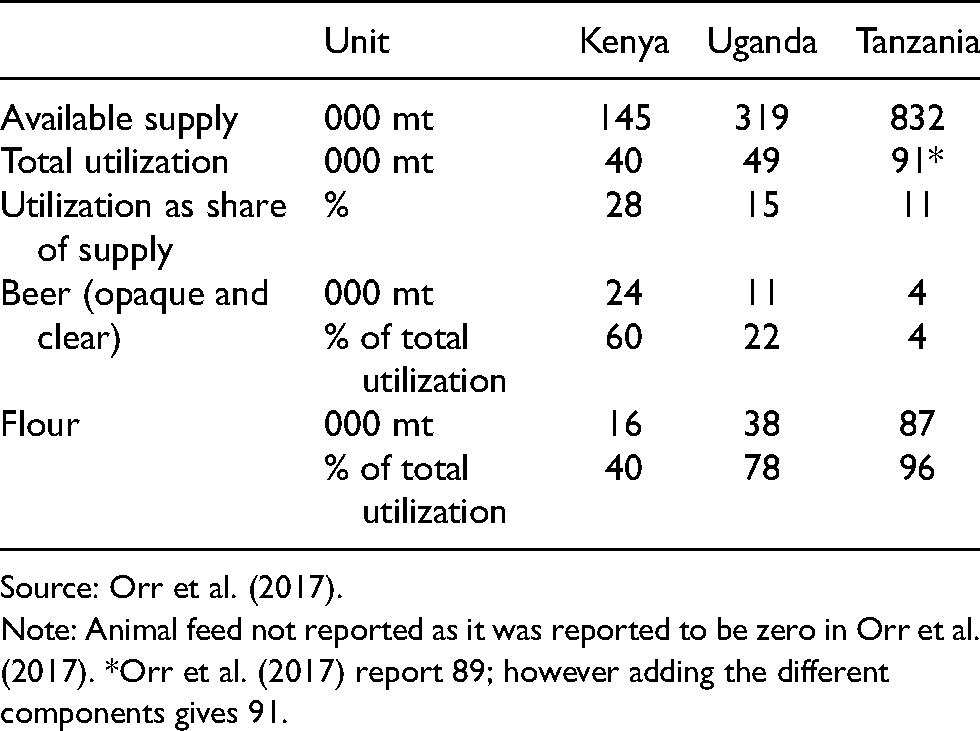
Third, KIIs highlighted the limited demand-pull generated from increased demand from processing sectors, i.e. beer brewing, flour milling and animal feed in driving the demand for (improved) sorghum seeds as sorghum continues to be a food security crop. Current levels of commercial utilization of sorghum remain generally low across the three countries, ranging from 11% in Tanzania to 28% in Kenya (see Table 3). Differences between the countries and sectors exist. The industrial brewery sector is relatively large in Kenya, making up 60% of its total utilization, whilst Tanzania's is relatively small, making up only 4% of total utilization. The flour sector is the biggest commercial sorghum sector in Tanzania (96% of total utilization) and Uganda (78% of total utilization), whilst it only makes up 40% of total utilization in Kenya. KIIs across countries and sectors highlighted that the largest opportunities to generate sorghum seed demand are through increasing grain demand from breweries, whilst demand for food/flour 7 and feed was not mentioned as a main source for generating seed demand (though it was mentioned as generating some demand) (see also Orr et al., 2016; Rohrbach and Kiriwaggulu, 2007). The industrial brewery sector requires white sorghum varieties, which, according to KIIs, are not the preferred sorghum variety for home consumption by farming households, limiting a broader growth in seed demand.
Utilization of sorghum in Kenya, Uganda and Tanzania in 2013.
Source: Orr et al. (2017).
Note: Animal feed not reported as it was reported to be zero in Orr et al. (2017). *Orr et al. (2017) report 89; however adding the different components gives 91.
Private sector representatives across the countries emphasized that it is mostly medium- to large-scale sorghum producers who benefit from the increased demand for industrial beer, as these producers have sufficient economies of scale and tend to be able to produce according to the quality requirements. The sorghum required for industrial brewing is not product differentiated, making economies of scale essential and generating relatively high levels of price competitiveness between sorghum suppliers. KIIs across countries and sectors indicated that small-scale producers are unable to reach these economies of scale due to smaller land sizes and smaller quantities of sorghum grown (considering many farming households grow a variety of crops), limiting the benefits that can be generated for them (see also Rohrbach and Kiriwaggulu, 2007).
Surprisingly, KIIs with the private sector, research and government in Uganda and Kenya emphasized significant demand-pull generated through humanitarian and food assistance - a finding that was not identified in the literature review. According to the KIIs, humanitarian and food assistance, mainly for Somalia, South Sudan, and to a lesser extent the Democratic Republic of Congo, is increasingly creating demand for sorghum grain and seeds to which seed companies are responding. Interviews with seed companies across the three countries highlighted an increased focus of business operations to serve this demand. Four of the 13 interviewed companies (three from Uganda and one from Kenya) indicated that they supply sorghum seeds (usually as grain) to international organizations, namely the Food and Agriculture Organization of the United Nations (FAO), the World Food Program (WFP), and the International Committee of the Red Cross (ICRC) for food or humanitarian assistance. One company from Uganda revealed that they have stopped their sorghum supply to breweries to focus on supplying grain to these international organizations.
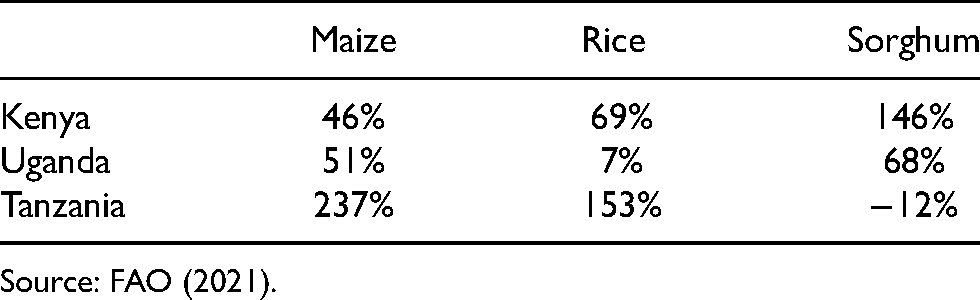
There seems to be little evidence of the assumed substitution effect from maize to sorghum (see Table 4). Instead, in Tanzania, the area harvested of sorghum in fact declined between 2000 and 2019 by 12%, whilst the area harvested of maize increased by 237%. One seed company from Tanzania emphasized a shift from sorghum to maize production due to consumption preferences.
Percentage change in area harvested from 2000 to 2019 in Kenya, Tanzania, and Uganda.
Source: FAO (2021).
Fourth, seed companies across the countries highlighted the unpredictability and instability of seed demand, which are significantly impacting their operations. KIIs indicated that the commercialization of the sorghum sector is still emerging, rendering demand predictions for upcoming seasons as difficult and imprecise. One brewery representative from Uganda indicated that between 2018 and 2020 sorghum production was above the market demand for their beer, resulting in oversupply stored for the following seasons. As a result, farming households contracted by the brewery were not needed the following seasons, resulting in a loss of market and a significant loss of trust by farming households in the contract relation. Furthermore, seed companies from Kenya and Uganda highlighted that seed demand based on demand for humanitarian or food assistance in the region is to some extent unpredictable as seed/grain is only demanded in case of humanitarian emergencies, exposing farming households to these ‘demand’ fluctuations.
Hypothesis 3: An enabling institutional environment can be created to support private sector development and the adoption of improved varieties
Current intervention efforts attribute an enabling role to the institutional environment to accelerate the adoption of improved varieties. The key premise is that governments can be ‘nudged’ in such a way that it enables the growth and development of the private sector. This study finds that the sorghum seed system is significantly influenced by the pre-existing political-economic conditions, which are difficult to be nudged in the ‘right’ direction due to powerful interests and market structures.
First, seed policies in the three case countries are predominantly targeted at the formal seed sector, neglecting the dominance and importance of the informal seed system in supplying farming households with seeds and crops for food security and limiting the impact these policies can have on the entire sorghum seed system. Seed policies in the three countries follow the narrative to ‘modernize’ the seed system by encouraging the uptake of improved varieties. In the Uganda National Seed Policy (Government of Uganda, 2018, 4), it is emphasized that the agricultural sector ought to be modernized by commercializing the informal seed sector through technology adoption, such as improved seeds. Similarly, the Kenya National Seed Policy (Government of Kenya, 2010, 12) highlights that a development towards a formal seed sector should be ‘embraced’. In Tanzania, currently no overall seed policy exists. Instead, the Agricultural Sector Development Strategy for the period 2015/16–2024/25 underlines that the agricultural sector ought to be transformed into a “modern, commercial, highly productive, resilient, competitive” economy (Government of the United Republic of Tanzania, 2015, 1). 8
Second, current seed system interventions largely disregard the external factors that drive government priorities and policy making, which go beyond crop-specific sectors such as sorghum. KIIs across the three countries and sectors highlighted the limited public resources directed towards supporting the sorghum sector. The Government of Kenya (2019, 41) in its Agricultural Sector Transformation and Growth Strategy does not list sorghum as one of the 13 value chains with the highest agricultural transformation potential. Even though maize is considered a national priority crop, the strategy concedes that sorghum may be important at the household level, encouraging counties with significant sorghum production to support the value chain. In Uganda, all three National Development Plans from 2010/11 to 2024/25 (Government of Uganda, 2010, 2015, 2020) do not list sorghum as an agricultural priority sector, but instead prioritize cash crops such as maize, rice, coffee and cotton which have the potential to generate both income at the household level as well as export earnings. Similarly, the Government of the Republic of Tanzania (2015) in its Agricultural Sector Development Strategy 2015/2016–2025/2026 does not list sorghum as a priority value chain, but instead emphasizes higher value crops such as rice, maize and cashew. This renders sorghum a minority crop in all three countries with limited government resources directed towards its research and the development of both the seed and value-added sectors. KIIs across the three countries and sectors highlighted that public research continues to largely focus on maize and increasingly rice, whilst relatively little research support is given to sorghum.
Furthermore, the relatively small importance attributed to sorghum vis-a-vis maize is evident when examining government subsidies. In Kenya in 2017, maize seed was the most subsidized with 839 mt (1.9% of total maize seed sales), whilst sorghum seeds were subsidized with 141 mt (16% of total sorghum seed sales) (Waithaka et al., 2019), i.e. sorghum seeds were subsidized almost six times less than maize seeds. Similarly, in Uganda in 2017, Operation Wealth Creation, the main mechanism through which agricultural inputs are distributed, disseminated almost 50 times more maize seeds than sorghum seeds, i.e. 8856 mt of maize seed (52% of total maize seed sales) compared to 180 mt of sorghum seed (10% of total sorghum seed sales) (Mabaya et al., 2018). Tanzania currently does not have a government-funded agricultural input subsidy scheme: the National Input Voucher Scheme (NAIVS), which was the flagship input subsidy program of the government, was phased out in 2016 due to a lack of financial resources, and was replaced by the bulk procurement system (BPS) for fertilizer support (see e.g. Mdoe and Mlay, 2021).
Finally, KIIs with seed certification representatives highlighted that sorghum varieties released by the respective country authorities have been low compared to other crops such as maize, reflecting the disproportionate attention given to maize (see Table 5). In Kenya, a total of 44 sorghum varieties have been released through the Kenya Plant Health Inspectorate Service (2020), compared to 389 maize varieties. In Uganda, the National Seed Certification Service (NSCS) released a total of 14 sorghum varieties (Uganda Seed Trade Association, 2020), compared to 104 maize varieties. In Tanzania, the Tanzania Official Seed Certification (2020) has released a total of 16 sorghum varieties, compared to 183 maize varieties. It is evident that all three country governments are focusing on maize and higher value (export) commodities to generate income both at the household level and broader economic growth at the national level.
Sorghum and maize varieties released in Kenya, Uganda and Tanzania.

Discussion
As highlighted in the contribution by Mausch et al. (2021), farming households can be broadly differentiated into commercial, commercial-oriented, and subsistence farming households. The results demonstrate that farming households in Eastern Africa that grow sorghum tend to fall in the latter category, located in marginal areas characterized by high climate vulnerability, economic and political marginalization, and high levels of poverty. It is evident that the expansion of the formal sorghum seed sector in these areas is marked by significant obstacles such as the possibility to recycle and save seeds, small quantities of seed demanded by farming households, issues in the distribution of seed covering generally wide and often inaccessible areas, and strong variations in seed demand between seasons.
Distribution of benefits: Who wins and who loses
From an equity-based and ‘leaving no one behind’ perspective, questions around the distribution of benefits of seed system interventions arise. In spite of the overwhelming and persistent importance of the informal sorghum seed system, disproportionate support is given to private sector-based interventions in seed systems promoted through organizations such as the CGIAR institutes and AGRA. This has contributed to an underlying tension between those varieties which are used predominantly for household consumption and accommodate the farming households’ needs and preferences, and those that target primarily industrial uses, most notably industrial beer brewing. As a consequence, diverging but latent development pathways emerge that target, on the one hand, vulnerable households in marginal areas and, on the other hand, market-oriented farming households with access to input and output markets. It is questionable how farming households located in the arid and semi-arid regions in the study countries would be able to ‘transition’ to the market-oriented status involving significant (food security) risks of switching to a new/improved sorghum variety (risks, which will be further exacerbated by climate change and political and socio-economic instability) without the necessary investments into infrastructure and support systems. The results of this study demonstrate that seed companies and processors increasingly prefer to engage with commercial and larger farmers to ensure quality and scale, whilst smaller producers often struggle to supply these companies and reach the quality and scale requirements demanded. Hence, the benefits generated for smaller producers are small compared to those for larger producers. This is likely to be exacerbated as seed companies and breweries are increasingly switching to hybrid sorghum, which, as this study suggests, are less accessible to small farming households in the arid and semi-arid areas of the study countries. In addition, the results demonstrate that large-scale seed companies with a regional and/or international focus tend to respond to (short-term) shareholder demands which generally focus on profit maximization and not farming households’ needs and preferences as such. This generates tensions between short-term goals of the private sector and long-term developments determining farming households’ needs and preferences.
The lack of involvement of wider stakeholders, especially civil society groups, in seed system interventions is striking: without the integration of a wider network of stakeholders, including the public sector's ability to create and shape seed markets, diverse livelihood pathways and agricultural technology demands by farming households may not be served well. Interventions following business as usual may instead serve particular groups such as private sector and better-off farming households, whilst risking excluding more vulnerable people and population segments such as small businesses and poorer farming households with less access to infrastructure and markets. As a result, development interventions targeting the private sector are likely to accelerate the on-going rural social-economic differentiation: better-off farming households may derive benefits, whilst poor and marginal farming households are left behind.
Political economy considerations
In line with Alemu (2011), the results of this study demonstrate that seed system interventions generally neglect the political-economic and social processes in the country in general as well as in the target seed system in particular. Breeding efforts and the resulting improved sorghum varieties often do not sufficiently incorporate the farming households’ needs, preferences, livelihoods and contexts, as well as the surrounding political economy of agriculture determining government priorities and allocation of financial resources. Crucially, a wealth of economic and political drivers exists in each country, ranging from the disproportionate private sector support for industrial breweries, state-financed initiatives to support cash crops in contrast to minority crops such as sorghum (see for instance Mdee et al. (2021) on the politics of maize), and priorities of IARCs to promote improved varieties rather than landraces, which all incorporate different and at times contradicting objectives. It is critical that development researchers, practitioners, donors as well as politicians understand that interventions are inherently driven by these political and economic drivers of change and trade-offs (Mausch et al., 2020), enabling the design and implementation of more effective and socially appropriate interventions. Seed system interventions which follow a linear development model with a singular vision of development are at risk of a ‘lock-in’ to technical solutions and fixes, unable to solve complex development issues of poverty, nutrition and inequality. It is clear that the private sector alone is unable to push innovations such as improved varieties of sorghum in contexts with insufficient demand-pull due to insurmountable levels of risk and uncertainty faced by both the private sector (seed companies, processors) and farming households, and due to the multiple objectives and aspirations by farming households beyond income generation (Mausch et al., 2021).
Future interventions and conceptual implications
Even though it is often assumed that informal seed systems are inefficient, the findings of this study demonstrate that the informal seed system serves as a vital mechanism for farming households to cope with the environmental and social-economic stresses experienced in the semi-arid and arid areas of the three countries. Local varieties remain important for cultural reasons, and have, to some extent, adapted to the environmental stresses experienced in the arid and semi-arid contexts, particularly droughts and pests and diseases. Considering the contribution of the informal seed system and local sorghum varieties to the food security of the rural population, seed system interventions promoting the adoption of improved sorghum varieties need to be radically rethought in terms of their (cost) effectiveness and efficiency in reaching common development outcomes such as the SDGs. The results of this study suggest that the promotion of improved sorghum varieties is only one option out of a larger portfolio of development interventions targeting farming households. For those small farming households that grow sorghum (i.e. those that tend to be input-constrained, poor and located in marginal areas), sorghum remains primarily a food security crop with limited commercial use (see also Orr et al., 2020). Fundamental challenges of market infrastructure including roads and access to input and output markets remain pervasive. The often-cited success story of the sorghum sector in India, which experienced significant private sector growth, demonstrates that the role of the public sector was critical in providing financial support for development and research as well as actively creating and shaping the sorghum market (Pray and Nagarajan, 2009). Seed system interventions which take place without tackling the systemic and underlying issues of development are likely to remain therefore ineffective. Potentially, a combination of agriculture interventions in both the formal and informal seed systems (new varieties, irrigation, microfinance, input subsidies) intended to improve productivity and reduce uncertainty and credit constraints with social protection programs (cash transfers, seed aid), which alleviate the negative shocks related to agricultural seasonalities, can more effectively tackle poverty, vulnerability, food and nutrition insecurity among farming households in the arid and semi-arid areas of the study countries.
Therefore, Morris (1998) maize seed system model, envisioning a linear pathway from the informal to the commercial seed system, may only work for those that exhibit a certain level of commercialization and have access to input and output markets, whilst those farming households that are less commercial, grow marginal crops such as sorghum and who are exposed to higher levels of vulnerability (such as women and the poor) (Scoones and Thompson, 2011; Smale et al., 2011) are not able to derive significant benefits. Alternatives that acknowledge this heterogeneity such as seed sovereignty (Bezner Kerr, 2013; Kloppenburg, 2010, 2014), local seed businesses (Thijssen et al., 2013), and community seed production (Walsh et al., 2015) exist, but remain on the fringes of seed system interventions.
In particular, Bezner Kerr (2013) uses the concept of seed sovereignty, which, in contrast to seed system security (Sperling et al., 2011), incorporates the component of control over seeds used by farming households (both economically and culturally), emphasizing a democratic and participatory approach to the selection of seeds where farming households are at the center of this process. Bezner Kerr (2013) argues that future interventions should be based on existing community and kin relations in an effort to enhance seed and food sovereignty and reduce social inequities. This approach emphasizes an understanding and analysis of the surrounding struggles and relations related to seed to shed light on how interventions may support or undermine food sovereignty. In addition, Thijssen et al. (2013) developed the integrated seed sector development (ISSD) approach, which, in contrast to conventional approaches that promote linear pathways, highlights the pluralistic nature and complementarity of the formal and informal seed systems. The approach uses various guiding principles for the design of seed system interventions, such as strengthening existing seed sector pluralism and diversity (encompassing, for instance, different types of crops, seed delivery channels, and degrees of formality), acknowledging the importance of informal seed systems particularly in terms of food security and resilience. ISSD highlights the relevance of local seed businesses as a critical link between formal and informal seed systems. Finally, community seed production (see e.g. Walsh et al., 2015 for a definition) is a non-commercial and non-farmer-managed form of seed production, aiming to increase farming households’ access to varieties (old and new) and enhance the quality of both local and improved varieties. It is understood to be an alternative to a commercial or public sector-led system as well as a farmer-managed system. Proponents argue this approach is valuable where commercialization efforts are unsuccessful and difficult to implement, necessitating subsidies and relatively strong links to the public sector. Reviewing these alternative approaches against the background of the findings of this paper, we suggest that future interventions should focus more on understanding and analyzing the context specificity, most importantly existing seed system structures, economic, social and cultural values of different varieties, and issues of vulnerability to food insecurity, marginalization and climate change, to develop more diverse channels of seed delivery in both the formal and informal seed systems, including a potentially stronger role of the public sector.
Analytically, we argue that it is critical to take a livelihoods perspective to evaluate the costs, benefits and risks for sorghum farming households associated with growing sorghum and adopting improved varieties vis-à-vis alternative income opportunities such as maize, other cash crops, and non-farm opportunities. Taking a crop-specific approach to development (such as those promoted by the crop-specific CGIAR centers) may lead to biased outcomes as these centers aim to ‘promote’ their mandate crops rather than evaluating interventions from a portfolio of livelihood strategies and development interventions. Instead, any proposed interventions need to be informed by an in-depth understanding of the local target area, such as the diversity of determinants for the choice of crops and varieties by farming households, ownership and management of crops and resulting income, agro-ecological conditions, cultural factors (including ethnicities, and cultural uses of (processed) crops), gender and political economy dynamics.
Conclusion
Private sector-based seed system interventions are strongly promoted by IARCs such as the CGIAR and development organizations like AGRA. Although the role of the private sector is growing, its impact in generating significant benefits to small sorghum-farming households at scale remains limited.
Using a case study of the sorghum seed systems in Kenya, Uganda and Tanzania, this study analyzed the central hypotheses on the suitability of the private sector in generating benefits to small sorghum-farming households. It emerges that current seed system interventions to promote the adoption of improved sorghum varieties through the private sector need to incorporate more rigorously the agro-ecological, social, and political-economic contexts of sorghum-farming households. These households tend to be located in the arid and semi-arid regions characterized by high vulnerability to climatic shocks, political and economic marginalization, and high levels of poverty. In addition, the private sector faces significant obstacles such as high rates of seed recycling and limited demand-pull to drive the adoption of improved varieties. Consequently, seed companies hold sorghum only as an add-on in their portfolios attracting limited resources and research. Governments in the three countries prioritize the generation of sufficient national and household incomes with significant budget allocations to cash crops such as maize and rice, rendering sorghum a minority crop.
It is self-evident that the private sector seeks to maximize profits by realizing the greatest market opportunities for their most profitable varieties (Westengen et al., 2019). It is precisely these market dynamics, in combination with insufficient evidence that the private sector can drive the broad-scale adoption of seed technologies, that should render stronger (financial) support for alternative approaches necessary, such as seed sovereignty, local seed businesses, and community seed. These approaches, with a focus on developing more diverse channels of seed delivery in both the formal and informal seed systems, aim to reach particularly those farming households and crops that are not considered profitable market outlets. The stronger promotion of alternative seed system approaches, alongside private sector-based approaches, are based on the reasoning that a myriad of complex impact pathways exist and that interventions need to be highly context-specific to generate corresponding benefits for all. Extensive research on the diversity of farming and seed systems, highlighting the value of participatory and democratic processes as well as integrated seed system development, has provided the development community with both ample examples and tools for more equitable seed system development. Notable intervention examples include community seed production (Walsh et al., 2015), community seed banks (Vernooy et al., 2020; Vernooy et al., 2020), building on existing crop diversity to build resilience using ‘citizen science’ (Coto et al., 2019; Vernooy et al., 2016), and local seeds businesses and quality declared seed (Mastenbroek et al., 2015).
Adopting a livelihoods perspective will enable future interventions to evaluate the costs, benefits, and risks associated with the adoption of new technologies, as well as acknowledging that seed system interventions are only one out of a portfolio of interventions to generate agricultural and rural development.
Supplemental Material
sj-docx-1-oag-10.1177_00307270211056357 - Supplemental material for Contextualizing private sector-based seed system development: The case of sorghum in Eastern Africa
Supplemental material, sj-docx-1-oag-10.1177_00307270211056357 for Contextualizing private sector-based seed system development: The case of sorghum in Eastern Africa by Caroline Hambloch, Jane Kahwai and John Mugonya in Outlook on Agriculture
Footnotes
Acknowledgements
We extend our gratitude to the interview participants for their openness and valuable contributions to this study. We also thank Kai Mausch and Michael Hauser for their valuable comments.
Funding
The author(s) disclosed receipt of the following financial support for the research, authorship, and/or publication of this article: This work was undertaken as part of, and funded by, the CGIAR Research Program on Policies, Institutions, and Markets (PIM) by a team of scientists from the International Crops Research Institute for the Semi-Arid Tropics (ICRISAT). PIM is in turn supported by the
Declaration of Conflicting Interests
The author(s) declared no potential conflicts of interest with respect to the research, authorship, and/or publication of this article.

Supplemental material
Supplemental material for this article is available online.
Notes
References
Supplementary Material
Please find the following supplemental material available below.
For Open Access articles published under a Creative Commons License, all supplemental material carries the same license as the article it is associated with.
For non-Open Access articles published, all supplemental material carries a non-exclusive license, and permission requests for re-use of supplemental material or any part of supplemental material shall be sent directly to the copyright owner as specified in the copyright notice associated with the article.
