



Abstract
In this article we reflect on the discussions as to whether breeding and seed system development should proceed along its current well established route of developing varieties with a higher agricultural productivity or if the diversity of farmers, their contexts and rationales requires broader approaches. We make use of data from a recently held survey (2018) in West Kenya. The data show that some 80% of the households in the survey planted both local and hybrid maize varieties. The choices that people make about which variety to plant are many. Apart from rainfall, the availability of cash, the promise of a good yield, the presence of projects and programs and the culture of seed also influences these choices. We argue that an inclusive demand-oriented maize breeding and seed system needs to include a range of varieties and seed sources and to develop and support different delivery pathways to fit farmers’ diverse use of seeds and varieties. Our findings also indicate the need for more systematic study of the diversity of farmers’ rationales and the performance of crop varieties. This would provide useful information for all the actors involved.
Introduction
The debate around seed and variety development
Debates on the development, use and impact of improved crop varieties continue to dominate discourses around plant breeding and the development of modern or formal seed systems in the Global South (Brooks et al., 2009; Doss et al., 2003; Mausch et al., 2021; McGuire and Sperling, 2016; Scoones and Thompson, 2011). Public and private sector breeding programmes have concentrated on improving the productivity of crops. The effectiveness of the investments in these plant breeding programmes are measured by genetic gains and the rate of farmer adoption of improved varieties, and more recently, by varietal turnover, i.e. the replacement of improved varieties with more recently released improved varieties (e.g. Abate et al., 2017, Spielman and Smale, 2017; Crops to End Hunger, 2021). Increasing agricultural productivity is considered by many to be the key to increasing food production, rural economic growth and poverty reduction (Fuglie et al., 2019; Gollin, 2021; World Bank, 2008). Following this development pathway, the main goal of breeding and seed systems is to increase the availability and accessibility of improved seeds (Crops to End Hunger, 2021; Sanchez et al., 2007), focusing predominantly on varieties with higher yield potential, shorter growing seasons, improved disease resistance and stress tolerance, and to accelerate and expand farmers’ adoption of these varieties. Others have been calling for more attention to be paid to a broader range of aspects of agricultural production and the diversity of livelihoods (e.g. Bebbington, 1999; Chambers and Conway, 1992, Scoones, 2016, and more recently Hazell, 2019; Mausch et al., 2018). This diversity of livelihoods implies that many farmers have other motivations than just maximizing the yields of the crops they grow. Their rationales may vary because they are only partially engaged in a market-economy, may maintain strong cultural traditions and/or strive for autonomy (e.g. Mausch et al., 2018; Rosset and Barbosa, 2021; Van der Ploeg, 2018). The varieties from public and private sector plant breeding and seed programmes often fit the broader range of motivations of farmers, but in many situations they do not or do so only partially, as is evident from by the widespread use of local varieties, farm-saved seeds and reluctance to ’adopt’ improved varieties and seeds (e.g. McEwan et al., 2020; McGuire and Sperling, 2016; Walker and Alwang, 2015). Acknowledging other people's preferences for local seeds has implications for variety development efforts and requires taking into account peoples practices and knowledge (Mango and Hebinck, 2004; Mausch et al., 2021; Peschard and Randeria, 2020).
There are many studies on different crops and from different continents that report on the use of, and discussion around, improved vs local varieties (see e.g. Byerlee, 1996; Lipton and Longhurst, 1989; Tripp, 1996). Some provide evidence that the improved varieties performed better in the agroecological and socio-economic and cultural conditions in which they were grown, others that the local varieties fared better. Issues of adaptation to these conditions, access, yields, capital investments, cultural preferences, drought, pests and disease tolerance are cited among the reasons why farmers prefer improved or local varieties (e.g. Hebinck et al., 2015; Hambloch et al., 2021; McGuire and Sperling, 2016; Pircher and Almekinders, 2013; Walker and Alwang, 2015). For maize, there are numerous studies from Mexico that show the advantages and disadvantages of both type of varieties for different type of farmers and environments (e.g. Levy and van Wijbergen, 1992; Keleman et al., 2013; Bellon and Hellin, 2011). The diverse use of maize varieties in West Kenya is another good case in point.
Improved and traditional maize varieties: The case of west Kenya
Available data from different studies show an increase in the use of improved maize varieties by farmers across Kenya to around 50%-65% of the farmers in the 90s (Doss et al., 2003) with somewhat stagnating or higher numbers since then, depending on the studied areas or samples of farmers (Abate et al., 2017; De Groote et al., 2015). Efforts to accelerate variety turn-over in the use of maize seeds are considered necessary, given the aging of currently used improved maize varieties (Abate et al., 2017). This situation points to unaddressed challenges in seed supply in the country by private sector companies in their engagement with agro-dealers and farmers (Rutsaert and Donovan, 2020; Rutsaert et al., 2021; Sanchez et al., 2007). Other studies with a focus on West Kenya highlight the importance of and preference for local maize varieties for farmers (Anjichi et al., 2005; Mango and Hebinck, 2004; Kimanthi, 2019; Smale and Olwande, 2013), while parallel research cites the benefits of improved hybrid maize varieties and NGO-efforts strive to increase the use of these (Rutsaert et al., 2021; www.oneacrefund.org). While these views represent opposing positions in a debate on local vs improved varieties in which the parties hardly ever talk directly to each other, we also found that there is no recent and comprehensive quantitative data on the extent of the use of maize varieties in West Kenya 1 . We designed a study to fill this gap. In this paper we report survey data on the seed sourcing and planting of maize varieties during the 2018 long-rain season and 2019 short-rain season in nine sites in West Kenya and why farmers choose the seeds that they do. We discuss the patterns and phenomena observed in the light of farmer-responsive breeding and seed delivery.
Material and methods
West Kenya
West Kenya is characterized by small farms, high population pressure and a high level of poverty measured in monetary terms (Tittonell et al., 2005; Place et al., 2007b). Maize has been grown in West Kenya since end of 19th Century, introduced via different channels and from multiple sources (Mango and Hebinck, 2004). The area has been subject to much development-oriented research to improve (maize) productivity, i.e. agro-forestry and soil fertility enhancing projects coordinated by ICRAF (International Council for Research in Agroforestry, currently World Agroforestry; Place et al., 2007a), the Millennium Village Project (Kimanthi and Hebinck, 2018; Sanchez et al., 2007) and, more recently, through the active presence of the One Acre Fund (Kimanthi, 2019; www.oneacrefund.org).
Study area
A survey was administered in 9 sites spread over West Kenya. The sites were selected on the basis of rainfall and the distance to the main Kisimu – Busia road (Figure 1, Table 1). Most of these sub-areas are in the Siaya, Kakamega and Busia counties. The area south of the Kisimu-Busia road is mainly inhabited by Dholuo speaking people, the Luo, and the area north of the Kisimu-Busia road is mainly inhabited by Luhya speaking people, the Luhya. The region is characterized by a gradient of high to moderate/low rainfall and variable soil fertility. Braun's agroecological classification classifies the entire area as I-3, II-3, III-3 and IV-3 (Jaetzold et al., 1982). It lies at 1200–1500 m above sea level, and has a yearly average temperature of 20–22 0C. There is no recent data to show the variations in rainfall between sites. The long rainy season starts between mid-February and mid-March. The short rains come between mid-September and mid-October: they bring less rainfall and tend to be more variable.
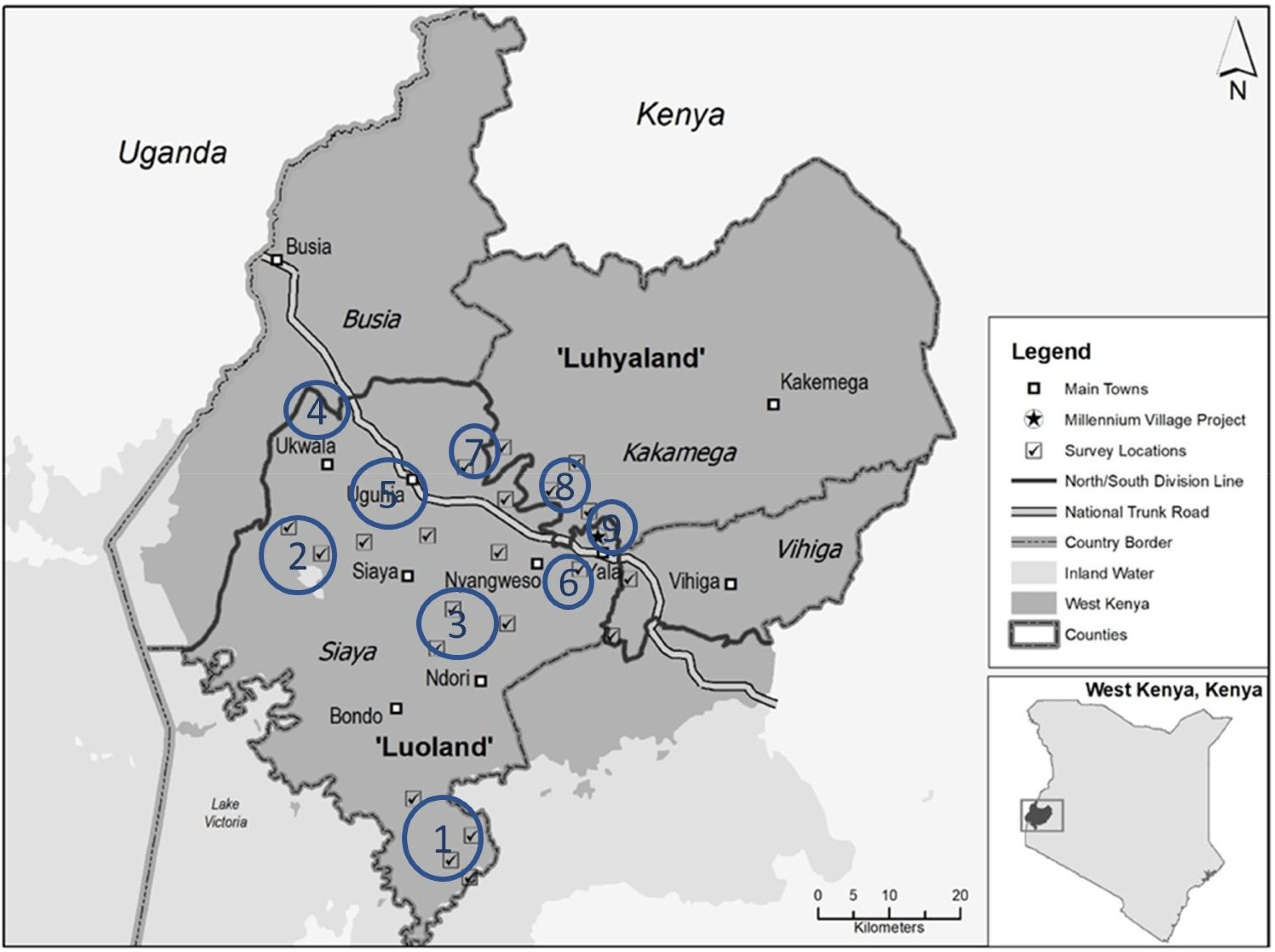
Map with location of surveyed areas.
Characteristics of the survey areas and the number of interviewed households and planted maize fields.
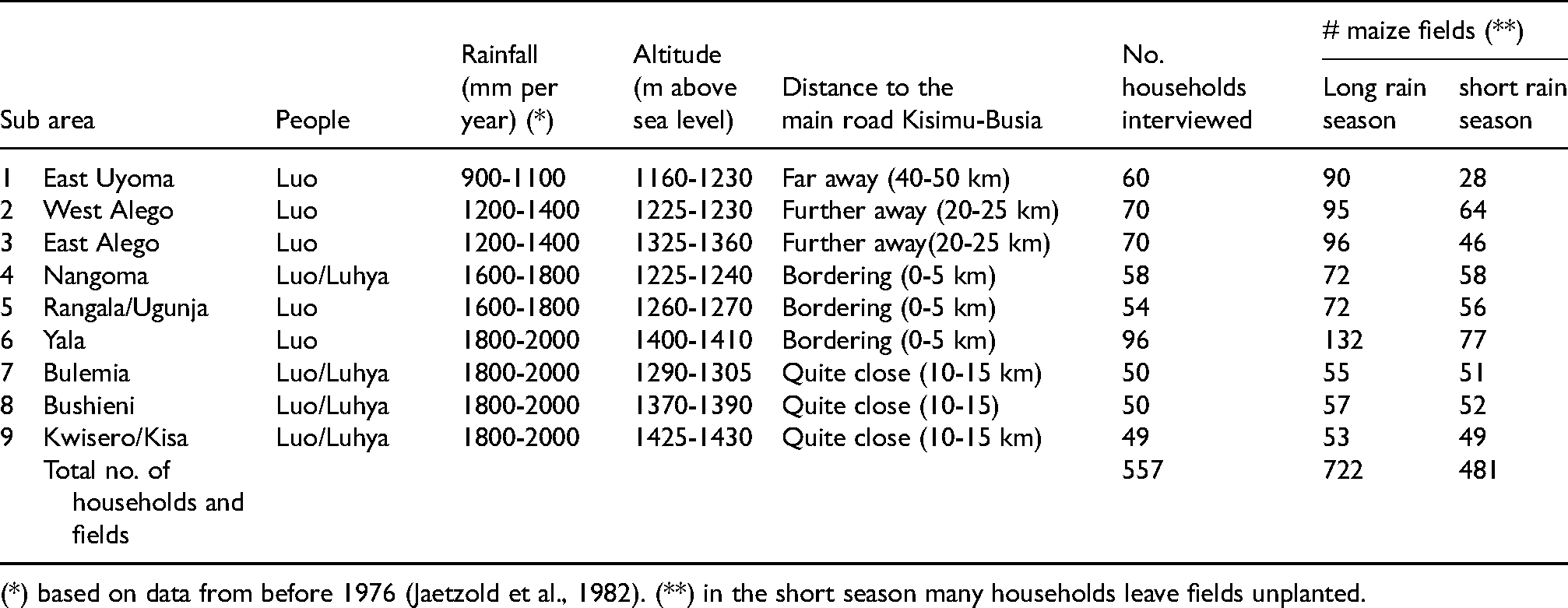
(*) based on data from before 1976 (Jaetzold et al., 1982). (**) in the short season many households leave fields unplanted.
Our aim was to explore whether high(er) rainfall favoured the use of hybrid varieties. We also wanted to find out whether access to hybrid seeds was structured by the distance from agro-dealer shops where maize seed could be purchased. We used the distance between the sub-area and the main Kisimu-Busia road as a proxy to measure this.
For the survey, a minimum of 50 households were interviewed in each sub-area by a team of 3–4 researchers during the first 2 weeks of March 2019. In each village each team walked into a different direction and asked for a short interview in each house that they passed. The interview would be with the adult household member found at home if they affirmed to be familiar with the maize seed sown that season. The survey was short and contained a limited number of questions about fields planted with maize, varieties used, the seeds and fertilizer inputs. These surveys usually took 30–60 min. Data on maize seeds and varieties were analysed on an area, household and field basis. We decided to concentrate the analysis on a per field basis and fields/type of varieties per household because we consider every household equally important, irrespective the size of their fields and farms.
Data collection and analysis
Our two 2-week fieldwork periods (March and October 2019) provided further contextualising information on the motivations underlying the seed choices of farmers. We visited the local agro-dealer shop in Yala several times (in a week when the first long season rains began, i.e. when many farmers source their seed), spent time there talking with the shop care taker and customers, and observed the interactions between the shop care taker and the customers. We also visited and talked with One Acre Fund (OAF) members and officers and met with the One Acre Fund staff in Yala. OAF refers to itself as a non-profit social enterprise and is supported by a range of donors (www.oneacrefund.org). We also planted a field of 0.5 ha. with a local youth group, GENO, in an attempt to more systematically compare the performance of local and improved varieties, extracting data on inputs and costs. A variety input trial by the third and fourth author, carried out in the study area provided data on variety performance. The second and third authors are familiar with the area and the maize production practices because of their longer-term research engagements. Common knowledge and information on the area and the maize varieties grown was further supplied by the fourth and fifth authors, who grew up in these areas and are themselves engaged in maize growing practices on daily basis. The fourth author enrolled as a member of an OAF group near his home in Bondo.
The surveys yielded many names of varieties planted in the sub-areas: the data base originally had 52 unique name entries, apart from ‘local’ and ‘hybrid’. Probably many variety names were erroneous because the coding letters and names were easily confused, not remembered or captured wrongly by the researchers. We also received different ideo-typings and a range of suggestions for local names and their synonyms for local varieties. The mix of Luo and Luhya names added to the confusing range of names. With the use of the 2019-KEPHIS list of registered varieties (KEPHIS, 2019) we cleaned and rationalised the variety naming as much as possible. For further explanation of local variety names and identities, we consulted various researchers and locally recognized experts, including farmers. We used the term improved variety to refer to maize varieties from public and private breeding programmes that were formally registered.
Results
Maize varieties planted
During the interviews farmers mentioned 18 different names of formally released and currently registered maize varieties which could be matched with the KEPHIS variety register, all of which are hybrids. The two most popular hybrid varieties were DK8031 and SC Duma 43, which together accounted for 55% of the fields sown with hybrid varieties. The next four most popular hybrid varieties, SC Punda Milia, WS505, H614D and H513, accounted for an additional 20% of all maize fields planted with hybrids. All six of these hybrid varieties were released before 2005, with H614D being the oldest one, released in 1986. H614D was only found in area 9, and seed sourcing data indicate the users bought it from the agro-dealer, i.e. it was not re-used seed. The SC Punda Milia was only used by farmers in areas 4 and 8, middle and higher rainfall areas. DK8031 and SC Duma 43 were widely used in all areas except for areas 1, 9 (DK8031) and area 6 (SC Duma 43).
Local varieties in the region arrived through a range of formal and informal introductions, the earliest of which can be traced back as far as 1890 and have been maintained by farmers ever since (Mango and Hebinck, 2004, Harrison, 1970). Local variety names were abundant, with the yellow variety Nyamula (in DhoLuo) or Shipindi (in Luhya) accounting for near to 40% of all fields sown with local varieties. The white maize variety Rachar was very common in Luo areas. In the Luhya areas there was a mix of white maize variety names that are probably synonyms, i.e. Anzika, Panadol, Ababari and Samaria. We could not confirm to what extend the white Luo and Luhya varieties are similar. We also found coloured maize varieties, with red, black or mixed colours. Often, they were just called coloured, ‘Radier’ (black/purple or a mix of white with black/purple). Together the coloured varieties counted for 11% of the fields with local varieties.
Varieties in the long and short rain seasons
The most important maize growing season in West Kenya is that of the long rains, with sowing starting with the first rains in March. The 557 households we interviewed in 2018 planted one or two fields with maize in this season (an average of 1.3 fields/household). In the long rains, 61% of the fields were planted with a hybrid variety and 39% with a local variety (Table 2). In the short season, households planted fewer maize fields (an average 0.9 field/household) which were also smaller and predominantly sown with local varieties (68% of the fields). A substantial part of the households in sub-areas 1 and 3, both in the lower rainfall zone, did not plant maize in the short season at all (50 and 34% respectively).
Hybrid and local maize varieties farmers said they planted in the long and short rainy seasons of 2018 and the percentage of plots on which they were planted.
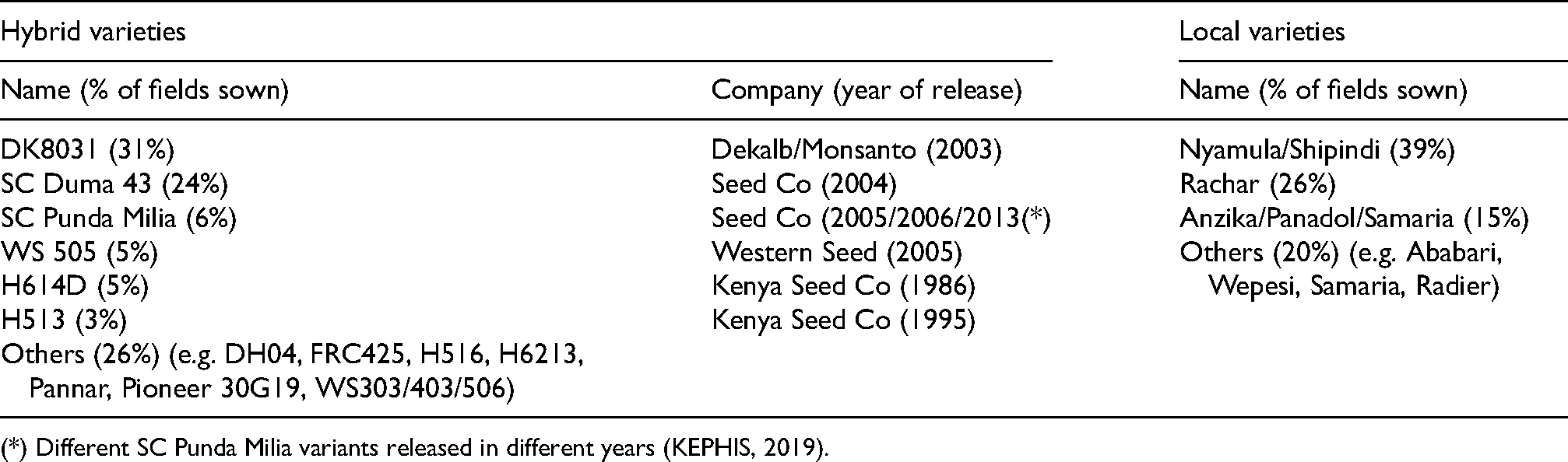
(*) Different SC Punda Milia variants released in different years (KEPHIS, 2019).
When expressed in terms of total area planted, aggregated over long and short rainy season, hybrid varieties were slightly more important since they were planted in fields that were on average larger, in both the long and short rainy seasons. Around two thirds of the total area was planted with hybrid seeds in the long rainy season and around the same part was planted with local varieties in the short rainy season (see Table 2). Considering the use of varieties by households -rather number of fields or area planted, we found that 22% of households only planted improved maize varieties and 22% only local varieties, with 56% planting both improved and local varieties (data not presented). Many households grew a hybrid and a local variety during the long rains. Sowing two varieties in a single field - usually of the same type, i.e. either local or hybrid - was not uncommon. This implies that 78% of the households planted at least one field with a local maize variety in one of the growing seasons. The same held true for the improved varieties: 78% of households planted them in one of their fields in one of the seasons. Overall, there was considerable variation between areas and seasons, whether expressed in number of fields, area or households.
Variety use in different sub-areas
Our conversations with interviewees confirmed that it is a general assumption in the area that hybrid maize varieties need more favourable conditions to capitalise on their yield potential and that they do better in the longer growing season as they are less stress tolerant. Farmers said that the rains in the short season are too unreliable, and planting is a risky investment. If they plant at all, then they tend to do so with minimal inputs in terms of seed, fertilizer and labour. These arguments do however not explain the differences between and within the nine survey areas. We found that the hybrid varieties were more popular in the highest rainfall areas 7, 8 and 9 (28% of the households planted only hybrid varieties, 63% hybrid and local varieties, 9% only local varieties; data not presented), but hybrid varieties were also prominent in the slightly lower rainfall areas (4, 5 and 6) (Figure 2). The relative popularity of local varieties during the long rains in lowest rainfall areas, i.e. areas 1, 2 and in particular area 3, stands out. Most comments of the interviewees indicate that they plant local varieties because they consider them to be good, better yielding, better tasting,the grain is more resistant to weevils, and because of cash constraints.
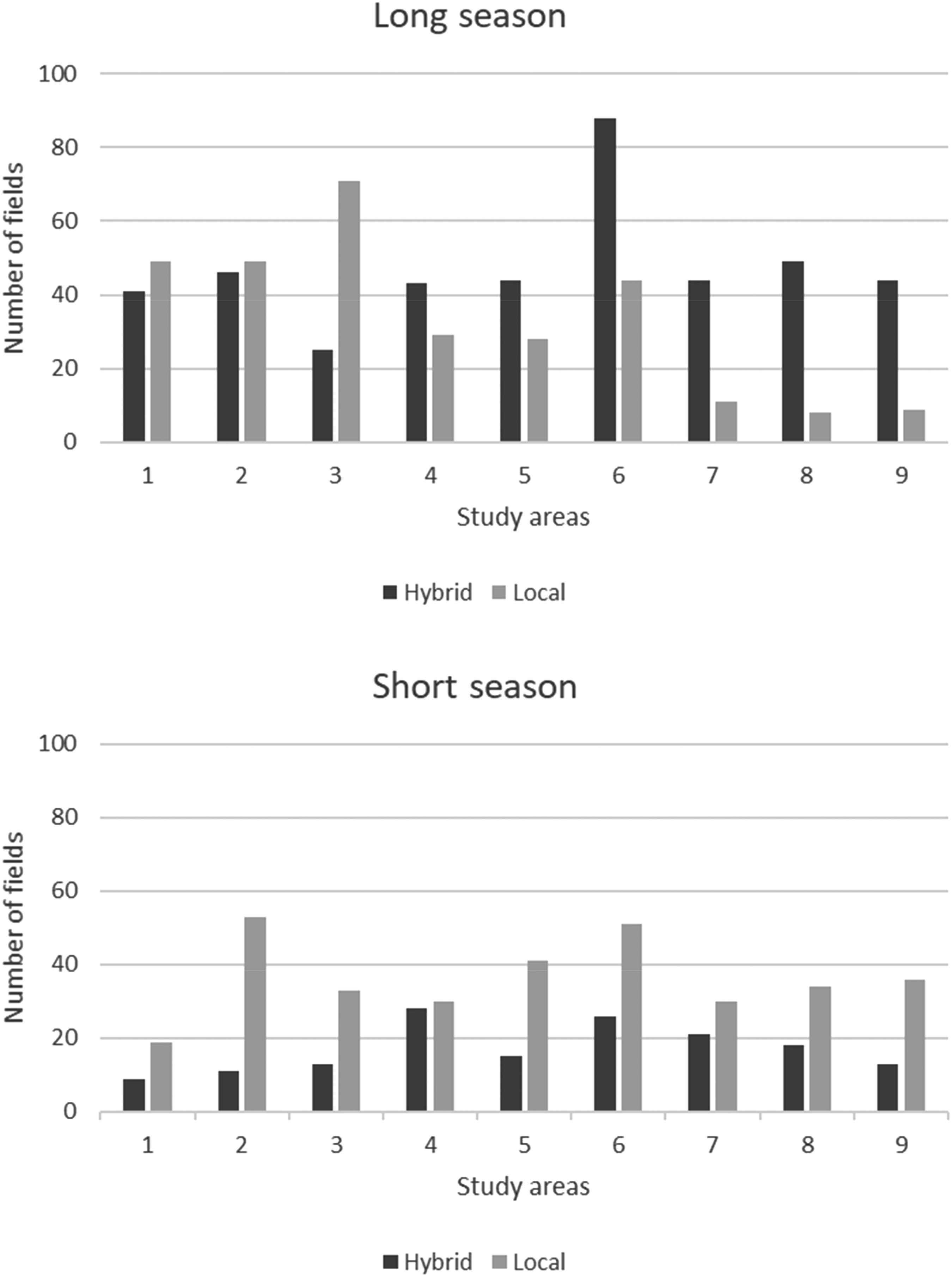
Number of fields planted with hybrid and local varieties in long and short rainy season in the nine survey areas (2018).
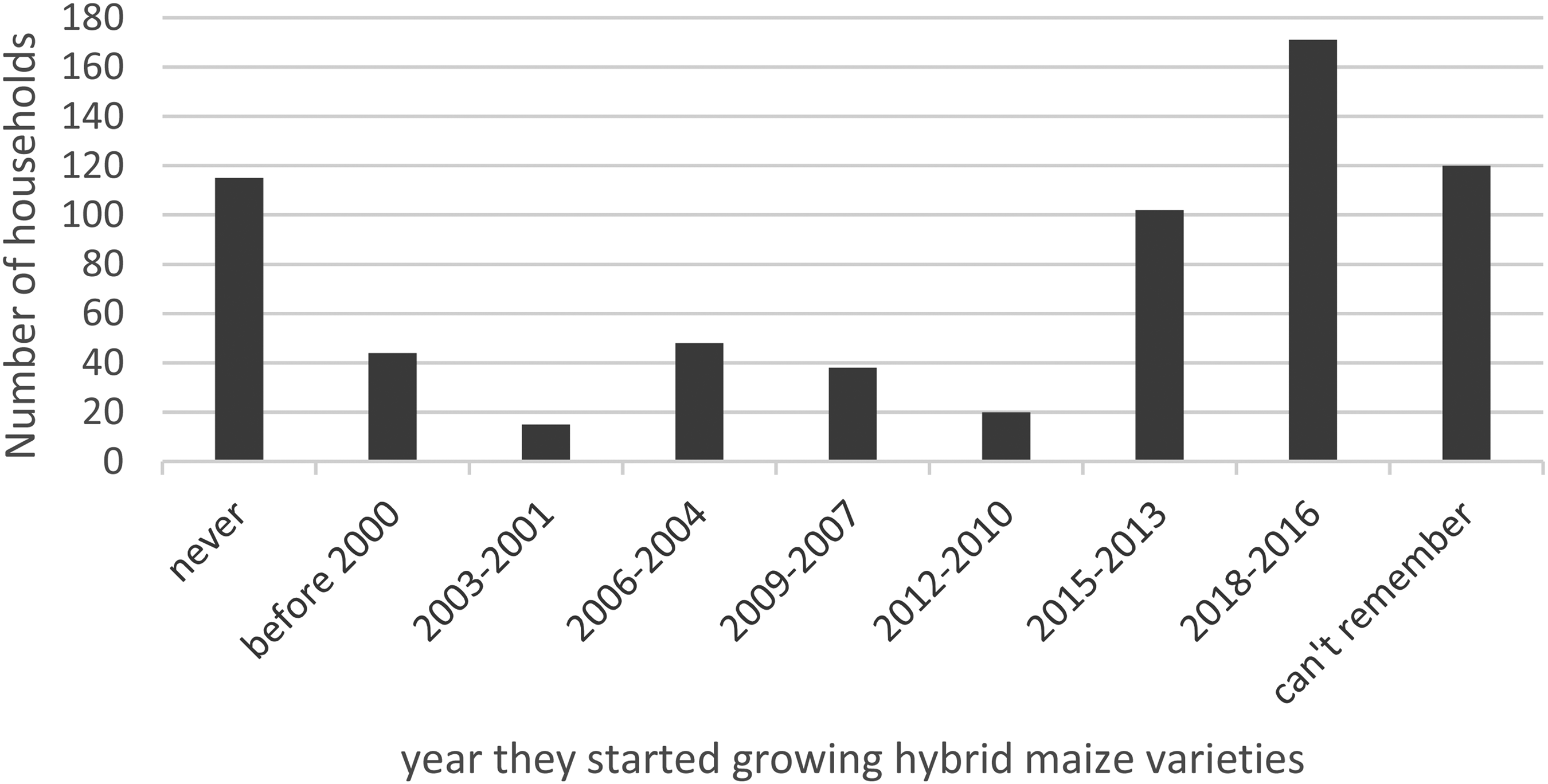
The year when households in the study area (n = 557) started to plant hybrid maize varieties.
Area 6 is of interest because this is the heart of the one of the first millennium development projects. Since 2004, people here have been exposed to the promotion of improved maize varieties and input use (Kimanthi and Hebinck, 2018; Sanchez et al., 2007). This can explain the peak in the adoption in of hybrid maize varieties in this area between 2004 and 2006. While our data do not show evidence of abandoning the use of hybrid varieties, other studies have suggested this (Kimanthi, 2019; Mango and Hebinck, 2004).
Sourcing of maize seeds
Farmers predominantly sourced their hybrid seeds from agro-dealers (73%) or through the One Acre Fund (23%) (Table 3). The One Acre Fund did not provide credit packages for the short rainy season planting, which conflicts with the information from some farmers. A small number of farmers claimed to have acquired their seeds from the National Cereal Board or the County Government although these, to our knowledge, only provide subsidized fertilizer. The seeds of local varieties were predominantly saved from their own harvest (64%) or sourced from local markets (27%). Friends and family played a limited role in sourcing either hybrid or local seeds. The informally sourced hybrid seeds were likely to be gifts or leftovers sold by friends and family. We found little evidence of hybrid seeds being re-used in the region, even in the short rainy season. In total only 8 fields were sown with seed of a hybrid variety that the farmer said was saved from his/her own harvest A few farmers claimed to have obtained seed of local varieties from an agro-dealer or the One Acre Fund.
Number of maize fields planted with hybrid and local varieties, and their areas in the long and short rainy season (*).

(*) in acres; in the short season many households leave fields unplanted.
We found seeds of both local and hybrid maize varieties were readily available in all sub-areas. In Yala and Siaya there were two or more agro-dealer shops where people could buy hybrid maize seed, and in Luanda and Butere there were even more. In other shops, even in the ‘posho’ (maize mill), one could buy seed, mostly of local varieties, for between 150 and 200 Ksh for 2 kg (1 gorogoro). Practically everyone we spoke who was planting maize, usually on half an acre or more, could tell us about differences between local and hybrid maize varieties, and where to get seed. There were no indications of a lack of awareness of the maize seed options available. On the other hand, people did not always find it easy to explain why they preferred either local or hybrid varieties. Our time spent at the agro-dealer's shop along the main road in Yala (sub area 6), observing and talking to farmer-clients suggested that often the seed choice was an on the spot decision. Many buyers of maize seed we observed asked the shopkeeper for information on the hybrid varieties available in the standard 2 kg packs, taking their time, apparently having not a predetermined choice in mind, and chose one or sometimes two packages of maize seed of the same or two different varieties. Prices at this agro-dealer were between 500 and 550 KSh. The cheaper Kenyan Seed Co varieties were 360–400 KSh per package, although these were planted in less than 10% of all fields planted with hybrid varieties (Table 4). Our agro-dealer was very clear about the recommendations he made to his clients based on his experiences with his own field and the demo trials he visited. He recognized that each sub-area had different ‘champion varieties’.
The sources of seed of hybrid and local maize varieties planted by farmers in their fields in the long and short rainy seasons of 2018/19 (n = 1199 fields).
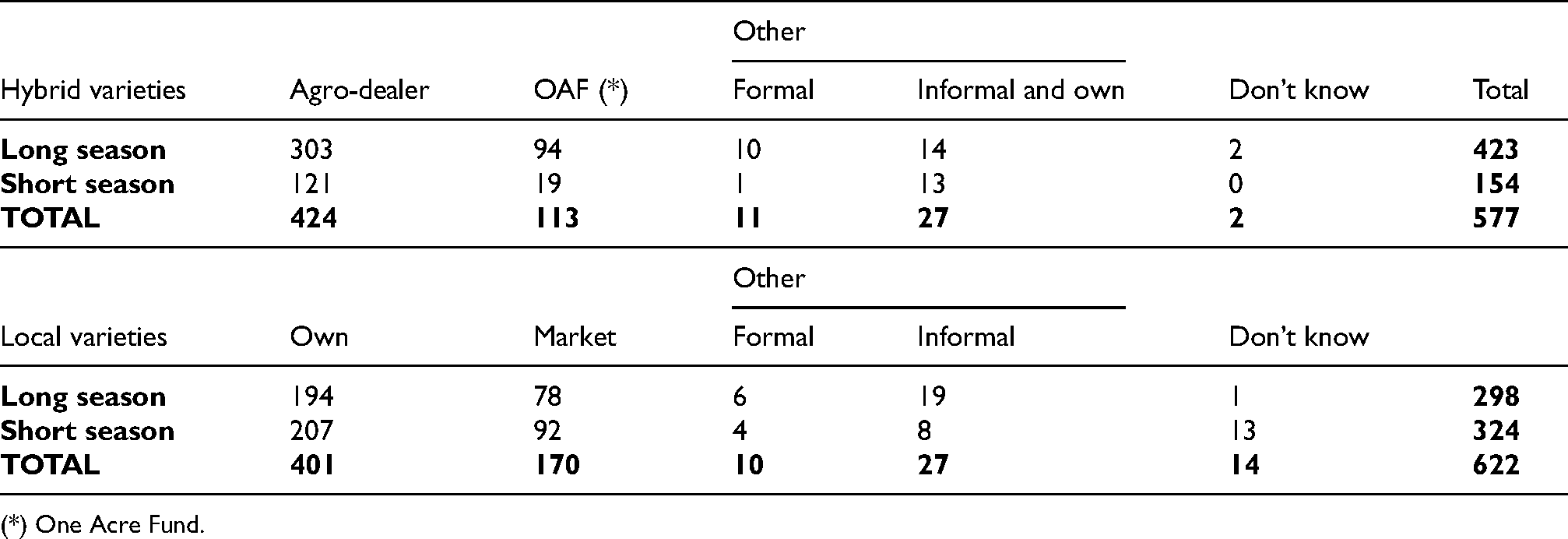
(*) One Acre Fund.
Farmer’s motivations for choosing seed and varieties
On inputs, economics and nutritional value
An obvious consideration when people make decisions about which maize seed to plant is the projected cost-benefit picture. In Yala, October 2019, the recommended input levels for 0.5 acre of maize (the typical average maize area planted by a household) mounted to a total production cost of KSh 14,700 (approximately 147 USD, Table 5), based on the data from our youth-group planting. Around 30% of these costs were obligatory cash inputs: the purchased hybrid seed and mineral fertilizers. The costs of land, labour and organic fertilizer could be provided in-kind by the household, although many farmers hire additional labour for land preparation and weeding to spread the workload. The farmers we talked to, estimated their yields to be around 10 bags (of 90 kg) of de-grained maize in an average year. Those 10 bags would roughly translate into 20,000 KSh cash if sold at the right moment, thus easily recovering the cash spent on the purchase of seed and fertilizer. When calculating all inputs, the returns on land and labour are not great (around 100 USD), but apparently sufficient to continue to grow a maize crop.
The costs (KSh) of 0.5 acre of hybrid maize planted by the geno youth group, using recommended input levels (yala, October 2019).
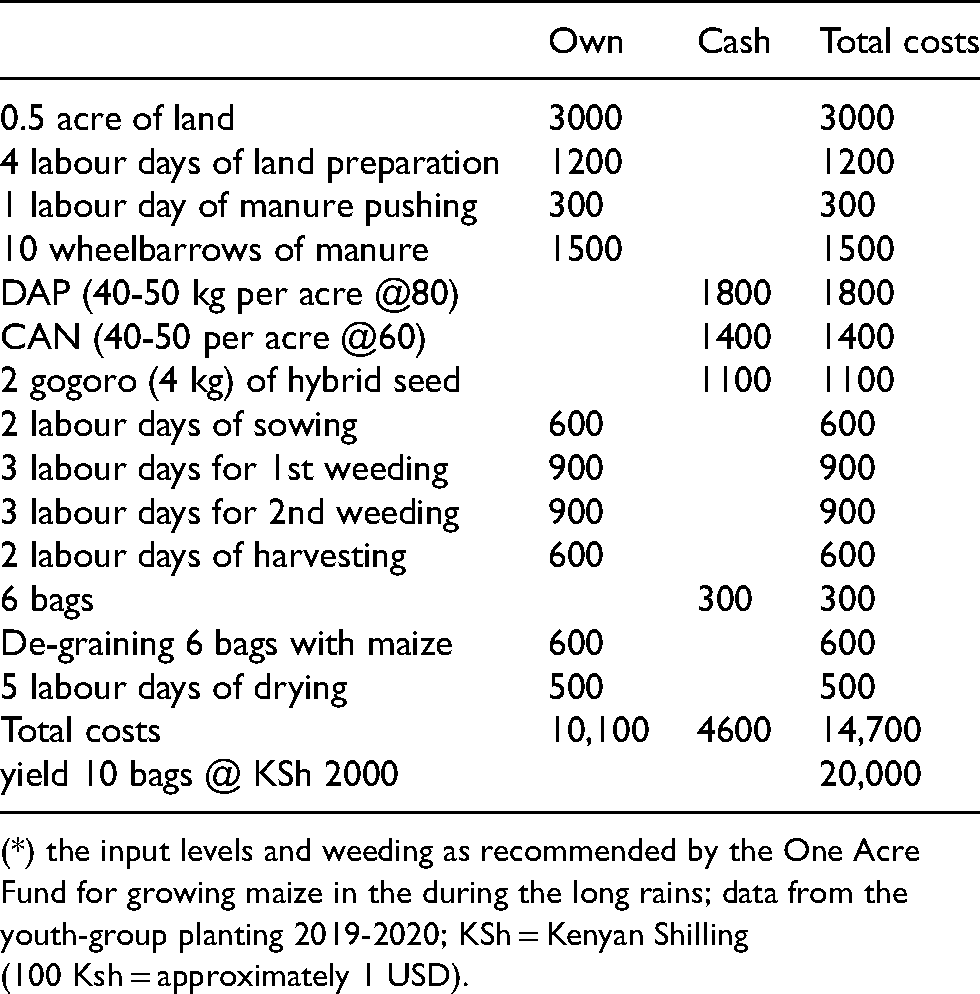
(*) the input levels and weeding as recommended by the One Acre Fund for growing maize in the during the long rains; data from the youth-group planting 2019-2020; KSh = Kenyan Shilling (100 Ksh = approximately 1 USD).
The use of the harvest raises additional considerations. A household of two adults and two young children would use 4 bags of maize for their own consumption per season, 8 bags a year. But there are many occasions where more family members are present and maize is expected to be shared or donated when possible. Such expectations extend into providing a bag of maize for school meals and the church. Some interviewees told us that keeping grain for home consumption involves post-harvest losses during storage because of further drying and, importantly, weevil damage. They said that grain from the hybrid varieties does not resist store as well as the local maize, so selling it sooner may sometimes be a better option than risking storage losses. If grain can be stored well, surpluses are best sold some months after the harvest when grain prices are higher. However, if loans have to be repaid (to OAF) or cash needs are pressing, then the grain is sold regardless of whether prices are high or low. Many households told us that they sell their maize to pay for the school fees.
Culinary preferences play a role as well. We found people who praised the ugali made from local maize and others who were less enthusiastic about it. An argument for the local maize is that one meal of ugali from that maize is enough to work all day in the field (Kimanthi, 2019). One person told us that this is true, but his daughters have a different lifestyle and appreciate lunch and snacks. Another person, a boda boda (motorcycle-taxi) driver, also recognised the nutritious aspect of the local maize, but he was not a land labourer: he only worked his own 0.25 acre field at the weekends, and for him the hybrid maize was equally good for his ugali. The sweetness is another appreciated characteristic of the local varieties.
The role of cash and risk
The predictability of the rains is a risk factor in both the long and short rainy seasons, but there is more risk in the latter. To handle the risks and balance the cash inputs with other cash demands of the household, the maize crop can be grown with seeds of a local variety and with less or no mineral fertilizer. Local varieties are commonly considered to be more reliable yielders when facing drought stress, striga pressure and lower input levels, and seeds can be saved from the last harvest, acquired from family members or bought for 100–150 KSh per 2 kg from a neighbour or local market place. One can also reduce labour input by skipping the second weeding. We have no detailed information about how planned and intentional the seed, fertilizer or labour inputs are or whether these are often ad hoc decisions made during planting and the growing season, depending on the available cash and time and the weather. Nor do we know how these decisions affect the performance of local and hybrid varieties.
Many families in the study region are chronically cash-constrained. Farms are small, often just 0.5 acre, and many people live ‘from hand to mouth’. Selling a bunch of banana brings in 200–300 KSh (2–3 USD), a day's labour on the field or in construction can give a man or women KSh 300. On the other hand, a malaria treatment of painkillers and medicine costs KSh 250, a trip to town on a motorcycle taxi is KSh 50, and membership of a One Acre Fund group is KSh 500 or more. Then there are the larger expenses, such as the education of the children. We often heard people say that they did not purchase hybrid seed or fertilizers for the March planting season because of the need to pay school fees, an important and recurrent expense. Primary day-school for one child amounts to KSh 5000 per year for a school uniform, books and pencils. If one has no other income apart from what a one (or half) acre maize field realizes, this definitely means a marginal lifestyle, in which every shilling counts. For the least privileged, this means hustling for the daily money for food and necessary other expenses by, for example, weeding fields, brick making or working in construction jobs. Moreover, chronic cash constraints imply limited opportunities for children to continue their education after primary school.
New opportunities: The One Acre Fund
In our study area One Acre Fund (OAF) plays an important role in the supplying seed of improved varieties: it provided and financed seed in 2018 long rain planting season for more than 20% of the fields planted with hybrid maize varieties. Financial considerations were on the mind of many male and female members of households who participated in the One Acre Fund (OAF) schemes. We were told that the OAF offered a credit-package with seed, inputs and the associated items, which was seen by many as a good deal. At the time of our survey, the OAF package included much appreciated corrugated roof sheets as an option in the package, motivating many to take out a loan with OAF. Some said to us that once they had the corrugated roofs, they did not think they would take out another loan with OAF. Others said they were not interested in the OAF scheme because it was too pushy about attending obligatory group meetings and its pay-off conditions and was not worth it in the end. We talked to a local pastor who said they had been planting hybrids for years, and that now he had sent his wife to the OAF training sessions, because the maize package and loan was definitely an attractive arrangement, while his wife enjoyed the meetings. The steep increase in the use of hybrid seeds in 2015–2018 (Figure 3) may reflect the attractiveness of engaging with the One Acre Fund packages. However, it is not clear what exactly makes the engagement with OAF attractive: the credit, the associated funeral insurance or other options within the package, the maize seeds and inputs themselves or the social aspects of being part of a group and able to meet at gatherings.
Yields
Finally there are motivations to use seed of particular varieties that are related to yields. It is assumed that farmers who rely on producing maize for the bulk of their income would choose to grow the potentially higher yielding hybrid varieties. However this assumption is not confirmed by our data and farmers observations on yields were mixed. Many farmers we talked to said that the yield differences between local and hybrid varieties are clear and convincing in favour of a local variety or a hybrid variety. For many others they are not, nor do they know which of the hybrid varieties yields more. We often heard that farmers chose a particular hybrid variety because OAF was recommending it. With varying technology packages applied in the long rains, maize yields vary strongly from field to field and over the years. When we take into account storage losses, the performance picture is even more blurred.
Our trial at Siaya illustrates the variability in yield levels. Although in both seasons the local varieties tended to be less responsive to fertilizer and DK 8031 with the highest fertilizer rate (N 100 and P 40) was the highest yielder, at lower input rates, the yield differences between different varieties were not consistent (Figure 4). That yield levels or performance of varieties are not clear or not convincing to farmers is supported by the few findings we have from other studies. Ojiem et al. (1997) also found that the local varieties in Kakamega yielded less at higher input levels but performed equally well at lower input levels. Wambugu et al. (2012) found little difference between yields of the local and hybrid varieties in the Busia and Siaya Districts. These two studies were with an older generation of hybrid varieties, but the observation that yield and other differences between hybrid varieties in farmer-hosted trials only resulted in 20% of the host farmers switching to the best yielding varieties in the trials (OAF, 2016) suggests that yield variations among current popular hybrid varieties produce an equally confusing picture.
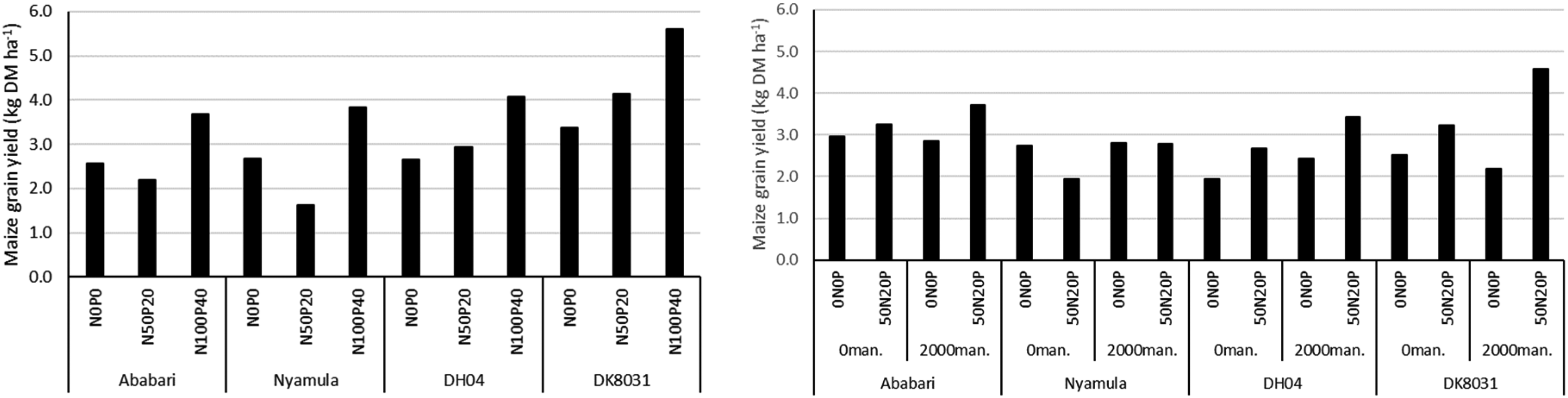
Maize grain yields per treatment (*) in trials planted in Siaya in the cropping seasons of the 2018-short rains and 2019-long rains with common local and improved varieties. (*)N0P0 means zero fertiliser inputs, N50P20 received 50 kg N ha−1 and 20 kg P ha1, N100P40 received 100 kg N ha−1 and 40 kg P ha−1. Manure was not applied in any of the treatments. A manure treatment (2000 kg ha−1) was added in 2019 long rains season, replacing the N100P40 treatment.
Discussion
The extend of use of improved and local maize varieties
The study shows that numerous varieties of maize are grown in West Kenya. In all our study sites we found a range of hybrid and local varieties being planted. Use of improved maize varieties - all hybrid varieties (with no evidence of reusing hybrid seed being a common practice) - and local varieties varied between sites and whether expressed in terms of numbers of planted maize fields, the area planted, the number of households, and the growing season. Almost 80% of the sampled households used seed of local varieties in one field or more in either the long or short rainy season. We found no evidence of limited availability or access to hybrid seed playing a role (i.e. by considering the distance to the main Kisimu-Busia road). Our interviewees did not refer to availability issues either and all places with commercial activity have (a choice of) agro-dealer shops. However, rainfall did seem to influence variety choice: in the higher rainfall areas and the longer rainy season the hybrid varieties were more important than in the low rainfall areas and short rainy season. The importance of local varieties stood out in particular sites and in the short rainy season: they seem to be a better fit with the short and high-risk growing season. Cultural motivations to plant local maize varieties are important in West Kenya (Mango and Hebinck, 2004), but how this affects differences found between sites that are predominantly Luya or Luo is not clear.
While the variation between sites remains largely unexplained, we also failed to find a pattern in the variation within sites. While the variation in the use of varieties within sites can be partly attributed to variation in soil fertility or rainfall (Tittonell et al., 2005; Vanlauwe et al., 2006), we found the variation in socio-economic rationales to be a more plausible explanation (Place et al., 2007b). For the short rainy season the rationales for planting local varieties were relatively uniform: investing in hybrid varieties and inputs seems too risky. People also said that the local varieties fit better because of earlier maturity. But in the longer rainy season, the motivations were variable and the same motivation could underpin different varietal choices: better yields (a motivation for both improved and local varieties), better taste, better weevil resistance, no money to buy seeds, the attractive One Acre Fund credit package, the unattractive obligations and pay-back regimes of the One Acre Fund were all frequently mentioned.
Farmers’ motivations and choice of maize seeds
Our analysis suggests that growing maize is not a very attractive activity in monetary terms and that it is unlikely that a household could thrive on one or half an acre of maize land. Nevertheless, practically everybody grows maize, either a local or a hybrid variety, having socio-cultural or economic motivations. Economically calculated motivations can still lead to different decisions. An earlier study by Wambugu et al. (2012) showed that farmers who opt for a maize crop with farm-saved seed of local varieties gave them a higher cost-benefit ratio than sowing a hybrid maize variety. In line with Duflo et al. (2011) we also found that cash availability around sowing time is also an important factor in the decisions on seed sourcing. Thus, to go for a maize crop that requires the least cash investments can be an economically rational decision. The presence of the One Acre Fund in the area is also a relevant factor to consider and probably contributes to the number of households sowing the maize seeds offered in the organisations’ credit package that they find attractive (note that OAF does not provide credit packages for the short rains). The majority of the households grow a combination of local and hybrid varieties, in both seasons. This suggests that cultural motivations, which includes the desire to be self-sufficient in maize and the tradition of planting the families’ local varieties, are a compelling reason to grow maize, as found in earlier studies (Cohen and Atieno Odhiambo, 1989; Kimanthi, 2019; Mango and Hebinck, 2004).
The challenge of variety replacement
The need for accelerated variety turnover is frequently mentioned as important to improving the impact of genetic gains achieved by breeders in the development of better maize varieties (Abate et al., 2017; Rutsaert et al., 2021; Spielman and Smale, 2017). Our findings indicate that there are different factors that contribute to the present slow turnover of maize varieties in West Kenya. First of all, there is a range of socio-cultural and economic motivations involved in the decisions that farmers make concerning a particular seed or variety, which often results in the choice of a local variety. Another factor in the equation is the apparent absence of champion hybrid maize varieties in terms of yield and economic profit. It not surprising that people continue to rely on the well-known older generation hybrid varieties (i.e. H614D) which also have relatively good weevil resistance. We know from other examples that old champions are hard to replace. In Zimbabwe, farmers in resettlement areas continued searching for an older hybrid variety that SeedCo introduced in the early 1980s. They relied on older stocks that were available and these stocks were shrinking because SeedCo had stopped producing these hybrids and instead introduced newer hybrids because they were easier to produce and more profitable for the company (Bourdillon et al., 2007). In the Netherlands the replacement of the 100-year old potato variety Bintje only accelerated when varieties with superior disease resistance became available; statistical data on yield advantage was not enough to convince farmers to change varieties. Maize seed companies in Kenya are aware of this and while they release new varieties, they also keep the old ones on the shelves (Rutsaert and Donovan, 2020). In these situations, with many varieties available, agro-dealers can be highly influential sources of information and may even result in the ‘fads of the day’ (Stone, 2007).
In contrast to Rutsaert and Donovan’s findings (2020) in the Embu-region, our findings and those of Rutsaert and Donovan for their site in West Kenya do not show that commercially oriented farmers purchase the more expensive seed from global seed companies. This is probably because in West Kenya the average farm size and its variation are small. West Kenya, with its combination of high population pressure, small farms and high soil fertility and many project interventions may not be representative of Sub-Saharan Africa yet farming under chronically cash constrained conditions is widespread among rural SSA households. These households can be full time engaged in farming, but household members can also derive income from other jobs, such as Fred, the agro-dealer shop keeper, or the boda boda driver, the pastor and many others we met. Their motivations can vary and deviate from those of researchers and ‘commercial’ farmers elsewhere who aim at higher agricultural productivity. They are, however, referred to as ‘farmers’ and included when discussing the adoption of improved and new varieties, varietal turnover and the availability and access of their seeds.
Conclusions
Seed companies’ understanding about seed use and preferences is considered to be a key-factor in advancing the commercial maize seed value chain in Kenya, and achieving higher turnover rates of improved maize varieties (Abate et al., 2017; Rutsaert and Donovan, 2020). Our data show that in West Kenya, the diverse use of seeds and varieties reflects the different roles that maize growing plays in people's livelihoods. This differentiation in the ways that people engage with maize growing shapes their motivations that underly choices in relation to seeds, varieties and other agricultural technology components, as is also noted by others (Hazell, 2019; Mausch et al., 2018; Scoones, 2016). As a result of these varying rationales, including socio-cultural and economic considerations, people arrive at different seed and variety preferences. We question whether a better supply of improved varieties by a commercial seed value chain could meet the preference range we found in our study. For a seed supply system to be demand-responsive, the existence of multiple type of varieties, seed sources, seed delivery pathways seems essential. The implications of addressing such a diverse demand represents a tremendous challenge for international and national breeding and seed programs (this special issue). It requires reconsidering the role of local varieties, farmers and other stakeholders in the development of varieties and supply of seeds.
Next to our argument that there should be more attention for the rationales that underly the seed and variety choices of different types of farmers, we also consider that, at least for West Kenya, a more systematic evaluation of the performance of these same seeds and varieties is lacking. Field trials with more recent rainfall data and social and economic analysis that include the different perspectives and considerations from those who grow maize would provide breeders, researchers and seed companies with the necessary information to select the portfolio of varieties and orient their promotions. It would also be useful for farmers themselves and enable them to make better informed seed and variety choices. Such evaluations should include a wide range of maize varieties, from commercial, local and public sources, and information on their performance should be made widely available.
Footnotes
Acknowledgements
We thank the two anonymous reviewers for their valuable comments on an earlier version of the paper and Nick Parrott for his editing and his sharp eye for details.
Declaration of conflicting interests
The author(s) declared no potential conflicts of interest with respect to the research, authorship, and/or publication of this article.
Funding
The author(s) disclosed receipt of the following financial support for the research, authorship, and/or publication of this article: Funding for this research was received from a grant by the Department of Social Sciences, Wageningen University, the Netherlands. Support from the NWO and the CGIAR Research Programmes (CRP) on maize agri-food systems (CRP MAIZE) to the field work, data processing and the preparation of the manuscript is highly appreciated.
Authors’ note
The ‘West Kenya Maize Variety Survey 2018-2019’ was an initiative of the first three authors that was undertaken in the context of a debate about the willingness of farmers to plant modern maize varieties. Hellen Kimanthi, Richard Kiaka, Wycliffe Waswa and Jared Magego assisted in administering the survey.
