



Abstract
Over recent decades international agricultural research has shown that it can generate agricultural technologies with benefits for societies in the Global South that outstrip the investments many times over. However, it has also been shown that the benefits generated are not evenly spread and do not reach some groups of farmers at all. Too often, segments of the intended target populations are left out and these often tend to be those already ‘left behind’. New seeds and varieties are important elements of agricultural technologies and the development of these relies on seed delivery systems to get new varieties to the farming population. Here we argue that a clear analysis of the preferences and needs of farming households and their inherent heterogeneity is required when setting the goals for breeding programmes and designing seed delivery systems. We characterize the differences in demand profiles, which implies different types of seed delivery models that are tailed to context, crop and preferences and the multiple needs of farming households. We point to the implications for organizing and targeting the seed delivery system in order to cater for all. Recognising the existence of diverse demands, developing different seeds and varieties and delivering them through a variety of models asks for clarity on mandates and opens up the opportunities for coordination that will lead to synergies in meeting the UN's Sustainable Development Goals and reach a wider population of farming households.
Keywords
Introduction
Food Insecurity and rural poverty remain two of the most challenging problems of global development. Solutions to these problems most often involve building on agriculture to produce sufficient and nutritional foods as well as good returns for the producing households. Agricultural research for development (AR4D) has produced impressive returns to investment in this respect over the past decades. International Agricultural Research Centres (IARCs), as important actors in this field, are estimated to have generated a 10:1 return on investment (Alston, Pardey, and Rao, 2020). Developing new seeds and varieties and disseminating these to farming households around the world through various types of seed systems 1 has been at the heart of this success. This may lead one to the conclusion that the global community is on the right track and simply needs to continue along this path, applying the latest insights and modern breeding and seed multiplication techniques. Indeed, the latest initiatives give the impression that this focus is being envisioned and strengthened, with an emphasis on genetic gains and accelerating variety turnover (Crops to End Hunger, 2021; EiB, 2021).
Unlike many other agricultural technologies, most varieties and seeds, once released, do not suffer from long pay-off periods. Their benefits are more immediate. In addition, the need for capital and potential risks are relatively modest as compared to, for example, conservation agriculture. Still, only an estimated 40% of targeted beneficiaries actually adopt newly promoted varieties, leaving a gap of some 60% (for staple crops: McEwan et al., 2021; Thiele et al., 2021; for grain legumes and dryland cereal crops: Woldeyohanes, Hughes, Mausch, and Oduol, 2021). This highlights the remaining and persistent limitation with the distribution and/or reach of benefits from plant breeding efforts which is often related to the types of farming households and/or their geographic location.
The problematic gap is frequently explained as the result of a series of hurdles to adoption that non-adopters are not (yet) able to surmount. However, it also needs to be asked whether or not there are concealed structural problems that maintain the persistence of the adoption gap: structural problems that result in mismatches. These could be mismatches between the farming households’ aspirations and the underlying assumptions used by the developers of the technologies (Mausch et al., 2021a; Verkaart, Mausch, and Harris, 2018), mismatches between the farming households’ goals, motivations, and incentive structures and the characteristics of the technologies (Gassner et al., 2019; Harris and Orr, 2014), or shortcomings in the distribution of the technologies through the existing systems (Almekinders et al., 2019b; McEwan et al., 2021). The mismatches are variable and occur in different combinations and different contexts, leading to the observed ‘mixed successes’. Acknowledging these mismatches asks for reflection on the aspirations of breeding and seed programmes to supply seeds and varieties, when making the decisions about who to cater for, and how. If catering for all farming households, then this raises the question on how to deal with the diversity in crops and contexts effectively. It is a question that is central to IARCs’ strategies and the new One CGIAR Research Agenda, in which system transformation and delivery of better seeds to the most disadvantaged groups are frequently cited as key areas of impact (CGIAR System Organization, 2021).
In this paper we argue that if the ambition is to cater for all, then a re-orientation of objectives and approaches is clearly needed so that they are appropriate for different target groups. We also argue that we have to consider that farming households make choices based on what is available and accessible to them and then assess how this fits with their needs, preferences and goals. This means that rather than continuing to ‘nudge’ farming households towards taking up a supply that fits the envisioned desirable development pathway of IARCs and the CGIAR, i.e., increase agricultural productivity to contribute to food security and providing a way out of poverty, we need to reconsider with which objectives, how, and towards what goals we operate and how this relates to the seed systems we support. The objectives of this paper are therefore to explore the variable contexts of farming households, how these translate into households’ preferences and needs for seeds and varieties, and how these could be better reflected in a demand-orientated seed supply and seed system approach.
In the following sections we will outline how different contexts and farming household heterogeneity shape a diverse demand for seeds and varieties, and how this connects with seed delivery systems. We then outline a framework that could support the thinking around seed delivery systems that cater to the increasing heterogeneity and thereby reach more people and better deliver on development targets. Before concluding, we discuss implications that may be worth considering for the organization and implementation of international agricultural research and development efforts for the envisioned target groups.
The Underappreciated problem: Contexts, farming household heterogeneity and seed systems
Current Supply models – and their challenges
Seed systems are a crucial bridge between research labs and fields (including those of the national release system) and farming communities, delivering new crop varieties to farming populations. Private sector seed companies and their network of demonstration plots that showcase new varieties are an appealing and easy channel for getting new seeds and varieties to farming households. ‘Consumer/customer’ demands are also assumed to be best communicated and served through this avenue. This channel appears to work relatively well for commercially grown vegetables, soya beans or, the widely grown staple, maize, but these seed businesses also face important challenges (e.g. for the delivery of hybrid maize seed see Donovan et al., (2021)). This approach, however, has not worked for other major food crops and/or all geographical areas. Similarly, seeds of minor crops have not been able to reach the shelves of these distributors. For vegetatively propagated crops (VPCs), a route via decentralised multipliers, mostly farming households trained in specialised seed practices and promoted as private sector entrepreneurs, is being pursued (Kilwinger et al., 2021; McEwan et al., 2021), but so far without sustained success (Almekinders et al., 2019a; McEwan et al., 2020). For less commercial crops such as sorghum, which tends to be grown in marginal areas in eastern Africa, new or improved varieties remain largely unadopted (ASARECA/KIT, 2014; Hambloch, Kahwai, and Mugonya, 2021; Kiambi and Mugo, 2016; Mubangizi et al., 2012), except for some cases in which demand from breweries is a major driver. However, there are also case studies that cast doubts over early success stories in adoption, as varieties did not live up to expectations and were abandoned (Simtowe & Mausch, 2019) and demand for grains from breweries is heavily affected by policy decisions (Orr, 2018).
The smaller scale of the commercial seed delivery models and pathways for crops other than maize, vegetables and soybean in most cases is directly related to the difficulty in identifying commercialised seed delivery models that can be sustained by farming households’ demand for seed (e.g. Almekinders et al., 2019a; Hambloch et al., 2021; Kilwinger et al., 2021). Considerable advances have been made by making seeds available in smaller quantities or seed packs. Various types of microcredit schemes claim to have increased farming households’ use of improved seeds. Insurance for climate-related crop failure is being explored as a way of creating enabling conditions for the use of improved seed (which usually require higher input use as well). However, domestically saved seed or seeds from neighbours may be a more secure alternative and an economically more attractive seed source for those crops and varieties that are not subject to genetic or seed health-related degeneration. Apart from having to compete with the domestically saved and locally sourced seed, the formal seed value chains also face the obstacle of ‘last mile delivery’ being costly and difficult to organise, especially for minor, bulky and vegetatively propagated crops, thus frequently making it unattractive for private sector actors. Community-based seed supply and decentralised multiplier models are widely promoted but have so far shown little sustainable success (see Almekinders et al., 2019a). As a consequence, the existing seed delivery models continue to mostly make improved seeds and varieties accessible for agricultural producers who are well connected with input and output markets.
Variation in success: Farming household typologies
The models and associated pathways for seed delivery described above cannot be generalised or scaled-up/out to serve all farming households. Despite some countries achieving impressive adoption rates of 90 + % for some improved varieties (e.g. chickpea in Ethiopia, India and Myanmar and maize in some countries), there are strong differences between crops, within and between countries. Overall, adoption rates are below expectations. Additionally, the lack of variety turnover creates concern: farming households who adopted older improved varieties may not necessarily successfully replace them with more recently released varieties (Spielman & Smale, 2017).
Adoption studies have pointed to a lack of capital (despite the relatively low investment involved, some farming households find it hard to make even modest cash investments), limited knowledge or social exclusion as constraints to the adoption of improved seeds, disproportionally affecting already marginalized farming households, particularly poorer producers and women. In other words, the adoption and replacement of improved varieties with better varieties is most prominent in the type of farming households that match the goals and expectations of the dominant breeding programmes and seed delivery pathways. In addition, agricultural input and credit policies and the efforts to better connect farming households to the market, further supports this by creating a better institutional enabling environment (see e.g. Birner and Resnick (2010) for an overview). While such ‘enabling’ may have helped farming households who have the capacity to ‘step-up’ and generate higher returns (see Figure 1), it has not helped a large proportion of households to become ‘adopters’ of the productive seeds being offered (e.g. Birner and Resnick, 2010; Dawson, Martin, and Sikor, 2016).
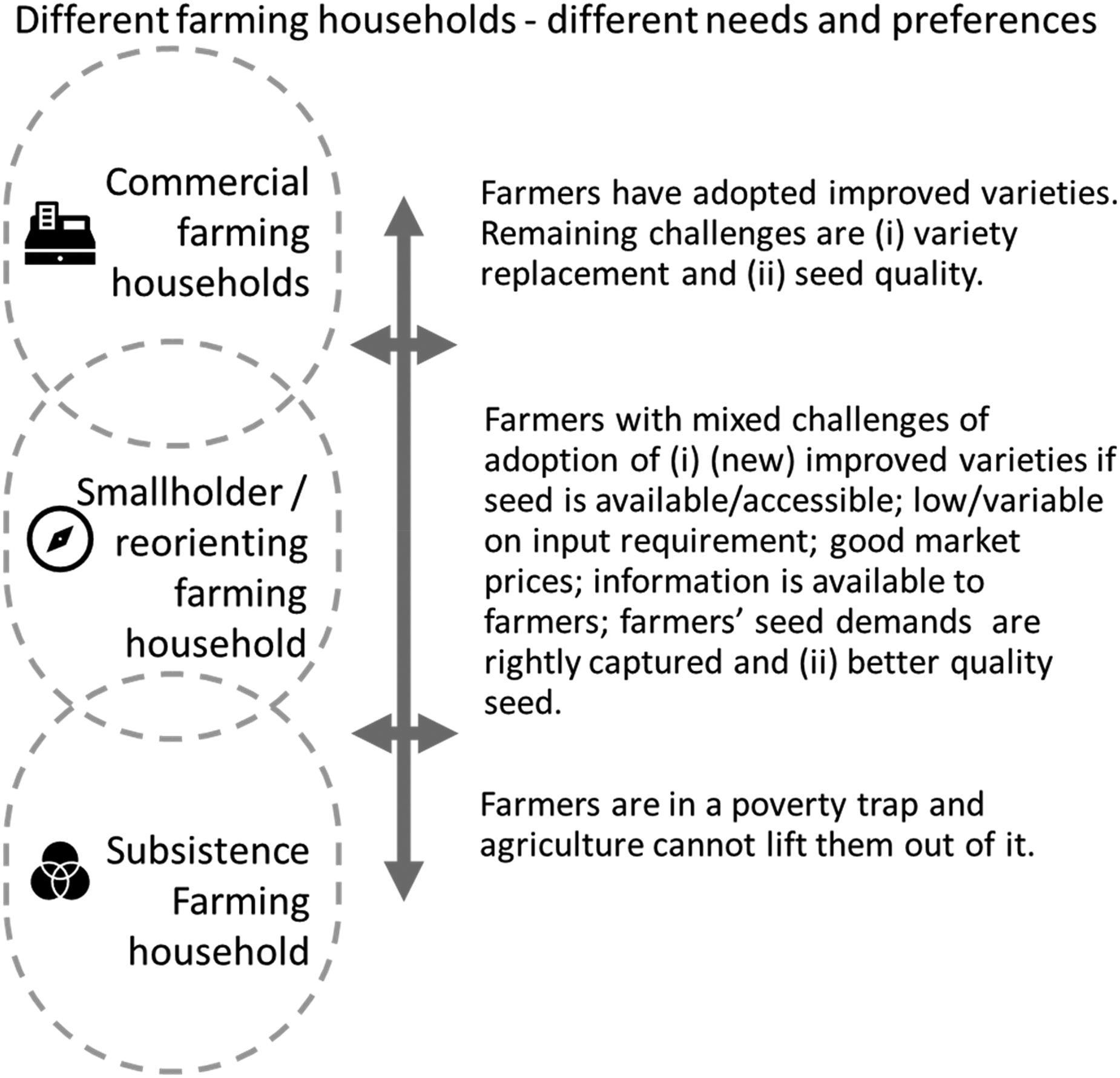
Diversity of smallholder farming households – a broad categorisation illustrating the extreme points.
We argue, along with others (Hazell, 2019; Hazell & Rahman, 2014), that farming households are not homogeneous and may need to be served by different technologies and delivery mechanisms. On-going processes of economic development, urbanization and population growth have contributed and continue to contribute to socio-economic differentiation and greater heterogeneity among the rural population. This potentially increases the range and demands of seed clients. Some of these clients are farming households striving for higher agricultural productivity, whereas others prefer to increase labour productivity, or lower their (time or cash) investment or risks. Some of them are full-time farming households with opportunities to improve their livelihood by increasing agricultural productivity, whilst others are not. Nevertheless, we still refer to all of them as farmers (Dorward et al., 2009). Many households may have substantial off-farm income sources, out of choice or need. Some cannot expect to have a decent livelihood on the basis of their farm and need off-farm incomes as a supplement (Giller et al., 2021). The poorest may not be helped by agricultural technology at all as they face existential problems of, for instance, security and health, or their farms are simply too small to generate sufficient returns from farming alone (Alwang et al., 2019; Giller et al., 2021; Harris and Orr, 2014). The visions, rationales and challenges of these farming households are diverse, generating different sets of aspirations: thus, the applicable underlying theories of change and impact pathways will vary substantially (Mausch et al., 2021a), which needs to be reflected in development approaches, and the development and assessment of technologies, as well as appropriate intervention entry points and project designs.
Figure 1 presents a basic conceptualization of groups of farming households, i.e. commercial farmer, smallholder family farmer, and subsistence farmer, which should be understood as running along a continuum rather than discrete categories. This helps delineate the heterogeneity of farming households, their needs and preferences and, thus, their different seed demands. These typologies are highly heterogenous, variable and fluid across time and space. In addition, the heterogeneity is becoming increasingly diverse and complex, resulting from dynamics such as increased integration into the global economy, urbanization, a rising middle class and population growth. Differences between crops and crop combinations, agro-ecologies, market access and integration and several other contextual drivers make farm/seed demand typologies increasingly difficult to define. The role that agriculture and improved seeds play and can potentially contribute to improving their livelihood and global food security is a world full of differences. Hence, Figure 1 represents a broad categorization of farming households, which need to be understood in connection with the heterogeneity of farming households across time and space as well as other contextual factors (as elaborated later). However, it should not be understood as the entry point to design three seed systems to cater for the three groups.
The contextual heterogeneity and different ways of engaging with agriculture are sources of socio-economic variations that shape the demand for seed and varieties. While breeders and seed system researchers have paid attention to agro-ecological variations, those of the socio-economic type have featured less prominently on their radar. These socio-economic variations not only exist between regions but also within regions and communities. The ways in which this variation can lead to different demand for seeds and varieties have received some attention recently, mostly in the form of identification of gender-related variety trait preferences (e.g. BMGF, 2012; Teeken et al., 2018; Weltzien et al., 2019). There are some other examples, but these are scattered across many crops and there has been no systematic approach in the way in which these differences have been studied. Pircher, Almekinders, and Kamanga (2013) sought to understand why some farming households in a rural community in Malawi adopted improved maize varieties and others did not. They found that the vouchers for seeds of improved varieties could not be relied on by those who need them most, that some could not afford the fertilizer that the improved seeds need, and others provided on-farm labour to ensure food and income rather than weeding their own field. In Mexico and Kenya, there are traditional farming households that have cultural and economic motivations for their preferred maize variety traits which are often not found in improved varieties (see e.g. Almekinders et al., 2021; Keleman, Hellin, and Flores, 2013). In Ecuador, some potato smallholders are more reluctant than others to invest in healthy potato seed, despite the many research reports showing the benefits, probably because they lack capital, knowledge, and their traditional management practices keep seed degeneration at acceptable levels of yield reduction (Navarrete, forthcoming). In a study that deliberately explored possible differences in seed and variety preference between groups of farming households within a community, Kilwinger et al. (2020) found that female farmers in Uganda have, against expectations, not taken up the use of tissue-culture bananas. This was in part because the tissue culture bananas are not their favoured varieties, and the sources where such planting material are available, often project-supported nurseries, do not suit them. The calculations of profitability of using improved seeds, which often forms the basis of recommendations and promotion, can also vary significantly between farming households, as for many much more is at stake than just what is reflected in the market price (see e.g. Cleaver, 2005). There are motivations related to labour use, cash expenditures and risk exposure, which may differ between households in a single community and result in a preference for the use of one's own seeds or those of a neighbour and rejecting more ‘productive and profitable’ agricultural practices.
Towards a solution: From types of farming households to demand profiles and models of seed delivery
Recognizing the broader context
We suggest investigating seed demands and delivery systems and associated interventions in a larger system perspective and moving beyond a linear development pathway and seed supply chain perspective. This becomes especially important when looking at the envisioned development outcomes of breeding efforts (within and beyond IARCs and the CGIAR). One currently advocated wider system perspective is that of the agri-food system. Using this perspective, one can elucidate how seed systems are embedded within different parts of the food system, in particular food value chains (i.e. ranging from seed to consumption), and the contextual/local drivers and associated outcomes (economic, environmental, social, and political) (Béné et al., 2019; Tendall et al., 2015). For example, the agri-food system perspective highlights how a demand pull from certain sectors can initiate demand for specific varieties, how soils and agro-ecological conditions influence which varieties are suitable, how the political economy and institutional environment (including power relations) shape the structure and functioning of the food and seed systems (such as oligopolistic input market structures), and how social and cultural norms influence farming households’ preferences for specific crops and varieties.
Understanding seed systems and interventions within the agri-food system enables the identification of different types of seed demand in different contextual conditions, as well as the inherent trade-offs at the micro-level that are faced by farming households with regards to investments in production and consumption, trade-offs at the meso-level faced by seed companies and agro-dealers in terms of seed investment decisions, as well as trade-offs at the macro-level between, for instance, different agricultural sectors or economic sectors. If the objective is to reach different SDGs through seed-based interventions, most notably SDG 1 (No Poverty) and SDG 2 (Zero Hunger) 2 , development planners and practitioners need to take into account the various direct and indirect impacts of proposed interventions within the seed and food systems, as well as acknowledge and manage the inherent trade-offs between the different development goals (Mausch, Hall, and Hambloch, 2020). Specifically, seed delivery pathways and models should respond to the relevant agri-food system drivers of seed systems and acknowledge that improved (productivity maximising 3 ) varieties may not be the most appropriate and cost-effective solution for increasing farm productivity and production of nutritious and diverse food crops.
Figure 2 depicts the various contextual agri-food system drivers shaping farming households’ needs and preferences for different seeds and varieties. In the following, we focus on the interrelations between farming household types, demand types, demand characteristics and seed delivery systems while linking these back to the various contextual drivers within the agri-food system.
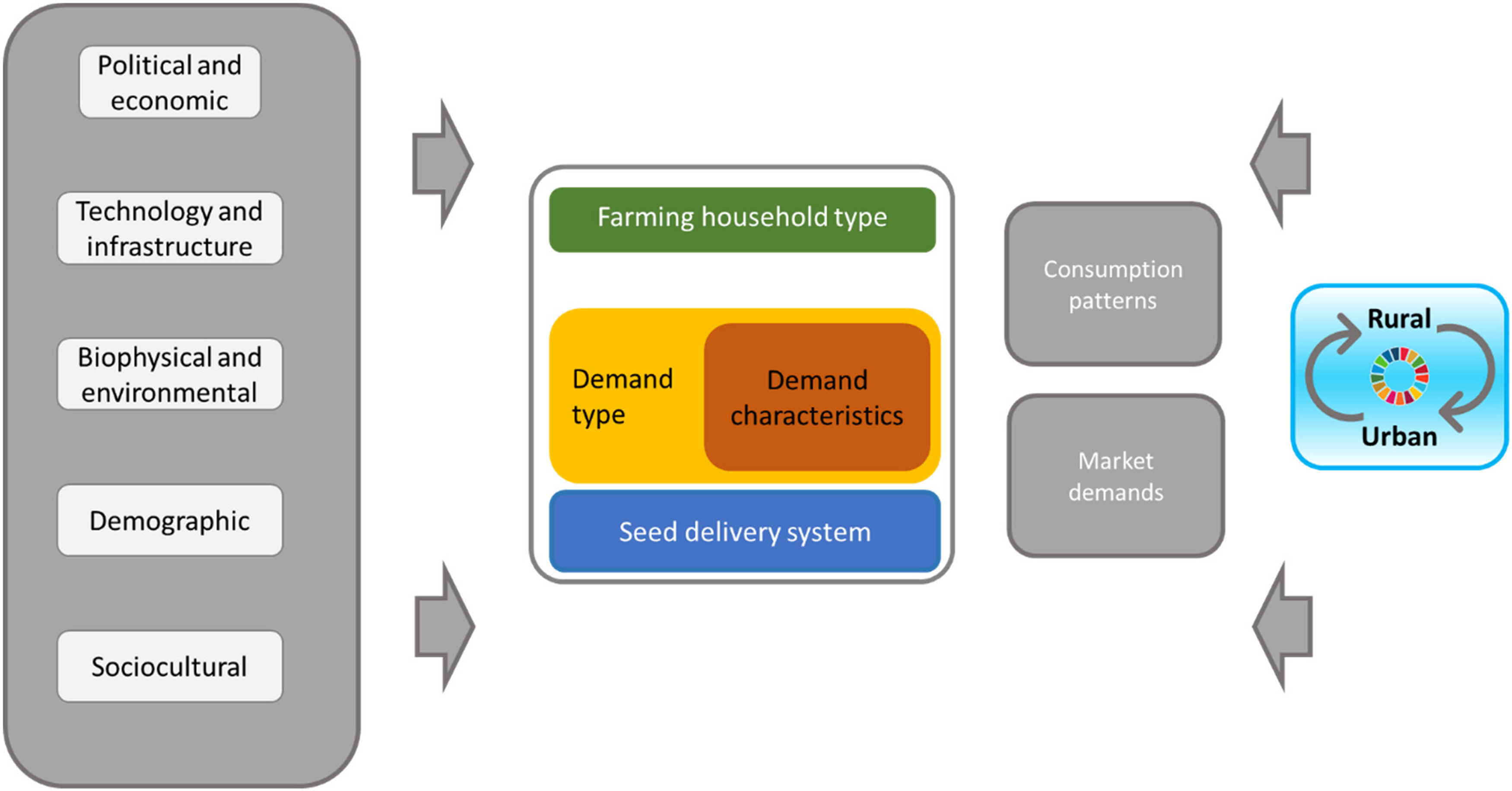
The various contextual drivers shaping the context of farming households and their demand for seeds and varieties.
If we recognise that the crops, regions and people create unique agri-food system contexts with farming households that engage with agriculture in different ways (Hazell, 2019), then the challenge is to identify combinations of demand type and characteristics, and seed delivery models that suit both the crop and these farming households. The challenge of designing seed supply becomes one that can be thought of composing a set of menus that represent the tastes of different consumers (see Figure 3) – not only a menu of a 5-star fine dining restaurant but more like options in a food park where many types of restaurants service a heterogenous customer base and where different delivery models exist, be it dining in, take away, home delivery or combinations thereof.
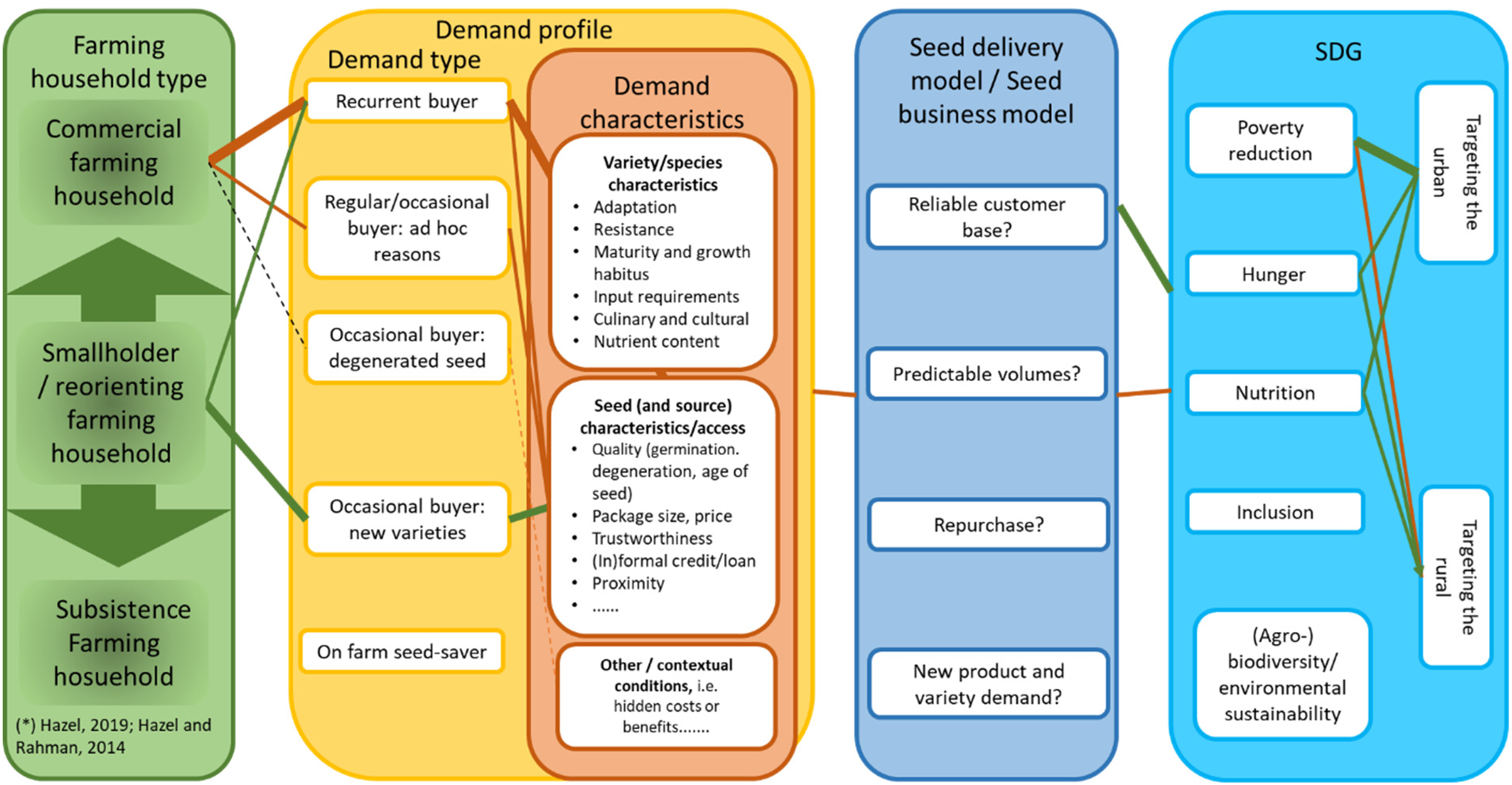
An adaptive menu of demand profiles and seed business models related to SDG-based impact pathways. Seed demand profiles are defined by the combination of demand type and characteristics. Demand type refers to the seed buyer. Demand characteristics includes variety traits (like variety or product profiles 5 ) as well as characteristics of the seed (e.g. its quality), seed packaging, characteristics of transaction and delivery points. The seed delivery models (or seed business models; used as synonyms here) as the points/actors where/from whom farmers access seeds, include commercial (formal and informal) as well as non-commercial seed delivery models such as those involving neighbours, friends, NGO- or community-based initiatives and mechanisms. The seed delivery pathways (McEwan et al., 2021) comprise and link different commercial and non-commercial public and private sector breeding and seed actors to the delivery point.
In practical terms, this analogy 4 of creating a food park for seed supply means operationalizing different seed delivery models that fit particular groups of households. In addition, the items on the menu, e.g. the volume of seed and packaging, character of the varieties or transaction conditions, may vary depending on the demand type and characteristics of the client households (Figure 3). Some of the seed clients are farming households producing for an urban market or processing industry who may be looking for high-input responsive varieties that can be machine-harvested. These farming households may have larger landholdings and buy planting materials yearly in large volumes, are able to overcome logistical hurdles and to invest, they can access credit or may prefer to pay cash. Other farming households with smaller landholdings in non-irrigated and/or drought-prone areas may prefer low-input regimes without mechanisation or with more modest labour demands or cash inputs. Their preferences would be for small volumes of seed of weed suppressing and drought tolerant varieties. The majority of smallholder farming households need modest quantities of planting material and are cash constrained. Like for other inputs, cash purchase of seed plus the costs, such as a trip to the nearby agro-dealer, may be prohibitive. These farming households, particularly those headed by women, in small, remote and marginal communities may prefer to make use of their social relations for seed and ultimately food security. Even though clean, disease-free propagation material (e.g. seed tubers, banana suckers, fish fingerlings) is a condition for high productivity, the cash investment in clean seed may not be a priority or possibility for a subsistence farming household. Seed delivery models may or may not easily cater for these important aspects of the menu. The agro-dealer does not provide seed on credit, whereas the local trader may, while seed from the neighbour can be acquired in exchange for day's labour during harvest time. Some farming households may be able to use microcredit to step out of poverty, whereas for others all formal loans are equally onerous. Culturally important seeds and varieties, often with unique culinary qualities, that are not commercially available require other maintenance and delivery models, as do seeds and varieties that are important in niches too small for public or commercial breeding and seed production (Hambloch et al., 2021). Households’ different engagements with agriculture can mean different agricultural technology choices, including different seeds and/or varieties, and ways of acquiring them. It is unlikely that the existing diversity in demand types and characteristics can be met by one seed delivery model: a range of delivery models is needed in the food park to cater to the needs and preferences of all.
Adding to the complexity of seed needs and preferences to be served it needs to be remembered that agricultural production is increasingly part of a portfolio of (often multiple) household livelihood activities. In addition, agricultural production is not only related to rural development but increasingly is also a consideration for urban food and nutrition-focused projects. This makes the prioritization of the SDGs as beacons for agricultural technology development even more complex. Focusing on SDGs 1 and 2 (and the possible trade-offs between them) may require a menu of different types of seeds and varieties, depending on the types of producers and/or consumers involved. Different seeds and varieties, such as those that occupy important niches, may need different delivery and business models. The search for inclusiveness (SDG 5), environmental health (SDG 15), and climate actions (SDG 13) will probably need further diversification of seed delivery and funding models.
Demand orientation of the supply and multi-directionality of menus
How can a system that supplies seeds of a diverse set of crops cater for all these demand types? How can a complete set of menus be composed and served? Who should serve the various demands? How can decisions be made that prioritize different types of demand or menus? Currently, much importance is given to the demand-orientation of breeding programmes and the creation of farming households’ demand for seeds. The demand orientation of breeding programs is supported by the call for more and better trait elicitation work that informs breeders about traits that farming households seek in seeds and varieties and which fit with current and emerging market demands (e.g. Thiele et al., 2021). In particular, better information on what women-farmers prefer and how that differs from what men prefer is expected to enhance the relevance of breeding programmes, as embodied in Weltzien et al.'s (2019), the Gender in Breeding Initiative and the Gender-Responsive Product Profile Development Tool (see also Voss et al., 2021). This may potentially create space for inclusion of traits other than enhanced productivity and for less productivity-focused breeding programmes. Other requirements and traits, previously considered to be unimportant, that are actually important for women, such as the need for weeding and processing related qualities, may become included in client profiles and among the limited number of prioritized traits that breeders can handle. Yet at the same time, in a recent white paper (Crops to End Hunger, 2021), the intention of catering for diverse groups of clients, each with their own trait preferences is, combined with the ambition to develop fewer but relatively better varieties. This paper does not pay much attention to the way that this ambition will affect the diversity of variety traits made available for farming communities that may have varying preferences, or in a target area where differences in ethnicities, genders and other social dimensions play out in different preferences for agricultural technologies and seeds.
In addition to getting the traits right, another important factor that is not considered is the importance of designing delivery models that fit the demands of household with varying characteristics. It is important to think about and set up the right conditions of the seed delivery model at the point or actor from which farming households acquire their seeds of planting material – if not using their own saved seeds. Commercially viable seed delivery models are options in maize and other major crops, but in other crops the commercial models have unclear value propositions and need adaptation to accommodate the crop type (i.e. vegetatively propagated crops are fresh and bulky, and face logistical challenges, whereas small grains are easily saved for the next harvest) and ‘last mile’ requirements (i.e. remote places, no purchasing power). Moreover, the perspectives and visions of many IARCs, the CGIAR, and other development agencies add further dimensions to the context, and thus the diversity of delivery models. Some IARCs are more inclined to conventional market economics and favour commercial models, whereas others see the value of social network-based models in which sharing and reciprocity play a role and thus build their strategies and delivery models around such a vision.
Understanding ‘demand’ better
To become aware of the diversity of seed demands and, consequently, delivery conditions that have to be met, we need to take into account that ‘adoption’ represents a change from one technology to another. These changes may be complex and will need to incorporate different elements that play a role in the process. The ‘encounter’ with the newly proposed technologies needs to be moderated by ‘dispositions’ and then lead to ‘responses’ (Glover, Sumberg, Ton, Andersson, and Badstue, 2019). Dispositions, in this context, are the different perceptions that users generate in response to the different propositions being offered to them (as a result of differentiated contexts). If we consider the diversity of needs and goals as a variety of dispositions that inform the likely and most promising ways of encountering new technologies, we are more likely to get better responses. In addition, we can generate better insights from this process and arrive at a better understanding of what is involved from the side of the farming household, what preferences they hold, and how these preferences are shaped. This, in combination with methods that are specifically suitable to capture demand (Almekinders et al., 2019b; Pircher & Almekinders, 2021), will enable us to better understand how farming households’ demands are shaped and shift over time, plots, crops and family members under changing climate and market conditions and available alternatives for income generation and labour allocation. When paying more attention to how we capture the demand of farming households, we may discover our bias to be ‘nudging’ them into assumed productive practices and come to see the benefits of existing varieties over the new proposed ones. For example, in the case of some primarily commercial crops, such as pigeon pea in Malawi, one may easily overlook on-farm benefits that exist in addition to the main purpose of selling grain, for example the provision of firewood in the degraded southern part of the country plays an important role in farm household's varietal preferences (Orr, Kambombo, Roth, Harris, and Doyle, 2015). In addition, the benefits of a local cattle breed may only be assessed in terms of productivity, ignoring its value as dowry and a saving account (Crane et al., 2016).
Ultimately, while we need to improve our understanding of the diversity in demands and how these change over time, we also need to acknowledge that the response to the diversity in demand is not a silver bullet– not at the level of crop variety, the seed delivery model, or that of the individual farmer or household. Instead, as Ronner et al. (2021) puts it, we need to broaden and deepen the basket of options available, aligning with the food park concept. Yet, we would also caution that making food parks too large or making a broad and deep basket available to everyone to pick from would not be the solution as ‘choice overload’ would undermine farming households’ ability to select the right option for them. The visits to the food parks, like encounters with the basket of options, have to be carefully moderated and tailored, with effective accompanying information: the colourful vegetables on the logo of the vegetarian restaurant, the turning meat spit at the entrance of the kebab joint or the ice cream cone on top of the gelato place.
Diversified seed delivery models and seeking synergies to cater for varied seed demands: Summary and conclusions
International agricultural research increasingly recognizes the multitude and inherent complexity of impact pathways to reach the SDGs, addressing issues of malnutrition, inclusion and the uncertainty of futures and the different roles that agriculture plays in them (Caron et al., 2020; Mausch et al., 2020). However, the impact pathway to ‘modernize’ the agricultural sector by focusing primarily on increasing agricultural productivity continues to dominate the agenda (IPES-Food, 2020). It is evident that this approach/pathway has not worked for all, and alternative approaches/pathways are needed if agricultural development is to be inclusive. In the light of this, it is important to emphasise that not only agro-ecological, but also socio-economic contexts diversify the demand for seeds and varieties and the preferred ways to access them. Global developments indicate that this diversification will only increase.
In this paper we argue that the inherent, and increasingly diverse, socio-economic contexts shape aspirations, needs and demands and must be addressed when considering variety development and seed delivery. We have distinguished two dimensions in this socio-economic variation that are important for seeds and variety preferences: socio-economic differentiation related to poverty, and the increasingly varied way in which rural households engage with farming. The conceptual assumption that all farmers produce (or potentially produce) solely for profits on market-terms seems to create a structural problem in serving seed and variety demands. Households that are too poor and/or whose farms are too small for an agricultural route out of poverty may be better supported through other channels and modalities. However, such strategic choices should be clear starting from the formulation of objectives and target populations, how these relate to institutional mandates, and ultimately how they translate to contributions towards global goals such as the SDGs.
Thus, it is important to acknowledge and be clear about who those people are that we call ‘farmers’ and which of those we decide to target with international and other breeding and seed programmes. Where needed, a variety of different seed products and delivery models need to be established and supported in order to cater for as wide a range as possible of seed and variety demands and be resilient to unpredictable and interacting changes in these demands. Coming back to the food park analogy, we argue that a variety of delivery models and menus is needed to cater for the preferences and needs of all. The food park will allow all of them to dine, in the same place or not, to acquire the taste, volumes and catering of their preference, even facilitate exchange as they could share their meals seated at the same table. It is less important who supports what seed delivery model, as long as there is financial and policy support for the various models that cater for the various demands. The international breeding and seed programmes are strong and successful in supplying seed and varieties for an important segment of the farming households. However, the focus on productivity and commercial pathways and seed delivery models does not meet all types of demand. Adding to the existing strong engagement with private sector actors in this arena, an effective engagement with civil society actors can provide important opportunities for targeting different farming households: these actors have different strengths and weaknesses that can be built on that together can strengthen a demand-oriented and inclusive seed supply. Returns on investment and the measures of returns will vary between the different seed delivery models, depending on their goals and mandate, the targeted households, and their associated incentive structures. Adoption and variety turn-over figures and financial indicators cannot be the only measures of success since the benefits of inclusion and equity and cultural values are hard to measure.
Acknowledgment of the strengths and weaknesses in serving the different demands, and communication between the different seed delivery models and associated breeding and delivery pathways can lead to synergies hardly yet explored. Coordination in the testing and promotion of products and knowing the clientele can be especially useful when the menus, goals and aspirations of the different delivery models are transparent. Rather than a fragmented seed delivery landscape, we would see a co-ordinated network of seed delivery models. Connecting the dots between knowledge and action, instead of living with a permanent disconnection between researchers and decision makers on the one hand and beneficiary communities on the other is absolutely essential for the future resilience of food systems (Caron et al., 2020). At a policy level, the recognition of the importance of seed systems within the agri-food system and the various linkages to many other policy targets would allow a consideration of an integrated seed system development approach that creates coherence among seed practices, programmes, and policies (Louwaars & De Boef, 2012). Once clarity on mandates and responsibilities is in place, this would open up analytical space to consider the other challenges and questions faced by rural households, as well as reframing development problems and appropriate solutions. Less linear impact pathways that would reach more people could then be accommodated and serviced. If taken seriously, this would also require wide participation in the management and operations of the food park in order to continuously adapt, adjust and update the types of seed delivery models as well as the types of seed that they offer and how.
Footnotes
Acknowledgements
Parts of this work were undertaken as part of the CGIAR Research Programs on Grain Legumes and Dryland Cereals (GLDC), Root Tubers and Bananas (RTB), MAIZE and Policies, Institutions, and Markets (PIM), which are in turn supported by the CGIAR Funders. The support of the NWO-WOTRO and Sweet GAINS is also appreciated. The discussions among participants of the community of excellence for seed system development ( ) made important contributions to the ideas expressed in this article. The opinions expressed here belong to the authors, and do not necessarily reflect those of GLDC, RTB, MAIZE, PIM, CGIAR, NWO-WOTRO or Sweet Gains. We thank two anonymous reviewers for their critical and constructive comments. We thank Nicholas Parrott for his English language editing.
Declaration of Conflicting Interests
The author(s) declared no potential conflicts of interest with respect to the research, authorship, and/or publication of this article.
Funding
Parts of this work were undertaken as part of the CGIAR Research Programs on Grain Legumes and Dryland Cereals (GLDC), Root Tubers and Bananas (RTB), MAIZE and Policies, Institutions, and Markets (PIM), which are in turn supported by the CGIAR Funders. The support of the NWO-WOTRO and Sweet GAINS is also appreciated.