



Abstract
The stillbirth rate of Australian Aboriginal and Torres Strait Islander infants remains almost twice the rate for non-Indigenous infants. There is a paucity of research giving voice to Aboriginal and Torres Strait Islander women and families experiences pregnancy loss and stillbirth. This qualitative study aimed explored the experiences of five Australian Aboriginal women in North Queensland. Women identified the need for timely, clear, concise, and sensitive communications with culturally responsive health professionals throughout their experience of stillbirth. Women also want to be consulted and supported during and beyond their experience of stillbirth. Australian Aboriginal women want to be informed and included in their care by culturally responsive health professionals during and beyond their stillbirth experiences. These findings will inform maternity and neonatal standard care guidelines, and health professionals’ training and education programs to support culturally responsive plans for continuity of care of regional, rural and remote Indigenous women and families.
Introduction
The rate of stillbirth of Australian Aboriginal and Torres Strait Islander infants remains almost twice as high as non-Indigenous infants (Australian Institute of Health and Welfare, 2020). In Australia, stillbirth is defined as “fetal death prior to birth of a baby of 20 or more completed weeks of gestation or 400 g or more birthweight” (AIHW, 2023). Australian law requires the birth to be registered, a death certificate issued and a burial to be conducted (Queensland Health, 2019). Factors that contribute to risk of stillbirth for Indigenous and non-Indigenous families include gestational age and birth weight of the fetus, maternal weight, age, smoking status, ethnic origin and socioeconomic status, and placental abruption, (Flenady et al., 2011; Gregory et al., 2020; Heazell et al., 2020; Ibiebele et al., 2016). It is only recently that decision making regarding providing permission for autopsy after stillbirth have been explored with Indigenous women and families (Kilcullen et al., 2020). However, little is known about Indigenous women’s experiences prior to, during, and after stillbirth (Boyle et al., 2020), and so standards of care in Australia are based upon what is known about non-Indigenous women’s experiences (Flenady et al., 2018; Gardener et al., 2017; Queensland Health, 2018).
Background
Prior to the stillbirth of their infant, mothers have reported experiences that out of the ordinary, including that they ‘did not feel right’ (Nuzum et al., 2018; Siassakos et al., 2017), they had noticed a single episode of unusually vigorous fetal movement (Stacey et al., 2011), or conversely, decreased or light fetal movements (Bradford et al., 2019; Stacey et al., 2011), and yet continued to ‘hoped against hope’ for a positive outcome (Martínez-Serrano et al., 2019; Nuzum et al., 2018). Following a stillbirth, parents report intense and ongoing grief that is often not acknowledged by others (Burden et al., 2016; Due et al., 2018; Martínez-Serrano et al., 2019). Fathers often delay their own grieving process so that they can support mothers during this time (Martínez-Serrano et al., 2019). Mothers have reported a sense of shame and failure that their bodies did not continue a healthy pregnancy to completion (Martínez-Serrano et al., 2019), and parents have reported regret at not acting upon earlier symptoms and changes they had noticed (Nuzum et al., 2018). The experience of stillbirth also disrupted or postponed parents’ sense of hope for the future (de Andrade Alvarenga et al., 2020).
Post Stillbirth - Grief and Coping
Grief after stillbirth is experienced across cultures (see Burden et al., 2016 for review). It is associated with increased depression and anxiety, with similar risk for poorer mental health evident across cultures (see Herbert et al., 2022 for review). Parents have identified many strategies to cope with the experience of stillbirth. Many parents sought to maintain hope in the face of such a devastating loss (de Andrade Alvarenga et al., 2020; Nuzum et al., 2018), to access social support, to gain knowledge about their experiences and to journal and make meaning of their loss (Meredith et al., 2017; Peters et al., 2016). Parents coped by recognising and acknowledging the ‘personhood’ of their infant, through naming and parenting their infant immediately after birth (Nuzum et al., 2018) and taking pride in their infant as a member of the family (Burden et al., 2016). Parents also maintained memories of their infant (de Andrade Alvarenga et al., 2020; Ellis et al., 2016; Martínez-Serrano et al., 2019) and strong relationships with their infant (Nuzum et al., 2018) through strategies such as keeping mementoes in order to maintain their parent-infant connection (Martínez-Serrano et al., 2019). However these memory-making opportunities were not always made available to parents (Flenady et al., 2014). It is important to note that for some parents, avoiding memories of their infant and the stillbirth experience was a protective factor (Burden et al., 2016). This diversity of coping strategies makes essential, health care professionals’ capacity to tailor interventions to the families’ needs (Ellis et al., 2016; Heazell et al., 2016; McNamara et al., 2017). However a lack of education for staff (McNamara et al., 2017) and barriers to care (Ellis et al., 2016) has been identified and support and care may be affected (Siassakos et al., 2017).
Ongoing Support for Women and Families
There are mixed findings regarding ongoing support after stillbirth. Some parents report receiving timely follow-up from medical staff and support (O’Connell et al., 2016). However, in the same study, approximately a quarter of parents did not contact ongoing bereavement support, or were not aware of the availability of such support (O’Connell et al., 2016). Others have also noted a lack of consistent follow-up care plan for bereaved families, even in the context of parents wanting more information and emotional support (Due et al., 2018; Peters et al., 2016; Siassakos et al., 2017). Additionally, health care professionals have reported a lack of specialized mental health care training and education (Martínez-Serrano et al., 2019; Peters et al., 2016). However, it should be noted that there is lack of evidence for ongoing support, counselling and intervention strategies in the context of stillbirth bereavement (Flenady et al., 2014; Koopmans et al., 2013).
Communications with Staff
At the time of a terminal diagnosis for the infant, parents have reported a variety of communication experiences with health care professionals. Some parents experienced sensitive communications and were given privacy during their experience (Due et al., 2018; O’Connell et al., 2016). However, parents have also reported insensitive communications with health professionals (Due et al., 2018; Martínez-Serrano et al., 2019; Siassakos et al., 2017) and wanting to escape or flee the health care environment (Martínez-Serrano et al., 2019). Further, long delays have been noted between admission to hospital, confirmation of infant prognosis and actions to support the family (Siassakos et al., 2017). Empathic and sensitive care and communications from health professionals at this time may ameliorate parents’ poor mental health outcomes (Heazell et al., 2016).
Of concern, a lack of structured standard procedure for communicating with women (Siassakos et al., 2017) and training for health care profession to support these women have also been identified (Due et al., 2018; Ellis et al., 2016; McNamara et al., 2017; Siassakos et al., 2017). Such delays and lack of procedure and training have been reported to negatively impact upon the health and wellbeing of women, families and health care professionals (Burden et al., 2016; Due et al., 2018; McNamara et al., 2017; Nuzum et al., 2018; Peters et al., 2016). While parents’ focus remained on their infant after confirmation of the infant’s death, health care professionals focused upon parents (Siassakos et al., 2017). Following parents lead at this time may enhance health care professionals’ ability to support parents.
Pregnancy after Stillbirth
Pregnancy after stillbirth presents numerous challenges for many parents. Many mothers are often fearful of and avoid subsequent pregnancies (Burden et al., 2016; Fernández-Sola et al., 2020; Martínez-Serrano et al., 2019; Meredith et al., 2017; Nuzum et al., 2018). Further adding to mothers’ fear has been advice from some health care professionals to quickly become pregnant after stillbirth (Martínez-Serrano et al., 2019; Peters et al., 2016), and their own despair of another pregnancy (de Andrade Alvarenga et al., 2020). Such advice does not take into account mothers’ caution regarding new pregnancies and anxiety about poor outcomes (Meredith et al., 2017; Peters et al., 2016). For some mothers there was an experience of jealousy (Nuzum et al., 2018) and envy of other mothers and rage that their own motherhood was denied with their infant (Martínez-Serrano et al., 2019). Ongoing societal attitudes that stigmatise and blame mothers for stillbirth also have a negative impact upon parents’ health and wellbeing (Flenady et al., 2014). Parents have reported changes to their approach to life after the experience of stillbirth and that they reprioritized life choices. These families have also reported a re-emergence of hope in the context of a potentially successful pregnancy (de Andrade Alvarenga et al., 2020).
Aim of the Current Study
There is a paucity of research that explores pregnancy loss and stillbirth experienced by Australian Aboriginal and Torres Strait Islander women and families (Boyle et al., 2020). This paper seeks to give voice to the experiences of pregnancy loss/stillbirth as told by Aboriginal and Torres Strait Islander women in a regional area of Northern Australia. Giving voice to the experiences of women will enhance health care professionals’ understandings to provide culturally sensitive support to women during this distressing period. In the absence of this knowledge, provision of culturally responsive support by health care professionals remains difficult.
Methods
This paper provides a secondary analysis of a broader project examining factors that Indigenous parents considered when making decisions about providing permission to autopsy after the stillbirth of their infant (see publication for detailed methodology) (Kilcullen et al., 2020). The earlier publication specifically explored factors that parents considered during the decision-making process after stillbirth. During these interviews, parents also described their experiences of stillbirth. The current paper reports on these broader experiences of the late stages of pregnancy, the birth, and the period following the stillbirth. Briefly, five women participated in semi-structured interviews of up to 60 minutes duration; four identified as Aboriginal women and one identified as an Aboriginal and Torres Strait Islander woman. The gestational age of their infants ranged from 20 weeks + 1 day to 39 weeks. Interviews were conducted by an Aboriginal midwife and an Aboriginal researcher at the health campus, at home or over the telephone, depending upon the women’s preferences. Informed consent was gained prior to the interviews. Interviews were transcribed verbatim and a 6-step thematic analysis (Braun & Clarke, 2006) was conducted by the first author using a phenomenological framework (Smith et al., 2009). Themes were developed by the first author (MK) and cross-checked for reliability and validity by the co-authors. Ethics approval for this study was obtained from the Townsville Hospital and Health Research Ethics Committee (15/QTHS/91).
Results
Mothers’ interviews were coded for themes that captured their experiences from the time there was some concern about the pregnancy and labour, initial and follow-up support, and subsequent pregnancy after the stillbirth.
Prior to Admission
Two themes were identified to capture parents’ experiences prior to the stillbirth – indicators and awareness (See Figure 1). Prior to admission.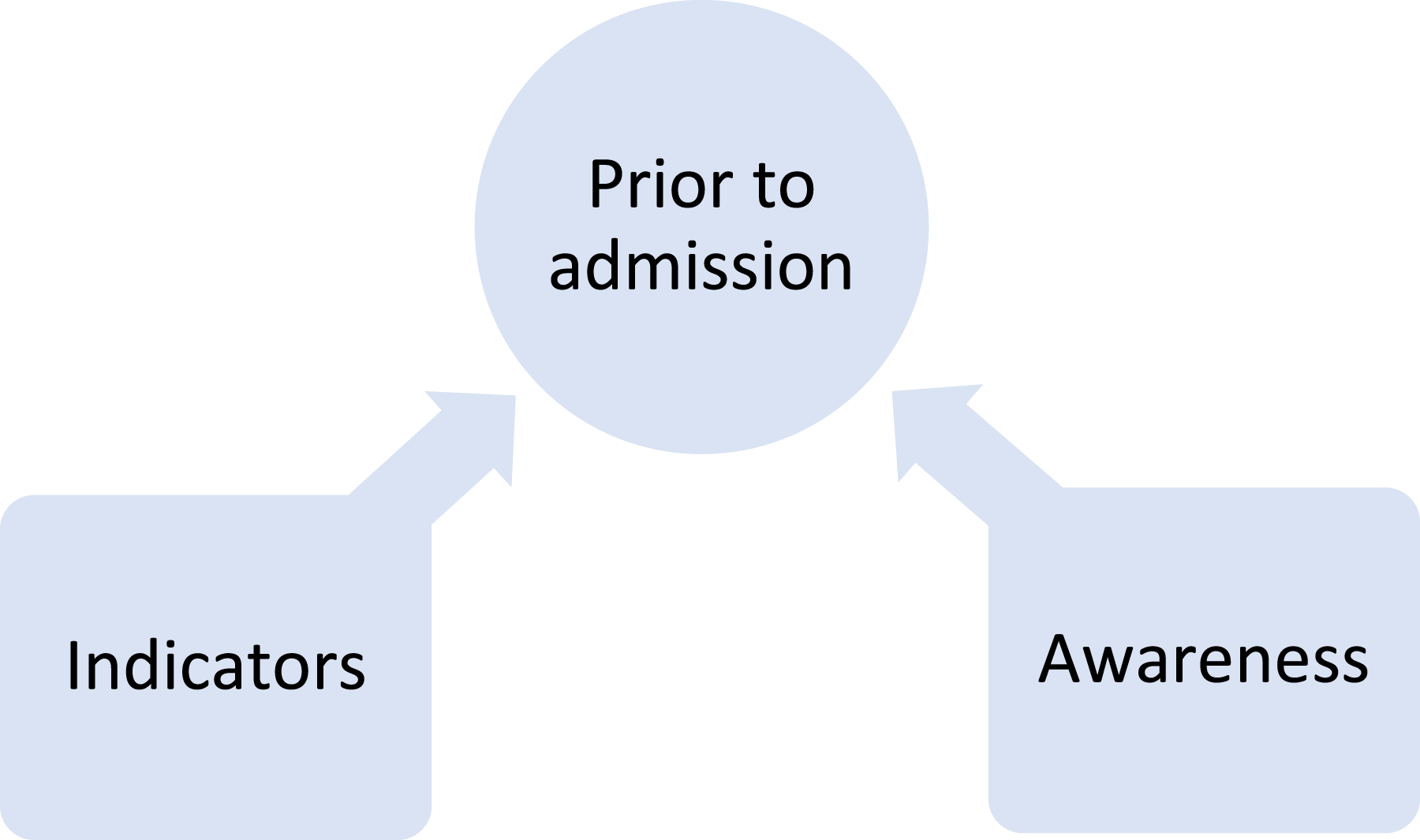
Indicators – Mothers identified three indicators prior to the stillbirth that signified the potential for an adverse pregnancy outcome – (1) accelerated fetal heart rate and (2) a lack of fetal movement in the week prior to the stillbirth, and (3) miscarriage of the baby’s twin at 12 weeks. A parent reported noticing changes in fetal heart rate, stating I had an ultrasound - no, I had an appointment at the mums and babies, and they said he had a fast heartrate. They reckon, oh well, we'll get back to that. We continued on with the rest of the appointment, but never went back to it. Then the next day I had an ultrasound. I came in and - because he was very restless the night before. He was quite a pain in the arse, moving around in my stomach. It was like he was doing kamikazes. I didn't know what he was doing. Then eventually about 10 o'clock he calmed down, and I went to bed. The next day I went up to the hospital for the ultrasound, and they told me he had gone. No heartrate. [P5]
Additionally, this parent noticed the absence of fetal movement and reported concerns to health care staff however these concerns were not followed up.
Awareness – While most mothers reported an awareness of difficulties with the pregnancy, one parent reported “it didn’t cross my mind that this could be something fatal” [P3]. For those parents who reported their awareness of difficulties prior to the stillbirth, two mothers reported attending a routine ultrasound at 20 weeks. One parent reported that fetal abnormalities were identified during this scan, however it was not until the next day that she was informed. She reported I went for my ultrasound and I have to say that woman who done my ultrasound, she was brilliant. Normally, you can pick up if somebody is concerned about something and she took hours. She probably took about two hours scanning me. Because, well, I'd never been pregnant before, I just thought yep right-o, 20 weeks, must just take a long time. She kept saying I just need to check this, I just need to check that and kept ducking back out. Obviously, she was seeking advice. At that point, I still didn’t know anything was wrong until my doctor got the results the next day. [P3]
Another parent reported requiring a scan to investigate potential abnormalities, being informed it “wasn’t life-threatening” however, experienced stillbirth [P1].
During Emergency, Labour and Immediately after the Stillbirth
Four themes were identified that captured mothers’ experiences during the emergency prior to the stillbirth of their infant – emotional distress, knowledge, communication and support (See Figure 2). Emergency, labour and after stillbirth.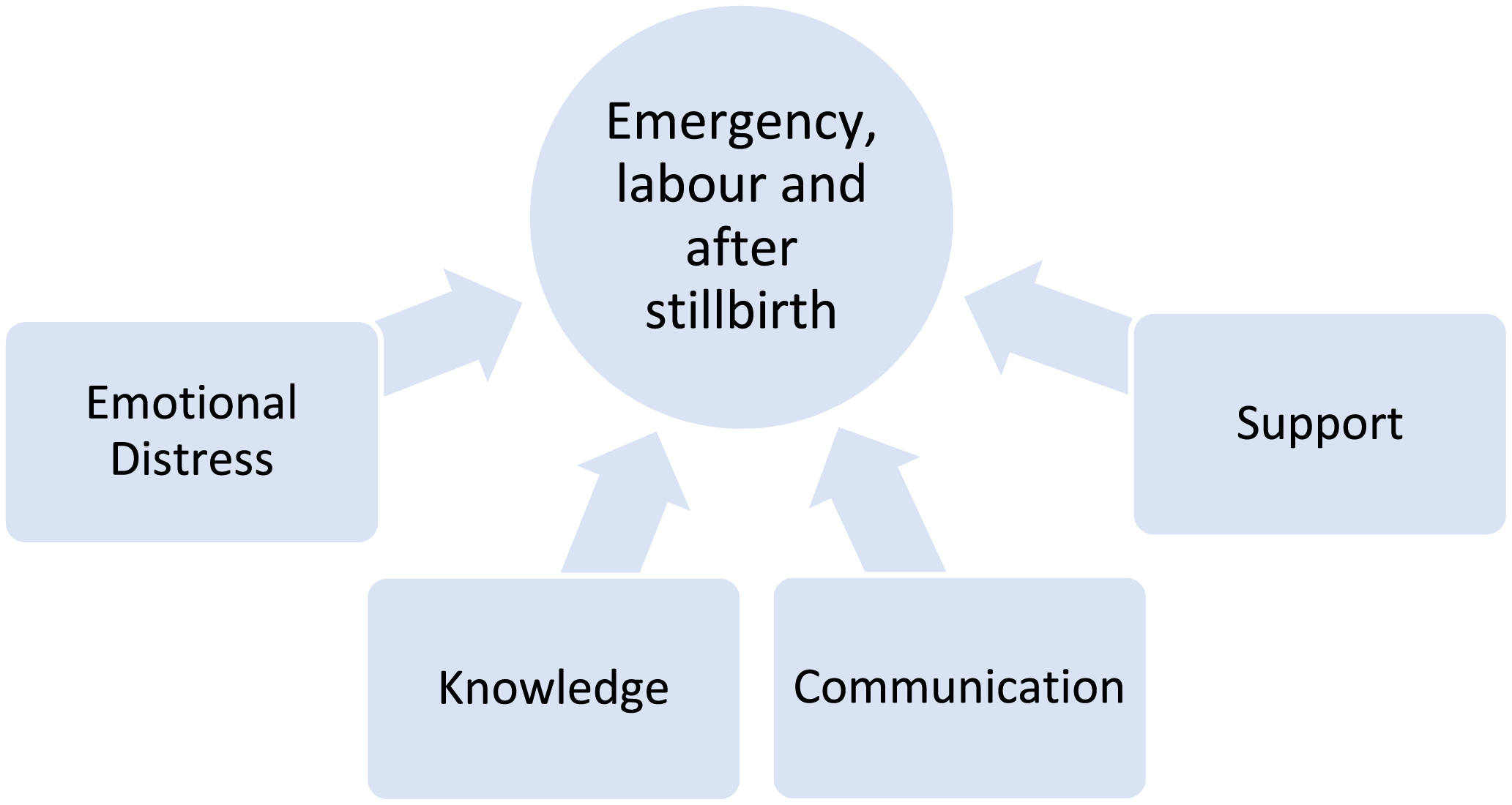
Emotional Distress – Mothers reported creeping concern and increasing panic about the health of their unborn infant. As one parent recalled, “I started to get a bit…anxiety and a bit worked up…they were like ‘don’t panic…everything is okay’, and in that time of course, they tell me not to panic, I start panicking…something is wrong here” [P1]. Some mothers felt abandoned by staff during labour. This mother reported when I was in the birth suite…having contractions and they were getting harder, I had to buzz so many times for the nurse to come, I mean because they already knew that when the baby comes, the baby will be, you know, they already knew that, what was going to happen to the baby…I said [to my sister] this is ridiculous, if you’re having a healthy baby the nurses are in their 24/7, you know, they’re…just a little bit more [present]. But I was just left in there so basically ready to have the baby by myself [P4].
Mothers reported distress about being admitted to the maternity ward prior to and after the stillbirth. One mother reported that “they booked me in for the maternity word, stuck me in there, induced me, and that’s where it all started” [P5]. Another mother described being distressed by admission to the maternity unit after stillbirth, reporting that seeing a lot of mothers around with their newborns, it distressed me a little bit more…it wasn’t a room by myself…and other mothers in there...were like…’oh, you had a bub’…it was really tough to be asked…it was more upsetting when you have to explain it to everyone and they had their newborn bubs in their arms. [P2]
Knowledge – A mother reported that even though she was a health care professional, the level of assumed patient knowledge “goes out the window” [P3] when experiencing stillbirth first-hand. Mothers wanted more information from health care professionals. For example, one mother wanted health care professionals to “tell me what is going to happen beforehand…like, prepare me…because they already knew by the week before” [P4].
Communication – Positive experiences: Even in the context of rising distress, one mother was able to be more assertive in her communication with health staff, asking staff “I don’t want to be rude or anything but can I just – can you try and find bub [on the ultrasound]” (not sure what finding bub means here) [P1]. Another mother reported a positive communication experience prior to the stillbirth. This mother described the way in which the doctor was supportive, informative, and knowledgeable through the experience which significantly allayed fears and doubts, stating [doctor] done some of the scans himself…pointed out what he was looking at…went over everything…he was very good…he just sort of discussion by options…[later] I was sent over to see the social worker and [doctor]…he went through everything. He was extremely thorough. [P3]
Negative experiences: Mothers also reported negative experiences of poor communication by health care professionals prior to the stillbirth and the death of their infant. For example, one mother reported concerns of information being withheld, stating “it’s just that I knew that something was wrong because they didn’t tell me at the time, they told me after she was born” [P4]. This mother also reported a lack of communication that impacted upon adequate follow-up during the emergency, stating “[the doctor] was like, why didn’t someone get back to me about this woman?” [P1]. Other mothers reported significant distress as a result of insensitive health care staff communication during the induction process, stating “that lady said to me, ‘oh well, we’d had young girls in here and bub’s been dead inside their belly for a month and they’ve come out and they’ve just fallen apart’” [P2]. Another mother reported that “because [health care staff] said, ‘it will take a couple of hours’, you know, blah, blah, blah, blah, quite rude and arrogant” [P5].
A parent also reported that she was informed during a routine scan when a health professional said “I’m so sorry love, we can’t find her anymore” [P1]. Another parent reported a similarly distressing experience while being scanned. She reported that when he had finished doing the ultrasound, he just put the little handheld thing away and just said to me that - well, now that the baby's dead we need to look at - and I - from there I just went ‘what?” Obviously, it was just…shattering. I don’t remember [doctor] coming back in and even being sorry [for poor communication]. [P2]
Unsurprisingly, these communications caused significant distress for these families. However, this mother also described support from a midwife at this time, stating “[midwife] stepped in and told him to stop because it just wasn’t the best way [doctor] could have said that to me…[doctors communication] has always stuck with me….[midwife] was really lovely” [P2]. Yet another parent described a follow-up appointment with a GP, stating “one of her first comments was ‘did they tell you it was your medications that caused this?’ I was like no” [P3].
Support – need for an advocate – Mothers reported needing an advocate to gain support during the early emergency. For example, one mother reported that “it took my aunty…to organise through her contact [with] a social worker for me” [P2]. Another mother identified the desire for an advocate to support her throughout the process. She stated because laying that room…getting that ultrasound to find out what’s going one…the doctor tells you, well, no, your baby is not going to survive. ..that point there, would have been nice to have someone, anyone with you, that would have led into, if possible, that person who supported you along the way. Even somebody who could advocate that, to push those results along more faster. [P3]
Another mother reported that during the emergency, she wanted health care staff to take more control…we were first time parents…we’d seen everyone going frantic…you when you just have that bad feeling, that gut feeling and it’s just like you don’t want to act on it because it’s like, no, well, I’m trusting these professionals. I’m a person. I don’t know this. [P1]
Post Stillbirth Experiences
Two themes were identified that captured mothers’ post stillbirth experiences – regret and questioning (See Figure 3). Post stillbirth experiences.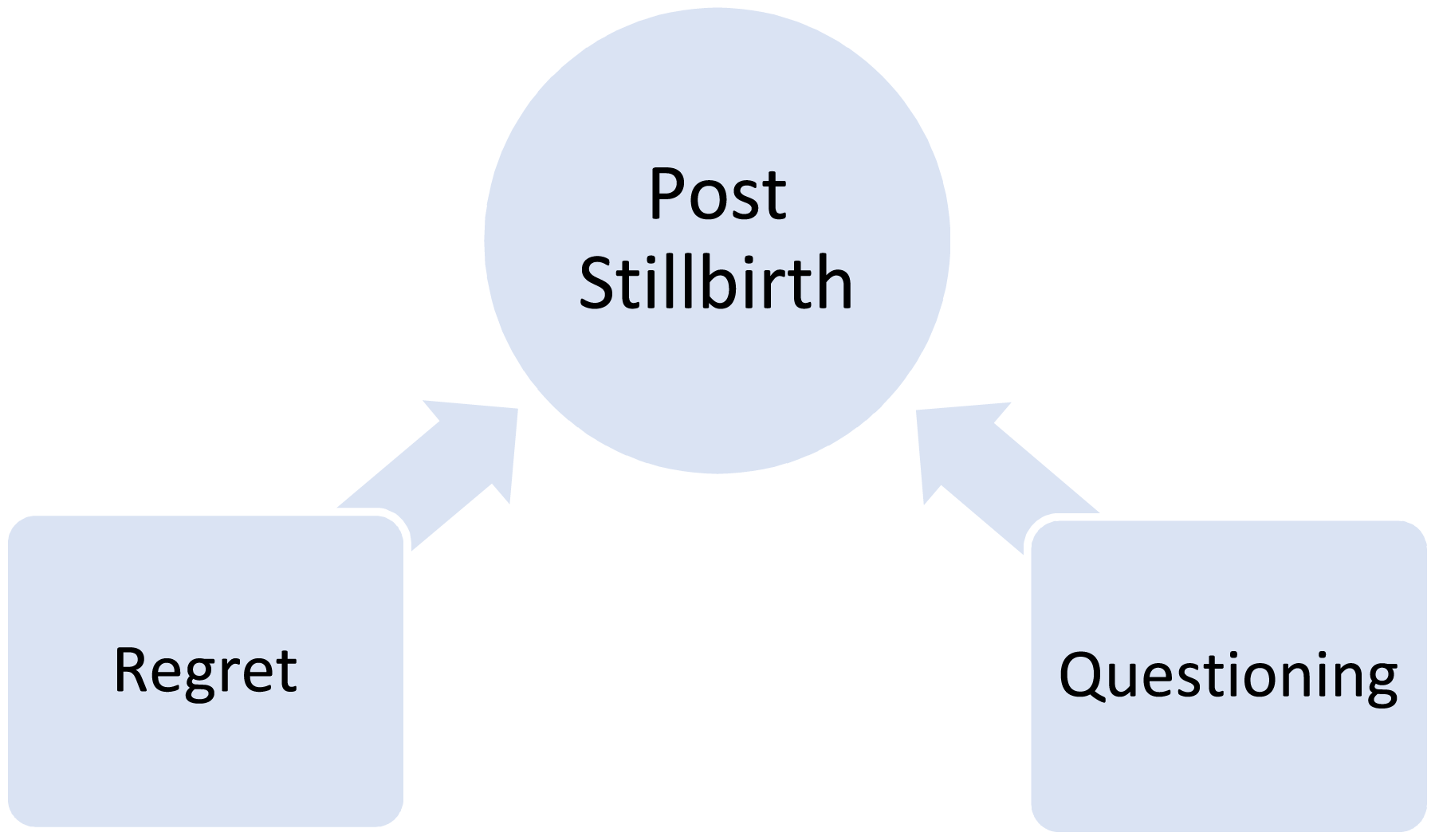
One mother expressed regret that medical intervention did not happen earlier. She stated health professionals “[should have gotten] him out the week or so before, to find out actually what was wrong with him or what was happening” [P5]. Another mother questioned whether their actions had caused the stillbirth. This mother described how a reportedly routine procedure to drain amniotic fluid immediately preceded the onset of labour. She described that then we did [procedure] and then it was literally straight after – I don’t know if it was because of that test, but coincidentally after it, they said because they’ve upset your fluid you are going to have some cramping…thinking back, those cramps were like contractions [but] being my first baby, I have no idea what they would feel like. [P1]
This mother also questioned whether there was another cause for the stillbirth. She reported “just thinking maybe something else was the cause of it…what else could have been wrong?” This questioning leads the parents to decide to give permission for autopsy “because…we didn’t know…we just wanted some sort of answer, some sort of understanding of it” [P1].
Inpatient Support Post Stillbirth
Themes capturing mothers’ negative and positive post stillbirth inpatient support experiences were identified – receiving no inpatient support or insensitive support; and receiving positive support and opportunities to make memories (see Figure 4). Inpatient support - post stillbirth.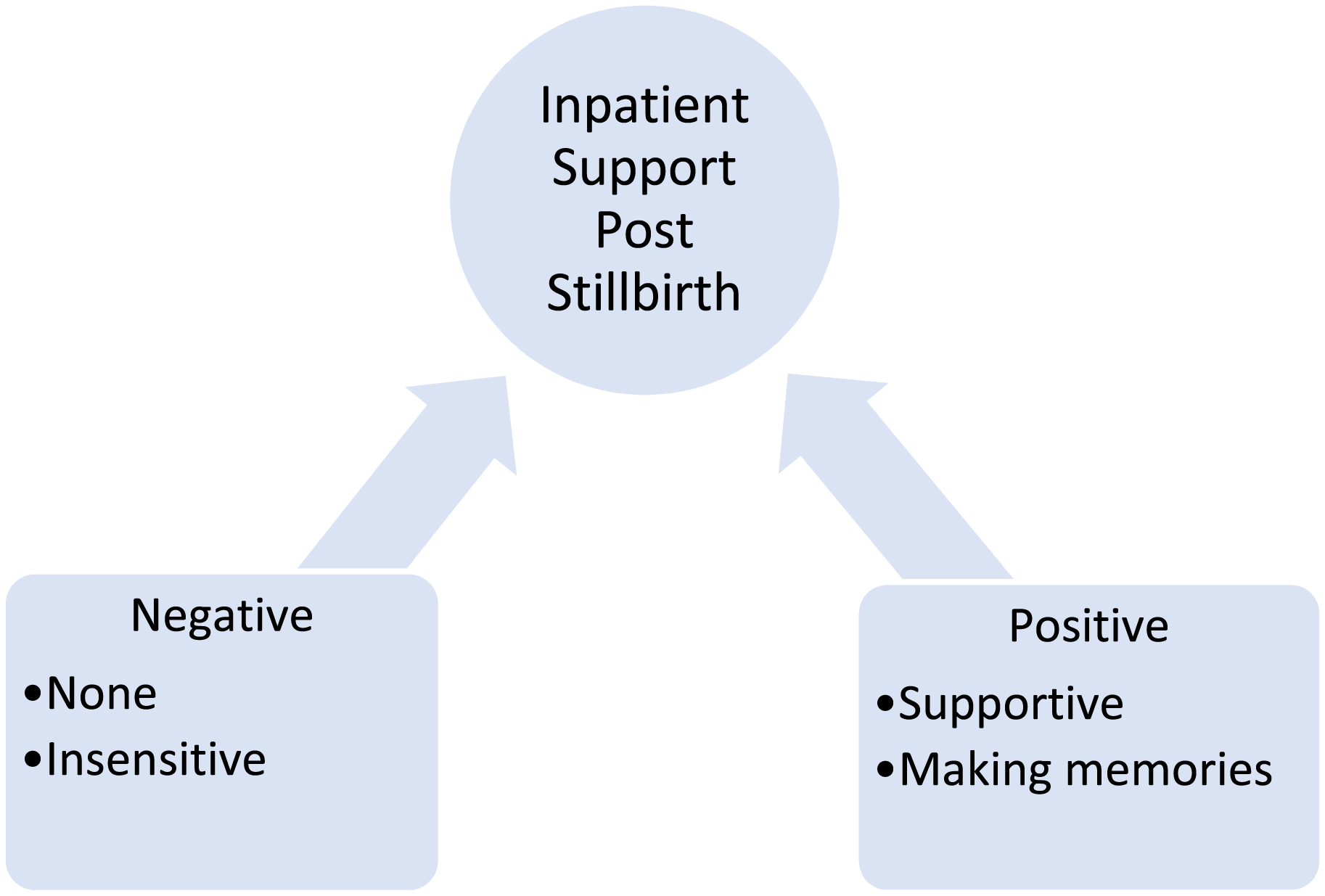
Negative experiences: Two mothers stated that they did not recall receiving support from a culturally appropriate health professional. For example, when asked, one mother stated “no, I don’t think [there] were [Aboriginal Liaison Officers (ALOs)], no’ [P5]. While another mother reported receiving such support, she described the approach as being poorly timed and insensitive, stating a liaison officer came up and asked me if – well if – the liaison officer came up and showed me a dress with some other lady, that if I wanted to put it on [the infant], but I wasn’t feeling right to even talk about a dress [P4].
Another mother described her experiences of emotional distress after the stillbirth and perceived lack of support from health professionals. This mother stated I just thought it was strange because I could feel something was wrong with me in the room, like I just - sort of just kept going into a depression, and then my sisters and my brothers came up and they were there like every afternoon, every morning, because I wasn't talking to anybody, and there was no nurses that come in to check to see if I was okay, if I needed anything or - I was just left in there and I was in there for like three or four days. [P1]
Another mother described her devastation at having her infant unexpectedly taken from her room after being together overnight after the stillbirth. This mother stated they left bub with me overnight, just for me to have him there. Then, without any warning, the next morning, a young guy just walked into the room with this little wooden toolbox and we all just looked up at him, like what are you doing, because he walked straight into the room and he put this toolbox down on the other bed. Well, I'm saying a toolbox. It was a little wooden box, which I thought looked like a toolbox. He just said ‘I'm here for the baby’. I just - straight away I felt like I had to say goodbye to bub, so I put him in this little wooden box, that that guy latched closed and he walked out of the room, and that was it…really unexpected. [P2]
Supportive experiences: Other mothers reported supportive experiences from a range of health professionals while admitted to the hospital. One mother described her experience with a doctor, stating before I left hospital, I agreed to an autopsy. Dr [name] did - like when I had [infant] in the room, the formalities were quite clear, and he went through even afterwards, which I think was good as well, in that you know that doubt where you still doubt whether you made the right decision…whether they got the diagnosis wrong. But you could see everything there. [P3]
Other mothers described positive experiences with the midwives who were supporting them immediately after the stillbirth. Mothers reported “I remember the midwives always coming in and checking and seeing how we were and stuff. They were really good” [P1], and praising the midwives’ support as “very good…very good” [P4]. Mothers also reported supportive interactions and “dealt with social worker] a lot” [P1] immediately post stillbirth. For one mother, this was particularly regarding making funeral arrangements, stating “the social worker came to me the next morning and we were talking about [funeral options]…so I didn’t have to do that” [P5]. Another mother stated that she was encouraged by the midwives to spend as much time as she needed with the infant and in the hospital as was necessary for her recovery. She stated It was a bit hard at the time, but we were able to stay in the ward and have her for a couple of hours and spend as much time as we wanted up there. It was never like oh, you could stay for so many days and then you've got to go. It's like you can stay for however long you feel you need to and then we'll go from there. [P1]
There were mixed reports from mothers about the type and whether they received memory items, including clay hand/foot prints and photographs. One mother reported “I wanted clay prints and photographs], but I didn’t get any”, instead “they gave me a teddy bear…[and] a card print with her handprint and her footprint on it – that was all” [P4]. However, another mother reported “they even got a lady to come in and…take some photos, proper photos with a nice camera and that” [P1].
Support Post Discharge – None; Counselling; Family; Funeral
Four factors were identified that captured mothers’ support experiences post discharge – counselling; family; funeral; no support (see Figure 5). Post discharge support.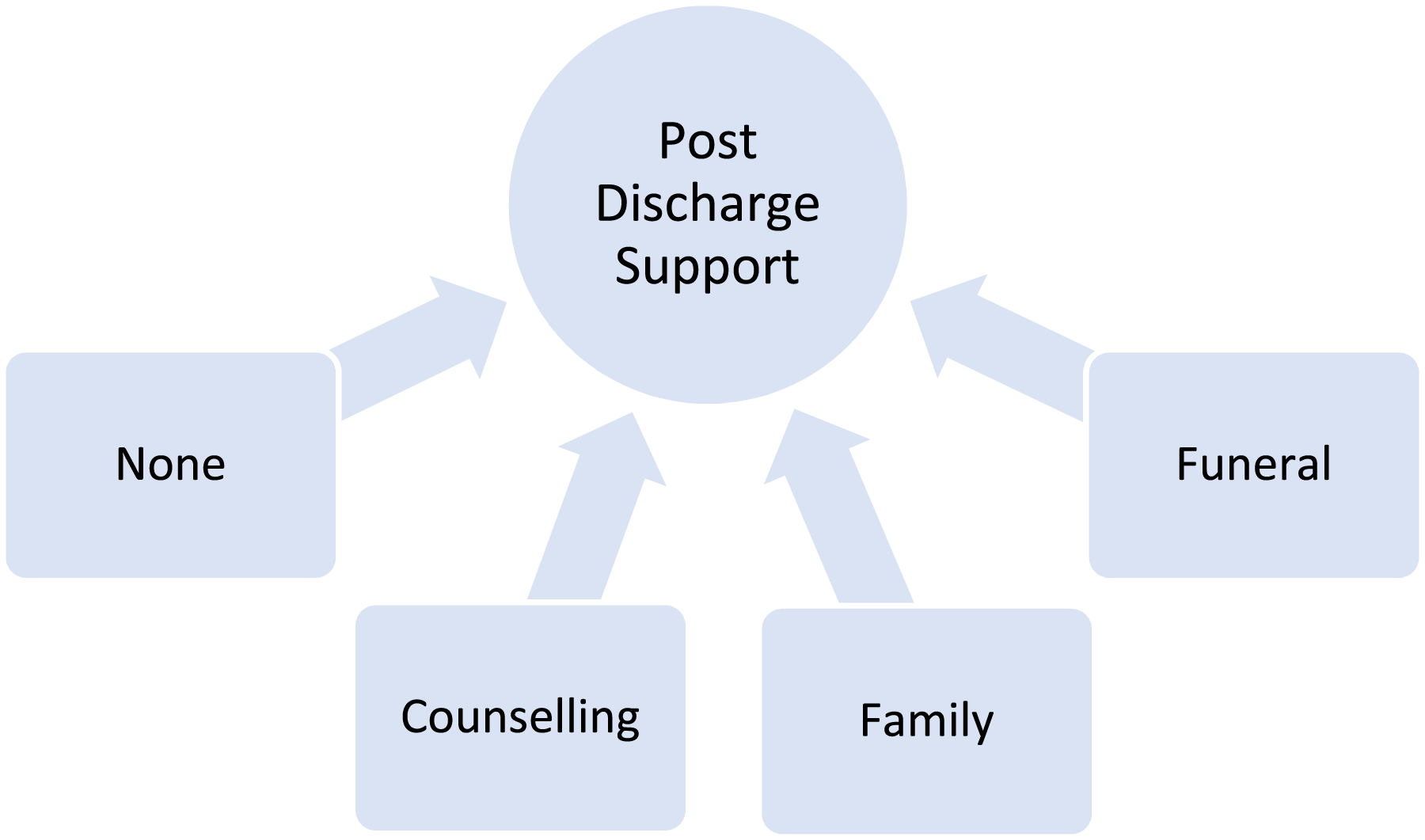
While one mother reported that overall “the hospital was – they were really good in the support” [P1], not all experiences were positively perceived. For example, not all women reported being offered support after the stillbirth and therefore received no counselling. One mother stated that “I don’t remember [anyone mentioning or referring to Stillbirth and Neonatal Death Support (SANDS)]” [P5]. This mother went on to report that “I sort of went self-destructive…I didn’t seek counselling…I just left it and tried to sort my own out” [P5]. The experience of stillbirth was reported by this mother to be too difficult to talk about after seven years. She reported that when others ask about her child, she replies “please just don’t [speak about him], okay” [P5]. Another women reported that she was “just sort of kind of left in the corner by myself…it wasn’t a good feeling at all…it took me a while to actually get out of it” [P4]. However, two women reported receiving counselling after the stillbirth of the child. One mother reported accessing counselling through her partner’s workplace, stating that “his work helped with a bit of counselling…we were going to a counsellor together” [P1]. Further, this mother also accessed SANDS and emphasised that “they were really good…they were really good” [P1]. Another mother reported being offered a variable of counselling services by hospital staff. These services included a genetic counsellor and GP referred services. She reported that “I was told about the genetics counsellor” and “it was a couple of months later that my doctor referred me off to a counselling in [home town], but that didn’t happen straight away either” [P3]. For another mother, support was provided by family members. She reported that “I sort of went into a shell by myself…it was my partner that pulled me out” [P4].
Women reported a variety of experiences of support when arranging the funeral after the stillbirth. For some women, they reported being supported by the hospital and family, while others were not. For example, one woman reported that “[the local hospital] paid for a little white casket for bub, which was nice” [P2]. Another woman described support from the hospital and family when stating that “[the hospital] got me quotes for funeral homes…[ and a family member] got him cremated and brought him home” [P5]. However, this was not the case for another women. She reported that she did not receive support from others to arrange the funeral and that “[it was] just me and my kids” [P4].
Support after Stillbirth
Two themes were identified that captured factors that impacted mothers’ experiences of receiving support after stillbirth -
Factors affecting support after stillbirth.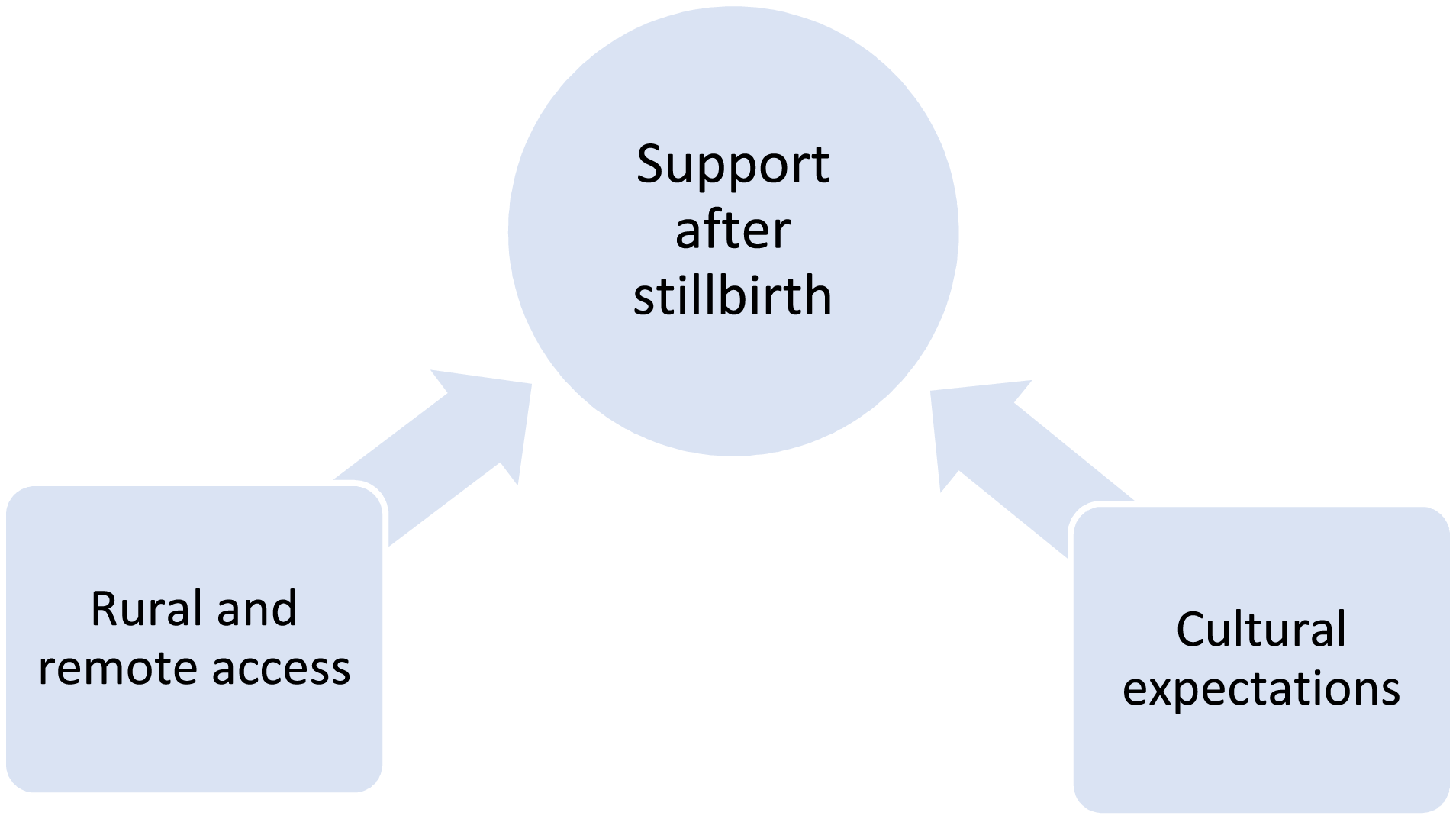
The women reported difficulties in accessing counselling that were specific for rural and remote areas and Indigenous women. One mother reported that being a member of a rural or remote community posed difficulties in accessing counselling. She stated that there is [counselling service] available. I suppose some of the hard stuff about local counselling is through - is these people you see on a daily basis if you live in a country town, it's hard enough seeing people afterwards that all don’t know what to say to you anyway let alone going to somebody you know to try and talk about stuff. [P3]
Further, one mother reported that there were cultural expectations about appropriate ways in which to seek and receive support. She reported that it's strange with Indigenous ladies or, you know, Indigenous ladies full stop. Because it's very hard…because of the up-growing that you have and to ask for something like [counselling], it's - yeah. And you don't know, yeah, that you're going through that [and need counselling], yeah” [P4].
Pregnancy after Stillbirth
Three themes were identified that captured factors that influenced mothers’ experiences of pregnancy after stillbirth -
Factors influencing experiences of pregnancy after stillbirth.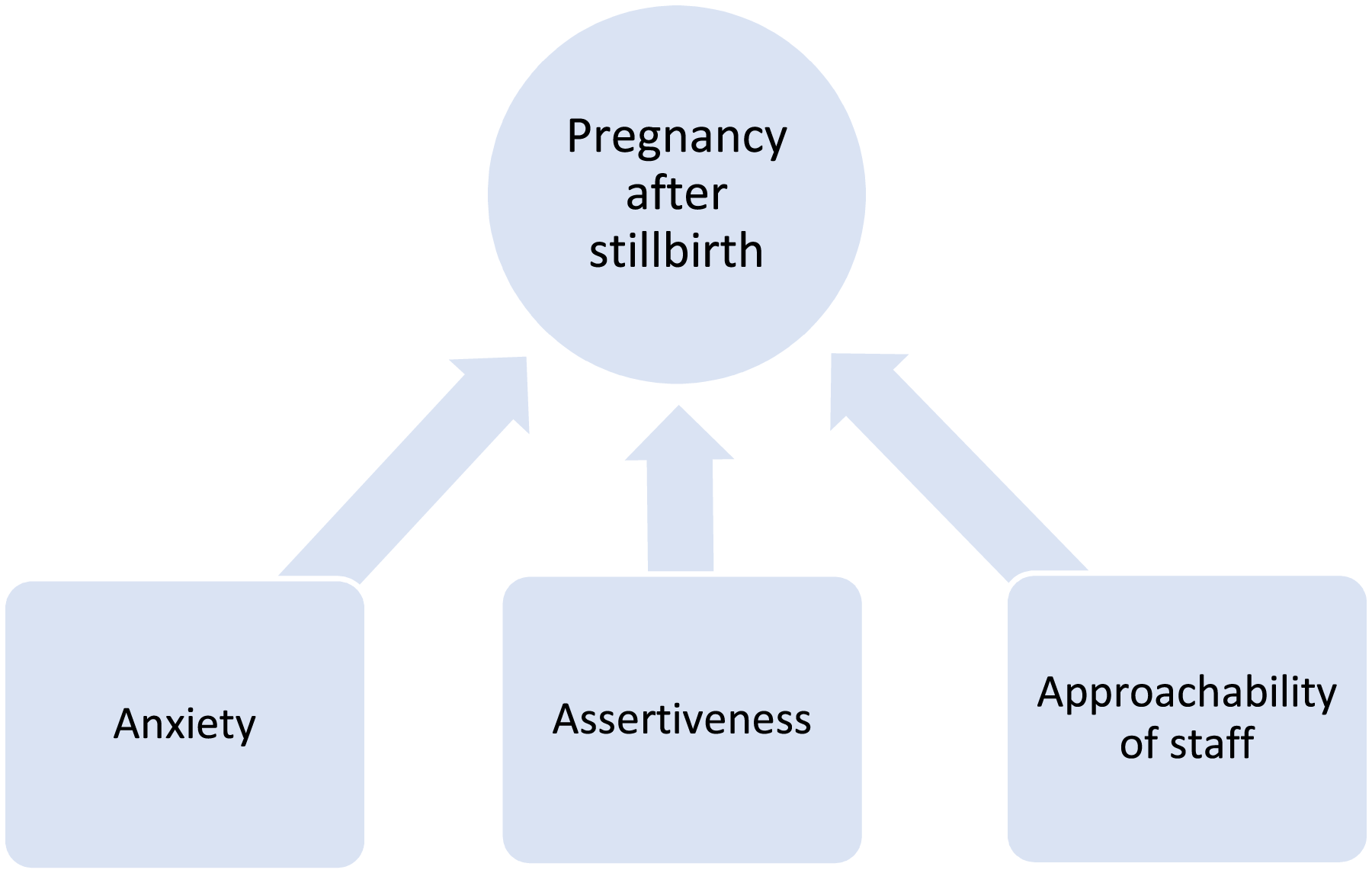
Women reported high levels of anxiety during pregnancies subsequent to the stillbirth. For example, one mother stated that “apart from me pulling my hair out as soon as they didn’t move one day…well, it was quite scary actually. I didn’t want to be pregnant anymore, but I wanted them out” [P5]. However, another mother described being more assertive during subsequent pregnancies. She stated that “and now, going through my second, third, further…I just remember saying to mum ‘I’m not beating around the bush…I’m not – whatever I want, I’m saying it out loud’” [P1]. This new assertiveness was also facilitated by the approachability of the hospital staff. As this mother stated even then, even through my other three pregnancies after, where I just asked the same question over and over and he would - it's not like [doctor] would be ‘we've answered that before’. He wouldn't make me feel like that. He would just answer the same question and even then he would try and - I think he would try and answer the same - it was the exact same question. But he'd answer it in a different way, to make me feel better. He was so good. I was so glad that I went through him again…he just genuinely cared. I didn't have to be on edge and make sure I had every question that I needed. Because he just knew. I don't know. I just - I'm just so grateful that I had [doctor] along the whole way. Even then, if I had a fifth baby, I'd ask to go through him again. He's just - he's the best. [P1]
Discussion
Aboriginal and Torres Strait Islander women in this study described their experiences prior to, and after stillbirth. These mothers’ experiences often began with some awareness of something not being ‘right’ with the pregnancy (Nuzum et al., 2018; Siassakos et al., 2017), however, not all mothers expected an adverse outcome, and remained hopeful (Martínez-Serrano et al., 2019). Changes to fetal movement in the week prior to the stillbirth were also identified by these mothers. This awareness of changes to fetal movement has been demonstrated as an indicator of stillbirth (Bradford et al., 2019; Stacey et al., 2011). As the rate of stillbirth is almost twice as high for Indigenous mothers, it is important to provide culturally appropriate information regarding monitoring fetal movements throughout pregnancy. Such information is yet to be included in clinical guidelines regarding fetal movements (Gardener et al., 2017; Queensland Health, 2018).
Mothers reported significant emotional distress during the late stages of the pregnancy, labour and immediately after the stillbirth. They reported increasing concern, panic and anxiety while scans were being conducted and care plans were developed, and feelings of abandonment at being admitted to the maternity unit during labour and after the stillbirth. The negative impact upon mothers’ health and wellbeing of delays, lack of procedures, (Burden et al., 2016; Due et al., 2018; McNamara et al., 2017; Nuzum et al., 2018; Peters et al., 2016) and admission to the maternity unit (Due et al., 2018; Martínez-Serrano et al., 2019; Peters et al., 2016) have previously been identified. As other mothers have previously identified (Ellis et al., 2016; Martínez-Serrano et al., 2019; Peters et al., 2016), the current mothers also preferred a dedicated private space to labour and recover after stillbirth away from the maternity unit. As Ellis et al. (2016) noted, mothers report wanting ‘privacy, not abandonment’. While it is crucial to support mothers’ choices, particularly labour and birth choices, and sensitively communicate these choices (Due et al., 2018; Ellis et al., 2016; Flenady et al., 2014; Peters et al., 2016), it is important to provide timely, clear and concise information across the entire experience.
While mothers reported a desire for more information, their experiences were impacted by the way in which health professionals communicated to them during this time. When mothers perceived a lack of, or information being withheld or delayed, they reported poorer experiences. Interestingly, these mothers identified the need for an advocate to support them during this time, either a health professional and/or family member. While supportive and knowledgeable communications are more likely to positively impact upon mothers’ experiences (Heazell et al., 2016; Peters et al., 2016), conversely, insensitive communications have been demonstrated to negatively impact upon mothers (Due et al., 2018; Martínez-Serrano et al., 2019; Siassakos et al., 2017). Health professionals and parents have identified the need for training and education to support mothers (Due et al., 2018; Ellis et al., 2016; McNamara et al., 2017; Siassakos et al., 2017) in order to develop skills for non-judgmental support of families (Due et al., 2018; McNamara et al., 2017; Peters et al., 2016). However, it is important for health professionals to be trained and educated to provide culturally responsive care to Indigenous mothers.
After stillborn, mothers in the current study expressed regret at not acting earlier on worrying signs such as changes to fetal movement (Nuzum et al., 2018). However, unlike the findings of another study (Martínez-Serrano et al., 2019), they did not report guilt and shame. Mothers questioned why the stillbirth had occurred and wanted more information in order to make sense of their experience (Meredith et al., 2017). Others have noted that providing written information (O’Connell et al., 2016) regarding fetal diagnoses supported mother’s understanding through increased knowledge of their experience (Meredith et al., 2017). Importantly, the mothers in the current study reported the negative impact upon their health and wellbeing of a lack of, or insensitively timed culturally appropriate support while they were admitted to hospital. Given the lack of inclusion of Indigenous mothers’ experiences of stillbirth in the clinical guidelines (Flenady et al., 2018; Gardener et al., 2017; Queensland Health, 2018), it is difficult for health professionals to know how and when to provide culturally responsive care.
While some mothers in the current study recalled being supported by health professionals to spend time with their infant and to make memories and mementoes after stillbirth, others did not. The importance for the infant and family to have the opportunity to spend time together after a stillbirth have been noted (Ellis et al., 2016; Flenady et al., 2011, 2014, 2018), however, as with the current study, this was not the case for all mothers (Flenady et al., 2014). Having such time allows parents to grieve (O’Connell et al., 2016) and to develop memories of their infant (Ellis et al., 2016; Flenady et al., 2014). As the current mothers identified, it is crucial to tailor the support and mementoes to the parents’ wishes in order to facilitate and integrate the experience the process of grief and loss (de Andrade Alvarenga et al., 2020; Martínez-Serrano et al., 2019) and honour the personhood of the infant (Nuzum et al., 2018).
There was an overall perception of a lack of post-discharge professional support, particularly for counselling services, however, some mothers were supported by family members. While one mother accessed mental health services, most mothers were unaware of such services (O’Connell et al., 2016), or could not access services due to geographic remoteness. This lack of perceived support may reflect a lack of continuity of care plans for parents after discharge (Due et al., 2018; Ellis et al., 2016; Peters et al., 2016; Siassakos et al., 2017), and therefore family members taking up support roles (Flenady et al., 2014; Martínez-Serrano et al., 2019). Having a consistent plan for continuity of care may lift the burden from extended family members while they also grieve the loss of the infant. As the current mothers identified, this may be particularly useful in cases where support is provided by the maternal grandmother (Fernández-Sola et al., 2020). However, as noted earlier, there is a lack of evidence-base for mental health service provision after stillbirth (Flenady et al., 2014; Koopmans et al., 2013). This gap in knowledge is likely wider for understanding mental health service provision for bereaved Indigenous women and families. As one mother reported, there are cultural expectations about providing counselling services to Indigenous women and families. These cultural expectations need to be identified and incorporated into an evidence-based approach.
Pregnancy after stillbirth was described by mothers as a time of anxiety and distress. Others have noted that mothers often avoided (Fernández-Sola et al., 2020), despair (de Andrade Alvarenga et al., 2020), and were cautious at becoming pregnant after stillbirth (Meredith et al., 2017). As the current mothers identified, subsequent pregnancies were a time of heightened fear (Fernández-Sola et al., 2020; Meredith et al., 2017) and anxiety (Burden et al., 2016; Fernández-Sola et al., 2020; Meredith et al., 2017). It is important for parents and families to develop strategies to cope with psychosocial distress during subsequent pregnancies (Meredith et al., 2017). As the current mothers noted, health care professionals can support families by providing sensitive and knowledgeable care (Meredith et al., 2017; Peters et al., 2016). The approachability and empathic care from health professionals was reported to support assertive communication by the parents during subsequent pregnancies, and has been noted as having a lasting and memorable impact upon families (Ellis et al., 2016; Nuzum et al., 2018). It is essential for health professionals to provide culturally sensitive and responsive care in subsequent pregnancies.
Clinical Implications
While there are many experiences common across cultures identified in this paper, importantly, mothers in this study identified the need for culturally responsive support and care, including providing information and culturally appropriate mental health support. As a first step, these findings should be integrated into maternity and neonatal standard care guidelines, and subsequently used to inform health professionals’ training and education programs. These guidelines will facilitate the development and implementation of a culturally responsive plan for continuity of care by health professionals in order to provide ongoing support, particularly for regional, rural and remote Indigenous women and families.
Conclusion
To the best of our knowledge, this is the first paper to give voice to Australian Indigenous mothers’ experiences at this distressing time. Given the varying time periods between the interview and stillbirth, mothers were able to recall their experiences with clarity and in vivid detail. Overwhelmingly, mothers want timely, clear and concise, and sensitive communications with, and support from culturally responsive health professionals throughout and beyond this experience of stillbirth. Mothers also want to be consulted and supported in their decision across the entire experience. Such reciprocal consultation allows mothers to ultimately make sense of their experience and integrate their grief and loss over the longer term.
Footnotes
Acknowledgements
We would like to acknowledge the generous support of the project Cultural Advisory Committee members and the research team – Ms Cherie Boniface, Ms Jessica Bowron and Ms Jenna Singleton-Bray. We acknowledge and thank the women in the study who gave generously of their time and knowledge. This study was supported by The Townsville Hospital and Health Service Study, Education and Research Trust Fund.
Declaration of conflicting interests
The author(s) declared no potential conflicts of interest with respect to the research, authorship, and/or publication of this article.
Funding
The author(s) disclosed receipt of the following financial support for the research, authorship, and/or publication of this article: This work was supported by The Townsville Hospital and Health Service Study, Education and Research Trust Fund #2016_24.
