



Abstract
Inspired by a desire to explore ways in which non-Indigenous Australians can meaningfully connect with Aboriginal and Torres Strait Islander peoples, this article reflects on my doctoral studies and the role educators can have in holding space for First Nations peoples to directly contribute toward the creation of mutually rewarding teaching and learning experiences. It specifically evaluates the processes involved in establishing and implementing a project centered on my senior secondary music class as the students engaged in the collaborative reworking of two songs shared by Ngiyampaa composer and dancer, Peter Williams. The article is intentionally reflexive as it interrogates the journey and motivations behind conducting the study. As a non-Indigenous teacher-researcher, I table three foundational pillars behind my personal growth in understanding Aboriginal and Torres Strait Islander histories and cultures: the music, the academic literature, and most importantly, the local community. The article then discusses the challenges and factors that lead to the success of the musical interactions in the doctoral study—a process understood as co-composition—and critically, the transformative learning experiences gained as reciprocal relationships were forged during various stages of the project. Rather than promoting co-composition as a pedagogical strategy, this article encourages a heuristic approach to increased and effective inclusion of Aboriginal and Torres Strait Islander music in secondary music classes. By setting out in autoethnographic form the experience of implementing a considered, decolonial, and ethical approach to learning from and through Aboriginal and Torres Strait Islander music, I hope to encourage educators to imagine themselves in a narrative of their own, one that includes their students and members of the local First Nations community, leading to rich and rewarding musical collaborations and ongoing fruitful relationships.
Keywords
Introduction
During my undergraduate studies in musicology and music education, I developed a strong interest in Aboriginal and Torres Strait Islander histories, cultures, and music, which endured and forms the foundation of my teaching and research career. Specifically, my interests have centered around ways in which non-Indigenous Australians can meaningfully connect with Aboriginal and Torres Strait Islander music, and the role educators and performing artists can have in holding space for Aboriginal and Torres Strait Islander peoples to directly contribute toward the creation of mutually rewarding teaching and learning experiences. The decolonial act of holding space requires teachers to let go, surrender control, and build trust (Filipiak, 2020). When holding space for Aboriginal voices, students and teachers “experience and develop deep respect for an Aboriginal way as they are guided towards developing knowledge-based relationships and reconciling their experiences of the intersection between multiple worldviews” (Kennedy et al., 2021, p. 1063). As a non-Indigenous Australian, it is my hope that my research and practice will go some way toward the classroom cultivation of heart-felt respect for the music of Aboriginal and Torres Strait Islander peoples, the bearers of the oldest surviving cultures on earth.
When I initially submitted a proposal to undertake such research in 2008, I had completed my undergraduate degree and teaching qualification; however, I had not yet set foot in a classroom and had no guarantee of immediate employment. Serendipitously, I was offered a position in a public secondary school in metropolitan Sydney that turned out to be a good fit with my desire to experiment in the classroom and part of a community ready to share their stories with me. While far from the original intention of my proposal, this school—and more specifically, my senior secondary music class—would become the key protagonists of my doctoral research (Fienberg, 2019). Collectively, we learned through and from the music of Aboriginal and Torres Strait Islander artists culminating in the collaborative reworking of two songs shared by Ngyiampaa songman and Elder, Peter Williams and his collaborator Brendon Adams (Ku-Ku Yulangii/Batjala). 1
In this article, I reflect upon key moments in the growth of my personal understanding. Specifically, I decode three pillars that influenced my research design: music, literature, and community. Following an autoethnographic account of an early presentation, I reflect on the writings of Mackinlay and Bartleet and discuss the industry collaborations that informed my own project. I then explain how this idea was developed in consultation with the local Sydney Aboriginal community with a view to assisting others to derive benefit from the experiences I have documented and shared.
Ethical statement
Prior to commencing my doctoral study, ethics approval was sought from the University of Sydney’s Human Research Ethics Committee and the New South Wales (NSW) Department of Education’s State Education Research Applications Process. Approval for the project was contingent on consulting with the NSW Aboriginal Education Consultative Group and enacting the core values for conducting research with Aboriginal and Torres Strait Islander Peoples outlined in the National Statement on Ethical Conduct in Human Research (National Health and Medical Research Council [NHMRC], 2007). 2 Fundamental to upholding the “spirit and integrity” of the project (NHMRC, 2018, p. 4), Aboriginal voices were privileged at all stages of the study, beginning with the initial negotiation of the project through to discussions about appropriate reporting of the research’s findings. The nature of the musical collaboration was formulated collectively, with the Aboriginal musicians maintaining creative control and ownership of the songs shared (Australia Council for the Arts, 2007).
Participants were given free, prior, and informed consent (Kwaymullina, 2016; United Nations General Assembly, 2007) and the ability to withdraw at any stage from the project. School participants were offered anonymity and pseudonyms have been applied for the student and teacher voices included in this article. While participating Aboriginal musicians were also offered anonymity, they accepted the opportunity to have their names included. This was arranged to recognize and acknowledge their individual and collective contributions to the study’s findings (NHMRC, 2018).
Autoethnography and the need for reflexivity
My positioning as the classroom teacher and non-Indigenous researcher necessitated continuous self-reflection on my role in negotiating the design and implementation of my research project (Bradley, 2012; Hess, 2018; Kallio, 2020). Indeed, the exclusion of autoethnographic and personal observations would have effectively distorted the data and perspectives of participants. Autoethnography demands the researcher to look outward on “social and cultural aspects of their personal experience” before turning inward to expose “a vulnerable self” (Ellis & Bochner, 2000, p. 739). Within autoethnography, several key subgenres have emerged. Emotive and evocative narratives can place the author as the object of research, focusing on their “intimate involvement, engagement, and embodied participation” in the research process (Ellis & Bochner, 2006, p. 434). Similarly, performative 3 autoethnography provides a critically reflexive methodology that results in a narrative of the researcher’s engagement with the Other (Spry, 2011). It “views the personal as inherently political,” focusing on “bodies-in-context as co-performative agents in interpreting knowledge and holds aesthetic crafting of research as an ethical imperative of representation” (p. 498). However, critics of these forms of autoethnography argue that such writing represents a romantic construction of the self (Atkinson, 2006) and that the “social worlds of ‘others’ are almost invariably more interesting and more illuminating than the authors’ own reflections” (Hammersley & Atkinson, 2007, p. 205).
It is important to acknowledge autoethnography’s emergence from the Western research paradigm. Indigenous researchers have actively sought to disrupt and decolonize the “history of exploitation, suspicion, misunderstanding and prejudice” (Rigney, 1999, p. 117) by not only developing new Indigenist methodologies (Kovach, 2009; Smith, 1999), but also adapting Western approaches that closely align within the Indigenous paradigm (Wilson, 2001). Palawa academic Jennifer Houston 4 (2007) described autoethnography as “new ground where storytelling and research [were] merging on the borderlands of academia” (p. 47). For Cree linguist Onowa McIvor (2010), autoethnography shared many common features with Indigenous storytelling, holding “a greater purpose of teaching, learning and at times, creating new knowledge” (p. 141). Autoethnography provides opportunities for Indigenous researchers to reclaim voice, visibility, and vision, inspiring “people to take action toward a legitimate way of self-determining one’s collective and cultural potential” (Whitinui, 2014, p. 481). While an individual’s autoethnographic account can unintentionally lead to generalizations not representative of diverse perspectives (Houston, 2007; Shay & Wickes, 2017), autoethnography’s accessible and relatable writing conventions help fulfill ethical and relational responsibilities when considering: “Who/What are we really doing research for? Our writing should belong to everyone, the observers and the observed, the researchers and the researched” (Bishop, 2021, p. 370).
In drawing attention to autoethnography’s presence in music research particularly in Australian contexts, Bartleet and Ellis (2009) observed a “wave of self-reflexivity [. . .] sweeping across the music profession and gaining momentum in a number of areas” (p. 6). As will be evidenced in the proceeding examination of the literature, autoethnography has emerged as a key method for non-Indigenous music educators searching for meaningful learning through and from Aboriginal and Torres Strait Islander music (Bartleet, 2011; Mackinlay, 2007, 2008, 2010b). Not only does it provide insight into how relationships are initiated, fostered, and maintained with Aboriginal and Torres Strait Islander Peoples, it also draws non-Indigenous researchers closer to understanding the importance and limitations of their subject position in engaging with and representing Aboriginal and Torres Strait Islander communities and cultures. As a non-Indigenous researcher, autoethnography enabled me to reflect and connect the political and personal as I balanced the dual roles of facilitating and participating in this research project.
Gathering diverse perspectives: When interviews become yarns
While autoethnography provides the primary method driving this narrative, my voice is complemented by perspectives gathered from the students, supervising teachers, and Aboriginal musicians who made my doctoral project possible. At the center of the study were 13 non-Indigenous students from my culturally diverse senior music class (Table 1). Their music lessons were filmed for transcription purposes and video analysis (Fetterman, 2010) while completing an 11-week study of Aboriginal and Torres Strait Islander music. Additional footage was captured during rehearsals, school and community performances, and activities coinciding with the collaborative reworking of Peter’s songs. 5 All student participants took part in small group interviews (Eder & Fingerson, 2001) prior to meeting Peter, with nine students and three supervising teachers purposively sampled for individual interviews at the conclusion of the project.
Senior Music Class.
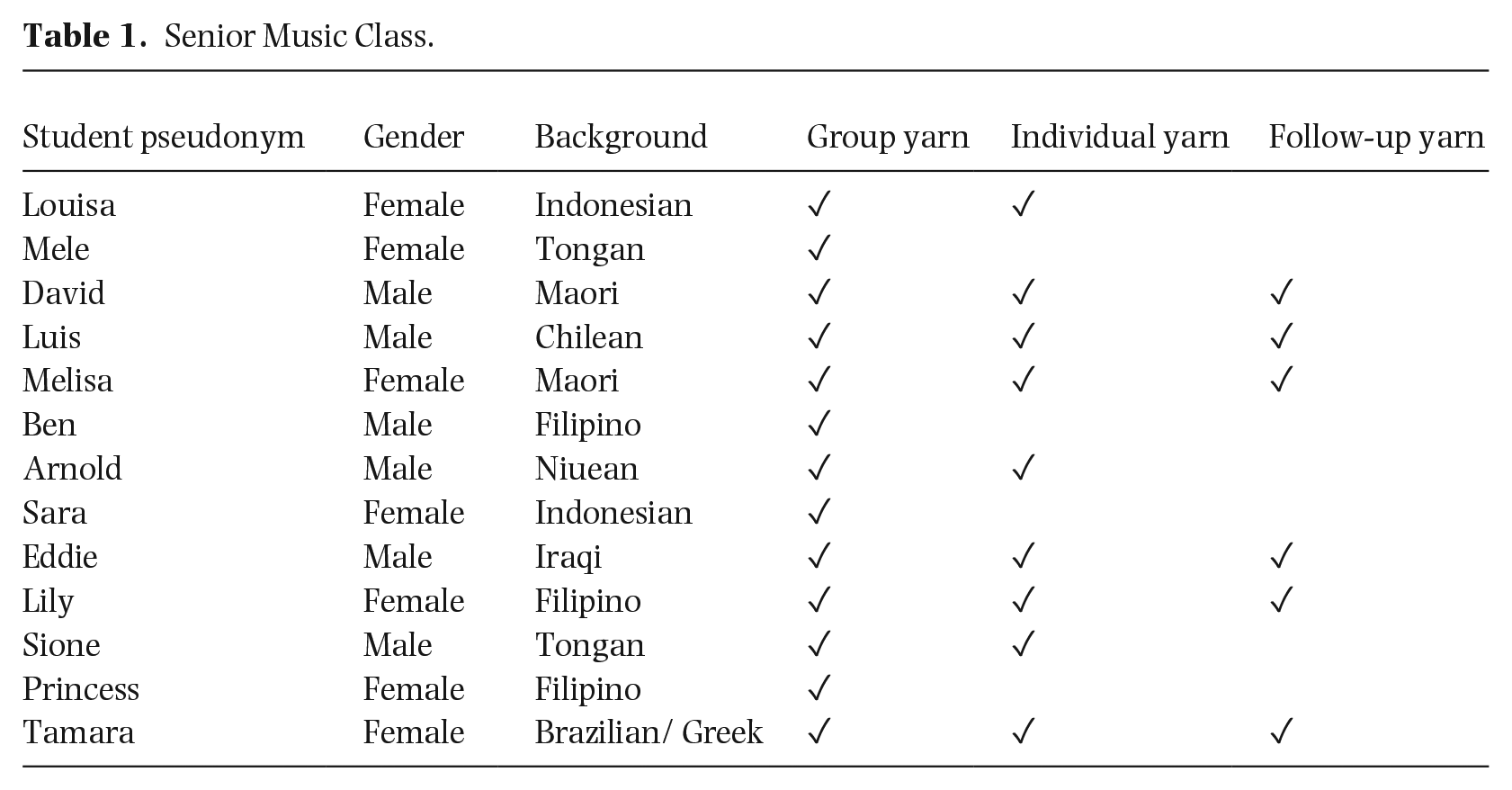
While these interviews were initially conceived as semi-structured (Galletta, 2013), the conversations were relaxed and informal resembling the Aboriginal practice of yarning (Geia et al., 2013). As a research method, yarning prioritizes Aboriginal ways of knowing and being and compels researchers to “form partnerships with Aboriginal communities in order to develop culturally safe and just research” (Dean, 2010, p. 6). This was critically important when speaking with Peter and Brendon at different stages of the project. Yarning empowers people “to talk freely about their experiences,” enabling researchers to explore topics in greater depth leading to “information emerging that more formal research processes may not facilitate” (Bessarab & Ng’andu, 2010, p. 47).
An awkward beginning
In choosing to investigate Aboriginal and Torres Strait Islander music within formal education, I knew that I would need to undertake significant research in the field before I was able to contribute toward answering some of the questions that music educators had struggled with for some time (Dunbar-Hall, 1997, 2002, 2005; Dunbar-Hall & Beston, 2003; Locke & Prentice, 2016; Webb & Bracknell, 2021). My naiveté was exposed in an early postgraduate research evening. I cringe as I recall sharing my grand vision and expressing the need to physically immerse myself in Indigenous music by learning the didjeridu and taking local language classes, which I incorrectly identified at the time as Gamilaraay. So, how did I move from my position as an undergraduate in 2008 gazing from a distance at music and people I as yet little understood, to the point of reflecting on my research more than a decade later? Through an autoethnographic account of the influences driving my research and pedagogical processes, I hope the answers go some way toward assisting educators who are seeking to develop their own approaches to engaging with First Nations cultures globally.
Music, literature, and community
Reflecting on that seminar, I clearly needed to significantly boost my educational and cultural knowledge base. Problematizing the concept of cultural competence, Pon (2009) suggested that such training inevitably limited goals to “knowledge of characteristics, cultural beliefs, and practices of non-majority groups, and skills and attitudes of empathy and compassion” (p. 783). In the context of Aboriginal and Torres Strait Islander education, this can lead to simplistic, transactional, and passive learning experiences (Smyth, 2012), creating a new form of racism that ignores the ongoing impact of colonization (Pon, 2009). Responding to the critique of cultural competence, Burgess (2019) argued it was more effective to consider who a culturally competent teacher might be and how they enact this as part of their practice. This required a teacher to be aware of and constantly develop “their critical consciousness through ongoing reflection on personal positioning with reference to relationships of power, whiteness, privilege” (p. 478). Transitioning to the how, teachers needed to develop a pedagogical cultural identity, “embedding cultural knowledge, passion, skills and lived experience into their daily teaching practice” while critically reflecting on “the self as cultural being, teacher and learner” (Burgess, 2016, p. 109).
The development of my emerging pedagogical, cultural identity involved three foundational pillars: the music, the academic literature, and most importantly, the local community. Woven in and around these pillars was the educational challenge I faced in bringing the students along with me as I learned. As a teacher, I immediately set about trying to actively listen to a diverse range of music by Aboriginal and Torres Strait Islander artists to include within my classroom teaching programs. Taking advantage of the school’s cultural events as a contextual backdrop, I promoted the music of popular artists such as Jessica Mauboy to challenge assumptions of exoticism, remoteness, and otherness (Bracknell, 2019; Fienberg, 2011a; Guy, 2015). Through focusing on replicating the performance and recording experience, I hoped to boost engagement, drawing students closer to the songs’ meanings and a deeper overall understanding of Australia’s Aboriginal and Torres Strait Islander histories and cultures.
As a time-poor teacher-researcher, I was motivated by attending conferences and learning directly from others in the field. Entering the second year of my research I attended and presented a paper at the Cultural Diversity in Music Education Conference (CDIME), which was conveniently held locally, at the Sydney Conservatorium of Music. I was particularly moved by Mackinlay’s (2010a) keynote and captivated by a paper presented immediately before my own by Bartleet and Turpin (2010). I left the conference awakened by their themes of collaboration and relationship. Both papers spoke of the need to keep Aboriginal and Torres Strait Islander Peoples at the center of teaching and learning, and of the unlimited possibilities for transformative growth in understanding through connecting and allowing time to establish rapport with community members.
Experiential learning, relationships, and decoloniality
In the autoethnographic research of her higher education practice, Mackinlay (2007) adopted an intersectional focus, concentrating on power, race, and gender inequity. She believed that understanding Aboriginal and Torres Strait Islander performance required “coming to terms with separate histories and a collective past and recognising the forms of white race privilege and power which have worked and continue to oppress Indigenous Australian women” (p. 218). Through reflections collected from workshop participants and performers, she discussed how the experiential pedagogy enabled students to reflect on their whiteness: “it may be uncomfortable, it may be confronting, but it represents a powerful pedagogical moment for the possibility of change and transformation” (Mackinlay, 2004, p. 41).
While Mackinlay’s extensive analysis of her tertiary practice provided an important voice for teaching Aboriginal and Torres Strait Islander music, she lamented the difficulties in translating experiences such as these into primary and secondary school settings. In response to numerous calls from music teachers to list teaching resources suitable for the classroom, Mackinlay (2008) argued that the most powerful resources were not to be found “in a book on the library shelf, in an article published by a ‘white expert’ (such as myself), or on an internet website” (p. 4). Instead, her answer would continuously come back to relationship. Referring to Tilmann-Healy (2003), she described relationship in a pedagogical sense as an ethic of friendship characterized by ongoing communicative management of dialectical tensions. Such tensions often lead to confronting questions as educators explore their role in colonizing culture. Resisting the urge to provide practical solutions, she called on teachers to begin by collaborating with Aboriginal and Torres Strait Islander people “in your own classroom, your school, your local community—on whose traditional country do you live and work?” (Mackinlay, 2008, p. 4). In posing such questions, Mackinlay (2010b) ultimately promoted “a pedagogy of the heart,” which placed “relationship at the centre of our conversations, curricula and classrooms” (p. 21).
Mackinlay’s advocacy for embodied and experiential learning was embedded within several courses at the University of Queensland. Within these courses students used reflective journals (Barney & Mackinlay, 2010) and engaged in Problem Based Learning (Mackinlay, 1998), leading toward a pedagogical framework described by Mackinlay and Barney (2014) as PEARL—political, embodied, active, and reflective learning. Responding to Tuck and Yang (2012), Mackinlay and Barney (2014) questioned whether PEARL’s teaching and learning for transformation, social justice and reconciliation was “‘good enough’ to be decolonising” (p. 66). Reflecting on her performative and embodied pedagogical practice, Mackinlay (2016) shifted away from the term decolonization, instead preferring decoloniality (Lugones, 2010; Mignolo, 2011; Quijano, 1992, 2000). Distinguishing between the two terms, Mignolo (2011) identified decolonization as the physical and political process of completely removing the colonizer from the colonized space. In contrast, decoloniality aimed toward “epistemic disobedience and delink[ing] from the colonial matrix to open up decolonial options” (p. 9). Drawing on experiences from her performance classroom, Mackinlay (2016) exhorted others to adopt the lens of decoloniality, indicating that it was the “little differences” that made it possible to ask: “What kind of interferences are needed to start to make decolonial moves and am I prepared to make space for them? Does my teaching and learning praxis reflect the colonial selfsame or does it diffract into decoloniality?” (p. 224).
Stories from Tennant Creek: Reconciliation, collaboration, and service learning
While some educators have brought Aboriginal and Torres Strait Islander performers into their classrooms (Mackinlay, 2007) and centered courses around local festivals (Barney & Mackinlay, 2010; Corn & Patrick, 2014), several universities ventured to the remote Northern Territory town of Tennant Creek to foster meaningful relationships between their students and the community there. Searching for an apt description of the learning process, Bartleet (2011) initially linked the project with immersive learning experiences described in a culturally diverse education literature (Aguilar & Pohan, 1998; Canning, 1995; Emmanuel, 2005). Here students take a “cultural plunge” by “living and working in a setting for a short period of time so they become part of that community” (Bartleet, 2011, p. 12). To encourage the students to be observant and self-reflexive, they were given field diaries to record their thoughts, feelings, and interpretations of the field trip. Critically, permission was granted to share the stories and care was taken to maintain close relationships with “Indigenous collaborators in each community, following their lead” (Bartleet & Carfoot, 2013, p. 192).
Echoing Mackinlay, Bartleet (2011) emphasized “the centrality of relationship building” and explained that without it, “the perils of our colonial past paralyse us, and the possibilities of our interactions amount to nothing” (p. 20). As the program evolved, the pedagogical approach associated with the field trips shifted from immersive to service-based learning. Bartleet et al. (2016) described service learning as a “teaching and learning strategy that integrates community service with instruction and reflection, to enrich the learning experience, develop intercultural awareness and strengthen communities” (p. 3). By exiting traditional classrooms, students “engage with real versus imagined subjects, and thus, learn about culture through their own lived experience” (p. 3).
Bartleet et al. (2014) proposed four central concepts common within a successful arts-based service-learning framework: relationships, reciprocity, reflexivity, and representation. While they noted that some students had difficulty reconciling the structured nature of universities with their new environment, over time they realized “the importance of showing respect, developing trust and taking the time to build relationships” (p. 11). With music and performance stimulating friendships that extended well beyond yearly field trips, students began to recognize the reciprocal nature of mutually beneficial exchanges of ideas and learning experiences. This allowed the students to develop a greater appreciation of Aboriginal culture and an awareness of the limitations of their previous understandings. As students confronted such realizations, they were prompted to “engage in deeply reflexive processes about their racial subjectivities, cultural biases and assumptions” (p. 13). Finding an appropriate means of representing these experiences is perhaps the most challenging aspect of arts-based service learning. In navigating the complexities, the authors followed their collaborators’ lead on negotiating “the representation and communication of these experiences” (p. 16). Reflecting after the culmination of their nationally funded project, Bartleet et al. (2019) collectively compiled a broader framework for working with First Peoples. Grounded by the three interconnected elements of knowing, being, and doing, the authors drew upon Noonuccal and Bidjara scholar Karen Martin-Booran Mirraboopa’s (2003) Qunadamooka worldview to summarize the key insights derived from the projects.
Culture bearers and community partnerships in secondary music classrooms
While the need for community partnerships in the teaching of Aboriginal and Torres Strait Islander music provides a key thread within higher education literature, the documentation of collaboration in secondary school contexts is not as prevalent. Writing from a North American perspective, Edwards (1996) explained that an Indigenous “guest artist [. . .] can significantly affect student perceptions of American Indian music and culture—and may be more powerful than lessons directed by a trained music teacher” (p. 13). Inspired by Edwards, Marsh (2000) initiated a fieldwork program requiring students to observe an Aboriginal performer who had been employed by a local school for an intensive week of workshops. Although some students questioned the methods used by the culture bearer, the project “appeared to have a greater effect in developing intercultural understanding than in developing these students’ content knowledge of Aboriginal music” (p. 65).
Speaking directly with culture bearers, Neuenfeldt (1998) explored the way didjeridu players imparted Aboriginal knowledges and perspectives in schools. Acknowledging these programs were not substantial in terms of numbers or teaching time, Neuenfeldt argued that they were still “significant in the context of an almost absence of an Aboriginal presence or voice” (p. 9). He described didjeriduists as border crossers and culture workers who “sound silences (literally and figuratively) to construct a textual space for intercultural communication” (Neuenfeldt, 1998, p. 16). In comparing teaching to Aboriginal and Torres Strait Islander and non-Indigenous audiences, Koori cultural officer Mick Davison suggested that his message was relatively similar (Davison & Neuenfeldt, 1997). Costigan and Neuenfeldt (2002) also acknowledged the dual benefits of teaching songs and dances to both audiences, helping Aboriginal and Torres Strait Islander students strengthen their cultural identity, while providing non-Indigenous students with “valuable insight into Indigenous peoples and their culture” (p. 51).
Murphy-Haste (2009) re-emphasized the importance of culture bearers in the classroom, stating that their perspectives and knowledges “were integral to a framework that provided a meaningful and significant education for Indigenous students” (p. 53). For teachers in areas with a low Aboriginal and Torres Strait Islander population, Murphy-Haste encouraged “the use of existing resources in combination with Indigenous pedagogical approaches” as a means of “providing meaningful teaching of Indigenous music” (p. 53). Exploring the long-term impact of professional development workshops delivered in collaboration with Aboriginal culture bearers, Power and Bradley (2011) interviewed two secondary school teachers. Both documented how the workshop had inspired them to work more closely with communities, building partnerships with Elders to collaboratively deliver engaging learning experiences for their students.
While culture bearers have the capacity to provide “authentic, accessible and relatable” learning experiences (Locke & Prentice, 2016, p. 148), the approach can be equally problematic if used tokenistically (Marsh, 2000), leading to culture bearers being presented as “essentialized versions of their culture” (Hess, 2013, p. 77). In promoting respectful curricular inclusion of Aboriginal and Torres Strait Islander music, Webb and Bracknell (2021) encourage teachers to consider the varied potential audiences and functions of Aboriginal and Torres Strait Islander music. This approach requires teachers to engage in consultation with Aboriginal and Torres Strait Islander musicians, community members, and teachers, creating a pedagogy of partnership that has the potential to open access to “the vitality of contemporary Australian Indigenous musical expressions” (p. 83).
Relationships in music and community: Responding to the literature
Having survived my first year of teaching and feeling inspired by the CDIME conference, I set about fostering relationships with the Aboriginal community connected with my school. I gradually gained the respect of Aboriginal students and local community leaders who appreciated the work I had done to bring Aboriginal and Torres Strait Islander perspectives to the forefront of school events and programs. From these humble beginnings I built partnerships with not-for-profit organizations that provided weekly mentoring sessions for Aboriginal students, inviting facilitators into my classroom to help contextualize Aboriginal stories told through music and film. In turn, I volunteered to help support their activities, most notably through supervising and co-facilitating songwriting workshops at cultural camps for Aboriginal students. These non-monetary exchanges helped me be accepted by the school’s Aboriginal families and begin to understand their values and needs.
Despite the successes of some of my early teaching projects, I continued to search for a deeper-level project that might transform students’ understanding of and connection with Aboriginal and Torres Strait Islander musicking. I found a potential answer through the interconnection of my three pillars. In non-Indigenous composer Iain Grandage’s collaborations with Elders of the Spinifex Lands, I had discovered what I deemed to be a musical embodiment of Mackinlay’s concept of relationship in practice (Angus, 2006). Grandage’s trips to Country also mirrored the transformative experiences of Bartleet’s tertiary students traveling to Tennant Creek. My confidence in this approach was further strengthened through conversations with Grandage and validated by peers following a subsequent conference presentation where I set out details of the “co-composition” process and its benefits (Fienberg, 2011b).
For composers like Grandage, the process of co-composing provides an ethical alternative to imaginative cultural representation, appropriation, or exoticization. Instead, non-Indigenous composers and institutions hold space for Aboriginal and Torres Strait Islander voices to guide the creative process and share their knowledge on an equal footing:
All I’m trying to do in my collaborations with Indigenous musicians is looking at a way of giving their music a framework that allows it to be performed in situations that they would otherwise not get to perform in. (Grandage in Fienberg, 2011b, p. 3)
Critical to the success of decolonial co-composition is equality of involvement, whereby “both partners bring and gain knowledge from the collaborative process” (Barney, 2014, p. 2). Furthermore, co-composition seeks to stimulate a reconciliatory experience for the collaborators and their audiences by promoting and facilitating “respect, trust and positive relationships between the wider Australian community and Aboriginal and Torres Strait Islander peoples” (Reconciliation Australia, 2019). In co-composition, the convergence of musical communities metaphorically draws people together in a way that acknowledges and celebrates each culture equally, as determined by the creative participants.
Although Grandage’s mode of collaboration was relatively innovative in the Australian art music scene, non-Indigenous popular musicians have a significantly longer history of collaborating with Aboriginal and Torres Strait Islander artists. Noongar scholar and popular musician Clint Bracknell (2019) observed that “many of the most prominent acts considered purveyors of Indigenous music are in fact the result of Indigenous/non-Indigenous collaboration” (p. 117). Reflecting on collaborations of the Warumpi Band, Yothu Yindi, and more recently initiated ones, he argued, “Indigenous/non-Indigenous musical collaboration reflects the reality of artistic practice in Australia” (p. 118).
While my conference paper briefly discussed the potential for co-composition in the classroom, it was my work within my school’s local Aboriginal community and exposure to a dance group at a cultural camp that guided me toward the study’s eventual collaborators. Without the time spent and trust earned within my local community, this narrative would have read very differently. Upon return from the camp for Aboriginal students, I arranged a meeting with the organizer and spoke of my desire to develop a partnership with the camp’s Yuin dance ensemble to create a co-composition based on one of their songs with members of my senior music class. The class would work on the co-composition over the space of a 3-day camp with multiple interactions with the dance ensemble. Recognizing the importance of developing an ongoing relationship, the community leader was skeptical about how such a program could be afforded without substantial funding. As we discussed possible alternatives, he eventually steered me in the direction of a group with a pre-existing education program and their own performance space within commuting distance from Sydney. Following several emails and an impromptu visit after a bushwalk, 6 the idea was presented to and accepted by Peter, who was working at Waradah Aboriginal Centre in Katoomba, west of Sydney, NSW.
In my initial proposal to Peter, I outlined a three-pronged interaction, including an excursion to view and record a cultural show (Figure 1), an intensive workshop on the first day of a weekend camp (Figure 2), with a public performance to be held on the last day of the camp. In the month between the excursion and camp, my senior music class would transcribe the songs and consider how they could bring their own musicality to the co-compositions. While the third interaction was rejected by Peter and Brendon, it was fortuitously replaced with an informal barbeque that connected my senior music class with Peter and Brendon’s families (Figures 3 and 4).
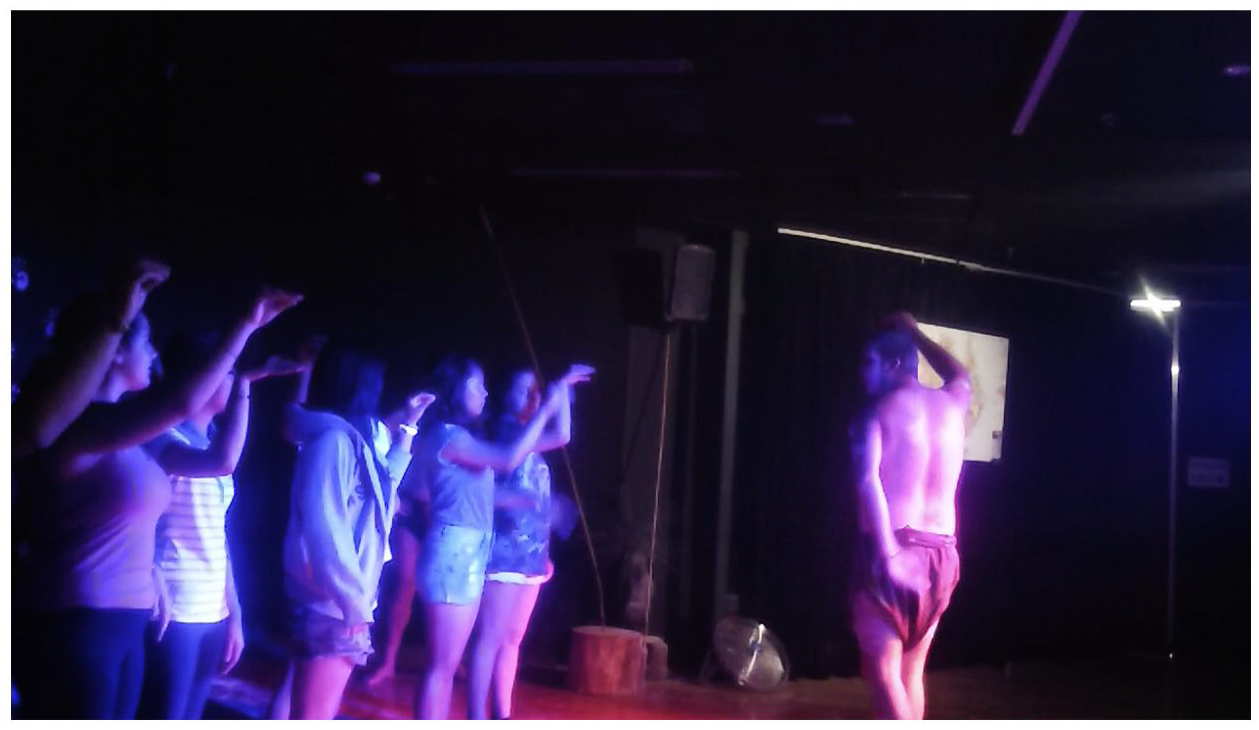
Learning the Dances at the Excursion (Photo by Author).
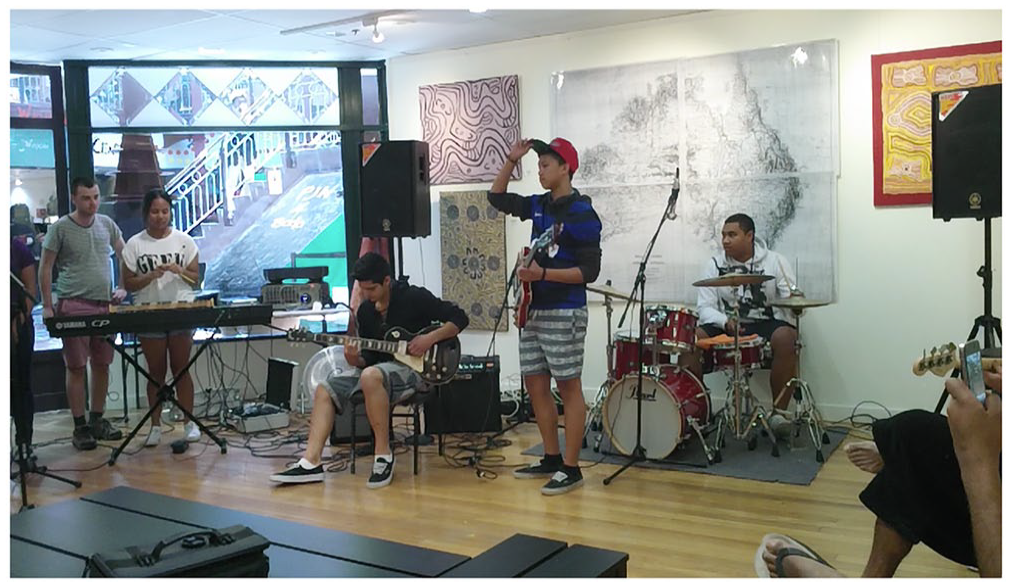
Co-Composition Workshop (Photo by Author).
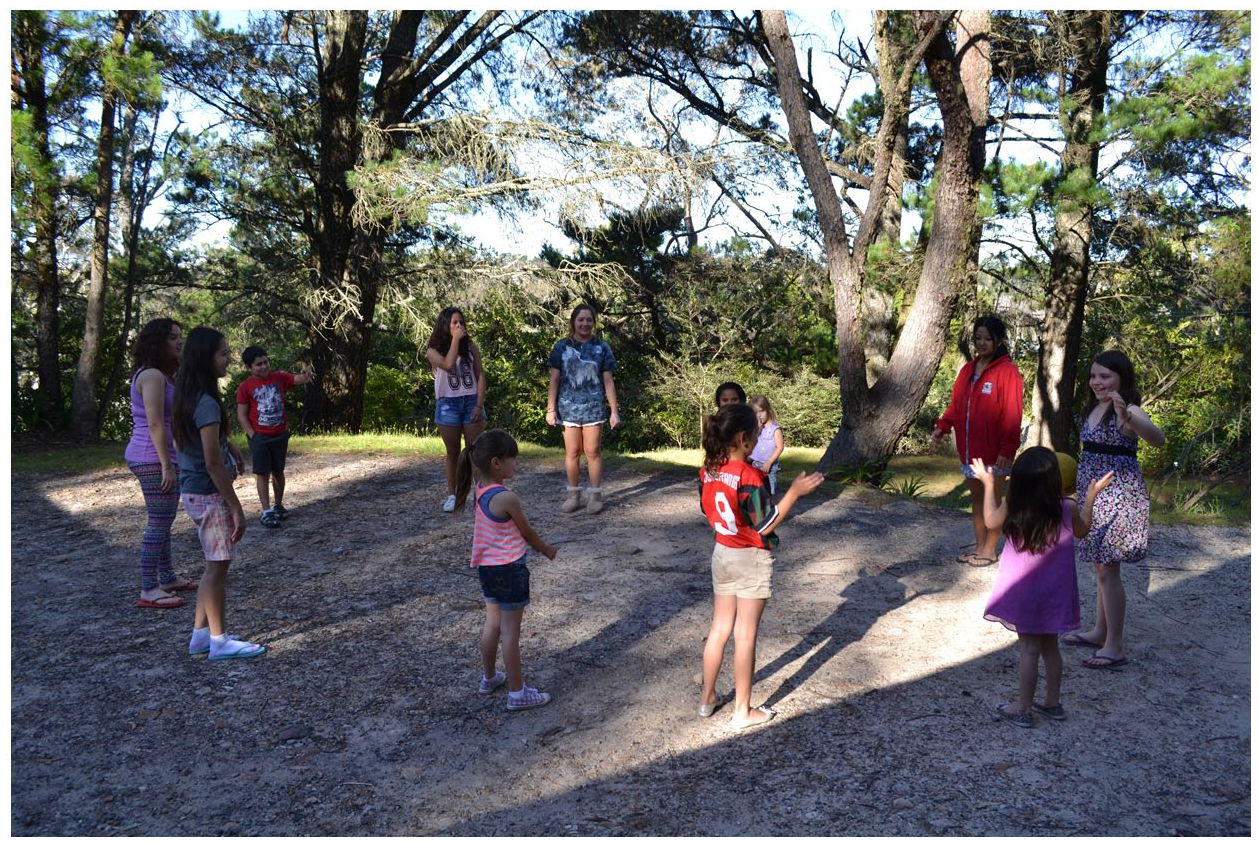
Camp Barbeque (Photo by Author).
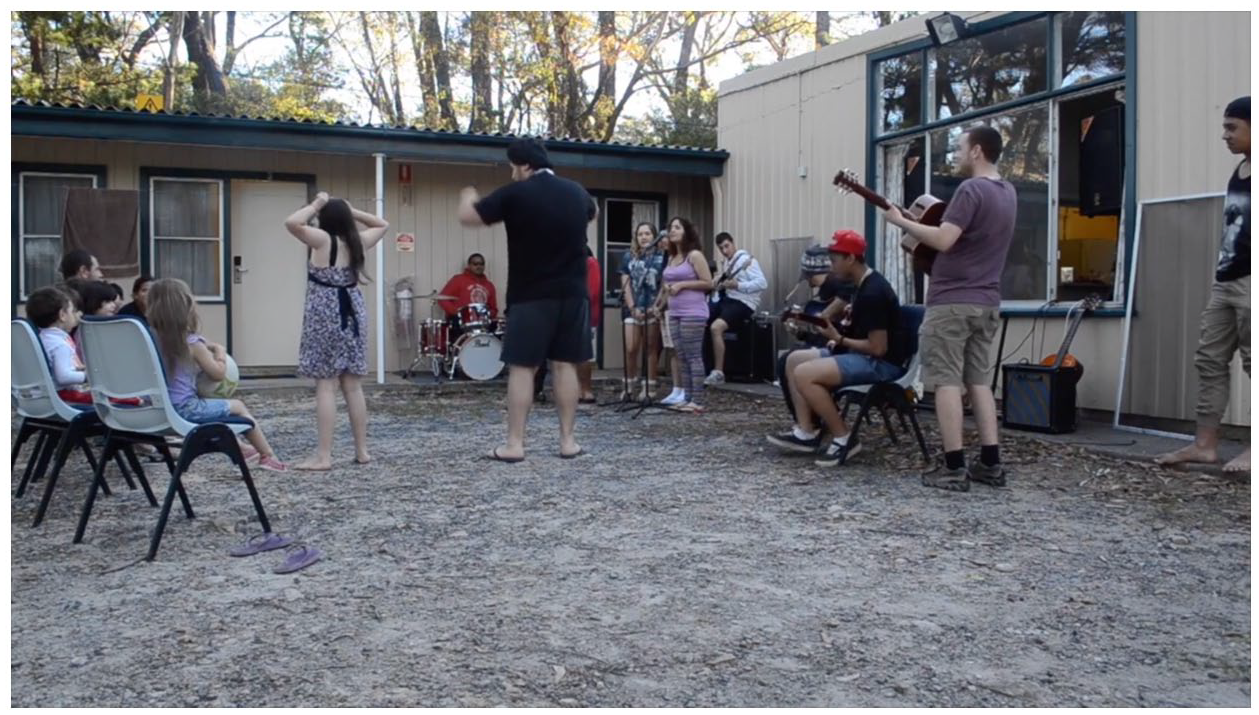
Dancing to the Co-Compositions (Photo by Author).
From ideas to action
Moving from conception to implementation is challenging in any environment. Within a school context, innovation and action are often stifled by inflexible calendars, competing subject interests and, within my own school in particular, financial limitations. I was fortunate in being able to operate as the sole music teacher at my school, so was able to continuously reflect on, modify, and evolve my teaching programs, unhampered by the need to provide continuity and guarantee “success” for other teachers and classes. With this reflexive approach to teaching and learning I was not particularly concerned about the loose structure of my project; however, I did have some uncertainty about how it would work in practice, particularly during the camp, since it involved factors beyond my immediate control. Importantly, I had confidence in one of the key factors that I could depend upon: the abilities of my students and their hard-earned trust in me.
Despite not always controlling their emotions and being frustrated by my resolve to regularly include Aboriginal and Torres Strait Islander music, my senior music class persisted over the years, ultimately trusting in my ability to guide them through the learning process. Having taught most of the students for 5 years, I knew I equally could trust them to engage consistently enough within the classes to invest positively in the challenging task at hand. Each student brought different skills and was able to contribute meaningfully to the project in both a musical and, crucially, a relational sense. This was particularly evident during the camp barbeque when the students naturally began playing with Peter and Brendon’s children, which was, as it happened, a turning point in enacting the successful integration of relationship pedagogy.
I was also confident of my own grasp of the ethical procedures mandated for such a collaboration. Over a 5-year period, I had steadily developed an understanding of the academic literature on best practice, and analyzed the collaborative working processes of various musicians. I had worked continuously with the school’s Aboriginal community and built up a range of strategies relevant to the task. Similarly, following the lead of Grandage, I had been somewhat prepared for the task to not work as planned. I knew that if Peter and Brendon had decided to pull out of the project, investigating the reasons behind it would be equally useful. Ultimately, for the project to succeed I had to acknowledge the limitations of my own position, make myself vulnerable, assume the role of learner in front of my students, and be prepared to be questioned and critiqued throughout each stage of the process:
There should never [be] any other way in terms of teaching Aboriginal culture. . . Even though they might have a good understanding of Aboriginal culture—and you might have a lot—but you aren’t Aboriginal to bring that authenticity. (Brendon)
For this project to have run more effectively, it would have been ideal to develop a stronger personal relationship with Peter and Brendon before introducing them to the students. I did feel, however, that I could trust the advice of my community contacts who steered me toward them. Undoubtedly, the project would not have attained the peaks of musical learning, enjoyment, and relationality that it did without an openness from Brendon and Peter to share the experience with us. Initially, both had been quick to come to terms with my proposal and they could envision the potential benefits of the principles behind it. Non-Indigenous music educators are often anxious about navigating the complex issues associated with working within First Nations communities, and I hope that Peter and Brendon’s generosity toward us provides encouragement that such projects are indeed possible. I hope they inspire teachers to begin to move beyond passive engagement with music by First Nations peoples and seek opportunities to work collaboratively with community members to create shared expressions of culture.
In evaluating the success of the project, it was important to interrogate the extent to which the partnership was reciprocal and the degree to which Peter and Brendon maintained control over it. Peter and Brendon’s willingness to share the experience with their families is some indication that they found the experience fulfilling. Both Peter and Brendon felt our arrangements did not overpower the songs, which was evident as their children were able to dance to the co-compositions while we performed at the culminating barbeque event. The flexibility of the camp schedule allowed Peter and Brendon to participate as much, or as little, as they wished:
I’ve been brought up as much as I have with my tradition and it’s a way to keep our identity strong because we’ve always had things stolen and taken away. Youse weren’t in that frame of mind, that’s why I enjoyed it, because you were incorporating two cultures together. It wasn’t going to say, “I’m going to take this bit, and rip it out and put it into my contemporary song.” (Brendon)
Conclusion: A heuristic approach centered through collaboration
Within my research and this subsequent reflection, it is not my intention to promote co-composition as the answer to increasing understanding of Aboriginal and Torres Strait Islander music. Rather, it encourages a heuristic approach to increased and effective inclusion of Aboriginal and Torres Strait Islander music in educational settings. By setting out in narrative form my experience of implementing a considered, decolonial, ethical approach to learning from and through Aboriginal and Torres Strait Islander music, I encourage educators to imagine themselves in a narrative of their own, one that includes their students and members of the local First Nations community, leading to rich and rewarding musical collaborations and ongoing relationships.
Although my research presents a narrative account of a collaborative project involving Aboriginal and Torres Strait Islander culture bearers, this story speaks primarily of the educational possibilities and differences teachers can make as a result of building strong relationships with their students. In seeking to develop a new relationship with Peter and Brendon, their trust in us grew quickly once they witnessed how we interacted, cared for, and supported each other:
You can see that they have their bonding and relationships there and then you invite our culture and our family into it. . . You’ve had these young people together for a few years now. You didn’t have to start from scratch, bringing people together and getting them to bond and then try to produce a high-level project. (Brendon)
Likewise, our trust in them grew as they invited us to share time with their family and learn more about how music and dance informs their lived experience. This ultimately led to transformative learning for some participants, whose initial assumptions and stereotypical biases were challenged through conversation and relationship building:
I think some of our kids have views/stereotypes about Aboriginal people and I think that being able to meet and talk with [those] men in that sort of relaxed atmosphere was really good for them and their understanding of people as opposed to ideas about people. (Ms Riley, Teacher) Hanging out with Peter and Brendon and their families, it was really nice to have a—and it sounds a bit mean—but to have a good connection with Aboriginal people. . . Having good vibes from them rather than what I’ve normally seen out of Aboriginal people. . . I know not all Aboriginal people are like that, but that’s what sets in my mind and that’s not a good thing. Spending time with Peter and Brendon’s families changes my outlook on Aboriginal people a lot more. (David)
I encourage music educators to actively engage with the music, the literature, and most importantly, local First Nations communities. This requires educators to be reflexive, acknowledge their positionality, reach out and make connections, and be willing and open to learn. Teachers need not feel challenged by the environment or community in which they work. If you look out and around opportunities will present themselves. It might start with a phone-call to a parent, attending a local festival, supporting students on a field trip, or even contacting a First Nations artist whose song you are learning through social media. My experience thus far tells me that if you take the time to connect, listen, and engage, you will receive far more in return. I have enjoyed learning alongside new communities and negotiating ways that I can collaborate. It is important to understand that every community is unique and what works in one place may not work in another. I am excited about what lies ahead, and I look forward to being inspired by learning of others sharing their own collaborative experiences.
Footnotes
Declaration of conflicting interests
The author(s) declared no potential conflicts of interest with respect to the research, authorship, and/or publication of this article.
Funding
The author(s) received no financial support for the research, authorship, and/or publication of this article.
